Dato Dr Jasvinder Singh Datin Selwinder Kaur Jasriine Gabee Kaur
Anthim Ardas & Sehaj Path Da Bhog on 8 September 2022 (Thursday) at 8am at their residence (Address: 81 G, Jalan Tiong, 08000 Sungai Petani, Kedah) followed by Sri Akand Path Sahib from 8 September (Thursday) starting at 10 am to 10 September (Saturday) till 11.30 am at their residence
Guru ka langgar will be served.
Please treat this as a personal invitation from the family.
We sincerely thank everyone for their condolences, prayers, assistance, flower arrangements and love during this period. Our whole family appreciates the support.
Contact: Dato Dr Joginder Singh: 012-486-8811 Datin Gurmit Kaur: 012-490-9515 Datuk Dr Inderjit Kaur: 012-329-9606 Dato Jaspal Singh: 019-278-2727 Datin Paramjit Kaur: 012-488-8804 Dato Dr Jasvinder Singh: 012-490-9919
| Entry: 31 Aug 2022; Updated: 6 Sept 2022 | Source: Family
ASIA SAMACHAR is an online newspaper for Sikhs / Punjabis in Southeast Asia and beyond. Facebook | WhatsApp +6017-335-1399 | Email: asia.samachar@gmail.com | Twitter | Instagram | Obituary announcements, click here
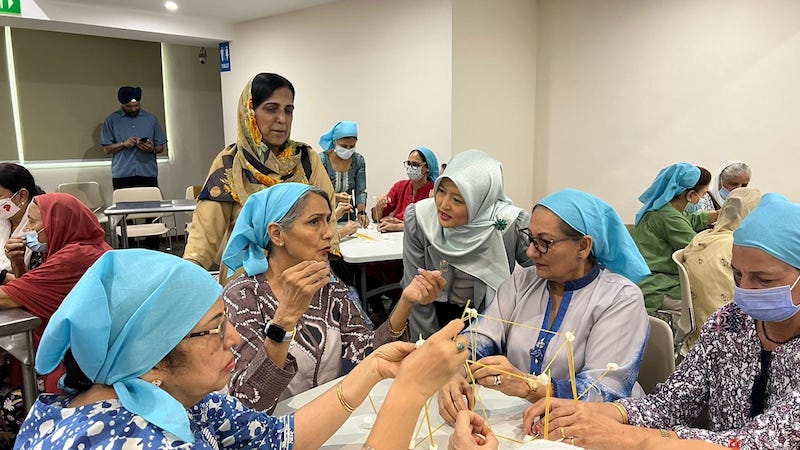
Rahayu Mahzam talking to Sunehri Saheliaan members – Photo: SIWEC
By Asia Samachar | Singapore |
Sikh Welfare Council (SIWEC) today (Aug 30) hosted Singapore lawmaker Rahayu Mahzam and officials from the Health Promotion Board (HPB).
Rahayu had a chance to interact with members of the Sunehri Saheliaan, or Golden Girls, who were taking part in their weekly activities. She also toured an exhibition consisting of handicrafts made by the Sunehri Saheliaan.
Rahayu is the Senior Parliamentary Secretary for the Ministry of Health and Ministry of Law.
You can find out more about SIWEC and its programmes at www.siwec.org.
ASIA SAMACHAR is an online newspaper for Sikhs / Punjabis in Southeast Asia and beyond.Facebook | WhatsApp +6017-335-1399 | Email: asia.samachar@gmail.com | Twitter | Instagram | Obituary announcements, click here
Guru Granth Sahib amidst the Sikh Regiment in Iraq during World War 1 – Photo: Imperial War Museum
By Gurnam Singh | Opinion |
Between 29th August and the 1 Sept in 1604, from completion to its installment inside Darbar Sahib in Amritsar, we saw the formal coronation of the Adi Guru Granth as the authoritative scripture of the Sikh Dharam (‘righteous path’ or ‘way of life’). Sikhs rightly celebrate this occasion with much pomp, ceremony, reverence and through continuous 48 hour readings of the scriptures in the form of ‘Akhand Paths’. However, it’s worth reflecting on the following words of caution about ritual reading of scripture by the editor of the newly installed Granth, Guru Arjan Ji, on p631.
“ਪਾਠੁ ਪੜਿਓ ਅਰੁ ਬੇਦੁ ਬੀਚਾਰਿਓ ਨਿਵਲਿ ਭੁਅੰਗਮ ਸਾਧੇ ॥ They read scriptures, and contemplate the Vedas; they practice the inner cleansing techniques of Yoga, and control of the breath.
ਪੰਚ ਜਨਾ ਸਿਉ ਸੰਗੁ ਨ ਛੁਟਕਿਓ ਅਧਿਕ ਅਹੰਬੁਧਿ ਬਾਧੇ ॥੧॥ But they cannot escape from the company of the five passions; they are increasingly bound to egotism. ||1||
ਪਿਆਰੇ ਇਨ ਬਿਧਿ ਮਿਲਣੁ ਨ ਜਾਈ ਮੈ ਕੀਏ ਕਰਮ ਅਨੇਕਾ ॥ O Beloved, this is not the way to meet become one with the Divine entity; I know because I have carried out (tested) these rituals many times.
ਹਾਰਿ ਪਰਿਓ ਸੁਆਮੀ ਕੈ ਦੁਆਰੈ ਦੀਜੈ ਬੁਧਿ ਬਿਬੇਕਾ ॥ ਰਹਾਉ ॥ I have collapsed, exhausted, at the Door of the divine being; begging that I may be granted the gift of discerning intellect. ||Pause||
Though Guru Sahib is clearly referencing Brahmanical ritualistic practices, there is an important general message about the limits of empty ritual practices irrespective of the faith. But, tragically and ironically, many Sikhs across the world have reduced Sikhi to the ritual recitation of prayers in the form of Akhand Paths, dressing up of Guru Granth Sahib in colourful embroidered rummalas (wrappings) and parading the Guru in spectacular ‘Nagar Kirtans’ (literally meaning singing of Gurbani on the move from place to place).
Whilst such pomp, ceremony and ritual may make people feel a sense of joy and escapism, which is fine, I am unsure, without a deep dive into the scripture, it will have much impact on our lives and the real challenges we face both individually and collectively. But it can be a starting point to draw peoples attention, but, like a big wedding occasion, what really matters is what happens in the weeks, months and years after the celebrations!
Sadly, as Sikhs have accumulated material wealth, a whole business sector based on religious rituals has developed, and this is not just about Sikhs but other ‘faith’ groups as well. Despite the rise of secularism, ‘religion’ remains a big business with a powerful influence on the masses. And the economic model of Sikh institutions, from Gurdwaras, Jathebandhis to numerous media outlets and charities has become heavily invested in Akhand paths and the festivals that surround these.
The tragedy of the commercialisation of faith, and ritualistic praying in particular, is that, whilst it may generate temporary joy and happiness for some, perhaps many, it does very little else! Indeed, it can become a deterrent to the ‘proper’ reading, understanding and application of the message of the Guru Granth Sahib. Where the Guru rejected a priestly class and invoked us to establish a direct link to the divine through reading and reflecting on Gurbani and through ardas (a self-reflective internal dialogue with the divine) for ourselves, we have outsourced this to a priestly class.
In truth, the only way to comprehend the profound wisdom and knowledge contained in the Guru Granth Sahib – about such matters as divinity, life, nature, ecology, mental and physical health, ethics, equity, social justice, ethics, time, space, being, existence and much more – is to engage in dialogue with the Guru. And that means to develop the capacity of ‘budh’ and ‘bibeik’, which literally mean discerning intellect and wisdom.
According to Gurmat, true budh and bibeik can only be achieved by controlling/overcoming the influence of the ego, which requires developing the capacity for critical self-reflection and mindfulness. And, according to the Guru, this can only be achieved by focussing on ‘naam’ or ‘tuning’ into the frequency of the ultimate all pervasive force of nature, which we call ‘akaal purakh’ or the ‘formless, timeless entity!’
So I say, yes, let’s celebrate the momentous achievement of Guru Arjan in compiling the Adi Guru Granth Sahib ji, especially so given the huge time, geographical span, and social and linguistic range of the various sources and contributors, which, along with his own voluminous compositions, include the writings of the first 4 Gurus, the court poets and the Bhagats (Suffi Saints).
But after the celebrations let’s start trying to understand the profound message and teachings, and this means slow, contextual and reflective reading. The fact that the scriptures are written in poetic form, the reading should be done with both reason and devotion. Most critically is means reading in a way to enable the journey from literal understanding of the words (akree arth) to actual meaning (bhav arth) or if you like from ‘text’ to ‘context’. Only then can one get a sense of the true essence or meaning of the shabad (poetic composition).
In the final shabad of the Guru Granth Sahib ji, in Mundaavnee, p1429, Guru Arjan Ji provides very specific instructions as to how one should relate to the Granth in order to realise the wisdom it offers.
ਮੁੰਦਾਵਣੀ ਮਹਲਾ ੫ ॥ Mundaavanee, Fifth Mehla:
ਥਾਲ ਵਿਚਿ ਤਿੰਨਿ ਵਸਤੂ ਪਈਓ ਸਤੁ ਸੰਤੋਖੁ ਵੀਚਾਰੋ ॥ Upon this Plate, three things have been placed: Truth, Contentment and Contemplation.
ਅੰਮ੍ਰਿਤ ਨਾਮੁ ਠਾਕੁਰ ਕਾ ਪਇਓ ਜਿਸ ਕਾ ਸਭਸੁ ਅਧਾਰੋ ॥ The Ambrosial Nectar of the Naam, the Name of the infinite noble creator (thakur), has been placed upon it as well; it is the Support of all.
ਜੇ ਕੋ ਖਾਵੈ ਜੇ ਕੋ ਭੁੰਚੈ ਤਿਸ ਕਾ ਹੋਇ ਉਧਾਰੋ ॥ One who eats it and enjoys it shall be saved.
ਏਹ ਵਸਤੁ ਤਜੀ ਨਹ ਜਾਈ ਨਿਤ ਨਿਤ ਰਖੁ ਉਰਿ ਧਾਰੋ ॥ This thing can never be forsaken; keep this always and forever in your mind.
ਤਮ ਸੰਸਾਰੁ ਚਰਨ ਲਗਿ ਤਰੀਐ ਸਭੁ ਨਾਨਕ ਬ੍ਰਹਮ ਪਸਾਰੋ ॥੧॥ The dark world-ocean of ignorance is crossed over, by realising the true essence of the divine universal entity that pervades the whole of existence. ||1||
Gurnam Singh is an academic activist dedicated to human rights, liberty, equality, social and environmental justice. He is an Associate Professor of Sociology at University of Warwick, UK. He can be contacted at Gurnam.singh.1@warwick.ac.uk
* This is the opinion of the writer and does not necessarily represent the views of Asia Samachar.
ASIA SAMACHAR is an online newspaper for Sikhs / Punjabis in Southeast Asia and beyond.Facebook | WhatsApp +6017-335-1399 | Email: editor@asiasamachar.com | Twitter | Instagram | Obituary announcements, click here |
The stabbing of Salman Rushdie at the Chautauqua Institution in New York state on 12 August 2022 has been condemned by all who believe in the rule of law. However, the attack has also rekindled a public debate about the balance between freedom of speech and expectation on the part of religious groups to be respected for their faith systems.
This fine balance is also continually addressed by legislation and the law courts, for all freedoms and rights are circumscribed by law. While there are numerous examples in history when unjust laws have been successfully challenged, ultimately, the rule of law is the main pillar of any civilised society.
Following the publication of Salman Rushdie’s highly controversial satire, Satanic Verses in 1988, Ayatollah Khomeini of Iran issued the fatwa (Islamic religious ruling) which placed a bounty of three million dollars on his head. There is a view that the book Satanic Verses, goes to the heart of Muslim religious beliefs when Rushdie, in dream sequences, challenges and sometimes seems to mock some of its most sensitive tenets.
A satire is a literary term and is defined as the use of humour, irony, exaggeration, or ridicule to expose and criticize stupidity or vices, particularly in the context of contemporary politics and other topical issues. Some thinkers argue with justification that the form of satire used by Salman Rushdie went beyond pure critique.
Sikh Gurus and the Bhagats in Sri Guru Granth Sahib questioned and used allegory and even humour to expose the hypocrisy of certain practices in the name of religion while showing the faithful what the true path should be. That approach invited constructive thought and, according to Bhai Gurdas, was accepted by the clergy at Mecca-Kaaba and Gang-Banaras alike. All bowed to the Truth as revealed by Guru Nanak, hidden behind the false practices in the name of religion. I recall a couplet from a Panjabi poem read in younger days, “The smoke of all religions [religious ritualism] is hiding the same Truth.”
There is an objection that freethinkers are being silenced for challenging Islamic orthodoxy. That the charge of Islamophobia is an attempt to raise Islam above criticism. However, freethinking can easily slide down towards caricaturing and ridicule with total disregard for the offence caused. As we have seen in the Salmon Rushdie case, that can provoke not just individuals but whole communities and lead to violence.
In 2015, Charlie Hebdo journalists were massacred for showing Prophet Muhammad in drawings knowing that that would offend Muslims. In 2020, a French teacher was beheaded for showing Charlie Hebdo cartoons to his class. Some writers who opposed the 2015 Freedom of Expression Courage Award to Charlie Hebdo wrote, “ In an unequal society, equal opportunity offense does not have an equal effect.” That statement requires deep reflection on the part of so-called freethinkers in any democracy. Equal opportunities in law may not be so equal in reality when there are inbuilt prejudices against minorities even in most democratic countries. Extreme elements amongst minorities seeking to redress the inequality, resort to violence.
A supporter of freedom of speech, a freethinker no doubt, wrote on Facebook, “The key point is that in a democratic society ideas, including religious ideas, must be open to scrutiny, ridicule and satire.” If that is what freethinkers advocate then their version of freedom of expression is bound to clash with just expectations of followers of religions that their belief systems should not be ridiculed.
A Sikh British, who has read the book wrote on Facebook, “This large book is not easy to read and comprehend…The most obvious and profuse use of Urdu /Hindi swear words in the book was the apparent offence not only to the Muslim readers of the book but to a person of any other faith…” He concludes, “The murderous attack on the author is a deplorable act.” He feels that this is a continuing debate between two basic human rights: freedom of speech and just expectation by adherents of a religion to be respected for their belief system. Quite rightly and, subject to certain qualifications, both these seemingly opposing rights are protected by law.
To conclude with some relevant personal experience: Over the decades, there has been much concern amongst the Sikhs about the methods used by preachers of Christianity and Islam to seek converts – not least through coercion and misrepresentation of Sikh ideology. They go from door to doors and have been hyperactive in schools and colleges.
Soon after my retirement from service in June 1996, late S. Gurbachan Singh Sidhu (Founding member of the Sikh Missionary Society UK) dropped in to meet me for the first time. He asked for support in writing studies which compared Sikhi with the main world religions. From his university teaching experience, Christianity and Islam were the priorities. My initial objection that religions cannot be compared was overcome with some sort of compromise about approach and presentation which was left to me. “Sikh Religion and Christianity”, “A Challenge to Sikhism” and “Sikh Religion & Islam “ were published in the next 5 years to 2001 and widely distributed.
The approach was appreciated because factual information about each religion was given with further clarification in the introductory paragraphs of the main differences. I was fully aware that even the “similarities” were only apparent. The rest was left to the readers.
There are major differences even within religions and, in that respect, Sikhi is not different from other religions. Those trying to bring about reforms need to be sensitive about sincerely held beliefs. I have become very aware of this through my work with the Sikh Missionary Society UK.
As we have seen in the Rushdie case, the risks and consequences are there. That is not to say that freedom of expression, responsibly exercised to bring out the truth, should not be defended.
Gurmukh Singh OBE, a retired UK senior civil servant, chairs the Advisory Board of The Sikh Missionary Society UK. Email: sewauk2005@yahoo.co.uk. Click here for more details on the author.
* This is the opinion of the writer, organisation or publication and does not necessarily represent the views of Asia Samachar.
ASIA SAMACHAR is an online newspaper for Sikhs / Punjabis in Southeast Asia and beyond.Facebook | WhatsApp +6017-335-1399 | Email: editor@asiasamachar.com | Twitter | Instagram | Obituary announcements, click here
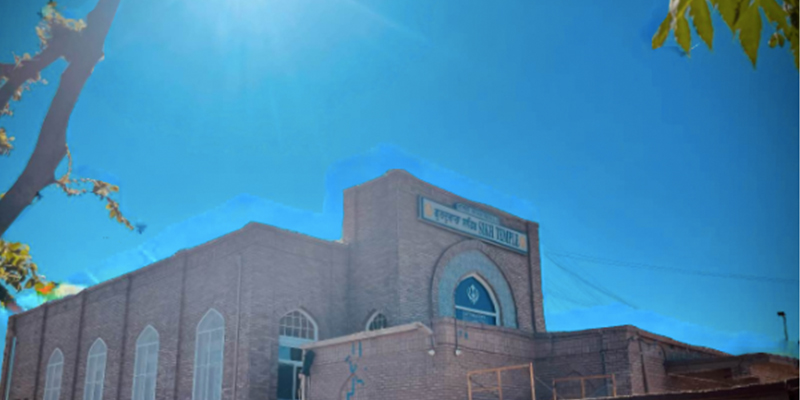
Left: The first Sikh Temple of Australia opened in Woolgoolga in 1968. Right: The new building of the First Sikh Temple of Australia which opened in 2019. – Gurdwara Facebook
By Rishpal Singh Sidhu | Opinion |
Sikhism is the fifth largest and fastest growing religion in Australia after Christianity (43.9%), Islam (3.2%), Hinduism (2.7%), and Buddhism (2.4%), with 38.9 % of the Australian population professing to have no religion according to the 2021 Census. From its small number of 12,000 in 1996, the Sikh population in Australia recorded significant growth from 72,000 to 210,400 between 2011 and 2021, an average growth of 14.8% per annum, and today constitute 0.81% of the 25.8 million Australian population. Notwithstanding their relatively small numbers and not unlike their Singapore brethren, they are today well represented in all the major professions and have made a significant contribution to Australia’s development.
Given their agrarian background in the Punjab, the first Sikhs came to Australia in the 1830s as indentured labourers working on farms, in the cane fields, and as shepherds on sheep stations. The 1861 Census recorded around 200 Indians in the State of Victoria, including some in the gold rush town of Ballarat. Later Sikh migrants worked as itinerant hawkers travelling vast distances in town and country areas, peddling a variety of goods on credit to farming families and farmhands. Some of the cameleers who arrived in Australia in the 1860s included a small number of Sikhs from Punjab. Baba Ram Singh was one of the more successful hawkers, and according to historical records, is credited with bringing the first Guru Granth Sahib to Australia sometime in the 1920s. It was also during this time that Indians in Australia were given limited licence to own property, including being given the right to vote and allowed a pension.
The enactment and implementation of the White Australia Policy during the 1901-1973 period had a restrictive effect on Sikh immigration to Australia, and the 1911 Census recorded less than 4,000 Sikhs living in Australia. The labour shortage arising from the conscription of Australian menfolk to fight overseas in World War II opened migration opportunities for Sikhs to work in the banana growing areas of Woolgoolga. Some Sikh migrants prospered, bought land, and became successful plantation owners, including getting their womenfolk to join them in Australia to form households, resulting in the first born naturalised Australian Sikh children. The first Sikh gurdwara was established in Woolgoolga in 1968, and this seaside town 550kms north of Sydney today boasts a 1,300 strong Sikh community where Sikhs own 90% of the banana plantations and have now also diversified to owning raspberry and blueberry farms.
In recent times, the Sikhs have also been involved in farming in other parts of Australia. Renmark is the largest town in South Australia’s farm rich Riverland area, and it is today home to a vibrant and thriving Sikh community many of whom are involved in producing fruits and vegetables, both as farmers and farmhands. In Mildura, the largest city in northwest Victoria, the Grewal brothers are a success story, running a wheat and flour milling business supplying atta to Indian stores and restaurants all over Australia. They arrived in Australia via New Zealand 20 years ago, and in their Mallee region farmlands today grow wheat, almonds, grapes, citrus and berries. Other Sikh success stories also include Paramdeep Ghumman and his doctor wife Nirmal, owners of the award winning Nazaaray Estate vineyard in Victoria’s Mornington Peninsula.
Notwithstanding the restrictions of the White Australia Policy, a limited number of Sikh doctors, academics, engineers, agriculture experts, and IT workers started arriving in the 1960s. The abolition of the White Australia Policy and the passing of the Whitlam Government’s Racial Discrimination Act in 1975 heralded an increase in Sikh migration, including well qualified professionals from a number of countries including India, Malaysia, Singapore, Fiji, Kenya, Uganda, and the United Kingdom.
The period from early 2000 to the present has seen a steady increase in Sikh students studying in Australia with many staying on in Australia on completion of their studies. Some of these students were initially enrolled in short courses in hairdressing and cookery where there was a skills shortage in these areas, and they were then able to secure employment and permanent residence on completion of these short courses. International students on a student visa are currently permitted to work a little over 20 hours a week and mainly work in hospitality, retail, cleaning, and transport because their labour is essential to these industries.
“A recent study by IDP Connect revealed how the prime motivation for Indian students to study in Australia is to gain permanent residency and work rights”1, a finding confirmed by Professor Steven Schwartz formerly Vice Chancellor of Macquarie University in Sydney, Australia, who admitted that many international students only study in Australia to gain working rights and permanent residency. If work rights and residency were scaled back, the number of students arriving would collapse.2 Two years of Covid-19 border closures also led to a national staffing crisis, particularly in hospitality, retail, aged care, and nursing, and there are indications that the Federal Government plans to increase the skilled migrant intake to nearly 200,000 from its current annual rate of 160,000, and this probably augurs well for the steady flow of Sikh students coming to Australia to study and work in these areas, eventually gaining permanent residency.
People of Indian ancestry in Australia currently number 783,000 of which 210,400 or 26.9% are Sikhs. It is interesting to note that as migrant groups, the Indians have leapfrogged the Chinese and now sit second only to the British.3 More than half of the Indian migrants are Hindus, followed by 18% professing the Christian faith, 12% are Sikhs, and 7% are Muslims. In the five years to 2021, the number of children born in Australia with Indian ancestry was more 63,000.4
Though comparatively small in demographic terms, the Sikhs in Australia have generally assimilated well and will doubtless continue to influence the cultural mix of Australian society in multifarious ways including cuisine, fashion, and music. Following the 9/11siege in the United States and the more recent 2014 Sydney Lindt Café siege, some Australian Sikhs have borne the brunt of anti-Islamic sentiment in some parts of the community conflating Sikh turbans and beards with terrorism. Like their American counterparts, Sikh associations and community groups have been active in diverse ways in educating the Australian community about the beliefs and values of Sikhism. There are currently 32 gurdwaras in Australia, including one in the Australian Capital Territory, 12 in New South Wales, 6 in Queensland, 7 in Victoria, 4 in South Australia, and 2 in Western Australia.5
“The growth of the Australian Sikh community presents an example of the value of civil society groups, and important lessons about how we should approach our relations to one another.” 6 In addition to the contributions they continue to make in Australia in their professional lives, “their dedication to volunteerism provides the country with an additional social service that identifies areas where both the State and the market are failing to produce adequate outcomes and contribute basic human necessities to those most in need.”7 Sikh volunteer groups in Australia have frequently made headline news for their charitable work in providing thousands of free meals and basic necessities to those whose lives and livelihoods have been affected by bushfires, floods, and Covid-19 lockdown measures in 2020 and 2021.
At a national level, Harinder Sidhu is currently serving as the Australian High Commissioner to New Zealand. She has previously served overseas as Australia’s High Commissioner to India and in Moscow and Damascus. At State Government level, Lisa Maria Singh who is of Fijian Indian parentage, was elected to the Tasmanian House of Assembly in 2006 and served as Minister for Corrections and Consumer Protection, Minister for Workplace Relations, and Minister assisting the Premier on Climate Change from 2006 to 2008. She subsequently served as Tasmanian Senator in the Australian Parliament from 2011 to 2019. She is currently the Director and CEO of the Australia India Institute, the University of Melbourne Centre dedicated to promoting support for and understanding of the bilateral relations between these two countries. She also serves as Deputy Chair of the Australia India Council.
In the recent Federal election politicians were actively wooing the Sikh vote at the ballot box. Members of the Sikh community have also been making headway in local government. John Jorahvar Singh Arkan made history through being the first Sikh to be elected to the local government Coffs Harbour City Council in 2008. He was followed not long after by Moninder Singh who moved from India to Australia in 2001 and was elected to the Blacktown City Council in 2016. He also serves as Chair of the Punjabi Council of Australia. Within a decade of arriving in Australia in 2014, educationist Khushpinder Kaur was elected to the Blacktown City Council in 2021. Blacktown is the largest Council in New South Wales with a population of 430,000 out of which 18,134 (4.2%) are Sikh residents, and Punjabi ranks among the top five of the 182 languages spoken in this multicultural district. Tony Bleasdale, the Mayor of Blacktown was recently reported as learning to speak Punjabi.
Though currently small in number as compared to the Sikh communities in the United States, Canada, and Britain, the Sikh community in Australia is in chardi kala and already making its presence felt, and is poised to grow and make even greater and more significant contributions to the Australian economy and society in the years ahead.
Marshall, K. Educated, ambitious, ever more powerful; How Indian migration is changing the nation. Good Weekend, Sydney Morning Herald, 13 August 2022.
Rishpal Singh Sidhu is a semi-retired casual academic at the School of Information and Communication Studies, Charles Sturt University, Australia. He has a passion for research, writing, and teaching. He is the compiler and editor of the book, Singapore’s early Sikh pioneers; Origins, Settlement, Contributions and Institutions, published by the Central Sikh Gurdwara Board in Singapore in 2017. He is currently based in Sydney, Australia.
* This is the opinion of the writer, organisation or publication and does not necessarily represent the views of Asia Samachar.
ASIA SAMACHAR is an online newspaper for Sikhs / Punjabis in Southeast Asia and beyond.Facebook | WhatsApp +6017-335-1399 | Email: editor@asiasamachar.com | Twitter | Instagram | Obituary announcements, click here |
A great mother, sister and daughter to all. She was a strong, resilient and courageous person. May her loving memories give us comfort and strength.
| Entry: 28 Aug 2022 | Source: Family
ASIA SAMACHAR is an online newspaper for Sikhs / Punjabis in Southeast Asia and beyond.Facebook | WhatsApp +6017-335-1399 | Email: asia.samachar@gmail.com | Twfffitter | Instagram | Obituary announcements, click here
The shooting that took place at Stockton, California, today (Aug 27) was not connected to the local gurdwara, contrary to media reports.
A weightlifting competition organised by the gurdwara at the same time went on successfully without any untoward incident.
“This shooting did not take place on Gurdwara property and was not connected to the Sangat (Sikh temple congregation). Though a formal investigation is underway by law enforcement it is believed that the shooting was a targeted shooting and again not connected to the gurdwara,” the gurdwara said in a statement shared on its Facebook page.
A number of local media had reported that the police were investigating a shooting at a Sikh temple.
ASIA SAMACHAR is an online newspaper for Sikhs / Punjabis in Southeast Asia and beyond.Facebook | WhatsApp +6017-335-1399 | Email: asia.samachar@gmail.com | Twitter | Instagram | Obituary announcements, click here
ASIA SAMACHAR is an online newspaper for Sikhs / Punjabis in Southeast Asia and beyond.Facebook | WhatsApp +6017-335-1399 | Email: asia.samachar@gmail.com | Twfffitter | Instagram | Obituary announcements, click here
Aged of 81 left for the heavenly above on 28th August 2022
Village: Selamatpur Ropar
Husband: Late S. Piara Singh A/L Rulia Singh
Children / Spouses: Tharanjit Kaur w/o Late Udham Singh Jasvinder Kaur w/o Late Charun Singh Jasbir Kaur & Ranjit Singh Gian Singh & Gauri Aphthar Singh & Ajitpal Kaur Balbir Kaur w/o Late Surinder Singh
Path da Bhog: 11 September 2022 (Sunday), from 9am to 12pm, at Gurdwara Sahib Mainduab, Jalan Pudu, Kuala Lumpur
You were the icon for your family, you will be remembered always.
Contact: Gian Singh (0169060062) Aphthar Singh (0173565180)
| Entry: 28 Aug 2022 | Source: Family
ASIA SAMACHAR is an online newspaper for Sikhs / Punjabis in Southeast Asia and beyond.Facebook | WhatsApp +6017-335-1399 | Email: asia.samachar@gmail.com | Twfffitter | Instagram | Obituary announcements, click here
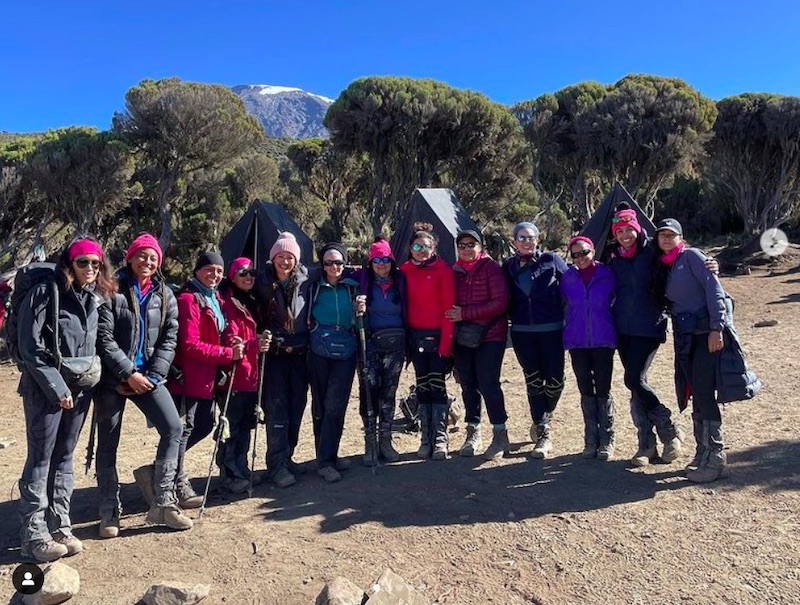
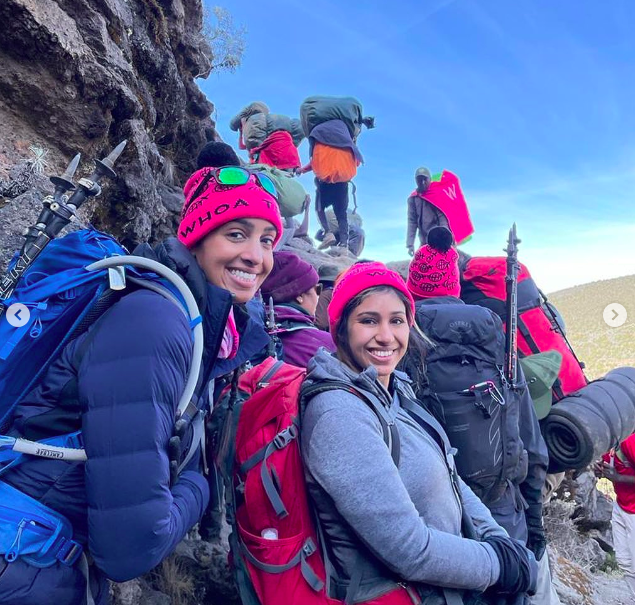
A dozen Sikh women on their way to conquer Mount Kilimanjaro – Photo: AWMB Instagram
By Asia Samachar | Tanzania |
A dozen Sikh women mustered the courage and determination to take on a once-in-a-lifetime challenge. Earlier this week, they conquered Mount Kilimanjaro, the highest mountain in Africa.
“Summiting was HARD. The hardest thing any of us have done. Tears. Sickness. Injuries. Moments of doubt, anger & frustration. But also moments of divine intervention, of our Sangat showing up for us and Guru Sahib’s hand holding us,” reads an entry at the group’s Instagram page. Go here for more snippets and photos.
The participants, aged from 29-62, were powered by the Asian Women Mean Business (AWMB) networking group. One thing they had in mind: to smash stereotypes of South Asian women.
Mount Kilimanjaro is a dormant volcano in Tanzania. Standing at 5,895 metres (19,341 ft) above sea level, it is the fourth most topographically prominent peak on Earth.
A dozen Sikh women on their way to conquer Mount Kilimanjaro – Photo: AWMB InstagramWe did it! The women at the peak of Mount Kilimanjaro – Photo: AWMB InstagramA dozen Sikh women on their way to conquer Mount Kilimanjaro – Photo: AWMB Instagram
ASIA SAMACHAR is an online newspaper for Sikhs / Punjabis in Southeast Asia and beyond.Facebook | WhatsApp +6017-335-1399 | Email: asia.samachar@gmail.com | Twitter | Instagram | Obituary announcements, click here