(This is the second of a 7-part series on Misinterpretation of Gurbani. Click for Part 1, Part 2, Part 3, Part 4, Part 5, Part 6 and Part 7. Click here for all articles by the same author)
Kabir Sakat Sang Na Kijiai Dooreh Jaeeai Bhag. Basan Karo Parseeai Tau Kichh Lagai Daag (SGGS, 1371)
This verse has been literally and erroneously been interpreted as: Kabir do not associate with the faithless cynics, run far away from them. It is like if you touch a vessel stained with soot, some of the soot will stick to you. First, this message is not for Kabir, it is for us. Second, this interpretation is misleading and against the basic principles of Sikhi. It is extremely important to understand that answers to difficult questions are found in the Gurbani itself. Is Saint Kabir really saying here that we should have no relations with fellow citizens of the society and we should stay away from them?
Here is what Kabir says,
Awal Alah Noor Opaeea Kudrat Ke Sabh Bandai. Ek Noor Te Sabh Jug Opjia Kaon Bhale Ko Mandai (SGGS, 1349)
meaning God first created universal life energy, essence of life, JOT. Each one us came from the same SOURCE, essence of life, one fatherhood of mankind. Kabir says how then can we label some high and others low (caste system)? How can we judge some as good and others bad? Kabir is talking about embracing others, not running away. Later in this article I will explain what is meaning of SAKAT according to spiritual philosophy of SGGS. A person is not SAKAT; it is his thoughts, habits, behavior, ideas in his head that is SAKAT.
Gurbani teaches us to love and respect others. Here is what Guru Nanak says,
Mith Bolra Jee Har Sajan Suamee Mora (SGGS, 784)
ਮਿਠ ਬੋਲੜਾ ਜੀ ਹਰਿ ਸਜਣੁ ਸੁਆਮੀ ਮੋਰਾ ॥
meaning my beloved SATGURU always speaks with all in a polite, sweet, soft and kind voice.
Hau Samal Thakee Jee Oh Kade Na Bolai Kaura (SGGS, 784)
ਹਉ ਸੰਮਲਿ ਥਕੀ ਜੀ ਓਹੁ ਕਦੇ ਨ ਬੋਲੈ ਕਉਰਾ ॥
meaning Nanak says I have noticed many times that SATGURU, GOD never ever speaks with harsh, bitter and angry voice with others.
Kaura Bole Na Janai Pooran Bhagwanai Augan Ko Na Chitarai (SGGS, 784)
ਕਉੜਾ ਬੋਲਿ ਨ ਜਾਨੈ ਪੂਰਨ ਭਗਵਾਨੈ ਅਉਗਣੁ ਕੋ ਨ ਚਿਤਾਰੇ ॥
meaning never to speak harshly with others is the nature of my beloved SATGURU. My God does not judge, label others good or bad, does not find faults in humans. This divine message is for all of us, for how to conduct ourselves in society.
I have listed above some basic principles of SIKHI, spiritual philosophy of SGGS. The key message there is that as human society we all come from one SOURCE and are all connected. There are no others, we are members of one big family. The message is about showing love, compassion, kindness and tolerance to every human we come in contact with.
Na Ko Verry Nahee Begana Sagal Sang Hum Ko Bann Aaee (SGGS, 1299)
ਨਾ ਕੋ ਬੈਰੀ ਨਹੀ ਬਿਗਾਨਾ ਸਗਲ ਸੰਗਿ ਹਮ ਕਉ ਬਨਿ ਆਈ ॥੧॥
meaning no one is my enemy, no one is a stranger, no one is other, as members of the human society we are all connected.
Now in contrast to the basic principles of Sikhi as stated above that are all about love and compassion, the incorrect interpretation of the verse stated at the beginning of this article has serious negative implications in building Sikh character, particularly of youth. It sends the message that it is acceptable to discriminate, feel jealous, dislike or even hate those who hold different beliefs and thinking. Do not even go near such untouchable persons. I cannot imagine how much bitterness this has created among human relations. This is how we label others as high, low, Hindu, Muslim, Sikh, Christians, Jews and others. An amritdharee Sikh told me that he never shops at the stores owned by clean shaven people. What if my son is SAKAT and is not spiritual or religious? According to those authors of misinterpretations, I should kick my son out of the house.
What then is the meaning of the word SAKAT in the context of spiritual philosophy of SGGS? Interestingly we do not need to go anywhere, we find the answers within the text of SGGS. Nanak says
Sakat Lobhee Eh Mann Moora (SGGS, 415)
ਸਾਕਤੁ ਲੋਭੀ ਇਹੁ ਮਨੁ ਮੂੜਾ ॥
meaning my ignorant, egoistic and greedy mind (SAKAT MANN) remains engulfed in material wealth.
When Nanak says
Sakat Nindak Dust Khin Mahe Bidarian (SGGS, 517)
ਸਾਕਤ ਨਿੰਦਕ ਦੁਸਟ ਖਿਨ ਮਾਹਿ ਬਿਦਾਰਿਅਨੁ ॥
he does not mean physical persons. When we do not understand basic principles of Sikhi and do not use logic and reason, we interpret this verse as: in an instant God destroys faithless cynics and slanderous enemies. This interpretation refers to persons, or a physical being, which is a mistake. Nanak in this verse refers to thoughts, habits, behavior and ideas in our head. SAKAT here means negative, ignorant and egoistic thought processes, habits and behaviors. NINDAK means criticizing, judging and finding faults in others. DUST is a character that is questionable and undesirable. Nanak here is talking about ideas in our head. Sakat Nindak Dust Khin Mahe Bidarian (ਸਾਕਤ ਨਿੰਦਕ ਦੁਸਟ ਖਿਨ ਮਾਹਿ ਬਿਦਾਰਿਅਨੁ) means through meditation, contemplation on divine wisdom, knowledge and by internalising godly virtues one realises spiritual awakening and experiences enlightenment. My ignorance, egoistic centred thought process (SAKAT), my labeling and judging others (NINDAK) and my full of vices (DUST) thought processes are transformed and destroyed.
In summary there are important lessons to be learned from this discussion. First, in order to deliver true spiritual message of Gurbani we must follow basic principles of SIKHI. Failing that, the message of Gurbani gets distorted and does not resonate with Sikh psyche, does not bring change. Apart from a few good souls today it is shocking to note the utterly uncaring and selfish actions of Sikhs in Punjab during corona virus pandemic. It does not reflect an iota of the SIKHI way of life. As Sikhs we have miserably failed to deliver teachings of SGGS in its real perspective. It is time that collectively Sikh Scholars find a way to bring about a RENAISSANCE OF SIKHI.
Harbans Singh Kandola. Born in Ludhiana, Punjab, he read Ph.D. in Agriculture from Punjab Agriculture University in 1972. He moved to Canada in 1973 and retired as a senior bank manager in 2005. He reads Gurbani passionately to understand its spiritual message and how it matters in his daily life. He poured over Prof Sahib Singh’s ‘Sri Guru Granth Sahib Darpan’ (SGGS translation) over five years, preparing for himself a complete set of notes. In the past two decades, Harbans has engaged in Gurbani discussion on radio and television (go here and here), as well as newspapers and the Sikh Bulletin. He believes that we now have the literature reflecting the true and real message of Gurbani which has to be presented to Sikhs and non-Sikhs. This article is from his unpublished book ‘Renaissance of Sikhi’.
* This is the opinion of the writer, organisation or publication and does not necessarily represent the views of Asia Samachar.
ASIA SAMACHAR is an online newspaper for Sikhs / Punjabis in Southeast Asia and beyond.Facebook | WhatsApp +6017-335-1399 | Email: editor@asiasamachar.com | Twitter | Instagram | Obituary announcements, click here
The Australian Government will increase the duration of post study work rights of international students to strengthen the pipeline of skilled labour.
At the same time, it will also raise the permanent migration cap by 35,000 to 195,000 spots for the current financial year.
Post study work rights for select degrees in areas of verified skill shortages will be increased from two years to four years for select Bachelor’s degrees, three years to five years for select Masters degrees, and four years to six years for select PhDs.
In a joint statement today by Minister for Education Jason Clare and Minister for Home Affairs Clare O’Neil, they said a working group will be established to report to the ministers by Oct 28.
At the moment, Clare said only 16% of international students stay on after their studies end. “This will mean they can stay on longer and use the skills they’ve gained in Australia to help fill some of the chronic skills shortages we have right now,” she said.
O’Neil also said work hours for international students will be capped again in June next year following feedback from stakeholders. The number of hours will be subject to consultation with a view to striking the right balance between work and study.
The announcements were made during a two-day summit of 140 representatives of governments, trade unions, businesses and industry to address skills shortages exacerbated by the pandemic.
ASIA SAMACHAR is an online newspaper for Sikhs / Punjabis in Southeast Asia and beyond.Facebook | WhatsApp +6017-335-1399 | Email: editor@asiasamachar.com | Twitter | Instagram | Obituary announcements, click here |
(This is the first of a 7-part series on Misinterpretation of Gurbani. Click for Part 1, Part 2, Part 3, Part 4, Part 5, Part 6 and Part 7. Click here for all articles by the same author)
Gurbani, the divine wisdom/divine knowledge contained in Sikh Scriptures (SGGS), is the spiritual guiding principles that guide us on how to be good human beings and realize the meaning and purpose of life. It is about conscious transformation and a journey of spiritual awakening. It guides us on the path to spiritual enlightenment, to destroy ego and enjoy peace and happiness in life. The Bani of SGGS is original and unique among world religious scriptures. Its appeal is universal and divine message for whole human race. The text of SGGS (SIKH SCRIPTURE) is not derived from historical events; rather, it is a firsthand document authored by spiritual teachers that include many who were Hindus, Muslims and others. Gurbani was a new concept and a new vision on spirituality. Gurbani, Nanak said, was to be experienced, not worshiped. The teachings of Gurbani are based on logic, reason, relevance and science.
After the passing on of the tenth master, Guru Gobind Singh, the divine message of Gurbani was misunderstood, misinterpreted and distorted when administration of Sikh Gurdwaras came under the control of NIRMALAS AND UDASI preachers during the period of 1760 -1920. They did not understand Gurbani in its real perspective. These were sects of Sikh faith but subscribed to Hindu Vedic belief system as well. They incorporated Hindu Vedic rituals, and superstitious and mythical beliefs into the teachings of Gurbani. This included worship of an external SUPERNATURAL DEITY, caste system, degrading of women, asceticism, reincarnation, transmigration, karma theory, animal sacrifices, concept of hell, heaven and thousands other worthless religious practices.
I understand that translation of Gurbani, particularly in English is a challenging job. Authors of SGGS have extensively used metaphor, parable and terms of ancient philosophy. Gurbani is in poetic form and it takes lot of research to decipher the meaning of words. Translation of Gurbani requires deep understanding of spiritual philosophy of SGGS, excellence of expression, use of simple language, direction of thought and knowledge of metaphysics. The first translation of SGGS was published in 1906, called FARIDKOTI TEEKA. This translation was done by a few scholars of the NIRMALA SECT. This became the prototype for future translations. Unfortunately, several authors who later translated SGGS into English followed the same FARIDKOTI TEEKA. Prof. Sahib Singh singlehandedly did a great job in furthering the understanding of the true spiritual message of Gurbani. However, he did not have all the resources that are required to explain Gurbani in its true perspective. Later Sikh scholars who were heavily burdened with the ancient philosophy, mythology and VEDIC belief systems continued with the theology of NIRMALAS. I believe in recent times as knowledge is expanding so is the understanding of the real spiritual philosophy of SGGS. Today, in order to explain Gurbani in its real perspective, Sikh scholars need a broader general knowledge of human psychology and behavior. The need to be able to use logic, reason, relevance and scientific approach. They need to be well versed in historical events, religious and cultural traditions of India. It not only needs an intellectual but also experiential approach. It is time that Sikh scholars take up this challenge.
In a series of articles, I will attempt to explore the misinterpretation of Gurbani. Here is the process I am following:
1. Present the current translation of a verse or hymn.
2. Explain how the current literal translation is against the basic principles of the spiritual philosophy of SGGS.
3. Explain under what beliefs and influences such translation was done.
4. Explain what damage such translation has inflicted on Sikhi way of life and Sikh character.
5. Explain a translation of the verse or hymn using logic, reason, relevance and scientific method that is in line with the spiritual philosophy of SGGS.
6. Explain how the proper translation guides us to realize our true self, meaning and purpose of life and conscious transformation.
I may point out here that an authentic translation and interpretation of Gurbani based on the basic principles of Sikhi is a great need of the current time. The current English translations are shockingly misleading. It is essential to spread the universal message of Gurbani. Even though some efforts are being made, now it should be a joint effort by a team of Sikh scholars committed to NANAKIAN PHILOSOPHY so that one standard English translation can be prepared.
Harbans Singh Kandola. Born in Ludhiana, Punjab, he read Ph.D. in Agriculture from Punjab Agriculture University in 1972. He moved to Canada in 1973 and retired as a senior bank manager in 2005. He reads Gurbani passionately to understand its spiritual message and how it matters in his daily life. He poured over Prof Sahib Singh’s ‘Sri Guru Granth Sahib Darpan’ (SGGS translation) over five years, preparing for himself a complete set of notes. In the past two decades, Harbans has engaged in Gurbani discussion on radio and television (go here and here), as well as newspapers and the Sikh Bulletin. He believes that we now have the literature reflecting the true and real message of Gurbani which has to be presented to Sikhs and non-Sikhs. This article is from his unpublished book ‘Renaissance of Sikhi’.
* This is the opinion of the writer, organisation or publication and does not necessarily represent the views of Asia Samachar.
ASIA SAMACHAR is an online newspaper for Sikhs / Punjabis in Southeast Asia and beyond.Facebook | WhatsApp +6017-335-1399 | Email: editor@asiasamachar.com | Twitter | Instagram | Obituary announcements, click here
ABSTRACT: There are reports that awful restrictions are being imposed on the transportation of the printed volume of Sri Guru Granth Sahib (SGGS) to homes and the gurdwaras in the West. This seems to be counter to the Guru’s mission of Gurmat among the seekers everywhere in the world. The Sikh scripture itself, Sikh history and Sikh traditions all advocate the widespread availability of the SGGS.
INTRODUCTION
As Sikhs, we possess an inherent privilege of being continuously in touch and in communication with Gurbani. This requires us to make the Shabd Guru available to every Sikh. In today’s technological environment, SGGS availability through the printed format and the electronic media are considered most suitable. In developing countries, it may be just printed formats or even handwritten texts. At the time of Guru Nanak, Sikhs kept the Guru-Shabd in their heart, especially where the printed format was often not available.
I also need to say here that our Gurus never authorized any intermediary or clergy to transmit the Guru Shabd. In fact, our Gurus did not even advocate the existance of the clergy class within the Sikh Panth.
CLOUD BURST OF GURBANI
One fundamental objection that our Gurus faced from the then existing clergy (Pundits or leaders of the Brahmanical tradition) had to do with the language and mode of propagation that our Gurus employed to freely spread Gurmat messages among people. The position of the clergy was that our Gurus use Sanskrit to compose Gurbani. It was also their position that that the clergy be put in charge of propagating Gurbani and that it should not be distributed unrestricted.
The language of Gurbani that is contained within the SGGS is proof that the Gurus rejected the demands of the clergy. Our Gurus also rejected the notion that the clergy impart the Guru’s teachings. Access to the Guru’s teachings was granted to everyone, in whichever way was convenient to the seekers. Each and everyone, irrespective of their age, gender, education, financial position, or even religion is given free access to the Guru’s teachings.
SHABD LANGAR
Our Shabd Guru asks us to make free availability of Guru Shabd as the Gur-Shabd-Langar. The langar of meals takes care of the needs of the human body. And the the langar of the Guru’s teachings nourished the human mind.
ਲੰਗਰੁ ਚਲੈ ਗੁਰ ਸਬਿਦ ਹਿਰ ਤੋਿਟ ਨ ਆਵੀ ਖਟੀਐ ॥
Langar chalai gur sabadi hari toti n aavee khateeai: SGGS, p. 967
The langar of the Guru’s Shabad (Naam or Giaan Langar) is open for ceaseless distribution, and its supplies never run short. Our Gurus urged us to distribute the Shabd and its teachings freely and ceaselessly to all seekers without any discrimination of gender, race, nationality, status, education, or ethnicity.
STERN CRITIQUE OF THOSE WHO RESTRICT GURBANI
Gurbani critiques those who hide their Guru Shabd behind restrictions.
ਜੋ ਗੁਰੁ ਗੋਪੇ ਆਪਣਾ ਸੁ ਭਲਾ ਨਾਹੀ ਪੰਚਹੁ ਓਿਨ ਲਾਹਾ ਮੂਲੁ ਸਭੁ ਗਵਾਇਆ ॥ SGGS, p.304. O seekers, restricting the Guru from others is not a virtuous deed. The benefit that seekers could take from the Guru’s teachings is denied in so doing.
Despite such a critique, our youth, and other members of Sikh congregations in the western world experience untold difficulties in obtaining the bound volumes of the SGGS. Even though everyone with computers and cell-phones has full excess to electronic versions of the SGGS, many Sikhs wish to have the saroop of the SGGS in their homes.
Many faithful Sikhs describe awful hurdles when they go to India and go to Darbar Sahib to seek a saroop of the SGGS. No one knows the reason for such imposition of restrictions on the SGGS outside of the Darbar Sahib precinct to Sikh diasporas abroad. These hurdles impose a magnitude of anguish that Sikhs are forced to endure.
Sardar Phulel Singh, an ex-official of Takht Patna Sahab, used to bring truckloads of SGGS volumes to distribute in North America. When he passed away, his son needed the sacred volume for his new home. So, he flew to India to get one. However, he returned empty handed – expressing dismay over the reception he received. Additionally, those Sikhs abroad who facilitate the access to the Shabd Guru are harassed and threatened.
There is no question that utmost respect is appropriate during transporting the SGGS. The issue is that the restrictions that are out in place diminish the ability of Sikhs worldwide to develop and strengthen a relationship with the SGGS. Hence this essay against the practice of restricting open access to the Jagat Guru.
Has Brahmanism entered our religious practices? Let me illustrate my reasons for asking this question.
TABOOS AT THE USA MILLENNIUM CELEBRATION
In 2000, world religious leaders gathered in the United States to celebrate the Millennium year. I was personally involved with the events held at the United Nations campus in New York and at the World Center for Thanksgiving in Dallas, Texas. Meeting and mingling with world religious leaders gave me, among other things, a real appreciation and understanding of how diverse the celebration of religiosity among world’s religions was. One observation is relevant to this essay.
Some denominations of Hinduism sent lower-level leadership while others completely shunned the event. We were told that their top religious leadership was forbidden to cross waters over the continents. On further exploration I found that travelling overseas was forbidden in those sects on the religious grounds. There is a belief in Brahmin mythology that crossing an ocean is a religious sacrilege. Both the Manu Smriti and the Baudhayana Dharma Sutra specifically advise against sea travels. Some who have incurred religious wrath in recent times for crossing the seas are notables like Tagore, Gandhi, Vivekananda, and Ramanujan, though they totally disregarded any religious judgment against them.
It is noteworthy that in the 17th and 18th centuries, the English suffered in their attempts to get Hindu labor across to Africa and West Indies due to this reason. The crossing of the seas was termed a crossing over the dark waters or Kala Pani. The British finally took large vessels full of the water from river Ganges on board to keep these men contended.
A Brahmin explained the taboo to me as follows: One cannot perform his daily puja, the three-time sandyavandans because the sun and moon were “in the wrong place at the wrong time”. Moreover, if one goes out, he will have to compromise on those religious practices, ‘touch’ many unclean people and eat food prepared by mlecchas (non-Aryan or non-Vedic follower). Another reason given was that India was a Punyabhoomi (Holy land) while and the rest of the world was Karmabhoomi (Land of duty). Furthermore, such a departure from this land entailed the end of the reincarnation cycle, as the traveler was cut off from the regenerating waters of the Ganges (thus the English solution of carrying water from the Ganges on ships).
Vishnunarayanan Namboothiri, a noted poet who served as a priest at the Sreevallabha Temple, was not allowed to enter the temple after he returned from an overseas trip to London. The temple authorities had him undergo a thorough cleansing, penance, and punaravrodha (reinstallation) before he would be allowed in the temple again. Namboothiri was asked to purify himself by reciting the Gayatri Mantra 1008 times.
It is heartening that Hindus – with the exception of a few sects – have begin to reform – rejecting the above-described restrictions on overseas travel. They consider it a taboo of the past and an outdated belief. It appears that some of our Sikh clergy want us to join those sects.
I am left wondering if the above-described Hindu taboo has started seeping into our customs to freshly invent restrictions on travels of our eternal Guru?
We need to know that our Shabd Guru had guaranteed us its presence wherever a Sikh would reside. Bhai Gurdas described the whole schema of Guru Arjan in creating the volume of SGGS in Vaar 41, Paurri 21, as below.
The Fifth Guru, Guru Arjan, collected and edited the sacred hymns to compile the Granth. Then he recited it to the congregation and prescribed its recitations for the whole world.
The scholars in the Guru Arjan’s congregation said as follows:
ਉਗਵਣਹੁ ਤੈ ਆਥਵਣਹੁ ਚਹੁ ਚਕੀ ਕੀਅਨੁ ਲੋ ਆ ॥ Balvand and Sata (SGGS, p. 968) Your teachings (Guru Shabd) is the source of light which may shine from the East and the West and spread to enlighten all continents.
BRAHAMANWAD NOT ANTICIPATED AMONG SIKHS
Little did we know that our expectations of the Guru’s presence travelling all over the world would be sabotaged by our own clergy in our own lifetime, and that the Brahmanwad as described above in the case of Hinduism would seize us Sikhs, too. And, to our dismay, this is happening at a time when even the orthodox Hindu organizations are themselves seriously considering to be backing away from this outdated custom and thinking.
For the information of readers, I am using the terms Brahmanism or Brahmanwad as a generic term, meaning the clergy-imposed religiosity, experienced virtually in every religion. So, the Brahman as a generic term includes pundits, granthis, mullahs, rabbis, and others who claim a special authority over management of their religions. Unfortunately, Brahmanwad engulfs every religion, sometime after the founder’s demise and it is highly disturbing to see its dominance in modern times.
THE LATEST EXPERIENCE
Some priestly heads of important religious organizations in Punjab and in Delhi took a friend who was seeking the SGGS around the bushes for several days until the seeker lost patience and gave up. The clergy demands included hiring of five initiated Sikhs to ceremonially carrying the Guru in a specially prepared automobile. During travel in an airplane, special seats must be bought for the party carrying the SGGS.
Seekers are told that the Sabd Guru could not fly overseas with just one single individual. Such a condition disappoints countless visitors from abroad who go to India with a deep desire to procure the SGGS so that they may install the Guru in their homes for daily obeisance, recitation and vichaar of Guru’s hymns.
The current restrictions rule out completely any access to a SGGS volume for Sikhs living outside India. Even within India, it will be very expensive to have five Sikhs travel in a specially prepared van to deliver the SGGS, say, to Kolkata, Mumbai, Chennai or Bangalore, by road.
It is this same fanaticism that resulted in the removal of the SGGS from Indian Embassies and university libraries in North America. All this has been done in the name of satkar (reverence) for SGGS.
According to reports, there appears to be a sinister move under way. Or else, why would Sikhs living outside Punjab, particularly outside India, be denied the opportunity to have SGGS at their residence – the opportunity to be able to read the SGGS themselves, do Sehaj Path, to initiate the children to the Guru, and to take into their heart the divine wisdom contained therein.
WAS RESTRICTING GURU EVER A TRADITION?
The compiler and composer of SGGS, Guru Arjun, himself advised that the Guru’s Word or composition may reside with every person everywhere.
ਗੁਰ ਕਾ ਬਚਨੁ ਬਸੈ ਜੀਅ ਨਾਲੇ ॥ SGGS, p. 679 May the he message of the Guru reside within every human being.
The Sikh writer of the highest repute in Guru’s time, the scribe of the Granth, Bhai Gurdas, advocated that the home after home would serve as the abode for the Guru Granth.
ਘਰ ਘਰ ਅਦੰ ਰ ਧਰਮਸਾਲ ਹੋਵੈ ਕੀਰਤਨ ਸਦਾ ਿਵਸਆੋ – Gurdas, Var 1, Pauri 26. Every home shall become a dhramsaal where the sacred songs from SGGS would be sung.
WAS THE SGGS EVER RESTRICTED?
Of course, not! The Guru Granth volume was first installed as Pothi Sahib in 1604 and it was canonized as SGGS in 1708. Since then, the SGGS has been transported by whatever means available to the various parts of the Indian subcontinent. Up until a couple of decades ago, the Shabd Guru was transported and distributed freely among the Sikh congregations and the homes of individual wisdom seekers.
We should refresh our memory of the days when the sacred volume of SGGS was carried in a leather holder slung from the saddle of a horse during the 18th century. Col. Avtar Singh and I are both well past our seventh decade and have seen during our lifetimes SGGS volume packed in a suitcase being transported on a Tonga (horse buggy), bus, train, or horseback, all in the lap of the faithful.
Bhai Kahn Singh, personally, gave a copy of the SGGS to late Mr. Max MaCauliffe, asking him to pack it in his suitcase and take it to UK for his use. MaCauliffe’s servant, who travelled with him and packaged his luggage, was his Muslim servant well-known to Bhai Kahn Singh. He is the one carried the suitcase carrying the volume of SGGS. No one ever reported any sacrilege being committed anywhere in those days. One is at a loss as to why Satkar (reverence) is being made an issue now.
GURMAT AND SIKHISM ENTERING THE WORLD WITHOUT BORDERS
Let us illustrate with the case history of Christian minister, Rev. Dr. H. L. Bradshaw, of Oklahoma City. He developed a fascination with Sikhism through some Sikh students he met at the University of Oklahoma. He began to write articles on Sikhism that were published in Sikh media including the Sikh Review. He then made a pilgrimage to Amritsar where Shiromani Gurdwara Parbandhak Committee (SGPC) felicitated him and gave him books on Sikhism to take back. He was also given a copy of the SGGS to carry in his suitcase in order to establish a Sikh congregation in Oklahoma, which he did.
Soon after his Amritsar visit and publicity of his starting a Sikh congregation, I heard from SGPC, asking me to visit Dr. Bradshaw to help him where needed. If my memory is correct, I visited Dr. Bradshaw in 1959 and spent a night at his home.
I found that Dr. Bradshaw could not establish a Sikh congregation, so he asked me to take his copy of the SGGS back with me. He could not read Punjabi, and the students who had kindled the spark of Sikhism in him had already left the town.
Thus, I transported the SGGS to Chicago with me in my car. We had formed a Sikh Study Circle there to meet weekly and held sangat in the Guru’s presence. I reported this to SGPC which felt relief that the SGGS volume was taken back safely and will be available to American congregations.
HOW I BECAME INSTRUMENTAL IN MAKING THE GURU ACCESSIBLE IN USA
Sikh students studying in universities all over the Midwest USA found out that I was honored with a copy of the SGGS for the benefit of various Sikh congregations. They began to ask me to lend them the Shabd Guru for their Sikh functions. I traveled with the Guru to Madison, Milwaukee, several nearby towns in Indiana, Illinois, and a couple of times to Ohio where late Dr. Kharag Singh of Sikh Research Institute, Dr. Gurbaksh Singh of Punjab Agriculture University, and their colleagues were studying at Ohio University. They invited me with my Guru for Sikh celebrations. They were very appreciative and supportive of the Guru’s visits to various campuses.
A few years later, around 1975, late Sardar Phulel Singh of Takht Patna Sahib had moved to Toronto. One of his missions, he told me, was to provide the Guru to wherever requested. I recall taking the volumes of the SGGS from him to deliver to various sangats in different towns of North America. All were feeling very blessed on the availability of the Guru in the foreign lands. They were all very thankful for this service undertaken by Sirdar Phulel Singh. Sirdar Sahib told me that he imported container loads of the sacred volumes of SGGS for distribution in North America.
Sikhism was really coming to the age of its being without borders with SGGS freely available. Is it not a pity that now son of the same Sardar Phule Singh was denied the Guru Granth from India?
CONCLUSION
There are reports of unprecedented restrictions imposed on the transportation of SGGS from Amritsar or Delhi – the only two places where it is available. These restrictions are going to cause damage to the practice of Sikhi in the long run. The effect is already being felt by the Sikhs living across the oceans. We call upon the Sikh Nation to find a solution.
The priestly class dare not say directly that an average Sikh cannot read Sri Guru Granth Sahib himself or herself, but these restrictions will take us to that end when only the Brahman Sikh could read the scripture and interpret it. The results of this will be quite unsavory to Sikhi, Sikhism, and Sikh Nation.
These restrictions being imposed are under the pretext of promoting reverence to the Guru. Any mode of reverence that restricts access to the Guru will only be a practice of Brahmanical religiosity. It will do serious harm to the future of global Sikhi. The real Satkar of SGGS lies in reading, reciting, and singing the sacred hymns yourself, vicharna, understanding them, contemplating on them, believing in their guidance, and then sincerely live your life as per Guru’s instructions. In our humble opinion, the most awful disrespect for SGGS is either to ignore reading it or to hire others to recite on your behalf when you are not even present there.
More recently, some Sikh congregations in the USA established the Sikh Education Foundation to facilitate the availability of the SGGS saroop to the needy in the North America. The volunteers of this organizations make available the SGGS free of charge to every qualified desiring Sikh or the Gurdwara, institution, etc. Our religious leaders were expected to be thankful to this organization. Instead, they are looking for every means to punish them and thus stop them from making the Shabd Guru available in Europe and North America.
Editor’s note: This is an abridged version of the original article that can be found on the Blog of Prof Harbans Lal Seeking Wisdom at https://seekingwisdomblog.wordpress.com/
Harbans Lal, Ph.D.; D.Litt (Hons) is the Professor Emeritus & Chairman at the Dept of Pharmacology & Neurosciences, University of North Texas Health Science Center. He is also the Professor Emeritus at the Amritsar-based Guru Nanak Dev University as well as President of the Academy of Guru Granth Studies. He can be reached at Japji2050@gmail.com. Link to the original article.
* This is the opinion of the writer, organisation or publication and does not necessarily represent the views of Asia Samachar.
ASIA SAMACHAR is an online newspaper for Sikhs / Punjabis in Southeast Asia and beyond.Facebook | WhatsApp +6017-335-1399 | Email: editor@asiasamachar.com | Twitter | Instagram | Obituary announcements, click here |
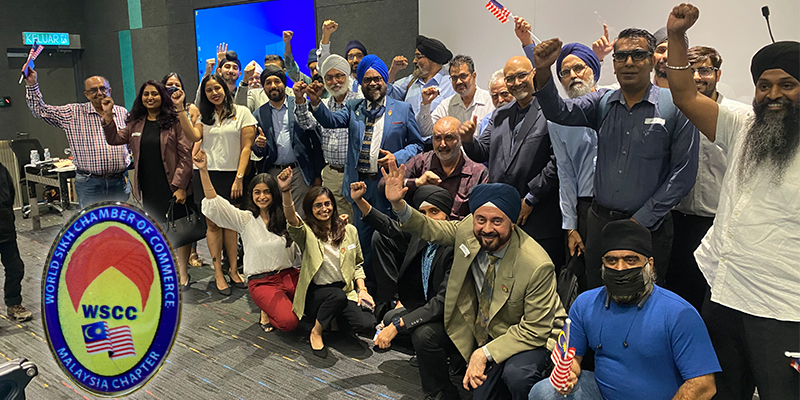
WSCC Malaysia event on 27 Aug 2022 – Photo: Asia Samachar
By Asia Samachar | Malaysia |
About four dozen Sikh men and women involved in various types of businesses, enterprises and corporations caught up for an evening of talk and discussion in Kuala Lumpur on Saturday (Aug 27).
A heavy downpour did not deter them from making their way to one of the maiden events organised by the World Sikh Chamber of Commerce (WSCC) Malaysia Chapter.
Asia Pacific University Sdn Bhd CEO Parmjit Singh, who was recently named EY Entrepreneur Of The Year (EOY) 2021 Malaysia, shared some insights on the making of a successful entrepreneur.
The event also heard Edvinder Singh, who runs a digital, speaking on the importance of modern websites and Malaysian tax expert Harvindar Singh.
WSCC Malaysia chairperson Dr Balwant Singh Bains had earlier outlined plans for the Malaysian chapter of the chamber.
ASIA SAMACHAR is an online newspaper for Sikhs / Punjabis in Southeast Asia and beyond.Facebook | WhatsApp +6017-335-1399 | Email: asia.samachar@gmail.com | Twitter | Instagram | Obituary announcements, click here
Junior Red Cross 2nd Platoon at the Merdeka march pass in conjunction with Independence Day in 1957 – Photo: Sheena Kaur
By Asia Samachar | Malaysia |
THROWBACK 1957. Proud of my dad, Dr Jaswant Singh, aged 20 then, leading the Junior Red Cross 2nd Platoon during the Merdeka march pass in conjunction with Independence Day, 1957. He was attached to the headquarters of the British Red Cross Society at No. 519, Belfied Road, Kuala Lumpur, and was the officer in charge of training the Junior Red Cross at that time. On the far right, in white turban, marching together is my uncle, Dr Mohinder Singh. Happy Independence Day everyone! – Source: Story & photo by Sheena Kaur on her Facebook
ASIA SAMACHAR is an online newspaper for Sikhs / Punjabis in Southeast Asia and beyond.Facebook | WhatsApp +6017-335-1399 | Email: asia.samachar@gmail.com | Twitter | Instagram | Obituary announcements, click here
An Indian global defense and homeland security company has designed a ballistic helmet that can be comfortably worn by Sikh soldiers donning their turban.
Kanpur-based MKU Ltd announced the Kavro SCH 111 T, or simply called Veer, in February.
MKU has in the past executed India’s largest helmet contract, for 159,000 ballistic helmets, for the Indian Ministry of Defense, according to media reports.
The new helmet offers Level IIIA protection to the entire head of a Sikh soldier from ballistic threats and fragments. It also features the advanced ‘reduced helmet trauma technology’ which provides protection from secondary injuries to the skull due to resulting back face deformation in helmets due to high velocity ballistic impact, according to information at the company’s website.
It features a bolt-free helmet design to protect from secondary fragmentation and a Twistfit retention system for an extremely snug and comfortable fit. Fully compatible with MACS (Multi Accessory Connector System), the new helmet allows Sikh soldiers to use the latest head mounted sensors, cameras, torches, communication equipment and night vision devices in their theatre of operation.
“We, at MKU, are glad to be able to create this one-of-its-kind ballistic helmer tailor made for our Sikh soldiers,” said MKU Managing Director Neeraj Gupta in a statement when the product was announced in February.
So far, the company has not announced any contract for the new helmet.
ASIA SAMACHAR is an online newspaper for Sikhs / Punjabis in Southeast Asia and beyond.Facebook | WhatsApp +6017-335-1399 | Email: editor@asiasamachar.com | Twitter | Instagram | Obituary announcements, click here |
Navninder Kaur with her husband Vikramjit Singh. Credit: Supplied / SBS
By Paras Nagpal, Jasdeep Kaur, Carl Dixon | SBS | Australia |
Navninder Kaur and her husband Vikramjit Singh live in Goolwa, a small town in regional South Australia, where they previously ran an Indian restaurant for more than four years.
However, the couple have been told they must leave the country by September 30 or be deported after their third application for a ministerial intervention was rejected last month.
According to letters seen by SBS Punjabi, their skilled visa applications were rejected by the Department of Home Affairs due to a lack of evidence to show that an impartial recruitment process was carried out before Ms Kaur was employed as a cook at the restaurant where Mr Singh was a director.
However, Ms Kaur maintains they have proper documentation to support her claim of fair recruitment, only their immigration lawyer failed to provide it to the department within the required 28 days.
They now have less than five weeks in which to convince the government they should be allowed to stay.
More than 37,000 people have signed the couple’s online petition calling on Immigration Minister Andrew Giles to intervene.
In addition, Ms Kaur says they have also received letters of support from MP Rebekha Sharkie and local mayor Keith Parkes.
Ms Kaur arrived in Australia on a student visa in 2007 to study a TAFE course and transitioned through different courses in order to qualify for permanent residency.
Early on she met Mr Singh, who had been living in Australia since 2006.
In 2014, Ms Kaur alleges a man posing as an immigration lawyer promised to lodge an application for a permanent skilled visa application on her behalf.
“My student visa was expiring in August 2014 when I met an immigration lawyer through a friend to explore my options of a permanent residency pathway….He took $30,000 before lodging a 457 visa on my behalf prior to the expiry of my student visa.”
ASIA SAMACHAR is an online newspaper for Sikhs / Punjabis in Southeast Asia and beyond.Facebook | WhatsApp +6017-335-1399 | Email: editor@asiasamachar.com | Twitter | Instagram | Obituary announcements, click here |
The more I observe societies like Malaysia, the more I am convinced that we have too much of religion but too little of morality and spirituality. That it is considered religiously acceptable by so many to commit public breaches of trust, to steal and to deceive shows that despite the great public display of religion, our society has lost its sense of morality and its bearings about what is right and ethical behavior. We talk about preparing for the hereafter but so many in our society spend their lives accumulating shamefully excessive material wealth, even if it involves unethical and illegal means.
The robbers, psychopaths and scoundrels in our society have shown how willing they are to use religion as a disguise to hide their wrong doings. They have shown how they can use religion to gain and retain power, subduing the masses by promoting unquestioning obedience to religion and consequently to them as elevated representatives of that religion, even though their behaviors and actions break every code of morality and spirituality, or what would normally be considered just decent behavior.
The public has been made obedient and subservient with the use of religion. Religion has given small minds great power over the rest of society simply because we allow these small minded, and largely uneducated, individuals to project themselves as enforcers of religion. Those in power have encouraged this religious intimidation because it serves their own selfish interest. However, this religious monstrosity they have created and imposed on society will one day eat them too.
The civil service has become so riddled with corruption that one cannot escape the conclusion that many have come to see rent-seeking as their birthright. How can so much moral degeneration exist amidst so much public display of religion?
When individuals perform all the religious rituals and yet find nothing wrong with engaging in corrupt practices and other criminal acts, there is something fundamentally wrong with the way these individuals were brought up and with the societies in which they were brought up.
If we want to distinguish the angels from the devils, it seems to me that it is not religion that we should look at but rather towards morality and spirituality. If we want to be better human beings and live in more humane societies, we must once again establish the link of religion to morality and spirituality. We need to stop focusing on rituals and superficial external appearances and behaviors, and start looking within ourselves, at what lies within our soul. We need to shift our attention from the behaviors of others and spend more time examining our own behavior. Let us look at the morality of our own actions.
It is clear that the teaching of religion in our schools has failed to produce people with good character and moral values. Perhaps, it is time to focus on morality and spirituality, irrespective of religion. It can only make us more humane and compassionate in our dealings with fellow humans and all living things. It may even give us leaders who actually care about us. What a nice change that would be.
Sukhdave Singh is a former deputy governor of Central Bank of Malaysia and a former independent director of Malaysian sovereign wealth fund Khazanah Nasional Bhd. The article was published by Sukhdave on his LinkedIn page (link) and is reproduced here with his permission.
* This is the opinion of the writer, organisation or publication and does not necessarily represent the views of Asia Samachar.
ASIA SAMACHAR is an online newspaper for Sikhs / Punjabis in Southeast Asia and beyond.Facebook | WhatsApp +6017-335-1399 | Email: editor@asiasamachar.com | Twitter | Instagram | Obituary announcements, click here |
Togetherness at Singapore’s Harmony Games – Photo: SKA
By Asia Samachar | Singapore |
After a hiatus of two years, the Harmony Games made a welcome return this year, with the Sikh community hosting the games at the Singapore Khalsa Association (SKA) on Saturday (27 August 2022). The games were held in partnership with the Sikh Advisory Board (SAB).
Themed ‘Unity in Adversity, Together in Harmony’, the 2022 games highlighted the Singapore spirit and togetherness in the fight against the COVID-19 pandemic and coming out triumphant. At the same time, it reflected the strong and well-knit Singapore social fabric, with everyone in Singapore moving forward together in a post COVID-19 environment.
In addition to providing the opportunity for Singaporeans from all walks and backgrounds to meet, interact and socialise and, in the process, build greater trust and bonds, this year’s games celebrated and showcased the Sikh way of life, culture and tradition.
Dr Janil Puthucheary, Senior Minister of State for Communications and Information, and Health, graced the occasion. He toured the activities and even tried his hand at some of the activities. At the same time, he interacted with the participants as well as representatives of the inter-faith groups and leaders and representatives of the Sikh institutions.
Started in 2008, the games are organised annually by different communities and organisations, making the extra effort, as individuals and Singaporeans, to bring communities together, to get to know one another, to respect one another and to deepen and strengthen community bonds.
The half-day programme included sporting activities such as futsal, netball, hockey and lawn bowling as well as kampung games like sepal takraw and chaptey. At the same time, the participants had the opportunity to try their hand at FI racing. The event also included an exhibition on the Sikh community, a mass bhangra aerobic and a multi-ethnic musical instrument performance. What’s more, there was a turban-tying booth where many participants had a turban tied on them.
SKA president Hernaikh Singh said: “We were delighted to host the Games this year. It was an important initiative at community bonding. Its organisation was all that more relevant in the current COVID-19 landscape. It was this community togetherness and spirit that enabled us to collectively tackle the pandemic menace. We must ensure our social fabric in Singapore always remains strong. The Harmony Games provided an important platform in this respect.”
SAB chiarperson Malminderjit Singh added, “The Harmony Games are a good opportunity to bring people from all faiths and ethnic backgrounds together to mingle, interact and have an enjoyable time. I am glad to see it return after a break due to COVID-19 and I am honoured that the Sikh community hosted the Games again after doing so in 2013.”
It was certainly a fun morning at community bonding!
ASIA SAMACHAR is an online newspaper for Sikhs / Punjabis in Southeast Asia and beyond.Facebook | WhatsApp +6017-335-1399 | Email: asia.samachar@gmail.com | Twitter | Instagram | Obituary announcements, click here