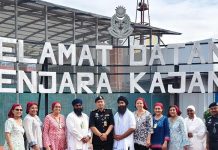
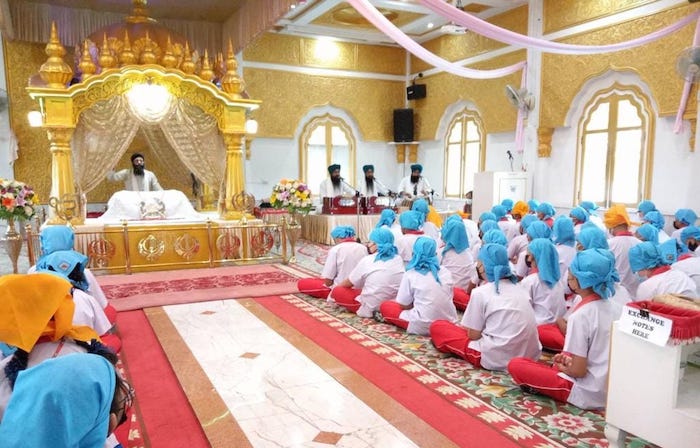
Some 160 students from the Thesbaan Choeng Thalay Tantivit school in Phuket visited the Sri Guru Singh Sabha Phuket to learn about Sikhism. – Source: Thai Sikh News
ASIA SAMACHAR is an online newspaper for Sikhs / Punjabis in Southeast Asia and beyond.Facebook | WhatsApp +6017-335-1399 | Email: asia.samachar@gmail.com | Twitter | Instagram | Obituary announcements, click here
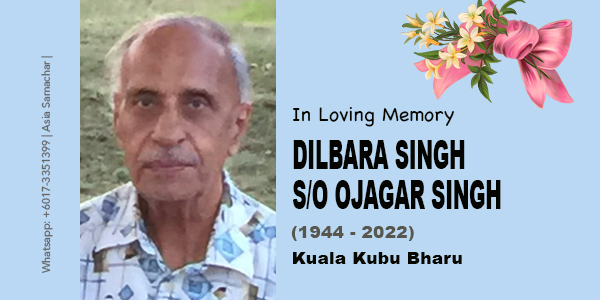
Great Grandchildren: Brahamjoth, Jasmine, Arjun, Nimrta, Eakay, Ziaa, Aryan, Sanmukh, Sukhmeher, Sophie and Sumreet
and a host of relatives and friends.
Last respects can be paid at Loke Yew Crematorium, Kuala Lumpur from 10am – 12.30pm followed by followed by Antim Ardaas and cremation at 12.30pm on 28th August 2022 (Sunday)
Akhand Path will be held from 2nd Sept (starting 9am) till 4th Sept, followed by Path Da Bhog from 10am – 12noon at Gurdwara Sahib Mainduab (Jalan Pudu Lama), Kuala Lumpur
“Your life was a blessing, your memory a treasure. You are loved beyond words and missed beyond measure”
Kindly treat this as a personal invitation from the family.
ASIA SAMACHAR is an online newspaper for Sikhs / Punjabis in Southeast Asia and beyond.Facebook | WhatsApp +6017-335-1399 | Email: asia.samachar@gmail.com | Twfffitter | Instagram | Obituary announcements, click here
L-R: Lydia de Vega winning gold in 200m at SEA Games 1993; Jacter and Lydia then, and many years later – Photo: Jacter Singh / ST
By V.K. Santosh Kumar | The Straits Times | Singapore |
He was a Sikh from Singapore. She was a Catholic from the Philippines. Theirs is an unusual love story. Athletics brought them together and for 17 years, they lived together in a flat in Yishun.
On Wednesday (Aug 17) night, Mr Jacter Singh returned to Singapore after attending Ms Lydia de Vega’s funeral. The former national long-distance running champion was in Manila for a week to bid adieu to a fellow athlete he had known since 1979 and was his long-time partner.
It is little known that the Singaporean and the Filipina track legend – once hailed as Asia’s fastest woman and one of the Philippines’ most-decorated athletes – were living together in Singapore till April.
“I was in shock and cried when her daughter (professional volleyball player Stephanie de Koenigswarter) called me at 9pm on Aug 10 and told me Lydia (aged 57) was gone,” Jacter, 61, said. “It took me a while to accept that she was no longer around. She had breast cancer for four years and became weak in April. She wanted to go back to Manila and be with her family. But, before she left, she told me she would be back. It was not to be.”
Mr Singh’s unlikely romance with Ms de Vega began in 1979, when they met at the Asean Schools Track and Field Championships in Singapore.
The 18-year-old Sikh saw a stunning 15-year-old Filipina sprinter and wanted to say hello. But he froze when the long-limbed girl was ready for a chat.
Mr Singh wondered what the lithe beauty saw in him. But the tete-a-tete was the beginning of a touching bond between an innocent girl from the Philippines and a boy who hailed from a conservative family.
“We became an item for six years before we split,” said Mr Singh.
Ms de Vega married engineer-entrepreneur Paul Mercado in 1990 and they had three children – including son John Michael who died in a car accident in February 2001 at the age of four. The couple divorced in 2003.
Mr Singh married a Singaporean traditional Sikh girl in 1988. They had a son and divorced in 2003. His former wife and son now live overseas.
“I guess Lydia and I were destined to meet and forge a long relationship,” said Mr Singh. “We were in touch and decided to get back together after our failed marriages.”
Read the full story, ‘Unusual love story: Singaporean’s romance with Philippine track queen Lydia de Vega’, (The Straits Times, 20 Aug 2022), here.
ASIA SAMACHAR is an online newspaper for Sikhs / Punjabis in Southeast Asia and beyond.Facebook | WhatsApp +6017-335-1399 | Email: asia.samachar@gmail.com | Twitter | Instagram | Obituary announcements, click here
Drugs are easily available and the authorities seem to be nowhere near addressing the menace.
A Punjab resident took an unprecedented step of handing over a small packet of “chitta” (drugs) which he claimed was procured for Rs 500 from the the very place he had exposed in a live social media broadcast a week earlier.
Dejected by the police “inaction”, resident Gurmeet Singh Chabhal handed over the packet bought at the Chabhal area to Tarn Taran MLA Dr Kashmir Singh Sohal to register his protest, reports The Tribune.
Gurmee said he was forced to post the video clips after he came across a young boy who fell unconscious after injecting a drug dose at a secluded place on the Baba Budha Sahib turn on the Chabhal Khurd road on August 16.
Immediately, he posted two video clips about easy availability of drugs in the area which describe the spot of crime and the culprits who sell drugs in the area, the report said.
ASIA SAMACHAR is an online newspaper for Sikhs / Punjabis in Southeast Asia and beyond.Facebook | WhatsApp +6017-335-1399 | Email: asia.samachar@gmail.com | Twitter | Instagram | Obituary announcements, click here
| Entry: 26 Aug 2022; Updated: 30 Aug 2022 | Source: Family
ASIA SAMACHAR is an online newspaper for Sikhs / Punjabis in Southeast Asia and beyond.Facebook | WhatsApp +6017-335-1399 | Email: asia.samachar@gmail.com | Twfffitter | Instagram | Obituary announcements, click here
Sehaj Path da Phog and Antim Ardas on 4th September 2022, Sunday, from 9.00 am to 12pm, at Gudwara Sahib Khalsa Land, Kuala Kubu Bharu, Selangor.
Guru Ka Langgar will be served.
Will always love and miss you Daddy. Thank you for the memories.
For further information please contact:
Melinder Kaur 019-2697495
Parminder Singh 019-2697497
| Entry: 26 Aug 2022 | Source: Family
ASIA SAMACHAR is an online newspaper for Sikhs / Punjabis in Southeast Asia and beyond.Facebook | WhatsApp +6017-335-1399 | Email: asia.samachar@gmail.com | Twfffitter | Instagram | Obituary announcements, click here
ASIA SAMACHAR is an online newspaper for Sikhs / Punjabis in Southeast Asia and beyond.Facebook | WhatsApp +6017-335-1399 | Email: asia.samachar@gmail.com | Twfffitter | Instagram | Obituary announcements, click here
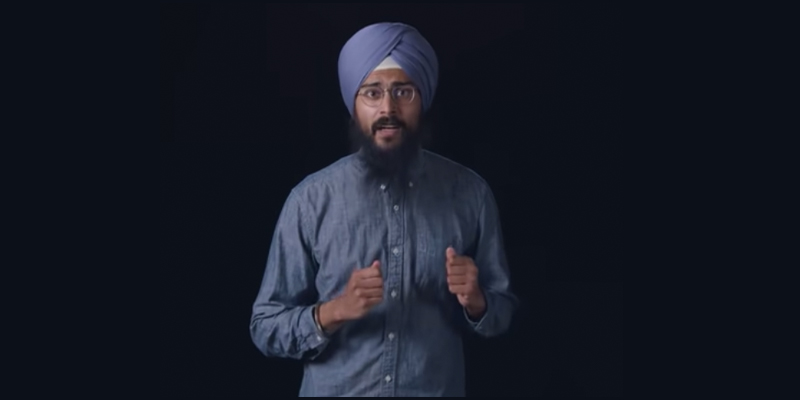
Angad Singh, a US citizen and journalist associated with US news and entertainment company Vice, was reportedly deported from the Delhi airport Wednesday night (Aug 24), according to local media reports.
Quoting family members in Punjab, Angad was said to be on personal visit, not the first time that the US-born and bred Sikh had visited India.
Angad was supposed to have landed at the Delhi airport at 8.30 pm Wednesday and was deported to the US within three hours, according to one media report, wuoting family members.
“Angad Singh covers South Asia. He had made a documentary on the Shaheen Bagh protest. The Government must be upset due to that documentary. His request for a visa as a journalist to make a documentary on Dalits in India was rejected recently. Now, he was coming for a family reunion and was on a personal visit. But he was sent back from the Delhi airport,” an unnamed family member was quoted in The Indian Express which had reached out to immigration officials on the issue.
His mother Gurmeet Kaur, a writer, also talked about her son’s deportation in a Facebook post, the report added.
She was quoted as saying: “Today, my son an American citizen who travelled 18 hours to Delhi to visit us in Punjab, was deported. He was put on the next flight back to New York. They didn’t give a reason. But we know it is his award-winning journalism that scares them. It is the stories he did and the stories he is capable of. It is the love for his motherland that they can’t stand.”
“He is 6’5” tall. His back hurts after long flights in such small spaces. He must be wanting to lay down. I wish you Chardi Kala, my boy. It’s not easy to be a Sikh, a Gursikh on top, a journalist, a warrior of truth and justice. Speaking the truth has a price. We must pay for it.”
ASIA SAMACHAR is an online newspaper for Sikhs / Punjabis in Southeast Asia and beyond.Facebook | WhatsApp +6017-335-1399 | Email: asia.samachar@gmail.com | Twitter | Instagram | Obituary announcements, click here
Ever since Sikh scholar and author of The Sikh Encyclopedia Bhai Kahn Singh Nabha raised the issue of errors within the Sri Guru Granth Sahib (SGGS) in 1918, Sikh intellectuals, thinkers, writers and researchers have raised the matter continuously. They called for the Sikh world to do something about it. So strident were these calls that even groups that are considered anti-thesis to intellectualism – deras and taksals have come on board. Gurbachan Singh, the head of the Bhindran Mehta Dera published a book on the matter. Former Akal Takhat (AT) Jathedar Ranjit Singh said in a recorded sermon that the “SGGS that we have today contains thousands of errors.” Another AT Jathedar and dera trained Joginder Singh Vedanti created a list of 5,000 errors that he said existed within the SGGS. A one-time head granthi of Darbar Sahib Gyani Jagtar Singh Jachak lent his voice and expertise to bringing about awareness of the deep-seated and sensitive problem. It appeared that for once, Sikh intellectuals, thinkers, writers and researchers had energized even those groups that were disagreeable and opposed to them.
But nothing was ever done about correcting the errors that existed within the SGGS. At least not openly and officially.
Then in early 2022 somebody actually did something. A “corrected” version of the SGGS was uploaded on a website and saroops of the SGGS were said to be made available.
The outcome was startling. The entire community of Sikh intellectuals, thinkers, writers and researchers fell silent. When the silence was broken, it was to say things like what missionary preacher Sarabjit Singh Dhunda said to a gurdwara audience: “By the way, I do not agree with what Sardar Tharminder Singh has done.”
Tharminder Singh is the owner of the Sikh Book Club – the name of the website where the “corrected” version of the SGGS was uploaded. He is also part of a group of Gurbani Scholars who had come together to work on the issue. It is said that Jathedar Vedanti had bequeathed his entire work on Gurbani errors in the form of thumb drives to this group. Essentially then, the work of Tharminder Singh, the Sikh Book Club and the team that put up the “corrected version” of the SGGS was the outcome of cooperation amongst groups that were disagreeable and opposed to each other on just about every other issue. One would think that this alone was an accomplishment of sorts. Yet Sikh intellectuals, thinkers, writers and researchers maintained their deadly silence.
Thaminder Singh (left) of Sikh Book Club. Right: Giani Harpreet (middle) making the ‘tankhaiya’ pronouncement from Akal Takht on 3 May 2022
The segment of the Sikh masses who have never read the SGGS and are guided by dark emotions of unenlightenment stepped in to fill the vacuum of silence. They flooded the social media space to pour scorn on Tharminder Singh, the Sikh Book Club and the job that his group had done. He was accused of “altering Gurbani,” “editing the SGGS” and “changing Dhur Ki Bani.” Some took to reminding Tharminder Singh of “what happened to Baba Ram Rai”– the eldest son of Guru Har Rai who was said to be expelled from the Guru household for altering one word – according to a concocted narrative by nirmla writer Kavi Santokh Singh in his Gurpartap Suraj Granth.
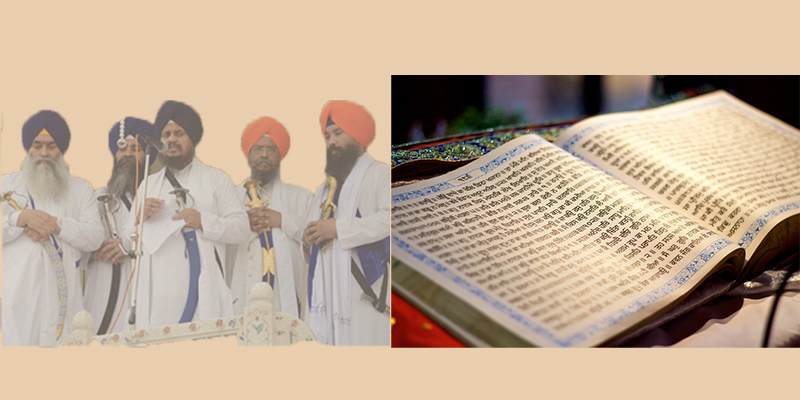
The deafening silence of Sikh intellectuals and the loud empty-vessel portion of Sikh masses gave our Panthik Jatheybandees an opportunity to gather under the auspices of the SGPC and take aim at Sikh intellectuals, thinkers, writers and researchers. On May 3rd, the Jathedar of AT declared Tharminder Singh a tankhayia. On the same day, the AT issued a stop work order to another Sikh intellectual Dr Oangkar Singh of USA. This Gurbani scholar was in the midst of producing a translation of the SGGS.
What possible conclusions can one make pertaining to Sikh intellectuals then? That the primary driving force for our intellectuals – at least on the matter of errors within the SGGS – is cowardice? Or that they are driven primarily by self-preservation? That they they fall silent when the establishment wields the sword of compliance on one of their kind? That they are vocal and brilliant at airing the problem, but silent and indifferent when it comes to actually doing something about the solution? That they drop the issue they themselves championed once the heat begins to build up? Some of the above? All of the above?
Credit must be given to those who did indeed speak up – not just courageously, but intelligently indeed. At the time of this writing, Radio Virsa New Zealand host Harnek Singh and his co-host Gyani Lakhbir Singh of Canada had done six continuous segments in which they analyzed the issue logically for their listeners. They asked of our intellectuals: “Now that someone has done something about the issue, isn’t it your duty to at least examine the work; to see which corrective actions are acceptable and which need more deliberation?
Given that the issue is one that needs our intellectuals to come on board, and given the character of our intellectuals as displayed thus far, the only question that remains is: Is there any hope at all in resolving this problem?
Sikh thinker, writer and parcharak Karminder Singh Dhillon, PhD (Boston), is a retired Malaysian civil servant. He is the joint-editor of The Sikh Bulletin and author of The Hijacking of Sikhi. This article appeared as the editorial of the The Sikh Bulletin – 2022 Issue 3 (July-September 2022). Click here to retrieve archived copies of the bulletin. The author can be contacted at dhillon99@gmail.com.
ASIA SAMACHAR is an online newspaper for Sikhs / Punjabis in Southeast Asia and beyond.Facebook | WhatsApp +6017-335-1399 | Email: editor@asiasamachar.com | Twitter | Instagram | Obituary announcements, click here
“In the past, I have spent my time teaching primary school students from marginalized communities, participated in multiple public speaking events to raise my voice against social evils prevailing in my society, and founded a youth-club to preserve the Gurumukhi script and the Punjabi language. I am also a Sikh history teacher at the local gurudwara and am constantly exploring the business and accounting world through an international accounting internship.”
That’s the voice of Hasleen Kaur, a student at a Chandigarh school, a young student oozing Sikhi in her words.
She is one of the 38 recipients of the Lester B. Pearson International Scholarship that will cover tuition, books, incidental fees, and full residence support for four years at the University of Toronto (UoT). The scholarship was created to bring exceptional students from around the world to study at the UoT.
Hasleen, who will pursue Co-op Business Administration at UoT Scarborough, is joined by two other Sikh students, Mehakpreet Kaur Saggu and Paramvir Singh.
BELOW ARE THEIR ENTRIES PUBLISHED AT THE UNIVERSITY’S WEBSITE
Hasleen Kaur (Shishu Niketan Model Senior Secondary School, India) University of Toronto Scarborough, Co-op Business Administration
‘Share your privileges wherever you can’
“Along with a smiling face and confidence, what I always carry with myself is this teaching of my father.
“Vaheguru ji ka khalsa vaheguru ji ki fateh–I am Hasleen Kaur, daughter of a farmer from Punjab and one of the youngest Hindi language authors in India.
“My hobbies are playing the harmonium and tabla. Singing hymns, I feel empowered and determined to follow the Sikh motto of working for ‘sarbat da bhala’ (wellbeing of all).
“In the past, I have spent my time teaching primary school students from marginalized communities, participated in multiple public speaking events to raise my voice against social evils prevailing in my society, and founded a youth-club to preserve the Gurumukhi script and the Punjabi language. I am also a Sikh history teacher at the local gurudwara and am constantly exploring the business and accounting world through an international accounting internship.
“I derive a lot of inspiration from my father’s life story and hence have always found ways to give back to society. Through my business undergraduate degree at U of T, I aim to improve agricultural marketing in India to benefit the farmers and other stakeholders through my innovative business ideas and work towards ending global hunger.
“I am highly honoured and exhilarated to be a part of the Lester B Pearson Scholars community and am ready to take in its benefits and responsibilities with equal enthusiasm.”
Mehakpreet Kaur Saggu (GHG Khalsa Collegiate Public Senior Secondary School, India) University of Toronto Scarborough, Co-op Life Sciences
“Greetings! I am Mehakpreet Kaur Saggu from Raikot, Punjab. Besides cherishing colossal cups of my mother’s signature tea, I adore adding new literary conquests to my stack of books. This sweet spot is where I discovered my love for the delicate intricacies of the mammalian brain. Through the beautiful blend of neuroscience, literature, and philosophy, I plan to plunge into the emotional learning circuits of the mammalian brain, consequently moving closer to my long-term pursuit of not only developing cost-effective and scalable interventions for neuropsychiatric disorders but also discovering how first-hand emotional experiences arise.
“I feel extremely ecstatic, gleefully glad, and highly humbled to be the recipient of the Lester B. Pearson International Scholarship this year. I am forever grateful for the unwavering support of my father, mother, brother, relatives, and school teachers who have played an incredibly instrumental role in shaping the individual I am. I look forward to meeting new people, perspectives, passions, and possibilities. Above it all, I can’t wait to have the opportunity to call the lovely University of Toronto my home!”
“Hello! My name is Paramvir Singh, and I am a student from India with a deep interest in business studies, economics, and unfolding the complications that lie in the subject of management.
“Outside the classroom, I love to play soccer, socialize, read novels, and engage in community service. My most recent and highest achievement is organizing a world record for the longest webinar, part of my campaign against drug and child abuse. Through the vast opportunities available at the University of Toronto, I aim to continue exploring my interests while trying to create a positive impact on society.
“I’m highly honoured to be a recipient of the Lester B. Pearson Scholarship, and I look forward to starting my journey at the University of Toronto.”
ASIA SAMACHAR is an online newspaper for Sikhs / Punjabis in Southeast Asia and beyond.Facebook | WhatsApp +6017-335-1399 | Email: asia.samachar@gmail.com | Twitter | Instagram | Obituary announcements, click here
Each year on the 14th and 15th of August, with great pomp and ceremony, the newly established nations of Pakistan and India celebrate their independence from British rule, which ended in 1947. This was the culmination of over 50 years of struggle in which many who participated in the ‘quit India’ freedom struggle lost their lives and livelihoods. But the flag waving and military displays associated with such occasions today mask the terrible horror and destruction associated with British Imperialism, one of which is how people’s sense of history, identity, loyalty and unity became disrupted and distorted. Indeed, one of the features of European imperialism more generally was the way nations and the lands of indigenous and first nation peoples were first appropriated, exploited, divided and dismembered. One of the many consequences of this brutal inhumane strategy was the establishment of newly manufactured identities that later became the source of much ‘ethnic’, tribal and religious conflicts; the partition of India in 1947 is perhaps one of the most tragic examples of this policy. It is this increasing realisation of the problematics of manufactured identities carved out of the colonial experience that has led to some questioning the very basis on which the peoples of the vast Indian sub-continent are categorised and identified.
Irrespective of the problematic nature of identify formation, though the pace of change may vary over time, there can be little disagreement that the social and cultural history of humanity reflects the constant making and remaking of group identities. The ‘group’ here can be understood as a bond of kinship that enables one to develop a sense of belonging represented through any one or combination of family, ethnicity, class, caste, race, religion, language, national origins and history. Most critically, one needs to understand that identity formation is not some benign natural process but is the product of powerful social, political and psychological forces. Whilst we may feel deeply attached to various markers of identity that distinguish ‘us’ from ‘them’ in what sociologists term a process of ‘othering’ or in-group and out-group preference, such questions reveal an ongoing struggle between essentialist (fixed) and contingent (changing) conceptions of who we are. The problem with identity is the tendency to become fixed and one-dimensional, which Amartya Sen (2006) in his book, Identity and Violence: The Illusion of Destiny, describes as a process of ‘miniaturization’. By making specific reference to the terrible carnage that took place with the partition of colonial India and the deaths of millions of Muslims, Hindus and Sikhs in 1947, he observes that such large-scale barbarity is based on the illusion of singular and one-dimensional sense of identity which humans as prone to adopt, even if this is for a temporary moment of madness.
SOUTH ASIAN HISTORY MONTH
In recent years, especially amongst the South Asian diaspora communities, attempts have been made to establish a sense of collective pride as well as learn from the past and the dangers of reductive conceptions of identity. One such initiative is an annual event called South Asian Heritage Month (SAHM). Established in the UK in July 2019, this represents a series of nation-wide events that take place between 18 July – 17 August. These dates were selected because they coincide with the weeks preceding the collapse of British rule in India in 1947 resulting in the birth of the new nations, including India, West and East Pakistan (which in 1971 became Bangladesh), Nepal, Sri Lanka and Bhutan.
According to the South Asian Heritage website (https://www.southasianheritage.org.uk), SAHM ‘seeks to commemorate, mark and celebrate South Asian cultures, histories and communities. It seeks to understand the diverse heritage and cultures that continue to link the UK with South Asia.’ Any move to celebrate, commemorate and learn from the past is to be welcomed, especially so given the increasing number of British-born people of South Asia origin who are becoming distanced from their historical roots. Accordingly, it is pleasing to see the widespread adoption of SAHM which, like its predecessor, Black History Month, is both filling in important gaps in our knowledge of the past, as well as opening a critical space to explore what it means to be South Asian in Britain today.
THE CURRENT FRAMING OF THE SOUTH ASIAN CATEGORY:
In the UK the term ‘South Asian’ usually refers to people whose origins can be traced back to the various nations of the Indian subcontinent as mentioned above. According to the 2011 Census, South Asians made up about 5% of the total UK population. This includes 1.45 million (2.3%) Indians, 1.17 million (1.9%) Pakistanis, 0.45 million (0.7%), Bangladeshis, and other Asians including Sri Lankans, as well as third-generation Asians, Asians of mixed parentage, people from Afghanistan, Nepal, Bhutan, the Maldives and Middle East. Because of higher birth rates and ongoing migration, this figure is certain to increase when the data from the current 2021 Census is published later this year.
Over time, significant differences have emerged between and within the various South Asian communities, including those between different generations as well as the significant increase in the mixed-heritage population. Indeed, census-based data reveals that the ‘mixed-race’ is the fastest growing ethnic group in the UK, numbered 1.25 million of which ‘mixed white and Asian constitute 340,000 or 25%. Some studies show that amongst professionals from a South Asian background ‘racial mixing’ is the norm, though, for a complex set of reasons, the presence of mixed-race South Asian people tends to be ignored. It is not too long since mixed race people were contemptuously labelled as ‘half-caste’. Interestingly, this term emerged within 19th Century British colonial rule and was deployed by administrations as a derogatory term towards individuals whose ancestry encompassed white and some other racial background. In short it was a moral condemnation of racial mixing.
Contrary to popular Western stereotypes, partly due to its location, size, geography, history of invaders and colonialism, people from South Asia have very diverse cultures which have been formed through the interbreeding of people who considered to be members of different races, as well as the ongoing amalgamation of outside cultural influences, most notably, historically, Arab, Mogul, Persian and European, and, in today’s connected world, American and Chinese, and the huge range of local, indigenous cultures and traditions. A perfect example of this mixing is in the cuisine of India and the Chicken Vindaloo, a popular dish that originated in Goa in South India. The vindaloo famed throughout the world is a liberal deployment of red-hot spices, but less well known is the fact that its origins are based on the Portuguese dish carne de vinha d’alhos, which literally means “meat marinated with garlic and vinegar.” Even the word ‘curry’, which in the West has become adopted as the generic term for Indian food, in India is a very specific dish that is based on a sauce made with traditional South Indian spices and coconut milk, dairy cream or yoghurt, and is eaten with rice.
It’s worth reminding recalling that the sum population of the geographical region of South Asia is almost 2 billion people. And the land mass is roughly 22 times the size of Britain. There are about 30 major languages in South Asia, written in 16 different scripts. Moreover, because of the needs of the British Empire in the colonies as labourers, skilled workers, soldiers and many people from colonial India were spread across the world, most significantly in East and North Africa, the Caribbean, Singapore, Malaysia, Hong Kong, Middle East, Australia, Canada and Europe. The important point to note here is that as the British withdrew, though some of these forced migrants returned to India after the withdrawal of the British Colonialists, significant numbers ended up in the UK, and other anglophone countries, bringing along with them their own unique cultural identities.
One can draw many conclusions from the above observations, but most importantly, they raise a fundamental question about thinking that a South Asian category can in any sense represent any singular or general set of cultural beliefs, practices, histories or heritages. Indeed, if one accepts the general category reflects the kinds of reductive stereotyping that come out of the Western imperial mindsets, this raises the question, what is the purpose of the category? Before confronting this question head-on it is important to dive deeper into the historical aspects of British Imperialism and the construction of identities of the peoples of India.
THE HISTORICAL CONSTRUCTION OF THE SOUTH ASIAN CATEGORY.
Historically, the category South Asian comes into existence in two ways. The first moment is the collapse of British Rule in India in 1947 when we see the birth of several new nations. In his famous midnight hour speech, which he gave on 14th August 1947, the leader of the Indian Independence movement, Jawaharlal Neru spoke of how “at the stroke of the midnight hour, when the world will be sleeping, India will be awakening to life and freedom”. He went on to observe how India for centuries had struggled with “successes and failures” and that “she has never lost sight of that quest or forgotten the ideals which gave her strength.”
There are many painful ironies in this speech, not least the fact that the India that Nehru was imagining was a wholly British Construct. Historically, there was no such nation; what did exist was a geographic subcontinent which is referred to in ancient literature as Bharat. Initially, the name Bhārat referred only to the Western parts of the Ganges in North India, incorporating present day Pakistan, but was later more broadly applied to the Indian subcontinent and the region of greater India or ‘Maha Bharat’. Bharat became India after the partition, though ironically, the name “India” itself has its origins in the Indus Sindhu (also referred to as or Indus) River. Indeed, the word Hindu is also derived from ‘Indu’, or ‘the people from the Indus region’. The irony is that India or Bharat never was a country in the way one might think of nation state.
We often think of India as the land of Maharajas, but have you ever wondered where these kings and princes came from? When the British East India Company entered India, it was ruled by the Moguls, but as their grip was loosening, we saw the ascendency of a small but ambitious number of princely warlords. With the death of a prince, allegiances would shift and loyalties divided thus proving a perfect opportunity for the British to act as allies and brokers. Before the Partition of India in 1947, there were about 584 princely states, which were to varying degrees (through alliances) part of British India. Through patronage, treaties and force, the British were able to rule the vast and diverse sub-continent and, in the process, create an imagined Indian Identity, which was far removed from reality. And through clever colonial strategy, they were able to entice the Indians into internalising those colonial constructions, though resistance did and has always existed. And so, contrary to what ‘official’ history records that in truth 1947 represents a continuation of the colonial policies of divide and rule, and Independence is remembered by many as a tragic moment of death and division, especially in the Punjab, Kashmir and Bengal, which were dismembered in the process with bloody consequences.
THE FIRST ‘OFFICIAL’ DEPLOYMENT OF THE ‘SOUTH ASIAN’ CATEGORY.
In terms of the UK, there was little official recognition of ethnic differences until the mid-1970s when official policies were associated with assimilation. But it was in August 1972, when we see the category Asian being deployed for the first time by the British Government. This was against the backdrop of the then President of Uganda, Idi Amin, ordering the expulsion of his country’s minority India, giving them 90 days to leave the country. At the time of the expulsion, there were about 80,000 individuals of Indian descent in Uganda. They were the decedents of migrants that were brought to Uganda by the British from the late 19th Century to “serve as a buffer between Europeans and Africans in the middle rungs of commerce and administration” and as indentured labourers to work on the construction of the Uganda Railway. They were from different religious and cultural backgrounds but were clarified as Indians. However, in 1972, British India was no more and many of these ‘Indians’ held British Passports and hence had the legal right to come to Britain. So, it was the British Foreign and Commonwealth Office, in recognition that some of the Ugandan Indians were from regions that were now in Pakistan and Bangladesh decided to refer to them as Ugandan Asians, hence the Asian Category.
THE DOUBLE-EDGED SWORD OF POLITICS OF IDENTITY
Due perhaps to a combination of colonial manipulation and human susceptibility, politics in the UK became dominated by the question of identity, and this not only cuts across lines of ethnicity, but also within the various parts of the UK, both in terms of the four home nations (England, Scotland, Northern Ireland and Wales) and at a regional level, especially within England. Whilst expressions of identity can form a legitimate component of struggles for social justice, especially when they emerge from below, often, identities become socially constructed by the elites and as discussed earlier, deployed as a divide and rule strategy. Interestingly, identities that were deployed by migrants from South Asia who had begun to settle in the the UK from 1960s, tended to reflect religious affiliations, though politically most identified as Black. However, especially after the 1981 ‘race’ riots, we saw the emergence of South Asian Organisations, such as the Asian Youth Movements who began to self-identify resulting in new alliances.
As we saw the entrenchment of identity politics in the UK during the 1980’s and 1990’s, we also saw the shifting of a consensus around the most appropriate labels to use. Reflecting post-colonial anti-racist solidarity and the strong influence of left ideology, we began with political blackness. Because of arguments that the category black was too blunt to capture the collective experience of such a diverse group, we saw the emergence of the term ‘Black and Minority Ethnic (BME). However, due to pressure from some South Asian groups who argued that this term made them invisible, BME morphed into ‘Black and Asian and Minority Ethnic’ (BAME). In more recent times, this category too has been subjected to criticism.
And amongst South Asian groups, due to a combination of colonial legacies in the subcontinent along with UK specific issues around, for example, violent extremism and so-called ‘Asian grooming gangs’, which are (stereo)typically associated with Pakistani Muslims, we have seen demands by some for a move away from Asian category altogether in favour or Indian, Pakistani and Bangladeshi, Nepali etc, whilst others argue for further granularity along the lines of religion, culture, language and regional identities, such as Punjabi, Sindhi, Baloch, Kashmiri, Pathan, Kashmiri, Gujarati, Marathi, Bengali, Tamil, Telugu and Bihari.
CONCLUSION
Whilst it might be possible to agree on the geographical delineation of South Asia, as a collective category that is capable of projecting people’s histories, cultures or collective interests, the category has little to offer. That is not to say that any number of alternatives are perfect, or that we might be able to establish a consensus on the ‘right’ category. That is because identity and identification represent a complex meshing of politics, ideology, culture and psychology, even though we often talk of identity as some primordial essence. As social animals, human beings naturally develop a sense of familiarity and unfamiliarity, or, if you like, a sense of belonging and non-belonging. From these simple building blocks over time, we saw the emergence of tribes and mechanisms for delineating and maintaining boundaries. In the modern age, which Stuart Hall suggests commences in 1492, we see in some senses, with the rise of colonial mercantile capitalism, the solidification of certain identities, ultimately leading to the maps of the world we see today and the ideas of the nations that inhabit the planet.
At one level celebrating SAHM, or deploying the label South Asian seems like a perfectly benign matter, but, left unchecked, as we can see in other spheres, such moves can fuel a politics of identity, entitlement, envy and separation. In anti-racist movements that emerged in the UK in the 1970s, the clear priority was on building solidarity amongst those who had a common experience of racism and colonialism across the colonised lands. For them, there was no denial of the cultural heritages, but first and foremost was the political imperative to keep united. Today, it seems like, just as what happened in 1947, the common struggle against racism has become diverted into the politics of identity and entitlement. The only way to counteract this tendency is to balance a politics of identity with a ‘politics of sameness’. This is not some clarion call to revert to a failed communist ‘one size fits all’ model; it represents a realisation that, as well as celebrating differences, up to and including the uniqueness of each human being, the only way to guarantee all our futures, especially in an age where we face the existential threat of global warming and global pandemics, is based on collective interest and shared humanity. And in this regard, we can all take strength from the powerful words of the late great poet, Maya Angelou when in a speech she proclaimed:
“If a human being dares to be bigger than the condition into which she or he was born— it means so can you/”And so you can try to stretch, stretch, stretch yourself so you can internalise, ‘Homo sum, humani nil a me alienum puto: I am a human being, nothing human can be alien to me.’ That’s one thing I’m learning.”
Gurnam Singh is an academic activist dedicated to human rights, liberty, equality, social and environmental justice. He is an Associate Professor of Sociology at University of Warwick, UK. He can be contacted at Gurnam.singh.1@warwick.ac.uk
* This is the opinion of the writer and does not necessarily represent the views of Asia Samachar.
ASIA SAMACHAR is an online newspaper for Sikhs / Punjabis in Southeast Asia and beyond.Facebook | WhatsApp +6017-335-1399 | Email: editor@asiasamachar.com | Twitter | Instagram | Obituary announcements, click here |