















UA-56202873-1
Page 347

Nankana Massacre: 101 years come 20 February

2
Nankana Sahib Massacre (also known as Saka Nankana), a massacre that took place at the Nankana Sahib, February 20, 1921 which was then British India but now Pakistan. The top left corner of the picture is Bhai Dalip Singh (1894-1921), one of the martyred Sikhs. – By Parminder Singh, Punjab (Source: Panjabi Digital Library)

By Bhagwant Singh | Opinion |

In the midst of the pandemic and the grips of the farmers protest in India, the Sikh community missed out and was unable to commemorate one of the most painful and at the same time defining event in both, the history of Sikhs and the independence of India. It may be an opportune time to commemorate this year, with an Ardas at all our gurdwaras at 10:42 am GMT on 20 February 2022 which will be exactly 101 years since the event. This is as it is featured in our Ardas when we recall the Shahids who were martyred in the service of our gurdwaras.

After the fall of the Sikh Raj following the death of Maharajah Ranjit Singh, the British quickly annexed Panjab. The authorities made every effort to ensure that the Sikhs would not organise themselves as that could lead to their expulsion from Panjab and the Indian subcontinent. They kept a watchful eye on all the places of worship and made every effort to prevent the Sikhs from organising themselves. The members of the Sikh royal family including Maharajah Dalip Singh were shipped to the UK to prevent them from being used to galvanise support from the public.

The British Sarkar used the divisions in the community to their advantage. They played one community against the other and cultivated relationships with members of different sects to keep the people in check. One such sect was the Udasis. These Udasis looked after the gurdwaras when the Sikhs had to abandon them and flee from the Moguls in the 1700s. The Udasis stayed on as mahants after the fall of the Mogul Empire. They became the head priests at a large number of gurdwaras including Nankana Sahib and Harmindar Sahib in Amritsar. They professed themselves as Sikh scholars which gave them a lot of sway over Maharajah Ranjit Singh and through him onto the wider community. Some of them became mahants at a number of historic gurdwaras. 

During his reign Maharajah Ranjit Singh generously assigned swathes of land to these gurdwaras. The gurdwaras raised revenue that was used for the upkeep and benefit of the gurdwaras The mahants took charge and used the revenues as they pleased. They began to put their own practices and rules in place including the caste system to the point of preventing lower caste Sikhs from offering parshad at Harmandir Sahib. 

The Jallainwalla Bagh Massacre on 13 April 1919 set the tone for reform in the Sikh establishments and the end of British rule in India. The restrictions on people of lower castes at Harmider Sahib was overturned after strong protests in 1920. The Shiromani Gurdwara Parbandak Committee (SGPC) was formed on 15 November 1920 with the aim to free all the historic gurdwaras from clutches the mahants. Now the Sikhs had a platform to take action to redress the injustices that were going on in Panjab as a result of the excesses of the British officials and their cronies including the mahants.

The mahants were protected and in exchange they were used by the British to subjugate the Sikh community. The mahants at the same time confused the public by introducing Hindu rituals and idols into gurdwaras.  The mahants at Nankana Sahib was reported to have raped devotees, consumed alcohol and had dance performances by the ladies from the kothas at the Gurdwara.

Soon after its inception, the SGPC started to agitate for management of the gurdwaras to be transferred from the mahants to the Sikh community. This was built upon the ongoing socio-religious programme of liberating Sikh shrines from Udasi priests and mahants, initiated by the Chief Khalsa Diwan in 1902.  They negotiated with the mahants at a number of gurdwaras who agreed. At other Gurdwaras there were clashes and two Sikhs were killed and 17 injured at Tarn Tarn Gurdwara which was the first success of the SGPC. However, Naranjan Das the mahant at Nankana Sahib flatly refused to budge. He assembled a band of 400 mercenaries and thugs to keep any challenge to his authority under check. He also had the protection of the District Commissioners and police to carry on his desecration of the sacred Nanakana Sahib Gurdwara and its premises.

The SGPC decided to meet the mahant on 3 March 1921 to advise him to hand over the charge of Nankana Sahib gurdwara to the committee. However, the committee received information from its own intelligence that the mahant was planning to invite the Sikh leaders at Nanakana Sahib and have them killed. A meeting of the Sikh leaders was called at Gurdwara Khara Sauda on 16 February 1921 to chalk out the course of action. It was decided that groups of Sikhs would go in jathas (squads) and take charge of the gurdwara. The Sikh leaders had learnt that Narayan Das was going to Lahore for a Sanatan Conference to meet other mahants to discuss their strategies to counter the plans of the SGPC to take the gurdwaras away from them. This conference was scheduled from 20-22 February 2021.

Bhai Kartar Singh Jhabbar and Bhai Lachaman Singh Dharowali were chosen to lead jathas of 50 members each to reach Nanakana Sahib on 20 February 2021 while Narayan Das was away in Lahore. The plan was for Bhai Lachman Singh to leave first with one Jatha Amritsar for Nankana Sahib and Bhai Kartar Singh was to catch up with him with his jatha. After doing the Ardas the first jatha of 50 Sikhs began their journey to Nanakana Sahib on 19 February 1921.  Enroute they met with other jathas and their ranks grew to 200. At Chanderkot Jhal, Jathedar Lachhman Singh as planned waited for Bhai Kartar Singh Jhabber and his jatha. However, Kartar Singh Jabbar returned to Amritsar following the instruction of the SGPC after the committee received information that Narayan Das had returned to Nankana Sahib and had gathered guns, swords, cleavers and paraffin. He had also engaged Pathans and thugs with the view to slaughter and burn the Sikhs who came to teach them a lesson so that they would never challenge his authority. 

The SGPC sent two representatives, Variam Singh and later Dalip Singh, to urge the Jatha to stop and return to Amritsar. They waited in vain and finally Jathedar Lachman Singh decided to cancel the plan to march on to Nankana Sahib. However, Jathedar Tehal Singh stepped forward and addressed the jatha. He reminded everyone that “the prayers have already been said and the action plan had already been sealed with Guru’s Hukum (command), it is now only right to move forward”. He added that “all the members of the jatha shall keep calm under the most extreme provocations.”(1) From here Jathedar Tehal Singh took command of the jatha and resumed the march to Nankana Sahib. Variam Singh and Paul Singh who were sent to caught up with the jatha to stop it from going ahead by the SGPC begged them not to proceed to Nankana Sahib. Lachman Singh responded that they had done the Ardas and the hukam has been received and they will go have to press ahead. Dalip Singh also tried in vain and even presented the letter that was written by the President of the SGPC to the Jathedar. His response was that “we are going in peace and we cannot but act according to the guru’s Hukam”. The combined jatha of 200 Sikhs arrived at the gates of the Gurdwara at 5.45am on 20 February 1921. They proceeded into the Gurdwara to recite Japji Sahib followed by Asa Di Var Kirtan. 

Once the sangat had settled down at the instruction, Narayan Das the mayhem began. There was shooting outside the Darbar. The mahant’s mercenaries began the orgy of shooting, swinging swords and chopping the bodies of the dead and injured with cleavers. They poured the paraffin on the bodies of the dead and injured and set them on fire. A group of the mahant’s men forced open the door of the Darbar and opened fire. Bhai Lachaman Singh was sitting at the palanquin doing chor sewa when he was shot repeatedly. Some bullets ripped into the Guru Granth Sahib. Bhai Sahib put his body forward to take the shots to shield the Guru Granth Sahib from the bullets. While wounded he was wrenched from his seat and taken out of the Darbar Sahib. He was then hung from a tree, drenched with paraffin and set alight. An 8 year old child, Darbara Singh, who was from Bhai Lachman Singh’s village had accompanied the jatha. He hid in a cupboard in the Darbar. Unfortunately, he was discovered, dragged out of the Darbar and was thrown into the flames from the already burning bodies.

The carnage is said to have gone on for more than six hours before at least 150 people, men, women and children were mercilessly killed. One 12 year old boy escaped death by hiding under the palanquin on which the Guru Granth Sahib was placed in the Darbar.

Bhai Dalip Singh, another leader of the SGPC, who was sent to make the final attempt to stop the jathas, finally arrived at the Gurdwara Nankana Sahib. However, he was too late. The carnage was already in full swing. He saw Narayan Das orchestrating the slaughter of the unarmed, innocent people in the courtyard of the gurdwara. Bhai Dalip Singh pleaded Narayan Das to stop and even said that the Sikhs have a big heart and they will forgive him if he stops.  All that Narayan Das did was ask him on whose side he was and when Bhai Dalip Singh just repeated his plea to stop, Narayan Das shot and killed him at the entrance of the gurdwara.

On the same day, news reached Amritsar that 20 Pathans had been arrested, the gurdwara had been locked and Nankana had been handed over to the army. The army had cordoned Nankana Sahib to prevent any attempt to take over gurdwara. Immediately, Bhai Kartar Singh Jhabbar rushed to Nankana Sahib. He arrived with his jatha on 21 February. Deputy Commissioner Mr. C M King warned him that if he tried to enter the city with his jatha the army would open fire on them. Kartar Singh Jhabbar and his jatha of 2,200 Sikhs took no heed of the threat from the Commissioner and kept on moving towards the city. After a standoff, and when it became clear that the Sikhs were ready to march towards the armed soldiers and overpower them, another Deputy Commissioner who was onsite, handed over the keys of Gurdwara to Bhai Kartar Singh Jhabbar.

On the 22nd/23rd February, the bodies were cremated according to Sikh tradition. The charred, mutilated bodies were collected and torn limbs and pieces of flesh picked from wherever they were. The walls and floors of all the rooms and the Darbar were stained with blood while scores of butchered and bullet riddled bodies were scattered in the Darbar and adjoining rooms. 

A huge funeral pyre was made. Bhai Jodh Singh, in a measured speech, advised the Sikhs to remain cool and patient and endure the calamity with the fortitude with which their ancestors had faced similar situations. The Sikhs who were killed, he said, had cleansed with their blood the holy precincts so long exposed to the impious activities and influence of a corrupt regime of the mahants.

An Urdu newspaper called ‘Zamindara‘ wrote in its editorial of 23 February 1921, “what more proof of shamelessness of Muslims is required than that they have helped the Mahant. O, Shameless Muslims, isn’t the cup of your shamelessness and impudence full as yet? You used your guns and swords against those who went to Nankana Sahib to perform religious duties. You are not fit to be called Muslims. You are worse than infidels.” (6)

News of the Nankana Sahib massacre shocked the country. Sir Edward Maclagan, Governor of the Punjab, visited the site on 22 February 1921. Mahatma Gandhi, along with Muslim leaders Shaukat ‘Ali and Muhammad ‘Ali, came on 3 March 1921 when an Akand Path was held. Princess Bamba Duleep Singh, daughter of Maharaja Duleep Singh, came accompanied by Sir Jogendra Singh, to offer her homage to the memory of the martyrs.

Narayan Das, 20 Pathans and 26 members of his group were charged for their crimes on 21 October 1921.  However, only the mahant and two of Pathans and 4 others were given the death sentence for this heinous crime of more than 150 murders. The High Court sitting on 3 March 1922 delivering its judgement on Narayan Das’s appeal, reduced his sentence to life imprisonment. He was released from prison in 1930. (10)

On 20 February 2022 at 10.42 GMT, in particular and every time we recite the verses “those who made sacrifices in the service of the gurdwaras” during the Ardas, do remember the 150 Sikhs who made such painful sacrifices at Nankana Sahib the birth place of Guru Nanak Dev Ji on 20 February 1921. 

References

  1.  95th Anniversary Of Nankana Massacre Observed At Gurdwara Nankana Sahib (Sikh24.com, 23 February 2016; Retrieved 20 April 2016)
  2. Dictionary of Martyrs India’s Freedom Struggle (1857-1947) Vol. 1 Delhi, Haryana, Punjab and Himachal Pradesh (1920-1947) Part II. Indian Council of Historical Research/Manak Publications. 2011. ISBN 978-81-7831-298-9.
  3. Martyrs of Nankana Sahib massacre remembered in Pakistan (Times of India, 22 Feb 2017)
  4. Sikh Gurdwaras in History and Role of Jhabbar, Karnail Singh See Link Archived 2007-06-15 at the Wayback Machine
  5. Shamsher Gurbakash Singh, Shaheedi Jeewan, 1938, p 356; Sher Singh Sher, Glimpses of Sikhism and Sikhs, 1982, p 207
  6. Sahni Ruchi Ram, Struggle for Reforms in Sikh Shrines (Ed Ganda Singh), p 81
  7. The Times, March 11, 1921 (A History of the Sikhs, Vol II, p 200, Khushwant Singh)
  8. Nankana Sahib Massacre – The Sikh Encyclopedia Bhai Dalip Singh, a respected Sikh who was well known to Narayan Das, came to intercede with him to stop the bloody carnage. But he killed him on the spot with a shot from his pistol. Six other Sikhs coming from outside were butchered and thrown into a potter`s kiln. Firewood and kerosene oil were brought out and a fire lighted
  9. 1921 Nankana Massacre (or Saka Nankana) | Discover Sikhism
  10. Revisiting Nanakana Sahib massacre after 100 years (The Times of India, 21 Feb 2021)

Bhagwant Singh, who currently resides in Manchester, UK, was born in the British Naval Base in Singapore. Graduated with a BSc in Physics in 1974 from the University of Singapore, he was the Founding Chair of Sikh Sewaks Singapore. He worked for 25 years in science communications and 15 years in secondary school education. He is currently retired and assisting a Sikh charity called Manchester Sikh Foundation which runs a project called Feed My CITY, which distributes hot meals and food parcels to people in need in Manchester. He is interested in Sikh philosophy, community affairs and Panjabi language.

RELATED STORY:

Blood Screaming From The Ground: Massacre in Amritsar (Asia Samachar, 14 Nov 2018)

ASIA SAMACHAR is an online newspaper for Sikhs / Punjabis in Southeast Asia and beyond.Facebook | WhatsApp +6017-335-1399 | Email: editor@asiasamachar.com | Twitter | Instagram | Obituary announcements, click here 

Aussie dairy processor taps into unhomogenised milk market

Kisaan’s Jaspreet Singh (left) and Surinder Singh started their own processing operation in 2016. – Photo: ABC Rural: Annie Brown

By Annie Brown | ABC Rural | Australia |

Out of what used to be a bakery in the industrial part of Shepparton, a small processing company is doing things differently in the big dairy town.

In 2016, Kisaan – which means ‘farmer’ in Punjabi – started making Indian-style cheese before moving on to unhomogenised milk.

Owners Jaspreet Singh and Surinder Singh (not related) met in Melbourne after arriving in Australia in 2006 and drove taxis and trucks before starting a dairy processor.

“When I moved to Shepparton I knew it was a hub for dairy farms and there’s a lot of milk around,” Jaspreet said.

“We also knew there was a big Indian community growing in Melbourne and we thought we could start making fresh products with an authentic taste.”

Kisaan’s most popular product is pasteurised unhomogenised milk with the cream still on the top, which Jaspreet and Surinder say tastes like what they grew up with.

“Culturally, dairy is a very significant part of an Indian diet and the authentic taste is missing here in cheese and yoghurt,” Surinder said.

“The milk is popular because it is unhomogenised and elderly people like it as well because they used to get it here in Australia decades ago.”

In the beginning, Kisaan mostly filled commercial orders to Indian sweet producers, but in 2020 they stumbled upon a new market when Melbourne went into lockdown.

“There was one day when I had about 1,000 litres in the van on the way to Melbourne and I was hearing on the news that the state of Victoria was going into lockdown,” Jaspreet said.

“All the customers were shutting their doors and they didn’t want the milk.

“So I rang one of my friends who lives in Craigieburn and said, ‘I’ll give you some milk to make recipes with’. Then his neighbour came out and wanted some too, so we drove around the neighbourhood and gave the milk to people. By the next day we were getting so many calls from people wanting milk.”

Surinder said demand for home deliveries then began to run “out of control”.

“I was always on the phone and my family were upset,” he said. “But I was loving it because we were getting so many orders.”

Now the company delivers about 300 orders a day, six days a week to a mix of home and commercial customers and processes about 15,000 litres of milk every second day.

Read the full story, ‘Shepparton dairy processor taps into Indian community with traditional unhomogenised milk’ (ABC, 7 Feb 2022), here.

RELATED STORY:

Ramjeet Kaur Virik: A fine balancing act for Dutch Lady new MD (Asia Samachar, 5 Nov 2021)

ASIA SAMACHAR is an online newspaper for Sikhs / Punjabis in Southeast Asia and beyond.Facebook | WhatsApp +6017-335-1399 | Email: editor@asiasamachar.com | Twitter | Instagram | Obituary announcements, click here 
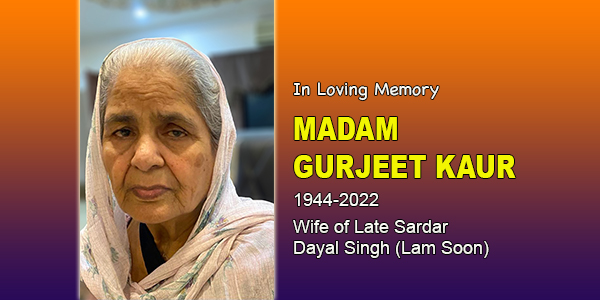
Madam Gurjeet Kaur (1944-2022), Wife of Late Sardar Dayal Singh (Lam Soon)

MADAM GURJEET KAUR (WIFE OF LATE SARDAR DAYAL SINGH) – LAM SOON

26.10.1944 – 07.02.2022

Passed away peacefully on 7 February 2022

Husband: Late Sardar Dayal Singh (Lam Soon)

Children / Spouses:

  1. Mdm Jasvir Kaur (Jessy) / Late Mr Baljit Singh
  2. Mr Jasmail Singh (Meli) / Mdm Karamjit Kaur
  3. Mr Dwinder Singh / Mdm Balwinder Kaur (Canada)

Also missed by Grandchildren and Great-Grandchildren

Paath Da Bhog: 20th February 2022 (Sunday), from 4.00 PM to 6.00 PM, at Gurdwara Sahib Petaling Jaya

Contact:

Jasmail Singh (Meli) – 012 315 8093

Taranjit Kaur – 016 3915591

Jetinder Singh – 016 386 0454

| Entry: 7 Feb 2022; Updated: 9 Feb 2022 | Source: Family


ASIA SAMACHAR is an online newspaper for Sikhs / Punjabis in Southeast Asia and beyond.Facebook | WhatsApp +6017-335-1399 | Email: editor@asiasamachar.com | Twitter | Instagram | Obituary announcements, click here |

In Loving Memory: Gurmel Kaur (1932-2021), Sitiawan

FIRST BARSI: 12 February 2022 (Saturday) at Gurdwara Sahib Sitiawan, Perak, Malaysia

In Loving Memory of our beloved “MA”:

LATE MADAM GURMEL KAUR D/O INDER SINGH

18.3.1932 – 14.1.2021

Wife of Late SARDAR NASHATAR SINGH, Sitiawan

Programme

4.00pm – 5.30pm: Sukhmani Sahib Path

6.00pm: Rehras Sahib Path

7.00pm – 8.15pm: Kirtan & Katha by Kamey Veerji & Jatha

Followed by Ardas and Guru Ka Langgar.

Kindly please treat this as a personal invitation.

Please abide by the Covid SOP (Mask and sanitise)

Contact:

Paramjit Singh – 0163310365

Karamjit Kaur – 0175859083

| Entry: 7 Feb 2022 | Source: Family


ASIA SAMACHAR is an online newspaper for Sikhs / Punjabis in Southeast Asia and beyond.Facebook | WhatsApp +6017-335-1399 | Email: editor@asiasamachar.com | Twitter | Instagram | Obituary announcements, click here |

An exchange on ‘The Hijacking of Sikhi’

1
Gurpreet Singh GP (left) and Karminder Singh Dhillon

By Gurpreet Singh GP | Discussion |

The discussion was initiated by me in response to the Dr Karminder Singh Dhillon’s video series posted on Sikhi-Vichar Forum YouTube channel titled ‘Hijacking of Sikhi’ and his presentation in the webinar organized by Gurmat Vichaar Group, Phoenix, AZ, on the same topic. The interaction is presented as it is. Hope this will help readers to understand the importance of varying narratives and develop the culture of discourse which is a must for the progress of any society.

1st December 2021:

Gurpreet Singh writes to Dr Karminder Singh Dhillon (through e-mail)

E-mail subject: True Facts with False Narrative.

Respected KS Dhillon, Guru Fateh ji.

I’ve watched almost all your videos and gained a lot. Your recent series ‘Hijacking of Sikhi’ presents all the historical records at one place with valid reasons of the distortions that we see in present Sikh way of life.

Despite of being factually correct information, the basic premise of almost all of your videos starts with a spoiler- “The Sikhi as it is practiced today, is no longer the Sikhi that was given to us by our Gurus. It is spirituality that stands distorted, corrupted and tainted.” This makes the overall presentation with true facts but with false narrative setting hopelessness losing Chardikala. A low spirit is non-sikhi too.

In the presentation with Weekly PHX Global Gurmat Vichaar on Nov 30th 2021 you even said- “One has to keep one’s children away from Gurdwara, if one intends to keep them from being tainted from this hijacked, corrupted, tainted Sikhi.” Without giving any alternative, it is like taking away crutches from a physically challenged person with the fake promise of wheelchair. This ideology appears to have been borrowed from Yogis, who keep themselves away in jungles and mountains, because distortions of worldly affairs would corrupt and taint their kind of spirituality.

Great scholars like you and many others are there, and the audience is ever increasing is clear sign that there’s lot intact of the Sikhi that was given to us by our Gurus. In fact, large proportion of Sikh population is aware of the control of priest class in our Gurdwaras and lot is being said in public domain with huge agitations by lot many people. But the control is governed under the aegis of Brahmanical Govt who has given impunity to the clergy and manipulation by Election Commission. So, any reform in the Gurdwaras requires major conflict with the regime. The regime has already shown us the trailer by reversing the effort which was made to implement Nanakshahi Calendar in 2003 with the help of clergy hand-picked by our adversaries, with no role and fault of common Sikhs.

Despite of extreme adversities, Sikh society has successfully demonstrated the divine virtues as enshrined in Gurbani. So, it is wrong to say that “The Sikhi as it is practiced today, is no longer the Sikhi that was given to us by our Gurus.” A lot has been written about the Sikhs world over by non-Sikhs. Here are few examples where outsiders, as compared with others, have observed that Sikhs are performing far better:

Dipankar Gupta: “Sikhs are different. Routinisation of ‘sewa’ primes them to help others. The pandemic demonstrated this
There has to be a special reason for this. The answer lies in Sikh religion… it does something more which no other religious denomination does and that aspect is lodged in Sikhism’s main frame. It is in Sikhism alone that service to others is an important aspect of devotional practice for the laity… yet in Sikhism alone it is the laity and not the virtuosos, it is the everyday worshipper and not the ordained priests, who are the heroes.”

Kancha Ilaiah: “Why the farmers’ protest is led by Sikhs of Punjab…
Another reason why Sikh farmers have taken up the cudgels is to defend the labour, which is accorded great dignity in Sikhism… Sikhism lays stress on ‘Sarbat da bhalla’ (working towards the common good of all) and kar seva (doing physical work for the common good). These two ideas are part of the Guru Granth spiritual ideology, which runs counter to the varna dharma ideology of the Hindutva forces. The Sikh Gurus established the concept of dignity of labour at a time when the idea was almost unknown to the Brahminical spiritual, social and political ideology…”

Aditya Menon: “Why Modi, BJP & RSS Never Understood Sikhs and Still Don’t…
Hindutva outfits have consistently tried to weaponise the ‘Sikh-Mughal conflict’ and turn Sikhs against Muslims. However, Sikh bodies like Akal Takht and SGPC, Sikh historians and religious scholars as well as many common Sikhs have consistently resisted this narrative by asserting that the conflict with Mughals wasn’t a conflict against Islam, but against tyranny. So in the context of Independent India, Sikhs are more likely to equate Mughals with Indira Gandhi, Rajiv Gandhi and Narendra Modi rather than with Indian Muslims.”

If others can spot divine virtues, why can’t our scholars also build a narrative which is truthful, factual, yet full of hope with actionable alternatives without losing the spirit of Chardikala?

Regards,
Gurpreet Singh.

2nd December 2021:

From Dr KS Dhillon To Gurpreet Singh (through e-mail)

I appreciate your comment Veer Gurpreet Singh ji.

Chardikla lies in knowing the truth, acknowledging the truth, facing the truth, and wanting to deal with the truth.

I provided an alternative to “keeping away from gurdwaras” in my talk yesterday. It is in the very next sentence – “unless we can create Dhramsaals.” The alternative is in reforming our gurdwaras to stop propagating the hijacked version of Sikhi and revert to Gubani teaching and understanding.

I agree that governments (British and Indian) have had a role in the problems facing Sikhs and Sikhi. But I disagree with your preposition that (in the present times) “the control (of Sikhs/ Sikhi) is governed under the aegis of the Brahmanical Govt who has given impunity to the clergy and manipulation by Election Commission.” Now, we Sikhs alone are responsible for our problems, and we have to solve them ourselves. But first we have to acknowledge them, and not sweep them under the carpet and say all is good, and not blame others for our ills. Then we have to acknowledge our role in our problems.

Non- Sikhs have said wonderful things about Sikhs and Sikhi. But we should take them for what they are – external observations. I doubt very much Dipankar Gupta, Kancha Illaiha, Aditya Menon know of the issues in the Fareedkoti Teeka, the distortions in the Suraj Parkash, the smuggling in of rituals and practices from pre-1469 faiths, the corruption in our history etc. Most Sikhs are not aware of these things, how would we expect non-Sikhs to know of them.

Pyareo, Chardikla can never come from denying the truthful and the factual. The truth and facts of the matter is that the Sikhi that we practice today, the Sikhi that is being propagated in our Gurdwaras by our clergy, and the Sikhi that is embodied in the so called classical literature is distorted, corrupted and tainted to the extent that it is no longer the Sikhi as gifted to us by our Gurus.

The starting point of Chardikla is to acknowledge this truth and then come together in honesty, love, wisdom, care and commitment to rectify the matter. The end point of Chardikla – real Chardikla – will be when we are able to revert to the authentic Gurbani and SGGS based Sikhi.

Gurfateh and warm regards, KSD.

2nd December 2021:

From Gurpreet singh To Dr KS Dhillon (through e-mail)

Dear Karminder Ji,

I guess I was not able to make my point clear to you.

I was not contesting the facts presented by you. My point was about the narrative which I found without workable solutions.

There’s no denying that “acknowledging the truth, facing the truth, and wanting to deal with the truth,” is of utmost importance. Gurbani explains the reason for all kinds of distortions as- ਕਾਮਿ ਕ੍ਰੋਧਿ ਲੋਭਿ ਮੋਹਿ ਮਨੁ ਲੀਨਾ॥
There’s no denying the truth and facts. But hope on the basis of innate strengths is the key to improve upon- ਮਨ ਤੂੰ ਜੋਤਿ ਸਰੂਪੁ ਹੈ ਆਪਣਾ ਮੂਲੁ ਪਛਾਣੁ॥.

That’s why I shared the non-Sikhs quotes who definitely are not aware of fareedkotis and other distortions. Outsiders can judge comparatively with other faiths simply on the basis of character, which sometimes Sikh Historians and Scholars fail to do so, because of the urge to self-bashing.

For ex. many Sikh historians (including HS Dilgeer) have presented Maharaja Ranjit Singh in poor light, ‘only’ on the touchstone of Gurbani. But they fail to judge him against the prevalent regimes- Napolean, British, Mughal, Rajput, etc. However outsiders regard Sarkar-e-Khalsa as one of the best regimes ever existed.

I’m sure you would agree that Sikhs have displayed exemplary resilience against oppression, and service to humanity and has been noticed world-over. If this is true, then “The Sikhi as it is practiced today, is no longer…” is far from the truth. We need to hold on to our strengths and work to overcome the deviations. The will-to-change comes from hope- ਏ ਦੁਇ ਨੈਨਾ ਮਤਿ ਛੁਹਉ ਪਿਰ ਦੇਖਨ ਕੀ ਆਸ ॥

The truth remains that there’s a unholy nexus between priest and ruler:
ਤੂੰ ਬਾਮ੍ਹ੍ਹਨੁ ਮੈ ਕਾਸੀਕ ਜੁਲਹਾ ਬੂਝਹੁ ਮੋਰ ਗਿਆਨਾ ॥ ਤੁਮ੍ਹ੍ਹ ਤਉ ਜਾਚੇ ਭੂਪਤਿ ਰਾਜੇ ਹਰਿ ਸਉ ਮੋਰ ਧਿਆਨਾ ॥

Exposing this nexus is of utmost importance, and without this, truth is incomplete.

Another Gurdwara reform movement is the talk of the town. But this time, the situation is far worse than British time, as state machinery involvement under the garb of the (un)constitution and nationalism is no secret. Sikh activists must not shy away from this when presenting the truths and facts.

We just cannot abandon our institutes, which further makes the task of Pujari easier. We need to be part of change despite its shortcomings. “unless we can create Dhramsaals,” actually means that there are no such Dharamsaals available, so children be kept away from Gurdwaras. Otherwise, you could have surely given an example of XYZ Dharamsaal of ABC Town as a role model. I’m sure you must have visualized alternatives.

Our gurdwaras are basically of three types- one controlled by Babas/ Taksals, the other by larger prabhadhak committees (PC) whose election are conducted by central govt SGPC/ DSGPC, and the other by Singh Sabha local management committees. The ones by PC and Singh Sabhas, the granthi, and Ragis are salaried persons. Management committees often dictate to them, what to say and what not to. So here the priest is not in control of the affairs.

Many local committees are doing a lot of a good job also and have genuine intention to do more. I’m sure there would be many persons among your audience who are also part of management committees. Can you propose a draft model of Daharmsaal for them and for your larger audience? How a Dharamsaal / Gurdwara should look like? What should be its daily routine? What activities be performed by whom (salaried, volunteers)?

In the Weekly PHX Global Gurmat Vichaar group, many have appreciated your findings. Some of them may also be part of management committees. They should not be left blank without any alternative. Otherwise, this enlightenment would result in disconnection from the existing system without anything tangible in hand. Snatching crutches with a distant dream of a wheelchair.

Regards, Gurpreet Singh.

December 24th 2021: From Dr KS Dhillon To Gurpreet Singh (Through Telegram group)

These are two hard truths that I stand by and have proven them amply in my 420 page book titled The Hijacking of Sikhi. The truth or falsity of my two assertions above can only be ascertained by looking within the 1429 pages of the SGGS. It would be pathetic if we have to rely on the views of non-Sikhs to say that “all is great with our Sikhi. ”

Let me illustrate with two examples.

Guru Nanak gave us Sikhs the concept of langgar. He told us to GO SEEK the hungry, the malnourished, the homeless, the needy, those who go to bed at night without a meal – TAKE the langgar TO THEM and feed them. The hungry and needy won’t come to us, because those who are hungry and needy usually do not have the means to come to us.

But the langgar we have today is made in our majestic gurdwaras in state of the art kitchens and served in splendid langgar halls. We feed ourselves with this langgar. We feed the well fed. We feed those who do not need a free meal. We feed those who have much better meals in their homes. Some Sikhs bring this langgar home to feed others in their family who are all well fed. Now a non-Sikh walks into the Gurdwara and we offer him / her a free meal. He goes and writes about it to the effect: “The Sikhs are fantastic. They offered me a free meal without asking for my religion, caste, creed etc. They have found a way to solve the hunger of the world.“

Now my assertion is this: “The langgar of the Sikhs today is NOT the langgar that was advocated by Guru Nanak. It stands distorted (we feed ourselves), corrupted (feeding the well fed) and tainted (we have not taken the food to the hungry and homeless).”

The assertion of the non-Sikh is this: “The Sikh langgar is great. Sikhism is magnificient. No other faith does this.”

Three questions can be asked here. 1) Would we take the word of the non-Sikh to say all is GREAT with our langgar? 2) Does the non-Sikh even know an iota of what the message of Guru Nanak was pertaining to langgar? How would he know if 90 percent of Sikhs themselves don’t know of it? 3) Don’t we want to look into the 1429 pages to find the truth?

My second example. Our Gurus gave us Gurbani, then compiled it into Pothi Sahib, then into SGGS and told us to sing it SELFLESSLY in the form of Kirtan as an act of spirituality to become divine.

But the Kirtan we have in our gurdwaras today is sang by professionals who make a living singing it. It is delivered as a performance meant to display the musical abilities of the performers. It is relegated to the level of entertainment. A vast majority of these singers sing compositions that are NOT from the SGGS – and the sangats are unaware of it. Now a non-Sikh comes into the Gurdwara and we welcome him to sit in the sangat and listen to our kirtan. He goes and writes about it to the effect: “The Sikhs offered me a seat in the congregation where I sat and listened to some fantastic singing of hyms. It was magical. It took me to another world.”

Now my assertion is this: “The kirtan of the Sikhs today is NOT the kirtan that was advocated by Guru Nanak. It stands distorted (we have hired hands and professionals singing it for us), corrupted (people make a living singing kirtan) and tainted (the singers are singing stuff from outside the SGGS etc).”

The assertion of the non-Sikh is this: “The Sikh kirtan is out of this world. It transported me to heaven.”

Again, three questions can be asked here. 1) Would we take the word of the non-Sikh to say all is great with our kirtan? 2) Does the non-Sikh even know an iota of what the message of our Gurus pertaining to kirtan? Especially since 90 percent of Sikhs themselves don’t know. 3) Don’t we want to look into the 1429 pages to find the truth about kirtan?

A Sikh telling the truth of our Sikhi is never “self bashing.” I have read Dilgeer’s account of Maharaja Ranjeet Singh. He has displayed the courage to tell the truth. His well researched and documented truths are painful to digest because the truth is always bitter. A Maharaja who married two dancer girls (euphemisms for a worse kind actually) and legitimized his act by building them a private masjid on public funds, spent the final 9 months bedridden due to consuming poisoned liquor gifted to him by enemy agents, cleansed his army high command of Sikhs by sending them to faraway locations, had no viable succession plan, fell prey to the wholescale trickery and slander of the dogras… the list is very long indeed.

I agree with you that “outsiders regard Sarkar-e-Khalsa as one of the best regimes ever existed.” The key word is “outsiders.”

Coming to terms with the truth is 3/4ths of the battle won. Once we have accepted the truths of our Sikhi today, then it becomes the shared responsibility of all to bring about the change that is needed. But if our choice is to deny the truth and or deny the conveyers of the truth, I am afraid we will do no more than hand over a corrupted, distorted and tainted Sikhi to our children.

Closing Remarks:

I don’t wish to add any commentary at the end. A commentary after the last reply would be akin to the continuation of the discussion, which would demand another response from Dr KS Dhillon. I initiated the discussion, so the last reply needs to be from Dr KS Dhillon. Moreover, the discussion is complete as both sides have presented their viewpoints; readers can judge on their own and choose the narrative.

Gurpreet Singh GP is a Sikh activist and the author of the bilingual (Punjabi / English) book Sole Enemy of a Sikh, Brahmanism (Sikh da Ikko Vaeree, Brahmanvaad). He blogs at Sikh Saakhi

Karminder Singh Dhillon, PhD (Boston), is a retired Malaysian civil servant. He is the joint-editor of The Sikh Bulletin and author of The Hijacking of Sikhi. He can be contacted at dhillon99@gmail.com. 

RELATED STORY:

Making the case for the ‘Hijacking of Sikhi’ (Asia Samachar, 18 Jan 2022)

India’s brutal lockdown (Asia Samachar, 29 March 2020)

ASIA SAMACHAR is an online newspaper for Sikhs / Punjabis in Southeast Asia and beyond.Facebook | WhatsApp +6017-335-1399 | Email: editor@asiasamachar.com | Twitter | Instagram | Obituary announcements, click here 

Mata Jeet Kaur (1941 – 2022), Muar

MATA JEET KAUR W/O LATE SARDAR PRETUM SINGH SAHOTA

8.10.1941 – 1.2.2022

Leaving behind:
Children / Spouses
–  Belbinder Kaur (Bindro) / Charan Singh (Johor Bahru)
–  Chand Kaur / Late Baldev Singh (Vancouver, Canada)
–  Avtar Kaur /  Late Surinder Singh (New Delhi, India)
–  Jaspal Kaur (Kuala Lumpur)
–  Jasbir Kaur / Surjit Singh Ranu (London, UK)
–  Gurdial Singh Sahota  / Amrit Kaur Khaira (Kuching, Sarawak)
–  Dr. Harjinder Singh / Siew (Kuala Lumpur)
–  Harjinder Kaur / Tejwinder Singh Bhullar (Kuala Lumpur)

Brother: Gurnam Singh (Singapore)

and 15 grandchildren, 5 great-grandchildren and host of family and friends to mourn the loss.

Mata Jeet Kaur was a very loving and devoted wife, mother, grandmother. mother-in-law, great grandmother, sister,  sister-in-law, aunty and a friend to her family and loved ones. She never failed to wear a smile and she always maintained a positive mindset. Mata Jeet Kaur was a compassionate pillar of strength to her family and friends.

We are forever grateful and thankful for all the sacrifices and compromises made by Mata Jeet Kaur to provide a cheerful and loving environment to everyone around her she never failed to shower affection and pure love.

Path da Bhog: 13 February 2022 (Sunday), from 9:30am – 11.30am, at Gurdwara Sahib Sentul, Kuala Lumpur. Guru ka Langar will be served.

Contact:

Gurdial Singh Sahota    013-818-4265

Tejwinder Singh  Bhullar  013-352-1324

| Entry: 6 Feb 2022 | Source: Family


ASIA SAMACHAR is an online newspaper for Sikhs / Punjabis in Southeast Asia and beyond.Facebook | WhatsApp +6017-335-1399 | Email: editor@asiasamachar.com | Twitter | Instagram | Obituary announcements, click here |

Pind De Dhee (Daughter of the Village)

0
All set for Anand Karaj with mehndi – Photo: Eugenio Mastrovito

By Inderjeet Singh Gakhal | Opinion |

THEN:

The wedding of a daughter of the village was a community affair. Simplicity was the key. The barat came on horses, camels or cattle drawn carts. Stayed over night, were housed in a community centre with a shady court yard. Here, the community stepped forward. Cots and beddings were pooled in. Young men to serve the barat came forward. The horses, camels and draught animals were distributed among families for feeding watering and a rub down. Each family provided its share of cereals, ghee, Vegetables and milk for the entire wedding.

After all it was the wedding of” Pind de Dhee“.

There was no liquor rarely meat. Till the Barat left, community service continued. The barat always ate first and others later. They sat on mats in lines and were served. The menu was simple, jalebis/laddus, rice zarda ( sweet yellow rice), dal, sabji, curd and roti. No frills.

The focus was on the “Anand Karaj”attended by all at the village Gurdwara. The Doli was in a two seater decorative cart, drawn by a hansome pair of best bullocks, draped with Phulkari (embroidered cloth cover). The Doli cart canopy of Phulkari. The entire village walked the barat till the village limit. Such simplicity. The expenditure minimum.

NOW:

It’s all too impersonal, the banquet hall weddings. The events/functions have multiplied many fold; sagan, chunni chadai, bhog, engagement/ring ceremony, varna, mehndi sangeet, anand karaj and reception.

It’s a caterer’s delight. The menu is elaborate, with two to three cuisines every possible kind of meat and liquor. The bar planning is a major protocol these days. The focus has shifted from the vows at Anand Karaj to the banquet hall decor and much else. Fashion and jwellery are the main attraction. Very close relatives attend the vows, other hit the bar and food stalls. It’s a day out at best. The Barat is one-day affair, and no differentiation between them and others. It’s first come first serve at the venue catering. Every thing is impersonal. No community involvement in “Pind dee Dhee” anymore.

The community elders need to reverse these trend to bring the community bonding back into focus. Far too many elders are under financial stress when marrying their daughters, this leads to many a suicide. Urgent intervention is called far.

Brigadier Inderjeet Singh Gakhal (Retd) ​was commissioned into 1 Sikh. He served as Comdt Sikh Regt Centre, commanded a Battalion in Op Rakshak, raised & operationalised a RR sector in J&K where he was wounded. This article was picked up from his Facebook entry, @injogakhal.

RELATED STORY:

Marriage: We had to learn on the job (Asia Samachar, 21 Jan 2022)

ASIA SAMACHAR is an online newspaper for Sikhs / Punjabis in Southeast Asia and beyond.Facebook | WhatsApp +6017-335-1399 | Email: editor@asiasamachar.com | Twitter | Instagram | Obituary announcements, click here 

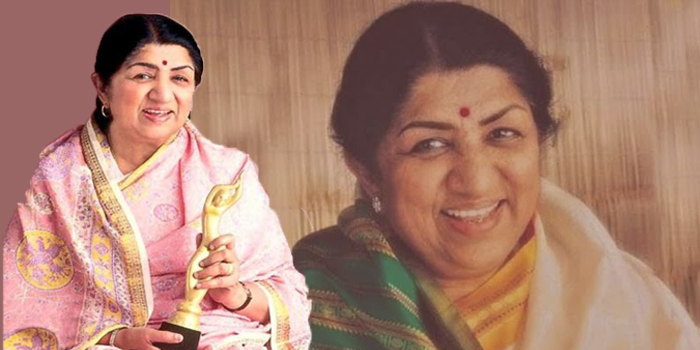
Legendary singer Lata Mangeshkar passes away at 92

0
Lata Mangeshkar

By Asia Samachar | India |

Legendary Indian singer Lata Mangeshkar, whose golden voice enthralled millions of fans over the years, passed away today (6 Feb) at the age of 92. Known as the ‘Nightingale of India’, she is regarded as the greatest and most respected playback singers in India.

She was admitted to a Mumbai hospital in early January this year after she tested positive for Covid-19 and was also diagnosed with pneumonia.

Around January 28, the singer was taken off the ventilator, after she showed slight signs of improvement. However, on February 5, her condition deteriorated and she was back on ventilator support, according to media reports.

Daughter of Pandit Deenanath Mangeshkar and Shevanti Mangeshkar, Lata belonged to a musical family. Her father was a well-known Marathi musician and theatre artiste. She was first tutored by her father and later appeared as a child artiste in several of his plays, reports The Indian Express.

Lata Mangeshkar recorded her first Hindi song called “Mata Ek Sapoot Ki Duniya Badal De Tu” for the Marathi feature Gajaabhaau, which had released in 1943. Later, she went on to collaborate with some of the most popular names of the Hindi music industry, including the likes of Anil Biswas, Shankar Jaikishan, Naushad Ali and SD Burman among others. She has lent her voice to songs in Hindi, Bengali, Marathi, and other regional languages.

Among her popular tracks are ‘Ek Pyar Ka Nagma Hai’, ‘Raam Teri Ganga Maili’, ‘Ek Radha Ek Meera’ and ‘Didi Tera Devar Deewana’asia sa.

RELATED STORY:

Tu Jhoom: Pakistani duo strikes deep in the heart (Asia Samachar, 17 Jan 2022)

ASIA SAMACHAR is an online newspaper for Sikhs / Punjabis in Southeast Asia and beyond.Facebook | WhatsApp +6017-335-1399 | Email: editor@asiasamachar.com | Twitter | Instagram | Obituary announcements, click here 
Ranjit Singh (1967-2022), Ipoh

RANJIT SINGH S/O BISHEN SINGH & PREM KOUR

1967 – 2022

Passed away peacefully on 3 Feb 2022

Wife: Harjit Kaur

Children: Ashvina Kaur, Ashlina Kaur and Ashtina Kaur

Path da Bhog: 20 February 2022 (Sunday), from 10.15am onwards, at Wadda Gurdwara Sahib Ipoh

Contact: Azara Singh 016 626 2130, Piara Singh 017 331 3543


| Entry: 4 Feb 2022; Updated: 6 Feb 2022 | Source: Family


ASIA SAMACHAR is an online newspaper for Sikhs / Punjabis in Southeast Asia and beyond.Facebook | WhatsApp +6017-335-1399 | Email: editor@asiasamachar.com | Twitter | Instagram | Obituary announcements, click here |

Say Wah! Sikhs showcase flood efforts with community video

0

Much has been written about the heroic efforts of Malaysian Sikhs and their fellow citizens who joined hands and hearts during the floods that hit Malaysia in December 2021. 

In an effort to thank the community and Malaysians who helped to make it a national awakening and movement, a few Sikhs got together and pieced together a video to archive the historic coming together of Malaysians

A poster was also developed to remind all of us to continue with the act of Seva in good times or bad.
It served as a heartfelt tribute to all the amazing sevadaars (volunteers), Gurdwaras and selfless volunteers who continue to serve humanity with true humility. 

Concept & Copy: Harmandar Singh | Singers: Jaskirat Kaur (female vocal), Jagdees Singh (male vocal) | Tabla: Jasjeat Singh | Audio: Navin & Raj, Tulen Studios | Editor: Dave Singh  

RELATED STORY:

One month on, Petaling Jaya gurdwara still a bundle of energy. Volunteer Gabriella shares her experience (Asia Samachar, 19 Jan 2022)

ASIA SAMACHAR is an online newspaper for Sikhs / Punjabis in Southeast Asia and beyond.Facebook | WhatsApp +6017-335-1399 | Email: editor@asiasamachar.com | Twitter | Instagram | Obituary announcements, click here