















UA-56202873-1
Page 401

Hardev Singh Kahlon: A rock you could rely on

Hardev Singh Kahlon (1955-2021)
By Kiranjit Kaur Sidhu | TRIBUTE | MALAYSIA |

Sardar Hardev Singh Kahlon (1955-2021) was an embodiment of virtue and had principles that drove him throughout his life. While many of us think we have principles, Sardarji was one of those rare examples of someone who lived what he believed. For Hardevji, his principles were not something he had as a matter of convenience or lived up to when times were good but principles that controlled everything he did.

A man in a million, we mourn his loss, but we cherish the legacy he has left behind. At first glance, he was often taken as a strict man. But beyond the stern façade is the kind and loving soul with a jovial spirit whom we all cherish and love. Sardarji’s fun-loving spirit and sense of humor would spread joy among everyone around him.

Often, as we live our life, we forget we are here just as temporary visitors. We wish we could stay alive forever and stay with our loved ones. Unfortunately, life has its end and so it happens that our very own Sardarji completed his beautiful journey on earth on 28th May 2021.

Sardarji was a man passionately devoted to his family, friends, and community. Sardarji was a people person and always ready to serve others whether friend or foe. He loved connecting with people and listening to their problems and would think of consequences in any given situation. Sardarji was actively working in both social work and politics to help people in matters related to education and finance. Hardevji was a rock you could rely on.

Born into the family of Sardar Sadu Singh Kahlon and Mata Pajan Kaur, he was the fifth child among 12 siblings. Coming from a big family, he always wished to have one of his own to fill his home with love and laughter. So, he got married in his late 20s and was blessed with seven beautiful children. While he was a constant pillar of support and the pride of his family, his home life was simple. His remarkable wisdom and assistance have touched so many lives.

Hardevji was not only a noble citizen of our society but played a key role as the president of Gurdwara Sahib Tambun, Perak since the early 1990s. Initially, Gurdwara Sahib Tambun was abandoned after World War 2 and the land was occupied by a family. Later, in 1982, Hardevji found Nishan Sahib Cement and 40 ft deep well after confirmation from the government that the said land was gazetted for Gurdwara Sahib Tambun, and in the same year, Gurdwara Sahib began to rebuild.

Sardarji’s father, Sardar Sadu Singh was among the first few sewadars who had the vision to build a beautiful Gurdwara for everyone. After his father’s demise, Sardarji took it upon himself to fulfill his father’s vision. Sardarji worked relentlessly for the improvement of the Gurdwara such as securing funds from Government bodies to driving donations, his dedication was admirable. He worked on the design and architecture of Gurdwara envisioning a Gurdwara built with full white marble, imagining how peaceful it could be. He pursued this dream for the community and even managed to secure funds from the Perak State Government for retaining walls around Gurdwara’s compound, langgar hall roof, main entrance (Dershani Derwaja) of Gurdwara Sahib Tambun.

In 2012, Sardarji led the Gurdwara Sahib Tambun committee to conduct a donation drive to purchase 10,000 sq ft of land for the gurdwara compound worth RM250,000 and managed to purchase the said land within three months, that was the proof of his dedication. Since January 2016, he also initiated the Akhand Path prayer collectively. They would have it monthly and where everyone was welcome to participate for only RM100 per family. Sardarji spent his entire life on religious duties till the last days. Sardarji would always encourage the younger generation to participate in Gurdwara affairs, be it sewa or organizing events and we hope we can live up to his expectations.

Hardevji was also deeply involved in social work/politics such as:

  • Initiated a group called myPPP Punjabi Affairs Malaysia in the early 1990s to resolve matters related to Punjabi affairs.
  • Gave a sword (Kirpan) as a gift and memorandum to Tun Dr. Mahathir Mohamad to request for Vaisakhi leave in 1997.
  • Sardarji also went to London for a conference representing the Malaysian Consultative Council of Buddhism, Christianity, Hinduism, Sikhism, and Taoism in the late 1990s.
  • Sardarji was an active member of the Malaysian Gurdwara Council (MGC) since its inception and was also elected as the Vice President of the Council since 2019. Sardarji constantly raised Sikh-related issues to the higher authorities and was a pillar of support for the community.
  • Initiated a program with Perak State Government to supply dry ration for needy Sikh families.
  • Allocated free spectacles for myPPP Punjabi Affairs from Federal Government through myPPP HQ which were then distributed to the Punjabi community after eye check-up mainly at Tambun Gurdwara and Changkat Tin Gurdwara.

Sardarji was honoured for his countless contribution and his meritorious service to the country. To name a few:

  • Pingat Jasa Kebaktian (P.J.K.) by DYMM Sultan Perak in year 1997
  • Pingat Pangkuan Negara (P.P.N.) by Yang Di Pertuan Agong XI in year 2000
  • Ahli Mahkota Perak (A.M.P.) by DYMM Sultan Perak in year 2003
  • Kesatria Mangku Negara (K.M.N.) by Yang Di Pertuan Agong XI in year 2014

Hardevji will always be an inspiration to his family and our entire community. He might be gone but his legacy lives on in many lives he has affected. We still wake up every morning hoping this is a dream, and it hurts knowing he is gone forever. Never again can we rely on his guided hand and lean upon him for advice. Sardarji’s demise has left a void that nothing else can fulfill but we hope his soul lives a fulfilling afterlife like the one he has lived on earth. Sardar Hardev Singh Ji will be missed deeply by his family and will forever be in our hearts.

In the light of FMCO, the Path da Bhog will be held privately on 13 June 2021, strictly among immediate family members only. We truly appreciate your thoughts and prayers.

“We will meet again. Don’t know where, don’t know when but I know we will meet again, some sunny day”.

(The writer is the niece of Sardar Hardev Singh Kahlon.)


ASIA SAMACHAR is an online newspaper for Sikhs / Punjabis in Southeast Asia and beyond. Facebook | WhatsApp +6017-335-1399 | Email: editor@asiasamachar.com | Twitter | Instagram | Obituary announcements, click here |

Sikh mum helps children thrive in a digital world

0
Parveen Kaur
By Asia Samachar | BRITAIN |

What are the dangers when a child goes online? It is more than just potential exposure to pornographic stuff. The other colossal challenge for parents is how to improve their digital literacy.

Realising the lack of tailor-made resources to help children thrive online, a corporate executive turn digital warrior mum decided to do something to help parents keep their children safe but thriving when they venture online, something almost unavoidable for most parents today.

Scotland-based Parveen Kaur founded KidsNClicks.com, a web resource that helps parents and children thrive in a digital world.

“My extensive experience in social and digital media raised my curiosity on the impact of technology on children. This area was particularly interesting to me as I was expecting my first child at the time and I wanted to learn more about how technology would shape her behaviour and thoughts,” she told Asia Samachar in an email interview.

With the limited information available to parents, she started sharing her opinion with others through various online media.

“I identified an information gap and filled that space through Kids N Clicks,” she said.

The venture caught the attention of bigger organisations in the space, such as Common Sense Media and Family Online Safety Institute. She said the site currently has over 80,000 monthly visitors and over 2.8 million views on Pinterest.

A few years ago, she authored a children’s book called “Little Bunny and his Computer” which tells the story of how young children may get tricked into sharing personal information on malicious websites.

Asked what is her biggest challenge when dealing with parents concerning digital parenting, she said: “When talking about internet safety issues many parents think ‘This will never happen to my child’. It is important to keep in mind that the risks are the same for all children and if it can happen to one child then there is always a possibility that it can happen to yours. Especially when the use of devices is not monitored and appropriate boundaries are not set for your child.”

Parveen was born in Jakarta, Indonesia, where her parents still live.

Asia Samachar caught up with Parveen via an email interview. Here’s what she has to say.

What is your background? 

I was born and brought up in Jakarta, Indonesia. I got my undergraduate qualifications in the UK and went on to gain a Masters in Science (MSc) in Corporate Governance from the London School of Economics and Political Science (LSE). I worked for IBM and Ernst & Young for a number of years before moving into digital media consultancy.

I currently live in Edinburgh, Scotland, with my family. During my time here I’ve had the opportunity to work with a variety of charitable organisations around women empowerment and parenting. I’ve worked closely with non-governmental organisations in the UK and US and continue to be an invited speaker online and other events locally and internationally – including Malaysia where I was invited to speak at the Malaysian Cyber Security Conference. Some of my pioneering work has also been recognised by the Scottish Council for Voluntary Organisations.

You talk about digital parenting? Tell us more.

Digital parenting is about raising resilient children who are growing up surrounded by the constant distractions of technology. It is about equipping children with the right skills so they can thrive in the digital world. It is also about educating parents with the right information so they can be good digital role models to their children.

What are the key components of digital parenting?

The most important part of digital parenting is to have regular conversations with your children and ask them questions relating to not just their real life but also their digital lives. Have open-ended questions about what your child is doing online and how they are feeling. Most importantly be interested in their digital lives.

There are also other aspects of digital parenting which involves educating yourself about the apps or games your child play, using parental control tools, setting boundaries and rules on the usage of technology at home and being a good digital role model to your child.

My website, KidsNClicks.com, has a wealth of information and useful tips and tricks parents can use.

Kids N Clicks founder Parveen Kaur – Photo: Supplied

What dangers do children face in the online world today?

There are many threats faced by children in the online world, such as, online grooming, online radicalisation, harmful content, misinformation, cyberbullying, falling for scams, and many more.

The best way to avoid some of the threats mentioned above is to be part of your child’s digital journey. This would mean that before giving your child access to the internet or a smartphone, it is important to ask yourself if you are able to commit to spending time with them online and teaching them how to be safe and smart online.

A few years ago, I authored a children’s book called “Little Bunny and his Computer” which tells the story of how young children may get tricked into sharing personal information on malicious websites. The book was well received here in the UK with many parents incorporating it to their children’s regular reading material. Constant engagement and simplifying important messages like these are key in ensuring children are fully aware of the potential dangers, and benefits, of growing up in a digital world.

What is the most common area overlooked by parents when dealing with children going online?

Assuming that just because a child knows how to play games online or download an app that they are digitally savvy.

Parents tend to forget that a child might not be emotionally ready to deal with some of the content that can be found online. For example, allowing young children access to social media and not understanding the impact of social media on children. Especially when social media is not made for children. Or is a child able to different between fake and real news? And many more.

While a child can have the technical skills needed to go online, it does not necessarily mean that they are ready to be left alone in the digital world.

Anything peculiar when dealing with Panjabi parents?

The risks faced by Punjabi parents are just the same for any other parents.

How does Kids N Clicks make a difference?

Kids N Clicks provides parents with the latest digital parenting news and trends. We cover the dangers and opportunities involved in some of the latest apps. We are an independent body and are not influenced by tech organisations, hence all the information we provide is balanced and unbiased.

What value-add proposition do you provide parents?

We breakdown information in a way that is easy for parents to understand. We understand that parents are busy and would like to get their answers quick, and that is what we aim to do, not to overwhelm parents.

We also provide parents with a Facebook support group so they can share their concerns with other parents and form a support network.

What kind of parents do you target for your website?

All parents who are giving their children access to the internet or screen time.


RELATED STORY:

Bikram to steer Google Cloud in India (Asia Samachar, 23 Feb 2021)


ASIA SAMACHAR is an online newspaper for Sikhs / Punjabis in Southeast Asia and beyond. Facebook | WhatsApp +6017-335-1399 | Email: editor@asiasamachar.com | Twitter | Instagram | Obituary announcements, click here |

Aussie gurdwara filled empty space with belly-filling plants and trees

Harjit Singh in the vegetable garden. Pictures: GARY SISSONS
By Danielle Kutchel | AUSTRALIA |

Lockdown last year saw many of us head into the garden, building veggie patches and mini-orchards to get us through. But for the Gurdwara Siri Guru Nanak Darbar Officer – the Sikh Temple Officer – getting their green thumbs on was about much more than just passing time.

The Officer Gurdwara went through a verdant transformation during the 2020 Covid lockdowns, as empty space was filled with belly-filling plants and trees.

It was a continuation of work that began three years ago in June 2018 when the Sikh volunteers moved to that spot, according to spokesperson for the temple, Harpreet Kandra.

“One of the core founding principles of the Sikh Temple Officer is to work for the environment,” he explained.

Before the pandemic, around 1200 trees had been planted on the property, which is situated in the pristine bushland at the back of Officer near Haunted Gully Creek.

The area is home to a diverse array of birds and other wildlife, which Harpreet said was another influencing factor in their decision to begin planting; the Sikh faith calls for care to be show to fauna as well as flora.

“The motivation is the core principles of the Sikh faith to, as human beings, not only think about ourselves but nature as well,” he said.

Staff also installed four big bird feeder boxes to increase the biodiversity in the naturally abundant corridor.

It’s particularly relevant as the world marks World Environment Day on Saturday 5 June – a sentiment that is celebrated everyday at the temple.

Noteworthy is that the Sikh temple also has solar panels, water and energy efficient fixtures, composting and engages young kids in its various environmental initiatives.

Of course, the gardening had other practical purposes too.

The process helped the four staff members left at the temple during lockdown, who were experiencing mental trauma, Harpreet said.

Between them they planted 170 trees, including around 70 fruit trees and about 300 square metres of grass on their nature strip.

Planting fruits and vegetables helped contribute to the temple’s other work: providing langar, a free community meal to those who need it.

“Since we provide vegetarian meals to anyone who comes to the Sikh community kitchen, we thought that since we have a big block, why shouldn’t we produce our own food in an organic way and make it part of our kitchen consumption,” Harpreet explained.

The temple started with an empty 650-square-metre block, and embarked on an ambition plan to turn it into an organic farm.

They sought and received funding from Ripe For Change, a grants program delivered by Sustainable Table that promotes organic production of food. Federal funding was also obtained for infrastructure and farming equipment.

The temple also reached out to the Cardinia Food Movement for advice on planting and growing methods, including composting. The Food Network provided advice on things like whether to use seeds or seedlings, where to procure organic manure and how to prepare the soil. Bunnings provided them with free veggie plants to get started, and the planting began.

The Food Movement also encouraged the temple to begin composting its food waste, which will reduce its waste management costs and is something the temple has taken on board already.

A sprinkler crop irrigation system was then installed to keep the trees happily watered.

The temple grounds are home to three water tanks with a storage capacity of 95,000 litres, but Harpreet said there are plans to beef that up to 150,000, including using treated wastewater.

Water management is vital to the production of healthy fruit and vegetables, he said.

“We want to use only rainwater. We’re doing sprinkler irrigation, not flood irrigation.

“When we first planted trees we used some water from South East Water, but currently we’re only using rainwater.”

Throughout the strict lockdown the four staff were kept busy looking after the crops as well as providing emergency groceries for people in need.

The temple provided grocery bags with the basics, but in future is hoping to use its own veggie garden produce in there too.

“We’re still in a learning phase but hope that our productivity will increase, and we’re happy to share with anyone who needs assistance,” Harpreet said.

“We give our grocery kits out along with recipes so recipients can start cooking in the kitchen, which helps with anxiety and depression and makes them more creative and happier. The lady volunteers developed a recipe book who has been shared by wider community and well received.”

As well as producing its own organically grown food, Harpreet said the temple was focused on encouraging its community to start veggie patches in their backyards and develop their own food production skills.

“That contributes to food security,” he explained.

It’s hoped that in future, visitors from India will spread the word on organic farming and water management to relatives and friends there.

Up next, the temple is preparing a blueprint of how it will grow – from building a bigger community hall to creating a multipurpose place for various indoor and outdoor events.

“We want to expand the organic farm further based on the experience we have acquired over the last few months,” Harpreet said.

Read the full article ‘Temple’s rich bounty’ (Star Community), 9 Jun 2021, here.


RELATED STORY:

(Asia Samachar, 21 Jan 2021)


ASIA SAMACHAR is an online newspaper for Sikhs / Punjabis in Southeast Asia and beyond. Facebook | WhatsApp +6017-335-1399 | Email: editor@asiasamachar.com | Twitter | Instagram | Obituary announcements, click here |

Memoricide – Burning down Sikh Reference Library

Sikh Reference Library in the Darbar Sahib complex, Amritsar
By Amandeep Sandhu | PANJAB |

‘Eik chitti labh rahe si, uh tan mili nahin. Baki saara samaan boriyan wich pa ke le gaye, pher building nu aag la diti,’ said an octogenarian to me near Darbar Sahib, Amritsar.

‘They were searching for one letter, but did not find it. They put all other material in gunny sacks, then put fire to the building.’

Besides the community’s faith in the nation, one of the greatest losses during Operation Blue Star was the destruction and looting of the historical records of the community — the Sikh Reference Library. Allegedly, the Central Bureau of Investigation (CBI) was searching for a letter from Indira Gandhi to Bhindranwale. In 185 gunny sacks, the CBI took away all the rare books and manuscripts on Sikh religion, history and culture including handwritten manuscripts of the Guru Granth Sahib, Hukamnamas with signatures of Sikh Gurus and documents relating to the Indian Independence movement. After that, the army burnt down the library building.

In its white paper the government says the building was damaged in the Operation, but it has been argued in courts that the building was set on fire after the Operation had concluded. Per media reports, the following texts were taken by the army: 512 handwritten Guru Granth Sahib; 2,500 Sikh scriptures; 12,613 rare books and manuscripts; twenty to twenty-five Hukamnamas (edicts), signed by the Gurus.

If that one letter was not found, the rest of the valuable heritage could simply have been returned to the Darbar Sahib, but there begins the confusion. On the one hand the army claims they returned the material in seven phases to the SGPC and the Panjab government.

However, in 1988, the SGPC wrote to the central government asking for the return of the material taken by the CBI but received only some minor office files. On 23 May 2000, the then defence minister, George Fernandes, wrote to the SGPC secretary, acknowledging that the material was under the government’s control. He referred the matter to the ministry of personnel, public grievances and pensions, under whose jurisdiction the CBI falls. He later publicly mentioned that the CBI had destroyed 117 seditious documents but the rest, especially the historical ones, were with the government.

In an order on 26 April 2004, the Panjab and Haryana High Court ordered the central government, the government of Panjab and the CBI to return the ‘valuables, books, scriptures, paintings, etc. that were seized’. In February and May 2009, A.K. Antony, defence minister of India, claimed in parliament that the army no longer had any material taken from the library. In June 2019, news surfaced that a rare handwritten Guru Granth Sahib had been sold for Rs 12 crore. This led to a plethora of claims and counter-claims.

While Sukhbir Singh Badal reiterated his demand to the Union Government, there were allegations by former Delhi State Gurdwara Management Committee president Manjit Singh GK that he had documents proving that the material had been accepted by SGPC officials.

Whichever community we might be from, our histories, our documents, our ancient texts and our cultural artefacts are our roots to our origins. When the ISIS burnt down the library in Mosul and when the Taliban destroyed the Bamyan Buddhas, we knew a great wrong had happened in our civilisational history. Those events were graphic, tangible, and could be seen and believed.

However, the matter of the Sikh Reference Library has become a matter where people do not know what to believe and whom to believe — whether the loss is tangible or notional. This is how another black hole has emerged in matters pertaining to the Sikh community’s history and culture. What it means is that I do not even know if my memoricide is real or phantom. – Source: Amandeep Sandhu, Panjab: Journeys Through Fault Lines (Page 150-152)

The Army claimed that it entered the Golden Temple complex with “sadness and reverence” (Tribune, June 7, 1984). In contrast, according to the head librarian, Army troops burned the Sikh Reference Library housing rare Sikh manuscripts and historical artifacts, after they had taken control of the building. Part of the burned library is pictured at right. Photo courtesy of the Tribune. (Text: Ensaaf website)


RELATED STORY:

A general talks about Indian army overkill in 1984 (Asia Samachar, 7 June 2021)


ASIA SAMACHAR is an online newspaper for Sikhs / Punjabis in Southeast Asia and beyond. Facebook | WhatsApp +6017-335-1399 | Email: editor@asiasamachar.com | Twitter | Instagram | Obituary announcements, click here |

Singapore actor Gurmit Singh fined, banned from driving for speeding at 131kmh

Gurmit Singh, playing Phua Chu Kang, and Irene Ang, playing his wife Rosie, in the public service video on Covid-19 vaccination entitled Get Your Shot, Steady Pom Pi Pi. It was run in May 2021 – Video screengrab
By Asia Samachar | SINGAPORE |

Local celebrity Gurmit Singh, famous for his yellow boot presence in a Singapore comedy series, was caught speeding, but apparently he had a story as to how it all happened.

The 56-year-old actor and presenter, best known for his sitcom character Phua Chu Kang, was fined S$800 and banned from driving for three months for speeding on Tuesday (8 June).

The dictrict court was told he was driving at 131kmh at about 9.30pm on April 12 along Woodlands Avenue 12 towards Seletar Expressway, on a road where the limit was 70kmh.

SEE ALSO: ‘Cha peelo’ guy big hit in Singapore Chinese social media

Singh, who was named as Gurmit Singh Virk Chainchal Singh, was unrepresented and turned up in a grey long-sleeved shirt and pants, reported CNA.

So, what happened. Gurmit told the court that he was driving to fetch his son from the workplace he was interning at when he noticed a “flapping sound”.

“After I got him I wanted him to hear the same sound, so I realised it comes out at 100kmh,” he said, as reported by CNA. “Of course I’m not saying I should drive at that speed at that street, but it was just a short (distance). I don’t know how I got 131, I wish I knew, but I just ask the court’s understanding that I’m not this reckless driver who does this daily. It’s just a one-off thing I wanted my son to hear.”

First time offenders can be jailed for up to three months and fined up to S$1,000, or both.


RELATED STORY:

Gurmit aka ‘Phua Chu Kang’ quits full-time acting (Asia Samachar, 2 Dec 2014)


ASIA SAMACHAR is an online newspaper for Sikhs / Punjabis in Southeast Asia and beyond. Facebook | WhatsApp +6017-335-1399 | Email: editor@asiasamachar.com | Twitter | Instagram | Obituary announcements, click here |

What to Watch: Love, Death and Robots will leave you mind-boggled

    0
    Love, Death and Robots
    By Movie Walla | What To Watch |

    If you’re bored at home during this lockdown and want something to watch that will not tie you down for a long period, Love, Death and Robots is the show for you.

    It’s dark, it’s intense and it’s dangerously close to perfection.

    The second season was released a few weeks ago on content platform and production behemoth Netflix.

    I’m not so impressed with the present season. But season one, which debuted in early 2019, is definitely worth watching. It features 18 short films.

    However, some reviewers have said that Season 2 was a big improvement over Season 1. I let you be the judge.

    In both seasons, some of the episodes will take you a whole minute to figure out if it was live action or animation. Some of the animations are superbly done. I was fooled into thinking some were live shots. Instead, they turned out to be animations. Impressive!

    I would compare this to British dystopian science fiction anthology television series Black Mirror except that some of episodes are much shorter.

    Love, Death and Robots is a treat for sci-fi and fantasy fans. It brings to us stories with interesting twists, leaving you mind-boggled. Chef’s kiss.


    ASIA SAMACHAR is an online newspaper for Sikhs / Punjabis in Southeast Asia and beyond. Facebook | WhatsApp +6017-335-1399 | Email: editor@asiasamachar.com | Twitter | Instagram | Obituary announcements, click here |

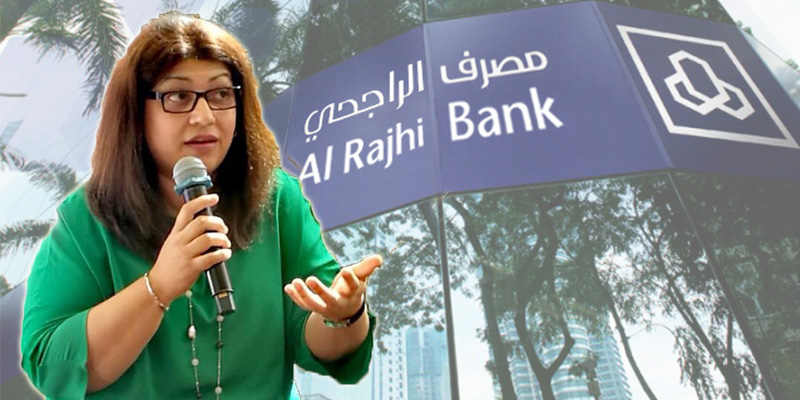
    Marlene Kaur moves from HSBC to Al Rajhi

    Marlene Kaur joins Al Rajhi Malaysia
    By Asia Samachar | MALAYSIA |

    Al Rajhi Bank Malaysia has tapped financial institution communication veteran Marlene Kaur as its new corporate affairs director as the Islamic bank works to cement its footprint in Malaysia.

    Marlene brings with her more than 20 years of global corporate affairs experience in communications, strategic planning, stakeholder engagement, public affairs. She was most recently communications head at HSBC Malaysia, and the communications lead for the global bank’s Belt and Road Initiative (BRI) and Business Corridors for Asia Pacific. She leaves after serving close to a decade at HSBC.

    Marlene holds a Bachelor of Arts in Organizational Communications from Western Michigan University, United States of America and has worked for various organizations such as Philip Morris International and Tesco.

    Marlene will drive the strategic communications, media relations, branding and corporate sustainability functions at Al Rajhi Bank Malaysia.

    The bank also announced the appointment of Mo Khurram as its chief transformation and change management. He leaves low cost airliner AirAsia where he was the people operations head. As part of the role, he had established people processes using collaborative digital platforms and cloud based technology to implement a more cost effective people function.

    “The appointment of these senior leadership positions is a testament to our commitment to increase our market presence locally, where we have a strategic advantage in Islamic Banking. I am confident that Marlene and Mo will play an instrumental role in advancing Al Rajhi Bank’s ambition to be the number one foreign Islamic bank in Malaysia,” Al Rajhi Bank Malaysia CEO Arsalaan Ahmed (Oz Ahmed) said in a statement.


    RELATED STORY:

    Karnjote Singh joins HSBC Singapore as VP loan management (Asia Samachar, 29 April 2021)


    ASIA SAMACHAR is an online newspaper for Sikhs / Punjabis in Southeast Asia and beyond. Facebook | WhatsApp +6017-335-1399 | Email: editor@asiasamachar.com | Twitter | Instagram | Obituary announcements, click here |

    A general talks about Indian army overkill in 1984

    0
    L-R: Maj Gen Kuldip Singh Brar, Gen Krishnaswamy Sundarji and Gen A S Vaidya at the Darbar Sahib, Amritsar, after Operation Bluestar – Photo: Gateway To Sikhism
    By Asia Samachar | INDIA |

    The overkill at Amritsar in 1984 was a deliberate attempt to break the Sikh psyche and win political points with the wider electorate. The army action on Darbar Sahib, popularly known as the Golden Temple, was simply a massive show of force when such a move could have been easily avoided.

    A retired senior Indian army officer, who at one point was by-passed for promotion to the top most post, agreed that the army action was both a political blunder and a military botch up.

    A few years before the attack, Lt Gen SK Sinha was the commander of the Western Army, India’s most strategic combat India’s most strategic combat force, with Punjab featuring in its footprint. While there, he had anticipated the possibility of the army being called on to enter the historic Sikh institution in Amritsar. Knowing the sensitivity of such a move, he had come up with a written guideline as to what should be done.

    “We would do everything in a transparent manner,” he told Kanwar Sandhu in an interview in 2014, two years before the general passed away. The interview is worth revisiting. Click here.

    Sinha was no longer in the army when the attack on the Golden Temple took place. He was Vice-Chief of Army Staff when he opted for early retirement in 1983. He went on to serve as Governor of Assam and Jammu & Kashmir and ambassador to Nepal.

    Sinha was poised to replace General K V Krishna Rao as the Army chief in 1983. Towards the last lap, however, there was a change of mind in the Indira Gandhi led government, and the job went to General A S Vaidya. It is said that his views on Sikh issues played a role in the decision to deny him the top army post.

    The next incident of such a superseding took place 33 years later in 2016 when Lt Gen Bipin Rawat was appointed to the top post, by-passing Lt Gen Praveen Bakshi and Lt Gen PM Hariz, the two most senior officers in the army then.

    In the interview, Sinha provides insights into the Panjab troubles that climaxed with the so-called ‘Operation Bluestar’ by the Indian army.


    KS Sinha interviewed by Kanwar Sandhu on Operation Bluestar

    He shared his experience when he was the Western Army Commander, giving him an insight into Punjab’s problems from close quarters.

    He narrated how in 1981, his command chief of staff received orders from the Prime Minister to arrest Jarnail Singh Bhindranwale in Mehta Chowk.

    “As a good staff officer, he acted on it, thinking that I would also do the same,” he said. However, when Sinha got to know about it, his immediately cancelled the order.

    He then rang up Defence Minister R Venkataraman to brief him on his decision and requested that he be allowed to present his views to the PM. The defence minister was taken aback, asking if Sinha would not ‘carry out the Prime Minister’s orders.’

    “I said, ‘No, sir, I would carry out the prime minister’s orders. But my submission is that I’m an army commander, I should be allowed to present my views before the prime minister before she goes to decision. After hearing my views, when she gives a decision ‘You should go’, I will go.”

    A few hours later, he received a message from the minister that the army can stand down as the task would be carried out by the state.

    “It was not disobedience of orders, it was just presenting my views to the Prime Minister,” he quipped, commenting on newspaper headlines the next day stating that the army commander had refused to send troops to Mehta Chowk gurdwara.

    The Mehta Chowk village, located 45 kilometres from Amritsar, is the headquarters of the Damdami Taksal, which was then led by Bhindranwale.

    Sinha shared how the action on those holed up in the Darbar Sahib could have been done very differently.

    Anticipating an attack on Darbar Sahib, Sinha had actually worked out a procedure as to how the army would enter a gurdwara, if the need arose.

    They would first cordon off the area and try to talk the men holed up inside to come out peacefully. The operation would be led by Sikh commander and have a good mix of Sikh and non-Sikh troops. They would invite eminent Sikh personalities to see what is actually happening to avoid spread of false news. At the same time, Sinha said he would invite television coverage so that people could see what the army was doing. He wanted to be transparent and open.

    He was also cognisant of the downside of storming a gurdwara with tanks. “Use of tanks in a gurdwara will have national and international repercussions which will be very undesirable.” It will also hurt the sentiments of the large number of Sikh soldiers.

    If his outlined procedure was followed, Sinha believed it would have reduced the hurt to the Sikh sentiment.

    But, alas, it was not to be as the army stormed in guns blazing and even brought in the tanks. An overkill, totally unnecessary. There was a total media blackout which led to confusion, fear and uncertainty.

    Asked if it was a political blunder or a military botch up, he said it was both.

    “Sunder Ji was a brilliant officer, but he was looking for a field Marshall’s bed. He was all out to please Indira Gandhi. He even ignored the standing operating procedure which I had laid down for it,” he quipped.

    He was was referring to Krishnaswamy Sundar who had commanded the Operation Blue Star. In 1986, he was promoted to General and appointed Chief of Army Staff (COAS) after the assassination of General A.S. Vaidya. He retired in May 1988 and died in 1999, a year after he was diagnosed with motor neuron disease.


    Left: Akal Takht after heavy firing and bombardment by the Indian army during the 1984 attack – Photo: All About Sikhs


    RELATED STORY:

    Can Sikhs Forget June 1984? (Asia Samachar, 11 June 2020)


    ASIA SAMACHAR is an online newspaper for Sikhs / Punjabis in Southeast Asia and beyond. Facebook | WhatsApp +6017-335-1399 | Email: editor@asiasamachar.com | Twitter | Instagram | Obituary announcements, click here |
    Karamjit Kaur Jassal (1955-2021), Ipoh, Perak

    SASKAAR / CREMATION:  2.00pm, 7 June 2021 (Monday) at Buntong Crematorium (Hindu Crematorium) Jalan Madras, 30100 Ipoh, Perak. Hearse leaves No 356, Persiaran Buntong Jaya 3, Ulu Buntong, 30100 Ipoh, Perak at 1.30pm | Malaysia

    JEHA CHIRI LIKHYA TEHA HUKAM KAMAEH, GHALE AAVE NAANKA SADE UTHEE JAAYE (SGGS, 1239)

    ਜੇਹਾ ਚੀਰੀ ਲਿਖਿਆ ਤੇਹਾ ਹੁਕਮੁ ਕਮਾਹਿ ॥ ਘਲੇ ਆਵਹਿ ਨਾਨਕਾ ਸਦੇ ਉਠੀ ਜਾਹਿ ॥੧॥


    KARAMJIT KAUR  D/O LATE SDR KARTAR SINGH

    The family of Karamjit Kaur is deeply saddened to inform that she passed away peacefully on 6 June 2021.

    Saskaar / Cremation: 2.00 pm, 7 June 2021 (Monday) at Buntong Crematorium (Hindu Crematorium) Jalan Madras, 30100 Ipoh, Perak

    Cortege leaves from No 356, Persiaran Buntong Jaya 3, Ulu Buntong, 30100 Ipoh, Perak at 1.30pm

    Husband: Kulwan Singh s/o Late Hajura Singh

    Children / Spouses:

    Paramjit Singh / Ravinder Kaur

    Kiranjit Singh / Reshmi Kaur

    Grandchildren :  Gursahej Kaur

    Contact:

    Paramjit Singh  016 – 390 5267

    Jessy 014 – 330 1708

    Arvin  012 – 470 1894

    (Please observe the MCO guidelines. We understand if you’re unable to attend due to the restrictions and we thank everyone for their assistance and prayers.)


    | Entry: 6 June 2021 | Source: Family

    ASIA SAMACHAR is an online newspaper for Sikhs / Punjabis in Southeast Asia and beyond. Facebook | WhatsApp +6017-335-1399 | Email: editor@asiasamachar.com | Twitter | Instagram | Obituary announcements, click here |

    Adoring eyes witness promotion of military intelligence soldier Ranbir Kaur

    Ranbir Kaur received her promotion to Sergeant First Class
    By Asia Samachar | UNITED STATES |

    US soldier Ranbir Kaur received her promotion to Sergeant First Class watched by adoring family members.

    Check out the photo and you see the pride in the family in full display. Capturing video at the side is her father, Mahan Singh Nijjar.

    In a message to Asia Samachar, Ranbir’s family said that Mahan had always believed in his daughter and was proud that she has been able to balance soldiers and home life while raising a son who is now 4 years-old.

    Ranbir is from the 223rd Military Intelligence Battalion which is part of the California Army National Guard. Her photo was shared at the battalion’s Facebook page.

    The battalion is tasked with providing linguists for human intelligence, counter-intelligence, and signals intelligence support, in addition to operating a center for language training and development. Like all National Guard units, the battalion can be called up for state duty by the state governor, ranging from support for anti-drug operations to providing linguists for interpretation and translation.


    RELATED STORY:

    “Army is in your blood”, says young Sikh American who joins US army (Asia Samachar, 22 May 2021)


    ASIA SAMACHAR is an online newspaper for Sikhs / Punjabis in Southeast Asia and beyond. Facebook | WhatsApp +6017-335-1399 | Email: editor@asiasamachar.com | Twitter | Instagram | Obituary announcements, click here |