Delhi-based Sikh Chamber of Commerce (T.S.C.C) launches fund raising campaign
By Asia Samachar| INDIA |
Join Sikh Chamber of Commerce (T.S.C.C) on Sunday, 6 June 2021, 6-8 pm (IST) for a live event with well-renowned artists, performers, and speakers as we stand united to #helpindiabreathe by raising funds and supporting our nation.
T.S.C.C is a progressive and secular organisation that was formed in 2013 to work towards promoting business and trade activities based on the Sikh principles of Honesty, Integrity, Equality, Oneness and Service. Our members come from different religious, cultural and social backgrounds and are spread across 16 countries. The chamber supports them in doing business with each through knowledge sharing, networking and other tools required to grow on all levels. While our focus is commerce we also in equal part work on Sewa or service back to humanity. We do this primarily by extending support to NGOs in raising funds and resources for their good work. Wherever there is a need we step in ourselves and do the work ourselves.
Current Relief & Aid Work
The current and ongoing humanitarian & medical crisis in the country demanded us to immediately step in and we set up a task force to assist patients with their needs for hospital beds, oxygen, medicines etc. A comprehensive tech platform is being put into place along with a Mental Health Helpline and many other initiatives which will provide further help to those in need across the country. *Help India Breathe*
The shortage of oxygen prompted us to launch a fundraiser to procure oxygen concentrators. In the last few days we have raised a little over 6.5 lacs and have already procured and distributed the concentrators from the same, not waiting to achieve the full target. Our target is to raise at least Rs 1 Cr through this campaign. We have now extended the work to beyond oxygen and included other essentials like medicines and food in this campaign. Here is the link to the fundraiser.
RELATED STORY:
Sikhs getting Covid-19 vaccine jab (Asia Samachar, 19 May 2021)
ASIA SAMACHAR is an online newspaper for Sikhs / Punjabis in Southeast Asia and beyond.Facebook | WhatsApp +6017-335-1399 | Email: editor@asiasamachar.com | Twitter | Instagram | Obituary announcements, click here |
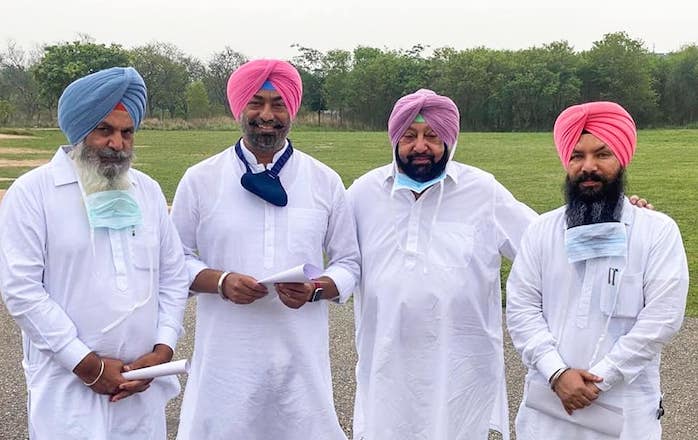
Punjab chief minister and Congress Punjab chief Captain Amarinder Singh (3rd from left) welcomes MLA crossovers to his party (L-R) Jagdev Singh Kamloo, former Leader of Opposition Sukhpal Singh Khaira and Pirmal Singh Dhaula. In December 2015, Khaira left Congress to join AAP. In the 2017 state elections, he won at Bholath on AAP’s ticket. He resigned from the Arvind Kejriwal led party in January 2019 to float Punjabi Ekta Party. - Photo: Khaira Facebook page
By Harjeshwar Pal Singh| OPINION |
A political party is an organisation which intends to capture political power. Most political systems especially democracies have political parties competing for power. However creating a political party is a fiendishly difficult task to perform. Parties need favourable circumstances, leadership, organisation, programmes, agitations, resources, members, etc to stuck root, grow and eventually bring in a political bumper crop. In practice most gets uprooted much before that.
Punjabs politics for long has been dominated by two parties — Congress and Akali Dal. Since the 80s SAD (Mann), Bahujan Samaj Party (BSP), Balwant Ramoovalia’s Lok Bhalai Party (LBP) Manpreet Badal’s Peoples Party of Punjab (PPP), Delhi-based Aam Aadmi Party (AAP), Sukhpal Khehra led Punjab democratic alliance (PDA) etc have tried to challenge the duopoly but have fallen short and as the 2022 election arrives in 6 months it seems as if it would again be Congress vs Akali. What explains this failure of the third front to emerge in Punjab despite a substantial sentiment of change and support among the voters?
In my view there are a number of reasons for it:
1. First Past the Post System: In democracies with the first past the post system where the political party which receives the maximum votes wins, in practice only the two strongest are taken seriously by the voters due to a fear that there vote might not go waste. As a result the third party is at an inherent disadvantage of being perceived weak and often gets decimated at polls. This is what happened to Manpreet’s PPP in 2012.
2. Dominance of Bigger Parties: The big two of Punjab Politics — Congress and SAD —are formidable parties. They are present in the whole state, in each village and Mohalla. They have deep pockets, established leadership and workers and dedicated vote-banks of 25-30% which stand by them even in the worst circumstances. Also they are like two monopolistic platforms who can buy or browbeat any new political startup. This can be done through co-option — Manpreet, Ramoovalia, Khaira or by putting up cases against the new wannabes, causing them financial losses or harassing their supporters .
3. Weaknesses of third front Parties: New Parties are often far weaker than the older ones. They are plagued by a number of problems.
• Feeble Organisations — Most new parties have weak organisations and are absent from large parts of the state. Organisations fill rallies, provide political goods to voters and ensure voter turnout at booths. Compared to SAD and Congress which have network of workers in every nook and corner of the state LBP, AAP and PPP all were mainly present in some parts of Malwa, BSP in Doaba, etc. AAP hardly bothered to create an organisation putting its belief in creating waves through social media alone.
• Lack of resources — Small third front parties lack the deep pockets and resources of Congress and Akalis and struggle to compete except in “wave“ elections like 1989 and 2014. Lack of resources often lead outfits like PPP and AAP to incorporate “puraane Purze” from Congress and Alkalis diluting their appeal.
• Narrow Social base — Another problem of third alternatives in the state is their narrow social base. Unlike Congress and Akalis which are “catch all” parties catering to all social groups in all parts of the state, parties like BSP mainly caters to the Dalits and SAD (Maan) to radical Sikhs. LBP had its base mainly among NRI’s and in rural pockets of Ludhiana and Sangrur. AAP the largest among them all ultimately ended up mainly as a Malwa-based party.
• Overbearing Centralisation — The future of some third alternatives in Punjab like BSP and AAP were scuttled by their high commands who vary of state based leadership ruthlessly purged inner party democracy and leadership showing initiative and independence.
4. Led by Power Centric Conventional elite Politicians: One persistent problem of new Punjab alternatives are that most of them are led by power centric conventional politicians who use ideology and rhetoric only as tool to capture power (Maan is one notable exception). These elite politicians are unable to form teams and show antipathy to organisation formation. They rely far more on social media gimmicks than street level agitations. They quickly lose heart after a debacle and readily jump onto an established platform. Manpreet Badal, Sukhpal Khaira, Simranjit Bains are some notable examples of this trend.
5. Role of NRIs: All recent third wave experiments in Punjab have seen overwhelming support of NRI’s. NRIs support has been crucial for resources, volunteers and over social media and providing immediate traction to a party but they also tend to steer the parties to mirror NRI social base and World view ie Rural Jatt Sikh dominance and taking up of Sikh issues which ensures that these new outfits are pushed into a corner and support of other crucial element of Punjab Politics — Urban Hindus, Dalits etc gets muted.
6. Non Party Civil Society: Most political parties have emerged from social struggles and social movements. Punjab has a formidable section of farmers unions which has gained strength in the last few years. They have a lot of things needed for a third alternative —Credible leadership, organisations, dedicated cadres, programmes and ability to fight on the streets. However most of them do not participate directly in electoral politics, further handicapping the quest for a third alternative.
Any viable third front in the state needs a number of vital ingredients which include credible leadership, organisation, resources, clear programmes, dedicated and trained cadres, large social base and an ability to patiently wage a long and patient fight. At the moment all these seems to be in short supply in Punjab despite a strong popular urge for change.
Harjeshwar Pal Singh is an assistant professor at Sri Guru Gobind Singh College, Chandigarh, where he teaches history. He is an avid political commentator.
ASIA SAMACHAR is an online newspaper for Sikhs / Punjabis in Southeast Asia and beyond.Facebook | WhatsApp +6017-335-1399 | Email: editor@asiasamachar.com | Twitter | Instagram | Obituary announcements, click here |
By Karminder Singh | Sikhi Concepts | Part 4 of 12 |
The ongoing premise of these series of videos (and essays) is that Guru Nanak Redefined, in a Revolutionary way – all the spiritual concepts that existed for thousands of years before him.
The metaphorical depiction of that premise was that Guru Nanak’s Portrait of Sikhi was painted over an existing canvas – a canvas that had existed for 4,000 years prior to Guru Nanak.
The implications of the premise are twofold. First, that while all the concepts of the old canvas are MENTIONED in the Sri Guru Granth Sahib (SGGS), they have been given NEW meanings.
Two, IF we intend to appreciate the Sikhi of Guru Nanak, we will need to understand the NEW or REDEFINED meanings or what we call the Gurbani meanings – of the concepts – as contained within the Sri Guru Granth Sahib.
This short video looks at the concept of 8.4 MILLION life forms or 84 lakh (chaurasi lakh) joon. Let’s begin with examining the basics of the 4-thousand-year-old canvas pertaining to 8.4 million.
The primary argument is that the total count of life forms on earth are 8.4 million in number.
The stated belief is that upon judgement by Drhm Raj in the afterlife, the departed soul goes through these 8.4 million life forms. The new physical form the soul acquires in its next life is determined by an accounting of one’s deeds in the human life. The soul may take the form of a cat, rat, a snake, cow, swine, or the mighty croc – just to name a few.
The specific path for the reincarnation journey of the departed soul is also determined in the judgement. In other words, the judgement determines that the 8.4 million cycle will begin with a particular life form of life and end with another particular one. Once the 8.4 million cycle is completed – the soul comes back in human form.
And this whole cycle repeats. These details are contained within the ਸਵੇਤਾ ਸਵਰਤਰ ਉਪਨਿਸ਼ਦ Sweta Swartar Upnishad – an ancient Sanskrit text.
The chilling and scary details of this journey – never travelled by anyone ever – were contained within numerous concepts on the old canvas. All this about a journey that NO one has travelled, and no one has come back to file a report on. But presented as a religious FACT, and religious TRUTH. And believed as REAL by millions. And accepted by millions more.
What is most chilling really is that this narative of afterlife – drawn from the 4K year old canvas – is the one that is presented by our clergy – our granthis, ragis, parcharaks and our kirtanias in our gurdwaras as Sikhi beliefs.
Our granthis, ragis and kirtanias – sing shabds from the SGGS during the death ceremonies of our loved ones and their barsis – but present narratives derived from the Upanishads to our sangats. In short its Kirtan of Gurbani but discourse of the 4K year old discarded canvas.
The social media is inundated with individuals – dressed as Sikhs and claiming to be Sikhs – quoting Gurbani verses even, but pushing the narratives of the Upanishads in their misguided proclamations that Guru Nanak accepted the beliefs of the 4K old canvas.
The outcome is this. The narrative that is held within the psyche of a vast majority of Sikhs is NOT the narrative of Gurbani, but that of the 4K year old canvas. And this vast majority of Sikhs mistakenly think and accept and believe the narrative of the Upanishads pertaining to 8.4 mil to be the narrative of Gurbani. Nothing can be further from the truth.
So what is the narrative of 8.4 million life forms within Gurbani? We can develop the basic principles by examining some verses that discourse the concept.
The first thing that Gurbani does is to debunk the notion that the total number of life forms is 8.4 million. For one, no one has done the counting. And those people whose business it is to count life forms – namely the scientists, biologists and zoologists – they have gone way beyond this minuscule 8.4 million AND are still counting.
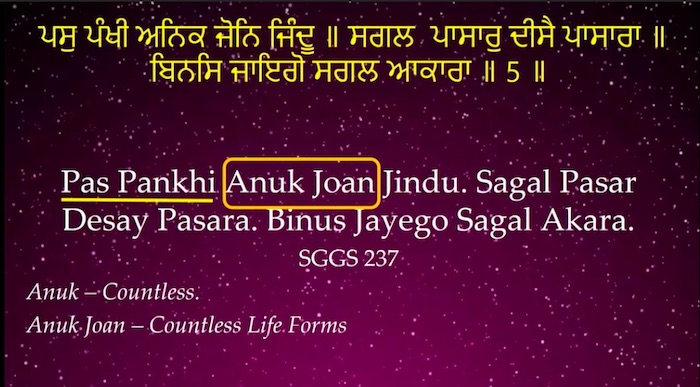
Pas Pankhi Anuk Joan Jindu. Sagal Pasaar Deesaiy Pasara. Bines Jayego Sagal Akara.
The word being used is ਅਨਿਕ Anuk – which means countless, beyond count, innumerable. ਅਨਿਕ ਜੋਨਿ Anuk Joan means countless life forms. The words ਪਸੁ ਪੰਖੀ Pas Pankhi tell us that the reference is to the animal kingdom.
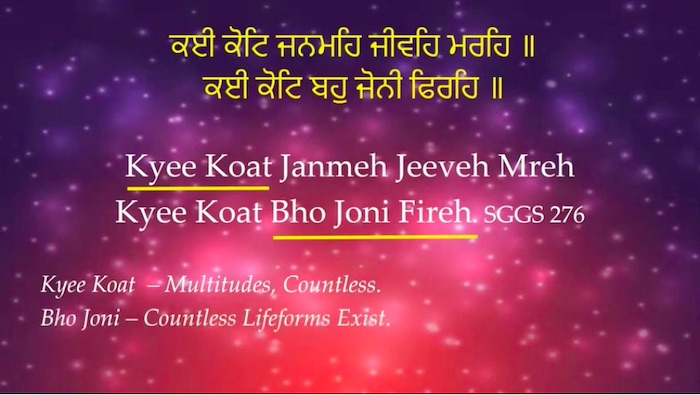
ਕਈ ਕੋਟਿ Kyee Koat means – multitudes, countless. ਬਹੁ ਜੋਨੀ ਫਿਰਹਿ Bho Joani Fireh means countless lifeforms are in existance.
So it’s clear, Gurbani does NOT accept the 8.4 million limiting count as a fact. There is a reason for this. Which is that the Creator cannot be limited, cannot be boxed in with numbers and counts. 8.4 million may have sounded a near-infinite number 4K years ago, but as far as Gurbani is concerned it is a minuscule number. The Creator of Gurbani is beyond fathom. The Creation of the Creator is equally beyond fathom. It cannot be put into numbers. Certainly not into concocted numbers.
That is why when it comes to putting down the Gurbani belief as to how many life forms there are in Creation – Gurbani uses the words KOAT and ANEYK – meaning multitudes, uncountable, beyond fathom etc.
Consequently, when 84 Lakh is used in Gurbani – it refers to the pre-existing concept, it refers to the 4K year old belief. It refers to a belief of 8.4 million in the AFTER life. A belief that is NOT subscribed to by Gurbani, a belief that is CRITIQUED in Gurbani, a belief that goes contrary to the belief of ANEK and KOAT of Gurbani. It refers to the belief that NEEDED to be redefined, and IS Re-defined within Gurbani to fit the Canvas of Guru Nanak. The Canvas of Life. The Canvas of Here and Now.
So this, in essence, is the first primary difference. The old Canvas says total number of life forms is 8.4 million. Gurbani says no one has counted, the Creator cannot be limited to any fixed number, and Gurbani therefore rejects this fixed figure. There is a second critical difference and this relates to the issue of the deceased individual taking on 8.4 million life forms in its journey of after-life.
The FIRST thing Gurbani does within the REPAINTED Canvas is to undertake a revolutionary REDEFINING of the concept of Joons. Guru Nanak’s canvas redefines Life Forms.
Gurbani anchors the notion of life forms, the notion of Joons into the HERE and NOW. Gurbani plants it FIRMLY into the life that we have in the HERE and NOW. Gurbani GROUNDS the 8.4 million notion into our present life – and NOT something that exists in the AFTER LIFE. This is the second critical difference. This is the crux of the revolutionary and innovative re-defining.
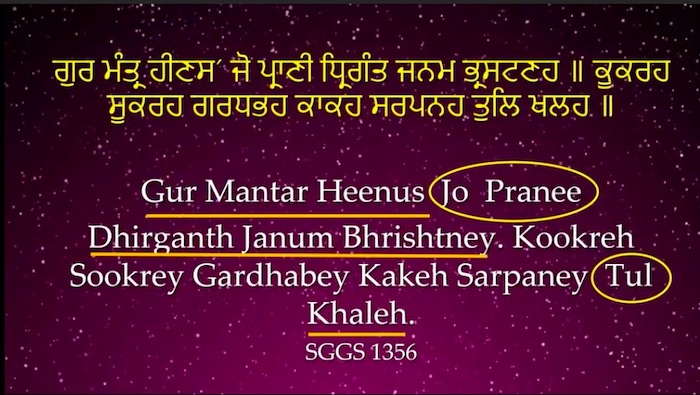
The following verse from page 1356 of the SGGS makes this clear.
Gur Mantar Heenus Jo Pranni Dhrigant Janum Bhresthneh. Kookreh Sookreh Gardhbey Kakeh Sarpney Tul Khaley.
The second verse contains mention of a number of animals – ਕੂਕਰਹ ਸੂਕਰਹ ਗਰਧਭਹ ਕਾਕਹ Kookreh Sookreh Gardhbey Kakeh and ਸਰਪਨਹ Sarpney. ਕੂਕਰਹ Kookreh is a dog, ਸੂਕਰਹ Sookreh is a pig, ਗਰਧਭਹ Gardhbey is a donkey, ਕਾਕਹ Kakeh is a crow, ਸਰਪਨਹ Sarpney is a snake.
All are animal life forms. If we look at the first verse, we see the REDEFINING in the clearest of terms.
Of key importance are the terms ਜੋ ਪ੍ਰਾਣੀ Jo Pranni which mean that human being. A certain kind of human being. A human being with a certain type of a mental state. A living person with a certain mental make-up. A human being with a certain kind of mind-set. What kind? Gurbani says: ਗੁਰ ਮੰਤ੍ਰ ਹੀਣਸ Gur Mantar Heenus meaning one who DISCARDS the Guru’s advice. One who Rejects the Guru’s messages.
ਮੰਤ੍ਰ Mantar comes from the Sanskrit word MANTRI – Advisor or what we call a minister these days.
ਗੁਰ ਮੰਤ੍ਰ ਹੀਣਸ´ ਜੋ ਪ੍ਰਾਣੀ Gur Mantar Heenus Jo Pranni means that person, that individual, that living human being who ignores the Guru’s spiritual advice. Then we have this phrase ਧ੍ਰਿਗੰਤ ਜਨਮ ਭ੍ਰਸਟਣਹ Dhrigant Janum Bhresthneh. Which means – is wasting one’s life, squandering his or her life. The we have the word ਖਲਹ Khleh which refers again to a human being, an ignorant human being. One who is not only squandering one’s life, but squandering it in complete ignorance – ਖਲਹ Khleh. The reference is clearly to our present life, life as being lived in the Here and Now.
Then there is this word ਤੁਲਿ Tul hich means akin to, just like, comparable with.
So the meaning of the verse is – Human beings ਜੋ ਪ੍ਰਾਣੀ Jo Pranni who discard or reject the Shabd Guru’s advice – waste their lives, squander their lives – their present lives, their lives in the HERE and NOW by living it akin to ਕੂਕਰਹ ਸੂਕਰਹ ਗਰਧਭਹ ਕਾਕਹ ਸਰਪਨਹ Kookreh Sookreh Gardhbey Kakeh and ਸਰਪਨਹ Sarpney. They live it AKIN to these animalistic mindsets in ignorance and in disregard of the Guru’s spiritual advice.
So ਕੂਕਰਹ ਸੂਕਰਹ ਗਰਧਭਹ ਕਾਕਹ Kookreh Sookreh Gardhbey Kakeh and ਸਰਪਨਹ Sarpney – dog, pig, donkey, crow, snake – are NOT life forms in the AFTER LIFE, but MENTAL STATES. They are STATES of the MIND lived by us in the HERE and the NOW.
Here is another verse of Guru Nanak from page 832 of the SGGS and on the same lines.
SookarSuan Gardhab Manjara. Psu Mlech Neech Chandala. Gur Tay Moh Fayray Tin Joan Bhvayeay. Bandhan Bandhiya Aiyeah Jayeah.
The phrase ਗੁਰ ਤੇ ਮੁਹੁ ਫੇਰੇ ਤਿਨੑ Gur Tay Moh Fayray Tin refers to us human beings who turn our backs on the messages of the Shabd. What happens to human beings who do such?
We either fall back on or acquire mindsets of ਸੂਕਰ ਸੁਆਨ ਗਰਧਭ ਮੰਜਾਰਾ SookarSuan Gardhab Manjara. We acquire animalistic mindsets. The greed of a dog ਸੁਆਨ Sookar, the arrogance of a donkey ਗਰਧਭ Gardhab, cowardice / timid-ness of a cat ਮੰਜਾਰਾ Manjara, And demonic mindsests. ਪਸੂ ਮਲੇਛ ਨੀਚ ਚੰਡਾਲਾ Psu Mlech Neech Chandala.
The mention of animals ਸੂਕਰ ਸੁਆਨ ਗਰਧਭ ਮੰਜਾਰਾ SookarSuan Gardhab Manjara – are meant to reference the mindsets OF THE HUMAN BEING – Gurbani is meant for human beings, certainly not for those in the animal kingdom.
It needs to be made clear that Gurbani is not critiquing the traits and behaviour of animals. Animals are instinct based. There is nothing wrong with those instincts because they define the animals concerned. The critique is against human beings with a mind, intellect and capacity to know – BUT choose to define their humanity in terms of animalistic traits.
Jinna Satgur Purakh Na Sayveyo Shabd Na Keeto Vichar. Oye Manus Joon Na Akheyan Psu Dhor Gavaar.
Those human beings who have not realized the Creator within ਸਤਿਗੁਰੁ ਪੁਰਖੁ ਨ ਸੇਵਿਓ Satgur Purakh Na Sayveyo and have not contemplated on the messages of the Shabd ਸਬਦਿ ਨ ਕੀਤੋ ਵੀਚਾਰੁ Shabd Na Keeto Vichar.
The Guru says, I consider them NOT as living the human life form ਓਇ ਮਾਣਸ ਜੂਨਿ ਨ ਆਖੀਅਨਿ Oye Manus Joon Na Akheyan but living the life forms of animals in their unenlightened states ਪਸੂ ਢੋਰ ਗਾਵਾਰ Psu Dhor Gavaar.
ਢੋਰ ਗਾਵਾਰ Dhor Gavaar refers to an unenlightened state, and ਪਸੂ Psu refers to an animal, animalistic.
So the ਪਸੂ Psu of Gurbani is NOT the 8.4 mill life forms in the AFTER LIFE, it refers to MENTAL STATES, STATES of the MIND lived by us in the HERE and the Now. They are MINDSETS of us HUMAN BEINGS in the Here and NOW.
Ann Khanna Kapurr Paiinnun Deeya Rus Ann Bhoganni. Jin Deyay So Chit Na Aavayi Psu Haon Kar Janni.
The first verse refers to the Creator blessing us with Life and the needs of Life ਅੰਨੁ ਖਾਣਾ ਕਪੜੁ ਪੈਨਣੁ ਦੀਆ ਰਸ ਅਨਿ ਭੋਗਾਣੀ Ann Khanna Kapurr Paiinnun Deeya Rus Ann Bhoganni.
The second verse talks of a state of being that is NOT in appreciation of the Creator as the Give of all these. ਜਿਨਿ ਦੀਏ ਸੁ ਚਿਤਿ ਨ ਆਵਈ Jin Deyay So Chit Na Aavayi.
The next part ਪਸੂ ਹਉ ਕਰਿ ਜਾਣੀ Psu Haon Kar Janni means I have reduced my life – my human life – ਕਰਿ ਜਾਣੀ Kar Janni to that of a ਪਸੂ Psu – an animal.
Again the reference of ਪਸੂ Psu is NOT the 8.4 mill life forms in the AFTER LIFE, it refers to one’s MENTAL STATE, to our STATE of the MIND lived by us in the HERE and the Now ਪਸੂ ਹਉ ਕਰਿ ਜਾਣੀ Psu Haon Kar Janni.
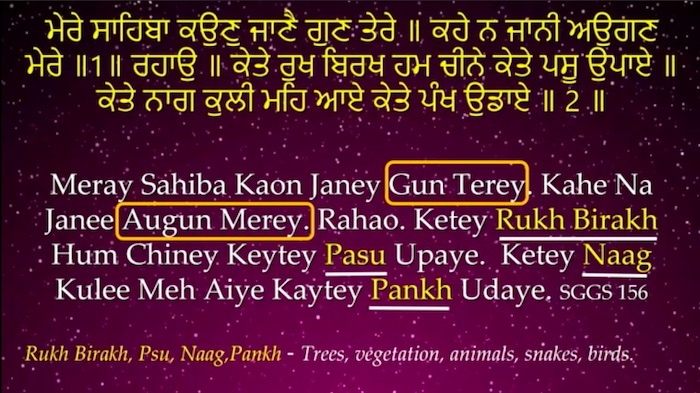
This verse of Guru Nanak on page 156 makes the notion of 8.4 as REDEFINED in Gurbani even clearer.
The first verse – ਮੇਰੇ ਸਾਹਿਬਾ ਕਉਣੁ ਜਾਣੈ ਗੁਣ ਤੇਰੇ Mayray Sahiba Kaonn Janney Gun Tayray is about the Creators Divine Virtues ਗੁਣ ਤੇਰੇ Gun Tayray. The second verse talks about my VICES, my human VICES. ਕਹੇ ਨ ਜਾਨੀ ਅਉਗਣ ਮੇਰੇ Khay Na Janni Augunn Mayray . The word AUGUN is VICES, My Vice filled mindsest.
Guru Nanak is saying BOTH – Divine Virtues and my VICES are equally innumerable. In the next two verses, Guru Nanak provides examples of our Vices.
All of these examples are life forms – ਰੁਖ ਬਿਰਖ, ਪਸੂ, ਨਾਗ, ਪੰਖ Rukh Birekh Psu Naag Pankh – Trees, vegetation, animals, snakes, birds.
It is clear that these examples of life forms refer to our MENTAL STATE, STATE of the MIND lived by us in the HERE and the Now. In other words, a human life filled with Vices. A human life being lived out with animalistic mindsets. A human life lived in animalistic traits.
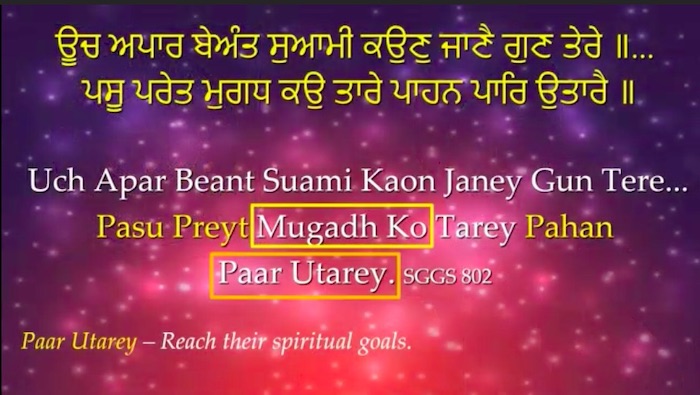
Here is yet another set of verses from page 802 of the SGGS.
ਊਚ ਅਪਾਰ ਬੇਅੰਤ ਸੁਆਮੀ ਕਉਣੁ ਜਾਣੈ ਗੁਣ ਤੇਰੇ ॥
Uch Apar Bayant Suami Kaonn Janney Gunn Tayray … and ਪਸੂ ਪਰੇਤ ਮੁਗਧ ਕਉ ਤਾਰੇ ਪਾਹਨ ਪਾਰਿ ਉਤਾਰੈ ॥ Psu Prayt Mughad Ko Tarey Pahan Paar Utaray.
Of Such Immense Divinity are Your Virtues O Creator. ਊਚ ਅਪਾਰ ਬੇਅੰਤ ਸੁਆਮੀ ਕਉਣੁ ਜਾਣੈ ਗੁਣ ਤੇਰੇ Uch Apar Bayant Suami Kaonn Janney Gunn Tayray. Why so? How so? The next verse answers that.
ਪਸੂ Psu, Animals, ਪਰੇਤ Prayt Demons, ਪਾਹਨ Pahan Stones become Divine, reach their spiritual goals – ਪਾਰਿ ਉਤਾਰੈ Paar Utaray.
As said above, Gurbani is not for animals, demons, and stones. Animals, demons and stones do not have spiritual Goals. Human Beings alone do, so what is the message of Gurbani here?
It is about mindsets. For ਮੁਗਧ Mugadh persons. For humans with unenlightened mindsets ਮੁਗਧ Mugadh. For Humans with Animalistic mindsets ਪਸੂ Psu. For Humans with Demonic mindsets ਪਰੇਤ Prayt, Humans with hearts and mindsets as hard as stones, rocks and boulder ਪਾਹਨ Pahan. All of these can and do become divine through the acquisition ਜਾਣੈ of Divine Virtues ਜਾਣੈ ਗੁਣ ਤੇਰੇ Janney Gunn Tayray.
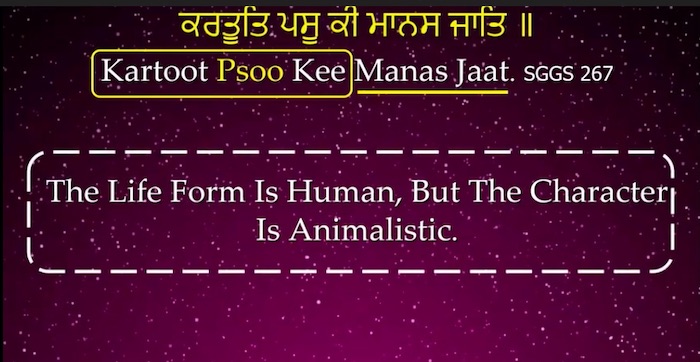
This verse of Guru Arjun on page 267 makes it crystal clear.
ਕਰਤੂਤਿ ਪਸੂ ਕੀ ਮਾਨਸ ਜਾਤਿ ॥
Kartoot Psu Kee Manus Jaat.
Meaning: The life form is Human ਮਾਨਸ ਜਾਤਿ Manus Jaat, but the character, deeds, and traits ਕਰਤੂਤਿ Kartoot are animalistic ਪਸੂ ਕੀ Psu Kee.
The reference of ਪਸੂ Psu is NOT the 8.4 mill life forms in the AFTER LIFE, it refers to our ਪਸੂਪੁਣਾ Psu-punna. To our STATE of the MIND, our animalistic character, our deeds as lived by us in the HERE and the Now.
Here is a verse that ties all that we have said above. It’s on page 190 of the SGGS.
Meaning: Indulging and drowning in Temporal Life ਅਨਿਕ ਰਸਾ ਖਾਏ Anuk Rsa Khayey is akin to living an animalistic life, ਜੈਸੇ ਢੋਰ Jaisay Dhor, the word ਢੋਰ Dhor means an animal. Living such and without spiritual realization – ਸਾਧਸੰਗ ਬਿਹੂਨਾ Sadhsang Bihuna – is to have suffered death ਮਿਰਤਕ ਦੇਹ Mirtak Deh. The word ਮਿਰਤਕ Mirtak means death. The aftermath is the cycle of animalistic mindsets ਆਵਤ ਜਾਤ ਜੋਨੀ Avat Jaat Joni and suffering ਦੁਖ ਖੀਨਾ Dukh Kheena.
Its clear that the DEATH being referred to is SPIRITUAL DEATH – ਮਿਰਤਕ ਦੇਹ Mirtak Deh which is the concern of Gurbani. It is a DEATH that happens in the HERE and NOW, while we are ALIVE. It is also clear that the animalistic Life Forms ਜੈਸੇ ਢੋਰ Jaisay Dhor, being referred to are MINDSETS of ours WHILE STILL ALIVE. It is also clear that the CYCLE of life forms ਆਵਤ ਜਾਤ ਜੋਨੀ Avat Jaat Joni being referred to are cycles that happen to us in the HERE and NOW. And the suffering ਦੁਖ ਖੀਨਾ Dukh Kheena is the suffering in the HERE and NOW – not in some unknown realm of afterlife.
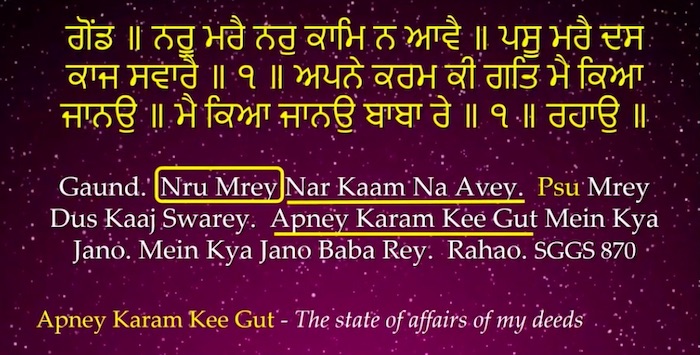
Bhagat Kabir, on page 870 of the SGGS tells us to bring to life the Humanity, bring to life the HUMANE-ness within us and ELIMINATE the animalistic mindsets, animalistic characters and deeds within us. The set of verses is as follows:
Nru Mreiy Nur Kaam Na Aveiy. Psu Mreiy Dus Kaj Swareiy. Apnay Karm Ki Gut Mein Kya Jano. Mein Kya Jano Baba Ray. Rahao.
The Rahao verse has the words ਅਪਨੇ ਕਰਮ ਕੀ ਗਤਿ Apnay Karm Ki Gut meaning this is the state of affairs ਕੀ ਗਤਿ Ki Gut of my deeds – ਅਪਨੇ ਕਰਮ Apnay Karm. The state of affairs is that when the HUMAN in Me Dies from Within me – ਨਰੂ ਮਰੈ Nru Mreiy the consequence is that I become of no worth to other beings – ਨਰੁ ਕਾਮਿ ਨ ਆਵੈ Nur Kaam Na Aveiy.
However, when the animal kingdom within me dies, ਪਸੂ ਮਰੈ Psu Mreiy then I become useful to humanity by ten fold ਦਸ ਕਾਜ ਸਵਾਰੈ Dus Kaj Swareiy.
Again, the reference of ਪਸੂ Psu is NOT the 8.4 mill life forms in the AFTER LIFE, it refers to our STATE of the MIND, our character, our deeds as lived by us in the HERE and the Now. That is why the Rahao verse is ਅਪਨੇ ਕਰਮ ਕੀ ਗਤਿ Apnay Karm Ki Gut meaning this is the state of affairs of my deeds.
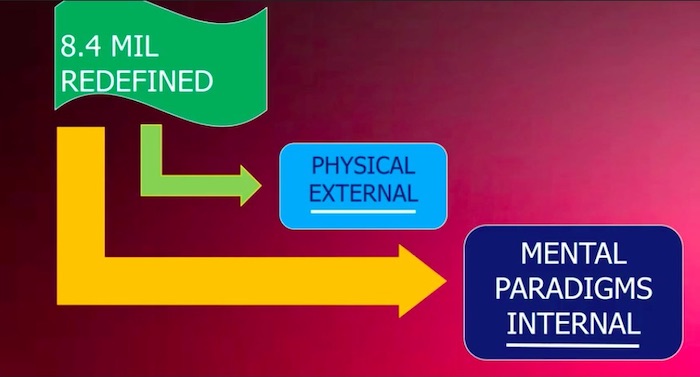
Esentially then, what is happening in Gurbani is the REDEFINING of the 8.4 mill life forms concept from one that is PHYSICAL and EXTERNAL to one that is INTERNAL. To one that is a Mental Paradigm in the form of CHARACTER and MIND SETS.
This is a revolutionary redefining. It is revolutionary because Gurbani anchors the notion of life forms, the notion of Joons into the HERE and NOW. Gurbani plants it FIRMLY into the life that we have in the HERE and NOW. Gurbani GROUNDS the notion of Joons and life forms into our present life – and not something that exists in the AFTER LIFE. In doing so, it throws out the concept of 8.4 mil that refers to life forms that the soul – any soul – goes through in the Afterlife or after death.
What is being said by all the verses that have been presented above is that there is a Zoo within us, inside of us. The Zoo is within us as Human Beings. As un-enlightened Human beings. The Zoo is inside us as we are alive. In our Here and Now.
One of France’s greatest mind of the 1800s Victor Hugo put this idea this way 300 years after Guru Nanak gave it to the spiritual world in 1469. This is what he said: All animals are found in men. And each of them exists in some men. Sometimes several at a time. Animals are found in men. Within men. Men who are kicking and alive.
Hugo also said something else. He said Nothing is more powerful than an idea whose time has come. Guru Nanak presented us with powerful, innovative, new, novel and original ideas pertaining to spirituality.
Guru Nanak presented us with a spirituality whose time had come. A spirituality for the 21st century – way back in the 15th Century.
The sad reality is that for a large majority of Sikhs, the time for Guru Nanak’s ideas has not come, and may never come. For a large majority of Sikhs, Guru Nanak has yet to be born into their lives. For a large majority of Sikhs, we are still living the spirituality of 4 K years ago. Perhaps that is why we have prevented the birth of Guru Nanak into our spiritual lives.
We can change this in our lives by acknowledging that the time for Guru Nanak’s Sikhi has come. We can change even if our clergy – our granthis, ragis, parharaks, kirtanias and our gurdwaras won’t allow us to change. Our clergy have a reason to NOT change, to NOT ALLOW us to change, and to NOT preach the truths of Gurbani. It is in their interest to keep us imprisoned within the discarded 4K year old belief system. They are heavily invested in the old canvas. Their livelihoods and fake positions as agents of their concocted God depend on that canvas being kept alive.
But we Sikhs – ordinary, everyday Sikhs wanting to inculcate the truths of Gurbani have no reason to Not want to change.
When You Start Living the Spirituality Whose Time has Come, You Stop Living the Spirituality Whose Time has Run Out.
The next video, part 5 of 12 will examine the concepts of Reincarnation or Ava Gaun as it is called in Gurbani.
SIKHI CONCEPTS SERIES BY DR KARMINDER SINGH DHILLON: COMPLETE LINKS TO VIDEOS & LECTURE NOTES
Sikh thinker, writer and parcharak Karminder Singh Dhillon, PhD (Boston), is a retired Malaysian civil servant. He is the joint-editor of The Sikh Bulletin and author of The Hijacking of Sikhi. He can be contacted at dhillon99@gmail.com.
* This is the opinion of the writer, organisation or publication and does not necessarily represent the views of Asia Samachar.
ASIA SAMACHAR is an online newspaper for Sikhs / Punjabis in Southeast Asia and beyond.Facebook | WhatsApp +6017-335-1399 | Email: editor@asiasamachar.com | Twitter | Instagram | Obituary announcements, click here |
The world had just witnessed a 11-day Israel bombardment of Gaza which killed more than 250 people, including 66 children. The world watched in horror as Israel unleashed its disproportionate response to its beleaguered Palestinian neighbour.
The attack was in response to Hamas, the Palestinian group that rules the strip facing the Mediterranean Sea, fired several rockets at Israel on May 10 following the expiration of the group’s ultimatum demanding Israel stand down its security forces from the Al-Aqsa Mosque compound.
How is life for the Palestinians?
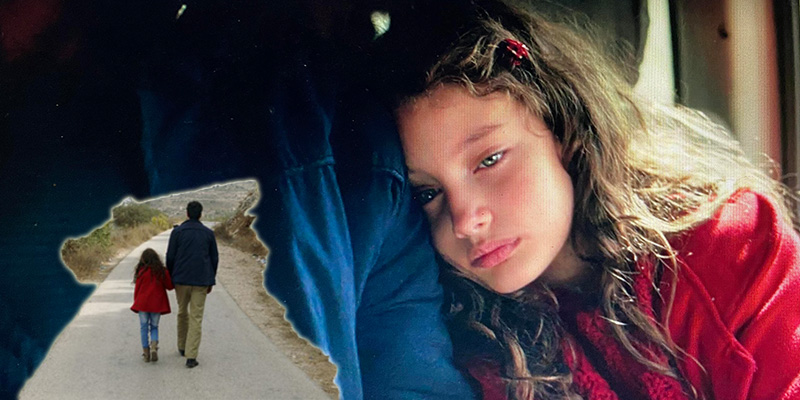
A short film “The Present” from Palestinian-British filmmaker Farah Nabulsi, which has debuted on streaming service Netflix, gives us a glimpse of the daily hardship they face.
The film is set in the West Bank and sheds light on how Palestinians are deprived of the basic right to freedom of movement.
On his wedding anniversary, Yusef (played by renowned actor Saleh Bakri) and his young daughter set out in the West Bank to buy his wife a gift. Between soldiers, segregated roads and checkpoints, how easy would it be to go shopping? It’s probably not your typical day.
The scene at Checkpoint 300 that separates Bethlehem and Jerusalem hits you hard. Here, you are on ground zero, and you come face to face with the humiliation that Palestinians have to stomach.
The short film won the Audience Award for Best Film at Clermont-Ferrand International Short Film Festival 2020 (World premiere), the Jury Award for Best Live Action Short at the Cleveland International Film Festival (North American premiere),
The film was directed by Farah Nabulsi, a Palestinian British Oscar nominated and BAFTA award-winning filmmaker and human rights advocate.
She is the daughter of Palestinians who were fortunate enough to make a home in 1970’s Britain — unlike the millions who continue to remain stateless in refugee camps, according to her website.
She has created a digital resource to deconstruct the Israeli military occupation of Palestine in a way never done before.
ASIA SAMACHAR is an online newspaper for Sikhs / Punjabis in Southeast Asia and beyond.Facebook | WhatsApp +6017-335-1399 | Email: editor@asiasamachar.com | Twitter | Instagram | Obituary announcements, click here |
SASKAAR / CREMATION:2.30pm, 5 June 2021 (Saturday) at the Jalan Loke Yew Crematorium, Kuala Lumpur. Last Respects: 12.30 noon to 2.30pm, 5 June 2021 (Saturday) | Malaysia
Her gentle and kind spirit lives on in her loved ones. She will be very deeply missed.
Saskaar/Cremation: 2.30pm, 5 June 2021 (Saturday) at the Jalan Loke Yew Crematorium, Kuala Lumpur. Last Respects: 12.30 noon to 2.30pm, 5 June 2021 (Saturday).
Due to the FMCO, it is strictly among immediate family members only. In light of the FMCO, the Path da Bhog will be held privately. We truly appreciate your thoughts and prayers.
Contacts:
Gurdeep Singh Johal : 012-685 0712
Gurmeet Singh Johal: 013-296 4921
| Entry: 5 June 2021 | Source: Family
ASIA SAMACHAR is an online newspaper for Sikhs / Punjabis in Southeast Asia and beyond.Facebook | WhatsApp +6017-335-1399 | Email: editor@asiasamachar.com | Twitter | Instagram | Obituary announcements, click here |
SASKAAR / CREMATION:2.30pm, 5 June 2021 (Saturday) at Jalan Kuari, Cheras Crematorium, Kuala Lumpur. Hearse leaves No 2, Lorong Air Jernih 2, Air Panas, Setapak, Kuala Lumpur, at 1.30pm | Malaysia
BHAGWAN KAUR W/O LATE CHAND SINGH JETHUKE
Passed away peacefully on 4 June 2021.
Saskaar / Cremation: 2.30pm, 5 June 2021 (Saturday) at Jalan Kuari, Cheras Crematorium, Kuala Lumpur
Hearse leaves No 2, Lorong Air Jernih 2, Air Panas, Setapak, Kuala Lumpur, at 1.30pm.
Contact:
Dato Narender Singh 019-266 1707
Malkith Singh 012-288 0557
Ajit Singh 014-629 9639
(Due to FMCO SOP, the funeral is limited only to 10 people consisting of family members only. We understand if you’re unable to attend due to the restrictions and we thank everyone for their assistance and prayers.)
| Entry: 5 June 2021 | Source: Family
ASIA SAMACHAR is an online newspaper for Sikhs / Punjabis in Southeast Asia and beyond.Facebook | WhatsApp +6017-335-1399 | Email: editor@asiasamachar.com | Twitter | Instagram | Obituary announcements, click here |
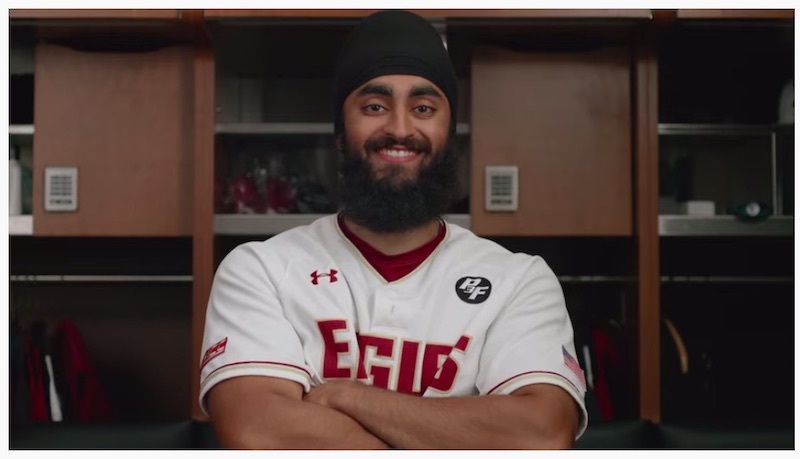
Samrath Singh ’22 grew up in New Jersey in a loving family, starred at sports, excelled in school, and even learned to play the viola. He was also raised as an observant Sikh, which is why Boston College struck his parents as an odd fit when it came time for their son, by then a standout baseball player and student, to decide on a university.
In June 2017, Singh and his parents made the drive to Chestnut Hill to learn about BC, which had been heavily recruiting the tall lefthanded pitcher. After touring the campus and the athletic facilities, they found themselves sitting in the office of baseball head coach Mike Gambino. Singh’s parents by then were comfortable with the academic opportunities that BC offered, but there was something else they wanted to know: Could their son, who in keeping with his faith wears a turban and a beard and does not cut his hair, truly feel at home in a Jesuit Catholic institution?
“I’ve researched your religion,” Gambino replied, “and I want to tell you how some of the Jesuit values here parallel Sikh core tenets.” He explained that, to his thinking, men and women for others perfectly complemented Seva, the Sikhism principle of selfless service. The Singhs were stunned. They had been on many of these recruiting visits, and this marked the first time that a coach had spoken knowledgeably about their faith. “Not only did that catch my attention—like, Whoa!” Singh recalled, “but my parents were like, ‘Did he really just—did he really do that?'”
With the family quickly warming to BC, Singh had one final question: How would Gambino feel about him wearing his turban while he pitched?
“Well, what do you want to do?” the coach asked.
“This is me,” Singh responded. “This is who I am. This is my religion. I want to pitch like this.”
“I said, ‘Let’s do it, dude,'” Gambino recalled. “I remember at that point, I looked at him, I’m like, ‘I’m all in on this kid.'”
Singh matriculated in the fall of 2018, but it would be more than a year until he could finally take the mound for the Eagles. His arm had begun hurting during the previous summer and had never really stopped. Then, while he was attempting to throw early in 2019, the pain reached an agonizing new level. Soon after, he underwent a procedure known as Tommy John surgery that requires a long recovery process.
“This is me. This is who I am. This is my religion. I want to pitch like this.”
It would be nearly six months before Singh could begin throwing a baseball again. As his arm healed, he watched from the sidelines while the BC baseball team made a run to the semifinals of the 2019 ACC tournament. Singh was thrilled by his teammates’ success, but also frustrated by his inability to help. “I’ve done a lot of thinking about this,” he said. “When you know you can contribute in a meaningful way, and when that’s taken away from you, it’s heartbreaking.”
By the time the following season started, Singh’s arm was feeling much better. On February 29, 2020, BC played a game against Fairfield University that quickly turned into a laugher. When Fairfield came to bat in the bottom of the ninth, they were behind 19-6. Standing on the mound to get the last three outs for BC was Samrath Singh. His appearance marked not just his Boston College debut, but also, as near as can be determined, the first time that an observant Sikh had ever played in a Division 1 baseball game. He walked a batter, struck out another, and gave up one hit in a scoreless inning. And through it all he wore his turban. “The whole time on the mound, I was just smiling,” Singh recalled. “I was ecstatic.”
Boston College pitcher Samrath Singh and family – Videograb
The pandemic and a return of the pain in his arm have limited Singh to just a couple of appearances since the game against Fairfield but he remains optimistic about his baseball future. It’s great for Sikh kids to look up to MLB stars Mike Trout or Bryce Harper, he said, “but I want them to be able to see themselves in someone at that level. So being the first observant Sikh playing on nationally televised baseball games, that would mean the world to me.”
Meanwhile, Singh just completed his junior year at the Carroll School, where he is studying finance (he’s also minoring in computer science). He said that he stands out as an observant Sikh at a Jesuit Catholic school, but just as Gambino promised him during his recruitment visit, he feels right at home. “I want you to know how well you’ll fit in here because you’re Sikh,” his coach had told him. “Because your diversity will fit in here.” ◽
See the original article, ‘Keeping the Faith’ (Boston College Magazine, Summer 2021), here.
Boston College pitcher Samrath Singh – Videograb
ASIA SAMACHAR is an online newspaper for Sikhs / Punjabis in Southeast Asia and beyond.Facebook | WhatsApp +6017-335-1399 | Email: editor@asiasamachar.com | Twitter | Instagram | Obituary announcements, click here |
‘The soul feels, sees and hears things which the mind does not fully understand. The soul is infinite, the mind is finite.’ (Inspired by Rumi.)
This is not exactly a sight-seeing travelogue. It is more an inner-pilgrimage without a destination. Just as life is a journey, not a destination, this was a drive without a destination. The destination did not matter, the journey did. It was about a drive from Melbourne in the south-west corner of Australia across the continent through the vast Nullarbor Plain and off the Great Australian Bight hugging the south coast of this majestic continent, to the south-east corner, Margaret River. Right to left, as my grandson says.
Meditation, simran (especially recommended long periods sometimes days), sadhana, even astral travelling, and time-out for self, for the soul, the inner spirit and such activity has always intrigued me. I have dabbled in numerous such activities, but I have always found that as a Sikh, ‘action’ of some sort like doing sewa, helping others grow, yoga, fitness exercises, walking, or even just engaging in kirtan and gurmatt discourses always appeared more productive and meaningful, spiritually, and often physically beneficial too.
As an example, recent research has uncovered that 9th Sikh Master, Guru Tegh Bahadur, who was thought to have hidden himself away in meditation for 26 years (!) was actually in reality, actively promoting Sikhi universal values in spiritual tours in the north of the Indian sub-continent in that period! (A book will be released towards the end of this year by SYA – Sikh Youth Australia about his ‘true’ story, researched and authored by S. Gurmukh Singh OBE of UK.)
In my 60’s (between 2010 and 2018) I walked long distances (average 200km. per walk over one-week periods) in Malaysia, my country of birth, enjoying the beautiful Malaysian countryside, contemplating life on this planet in human form, and immersing in ‘naam’ – perhaps what we understand as – ‘searching for the Truth’. These ‘walks’ have been most rewarding physically and spiritually. In the process I have ‘walked’ almost the length of the Malay peninsula (from Penang to Singapore) along the old roads, sometimes using different routes.
Now, in my 70’s such long ‘walks’ appear to be beyond me though my spirit says I still have one more to carry out, on my ‘bucket list’ – from Sabha House in Kuala Lumpur to Khalsa-Land, Kuala Kubu Bharu. I have an infinity with SNSM (Sikh Naujawan Sabha Malaysia) from its inception in the very early 1960’s. In fact, I am one of the original participants of the first couple of ‘samelans’ (Sikh youth camps), in Port Dickson (1962 and 1963).
Hindus carry out a ‘sanyas’ in latter life, of shaving their heads, wearing simple garments of ‘sadhus’ (Indian holy renunciates), and leaving their families to go in search of their spiritual ‘truth’. My escapades are not that drastic, but certainly are for spiritual nourishment. This is my first such ‘drive’, hopefully of numerous more to come. This is the ‘Nullarbor spiritual Drive’.
At the outset I must mention that we in Australia are extremely lucky so far from Covid-19. We have had cases, even deaths, lockdowns but not to the scale as experienced in numerous other countries. In fact, last year, a friend who works in the cremation/burial industry here joked that ‘business is down’ because less Australians have died last year compared to any other years of late! Due to lockdowns even deaths related to influenza and other communicable diseases, are way down and also deaths on roads! Ironically, the industry is suffering! Guru Ji has been kind to us.
First and foremost, I am writing this as a way, hopefully, of cheering up the reader. I think we are all suffering from ‘pandemicities’ – the fear, apprehension and the deep psychological invasion of talk and news, and the pre-occupation with the spread of the deadly Covid-19 not only at home but globally.
We all need to find some form of escape occasionally from this current and ongoing foreboding phenomena which has invaded our lives. Friends and relatives who barely read any newspaper or magazine or even watched the news before, are today fixated especially by their I-phones or smart phones, being bombarded by gloomy news, gory details, statistics of infections and deaths, conspiration theories, global shutdowns, even dark jokes about the pandemic and the vaccine. Domestic violence and mental issues are on the rise because of ‘lock-downs’ and the subconscious fear of the pandemic. Depression is at an all-time high. Most of us are coming to terms with our mortality, and that is frightening. Many are suffering because of job losses and financial strain. Hopefully, this missive raises the spirits somewhat.
A drive across the Nullarbor is a relatively safe trip, but it is about 4,000km. Importantly, the middle bit of about 1,000km along the coast of the spectacular Great Australian Bight is a ‘blackout’ area with virtually no internet or phone coverage, scarce water and very expensive fuel for the vehicle, if you can find a fuel station at regular intervals. One is almost completely cut off from the rest of the world. One depends on two-way radio or the regular truck drivers who ply this route and are in touch with each other and the emergency services.
At the time of this drive, Covid was well under control here, but we had to take the chances of sudden lock-downs between states. Our state premiers appear to do a one up on each other on closing down borders as soon as any Covid alarm bells ring in any state! The premier of Western Australia, the state into which we are driving, is the most trigger-happy. But then, his constituents love him for that, as he supposedly keeps them safe this way. Western Australia has barely had any lockdown or Covid cases. Luckily, our politicians and administrators listen to our medical experts and err on the side of caution.
My daughter Jamel acquired a good reliable and comfortable car for the journey and we set off from Melbourne on 17th May 2021. The weather – autumn moving into winter. Comfortably warm during the day but chilly cold at night. We carried adequate drinking water and also a 20 litre can of petrol, beside some food items and warm clothing. (She has planned to continue from Perth northwards along the coast all the way to Darwin at least, before deciding what to do next. She is still on the journey at the time of writing this. I felt I was not up to all that.) A drive around Australia is still on my bucket list though.
Our first day was uneventful, along a route that I have driven for the last 40 years – Highway 8 from Melbourne in Victoria state westwards to Adelaide, South Australia, a distance of about 800km. I could feel the strain and stress leaving me and my body relaxing, as the sky-line of the ‘big-smoke’ Melbourne receded in our rear view mirrors.
As dusk set in, about 6.30pm, we both recited Rehras, our evening prayer piece. We were close to the mighty Murray River, the longest river in Australia which flows from Queensland in the north-east through New South Wales and Victoria and has its mouth in South Australia.
We watched the sun dip away. Darkness suddenly spreading its blanket and the road ahead becoming just visible in our car lights as we both reached within, with the darkness around us, to the words of the prayer. I also remembered fondly that 3 years earlier, with my brothers, we immersed the ashes of our beloved Bebay Ji (mother) in this same river. She passed away at the ripe old age of about 104 years. Jamel and I discussed some aspects of Rehras after that and soon, we reached my brother, S. Baldev Singh’s home in the south Adelaide hills to a lovely home-cooked meal by Bhabi Ji, good company and a good night’s sleep.
Next, Adelaide to Ceduna via Port Augusta – about 900km. With the Asa Dhi Var (Sikh morning musical prayer) on tap, we cut across two peninsulas – Yorke and Eyre. {Our morning routine after the ablutions and a quick breakfast (brekky, we call it) normally, was to be on the road as soon as possible. In the vehicle we recited JapJi Sahib (morning Sikh prayer) and then put on the Asa Dhi Var on cd. Then the music normally moved on to Islamic Sufi qawalis or my favourite old Hindi or English songs. I then had to tolerate my daughter’s choice of modern Panjabi/English songs and other most recent (excuse for) Hindi music! Most joyful and fulfilling were the periods when we chatted – also to keep away from nodding off at the wheel!} We set off early as we intended to reach Ceduna after stopping to meet some friends in Port Augusta. I decided to do some of the driving today.
We just did not have the time to pay our respects at the Adelaide gurdwara which also holds some great memories as we lived in Adelaide for 27 years. It is the hometown of our three girls, birthplace for two – Harsel and Parvyn. Oldest Jamel, my fellow traveler and main pilot on this trip was born in UK.
Vegetation became sparse as we headed westward from Adelaide, past a romantically named ‘Wild Horse Plain’ where there was no horse to be seen – wild or domestic, let alone any other animal except rolling tumbleweeds! Past the towns of Port Wakefield (gateway to the Eyre Peninsula) and Summertown are a couple of magnificent red coloured dry salt/lime pans close to a small township called Lochiel. Otherwise, uneventful journey physically as we bypass Port Pirie which, true to Aussie character, has been named Australia’s ‘shittiest’ town by one of our TV channels!
Far from being considered boring and uneventful, to me ‘nothingness’ has its own amazing charm. When we move spiritually away from our materialistic pursuits (maya) which are going to remain behind as we move on, nothingness is a doorway to the realm of the Truth – Sach Khand. Indian religions call it the state of ‘shun’ (nothingness). We are physically and spiritually moving away from this reality as the drive continues. ‘Jag rechena sabh jhooth hai …’ (This world is an illusion, remember this O traveler.)
In this ‘nothing’ vastness, the mighty Flinders Ranges suddenly loom on the right and one catches glimpses of the glistening sea-coast, white beaches and clear blue water meeting the sky on the left. It is a sight which takes the breath away, and the spirit soaring. One enjoys this vastness for about 250km before the township of Port Augusta (gateway to Eyre Peninsula) appears like a mirage. Port Augusta is probably the main port of South Australia of historical significance. Camels and cameleers in the 19th and early 20th century sometimes landed in Port Augusta if they did not alight in Fremantle in Western Australia. (Camels helped to ‘open up’ the hinterland of Australia in the early years of ‘white’ settlement and the cameleers were mainly Muslims and Sikhs and mainly from the north of the Indian sub-continent and Afghanistan, hence the generic term ‘Afghan’ for all of them.)
From Port Augusta we cut straight across west bypassing the Eyre Peninsula to the south, to Ceduna.
HITTING A KANGAROO. We had been told that this would probably be inevitable on this trip! Unfortunately, we hit dusk before reaching Ceduna, our overnight stop. The time when the kangaroos are out foraging. I was just about to start Rehras when out of the bushes jumped a dark grey beautiful specimen of a kangaroo right in our path! These modern vehicles are so well technologically equipped that it virtually stopped itself as the impact took place. The kangaroo, with Guruji’s Grace, died on impact and we watched as it slid slowly across the road. The scene appeared to transpire in slow motion as we watched on.
Luckily as is common on such a journey in a sparsely populated region, there were no vehicles behind us. We alighted and briefly inspected the damage which was minimal, said a quick prayer for the kangaroo and dragged it off the road by its tail. We recited Sohila (prayer before sleep or last rites) for the kangaroo and then Rehras as we headed to Ceduna. The passing of the kangaroo was in our thoughts as we recited our prayers. We were responsible for taking a life. The circle of life continues… . We spent the night in a caravan park in Ceduna.
One of the residents in the caravan park turned out to be a ‘bush’ mechanic. (A bush mechanic in Australia is firstly from the vast rural areas and one who can work around the lack of adequate tools and spares … most of the time.) He checked the vehicle in the morning and in his typical Australian country drawl informed us, “Nehhh, nothin’ wrong with them wheels. No worries, she’ll be right mate. Av’ a G’da-ey”! (‘Your vehicle is fine to drive on. Have a good day friend.’)
We replenished our small stock of essential food, water and extra fuel. The journey truly into the nothingness starts today. We will have to take our chances with accommodation. I need a good night’s sleep these days, and I am also a prisoner to a sleep-disorder machine which blows oxygen into my lungs when I sleep. I have an oxygen deficiency.
Nullarbor means ‘no trees’ and the aboriginal folk call this vast nothingness – ‘Oondiri’, the waterless. Average rainfall is about 8 inches per annum.
Dya Singh and daughter Jamel Kaur at the Great Australian Bight
This was the start of the main stretch of nothingness. The Great Australian Bight on the left. The ground – shades of ochre to almost a blood red with patches of white suggesting limestone, gypsum and salt, low tumbleweed bushes, the occasional gum tree, stony outcrops, the occasional mirage when the terrain was flatter, thorny semi-dry acacia bushes sometimes – the Nullarbor Plain stretching in front of us. Coming into sight occasionally, the simmering ocean breaking into white waves as they smashed against the rocks at the cliff base, receding into varying colours of light blue, green, turquoise and emerald to darker shades of blue meeting an azure sky in the distance. Time stands still and the vastness as far as the eye can see gives one a sense of infinity.
The environment was so awe-inspiring especially the spectacular coast-line that we kept diving off towards the ocean and we barely covered 200km. the first day in. Such was the breath-taking beauty of this vast expanse of virtually nothingness, yet everything, where the inner senses were concerned. We just wanted to stop, be part of this amazing spectacle, even stop breathing rather than move along, least of all in a hurry.
Penong is the last stop for cheap(er) fuel and replenishing of water and essential food. We turned off left again at a sign saying LeHunte Jetty. Twenty kilometres of dirt track with white salt, lime and gypsum mounds, reddish half dried lakes and salt bush. At the end over an outcrop, the beautiful expansive ocean meeting the sky and white cliffs on land side. The jetty looked like a smugglers cove with a wooden jetty of about 200 metres. All abandoned now but a ghostly reminder, even in broad daylight, of a busy past when boats came in to drop off merchandise and pick up goods. Gypsum, lime and rock salt were the main goods going out from here, a sign told us. Crystal clear water. We could see shoals of small fish, sea-horses, colourful fish and other sea creatures weaving in and out of the gently swaying seaweed as we walked up the jetty.
Back on the main (Eyre) highway, we took a left turn once again when we saw a sign saying ‘Whale Watch Centre’. This time a shorter dirt track drive with breathtaking views of an expansive smaller bight within the greater bight. We were informed that this was a safe-haven for whales of different kinds (mainly the Southern Right whales which come in from the Antarctic to the warmer waters of the Bight we are told) to give birth to their young and safely see them introduced to the vast blue yonder.
Just before dusk we arrived at an abandoned fuel stop in front of an almost abandoned Aboriginal community settlement – Yalata.
Yalata was one of four resettlement sites for the inland aboriginal people displaced from Maralinga, the atom/hydrogen bomb test sites by the British in the 1950’s. Another sad saga of the displacement of the aboriginal people of Australia. The resident group of aboriginal people, the ‘Anangu’ were divided into four and trucked off in four different directions for resettlement when the area was earmarked for bomb tests. They are lost people today. Many from this camp have moved on to become virtually street dwellers in Ceduna and Port Augusta.
Our aboriginal companion Rachel Shields who joined us in Ceduna lit a bonfire and we set around it for Rehras as the day came to an end. As we reached within, reciting Rehras we could sense the pain of the Aboriginal people here, the restlessness of their spirits, yet there was a gentle sense of timelessness. The temporary nature of human life and the eternal nature of the soul loomed large as Guruji guided us forward.
After a quick-cooked feast of noodles (mee/meehoon/koeytiao goreng) by Jamel, we slept with the presence of warm friendly but disturbed souls around us. A rather desolate place, but a place where one can perhaps get closer to one’s inner self. There is nothing outside to distract you except the emptiness and perhaps the presence of ghosts of the past as the wind blows through the scattered red and ghost gum trees and low bushes, and the occasional howl of the dingo.
We decided to cover distance today. This is also the harshest part of the journey. About 1,000km. of more nothingness, even sparser vegetation, more prominent stony outcrops and gently undulating plains with the ever-present sparkling ocean on the left as we sped forward to the border of South and Western Australia states and further westwards. Truly a stark desolate vastness. Thank God for the bright sun which brought a sense of well-being and cheer.
This is one of the toughest state borders in Australia to cross, for quarantine and Covid safety checks now, with forms to be filled, and the semi-desert remoteness does not make it any easier! We were in line with only two lanes of about ten vehicles ahead of us for about 45 minutes! It is a sense of relief when one has crossed. Thankfully, our border officials are friendly, though firm. Fuel here at the border is almost twice the price of fuel elsewhere!
Here there is a stretch of exactly 146.6km of a road straight as an arrow and one tends to speed up. Many accidents take place due to speed, narrowness of the two-lane highway, and road-trains (a semi-trailer with 3 to sometimes 4 trailers attached – called double-bogey or even triple-bogey) rushing past at speed. Special sections at regular distances are marked out on the road as runways for the ‘flying doctor service’ – such is the remoteness.
Tyre Trouble. Dusk set in as we sped on and just 80km. from the next ‘stop’ Norseman in Western Australia the vehicle started wobbling badly, just as we were settling to recite Rehras. We stopped and discovered a huge gash in the left back tyre!
Once again we experienced the true, beautiful spirit of the road-users here. We would not have experienced it otherwise. The very next two cars which passed us stopped and turned around to help. One was a simple Volksvagen van with a young couple with their three little children. The couple came to assist as the children noisily ran out to stretch their legs. The other car were two brothers of Italian origin. One of them claimed that he had done this journey over 30 times in his lifetime! On a two-way radio he radioed for a tow truck after deciding that the tyre could not be quick fixed. (These new modern cars do not come with a spare wheel!) On finding out that the tow truck would take about two hours they made space for us and our essentials in their vehicle to take us to the next town, Norseman where we could find accommodation and the tow-truck driver could pick up the car key from us.
As we journeyed with them, I requested if we could recite our evening prayer? They were very enthusiastic about that and sat in rapt silence listening to Rehras as we sped toward Norseman. They asked enthusiastic questions about Sikhs and Sikhi after that. They have now become lifelong friends. Two more souls on this planet know a little more about Sikhs and Sikhi!
We had to stay two nights in Norseman due to the vehicle problem. I will not bore you with details except to say that we found incredibly hospitable folks – the two Italian brothers who helped us; the Publican (Pub owner) where we had to stay the first night as accommodation was scarce in Norseman; the tow-truck driver; the mechanic; the owner of the Railway Hotel where we stayed the second night; some caravaners who were from Queensland and New South Wales and some amongst them turned out to know me from my folk festival singing and kirtan concert presenting days, and generally the country folk of Norseman. The owner of the Railway Hotel even had a couple of cd’s of ours which she uses for her yoga classes.
If Ceduna was the last post before the Nullarbor, then Norseman is the Western Australian equivalent on the other side. It is a small country town which is on the route to the 19th. And 20th. Century gold rush towns of Karlgoolie and Coolgardie northwards from the south coast and was used by cameleers as they carried freight across from Port Fremantle to the hinterland. (A kid amongst a group of them on the streets of Norseman even asked me politely if I was a descendent of the cameleers. I must admit that I lied but it gave me the opportunity of telling them about the Sikhs amongst the Afghan cameleers! One of them even asked if I could come into their school the next day and tell them about myself!)
The rest of the journey became the usual sight-seeing ‘touristy’ type. The true spiritual experience was perhaps over, yet it remains with one. Our vehicle had to be left behind to be towed from Norseman to Perth for further repairs. Our aboriginal companion Rachel who had fallen behind caught up with us and accommodated us in her vehicle for the rest of the journey – to Bunbury, where we picked up a hire vehicle.
From Norseman we could have headed north towards the gold-mining ‘cowboy’ towns of Kalgoorlie and Coolgardie, but I chose south towards the coast for Esperance which has a number of beautiful pink salt pans and greenery further on past the scenic coastal town of Albany onto Busselton which has a train-ride on a 2km. jetty and Bunbury, another beautiful oceanside town. My main interest was visiting an Australian sandalwood showroom just out of Albany. Sandalwood has always fascinated me because of it’s mention in Gurbani* (Sikh scriptures) and of course carvings made out of sandalwood. It does not have the lovely fragrance of Indian sandalwood, but, it is sandalwood nevertheless. We purchased a few perfumes and shampoo.
*‘Chandan vaas venaspath, aval dhom n saim kheraba’.Bhai Gurdas Var24. {Like the fragrance of sandalwood, without discrimination he (Nanak) spreads the fragrance of universal truths.}
Margaret River village is a leafy, green laidback township. A great stop for a night or two and the river-mouth is spectacular, as it rushes into the Indian Ocean. For me, the journey is complete. We headed north past the historic port of Fremantle onto Perth where we finally enjoyed another home-cooked meal at my brother-in-law Bhagwan, and wife Surjeet’s abode. The entire journey was ten days. You need more time if you wish to do further sightseeing in this beautiful region of Australia. I flew back to Melbourne while daughter Jamel continues with her journey.
The spirit yearns for this kind of peace and quiet and I guess at my age I much rather go to such remote parts rather than the regular tourist attractions. I still have more such items on my bucket list!
Nanak says, find ‘the way’ (jugt) in all activities and everyday living. But I would suggest that once in a while, when you can, just go and find the space to be by yourself for introspection and personal reflection. And I am not talking about sight-seeing or exotic destinations – not even pilgrimages to supposed spiritual places or famous sacred sites.
Just … out there, to reach within.
Malaysian-born Dya Singh, who now resides in Australia, is an accomplished musician and a roving Sikh preacher. The Dya Singh World Music Group performs full scale concerts on ‘music for the soul’ based on North Indian classical and semi-classical styles of music with hymns from mainly the Sikh, Hindu and Sufi ‘faiths’. He is also the author of SIKH-ING: Success and Happiness. He can be contacted at dyasingh@khalsa.com
* This is the opinion of the writer and does not necessarily represent the views of Asia Samachar.
ASIA SAMACHAR is an online newspaper for Sikhs / Punjabis in Southeast Asia and beyond.Facebook | WhatsApp +6017-335-1399 | Email: editor@asiasamachar.com | Twitter | Instagram | Obituary announcements, click here |
This is an athlete of many talents. Harinder Singh Sekhon has just broken the world record for the highest standing jump (one leg) after soaring 138.4cm (54.5″) on June 1.
“To be honest the feeling hasn’t really sunk in yet. I do feel a sense of shock when I think about it and then do get a little emotional when I see it in black and white or the video. I had to put in a lot of work and sacrificed a lot to achieve this,” he told Asia Samachar in a text reply.
The feat was captured in the Guinness World Record.
In March, Harinder had set a Malaysian national record when he stood jumped 55 inches (140 cm), beating the previous national record of 50 inches (127 cm). The standing high jump is performed in the same way as high jump, with the difference being that the athlete has no run-up and must stand still and jump with both feet together. Click here for the Tweet.
But that is still way off the world record. In February 2021, 25-year old personal trainer Chris Spell broke the highest standing jump world record at with a 67 inches high jump.
Asked what was the most difficult part in achieving this feat, Harinder said that he had to remain mentally and physically tough throughout the four to five month period.
What made it tough was that he had to juggle training with his day job as a Mathematics teacher as well as fitting in cricket training every odd day, too.
“Sticking to a super clean diet was tough. It was hard seeing my friends and family indulge but now I’m used to it and will continue this way for the next milestones.
“Keeping the self-belief and straying away from quitting is something I’ve always lived by for myself,” he said.
What’s next? Harinder intends to take his fitness a level higher.
“I still want to represent Malaysia in cricket and will continue to work hard for it. In terms of jumping, my next step is to break the national standing long jump record sometime in July or August. The highest standing jump (with both legs) world record is also on my mind in the distant future,” he said.
In September 2017, Harinder was selected to don the national Malaysian jersey for the Indoor Cricket World Cup 2017 in Dubai, United Arab Emirates (UAE). The then 26 year-old player made his maiden debut for the Malaysian senior team in November 2016 for the Stan Nagaiah Trophy.
Harinder Singh Sekhon setting Malaysia’s national record for standing jump
ASIA SAMACHAR is an online newspaper for Sikhs / Punjabis in Southeast Asia and beyond.Facebook | WhatsApp +6017-335-1399 | Email: editor@asiasamachar.com | Twitter | Instagram | Obituary announcements, click here |
1st YEAR BARSI:Sukhmani Sahib and Sahej Path Da Bhog on 12 June 2021 (Saturday), from 2.30pm to 5pm, at Central Sikh Temple (2 Towner Road, Singapore, 327804) | Singapore
By His Will we come, and by His Will we go. O Nanak, when it pleases Him, then He absorbs us into Himself. ||6|| (SGGS, 294)
SARJIT SINGH S/O MEHAR SINGH (Ex-TNB)
(28 February 1941 – 28 July 2020)
Sukhmani Sahib and Sahej Path Da Bhog on 12 June 2021 (Saturday), from 2.30pm to 5pm, at Central Sikh Temple (2 Towner Road, Singapore, 327804)
Restricted to 50pax, family/friends are kindly requested to limit their time to allow others to pay their respects.
Contact: Sureshjit Singh +65 9856 9417
| Entry: 2 June 2021 | Source: Family
ASIA SAMACHAR is an online newspaper for Sikhs / Punjabis in Southeast Asia and beyond.Facebook | WhatsApp +6017-335-1399 | Email: editor@asiasamachar.com | Twitter | Instagram | Obituary announcements, click here |