1st YEAR BARSI:Sukhmani Sahib and Sahej Path Da Bhog on 12 June 2021 (Saturday), from 2.30pm to 5pm, at Central Sikh Temple (2 Towner Road, Singapore, 327804) | Singapore
By His Will we come, and by His Will we go. O Nanak, when it pleases Him, then He absorbs us into Himself. ||6|| (SGGS, 294)
SARJIT SINGH S/O MEHAR SINGH (Ex-TNB)
(28 February 1941 – 28 July 2020)
Sukhmani Sahib and Sahej Path Da Bhog on 12 June 2021 (Saturday), from 2.30pm to 5pm, at Central Sikh Temple (2 Towner Road, Singapore, 327804)
Restricted to 50pax, family/friends are kindly requested to limit their time to allow others to pay their respects.
Contact: Sureshjit Singh +65 9856 9417
| Entry: 2 June 2021 | Source: Family
ASIA SAMACHAR is an online newspaper for Sikhs / Punjabis in Southeast Asia and beyond.Facebook | WhatsApp +6017-335-1399 | Email: editor@asiasamachar.com | Twitter | Instagram | Obituary announcements, click here |
By Malaysian Consultative Council of Buddhism, Christianity, Hinduism, Sikhism and Taoism| LETTER |
Date: 1 June 2021
MCCBCHST PRESS STATEMENT REQUIREMENT FOR NON-MUSLIM PLACE OF WORSHIP TO REGISTER WITH THE REGISTRAR OF SOCIETY (ROS) & THE MINISTRY OF NATIONAL UNITY (MOU) IS LEGALLY FLAWED
1. The Malaysian Consultative Council of Buddhism, Christianity, Hinduism, Sikhism and Taoism refers to the Ministry of National Unity letter dated 10/05/2021 wherein it stated that the Ministry of National Unity had been given the responsibility by the Government to give Government funding to Non-Muslim places of worship to carry out works such as repairs, maintenance and emergency works. The Ministry’s letter added that Construction of new Non-Muslim places of worship were not within the scope of this scheme for allocations for small scale projects. We further note that the form “Lampiran 2” attached to Ministry letter asked for details including Registrar of Societies (ROS) registration number, a copy of which was to be attached to the NonMuslim place of worship Application. An earlier guideline by the Ministry of National Unity had also required registration with the Ministry of National Unity as a condition of eligibility to apply for financial assistance to carry out minor project.
2. We welcome the announcement by the Ministry of National Unity vide its letter dated 10/05/2021 to give funding to Non-Muslim places of worship for carrying out small projects such as repairs, maintenance and emergency works. However, the 2 conditions imposed by the Ministry of National Unity that is (i) registration with ROS and (ii) with the Ministry of National Unity, as a precondition for applying financial assistance, is of great concern. 2 This is because the requirement of registration with the Registrar of Societies and the Ministry of National Unity will make them the governing authorities of the Non-Muslim places of worship which is in direct conflict with the freedom given by the Federal Constitution to Places of worship to regulate themselves without the need to register or form an association before they could operate as provided for in Article 11(3)(a) of the Federal Constitution: “(3) Every religious group has the right (a) to manage its own religious affairs;
3. In view of the above, the MCCBCHST had written a letter dated 14 May 2021 to the Ministry of National Unity stating our reasons and objections to the requirement of registration of non-Muslim Places of Worship with ROS and the Ministry of National Unity as a condition for applying financial aid to carry out small projects such as repairs, maintenance and emergency works. The Ministry of National unity in its letter dated 31 May 2021 did not address and reply to any of the 5 (five) facts which MCCBCHST had relied on as being the Constitutional and legal position of there being no requirement for non-Muslim Place of Worship to be registered with ROS or with any other Body before they could be regarded as lawful and could operate. The Ministry of National Unity had only alluded to there being a ministerial procedure for such requirement of registration. But the clear position of law is that any procedure to be lawful, it must be intra vires of the law and the Constitution. Any procedure that is ultra vires of the law will be Unconstitutional. Since the Ministry of National Unity completely failed to answer issues raised by the MCCBCHST, it had no choice but to release this statement.
4. The following are the facts which confirm the legal position of Non-Muslim places of worship that they are not required to be registered with the ROS or the Ministry of National Unity before they become lawful to operate:
(i) Article 11(3) gives right to every religious group to “manage” its own affairs and “establish and maintain” its institutions. There is no requirement or condition imposed in Article 11(3) or in any other part of 3 the constitution for Non-Muslim places of worship to register as an association or society before they could operate.
(ii) (a) Under Section 6 of the Societies Act 1966 any local society can apply to the Registrar of Societies for registration. A society is defined by section 2 of the Act as including: “any club, company, partnership or association of seven or more persons.” The section 2 further provides that this definition of “Society” does not include: “any company or association constituted under any written Law”. Thus places of worship do not fall under this definition.
(b) Despite the constitutional position of the places of worship not requiring any registration but some on their own volition due to some pressing circumstances have registered as follows: with Registrar of Societies; some churches operate under Act of Parliament; some registered with company commission; some operating under a Trust; some under Prime Minister’s Department under a Trust, etc.
(iii) A meeting was held at the Kementerian Wilayah Persekutuan (KWP), Putrajaya on 04/09/2015 to discuss the position of Non-Muslim places of worship. It was attended by representatives from the KWP, officials from the Registrar of Societies, representatives from the MCCBCHST and others. The MCCBCHST representative had explained that places of worship owed their existence to and operated legally under Article 11(3) (a) of the Federal Constitution without need to register with any authority.
After lengthy discussion the meeting had agreed that the places of worship did not come under the ROS and that if a Body like Badan Penasihat Agama or Badan Khas was created for Non-Muslim places of worship then ROS could release those places of worship registered under ROS to migrate to this new Body. The following decision was in the minutes of the meeting:
“Pada masa ini, pihak ROS sedang mengkaji dan meneliti dari pelbagai aspek berhubung cadangan untuk mengeluarkan skop pemantauan RIBI melalui elemen pendaftaran daripada tanggungjawab agensi berkenaan dan diserahkan kepada Badan Penasihat Agama sebagaimana yang dipratikkan oleh Jabatan Agama Islam di negeri-negeri lain.”
(iv) In reply to a query by the Mar Thoma Church, the Attorney General Chambers (AGC) stated that the Mar Thoma Church was not Governed by the ROS and thus need not register with it or with any other Body (F.M.T. June 26, 2019). The head of the AGC’s Constitutional and Administrative Law Unit Mr. Shamsul Bolhassan said:
“Article 11 (3)(a) also states that every religious group has the right to establish and maintain its institution for religious or charitable purposes. No conditions are found in Article 11 or indeed the rest of the Constitution that require a religious group to form a legal association before they can be regarded as lawful.” 4
(v) The right to freedom of religion and to manage one’s own religious affairs is regarded so sacrosanct that even during an Emergency this religious right cannot be taken away. This is provided for in Article 150 relating to proclamation of Emergency where under Number (6A) an exception is made to the effect that the right relating to “religion, citizenship, or language,” cannot be taken away by legislation even during an Emergency.
5. In view of the above, the MCCBCHST had appealed to the Ministry of National Unity vide letter dated 14/05/2021 to rescind the requirement for Non-Muslim places of worship to register with the ROS and the Ministry of National Unity as a condition for applying financial aid to carry out repairs, maintenance and emergency works to their places of worship. We hope that the Ministry of National Unity will follow the practice of other Government Departments and Ministries which recognise the letter of support from the Heads of religious organisations in lieu of registration with ROS. As explained at paragraph 4 above, the requirement of registration with ROS and Ministry of National Unity is legally untenable.
Statement issued and endorsed by:
Archbishop Julian Leow Beng Kim, President, MCCBCHST
ASIA SAMACHAR is an online newspaper for Sikhs / Punjabis in Southeast Asia and beyond.Facebook | WhatsApp +6017-335-1399 | Email: editor@asiasamachar.com | Twitter | Instagram | Obituary announcements, click here |
SASKAAR / CREMATION: 10am, 3 June 2021 (Thursday) at Simpang Lima Klang Crematorium, Klang. Due to MCO, it is strictly among immediate family members only | Malaysia
He leaves behind his loving wife, Sdrni Raghbir Kaur (Jeeto), sons Santokh Singh, Sarjit Singh, Darshan Singh, daughter Smendar Kaur, daughters-in-law, son-in-law, host of grandchildren, relatives and friends to mourn his loss.
Funeral to be held on 3 June 2021 (Thursday) at Simpang Lima Klang Crematorium, Klang at 10am. Due to the MCO, it is strictly among immediate family members only.
May Waheguru ji bless his soul.
Contact:
Santokh Singh +60 19 210 8137
Sarjit Singh +60 12 498 5662
Darshan Singh +60 10 220 0029
| Entry: 2 June 2021 | Source: Family
ASIA SAMACHAR is an online newspaper for Sikhs / Punjabis in Southeast Asia and beyond.Facebook | WhatsApp +6017-335-1399 | Email: editor@asiasamachar.com | Twitter | Instagram | Obituary announcements, click here |
PATH DA BHOG: 5 June, 2021 (Saturday) at Gurdwara Sahib Seremban, with commencement of Sukhmani Path at 9.00 am, followed by Sahej Path Da Bhog from 11.00 am to 11.30 am| Malaysia
IN LOVING MEMORY OF
MADAM KIRPAL KAUR GILL
(1930-2021)
Wife of the late Gurbachan Bakan Singh
Passed away peacefully on Tuesday, 25th May leaving behind
Grandchildren, Great-grandchildren, relatives and friends to mourn her loss.
Bhog ceremony will be held on Saturday, 5th June, 2021, at Gurdwara Sahib Seremban, with commencement of Sukhmani Path at 9.00 am, followed by Sahej Path Da Bhog from 11.00 am to 11.30 am.
In light of the current MCO and SOP, the Path da Bhog will be held privately among family members, an Guru Ka Langgar will be packed for take away.
For information on how to join the Path via Zoom, please contact Navjeet (John) at 019-2325 400
| Entry: 1 June 2021 | Source: Family
ASIA SAMACHAR is an online newspaper for Sikhs / Punjabis in Southeast Asia and beyond.Facebook | WhatsApp +6017-335-1399 | Email: editor@asiasamachar.com | Twitter | Instagram | Obituary announcements, click here |
Akal Takht and courtyard 1860, painted by William Simpson. – PHOT0 / SIKH MUSEUM
By Bhupinder ‘Bo’ Singh | OPINION |
INCEPTION
Guru Hargobind at age of 11, assumed the Guruship after the execution of the fifth Guru Arjan Dev Ji in Lahore. He started the construction of Akal Bunga in 1606 and it was completed in 1609. Guru Hargobind Ji laid the foundation of this structure, at the open space across the causeway to the Harmandir, which was a mound of soil from excavations of the sarovar. It was the site where Guru Hargobind Ji had played as a child. The mound became the embankment and with a raised platform of bricks on it, became the takht for Guru Ji to sit on. The raised platform was about ten to twelve feet in height. The two flags representing the temporal and spiritual were installed there. The Piri Nishaan (flag) Sahib is hoisted higher, as a reminder of its spiritual eminence. Guru Ji’s daily routine was to start the day with a visit to Harmandir in the morning to participate in worship comprising of Aasaa De Vaar, Japji Sahib and Keertan. In the afternoon at the Akal Bunga he would meet and talk to those who came to pay him homage, or those seeking guidance to resolve their secular affairs. Soon it became an attractive option for resolution of secular affairs and not to look to courts in Delhi and Lahore to resolve those. Guru Ji’s resolution of disputes was fair, fast, and impartial. In the evening, he would return to Harmandir Sahib for prayers and singing of hymns, and then at night he and his followers would return to the Akal Bunga, to listen to martial songs of heroic deeds known as “Dhaddi Waran”.
HISTORICAL CAPSULE
Guru Sahib used to hold his darbar in front of Akal Bunga, administering justice like a sovereign ruler in court, awarding honors or punishments as decided by him, as well as accepting presents of horses and arms. These steps initiated by Guru Hargobind Sahib such as wearing of two swords representing Miri-Piri, inception of Akal Bunga represented a major step in the new direction of getting the Sikhs into the fighting spirit. Besides, the issues that affected the Sikhs were discussed there, including political and military affairs. The ceremonial sendoff of Guru’s envoys and receiving of envoys from other states were held here. Guru Ji had realized that free growth of Sikhism will be impeded till arms were adopted for self-defense. Guru had appointed Bards Abdula and Natha as Dhaddies to narrate the songs of valor to inspire the Sikhs gathered there. The first Hukamnamma, issued from here by the Guru asked the Sikhs to bring horses and arms instead of money. Later, Guru Ji spent too much time outside Amritsar and the subsequent Gurus did not spend time in Amritsar, so there is lull of hukamnammas from Akal Bunga (Takht) for the guru period from 1615 to 1708, till the death of Guru Gobind Singh.
In 1721, five years after the torture and killing of Banda Bahadur, this Throne of the Immortal, re-emerges as the epicenter. After Banda’s execution, the control of Akal Takht was with Tat Khalsa. A dispute arose between Bandai Khalsa, the followers of Banda Bahadur and Tat Khalsa over the control of Akal Takht. Mata Sundri Ji (wife of Guru Gobind Singh) appointed Bhai Mani Singh, as the custodian of Akal Takht and gave him the responsibility of resolving the issues between two warring factions. Bhai Mani Singh, after deliberations with both the factions passed the Gurmatta to resolve the issue, thus the tradition of unanimous Gurmatta was born. The decision was arrived at after listening to all involved parties, arriving at a consensus in accordance with Gurbani teachings, in the presence of Sri Guru Granth Sahib. Malcolm has described the procedure for adopting Gurmatta in his books “Sikhs Sketch”. The institution of Gurmatta has always helped Sikhs at the time of calamity. From that time onwards the tradition of such decision making continued with 2 annual conclaves during Diwali and Vaisakhi.
During the Sarbatt Khalsa in 1733, after the offer of assuming Nawabship was spurned by the prominent leaders, it was finally offered to Kapur Singh looking at his spirit of service. He was quite reluctant upon assuming the leadership role, as he was content with being just a commoner. Those were days of challenging period, when even the survival of the Sikhs was at stake, the consensus emerged under the guidance of Hukamnamma from Guru Granth Sahib and Nawab Kapur Singh was impressed upon to accept the position of eminence. That was turning point of Sikhs from existential crisis to becoming the rulers and masters of their land. He led the Sikhs with humility and guided by Gurbani, drawing from history, and never acting unilaterally, while striving at majority consensus. He knew that any leader’s support base is in the public. His actions and his strength of character as a leader endeared him to the masses. His empathy in helping the poor and punishing the oppressors, further catapulted his public standing. He ensured equality and secularism was the mantra followed by his associates. He did not harm anyone on the basis of religion, but punished exploiters of wrong deeds. He did not spare the wrongdoer and punished harshly to teach others a lesson and build confidence in general public. He had an advisory council of ten Sardars, who in turn were leaders of their own Misls. The eleventh Singhapuria Misl, was directly under his command. Thus, he instilled a democratic and federal structure of government. Despite being the supreme commander, he always considered himself as only one amongst the many illustrious sons of the Guru and ever remained very humble.
Kapur Singh – Singhpuria Misal The Singhpuria or Fiazullapuria Misal was founded by the venerable Sikh general Nawab Kapur Singh (1697-1753). He rallied the Sikhs to fearlessly standup to the oppressive rule of the Mughals and later challenged the chain of Afghan invasions under Nadir Shah and Ahmad Shah Abdali. A leader with vision he realized that the community needed solidarity and union. In 1747, he successfully merged the 65 independent fighting Sikh jathas(groups) into 12 misals (confederacies) under the unified Dal Khalsa. “Kapur Singh was very generous and magnanimous and an embodiment of humility and humanity” Ahmad Shah Batalia in “Twarikh-i-Hind (1824) – Painting by Devender Singh (2016). Source: Sikh Fine Art Calendar 2017 – Sikh Foundation
In 1756 Ahmed Shah Durrani attacked India and while returning back from Delhi in 1757 his loot was plundered by Sikhs. He took his frustration out by having the Akal Takht and Darbar Sahib demolished and filled the sarover. In November 1760, the Sikhs again assembled before the Akal Takht and declared themselves as Sarbatt Khalsa, a Sikh theo-political voice of the centralized conscious and will of the people, which resolved to take possession of Lahore, the seat of Punjab Government.
Later, even during the rule of Maharaja Ranjit Singh, their autonomy over Darbar Sahib Complex including Akal Takht prevailed. The arrangement continued over during the British Raj from 1850. That arrangement broke down during Jallianwala Bagh massacre in 1919 by the British. The Sikhs rose against that move by starting Akali movement and British eventually handed over the possession back to the democratically elected body of the Sikhs called Shromani Gurudwara Parbandak Committee (SGPC). The formation of SGPC gave a new twist on what constituted as Sarbatt Khalsa as the elected body was projected as representative body of entire Sikh Brotherhood. This new arrangement changed the way the community decisions were made and the way Jathedars selected.
CHANGES IN TWENTIETH CENTURY
There were significant changes taking place at the society level, because of the following major developments:
Two World Wars
Newer modes of transportation – as automobiles, railways, aircraft etc.
Partition of Punjab at the time of Independence of India in 1947
Religious killing and Migration of Sikh population from West Punjab to rest of India
Formation of Punjabi Suba and division of East Punjab into 3 states
Declaration of Emergency in 1971
Migration of Sikh population to the western countries looking for economic opportunities
Attack on the Akal Takht and 43 other historical Gurudwaras in June 1984 dubbed Operation Blue Star
Assassination of Indira Gandhi and orchestrated revenge killings of Sikhs
As a result of all these events, there has been a significant realignment in the distribution of Sikh population around the world. Thus the SGPC being representative body of Sikhs, managing historical shrines in three states Punjab, Haryana and Himachal Pradesh does not hold much water anymore. Further, with decisions and appointments of Jathedars were being made in a pre-mediated manner by the leader of the political party, claiming to be the representative body of Sikhs has eroded the faith in the authority, institution and the credibility of the appointed leader, Jathedar.
The panthic decisions, punishments, expulsions and pardons made by so called leaders without any input from masses or intelligentsia, with the Jathedars acting in random further widened the disconnect and heightened the chasm. Jathedars without any grassroots base, acting as mere rubberstamp for the kingpins, did not help the situation, but simply added to credibility deficiency. These institutional deficiencies need to be addressed to restore the position of pre-eminence of Akal Takht by involving the faithful at grassroots level.
EMERGING CHALLENGES
Besides the challenges from the last century, a whole new slew of ground reality of emerging challenges is brewing. Internet, in the last thirty years has made the world totally different from the world of the past. While the internet was transforming the world we live in, the Covid-19 pandemic turned the whole world upside down. The lockdowns because of pandemic extending even to places of worship, the travel restrictions have shaped new life realities that are becoming cataclysmic in nature. The new world has changed the way we work, pray, shop, celebrate events, take vacations or even hold religious gatherings. These extended lockdowns have resulted in mushrooming of virtual events to fill the void, and provide for spiritual cum emotional needs of the community. Even the way children’s education is being imparted or play has been equivocally transformed. Now, the new world reality post Covid-19 pandemic is shaping out to be different, not just from the past historical world we learnt about from books, but even the world we lived in the past.
Reconstruction of Akal Takht work going in 1992 – Photo: Hb Singh / Asia Samachar
FUTURE POSSIBILITIES AND RELEVANCE
The challenges being faced by the community are to bring the community back in alignment with its central rallying point, the Akal Takht. The challenges include staying focused on the issues related to wider interests of the community at large, and the cause of freedom that it originally espoused. Our congregational prayer “Ardas” espouses for the protection welfare of Sikhs everywhere, and spiritual ascendancy with Almighty’s Will. These words of prayers will yield positive results when we all align our thought process, actions and synergize our energies. The impact of individual efforts vs aligned, cohesive prayer of the community at large from the sanctified highest throne of the Almighty cannot be compared. History is the proof and we need to emulate it by a course correction from our present approach. The new, changed world reality may be beaconing to us as an opportunity to adopt the much needed course correction. The pandemic has bolstered religious faith, family and community connections.
The virtual meeting technology platforms are pointing to the new direction. We are already seeing some basic application of these technological platforms in starting virtual Gurmat Learning Groups, Vichaar webinars, world Intellectuals conference, kirtan programs, Guru Granth Sahib Santhiya classes, Guru Granth Sahib /Sukhmani Sahib virtual paath groups are sprouting all around. These theme driven events are potent of things to come. We need to take these nascent efforts and cascade them to a much higher scale to make it unified voice of the faithful. The clear writing on the things to come is now not on the walls but on the computer screen. The population dispersion and resulting diversity that evolved as a result of migration and conversions into Sikhi faith, along with technical evolutions have made adapting to new world reality necessary and feasible.
In future, the virtual gathering will gain significant share from in person gatherings meeting model. This is going to be a challenge as well as an opportunity. As those disillusioned with the existing arrangements clamoring for reforms, have a possibility of making this new reality. In this virtual conclave, all Sikhs from any corner of the world can participate and join in the deliberations. This new world reality can be enabler for Sikhs to emerge from the present crossroads, as the Sikhs did it in 1700s.
CONCLUSION
If the Sikhs from around the world can make this vision a new reality, then Sikhs would have reasserted the significant role of Akal Takht. The gaps of physical distances have been replaced with virtual connectivity where the work on alignment of thought process, consensus building can take place 24*7 uninterrupted. These developments have put the state, national and international borders constraints irrelevant for exchange of ideas and consensus building. Now the ideas of welfare of all (Sarbat da bhala) can be shared openly across nations, nationalities, time zones, with fewer censorship restraints and political control. The computer screen is going to become a glue to join faithful or to unleash schism. This quantum jump can transform the existing lack of faith along with feeling of the disillusionment in the institution can be rectified. This can result in reestablishment of the epicenter with the suitable leader at the helm.
The glorious days of Akal Takht with its vibrancy, transparency, independence, more inclusive and representative culture can be our reality again. We need to learn from history, see how those skills can be implemented under present circumstances. A humble and technologically savvy leader at the helm, along with federal structure and assisted equally committed second tier leadership can unite the faithful by his forthright leadership.
In Guru Hargobind’s vision, the Akal Takht was a symbol of service and sacrifice and same relevance for the present and future generation needs to be invoked if it has to become as relevant as it was in Guru’s eyes and his times. Our history is the indicator the collective suffering during the invasions and how we could rise from ashes and create power then. Let us make that history our inspiration, guide to overcome the challenges in the twenty-first century of digital world. The study of Nawab KApur Singh’s life and the strategies adopted by this humble Sikh can provide insight on arriving at consensus building and community nurturing. Then their rag-tag, scattered bands were transformed into a homogenous organization. Today, we find ourselves in a similar scattered state; let us transform it learning from history. In the new world reality our solution will have a decentralized structure with local autonomy to address local challenges, coupled with unified front for the common global issues. This two-pronged template needs foresight and astute leadership to execute it. Besides the technology with it’s potent for misuse is going to throw its own challenges. The structure that is created will have to have strong safeguards against those challenges plus means to quickly respond to any new scenario unfolding.
References:
Singh, Teja & Singh, Ganda. A short History of Sikhs. Punjabi University, Patiala (1994)
Singh, Dr. Santokh. The Guru’s Word & Illustrated Sikh History. Spiritual Awakening Studies, Princeton, ON (2000)
Singh, Kapur. The Golden Temple: Its Theo-Political Status. Dharam Parchar Committee (1995)
Dilgeer, Harjinder Singh. The Akal Takht. Punjabi Book Company (1980)
Gandhi, Surjit Singh. History of the Sikh Gurus (A Comprehensive Study). Gur Das Kapur and Sons. Delhi (1978)
Bhupinder ‘Bo’ Singh, Houston. Born in Bhamo, Myanmar, he now lives in Houston, US, where he runs a manufacturing company formed with his son. A mechanical engineer by training, he has authored a number of books, including Connecting with the Master – A collection of essays on topics related to Sikhism (2006) and In Bully’s Eyes – An Illustrated Children’s book on Bullying(2019).
ASIA SAMACHAR is an online newspaper for Sikhs / Punjabis in Southeast Asia and beyond.Facebook | WhatsApp +6017-335-1399 | Email: editor@asiasamachar.com | Twitter | Instagram | Obituary announcements, click here |
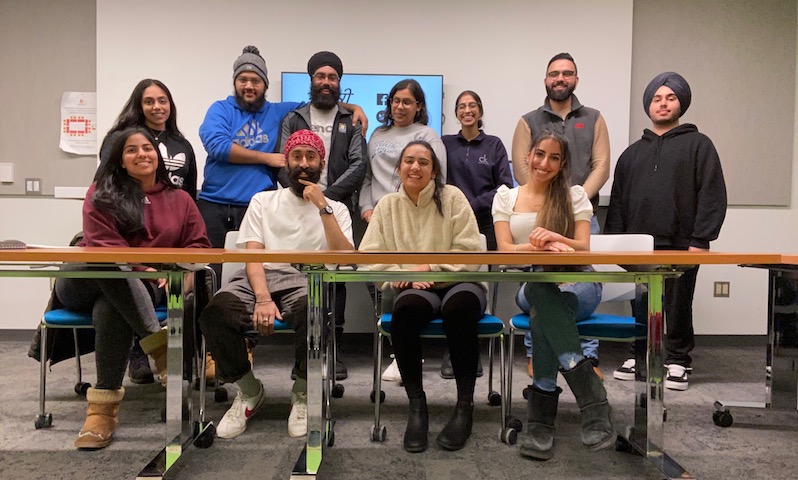
Shuranjeet Singh (seated, 2nd from left) at Taraki’s student workshop – Photo: Taraki
By Asia Samachar| BRITAIN |
When it comes to mental health, the British Panjabi may not pay much heed towards it. In fact, one organisation dabbling in the area found that the community does not generally take mental health seriously partly due to the lack of culturally sensitive relevant health promotion.
But a small band is trying to make a difference. Called Taraki, the group believe they been able to put mental health on the radar of Panjabis in the UK.
“By speaking fearlessly about these topics we have shown that mental health is an integral part of our lives,” Shuranjeet Singh tells Asia Samachar in an email interview.
Shuranjeet founded Taraki in October 2017 after his personal experiences with mental health challenges as a student. He felt incredibly lucky as he was supported through his struggles by his friends. However, he observed that many facing similar challenges within Punjabi communities were unable to access adequate support.
Todate, Shuranjeet said Taraki has a team of 12 volunteers who come from a range of different professions, backgrounds and experiences, contributing to what makes Taraki great through compassionate and conscientious approaches to mental health.
The word taraki is found in Punjabi, Urdu and Hindi. As a verb, it means to progress — movement to an improved or more developed state.
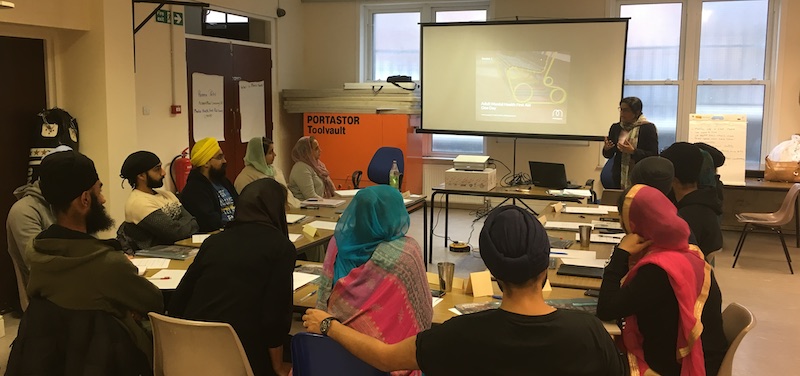
Taraki programme in Woolwich – Photo: Taraki
Here are excerpts from the interview with Shuranjeet.
What are the main projects Taraki is carrying out at the moment?
We have a few main projects we have been supporting. Since the beginning of the pandemic our work has aimed to respond to the challenges presented by COVID-19. First and foremost, we did a research project to best understand how COVID was impacting the mental health of Punjabi communities, following this we developed programming based on what issues and gaps we saw.
We have been having monthly virtual discussions groups for Punjabi men, Punjabi women and Punjabi LGBTQ+ peoples to ensure that our communities have the space to talk about tough topics, learn from each other, build connections and stay on top of their wellbeing during such challenging times.
Furthermore, we are currently running sessions directly aimed at students and their well-being. Students have exams and a lot of other things to make their lives difficult at the moment and it is important that they have the space to talk openly, share, listen, and grow.
Finally, we are also supporting work around mental health and faith. Faith has been an important part of how Punjabi communities have supported themselves during the pandemic, so it’s integral that we’ve been able to develop opportunities to learn more about mental health and faith for our audiences – you can read a short report about these programmes here.
What is the one biggest difference that Taraki has brought about?
Judging by how we have engaged with our audiences, the biggest difference we have made is to put mental health on the radar of more people in Punjabi communities. By speaking fearlessly about these topics we have shown that mental health is an integral part of our lives. People experiencing mental health challenges should not be pushed away but should be able to receive support however they see best. Our social support work has offered spaces for people to listen, learn and grow together, our awareness work has started important conversations. Overall, we are working with Punjabi communities to reshape approaches to mental health from most basic awareness, to education, social supports, and even research.
What have you learnt about the Panjabi community when it comes to mental health?
I have learnt that despite the many obstacles we face in relation to mental health, we have so many strengths that can help us support ourselves and one another. Mental health is generally not taken as seriously within Punjabi communities partly due to a lack of effective services and relevant health promotion which is rarely culturally sensitive. I have learnt that families can be an amazing source of support for some, but also a point of difficulty for others, I have learnt that we have amazing teachings and learnings within our faith traditions, but that people can experience exclusion from faith-based communities. We are a complex and hugely diverse group and it’s important to recognise that even though we face many obstacles, we also have so many strengths which can help us to emerge stronger, together.
Can you share a few examples of mental health cases, without, of course, naming anyone?
The COVID-19 pandemic has highlighted the many mental health challenges that our communities can experience. For students, the shift to working from home has meant a huge change in routine, isolation from friends, and a lack of supports usually found in school and university. We are social creatures and being disconnected from those close to us has a huge impact. Some students are experiencing more feelings of anxiety and low-mood, and others are not able to access support in the same way they did before. This can lead to difficulties sleeping, a lack of motivation, and further challenges with completing studies.
Our research also showed that the most frequent challenges our audiences were experiencing concerned fear of the future, occasional low mood, and difficulty sleeping. On their own these challenges may appear small but if they last for a longer time they risk having a bigger impact on the individual and those close to them. Mental health challenges can impact anyone so it’s important to remember that we can all experience difficulties. When we speak with others we should do so with empathy and compassion, we never know what they are going through even if they appear OK on the outside.
Shuranjeet Singh Takhar – Photo: Birmingham Mail
Personally, what are you doing now?
I am just finishing my masters in Health Policy, Management and Evaluation from the University of Toronto. I recently moved back to the UK and I’m preparing for life after my masters! I run Taraki as well as conduct consulting work in mental health research. I’m looking forward to a nice break over the summer, I hope!
Do tell us a little bit about your family background.
I am a third generation migrant, so my grandparents moved to the UK in the late 1960s. I was born and raised in Birmingham and that is also where I currently reside.
ASIA SAMACHAR is an online newspaper for Sikhs / Punjabis in Southeast Asia and beyond.Facebook | WhatsApp +6017-335-1399 | Email: editor@asiasamachar.com | Twitter | Instagram | Obituary announcements, click here |
So many of us are hooked on to social media. We eagerly await the next update on some burning issue. We are aching to feed our network! We are part of the trigger-happy forwarders. We forward stuff even before we read them through!
So many of us want to be reporters. We have ‘channels’ to run. These are WhatsApp or Telegram groups consisting of family and friends. We feed them ferociously. Then there’s Facebook and Instagram.
So many of us are dying to to be reporters, but we don’t want assume the responsibility that comes with the job. Reporters gather information, verify them, do cross checks with other relevant parties, and then they bang out their stories. We want to be reporters, but we don’t want to trouble ourselves with all that difficult stuff. Who cares for nitty gritty details like fact checking and objectivity, right?
The other day, I received a message stating that a well known Malaysian official had been admitted to hospital for Covid-19 related issues. The message, in Malay, presumably originated from the official’s department. It was probably meant to alert them that one of their colleagues is undergoing treatment. I’m guessing.
Being a high profile individual, I had heard about his plight from another source. I told my friend to stop forwarding the message. “Let him deal with it, and let’s provide the family some space and privacy. This looks like a message from his immediate work group.”
But it was too late. The message had started appearing in a number of WhatsApp groups. Not too long, new mutations appeared. Within an hour, I received a crisp message from another friend stating that he had died.
“Are you sure? What’s your source,” I shot back.
There was a silence. A few minutes later, he came back to say that he heard in another group that the official was actually recovering.
In the meantime, you can imagine the predicament faced by the official and the family. They were inundated with calls. But the messages didn’t stop. They keep finding a life of their own.
We need to put a stop to them. We need to stop forwarding unverified messages. We need to stop trying to be reporters if we are not willing to do the homework.
Hb Singh is a Kuala Lumpur-based journalist with some experience in dealing with Sikh organisations, both from within and outside.
* This is the opinion of the writer, organisation or publication and does not necessarily represent the views of Asia Samachar.
ASIA SAMACHAR is an online newspaper for Sikhs / Punjabis in Southeast Asia and beyond.Facebook | WhatsApp +6017-335-1399 | Email: editor@asiasamachar.com | Twitter | Instagram | Obituary announcements, click here |
A Singapore marine technician is becoming a familiar face bringing smiles when he breaks into his ‘cha peelo‘ (drink tea) call. He also does it fluently in Cantonese.
In recent weeks, Gurdip Singh’s video in Cantonese urging fellow workers to take the 3pm tea break has gone viral, even prompting memes.
His 15-second video in March 2020 went viral after it was uploaded onto Bilibili, China’s video-sharing website, on April 26 this year. The video has now reached about 3.8 million views, reportsShine, a digital media of Shanghai Daily.
In this video, he laments not being able to drink chaa! Click here.
Gurdip is recognised by a good number of Punjabis in Singapore and Malaysia, and even beyond the region. The 53-year-old began producing short videos of himself saying “cha peelo” (drink tea) while holding a cup of tea or a packet of teh tarik ikat tepi (tied by its side) – a common sight in Malaysia and Singapore, reports Twenty Two 13.
“It was my way of greeting my friends in my WhatsApp groups. At that time, I was in three WhatsApp groups. Today, I’m in over 30 WhatsApp groups – and they all look forward to my cha peelo messages,” he told the Malaysian-based media portal.
Born in Kuantan, Gurdip moved to Singapore when he was 18 and has been living there since. The Singaporean permanent resident works as a marine technician and is an avid biker.
So why Elvis? He told Twenty Two 13: “Earlier, my nickname was Robin Singh. I started working abroad, including in Russia, and people said I looked like Elvis. I started having his hairstyle and dressed up like Elvis. I’ve had strangers coming up to me, wanting to take pictures. So, it is only natural that Elvis is my new nickname.”
And why ‘cha peelo‘?
“There’s no specific reason. I start every greeting with Sat Sri Akal or cha peelo. Tea is universal…Cha peelo has been my signature ever since. I’m a loud person. I’m a happy person. I’m a happening person in my WhatsApp groups. And people just love to listen to what I say in my videos and share it with their friends and family.”
In the Cantonese video, Gurdip is seen wearing a pair of brown glasses and holding a bag of milk tea while telling people to take a tea break.
“It’s three o’clock. Drink tea first!” he says into the video. “It’s useless to work so hard. You boss won’t care about you!”
The sentence, “It’s three o’clock. Drink tea first!” has since become a meme on China’s social media, with thousands of videos using the meme being made by netizens one after another, reports Shine.
Gurdip said he learned to speak Cantonese in Singapore. He can also speak Mandarin but not as good as Cantonese. He can also speak English and several other languages.
ASIA SAMACHAR is an online newspaper for Sikhs / Punjabis in Southeast Asia and beyond.Facebook | WhatsApp +6017-335-1399 | Email: editor@asiasamachar.com | Twitter | Instagram | Obituary announcements, click here |
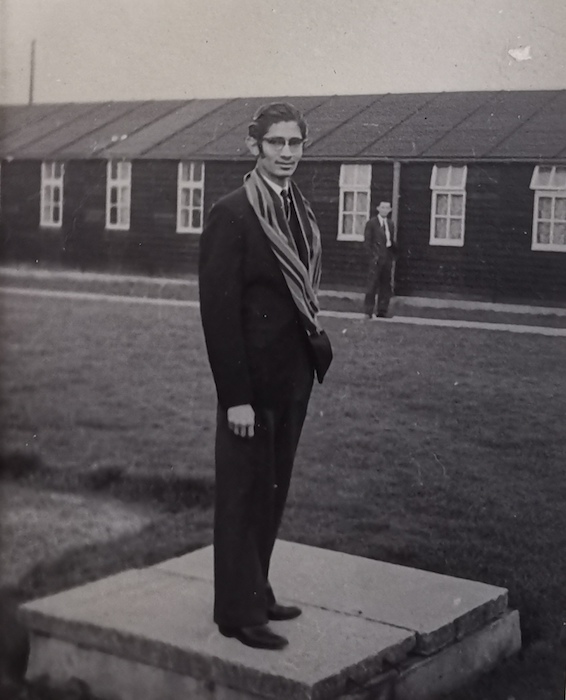
Manjit Singh (standing, extreme left) was among the lucky ones chosen for Kirkby training (1959-1960) – Photo: Courtesy of Meninder Kaur Jessy
By Meninder Kaur Jessy | Tribute | Malaysia |
My father Manjit Singh Chanan Singh was a kind and reputable man. His life took him from Taiping to Buntong, then abroad to Kirkby for teacher’s training before joining the teaching profession. Till his passing away on 18 May 2021, he played a role in the teachers’ union movement.
Born on 15 September 1939 in Taiping Perak, Manjit was the fifth child in a family of six siblings. His dad, Chanan Singh, was a train station master while his mother Pretab Kaur a home maker.
Tragedy struck early for him. I remember my dad used to tell me how excited he, his mum and his siblings were when his dad called and told them to be ready as he wanted to take them out for a movie. Going to the movies was a rare treat in those days. He was coming home by train. They waited excitedly at the Taiping station. But he never made it as he passed away in the train. My dad was only three years old that time and my grandma was expecting her youngest child, Gudi (Daljit Kaur).
The family then moved to Sungai Pari Road in Buntong, Ipoh. Growing up without a father was tough. His eldest brother, the late Sardar Swaran Singh, stopped school to take care of the family. My dad was very close to his mum and siblings (especially his brother) and was very well taken care of by them.
His studied, both at the primary and secondary level, at the Anglo Chinese School (ACS) Ipoh.
My dad was part of the famed Kirkby teachers. The story began when the first group of 148 students from Malaya were sent in the winter of 1951 to train at the emergency teacher-training college in the tiny hamlet about six miles from the city of Liverpool, called Kirkby Fields. The place was literally a farm, serving as a munitions factory in the Second World War.
They sailed on S.S. Chusan for a 21-day journey, according to a New Straits Times report. The later batches would go on flights that would break journey in cities like Bangkok, Calcutta, Karachi and Rome before reaching London. The selection for the two-year training course at Kirkby looked for able candidates, with the potential for a degree course, who would on their return serve as teachers in the Education Department for at least five years, the report added.
My dad was among the lucky ones chosen for the training. He was part of the Academic Group A, Batch 59/60.
He was in the Music Option during the two-year stint at Kirkby College, playing the violin. He was under the tutelage of Miss Gray. Most of us had no prior knowledge of playing the violin, cello or double bass but Manjit persevered to perform at the end of the year, according to fellow Kirkby alumni Mimi Foo.
In the summer of 1960, she said the group went for a tour to Spain and Portugal. When in Madrid, the group’s photo was published in a Madrid newspapers. Being foreign visitors from a distant country, they were treated like celebrities. At that time not many Spaniards have heard of Malaya.
Manjit Singh in Kirkby (1959-1960) – Photo: Courtesy of Meninder Kaur Jessy
Between 1952 and 1962, some 1,500 trained teachers and 405 teacher trainers graduated from the hallowed hall of MTTC, Kirkby, Liverpool, England.
My dad started teaching in Jelebu, Negeri Sembilan, upon returning from Kirkby in around 1962. He was later transferred to Sultan Yussuf School (SYS) in Batu Gajah, Perak. Founded in 1907, this was the first English school founded in Batu Gajah. Here, he led a strike seeking fair wages for teachers.
He then moved to SM Sri Intan School in Fair Park, Ipoh. In 1990, he got transferred to St Micheal School Ipoh and then to a school in Pokok Assam, Taiping, till his retirement in 1994. Since passion for teaching was in his blood, he taught on contract for four years with SM Yuk Choy in Ipoh. He spent his time teaching and educating children in English and History. He was known as a strict but dedicated teacher.
My dad was very active in the Koperasi Guru-Guru, National Union of the Teaching Profession (Peninsular Malaysia) (NUTP) till the day he passed on. He joined as a member in 1974. He was elected to the Koperasi Serbaguna NUT Berhad board in December 1987. He was then elected as the Assistant Secretary in June 2010 and had remained in this position until his passing on.
Since his appointment to the board in 1987, he had contributed immensely towards the progress of the cooperation. He was appointed to the Editorial Sub-committee and was responsible for articles in the Koperasi’s newsletters and its Annual Reports. He prided himself in the English Language. He ensured the articles were well written and ensured the tenses were in the correct places.
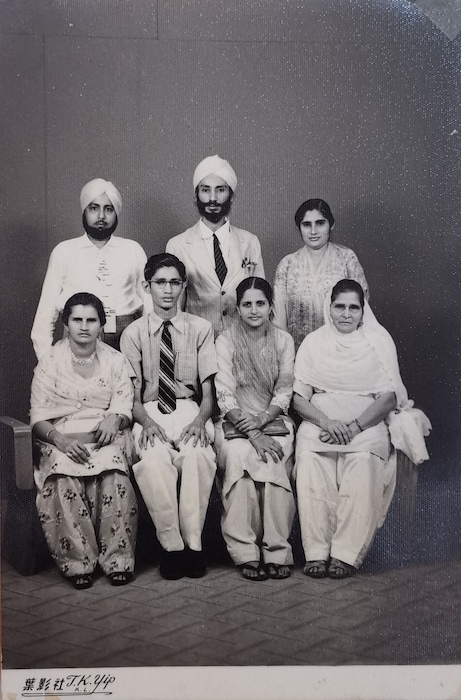
One of the rare photos taken in a studio in 1957. Standing (L-R): Piara Singh, Thayaji (Swaran Singh Jessy), Mindo (Mahinder Kaur Jessy). Seated, L-R: Rano (Ranjit Kaur Jessy), Manjit Singh (Dad), Tyayiji (Savaran Kaur) and Grandma (Pertab Kaur). Taken in 1957. – Photo:Courtesy of Meninder Kaur Jessy
Here are some comments from people who knew my dad.
Dato Dr Bhupinder Singh: Some who graduated from Kirkby say “even God smiled on this pioneering educational programme that had a Malayan curriculum taught in England by well-qualified staff, most of whom were graduates from such universities as London, Oxford, Cambridge and Aberdeen.” A great personality, dedicated teacher who fought for the rights of the teachers. 1967 will go down in history of SYS and nation, which saw the first Teachers strike.
Dato Loh Kim Heong: We first met in Kuala Klawang, Jelebu, Negeri Sembilan in 1962 when Manjit was posted to Sekolah Rendah Kuala Klawang. Our path crossed again when we participated actively in the teachers union as he represented Perak while I was for Negeri Sembilan. We were NUTCOOP board members till his demise.
Bahazin Yeow Harun: Our history teacher and I got a knuckle from him. I got through history for MCE. He laughed when I related to him. Education is a life long learning, that’s what he said during his speech at our reunion dinner. He was a true teacher. He teaches from his heart. In one incident, he said a student reported to him. Sir, this boy said this and that behind your back. He replied, it’s very common that people talked behind your back. What is bad is people like you who reported.
Dr Sri Shanmugam: He was our SYS BG teacher in the 60s and was the secretary of Perak chapter of National Union of Teachers.
In 1967, unfortunately, we in Form 5, had to miss so many classes due to the national teachers strike. The NUT Perak chief then was John Gurusamy. With utmost respect to our beloved teacher Mr Manjit, some of us (students) did ask him to lead or stage the strike “after school hours.” Many of us then, needed teachers help, in class to guide us thru our lessons and curriculums in view SCE. One stern look from him, was enough to melt us down with disappointment. That was that…That remained in our minds till today. Whatever, Mr Manjit sir, the teachers of today, are enjoying the perks and benefits of your team’s efforts to seek, fair wages for the efforts of many of you, even beyond normal classroom hours.
Chan Siew Hoong (Year 67 SYS): He gave me the foundation to my good English. Simple. Use plain words n short sentences
Daljit Singh Rekhraj (SYS 1967): He was one of the more outstanding teachers who taught us in SYS. He was known by various names; man with long sleeves; Robin Hood; NUT (lead teachers on work-to-rule, the only year we missed publication of the annual school magazine).
Dato Hj Hamdan Dato Ahmad: Mr Manjit was my class teacher in Form 3, English and History…very strict but loving teacher… Wanted the best for his students.
Mrs Isabella Navaratnam: We Taught in SYS in the late 60s. He was a thinker and a man of wisdom and integrity.
Mr Khoo Hock See: A good friend, teacher and speaker. A concerned Unionist for welfare of teachers (NUTP).
Surinder Singh (my dad’s true and good friend who stayed beside him till the day he passed on): A great friend for the last 10 years. We used to meet for our weekly tea session at JUSCO, then moved to TESCO. We discussed on topics like US elections to history. He was a very knowledgeable person. We always went home happy. He would patiently put us on the right opinion.
(The author is the daughter of Manjit Singh. In September 2013, she organised the first ever Jessy reunion clan in Malaysia that was attended by over 220 family members. They are now into the seventh generation in Malaysia. Meninder is the 4th generation in Malaysia, starting with her great great-grandfather Kesar Singh who lived in Buntong in Ipoh, Perak)
ASIA SAMACHAR is an online newspaper for Sikhs / Punjabis in Southeast Asia and beyond.Facebook | WhatsApp +6017-335-1399 | Email: editor@asiasamachar.com | Twitter | Instagram | Obituary announcements, click here |
By Karminder Singh | Sikhi Concepts | Part 3 of 12 |
We began this discussion with the premise that Guru Nanak’s Portrait of Sikhi was painted over a canvas that had existed for 4,000 years prior to Guru Nanak.
What I mean by that – in the philosophical sense, is that Guru Nanak RE-DEFINED – in a REVOLUTIONARY way – all the spiritual concepts of that pre-existing canvas.
So while all the concepts of the old canvas are found MENTIONED in the Sri Guru Granth Sahib (SGGS), they have been redefined. They have been given NEW meanings. Gurbani meanings.
And IF we intend to appreciate the Sikhi of Guru Nanak, we will need to understand the NEW meanings or REDEFINED meanings of the concepts – as contained within the Sri Guru Granth Sahib.
This discussion examines the concept of AFTER LIFE, or AFTER DEATH if one prefers.
Let’s begin with the narrative of AFTER LIFE as provided by the 4-thousand-year-old canvas. The main beliefs can be found within the Garrud Puran – a Sanskrit text composed in the first or second millennium BC and containing some 19,000 verses.
The first belief is Knowability. The claim is that all is fully known about the nature and character of life after death.
Second, the journey is outlined to a high degree of specificity. The narrative is that the soul goes on onto an incredulous journey of its own into other realms.
Third, the milestones of the journey of afterlife are provided. The 4K year old canvas provides details right down to a day by day account of how the soul leaves the body, where it goes, where it stops for its different functions and what life forms it takes eventually.
Fourth, that the departed soul stops for Judgement. The narrative is that it takes one year or 365 days for the soul to reach the point of judgement. The Sanskrit word for one year is one Baras. The word barsi is used to commemorate this – day of arrival – of the soul for judgement. The concept of barsi and of celebrating barsis is a concept that belongs to this 4K old canvas.
Fifth, the departed soul is ordered onto 3 different routes – (i) to heaven or (ii) to one of the 21 different hells or (3) it reincarnates. These routes are determined by the outcome of judgement. In the case of Reincarnation, the soul is sentenced to begin its journey of Ava Gaun, and then go through the entire 8.4 million cycle of life forms to come back as a human being.
Sixth, the last rites – the funeral, cremation and burial – are critical in that they prepare the soul for this journey. They must be done right, by the right people, at the right time, in the right way, with the right parapanelia, with the right prayers.
And finally this whole cycle repeats.
GARUD PURAN
The chilling, scary and petrifying details of this journey – never travelled by anyone ever – were contained within numerous concepts on the old canvas.
All this about a journey that NO one has travelled, and a destination from which no one has come back to tell a story of. But presented with amazing specificity and in amazing counts – exactly 21 different types of hells, and exactly 8.4 mill life forms to reincarnate into.
All this about a journey that talks about 365 days – one year – one Baras – during a period when the concept of a solar calendar and the notion of 365 days had NOT come into existance.
Nevertheless, the narrative is presented as a religious FACT, and religious TRUTH. And believed by millions. And accepted by millions more.
Imagine the illogic of it. The insanity of it. Being on a Journey that is REAL in the here and now. A Journey of Life. But living it in FEAR, DREAD and AGONY in worry of an IMAGINARY and CLERGY-CONCOCTED Journey in the afterlife that no one knows anything about.
And the FEAR, and AGONY is not forced upon anybody. It is suffered IN choice, it is suffered by choice. It is suffered by those who chose to believe in the clergy concocted tales of afterlife.
What is most chilling really is that this narative of afterlife – drawn from the 4K year old canvas – is the one that is presented by our clergy – our granthis, ragis, parcharaks and kirtanias in our gurdwaras as Sikhi beliefs.
A vast majority of Sikhs celebrate barsis even though the basis of the barsi is the 4K year old canvas.
Our granthis, ragis and kirtanias – sing shabds from the SGGS during the death ceremonies of our loved ones and their barsis – but present narratives derived from the Garrud Puran to our sangats.
In short, it is Kirtan of Gurbani but discourse of the Garud Puran. The Kirtan is from the Canvas of Guru Nanak. But the messages are from the 4,000 year old discarded canvas.
The outcome is that – the narrative that is held within the psyche of a vast majority of Sikhs is NOT the narrative of Gurbani, but that of the 4K year old canvas. And this vast majority of Sikhs mistakenly think AND accept AND believe the narrative of Garrud Puran to be the narrative of Gurbani.
Nothing can be further than the truth. Nothing can be more tragic than accepting as Gurbani truth – all that has been rejected as clergy-concocted narratives.
Nothing is more tragic to mire, to smother, to drown a spirituality that takes us to the heights of liberation – the spirituality of Gurbani – into a swamp of clergy concocted narratives.
WHAT DOES GURBANI SAY?
So what is the narrative of AFTER LIFE within Gurbani. We can develop the basic principles by examining some verses that discourse the concept.
The first thing Gurbani does is to provide a Critique of the claims pertaining to KNOWABILITY of the 4K year old canvas. The claim that they KNOW where the soul goes, they KNOW that it is TAKEN by the Angels of Death – JUM DOOT – and that they KNOW what happens to it all the way.
Let’s begin with this verse of Guru Nanak on page 75 of the Sri Guru Granth Sahib.
Chauthay Pehray Raen Kaiy Vanjaria Mitra Lavee Aya Kheyt. Ja Jum Pakarr Chaleya Vanjareya Mitra Kisay Na Miliya Bheyt. Bheyt Cheyt Har Kisaiy Na Mileyo Ja Jum Pakarr Chalaya.
This portion of verses is from a four-para shabd that divides our life into four phases. This verse talks about the fourth and final phase.
The metaphor is of a field. The final phase of a field is harvesting. Hence the term ਲਾਵੀ ਆਇਆ ਖੇਤੁ Lavee Aya Kheyt. – Kheyt is the field and Lavee is a farmer. So this is final phase where the farmer has come to harvest his field.
The metaphor tells us that the verse is a narrative of physical death. The final phase of life.
The phrase ਜਾ ਜਮਿ ਪਕੜਿ ਚਲਾਇਆ ਵਣਜਾਰਿਆ ਮਿਤ੍ਰਾ Ja Jum Pakarr Chaleya Vanjareya Mitra means – WHERE the soldiers of death JUM are said to take us. This notion of soldiers of death taking the soul away comes from the 4K year old canvas. Guru Nanak is mentioning it to provide a critique. He is NOT endorsing it.
If he endorsed it, there would be NO critique. But there is a critique. And the critique is within the same verse.
The critique is in the next part of the verse: ਕਿਸੈ ਨ ਮਿਲਿਆ ਭੇਤੁ Kisay Na Miliya Bheyt. It translates as None of those who make the claim Knows. Despite claims of knowing – Guru Nanak is saying in the clearest of language – they do not know. None of those who claim to know have come to know. The claim that they know is made on not knowing.
The next verse makes is absolutely clear that the UNKNOWABILITY – the not knowing anything – refers not to anything else – but pertains to claims as TO WHERE ONE GOES AFTER DEATH AND IN THE AFTERLIFE. The verse is ਭੇਤੁ ਚੇਤੁ ਹਰਿ ਕਿਸੈ ਨ ਮਿਲਿਓ ਜਾ ਜਮਿ ਪਕੜਿ ਚਲਾਇਆ ॥ Bheyt Cheyt Har Kisaiy Na Mileyo Ja Jum Pakarr Chalaya.
The phrase ਭੇਤੁ ਚੇਤੁ ਹਰਿ Bheyt Cheyt Har in particular the use of the word HAR with a sihari is telling. The word HAR refers to the Omnipresent Creator in Gurbani. Guru Nanak is saying that the KNOWABILITY is of the Creator. ਭੇਤੁ ਚੇਤੁ ਹਰਿ Bheyt Cheyt Har means The KNOWLABILITY belongs to the Creator. Because matters pertaining to His creation are His dominion.
ਭੇਤੁ ਚੇਤੁ ਹਰਿ Bheyt Cheyt Har means the Knowability is the exclusive domain of the Creator. Not to the those making these claims. Never to those claiming to know. Certainly NOT to those who concoct the narrative of the afterlife.
The message here is that the Knowability of After Life as provided thus far is NOT true, it is fake. It is concocted. This is a Gurbani principle. A Gurmat principle. ਭੇਤੁ ਚੇਤੁ ਹਰਿ ਕਿਸੈ ਨ ਮਿਲਿਓ Bheyt Cheyt Har Kisaiy Na Mileyo.
Here is another verse of Guru Nanak on page 648 of the SGGS.
Ek Dajhey Ek Dabeah Ekna Kutay Khahey. Ek Panni Vich Usateah Ek Bhee Fir Hasssan Pahe. Nanak Eav Na Japayi Kithay Jahe Smahe.
In this verse, Guru Nanak lays out the litany of final rites.
The claim – according to the 4K old canvas – is that processes pertaining to the final rites are important because they prepare the soul for its afterlife. The final rites are critical because how they are done will decide what happens in the afterlife. The final rites must be done properly by qualified clergy else the soul will not reach its destination.
Guru Nanak says, some are cremated ਇਕ ਦਝਹਿ Ek Dajhey , some are buried ਇਕ ਦਬੀਅਹਿ Ek Dabeah, others are fed to animals even ਇਕਨਾ ਕੁਤੇ ਖਾਹਿ Ek Dabeah Ekna Kutay Khahey. Some are given water burials ਇਕਿ ਪਾਣੀ ਵਿਚਿ ਉਸਟੀਅਹਿ Ek Panni Vich Usateah, some put into wells ਇਕਿ ਭੀ ਫਿਰਿ ਹਸਣਿ ਪਾਹਿ Ek Bhee Fir Hasssan Pahe. All of these are done according to the respective belief systems.
Guru Nanak makes his conclusion clear in the next verse.
ਨਾਨਕ ਏਵ ਨ ਜਾਪਈ Nanak Eav Na Japayi. Nanak these processes have no way of providing KNOWABILITY – ਨ ਜਾਪਈ ਕਿਥੈ ਜਾਇ ਸਮਾਹਿ Na Japayi Kithay Jahe Smahe There is NO KNOWING of where into the afterlife the soul goes – based on the last rites.
Two things are being put into the dustbin of spirituality here by Guru Nanak. One, the claim that the processes of last rites determine the journey of afterlife. And two, the afterlife itself. Both are concocted. The process of getting to a concocted destination has to be concocted because the destination is concocted.
If I gave you directions to a destination that did not exist, then directions are fake by virtue of the destination being fake.
This verse of Guru Nanak thus lays out the Gurmat principle that the KNOWLABILITY claim of the 4-thousand-year old canvas is NOT accepted by Guru Nanak, not accepted within Gurbani and hence NOT a Gurmat belief.
The strong and robust critique of Gurbani – as presented above – achieves two objectives.
It removes the claim of the old Canvas that the narrative of after life and the detailed journey of the departed soul is a TRUTH. It is not.
The critique lays the groundwork for the TRUTH of Gurbani.
What then is the accepted view of Gurbani, Sikhi and Gurmat pertaining to AFTER LIFE.
Let’s look at this verse of Guru Nanak on page 940 of the SGGS. This verse is taken from the Bani titled Sidh Gosht – dialogue with the Sidhs. The Sidhs asked Guru Nanak this very question.
Meaning: What Is the Origin of Life; Where does it go? What Is Its Ultimate Destination?
Guru Nanak’s answer is ਹੁਕਮੇ ਆਵੈ ਹੁਕਮੇ ਜਾਵੈ ਹੁਕਮੇ ਰਹੈ ਸਮਾਈ ॥ Hukmaiy Aveiy Hukmaiy Javeiy Hukmaiy Rhaiy Smayee. Meaning: The Origin of Life Is by Way of the Hukm; Its Ultimate Destination Is by Way of the Hukm.
Where is this narrative of the Hukm? Guru Nanak says it in the next verse
VERSE 4:
ਪੂਰੇ ਗੁਰ ਤੇ ਸਾਚੁ ਕਮਾਵੈ ਗਤਿ ਮਿਤਿ ਸਬਦੇ ਪਾਈ ॥
Puray Gur Tay Saach Kmavaiy Gat Mit Shabday Payi. Meaning: The Narrative is within the messages of the Shabd. The complete Understanding of the Hukm is Obtained Thorough the Shabd. ਗਤਿ ਮਿਤਿ ਸਬਦੇ ਪਾਈ ॥ Gat Mit Shabday Payi
Pavneiy Meh Pavan Samaya. Jyoti Meh Jyot Rul Jaya. Mattee Mattee Hoyi Eyk. Rovanharay Ki Kavan Teik. Kaon Mua Ray Kaon Mua. Bhrm Gyani Mil Krho Bichara Eh Tao Chalat Bhya. Rahao. Aglee Kich Khabar Na Payi. Rovanhar Bhi Uuth Sidhayi.
This shabad contains the Gurmat and Gurbani position on three things. One, it defines physical death. Two, it tells us what happens to life after death. Three it speaks of Afterlife.
Let’s look at these three issues one by one.
Physical death is defined as the Return of Elements to their Source.
In verse 5 pathsah says ਇਹੁ ਤਉ ਚਲਤੁ ਭਇਆ Eh Tao Chalat Bhya. Meaning – this is the CYCLE.
There are no exceptions. Every molecule of Air, every molecule of Water, every molecule of Dust, every ion of physical matter within the human body – goes back to its source. No exceptions. No processes. No conditions. No exclusions. No matter what the last rites. ਇਹੁ ਤਉ ਚਲਤੁ ਭਇਆ Eh Tao Chalat Bhya. Meaning – this is the CYCLE. No matter what. That’s the cycle.
As for life itself, it too returns to its source – the Creator. ਜੋਤੀ ਮਹਿ ਜੋਤਿ ਰਲਿ ਜਾਇਆ ॥ Jyoti Meh Jyot Rul Jaya. That’s the only journey it undertakes. Back to its origins – back to the Supreme being. Back to its source. ਰਲਿ ਜਾਇਆ Rul Jaya means – it merges.
There is NO other Journey. ਜੋਤੀ ਮਹਿ ਜੋਤਿ ਰਲਿ ਜਾਇਆ ॥ Jyoti Meh Jyot Rul Jaya
Every life, every soul, every atma, every jyot, every light – call it what you wish – goes back to its source. Every One. Every one merges. ਜੋਤੀ ਮਹਿ ਜੋਤਿ ਰਲਿ ਜਾਇਆ Jyoti Meh Jyot Rul Jaya. No exceptions. No processes. No conditions. No exclusions. No Judgements of any kind after death. Every atma merges. ਜੋਤੀ ਮਹਿ ਜੋਤਿ ਰਲਿ ਜਾਇਆ Jyoti Meh Jyot Rul Jaya.
Why? Because the SOURCE of every Jyot is the ParamJyot. The source of every atma is the Param-atma.
That is what this whole shabd is about. It’s about going back to the SOURCE. It’s about going back to the ORIGINS. It’s about going back to the ROOT of it all. That is the cycle of everything. ਇਹੁ ਤਉ ਚਲਤੁ ਭਇਆ Eh Tao Chalat Bhya. Meaning – this is the CYCLE.
If there were any exceptions, conditions, processes, exclusions etc – then we need to ask – what are they? Where are they mentioned in the SGGS? And more importantly – why are they NOT mentioned in the SGGS.
And we must not confuse the conditions, processes etc of the 4K year old discarded Canvas with the messages of Gurbani.
For those of us who may be asking – will this and that person’s life too go back to its source, to its origin? Will this and that evil person’s life also conform to ਜੋਤੀ ਮਹਿ ਜੋਤਿ ਰਲਿ ਜਾਇਆ Jyoti Meh Jyot Rul Jaya – the answer is simple. All we need to determine is whether this and that person’s life came from a different SOURCE, a different ORIGIN.
If the air, water and dust in everybody’s existance came from the same source, and goes back to the same source. Then everybody’s life too came from the same source and goes back to the same source.
That is the cycle of Life. It Comes in HUKM. It goes back in HUKM ਹੁਕਮੇ ਆਵੈ ਹੁਕਮੇ ਜਾਵੈ ਹੁਕਮੇ ਰਹੈ ਸਮਾਈ ॥ Hukmaiy Aveiy Hukmaiy Javeiy Hukmaiy Rhaiy Smayee. The Origin of Life Is by Way of the Hukm; Its Ultimate Destination Is by Way of the Hukm.
The HUKM is one of a CYCLE. ਇਹੁ ਤਉ ਚਲਤੁ ਭਇਆ ਭਇਆ Eh Tao Chalat Bhya. Meaning – this is the CYCLE The CYCLE is that ALL things RETURN to their ORIGINS. Matter returns to the SOURCE of the matter. And Life returns to the SOURCE of Life. There is only one SOURCE of life. And that is the CREATOR of life.
Bhagat Kabir expresses it this way on page 1103 of the SGGS.
Udak Samund Salal Ke Sakhiya Ndee Trung Smave(n)gay. Sunney Sunn Miliya Samdarsi Pavan Roop Hoey Javeh(n)gay. Bahur Hum Kahe(n) Ave(n)gay.
Meaning: Just like water from the river merges into the water of the oceans. Just like waves merge into the water. Just Like Air merges into air. I too will return to my pure and complete origin. ਪਵਨ ਰੂਪ ਹੋਇ ਜਾਵਹਿਗੇ Pavan Roop Hoey Javeh(n)gay.
The matter that is of issue is that I have merged with my Creator within in the HERE and NOW. ਸੁੰਨਹਿ ਸੁੰਨੁ ਮਿਲਿਆ ਸਮਦਰਸੀ Sunney Sunn Miliya Samdarsi.
The Kabir ji says ਬਹੁਰਿ ਹਮ ਕਾਹੇ ਆਵਹਿਗੇ. Bahur Hum Kahe(n) Ave(n)gay? Meaning: What then, is there about coming back, what then is there about after life, what then is there about reincarnating, what then is there about returning? ਬਹੁਰਿ ਹਮ ਕਾਹੇ ਆਵਹਿਗੇ Bahur Hum Kahe(n) Ave(n)gay? What then is there about a second coming?
Kabir is asking a direct question. ਬਹੁਰਿ ਹਮ ਕਾਹੇ ਆਵਹਿਗੇ. Bahur Hum Kahe(n) Ave(n)gay? How and Why then should I come back? There is no coming back if the HUKM is one of merging with the source. Guru Arjun ji said ਜੋਤੀ ਮਹਿ ਜੋਤਿ ਰਲਿ ਜਾਇਆ Jyoti Meh Jyot Rul Jaya. Kabir says ਪਵਨ ਰੂਪ ਹੋਇ ਜਾਵਹਿਗੇ Pavan Roop Hoey Javeh(n)gay.
It’s a hard hitting critique at the claims of the 4K year old canvas. It’s a damning critique of the clergy-concocted tales that we do come back after going through the 8.4 mil cycle.
The notion of coming back is contradictory to ਜੋਤੀ ਮਹਿ ਜੋਤਿ ਰਲਿ ਜਾਇਆ Jyoti Meh Jyot Rul Jaya. It is incongruous to ਪਵਨ ਰੂਪ ਹੋਇ ਜਾਵਹਿਗੇ Pavan Roop Hoey Javeh(n)gay. The notion of reincarnating is anti-thesis to ਬਹੁਰਿ ਹਮ ਕਾਹੇ ਆਵਹਿਗੇ Bahur Hum Kahe(n) Ave(n)gay?
We need to ask ourselves this same question. ਬਹੁਰਿ ਹਮ ਕਾਹੇ ਆਵਹਿਗੇ Bahur Hum Kahe(n) Ave(n)gay?. Our clergy, granthis, ragis, kirtanias, parcharaks who keep harping on and promoting the rejected 4K year old canvas like a broken record in our Gurdwaras and in their sermons need to pay attention to this question ਬਹੁਰਿ ਹਮ ਕਾਹੇ ਆਵਹਿਗੇ Bahur Hum Kahe(n) Ave(n)gay? How and Why then should I come back?
Our clergy have a reason to NOT ask, NOT tell, and NOT preach the truths of Gurbani. They need to keep us in fear, in distress and in anxiety – because our fear, our anguish and our anxiety feeds their livelihoods. But what reason do WE have to NOT ask ourselves. ਬਹੁਰਿ ਹਮ ਕਾਹੇ ਆਵਹਿਗੇ Bahur Hum Kahe(n) Ave(n)gay?
What reason do WE have to choose to believe, accept and live in the dread of a 4K year old canvas of a belief system that was consigned to the dustbin of spirituality by Guru Nanak?
Gurbani is liberating. It is emancipating. It frees us to live our lives without FEAR, without ANXIETY, without DISQUIET of concocted tales of the non-existant.
It allows us to LIVE our Lives in the HERE and NOW to the fullest, live our lives virtuously, live our lives to become divine in the HERE and NOW.
But we will have to make the choice. The choice of discarding the 4K year old canvas. The choice of discarding our clergy who feed off that discarded canvas. We have to make the choice of letting Guru Nanak paint over the canvas that is our mind with his portrait of Sikhi and Gurbani.
Gurbani makes it absolutely clear that THIS LIFE is ALL we have. All there is to it. This life is the ONLY life for us. There is no other – not a second one, not a third and certainly not the 8.4 millionth one either.
Kabeer Manus Janm Dulambh Hai Hoey Na Bareiy Baar. Jio(n) Bun Ful Pakay Bhoey Girhey Bahur Na Laghey Daar.
Kabeer Human Life is priceless, precious ਮਾਨਸ ਜਨਮੁ ਦੁਲੰਭੁ ਹੈ Manus Janm Dulambh Hai. Why is that so. Because It does NOT occur a SECOND time ਹੋਇ ਨ ਬਾਰੈ ਬਾਰ Hoey Na Bareiy Baar.
When something can and does happen again and again – then, by definition – it can be worthless, but certainly NOT priceless.
But Human life is only ONCE. Hence it is priceless.
ਜਿਉ ਬਨ ਫਲ ਪਾਕੇ ਭੁਇ ਗਿਰਹਿ Jio(n) Bun Ful Pakay Bhoey Girhey – Just like a fruit that drops to the ground when it ripens, it does not ever go back to the branch again. ਬਹੁਰਿ ਨ ਲਾਗਹਿ ਡਾਰ ॥ ੩੦ ॥ Bahur Na Laghey Daar.
The meaning of the verse is “Kabeer Human Life is priceless and does NOT occur a SECOND time. Just like a fruit that drops to the ground when it ripens, it does not ever go back to the branch again.”
When You Stop Living IN FEAR of a concocted Journey of After life, You Start Walking the REAL Journey of REAL Life in Joy.
SIKHI CONCEPTS SERIES BY DR KARMINDER SINGH DHILLON: COMPLETE LINKS TO VIDEOS & LECTURE NOTES
Sikh thinker, writer and parcharak Karminder Singh Dhillon, PhD (Boston), is a retired Malaysian civil servant. He is the joint-editor of The Sikh Bulletin and author of The Hijacking of Sikhi. He can be contacted at dhillon99@gmail.com.
* This is the opinion of the writer, organisation or publication and does not necessarily represent the views of Asia Samachar.
ASIA SAMACHAR is an online newspaper for Sikhs / Punjabis in Southeast Asia and beyond.Facebook | WhatsApp +6017-335-1399 | Email: editor@asiasamachar.com | Twitter | Instagram | Obituary announcements, click here |


























 Hb Singh is a Kuala Lumpur-based journalist with some experience in dealing with Sikh organisations, both from within and outside.