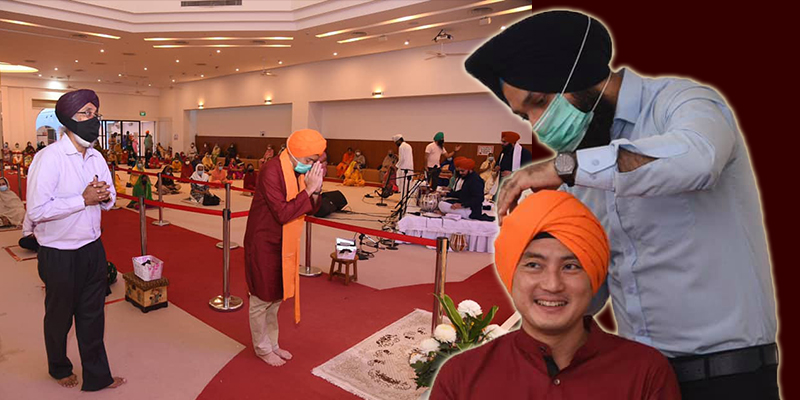
Tan Kiat How visits Singapore’s Central Sikh Gurdwara – Photo: Tan Kiat How Facebook page
By Asia Samachar| SINGAPORE |
Tan Kiat How, a newly minted Singapore lawmaker and minister after last year’s general elections, visited a Sikh gurdwara to join Sikh community as they commemorated the 400th birth anniversary of Guru Tegh Bahadur.
“While our Sikh community may be one of the smallest ethnic groups in Singapore, their impact and contributions to our society are significant, often practicing the spirit of sewa (selfless spirit). We saw how during the initial outbreak of COVID-19 last year, the Sikh community stepped up their Langar initiative, an outreach effort to provide free food to the less fortunate, regardless of race, language or religion,” he said in a Facebook entry after the visit to the Central Sikh Gurdwara.
The visit to the gurdwara was upon the invite of the Central Sikh Gurdwara Board (CSGB).
Guru Tegh Bahadur is the ninth Guru of the Sikhs.
Tan is the Member of Parliament (MP) for East Coast Group Representation Constituency which he won on the ruling party People’s Action Party (PAP) ticket. He was previously the chief executive officer of the Infocomm Media Development Authority (IMDA).
ASIA SAMACHAR is an online newspaper for Sikhs / Punjabis in Southeast Asia and beyond.Facebook | WhatsApp +6017-335-1399 | Email: editor@asiasamachar.com | Twitter | Instagram | Obituary announcements, click here |
Amar Purewal of Hebburn Town celebrates after scoring their team’s first goal during the FA Vase Final – Photo: Matthew Ketchell / Chronicle Live
By Asia Samachar| BRITAN |
Wembley had a Sikh moment when amazing images appeared showing Hebburn Town’s Amar Purewal seek out his twin brother Arjun, who is captain of Consett, as the Hebburn goal scorer leaves the pitch. The twins played for either side in the FA Vase Final yesterday (3 May).
Hebburn won the trophy with a 3-2 victory.
The twins made history as the first British South Asian brothers to line up against each other under the arch in a Wembley Cup final, according to British media reports.
The Football Association Challenge Vase is an annual football competition for teams playing in Steps 5 and 6 of the English national league system.
ASIA SAMACHAR is an online newspaper for Sikhs / Punjabis in Southeast Asia and beyond.Facebook | WhatsApp +6017-335-1399 | Email: editor@asiasamachar.com | Twitter | Instagram | Obituary announcements, click here |
The first and second generation of Sikh settlers in Malaysia may have been more circumspect about vocalising psychological issues. They probably suffered in silence. It made sense at the time as survival and eking out a meagre existence were topmost priorities. The younger generations, however, signal a shift in attitudes. The same chardi kala spirit of their forefathers has been extended to cover wider areas of living including mental health concerns.
Most Sikh citizens in Malaysia today count themselves as fourth or fifth generation Malaysians. My interviewees for a study on the lived experiences of Sikhs in Malaysia seeking support for mental health all fell into that category. Being in their 20s and 30s, all were independent working women or students raised to be assertive go-getters. When faced with psychological issues, the same can-do spirit is evident and participants were sensible in that they reached out for help.
A very interesting finding was that every single person I had spoken with had first consulted with or confided in at least one family member about their difficulties. Growing up in a Sikh household and coming from a close-knit family myself, I had some idea about our strong family structures but the extent of the family protective factor really became apparent to me after the interviews.
All eventually opted to see professionals because the participants wanted to protect their loved ones. They feared hurting their family members if they became aware of the extent of suffering involved. And some issues were especially heavy involving suicidal ideation, self-harm, substance abuse/addiction and divorce which required professional interventions and techniques their family members were not equipped with.
There is a strong belief among the younger generation to tackle issues with urgency and that there is merit in getting objective perspectives from mental health professionals. One need not wait to go into a downward spiral before doing something about it. There is a trend therefore for more and more clients who contact counsellors for other issues including stress, anxiety, feelings of depression, relationships and careers.
UNDERSTANDING HOW THERAPY WORKS
Foremost on my mind is a poor understanding of the therapy process. A good deal of confusion reigns about what happens in sessions. I want to take this opportunity and space to state that mental health professionals are a highly trained segment of the caring profession who put their clients’ needs foremost. Our oath behoves us to “first do no harm.”
We take great pains to establish a therapeutic alliance with our clients and consider ourselves as partners in making new discoveries. We only venture where you feel safe to go and at all given times our clients are in control of the process. Counselling is not smoke and mirrors. It is an honest attempt by empathetic professionals to leave our clients in a better place than when they first came to us.
I do have some concerns about the Sikh community. To some extent there is a reluctance for some within the community to consult with professionals. The fact is we do hail from a primarily communal society where there is a great deal of emphasis placed on fitting in cohesively with family structures, being a part of the sanggat (congregation) and putting our individual needs aside whilst prioritising others. And this tug-of-war is likely to be playing out wherever we Sikhs are because as much as we have become integrated parts of global and national citizenry, Sikhs anywhere in the world are likely to be straddling the realities of staying true to oneself whilst maintaining collective goals. To them I would like to say – come and talk to us. There are very few things we haven’t seen before and we can together find acceptable middle ground.
I also note with concern an increasing number of our young people trying to find meaning through substance abuse including alcohol and drugs, rising number of deaths due to drunk driving and loss of lives due to suicide. My earnest plea is – please come and talk to us.
PRESSURE TO BE HAPPY
As I see it, I think there is unreasonable pressure to be happy all the time either stemming from individuals themselves or from those around them. I often help my clients to understand that our constant states of being are actually mostly neutral and calm. Then along that line, we encounter hills and valleys – states of heightened emotions like joyfulness or low moods like sadness and these depend on what is happening at given points in our lives. These emotions are part and parcel of the human experience, of being alive and living.
In fact, there is more and more literature which seems to suggest that the pressure to be constantly happy and think positive all the time is a recent Western construct not necessarily helpful to people. It’s ironic that intense pressure to be happy always could be making us miserable instead. Experiencing emotions, even unpleasant ones means that our systems are working optimally. Feeling afraid has kept us safe and preserved the human species. Anxiety means that we care enough about things to want them to go well. Guilt helps us to consider the possibility that amends need to be made. Eastern philosophies are especially rich, insightful and instructive in that they tell us suffering is a normal part of living.
We are all unhappy about something or other at some point in our lives. What is so abnormal about that? We see this abundantly in Sikh teachings as well. Guru Nanak Dev Ji in His furman said to us – Nanak Dukhiya Sab Sansaar (Nanak the world is full of grief). It is by talking to others that we come to the realisation that our emotions are universal and this helps us to understand how commonplace it is to experience suffering, pain and difficulties.
STORY OF RESILIENT PEOPLE
In conclusion, the history of Sikhs in this country tells the story of an incredibly resilient people who came here to earn a living. And we have done well. Of the early migrants who made this land their home, many have left a rich legacy of fortitude and diligence for their future generations to follow. A “minority within a minority” (Bedi, 2003), Sikhs here have achieved much. Within just a generation or two, our children have become professionals and businessmen. Today, the Sikh community has the highest ratio of professionals among all ethnic groups in Malaysia (Bedi, 2013).
Our ancestors once came from lands far and near and settled in the rural heartland of the Punjab. Today, members of our distinct community have in turn diffused and settled across the world. And we are held in high esteem. Worldwide Sikhs have gained an admirable reputation for industriousness and discipline and have achieved remarkable success. Our community is an evolutionary success which boasts not just good community relations with others but also academic achievements, business acumen, exemplary military service and a respectful attitude towards the rule of law. There are extraordinarily low crime rates associated with Sikhs in this country.
The Malaysian Sikh community takes pride that “within one generation, Sikhs were transformed from policemen, bullock-carters, watchmen, dairymen and mining labourers to professionals including doctors, lawyers, engineers and academicians” (Chiew, 2017). The story of the Sikhs then, in Malaysia just like all over the world, is one of numerous journeys and endless acculturation – disparate peoples coming together from faraway lands and then diffusing centuries later to all corners of the world, taking with them the essence of sacrifice, resilience, discipline, diligence and faith where ever they went.
Today, even as we are integrated parts of global citizenry, we still maintain our distinctness with pride. In fact I see a renaissance of sorts happening with Sikhs all over the world. Our past and our present combined gives us our formidable personalities which in turn contribute to our lived experiences and personal journeys. Let us make our journeys here on earth count.
Heeran Kaur is a Malaysia-based counsellor and therapist. The lawyer-turned-mental health advocate had presented a paper on her research on Sikhs at the International Seminar of Counselling and Well-Being (ISCWB 2020), organised by Universiti Malaya, in November 2020.
ASIA SAMACHAR is an online newspaper for Sikhs / Punjabis in Southeast Asia and beyond.Facebook | WhatsApp +6017-335-1399 | Email: editor@asiasamachar.com | Twitter | Instagram | Obituary announcements, click here |
BABA BAKALA (31°34`N, 75°16`E), a small town in Amritsar district of the Punjab, is sacred to Guru Hargobind and Guru Tegh Bahadur. The original name of the place was Bakala. As Guru Har Krishan lay on his deathbed in Delhi, he was asked by the sangat to name his successor. All that the Guru could say at that time was \’Baba Bakale\’ meaning that (Guru) Tegh Bahadur, who was the brother of his (Guru Har Krishan\’s) grandfather (baba) and who was living at Bakala, was to be the next Guru. Bakala, thereafter, came to be called Baba Bakala.(Source: The Sikh Encyclopedia)
By Nirmal Singh | Sikh History | Part 4 |
LEGACY OF THE GURU
Missionary Activity
The Guru had stayed on in Bakala from the time of demise of Guru Hargobind [1644] till he was called up to Gurgadi after the demise of Guru Har Krishan [1664]. During the intervening years, he had stayed in touch with Guru Har Rai who had suggested to him in 1656 to take on the missionary work in the Eastern part of the country and the Malwa region of Punjab.
Baba Tegh Bahadur left for the sangats in the East and learnt of the passing of Guru Har Rai when at Patna. It was on his return journey, that when he arrived at Delhi, he heard that Guru Har Krishan was in Delhi and he, with his mother, went to see the Guru and pay their condolences on the passing of Guru Har Rai in 1664. He therefore could have been in Eastern UP and Bihar for 3-8 years in his pre-Guru days.
After his Gurgadi, the Guru left Anandpur for the sangats in the East in August 1665 and returned in or after 1671 – after 5 ½ years, half of his ministry. He had revived and added to Sikh sangats all over the East during his travels to the present day Haryana, UP, Bihar, Bengal, Assam, Orissa and Bangladesh areas.
The Sikh sangats in the East became a strong backup support and a source of funds for the Sikhs during the time of Guru Tegh Bahadur continuing in the time of Guru Gobind Singh and is speculated to have helped in funding the latter’s resolute resistive struggle against Mughal oppressive rule. This missionary initiative in the East however lost its sheen as it gradually withered away later in the 18th century, possibly due to lack of any continuing active contact, post Guru Gobind Singh that would have facilitated the Sikh sangats in the far flung Eastern areas to transition in tandem with changes taking place in the Punjab region.
The Guru was a very active missionary, leading the missionary activities from the front himself and spending most of the time on missionary work even as he used the Udasis to help as much as they could. He also was the first Guru to have visited and spend few years reviving and extending Sikh foot print in the Eastern parts. What happened that we now hardly come across any local Sikhs from those parts? I found this to be the case in Hyderabad too. I met several Dakhani Sikhs but I found out that their forebears were Sikhs from Punjab. Old Sehjdharis of Hyderabad were Sikh supporters but had melded back into Hindu fold. The same seems to be true of Sehjdharis from Pakistan, they have almost fully merged into Hindus. My sense is that the transition that Sikh sangats of the East missed was amrit parchar. They stayed Sikhs as long as the Guru connection lasted. With Masands also gone, there was no link left to remain Sikhs.
Let us now come to the question of legacy of missionaries in the East. If we go by the simple yardstick of the missionary’s effect on the Faith community, the initiative in the Eastern India may end up creating an increasing burden for the Sikh community as more heritage sites are discovered and activated per their historical significance, with no local Sikh help to maintain the heritage. This is happening in Pakistan, Afghanistan, Burma, Bangladesh, Iran and in India too. Nor is this withering away experience unique to the Sikhs. It has happened to the Jewish community, Budhhists, Bahais, Zoroastrians, Jainas and lot more. We have to set our own priorities and thoughtfully select heritage to revive and the manner in which it should be maintained.
The success of Guru’s Malwa missionary to draw converts from Sakhi Sarvar Muslims in the region caused alarm among Muslim Ullama and may have been one additional factor in Aurangzeb’s decision to pass the order for Guru’s execution in 1675. This is a project SGPC might gladly hand over to Rashtriya Sikh Sangat!
Strategic Value Addition by Eastern Sangats
Another aspect that may bear examination is the likely effect that the initiative to revive and reinforce sangats in the East may have had on the course of Sikh and Indian history at that critical juncture. Later Sikh Gurus saw two imminent threats: oppressive Mughal rulers and dissident truants from Guru household. This caused their move to Shiwaliks that had created financial difficulties. [harji d 1696, sons ousted 1698 minas wikipedia]
Guru Tegh Bahadur no doubt saw two imminent needs: the town, Chak Nanaki, had to be constructed and the Sikhs had to stay fortified for their own safety. They needed the bheta to keep flowing. He had spent some time visiting sangats and knew that they also had experienced similar split and confusion that had hit Sikh in Punjab post the passing of Guru Har Krishan. He showed excellent astuteness to immediately repair to the East and put the sangats there on path of stability. Our hukamnama based discussion should make that need abundantly clear. It was achieved by the Guru through bringing about changes in personnel, systems and structure. If 18th century Sikh leaders were similarly endowed, the Sikh story may have been truly glorious.
In any case, the changes came. Harji died in 1696 and Minas were ejected in 1698 from Amritsar. After a series of see saw actions, Khalsa finally snatched control over parts of Punjab and were able to hasten the down fall of Mughals. In the long run, the real gain accrued to India as a whole, partly as a consequence of the strategic shift to go East by Guru Tegh Bahadur. This deserves to be recognized and added to his legacy.
Managing Sikhs & Sikhi
The Guru obviously realized that with the wide spread of Sikhs, he needed trustworthy and reliable persons in charge of sangats and an organization to ensure co-ordination and control. He attempted a model of regional, suba and city sangat set up that seemed to have worked.
His leadership qualities and management style also seemed to have worked. There are a few characteristics relating to these matters that came to notice in the literature scanned for this paper. The main feature that emerges is the use of simple and easily understood language and metaphors in his letters, Bani and surely in his speech. He certainly had the assets of being a great communicator. Apart from that he addressed a cross section of Sikhs, not just his close confidants, and invited suggestions from the sangat members – seen essentially as more participative than paternalistic for the times he lived in. His insistence to seek information on collections for special services shows his penchant for detail and ability to handle relations with the Masands with finesse.
Dwelling a bit further on the above, we know that the participative style of Guru Tegh Bahadur got further developed by Guru Gobind Singh by a series of his actions. One was his demonstration of aapae gur chela and the related institution of panj pyaarae. The next was recognition of inhi kee kripaa sae sajae hum hain – that put Khalsa on a different pedestal as a collective body. The third was the creation of conditions for the eventual emergence and continued evolution of the institution of Guru Panth.
Cumulatively it is these norms of room for individual contribution and initiative within the collective ideal of ek pita ekas kae hum balak and sarbat ka bhalla that make Sikhs vie for sewa, that has been equated to prayer for seeking govind milan or liberation. Sikhs are not perfect and have taken several missteps along the way but eventually the Sikhs will, hopefully, develop a model for their corporate religious life that is sensitively suited for their religious culture. That will be consummation of the modernizing process of Sikh institutions – the legacy of initiating this process belongs to Guru Tegh Bahadur.
Martyrdom & Other Unique Points
There are three exceptional features to Guru Tegh Bahadur’s life that make him unique in the Sikh annals. He was:
The only person who was present and available, yet was overlooked twice for the Gurgadi and yet was installed as Guru the third time in a unique sequence of events
The only Guru whose Bani was added to Adi Granth after its first installation at the Harmandir Sahib in 1604
The only martyrdom of a religious Preceptor at Sikh Guru’s level who put his life on stake for the religious freedom of the followers of another Faith
These points are important for any evaluative analysis of Guru Tegh Bahadur’s life and contribution both for the Sikh causes and the larger issues relating to the amelioration of human foibles and suffering. These have variously been mentioned and explained in our brief discussion but my suggestion would be that the explanation of these points may be more realistic and less biased if attempted through wider consultation.
Martyrdom
It was perhaps the divine hand that stayed Tegh Bahadur being picked to be made the Guru when his father died, or when Guru Har Rai passed away, for the call had to come later when the level of oppression were to become unbearable and sacrifice would have been the only way to give voice to the sense of utter helplessness of the people.
The Guru gave life for the sake of freedom for the ‘others’ to be able to nirbhau hoe bhajo bhagwan. This is a Sikhi advisory and an aspiration that Sikhs value. It matters little who was the oppressed and who was the oppressor. The Guru made the sacrifice because of his own belief, not to earn gratitude from any group. Embracing martyrdom is the very ultimate in expression of a high principle and that recognition is its reward.
The Guru’s sacrifice was important then – it is important today, and its importance may continue undiminished as long as the religious differences continue to trigger hate for the ‘other.’ It is for all of us to work towards reduction of the prejudices that sow seeds of hate in us. This is a shared burden for us all and we should, as individuals, try to get actively engaged in helping to create and maintain peace and harmony in the society we live in.
With the example of sacrifice by the Guru, we should try to promote the dictum ‘bhai kahu ko daet neh, neh bhai maanat aan’ that the Guru persuaded us to internalize. It is a non sectarian call by the Guru that could enhance our ability to overcome difficulties in life and accomplish the near impossible through resurgence of ‘bal hua bandhan chhuttae’ state of mind that he experienced. A crown of glory – Jai jai jai surlok – as said by Guru Gobind Singh certainly awaited the apostle of societal peace and harmony, Guru Tegh Bahadur!
MEMORIALIZING & CONCLUSION
Religious communities develop traditions to honor the memory of their preceptor and leaders in various ways. Sikhs however have displayed a marked indifference to the use of museums to display their faith and faith practices, history, trauma and achievements. One of the inhibiting factors could have been the Sikh opposition to idol worship which can get whipped up easily by activist groups opposing any proposal.
Whatever the reasons, the fact is there is only one Sikh museum worth a visit in India – Virasat–e–Khalsa at Anandpur Sahib that exhibits 500 years of the Sikh history and the 300th anniversary of the birth of Khalsa, based on writings attributed to Guru Gobind Singh. It attracts tourists and pilgrims.
Sikhs realize that little is known about them and their faith by lay public and post 911 have made serious efforts to spread awareness about their Faith, history and culture but still have not paid attention to clear evidence that “Among all the media and means through which a broad swath of the public comes to understand religious lives and traditions, museums have emerged as some of the most prominent social institutions influencing the popular conceptions and imaginaries of religion — museums actively shape how people come to know about beliefs and practices other than their own.” [48]
We, the Sikhs have used various facets of memorializing so that the preserved memory assumes an aura of the sacred and thus turns into a powerful expression to showcase the Sikh survival, renewal and moral victory in the face of extreme adversity.
We also have used oral media like phrases, verses, lyrics, stories et al to summarily describe our traumatic experiences and in many cases to trivialize or even challenge the oppressors in extremely trying circumstances, with view to reinforce the sense of pride and courage in the community.
We have established Gurdwaras at various historical sites associated with our trauma. Gurdwaras Sis Ganj and Rakab Ganj in Delhi respectively are intended to remind us of the martyrdom of Guru Tagh Bahadur and the isolation of Sikhs of Delhi but do not in any way give expression to the event or symbolize the ideals that inspired the Guru to put his life on the stake. We can make some alterations and displays to mould popular religion, narrative and history and let the visitors savor the significant memories that the site would like invoked.
Delhi has been home to all hues of memorials for centuries but Guru Tegh Bahadur still awaits a befitting memorial by Sikhs and a grateful nation. This fourth centenary of the Guru’s birth has the grapevine saying that memory of the Guru is likely to be suitably recognized in a national martyr’s museum to be created in Delhi. We have made brief comments in various segments of this Paper more particularly the legacy part hoping it may trigger some conversation on the subject.
NOTES
[48] S. Brent Plate, Getting Religion in the Museum, Sacred Matters, May 24, 2017
[Nirmal Singh has written six books on Sikhs and Sikhi and several of his articles have been published in journals like Sikh Review, Journal of Sikh Studies and Comparative Religion and Abstracts of Sikh Sudies (IOSS) as well as in the US mainstream news media. Resident in Orlando, he spends considerable time in Delhi. The article will also appear in The Sikh Review‘s Special 4th Centenary of Birth of Guru Tegh Bahadur issue due 1 May 2021]
ASIA SAMACHAR is an online newspaper for Sikhs / Punjabis in Southeast Asia and beyond.Facebook | WhatsApp +6017-335-1399 | Email: editor@asiasamachar.com | Twitter | Instagram | Obituary announcements, click here |
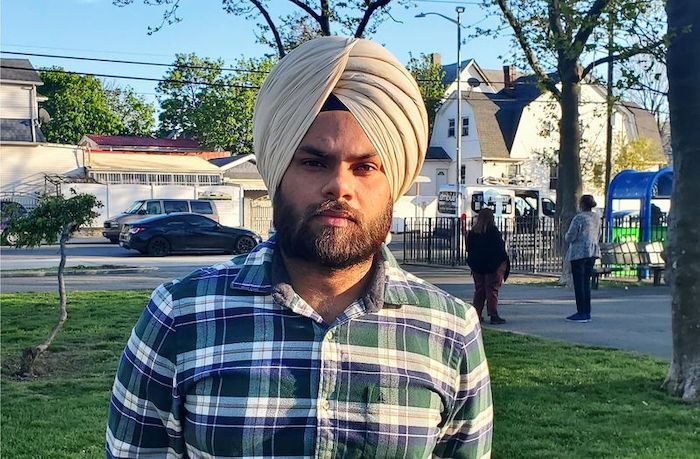
Sumit Ahluwalia, 32, of Astoria, described the violent during a “Stop Hate Crime” in Queens. (Obtained by Daily News)
By Angrej Singh | New York Daily News |
A Sikh man who was the victim of a vicious hammer attack in Brooklyn spoke out Saturday about the crime, saying his assailant was fueled by racial hatred.
Sumit Ahluwalia, 32, of Astoria, described the violent incident during a “Stop Hate Crime” event at Phil “Scooter” Rizzuto Park in South Richmond Hill, Queens, that was attended by state lawmakers and local advocates.
Ahluwalia said the man assaulted him April 26 at his workplace, the Quality Inn at 120 Osborn St. in Brownsville.
“It was about 8 a.m. A Black guy came into the lobby of the hotel and started shouting,” Ahluwalia recounted. “The front desk lady asked him, ‘Sir, do you need help?’”
Ahluwalia said he stepped into the lobby to speak with the man and to seek the hotel security guard.
At that point, the assailant “started running towards me, very fast, and he put his hand in the pocket — I thought, ‘He’s pulling out a gun.’”
Ahluwalia said he pleaded with the man, “What happened? You’re my brother.” But the assailant shot back: “You’re not the same skin,” Ahluwalia said.
The man “banged on my head with the hammer so hard,” Ahluwalia recounted. He said the assailant then screamed, “I don’t like you,” and fled.
A Sikh man who was the victim of a vicious hammer attack in Brooklyn spoke out Saturday.
“After that, like, for some time I couldn’t feel what happened with me,” he said, adding he was eventually taken to an emergency room.
“I couldn’t sleep. I had a big bump on my head,” he said. “I could fall — feeling dizziness, and the next morning I went to the doctor.”
He said five days later, he still felt anxious and fearful.
“I didn’t do anything… I don’t deserve this,” he lamented. “I’m a hardworking guy, wake up in the morning 6 a.m. and go home at 7 p.m.”
Singh gave reporters surveillance video showing some of the incident. Police on Saturday released pictures of the suspect in the case, who was still being sought.
Read the full story, ‘Sikh man recounts vicious hate-fueled Brooklyn hammer attack; police release surveillance pictures of suspect’ (New York Daily News, 1 May 2021), here.
ASIA SAMACHAR is an online newspaper for Sikhs / Punjabis in Southeast Asia and beyond.Facebook | WhatsApp +6017-335-1399 | Email: editor@asiasamachar.com | Twitter | Instagram | Obituary announcements, click here |
Twins Amar and Arjun Singh Purewal are set to make history when they play against one another at Wembley Stadium in FA Vase final on Monday.
They will be the first British South Asian brothers to line up against each other under the arch in a Wembley Cup final, according to British media reports.
The Football Association Challenge Vase is an annual football competition for teams playing in Steps 5 and 6 of the English national league system.
They have obviously played alongside one another for much of their careers. But this time around, they find themselves on opposing sides when Amar’s Hebburn Town play Arjun’s Consett AFC in a rare North-East derby in last season’s rescheduled FA Vase final, reports SkySports News.
The Purewal brothers are no strangers to making history and are iconic figures in the North East having between them played for clubs including Darlington, Durham City, Jarrow and West Auckland.
The 31-year-olds entered the record books as teenagers back in 2008 when they became the first twins ever to score in the same FA Cup tie, both netting for Bishop Auckland in a 3-2 Extra Preliminary Round win over Darlington RA, the report added.
Amar and Arjun also both play for the Panjab FA, who are recognised as a CONIFA (Confederation of Independent Football Associations) nation. The twins’ boss at international level, Manraj Singh Sucha, is thrilled they are finally getting the recognition they deserve as British South Asian football trailblazers.
The brothers co-own a sports coaching company that works with schools, clubs and communities in the north east – and Amar hopes to encourage involvement at all levels of football, reports BBC Sports.
ASIA SAMACHAR is an online newspaper for Sikhs / Punjabis in Southeast Asia and beyond.Facebook | WhatsApp +6017-335-1399 | Email: editor@asiasamachar.com | Twitter | Instagram | Obituary announcements, click here |
A granthi died from a heart attack just before the start of a Sikh wedding in a gurdwara in Tanjung Rambutan in Perak, today.
A few trained medical professionals who happened to be at the wedding rushed to provide first aid to the man who was in his mid-50s. The Indian-born Phola Singh was pronounced dead by the emergency team that arrived later.
“The milni was over and some of us were upstairs in the darbar sahib. Giani Ji had just washed his hands and was about to take his seat at the tabiyya when he collapsed,” one witness told Asia Samachar.
Milni is the ceremony where the bridegroom side meets and greets the bride and his company. After the milni, most members from the groom side were having breakfast on the ground floor of the two-storey gurdwara building when the incident happened in the prayer hall called Darbar Sahib on the top floor. Tabiyya refers to the stage where the Guru Granth Sahib is placed in the prayer hall.
It is understood that the bridgroom, who is also a medical professional, had yet to arrive at the gurdwara at that time.
Phola had previously served as a granthi at the gurdwara in Tambun, a major town in the state of Perak.
“Just earlier this week, some local congregation members told me that the granthi had bought some new kurtas and cloths,” said another gurdwara member who had attended the wedding.
The anand karaj, as a Sikh wedding is called, proceeded after the incident.
ASIA SAMACHAR is an online newspaper for Sikhs / Punjabis in Southeast Asia and beyond.Facebook | WhatsApp +6017-335-1399 | Email: editor@asiasamachar.com | Twitter | Instagram | Obituary announcements, click here |
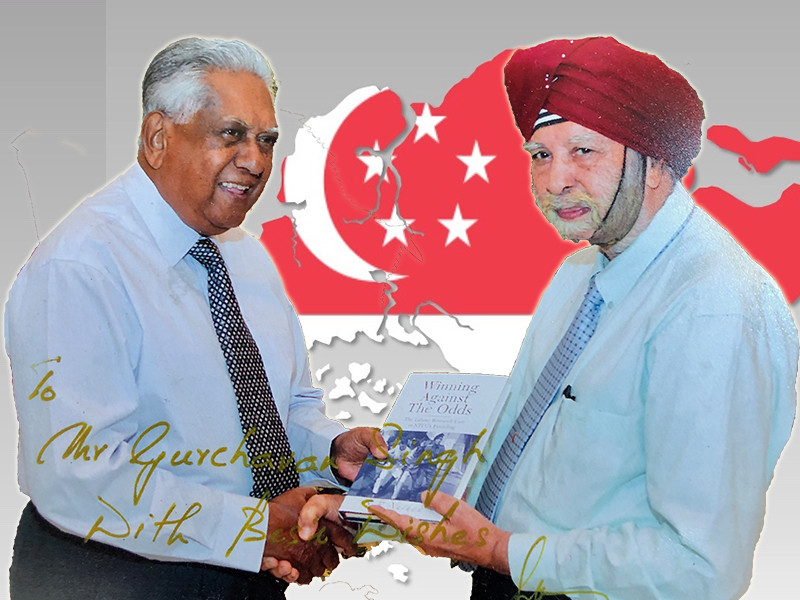
Gurcharan Singh Narula (left) with Singapore former president SR Nathan. Photo: Narula family
By Asia Samachar| Singapore | Tribute |
Many Singaporeans and Malaysians growing up in the 1980s and 1990s would most probably held a gutka, a Sikh prayer book, printed by a Singapore businessman. Gurcharan Singh Narula, the man behind bulk printing and distribution of free gutkas, passed away on 14 April 2021. He was 95.
The textile entrepreneur played an instrumental role in both business and promoting the Sikh faith.
“Two generations of young Sikhs in Singapore and the region grew up acquainting themselves in Gurbani through gutkas he sponsored,” veteran Sikh leader Surjit Singh Wasan told Asia Samachar.
Born on the Pakistan-side of undivided Panjab in 1926, Gurcharan enjoyed a long life in which he gained respect as a businessman and a kind-hearted community elder.
“A loving Gursikh, he was passionate about Sikhism and donated generously to promoting Gurbani, Punjabi education and general welfare of Sikhs in Singapore and overseas,” said Surjit who was the former chairman of Sikh Advisory Board, Singapore.
Gurcharan leaves wife Karamjit Kaur Narula and four children Ranjit Singh Narula (married to Kiran Kaur Narula), Gurmit Singh Narula (Satnam Kaur Narula), Manjit Singh Narula (Arvind Kaur Narula) and Jasbir Kaur Kuckreja (Surjeet Singh Kuckreja). His second eldest child, Jasvinder Kaur Kuckreja (married to Sohinder Singh Kuckreja), had passed away earlier.
After the demise of his wife Vidya Vante Kaur Narula many years ago, Gurcharan remarried. In his later life, Surjit said the support Gurcharan drew from Karamjit helped him maintain his optimistic outlook on life.
“His passing leaves us with many lessons on a life of quiet contribution. He will be missed but today we celebrate his life and legacy,” he said.
Around the Southeas Asia region, his tireless efforts of making available Sikh-related material will be long remembered.
“He was the first person who started doing it in a big way, sending them all over the world. Anyone could ring him up and it was done. He would underwrite the entire cost, printing to delivery,” said former Sikh Naujawan Sabha Malaysia (SNSM) jathedar Master Daljit Singh.
Among others, he recalled that the gutkas and other religious books were widely distributed at the annual Malacca programme in the memory of the late Baba Sohan Singh.
BUSINESS
Gurcharan rose to become one of the larger textile entrepreneurs in Singapore via his company Gurcharan Singh Co Pvt Ltd. It used to import textiles of all kinds from South Korea, Japan, China and Indonesia, and resold them in Afghanistan, Myanmar and the Middle East.
“A lot of Pathan traders used to come to Singapore to buy them,” said his son Manjit.
The company opened up offices in South Korea in the 1970s and Japan in the 1980s. Later, they also had an office in Bangkok, Thailand. They also had presence in Myanmar and Dubai.
“After my 0-Levels and army stint, I was sent to Seoul. I was stationed there,” said Manjit.
What advise did his father give him when dispatched to South Korea at the age of 20?
“Go out and find more business,” he told me. “We were determined to make money. We were into business, and he was very enterprising. He used to visit South Korea.”
In 2006, the family decided to exit the textile business.
Manjit noted his father’s life-long passion for Sikhi and seva. Among others, he used to organize Sikh groups to Hemkunt, India, and Nankana Sahib, Pakistan, from the 1990s onwards till about 2005.
“He wanted Sikhi to grow. He did path (prayers) day and night,” he said. “And he used to teach us a lot of Gurbani.”
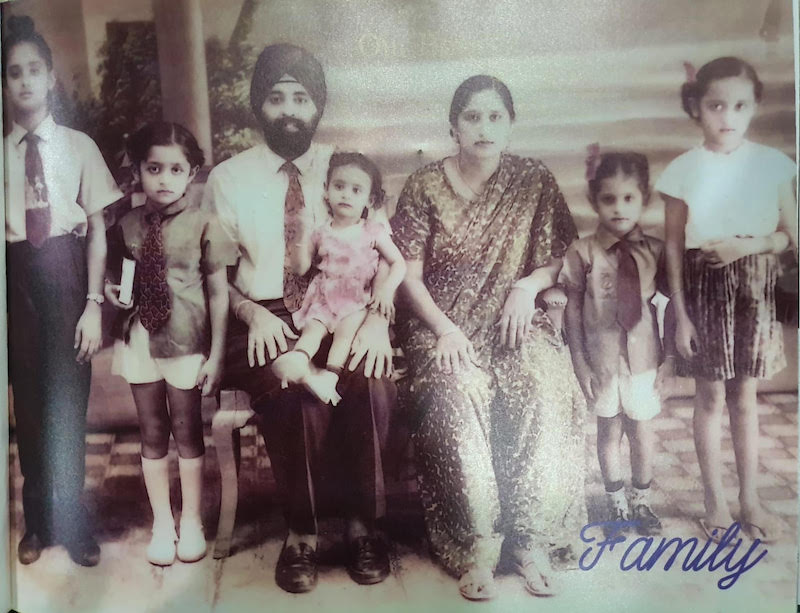
Early Days: Gurcharan Singh Narula & family – Photo: Courtesy of family
KATONG LIVEWIRE
In Singapore, he was a livewire at Katong gurdwara, where he made a constant presence. Gurcharan helmed the gurdwara’s committee in the 1980s and 1990s.
Reflecting back to his younger days, Gurdwara Sahib Katong committee president Harpal Singh said he remembers Gurcharan would come be present at the gurdwara almost every day. He would volunteer for various community projects, never shirking responsibility when it came to the betterment of the community.
“He was a pillar of the community. He was always encouraging the youth to meet each other, to come together for seva,” he said.
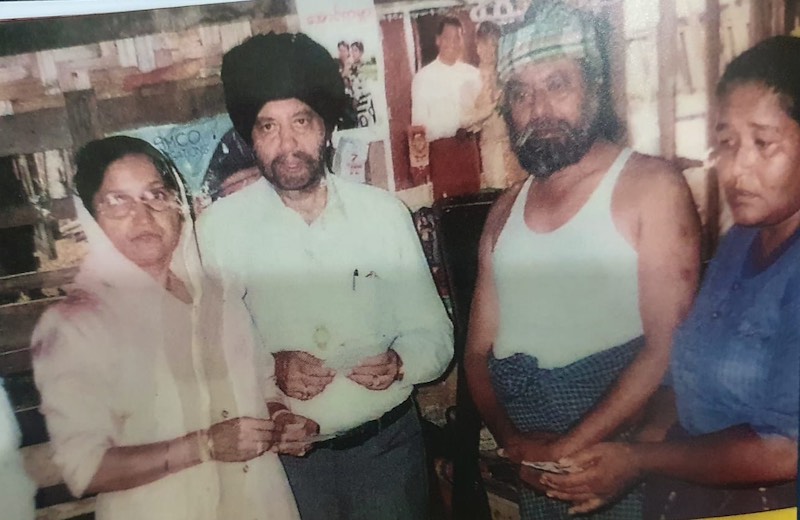
Gurcharan (2nd from left), accompanied by his wife, handing out donations to Sikhs in one of his many trips to Myanmar – Photo: Courtesy of family
Gurcharan also played a matchmaker’s role with some introductions ending up in marriages.
“It’s important to help people to settle down, so went the thought process. Our elders used to do that. He stepped up to the role of doing introductions,” he said.
A GIVING PERSON
His eldest grandchild Avinder Singh Narula said he would remember his grandfather as a calm and a giving person, someone well-liked by everyone.
“Anybody could show up and they can meet him. He would make the phone calls – from money to clothing. He would do all that. He went out of his way to do what he could do for the community. He was a good human being,” he said.
Over the years, Gurcharan had also done numerous charity projects in Myanmar. Avinder, who runs a telco-related business in Myanmar, has seen first-hand its impact.
He says: “I’ve gone to small villages in Myanmar, met Sikhs in far flung places. When they hear that I’m from Singapore, they will mention Narula. He has touched so many lives there.”
ASIA SAMACHAR is an online newspaper for Sikhs / Punjabis in Southeast Asia and beyond.Facebook | WhatsApp +6017-335-1399 | Email: editor@asiasamachar.com | Twitter | Instagram | Obituary announcements, click here |
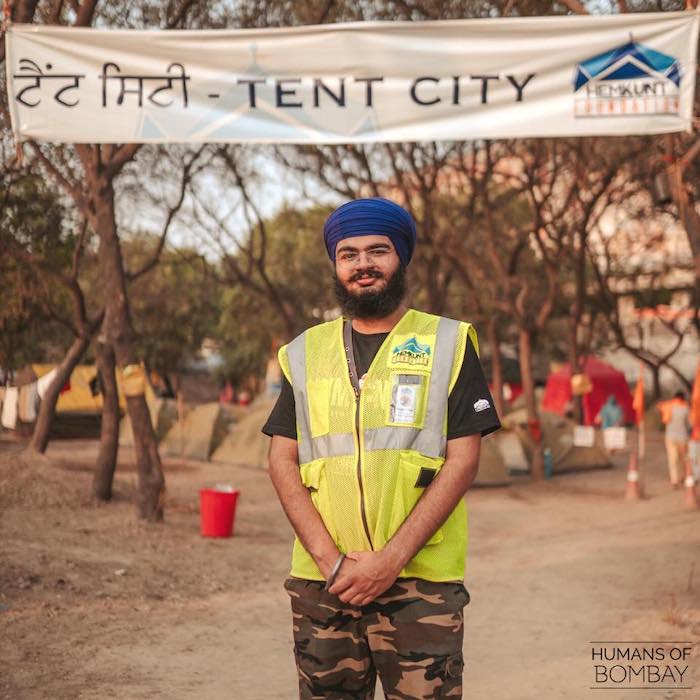
Harteerath Singh from Hemkunt Foundation – Photo: Humans of Bombay
By Humans of Bombay | INDIA |
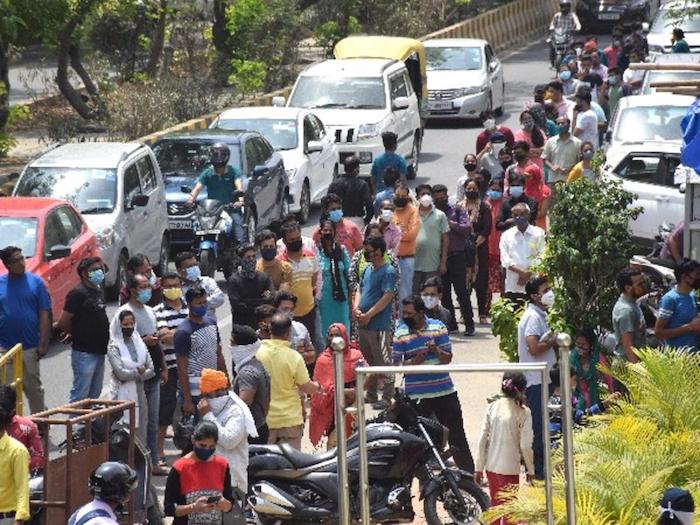
My name is Harteerath Singh from Hemkunt Foundation; my family has been running this NGO since 2003. During lockdown 2020, we’d have about 100 requests for oxygen cylinders in a month. This year that number is 15,000…a day! Unfortunately, we only have the capacity to cater to 4,000 requests; baaki logo ko dil pe patthar rakh ke mana karna padta hain.
The thing is, the privileged people make calls and get themselves a bed somehow; it’s the (ones) below poverty line who are the worst affected by the second wave.
A week ago, a couple had come to us; the husband had tested positive. The hospitals had no space, so they kept circling our office for 3 days until we could provide them with oxygen; I’ve never felt so helpless before.
We’ve had cases where after the patient’s condition got critical, the hospitals would wash their hands off them and leave them at our doorstep – they’d tell us, ‘Ab yeh nahi bachega, we are giving the bed to somebody who has a chance to recover.’ But even though I know that the patient’s chances of recovery are bleak, how can someone leave them to die?
Every day, I witness at least 3-5 deaths; I feel dead from within when I see their families frenziedly make a hundred calls to the crematorium. I mean, people can’t even mourn the death of their loved ones– kaise din aa gaye hain!
Still, I won’t give up. I coordinated with CEOs of big brands and got myself an import-export license. It’s been 2 days – we’ve already started procuring oxygen from abroad independently. We’re the first ones in India to do so and now we don’t have to wait for anybody’s permission.
Because no government is coming to save us; we the citizens of India have to get out of this together– we’re on our own. Now, I’m considering constructing a PSA plant – it’s an oxygen generating factory and can generate 400 litres of oxygen per hour!
Honestly, this is just the beginning; we are yet to reach the peak. All of us need to act now! We are doing as much as we can–we have centres across the country; anybody can reach out to us directly. If the kids live abroad, we will deliver oxygen cylinders to their parents in India.
I’ve already gotten COVID twice–just a fews weeks ago, I was in isolation. But as soon as I recovered, I got back on the ground. Ab phir se hoga COVID toh ho jaye– it’s one life versus lakhs. We are in this together and we will get out of this together.
(Adapted from Humans of Bombay Facebook page. This article appeared on 29 April 2021)
Help India Breathe– Donate to Hemkunt foundation; 100% of proceeds will go towards helping them, help us breathe. Click here for the link.
ASIA SAMACHAR is an online newspaper for Sikhs / Punjabis in Southeast Asia and beyond.Facebook | WhatsApp +6017-335-1399 | Email: editor@asiasamachar.com | Twitter | Instagram | Obituary announcements, click here |
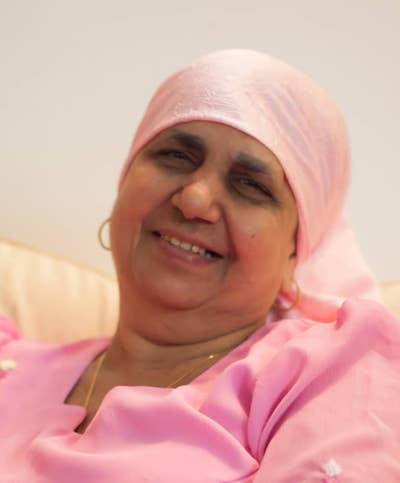
SASKAAR / CREMATION: IN MEMORIAM:2.00pm, 1 May 2021 (Saturday), at Jalan Loke Yew Crematorium, Kuala Lumpur. PATH DA BHOG: 16 May 2021 (Sunday), 10.30am onwards, at Gurdwara Sahib Pulapol, Kuala Lumpur | Malaysia
Saskaar / Cremation: 2.00pm, 1 May 2021 (Saturday), at Jalan Loke Yew Crematorium, Kuala Lumpur
Path da Bhog: 16 May 2021 (Sunday), 10.30am onwards, at Gurdwara Sahib Pulapol, Kuala Lumpur
If you are attending, please adhere to social distancing rules and wear masks.
Family would like to thank relatives and friends for their love, care and support. She would have liked all who knew her to celebrate her life and bring a smile on their face when they think of her.
Contacts:
Prem Singh 019 227 8747
Harbans Kaur 012 395 5432
Jaspal Singh 016 668 5077
A Poem for Bi’
Bi’ gave us the world
Put it at our feet
With her at our side
There was nothing we could not beat
A strong woman
She never lost sight
Though at times, things seemed helpless
She taught us how to fight
Bi’ has shown us how
Through times of much sorrow
To look to the future
And new days of tomorrow
Even though times may be hard
And all we feel is pain
We know she will say ‘remember, this too shall pass’
Like an overcast sky, the clouds and the rain
So it is with heavy hearts
And tears in our eyes
That we lay her down to rest
And say our last goodbyes
A loving, kind, and gracious soul we will dearly miss,
Now it is time to depart
You are now free Bi’
We will meet one day and be one in Waheguru’s heart
| Entry: 30 April 2021 | Source: Family
ASIA SAMACHAR is an online newspaper for Sikhs / Punjabis in Southeast Asia and beyond.Facebook | WhatsApp +6017-335-1399 | Email: editor@asiasamachar.com | Twitter | Instagram | Obituary announcements, click here |