















UA-56202873-1
Page 414

Racism: The apples don’t fall far from the tree

0
By Ranveer Singh | OPINION |

It’s been a surreal two weeks. It began with what I thought would be a fairly straight forward, and innocuous, question, when I asked my children, “How was school today?” I wasn’t really expecting the answer they gave, nor did I want to believe it at first. 

“Really?” I thought, “Is this really happening in a primary school?”

As they narrated the incident of racism, in which a group of 7 and 8-year-olds had taunted them for the colour of their skin, I knew deep down this was the first moment of humiliation, and of self-doubt, that my children would face as a minority within a predominantly white society. I also realised the conversation of race, racism, white supremacy and whiteness would be one that was needed sooner than I had initially thought.

My first port of call was to inform the Head, who was appalled with what I told her. She informed me this had never happened before (or at least she had not previously been told of any such incident), and launched an internal investigation. The children came home the next day and told me she had spoken to them individually, presumably to corroborate the story. There is one other Asian child in the school, and one brown-skinned teacher, both of whom were targets for the abuse. A day later the kids broke up for the Easter holidays, and at the moment, the matter is on hold until school resumes in a week’s time. 

I put out a tweet to the local MP, Marion Fellows, but she ignored it. However, a local reporter picked up the tweet and followed up with a call and article in the local paper. I put out a second tweet, which the the MP ignored again, although an SNP candidate did acknowledge and share her concern. This all came a few months after the local council had passed two separate motions aimed at eliminating “racial injustice and discrimination.” While that is promising, and I firmly believe education plays an integral role, at present, it feels laboriously slow, and I have reservations about what “decolonising the curriculum” actually means. 

My reservations are due to the systemic and deep-rooted culture of racism that defines Britain today. We all know racism is something our parents, and grandparents experienced, when they arrived in this country. It is something my generation faced, too, at some level, whether in school, college, university, the workplace or in general public space. If it wasn’t overt racism, then it was discreet – the stare, the second look, the micro-aggressions. Every single generation of Sikhs, and indeed other Panjabis and ethnic minorities who have migrated to the UK, and white settler colonial states, have faced the ordeal of racism. For Sikhs, the onset of racism in the West is well established, going back a century, to the experience of the Ghadars.

We are constantly told, through the media and structures of modernity, that things are different now. Britain, and indeed the West, is “modern”, “progressive”, “liberal”, “pluralistic”, “multicultural”, “diverse”, – the list goes on. Yet, here we stand, in 21st century “post-colonial” Britain, where white children, in primary schools, not only see colour but instinctively believe it to be a sign of inferiority, or weakness, in comparison to white, and thus use it to humiliate and assert their superiority over brown skins. The denial of institutional racism is also presented by the government, as we saw with the recent Race Report.

While the episode at the children’s school was the first, to my knowledge, for my daughter, it was the second moment of humiliation for my son, who last year was ridiculed for his dastaar. At the time they had called it a “silly hat”. Back then, I had a conversation with him about the incident and reassured him of his uniqueness, of his direct lineage to the brave and powerful souls of his Sikh heritage in Panjab. I also introduced the broader topic of racism, but following the latest incident, I have taken a more proactive approach.

I shared a post last week about a book that has helped me understand the inextricable link between racism and the order of establishment. The book is called “White Fragility“, by author Robin Diangelo. Building on the work of individuals like Professor J. Kehaulani Kauanui (“Racism is a structure, not an event“), and Charles Mills (“white supremacy is the “unnamed political system that has made the modern world what it is today”), as well as the invaluable works of W. E. B. Du Bois and James Baldwin, the author begins by marking out the difference between racism, and discrimination/prejudice by mapping out the systemic nature of racism. This in my view needs to be at the nucleus of any attempt to “decolonise the curriculum” taken by British schools.

The author then works through various frameworks that uphold racial inequality, focusing on the US. However, the work is applicable to any colonial settler nation, and of course, the mother country. I could quote a whole flurry of paragraphs that resonated with, but if I were to choose one, it would be the following:

“Racism is a system… The system of racism begins with ideology, which refers to the big ideas that are reinforced throughout society. From birth, we are conditioned into accepting and not questioning these ideas… Racism is deeply embedded in the fabric of our society. It is not limited to a single act or person”.

Her chapters on “White Fragility“, are particularly refreshing, partially because she is a white woman, but more importantly because in my view, it is the kind of radical and unapologetic approach needed if we are to tackle this problem. It is the approach, that I, as a Sikh parent, have chosen to take, in the same way we educate our children about the insidious nature of Indian State oppression that Sikh bodies and minds have endured for decades. 

This book, alongside the works of Prof. Kehinde Andrews, in particular, ought to be an essential part of your household reading. Why? Because our children are not going to learn this in school, nor will they learn it from any Youtuber or game they play, which is problematic, because as persons of colour, irrespective of whether you “see colour” or not, they will face racism at some point or another.

It is really on us, as parents, as uncles and aunts, as a community, to educate ourselves and be informed so that we can stand against racism, and in particular stand in solidarity with other persons of colour who endure the wrath of racism.

Ranveer Singh is a father of four, an author and activist from the UK. As co-founder of the National Sikh Youth Federation (NSYF), he is engaged in grassroots work within the UK Sikh community. By profession, he is a public sector worker, currently contracted within the Legal team of Scotland’s largest public Inquiry. Ranveer can be found on Twitter and Instagram.

* This is the opinion of the writer, organisation or publication and does not necessarily represent the views of Asia Samachar.


RELATED STORY:

The plight of the Rohingya (Asia Samachar, 29 April 2020)

When a Sikh boy gets bullied by white girls (Asia Samachar, 14 June 2020)


ASIA SAMACHAR is an online newspaper for Sikhs / Punjabis in Southeast Asia and beyond. Facebook | WhatsApp +6017-335-1399 | Email: editor@asiasamachar.com | Twitter | Instagram | Obituary announcements, click here |
April 14: Some thoughts

0
By Jaspal Singh | OPINION |

April 14 is the first day of the month of Vesākh. I send my heartiest congratulations to every Sikh who celebrates this day for its two special and significant events (refer to point #15 in the notes below).

1. There was a time when Sikhs erroneously thought that Vesākhi was a Sikh New Year.

2. Then in 1999, the Sikh religious community, guided by research done by Pal Singh Purewal, who came up with the Mool Nānakshāhi Calendar, started celebrating Sikh New Year in the middle of March.

3. The Goru/Guru never introduced a new year for Sikhs. This is a latter day creation of the Sikh polity.

4. Panjābis (in carhdā Panjāb, lahendā Panjāb, Haryana, Himachal Pradesh, etc) generally welcome Vesākhi [also spelt Vaisakhi] with a bit of joy because it is time to harvest their most important produce of the year: wheat.

5. Wheat is normally harvested between end of March and end of April.

6. The harvested wheat is sold to middlemen and the income is used to pay off debts, buy new things for home and family members, and increase savings, among others.

7. For the middleman, meanwhile, Vesākhi means the opening of a new ledger. In modern times we call this new financial year.

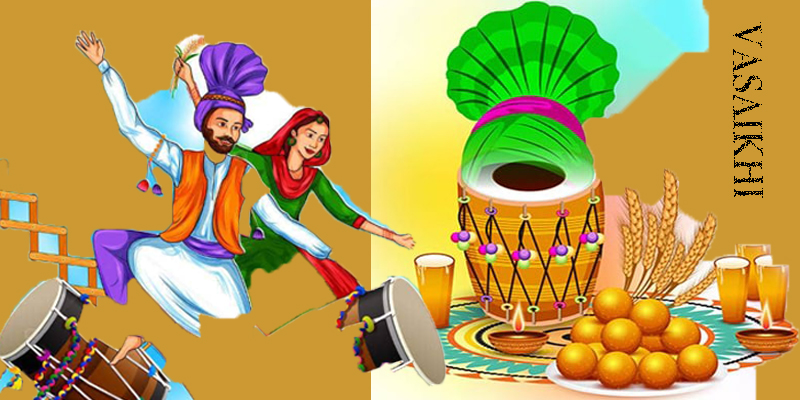
8. The image often portrayed among Sikhs about Vesākhi is that of a group of dancers in their colourful costumes, turbans and scarfs jumping in the air with joyous and celebratory mood at the beat of the drum with the background of wheat fields.

9. That image is incorrect. No one in Panjāb does that. No one dances bhangrha. No one dances giddhā. It is once again a latter day creation; the outcome of creativity of the performing arts industry.

10. In Panjāb, that bit of joy at the arrival of harvesting season is manifested when farmers cut a few stalks of the ripe wheat and offer thanksgiving supplication to god/gods (depending on the religion or spiritual beliefs of the farmers) for a bountiful harvest.

11. Vesākhi is a term used in reference to April 14 when the month of Vesākh begins.

12. Since the implementation of the Mool Nānakshāhi Calendar in 1999, Vesākh is treated as the second month in the Sikh calendar.

13. The first month is Cheit which begins around March 14. In the compositions of Goru Nānak and Goru Arjon (the 5th Goru Nānak), both compositions go by the same name and are called Bārah Māhā, the month of Cheit gets the first place mention.

14. The first day of the month of Vesākh (Peheli Vesākh) carries two very important religious events.

15. The first is the birth of Goru Nānak on April 14, 1469. The second is the finalisation of the Sikh identity, i.e., a sovereign religio-socio-politico identity which came to be known as Khālsā (Khaalsaa or Khalsa) on April 14, 1699 by Goru Gōbind Singh (the 10th Goru Nānak).

16. Etymologically, the word Khālsā has origins in two distinct languages: Sanskrit and Arabic.

17. Khālsā means pure in Sanskrit etymology. Khālsā means sovereign in Arabic etymology.

18. The latter meaning which is based on the Arabic etymology better reflects the ideal, intention and intuition of Goru Gōbind Singh in finalising the Sikh identity.

19. Only a tiny minority of Sikhs accept and celebrate April 14 as the date of Goru Nānak’s birthday. Most Sikhs continue to celebrate it either in October or November for reasons best known to them.

20. A last note on Vesākhi. Its religious significance (mentioned in point #15) far outweighs the erroneous notion that this day is a day of harvest festival. There is no harvest festival in Panjāb and neither is there any grand-scale festivitIes linked to harvesting activity.

On Goru Nānak: Satgor Nānak pragtiyā mitti dhond jag caanan hoā. Jio kar suraj nikliyā tārei chapei andher paloā

On Khālsā: Khālsā Akāl Purakh Ki Fauj. Pragtiyō Khālsā Parmātam Ki Mauj.


Jaspal Singh, a former journalist, lives in Ipoh, the state of Malaysian state of Perak

* This is the opinion of the writer/s and does not necessarily represent the views of Asia Samachar.


RELATED STORY:

Khalsa Diwan Malaysia powers ahead with original Nanakshahi calendar (Asia Samachar, 10 Jan 2020)

Redefining Vaisakhi (Asia Samachar, 16 April 2016)

Adopt Mool Nanakshahi Calendar, stop confusion, says Sikh Chicago meet – WSN (Asia Samachar, 7 Dec 2017)


ASIA SAMACHAR is an online newspaper for Sikhs / Punjabis in Southeast Asia and beyond. Facebook | WhatsApp +6017-335-1399 | Email: editor@asiasamachar.com | Twitter | Instagram | Obituary announcements, click here |

10 tips on how I survived in Alibaba

Tarandip Kaur
By Tarandip Kaur | EXPERIENCE |

Working at Alibaba has been quite the unique experience – not something I’ve ever encountered before. Even though I had some experience in e-commerce working at Shopee, I’ve never worked for a Chinese tech giant in China.

But, I was up for that challenge… till COVID-19 hit. My plans to move to Hangzhou, where Alibaba’s headquarters are, went out the window. My relocation date was moved multiple times, till eventually I was on-boarded remotely and worked from Singapore for about 6 months waiting for travel to China to open up. Working remotely was chaotic but once I got to the campus, that’s when things really sped up in all directions.

From COVID-19 to remote working, relocating and working onsite, it’s been a challenging year filled with multiple lessons. Here are just 10 from these wild 12 months.

1. Stay ready for change 

“Change is the only constant.” No truer words have ever been spoken and in Alibaba, change is always right around the corner. If you’re not ready, you’d probably feel like a million bricks just blocked your path. What I’ve learnt is to always have an agile mindset and move with the flow – even if things are not 100% sorted out.

2. Ask, ask and ask again 

No question is silly. When I joined, I was asking questions all.the.time, and to everyone. It’s never easy to learn the ropes when you join a new company so instead of staying in the dark, ask any question that pops to your mind. The sooner you clear your doubts, the easier it’ll be in the months ahead. This should really become a mantra. No matter how long you’ve been in the company, you’ll never run out of questions.

3. Communication is key 

In such a large company, it’s easy to get your wires crossed when multiple stakeholders are involved. Add language barriers to the mix and that rate of miscommunication shoots up drastically. I’ve found it’s much better when I speak to stakeholders face to face or through a video call because I’m better able to communicate project requirements and clarify doubts – rather than over messages.

4. Hit the ground running

Things move quickly here. So there’s not going to be time for team mates to hold your hands and show you the ropes. Instead, get ready to hit the ground running and learn as you attempt various tasks independently. I made plenty of mistakes initially but with each mistake, I learned something new.

5. Speed is of the essence 

Since things move quickly, speed in completing projects or launching products is valued. You’ll often be faced with tough turnaround times. Instead of fine-tuning your work to perfection (if that is even possible), focus on executing and testing – kinks can be worked out along the way. The key is to get comfortable with speed.

6. Prioritisation is an art 

Typically, there are multiple projects running at any one time so it’s easy to get lost in a storm of tasks. That’s where the art of prioritisation comes in. Once I learnt to negotiate deadlines based on project scale or impact to the business, I was better able to breathe and got more done. Similarly, not every instant message needs to be dealt with immediately. At Alibaba, you’ll pick up fantastic project management skills!

7. Channel your inner zen

Prevent burnout and feelings of frustration by constantly staying calm, grounded and level-headed. Instead of complaining about tight deadlines, it’s far better to take things in your stride and spend that energy getting things done in a collected manner. It’s equally important to set timely reminders to take a break and breathe as well.

8. Unearth the opportunity you desire

Alibaba runs like an agile start up company with multiple business units under its umbrella, which means there’s always something to explore and a new field to delve into. There’s an opportunity waiting at every corner, as long you look for it. Interested in AI content? You’ll find it. Interested in SEO? You’ll find it. Interested in language quality frameworks? You’ll find it.

9. Be open to cultural differences

Working in a Chinese company will come with its fair share of cultural differences. While it will take some time to get accustomed to them, always show that you’re open and willing to learn. From joining gatherings to asking about their culture, you’ll forge a lot more relationships, and these people will likely become your absolute best allies. I’ve also tried using my minimal Mandarin skills to connect where possible – it’s gotten me many nods of approval!

10. Enjoy the crazy ride

As with anything that’s challenging, it’s important to enjoy the experience and appreciate where you’re at. With tons to learn and amazing opportunities to explore, it’s exciting being at the center of a tech giant as it ventures into internationalisation. 1 year in and I’m thrilled to say it’s the wildest work ride I’ve had so far – one I’ll remember for years!

Eager to jump on this ride with me? We’re hiring for more Content Strategy Experts to join the team in Alibaba’s HQ! Drop me a message if you’re keen.

Tarandip Kaur is part of the AliExpress global content strategy team. She first posted this article, entitled ‘I survived 12 months in Alibaba…’, at her LinkedIn page.


RELATED STORY:

Tasvinderjit Singh promoted as director at Malaysian-based futures company (Asia Samachar, 7 April 2021)


ASIA SAMACHAR is an online newspaper for Sikhs / Punjabis in Southeast Asia and beyond. Facebook | WhatsApp +6017-335-1399 | Email: editor@asiasamachar.com | Twitter | Instagram | Obituary announcements, click here |

The real Vasakhi celebration

0
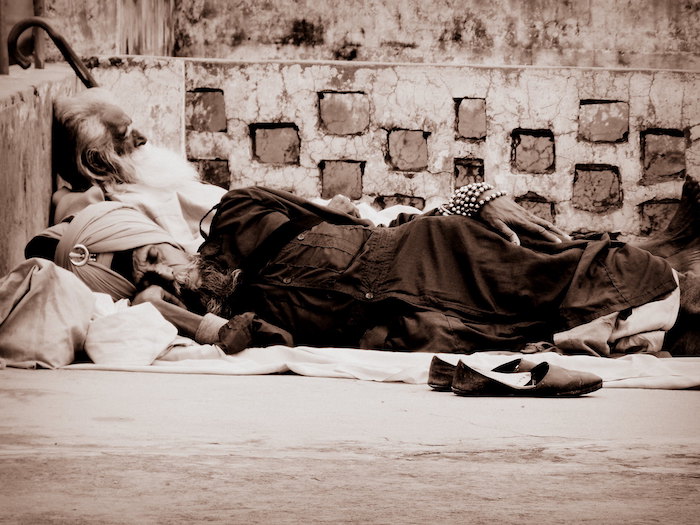
Sleeping Sikhs at Anandpur Sahib – Photo: Farheen Fatima
By Jagdesh Singh | OPINION |

I looked at the Bajaj scooter with a bewildered smile. And then I turned to the supposed rider of the scooter, standing in front of me. His name was Maan, and I’ve known him to be my uncle, a cousin of my father’s. And then I turned to my right, another smiling Sardar, with a bigger turban and a bigger girth. This other uncle of mine, a paternal cousin named Jagtar, was to be the pillion rider. I was supposed to be in the middle of both these adult Sardars. Now, mind you, I was only half their size, and should be able to squeeze in, but with my very limited Punjabi, I managed to get the gist from their animated conversation that it was going to be a 4 hour ride, sandwiched between both of these big burly Sardars.

I was seventeen and had just finished my Malaysian Certificate of Education (SPM). My father offered the adventure of my lifetime: accompany my aging grandmother to visit her birthplace in Punjab and her sister for, what we thought at the time, the very last time. Her nephews were given the duty to introduce me to the Punjab, to her colorful people, to the vast history and spiritual richness.

It was decided that the Holla Mohala celebrations would be an experience for me to remember forever. The very claustrophobic 4 hour scooter ride was supposed to be from a small village at the outskirts of Rajpura town to Anandpur Sahib. Thus began my adventure to witness how grand the celebrations would be at the birthplace of the Khalsa. Although already spring, it was still cold for me, and I wasn’t really keen being away from the younger crowd in the village where the real party of throwing bright colorful powder and paint was going to take place.

As we rode out of the village and onto the trunk road, the majestic irrigation canals gushing with blue waters from the Himalayans, we started to see large tents already propped up along the road. The further down the road we went, the more tents appeared, now side by side. After a while, I realized these were mobile langgar tents. Fresh food and drink were prepared by the villagers living nearby. I was silent, but my curious looks elicited some tour guide explanation from the Uncle sitting behind me. “Langgar! Roti! Chaval! Cha! Khanna?” (Communal Kitchen! Bread! Rice! Tea! Wanna eat?”). Then it hit me. These villagers had set up these langgars to feed travelers heading to Anandpur Sahib, many of whom are traveling from all around Punjab and the neighboring states. Back home, you only see this at gurdwaras.

It was night and we had finished visiting the historical gurdwaras in Anandpur Sahib. We were now walking around the city packed with so Sikhs converging for prayer or just for the bazaars. We ate at one of the larger tents set up right in the middle of the city. I was exhausted, but the vegetarian food (something I wasn’t fond of at seventeen) tasted nice and enjoyable. There were just so many people there. You can imagine the constant turnover of food being served almost on a half-hourly basis since God knows when the couple of days before. The food was fresh. And in abundance. It’s ready for everyone – poor or wealthy.

Late into the night, I was hoping we would now head towards some hotel for a good night’s rest. But we got into another tent. I was confused as no food was being served. And this tent was filled with hay. Thick layers of hay on the floor. My eyes adjusted to the dim lighting to finally realize that this was a tent for travelers to retire for the night, to sleep on the hay with nothing else but the clothes on our back. I was too tired to even ask.

Today, as I recollected back these memories, I realized that this experience could well have jumped out of a National Geographic edition. But even more significant, the celebrations I witnessed that night personified us as Sikhs. I can recall back the camaraderie of the villagers as they cooked and served strangers, laughing and bellowing instructions to one another. They were having as much fun as dancing bhangra, even more. Whether it was serving food and tea, or providing a clean sleeping area with fresh hay, this was how Sikhs celebrated their religious and cultural events. Sure, there were prayers and holy hymns sung in the background, and families were together enjoying it all, but the fun and joy of the actual celebrations was in service to humankind.

Today, as we celebrate our 322nd anniversary of the birth of our Khalsa, with so many well wishes on social media from Sikhs and of other faiths, the narrative is that we’re mostly celebrating the harvest festival along with our other Indian friends. You will see our e-cards on WhatsApp or Facebook adorning a lovely Punjabi couple in the middle of the field dancing bhangra, with wheat or some form of harvest highlighted. I mean, yes, I’m sure we should be celebrating the hard work that got us the harvest, even though many of us are just descendants of farmers. But I really believe that the significance of Vaisakhi is more on how we got our Sikh identity, on how we got our names Singh and Kaur, and celebrate the day our 10th Father created this precious identity that sets us apart from the rest, always in service to mankind. Always in joy while serving in any way we can.

Happy Vasakhi from all of us. May we never forget the joy of being in service to all around us.

Jagdesh Singh, a Kuala Lumpur-based executive with a US multinational company, is a father of three girls who are as opinionated as their mother

* This is the opinion of the writer, organisation or publication and does not necessarily represent the views of Asia Samachar.


RELATED STORY:

Reflection on Vaisakhi (Asia Samachar, 11 April 2021)

ASIA SAMACHAR is an online newspaper for Sikhs / Punjabis in Southeast Asia and beyond. Facebook | WhatsApp +6017-335-1399 | Email: editor@asiasamachar.com | Twitter | Instagram | Obituary announcements, click here |

How egalitarian Khalsa ideology united India’s farmers

0
Protresting Indian farmers – Photo: Source not identified
By Gurmukh Singh | OPINION |

In 2021, there is a convergence of egalitarian universal Sikhi values and the popular resistance, above communal divides, against unjust laws which affect the lives of hundreds of millions of Indian farmers and workers. For, dignity of labour (ਕਿਰਤ) is a core value of Sikhi.

Vaisakhi is the harvest festival and marks the culmination of the hard work of the farming community which is at the centre of Panjab economy and way of life now under threat from take-over by large corporations. Over 70% of the population of Punjab is directly or indirectly involved with labour-intensive agriculture.

Vaisakhi is associated with the emergence of the Khalsa (ਪ੍ਰਗਟਿਓ ਖਾਲਸਾ), while this year, not just the Sikhs but all Indians, celebrate the 400th Parkash (birth) anniversary of Guru Tegh Bahadur. The people of India owe much to the supreme sacrifice of the Guru; an epic in the Age of Kalyug (ਕਲੂ ਮਹਿ ਸਾਕਾ) which started an unstoppable chain of events leading to the freedom of the sub-continent from a tyrannical regime by the end of the 18th century.

Despite some positive suggestions recently to commemorate the 400th Parkash anniversary of the Guru, Prime Minister Modi could have paid a fitting tribute to the Guru’s memory by early settlement of nationwide protests against exploitative farm laws which threaten to destroy the self-sufficient way of life and dignity of farming communities. No serious effort has been made to understand the spontaneous nationwide protests led by the Sikhs of Punjab against the existential threat to the lives of millions of Indian farmers and workers.

These three farm laws would allow large predatory corporations to by-pass the state markets (mandis). Without collective bargaining power, the small farmers would fall prey to large corporate monopolies. It will become a buyers’ market forcing small farmers to sell at lower prices. The widespread concern is that their debt burden will increase and subsequently force them into bonded labour, a form of slavery common in some Indian states.

Nearly 800 million of the total population of 1.3 billion Indians owe their livelihood to agriculture. Paradoxically, while claiming to liberate farm produce selling, the new laws can leave small farmers at the mercy of large private corporations. State run food grain mandis (markets) will lose income and collapse. That will impact negatively on the whole economic structure and the infrastructure, including road networks, which support the mandi system.

The farmers claim that an unregulated market will lead to loss of secure income for them because Minimum Support Price (MSP) has not been written into the new laws. Procurement through mandis (Agricultural Produce and Marketing Committees) will decrease massively causing their closure. Farmers will be driven to bonded labour – a form of slavery experienced by farmers in some states. (Bonded labour is a system in which lenders force their borrowers to repay loans through labour and one estimate is that there are 19 million Indians enslaved in such debt bondage.)

As pointed out by a Congress leader, it is unrealistic to expect the Food Corporation of India (FCI) to go to 15.5 crore farmers to purchase their farm produce. The government should make provisions in the law to allay the fear of farmers over the laws.

The state farming policy should ensure that all farmers get MSP for their produce so that they can live a decent and secure life. The MSP can be worked out by farming experts each year after taking into account all reasonable farming costs. Small farmers should not be concerned with complicated marketing mechanisms of how and where to sell their products. The state mandi system is a simple and certain way of doing that. Farm produce marketing can be liberalised without destroying small family farms and farming communities.

Of course, depending on shortages, there can be incentives to produce more of selected farm products through higher prices. These things can be worked out between agricultural experts and representatives of farmers at national and local levels through some sort of unified agricultural policy framework. Agricultural universities and research centres can be involved.

The Indian government needs to seriously reconsider the new farm laws which can destroy the livelihood and dignity of millions of Indian farmers. Punjab and Haryana will be hit the hardest and it will be most unfortunate if that leads to widespread social unrest.

For the above reasons, the freedom-loving farmers of Panjab were the first to wake-up to the trap which had been set for the farm communities across India. According to one source, “Sikh farmers have galvanized the country’s farming community and generated nationwide support. They will go down in India’s history as the frontline heroes of the farmers’ movement.” Another comment on a forum is that “the brave farmers have taken Sikh values to the streets for all the world to see and learn from. We should support the farmers, all the farmers of every faith and region in the spirit of Sarbat da Bhalla.” This comment sums up the link between Sikhi values and the farmer protests across India.

Traditionally, the Khalsa ideology restores dignity to the working fraternity through Guru Nanak’s trilogy principle of God-centred life of honest work and sharing. According to one writer, “Sikhi is actively shaping and strengthening the current farmer protests. Iconography of the Sikh faith (orange colours, the Khanda symbol) has a heavy presence both at Indian and diaspora demonstrations”.

The question asked is, why, when the government should have been totally focussed on Covid-19 pandemic, the ruling party chose to rush through the Parliament laws without consultation with the unions concerned? Bearing in mind that Panjab is predominantly a Sikh state, the question does arise if there was a communal political card being played by the ruling right-wing Hindu nationalist Bharatiya Janata Party (BJP), otherwise fearing opposition from the Sikhs of Panjab. What the BJP politicians did not expect was that, led by Panjab and Haryana farmers, the whole of Indian peasantry would wake up to the grave threat to their livelihood and life-style.

In some ways parallels can be drawn between Sikh-led popular opposition to the “black” farm laws and their opposition to the “Emergency” of late Prime Minister (PM) Indira Gandhi in 1975, curbing civil liberties. During Indira Gandhi’s “Emergency”, the first mass protest in the country, known as the “Campaign to Save Democracy”, was organised by the Akali Dal and launched in Amritsar on 9 July, 1975. Out of the 140,000 people arrested nationwide during the “Emergency”, 40,000 were from the less than 2% Sikh population. It is possible that the Sikhs were not forgiven for leading the opposition to the “Emergency” suppression of civil liberties and paid the price in 1984.

In Punjab, particularly, to quote a source, “…agriculture is rooted in the social base of everybody working on the farm with dignity. Thus, Punjab has evolved as a separate cultural entity within Indian federalism. The state produces a lot of wheat and milk, and the notion of ‘Kar Seva’ (labour service) even in gurudwaras has attracted global attention.”

As a politician and one who knows the Sikh tradition only too well, PM Narendra Modi should have realised much earlier that the farmer protests were for a just and popular cause and would not go away. In fact, political tactics, gimmicks and threats would only strengthen the resolve of farming community leaders. As one who has spent considerable time in Panjab, he should have learnt from the Sikh tradition of morchas so admired by national leaders like Mahatma Gandhi during the colonial days.

PM Modi could have won over India’s farmers and the Sikhs and come out stronger. He could have listened to the people’s voice, withdrawn the “black laws” to start a meaningful dialogue with the unions concerned to safeguard the livelihoods of the farming communities. In the current situation, his plans for celebrating Guru Tegh Bahadur’s 400th Parkash can be misunderstood as another political move to weaken the farmers’ resolve.

Delay can only lead to unwelcome outcomes and no solutions. As Giani Harpreet Singh said, “It is a matter of concern. An atmosphere of communalism is being created in the country and minorities are being oppressed under the patronage of the government. Seeds of hatred are being sown in the minds of people of one religion against those of the other.” (TNS, 3 April 2021)

The Jathedar has compared the situation with the socio-political environment prevalent during the Mughal era. With reference back to the Mughal period, the Jathedar’s appeal for unity in the Khalsa Panth carries a certain urgency this year when India is celebrating the arrival of the Guru whose unique martyrdom upheld dharam – the righteous cause.

It is not too late for Prime Minister Narendra Modi to commemorate Parkash 400th of Guru Tegh Bahadur, Hind di chaardar, by listening to the farmers and workers of India.


Gurmukh Singh OBE, a retired UK senior civil servant, chairs the Advisory Board of The Sikh Missionary Society UK. Email: sewauk2005@yahoo.co.uk. Click here for more details on the author.

* This is the opinion of the writer, organisation or publication and does not necessarily represent the views of Asia Samachar.


RELATED STORY:

Sikhi: The Path for the New Age (Asia Samachar, 17 May 2020)

How coronavirus can change the world (Asia Samachar, 29 April 2020)


ASIA SAMACHAR is an online newspaper for Sikhs / Punjabis in Southeast Asia and beyond. Facebook | WhatsApp +6017-335-1399 | Email: editor@asiasamachar.com | Twitter | Instagram | Obituary announcements, click here |
In Loving Memory: Dr Pretam Singh Chanan Singh (1930-2020)

FIRST YEAR BARSI:  Path da Bhog on Sunday, 25th April 2021 at 9.30am to 11.30am at Gurdwara Sahib Tatt Khalsa, Jalan Raja Alang, Kuala Lumpur | Malaysia

DR PRETAM SINGH S/O CHANAN SINGH

(1930-2020)

Husband of Dr Ajit Kaur

Deeply missed and forever cherished by family and loved ones. Rest in peace.

Path da Bhog will be held on Sunday, 25th April 2021 at 9.30am to 11.30am at Gurdwara Sahib Tatt Khalsa, Jalan Raja Alang, Kuala Lumpur

(016 – 238 9367, 016 – 374 3196, 018 – 292 0514)

Due to the current CMCO and SOP compliance, please note the strict regulations and guidelines required.


| Entry: 13 April 2021 | Source: Family

ASIA SAMACHAR is an online newspaper for Sikhs / Punjabis in Southeast Asia and beyond. Facebook | WhatsApp +6017-335-1399 | Email: editor@asiasamachar.com | Twitter | Instagram | Obituary announcements, click here |

Former Naujawan Sabha chief Master Pritam Singh will be missed

1
Master Pritam Singh at SNSM headquarters in 2016 – Photo: Asia Samachar
By Asia Samachar Team | MALAYSIA |

Retired teacher Pritam Singh will be remembered as a jovial person with a deep and abiding dedication to the Sikh youth. Above all, he will be remembered as a thrifty family man and community worker who walked the talk when it came to living the Sikh faith.

The former jathedar of Sikh Naujawan Sabha Malaysia (SNSM) passed away today (12 April). He was 79.

He leaves spouse Naranjan Kaur Jagindar Singh, four children Jasbir Kaur, Sharanjit Kaur, Ravinder Kaur and Amreek Singh, and three granddaughters.

There was an immediate outpouring of love and grief on the social media circle connected to the Kuala Lumpur-based Sikh organisation when news of his death began making its around.

“A beautiful soul that left a void that cannot be replaced in the hearts of not just the Sangat, but SNSM in particular,” wrote Khushwant Singh, a former honorary secretary of SNSM, in a note widely shared within the local Sikh circle. “One who always met the Sangat with love and respect didn’t shy from his duties or responsibilities as the Jathedar of Sabha or Sewadar at our beloved Sabha House….”

Pritam, who is fondly known as Master Ji, was one of SNSM founding members who later served as its jathedar, or chief, between 1988 and 1991. He was also its trustee.

Born on 6 October 1941 at Kuala Kubu Bharu, Selangor, his parents were Pan Singh and Ganesh Kaur. He retired as an acting headmaster of SM La Salle Sentul, Kuala Lumpur, but continued with gusto his involvement in SNSM.

There are very few like him who have spent his entire life serving the Panth, especially the youth,” fellow Sikh community leader Santokh Singh told Asia Samachar.

He would know a thing or two about Pritam whom he first met when they both, in their late teens, attended a Sikh camp in Port Dickson in 1963. It was believed to be the first Gurmat Samelan organised by the youth body.

“We kept in touch. We use to meet up at the Samelans and became good friends,” said Santokh who is president of the Ipoh-based Khalsa Diwan Malaysia (KDM), an organisation actively running the weekend Panjabi language centres nationwide.

“After retiring from teaching, he went full time with the Naujawan Sabha. He told me he wanted to dedicate his live for the youth. He dedicated his life in service of the community. He considered youth as the paneeri (future), and would always say that we should take care of them,” he said.

DEDICATION TO THE CORE

Manmohan Singh, a former SNSM senior member, noted that Pritam was the main parcharak (preacher) for the Sabha kirtan tours that began in 1973.

“He would grab the sangat’s [congregation’s] attention by citing local examples and, of course, cracking jokes in between. He was also one of the main parcharaks for Samelans from the Klang Samelan in 1973 onwards,” he said.

Manmohan recalled the time when Pritam served in the SNSM committee led by Manmohan’s father, Chatar Singh, between 1974 and 1977. SNSM office was then at Chatar’s house in Petaling Jaya.

“Master Ji would come from Tanjung Karang for meetings, rain or shine, on his motorbike,” he said. That’s close to a 100km trip, one way.

JOVIAL

Many fondly recall Pritam’s jovial nature.

“Jovial, always a joke up his sleeves, witty, straight forward, no mincing, knowledgeable,” said Harnarinder Singh, another active SNSM volunteer who retired as the CEO of Malaysian Palm Oil Certification Council (MPOCC).

Behind the laughter is a man ever willing to walk an extra mile to help a fellow human being.

Harnarinder, who is known as Harry within the SNSM circles, recalls the days when his wife was posted to teach at Tanjung Karang.

“He met her and gave her the confidence to be around an almost 100% Malay surrounding,”

Some years later, Harnarinder’s youngest sister also ended up in Tanjung Karang for her first posting as a primary school teacher. “And again, Master ji was there to help find accommodation for her,” he said.

THRIFTY

Amarjit Singh, another former SNSM jathedar, said Pritam’s life was a lesson in thrift for today’s generation. He brought up four children on a government teacher’s salary, with a house fully paid for and some set aside for a rainy day.

He noted that Pritam was a master of the Panjabi language and could handle MC duties effortlessly.

The SNSM acquired a bungalow in Bangsar, Kuala Lumpur, as its headquarters during the jathedhari of Pritam.

“He was a complete Sabha loyalist … one of the remaining founding fathers from Master Gurbachan Singh’s time,” he said, referring to SNSM’s first Jathedar. “His was a journey of pure love, devotion and untiring commitment to the Sabha and its mission.”

Dedication, indeed. As captured by Khushwant’s spontaneous rupture of emotions, he noted: “Master Ji had always been a Sabha at heart and served with all his might and dedication, just like our other legendary Jathedars. One who never complained of tiredness despite riding his motorcycle on trunk roads or in the wee hours or the morning for the love of Sabha.”

His saskaar (cremation) will be at Jalan Loke Yew Crematorium, Kuala Lumpur, at 3pm, 13 April 2021 (Tuesday). Last respects can be paid at the same place from 2pm to 3pm.


RELATED STORY:

SNSM elects Harjinder Singh as new jathedar (Asia Samachar, 19 Sept 2020)


ASIA SAMACHAR is an online newspaper for Sikhs / Punjabis in Southeast Asia and beyond. Facebook | WhatsApp +6017-335-1399 | Email: editor@asiasamachar.com | Twitter | Instagram | Obituary announcements, click here |

Muhyiddin approves RM4m for Malaysian gurdwaras, new Sikh centre

0
Muhyiddin (left) and Jagir (middle) at the MGC Vaisakhi 2021 hi tea. On the right is Petaling Jaya gurdwara committe president Dalbir Singh – Photo: Muhyiddin Yassin Facebook
By Asia Samachar Team | MALAYSIA |

The Malaysian government has approved allocation of RM4 million to the umbrella organisation for gurdwaras in Malaysia.

Prime Minister Muhyddin Yassin today (12 April) made the announcement at the Vaisakhi 2021 hi tea organised by the Malaysian Gurdwara Council (MGC) in Petaling Jaya.

The allocation included a one-off RM1 million for the establishment of a new Sikh centre.

In 2020, the government allocated RM2.18 million to MGC, with each of the 120 gurdwaras receiving RM13,000 each.

In his speech, MGC president Jagir Singh said the ‘religious, cultural, heritage and language Sikh centre’ would, among others, house around 10 religious experts who would assist gurdwaras in undertaking their religious obligations as well as train local granthis.

A granthi, literally, means a reader of the Sikh scripture called Guru Granth Sahib. The word also commonly refers to the person hired by gurdwaras to manage the Sikh religious affairs.

The MGC mooted centre, estimated to cost between RM10 million to RM12 million, will also showcase the rich heritage of classical music (sangeet), establish a national Sikh library, conduct traditional self-defence training and provide Gurbani discourse.

“This is a new centre, and will have its own building. We will form a professional committee for the setting up of the Sikh Centre as well as fund raising,” Jagir told Asia Samachar.

Once distributed, the funding will come as a much needed help to gurdwaras, especially the smaller ones, whose income have been depleted due to the prolonged closure due to the Covid-19 pandemic. Gurdwaras generally rely on funding from their congregation members.

RELATED STORY:

One week away to release of Vaisakhi documentary ‘I Am Khalsa’ (Asia Samachar, 7 April 2021)


ASIA SAMACHAR is an online newspaper for Sikhs / Punjabis in Southeast Asia and beyond. Facebook | WhatsApp +6017-335-1399 | Email: editor@asiasamachar.com | Twitter | Instagram | Obituary announcements, click here |

Beahro Kaur (1950-2021), Ex Motorola, Petaling Jaya

PATH DA BHOG: 25 April 2021 (Sunday) at Gurdwara Sahib Mainduab, Jalan Pudu Lama, Kuala Lumpur, 9.30am – 12.00 noon | Malaysia

BEAHRO KAUR D/O SAUDAGAR SINGH

(1.12.1950 – 11.4.2021)

Husband: Bhag Singh s/o Teja Singh (deceased) Advocate & Solicitor

Children: Meijinder Kaur, Ashvinder Kaur

The funeral took place on 12 Apr 2021 at Cheras Crematorium Jalan Kuari, Kuala Lumpur.

Paath Da Bhog: 25 April 2021 (Sunday) at Gurdwara Sahib Mainduab, Jalan Pudu Lama, Kuala Lumpur, 9.30am – 12.00 noon

Contact:

012 9102055 (Ajmer)

012 9898940 (Harinder)

We are saddened by the passing of our beloved mother. Her fight against her illness for the last decade is testament to her eternal optimism and strength. She was a joy to be around and loved by many for her kindness. We’d like to thank everyone for your kind wishes and support during this difficult time. – Meijinder & Ashvinder


| Entry: 11 April 2021; Updated: 21 April 2021 | Source: Family

ASIA SAMACHAR is an online newspaper for Sikhs / Punjabis in Southeast Asia and beyond. Facebook | WhatsApp +6017-335-1399 | Email: editor@asiasamachar.com | Twitter | Instagram | Obituary announcements, click here |

Reflection on Vaisakhi

3
By Autar Singh | OPINION |

1. Khalsa is the corporate body of Sikhs who have made a commitment to abide by its code of conduct after being initiated through a khanday-dhi-pahul ceremony.

2. As Waheguru ji ka Khalsa, the mission of this corporate body and its every member, is to actively pursue Khalsa ji ke bol baalay and sarbatt dha bhalaa, so that there will be Waheguru ji ki Fateh everywhere.

3. Members of the Khalsa remain Sikhs, without having any special distinction as ‘pure sikhs’. This notion of ‘khalsa=pure sikhs’ takes the Sikhs away from their saint-soldier mission of dedicated activism into a mode of self glorification in being pure compared to others.

4. Hence being a member of the Khalsa enjoins upon one a huge responsibility that needs to be carried out with dedication, commitment, humility and love, carrying out Guru’s hukm in personal life as well as in society. It is not a badge of honour or a status symbol.

5. Traditionally, the 1st day of the month of Vaisakh has been celebrated as Vaisakhi. The 1st of Vaisakh or Vaisakhi, was being celebrated as the harvest festival long before Guru Nanak and before the historic event in Sikhi of 1st Vaisakh in 1699. We know that Guru Amardas ji started a tradition of organising Sikh gatherings during Diwali and Vaisakhi to discuss Gurmat. So looks like the term Vaisakhi just got stuck to the events of 1st Vaisakh 1699. We continue to use the same terminology till date.

6. The event that took place on 1st Vaisakh 1699 has a higher significance for Sikhs than a harvest festival. So what do we call it? Calling it Vaisakhi conjures up the festivities of the harvest festival in mind. As to alternative words to depict the momentous event that took place on 1st Vaisakh 1699, there is difficulty. Which word to use?

Birth of Khalsa? But that which takes birth must die. Khalsa is not an individual being, it is a body corporate, and is beyond birth and death.

Khalsa Saajna Day? Seems more appropriate, as it means establishment or institutionalisation. Or maybe we should just call it KHALSA DAY.

7. Anyway, we Sikhs must celebrate 1st Vaisakh as the day when the Khalsa was presented to the world in Anandpur Sahib by Guru Gobind Singh ji to serve humanity and creation. We must renew our comitment towards this mission on this day. We need to be vigilant lest the significance of this day gets subsumed as only the harvest festival with its attendant festivities.

Wishing everyone a Blessed Khalsa Day. May we all remain in charhdhi klaa and in sync with Gurbani always…


[Autar Singh was the former secretary general of Coalition of Malaysian Sikh Organisations (CMSO) and former jathedar of Sikh Naujawan Sabha Malaysia. He is also author of Q&A On Sikhi: Gurmat Discussions On the Internet]


RELATED STORY:

Baisakhi: A joy of belonging, attachment, commitment on a journey of Love (Asia Samachar, 7 April 2019)

ASIA SAMACHAR is an online newspaper for Sikhs / Punjabis in Southeast Asia and beyond. Facebook | WhatsApp +6017-335-1399 | Email: editor@asiasamachar.com | Twitter | Instagram | Obituary announcements, click here |