UA-56202873-1
Page 451

How Middlesbrough’s Sikh community prepared hot meais for thousands of emergency workers

0
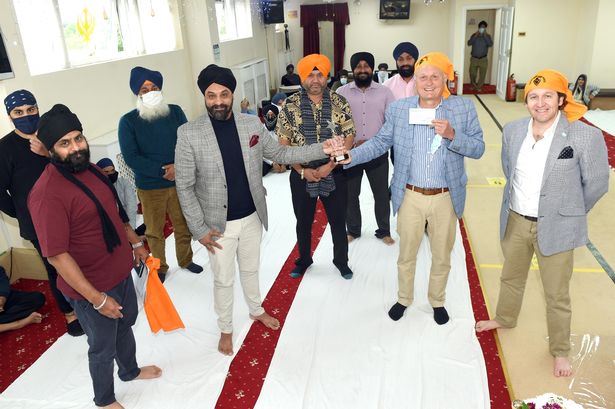
Ian Stark and Alisdair Beveridge presenting Fatehjeet Singh and the Sikh community a Teesside Hero Award (Image: Doug Moody Photography)
By Asia Samachar Team | BRITAIN |

When lockdown began and our emergency services were working tirelessly, Middlesbrough’s Sikh community came to the rescue.

Seeing front line staff under such strain, they began making hundreds of free meals every week to ensure staff were getting a hot meal during their gruelling shifts.

Fatehjeet Singh is the present of Sri Guru Harkrishan Sahib Ji (Middlesbrough Gurdwara), the Sikh temple on Lorne Street.

“It’s a part of the pillar of the Sikh religion that we make a vegetarian dish at the Sikh temple and all sit together as a congregation to share the meal together.

“When Covid-19 hit and the country went into lockdown, the temple was closed, the same as all places of worship.

“But at this time, we felt there was a need to provide food for key workers in the emergency services, such as the nurses who were going through so much, so that they had access to nutritious food and water when everything had been closed due to lockdown,” said Fatehjeet.

Middlesbrough’s Sikh community prepared, cooked and delivered between 800 and 1,200 meals each Thursday for ambulance crews, police, hospital staff and the fire brigade.

The volunteers would come together each week to prepare the hot vegetarian meals, to ensure emergency service staff got a substantial meal during their busy shifts, and they were greatly appreciated.

“The sort of feedback we were getting from the frontline workers who received the meals was that it boosted their morale and saved them having to make a trip to shops that were open for food.

“Some of the staff had gone for six or seven hours of a shift without food and they said we gave them the energy boost they needed to carry on with their important work.

“They thought it was unbelievable and were so grateful, which was all the reward we needed for our efforts,” added Fatehjeet.

Between April and July, the meals were delivered each week to The James Cook University Hospital, The University Hospital of North Tees, Cleveland Police, Cleveland Fire Brigade and to the local ambulance crews, as well as taking leftover meals to nursing home staff.

The food was generously paid for by members of the Sikh community, who have vowed to donate again should another lockdown happen in our area.

Read the full story, ‘How lockdown meal ban led to thousands of emergency workers getting a hot meal from Sikh community; (Teeside Live), here.

RELATED STORY:

Short film ‘Langgar’ on beautiful gesture from first Sikh Guru (Asia Samachar, 24 Feb 2020)

ASIA SAMACHAR is an online newspaper for Sikhs / Punjabis in Southeast Asia and beyond. Facebook | WhatsApp +6017-335-1399 | Email: editor@asiasamachar.com | Twitter | Instagram | Obituary announcements, click here |

Goodbye Justice Ruth Bader Ginsburg

0
Ruth Bader Ginsburg – Photo: The Collection of the Supreme Court of the United States
By Parveen Kaur Harnam | OPINION |

Today we all learnt that Justice Ruth Bader Ginsburg has passed. A lot of us will be iterating words of mourning. It is a sombre development, for the legal fraternity and for the world at large.

Justice Ruth Bader Ginsburg was a “titan in law” is how the US President’s statement is worded. She was that and much more. Ginsburg was a legal luminary, writing iconic decisions such as the United States v Virginia case, where she wrote for the majority striking down on the Virginia Military Institute’s traditional male-only admissions policy, which could be argued as her strongest decision, where the learned judge effectively argued for women’s equal access to education. Or maybe it was the 1999 Olmstead v L.C decision, where she spoke for Americans with mental disabilities, where she deliberated that states under the Americans for Disabilities Act “are required to place persons with mental disabilities in community settings rather than in institutions when the State’s treatment professionals have determined that community placement is appropriate,…”

These are only two of the decisions in her oeuvre of decisions which changed the legal landscape in the US, and indirectly (and directly) shaped the scene for the 27 years that she served on the nation’s highest court. One might think that her legacy only started during her tenure as Justice Ruth Bader Ginsburg, but in fact it started well before that.

Before she was Justice Ruth Bader Ginsburg, she was Joan Ruth Bader, who fought against gender discrimination and united the liberal block of court. One could argue that at the age of 87 she had done all that could, contributed to her best. However, the late Justice had intentions of sitting on the bench at least until 90. Not too far off we could say, not too far off at all. In her years on the bench, she has become more than icon, she is the very picture of feminism. The trademark dark hair with dark glasses, and wispy voice which has among other things, even criticized the Roe v Wade decision and Trump (for which she had to apologize, but with such grace and mighty there was no doubting that Justice RBG will be in the history books for eons to come).

In private, the late Justice was all the more fascinating and admirable. Another legal luminary, but who faced far more condemnation and criticism on account of his textualist approach to the US Constitution as well as the fact that he was at the root of it – a conservative judge, the late Justice Antonin Scalia was her closest friend (and to a degree closest ally). This was a one-of-a-kind dynamic, a conservative judge and a liberal judge who come from such different schools of thought, with such different approaches in giving out decisions were friends and allies? Yes, they were. They’re dynamic was so well-known that there’s even a comedic opera about them: ‘Scalia v Ginsburg’ which premiered back in 2015, a year before we lost Justice Scalia.

In this day and age, can a dynamic like that exist again? The string between liberals and conservatives has widened to such extent that the string is no longer a string, it has become so frayed that we now wonder how could the late Justice Scalia and the late Justice Ruth Bader Ginsburg ever see ‘eye to eye’? Well, they could because both of them had something different to bring to the table. Admittedly, Justice Scalia had a bit of a dark shadow looming over his legacy (him being anti-abortion being one of them), there was also decisions that he delivered such as Crawford v Washington where he wrote for the majority that testimonial witnesses who are not available to speak in court, cannot be used as evidence in court unless the defendant’s lawyer had an opportunity prior to the trial to cross examine that person. An iconic decision, wouldn’t you say?

Now, both legal minds have gone to ashes, and with no one to speak of that replaces them. So much of the conversation has already turned political: ‘now that Justice Ginsburg is gone, let’s hope that this is not the very ammunition that Trump needed to cement his legacy’. That seems to be the line of conversation, we’ve not even had the time to mourn the loss that is losing two legal minds in such a short span.

We haven’t even had the time to appreciate the decisions that the late Justice Ruth Bader Ginsburg delivered, to appreciate the woman who returned to the bench merely two months after surgery for lung cancer. Let’s do that first because from dust we all come and to dust we shall all return. While we’re at it, maybe we can ruminate the possibility of being friends with those who have a completely different political belief? Maybe that’s a big ask.

Parveen Kaur Harnam is a Kuala Lumpur-based lawyer. 

* This is the opinion of the writer, organisation or publication and does not necessarily represent the views of Asia Samachar.


RELATED STORY:

Justice Ginsburg on all-women Panj Pyare (Asia Samachar, 19 Sept 2020)

The CAA and Uyghur Muslims: A fraught state of affairs (Asia Samachar, 3 Jan 2020)

ASIA SAMACHAR is an online newspaper for Sikhs / Punjabis in Southeast Asia and beyond. Facebook | WhatsApp +6017-335-1399 | Email: editor@asiasamachar.com | Twitter | Instagram | Obituary announcements, click here |

SNSM elects Harjinder Singh as new jathedar

0
By Asia Samachar Team | MALAYSIA |

Penang-based Harjinder Singh has been elected unopposed as jathedar of Sikh Naujawan Sabha Malaysia (SNSM) at its annual general meeting today (19 Sept).

The out-going team’s nominee and deputy jathedar Paramjeet Singh had pulled out to avoid voting.

Harjinder, a former SNSM Penang chief and a cancer survivor, has pledged to enhance SNSM’s communications with gurdwaras nationwide and other Sikh organisations.

“We also need to beef up our communications with our branches,” he told the house after his election at Kuala Lumpur. As per the SNSM constitution, he will serve for a two-year term, and can run for another two-year term.


RELATED STORY:

Sikh Naujawan Sabha Malaysia: Moving forward in trying times (Asia Samachar, 18 Sept 2020)

ASIA SAMACHAR is an online newspaper for Sikhs / Punjabis in Southeast Asia and beyond. Facebook | WhatsApp +6017-335-1399 | Email: editor@asiasamachar.com | Twitter | Instagram | Obituary announcements, click here |

Justice Ginsburg on all-women Panj Pyare

1
Justice Ginsburg
By Hb Singh | OPINION |

The firebrand Justice Ruth Bader Ginsburg is no more. The second women to serve on the United States Supreme Court died today (19 September), leaving a huge legacy, especially on women and their position in the world.

Before I move further, let me clarify. The feminist icon and a revolutionary judge did not make any pronouncement on the Panj Pyare as the headline would suggest. That is my inference from her stated positions.

Some time ago, listening to one of her talks made me reflect on some of the question that Sikhs ask. Why were there no women in the Panj Pyare? Why no woman came forward when Guru Gobind Singh asked for sacrifices in the momentous 1699 event? Why no women in the Guruship – all 10 were men? You can add to the list.

The struggles that Ginsburg had to endure — because she was a woman — is instructive. They give us a clue as to what real life has to offer. Perhaps we can transplant it back to the Guru’s time to answer some of the questions above.

Born in 1933 in Brooklyn, New York, Ginsburg was elevated to the Supreme Court in 1993. At 60, she became the second women to be appointed as a Supreme Court justice. Twelve years earlier, in 1981, President Ronald Reagan nominated Sandra Day O’Connor who became the first woman Supreme Court justice in US history.

Until then, the Supreme Court had been an all-male affair! This is the US we are talking about, not some supposed backward nation. Close to two centuries since the Supreme Court was established in 1789, it had been all all male affair at the top bench. Before her death, three out of nine justices were women. They serve for life.

In her talk, Ginsburg remarked: “The question put to me was: when do you think there will be enough women on the Supreme Court? And I said: ‘When there are nine.’ People are shocked. Nobody thought anything was out of order when nine men, as there were, until Justice O Connor was appointed.”

Does this help to answer our questions above? The Khalsa was crystallised just 77 years before US declared its independence. The ways of the world were very different back then. The position of women, in real life, were pretty hard and tough. Yes, there were pockets of openings, but there were few and far between. We can quote examples of earlier Guru Sahibs appointing women to some key positions. Again, I suspect it was more an exception rather than the norm. Well, it was simply the reality of the way of life then.

So, having an all-male Panj Pyare or leaders were the norm. It is not what the Guru Granth tells us, but it was the prevailing way of life.

In the same talk, Ginsburg shared a story of her granddaughter, then eight years old, who wanted to be part of an interview. The interviewer asked: ‘Tell me, Clara. What would you like to be when you grow up.’ Her reply: ‘I want to be the president of the United States of the World.’

“A woman running for president would not have been taken seriously 50 years, even 25 years ago,” Ginsburg observed.

Change is a process and it is inevitable. She noted that changes take time and the parties wanting to push them forward must also be patient. When asked whether changes in the police were happening fast enough, she said: “We would like to have them happen overnight but it won’t. It will be slow…. We start by recognising that there is a problem. We then come up with solutions.”

The Sikh community, by and large, have started looking at the position of women in society. (We have, right?) Today, you see women in the Panj Pyare, whether leading parades or preparing the Khanda-da-Pahul (usually refered to as Amrit). It’s still not the norm, but it’s happening.

In some areas, the community is facing awkward stonewalling. One glaring example is women still not being allowed to perform kirtan in the Darbar Sahib in Amritsar. The reasons given are ludicrous.

You need to push for change to happen. It has to be planned, and, in some areas, forced. Ginsburg didn’t reach the pinnacle of her career without pushing and fighting her way forward.

When studying law at Harvard Law School, she was one of only nine women in a class of more than 500. Her dean had the cheek to ask why she was taking up a place that “should go to a man.” She stayed the course and became the first female member of the Harvard Law Review. When practicing law, she emerged as a beacon for gender equality in the courtrooms. In 1972, she broke the glass ceiling again when she co-founded the American Civil Liberties Union women’s rights project. Later, she became the first female tenured professor at Columbia Law School.

All these didn’t come on a silver platter. Ginsburg had to fight hard every step of the way. The same with our women. They, too, will have to pull no punches. One fine day, you will not turn your head when you see a slate of an all-women Panj Pyare.

Hb Singh is a Kuala Lumpur-based journalist with some experience in dealing with Sikh organisations, both from within and outside. 

* This is the opinion of the writer, organisation or publication and does not necessarily represent the views of Asia Samachar.

ASIA SAMACHAR is an online newspaper for Sikhs / Punjabis in Southeast Asia and beyond. Facebook | WhatsApp +6017-335-1399 | Email: editor@asiasamachar.com | Twitter | Instagram | Obituary announcements, click here |
Former top guns like Sumedh Singh Saini will continue to roam free unless…

0
By Asia Samachar Team | PUNJAB, INDIA |

Punjab former top officials like Sumedh Singh Saini, allegedly involved in cases like murder, will roam freely and have little fear of the long arm of the law as they are protected by the powers that be, claims a former Punjab lawmaker.

“I don’t think the Indian government is prepared just yet to give Sikhs justice….They are protecting terrorists like Saini, believing that is their duty,” former MP Atinder Pal Singh tells Anakh Punjab TV in an interview.

He was commenting on Saini, the former Punjab Director General of Police (DGP), who the Supreme Court on 15 Sept granted an interim protection from arrest in relation to the Balwant Singh Multani murder case.

The three judge bench of Justices Ashok Bhushan, R Subhash Reddy and MR Shah also issued notice returnable by three weeks in the anticipatory bail plea filed by Saini, who is an accused in the 1991 murder case, reports Bar and Bench.

But before the interim breather from India’s top court, Saini had gone underground, evading the Punjab police who were supposed to arrest him on the orders of a Punjab court.

On 7 Sept, the Punjab and Haryana High Court’s had dismissed his anticipatory bail plea in the Multani kidnapping and murder case.

Multani, a junior engineer with Chandigarh Industrial and Tourism Corporation, was allegedly picked up by the police in December 1991 after a terror attack on Saini that left three policemen killed. Saini was injured in the attack.

Discussing the on-going saga, Atinder Pal said the previous Punjab governments were responsible for unleashing state terrorism on the people of the state, especially the Sikhs.

He claimed that former top Punjab police officers like KS Gill and others were believed to be responsible for the death of many Sikh youth. “Some of these officers have built fortunes, others are now living abroad under new identities,” he said.

On the Multani case, he doubted it would go far as the family and lawyer are all but alone in the battle.

“Until the people don’t come together to demand justice, Saini would never receive due punishment,” he said.

Atinder has also discussed the Saini issue in a blog entry entitled ਖਾਕੀ ਵੱਡੀ ਜਾਂ ਸਵਿਧਾਨ ਕਨੂੰਨ ਵੱਡਾ ਜਾਂ ਪੁਲਿਸ – ਜਬਾਬ ਦੇਣ ਸਿਆਸਤਦਾਨ (12 Sept 2020). Click here.

He asked why none of Saini’s family member were picked up to find out his whereabouts, something that happened routinely to Sikh families of alleged terrorists.


RELATED STORY:

Sumedh Saini spared ‘Go Direct to Jail’ card (Asia Samachar, 15 Sept 2020)

ASIA SAMACHAR is an online newspaper for Sikhs / Punjabis in Southeast Asia and beyond. Facebook | WhatsApp +6017-335-1399 | Email: editor@asiasamachar.com | Twitter | Instagram | Obituary announcements, click here |

Sikh Naujawan Sabha Malaysia: Moving forward in trying times

0
Fun and brotherhood: A scene at SNSM Annual Samelan 2019 – Photo: SNSM Facebook
By SNSM Secretariat | UPDATE |

We thank every member and well-wisher of Sikh Naujawan Sabha Malaysia for being part of the journey of this organisation that is dear and near to us all. This is a short note as we head for the AGM on Saturday (Sept 19, 2020).

As in the past years, your Sabha has pushed forward the agenda of Sikhi Parchar (religious enrichment) and Youth Development. Most of our activities feed into these twin purposes.

Over the year, we nurtured a few thousands eager Sikh minds at our various camps (including the Gurmat camps popularly called Samelans) and hosted more than two dozen camps/events at the Khalsa Land (collectively serving more than 2,000 participants). Our teams have travelled the length and breadth of the country to share our Guru’s message. We have strived to fulfil the various needs of the Sikh youth and the Sikh community, in general.

The Covid-19 prevention measures had somewhat scuttled some of our events, but we kept going and intend to come back stronger.

Allow us to capture the salient points of what has been happening in the past year. 

Please go to our website for the 2019 annual report. Click link here.

1. ANNUAL SAMELAN


Annual Gurmat Parchaar Samelan 2019: Over 750 participant and camp volunteers took part in this  one-week signature Sikh camp. This samelan has played a critical role in fortifying the Sikh spirit in our Naujawans. It deploys a camps-within-the mother camp concept. 

The opening day splendour at Khalsa Land was made all the more memorable with the presence of the Sri Dasmesh Band, fresh from their big win at the World Pipe Band Championship in Scotland in August 2019.

2. PRE-SAMELAN TOURS

Our teams reached out to 19 gurdwaras in Perak, Penang and Kedah to attract new participants to the Samelan.  They also held such sessions in the Klang Valley as well as in Jakarta!

Among the locations visited were Tapah, Malim Nawar, Sikh Settlement, Air Papan, Changkat Tin, Tronoh Mines, Changkat PEC, Batu Gajah, Guru Nanak Institution PEC, Buntong, Ipoh Railway, Wadda Gurdwara Ipoh, Jelapang, Bidor, Police Gurdwara, Sungai Petani, Penang (WGSP), Butterworth and Bayan Baru.

3. OTHER CAMPS / EVENTS


Some key camps during the last year were:

  1. Fellowship Camp, Cameron Highlands (Jan 2020)
  2. enKAURage Retreat at Khalsa Land. Khalsa Land.
  3. Punjabi Bhasha Mela
  4. Hola Mahalla Games
  5. Taiping Mini Samelan (June 2019) (SNSM Perak)
  6. Penang Mini Samelan 2020 (SNSM Penang)
  7. 550th Year Parkash Purab Sri Sri Guru Nanak Dev Ji programme
4. PUNJABI LANGUAGE


The 27th Punjabi Bhasha Mela (PBM) 2019 was held at APU, Bukit Jalil, in June 2019. This is an important event to propagate the usage of Punjabi mother tongue. The event also keeps the Sabha in touch with the Punjabi educators and students nationwide.

Some 250 students from the various Punjabi Education Centres (PECs) nationwide took part in the two-day event. Participating Teams: Johor Bahru, Ipoh, Selayang, Klang, Petaling Jaya, Mantin, Tanjung Rambutan, Gurpuri, Kampung Pandan, Rawang, Penang and Shah Alam.

Holla Mahalla 2019 winners from Petaling Jaya – Photo: SNSM Facebook
5. HOLLA MAHALLA GAMES

Some 1000 people from 19 Gurdwaras took part in the 20th Holla Mahalla Games held in July 2019. This is another annual event that attracts active participation of eager young Sikhs. The winners: 1st – GS Petaling Jaya, 2nd – GS Pulapol, 3rd – GS High Street. And everyone else who took part!

6. NEW BRIGHT RAGE

enKaurage

We are delighted to delighted to share the new space created by our young Sikh ladies. enKaurage! This is a new movement for young Sikh ladies. Some 60 Sikh ladies took part in the three-day EnKAURage Retreat 2.0 at Khalsa Land in July 2019. They are also in touch via social media (check out their Instagram page!). And they have also organised a number of Zoom-powered sessions.

enkaurage 2019 camp at Khalsa Land – Photo: enKaurage Facebook
7. COVID-19 RESPONSE


The Sabha organised the “Daily Prayer for Humanity” from April 1-14 April in collaboration with the SikhInside to encourage families to recite the Mool Mantar & Chaupee Sahib at 7.50pm daily.

We also launched the Covid-19 Humanitarian Aid Relief By Malaysian Sikh (CHARMS) in collaboration with Malaysian Gurdwaras, an initiative to coordinate all relief efforts due the Covid-19 pandemic throughout the country.  The initiative had provided 100,000 meals and 20,000 dry rations for needy individuals and families. SNSM had also provided 800 full bedding supplies/essentials and prepared Langgar for the homeless under this joint relief program with DBKL.

8. SNSM GLOBAL SIKHS – Punjab Flood Disaster Relief

SNSM collaborated with Khalsa Aid to be on-site at Ground Zero, Punjab for flood relief efforts where 600 residents from 15 villagers were given assistance and aid.

9. KHALSA LAND


The Sabha team looking after this beautiful piece of land in Kuala Kubu Bharu has been working hard to develop the camp site. It is now able to hold large and small programmes. There are already plans being worked on in the Phase 1 of the Development Plan (Multi Purpose Hall and staff quarters).

On the ground itself, most of the planted trees are growing well and some have started to flower and fruit (jackfruit; mango; rambutans; bananas; durians; guava; starfruits; papayas). Come and check them out!

MOVING FORWARD


We take this opportunity to thank each and every one of you for the support and cooperation given. We seek your forgiveness if we had erred when carrying out our duties.

As we strive to continue doing the Guru’s sewa sincerely without any prejudice, we look forward to the coming years, filled with all sorts of challenges. 

As continuity and also being the succession plan of SNSM, the Meet Jathedar Vir Paramjeet Singh will be proposed as the next Jathedar of SNSM. Let us give him our support as we take the Sabha forward.

We also invite with open arms anyone who would like to join us in this sewa and together let’s keep the Sikhi fire burning bright.

Parchar is the Mission. Youth is the Focus. Sanggat always our Pillar.

“SPIRIT BORN PEOPLE”


RELATED STORY:

A more vibrant Samelan (Asia Samachar, 24 Dec 2019)

Coronavirus derails Sikh games in Malaysia (Asia Samachar, 5 March 2020)


ASIA SAMACHAR is an online newspaper for Sikhs / Punjabis in Southeast Asia and beyond. Facebook | WhatsApp +6017-335-1399 | Email: editor@asiasamachar.com | Twitter | Instagram | Obituary announcements, click here |
Pakistan bogeyman creating paranoia towards Sikh-Canadians?

0
By Harinder Singh | OPINION |

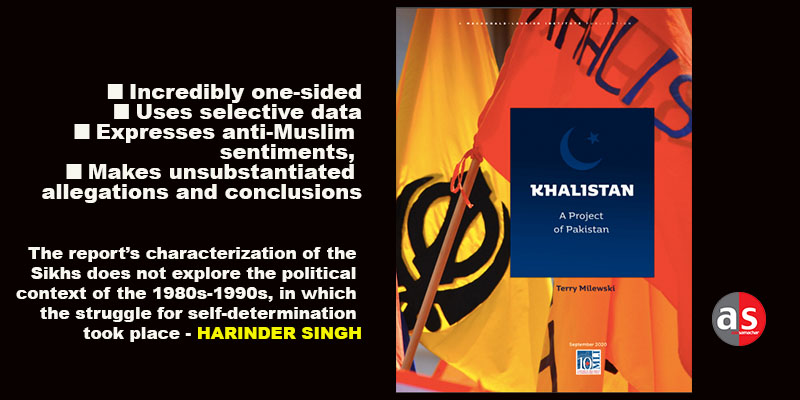
The Macdonald-Laurier Institute’s report titled “Khalistan: A project of Pakistan” is incredibly one-sided, uses selective data, expresses anti-Muslim sentiments, and makes unsubstantiated allegations and conclusions. This report is particularly concerning, as it casts wide claims on highly visible Sikh-Canadians, insinuating they are extremists or foreign agents.

This report has far-reaching implications for Sikhs globally.

To understand the Sikh worldview, it is essential to understand Sikh heritage. To form opinions on historical and contemporary tensions, it is essential to consider independent sources and documented evidence.

The Sikh faith was founded in Panjab, now split between India and Pakistan. It flourished in Panjab with the 1Ness paradigm that propelled love and justice doctrines. The founders of the faith developed institutions and new cities across Panjab. The Sikhs became rulers in Panjab in the early 18th century; they confronted the Mughals, Afghans, Maratha, and British in their homeland. There are 30 million Sikhs worldwide, and more than 80% live in India.

The 1849 Panjab annexation by the British, the 1947 Partition of Panjab into East and West, and the 1984 Sikh Genocide in India are all traumas in the Sikh psyche. However, the report focuses on the partition alone, attempting to construct a narrative that Muslims killed Sikhs, when in fact, communal violence occurred between all communities.

Just as there is no wedge between Hindus and Sikhs, there is no wedge between Muslims and Sikhs. But there are ideological differences with the political theories of the Hindu nation and the Muslim nation.

Sikh-Canadians have always understood the value of the Canadian Charter of Rights and Freedoms, especially given that their kin were persecuted in India from 1984-94. The tense and complex histories and relationships demand nuanced understandings, acknowledgments and reconciliations.

The report’s characterization of the Sikhs does not explore the political context of the 1980s-1990s, in which the struggle for self-determination took place.

Many Sikhs in the diaspora, including Canada, left India because of gross human rights violations well-documented by Amnesty International, Human Rights Watch, and Ensaaf. Recent court judgments in India have used the terms “crimes against humanity” and “genocide” when referring to what happened to the Sikhs in India. State violence was the norm, not the law.

“The Butcher of Panjab” KPS Gill, a former director-general of police (DGP) who mentored SS Saini (also a former DGP of Panjab), is on the run evading arrest this week for fake encounters, forced disappearances, and extrajudicial killings. State violence against Sikhs is noticeably absent from the report.

Instead, the report frames legitimate political grievances, the commemoration of mass atrocities, and advocacy for human rights and justice as sinister.

Khalistan cannot be reduced to a violent fringe movement. In the 1989 Panjab elections, nine out of 13 elected Members of Parliament advocated self-determination. The current chief minister of the Indian Panjab resigned from the ruling party in 1984 and signed the Amritsar Declaration for Sikh sovereignty in 1994, along with almost all Sikh leaders. Both Canadian and Indian laws allow for self-determination.

Almost 2% of the Canadian population is now Sikh. Many serve as politicians, but not as policymakers yet. Canadians must safeguard their interests against all foreign interference by both adversary nuclear states, India and Pakistan. Canadians also ought to advance Sikh rights and protections not just in Canada, but also in India and Pakistan given the historical ties Sikhs have to Panjab.

Sikh children are growing up in Canada with assaults on their identity — many of their parents fled India due to persecution. Now they are targeted and maligned for their trauma-filled histories. Across party lines, Sikh-Canadians are raising their voices for justice. Just a few days ago, they honoured the human rights advocate Jaswant Singh Khalra. He was killed by the Panjab police for documenting evidence against the state and its apparatus — he gave his last public speech in Ontario.

This report paints Sikh-Canadians as a suspicious community, frames their advocacy work and their politics as extremist, and presumes that Sikhs are easily swayed by foreign influence with no agency of their own. It is irresponsible and lacks a fundamental understanding of the painful history Sikhs hold in their collective psyche.

It encourages paranoia toward all Sikhs and foments mistrust from their fellow Canadians, putting Sikh-Canadians in danger in the ‘maple-leaf’ country they call home.

— Harinder Singh serves as the Senior Fellow, Research & Policy, at the Sikh Research Institute (SikhRi). A frequent traveller to Canada, India and Pakistan, he works with governmental and non-governmental organizations. His work through the Sikh Research Institute develops Sikh perspectives on important topics that generate awareness and transformation. The article first appeared at the Toronto Sun (17 Sept 2020).


RELATED STORY:

Sikh scholars denounce Khalistan report by Canada think-thank (Asia Samachar, 17 Sept 2020)

ASIA SAMACHAR is an online newspaper for Sikhs / Punjabis in Southeast Asia and beyond. Facebook | WhatsApp +6017-335-1399 | Email: editor@asiasamachar.com | Twitter | Instagram | Obituary announcements, click here |

Speaking the truth to our youth on Dasam Granth

14
By Karminder Singh Dhillon | OPINION |

In my writings, one will not find any article or video addressed specifically to Sikh youth. I have two reasons for that.

The first is that the Y and Z generation youth of today demand a level of truth, directness and honesty that someone of my X generation cannot handle, let alone propagate.

Second, the very reason Sikhs of my generation are so lost, confused and muddled is because we were denied the truths of Sikhi when we ourselves were in our youth. Those who held the responsibility of passing on the truths and realities of Sikhi presented us with shades of truths mixed with untruths. They glossed over the difficult issues and swept the contentious ones under the carpet. All in the interest of keeping the pretentious peace and maintaining the status quo.

Our parent’s generation pussy-footed around the truths of Sikhi in the belief that we, the youth of that era – were incapable of handling the truth. The outcome was that, for my generation at least, the truths were distorted and twisted until everyone of us ended up with our own warped versions. The sort of truths that the ostrich holds – with its head buried in the sand.

It is thus admirable of Dya Singh, through his Opinion piece titled Attempt to Clarify the Dasam Granth Issue (Asia Samachar, 15 September 2020) – to want to present this issue to our younger generation.

This response of mine is to remind ourselves that when it comes to our next generation, the hard and difficult truths must be laid out with open-ness and honesty – no matter how contentious the issue. Glossing over uncomfortable truths, pussy-footing, sugar coating touchy issues, advocating the status quo and avoidance has never worked, and will therefore not work.

There is a need to trust our youth to be able to handle the difficult truths. It is only when they have the bare truths that they will be able to make the right decisions for themselves, their loved ones and the panth – something Sikhs of my generation are incapable of doing because we were denied answers to our questions, let alone be given truths. In short we were denied the tools to deal with our problems as a community.

Dya Singh’s opening statement will illustrate my point.  He says “the DG issue is bewildering to those who just wish to practice simple Sikhi like Naam Japna, Vand Shekena and Kirt Karni, especially the younger generation of Sikhs.”

Naam Japna, Vand Shakena and Kirt Karni is “simple Sikhi” only when understood in the fog of half-baked truths that we have been fed by the self-appointed custodians of Sikhi.  We were told that Naam Japna is to sit in a corner and chant a word, verse or a mantar.  We were told that Vand Shakena is what happens in the langgar in our Gurdwaras. So contributing to that process was all we needed.  Nam Japna and Vand Shakna thus become “simple Sikhi.” The concept of Dharam Di Kirt Karni was shortened to just Kirt Karni and translated as “honest labor” because the world Dharam complicated matters and took Kirt to a level that was too demanding for us.

Have we told our children and teenagers what is truly meant by Nam Japna? Have we told them the Gurbani truths pertaining to Nam Japna, Vand Shakena and Dharam Di Kirt Karni? Have we read the verses pertaining to these concepts from the Sri Guru Granth Sahib (SGGS) ourselves? Have we studied the meanings of these verses – without relying on the half-baked translation done by that 3HO chap whose agenda is to give Gurbani a yogic and vedantic slant? Have we mustered the courage to say truthfully to our child “Son, this is what Nam Japna, Vand Shakena and Dharam Di Kirt Karni really is, according to Gurbani?”

When viewed from the perspective of truths that are contained within the SGGS, Nam Japna, Vand Shakena and Dharam di Kirt Karni are the most difficult milestones on the path of spirituality.  Naam is not name. Naam is Divine Virtues. Japna is not chanting. The Punjabi word for chanting is RatunaJapna is Realization. So Naam Japna is the process of Realizing Divine Virtues. It is a process of BECOMING Divine Virtues, of BECOMING Divine. Virtues must be understood, accepted, believed, practiced, and habitualized before Realizing them and BECOMING them.

The Gurbani verse is on page 304 of the SGGS. It’s about BANNEAY, meaning BECOMING.

ਸਤਿਗੁਰ ਕੀ ਬਾਣੀ ਸਤਿ ਸਰੂਪੁ ਹੈ ਗੁਰਬਾਣੀ ਬਣੀਐ ॥

Satgur Ki Bani Sat Sroop Hai Gurbani BANNEAY.

Isn’t the truth contained in this verse the Sikhi as practiced by a miniscule number of Sikhs? Perhaps one percent? When are we going to tell our next generation these difficult Gurbani truths?

Simple Sikhi is the Sikhi of talking about Sikhi “principles” without having read the SGGS for ourselves, without having understood the messages of Gurbani, and without having to base anything on the verses of the SGGS. Simple Sikhi is based on everyone having their own half-baked truths. Simple Sikhi is based on hearsay of this or that person, clergy or baba. Simple Sikhi is about “liking a shabd” because of its melodious tune and sweet voice of the singer.

Simple Sikhi is the forming of the strongest of opinions on the DG without having studied at it at all. Isn’t this the Sikhi of a vast majority of us? Our youth included? 

THE TRUTH MUST BE TOLD.

The truth must be told all costs.  It must be told especially to those Sikhs we call youth because they are going to take over the steering wheel of Sikhi. It must be told because our generations were denied it. It must be told because we do not want to reinforce the failures of our generation and the ones before us.

Dya Singh writes: “Sikhi issues appear to rear their ugly heads from time to time needled by those who have their own agendas.”

The very reason why these “agendas” have worked and will keep working is because we are unaware of the truths of Sikhi, the SGGS and DG. No agenda can work on people who are enlightened with the truths of the issue.

SEE ALSO: The God of Dasam Granth – Part One 

SEE ALSO: Blasphemy it is!

SEE ALSO: Taking Sikhi Back to 1468

He further writes: “Added to all that, is the inept current Akal Takht administration from Darbar Sahib strangled by the political power brokers in Punjab and broadly India.”

When will we tell the truth to our youth? The truth that the Akal Takhat, Darbar Sahib, the Shiromani Gurdwara Parbandhak Committee (SGPC) and the Takhats ARE the CAUSE and the ROOT of the rut and rot that Sikhi is in today. The truth that the AT, SGPC,  Delhi Sikh Gurdwara Managing Committee (DSGMC), Sikh Institutions, and our Intelligentsia are under the control of, and are actively working hand-in-glove with the anti-Sikh forces on the agenda of destructing Sikhi.  The truth that some 300 PhD’s are currently being funded and pursued on DG in Sikh Universities under the auspices of the SGPC – with none being pursued on the SGGS, Bhai Gurdas, Bhai Nand Lal, and other authentic Sikhi issues.

When will we tell the truth that our AT stands as the only institution of a religion helmed by people schooled in other religions. Remember Jathedar Vedanti of AT? Vedanti is a scholar of the Vedas – a philosophy soundly rejected by the SGGS. The current Jathedar of AT claims to be a scholar of the Islamic scriptures. Can anyone imagine the Pope of the Catholic Church, the Dalai Lama or the Grand Mufti at Mecca being a scholar of the Vedas? Why must such cruel jokes be played only on us Sikhs? And why must we accept such nonsense? Our youth deserve to know these truths.

THE TRUTHS OF DG THAT MUST BE TOLD

Dya Singh writes of the sexually explicit and morally decadent erotic tales of the Chitropakhyan chapter of the DG: “It is not necessarily written by Guru Gobind Singh Ji but recounted perhaps by other poets in his court, just like we have bani of bhagats besides our Guru Sahibs incorporated in the SGGS.”

To what level must one descend, to compare the vile, decadent and depraved sexually explicit charitars that fill up some 600 pages of the DG with the divinely inspiring, spiritually elevating, and Creator connecting Gurbani of the Bhagats?

The lie that were told to my generation was that there was NO such stuff in the DG, and those who said such tales existed in DG were “Guru Nindaks” or “enemies of Guru Gobind Singh.”  And the AT ex-communicated many brave and honest Sikhs for alerting the Sikh panth to the truths of DG’s depraved content – destroying their lives, careers and families in the process.

And now that our internet and social media savvy youth have discovered the truth of the existence of the sexually explicit content of DG, we will resort to the blatant lie that the depraved stuff of DG is “just like the bani of bhagats.”? Are we telling our youth that it is fine to drag down our bhagats of the SGGS into the gutter that these charitars want to take us into?

Dya Singh writes: “The common grouse against this work (Charitars) is that it espouses the wiles of womenhood.” The truth is much worse. What is espoused in these tales of sexual depravity is adultery, prostitution, incest, homosexuality, bestiality and decadence of every kind imaginable.

The notion that women are the root of all evil is espoused explicitly in the DG. It is stated with a finality and certainty that is shocking. It is expressed, not as a tale, but as a CONCLUSION of the writer.

The relevant verse is as follows. It appears on page 1267 of the DG. Verses with worse conclusions appear on page 828, 829, 1170, 1278 and 1297.

ਅੰਤ ਤ੍ਰਿਯਨ ਕੋ ਕਿਨਹੂ ਨਾ ਪਾਯੋ।ਬਿਧਨਾ ਸਿਰਜ ਬਹੁਰ ਪਛਤਾਯੋ।ਜਿਨ ਇਹ ਕੀਉ ਸਗਲ ਸੰਸਾਰੋ। ਵਹੈ ਪਛਾਨ ਭੇਦ ਤ੍ਰਿਯਾ ਹਾਰੋ।

Unt Triyan Ko Kinhu Na Payeo. Bidhna Sirj Bahur Pachtayeo. Jin Eh Keyo Sagal Sansaro. Vhey Pechan Bheyd Triya Haro.

Meaning: Even the Creator regrets having created woman. The one who created creation, even he failed to understand them.

Then Dya Singh writes: “What is not often mentioned is that the composition also has numerous stories about the wiles of men too.”

The plain truth is that every sexual act – with the exception of bestiality which implicates an animal – involves persons of both genders. The question we need to ask is: What message are we are sending to our youth. Are we suggesting that stories about the viles of woman become acceptable because these same stories talk about the viles of men? What kind of truth is this?

Then Dya Singh lays out what is surely the biggest lie of the DG pertaining to the charitars. He writes: “The main thrust though, of all these stories is, to remain faithful to one’s spouse – to love one’s spouse and not seek sexual gratification outside marriage even in dreams.” And that “It is therefore a fairly ‘secular’ piece of literary work about the weaknesses of men and women and about ideal conduct of married life.” Really?

Here are FOUR truths pertaining to this biggest lie.

  1. In the 404 charitars that depict sexual decadency, there is NOT a SINGLE one that involves sex between a husband and a wife as the primary story. Yes, husbands and wives are mentioned in some of the charitars. But in a way that multiplies the immorality of it all.  There is one charitar for instance where the husband walks into his house while his adulterous wife is engaged in sexual activity with a lover. She hides the lover under the bed, goes to great lengths to cover spilled bodily fluids, and continues the sexual act with her husband.
  2. NONE of the charitars contain the message to “remain faithful to one’s spouse.”
  3. None of the charitars contain even ONE verse of a positive message. In the charitar mentioned as an example above, the depraved message is plain. Adultery can be done, husbands can be fooled even when they walk in onto an adulterous wife, and evidence covered up with trickery.
  4. There is not a word about the “ideal conduct of married life” in any of the 404 charitars.

There is a narrative of a Guru telling his son in his final parting message to “not seek sexual gratification other than his own personal woman (Nij Naree) even in his dreams.” This does sound like decent advice. But there is an ugly truth hidden behind it. This truth comes out by considering a simple fact – the child is NINE years old when this advice is being given.  More truth comes out by asking a simple question:  Which father gives his NINE-year-old son a FINAL PARTING message that pertains to sexual gratification?

The intended agenda of the writer of this tale in the DG is to portray the NINE-year-old child as so sexually depraved that his father has to give the child such a message as his FINAL advice. We need to understand the agenda here.  The writers of DG knew that the lie about the Guru composing the 404 charitars will be objected to. This narrative therefore prepares the ground work to deal with that objection. The Guru is portrayed as sexually consumed right from his childhood  – at age 9. So much so that his father had to give him that dire “advice.” It is thus easy to believe another lie about the Guru – that he kept a copy of the 404 charitars in his belt at all times for easy reference. The lie continues: he did so to indulge in his childhood obsession.

Dya Singh writes: “I urge youth to ignore the contentious issues surrounding DG. It cannot be elevated to Guru status by any stretch of the imagination.”

The truth that must be told to our youth is simple: The reason why the DG is being elevated, and will continue to be elevated to Guru status is BECAUSE the Sikh community has all along adopted the ostrich mentality. Labeling a text (the DG) that provides a primary challenge to the sacrosanctity, authority and inviolability of the SGGS as “contentious issues” and then asking our youth to ignore it is to play into the hands of those who desire for the DG to be given a status on par with the SGGS.

I have urged the three youth that look up to me as their father to study the DG (and some 35 other problematic classical texts such as Sooraj Parkash) for themselves and make their own conclusions. It is ONLY when they do such that they will be able to separate the truth from the lie.

It is when they do their own study that they will realize that Dya Singh has got it wrong when he says “there are instances when Guru Gobind Singh Ji appears to clarify the pristine Khalsa position. For example: Main n Ganesai pritham menauun, Kishan Bishan kabhoo na dhiaoon (Chaubis Avtar) {I do not, foremostly, worship Ganesha, nor meditate on Krishna and Vishnu.”

There is no “Khalsa Pristine position” within these verses.  The origin of the verse is the Shiv Puran. From the Puran it makes it into the DG. The Shiv Puran is authored by writers who are devoted disciples of Shivji. Ganesh and Kishan are reincarnations of Vishnu. The author of the verse – a devotee of Shivji – is saying his allegiance is to Shivji alone – never to Vishu or any of Vishnu’s reincarnations such as Ganesh and Kishen. Our Sikh youth can choose to label this truth as “contentious” and “ignore it.” Or they can call the bluff and say it has nothing to do with Guru Gobind Singh.

It is when they do their own study that our youth will realize that all the hogwash about X number of “birs” of DG being found in Y number of places is a smokescreen to provide legitimacy to a text that has no legitimacy. It’s like saying fake jewelry is real because it can be found in X number of jewelry outlets.

This is what Nirmla historian Gyani Gyan Singh says about the Moti Baag Gurdwara bir of DG.

ਸੁਖਾ ਸਿੰਘ ਗ੍ਰੰਥੀ ਔਰ। ਰਚੀ ਬੀੜ ਪਟਨੇ ਮੈ ਗੌਰ। ਪੁਨਾ ਚੜਤ ਸਿੰਘ ਤਾਕੇ ਪੂਤ ।

Sukha Singh Granthi of Patna Sahib and his son Charat Singh wrote the Bir themselves.

ਔਰ ਗਰੰਥ ਇਕ ਵੈਸਾ ਕੀਉ।ਸੋ ਬਾਬੇ ਹਾਕਮ ਸਿੰਘ ਲੀਉ।

They created a duplicate granth and Baba Hakam Singh purchased it.

ਸ਼ੋ ਗੁਰਦੁਆਰੇ ਮੋਤੀ ਬਾਗ।ਸੋ ਅਬ ਹਮਨੇ ਪਿਖਿਉ ਬਿਲਾਗ।

That is the one at Gurdwara Moti Baag. I have seen it for myself.

ਦਸਖਤ ਦਸਮ ਗੁਰੂ ਕੇ ਕਹਿ ਕੇ। ਕੀਮਤ ਲਈ ਚੌਗਣੀ ਕਹਿ ਕੇ।

They forged the signature of Dasam Guru and sold it for four times the price (to Hakam Singh).

Finally, a word about the “status quo” that Dya Singh is asking for. He writes: (the status quo) is good enough for me. That should be good enough for you youth.”

The truth is that it is the status quo that has brought us to the mess we are in today. The Sikh Panth has an opportunity to solve the issue in 1925 when the SRM was being deliberated. Instead, we were told to compromise and maintain the status quo. Two decades ago, AT issued a hukumnama to preserve the status quo. The order was that no one should speak in favor or against the DG until a decision is made. Those who continued to speak to expose the DG were excommunicated, while those in favor printed one million copies with the words “Sri Guru Dasam Granth” – all paid for by the anti-Sikh groups and had it installed in numerous deras and even some gurdwaras. Two of our takhats have it installed on par with the SGGS. Now we can see the truth of those who helm the AT.

I applaud Dya Singh for writing to the youth and for the youth. It’s a step in the right direction, but only if we will live by our duty to lay out the truth and the whole truth. And then let the youth decide. Anything less is to say our youth are incapable of handling the truth. Anything less is to reinforce the failures of our generation on the next.

Sikh thinker, writer and parcharak Karminder Singh Dhillon, PhD (Boston), is a retired Malaysian civil servant. He is the joint-editor of The Sikh Bulletin. He can be contacted at dhillon99@gmail.com. 


RELATED STORY:

The God of Agendas (Asia Samachar, 26 Aug 2020)

Reignition of Dasam Granth controversy (Asia Samachar, 21 Aug 2020)

Lost in Translation (Asia Samachar, 8 May 2019)


ASIA SAMACHAR is an online newspaper for Sikhs / Punjabis in Southeast Asia and beyond. Facebook | WhatsApp +6017-335-1399 | Email: editor@asiasamachar.com | Twitter | Instagram | Obituary announcements, click here |
Gurdwara tells colourful story of Sikhs’ service in Malayan police force – FMT

0
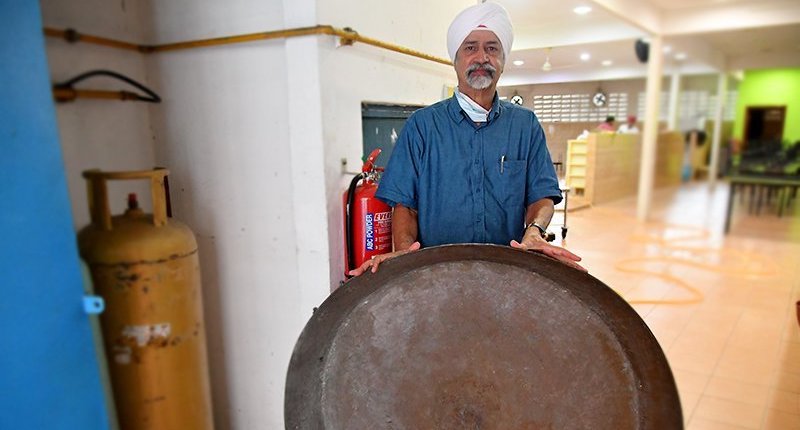
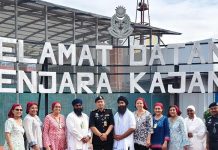
Gurdwara president Hardev Singh holds a large copper tray used by the Sikh police officers 100 years ago to knead dough for chapatis. – Photo: FMT
By Minderjeet Kaur | MALAYSIA |

KUALA LUMPUR: Over 100 years ago, the Sikh community at Petaling Street here set up one of the first gurdwaras (Sikh temple) in the country. It was dedicated to the Sikh officers in the Malayan police force.

According to Hardev Singh, president of the Gurdwara Sahib Polis, Petaling Street, their history goes back to the 1870s when Captain Tristram Speedy, a former police superintendent, began recruiting Sikhs from India to work in the Malayan police force.

Hardev, a retired assistant director of the Special Branch secretariat at Bukit Aman, said the Sikhs were initially brought in to help Ngah Ibrahim, the territorial chief of Larut, Perak, restore law and order in Larut.

He said as the Sikhs managed to reduce the fights between the Ghee Hin (Cantonese) and Hai San (Hakka) triads, more were brought into the country to join the police force.

Hardev, who was also involved in the signing of the 1989 Hat Yai peace agreement marking the end of the Communist insurgency in Malaysia, said Speedy knew the bravery and loyalty of the Sikhs when he was in India.

“After the success in Larut, more Sikhs were brought in to serve the force in the Federated Malay States (FMS). Later, they were also employed in the non-Federated Malay States, including Sabah and Sarawak,” he told FMT.

According to Hardev, there were about 200 Sikh families in the Petaling Street area back then.

The temple also acted as a transit home for police personnel to stay in temporary accommodation between their postings. It had seven or eight rooms.

Read the full story, ‘Gurdwara tells colourful story of Sikhs’ service in Malayan police force’ (Free Malaysia Today, 17 Sept 2020), here.


RELATED STORY:

Pioneering Sikhs in Kuching traffic police (Asia Samachar, 4 May 2020)

ASIA SAMACHAR is an online newspaper for Sikhs / Punjabis in Southeast Asia and beyond. Facebook | WhatsApp +6017-335-1399 | Email: editor@asiasamachar.com | Twitter | Instagram | Obituary announcements, click here |

Sikh scholars denounce Khalistan report by Canada think-thank

0
By Asia Samachar Team | CANADA |

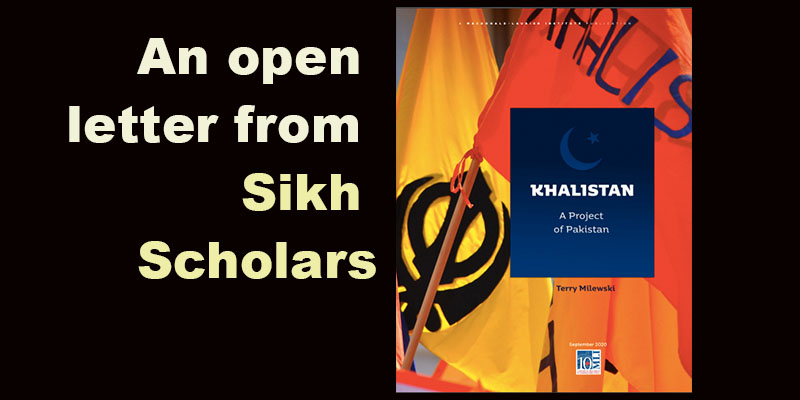
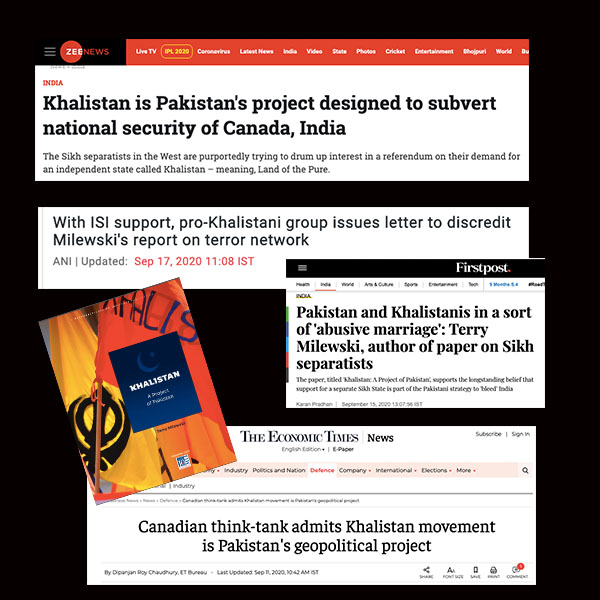
Fifty-four academics have denounced as ‘vitriolic content’ a report entitled “Khalistan: A Project of Pakistan” which they claim ‘maligns all Sikh-Canadians engaging in advocacy as extremist and foreign-influenced actors’.

In an ‘An open letter from Sikh Scholars’, they called on the Canada-based think thank that published the 24-page report to reevaluate its decision.

“The report is shockingly un-Canadian in every aspect, from a lack of respect for free speech to a parroting of a foreign, Indian government narrative on Khalistani activism. Without any critical analysis, the author completely disregards the valid grievances and grassroots advocacy of the Sikh community,” they said in the letter shared on a dedicated website. See here.

The report, authored by veteran journalist Terry Milewski, was published by Macdonald-Laurier Institute (MLI) which badges itself as a ‘rigorously independent and non-partisan’ Ottawa-based ‘truly national’ public policy think tank.

“For Canadians, Pakistan’s actions pose a real and present national security risk. As the Khalistani cause has little traction in Punjab, Pakistan’s support of Khalistani extremists entails leveraging extremists based in Canada, including supporters with ties to terrorism,” MLI said in a press release to announce the publishing of the report.

In the succinct open letter, penned by ‘academics who work closely with the Sikh community’, they said the report contained ‘a litany of conclusory statements and allegations without any substantiation’.

“We are particularly concerned with the manner in which the report casts wide aspersions on a highly visible, racialized community, engaged in legitimate advocacy. The report maligns all Sikh-Canadians engaging in advocacy as extremist and foreign-influenced actors. This is especially concerning as so many of these advocates and activists are rigorous critics of both India and Pakistan’s record regarding minority rights,” they said.

At least 20 of the signatories are from Canada-based universities. See below for the full letter and signatories.

The Khalistan report carried a joint foreword by Ujjal Dosanjh, a former federal Liberal Cabinet Minister and former British Columbia Premier, and MLI fellow for foreign policy Shuvaloy Majumdar. It has been picked up by various media platforms, with many of them running highlighting the report without providing a counter narrative.

An open letter from Sikh Scholars

September 15, 2020

To the board of the Macdonald-Laurier Institute,
​ 

We are writing to you with regard to a report recently published by your Institute under the title, “Khalistan: a project of Pakistan.” We are asking that you reevaluate your decision to publish such vitriolic content under your institute’s name.

For the full report see here. 

As academics who work closely with the Sikh community, we are concerned to read a report that contains a litany of conclusory statements and allegations without any substantiation. We are particularly concerned with the manner in which the report casts wide aspersions on a highly visible, racialized community, engaged in legitimate advocacy. The report maligns all Sikh-Canadians engaging in advocacy as extremist and foreign-influenced actors. This is especially concerning as so many of these advocates and activists are rigorous critics of both India and Pakistan’s record regarding minority rights.

The report also damages the credibility of the Macdonald-Laurier Institute as it lacks adequate academic rigour, historical and contextually-based journalistic analysis, and balance. As academics, writers, and professors, we regularly evaluate work for peer review and have our own work assessed for accuracy as well. The report is sparsely referenced and the few claims that are made seem to not have been fact-checked. The “reference” section is one-sided showing a lack of literature review or effort to triangulate claims. While the writing is presented as objective policy analysis, it actually reads as a scattered collection of opinions and vague allegations; it is a simplistic and single worldview. The report is shockingly un-Canadian in every aspect, from a lack of respect for free speech to a parroting of a foreign, Indian government narrative on Khalistani activism. Without any critical analysis, the author completely disregards the valid grievances and grassroots advocacy of the Sikh community. 

Mr. Milewski misses the opportunity to provide a meaningful policy analysis based on facts that would further the Institute’s aims of making “poor quality public policy in Ottawa unacceptable.” The following are some examples.

  1. The very introduction to the report sets the tone for what is to follow by callously characterizing Sikh advocacy as a “steady and predictable drumbeat of victimization, persecution and genocide commemoration, presented as steps to assist a community in need of healing.” Since when are political grievances of a community, the commemoration of mass atrocities, or the advocacy for human rights and justice, proof of something sinister? That too in a country with unique genocide legislation.
  2. The report’s characterization of the Khalistan movement is also surprisingly simplistic and incomplete. The author’s narrative completely erases the political context in which the Khalistani struggle for self-determination took place in the 1980 and 1990s—a struggle no international group, including Amnesty International, Human Rights Watch, Physicians for Human Rights, cast aside as simply “terrorist.” Instead, like all militant movements and armed conflicts across the world, serious questions under humanitarian law and human rights law were raised.
  3.  The report neither cites nor explains that simply holding a political opinion for “Khalistan” is not illegal even under India’s own laws that allow demanding separation from the country, as long as the demand does not call for arms or incite violence. (See section 124A on “sedition”). That the Indian government fails to follow its own laws is often the crux of Sikh advocacy in Punjab and outside. Also, holding political opinions is squarely protected under Canadian law. Why then the Institute would allow for this incomplete and unsubstantiated report, is puzzling. The erasure of well-documented violence at the hands of the Indian State is telling. The author repeatedly demonstrates a commitment to telling only one side of the story.
We hope that you carefully consider our concerns and reevaluate your decision to publish such vitriolic content under your institute’s name, particularly considering the lack of academic integrity and the gravity of the accusations being leveled against a highly visible, racialized community. This report has already been circulated in Sikh studies circles damaging the credibility and reputation of the Macdonald-Laurier Institute. Your institute lays claim to policy analysis produced with integrity that is evidence-based and without bias. The basic premise of this report, however, undermines your own mission.

If you do truly wish to engage in producing reports on Sikh-Canadians in the unbiased spirit of your institute, we are happy to provide peer-review and reference to triangulate and balance such reports. There is a body of extant writing that shows a diversity of Sikh views and debates about Khalistan which documents the abuses by both Pakistan and India that are ignored. Canada, as a non-aligned state in terms of regional geopolitics, is meaningfully positioned to benefit marginalized groups in both countries. For now, we look forward to your response and the timely retraction of this report.

 Kindest regards,

  1. Dr. Amrita Kaur Sukhi, Lecturer, University of Toronto
  2. Dr. Anne Murphy, Associate Professor, Department of Asian Studies, UBC
  3. Dr. Anneeth Kaur Hundle, Dhan Kaur Sahota Presidential Chair in Sikh Studies at the University of California, Irvine School of Social Sciences
  4. Dr. Arvind-Pal S. Mandair, Associate Professor of Sikh Studies, University of Michigan
  5. Dr. Balbinder Bhogal, The Sardarni Kuljit Kaur Bindra Endowed Chair in Sikh Studies and Professor of Religion, Hofstra University
  6. Dr. Bhavjinder Kaur Dhillon, Faculty of Science, University of British Columbia
  7. Dipin Kaur, Yale University
  8. Gurbeer Singh, PhD Student, University of California, Riverside 
  9. Dr. Gurcharan  Singh, Adjunct Research Professor, Carleton University, Ottawa
  10. Gurinder Singh Mann (UK), Director Sikh Museum Initiative, Oxford University Published
  11. Prof Gurnam Singh, University of Warwick, UK
  12. Dr. Gurnam Singh Sanghera, Visiting Professor, ‘Centre for Studies on Sri Guru Granth Sahib,’ at Guru Nanak Dev University.
  13. Harinder Singh, Senior Fellow, Research & Policy, Sikh Research Institute
  14. Dr. Harjeet Singh Grewal, Instructor of Sikh Studies, Department of Classics and Religion, University of Calgary
  15. Dr. Hafsa Kanjwal, Department of History, Lafayette College
  16. Harleen Kaur, PhD candidate, UCLA
  17. Dr. Harpreet Singh, Sikhism Scholar, Harvard University
  18. H Bindy Kaur Kang-Dhillon, PhD Candidate, Interdisciplinary Studies Graduate Program, UBC
  19. Dr, Indira Prahst, Professor of Sociology and Anthropology, Langara College
  20. Dr. Inderpal Grewal, Yale university
  21. Dr. Idrisa Pandit, Director of Studies in Islam, University of Waterloo
  22. Dr. Jagdeep Singh Walia, Department of Pediatrics, Queen’s University 
  23. Dr. Jakeet Singh, Department of Politics, York University
  24. Dr Jasjit Singh, Associate Professor, University of Leeds (UK)
  25. Ms Jaskiran Kaur, PhD, LSE
  26. Jasleen Singh, PhD (c), University of Michigan
  27. Dr. Jaspreet Bal, Professor, Humber College
  28. Dr. Jugdep Singh Chima, Hiram College
  29. Dr. Kamal Arora, Instructor, University of the Fraser Valley
  30. Kiranjot Chahal, PhD Humanities, York University
  31. Khushdeep Kaur, PhD Candidate, Temple University
  32. Dr. Simran Jeet Singh, Union Seminary
  33. Mallika Kaur, UC Berkeley School of Law
  34. Dr. Manpreet Kaur, MD MS, Associate Professor, Stanford University
  35. Dr. Michael Hawley, Associate Professor of Sikh History, Mount Royal University
  36. Dr. Michael Nijhawan, Associate Professor, Sociology, York University
  37. Narinder Kaur, University College London, UK
  38. Dr. Nirvikar Singh, Distinguished Professor of Economics, University of California, Santa Cruz
  39. prabhdeep singh kehal, PhD Candidate, Brown University
  40. Prabhsharanbir Singh, Instructor, Department of Sociology, UBC
  41. Prabhsharandeep Singh Sandhu, DPhil, University of Oxford
  42. Rajbir Singh Judge, Assistant Professor, Department of History, California State University
  43. Dr. Sara Grewal, Assistant Professor of Postcolonial Studies, Gender and Race, MacEwan University
  44. Sasha Sabherwal, PhD (c), Yale University
  45. Sharanjit Kaur Sandhra, PhD (c), University of the Fraser Valley History
  46. Dr. Shruti Devgan, Bowdoin College
  47. Simran Kaur Saini, PhD (c), York University
  48. Simratpal Singh, Ph.D Candidate, University of Manitoba
  49. Sonia Aujla-Bhullar PhD (c), University of Calgary
  50. Tejpaul Bainiwal, PhD. Candidate Sikh Studies, UC Riverside
  51. Dr. Tarnjit Kaur, PhD Physics 
  52. Dr. Tavleen Kaur, University of Wolverhampton
  53. Dr. Pashaura Singh, Distinguished Professor and Saini Chair in Sikh Studies, University of California, Riverside
  54. Dr. Preet Kaur Virdi, Adjunct Assistant Professor, CUNY
For more information contact SikhScholarsResponse@gmail.com
RELATED STORY:

Overplaying the Khalistan card (Asia Samachar, 23 Feb 2018)

ASIA SAMACHAR is an online newspaper for Sikhs / Punjabis in Southeast Asia and beyond. Facebook | WhatsApp +6017-335-1399 | Email: editor@asiasamachar.com | Twitter | Instagram | Obituary announcements, click here |