Nick Cannon is an American comedian, rapper, and television host. In 2017, Cannon turned heads as he publicly started wearing a turban.
His fans and admirers followed this fashion statement without realizing the significance behind it.
While studying the Sikh faith, Cannon learned the importance of the ‘turban’ which he found to be a representation of royalty, discipline and his sovereign state.
He wants everyone who encounters him to know that not only is he committed to his faith (Christianity), but also to the idea that he is a fully sovereign being. No government, no judicial system, or man can dictate to him how to live his life. #InfluencedBySikhi — Source: The Black Sikh Initiative
ASIA SAMACHAR is an online newspaper for Sikhs / Punjabis in Southeast Asia and beyond.Facebook | WhatsApp +6017-335-1399 | Email: editor@asiasamachar.com | Twitter | Instagram | Obituary announcements, click here |
SAHEJ PATH DA BHOG:13 September 2020 (Sunday), from 9.30am-12pm, at Guru Nanak Darbar, Tatt Khalsa Diwan, Kuala Lumpur| Malaysia
ਘਲੇ ਆਵਹਿ ਨਾਨਕਾ ਸਦੇ ਉਠੀ ਜਾਹਿ ॥੧॥
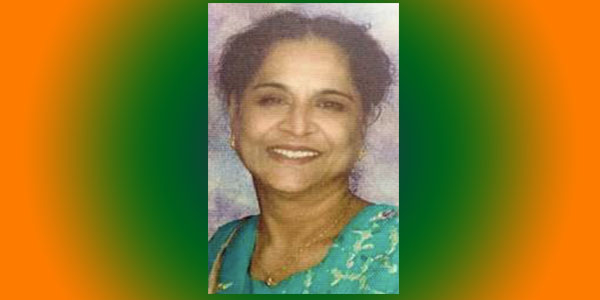
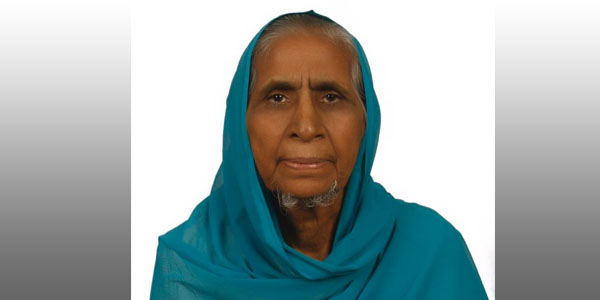
MADAM BHAGWANT KAUR RANDHAWA
(3.11.1946 – 22.8.2020)
(Retired Staff Member at International Atomic Energy Agency (IAEA) based at the UN HQ, Vienna Intl. Convention Centre, Austria)
DAUGHTER OF THE LATE GIANI BACHITTAR SINGH JI
(Former Head Granthi of Gurdwara Sahib Tatt Khalsa, Kuala Lumpur)
& LATE MATA JASWANT KAUR JI
Waheguru Ji Ka Khalsa, Waheguru Ji Ki Fateh
With immense sadness, we would like to inform that our loving sister, Bhagwant passed away peacefully in Vienna, Austria on 22nd August 2020.
Saskaar / Last Respects was held on Monday, 7th September 2020 at Simmering Crematorium, Vienna, Austria.
Dearly Missed & Forever Cherished by:
Husband: Puran Singh Randhawa (Vienna, Austria)
Son: Gurminder Singh Randhawa (Vienna, Austria)
siblings, nephews and nieces and a host of relatives and friends.
Sahej Path da Bhog: 13th September 2020 (Sunday) at the Guru Nanak Darbar, Tatt Khalsa Diwan, Kuala Lumpur
The programme will commence with Kirtan Darbar at 9.30 am followed by Sahej Path da Bhog at 11.00 am. Guru Ka Langgar will be served.
Kindly treat this announcement as a personal invitation.
Your presence will be highly appreciated by the family members of the Late Giani Bachittar Singh Ji.
RMCO Guidelines shall be adhered throughout the program.
“Wherever A Beautiful Soul Has Been, There Is A Trail of Beautiful Memories”
Contact:
+6 019 669 7149 Gurcharan Singh (Guru)
+6 012 939 9275 (Dolly)
| Entry: 9 Sept 2020 | Source: Family
ASIA SAMACHAR is an online newspaper for Sikhs / Punjabis in Southeast Asia and beyond.Facebook | WhatsApp +6017-335-1399 | Email: editor@asiasamachar.com | Twitter | Instagram | Obituary announcements, click here |
When Covid-19 began hitting hard many parts of the world, Singapore was no exception. Earlier this year, there was a severe shortage of face masks. The novel coronavirus had propelled the thin and tiny little thing into a precious item.
At that precise moment, a Singapore company made a critical decision. The subsidiary of Mohar Shipping Corporation Pte Ltd took the bold step to build a manufacturing plant in Singapore to produce high quality 3-ply disposable medical masks.
“This project was started to fill the gap in the market when there was a critical shortage of personal protective equipment worldwide,” DIP Investments Pte Ltd managing director Jaslyn Kaur told Asia Samachar.
This gave birth to Mohar Medical, a brand name under DIP Investments, a company under Mohar Shipping.
“Most importantly, with the disruption of supply chains occurring during that time, we wanted to ensure that we are able to serve the local market with minimum logistical hurdles. Hence, we decided to manufacture our masks locally rather than importing masks for resale,” she added.
Jaslyn, who’s overseeing the marketing side of the project, spoke at length on the how the team made it happen under some pretty intense operating environment.
Q: How long did the whole process take – from idea to getting the factory up and running?
A: The entire process, from the inception of the business idea, to get to production, took four months. We initiated the process in January 2020 and our first mask rolled off the production line in May 2020. In between there were lots of work to do – from the purchase of machinery, recruitment of staff and engineers, training of engineers, testing of raw materials to the establishment of a quality management system, full factory audit and ISO 13485 certification. We managed to pull this off in record time thanks to a team of dedicated staff with all hands on deck!
What is your role in this venture?
I am the Marketing Director for this project. In my role, I undertake a full suite of responsibilities from managing our brand, product labelling, customer outreach, media outreach and daily coordination with our production, logistics and sales teams.
What other role do you play?
I am in the second generation managing my family’s portfolio of companies, all of which are Singapore registered businesses. Our primary business is in the shipping trade. Mohar Shipping Corporation Pte Ltd was started by my father, Mr. Sarjit Singh, in 1981. Mohar is one of the proudly Sikh-owned businesses with a long and successful history in Singapore. The company owns and operates a fleet of bulk carriers and cement carriers which trade regionally. In 2003, we incorporated DIP Investments Pte Ltd with the objective of seeding new ventures across various industries and geographies. Some of these ventures include equity investments in the hospitality sector in Sri Lanka and renewable energy projects in both Sri Lanka and Sub Saharan Africa. For these projects, I am tasked with investor relations, client outreach and investment analysis. DIP Investments’ newest venture is Mohar Medical – a HSA licensed manufacturer of Class A Medical Devices, for which I am in charge of marketing.
How has this venture helped in the Covid-19 pandemic?
As a local manufacturer of medical equipment, one of our key goals is to ensure that our masks are ready to be mobilised within Singapore in a timely manner without any concerns of airfreight, logistical delays or compromise in quality. Without the concern of airfreight, we are also able to retail our masks directly to Singapore consumers at affordable prices as we believe no household should be deprived of protective equipment during this pandemic. As such, our masks are priced very affordably for the local market and sold directly on our e-commerce platform, with logistics and local deliveries being managed in house by our own fleet of vehicles.
What is the response so far?
We are appreciative of Singaporeans’ support for our homegrown brand and very grateful that the venture has taken off the way it did. We are currently receiving enquiries for 5-10 million masks in the next two months for export alone, hence we are actively looking to grow our mask manufacturing capacity. To supplement our existing production capacity and benefit from scale economies, we are actively searching for a site for a second mask manufacturing plant in Southeast Asia within the next six months, with the intention of distributing the production from the new plant to global export markets. We intend to double our production capacity within the next six months.
What else are you looking at?
As a homegrown enterprise, we are also actively looking for opportunities to give back to the community. In July 2020, we teamed up with the Young Sikhs Association (YSA) of Singapore to donate 1000 masks to the Lee Ah Mooi Old Age Home. ThehHome was impacted by Covid19 as they had seen some cases amongst their elderly residents. We worked with Young Sikh Association Singapore (YSA) President Mr. Sarabjeet Singh to provide masks for their staff and elderly residents, along with other items that the YSA had provided for them in care packages. We appreciate the good work done by the YSA and other community organisations, and welcome them to get in touch with us to further our community outreach.
ASIA SAMACHAR is an online newspaper for Sikhs / Punjabis in Southeast Asia and beyond.Facebook | WhatsApp +6017-335-1399 | Email: editor@asiasamachar.com | Twitter | Instagram | Obituary announcements, click here |
Sim Singh-Malhi made an unsuccessful bid for the seat of Chaffey in the 2018 state election – Photo: Singh Facebook page
By Asia Samachar Team | AUSTRALIA |
A regional councillor and former state Labor candidate is facing charges in a South Australian court involving serious sex and violence offences.
Renmark Paringa councillor Sim Singh-Malhi faced the Berri Magistrates Court — in the state’s Riverland region — on the charges on 4 Sept, reports ABC.
The report said among the charges levelled was twice engaging in sexual intercourse with a person without consent, false imprisonment, assault, and threatening to kill or endanger life.
Malhi had made an unsuccessful bid for the seat of Chaffey in the 2018 state election.
South Australian Labor leader Peter Malinauskas said he was pushing for Malhi’s eviction from the party.
“Tonight, I have taken immediate action in relation to the arrest of a former Labor candidate for serious sex and violence offences,” Malinauskas was quoted in the report. “As a leader, I must send a strong message that domestic violence is deplorable, there are consequences and it will not be tolerated.”
ASIA SAMACHAR is an online newspaper for Sikhs / Punjabis in Southeast Asia and beyond.Facebook | WhatsApp +6017-335-1399 | Email: editor@asiasamachar.com | Twitter | Instagram | Obituary announcements, click here |
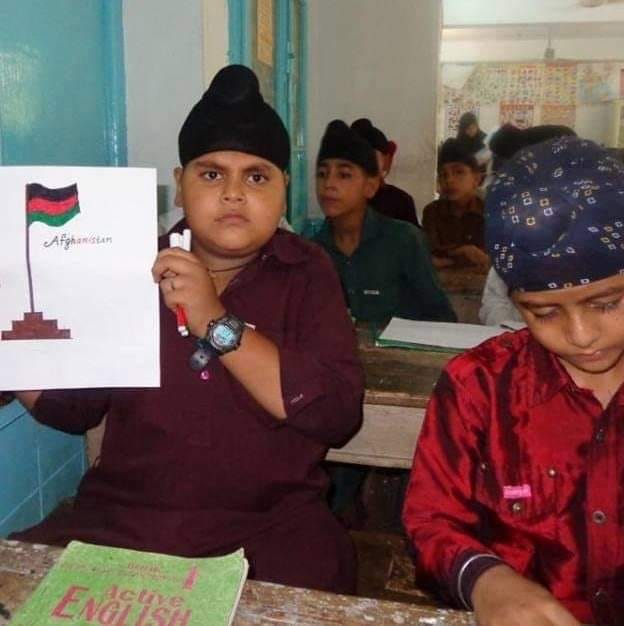
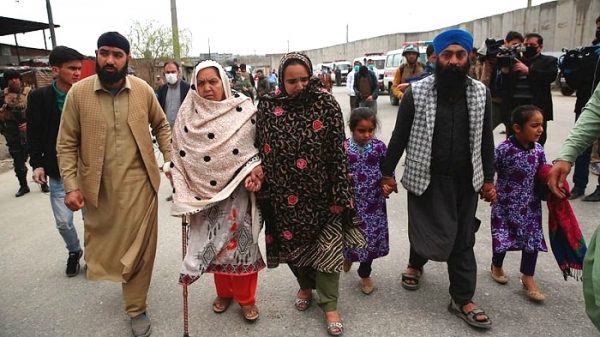
More than 400 Sikhs from Kabul have arrived in New Delhi. About a hundred more are expected to come in the next batch. More than 100 Sikhs that remain in Afghanistan, do not want to leave the country. With this development well on the way to completion, Sikhs can breathe easy regarding Afghan Sikh community.
We are also informed that the entire expenditure on their air travel has been borne by Vikramjit Singh Sawhney, Chairman Sun Group, Delhi. United Sikhs provided help with procurement of passports. Happy to get away, they did not forget to bring the Guru Granth sawrups with them. Initially they have been put up in Gurudwara Sarais and the Delhi Sikh Gurudwara Management Committee (DSGMC) will be coordinating their local care.
Sardar Dileep Singh Sethi of USA and his associates will pay for board, lodging and education of the group for two years, as told by Sardar Khajinder Singh, President of Afghan Hindu-Sikh Organization. He has been coordinating all the welfare activities for Afghanis for many years. All in all it has been a sewa mission where several organizations and persons have contributed, which is now close to coming to a successful conclusion.
SOME BACKGROUND
Afghanistan connection of Sikhs goes back to the time of Gurus. Half a millennium back, Guru Nanak had visited Kabul, Kandahar, Jalalabad and Sultanpur in Afghanistan during his fourth udasi – [1519-21]. Later Guru Har Rai is said to have sent Sikh missionaries to Kabul who set up a dharamsal there. Some Hukamnamas (messages) addressed to the sangat at Kabul by the Gurus are a testimony to the significance of Afghan Sikhs in Sikh history. See here.
In 1947, during the India’s partition riots, some Sikh and Hindu families found it easier to flee to Afghan territory for safety. The community continued to thrive under the Shah’s regime and later into the 1980’s in Najibullah era and the population of Afghani Sikhs and Hindus rose to about two lakhs – 60% or so of them being Sikhs. As Soviets troops supporting the Afghan regime were to start withdrawing from the country, a Gurdwara in Jalalabad was stormed and 13 Sikhs gunned down in 1988. In 1989, Gurdwara Guru Teg Bahadur in Jalalabad was hit by rockets killing 17 Sikhs.
As situation was getting worse, Afghan and Indian government are credited to have helped the Hindus and Sikhs to leave country on a pilgrimage passport for India and Indian Embassy set up a visa desk at Gurdwara Har Rai Sahib in Kabul to issue entry visas. This enabled around 50,000 Hindus and Sikhs to travel to India from where many made their way to countries in Europe and the US. After capturing Kabul in 1992, President Najibullah was deposed. The development set off tremendous anxiety among Sikhs and Hindus and their population depleted very rapidly. The attack by an IS gunman at Gurdwara Guru Har Rai Sahib in Kabul on March 25, 2020, killing 25 worshippers caused the efforts for evacuation of the residual population to be redoubled, and it is the culmination of that push, resulting in the arrival of 400 evacuees in Delhi, that we had started with.
Afghan Sikhs – Photo: United Sikhs
SOME THOUGHTS GOING FORWARD
This story of the tribulations and finally evacuation of the beleaguered Sikh-Hindu community from a country where they had lived for generations is not the first, nor can the saga of Afghan Sikh- Hindu community be reduced to the story of travails and evacuation of the rear group of a few hundred. Almost 200,000 have preceded them. The use of a hyphenated Sikh-Hindu term also bears some explanation.
To understand the hyphenation of Hindu-Sikh, we have to go back to the mass migration of most of Hindus and Sikhs from West Punjab and North-West Frontier Province (NWFP) during the partition of 1947. Both Hindus and Sikhs were targeted and when it became unsafe to live in their houses, both the communities had to move into any spacious places with some living facilities. The large Gurdwaras in some places served that need. Hindus and Sikhs lived in those sanctuaries in 1947 till they could find a way to make exit from the country as they did in Kabul and other places in Afghanistan. For a time, the differences were sunk – the hyphenation had taken place!
Coming back to Sikh evacuees, the hope is that they may be finally helped to migrate to Canada or US who are said to be empathetic to their plight and may accept to take them in. At the same time there is talk that some international Sikh organizations have raised funds from Sikh diaspora for the rehabilitation of Afghani Sikhs. That would be a welcome gift starting out.
We should remember that reduced to its basics, safety of life and property is largely a local issue but the decision for dispersal of any group from their home and hearth is triggered by changes in the orientation of majority community to turn unwelcoming to the extent of being threateningly hostile at the places where the group may have lived peacefully and thrived for past generations. It is a decision taken under duress and it is not surprising that some people choose to stay on due to assurance of local safety or for the fear that things may be worse elsewhere. Based on what I have seen to be the growth (and safety, security) experience of those who stayed back in Pakistan as compared to similarly placed people who moved to India, I can almost conclusively say that a value has to be placed on an environment of freedom from fear and prejudice vis-à-vis a sense of transient safety or comfort. I commend moving out of comfort zone for the generations to follow to have a less fettered access to opportunity.
Talking of dispersal in the context of Person Of Indian Origin (PIO), two patterns are evident. One is where the threatened PIO community headed back to their roots in India when they felt opportunities getting restricted in their adopted land and the other where the PIOs migrated farther afield to other societies by a repeat of getting the needed papers and taking chances to resettle there.
Gurdwara Har Rai Sahib, Kabul, attacked on 25 March 2020, killing 25 people
Obviously the story of Afghan Sikhs has had both the above patterns. We hardly heard about the travails of those who migrated to other societies but we know that we have had a pretty well set community of Afghan Sikhs living in vicinity Long Island, some of whom I had come to know of through a friend in CT two decades back. The profile of Sikh community in Kabul was mixed as I gathered during my stay in 1987 as UN Adviser. The security environment was rigorous and movement restrictions did not encourage socialization with locals but Sikhs were known to have good presence in trading and currency markets.
The case that we are talking of would fall in second genre viz people who have no recourse but to seek to return to original homeland and then figure out if they have options other than staying on. This type of situation actually inheres a major challenge because the Sikh community has to mobilize resources for their rescue, evacuation and rehabilitation. The saving grace may be that they have basic travel papers.
The changing attitude of majority can manifest in various ways but it does affect the economic condition of minorities. Take the case of Meghalya Dalit Sikhs or the farmers who turned Terai or Marshy lands in Uttar Pradesh (UP)/Gujarat into money spinners – in all cases the mainstream would like the land back in their possession. It can happen in Ukraine, Georgia and Ecuador. These cases do not pose risk of personal safety but potential of causing economic distress is obvious.
It so happens that calls for help by migrant Sikhs may be muffled but we know of their existence in all the affluent societies. In fact quite a few of locally owned or our own small businesses and farming sector use such labor at relatively lower wages. With increase in regulatory measures, other social and political changes as well as awakening in this class of work force, problems of undocumented workers are waiting to explode. When that happens, Sikhs may find that the gaps in their political and social network are constraining and needed to be expanded.
In this mixed scenario, the Gurdwara infrastructure and its traditional structure have helped and the serai, langar and sewa bonded together by Guru Presence have proved to be a great boon for Sikhs in adversity. With Sikhs living as small minority in almost all the jurisdictions, they may be well advised to recognize that Gurdwara as a potential sanctuary is not only good for spiritual quest but also as a strategic backup in adverse circumstances.
The other point we should think about is the care of the heritage left behind when Sikhs decide to leave a country. Care of heritage is a continuing need and we should not ignore it. We know it to be a very difficult task from our 1947 partition experience. Small numbers of Sikhs left behind may be in no position to be much help. The responsibility then falls on the global Sikhs and we should be conscious of this eventuality when facilitating total withdrawal of Sikhs from a place of historical significance to Sikhs.
[Nirmal Singh has written six books on Sikhs and Sikhi and several of his articles have been published in journals like Sikh Review, Journal of Sikh Studies and Comparative Religion and Abstracts of Sikh Sudies (IOSS) as well as in the US mainstream news media. Resident in Orlando, he spends considerable time in Delhi]
ASIA SAMACHAR is an online newspaper for Sikhs / Punjabis in Southeast Asia and beyond.Facebook | WhatsApp +6017-335-1399 | Email: editor@asiasamachar.com | Twitter | Instagram | Obituary announcements, click here |
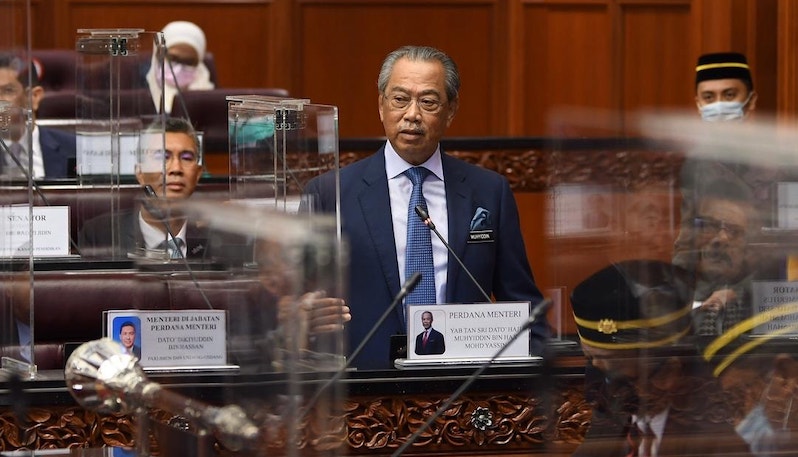
Muhyiddin Yassin in Parliament – Photo: Personal Facebook
By Asia Samachar Team | MALAYSIA |
Sikh gurdwaras are set to receive Federal government funding after a 5-year break.
Prime Minister Muhyiddin Yassin has approved RM2.18 million to 120 gurdwaras nationwide to be distributed through the Malaysian Gurdwaras Council (MGC).
“We had put in a recent appeal to the Federal government to continue the earlier practice of providing an annual grant for gurdwaras. We had also highlighted the plight of the gurdwaras during the recent Covid-19 lockdown,” MGC president Jagir Singh told Asia Samachar.
“We are grateful for this allocation. For the first time, MGC has also received a direct allocation for itself. In the past, all funds were distributed to the gurdwaras.”
Between 2011 and 2015, MGC had received annual between RM1.5 million to RM2 million annual funding, all of which was disbursed to the gurdwaras.
At the same time, some states have also provided funding directly to gurdwaras. Among the states that have done so were Selangor, Penang, Negeri Sembilan, Perak, Johor, Sarawak and Kelantan.
In 2017, Selangor had given RM1 million to gurdwaras and Sikh organisations. But the amount fell drastically to RM84,000 in the next two years.
In a letter to gurdwaras dispatched today (7 Sept), MGC had provided the breakdown of the funds. A copy of the letter was sent to Asia Samachar.
Each of the 120 gurdwaras will receive RM13,000 (totaling RM1.56 million) while RM440,000 has been set aside for special projects such as repair works for Langgar Hall, wash-room, leaking roof, improving drainage or fencing. Another RM180,000 is for MGC for Punjabi/religious classes and administration.
MGC will set up regional centres at Butterworth, Ipoh, Kampar, Kuala Lumpur, Seremban, Muar and Bentong to distribute the funds.
“We are very grateful and thank YAB Prime Minister for the above grant to the Gurdwaras and the Sikh Community,” Jagir said in the letter.
ASIA SAMACHAR is an online newspaper for Sikhs / Punjabis in Southeast Asia and beyond.Facebook | WhatsApp +6017-335-1399 | Email: editor@asiasamachar.com | Twitter | Instagram | Obituary announcements, click here |
British Indian Empire in Imperial Gazetter Atlas of India – Source: Oxford University Press, 1909
By American Sikh Council | OPINION |
In spite of 73 years of independence of modern India the civil liberties of especially minorities starting with the Dalits, Sikhs, Muslims, Buddhists, Tribal, and all the various people of the Northeast are in serious jeopardy.
Brahmin chankaya-niti has always been to divide and rule all people, except their kind. The devious Brahmins have used their own deeply rooted caste policy of ‘divide and rule’ and hung it around the neck of the British colonialists, very conveniently, so that no one can blame them for their own deviousness. It is mind boggling, to say the least, i.e., if so-called Hinduism is one unified religion then why were there more than 550 separate kingdoms and nations upon the arrival of the British on the Indian subcontinent?
Mohandas K. Gandhi a Vashya Gujarati Bania, one of the most wily men ever produced out of India was a tool and mouthpiece of the conservative Hindu right. Mohandas’s weird lifestyle was financed by the rich Hindu capitalists for thirty years, which included Birla, Bajaj and others, who remain some of India’s super-rich industrialists even today. Mohandas being a hardcore Hindu made sure he sweet talked the Sikhs and Dalits and deluded them to a very large extent, while the goal of his kind was to eventually get Ram Rajya – by hook or by crook!
Mohandas hated everything about the Sikhs including deriding the Sikh Gurus. When he got to know Dr. Ambedkar’s plans about the mass conversion of untouchables/Dalits to the Sikh Religion in the 1930s, he angrily proclaimed, “It would be far better than crores of untouchables of India could be converted to Islam than that they should become Sikhs.”
The first death-knell by Mohandas was struck against the noble Dalits on September 24, 1932 through the incredibly disingenuous Poona Pact. With one stroke millions of oppressed Dalits lost control of their own separate destiny, who were never Hindus, (il)legally brought under the purview of the Sanatani Dharmis (Hinduism) permanently, to inflate the upper-caste vote bank, so that the upper-caste could rule in perpetuity, while patronizingly giving Dalits reservations.
The Sanatanis (upper-caste Hindus) were a minority by themselves (barely 15% of today’s Hindu population) who would never ever have power unless they coopted all the Shudras and especially the Dalits into their cavernous fold.
Need we remind everyone that the diabolical caste system is one of the two key pillars of the Sanatan Dharm. The caste system is the most vile and devious socio-economic apparatus with a complete political agenda, simply cloaked and held up with the fabric of religion. The religious part is based on complete mythology exactly like the Greek mythology. Fortunately, the Greeks dumped their mythology and became Christian, but in the case of the Sanatanis, they refuse to discard all the baggage which has no evidence or historical relevance whatsoever.
This is what the so-called father of India, Mohandas stated to the Sikhs, “I ask you to accept my word and the Resolution of the Congress that it will not betray a single individual much less a community. Let God be the witness of the bond that binds me and the Congress with you (the Sikhs).” When pressed further, Gandhi said that, “Sikhs would be justified in drawing their swords out of their scabbards as Guru Gobind Singh had asked them to, if Congress would renege on its commitment.” (Mohandas Karamchand Gandhi, Young India, March 19, 1931).
It ended up being a complete farce and a lie, as any slick lawyer would, to convince a trusting audience.
Jawarhar Lal Nehru the first PM of India and also known as the so-called Uncle of the India promised the Sikhs, “The brave Sikhs of Punjab are entitled to special considerations. I see nothing wrong in an area set up in the North of India wherein, the Sikhs can also experience the glow of freedom.” (Jawahar Lal Nehru, Lahore Bulletin, Jan 9, 1930).
Immediately after independence of modern India all the states were to be divided based on the local languages. Every state got its due except for Punjab and a movement was started by the right-wing Hindus to deny their own (Punjabi) language so as to keep the status quo, with the innate fear that if Sikhs ruled Punjab, somehow Hindus will be in an inferior position, thanks to their caste mentality.
Nehru an extremely glib lawyer and a Brahmin conveniently changed his mind, forgot all his previous public solemn promises and said, “Kya main taqat dushman (the enemy – the Sikhs) ke haath main de dun (How can I entrust power into the hands of the enemies).” Jawarhar Lal Nehru, 1961.
Sikhs peacefully agitated with over 50,000 courting arrest, while the Indian government attacked the Darbar Sahib on July 4, 1955 killing over 200 Sikhs. After years a truncated mini Punjab was handed over to the Sikhs in Nov 1966, even though all other states were divided based on languages by 1956.
Sikhs who were barely 1% of the British Indian population gave over 75% of the sacrifices to garner freedom from the British, not to mention the over a million who perished in the largest massacres in July-Aug of 1947, overwhelmingly in Punjab. All the while the conman Mohandas went on his crafty ‘hunger fast’ drama, to distract the populace, hogging the limelight while the real sacrifices were made by thousands of unsung Sikhs.
A truly secular democratic country is one where first, the laws are straightforward and clear; second, laws are for the benign benefit of the common people; third, religion must be kept separate from the state especially where there are umpteen religious minorities; fourth, laws are not be made to support an majoritarian authoritarian police state; fifth, if there is no right to dissent and choose one’s own destiny its tyranny; sixth, the rights of the people of every state are more important than the center and much more. Currently, none of the above exists making the Indian secular democracy a total sham.
If there is any doubt, why does India not allow a plebiscite in Arunachal Pradesh, Assam, Manipur, Meghalaya, Mizoram, Nagaland, Tripura, Sikkim, Kashmir and elsewhere and see what happens? Because the real fear of all the upper-caste ruling regimes who are primarily from the north-central cow belt states is, that all the above states may breakaway immediately if given a chance. That is exactly why all the above states, including Punjab have been browbeaten into submission for decades through the use of India’s paramilitary forces.
The entire autocratic rule is based on the Brahminical ‘laws of Manu’ (the caste system) cleverly woven into the Indian constitution. No wonder Dr. Ambedkar stated, “Hinduism is a veritable chamber of horrors.”
In 1950, despite vociferous protests by Sikhs, the Indian constitution was adopted, which failed to even recognize the Sikhs as a separate religion instead Sikhs were legally pigeon-holed as a sect of Hindus, and remained defined as such under Article 25 (b) of the Constitution. The British recognized Sikh marriages under the (Sikh) Anand Karaj Act 1909, however this was replaced by the Hindu Marriage Act of 1951. Sikh marriages are no longer recognized since. To get a marriage license in ‘secular India’, Sikhs have to sign a form titled, ’The Hindu Marriage Act of 1951’. The insults do not end here!
Panjab was a state utterly ruined both economically and socially by the partition. Instead of assistance, the Sikhs began facing economic, social and religious discrimination.
Farmers in Panjab paid higher prices for their agriculture inputs, but were offered lower prices for their produce in comparison with neighboring states. The central government assumed sole control over prices and farmers were not allowed to cross state boundaries to get higher prices for their labors in the next state.
Electricity generated by the hydroelectric dam Bhakra on the Panjab borders was more expensive and provided in smaller amounts in Panjab than in its neighboring states.
75% of the water available to Panjab was illegally diverted to other states putting unbelievable strain on all other resources for the mostly small farmers who happen to be Sikhs.
70% of the revenue raised by Panjabis, for development of Panjab was sent to other states.
The central government investment in Panjab is less than 1%, the lowest amongst all the states, while it is taxed more than any other state.
Restrictions on the recruitment and promotion of Sikhs in the armed forces were enforced a myriad of ways. This was the reward given to 2% of India’s population for their incredible sacrifices in the freedom struggle against the British and all the wars fought till 2020.
From 1984 -1998 over a million Sikhs have been killed by the Indian government www.thirdsikhgenocide.org, with absolutely no justice in sight, yet if someone puts a tiny Sikh flag on a police station all hell breaks loose, as though the sky has fallen.
Over 75% of the youth in Punjab is on drugs which are illegally supplied by the government to eliminate the Sikhs.
Alcohol is an anathema for Sikhs, yet the government has refused to ban the over 6,000 liquor vends across Punjab, making sure the rural populace drinks itself to death.
The hundreds of thousands of jobless Sikhs are leaving Punjab in droves, heading to western countries, while Bihari Hindus and others replace them, eventually making Sikhs a minority in their own state.
The highest ratio of policemen versus population is in Punjab, further burdening the economy.
Punjab has a 40% debt to GDP ratio and the debt amount is over 48,000 crores as of 2020, making sure that the people can never lift their heads up ever to protest over any injustice.
Independence of any country can only be celebrated when ‘everyone’, but especially those who have sacrificed their lives like the Sikhs in the thousands and contributed multifold to the economy are truly accommodated, fairly. By mainstreaming Sikhs and minorities Hindutva style; diluting the Sikh religion and history by all (il)legal means at their disposal; by discriminating; by patronizing; being derisive through the media and through Bollywood to belittle an entire religious community continuously, is not only hypocritical but utterly shameful.
All citizens of a real democracy can only celebrate its independence when, as Ann Sang Suu Kyi winner of Nobel Peace Prize, political freedom activist leader of Myanmar stated, “The true measure of the justice of a system is the amount of protection it guarantees to the weakest.”
(The article has been adapted from an American Sikh Council e-news)
ASIA SAMACHAR is an online newspaper for Sikhs / Punjabis in Southeast Asia and beyond.Facebook | WhatsApp +6017-335-1399 | Email: editor@asiasamachar.com | Twitter | Instagram | Obituary announcements, click here |
Swaran Singh – Photo: Sikh Sewaks Australia facebook page
By Asia Samachar Team | AUSTRALIA |
IT consultant and Sikh preacher Swaran Singh believes that Sikhs can do a lot better in appreciating the Guru-given ‘wow factor’.
The Malaysian-born Sikh, who moved to Australia in 2006, runs a consultancy while being involved in Sikhs camps and activities from Melbourne where he now resides.
“The work we do is to reclaim that wow factor,” he told the Global Sikh Achieversprogramme host Harjinder Singh. The programme was aired at Sikhi Channel News on 2 Sept. See here.
“To do that, you have to become successful in every aspect of your life. This is paradigm driving all our activities…If a person is religious, it does not mean he doesn’t have anything in life.”
He talked about the work done by Sikh Sewaks Australia, a leaderless organisation run by a group of like-minded folks. Among others, they try to provide lodging and part-time jobs to newly arriving students.
An engineer by training, he said he had also done a course on counseling.
ASIA SAMACHAR is an online newspaper for Sikhs / Punjabis in Southeast Asia and beyond.Facebook | WhatsApp +6017-335-1399 | Email: editor@asiasamachar.com | Twitter | Instagram | Obituary announcements, click here |
Harcharan Singh – Photo: Videograb from Punjab Ghait interview
By Asia Samachar Team | PUNJAB, INDIA |
It is nothing strange these days to listen to anecdotes of the rampant corruption in the Shiromani Gurdwara Parbandhak Committee (SGPC), an organisation that plays a key role in the Sikh faith.
The Amritsar-based Sikh body, which has at its base elected representatives, has a huge bearing on decisions taken on Sikh faith matters. This includes what comes through the Akal Takht, usually badged as the Sikh supreme decision making body.
How bad are things at the SGPC? In the Prime Discussion discussion show at Prime Asia TV on Saturday (5 September), the SGPC corruption took centre stage.
Talking to show host Gurpreet Sandhawalia, discussant and senior journalist Jatinder Pannu outlined the situation, with incidents like how someone donated a truck, but was fraudulently listed as a trunk.
The Sikh from Maharashtra donated the truck some four years ago. A year later, he came forward again, this time to settle any maintenance bills for the truck. Lo and behold, their files listed no such truck. SGPC officials finally found the receipt document, but it stated he had donated a trunk! The truck had disappeared into thin air.
In the beginning of the show, Jatinder spoke about SGCP former chief secretary Harcharan Singh who died of a heart attack on Saturday (5 September), in the midst of a major controversy of the missing Guru Granth Sahib copies, called bir or saroops.
On Aug 24, the SGPC executive had announced that it would initiate criminal proceedings against Harcharan and several other officials that they alleged were accountable for the misappropriation of Guru Granth saroops.
He was summoned to the Akal Takht along with the 2016 SGPC’s executive body on 18 Sept for not performing mourning prayers for the loss of saroops in an accidental fire in May 2016 at Guru Granth Sahib Bhawan in Gurdwara Ramsar Sahib, reported The Tribune.
Harcharan was the talk of the town when he came on board a record breaking remuneration package. As the chief secretary, a role specially created for him, the former banker took home Rs 3 lakh per month (Rp300,000), plus perks. He came on board in August 2015 after being handpicked by SAD president Sukhbir Singh Badal.
When his salary package became an issue, he offered to reduce it to Rs 1 lakh per month. Eventually, Harcharan resigned in July 2017 citing “personal reasons”.
In February, he released a book, Shiromani Gurdwara Parbandhak Committee di Vartman Stithi, which laid bare alleged shortcomings within the SGPC.
Shiromani Gurdwara Parbandhak Committee di Vartman Stithi by Harcharan Singh
Speaking on Harcharan, Jatinder told the programme that he had himself criticised Harcharan for his hefty package while he was engaged at the SGPC. Publicly, Harcharn did not respond to the criticism. In private, after resigning from the SGPC post, Jatinder said Harcharan told him that most people did not know that he had left a job paying him Rs 8 lakh a month to take on the SGPC position.
After retiring as the Punjab & Sindh Bank general manager, Harcharan joined the Indian Express between 2000 to 2015 as its corporate director and group financial advisor.
Jatinder also said that Harcharan had said he and his family were channeling a huge portion of their salary to run an old-folks home in Chandigarh, where Harcharan was also personally involved as a volunteer.
In the interview with Ghaint Punjabi, Harcharan emphasised on the need for a check and balance to improve SGPC and its workings.
ASIA SAMACHAR is an online newspaper for Sikhs / Punjabis in Southeast Asia and beyond.Facebook | WhatsApp +6017-335-1399 | Email: editor@asiasamachar.com | Twitter | Instagram | Obituary announcements, click here |
Harbinthar Kaur / John Ruban (Shoun Vinther, Dave Vinther, Pamela Preet)
and a host of relatives, friends & loved ones.
PATH DA BHOG will be held from 10am 12noon on Saturday, 26 September 2020 at Gurdwara Sahib Petaling Jaya.
Due to the RMCO and in line with the government regulation, the family urges all relatives and friends to abide and comply with the SOP set by the Government. It is mandatory to wear a face mask and practise physical distancing at all times.
The family thanks the doctors and nurses at SJMC for the care rendered.
For further information, please contact:Navjeet Kaur 012-225 1466
ASIA SAMACHAR is an online newspaper for Sikhs / Punjabis in Southeast Asia and beyond.Facebook | WhatsApp +6017-335-1399 | Email: editor@asiasamachar.com | Twitter | Instagram | Obituary announcements, click here |




















 Nick Cannon is an American comedian, rapper, and television host. In 2017, Cannon turned heads as he publicly started wearing a turban.