PATH DA BHOG: 16 Feb 2020 (Sunday) at Gurdwara Sahib Bercham, Ipoh, Perak. Programme: 6am-8am: Asa di Vaar. 9am-10.30am Sukhmani Sahib. 10am-12pm: Kirtan and Katha and Path Da Bhog. Guru Ka Langgar will be served | Malaysia
Sisters, Sons & Daughter, Nephews, Nieces, Relatives and host of Friends.
Path Da Bhog: 16 Feb 2020 (Sunday) at Gurdwara Sahib Bercham, Ipoh, Perak. Programme: 6am-8am: Asa di Vaar. 9am-10.30am Sukhmani Sahib. 10am-12pm: Kirtan and Katha and Path Da Bhog. Guru Ka Langgar will be served.
Please treat this as a personal invitation.
Contact: Manjit Singh Olikh (TR) 012 521 1348
| Entry: 6 Feb 2020; Updated: 14 Feb 2020 | Source: Family
ASIA SAMACHAR is an online newspaper for Sikhs / Punjabis in Southeast Asia and beyond.Facebook | WhatsApp +6017-335-1399 | Email: editor@asiasamachar.com | Twitter | Instagram | Obituary announcements, click here |
The rise of Christianity in Panjab was discussed last week. In fact nearly 150 years ago, concerns about Sikh conversions to Christianity in the second half of the 19th century were one of the many reasons for the start of the Singh Sabha reform movement. Sikhi was clearly identified as a distinct way of life by the great Sikh scholars of the Singh Sabha movement.
A Sikh code of conduct was derived from Gurbani as the Sikh rehat (Sikhi way of living). In this process, ancient Sikh Reht Naamay by individual scholars with own biases were checked with Gurbani teachings and collated into one Panth-approved Sikh Reht Maryada.
However, erosion of Sikhi as a distinct way of life started from amongst the Sikhs themselves who had not shed their non-Sikh ancestral backgrounds and ritualism. The egalitarian human values of Gurbani teaching are misinterpreted by the so called liberal Sikhs.
I have coined the phrase universal Sikhs for those Sikhs who regard themselves as liberal Sikhs. A typical universal Sikh interprets the universal human values enshrined in Gurbani to suit his own personal life style and biases. He discards the Sikhi conduct and code derived from those universal values by the Guru persons (1469-1708) as exemplified by their lived Sikhi and sacrifices and later, by the Khalsa.
The universal Sikh sees nothing wrong with following non-Sikh practices and rituals, otherwise condemned by Gurbani. Conveniently, he ignores the pre-condition of Guru Nanak for following the path of Sikhi which demands any sacrifice necessary to follow the path of truthful conduct.
So, universal Sikhs today are an increasing number Sikhs, including patit (apostate) Sikhs. They deny Sikhi as a disciplined and organised way of life. For a universal Sikh, Sikhi is a do-as-you-like. It is a free-for-all. Usually, the universal Sikh is a well-educated, clever and persuasive person.
Some modern Sikh scholars and self-styled Sikh representatives belong to this category. Knowingly or unwittingly, they prepare the vulnerable youth looking for certainty of faith for conversions to non-Sikh faiths.
In the UK, some universal Sikhs deny Sikh qaumi identity by claiming that Sikhi is an inclusive religion only. Sikhs should follow Gurbani teachings – which is a good suggestion – but, otherwise Sikhs and even non-Sikhs, in their view, are free to interpret the universal teachings of Gurbani as they like. At practical level, for example, they claim that Sikhs and non-Sikhs can have Anand Karaj in Gurdwaras while retaining own religions also!
Some universal Sikhs are now denying the Sikh right, already recognised by UK law, to Sikh qaumi (ethnicity) tick box in Census 2021. Some friends of India oppose a Sikh tick box because it will reduce the count in the Indian ethnic tick box with consequential negative impact on their political clout and other obvious benefits in many fields!
Sikhi was never a religion only. In fact, some would argue that the Sikhi theo-political process started as a question mark against the orthodox religious practices. Sikhi is a niariaTisra Panth. It takes deep and holistic understanding of Gurbani and the great miri-piri Sikhi tradition to understand that reality about true Sikhi.
Gurmukh Singh OBE, a retired UK senior civil servant, chairs the Advisory Board of The Sikh Missionary Society UK. Email: sewauk2005@yahoo.co.uk. The article first appeared at The Panjab Times, UK. See here.
* This is the opinion of the writer, organisation or publication and does not necessarily represent the views of Asia Samachar.
ASIA SAMACHAR is an online newspaper for Sikhs / Punjabis in Southeast Asia and beyond.Facebook | WhatsApp +6017-335-1399 | Email: editor@asiasamachar.com | Twitter | Instagram | Obituary announcements, click here |
After six years at music streaming provider Spotify, Sunita Kaur is taking the plunge for her next challenge by joining Twitch, a community of user-generated live content and gaming.
She has been appointed as its first APAC MD and will be based in Singapore.
She will focus on supporting the growth of the Twitch community to benefit content creators, media partners, agencies, advertisers, publishers, and developers in Asia, Australia, and New Zealand.
Sunita, who joined the Sweden-based Spotify in May 2013 as MD of Southeast Asia, was later made its VP for Revenue APAC.
Prior to that, she was with Facebook as its Asia director as well as with Microsoft Advertising, Forbes, Singapore Press Holdings (SPH) and Time Inc Asia, according to her LindkedIn profile.
What can you expect from her? In a 2015 interview, Sunita spoke about her time at Facebook.
She told InTheBlack: “When I worked for Facebook for just over three years, there were seven of us in a tiny little serviced office in Singapore trying to figure out what social media meant for those in the Asian region in 2009.”
In the same interview, she spoke about strategy always being a team decision.
“Clear strategy creates buy-in. It makes people’s roles and purpose extremely clear. It helps people see where we need to be, where we need to go.
“We live in a world now where we have so much access to data. Gone are the days where you had meetings upon meetings before forming a decision, implementing it, then waiting six months for a result. Now what you do is get together, make a decision and try it.
“The next step is two-pronged. If you succeed, you repeat. If you fail, you revise. In the span of a month you could easily try something and fail twice but succeed the third time, then push ahead fast rather than waiting six months before you find out whether you failed or not.”
ASIA SAMACHAR is an online newspaper for Sikhs / Punjabis in Southeast Asia and beyond.Facebook | WhatsApp +6017-335-1399 | Email: editor@asiasamachar.com | Twitter | Instagram | Obituary announcements, click here |
Cortege Timing: Cortege leaves Gurdwara Sahib at 1pm, 6 February 2020 (Thursday)
Saskaar / Cremation: 1.30pm, 6 February 2020 (Thursday) at Crematorium Simpang Lima, Klang
Path Da Bhog: 16 February 2020 (Sunday), 10am-12pm, at Gurdwara Sahib Klang
Contact:
Gurdeesh Singh 016 270 6675
Jasvinder Singh 019 384 5523
| Entry: 5 Feb 2020 | Source: Family
ASIA SAMACHAR is an online newspaper for Sikhs / Punjabis in Southeast Asia and beyond.Facebook | WhatsApp +6017-335-1399 | Email: editor@asiasamachar.com | Twitter | Instagram | Obituary announcements, click here |
Jaswant Singh Kanwal (Left, photo courtesy of Kitab Trinjan). Insert: Akal Takht (photo: Suman Chatterjee) and Sant Jarnail Singh Bhindranwale
By Asia Samachar | MALAYSIA |
Jaswant Singh Kanwal, the acclaimed Punjabi novelist who had spent some time in his younger days in Malaya, knew Jarnail Singh Bhindranwale in person. In fact, in the more peaceful times before the volatile 1984, Bhindranwale had twice called upon the novelist at his home.
“She made a mistake, he made a mistake. The Sikh Quam had to suffer the natijah (repercussions),” Jaswant told Akaal Channel in an earlier interview replayed in the memory of the literary figure’s recent death. The interview was conducted by Harpreet Singh Makhu.
The ‘she’ here was Indira Gandhi, the Indian prime minister and leader of the Congress Party. It was on her orders that the Indian army launched a bloody and brutal attack upon Bhindranwale and his people holed up in the Harmandir Sahib, popularly known as the Golden Temple, in Amritsar in 1984.
On that chapter, Jaswant had written a book, ‘Khoon Ki Sohile Gavieh Nanak‘.
On the period before the dark chapter in the annals of Sikh history, Jaswant said he had met Bhindranwale four days before the attack with the aim of defusing the tense situation.
He had suggested that Bhindranwale should “pesh” (present oneself) to the authorities in an attempt to avert a potential attack.
“This is not the time. One, it would lead to the beadbi of the Akal Takht. They (Bhindranwale and his men) were not causing the beadbi, but the sarkaar (government). So, I urged him to back off. The sixth Guru (Guru Hargobind) fought the battles outside.
“But he replied that they’ve done the ardaas. So I asked what can still be done. ‘They (Indian army) are already here, we will fight, we will embrace shaheedi.’ He stood by his decision. I tried in vain to persuade him otherwise. I left sad.”
What was the way out? He felt that Bhindranwale should not fight them, instead ‘welcome them.
“But he was impatient. He should not have taken such a step (taking on the Indian army) so early. He should have continued to rally greater from the people of Punjab. (Under that circumstances) even the Akali Dal would have fallen behind him.”
On allegations that Bhindranwale was a Congress agent, he said: “Indira Gandhi wanted to use him against the Akali Dal. But he (Bhindranwale) had refused to do so.”
Did Bhindranwale and his followers do the right thing? Jaswant felt that their youth and ‘josh’ had got the better of their ‘hosh‘…They did not look far ahead.”
Generally, Jaswant felt argued that Sikhs had failed miserably when it came to political strategy. Bhindranwale did not have the proper advisors. At the same time, he felt that none of the Akali Dal leaders could muster enough gumption to come forward to provide leadership.
In one of his discussions with Bhindranwale, he had advised: “You cannot take on such a big force. The Panth still needs you. Please back away…They didn’t agree with my words. They were overtaken by josh (enthusiasm). Josh jadhaa si.
“He made the mistake of calculating that Indira Gandhi would not make the mistake of launching an attack on them.”
Asked about Bhrindanwale as a person, Jaswant said he had the Sikh kaum at heart (dard) and had even sacrificed himself for it.
ASIA SAMACHAR is an online newspaper for Sikhs / Punjabis in Southeast Asia and beyond.Facebook | WhatsApp +6017-335-1399 | Email: editor@asiasamachar.com | Twitter | Instagram | Obituary announcements, click here |
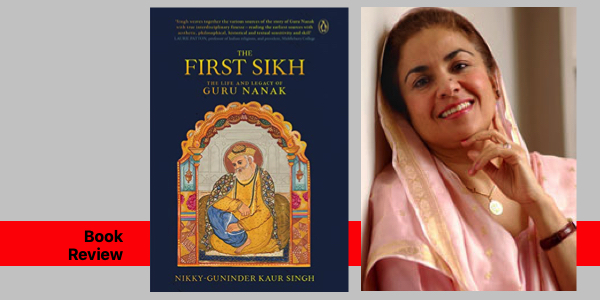
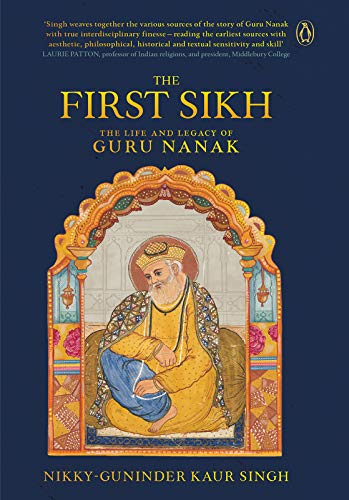
Title: “The First Sikh – The Life and Legacy of Guru Nanak”
Author: Nikki Guninder Kaur Singh
Publisher: Penguin Random House India
The First Sikh – The Life and Legacy of Guru Nanak book cover. Author: Nikki Guninder Kaur Singh
By Dr. Gurpal Singh Bhullar | BOOK REVIEW |
The celebrations of Guru Nanak Dev Ji’s birthday in November 2019 are now past, as is the publicity surrounding the Kartarpur Corridor. I am not certain what impression we have made in the minds of the rest of the world about Guru Nanak Dev Ji’s thoughts. But as the memories of those events recede, we are left with one unique legacy in the form of a new book by Nikki Guninder Kaur Singh – The First Sikh – the life and legacy of Guru Nanak.
One has often read books on Sikhi that almost seem apologetic in nature. Nikki is having none of that. She begins by exploring Guru Ji’s unique life and takes a refreshingly contrarian view. The approach of Western scholars like McLeod and Smith that Guru Ji’s thinking was a variety of the “Sant” tradition is swept aside. Guru Nanak’s new thinking is highlighted and Gurbani is quoted effectively to show how he regarded himself and his relationship with the “One”.
In this comprehensive book, Nikki has done a nuanced survey of Guru Nanak Dev Ji’s teachings by exploring the Japji and his other writings in the Sri Guru Granth Sahib. It is revealing to see the exploration of Guru Nanak’s mysticism, with a discussion on the formation of the Sikh identity. She uses the Janam Sakhi stories, as well as the writings of Bhai Gurdas, to flesh out details of his life. The originality of his thought, his concept of human rights (including the status of women) and his sensitive treatment of the environment are notable features. This is not a pro-forma acknowledgment of his unique vision but a plea to fresh thinking about the future of Sikhi.
The First Sikh – The Life and Legacy of Guru Nanak
The heavy part of the book is where she starts exploring Sikh philosophy. The “Ik Onkar” concept is analyzed together with its implications. She looks at his ethics, the acquisition of knowledge, pluralism and action. There is a revealing outline of the Japji and the different “Khands”. I found this to be very interesting. If “Sach Khand” is the where the unity with the “One” happens, how does the self get there? The process of developing that mindset is comprehensibly discussed as described in the last pauri of the Japji Sahib.
The relevance of his teachings to the current times makes for an interesting discussion. Guru Nanak was a leader in his time in the field of human rights and equality in the different strata of society including the rights of women. Nikki is an ardent feminist and her writings in this chapter leaves us in no doubt as to where she stands. These are important questions and it is sad that our institutions have failed to tackle them. As the world marches on and societal values change, religion should also look inwards to see if they are indeed carrying the torch that their founder carried. She correctly points out the vast chasm between the writings of Guru Ji and the current practices.
There a few are some shortcomings in this book. This book could have used some editing and less complex English for it to be more accessible to the average lay person. It would have been even more useful if some of the quotes could have been put in the original Gurmukhi script. For those looking at it for the first time, a few illustrations may also have been beneficial.
Overall though, this volume is an outstanding contribution to the study of Guru Nanak Dev Ji. Nikki brings a stellar pedigree (she is the daughter of the late Professor Harbans Singh of Patiala and editor of Encyclopedia of Sikhism), and her erudition shines in this book. One of her previous translations of Sikh Scriptures “The Name of My Beloved – Verses of the Sikh Gurus” has just been re-published as “Hymns of the Sikh Gurus” by Penguin. These volumes put her in the premier league of Western Sikh scholars.
The current volume deserves to be read by all those seeking to understand Guru Nanak Dev Ji’s thinking. His ideas are of great relevance today and this book needs to be given a place of prominence in all libraries.
ASIA SAMACHAR is an online newspaper for Sikhs / Punjabis in Southeast Asia and beyond.Facebook | WhatsApp +6017-335-1399 | Email: editor@asiasamachar.com | Twitter | Instagram | Obituary announcements, click here |
Universitas Hindu Negeri Gusti Bagus Sugriwa Denpasar – Photo: UHN website
By Jakarta Post | INDONESIA |
Muslim-majority Indonesia has just approved the creation of its first Hindu university with an upgrade of a Bali-based institute.
Indonesian President Joko “Jokowi” Widodo has issued a presidential regulation (Perpres) that turns Hindu Dharma State Institute (IHDN) in Denpasar into the country’s first Hindu state university.
It takes on the name of I Gusti Bagus Sugriwa State Hindu University (UHN).
In a 31 Jan statement available at its website, IHDN rector Prof Gusti Ngurah Sudiana said: “Clearly this shows that President Jokowi has given special attention to Hindu educational institutions in Bali in order to improve the quality of our human capital.”
He said that the regulation, dated 20 Jan 2020, marked a historic moment for the Hindu faithful in Indonesia.
The regulation stated that the new university would “administer Hindu higher education programs” as well as other types of higher education programs “to support Hindu higher education programs”, according to a Jakarta Postreport.
Through the regulation, which was enacted last week, all current IHDN students are converted to UHN students, and all the institute’s assets and employees are transferred to the newly formed university.
The institute started out as a state academy for Hindu religion teachers in 1993, before being converted into the Hindu Religion State College in 1999, and then into the IHDN in 2004, the newspaper added.
ASIA SAMACHAR is an online newspaper for Sikhs / Punjabis in Southeast Asia and beyond.Facebook | WhatsApp +6017-335-1399 | Email: editor@asiasamachar.com | Twitter | Instagram | Obituary announcements, click here |
ASIA SAMACHAR is an online newspaper for Sikhs / Punjabis in Southeast Asia and beyond.Facebook | WhatsApp +6017-335-1399 | Email: editor@asiasamachar.com | Twitter | Instagram | Obituary announcements, click here |
Your presence we miss Your memory we treasure Loving you always as forgetting you is never In our hearts you always live
1st Year Barsi in Ever Loving Memory of
The Late Sardar Mangit Singh Dhillon s/o Late Sardar Mohan Singh Dhillon
(17 March 1949 – 26 February 2019)
IN LOVING MEMORY: Mangit Singh Dhillon (1949-2019), Kuala Lumpur (Formerly from Ipoh)
Forever remembered and deeply missed by
Sardani Kuldip Kaur Updesh – Wife
Reenajeet Kaur Dhillon – Daughter
Arvinder Singh Shergill – Son-in-Law
Bobinderjeet Singh Dhillon – Son
Reshminder Kaur Dhillon – Daughter
Melvin Singh Chahal – Son-in-Law
Grandchildren and Furkids
Please join us for Akhand Path from 14 Feb 2020 (Friday), starting at 9am, to 16 Feb 2020 (Sunday), 11.30am, at Gudwara Sahib Tanjung Rambutan, Jalan Ipoh, 31250, Tanjung Rambutan, Perak Darul Ridzuan
Please treat this as a personal invitation
For further details, please contact:
Kuldip @ Polly (016-6521848)
Bob (016-6966666)
Rishi (012-9100455)
Melvin (017-6708424)
| Entry: 3 Feb 2020 | Source: Family
ASIA SAMACHAR is an online newspaper for Sikhs / Punjabis in Southeast Asia and beyond.Facebook | WhatsApp +6017-335-1399 | Email: editor@asiasamachar.com | Twitter | Instagram | Obituary announcements, click here |
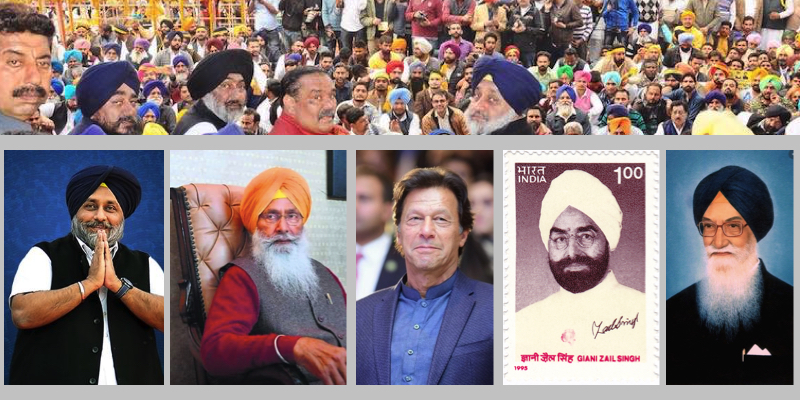
L-R: Sukhbir Singh Badal, Sukhdev Singh Dhindsa, Imran Khan, Giani Zail Singh and Surjit Singh Barnala
By Tarlochan Singh | OPINION |
Normally the Punjabis, and especially the Sikhs, take more interest in political activities. This is common with the Sikhs in Punjab, India and all those who are settled in different countries of the world. The community is very sensitive and they react even to a small incident.
After the completion of the Kartarpur corridor, done in spite of Indo-Pak tension, the Sikhs all over the world praised the role of Imran Khan, Prime Minister of Pakistan. In many countries the Pakistan ambassadors were honoured in the Gurudwaras.
But when the news of a Sikh girl eloping with a Muslim boy in Pakistan appeared, the Sikhs started burning the effigy of Imran Khan. This shows that there is the least tolerance among us and the reaction starts without investigating the incident. After few days, a statement appeared that the girl has refused to come to her parents.
Similarly, there was news about a murder of a Sikh boy in Peshawar, Pakistan. Again the attack on Pakistan government was launched by the entire media and the Sikhs. Later on, a news came that the killing was organised by his girlfriend.
By quoting these two incidents, the abrupt outburst attitude of the Sikhs is evident. We have never tried to overcome these incidents or had have some patience to understand and analyse the happenings.
If one is to review the past 50 years of Punjab history, they will be able to observe our wrong decisions taken at various occasions.
It is common among our leaders to arouse our sentiments without considering that ultimate harm will come to us. We have not even analysed the entire painful episode of 1980’s where we lost thousands of Sikh youth and also the damage to our holiest shrine the Akal Takht.
The Akal Takht is the supreme religious authority of the Sikhs and there are very interesting tales that even Maharaja Ranjit Singh appeared before the Jathedar seeking punishment. This tradition is unparalleled and there is no such example with any other religion.
SHOW OF FORCE: Sukhbir Singh Badal addressing the Sangrur rally – Photo: Sukhbir Singh Badal facebook page
In recent times, Punjab chief minister Sardar Surjit Singh Barnala was summoned and punished. Giani Zail Singh, former President of India, sent an emissary to appear on his behalf before the Jathedar of Akal Takht to plead his innocence but there are reports that many Sikh organisations have criticised his role and have started a campaign to frame new rules for his appointment.
At present, the Jathedar is appointed by the Shiromani Gurdwara Parbandhak Committee (SGPC) which is elected through votes and is controlled by a political party which is Akali Dal. There is a demand in the Sikh diaspora that Jathedar should be fully independent and free from any political pressure.
Haryana was formed a new state in 1966, but the SGPC is still common. The Sikhs in Haryana have been demanding a separate Gurudwara Act, to elect their own Gurudwara committee. Akali Dal has been opposing it and they have put pressure on central government not to bifurcate SGPC.
The previous Congress government in Haryana had issued a notification of having a Haryana state Gurudwara committee. This was challenged in the Supreme Court and the case is pending but it has suddenly taken a new turn by an affidavit filed by the Punjab government giving consent for a separate Haryana committee. Akali party has reacted and are accusing Punjab congress government for interfering in religious affairs.
Along with this, the demand for SGPC election is being raised by all the dissident Akali leaders led by Sukhdev Singh Dhindsa. The elections have not taken place for last four years. Government of India has the authority to announce the election. Akali’s are allies with the BJP government and they’re using their influence not to have elections.
Akalis are out of Delhi assembly elections because the BJP has not given any seats to them. In the last elections, four seats were allotted to them. In Haryana, UP and Rajasthan, Akali’s were not given any seat by the BJP. This has done a great political set back to Sukhbir Singh Badal, president of Akali Dal.
Tarlochan Singh is a ex-MP and former chairman of India’s National Commission Minorities (2003 to 2006). This is his maiden column for Asia Samachar
ASIA SAMACHAR is an online newspaper for Sikhs / Punjabis in Southeast Asia and beyond.Facebook | WhatsApp +6017-335-1399 | Email: editor@asiasamachar.com | Twitter | Instagram | Obituary announcements, click here |