Missed out the chance to learn Gurmukhi? Always wanted to pick it up but didn’t know how? Well, if you’re in the Klang area, here’s your chance. And you can do it in 12 weeks.
Starting: 29 February 2020 (Saturday) | 2:30pm to 4:00 pm | Venue: Gurdwara Sahib Klang
To register, send Whatsapp to Inderjit Singh @ 019-2184886
ASIA SAMACHAR is an online newspaper for Sikhs / Punjabis in Southeast Asia and beyond.Facebook | WhatsApp +6017-335-1399 | Email: editor@asiasamachar.com | Twitter | Instagram | Obituary announcements, click here |
We live in a society where rational reasoning, free will, and making moral choices is the norm of the day. The fast-evolving global changes in the areas of lifestyles, socio-economic and inter-cultural pressures, educational and professional diversity & competitiveness, women liberation & their empowerment, media, fashion, science and technology, advances in medical sciences, etc, have a visible impact on our daily life. Individuals do tend to shape their own futures by making individual choices. The younger generation is being swayed faster than the older in this philosophy of life.
Great men and women in the past, with their grand imagination and foresight, have helped in transforming collective human consciousness and have helped reinvent the future of peoples in the World. When Hinduism, Judaism, Buddhism, Christianity and Islam were being practiced by masses, Guru Nanak (1469-1539), the first Guru of the Sikhs, had indeed changed the future of the people by preaching the oneness of God; equality among human beings and spoke against excessive and abusive Brahmanical practices, including caste and creed distinction.
According to the Gurbani, all human beings are equal, “Sarab nirantar eko dekh”; and there are only two castes in the Sikhism – “Gurmukh” (who look towards the Guru – of a good caste) or “Manmukh” (who move away from the Guru, ‘kamjat’ or of lower caste). According to Guru Nanak Sahib, “Khasam visare te kamjat, Nanak nave baaj snat” (Raag Asa M. 1, GGS. 10-1).
All the Sikh Gurus that followed Guru Nanak Sahib, continued to shape the future of the followers of Nanak and the country by bringing various needed reforms, which grew out of the virtues taught by them. These include humility, devotion, obedience, equality, service, self-sacrifice, justice, mercy, purity, tranquillity and courage.
These virtues reinforced Nam-Simran (serious study of Gurbani), introducing of Langar, inventing of Gurmukhi script, establishment of schools and games for children, progressive role of women, setting up manjis (dioceses), eradication of social evils like ‘sati’, setting up of new towns and gurduaras, sarovars and clinics, collection of Gurbani and Bani of like-minded saints and compilation of Adi Guru Granth Sahib, turning Saints to Soldiers through Piri-Miri style swords, respect for environment.
Finally, Guru Gobind Singh Ji created the Khalsa-Panth to bring an end to the tyranny of Mogul Empire in India and to give India a new future. The sequence of events clearly suggests that Our Gurus were pragmatic and moved with the needs of time to bring about necessary reforms and changes as desired.
If all human-beings, including the Sikhs, were perfect, they would have achieved union with God and there would be no need for organized religion. Since we are not perfect, there is a need for religion. Sikhism is a great and latest religion with a universal appeal to all human beings based on the teachings of the Guru Granth Sahib. The teachings of the Sikhism as a religion are fixed forever and cannot be compromised as ordained by Guru Gobind Singh. The importance of the Gurbani cannot be devalued in preference to rituals, dress code, what to eat and drink, etc. However, a Sikh is expected to evolve with varying degrees of devotion and spirituality that one might have acquired at different stages of his/her life through the Gurbani.
The level of discussions on various forums, particularly on the topic that “Sikhs should not be so rigid” are signs of a deep desire to find as to where do the Sikh stand today and where are we going? The question before us is: What is to be done?
No one can predict the emergence of another Guru in human-body to lead us and show us the way except the Guru Granth Sahib, which is the light-house (“Gurbani eis jag mein channan” – Sri Raag M. 3, GGS. 67-10) to impart directions and values in the areas of divinity, spirituality, educational, social-cultural (universal brotherhood), economic, defence, environment and in all other matters that matter in living a good and full life. Guru Gobind Singh Ji has ordained for us the Guru Granth Sahib as “the Guru” for now and forever. Now, it is for the totality of the Sikh Sangat (the world community of the Sikhs) to engage in the exercise of inventing a future for the Sikhs in the light of “the living Guru – Guru Granth Sahib”. Any step in this direction will be in line with Guru Gobind Singh Ji’s power invested in the Sikh-Panth to supervise the future of the Sikhs.
In the new Millennium, there is need for a “Gurmata of the Global Sikh-Community (Sikh-Panth)” to bring about relevant innovation in conformity with the teachings of the Guru Granth Sahib, while taking into account the historical forces, the past, present and future understanding in the social environment in global context, competing social and political interests, and the capacities and commitments of the communities concerned. This important task is to be led by the best minds, including both religious, secular and professional Sikh-leaders, both men and women, and those living in India and overseas countries, and certainly not to the exclusion of younger generation, which is starting to look for guidance anyway from the Sikh leadership. A process of inventing a future for the Sikhs may take a few years and shall involve consultation of community organizations at all levels.
The essential question before us is: Is Sikh only the one born into Sikhism (in a Sikh family), or can anyone be a Sikh?
FIVE KAKKARS
To survive as Sikhs, in the traditional sense, would mean strengthening the convictions among the Sikhs to continue with the five Kakkars (K’s) that determine the special physical appearance of an individual. The five Ks were rightfully introduced by the Guru Gobind Singh to raise a martial community, which was visibly identifiable and could not be infiltrated by the enemy. The uniform assigned was in keeping with the preparedness desired of a saint-soldier with the driving force of daily recitation (Nit-Nem) of Gurbani. However, the times have changed since the historic day in April of 1699 when Guru Gobind Singh Ji enjoined upon the Khalsa (his chosen ones) to wear these identifiable signs of a “Singh”.
The reality about the five K’s today is that very few Sikhs would be found carrying a Kirpan. Only the priestly class, while performing ceremonial functions, may be wearing swords. In India, the swords are not allowed in public places, parliament and on airplanes. In overseas countries, for a Sikh to carry a sword in public would be nearly impossible. Iron bracelets are worn these days by Sikhs and non-Sikh out of a fashion. People wear varieties of under-wear suiting their convenience. Unshorn hair and turban, which are absolute minimum for the Sikh personal identity, are also under pressure, especially in the younger generation. We need to raise all these issues and implied questions about the five K’s as part of our discussion. On eating of meat whether ‘Jhatka’ or ‘Halal’, both involve killing of an animal or bird. If one does not like killing, better be a vegetarian. Fights on ‘Jhatka and Halal’ are getting into rituals, which the Gurbani condemns.
AMRITDHARI
I have been an Amirtdhari Sikh from the age of 16 years and I can vouch that the Amrit Ceremony did help me a great deal to recite and understand Gurbani. After initial understanding of the Gurbani, I must confess that that wearing of five Ks only boosted my ego that I belonged to a special group of people but these symbols have certainly not contributed to enhancing my grasp of Gurbani (humbly) but by the further vigorous study of Gurbani. I do not claim to be a scholar but I must confess, again humbly, that I do enjoy enormous blessings of Waheguru. Input from those Gursikhs who received enhancement in their spiritual experience outside the Gurbani will be useful.
I used to keep a three inches Kirpan as a symbol in my pocket since I left India in 1970. In April 2008, I was at the Brisbane Airport. At the security check, this small Kirpan was detected and they took it away from me. While I was preparing to counteract, a number of passengers who were watching this episode protested on my behalf to the security staff that it was just a religious symbol and he should be allowed to go with it as its size did not pose any security risk. I am normally a hot-headed person when it comes to such unreasonable pressure. But as I was going to say something, I heard “Mere Waheguru Ji” coming out of me and I heard it loudly and so the other people around me. They thought I was going to be rude instead I told the security to just keep it please and I moved on without the tiny symbolic Kirpan but with the assured presence of “Waheguru” (the mightiest sword) on my lips and heart and which cannot be taken away at any security check, be at an airport or any public place or parliament, etc. Since then, I have not worn the Kirpan as a symbol. I am convinced that wearing the name of Waheguru is more important than any symbol – that’s why Guru Gobind Singh Ji ordered us to be with the Guru Granth Sahib.
Children are sent to schools in a variety of uniforms, which allows them to enter a particular school where they are enrolled. Parents can provide them with any number of uniforms, lunch box, pocket money, books, exercise-books, biros, pens and pencils, etc. They cannot be promoted to the next class (and finally become doctors, lawyers, engineers, architects and other professionals) without following a teacher (Guru) and without hard work and study of the subject matter (Gurbani). So, a Guru and the Gurbani are essential to succeed in life.
GRASPING GURBANI
A regular Nit-Nem is required (understanding and grasp of Gurbani and to try to find Nam (Waheguru, Parmatma or God) in Gurbani followed by daily Nam-Simran. Nam – the power of Gurbani – comes automatically from reading/reciting and understanding of the Gurbani over a period of time and with Waheguru’s blessings and through the seeker’s constant silent prayers. The Sikhs are ordained to read the Gurbani or at least to listen to the recitations (Kirtan) of the Guru Granth Sahib; that they go to the Gurdwara to be among the Sangat and sit in Pangat.
In a seminar on ‘Sikh Panth: Its Problems and Solutions,’ it was highlighted by Prof. Jodh Singh (Guru Nanak Dev University, Amritsar) that ego and rigidity among the Sikh were the root causes of their social and religious problems. The Sikhs in Punjab continue to be in caste distinctions and female foeticide in spite of the teachings of the Sikh Guru. There is a dire need to relook into the functioning of the various Sikh bodies in the country and the absence of a common platform for Sikh organizations in various countries.
A number of members of the Sikh forum Gurmat Learning Zone (GLZ) went on to say: Women being not allowed to recite Gurbani (Kirtan) in the Darbar Sahib, women cannot serve as Granthi; Sikhs (or non-Sikhs) without turban are not allowed to perform Kirtan in Darbar Sahib (when the four doors are meant to be open to all); Sikh scholars who dye their beards are denied honours (siroopas); handicapped’ s wheelchair (in Parikrama) and chairs in Langar Halls are resisted; changes in the Bikrami Calendar, cleaning of Sarovar water with chemicals and installation of air-conditioning in the Darbar Sahib was resisted; race prejudices are hindrances in congenial congregations.
How many Sikhs give an equal part of their wealth to their sons and daughters? The answer is very few indeed. In most Sikh homes, mothers would tend to reserve a somewhat better portion of food for a son than for a daughter (there could be an exception). So, inequality is in our blood, isn’t it? This is a sign of an absence of understanding of the Gurbani.
TYPICAL OUTLOOK
There can be no dangers to the Sikhism, which is on the rise, but there are hurdles to be a Sikh. Sikh men are choosing to retreat from the typical outlook with the turban and unshorn hair. Leaving aside uncut-hair and Kirpan, the other three K’s are hardly a matter of discussion these days. Sikh women are getting their hair-styling and eye-brows done from professional hair-saloons anyway. Statistics show that most professional Sikh girls want to marry “clean-shaven Sikhs” or even non-Sikhs. The newly accepted dress style in the corporate world is generally a clean-shaven man in a business suit and a well-manicured woman in a trouser suit or skirt. More and more Sikhs are quitting their traditions both in India and abroad. To promote Sikh culture, the real Sikh actors should be encouraged to join the Indian film industry ‘Bollywood’ and play the roles of a Sikh rather than a non-Sikh performing similar roles as is practiced currently. Waris Ahluwalia is a great example!
Most Sikhs are unable to read the Guru Granth Sahib and few of those who can read, cannot understand fully. Reading and reciting from the Guru Granth Sahib has become a specialist’s task. While the Sikhs still show great devotion to the Guru Granth Sahib and spend long hours listening to the Kirtan, but in the majority of cases, the intellectual understanding of the Gurbani and Sikh philosophy is truly abysmal. The scriptures are becoming inaccessible to the younger generations because of the language used. The Khalsa Schools in Delhi, which were once primarily started to cater for Sikh students, have not a single Sikh student in some sections of classes. Sikh parents want their children to study in public schools. Outside Punjab, the normal conversation between the Sikh parents & grandparents with their siblings is in a language other than in Punjabi. Even in Chandigarh, Punjabi was not recognized as a second language some years ago. What a pity for the Sikh community to be so helpless!
In India, there is a sharp divide between the Sikhs and Hindus (particularly the RSS) and the resentment with the majority community is ever-widening. At the political level, where number counts, the Sikhs are at almost even numbers with non-Sikhs in the Punjab State. The Sikh votes are predominantly divided into two camps: the Shiromani Akali Dal (SAD) and Congress. With the growing number of migrant workers settling in Punjab, the days are not far away when the BJP, the main Hindu political party, can easily take over the political control to run Punjab Government, throwing SAD in the background altogether. If once BJP takes over on its own, the reversal of the political process may not be easy. To remain in control in Punjab, the Sikh community needs to boost its numbers or those who have a strong allegiance to the Sikhs.
The Sikhs are anyway drifting away to various Deras, Babas and Yogis who are also promoting Gurbani but accept both the turbaned and non-turbaned Sikhs and non-Sikhs alike. The proposition is to suggest opening the doors and accepting those who have faith and trust in the Guru Granth Sahib (Gurbani) as the Sikhs. Guru Gobind Singh Sahib gave us the suffixes of `Singh’ and `Kaur’ after our names. But Guru Sahib nowhere said that those who do not have `Singh’ and `Kaur’ after their names are not Sikhs. This new element of adding `Singh’ and `Kaur’ after names would compound the already existing rigidity which would add to our social problems. Coercion is not good. It would divide Sikh society further. Why cannot a George, Mary, Kamlesh, Rahman, Sharma, Christine, Joseph etc be Sikh names as well? When to be a Sikh one needs to accept Guru Granth Sahib as one’s Guru.
The adherent of the Sikhism is called as a Sikh – one who is looking up to the Guru Granth Sahib as Guru even when he/she may be imperfect. Thus a Sikh could be: Amritdhari, Keshdhari, (Punjabi & non-Punjabi, Indians, Europeans, Americans, Africans, etc.), sehajdhari Sikh, gora or kala Sikh and the list can go on. Since they are striving to be Sikhs, they are equal and deserve respect and all doors are to be kept open to all those who call themselves “Sikhs”.
No Sikh is Patit only one who calls someone else with this name is Patit. Guru Gobind Singh Ji provided water for enemy soldiers in the battlefield and here we fail to accept or embrace those as Sikhs who are moving towards the Guru Granth Sahib, which is the most important Rehat Maryada for a Sikh besides Nam Japna (Nam Japna comes from understanding of Gurbani – so it promotes 100% literacy); Kirt Karni (promotes professionalism) and Vand ke chakhana (promotes charity). The promoters of such qualities, “Sikhs” will make good citizens of the world and shall promote in turn spirituality, peace and prosperity wherever they will be. Thus to helping create ‘Khalistan’ – a land of good people with good resources.
The future of Sikhs is too important to unfold on its own while we all passively wait. Certainly, it cannot be left to some politico-religious Jathedars who may be great in their ceremonial functions but who may not be able to participate in any historical, philosophic or intellectual or even theological discourse. The Sikh community must collectively invent a future and design a destiny for itself in the light of the Guru Granth Sahib (by using the pair of glasses / contact lenses or the intra-ocular lenses of gyan and Brahmgyan – realization of the Gurbani. However, there is a need for translations of the Gurbani in different languages spoken on all the continents.
I apologize to those whose sentiments I might hurt. I am not against Amritdhari Sikhs (or Singhs) as they can be excellent human beings and they have every right to continue with their practice with the focus on Gurbani. But others who wish to partake from the Universal treasure of Gurbani need also to be accepted as Sikh irrespective of creed, colour, country of origin, skin of colour, poor or rich, low or high caste, etc. to give a necessary boost to the numbers of the Sikhs in India and in the rest of world. With is flexibility, there could be influx of interested people to become Sikhs and the Deras, Babas and Yogis may not last very long.
This is open to constructive suggestions to move forward for the sake of the growth of a Sikh-community on all the continents of the world in line with the teachings of the Universal Guru – the Guru Granth Sahib.
Kindly be guided by the Gurbani: “Prabh ka simran sabh te oocha”
I have no doubt that the future of the Sikhism is ever in ‘Chardi Kala’ but who is a Sikh is becoming somewhat blurred? After joining the GL-Z Forum and being exposed to the missives on the Gurbani and about the rigidity in Sikhism that I thought of contributing this article in search for an identity of a Sikh in the context of changing times in the light of my personal experience as well.
Guru Gobind Singh was a great scholar, imbued with God-fearing personality and a Manager with extraordinary skills. He inherited determination for pragmatic changes from his predecessors, the nine Sikh Gurus. Towards the end of his sojourn in this world, he completed and got the Guru Granth Sahib ready to be ordained as the next Guru of the Sikhs. This order came from a Chief Executive of the Sikh-Panth without reference to any other instruction. Therefore, in the fitness of things, it should imply that all the past edicts are superseded by the last and final order. The Guru, as a leader, guided the Sikhs to turn to the Guru Granth Sahib for advice thereafter. So we have no other choice but to read, understand and contemplate on Gurbani to go forward to experience the Truths in Gurbani and lead a decent and full life of a Sikh in various walks and respective professions.
The Guru Granth Sahib guides as to how to live life and to merge with God through the Gurbani, the grasp of which leads a Sikh to Nam Simran (‘Prab ka simrn sab te oocha’). There is no room for any rituals what so ever to meet the goal in life.
Kirpal Singh holds a PhD in Chemistry. Served as Professor, Dean of School of Natural and Physical Sciences and Adviser to the Vice Chancellor at the University of Papua New Guinea. Retired as Professor Emeritus. Exploring Gurbani and Gurmat is his passion. Authored a book Gurmat Saachi Saacha Vichaar, Sanbun Publishers, New Delhi, April 2014. The article was first published here in 2014.
* This is the opinion of the writer, organisation or publication and does not necessarily represent the views of Asia Samachar.
ASIA SAMACHAR is an online newspaper for Sikhs / Punjabis in Southeast Asia and beyond.Facebook | WhatsApp +6017-335-1399 | Email: editor@asiasamachar.com | Twitter | Instagram | Obituary announcements, click here |
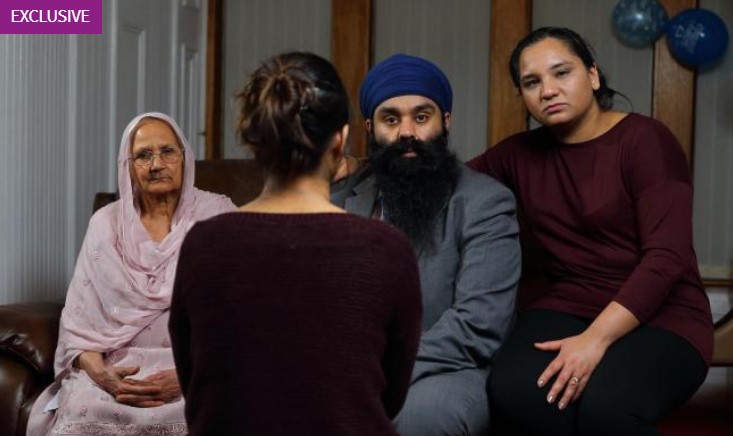
Karamdeep with her parents – Photo: Photo grab from ABC video
By Sontaya Rose | ABC | UNITED STATES |
SANGER, Calif. (KFSN) — A Sanger family is honoring their daughter in a meaningful way after she was killed in a car crash last year.
Karamdeep Dhaliwal was an after-school program director at Madison Elementary in Sanger.
Miss Kam was a favorite at the school. She was generous and giving, and an annual $10,000 gift will reflect her kind heart.
A tree honoring her is a lasting tribute to a woman whose co-workers say made a difference on campus every day.
“Losing somebody that brings light and life and fun and just her everyday presence being gone was hard for everybody. And her family are just amazing, and we’ve been able to keep that memory alive,” said principal Stephanie Rodriguez.
Gurinder and Charandit Dhaliwal, her parents, have felt that pain especially hard. They skipped celebrating the holidays, because it brought memories of their daughter flooding back. Kam was the outgoing, funny, adventurer of the family, who made the most of every day.
“She was one kind of person that was always giving out, giving out…. I was blessed to have her in my life. I was really blessed,” said Gurinder, her mom.
Gurinder also works for Sanger Unified in the middle school cafeteria.
Every day, she sees firsthand the challenges some students have in paying for their lunches.
Several schools in the district don’t qualify for free lunches – and many students have high outstanding balances.
“If you have money, that’s good. If you don’t have money, we still feed kids. We don’t care if they have money or not, we don’t make separate food for them we don’t make any other kind of food. Whatever is on the line, we will give them. And we will not even let them know – ‘Hey you don’t have money’,” she said.
That gave her an idea – another way to honor the life of her daughter with a fitting tribute. Their family would help eliminate past due lunch debt.
Jannette Garcia is the Child Nutrition Director at Sanger Unified. She said the $10,000 annual gift will feed hundreds of kids.
“That’s one of the things that Gurinder wanted to do is to reflect that care and compassion by giving this donation- it definitely will carry on that legacy for years to come,” said Garcia.
Karamdeep’s love of reading will also live on through a tree planted there. It will eventually be a place students can sit on a bench along with a book. It blooms each spring with her favorite color – purple.
See video and the full report, ‘Sanger couple honor daughter with $10,000 gift to school to erase kids’ lunch debt’ (ABC, 25 Jan 2020), here.
ASIA SAMACHAR is an online newspaper for Sikhs / Punjabis in Southeast Asia and beyond.Facebook | WhatsApp +6017-335-1399 | Email: editor@asiasamachar.com | Twitter | Instagram | Obituary announcements, click here |
PATH DA BHOG: 15 Feb 2020 (Saturday), 3-5pm, at Gurdwara Sahib Johor Bahru| Malaysia
JIN GAY SINGH (A.M.N., P.I.S.)
(1950-2020)
Ex-Perstima Bhd (Pasir Gudang)
Saskaar / Cremation: 4 pm, 29 Jan 2020 (Wednesday), at Kebun Teh Crematorium, Johor
Path da Bhog: 15 Feb 2020 (Saturday), 3-5pm, at Gurdwara Sahib Johor Bahru
Contact:
Angkar Singh 010-888 8804
Amrit Kaur 010-888 8814
Jasant Kaur 016-7098105
| Entry: 29 Jan 2020;Updated: 30 Jan 2020 | Source: Family
ASIA SAMACHAR is an online newspaper for Sikhs / Punjabis in Southeast Asia and beyond.Facebook | WhatsApp +6017-335-1399 | Email: editor@asiasamachar.com | Twitter | Instagram | Obituary announcements, click here |
The above dire warning comes from Sir David Attenborough, the world-renowned broadcaster and natural historian. It comes ahead of the 26th Conference of the Parties, known as COP26, at Glasgow later this year. About 30,000 delegates are expected to attend.
I recall from own experience working with the aerospace industry that reduction of emissions from planes was high on the research agenda over 25 years ago. However, air traffic too was expected to increase at least five time in the next 25 years. Is it possible that humans numbering about 8 billion and increasing, have reached the point of no return to save planet earth?
Time is not on our side. More so as the politicians keep on delaying radical steps at global level to bring about change. It was over 13 years ago that I participated in a significant European event on behalf of the Sikh faith organised by a UK Jewish group at Windsor Castle on 14 November, 2006. The issues discussed included ecological and environmental damage being done by pollution and overuse of earth resources, the global warming, and conflicts that threaten the future of our planet. Starting with that Windsor conference, I have continued with Gurbani research about related guidance. Our green world is disappearing and looks very different from space now than even a few years ago.
Over 500 years ago, Guru Nanak saw the Creator in the diverse creation wherein He sits and watches over all with joy and satisfaction (chaao). Many passages in Sri Guru Granth Sahib are devoted to nature, the environment, the wind and the rain, day and night, the changing seasons, and the rich diversity of life on earth. The Creator created the air, which, in turn, created water and brought life on earth. (SGGS p.19). On this earth man is at the head of all species (SGGS p.374) but has forgotten his duty (dharam) to serve the Creator and His creation due to lust, greed and consumerism fuelled by commercial interests and advertising.
A relevant point hardly mentioned is the role of women in addressing today’s global issues. We forget that mother is the first teacher of the human child. According to Sikh teachings her role in the human family is of prime importance (Sabh parvaaray mahe sresht). Education of women is important to raise awareness of today’s global challenges at family level – from energy saving, water saving, and want-not-waste-not habits, to family planning, leading on to population control – it all starts at family level where the woman, the mother and the housewife, leads. Equality and education of women should be made a global priority.
Sikhi living gives pointers to next steps in the evolution in our socio-political systems to cope with the environmental challenges. Sikh teachings do show the way if it is not too late.
Gurmukh Singh OBE, a retired UK senior civil servant, chairs the Advisory Board of The Sikh Missionary Society UK. Email: sewauk2005@yahoo.co.uk. The article appeared here.
* This is the opinion of the writer, organisation or publication and does not necessarily represent the views of Asia Samachar.
ASIA SAMACHAR is an online newspaper for Sikhs / Punjabis in Southeast Asia and beyond.Facebook | WhatsApp +6017-335-1399 | Email: editor@asiasamachar.com | Twitter | Instagram | Obituary announcements, click here |
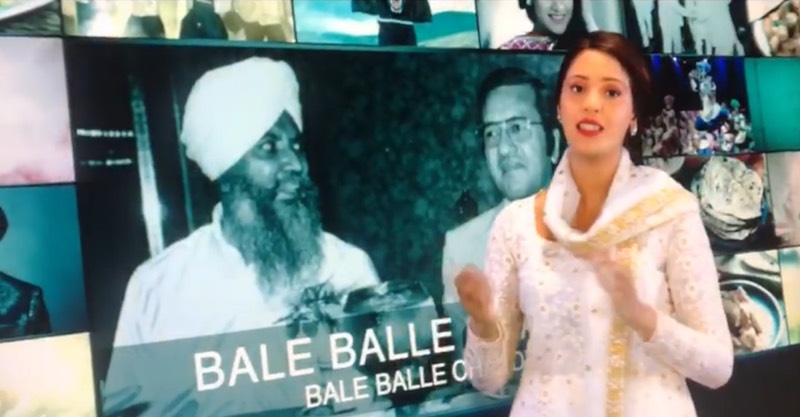
A brand new Punjabi series running on RTM2 will bring you updates on the Malaysian Punjabi community. One segment of Bale Balle Chakde, which goes on the air at 4.30pm on Tuesdays, will allow viewers to learn the Punjabi language.
The half-an-hour weekly programme will also feature a segment on Punjabi food.
“You will get a total Punjabi package. The show will also feature songs. Viewers will get to learn Gurmukhi, with Malay and English translations. This is a first for Malaysian television viewers,” Saheb Production chief Baldev Singh Uppal tells Asia Samachar.
The programme is hosted by Shanno Sidhu, Arvinder Singh Jassi and Pretty Dhillon.
ASIA SAMACHAR is an online newspaper for Sikhs / Punjabis in Southeast Asia and beyond.Facebook | WhatsApp +6017-335-1399 | Email: editor@asiasamachar.com | Twitter | Instagram | Obituary announcements, click here |
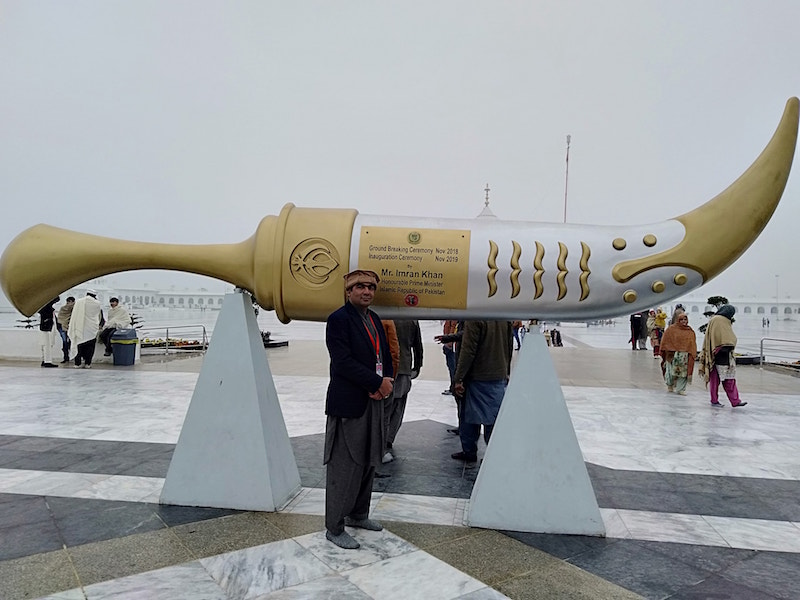
Kartarpur – Photo: Malik Dil Shair Bhullar facebook page
By Nirmal Singh | OPINION |
KARTARPUR INAUGURATED: THE MESSAGES SENT OUT
The Prime Minister of India, Narendra Modi, invoked Guru Nanak but drifted to compare the decision for creation of the corridor to the fall of Berlin Wall in that the project may help ease tensions between the two states at loggerheads from their inception. He also thanked Pakistan Prime Minister Imran Khan [1] for ‘respecting the sentiments of India. The opening of Kartarpur Sahib corridor before the 550th birth anniversary of Guru Nanak Dev Ji has brought us immense happiness’ thus asserting that the longing for the corridor was sentiment of India and not of Sikhs alone.
PM Imran Khan was candid to admit the he did not know anything about Kartarpur a year back but said that “Pakistan believes that the road to prosperity of region and bright future of our coming generation lies in peace”, and that Pakistan “is not only opening the border but also their hearts for the Sikh community.” So opening of corridor may bring peace, prosperity and bright future to the region and Pakistan was opening their hearts to Sikh community. He was addressing India for prosperity through peace and extending invite to global Sikh community.
Pakistan foreign minister Shah Mahmood Qureshi said that the corridor has given Pakistan a lot of goodwill in the Sikh community. Pakistan decided to continue with the Kartarpur Spirit as a goodwill gesture despite India not giving similar response. He compared the opening of corridor to fall of the Berlin Wall, which changed the face of Europe. Kartarpur can change the face of South Asia [2].
The US saw the Corridor as a positive example of neighbors working together for their mutual benefit. [3] A simple transaction based on mutuality of interest of neighbors, not motivated as a giveaway to Sikhs.
The UN secretary general’s spokesperson welcomed facilitating visa-free cross border visits by pilgrims by use of Corridor as way for interfaith harmony and understanding – the only message to reflect on the raison d’être – the Sikh longing!
The response of Sikhs was euphoric. Rajmeet Singh, Tribune News Service, part of the first jatha to walk through the corridor felt an upsurge of emotions was all pervasive – divine aura of Guru Nanak was at play – some walked up to immigration terminal, chanting hymns.
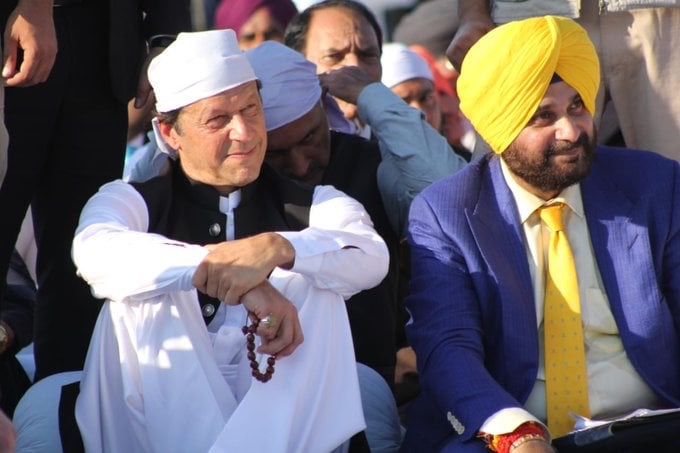
Playing perfect host, Pakistan PM Imran Khan travelled up to the immigration terminal – devotees awestruck by quality makeover given to the shrine – the four acre shrine premises now is 42 acres, with 3.5 lakh sq ft white marble flooring around the main complex – Navjot Sidhu was mobbed, everyone including Imran Khan crediting him for the initiative – as clock struck 5 pm it was time to return – one of the most memorable days in lives of all who were there! [4] “It is like a dream come true.
The Pakistani government fulfilled its pledge to Sikh community in a short period. It is a mega project. Such a huge project has never been accomplished in such a short time in Pakistan’s history,” Gobind Singh [5], Granthi of Darbar Sahib, Kartarpur, told DW.
At the last minute all controversies dissolved. Punjab Chief Minister Amrinder Singh called off the simultaneous event by the state with the PM’s event and the PM Modi passed the charge to lead the first jatha from India to Jathedar Akal Takht with ex PM Manmohan Singh, CM Amrinder, Navjot Singh Sidhu and over 500 others following! The spirit of peace and love divine that the Guru epitomized had pervaded the hearts of one and all. [6]
Everything came around seamlessly as if the divine hand was guiding it all. Sikhs were ecstatic and thankful. They had to be for so much was done by the two countries to fulfill a Sikh longing and their leaders were citing Kartarpur Model and Kartarpur Spirit as the way to contain conflict and usher in peace and prosperity for mutual benefit!
Photo: Imran Khan Facebook page
NOT SO FAST: WORDS OF CAUTION!
From this euphoric pitch, we want to now turn to the notes of caution about the intent and likely difficulties in the peace process that have been expressed on both the sides.
Captain Amrinder Singh, the CM of Punjab has been persistently mistrustful of Pakistani intent. He has maintained that the project is supported by Pakistan IS establishment and it cannot but be an instrument to disturb peace and harmony prevailing in Punjab and promote terrorist activities along the international border in the state. Similar views have been expressed by some experts on security issues in India.
Over three weeks after the inauguration of the Corridor, Pakistan Railways Minister Sheikh Rashid, said to be close to Pakistan PM, has told reporters [7] that “Gen Bajwa strongly hit India by opening the corridor. Through this project, Pakistan has created a new environment of peace and won itself love of the Sikh community.” He also added that General Bajwa did not attend the Kartarpur Corridor’s opening ceremony apparently to avoid any controversy. The statement by Minister Rashid tends to support apprehensions on Indian side.
With euphoria tempered by cautionary as well as threatening voices, turning to look at the core messages, feelings, hopes and expressions that the Kartarpur Corridor has evoked may give us a more balanced perspective.
CATCHING KARTARPUR SPIRIT
The term Kartarpur Spirit has been used by FM Qureshi. We had earlier summarized his stated message as: The corridor has given Pakistan a lot of goodwill in the Sikh community. Pakistan decided to continue with the Kartarpur Spirit as a goodwill gesture despite India not giving similar response. He compared the opening of corridor to fall of Berlin Wall, which had changed the face of Europe. Kartarpur can likewise change the face of South Asia.
The above statement has three components, viz.
Pakistan continued Kartarpur Spirit as goodwill gesture despite no response from India
It has given goodwill in Sikh community
Opening corridor like fall of Berlin Wall
Kartarpur Spirit thus seems to be an abstraction for Pakistan’s goodwill gesture to India. Pakistan continued the goodwill despite lack of India’s reciprocity. So while Pakistan was trying to woo a reluctant India to show reciprocity, it, instead, earned a lot of goodwill among Sikhs who were rooting for the corridor.
This triangular dynamic became obvious as the project progressed and its recognition resonates in what the two PMs said on inauguration. So the Kartarpur Spirit in fact was a euphemism for Pakistan catching India’s sentiment and opening its heart to Sikhs – both incidental to a Sikh religious longing on the 550th of Guru Nanak – a win for all!
BERLIN WALL ANALOGY
Both PM Modi and FM Qureshi have invoked the example of the fall of Berlin Wall during their speeches when talking of the Corridor. While PM Modi alluded to creation of corridor to the fall of Berlin Wall in that the project may help ease tensions, FM Qureshi said [8] ‘If in our time, Berlin Wall could fall, the map of Europe changed, Kartarpur corridor opened, then the line of control dynamics can also be changed. Peace can also be initiated. He had also said in 2005 [9] that one day border would be irrelevant and Pakistan and India will become one, “like the two Germanies”.
The Kartarpur events were covered by International media. One would therefore be inclined to believe that neither Modi nor Qureshi was using Berlin Wall as a jumla – a metaphor only, not intended. It is expected that both of them would be familiar with the implications inherent in the changes that fall of Berlin Wall set off 30 years earlier to the day on November 9, 1989. The backgrounds of both the leaders are impressive. Narendra Modi is product of the RSS grooming and in his speeches as well as dealings with foreign Heads of State has displayed understanding of the diverse forces at work in both the national and international spheres. His group of advisers would no doubt be familiar with the breadth and depth of fundamental changes that fall of Berlin Wall had led to in East Europe. Shah Mehmood Qureshi hails from an influential Sufi family of Multan, went to school at Aitcheson College, BA from Forman Christian College, followed by Graduate degrees in Law and History from Cambridge. He is Sajjada Nashin of the dargah of Bahauddin Zakariya, entered politics in mid 1980s and has been Pakistan’s Foreign Minister twice. That he has expressed similar views earlier, should be confirmatory of his meaning what he said about the fall of Berlin wall.
With the above background, the question that comes up is if they both are indicating that after over 70 years of dithering trying to make the model created in 1947 to work for good of people of both the countries, it is time the sub continent now introduces mega changes like the historic fall of Berlin Wall did for Europe to ease tensions in the region and change its face using the ubiquitous Kartarpur Corridor initiative!
The intent of the two leaders and their governments therefore should be explored further for specific changes to initiate with Kartarpur Corridor as catalyst, that eventually help bring peace and prosperity to the South Asia region, as the fall of Berlin Wall [10]did to countries in Europe.
Gopalkrishna Gandhi [11] infers that PM Modi’s recall of Corridor as dismantling of Berlin Wall was both historical and contemporary. His argument is that the policy by enunciated by PM I.K. Gujral to base relations with Pakistan on reciprocity evolved into the well known concept of composite dialogue which included ‘promotion of friendly exchanges in various fields’ and thus placed mutuality of interest as a reciprocity equivalent. Gandhi’s view endorses the existence of conceptual consistency among Indian leaders on the mechanics of Pakistan relations but whether they would be willing to go as far as ‘Berlin Wall fall changes’ is not a given.
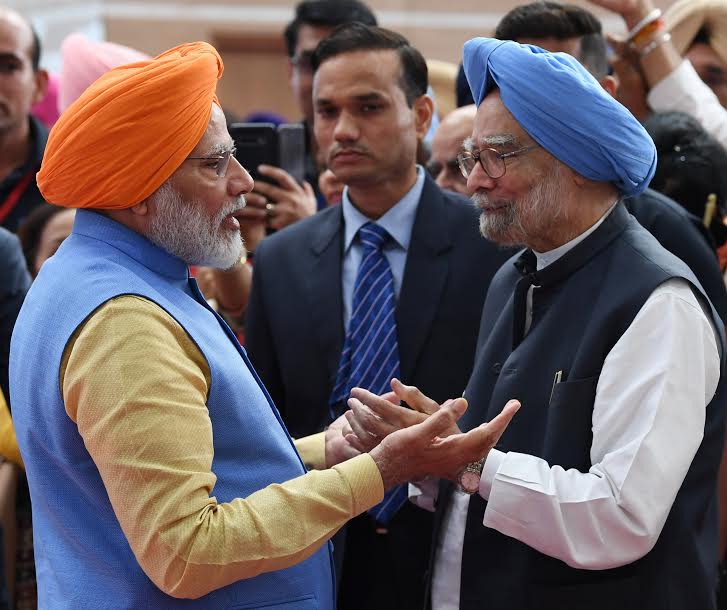
Indian PM Modi and former PM Manmohan Singh at the Kartarpur Corridor opening – Photo: Narendra Modi Facebook
REPLICATIVE KARTARPUR MODEL
As we said earlier the phrase Kartarpur Model was used by the ex-PM Manmohan Singh. If we go back in history, it was at Kartarpur that Guru Nanak had lamented at the destruction suffered at the hands of invaders [12] and now, half a millennium later the Hindustan of yore, that the Guru had loved so much, is divided into two countries that are extremely mistrustful of one another and the hope is expressed that the Kartarpur initiative playing out presently would establish a model that leads to easing of tension, bring peace and harmony for better future and prosperity to the poor and suffering people of the two countries.
Continuing our purpose is to try and grasp the essentials of paradigm that Kartarpur model may inhere. About Manmohan Singh, who was the first to use this term use of term, David Cameron, the ex British PM, had reminisced in his autobiography saying “He was a saintly man, but he was robust on the threats India faced” and that he had told Cameron in July 2011 that in the event of another terrorist attack like 2008 in Mumbai, “India would have to take military action against Pakistan.” [13]
With the history of relations between the two countries as Dr Manmohan Singh would be fully aware of, he could not have uttered the hope placed on Kartarpur Model lightly, nor would he have used this phrase as a metaphor. He is not easily swayed by euphoric emotions and thus would have perceived the Corridor that had received active involvement and support of both the Governments, to have potential to contain conflict and promote peace, harmony and prosperity in the region.
During his visit to pay obeisance at Gurdwara Darbar Sahib in Kartarpur as part of the first group to cross over after inauguration of the Kartarpur Corridor on 9 November, 2019, Dr Manmohan Singh had told reporters from Pakistan “I hope India and Pakistan relations improve enormously as a result of this beginning. It is a big moment,” On his return to India later the same evening, he told the media, “It was a good beginning, India-Pakistan relations are subject to many buts and ifs, I hope this is a good beginning to normalize our relation.” [14] Similar sentiments underpin the messages by incumbent PMs of India and Pakistan and their predecessors consistently.
The progress of the project from the dates of initial announcements by the two Governments was not without hiccups but these kept getting resolved, albeit slowly. Notwithstanding complexity of issues in the ongoing negotiations, both the sides made empathetic concessions to accommodate Sikh requests while construction work kept pace for meeting the time deadline.
The project also seemed to grip the attention of international community. The uniqueness of the case was that in one of the extremely troubled areas of the world, these two Governments, hardly on talking terms, were creating history by facilitating access for the devotees of a minority faith to their sacred religious site across international boundary without a formal visa. No wonder the project received global approbation!
Since Manmohan Singh expressed the hope that Kartarpur Model could be replicated in future for durable peace, we have tried to identify the leading characteristics of this model culled from what has transpired so far. The summary is presented below to facilitate conceptualization and planning of the replication process.
SITUATIONAL IMPERATIVES AS ON GROUND
Long standing unresolved issue [Kashmir] impeding progress on both sides that could cause major internal unrest or trigger violent conflict between opponents
Cannot subdue the opponent through military means, economic pressures, international channels or on moral/ethical plane
Diplomatic relations snapped
Costs turning very high but risks in proposed venture minimal
A CONSTRUCT OF MODEL BASED ON WHAT HAPPENED
Locate a potential benign area of agreement with manageable costs and risks [corridor [15]]
Ensure national interest will not be jeopardized [systemic controls]
Spontaneous announcement of own intent with timeline for completion [surprise]
Make concessions, stay steadfast on the project, earn goodwill of beneficiary and the international community, media et al [create optimism]
Controlled thaw management with the opponent and edge to dialogue with options that have a chance of acceptance [unsaid cooling off]
If does not work, go back to drawing board, keep lessons learnt in mind [resoluteness]
The above simplistic paradigm is a construct based on what actually transpired in this case but generalized for ease of modification for specific situations or in the operation of this project itself by those involved at leadership level who hopefully would be committed and proven resolvers of knotty issues and not status quoits.
Coincidentally a possibility for replicating religious diplomacy in evidence in Katarpur Corridor has been flagged by Commodore C Uday Bhaskar in the healing and reconciliatory intervention needed in the post Ayodhya Verdict [16] situation. Bhaskar also has argued [17] that the Citizen Amendment Act case, agitation against which is currently roiling India, must be negotiated with the citizen – making another potential case for interfaith healing and intervention!
In our view the possibilities for interfaith interventions for internal religion related disputes are immense in India and it is about time that the tenor of interfaith engagement moves from surface expression of bonhomie to genuine interfaith initiatives for trying to identify the root causes and then working for their solution through whatever changes are needed. [18]
Programs intended to satisfy a societal yearning could involve considerable capital and recurring costs. In discussions relating to the Corridor, the cost element has not figured as a factor except relating to the maintenance expenses of the entry/exit facility being recovered, at least in part, by a service fee. The intent therefore is to inspire peace and harmony through reaching out to people rather than look for reciprocity, mutuality or economic benefit. That subtlety must not be lost on us when we think of replication or incremental use of this paradigm.
The same thought seems to be expressed by Grant Wyeth when he infers [19] that ‘the Kartarpur Corridor may be a small initiative to create some goodwill and ease one pressure on both states, and with success this may create the momentum to identify and sooth another problem in the future.’ So the critical factor to opt for replication is the sense of success that is discerned when the initiative is put in operation.
CORRIDOR OF PEACE ANALOGY
The Hindustan Times [HT] editorial on 12 November, 2019 recognized that on Indian side there were apprehensions and considered that getting on to negotiating table was unlikely till Pakistan takes action against terrorist leaders/groups operating from its soil. Thus in HT view, opening of the Kartarpur corridor ‘only represents a chance to dispel the pessimism by acting as a corridor of peace.’
The above editorial moderates the expectation placed on the corridor in that it discounts the hope of peace process getting started by the thaw created, but nonetheless acknowledges that it can be a trigger ‘to dispel the pessimism’ by acting as a ‘corridor of peace.’ So this joint act by both the governments to create Kartarpur corridor only brings a ray of hope to the environment of gloom that had come to prevail.
HT therefore sees the Corridor as a first response intervention. More concrete steps could follow as confidence building process starts yielding positive signs. So the Editorial seems to imply that by itself the Kartarpur corridor is neither a model nor an event akin to the fall of the Berlin Wall. It is only an initial step to set off the peace process – its value lies principally in its symbolism of hope by lifting sense of gloom.
The Paper also mentioned that ‘Given the Pakistan Army’s role in all matters in construction of infrastructure and renovation of the Darbar Sahib, Indian government will continue to eye the corridor with caution’ – this intense mistrust is specific to the current situation and the cause of gloom and therefore has be dealt with, incrementally in manageable steps!
The CNN [20] has reported that the road link [highway corridor to temple constructed by Pakistan] is dubbed as the “corridor of peace” in local Indian and Pakistani media. This usage perhaps has devotional connotation for the Gurdwara environment invariably induces a sense of peace in the devotees. But then in a lighter vein, if the ‘drive going in’ from home is named as ‘corridor of peace’, what should the ‘corridor coming back’ home be called?!!!
CONTRAST IN VIEWS
Before we move on to further discussion, we do want to draw the reader’s attention to cautious remarks on the Kartarpur initiative by the US and UN compared to the effusive comments by the leaders of India and Pakistan. The US welcomed the development as mutually beneficial and UN saw it to promote interfaith harmony and understanding. Readers may also notice that CNN has reported that the connecting road is termed by the local media as ‘corridor of peace.’ They have not endorsed the appellation ‘corridor of peace.’
So while the international media gave coverage to the event, it is not clear if they took it to be a ground breaking development. It gave that 15 minutes of fame to many – perhaps Sikhs got the most press but that was incidental. Obviously political leaders of India and Pakistan are looking for some way out to scale down the tensions without loss of face but they and media know that in fact the electoral calculus and orientation of the majority is important for retaining power, not the outcome of the Kartarpur initiative.
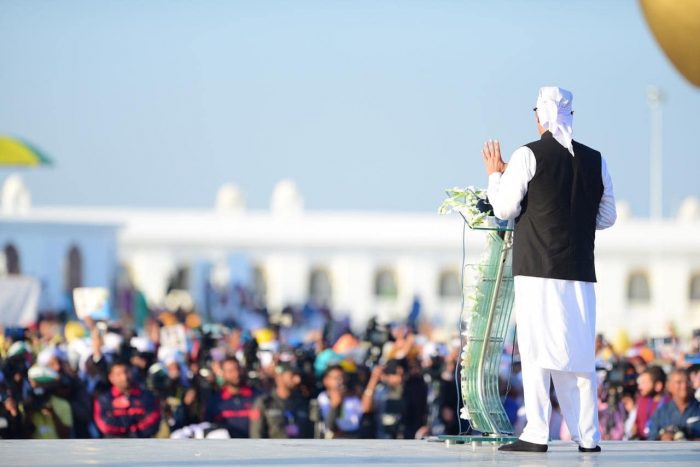
Pakistan PM Imran Khan addressing the opening of the Kartarpur Corridor Photo: Imran Khan Facebook page
PEACE MOVES: THE MAJOR ENIGMA
We are familiar with paralysis of governments, engineered by a fringe political, religious, ethnic or cultural group from within the religious majority. Instances of creating crisis to give a push to the populist agendas are also common. In all cases, protagonists may invoke emotive historical memory or arouse national or religious indignation to sharpen public responses in direction that increases support for their intended outcome.
Such strategies are employed everywhere and India and Pakistan are no exception. In fact chasm between liberal human rights principles and ethnic, national or religious majority interests in the two countries has only grown wider because of their highly charged political environments.
In such circumstances initiatives like Kartarpur Corridor could involve high improbabilities and risks along the way and it would be tricky to read euphoric sentiment of a wind of change into it. Just below the surface, may lay a pile of prejudice, pent up hate and frustration that may surface suddenly. In fact, in Pakistan, a TV show brought out that active opposition to the initiative was already being propagated by radical Muslims and in India, the 28 reader’s comments on a news item in Tribune exposed the intensity of the Hindu unhappiness at the development.[21]
At the realistic plane, the cynicism tinged with the type of mistrust and fear that existed prior to 1947 and had led to the partition continues to survive on both sides. Pakistan had started out as a Muslim state citing fear of domination by a Hindu rule that nursed historical memory pictured by the following summary [22] “M.S. Golwalkar took over as the second and longest-serving leader of the RSS in 1940. The same year he published, ‘We or Our Nationhood Defined’, in which he proclaimed: “Ever since that evil day, when Moslems first landed in Hindustan, right up to the present moment, the Hindu Nation has been gallantly fighting on to shake off the despoilers.” He declared that “we, Hindus, are at war at once with the Moslems” who “take themselves to be the conquering invaders and grasp for power.” The “cause of our ills,” he insisted, was the day that “the Moslems first tread upon this land.” Yet Golwalkar saw a glimmer of hope, claiming that the Hindu “is rousing himself up again and the world has to see the might of the regenerated Hindu Nation strike down the enemy’s hosts with its mighty arm.”
In Pakistan a recent report [23] tells us that Islamist parties in Pakistan say that against the backdrop of Pulwama [24]in February and Article 370 abrogation [25] in August, November Kartarpur corridor opening suggests that powers larger than civil leaders of Pakistan are pushing for the corridor as Islamabad aims to build leverage and possibly promote a separatist movement in Indian Punjab. Then there was the case of reported stone pelting at Gurdwara Nanakana Sahib on 4th January, 2020 that has evoked very strong response from Sikhs and Indian government. [26]
If the above political play continues, the real challenge for ushering in regional peace would lie in changing the prejudiced mindset of the majorities in the two countries to cooperate with peace initiatives. That is the burden of leadership and initiatives like Kartarpur Corridor may be able to help no more than supplement the efforts of leadership. The danger is that the leaders may let the initiative drift in trying to keep their electoral base energized.
On the other hand, in Pakistan, extremist elements are unhappy with accommodation to the Sikhs because they see Pakistan as Muslim land and expect Sikhs to ally in battle against Modi and Hindus.
So the extremist elements are actively citing Corridor to drum up belligerency on both sides.
[10]https://www.nato.int/cps/en/natohq/opinions_135906.htm – The link provides transcript of a video lecture by Dr. Jamie Shea, Deputy Assistant Secretary General for Emerging Security Challenges, on the 20th anniversary of the Fall of Berlin Wall. The scope and import of changes that happened is immense and fundamental. Are India and Pakistan ready to even admit of such changes?
[15] Ibid. Gopalkrishna Gandhi sees the Corridor as an eminently reasonable, apolitical and unprejudicial stand-alone facility – almost totally risk averse if subversion possibility is kept in check.
[18] The subject of using Interfaith Engagement for societal peace and harmony and as an aid to resolving international conflicts from Sikh perspective and Indo-Pak context are discussed in Author’s Book ‘Interfaith Engagement,’ 2015, Hemkunt. Text of the book can be accessed free at http://www.sikhsandsociety.org/
[19] Diplomat, Dec 11, 2018: Grant Wyeth is a Melbourne-based political analyst who writes on international affairs for the Diplomat.
[24] On 14 February 2019, in a convoy transporting 2,500 Central Reserve Police Force personnel from Jammu to Srinagar, a bus was rammed by a car carrying explosives near Awantipora killing 40 CRPF personnel. Pakistan-based Jaish-e-Mohammed claimed responsibility. Pakistan denied involvement.
[25] Article 370 of Indian constitution allowed Jammu and Kashmir to have a separate constitution, a state flag and autonomy over the internal administration. The Article was abrogated on Aug 5, 2019 and the state divided into two Union territories. For detailed analysis, see Wikipedia entry Article 370 of Constitution of India
[Nirmal Singh has written six Books on Sikhs and Sikhi and several of his Articles have been published in journals like Sikh Review, Journal of Sikh Studies and Comparative Religion, Abstracts of Sikh Sudies [IOSS], Sikhnet News and in the mainstream US news media. Resident in Orlando, he spends considerable time in Delhi.]
ASIA SAMACHAR is an online newspaper for Sikhs / Punjabis in Southeast Asia and beyond.Facebook | WhatsApp +6017-335-1399 | Email: editor@asiasamachar.com | Twitter | Instagram | Obituary announcements, click here |
Jagtar (Jaggi) Singh Johal’s family have had to put their life on hold for over two years while their son, brother, uncle and husband remains imprisoned in India- Photo: The National
By Kirsteen Paterson | THE NATIONAL| SCOTLAND|
While he remains in a cell in Delhi, she has been refused the right to stay in Scotland with her in-laws.
She arrived in the UK last year for talks with then-foreign secretary Jeremy Hunt and subsequently applied for permission to remain in the UK.
But last Saturday she received an official letter explaining that while she has a “unique” set of circumstances, officials will not allow her to live in Scotland.
That’s despite fears over her safety in India, where she wed Jagtar just two weeks before his November 2017 arrest.
Authorities said they had everything needed to convict him of involvement in an international conspiracy behind the assassination of the leader of right-wing Hindu group. Ravinder Gosain, head of Rashtriya Swayamsevak Sangh (RSS), was shot dead by two armed attackers in October 2017.
But Jagtar, an internet marketer, denies funding any plot and his family believe he has been targeted over his nationality and blogging about the bloody pogroms of 1984, in which at least 2700 Indian Sikhs were killed.
More than two years and approaching 200 court appearances later, no evidence has been heard against the keep-fit fan and his claims of torture at the hands of Punjab police have never been assessed, despite pressure from the UN and international legal charity Redress.
A handwritten letter containing those claims also included alleged threats by authorities against Gurpreet. “Orders were given to arrest my wife”, Jaggi wrote, along with claims of electrocution and other violent treatment.
Gurpreet, 31, has never allowed her name to be reported in the media before. She has allowed the Sunday National to reveal her identity as she takes on the Home Office over her future and slams the UK Government for “not doing enough to help” her husband.
Gurpreet says Hunt gave her “hope” for progress, but the visa refusal puts her at risk and adds to the hardship already facing Jaggi and his Dumbarton family.
Gurpreet, who has asked us not to show her face, had been married for only two weeks when Jagtar was bundled into a vehicle by plain clothes police as they shopped in a Punjab town in November 2017.
The manner of the arrest meant relatives initially feared he had been abducted by a gang targeting Westerners.
Gurpreet says she does not want to live away from Jagtar, but his transfer to a prison eight hours from her home means staying in India is of little help to him.
Read the full story, ‘Westminster force visa battle on Jagtar Singh Johal’s wife’ (The National, 26 Jan 2020), go here.
ASIA SAMACHAR is an online newspaper for Sikhs / Punjabis in Southeast Asia and beyond.Facebook | WhatsApp +6017-335-1399 | Email: editor@asiasamachar.com | Twitter | Instagram | Obituary announcements, click here |
PATH DA BHOG: 2 Feb 2020 (Sunday) at Gurdwara Sahib High Street, Kuala Lumpur| Malaysia
SUPP (RTD) GURDIAL SINGH A/L AMAR SINGH
(16.1.1931 – 26.1.2020)
Retired Superintendent of Police, PDRM.
Passed away peacefully on 26th January 2020.
Wife: Gurdave Kor
Son in law: Gurbakash Singh Mehna
Path Da Bhog: 2 February 2020 (Sunday) at Gurdwara Sahib High Street, Kuala Lumpur
Contact: Gurmail Kaur 012-390 9696
| Entry: 27 Jan 2020; Updated: 30 Jan 2020 | Source: Family
ASIA SAMACHAR is an online newspaper for Sikhs / Punjabis in Southeast Asia and beyond.Facebook | WhatsApp +6017-335-1399 | Email: editor@asiasamachar.com | Twitter | Instagram | Obituary announcements, click here |
MAKING HISTORY: Ramesh Singh Arora speaking after being reappointed an MPA to Pakistan’s Punjab provincial assembly. – Photo: Supplied
By Asia Samachar | PAKISTAN |
Ramesh Singh Arora made history when he returned to the Punjab state assembly on Thursday (23 Jan).
The 46-year old Pakistan politician became the first Sikh to be reelected as a Member of Provincial Assembly (MPA) of Punjab when he took oath as an MPA on reserved seat.
In 2013, he made history as the first Sikh to join the lawmaking body after the 1947 partition of India which led to the formation of Pakistan.
During his first term, in October 2017, he moved a bill to ‘provide for solemnization and registration of Sikh marriages.’
The Punjab Sikh Anand Karaj Marriage Act 2018 was passed without any objections, a first for Sikhs anywhere in the world. Even India does not have an Anand Karaj-type legislation specific for the people of the Sikh faith.
“In this second term, one of my initial priorities is to see the Sikh marriage law up and running. It was passed in 2018. Next is coming up with the rules of business. I will raise this in the next season to get the latest updates and see if there are any issues,” he told Asia Samachar in a telephone conversation.
The law is under the ambit of the Human Rights and Minorities Affairs Department (HR&MA) of the Punjab state government. The department looks into human rights, minorities affairs, implementation of four international human rights treaties and interfaith harmony.
“Now that I’m back in the assembly, I will be a member of the standing committee on the matter. I’m confident it will be implemented in the next two to three months,” he said.
Ramesh, nominated by the Pakistan Muslim League (Nawaz) or PMLN, is one of the two Sikhs in the Punjab assembly. His party is in the opposition in the state.
In the 2018 Pakistani general election, Mahinder Pal Singh was elected to the Punjab assembly on a reserved seat for minorities representing Pakistan Tehreek-e-Insaf (PTI). Hailing from Nankana Sahib, Mahinder lives in Multan.
In January 2019, he was appointed as the parliamentary secretary – another first for a Sikh in Pakistan – for Minorities and Human Rights.
The Punjab state is run by a coalition between PTI and Pakistan Muslim League (Quaid e Azam Group), and supported by four independent members.
PTI has 181 seats, just a few seats short of holding its majority in the 371 seats assembly. PMLN has 166 seats.
The assembly’s 371 seats are made up of 297 general seats, 66 seats reserved for women and eight reserved for non-Muslims.
ASIA SAMACHAR is an online newspaper for Sikhs / Punjabis in Southeast Asia and beyond.Facebook | WhatsApp +6017-335-1399 | Email: editor@asiasamachar.com | Twitter | Instagram | Obituary announcements, click here |






















 PUBLIC SERVICE ANNOUNCEMENT | MALAYSIA |