AKHAND PATH: 15 – 17 November 2019 at Gurdwara Sahib Melaka (commences at 9am, 15th). KIRTAN & PATH DA BHOG: 17 Nov 2019 (Sunday) 9am-12pm, at Gurdwara Sahib Melaka| Malaysia
Teja Singh (1961-2019), Melaka
TEJA SINGH A/L BOODA SINGH
4 April 1961 – 7 November 2019
Sardar Teja Singh was a prominent figure of the Melaka community. He was there for every person and did everything within his capacity to help irrespective of the trouble or distance he had to take. He departed doing what he loved most that is sports, with the people he loved most. Melaka city has lost an angel in disguise that can never be replaced. A legend, a father and a friend of this city. He will always be dear to our hearts. Forever and ever.
Village: Buttar, Moga
Wife: Kartar Kaur @ Tari
Children: Harvin Singh and Sheryvin Kaur
AKHAND PATH: 15 – 17 November 2019 at Gurdwara Sahib Melaka (commences at 9am, 15th).
KIRTAN & PATH DA BHOG: 17 Nov 2019 (Sunday) 9am-12pm, at Gurdwara Sahib Melaka | Malaysia
Contact:
Harvin Singh 016-263 3357
Sheryvin Kaur 014-684 8567
MESSAGE FROM FAMILY: It is with utmost sadness that the Melaka Sangat is informed on the passing of Sardar Teja Singh a/l Booda Singh. You are invited to bless the departed. The late Teja Singh’s soul would love for you to see him for the last time before the soul continues its journey.
| Entry: 8 Nov 2019; Updated: 10 Nov 2019 | Source: Family
[ASIA SAMACHAR is an online newspaper for Sikhs / Punjabis in Asia. How to reach us: Facebook message or WhatsApp +6017-335-1399. Our email: editor@asiasamachar.com. For obituary announcements, click here]
Shah Mamood talking to SGSS Singapore secretary Jernayal Singh when he visited the exhibition – Photo: Shah Mahmood Twitter
By Asia Samachar Team | SINGAPORE |
Pakistan foreign minister Shah Mahmood Qureshi visited a photo exhibition at a Singapore gurdwara yesterday (7 Nov 2019).
The exhibition at Sri Guru Singh Sabha (SGSS) Singapore, which traces the footsteps of Guru Nanak’s extensive journeys, was held at the Sikh community the world over, commemorates Guru Nanak’s 550th birth anniversary.
“The Kartarpur Sahib corridor is symbolic of the peace, love & harmony we endeavour to further in the region, with our PM’s fundamental vision to respect the very sanctity of these sacred lands for the Sikh community and to revive the lost heritage of the Sikh legacy in Pakistan,” Shah Mahmood shared in a tweet after the visit.
It is understood that Shah Mahmood will also be present at the opening of the Kartarpur Corridor, a major initiative from both India and Pakistan, to allow Sikhs from India to visit the Kartarpur gurdwara, located on the Punjab side of Pakistan today.
Born in Rai Bhoi Ki Talva village in undivided Punjab, now known as Nankana Sahib. After passing on the Guruship to Guru Angad, he spent the last 18 years of his life at Kartarpur. All these places are in today’s Punjab, Pakistan.
ASIA SAMACHAR is an online newspaper for Sikhs / Punjabis in Southeast Asia and beyond.Facebook | WhatsApp +6017-335-1399 | Email: editor@asiasamachar.com | Twitter | Instagram | Obituary announcements, click here |
1ST PRINCIPLE: HONEST EARNING (KIRAT KAMAYEE OR KIRAT KARO)
Let us take an insight into these words and go beyond the horizon and explore the spectrum and adopt the teachings in our daily life in a most practical manner.
Synonyms of Earning: Be paid, make, get, receive, draw, gain, bring in, procure, take home, deserve, attain justify, be entitled to, reap, be worthy of, obtain, win, achieve, secure, acquire, fulfill, accomplish, benefit.
With this surgical insight of the words Honest and Earning, it becomes clear that we cannot confine our thoughts to only monetary earnings. We ought to go beyond this limited acquisition.
What else can we earn in this life as we thread?
We earn: Respect, Honor, Dignity,
Rewards, Self Love,
Money, Knowledge,
Trust, Good Character, Honesty,
Experiences of Life (Travel, Pilgrimages, Business, Health, Friendship and Relatives),
Make a Good Home and a Family.
All these become WealthyTreasures of Our Life as long as we live.
BUT! From these earnings, in normal circumstances, mankind diverts from TRUE LIVING, And Guru Nanak’s Message. All inner evils come to manifest and we divert into undesirable KARMA. This is where EGO comes to play destroying the Purity and Piety within us. Slowly and surely we start losing all these values and load-off the virtues from this vessel (This Body) and go away from this world without any honor.
Jio Kodyo tion tum sukh pavoo, kirat na Mitio Jaye (SGGS, Pg 1171, Guru Nanak)
(The more we dig out the rubbish from the body, we shall be close to find peace and piety within, otherwise undesirable KARAM cannot be erased)
Kirat Sanjog satti uth hoi, SGGS Pg185 (Guru Arjan 5th Guru of Sikhs)
(The Ego rises to such an extent that it gets burnt like Satee. Satee was a suicidal practice by olden Indian women who would jump into the pyre of her Husband during cremation)
These Life’s Earnings become the “Hak” and that is “Halal”
Hence to keep ourselves close to our soul and be pure (Khalsa), two more attributes (2 More Pillar Principles) were added by Guru Nanak to this 1st pillar of his principle.
Even Bhagat Kabir endorses this through his Lines:
Kaho Kabir Jin Bhahe KHALSE Prem Bhagat Jin Jaane(SGGS 655)
Says Kabir, those who fine piety and remain humane, they become Khalsa (Pure). They thus realize the Love and The Bounty Gifts (Inner peace and contentment) of Almighty.
2ND PRINCIPLE: SHARE THE EARNINGS (VANDD SHAKO)
In the 1st principle the Earned Deeds are all about Collection, Accumulating and Assimilation. In short, it is more a Learning and Acquiring process. While being in that process, there has to be another process, concurrently taking place. It is important to note, that, the second phase of Guru Ji’s teaching, is not a phase to be implemented only after having achieved all which is mentioned in the 1st principle.
We ought to simultaneously keep on sharing without any expectations. Be sincere in this sharing process and expect nothing. If praises comes as an outcome, say, that it is not attributed to us. We need to remember, that whatever we have acquired in this Life, are actually gifts of living in the planet earth. All these attributes are constant and has been there and will remain there for years to come. Mankind only experience them in a different way in a different era.
We shall have to share every attributes that we EARN in life. Sharing in the form:
Partaking to show Respect to others the way you had gained,
Honor the good in others,
Dignify others,
Reward others,
Shower love to one another,
Share monetary earning,
Share Knowledge without reservation,
Teach to build Trust and Good Character,
Share Honesty,
Share the Experiences of Life (Travel, Pilgrimages, Business, Health, Friendship and Relatives),
Become a role model to make a Good Home and a Family.
Sharing is Divine. The more we share, more is our internal satisfaction and happiness.
“We Make a LIVING by what we Get, We make a LIFE by what we Give” – Winston Churchill
So share and cherish what we earn. The world is a realm of magnanimous bounty of everything that we may dwell into. Every aspect of life is an infinite ocean by itself. We are grooved to be in a certain situation that comes to us as a gift from the almighty. As mentioned here in the writings of Guru Amar Das (3rd, Guru of the Sikhs)
Jis ko Satguru naal har shardha layee,
tis Har dhan ki VANDD hath awe
jis no kart’ae Dhur Likh Paya (SGGS Pg: 853)
(Those who attain piety and are in peace within and they are in tune with their Masters and their soul, they get the portion of these wisdom {of earnings and sharing while washing away their undesirable KARMAS of the past from their lives} with the blessings of the All Mighty)
This Portion of Earnings from the experience of life, we then share. Sharing becomes a very important component in the Life of a Sikh.
The next Important Principle then follows becomes a buffer between the deed of earning and sharing.
3RD PRINCIPLE: MEDITATE (NAAM JAPPO)
“Live a life in Constant Meditation”
The best in sharing of all attributes of earning is in actual fact Meditation. In the process of taking and giving, one needs to be in the state of thankfulness to the All Mighty. The gift of what the little we have is in actual fact from the huge, magnanimous bounty of Gift that brings us inner peace, piety and happiness. So we should be in a constant state of being Thankful:
Thankful to the supply of water as a gift to wash ourselves and keep ourselves clean
Thankful to the air provided to breath,
Thankful to the freshness of every day from the trees, greens and flowers
Thankful to the people we are surrounded with
Thankful to the cooks and the cooking to feed out stomach
Thankful to the wealth enough to live and share
Thankful to the language, the musical instruments and wisdom of profession
Thankful to the animal as a whole who co-walk this planet with us
Thankful to the stars, the sun, the moon and the universe by which we have learn to calculate time and space.
Thankful to give us great saints, prophets and saintly people.
Thankful to make this body experience every pleasures of life through our eyes, ears, nose, mouth and limbs.
“Thankfulness is Meditation”. By Thanking we are in a constant state of meditation.
This then brings into us, no discrimination of race, religion, culture, animal and creatures around us. We tend to only shower love to the surrounding. Every aspect of life is meant to be lived in fullness and in harmony. Then there will be no killing, hate, manipulation, destruction and vengeance.
In this state of mind there will be:
No more killing to serve our pallets
No more poison to quench our thirst
No hate to a particular animal. All are the product of All Mighty
No more slandering,
No more hatred for mankind and animals as a whole.
This state of MEDITATION is what an ultimate mind has to achieve without discrimination. There shall be no thoughts as “What I do is greater than what you do”, Hence eradicating
Duality and dualism
Ambivalence
Dichotomy
Polarity
Separation
Opposition, but a healthy one
Difference, but healthy differences with positive arguments.
To keep ourselves in tune with our piety and purity of the soul, we need to first love ourselves in the best possible way. Normally, If a friend leaves us for some reason, we tend to start searching for a new person for love and intimate companionship. Instead of doing that, better first of all be our own best friend and love this body by taking it as the best of Gift from God.
“Knowing yourself is the beginning of all wisdom.” — Aristotle
It’s simple to increase bank balance by depositing money, but it’s really difficult to earn the sweetest hearts that loves us. The richness of man is counted by the Number of HEARTS that love us not by money.
We ought to start our day, by bowing to our own self first thing in the morning in front of the mirror with folded hands. Tell yourself: “You are the best of God’s Creation; I am Thankful I am within you”
Dr Balwant Singh Bains is a Malaysia-based kirtan enthusiast and a practicing physiotherapist with a chain of physiotherapy clinics.
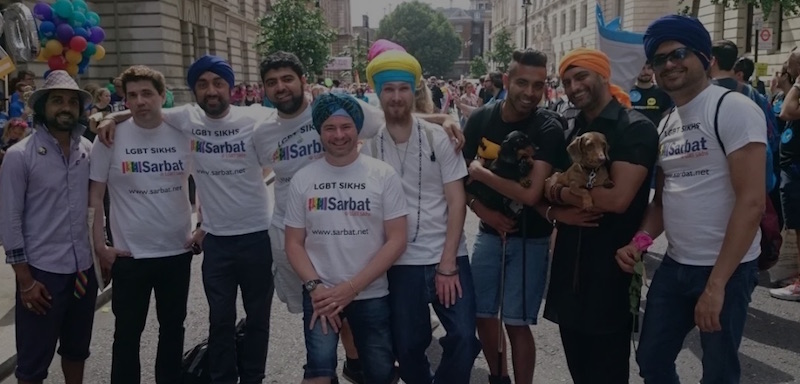
Members of LGBT Sikh group Sarbat in UK at London Pride 2015 (Representational Image)
By Gaylaxymag | OPINION |
You would be forgiven for thinking that being born and raised in the UK would make it somewhat easier for a turbaned man (Sardar) to be openly queer. And you would be forgiven for thinking that the Indian diaspora in the UK is more open to and accepting of LGBTIQ+ people. We’re supposed to integrate, right? Well I certainly wish it had been true when I was growing up!
In fear of losing their identity, or seeing it diluted, 1st and 2nd generation diaspora Punjabis have held on tight to their culture and traditions. So much so, that it becomes suffocating. It leaves you feeling that you only have one choice: conform or be ridiculed. Please don’t get me wrong, Punjabi culture is amazingly beautiful: our traditions, our music, our community solidarity and spirit, our food; I could go on. But it also has a regressive and ugly side, rooted in patriarchy, misogyny and toxic masculinity. Like a disease, our culture’s obsession with manliness can easily spread to every corner of your soul and identity, and kill your authentic self.
I was born to a 1st generation working class Indian Sikh migrant family, in the early 80s. I was always the weird eccentric child in my family, and still am! I love theatre, dance, music, fashion, the arts; I was never into football, rugby or cricket like the other boys. Instead, I waited for my parents to be out to practice dance moves in front of the living room mirror and snuck off to dance classes without telling them. As a child, people outside my community would confuse me for a girl, because of my feminine mannerisms or because I was not, in their view, a typical boy. Within my own community, I would often hear that I should have been born a girl, inferring that girls are inferior, and because I behaved like one I was inferior too. I would swallow this up and internalize it, to the extent that it became ingrained in me. To stop the bullying, I “manned” up by behaving like a real boy and this performed masculinity became my shield.
Yet, my first experience of discrimination wasn’t because of my sexuality, but because of my race, ethnicity and faith. These parts of me are visible: I can’t hide them like I can my sexuality. I remember as a child being told to “go back to where you belong” or “Paki go home!” I recall one incident in particular: one day when I was returning home from playing in the park, someone pulled off my turban: I felt so violated and ashamed, as if it were my fault for being Indian, of colour, for being a Sikh boy with a turban.
Growing up, I always wanted to be white, straight, blonde haired and blue eyed. The opposite of everything I was. I did not want to be a long haired turban wearing Sikh. I celebrated Christmas and Easter, spoke in a certain way, listened to British Pop music, and had white friends.
I moved away from home and finally gave myself the freedom to explore my sexuality. Armed to the brim with toxic masculinity: misogynistic, homophobic and transphobic and repressing my emotions, I stepped out into the queer community! I thought I had come into my own: I had accepted being gay and was out amongst close friends. However, I was still struggling with deep levels of internalized homophobia. I would cloak my sexuality by dialling up my masculinity; I would pride myself on passing as straight; and I would avoid befriending very feminine men. Deep down inside, I still wasn’t OK with being gay.
I would also get asked questions like “Can Sikhs be gay?”
Read full entry, Growing Up Gay and Sikh in the UK, here.
ASIA SAMACHAR is an online newspaper for Sikhs / Punjabis in Southeast Asia and beyond.Facebook | WhatsApp +6017-335-1399 | Email: editor@asiasamachar.com | Twitter | Instagram | Obituary announcements, click here |
The Guru rejected exploitation and oppression under any pretext.
He made human beings who are at the top of the evolutionary chain, responsible for the global environment.
No matter where the Sikhs live, from the remotest parts of India to diaspora countries, they are net contributors to the economies and social welfare. That is due to the revolutionary thought of Guru Nanak Sahib.
Guru Nanak taught practical spirituality which combines honest living through hard work, service (seva) and sharing without discrimination with God awareness (Naam simran). Practical spirituality, a phrase coined by Sikh scholar Brig. Rawel Singh, brought about a paradigm shift in the thinking of the downtrodden people. From zero (shun), the Creator Being was shown to be the positive One, the Doer. Guru Nanak stressed the unity of the Creator and all that is created as Ik Oangkaar. The human equality principle is enshrined in Sikh teachings.
That is Guru Nanak’s Sikhi path leading to achievement of the final destination of the human soul, a blissful union with the Creator Being achievable in this human life.
This approach revolutionized and empowered the ordinary people who were following opt-out ideologies, false gods and chasing hereafter more than living responsible productive lives here-and-now. They were at the mercy of the tyrants and invaders and ignorance-spreading priesthood of orthodox religions.
The same suppressed and impotent people were converted into a casteless and classless society in which men and-women equal partners and community builders. Thus was established over the Nanak I to X, Guru period (1469 to 1708), the Akal Purakh ki Fauj (God’s own army), the Khalsa, with clear Miri-Piri (temporal-spiritual) objectives. Men and women led armies to oppose inequality and injustice.
Dr Ganda Singh wrote that Sikhs are a living practical example of the impact of the life and teachings of Guru Nanak on history. Like the Guru himself, they are practitioners of a way of life which combines spirituality with honest work and serving and sharing. They are never afraid to put their hand to any type of work that comes their way and they would strive to every nerve to make it a success
In his book, Later Mughals, William Irvine wrote: In all the parganas occupied by the Sikhs, the reversal of previous customs was striking and complete. A low scavenger or a leather dresser, the lowliest of the low in in Indian estimation, had only to leave home and join the Guru when in a short space of time he would return to his birth place as its ruler, with his order of appointment in his hand. As soon as he set foot within the boundaries, the wellborn and wealthy went out to greet him and escort him. [Vol 1 pp 98-99]
Sikhs have led India in non-violent struggle (satyagrehe) as well as in armed struggle against oppression and for the freedom of all peoples of India. Yet, today, the Brahmanic-Hindutva boa begins to embrace Sikhi in its suffocating coils. In post- independence India, the process started with Clause 25 of the Indian Constitution and now the clouds of bhagwanwaad are gathering. A Hindu Rashtra is the declared Indian political objective in the name of ekta (unity) – the type of ekta enforced by Islamic fanaticism in the 17-18th centuries and lamented by poet Bhai Santokh Singh.
Once again, we are reminded that Guru Nanak Sahib’s first revolt was against Brahmanic hegemony when he refused to wear the caste thread (janeu). So, history seems to have completed a full circle. Sikhi started by opposing Brahmanical exploitation, next opposed the tyranny of Mughal rule (Babay ke versus Babar ke), next, lead the struggle against colonialism and now back to true Babay ke versus Brahmanic-Hindutva oppression aimed towards a Hindu Rashtra.
Not surprisingly, the Tenth Nanak, Guru Gobind Singh, warned his Khalsa against the Bipran reet. Yet, we continue to follow these. That makes the Hindutva objective of assimilating Sikhi that much easier. But then we have been here before!
The responsibility is ours to shun Bipran practices and to follow the path shown by Guru Nanak Sahib for the future survival of not just Sikhi, but humankind.
Much of what Guru Nanak Sahib preached centuries ago is today enshrined in documents like the UN Charter of Human Rights and the Earth Charter.
Gurmukh Singh OBE, a retired UK senior civil servant, chairs the Advisory Board of The Sikh Missionary Society UK. Email: sewauk2005@yahoo.co.uk.
* This is the opinion of the writer, organisation or publication and does not necessarily represent the views of Asia Samachar.
ASIA SAMACHAR is an online newspaper for Sikhs / Punjabis in Southeast Asia and beyond.Facebook | WhatsApp +6017-335-1399 | Email: editor@asiasamachar.com | Twitter | Instagram | Obituary announcements, click here |
Darshan Kaur – Photo: Shome Basu in Photo from Chauraasi Ki Nainsaafi: The continuing injustice for the 1984 Sikh massacre (Amnesty International India briefing released in 2017)
DARSHAN KAUR
Migrated from Trilokpuri to Raghubir Nagar (Delhi). She lost her husband and 11 other family members.
“My husband tried to hide in the kitchen of our house in Trilokpuri. But the mob dragged him out by his hair, and wrapped a quilt around him and put a tyre on him. They then poured oil on him and set him on fire. He was severely burnt, and died later.
The mob mercilessly stripped all the women, who were still in shock and disbelief at the deaths of their husbands and relatives. They were raped by several men countless times.’’
Cover page of Chauraasi Ki Nainsaafi: The continuing injustice for the 1984 Sikh massacre
From 31 October to 3 November 1984, over 3,000 Sikh men, women and children were slaughtered by violent mobs, following the assassination of Prime Minister Indira Gandhi.
Sikh men had their necks ringed with tyres which were set on fire, while others were shot or hacked to death; women were raped and assaulted. Eyewitnesses told official commissions of inquiry that police personnel did nothing to prevent the killings; and some actively participated in the massacre. Several witnesses reported seeing members of the ruling Congress party instigating mobs and taking part in the attacks.
A government-appointed judicial commission described the killings as “organized carnage”.
The massacre of 1984 was a national shame, and it was followed by another: over three decades of impunity for perpetrators of these crimes.
Survivors reported that the police refused to register complaints in many cases, and in others they registered vague ‘omnibus FIRs’ covering all the offences in a neighborhood. In Delhi, 587 First Information Reports (FIRs) related to the massacre were registered, of which the Delhi police closed 247 as ‘untraced’, meaning that they had been unable to trace any evidence. Over 33 years later, only a handful of police personnel charged with neglecting their duty and protecting the attackers have been punished.
The agony of the survivors of the 1984 massacre have not ended. Their children continue to live with the pain and injustice that followed the violence.
This photo digest presents a glimpse into the lives of these forgotten people. The screams of the victims still echo in the narrow lanes of neighbourhoods where thousands were butchered. It is time for India to ensure that the injustice for massacre of 1984 does not remain a festering sore.
ASIA SAMACHAR is an online newspaper for Sikhs / Punjabis in Southeast Asia and beyond.Facebook | WhatsApp +6017-335-1399 | Email: editor@asiasamachar.com | Twitter | Instagram | Obituary announcements, click here |
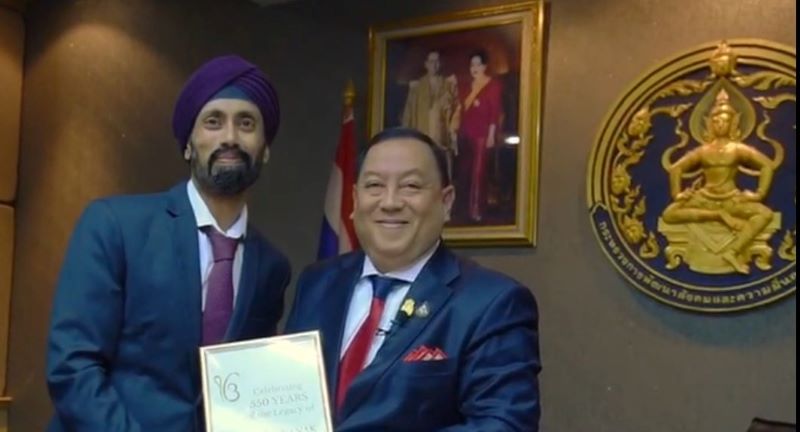
Thai minister Juti Krairiskh (right) with Ravneek Singh (Apichai) – Photo grab from video
By Asia Samachar Team | THAILAND |
A Thai cabinet minister has released what is believed to be the first official statement from the government as Sikhs celebrate the 550th birth anniversary of Guru Nanak.
“Sikh community in Thailand in crucial in creating harmoonious and progressive society,” said Minister of Social Development and Human Security Juti Krairiskh in a video recording.
“So I wish to convey my best wishes and congratulations to the Sikh community. And I hope we will go on, from strenght to strength, as Thai people,” he said.
He said said the ministry regards the Sikhs as a good example of assimilation and a progressive community to help Thailand build a strong familiy as a nation.
Ravneek Singh (Apichai), a Sikh from Thailand, also appeared in the same video (See Asia Samachar Facebook page).
ASIA SAMACHAR is an online newspaper for Sikhs / Punjabis in Southeast Asia and beyond.Facebook | WhatsApp +6017-335-1399 | Email: editor@asiasamachar.com | Twitter | Instagram | Obituary announcements, click here |
Gobind Singh Deo (red turban) launches Guru Nanak exhibition
By Asia Samachar Team | MALAYSIA |
Malaysian federal minister Gobind Singh Deo recently launched an exhibition on Guru Nanak at a gurdwara in Kuala Lumpur.
“This retelling of history gives us a chance to cherish and learn more about the founder of the Sikh religion,” he said when opening the ‘Exhibition on Exploring the Life & Legacy of Guru Nanak Dev Ji’ organised by Tatt Khalsa Diwan on Sunday (3 Nov).
He said Guru Nanak’s wisdom and philosophy was as relevant today as it was when propounded 550 years ago.
The exhibition, organised in conjunction with the commemoration of Guru Nanak’s 550th birth, will be open daily from 11am to 9pm.
Gobind, who holds the distinction of being the first federal minister from the Sikh community, is the Minister of Communications and Multimedia.
Mridul Kumar, Indian high commissioner to Malaysia, also gave a speech at the event.
To view a clip produced by Sri Saheb Production, go here.
ASIA SAMACHAR is an online newspaper for Sikhs / Punjabis in Southeast Asia and beyond.Facebook | WhatsApp +6017-335-1399 | Email: editor@asiasamachar.com | Twitter | Instagram | Obituary announcements, click here |
Hukumi Kaur – Photo: Karan Sharma; Courtesy of Chauraasi Ki Nainsaafi: The continuing injustice for the 1984 Sikh massacre (Amnesty International India briefing released in 2017)
HUKUMI KAUR
Migrated from Trilokpuri to Tilak Vihar (Delhi). Her husband and seven relatives were killed in 1984. Migrated from Trilokpuri to Tilak Vihar (Delhi) She lost her husband, brother-in- law, father-in- law and 11 other relatives.
“Men from my family were burnt alive at the main door of our house. My husband was killed three days later, his eyes were gouged out and he was burnt alive. It’s been 30 years with no justice whatsoever. We are helpless.”
Cover page of Chauraasi Ki Nainsaafi: The continuing injustice for the 1984 Sikh massacre
From 31 October to 3 November 1984, over 3,000 Sikh men, women and children were slaughtered by violent mobs, following the assassination of Prime Minister Indira Gandhi.
Sikh men had their necks ringed with tyres which were set on fire, while others were shot or hacked to death; women were raped and assaulted. Eyewitnesses told official commissions of inquiry that police personnel did nothing to prevent the killings; and some actively participated in the massacre. Several witnesses reported seeing members of the ruling Congress party instigating mobs and taking part in the attacks.
A government-appointed judicial commission described the killings as “organized carnage”.
The massacre of 1984 was a national shame, and it was followed by another: over three decades of impunity for perpetrators of these crimes.
Survivors reported that the police refused to register complaints in many cases, and in others they registered vague ‘omnibus FIRs’ covering all the offences in a neighborhood. In Delhi, 587 First Information Reports (FIRs) related to the massacre were registered, of which the Delhi police closed 247 as ‘untraced’, meaning that they had been unable to trace any evidence. Over 33 years later, only a handful of police personnel charged with neglecting their duty and protecting the attackers have been punished.
The agony of the survivors of the 1984 massacre have not ended. Their children continue to live with the pain and injustice that followed the violence.
This photo digest presents a glimpse into the lives of these forgotten people. The screams of the victims still echo in the narrow lanes of neighbourhoods where thousands were butchered. It is time for India to ensure that the injustice for massacre of 1984 does not remain a festering sore.
ASIA SAMACHAR is an online newspaper for Sikhs / Punjabis in Southeast Asia and beyond.Facebook | WhatsApp +6017-335-1399 | Email: editor@asiasamachar.com | Twitter | Instagram | Obituary announcements, click here |
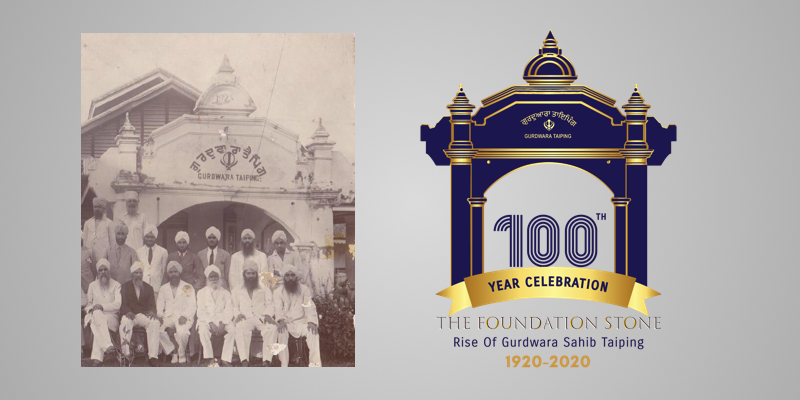
Next year, it would be exactly 100 years of laying of Gurdwara Sahib Taiping foundation stone. Taiping Sikhs are all set to celebrate the historic occasion with programmes over the next two years.
On Nov 16, when they commemorate the 550th birth of Guru Nanak, the local Sikhs will launch the 100 Year Celebration for the laying of the gurdwara’s foundation stone.
In 1916, Sri Guru Singh Sabha Taiping (SGSS Taiping) was formed by local Sikhs to manage their affairs. In 1920, the foundation stone was laid to build the Taiping gurdwara, which was completed in 1921. A new double story building was built in 1971.
“We want to cherish the memories of those Sikhs who had sacrificed their time and energy in building up Gurdwara Sahib Taiping,” SGSS Taiping committee president Balraj Singh tells Asia Samachar.
He said they will be having continuous programmes till 2021 called ‘Gurdwara Sahib Taiping: The Completion’.
The Nov 16 programme include nagar kirtan and presentation by Punjabi class students.
The logo for the foundation stone celebration was inspired by an undated photo that captures the front of the Taiping gurdwara building.
ASIA SAMACHAR is an online newspaper for Sikhs / Punjabis in Southeast Asia and beyond.Facebook | WhatsApp +6017-335-1399 | Email: editor@asiasamachar.com | Twitter | Instagram | Obituary announcements, click here |