














UA-56202873-1
Page 543

Of Activism and Convocations

1
By Parveen Kaur Harnam | OPINION | MALAYSIA |

This week has been rife with student politics – as a result of the Kongres Maruah Melayu (Malay Dignity Congress) held last week. I am one of the many netizens who has been following this situation as closely as I can.

I am a graduate of a local university. Public institutions are steeped in tradition and etiquette. The culmination of this tradition is during the convocation. This is an event (that is supposed to be) filled with mutual respect and honour. For those of us who managed to get a placing in a public institution, this event is meant to have a lot of meaning (forgive me for my bluntness, but when I say “those of us”, I do mean “non-Muslims”). I must confess that I was not too happy during my own convocation. I valued my education – still do – and my lecturers – some of whom were very knowledgeable and serious in providing the best for all of us. However, I did not feel anything close to a sense of accomplishment during my similarly conducted convocation, perhaps due to disillusionment. For this reason, the student activist has committed an act wholly unbecoming on the Universiti Malaya (UM) stage. He made it into a farce. Maybe that was necessary, maybe not – that is not for me to argue.

Yes, he was not quite so right in the forum he chose to voice his grievances and his chosen legal representative is a fellow alumnus of my alma mater (who himself is not yet a qualified lawyer – which does not bode well). This is though the very nature of protests. The punishment of withholding his degree, or even the threat of doing so, does not fit the (lack of a) crime. He has so far only been charged under the Penal Code – no conviction. Further that, in itself, is not a basis to withhold his transcript and degree. In fact, in terms of law, there is nothing that allows for it. The relevant one being the University and University College Act 1971, where Section 15D “Suspension of student charged with registrable offence and matters relating to detention, etc” is the only provision that accounts for an offence and the possible consequence. This provision though is for an existing student, and in this case, the student activist is technically no longer a student.

Further and more importantly, the Act provides for the adoption of a prescribed Constitution, which reigns supreme (of which Section 53 is worthy of attention).

This has already been hashed out and analysed by legal minds like former UM law professor Prof Gurdial Singh Nijar. It does appear therefore that the sense of justice and of proper recourse here has been overridden in favour of reactionary actions, of reactionary statements from the National Professors Council. Some sectors of the public sphere have even cited the University of Malaya (Discipline of Student) Rules 1999, which again would not apply in this case as the activist is no longer a student. Although the degree has now been granted to him, the whole debacle, the whole conversation surrounding the withholding of his degree should not have been existing at the outset.

For comparative value, let’s look at Hong Kong for example – where there has been backlash to the protests and the protests themselves are frankly much like a person shooting themselves in the foot – but the Hong Kong government has allowed it because it is an exercise of their right to free speech. This is regardless of the fact that the protests have now turned violent. The whole thing is like watching a ticking time bomb.

Aside from this, Hong Kong is also famous for student protests during convocations. Here, the universities do not threaten to withhold degrees, merely chastise graduating students. My point here is that protests are flagrant, fiery and sometimes unpleasant to be a party of, because that is the purpose of a protest. If we were comfortable, it would not be a protest.

When we look at the UM student, we will all see a different person, some of us would see a fighter, some would see an ungrateful (now) alumnus of the institution. We would though all agree (or we should all) agree that he has done his part as a student of the university, has passed his exams, has done his part to deserve the degree that he so rightfully earned.

As the late Kofi Annan, former Secretary General of United Nations (UN) once said: “Knowledge is power. Information is liberating. Education is the premise of progress, in every society, in every family”.

Unsavoury act of protest aside, he has received his education and needs it for his and most likely his family’s progress. There is a concern as to whether an education is only worth the paper it is written on, but unfortunately for all of us – that is the case. To deprive him at this stage is not only unfair – it has no legal founding.

Say what you will about what has become of our education, but do not convict him on charges under the Penal Code – and then have an open discussion – one sans a sense of vengeance.

Parveen Kaur Harnam is a Kuala Lumpur-based lawyer. 

* This is the opinion of the writer, organisation or publication and does not necessarily represent the views of Asia Samachar.

RELATED STORY:

The Rhetoric of Race (Asia Samachar, 14 Oct 2019)


ASIA SAMACHAR is an online newspaper for Sikhs / Punjabis in Southeast Asia and beyond. Facebook | WhatsApp +6017-335-1399 | Email: editor@asiasamachar.com | Twitter | Instagram | Obituary announcements, click here |

Jagjit Singh Bhatt (Jay Bhatt) (1966-2019), Cheras

PATH DA BHOG: 26 October 2019 (Saturday), from 10am-12pm, at Gurdwara Sahib Serdang | Malaysia
Jagjit Singh Bhatt (Jay Bhatt) (1966-2019), Cheras

JAGJIT SINGH BHATT S/O GURDIAL SINGH (JAY BHATT)

We will miss you everyday, Jay. You were a wonderful father. We love you very much. Rest in eternal peace.

Village: Mundapind, Amritsar

Born: 31 December 1966

Departed: 19 October 2019

Wife: Parminder Kaur (Pammi)

Children: 

1. Karishmajit Kaur Bhatt

2. Manpooja Kaur Bhatt

3. Har Tamenna Kaur Bhatt

Path da Bhog:  26 October 2019 (Saturday), from 10am-12pm, at Gurdwara Sahib Serdang

Contact: 

Karishma  0111-6245642

Maneesha  012-3702204

Balveena  012-2543007

| Entry: 21 Oct 2019 | Source: Family

ASIA SAMACHAR is an online newspaper for Sikhs / Punjabis in Southeast Asia and beyond. Facebook | WhatsApp +6017-335-1399 | Email: editor@asiasamachar.com | Twitter | Instagram | Obituary announcements, click here |

Bandi Chhor Divas – Sikh Divali: The harbinger of Enlightenment and Freedom

0
Photo: Pixabay
By Gurmukh Singh | OPINION |
(When) the lamp is lit, darkness is dispelled…
… Where there is light of knowledge, ignorance is dispelled.
(Guru Granth Sahib Ang.791)

When it comes to celebrating popular festivals like Divali or Christmas, the colourful and socially vibrant Sikhs are renowned for outdoing their neighbours. For them, the relevance of such festivals to their religion is of little consequence. Divali is one such festival; although, the day, celebrated by the Sikhs as the “Bandi Chhor Divas” (The Day of Liberation) in the Nanakshahi Calendar, also marks some important and highly significant events in Sikh history.

The mythological origin of Indian (Hindu) Divali lies in the story of King Dasarth of Ayudhia’s son Ram Chander, popularly known as Lord Rama. The night of Divali marks the return from 14 years in exile of Lord Rama, his wife Sita and brother Lachman. To celebrate their return home, the people lighted lamps. And so Divali continues to be celebrated each year by lighting lamps, holding firework displays and exchanging sweets and gifts with family and friends. This special night is called Divali.

However, in the Sikh tradition, Diwali has a very different, historically based, significance.

The story of Divali for the Sikhs is a story of the Sikh struggle for freedom. From the time of Guru Nanak (1469 – 1539), the founder of Sikhism, popular seasonal or folk festivals like the harvest festival of Vaisakhi, or ancient mythological festivals like Holi and Divali, or worship rituals like Aarti, began to take on a new significance for the Guru’s students, the Sikhs. The ‘Guru’ as the Light of Guru Nanak passing through 10 Guru Personalities and now residing in the Sikh Scripture, Guru Granth Sahib, used these festivals and special days e.g. first day of each lunar month called Sangraand, as occasions for promoting His teaching themes. And so the Sikhs were slowly diverted from darkness of superstitious ritualism based on fear and ignorance to an enlightened ideology based on reason and belief in One Creator. The enlightened ideology of Guru Nanak gave new significance to ancient festivals like Divali and Vaisakhi. Thus,

(When) the lamp is lit, darkness is dispelled…
… Where there is light of knowledge, ignorance is dispelled.
(Guru Granth Sahib Ang.791)

So what about Divali, the festival of lights? According to Indian lore, Lord Rama returned home from 14 years in exile after destroying the demon god Ravana who had taken away Rama’s wife, Sita. The story, of course, has no significance in the Sikh tradition. However, in the Sikh struggle for freedom from the oppressive Mughal regime, the festival of Divali did become the second most important day after the Vaisakhi festival in April.

The Sixth Guru Hargobind, was freed from imprisonment in the famous fort of Gwalior by Emperor Jahangir in October, 1619. The reason for the young Guru’s imprisonment was no more than religious bigotry on the part of Jahangir. The Guru’s father, Guru Arjan, had been martyred for the same reason. The new egalitarian Sikh ideology was seen as a threat by both, Islam and Hinduism for different reasons.

Following pleas from some moderate leading figures of both religions who understood the universal teachings of Guru Nanak, Emperor Jehangir agreed to release young Guru Hargobind. According to Sikh tradition, Guru Hargobind agreed to be freed only if the other Indian chiefs (rajahs) imprisoned with him were freed also. Jahangir was under pressure from moderate but influential Muslim religious leaders like Hajrat Mian Mir, a friend of the Guru. So he relented grudgingly and ordained,

“Let those rajahs be freed who can hold on to the Guru’s coat tails and walk out of prison.”

He had in mind no more than four or five being freed with the Guru. However, the Guru was not to be outmanoeuvred in this way. He asked for a special coat to be made with 52 coat tails – same number as the rajahs in prison with him! And so the rajahs were freed and the Guru became known popularly as the “Bandi Chhor” (Deliverer from prison).

The Guru arrived at Amritsar on the Divali day and the Har Mandar (also known as the “Golden Temple”) was lit with hundreds of lamps i.e. he was received in the same way as the Lord Rama and the day came to be known as the “Bandi Chhor Divas” (the day of freedom).

Thenceforth, the Sikh struggle for freedom, which intensified in the 18th Century, came to be centred around this day. In addition to the Vaisakhi day (now in April), when Khalsa, the Sikh nation was formally established by the Tenth Guru Gobind Singh, Divali became the second day in the years when the Khalsa met and planned their freedom strategy.

Another important Sikh event associated with Divali is the martyrdom in 1734 of the elderly Sikh scholar and strategist Bhai Mani Singh, the Granthi (priest) of Harmandar Sahib (Golden Temple). He had refused to pay a special tax on a religious meeting of the Khalsa on the Divali day. Bhai Mani Singh’s and other Sikh martyrdoms gave further momentum to the Khalsa struggle for freedom and eventually success in establishing the Khalsa rule north of Delhi.

“Divali”, as the Bandi Chhor Divas has great significance for the Sikh theo-political (miri-piri) goals. It reminds the Sikhs of their duty to support the human struggle for freedom from poverty and oppression. It reminds them of the Guru’s message (Hukam) received from Akal Purakh, the Creator Being that the time had come when no one should inflict pain on another in a benevolent regime called “Halemi Raj”. Sikhs celebrate “Divali” as “Bandi Chhor Divas” – the Day of Liberation – to pray for enlightenment and freedom. These are the two most important spiritual and temporal goals for the human society.

Sikh worldwide celebrate the Bandi Chhor Divas marking victory of the Sikh freedom struggle in the 18th Century for the betterment of the human society. That continues to be the Sikh objective.

Degh Tegh Fateh !

Ultimate victory (Fateh) of an egalitarian order symbolised by Degh  (cauldron), meaning community kitchen or “langar” which feeds all without discrimination, and Tegh, (Kirpan), the Sikh sword of justice to defend the dignity and honour of the defenceless.

Gurmukh Singh OBE, a retired UK senior civil servant, chairs the Advisory Board of The Sikh Missionary Society UK. Email: sewauk2005@yahoo.co.uk. The article first appeared here.

* This is the opinion of the writer, organisation or publication and does not necessarily represent the views of Asia Samachar.


RELATED STORY:

Army of occupation in Jammu, Kashmir & Ladakh (Asia Samachar, 27 July 2019)

Annexation of Jammu & Kashmir and the unfolding Hindutva Imperial Project (Asia Samachar, 21 Aug 2019)


ASIA SAMACHAR is an online newspaper for Sikhs / Punjabis in Southeast Asia and beyond. Facebook | WhatsApp +6017-335-1399 | Email: editor@asiasamachar.com | Twitter | Instagram | Obituary announcements, click here |

Three Singaporeans start epic Singapore-Pakistan overland trip

1
Gurcharan Singh, Amarjit Singh and Salljit Singh with the Jeep as they are about to embark on their 6-nation journey from Pardesi Khalsa Dharmik Diwan in Singapore – Photo: Sikh Sewaks Singapore Facebook Page
By Asia Samachar Team | SINGAPORE |

Three Singaporeans rolled out for a six-nation overland trip which will end in Nankana Sahib, the city in Pakistan where Guru Nanak was born.

The trip is to commemorate the 550th birth of the Sikh faith founder.

The trio – Gurcharan Singh, Amarjit Singh and Salljit Singh – are traveling by a Jeep. They started their journey at Pardesi Khalsa Dharmik Diwan in Geylang earlier today (2- Sept).

They will travel through Singapore, Malaysia, Thailand, Myanmar, India and Pakistan.

As the Singapore trio begin their epic journey, a group of Malaysian Sikh bikers has now reached Pakistan in another over-land journey connected to the commemoration of Guru Nanak’s birth.

The bikers, led by the Santana Bikerz Mc, reached Akal Takht, the last of the final takhts that they had planned to visit, on Thursday. The next day, five of the bikers, who had left Kuala Lumpur on Sept 25, left for Pakistan.

They are riding to raise funds for the National Cancer Society Malaysia (NCSM) to help them manage the younger patients.


RELATED STORIES:

Sikh bikers on cancer charity ride reach first takht (Asia Samachar, 8 Oct 2019)


ASIA SAMACHAR is an online newspaper for Sikhs / Punjabis in Southeast Asia and beyond. Facebook | WhatsApp +6017-335-1399 | Email: editor@asiasamachar.com | Twitter | Instagram | Obituary announcements, click here |

Naranjan Singh (1943-2019), Ex-Govt Printers, KL

PATH DA BHOG: Path Da Bhog and Antham Ardas at Wadda Gurdwara Sahib Kampung Pandan, No. 15, Jalan Kampung Pandan, 55100 Kuala Lumpur ON Saturday, 2nd November 2019 from 10am to 12 noon followed bY Guru Ka Langgar (Lunch) | Malaysia

Naranjan Singh (1943 – 2019), Ex-Govt Printers, KL

SARDAR NARANJAN SINGH (Ex – Govt Printers, KL)

S/O LATE SARDAR HAKKAM SINGH (Ex – Postal)

Village: Bolewal

Age: 76

Passed away peacefully on Sunday, 20th October 2019

Leaving behind beloved:

Wife: Sdri Sawaran Kaur d/o Late Sdr Ujagar Singh Baidy (Ipoh)

Son / Spouse: Narinder Singh / Parminder Kaur

Grandchildren: Jasmine Kaur and Ashvin Kaur

Brothers / Sisters-in-law:

Swaran Singh (Dec) (Ex-Income Tax, KL) / Jagjit Kaur (Ex-IPR, HKL)

Jitta Singh (Dec) (Ex-Prison) / Sarjit Kaur (Dec)

Joginder Singh / Kirpal Kaur

Mohd Salim B. Abdullah / Fozilah Sardar Khan

Sisters / Brothers-in-law:

Amarjit Kaur (Butterworth) / Davinder Singh (Dec) (Ex-Labour)

Minder Kaur (Dec) / Tara Singh (Ex-JBA)

Nephews, nieces, relatives and friends to mourn his loss

Cortege leaves from 72, Jalan Choo Lip Kung, Taman Tayton View, Batu 6, Cheras 56000 Kuala Lumpur at 1 pm, on 21 October, 2019 (Monday). Cremation will be held at 2pm at Jalan Loke Yew Crematorium, Kuala Lumpur.

Path Da Bhog and Antham Ardas will be held at Wadda Gurdwara Sahib Kampung Pandan, No. 15, Jalan Kampung Pandan, 55100 Kuala Lumpur on Saturday, 2nd November 2019 from 10am to 12 noon followed by Guru Ka Langgar (Lunch).

The family would like to thank the doctors and staff of Ward 5B and 5E HUKM Cheras KL, family, relatives and friends for their kind support.

Contact:

Narin – 019-3828807

Sunita – 019-3835097

Salim – 016-2201581


| Entry: 20 Oct 2019 | Source: Family

[ASIA SAMACHAR is an online newspaper for Sikhs / Punjabis in Asia. How to reach us: Facebook message or WhatsApp +6017-335-1399. Our email: editor@asiasamachar.com. For obituary announcements, click here]

A big Sikh wedding in Malaysia

2
FATHER’S BLESSING: Malkith blesses the union of his daughter Jiwan Kaur and Rajinderjit Singh – Photo: Video grab from Ekjoth

It was definitely one of most talked about Sikh wedding in town!

Malkith Singh and his wife Satwant Kaur, two dynamic Sikh activists in Malaysia, saw their daughter Jiwan Kaur tying the knot with Rajinderjit Singh.

The Anand Karaj, as the Sikh wedding ceremony is known, was conducted today (19 Oct) at Guru Nanak Darbar in Tatt Khalsa Diwan in Kuala Lumpur.

Malkith was a jathedar (chief) of Sikh Naujawan Sabha Malaysia (SNSM), an active Kuala Lumpur-based Sikh youth organisation. He has also been involved in various other Sikh organisations and activities.

Jiwan is a lawyer by profession while Rajinderjit studied mechanical engineering.

So, the next big wedding for the couple would be of their son Ajit Singh, a popular local Sikh youth activist who founded SikhInside.


RELATED STORIES:

Hong Kong entrepreneur throws largest Indian wedding in Thailand (Asia Samachar, 12 Dec 2018)


ASIA SAMACHAR is an online newspaper for Sikhs / Punjabis in Southeast Asia and beyond. Facebook | WhatsApp +6017-335-1399 | Email: editor@asiasamachar.com | Twitter | Instagram | Obituary announcements, click here |

Lessons in diversity from slained Houston deputy

0
Deputy Sandeep Singh Dhaliwal
By Hb Singh | OPINION |

The Sikh world was shaken to the core when Deputy Sandeep Singh Dhaliwal was gunned down in Houston, Texas, on 27 Sept.

The people of Houston, too, were horrified with the incident. They were immensely moved when they learnt of Sandeep’s spirit of selfless service and dedication, all while sporting his turban and beard, as per the calling of his faith. His final farewell was described almost as ‘royal-like’ by some, with the outpouring of grief and love from across the section.

Needless to says, it was nothing short than tragic when the man in blue succumbed to gunshots from the back in the line. But why such an outpouring of love and respect? What are the lessons for the United States and other nations?

Deputy Sandeep Singh Dhaliwal was no ordinary men in blue. The 41-year old former owner of a trucking business made history in 2009 when he became the first Sikh to serve as a deputy in the Harris County Sheriff’s Office. Then, in 2015, he broke new grounds when he received accommodations to keep serving with his turban and beard intact.

The turban made him stand out. And being in the minority, you can imagine the potential treatment he might receive while on duty. Sandeep is of the Sikh faith which enjoins its followers to maintain unshorn facial hair. The male members and some women members bear the turban.

The fear of him being targeted for his looks was always present.

One of the thousands who attended his final farewell was the former Harris County Sheriff Adrian Garcia. He had assisted the process to effect changes to the uniform code, allowing Sandeep to serve with his outward religious symbols in place.

In an interview with a columnist for The Religion News, Garcia said: “As officers, we’re already vulnerable every time we put on our uniforms. Sandeep would be even more vulnerable with his turban and beard, because of ignorance from the general public and even from our own department.”

But how do you explain the immense outpouring of grief? It was simply a recognition of Sandeep’s dedication yo his office. Sandeep was driven by his inner conviction to serve. That is a core value of anyone calling themselves a Sikh. Service above self! We call it sevaa or selfless service.

Sandeep stuck to his core principle despite the obvious challenges, including his looks.

Discrimination on the grounds of looks, race and religion abounds in the US and other nations. Just across the border recently, a man in Montreal urged a National Democratic Party (NDP) leader Jagmeet Singh to “cut off” his turban to “look like a Canadian.”

Canadian politicians are busy campaigning for the Oct 21 national polls. Like Sandeep, Jagmeet stands out in the crowd. He is the first politician from the minority communities to lead a major political party in the nation of 37 million people. If that is not enough, you would often catch him in striking designer suits and colourful turbans.

“Lots of Canadians are told they have to change who they are to be successful. My message to all of you — be yourself & celebrate who you are. We all belong,” he said in a Facebook entry.

So, like Jagmeet, Sandeep knew exactly what he was up against. But he has taken it in his stride as he is campaigning for the Canadian elections.

One solution is to push for diversity. In a multi-ethnic and multi-religious setting, the levers of government should, as much as possible, reflect the ground realities. The lawmakers should be of diverse background. For years, the West struggled to break free from the domination of male, white and privileged politicians. The struggle goes on.

The mixed ground realities must also be reflected in government agencies. The police, immigration, local council and the rest of the machinery are the front liners. They deal with the people on day-to-day matters. They should have sound understanding of the ground. And the should look as diverse as the people they serve.

Sikh Coalition, a US-based advocacy group, have dispatched letters urging the US state and local law enforcement as well the defence ministry to ease up on the restrictions placed upon people from the minority communities to serve the nation. They are simply asking for ‘easier, more equitable path to reasonable religious accommodations’.

It’s past time to improve outdated policies and remove bureaucratic red tape so that the next generation of heroes are as diverse as the communities they choose to serve and protect, the advocacy group said.

The US and other nations can honour Deputy Sandeep by doing just that. It is high time to embrace diversity.


Hb Singh is a Kuala Lumpur-based journalist with some experience in dealing with Sikh organisations, both from within and outside. 

* This is the opinion of the writer, organisation or publication and does not necessarily represent the views of Asia Samachar.


RELATED STORIES:

Getting the inside scoop from Guru Gobind Singh himself (Asia Samachar, 13 Oct 2018)

Hawkish fatwa (Asia Samachar, 23 July 2018)


ASIA SAMACHAR is an online newspaper for Sikhs / Punjabis in Southeast Asia and beyond. Facebook | WhatsApp +6017-335-1399 | Email: editor@asiasamachar.com | Twitter | Instagram | Obituary announcements, click here |

Subang Sikhs first townhall to discuss pressing issues

0
By Asia Samachar Team | MALAYSIA |

Subang Sikhs will hold their maiden townhall tomorrow (19 Oct 2019) to allow the local congregation to air their grouses and discuss contemporary issues.

“Let’s not wait for the annual meetings to do this. We should discuss issues as they arise,” Subang Sikh Association Subang (SSAS) president Amrick Singh told Asia Samachar. “We hope members will take this opportunity to share their views, concerns and ideas.”

SSAS manages the Subang gurdwara housed at a four-storey building inaugurated in 2018.

The association held a keenly contested annual general meeting on 4 May 2019 with two slates actively campaigning to run the affairs of the association.


ASIA SAMACHAR is an online newspaper for Sikhs / Punjabis in Southeast Asia and beyond. Facebook | WhatsApp +6017-335-1399 | Email: editor@asiasamachar.com | Twitter | Instagram | Obituary announcements, click here |

How do we represent Nanak?

2
By Gurnam Singh | UK | OPINION |

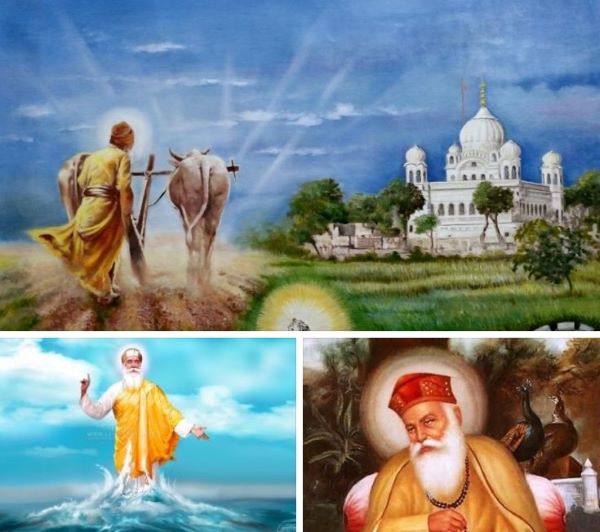
As we commemorate the 550th anniversary of Guru Nanak our thoughts are firmly focussed on developing a deeper appreciation and understanding of his life, character, mission, message and its relevance to today. In the below three images we see a somewhat conflicting characterisation of Nanak.

On the top image Nanak, which is my personal preference, is presented as a family man, a farm worker, earning a living by ploughing his fields at Kartarpur, as the embodiment of ‘kirat karni‘ or ‘honest labour’. Here his name is simply Nanak, with no attachment to any particular faith!

In the left image, Nanak is presented as a God like figure, an Avtar, where his name becomes Guru Nanak Dev. As far as I know the Guru title was added by his successors, though even in Gurbani, more often than not, the reference is always Nanak, as in ‘kehay Nanak‘ or Nanak speaks… I am interested in the origin of the suffix ‘Dev’, which I assume is derived from the Sanskrit word ‘Devta’, or divine being. And so presented as Nanak Dev, we might speculate this is evidence of Hindu appropriation.

There is also reference in Bhai Gurdas’s writing to Nanak being referred to as Peer or Pir which is a title for a Sufi master or spiritual guide; here he becomes refered to as Baba Nanak. The right hand image captures, if you liker the Islamic appropriation of Nanak, emphasising the Muslim prayer cap or Taqiyah. There are also references to Nanak being referred to as Nanak Lama which is an honorific title applied to a spiritual leader by Tibetan Buddhists.

It seems wherever Nanak went he was claimed by the locals who would have inevitably given him the culturally appropriate title, but for me there is profound beauty in simplicity and there can be no better title than ‘Nanak’ which means oneness (from ‘na’ referring to negation of ‘aneik’ or many).

Nanak was a teacher of the world; he rejected religion which he felt was divisive and taught about oneness of all living things and captures this beautifully in the utterance ‘ik oankaar’ and any number of titles cannot capture his greatness.


[Gurnam Singh is an academic activist dedicated to human rights, liberty, equality, social and environmental justice. He is a Visiting Fellow in Race and Education at University of Arts London and a Visiting Professor of Social Work at University of Chester as well as a presenter at UK-based Akaal channel. This views were shared on his Facebook page]

* This is the opinion of the writer and does not necessarily represent the views of Asia Samachar.


RELATED STORY:

Annexation of Jammu & Kashmir and the unfolding Hindutva Imperial Project (Asia Samachar, 21 Aug 2019)

Sikhi a ‘new age’ religion? (Asia Samachar, 5 Aug 2019)


ASIA SAMACHAR is an online newspaper for Sikhs / Punjabis in Southeast Asia and beyond. Facebook | WhatsApp +6017-335-1399 | Email: editor@asiasamachar.com | Twitter | Instagram | Obituary announcements, click here |

Thai singer Aruni releases song on Guru Nanak’s travel to Baghdad

0
Aruni Bagga (Photo grab from video Nanak Kal Vich Aaya)
By Asia Samachar Team | BANGKOK |

Thai multilingual singer Aruni Bagga has released a musical album to commemorate the 550th birth of Guru Nanak.

The 10-minute ‘Nanak Kal Vich Aaya‘ video tells the story of Guru Nanak’s travel to Baghdad with his trusted companion Bhai Mardana. The video, released on Youtube last week, was today updated with lyrics and its meanings in English.

“I’ve been doing kirtan since I was a child. This is my little contribution,” the Bangkok-based singer told Asia Samachar.

Aruni shot to fame when she emerged winner of Sa Re Ga Ma 1995 which was conducted and judged by Sonu Nigam. She was also the winner of the Star Voice of India audition in Thailand and represented Thailand as the guest performer in Mumbai in 2008.

Among others, she has performed with the Bangkok Symphony Orchestra conducted by Shardad Rohani. She was also a show opener for the Indian Princess grand finale in Bangkok in 2015.

Her father Prithipal Singh Bagga and paternal grandfather Harban Singh Bagga ensured that music was always running in the house. “They taught me since young,” she said.

Asked how the idea for the video came about, she said: “Some months ago, I thought why don’t we do something to. I made a request to Baba Nanak…It was blessed by him.”


RELATED STORIES:

Kaljug Jahaj Arjan Guru – Amrita Kaur & Yadvinder Singh (Asia Samachar, 9 June 2019)


ASIA SAMACHAR is an online newspaper for Sikhs / Punjabis in Southeast Asia and beyond. Facebook | WhatsApp +6017-335-1399 | Email: editor@asiasamachar.com | Twitter | Instagram | Obituary announcements, click here |