










UA-56202873-1
Page 617

Parked legacy

0
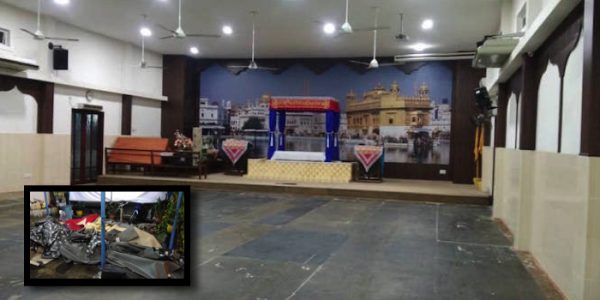
Gujranwala, Pakistan -Photo: Amardeep Singh facebook page
By Amardeep Singh | PAKISTAN

Khushwant Singh, the noted Indian novelist had written in his famous classic work of 1953 entitled THE SIKHS, “chief reason for my writing an account of my people is the melancholy thought that contemporary with my labours are being written the last chapters of the story of the Sikhs. By the end of the century, the Sikhs themselves will have passed into oblivion. Before that happens, it is proper that some estimate of their religion, traditions, political and cultural achievements should be made.”

At Gujranwala in Pakistan, peering through the missing metal bars of the window of the Sri Guru Singh Sabha Gurdwara, which is now used as a motorcycle parking lot, I was reminded of Khushwant Singh’s writing about the future of Sikhs. There is no doubt that across Pakistan where the Sikhs had churned the most vibrant chapters of their history, they have today passed into oblivion! To me, the gurdwara hall now turned into a motorcycle parking lot represented the forever PARKED LEGACY of Sikhs in Pakistan, which now has no hope of return. While deeply saddened, I left the premises with optimism that it is probably on account of the partition of 1947 that today nearly 50% of the 25 million global Sikh population resides outside of the Indian subcontinent. The challenge of partition became the catalyst for change and has today transformed the fortunes of the community as they are materialistically far better off in distant lands.

Khushwant Singh, in writing the book just a few years after the partition, was probably under deep influence of its impact on the community and had therefore lost hope. Close to the turn of the century, this comment about community’s oblivion was removed by the publisher in the subsequent reprints of the book.

Even parked vehicles move on after a while!

[Facebook entry on 21 Sept 2018 by Amardeep Singh, author of two epic books on Sikh heritage in Pakistan: Lost Heritage: The Sikh Legacy in Pakistan and The Quest Continues: Lost Heritage – The Sikh Legacy in Pakistan]


RELATED STORIES:

Abandoned in Karachi gurdwara (Asia Samachar, 13 June 2018)

Talking about Nanakpanthis and forgotten Sikh forts in Pakistan (Asia Samachar, 16 Jan 2018)

Amardeep’s burning passion sparks second book on Sikh legacy in Pakistan (Asia Samachar, 1 Sept 2017)


ASIA SAMACHAR is an online newspaper for Sikhs / Punjabis in Southeast Asia and beyond. Facebook | WhatsApp +6017-335-1399 | Email: editor@asiasamachar.com | Twitter | Instagram | Obituary announcements, click here |

Lanky Ravinder takes boxing gold at Malaysian games

Ravinder Singh

Twenty-one year old boxer Ravinder Singh punched his way to a gold in the boys’ below 80kg category at the Sukan Malaysia (Malaysia Games) 2018.

The lanky Ravinder was in superb form as he beat all his three opponents without conceding a point on Friday (21 Sept 2018) at Sukma 2018. He threw some solid punches to beat Terengganu’s Mohammad Noor Shahrul Mohd Saidin 5-0 in the final, reported The Star.

This was a major comeback for him after not being able to clinch the gold at the Malaysian national games two years ago in Sarawak.

“It’s my second and last Sukma and I wanted to bow out with a gold after my disappointment in Sarawak,” Ravinder told The Star. “I defeated all my three opponents with an identical score of 5-0. It’s the best achievement in my boxing career.”

“I will take a break from boxing but will pursue this sport after completing my studies,” said Ravinder, who hopes to complete his degree in the Computer Science at the Inti International University in Nilai.

Ravinder Singh wins gold at Sukma 2018

RELATED STORIES:

Savinder Kaur just keeps getting better (Asia Samachar, 22 Sept 2018)

England Boxing overturns beard ban (Asia Samachar, 20 March 2018)


ASIA SAMACHAR is an online newspaper for Sikhs / Punjabis in Southeast Asia and beyond. Facebook | WhatsApp +6017-335-1399 | Email: editor@asiasamachar.com | Twitter | Instagram | Obituary announcements, click here |
Jarmal Singh: The oval-ball turban ‘king’

JARMAL SINGH: 1979 Asian rugby championship – Photo: Singapore Rugby Union (SRU)

IN the world of rugby, the oval-ball contact team sport which originated in England in the first half of the 19th century, the famous Bollywood liner “Singh is King” will perfectly fit Jarmal Singh.

I dare say, by any sporting imagination, that this retired Singapore senior police officer may well be the first and only turbaned-Sikh in the world to captain any national team to regional glory.

Yes, Sikhs are known for their world-class prowess in hockey, cricket, football and even kabbadi (a team contact sport with its roots in the millennia-old history of ancient India and South Asia). But in the oval-ball sport of rugby, it’s a global rarity, let alone to be skipper, as Jarmal stands tall because of his outstanding leadership qualities on the field.

SEE ALSO: Singapore’s inimitable rugby captain

The Singapore Rugby Union (SRU), on the 40th anniversary of winning the Malaysian Rugby Union (MRU) Cup in 1978, feted the oval-ball heroes on Saturday at the SAFRA Toa Payoh Clubhouse with a reunion dinner and in launching a tribute book entitled When We Were Kings, authored by Godfrey Robert, the former The Straits Times sports editor.

Indeed, the soft-spoken Jarmal, who was captain of the Singapore rugby team which went on to win an unprecedented “treble” of national awards – Team of the Year, Coach of the Year and Sportsman of the Year – was humblest when the showers of praise were bestowed on him and his team-mates.

SPORTING HEROICS

The 70-year-old even confessed, for the first time, that he kept his sporting heroics away from his family: “I’ve never discussed any of it with my children or my grandchildren – they’ve never asked – and even if they did, I wouldn’t know what to say, where to start.”

Like a sporting rags-to-riches fairy-tale, they produced the best results in the annals of Singapore rugby, Under the name Singapore Civilians, they won the prestigious Malaysian Rugby Union (MRU) tournament after 44 years of participation.

In the semifinal, they beat the favourites, Royal New Zealand Infantry Regiment (RNZIR), and prevailed over the Royal Malaysian Armed Forces Blackhawks in the final. Later that year, they produced their best result at the Asian Rugby tournament.

The Lions finished an amazing third place at the sixth edition held in Kuala Lumpur, behind powerhouses Japan and South Korea. They upset Thailand 16-15 in the third-place play-off.

Jarmal Singh at the When We Were Kings book launch – Photo: Suresh Nair

The extraordinary season was hailed by pundits as a “Grand Slam” achievement by the game of rugby in the history of sport in Singapore.

Jarmal, who played on the wing and also as a wing-forward, says: “We had a very good coach in Nat Bava. What the team achieved was because of him. He improved our fitness levels and we could play with great strength and confidence.”

Award-winning rugby coach Natahar Bava, the SNOC ‘Coach of the Year’ 1978, sums up Jarmal as a “highly respected utility player, small in size but very strong in discipline”.

“Jarmal was elected by the players as Singapore captain in 1978,” says Natahar, a decorated US-trained educationist, who also taught at the Singapore American School for over 35 years. “His election was amazing as he was from a non-traditional rugby-playing school (Gan Eng Seng Secondary School) and he seriously started playing rugby as a senior police officer and late into his adulthood.

‘HAT-TRICK’ OF AWARDS

“Under his captaincy, Singapore won the MRU Cup after 44 years and we were rewarded with an unprecedented ‘hat-trick” of SNOC awards. If I need to sum up Jarmal in a few words, I’d hail him as a highly respected utility player, small in size but very strong in discipline, teamwork and as a rousing role-model.”

Jarmal was nicknamed as the “Flying Sikh” for his sprinting and tackling prowess, notes Natahar. “I recollect he was the only Singaporean to score a try against the world-class Western Samoa during the quarterfinals of the Main Cup at the Hong Kong Sevens in 1979.”

The nine-letter word “difficult” is almost non-existent in the vocabulary of this turbaned Assistant Commissioner of Police (Retired), who I’ve personally known for more than three decades. Whether it was defending against a stronger opponent on the rugby pitch, dealing with convicts, managing two jobs in a day or communicating the needs of the community to officialdom, Jarmal has not even once held the view that these were unachievable.

This is the steadfast mantra adopted by Jarmal throughout his life, born in India in 1948, and coming to Singapore’s shores as an eight-year old in 1956. His early life was shrouded by umpteen challenges.

Son of a humble watchman, Jarmal’s traits of working hard and never giving up were inherited from his father who played a major role in shaping his character. Growing in a zinc structure called home and situated just behind the warehouse, his father guarded as a “jaga”, he witnessed his father holding two jobs to make ends meet.

As a teenager, on his part, Jarmal tried his best to help. Family friends tell me he paddled daily on a bicycle to school instead of taking the bus so as to save a few cents. While other watched movies in the cinema, he would stare intently at the entrance of the cinema with vague imaginations of the interiors of a cinema.

At an early age, he knew education was the stairway to a respectable lifestyle and he took up a part-time day job to earn a few dollars while studying the night away for crucial examinations. And he settled for handmade spiked running shoes instead of those that were commercially produced due to the latter’s hefty price of S$20.

It was the proverbial “blood, sweat and tears” of his father and family, with an unending string of hardships that constantly reminded Jarmal to work hard and to burn the midnight oil.

The academic excellence in him prevailed as Jarmal’s perseverance and determination saw him surpassing all expectations and entering the University of Singapore. He graduated with a Bachelor in Science degree in 1971. He joined the Singapore Police Force (SPF) and not in his wildest dreams would he imagine that the next 40 years of his life in the blue uniform, which he wore with pride and distinction.

EXTRAORDINARY POLICE OFFICER

Jarmal, in a nutshell, ranks as extraordinary officer who rose through the senior police officer ranks through hard work, self-belief and commitment. While at the Police Academy, he received the prestigious Public Service Commission scholarship to do his Master of Business Administration degree at the National University of Singapore. In spite of having to manage work and studies at the same time, he completed his degree and graduated in 1984.

The government recognised his special value-added organisational skills and he was the Director of Special Projects (NPC Redesign), tasked with building the Neighbourhood Police Centres (NPCs) throughout Singapore so as to strengthen crime prevention efforts across the island.

He was more than a dawn-to-dusk turbaned-cop, who always led, very distinctly, from the front.

As the Commander of the Volunteer Special Constabulary, Jarmal spent his evenings administering and managing a team of volunteers from all walks of life who selflessly worked after office hours and weekends to assist the police officers in discharging their duties. During the day, he performed his duties as the Commander of the CISCO Auxiliary Police Force

Needless to say, he quickly caught the eye of his bosses with his exemplary hard work, contributions and dedication. He received numerous awards during his career with the SPF. These included the Pingat Pentadbiran Awam (Public Administration Medal) (Bronze) (Bar), Pingat Bakti Setia (Long Service Award), Minister’s Award for Home Team Achievement and Singapore Police Long Service and Good Conduct Medal.

Jarmal also received the Commissioner of Police’s commendation for his impressive investigation work on the Robinson’s Department Store fire that occurred in 1972.

His elite sporting attributes came to true light as a senior police officer. He had a keen interest in sports and was actively involved in athletics, football and hockey since his school days. He only picked up rugby in 1971, the year he graduated from the university and on joining the SPF. However, this sporting activity was to give him fame and glory far beyond his imagination.

HUMBLEST OF TONES

For a rare turbaned sportsman, Jarmal stood out at rugby for the next 10 years. He was a fast learner and was able to muster the sport so well that, in 1973, he was selected for Singapore’s national rugby team where he played in various tournaments with Malaysian states.

Even today, in the humblest of tones, he attributed the victory of his 1978 team to the ability and competency of the players instead of his captaincy brilliance. In 2014, Jarmal added another accolade to his glittering sporting career when he was recognised by the government as a ‘National Sports Pioneer’.

Jarmal Singh (left) with Singapore national coach Natahar Bava (middle) and then law minister E W Barker – Photo: Singapore Rugby Union (SRU)

Beyond his career and sporting passion, he also contributed to the community and society. An example of this service is his 26-year commitment on the School Advisory Committee of Gan Eng Seng Secondary School. He has also been active in the Sikh community. About 20 years ago, he became part of the first resource panel to consider issues relating to the Sikh community. He has served as the Chairman of the Sikh Advisory Board, which acts as an intermediary between government bodies and the Sikh community.

The retired Jarmal smiles to himself as he looks back to how his three sons and even his two grandchildren know minimal of his sporting heroics. He, however, remains indebted to his wife for his prolonged string of personal and professional successes. He says: “She took good care of the three sons while I was away on career pursuits and sporting tournaments. She significantly also encouraged me to pursue my life-long dreams.”

The blue-uniform continues to be a regimental life-long icon trademark. Despite retirement, he still has the passion to serve. He recently authored a paper titled “Crime Prevention: The Singapore Approach” to share his valuable insights and knowledge from his long years of experience in the police force. He also provides consultancy services with the Ministry of Home Affairs.

For a son of a watchman, who rose to be a Police Assistant Commissioner and rarer still, probably the only turbaned Sikh in the world to skipper a country’s rugby team, Jarmal deserves to be crowned as a “king”.

Indeed, his rags-to-riches personal lifestyle is the tale that the Sikh community must repeat over and over again as he lived through very tough times but those crises and challenges made him what he is today.

“Singh is King”. I’d say Jarmal is ‘King’ as his outstanding philosophy of humility, hard work, commitment, honesty and determination has stood him well over the last 40 years or so as an iconic Made-in-Singapore Sikh officer and gentleman.

These personal and professional trademarks have also enabled him to leave an indelible mark at the national and international levels through a glittering police and sporting career.

Yes, thanks to the Singapore Rugby Union (SRU), at the weekend’s 40th anniversary of winning the Malaysian Rugby Union (MRU) Cup in 1978, we’re reminded, through the Jarmal Singh-heroics of what the tribute book says: “When We Were Kings”.

Jarmal Singh is King.


The original article appeared here

Suresh Nair is a Singapore-based journalist who has known Jarmal Singh, over three decades, as a very rare breed of an officer, gentleman and sportsman of the highest distinction.


RELATED STORIES:

Singapore’s inimitable rugby captain (Asia Samachar, 14 July 2017)

Wrong ‘turban’ remark gets Fandi Ahmad in a big bind (Asia Samachar, 14 Sept 2016)

ASIA SAMACHAR is an online newspaper for Sikhs / Punjabis in Southeast Asia and beyond. Facebook | WhatsApp +6017-335-1399 | Email: editor@asiasamachar.com | Twitter | Instagram | Obituary announcements, click here |
Charanjeet Singh (1953-2018), Ampang

PATH DA BHOG: 30 Sept 2018 (Sunday), 9.30am-12pm, at Gurdwara Sahib Ampang | Malaysia

Charanjeet Singh (1953-2018), Ampang

SARDAR CHARANJEET SINGH A/L LATE HARNAM SINGH

From Ampang, Selangor

Born: 12 November 1953

Departed: 22 Sep 2018.

Dearly missed by family, relatives and friends.

Kirtan / Path Da Bhog: 30 Sept 2018 (Sunday), 9.30am-12pm, at Gurdwara Sahib Ampang

Contact:

Akbal Singh 019-2245709

Harjinder Singh 012-2145689

| Entry: 22 Sept 2018; Updated: 24 Sept 2018 | Source: Family |

ASIA SAMACHAR is an online newspaper for Sikhs / Punjabis in Southeast Asia and beyond. Facebook | WhatsApp +6017-335-1399 | Email: editor@asiasamachar.com | Twitter | Instagram | Obituary announcements, click here |

Savinder Kaur just keeps getting better

Savinder Kaur – Photo grab from TV1

Looks like Malaysian top women middle distance runner Savinder Kaur has been putting in some hard work.

She bagged gold medals for the 800m and 1,500m women at the Sukan Malaysia (Sukma) 2018 this week, stamping her mark on the event and repeating her victory at the last Sukma games.

The 21-year old clocked in a personal best of 4:42.75 for the 1500m, beating her previous best time of 4:46.83 at the 2017 Southeast Asian Games in Kuala Lumpur.

She dashed out ahead of the pack in the last 400m of the 1,500m race at Stadium Perak in Ipoh on Thursday (20 Sept). But she is still a distant away from breaking the national record of 4:23.49m or the Sukma record of 4:35.91.

A day before, she won the gold in the 800m women at 02:12.76.

At the 2017 Southeast Asian Games, she came out fourth in the 1,500m women and fifth in the 800m (2:16.79).

Savinder, who is pursuing a degree in sports science at University Malaya, is happy with her performance and will be featuring in Asean University Games in Myanmar in December.

Her next major meet is the Sea Games in the Phillipines in December 2019.


RELATED STORY:

Pavandip, Savinder shine at Holla Mahala atheltics (Asia Samachar, 26 March 2017)


ASIA SAMACHAR is an online newspaper for Sikhs / Punjabis in Southeast Asia and beyond. Facebook | WhatsApp +6017-335-1399 | Email: editor@asiasamachar.com | Twitter | Instagram | Obituary announcements, click here |

Unsung heroes of Iraq

0
Sozan assisting IDPs from Mosul during Ramadan – Photo: Khalsa Aid
By Ravi Singh (Khalsa Aid) | PEOPLE |

Sozan Fahmi is a Kurdish (Muslim) young lady from Duhok, KRG.

She was 19 when ISIS seized Mosul which resulted in 10,000s of Yezidi internally displaced persons (IDPs) crossing into Kurdistan. Sozan immediately got involved in assisting the IDPs.

I met Sozan in 2016, she was working with the Jinda Centre. She was deeply immersed in her volunteer work but now she was assisting the Yezidi girls/women who were fleeing ISIS captivity. These Yezidi women had gone through some of the most horrific ordeal, almost all were raped and traded as commodities, many were under 13!

What caught my eye was that many in the Yezidi community had lost trust in many Arabs/Muslims after being betrayed by some of their Arab neighbours but they were treating Sozan as a close member of their community. Sozan had won their hearts through humanity.

Since 2016 Sozan has been the key to all the Khalsa Aid work in Iraq. She is such a remarkable young lady who has become a beacon of hope for so many

I collect so many awards but there are those who should be awarded but remain at the back! Sozan deserves much recognition for her undying love for humanity & building bridges in a region where we are only shown hate by our media.

Thank you Sozan. You are an inspiration!

[Ravi Singh is the founder and the face of the UK-based humanitarian relief outfit Khalsa Aid]

Sozan Fahmi: Iraq Coordinator at Khalsa Aid – Photo: Personal LinkedIn profile photo


RELATED STORY:

Ravi Singh wins Sheikh Abdullah Award for Intercultural Dialogue (Asia Samachar, 14 Sept 2018)

Khalsa Aid, Kochi gurdwara serve hot meals to Kerala flood victims (Asia Samachar, 19 Aug 2018)

Ravi, does publicity get to your head? (Asia Samachar, 17 Aug 2016)


ASIA SAMACHAR is an online newspaper for Sikhs / Punjabis in Southeast Asia and beyond. Facebook | WhatsApp +6017-335-1399 | Email: editor@asiasamachar.com | Twitter | Instagram | Obituary announcements, click here |

Ranjit Singh Gill (1940-2018), Formerly Bentong

PATH DA BHOG: 29 Sep 2018 (Saturday), 5pm-7pm, at Gurdwara Sahib Tatt Khalsa | Malaysia

Ranjit Singh Gill (1940-2018), Formerly Bentong

SARDAR RANJIT SINGH GILL A/L TOTA SINGH

Formerly from Bentong, Pahang

Village: Mehro; District: Moga

Born: 10 March 1940

Departed: 17 Sep 2018.

Dearly missed by family, relatives and friends.

Sahej Path da Bhog: 29 Sep 2018 (Saturday), 5pm-7pm, at Gurdwara Sahib Tatt Khalsa followed by Guru Ka Langgar

Contact: Randave Singh Gill 016-2069904

| Entry: 21 Sept 2018 | Source: Family |

ASIA SAMACHAR is an online newspaper for Sikhs / Punjabis in Southeast Asia and beyond. Facebook | WhatsApp +6017-335-1399 | Email: editor@asiasamachar.com | Twitter | Instagram | Obituary announcements, click here |

International peace bridge connecting Kartarpur in Pakistan and Dera Baba Nanak in India

0

By Harbans Lal | Seeking Wisdom | OPINION

The road and railroad bridge connecting Gurdwara Darbar Sahib at Kartarpur, Pakistan, and Gurdwara Dera Sahib on the eastern side of the river Ravi, was constructed by the British Govt, around 1927 AD. – Photo: Seeking Wisdom website

In the past few days, Punjab minister Navjot Singh Sidhu brought good news. He announced that the Pakistan Army Chief Gen Qamar Javed Bajwa had told him that Islamabad would open a corridor to connect Gurdwara Darbar Sahib at Kartarpur in Pakistan’s Narowal district with Gurdwara Dera Sahib on the Eastern side of the river Ravi. This was a gesture on the 550th birth anniversary of Guru Nanak in the Year 2019.

General Bajwa’s announcement expressed the honest and far-sighted view of the newly elected Pakistan Prime Minister, Imran Khan – who confirmed the promise soon after by a direct statement from the Prime Minister’s office.

Navjot was not alone, the Chief Minister of Punjab Sardar Amarinder Singh was right behind the long-awaited gestor between the two countries. They have already submitted a letter of proposal to the Government of India on their corridor plan.

India and Pakistan have been at each other’s throat for the past seven decades. The wounds of partition were not tending to heal. Instead, they were waiting for the skies to open to shower any healing balm from the above. The 550th year of Guru Nanak’s advent may well be such a juncture.

Guru Nanak was born at Talwandi that was later named after him as Nanakana. It is only 170 km from the West banks of the river Ravi, where Guru Nanak established the town of Kartarpur and spent last 18 years of his life. There, he founded a worldwide movement which is now known as Sikhi-sm. That, in turn, made Kartarpur Gurdwara as the Sikhs’ most sacred and most historic Gurdwara, akin to Holy Medina for the Muslim world. Besides, Kartarpur is holy to not only Sikhs but to civil societies at large because of the universal peace message that its unique history imparts for all civil societies.

Kartarpur is situated on the Western banks of river Ravi. Across from Kartarpur on the Eastern banks of Ravi is the town of Dera Baba Nanak, where Guru Nanak visited often. His in-laws lived there, and Guru Nanak’s family was taken care in the same city during his long journeys.

For centuries during and after the days of Guru Nanak, devotees routinely traveled both ways on the bridge across Ravi to pay obeisance to Gurdwaras in Kartarpur and Dera Baba Nanak. They visited there for daily prayers and inspirations as well as to touch the dust of the land where Guru Nanak ingrained his footsteps.

The road and railroad bridge connecting the two holy shrines was constructed by the British Govt, around 1927 AD. (Figure 1Painting of Kartarpur Bridge).

However, the war between Pakistan and India broke out, and this sacred bridge became a casualty; the air-force bombed it for defense reasons. Although the war was only short-lived, the loss of the bridge was forever to the agony of all lovers of Guru Nanak; the offending government never rebuilt the fatally damaged bridge. Soon after the war, Sri Nanakana Sahib Foundation under the leadership of Sardar Ganga Singh made as its agenda to restore the corridor bridge.

At the Annual meeting of the Nanakana Foundation at its 25th Anniversary in Lahore, we resolved to ask for the reconstruction of the bridge and constituted a delegation under the leadership of Sardar Ganga Singh to meet with the President of Pakistan and other Pakistani authorities. It was so done. The Sikh delegation met with the President of Pakistan and other Pakistani authorities to move forward our proposal. Similarly, we held a National conference of the Pakistani Muslim Ulemas (Islamic religious scholars) in Lahore to establish the Muslim-Sikh Itehad (unity) organization in order to promote the issue further.

Malaysian lawyer Joginder Singh (extreme left) attended the 25th anniversary of Nanakana Foundation in Lahore. It had resolved to ask for the reconstruction of the Kartarpur bridge – Photo: Seeking Wisdom website

The international representatives who took active part in the deliberations in Lahore meetings included, Col. Chaudhary Hamid Ali, President Nanakana Foundation, Sardar Ganga Singh Dhillon, Dr. Bhai Harbans Lal, Sardar Joginder Singh advocate, Sardar Hukam Singh, Sardar Harbhajan Singh, Sardar Kesar Singh Dhaliwal, Sardar and Sardarni Bawa Ujagar Singh, Bibi Kanwaljit Kaur, Sardar Balwant Singh Goraya, Sardar Kesar Singh, Sardar Kartar Singh Bal, Sardar Bhupinder Singh, Sardar Satnam Singh Bhugra, Sardar Gyan Singh, Sardar Harpal Singh Bhullar, Sardar Perminder Singh Soch and others (my apology for the names that I have forgotten since the Lahore conference, and group photos including every one that I do not have in my records-HL).

Among other issues of the free excess to the Sikh shrines in Pakistan, we asked that a corridor bridge is built and designated as the Baba Nanak International Peace Bridge. We explored various avenues for the construction and financing the International Peace Bridge on Ravi to connect the two Sikh historical sight. At this time, the Pakistan Govt had already announced the formation of the Pakistan Sikh Gurdwara Parbandhak (management) Committee. The Govt. thus was friendly towards our proposals.

It is at about the same time; the then Indian Prime Minister Atal Bihari Vajpayee visited Pakistan on the opening of the Delhi-Lahore bus service. His inner circles told us that he talked about the corridor issue with Pakistan Government. Obviously, these conversations were perhaps off the record. Perhaps because of all these pressures that, in November 2000, on the birthday of Guru Nanak, a proclamation was held in Lahore that the Government of Pakistan was ready to make collaboration on the corridor project if there was a positive response from the Government of India.

It was on that occasion that with the help of Sardar Harbhajan Singh of the World Bank office in Washington DC, our delegation also met with the World Bank authorities in Pakistan. There, in response to our proposal of the Guru Nanak International Peace Bridge, we were told that the World Blank could advance a loan of up to 15 million dollars to build the International Peace Bridge. The caviar was that both Pakistan and India had to consent and apply for the loan together. Initial inquiries told us that it would not be possible to have Govt. of India to support the bridge on account of security concerns.

There was no follow up of the proposals and announcements of those years on the governmental level to my knowledge. Despite all demands, due to a non-mutual agreement between the two sides, the joint corridor has not been undertaken. Although, it is often claimed that both the governments of the two sides are showing strenuous efforts to initiate a peace process. Since the diplomatic view of both sides is not clear, the plan for this project is not succeeding.

In 2001, an old colleague of the All India Sikh Students’ Federation, Jathedar Kuldeep Singh Wadala founded ‘Kartarpur Sahib-Ravi Darshan Abhalashashi Sanstha’ in order to raise the public consciousness in both Punjabs. He spoke at numerous public meetings and widely distributed literature supporting this issue. After this, nearly half-a-dozen organizations sprang up into action to realize this goal of building the corridor.

Waiting for three-quarters of a century to travel around two miles, the news from our current Sikh Punjab ministers, Navjodh Singh and Amrinder Singh, is very welcome news. Nearly 300 million admirers of Guru Nanak all over the world are very jubilant; they will be more so when they walk over the peace bridge in the name of Guru Nanak.

Presently Sikhs in India visit the Indian side of the river Ravi to have a glimpse of the Gurdwara Kartarpur located on the Pakistani side of the river. They use binoculars provided by the security forces. This is all because of the wrangles in obtaining visas. The Baba Nanak International Bridge will be not only a welcome gesture for the Sikhs all over the world, but it will enhance the psyche of the peace process in the subcontinent.

Let us pray that Pakistani Naval Chief General Qamar Javed Bajwa and Punjab Cabinet Minister Navjot Singh Sidhu succeed in the efforts they jointly initiated. When the bridge is complete, its name as The Baba Nanak International Peace Bridge will be very appropriate. Sri Nanakana Sahib Foundation conceived this name in 2000 to pay homage to the Guru Nanak’s efforts across the continents to unite the warring communities in South East Asia and the Islamic countries.


The article first appeared on 22 July 2018 at Harbas Lal’s blog, Seeking Wisdom. See here.

Harbans Lal, Ph.D.; D.Litt (Hons) is the Professor Emeritus & Chairman at the Dept of Pharmacology & Neurosciences, University of North Texas Health Science Center. He is also the Professor Emeritus at the Amritsar-based Guru Nanak Dev University as well as President of the Academy of Guru Granth Studies. He can be reached at Japji2050@gmail.com

* This is the opinion of the writer, organisation or publication and does not necessarily represent the views of Asia Samachar.


RELATED STORY:

Does Language Impact the Transmission of Wisdom from the Sri Guru Granth Sahib (Asia Samachar, 24 July 2018)

When the light is dimmed, an invitation to darkness is inevitable (Asia Samachar, 21 June 2018)

Langar – Sharing a meal with purpose (Asia Samachar, 3 April 2018)


ASIA SAMACHAR is an online newspaper for Sikhs / Punjabis in Southeast Asia and beyond. Facebook | WhatsApp +6017-335-1399 | Email: editor@asiasamachar.com | Twitter | Instagram | Obituary announcements, click here |

Nirmal Singh (1938-2018), Banting

PRAYER: Akhand Path: 21-23 Sept 2018 at Gurdwara Sahib Port Klang. Path Da Bhog: 11.45, 23 Sept 2018 (Sunday) followed by Guru Ka Langgar | Malaysia

Nirmal Singh (1938-2018), Banting

NIRMAL SINGH S/O BAPPOO SINGH (@ JASEEVAN SINGH)

(BANTING)

Departed: 15 Sept 2018

Wife: Inderjit Kaur

Children / Spouses:

Amarjeet Singh / Pardeep Kaur

Amaratpal Kaur

Bhupinder Singh / Tarenjit Kaur

Harjeet Kaur

Charanjeet Singh / Julie Lee

Fondly remembered by grandchildren, nephews, nieces, relatives and friends

Akhand Path: 21-23 Sept 2018 at Gurdwara Sahib Port Klang. Path Da Bhog: 11.45, 23 Sept 2018 (Sunday) followed by Guru Ka Langgar

Contact:

Residence 03-31877816

Amar 012-3030809

Bhupinder 012-3845707


| Entry: 21 Sept 2018 | Source: Family |

[ASIA SAMACHAR is an online newspaper for Sikhs / Punjabis in Asia. How to reach us: Facebook message or WhatsApp +6017-335-1399. Our email: editor@asiasamachar.com. For obituary announcements, click here]

Advice about Sikh religious issue

0
By Gurmukh Singh OBE | OPINION |

Once again, a Heathrow Airport case reminds us that there is need for National Guidance on Sikh Kakaars & the Turban. 

Some years ago, someone advised Heathrow Airport authorities and the Department for Transport that it is OK for Amritdhari Sikhs to wear wooden or plastic miniature Kirpans. Now, a Heathrow Airport case going back to September last year, shows how local managers can get hold of the nearest Sikh representative for the advice which suits them! 

The careless and sometimes even insulting attitude of security officials towards the Sikh kakaars and the turban concerns all Sikhs. Our experience over the last 70 years is that even non-identity Sikhs of today may become full identity Sikhs tomorrow. In the last 12 months, a Sikh has been driven from pillar to post seeking support from Sikh organisations and MPs to persuade Airport security staff to adopt a more understanding attitude towards the Sikh turban or dastaar. They should be aware through their training that the Sikh turban represents much more than just headgear or headwear by at least calling it turban or dastaar. That was a polite request in a Sikh Council letter of 26 January 2018. 

The background is that on 11 September, 2017, this Sikh, himself an airport official, felt offended by the attitude of a Security Guard and his use of the description “headgear” for the Sikh turban or dastaar. At one time or another, many turban wearing Sikhs have experienced similar careless and even rude attitude of security staff and their ignorance about Sikh identity. []]During one trip a lady official told me that she had been advised that it was OK for Sikhs to take off their kada when going through Security, implying that I was being difficult by not taking it off.]

This turban wearing Sikh then took up the matter in steps from local managers to Sikh organisations when he had no success in getting satisfactory response. In addition to two MPs and Lord Indarjit Singh, the organisations mentioned in communications are the Sikh Council UK, Guru Nanak Nishkam Sewak Jatha and Guru Nanak Gurdwara Smethwick. In the meantime, the Heathrow security training officer had armed himself with advice casually sought from a local senior Sikh. This advice by one Sikh (with a couple of organisational credentials) was then described by the Heathrow Director of Communications in his response to the local MP as: All have advised us that using the term Religious or Cultural headgear would not be offensive to the Sikh community.

So, the technical general term headgear has been used as an excuse for remaining ignorant about the Sikh turban and to refuse a simple polite request for the Heathrow security personnel to be made aware of Sikh religious sentiments attaching to the Sikh turban. This is not a satisfactory state of Sikh affairs while prejudice against Sikh identity continues. 

Once again, the pointer is to a strong Sikh Council UK led by a professional level team of equals, accountable to Gurdwaras and affiliated organisations. That is only possible if all Sikh organisations are affiliated to the Council while retaining independence in own areas of community service.


Gurmukh Singh OBE, a retired UK senior civil servant, chairs the Advisory Board of The Sikh Missionary Society UK. Email: sewauk2005@yahoo.co.uk. The article first appeared at The Panjab Times, UK

* This is the opinion of the writer, organisation or publication and does not necessarily represent the views of Asia Samachar.


ASIA SAMACHAR is an online newspaper for Sikhs / Punjabis in Southeast Asia and beyond. Facebook | WhatsApp +6017-335-1399 | Email: editor@asiasamachar.com | Twitter | Instagram | Obituary announcements, click here |