Daughter of Late Sdr Dara Singh Sidhu & Late Sdrn Bhan Kaur – Chemor, Perak Daughter in law of Late Sdr Sohan Singh & Late Sdrn Bans Kaur – Chenderiang, Perak
Ten years have passed, but the love and lessons our mother gave us remain in our hearts forever. She prayed for us without fail, always putting others before herself. Her kindness, strength, and unwavering love continue to guide us every day.
We miss you, Mom, and we will always cherish the love and lessons you gave us.
Deeply missed and always remembered by:
Husband: Swanta Singh s/o Late Sohan Singh, Chenderiang, Perak
ASIA SAMACHAR is an online newspaper for Sikhs / Punjabis in Southeast Asia and beyond. You can leave your comments at our website, Facebook, Twitter, and Instagram. We will delete comments we deem offensive or potentially libelous. You can reach us via WhatsApp +6017-335-1399 or email: asia.samachar@gmail.com. For obituary announcements, click here
Malaysian Education Ministry Secretary General Aminuddin Hassim handing over a certificate to Sharon Kaur for winning letter as part of the PPPM Program Jerayaawara 2026-2030
By Asia Samachar | Malaysia |
The spark that teachers ignite in their students cannot be replicated by artificial intelligence (AI), says Sharon Kaur, principal of a school in Penang.
In a heartfelt letter to Education Minister Fadhlina Sidek that recently earned a state-level prize, Sharon underscored the irreplaceable role of teachers in nurturing independent thinkers.
“The drive we grow in students is not found in AI answers. Human touch cannot be digitalized. To see students who think independently, there must be teachers who do,” writes the principal of SMK Hamid Khan.
While welcoming digital tools in education, Sharon stressed that certain fundamentals of teaching must remain hands-on.
She recalled her childhood memories of her parents, both teachers, working late into the night on lesson plans and record books.
“That was where teaching began for me—in the mindset and dedication. To digitalize everything teachers do would take away that extra push in shaping the next generation,” she said.
Sharon believes that preparing lesson plans is more than an administrative task; it reflects a teacher’s commitment.
“Some teachers today don’t even know how much a lesson plan matters because everything is at their fingertips—they just cut and paste. The preparation is part of the dedication we want our teachers to have,” she explained.
For Sharon, teaching is not confined to school hours.
“Teaching is not and will never be just a 7-to-3 job. It is a calling where work is brought home because teachers are shaping human minds. That calling stays with you after 3pm and even after retirement,” she said.
“I am not suggesting a regression in digital tools, but rather a progression—one that preserves the human essence of teaching.”
Sharon, 53, began her career in 1993 at the age of 22 and has served in Sabah, Kelantan and six other states over 33 years. Her journey has taken her from a Primary Certificate IPG trainee to earning a master’s degree, eventually rising to the role of school principal.
“I am just a teacher, yet I hold the reins for the future. With 33 years of teaching and still going strong for another five years, I am always a teacher at heart,” she wrote.
Currently the only Sikh principal in Penang, Sharon’s letter—dated August 25, 2025—highlights not just her personal commitment but also a wider call to safeguard the heart of teaching.
ASIA SAMACHAR is an online newspaper for Sikhs / Punjabis in Southeast Asia and beyond. You can leave your comments at our website, Facebook, Twitter, and Instagram. We will delete comments we deem offensive or potentially libelous. You can reach us via WhatsApp +6017-335-1399 or email: asia.samachar@gmail.com. For obituary announcements, click here
Waheguru Ji Ka Khalsa, Waheguru Ji Ki Fateh. In conjunction with the 1st Death Anniversary of our beloved Son/Father/Husband, we would like to invite you and your family to the Akhand Path Sahib to remember the beautiful departed soul for all the love and kindness spread during his presence.
AKHAND PATH Details of prayers as below :- Venue: Gurdwara Sahib Petaling Tin Date: 26 Sept 2025 (Friday) Time: 9 am – Arambh of Akhand Path Sahib Date: 28 Sept Sept (Sunday) Time: 9 am – Samapti of Akhand Path Sahib followed by Kirtan Katha. 12 noon: Sehaj Path da Bhog followed by Guru ka Langgar
Please treat this as personal invitation from each and everyone of us in the family. Your presence will be highly appreciated.
ASIA SAMACHAR is an online newspaper for Sikhs / Punjabis in Southeast Asia and beyond. You can leave your comments at our website, Facebook, Twitter, and Instagram. We will delete comments we deem offensive or potentially libelous. You can reach us via WhatsApp +6017-335-1399 or email: asia.samachar@gmail.com. For obituary announcements, click here
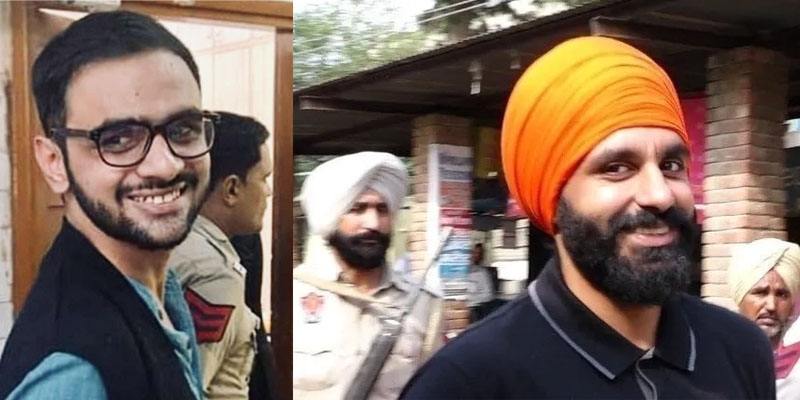
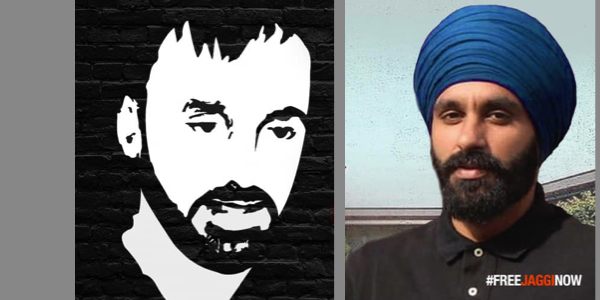
Umar Khalid in Delhi’s Karkardooma court (Left, photo by his friends / Article 14) and Jagtar Singh Johal
By Gurnam Singh | Opinion |
Umar Khalid, who had completed a PhD on the plight of Adivasis in Jharkhand at Jawaharlal Nehru University (JNU) in Delhi, was arrested by the Delhi Police Special Cell on 14 September 2020 as an alleged conspirator in the February 2020 Delhi riots. The clashes, centred in north-eastern districts, were triggered by tensions around the Citizenship Amendment Act (CAA) and saw mobs attacking homes, shops, mosques, and vehicles, with widespread arson, looting, and killings. The violence drew criticism for police inaction and complicity, and raising concerns about intolerance and human rights in India.
Like Umar Khalid, Jagtar Singh Johal, a British Sikh activist from Scotland, was arrested in Punjab, India, on 4 November 2017, shortly after his wedding. Indian authorities accused him of involvement in a series of targeted killings of Hindu leaders between 2016 and 2017, allegedly orchestrated by the Khalistan Liberation Force (KLF). Johal faced multiple charges, including terrorism, conspiracy, and murder. In March 2025, a Punjab court acquitted Johal of all charges, but despite this remains incarcerated, facing eight other similar charges brought by India’s National Investigation Agency (NIA).
The cases of Umar Khalid and Jagtar Singh Johal must not be seen in isolation of a major transformation tasking place in India where in the name of Hindutva nationalism, democracy and the rights of citizens, and minorities in particular, are being seriously eroded. Khalid, a Muslim intellectual and former student leader, has now spent five years in Delhi’s Tihar Jail under the Unlawful Activities (Prevention) Act. He has never been convicted of any crime. His real “offence,” say supporters, is that he is outspoken, fearless and unapologetically critical of Hindu nationalism. Amnesty International has described his case as a “sham” designed to intimidate dissent.
Johal, a British Sikh arrested in Punjab in 2017, has faced allegations of torture, arbitrary detention and fabricated charges. The UN Working Group on Arbitrary Detention has ruled that his imprisonment has “no legal basis” and is discriminatory, linked to his Sikh identity and activism. Despite an acquittal in one case, he remains mired in prosecutions that could carry the death penalty.
These men are not alone. From student leaders to journalists, thousands languish in Indian jails without trial, their voices silenced by laws originally intended to combat terrorism but now wielded as political weapons.
India’s independence movement was not merely about ending colonial rule; it was framed as a moral struggle to create a republic grounded in democracy and the principles of justice, equality and truth. In 1947, the nation’s leaders promised nothing less than a democratic experiment unlike any other.
Mahatma Gandhi declared that “democracy must in essence… mean the art and science of mobilising the entire physical, economic and spiritual resources of all the various sections of the people in the service of the common good.” For him, swaraj or self-rule meant empowering the weakest. Jawaharlal Nehru, in his famous “Tryst with Destiny” speech, pledged that “the service of India means the service of the millions who suffer… the ending of poverty and ignorance and disease and inequality of opportunity.” Sardar Vallabhbhai Patel, architect of India’s federal unity, urged his fellow citizens to “forget that he is a Rajput, a Sikh or a Jat… He must remember that he is an Indian and he has every right in this country but with certain duties.”
These were not just lofty words. They were the moral scaffolding for the world’s largest democracy. Yet today, India stands alarmingly far from these founding ideals. The two cases highlighted represent the tip of an iceberg that reveals the disconnect between the romantic vision of India portrayed by the state propaganda and the ground realities. What was once celebrated as a vibrant republic is now sliding into kleptocracy. Far removed from the utopian dreams of 1947, today India is ruled by a nexus of politicians, businessmen, criminal barons and elites who thrive on corruption, while dissenters are punished and minorities scapegoated.
A history of betrayal
This repression is not without precedent. India’s post-independence record is scarred by state-sponsored or state-enabled violence against minorities. In 1984, following Indira Gandhi’s assassination, more than 3,000 Sikhs were killed in organised pogroms in Delhi and Punjab. Women were raped, homes and gurdwaras burned, while the police looked away. For decades, perpetrators enjoyed political protection, with only a handful brought to justice.
In 2002, Muslims in Gujarat suffered horrific violence after the Godhra train fire. Human Rights Watch documented how mobs armed with voter lists targeted Muslim families while state authorities failed to act. Narendra Modi, then chief minister of Gujarat, has long faced allegations that his administration turned a blind eye to the violence.
In Kashmir, the abrogation of Article 370 in 2019 stripped the region of its autonomy, imposed communications blackouts and led to mass detentions. Amnesty International has described the human rights situation there as one of “systematic repression.” These episodes point to a consistent betrayal of India’s founding promises: Gandhi’s protection of the weak, Nehru’s pledge to end inequality, Patel’s call for unity. In their place has risen a politics of majoritarianism, centralisation and impunity.
From democracy to kleptocracy
India today increasingly resembles a kleptocracy. Politicians accused of corruption or hate speech thrive at the highest levels of government, while innocent activists rot in jail. Media houses that challenge power face raids and intimidation. The judiciary, once a bulwark of independence, is accused of bending under political pressure. As one commentator observed, “in today’s India, innocence is punished, and criminality is rewarded.”
Though unique in its own right, this degeneration of Indian democracy mirrors a global trend. Around the world, authoritarian leaders cloak themselves in the language of democracy even as they hollow out its institutions. Vladimir Putin in Russia has built a regime of oligarchic kleptocracy. Donald Trump in the United States has undermined democratic trust with conspiracy and division. Narendra Modi has fused Hindu nationalism with crony capitalism, creating a system where allegiance to ideology grants impunity, and dissent invites persecution.
Reclaiming the dream
The tragedy is that India was born with unparalleled moral capital. Its leaders did not simply demand freedom; they pledged a republic that would protect minorities, uphold truth and honour dissent. That promise has been steadily eroded. But history also teaches that authoritarianism is not invincible. Gandhi’s non-violent resistance brought down an empire. Across the world today, movements for democracy, from Hong Kong to Washington, is a reminder that ordinary citizens still have power.
The cases of Umar Khalid and Jagtar Singh Johal should not be seen in isolation. They are symbols of a larger struggle for India’s democratic soul. India still has the potential to be a great union of democratic states, which was the original vision, and not a centralised kleptocracy. But this can only be possible through s renewal of pillars of democracy, namely, an independent judiciary, press freedom, decentralisation of power and political practices who serve the interests of people and not power.
The immediate release of Umar Khalid, Jagtar Singh Johal and the 1000’s of other political prisoners rotting in Indian jails would be a good start.
Gurnam Singh is an academic activist dedicated to human rights, liberty, equality, social and environmental justice. He is an Associate Professor of Sociology at University of Warwick, UK. He can be contacted at Gurnam.singh.1@warwick.ac.uk
* This is the opinion of the writer and does not necessarily represent the views of Asia Samachar.
ASIA SAMACHAR is an online newspaper for Sikhs / Punjabis in Southeast Asia and beyond. You can leave your comments at our website, Facebook, Twitter, and Instagram. We will delete comments we deem offensive or potentially libelous. You can reach us via WhatsApp +6017-335-1399 or email: asia.samachar@gmail.com. For obituary announcements, click here
Buntong, Ipoh, Perak (previously Ampang, Ipoh, Perak)
1 June 1930 – 20 September 2025
with profound sadness Sardarni Jarnail Kaur d/o Sardar Saudagar Singh announce the passing of her beloved husband.
Sardar Mehar Singh leaves behind a great legacy in his children, grandchildren and great-grand children.
Respect can be paid at residence No. 1010, Jalan Chui Chak, Buntong, Ipoh 30100 Perak on Sunday the 21st of September 2025 from 9am to 2pm. Cortege leaves residence at 2pm on Sunday the 21st of September 2025. Final rites/Saskar will be at Wadda Gurdwara Sahib Ipoh at 3pm.
Akhand Path will commence at residence on Friday the 26h of September 2025, 8am, followed by Path da Bhog/Antim Ardass at Gurdwara Sahib Buntong on Sunday the 28th of September 2025 from 10am to 12pm.
ASIA SAMACHAR is an online newspaper for Sikhs / Punjabis in Southeast Asia and beyond. You can leave your comments at our website, Facebook, Twitter, and Instagram. We will delete comments we deem offensive or potentially libelous. You can reach us via WhatsApp +6017-335-1399 or email: asia.samachar@gmail.com. For obituary announcements, click here
Rahul Gandhi visited Gurdwara Baba Budha Sahib at Ramdas, Amritsar, on Sept 15, 2025 – Photo: Rahul Gandhi Facebook
By KBS Sidhu | Panjab |
On 15 September 2025, Rahul Gandhi, Congress leader and Leader of the Opposition in the Lok Sabha, visited Gurdwara Baba Budha Sahib at Ramdas, tehsil Ajnala, during a tour of Ravi-ravaged, flood-affected villages in Amritsar and Gurdaspur. During his visit, he was presented with a siropa (robe of honour) inside the sanctum precincts. The Shiromani Gurdwara Parbandhak Committee (SGPC), which manages this historic gurdwara, quickly objected, citing its directive that political leaders and VIPs are not to be ceremonially honoured within gurdwaras.
Within days, the SGPC suspended the granthi Bhai Kulwinder Singh and two other staff members, transferred the shrine’s manager with a warning, and made these punitive actions public. The matter escalated further when the banned US-based Khalistani outfit Sikhs for Justice (SFJ) issued threats to Punjab Congress leaders for facilitating the honour. Thus, what might have been a quiet matter of internal protocol enforcement was turned into a controversy of state-wide proportions, with potentially international repercussions.
My Perspective: Why the Handling Was Unjustified
I am neither an unconditional votary of the Congress ideology nor a great personal admirer of Rahul Gandhi, although I do feel he is discharging his duties as Leader of the Opposition quite effectively. Yet, in my view, the SGPC’s handling of this incident was not entirely appropriate. Maryada (religious discipline) must be respected: if the rule bars siropas for political leaders inside the sanctum, it should indeed be observed. But enforcing maryada does not require public theatre. A discreet correction and internal reminder would have sufficed. By resorting to suspensions, transfers, and publicity, the SGPC converted a manageable protocol lapse into an avoidable public spectacle.
This approach did not enhance the SGPC’s stature; on the contrary, it handed extremist organisations a fresh opportunity to provoke Sikh sentiments. Instead of calming the waters, the SGPC stirred them. The institution’s responsibility is to safeguard sanctity and lead with composure, not to provide political ammunition to any outfit—within or outside the country.
Historical Responsibility and the Spirit of Sikhism
The wounds of 1984 remain raw. I have repeatedly maintained that Indira Gandhi bears sole responsibility for Operation Blue Star, and Rajiv Gandhi and his cohorts are squarely culpable for the anti-Sikh pogrom that followed her assassination. But to impute responsibility to Rahul Gandhi—then a minor—is neither just nor true to the Guru’s path.
Sikhism is an inclusive faith, welcoming people of every caste, creed, and background to bow before Sri Guru Granth Sahib, revered by Sikhs worldwide as the manifestation of the eternal living Guru. Extending a siropa in this instance was not a political endorsement but simply an acknowledgement of a devotee’s presence—one who had voluntarily come to pay obeisance at the Guru’s door (dwar). By overreacting, the SGPC has, in effect, projected the broader spirit of the Panth in a parochial and narrow manner.
Punjab’s Verdicts: People Decide, Not the SGPC
In a democracy, it is for the people to decide who should be rewarded or punished in the political arena. Since Operation Blue Star, Punjab has thrice elected Congress-led governments with Sikh Chief Ministers—Beant Singh in 1992 and Captain Amarinder Singh in 2002 and 2017—and many Sikh MLAs. This is the people’s verdict, of Sikhs as well as non-Sikhs.
That being the case, one must ask: what authority does the SGPC have to extend or withhold legitimacy on partisan grounds? Its role is gurdwara management, not political arbitration. By acting otherwise, the SGPC risks exposing itself as little more than a political instrument of the Badal faction of the Shiromani Akali Dal—an impression widely held across Punjab.
Check 1: Are the Rules Applied Equally?
A pertinent question arises: since the issuance of these non-public directives against siropas for politicians in sanctums, has the SGPC itself ever permitted leaders of the Shiromani Akali Dal or its allies to be similarly honoured at Sri Darbar Sahib, Amritsar? If the answer is yes, then the selective indignation in this case reveals double standards. True maryada requires impartiality; anything less smacks of expedience.
Check 2: Giani Harpreet Singh’s Reaction
The breakaway Shiromani Akali Dal faction led by Giani Harpreet Singh, former Jathedar of Akal Takht, reacted strongly. Giani Harpreet Singh condemned the siropa presentation to Rahul Gandhi, arguing that honouring a Gandhi family member disregarded Sikh historical grievances, particularly Operation Blue Star and the 1984 pogrom.
Yet, in doing so, his faction inadvertently lent legitimacy to the SGPC’s position, treating it as the official religious and political mouthpiece of the Sukhbir Badal–led Akali Dal. This highlights the paradox: while criticising the incident, the rival faction has reinforced the SGPC’s contested role as both religious custodian and political actor. In effect, both Akali factions have used the controversy to sharpen their partisan battles, leaving the Sikh Sangat caught in between.
In Summary: A Call for Renewal and Inclusivity
This is not the first time Rahul Gandhi has visited a Punjab gurdwara. On earlier occasions, he quietly participated in selfless langar seva at Sri Darbar Sahib without fanfare. Against that backdrop, the SGPC’s response to his recent siropa at Ramdas, during the course of his visit to the flood-ravaged border areas of Punjab—what can at best be described as a disproportionate reaction—was neither necessary nor appropriate. This was an utterly avoidable controversy, born of selective enforcement, politicisation, and needless escalation. If a breach occurred, the correction should have been private and dignified, not turned into public drama. Instead, the SGPC exposed itself as a political tool in the hands of the Badal group, fuelling embarrassment for itself, the Shiromani Akali Dal, and the wider Sikh community—without even securing the political dividends it may have sought.
The SGPC is a gurdwara management body, not the conscience-keeper of Punjab’s or the Sikh community’s electoral past. Its real duty is to uphold sanctity, ensure discipline, and embody inclusivity. To that end, I reiterate: fresh SGPC elections, overdue since 2011, must be held immediately. Only a renewed mandate can restore credibility, insulate the SGPC from partisan manipulation, and return it to its rightful role—serving the Panth in the inclusive spirit of the Guru.
Karan Bir Singh Sidhu, IAS (Punjab cadre), retired as Special Chief Secretary, Punjab. He writes at the intersection of Sikh and Punjab politics, gurdwara management, and Sikh maryada.The article was first published at The KBS Chronicle.
ASIA SAMACHAR is an online newspaper for Sikhs / Punjabis in Southeast Asia and beyond. You can leave your comments at our website, Facebook, Twitter, and Instagram. We will delete comments we deem offensive or potentially libelous. You can reach us via WhatsApp +6017-335-1399 or email: asia.samachar@gmail.com. For obituary announcements, click here
ASIA SAMACHAR is an online newspaper for Sikhs / Punjabis in Southeast Asia and beyond. You can leave your comments at our website, Facebook, Twitter, and Instagram. We will delete comments we deem offensive or potentially libelous. You can reach us via WhatsApp +6017-335-1399 or email: asia.samachar@gmail.com. For obituary announcements, click here
Core Idea: “Dead While Alive”. This phrase sounds paradoxical but, in Gurbani (Sikh scripture), it means ‘dying to ego and material desires while the body still lives’. Guru Ji teaches that real life begins only after this inner death: — “Mooae bin jeevan naahee” – Without dying (to self-will), there is no life (SGGS 655).
Understanding Death: Spiritual death occurs whenever one forgets the Creator or lives under lust, anger, greed, attachment, and pride. This can happen repeatedly during physical life.
Dying While Alive: Ego-Death: To be ‘dead while alive’ is to let ego, pride, and attachment die while physically alive. This transforms identity from body-centered to spirit-centered, initiating spiritual awakening.
Spiritual Awakening and Merger: Ego-dissolution allows the soul (atma) to merge with the Supreme Soul (Parmatma), ending the cycle of birth and death (reincarnation).
Jeevan Mukti: Liberation While Alive: A person who is “dead while alive” achieves Jeevan Mukat (liberation in life).
Human Opportunity and Responsibility: Human birth is rare and spiritually precious. Wasting life on worldly pursuits without cultivating love for God leads to continued reincarnation and suffering.
Conclusion: Physical death is inevitable; fear of it fades when the soul is united with the Divine. True life is a spiritual journey: Die to ego and desires; Live in God’s remembrance; and attain Jeevan Mukti and eternal bliss while alive. Guru Ji calls us to start this inward journey now, so that the “death” we meet is not an end but the completion of life’s purpose.
By Bhupinder ‘Bo’ Singh | Opinion |
The concept of Dead while Alive appears as an unbelievable paradox, because both the terms are mutually incompatible. It makes us ponder how one can be alive when one is dead? In this piece we will explore what Guru Ji means by being dead while alive. We will also explore what is achieved when we can be alive while dead. Gurbani gives us an inkling that there is no life without dying in these words:
ਮੂਏ ਬਿਨੁ ਜੀਵਨੁ ਨਾਹੀ ॥੧॥
“Mooae bin jeevannaahee ||1||”(SGGS, Pg. No. 655)
Translation: But without dying (to self-will), there is no life. ||1||
The world reality is that the very mention of the word ‘death’ sends chills of fear down the spine. It becomes a taboo subject instantly in any conversation, immediately the efforts are made to change the topic of conversation to a more pleasant and enjoyable topic. Even people will implore you to talk about something nice. But death is an inevitable part of life, as it isephemeral. Whosoever is born in this world comes with an expiry date, called death. It is certain but still the humans have a fear of death, as nobody knows what happens afterwards,because nobody has come back to share that experience. Additionally, all humans have this innate desire to live forever.In the hospitals we can see terminal patients being kept alive, as death is considered as a medical defeat by the doctors and by the family of the patients. Gurbani shares this as aspect in these words:
“Jag marannabhaiaa nit aaplukaiaa mat jam pakarailai jai jeeau ||”
(SGGS, Pg. No. 447)
Translation: In this world no one likes death; they (all) try to hide from it. Because they are afraid that the Messenger of Death might catch them and take it away.
What is Death?
Death is the cessation of vital functions of the human body.But that is the death of physical body alone. Besides there is another type of death, when the person forgets the Creator. This death can happen many times while being bodily alive. Guru Nanak Ji has put that idea as:
Translation: When I (remember and) utter then I live (spiritually), forgetting I die.
So far we have seen death as related to the body as physical death then the spiritual death in forgetting the Creator. Buthuman creation has another dimension besides the body and mind to it, which is the soul, which Gurbani calls Jeeau or Jot. Gurbani clarifies it as:
ਜੀਉ ਪਾਇ ਪਿੰਡੁ ਜਿਨਿ ਸਾਜਿਆ ਦਿਤਾ ਪੈਨਣੁ ਖਾਣੁ ॥
“Jeeau pai pi(n)dd jinsaajiaadhitaapainankhaan||”(SGGS, Pg. No. 619)
Translation: The One who fashioned the body and placed the soul within, who gives you clothing and nourishment (as well).
That is the soul, when it departs from the body it dies. It has emanated from Infinite, who is deathless, so it possesses the same characteristic of its Creator, of being deathless.
Physical death is not betrayal of life, but it is part of it. Every living being born, with certainty he/she will die one day.Gurbani shares that reality as:
Translation: Destined only to die, one comes into the world.
Death is certain, but circumstances are uncertain. How will the death come? When and Where? Under what situation? Allunknown. So, human nature is to worry about those circumstances. Guru Ji has noticed it and put the observations as:
Translation:What do I know, how I will die, under what circumstances will it be?
Gurbani tells us that there can be uncertainties of circumstances, but it is inevitable, and even with our best efforts it reality cannot be averted. The actual time may be unknown,which could be as close as the next breath or it could be far enough. Gurbani further says that all human beings – the poor and the wealthy, the ruled and rulers, the ordinary folk and the religious – are merely awaiting their turn. None can step out of the queue. Gurbani says that there is no need to fear something that is certain and unavoidable. We must accept physical death as the natural end of the life cycle.
But the spiritual death happens to us every day, numerous times when we forget our Creator, make compromises in life on principles, acquiesce to weird requests, or exercise our lust, greed, anger, attachment or pride only to fulfill our wishes and desires. That reality is experienced because we were under the allure of a future reward, such as prestigious position, honor and recognition with accolades, financial gains, or when we fail to live in the present moment – NOW. Gurbani says that spiritual death is avoidable, work on it.
Dead being Alive
We have seen that Guru Ji says without being dead while alive there is no life. As the body is alive so what died?
ਹਉ ਨ ਮੂਆ ਮੇਰੀ ਮੁਈ ਬਲਾਇ ॥ ਓਹੁ ਨ ਮੂਆ ਜੋ ਰਹਿਆ ਸਮਾਇ ॥
“Hau namooaamereemuieebalai || Oh namooaa jo rahiaasamai ||”
(SGGS. Pg. No. 152)
Translation:I have not died – that evil nature within me has died. The One who is pervading everywhere does not die.
Guru Ji is talking about the death of pride of possessions,which dies at physical death as well as when a person is dead being alive. Guru Ji wants us to remember death plus becomedead to desires, wants, worldly possessions, achievements, status in society etc. When we start living not as a body but as a spiritual being, an inner transformation takes place. When that takes place we become spiritually strong not just to face the undaunted challenges of life but toughened enough to not to let the circumstances impair our faith, commitment or mental calmness. That inner connection initiates spiritual awakeningwithin.
Spiritual Awakening
Guru Ji has provided the answer in the next line by saying what can be done to overcome those anxieties associated with uncertainties surrounding the circumstances of spiritual death. The answer is spiritual awakening through remembrance of the Creator which will efface those concerns:
ਜੇ ਕਰਿ ਸਾਹਿਬੁ ਮਨਹੁ ਨ ਵੀਸਰੈ ਤਾ ਸਹਿਲਾ ਮਰਣਾ ਹੋਇ ॥
“Jae kar sahib munahonaaveesaraithaasahilaamaranaahoae||”(SGGS. Pg. No. 555)
Translation: If I do not forget the Master (God) from my mind, then my death will be easy.
When God is in the awareness then the obsession with the body or the self is removed, then we start living as spiritual beings. The ego is the hurdle in spiritual awakening as it does not wish to die. Ego-death implies experiencing a “dying-while-alive”. It is a process of ego-dissolution or dis-identification from the body which takes place while physically alive. Gurbani shares the potential growth that can take place when we get rid of our self-will or ego.
Translation: But if she gets rid of her ego, then she (all humans are brides) merges in her Husband Lord.
What happens when ego is rid, Guru Ji answers in next line as:
ਤਉ ਕਾਮਣਿ ਪਿਆਰੇ ਨਵ ਨਿਧਿ ਪਾਈ ॥੬॥
“Tau kaamanpiaare nav nidhpaiee ||6||”(SGGS. Pg. No. 750)
Translation: Only then can the soul-bride merge with her Beloved – God, the source of nine treasures. ||6||
When ego is not rid while alive, then what happens to soul after death is depicted as:
ਜੰਮਣੁ ਮਰਣੁ ਨ ਚੂਕਈ ਫਿਰਿ ਫਿਰਿ ਆਵੈ ਜਾਇ ॥੫॥
“Ja(n)man marannachookiee fir firaavai jai ||5||”(SGGS. Pg. No. 750)
Translation: Their births and deaths do not cease; over and over again, they come and go in reincarnation. ||5||
In SGGS the soul (atma also jot) has been compared to a bride and God (Parmatma) is considered as the Groom. The atmain its pristine form is as pure as the Parmatma but being in the company of the sensory organs of the body, it is affected by the experiences of the body organs. The purpose of human birth is to reunite the atma with Parmatma, which happens only at the soul level. However, because of a characteristic affliction to ego, humans have been experiencing separation. This gulf has been called the ਭਵਸਾਗਰ (Bhavsaagar) or ਭਉਜਲ (Bhaujal) in Gurbani, both the terms mean the worldly ocean. It has also been compared to a wall/curtain, again indicating the separation. If that separation is bridged, reunion is possible. Once the merger takes place while alive, separation is over thus the purpose of life has been achieved. Human life is a soul journey which then takes place and separation is bridged by giving up the ego, the cause of the separation.
Translation: His soul and the Supreme Soul become one. His duality within his mind is dead (and gone).
When the atma (soul) merges with the Pramatma (Supreme Soul/God) then the soul sees entire creation made of one substance, God’s light. When that is experienced the life’sjourney is completed. The journey started with a quest to find out who I am. The soul eventually disidentified itself from bodyto soul and then connected with the Cosmic consciousness and finally merged in it. Now it just sees the entire creation made of one substance only – His Light. The declaration of successful completion of this journey has been painted in these words.
Translation: My journey (Yatra), my life pilgrimage, has become fruitful, fruitful, fruitful. My comings and goings have ended, since I met the Holy Saint (Guru). ||1||Second Pause||1||3||
Through Guru’s blessings the soul’s journey was undertaken and successfully completed. Kabir Ji, who completed his own journey in life while alive, has shared hisexperience in these words:
ਸਦ ਜੀਵਨੁ ਭਲੋ ਕਹਾਂਹੀ ॥ ਮੂਏ ਬਿਨੁ ਜੀਵਨੁ ਨਾਹੀ ॥੧॥
“Sadh jeevanbhalokahaa(n)hee. Mooe bin jeevannaahee||1||”(SGGS, Pg. No. 655)
Translation: People talk about the desire to live foreveras a nice life, but without dying (to the mind), there is no life(forever). ||1||
In the concluding lines he shares that only those exceptional ones are those who transform themselvessuccessfully while alive, enjoying eternal bliss in these words:
ਜੋ ਜੀਵਨ ਮਰਨਾ ਜਾਨੈ ॥ ਸੋ ਪੰਚ ਸੈਲ ਸੁਖ ਮਾਨੈ ॥
“Joe jeevanmaranaajaanai || So panch sail sukhmaanai||”(SGGS, Pg. No. 655)
Translation: Those selected few, who know how to die while yet alive, enjoy great peace.
Here the prerequisite of spiritual life has been shared, which is called dying of the mind, to live for eternity. One who successfully learns the art of eliminating egoism, starts leading a spiritual life, enjoys the undiminishable spiritual happiness of the saints.
The Other Side of the Coin
When one becomes dead to material desires while alive, it has been defined by another special term called Jeevan Mukat(ਜੀਵਨ ਮੁਕਤਿ), which is defined as:
ਜੀਵਨ ਮੁਕਤਿ ਸੋ ਆਖੀਐ ਮਰਿ ਜੀਵੈ ਮਰੀਆ ॥
“Jeevanmukat so aakheeaai mar jeevaimareeaa||”(SGGS, Pg. No. 448)
Translation: Those who die, and remain dead while yet alive, are said to be Jeevan Mukat, liberated while yet alive.
When the person is still bodily alive, then what died has been clarified as:
“Maan mohdhono kau parahar gobi(n)dh ke gun gaavai || kahunaanakiehbidh ko praaneejeevanmukatkahaavai ||2||2||”(SGGS, Pg. No. 831)
Translation: One who has abandoned ego and attachment, sings praises of the Lord of the Universe. Says Nanak, the mortal who does this is said to be ‘jeevan mukat’ – liberated while still alive. ||2||2||
Basically, “I” has gone out of his/her inner self and only “You” remains. The duality between me and the other is also gone along with it. When You alone remains then whatever is done while bodily alive is to serve One (You) alone. When Youis admired and remembered its imprints get imbued within. It is like facing the Sun, getting drenched in Sunrays is the outcome.So, what resides within ‘jeevan mukat’ is:
Translation: Those people who have tasted their spiritual life, only those people know God.
Human life is a journey, and its success lies in arriving back to the original abode ਨਿਜ ਘਰ (Nij Ghar) while alive, that is back in Pramatma, the source from where it started. Thus, it ends the cycle of further births. In this way when the soul experiences Supreme Soul within, then love for Parmatma (God) arises in the heart (and there is no need to wonder around).
ਆਤਮੇ ਨੋ ਆਤਮੇ ਦੀ ਪ੍ਰਤੀਤਿ ਹੋਇ ਤਾ ਘਰ ਹੀ ਪਰਚਾ ਪਾਇ ॥
“Aatame no aatamedheeprateet hoi taagharheeparachaa pai ||”
(SGGS, Pg. No. 87)
Translation:When the individual soul experiences the Supreme Soul within, then it shall obtain realization within (and not look outside).
Failure of the soul to merge with the Creator results in further reincarnations and the atma has to try and get human birth to be able to enter the Nij Ghar. That is because it is only in human birth that one can understand God’s virtues, try to emulate them and thus be entitled to the reunion. Gurbani questions the life devoid of devotional love:
“Lakh chauraaseehjonsabaiee || Maanas kau prabhdheeieevaddiaaiee || Eis pauReete jo narchookai so aai jai dhukhpaidhaa ||2||”(SGGS, Pg. No. 1075)
Translation: There are 8.4 million life forms, but the Creator has granted glory to human birth. If the soul loses this opportunity it suffers many more births and deaths.
Conclusion
The thought of being dead while alive is scary, but Guru Ji is not talking about physical death. Guru Ji is talking about being dead to material desires and aspirations, thus living a spiritual life while alive. Life is a (spiritual) journey, and when we understand this, then we shift our focus from worldly wealth and possessions to yearn for real wealth that we can take with us even after physical death. Guru Ji is telling us that we are spiritual beings having human life journeys. When we make that journey ‘jeevtaiaa mur raheeai (ਜੀਵਤਿਆ ਮਰਿ ਰਹੀਐ)’ and become ‘jeevan mukat (ਜੀਵਨ ਮੁਕਤਿ)’ then we have completed that journey while alive, so there is no fear of physical death. The benefit of this death is cessation of transmigration, merger in the Supreme Spirit while alive, and experience of bliss in life. Let us start this journey in life.
As long as we identify with the body and the world of physical objects, there will be a constant fear of death as well as of losing the possessions. Guru Ji wants us to turn inward,looking within, discover our authentic Nature (by Self-realization), experience it and merge in God.
Bhupinder ‘Bo’ Singh, Houston. Born in Bhamo, Myanmar, he now lives in Houston, US, where he runs a manufacturing company formed with his son. A mechanical engineer by training, he has authored a number of books, including Connecting with the Master – A collection of essays on topics related to Sikhism (2006) and In Bully’s Eyes – An Illustrated Children’s book on Bullying (2019).
ASIA SAMACHAR is an online newspaper for Sikhs / Punjabis in Southeast Asia and beyond. You can leave your comments at our website, Facebook, Twitter, and Instagram. We will delete comments we deem offensive or potentially libelous. You can reach us via WhatsApp +6017-335-1399 or email: asia.samachar@gmail.com. For obituary announcements, click here
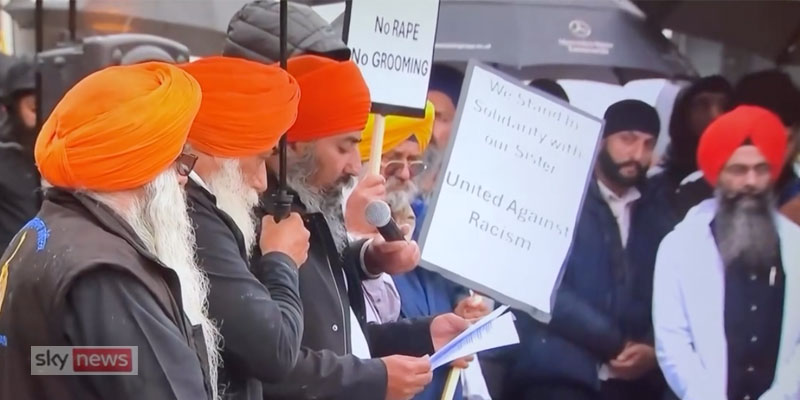
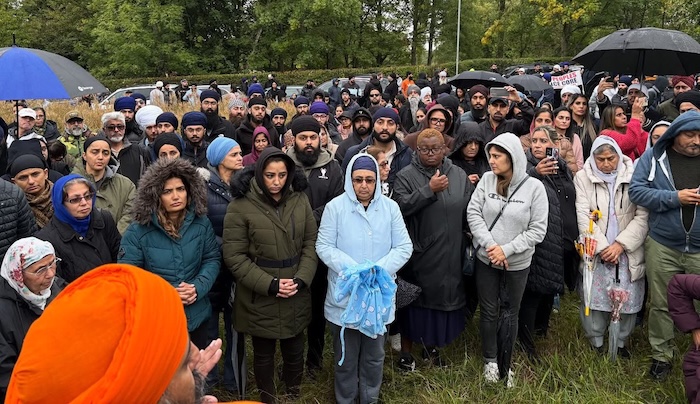
Sikhs and local communities gathered in strength and solidarity against the violent hate assault and rape of the young Sikh girl in Sandwell in the UK Midlands – Photo: Screengrab from SkyTV
By Gurnam Singh | Opinion |
On Tuesday, 11th September 2025, a horrific attack on a British-born Sikh woman in her twenties sent shockwaves through the community. What makes it even more worrying is that this attack took place within touching distance of eight gurdwaras in the small town of Oldbury. Part of the Borough of Sandwell in the UK Midlands, this is one of the most ethnically diverse parts of the UK and home to a large Sikh community.
The assault was not merely an attack on an individual; it was an assault on the dignity, humanity, and the shared values that bind us all. In this regard, it must be seen as wake-up call for those who may have felt that the kinds of racial hatred that the first generation of migrants had to endure in the 1960’s and 70’s was part of history. On a positive note, the response from all sections of the community has also demonstrated extraordinary resilience: a community united in protest, MPs demanding justice, and a faith that calls for the welfare of all.
The Sandwell Attack
Police are treating the crime as racially aggravated, after the perpetrators reportedly told the victim during the assault: “You don’t belong in this country, get out.”
The victim was on her way to work near Tame Road in Oldbury when she was attacked by two men. In a courageous public statement, she expressed both the trauma she endured and the gratitude she feels for the support she has received: “I would never wish this on anyone. All I was doing was going about my day on my way to work, and what has happened has deeply affected us. Through it all, my family has been my rock, and my community has stood strong beside me… We are going through a lot, but the strength and kindness shown by the right people in the community has been incredible, and I can’t thank them enough for being my voice.”
Her words reveal the devastating impact of the crime, but also the resilience and strength that emerge from communal solidarity.
Protest and Political Response
On the Sunday 14 September, hundreds of members of the Sikh community took part in a peaceful demonstration, beginning at the Guru Nanak Gurdwara in Smethwick and moving toward the scene of the attack. The march was both an act of solidarity with the victim and a collective demand for justice and safety. As Kuldeep Singh Deol, former president of the Guru Nanak Gurdwara, said: “This attack on our sister is shameful. Our daughters, sisters, and mothers deserve to be safe, regardless of colour or which faith they belong to.”
Local MP Gurinder Singh Josan has actively pursued justice at the highest levels of government, confirming that he had raised the case with ministers in the Equalities Office and with the Home Secretary, Rt Hon Shabana Mahmood MP, including asking a direct question in the House of Commons on 16th September. The Home Secretary condemned the racially motivated attack and reaffirmed the government’s commitment to ensuring justice is delivered.
Other community voices were equally resolute. Sangat Singh reminded the nation of the Sikh community’s longstanding contribution to Britain: “This was a vile act of racial hatred and sexual violence. Sikhs have stood for this nation, from Saragarhi to the world wars, earning Victoria Crosses for bravery. We are proud citizens, contributing through the NHS, in business, and across British society. This was not only an attack on our community, but a violation of a woman’s dignity; it must be met with justice. We have as much right to this country, and its symbols, as anyone else. We will not tolerate extremism in its name.”
Sikhs and local communities gathered in strength and solidarity against the violent hate assault and rape of the young Sikh girl – Photo: Sikh Federation UK
On 16th Sept ordinary people and activists from across communities gathered at a vigil in Oldbury to show their support for the woman and discuss violence against women. Calls by attendees were made to raise awareness of misogynism and abuse against women and the need for the community from all backgrounds to “stand together united”.
Sikh Teachings and the Politics of Division
From a Sikh perspective, this attack is far from an isolated incident. It occurs within a broader climate of hostility, racism, and far-right extremism in the UK. Figures such as Tommy Robinson have built movements on a strategy of divide and rule, exploiting societal tensions to foster hatred between minority communities.
Regrettably, and somewhat bizarrely given that the case in question is clearly a race-hate crime, a small but vocal number of misguided Sikhs, almost entirely men, have been drawn, mostly via social media, into anti-Muslim and anti-immigrant rhetoric, expressing solidarity with the Far-Right. To the credit of the broader Sikh community, these individuals have been widely condemned.
One of the core Sikh teachings is to reject ideas and individuals who sow divisions amongst people. Guru Nanak’s vision of the oneness of humanity (Ik Onkar) and Guru Gobind Singh’s proclamation to ‘recognise the human race as one’, calls on us to see beyond artificial divisions of race, religion, caste, class, gender and sexuality. Guru Tegh Bahadur, whose 350th martyrdom anniversary is being commemorated this year, sacrificed his life to defend the religious freedom of all, not just Sikhs. Guru Gobind Singh insisted that tyranny must be resisted, but never at the expense of truth or justice. The Gurus understood that oppression thrives when communities are turned against one another, and they rejected such politics in favour of solidarity with the downtrodden.
It is therefore deeply concerning that even a small number of Sikhs, particularly on social media, appear to align with far-right propaganda, spreading Islamophobia and xenophobia. In doing so, they betray Sikh principles and play directly into strategies that weaken all communities. True Sikh activism must never build walls between communities; it must build bridges. It must always reflect sarbat da bhala, the welfare of all, which all Sikhs attest to twice per day during their morning and evening prayers. Our strength has always come from standing together, aligning with the truth and not from false alliances rooted in hatred.
Lessons from Britain’s Anti-Racist Struggles
The Sandwell race hate rape case compels reflection on Britain’s history of anti-racist struggle. In the 1970s and 80s, minority communities organised powerful movements to resist discrimination and far-right violence. Asian Youth Movements, the British Black Panther Movement, the Black Unity and Freedom Party, and various trade unions and workers’ associations played pivotal roles in grassroots resistance.
These movements were non-sectarian and secular, recognising that unity across communities was essential to winning civil rights. Sikhs, Muslims, Hindus, and Afro-Caribbean communities often stood shoulder to shoulder against the National Front and other racist organisations. Their strength came from solidarity, from refusing to be divided, and from recognising that an attack on one community was an attack on all.
Though from different parts of the world and a variety of linguistic and faith traditions, what bound them in solidarity was a universal and shared sense of justice and human dignity and rights that had been fostered during anti-colonial struggles in the post War period from the 1940’s. Indeed, the unity was so powerful that most non white minority groups chose to privilege their collective identity of Black’ rather than emphasising the ethnicity and religious, which is the case today. This legacy of anti-imperial and anti-racist collectivist politics must inspire us today. Just as the youth and workers of that generation refused to bow to racism, we too must resist the Far-Right’s attempts to pit communities against one another.
A Wider National Picture
The Sandwell case is not an isolated incident but part of a disturbing national trend over the past decade or so. Since the Brexit referendum, the rise in hate crimes, normalisation of racist rhetoric, especially in relation to migrants and asylum seekers, and emboldening of far-right figures have created a climate in which minorities feel less safe. From attacks on Muslims to racist abuse against Black Britons, violent protests outside asylum hotels, and upsurge of race hate crimes against Sikhs and Hindus, the pattern is clear: Far-Right extremism threatens the safety and dignity of all.
We must resist the temptation to view these attacks narrowly as communal issues. They are attacks on justice, equality, and humanity itself. If we allow extremists to divide us, we all lose. If we stand together, we gain the strength to resist.
Remembering Who We Are
As we reflect on the horrific attack in Sandwell, we must remember the values we uphold. Sikh teachings leave no room for sectarianism or alliances with those who trade in hate. Our Gurus taught that humanity is one, dignity belongs to all, and oppression must be resisted wherever it appears. Standing with those who seek to divide communities betrays these principles.
The example of Britain’s anti-racist struggles of the 1970s and 80s remains instructive. Asian Youth Movements, Black Panther organisations, and trade unions demonstrated that minority communities, united across faith and culture, could challenge the Far-Right and achieve meaningful change. Their strength came from solidarity, from refusing to be divided, and from recognising that an attack on one was an attack on all.
To those few misguided individuals in our community who might be drawn to far-right rhetoric, I say, reflect carefully. The Far-Right neither defends Sikh dignity nor safeguards equality. Its goal is division, weakening all of us. Sikhism and our shared history in Britain show a different path; one of unity, resistance, justice and love, not hate!
The Sandwell case should strengthen, not weaken, our resolve. Let it remind us that our is not one of division but solidarity with all who face racism and violence. Only by upholding these traditions can we honour both the sacrifices of our Gurus and the struggles against racism and oppression of those who came before us on these very streets of Britain.
Gurnam Singh is an academic activist dedicated to human rights, liberty, equality, social and environmental justice. He is an Associate Professor of Sociology at University of Warwick, UK. He can be contacted at Gurnam.singh.1@warwick.ac.uk
* This is the opinion of the writer and does not necessarily represent the views of Asia Samachar.
ASIA SAMACHAR is an online newspaper for Sikhs / Punjabis in Southeast Asia and beyond. You can leave your comments at our website, Facebook, Twitter, and Instagram. We will delete comments we deem offensive or potentially libelous. You can reach us via WhatsApp +6017-335-1399 or email: asia.samachar@gmail.com. For obituary announcements, click here
Respects can be paid at her residence 489, Jalan 5/53, Petaling Garden, 46000 Petaling Jaya, Selangor from 12.00pm to 6.00pm from Thursday, 18th September 2025 onwards.
Cortege leaves the residence at 12.00pm on the 20th September 2025 to MBPJ Crematorium, Jalan 229, Seksyen 51a, Petaling Jaya for 1.00pm cremation.
The Final Rights Prayers/ Path Da Bhog will be held at Gurdwara Sahib Petaling Jaya from 5.00pm to 7.00pm on Sunday 28th September 2025.
ASIA SAMACHAR is an online newspaper for Sikhs / Punjabis in Southeast Asia and beyond. You can leave your comments at our website, Facebook, Twitter, and Instagram. We will delete comments we deem offensive or potentially libelous. You can reach us via WhatsApp +6017-335-1399 or email: asia.samachar@gmail.com. For obituary announcements, click here