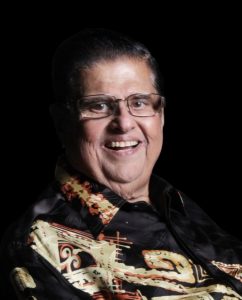
EMPOWERING WOMEN: Dr Daleleer Kaur (third from left) talking to some of the participants at the Ipoh seminar after her talk – Photo / Supplied
Gurdwaras must adopt changes to be more inclusive and appealing to the sanggat (congregation), especially the youth. At the same time, there is a dire need for marriage counselling bureau to manage Sikh divorce issues.
These were among the issues touched at a half-day seminar in Ipoh, Perak, today (23 July 2017) that attracted some 200 participants.
It is incumbent on gurdwara management committees, also referred to as gurdwara parbandaks, to not only discharge their duties in managing gurdwaras as mere religious institution but also its social function.
“At the same time, gurdwaras must actively participate in activities of key organisations like the Malaysian Gurdwaras Council (MGC) so that our collective voice is heard by people who walk in the corridors of power,” Darshan Singh, one of key organiser of the seminar, told Asia Samachar.
He added that the seminar also heard that gurdwara leadership must ensure that no propagation of deviant teachings in gurdwaras and that all parcharaks (Sikh preachers) and granthis must be advised on this matter.
These were among the issues discussed at the seminar entitled ‘Managing Issues and Challenges of the Malaysia Sikh Community’ organised by Pertubuhan Pembangunan Insan Sikh Perak (PPIS) in collaboration with the Malaysian Gurudwaras Council (MGC), Universiti Putra Malaysia (UPM) and Universiti Teknologi Mara (UiTM). Asia Samachar is the seminar media partner.
Dr Daleleer Kaur Randawar from Universiti Teknologi Mara (UiTM) law faculty spoke on ‘Empowering Sikh Woman: Rights Under the Law’ while Dr Sarjit Singh Gill from University Putra Malaysia (UPM) spoke on ‘Empowering Sikh Youth: The Role of Gurdwaras’.
Darshan, an MGC executive council member representing Perak, spoke on ‘Bridging the Sectarian Divide’.
In an immediate response to the seminar, Penang-based law lecturer Dr Shamsher Singh Thind said he agreed with Darshan’s point that unity was the paramount consideration.
“While Sikhs can have an intellectual discussion on sensitive topics like Dasam Granth, they should not let this break their spirit of brotherhood,” he said in a text message to Asia Samachar.
Dasam Granth, a granth previously known as Bachitar Natak, has emerged in the recent months as a divisive issue within the Malaysian Sikhs, after provoking similarly divisive debates and discussions in countries like Canada and the UK earlier.
On another matter, Shamsher said: “I was given a chance to ask a question on the powers of MGC in dealing with those Gurdwaras registered with MGC but not with ROS [Registrar of Societies] whose committee members abused their powers and there is nothing the sangat can do about it due to rigged electoral process.
“Jagir Singh did answer my question but it was sad to know that MGC does not have the power to exercise any control over those Gurdwaras. MGC must, in my opinion, strip those errant Gurdwaras of their membership!” he said.
Jagir is the MGC president and a key official in the Malaysian Consultative Council of Buddhism, Christianity, Hinduism, Sikhism and Taoism (MCCCHST).
GROUP PHOTO: Some of the women participants at Ipoh seminar posing for a group photo with speaker Dr Daleleer Kaur – Photo / Supplied
[ASIA SAMACHAR is an online newspaper for Sikhs / Punjabis in Asia. How to reach us: Facebook message or WhatsApp +6017-335-1399. Our email: editor@asiasamachar.com. For obituary announcements, click here]
YELLOW .. Champions pose before the tournament in the Matador Hockey Club meet – PHOTO / JUGJET
By Jugjet Singh
MATADOR Hockey Club, coached by former national skipper and national coach Sarjit Singh, held their inaugural tournament at the Tun Razak Stadium in Kuala Lumpur yesterday (22 July 2017).
It was a unique tournament as ‘oldies’, youth and children combined to make it a fun-filled learning experience.
Six teams, named by the colours they wore, took part in the tournament with unique rules as well. Those under the age of 15, get two goals for the one they score.
All teams had their equal share of oldies, youth and children and it was a learning curve for many who were as young as nine-years old.
Children played on a full pitch, and were guided by the more experienced players, some with Olympic experiences like Maninderjit Singh.
In the end, Team Yellow became champions by only letting in only one goal in seven matches.
But like Matador Club president Harban Singh said at the end of the tournament: “Today, everybody is a winner and there are no losers. We plan to have another tournament in seven weeks time, and I believe in the long run it will benefit our youth.”
NOTE: There were four goalkeepers who rotated for the six teams. Super effort by all four to play back-to-back for different teams.
The article first appeared in a blog by senior Malaysian sports writer Jugjet Singh. See original entry here.
YOUTH brigade at Kuala Lumpur-based Matador Hockey Club game – PHOTO / JUGJET
[ASIA SAMACHAR is an online newspaper for Sikhs in Southeast Asia and surrounding countries. We have a Facebook page, do give it a LIKE. Follow us on Twitter. Visit our website: www.asiasamachar.com]
IN MEMORY:Akand Path from Friday, 28 July 2017 (10.00 am) to 30 July 2017 at Gurdwara Shaheed Ganj Sahib, Kamunting, Perak. Path Da Bhog: Sunday, 30 July 2017 (10.00am-12pm) | Malaysia
Passed away peacefully on 6 August 2016 leaving behind beloved family, relatives, friends & sewaks to mourn their loss.
Akand Path: 2 Akhand Path from Friday, 28 July 2017 (10:00 am) to 30 July 2017 at Gurdwara Shaheed Ganj Sahib, Kamunting, Perak. Can be searched on Google Maps
Path Da Bhog: 1 Sahej Path Da Bhog on Sunday, 30 July 2017 (10.00am-12pm)
Contact: Dr Inderjeet 017-520-2010, Ninderpal 012-555-4061
[ASIA SAMACHAR is an online newspaper for Sikhs in Southeast Asia and surrounding countries. We have a Facebook page, do give it a LIKE. Follow us on Twitter. Visit our website: www.asiasamachar.com]
| Kuala Lumpur, Malaysia | 22 July 2017 | Asia Samachar |
STARTUP IDEA: First year university student Gurvinder Singh from Akaal Innovations presenting idea to design, develop and deliver a sustainable low cost alternative prosthetic technology for developing countries at the ASEES Startup Challenge – Photo / Asia Samachar
By Anandpreet Kaur
Three business ideas with the potential to make a difference in the lives of people were the favourite choices in a startup challenge at a recent regional Sikh conference in Kuala Lumpur.
Proponents of the ideas – urine bag for patients, low cost prosthetic limbs and an alternative education centre – won the day at the Asean Sikh Economic and Entrepreneurship Summit (ASEES).
The idea paddlers won cash prizes of RM5,000, 3,000 and 2,000 respectively in the ASEES Startup Challenge held on the final day of the two-day summit on 9 July 2017.
The startup challenge at the inaugural summit had another carrot dangled to them. The organiser said ‘investors had committed up to RM100,000 grant for any idea they may choose to fund’. It is not clear if that took place.
Five ideas were presented at the startup challenge which were judged by MOL Accessportal Bhd director Ganesh Kumar Bangah, Ravneet Singh from MSL Thailand and Bobby Bhatia from Singapore.
It is understood that none of the ideas received the grant, but the investors are ‘actively assisting’ the selected ideas to tap crowd funding, one summit organiser told Asia Samachar.
The first place went to the urine collector idea by Dr Gurmit Singh called the Pi Collector. It is a portable, vacuum cleaner like device that can collect and dispose large amounts of urine in a discreet, safe, hygienic, time and energy saving method.
First year university student Gurvinder Singh from Akaal Innovations won the second spot. The idea: to design, develop and deliver a sustainable low cost alternative prosthetic technology for developing countries.
Next came Me.reka, touted as an innovative and alternative education space, created to challenge the limits of 21st century designing and making.
The other two ideas were Eventda, a Malaysian-born startup looking to reinvent and digitalise the event industry, and Evogenesis which is looking at establishing the first air cargo in Myanmar.
[ASIA SAMACHAR is an online newspaper for Sikhs in Southeast Asia and surrounding countries. We have a Facebook page, do give it a LIKE. Follow us on Twitter. Visit our website: www.asiasamachar.com]
| Press Statement | New York | 22 May 2017 | Asia Samachar |
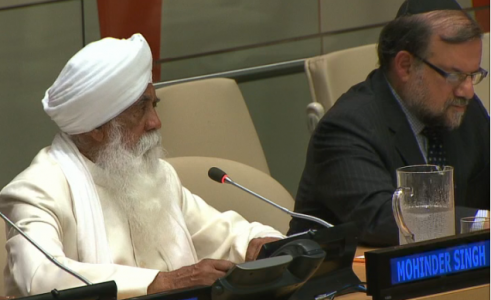
SIKH VIEWPOINT: Guru Nanak Nishkam Sewak Jatha UK Chairman Bhai Mohinder Singh Ahluwalia making a presentation at United Nations headquarters in New York on 14 July 2017. He took part in the meeting of the plan of action for religious leaders and actors to prevent incitement to violence that could lead to atrocity crimes. The event was organised by the Office on Genocide Prevention and Responsibility to Protect, the International Dialogue Centre (KAICIID), the Network for Religious and Traditional Peacemakers, and the World Council of Churches. – PHOTO / Grab from UN TV Web
UNITED NATIONS SECRETARY-GENERAL AND RELIGIOUS LEADERS UNITE TO LAUNCH PLAN OF ACTION TO PREVENT AND COUNTER INCITEMENT TO VIOLENCE.
[NEW YORK, 14 JULY, 2017]: The first ever plan of action designed to prevent incitement to violence that could lead to atrocity violence was launched today at a meeting held today in the ECOSOC chambers at United Nations Headquarters in New York.
The plan of action was developed by the United Nations Office on Genocide Prevention and the Responsibility to Protect, with the support of KAICIID, the World Council of Churches and the Network for Religious and Traditional Peacemakers.
The event was inaugurated by Secretary-General of the United Nations, António Guterres; Under Secretary-General and Special Adviser on the Prevention of Genocide, Adama Dieng; and Secretary-General of KAICIID, Faisal Bin Muaammar. Amongst a number of religious leaders of individual communities from around the world, Bhai Sahib, Bhai Mohinder Singh Ahluwalia, Chairman and Religious Leader of Guru Nanak Nishkam Sewak Jatha UK, provided a Sikh perspective on the panel discussing the role of religious leaders in preventing incitement to violence.
Bhai Sahib Ji commented, “This Plan of Action and the process by which it has been developed is highly commended. The misuse of religion to provoke violence is a symptom of diseased minds. To eliminate this disease at the source, we must lovingly liberate our minds through empowering ourselves with the values of compassion, truthfulness, selfless contentment, humility and love. Only peace within oneself can lead to peace around us.”
Implementation of the Plan of Action will contribute to the prevention of atrocity crimes, especially in areas affected by religious and sectarian tensions and violence and enhance the respect, protection and promotion of human rights, including the rights to freedom of opinion and expression, freedom of religion or belief and peaceful assembly.
At the launch meeting, religious leaders, the United Nations, Member States, and civil society began discussing strategies for the implementation of the Plan of Action and the coordination between religious leaders and implementing agencies. Important next steps include the dissemination of the Action Plan among Member States, relevant UN agencies and other stakeholders.
[Statement prepared by Guru Nanak Nishkam Sewak Jatha UK, sent via email. It was confirmed by an official of the jatha]
DISTINGUISHED: (L-R) Politician and lawyer Karpal Singh, judge Harmindar Singh and IMR’s Dr Bhagwan Singh
By Ajit Singh Jessy | OPINION | MALAYSIA
The Sikhs first arrived in then Malay states in two batches in the 1870’s. The first were the Sikhs who revolted against British rule in India and were arrested and banished. The second batch, which came in large numbers and were brought by the British to serve in the police, known as Malay States Guides. Their numbers increased in tandem with the expansion of British rule over all the states of Malaya. Along with the uniformed Sikh personnel others came on their own and settled all over Malaya, particular in the West Coast States. Likewise Sikhs arrived and settled in Sabah and Sarawak around the same time.
Many became watchmen/security guards. Within one generation the Sikhs moved up the employment chain and ventured into the transport business around the tin mines, as well as various professions. The initial migrant Sikhs placed great emphasis on education and this foresight paid great dividends as the younger generation moved away from being policemen, watchmen, cattle rearers and bullock cart drivers.
Compared to the relatively small segment of the population numbering less than 100,000 out of a 30 million population, Sikhs have been punching way beyond their weight in almost every profession.
POLICE FORCE: Sikhs rose rapidly within the police ranks and served in every category, as heads of CID and other departments right up to the rank of Chief Police Officer (CPO). The current CPO of Kuala Lumpur is Datuk Amar Singh Ishar Singh. SAC1 U. Santokh Singh served as Chief Police Officer Selangor. He had the distinction of being the first Malaysian to receive training at the Federal Bureau of Investigation (FBI) and Scotland Yard. SACI Dershan Singh, Deputy Director of Criminal Investigation Department (CID) Malaysia. SACII (R) Dato’ Nashatar Singh served as Deputy Commandant of Police Training Centre (PULAPOL) and retired as Deputy Director of Internal Security and Public Order, Bukit Aman.
LEGAL: The Sikh community has produced outstanding Advocates & Solicitors and some of these personalities have brought great pride to the nation and the community. Tan Sri Swaran Singh Gill (SS Gill) began his career as a Court Interpreter in 1935 and retired as the Chief Justice. His remarkable rise from an interpreter to the Chief Justice is reflective of the career advancement of many other Sikhs. Another well know legal eagle was the late Y.B Karpal Singh, who was also a leading politician. Dato’ Jagjeet Singh served as Senior Federal Counsel, Attorney General’s Chambers and retired as Session’s Court Judge. Datuk Harmindar Singh Dhaliwal currently sits as Court of Appeal Judge Dato Amarjeet Singh A/L Serjit Singh is Head of Civil Division of the Attorney Generals Chambers of Malaysia and D. Sunita Kaur Jessy is Judge of Session’s Court, Ipoh.
EDUCATION: Sikhs have made tremendous contributions in the field of education from Primary to University. Some of the well-known names were the Mr Karam Singh, Headmaster Clifford School Kuala Kangar, Mr Joginder Singh Jessy, Headmaster Sultan Abdul Hamid College, Alor Setar who was a well know author of History books on Malaya/Malaysia which were used as school text books in primary, secondary and Form Six classes. Mr Ajmer Singh and Master Gurdial Singh were conferred Tokoh Guru for their contributions as educationist.
ACADEMICANS: In this field too there have been many prominent Sikhs who have contributed immensely and held prominent positions. Prof. Dr Saran Kaur Gill, Deputy V.C. University Kebangsaan Malaysia (UKM), Prof Dr. Harchan Singh, Deputy V.C AIMST University, Dato’ Dr Parmjit Singh CEO of Asia Pacific Institute of Information Technology (APIIT) being amongst many others.
MEDICAL: The medical field along with the legal profession, have produced many outstanding Sikhs. Leading Sikh’s have served both in the government and private sector and many have been pioneers. Notable amongst these are Dato’ Dr Keshmahinder Singh, who played a key role in the setting up of the Tun Hussein Onn Eye Hospital, Petaling Jaya. Dr R Bhagwan Singh, Director of the Institute of Medical Research (IMR), who bequeathed his bungalow worth about RM500,000.00 in 1980 to the institute of Medical Research, Dato’ Dr. Bhuprinder Singh, the leading pathologist. Dato’ Dr Harnam Singh consultant Otorhinolaryngologist, Head and Neck Surgeon, Consultant Anti-Aging Physician. Dr Pall Singh, Tun Hussain Onn Eye Hosipital and Dato’ Dr Jagjeet Singh Sambhi (Obstetrician and Gynecologist).
ARMED FORCES: Many Sikhs have served with distinction in ensuring peace and tranquility in the nation. There were three Brigadier Generals, Rajbans Singh Gill, followed by Brigadier General Baljit Singh and Brigadier General Dato’ Ranjit Singh. Many others held the ranks of Colonels, Lieutenant Colonels and majors.
POLITICS: Despite their rather small number, Sikhs have also been active in politics at the national and state levels. The Second President of the Malaysian Indian Congress (MIC) was Baba Budh Singh. Dato Mahima Singh, Karam Singh, Karpal Singh, Gobind Singh Deo and Ramkarpal Singh Deo were elected to Parliament. Other’s were appointed as Senators, namely Dato’ Rina Bhar, Dato Chet Singh, Tan Sri Kernail Singh Nijar, Dato’ Paranjit Singh and Dato Daljit Singh Dalliwal. In Penang we have the first Sikh Executive Council Member (Exco) Jagdeep Singh Deo.
SPORTS: Sikhs have also been active in almost all sports with such leading names as Datuk Santokh Singh (Football), Dato Nashtar Singh (Javelin) Swaran Singh (shot put). Amarjit Singh Jessy, (Class 1, International Hockey umpire), Jagjit Singh (Rugby Skipper), Karamjeet Singh (Motor Ralling), Lall Singh (Cricket), Dilbagh Singh Kler from Sabah (5000 meters) and Dato Dr Cheema who is Patron of Malaysia Singapore Sikh Sports Council (MSSSC), which organizes annual sports festival for Sikhs. The most recent was hosted by the Royal Malaysia Police Sports Association (RMPSSA) at Kelab Aman in Kuala Lumpur in June 2017.
Some of the other Sikhs who have made great strides in their career and contributed to nation building are Tan Sri Dato’ Seri Ranjit Ajit Singh who is the Executive Chairman Securities Commission, Dr. Sukhdave Singh current Deputy Governor Bank Negara, Dato’ Gurcharan Singh, 1st General Manager of EON who was responsible for sales and marketing Proton cars, Dato’ Seri Chet Singh who as head of Penang Development (PDC) saw to the establishment of the nation’s first Free Trade Zone (FTZ) which led to Penang being transformed into an International Manufacturing hub. Tan Sri Ajit Singh who served as Ambassador and Secretary General Association of Southeast Asian Nations (ASEAN). Dato Seri Paduka Lakhbir Singh Chahl who served as the Secretary, Penang City Council and Secretary General Regional Network of Local Authorities for Asia Pacific (CITYNET).
Finally, I wish to acknowledge the assistance and advise rendered by Dr Harjit Singh of USM in the preparation of this brief write up on the Contribution Of Sikhs In MALAYSIA.
Dato Ajit Singh Jessy is a Penang-based lawyer practicing in Industrial Relations and is supportive of Sikh causes. He made a presentation on this topic a a recent Penang Heritage monthly talks.
[ASIA SAMACHAR is an online newspaper for Sikhs / Punjabis in Asia. How to reach us: Facebook message or WhatsApp +6017-335-1399. Our email: editor@asiasamachar.com. For obituary announcements, click here]
| Letter | Kuala Lumpur, Malaysia | 20 July 2017 | Asia Samachar |
ASEES 2017: Networking at the Asean Sikh summit in Kuala Lumpur – Photo / Asia Samachar
Dear Editor,
Many of us laud the Sikh business community for having successfully organised the Asean Sikh business seminar recently in Kuala Lumpur [1st Asean Sikh Economic & Entrepreneurship Summit or ASEES 2017].
However many of us were unable to attend, for various reasons. Perhaps we could learn, in brief, what transpired in that seminar. Those who did attend, could perhaps enlighten others who couldn’t make it.
There must have been some wonderful messages coming out of this conference to enhance the well being of the Sikh entrepreneur in particular,and the Sikh community as a whole.
I suggest that Asia Samachar take the lead here to disseminate vital information elicited in this conference. It is already doing a good job of informing, anyway. Shabas.
On that same note, we hope there will be a cultural conference as well someday, to bring Sikhs from different countries together in a cultural showcase event.
Let us proudly display our great heritage and unique religious values. I recommend that we be inclusive here,and let all Punjabis be invited to take part.
Thank you.
Davin (Dr).
Seremban, Malaysia
[ASIA SAMACHAR is an online newspaper for Sikhs in Southeast Asia and surrounding countries. We have a Facebook page, do give it a LIKE. Follow us on Twitter. Visit our website: www.asiasamachar.com]
Jagraj Singh: Founder of Everthings 13 – Basics of Sikhi
Basics of Sikhi founder Jagraj Singh passed away some months after diagnosed with stage four inoperable cancer towards the end of last year.
Jagraj, the UK-based young Sikh preacher who produced countless videos on Sikhi, was widely followed by Sikhs on the social media.
He founded Everythings 13, a UK registered educational charity whose main projects are Basics of Sikhi, Sikh Press Association and Mighty Khalsa/ Kiddie Sangat.
“It is with great sadness we announce the passing of Jagraj Singh, founder of Everythings 13.
Jagraj Singh was diagnosed with stage four inoperable cancer in December 2016.
“We request all to respect the privacy of Jagraj Singh’s family and the Everythings 13 team during this period,” Everythings 13 Facebook page posted a noted yesterday (20 July 2017).
Tributes have started pouring in for the Jagraj’s efforts towards spreading the Sikh message.
“Passing away of Jagraj Singh of Basics of Sikhi is a great loss for the Sikh community in UK and for the Panth. He had a great passion for the Sikh faith and took action to demonstrate his love for the community,” said Dr. Rajwant Singh, co-founder and senior advisor of the US-based National Sikh Campaign (NSC) in a Facebook entry.
“I had the privilege of visiting him at this home couple of years ago and was impressed by his family’s commitment to Sikh cause. His wife has been an amazing partner in this endeavor and has been a key player in carrying out the vision of spreading the message of Guru Nanak.”
Basics of Sikhi has three full time parcharaks currently teaching Sikhi in schools, colleges, universities, gurdwaras and workplaces across the UK and abroad. Its Youtube channel is already packed with more 800 videos of sikh analogies, short/long talks, Sikhi in English, courses and Q&As, accordng to information at its Facebook.
“Our educational programs aim to demystify, inspire and uplift, using the wisdom and actions of the Sikh Gurus. We hope the wisdom of the Sikh Gurus will inspire Sikhs and those of other faiths to live better lives,” it says.
[ASIA SAMACHAR is an online newspaper for Sikhs in Southeast Asia and surrounding countries. We have a Facebook page, do give it a LIKE. Follow us on Twitter. Visit our website: www.asiasamachar.com]
The Black Prince lead actor Satinder Sartaaj may have been the first turbaned Sikh to grace the red carpet of the Cannes Film Festival.
“Honored to be the first turbaned Sikh to walk the #RedCarpet,” he shared in a Facebook posting on 21 May 2017.
“The Black Prince” movie opens tomorrow in Los Angeles and other places.
In a promotional synopsis, the movie has been described as a tragic, yet fascinating true story about the last King of the mighty Kingdom of Punjab, Maharaja Duleep Singh.
The King, Maharaja Duleep Singh, was placed on the throne at the age of five only to be robbed of his throne by a bloody treason at the hands of trusted courtiers.
He was then torn from his mother and taken to England by the British at age fifteen. While in England, he was introduced to Queen Victoria, who took an immediate liking to him, calling him “The Black Prince”. He was indoctrinated into Christianity and baptized, changing his life forever, the synopsis added.
Meeting his mother again after thirteen years, the Maharaja awakens to the realities of his former life in Punjab. He then begins the arduous journey to regain all that was lost and re-embrace the faith of his birth, Sikhism.
Torn between his two worlds, The Black Prince begins a lifelong struggle to regain his Kingdom. It takes him on an extraordinary journey across the world.
In an article in the LA Times, Shashank Bengali writes that the Duleep became the ruler of the Sikh kingdom, had the throne stolen from him, was separated from his mother, had his face spattered with the blood of a slain uncle and was carted off to become an aristocrat in Queen Victoria’s Britain — all before his 16th birthday.
The life of Maharajah Duleep Singh never lacked for drama. Now a feature film brings to life this little-known chapter of Indian colonial history.
The movie tells the story of Singh, the last king and a tragic hero of the once-prosperous Sikh kingdom that spread across the fertile northern plains of India’s Punjab until British soldiers annexed the territory following two wars in the mid-19th century.
Singh — like the famed Koh-i-noor diamond that the British also seized from the kingdom — became a spoil of war. He was molded into a proper English gentleman, made to renounce his Sikh faith and baptized a Christian, and taught to shoot a hunting rifle — although he always wore a turban.
He became an exotic favorite in the court of Victoria, who nicknamed him “the black prince.” But as he attempted to recapture his identity, he reconverted to Sikhism and struggled to return to India before dying in poverty in Paris in 1893 at age 55.
“The Black Prince” also features Shabana Azmi, a well-known Indian actress, in the role of the exiled king’s mother, who was reunited with him in Britain after 13 years. In the film, her brief, fiery encounters with Victoria (played by Amanda Root) emphasise the plunder that marked British colonial rule, he writes.
A scene from The Black Prince – Photo / Supplied
[ASIA SAMACHAR is an online newspaper for Sikhs in Southeast Asia and surrounding countries. We have a Facebook page, do give it a LIKE! Visit our website: www.asiasamachar.com]
Jethanand Utumal Valiram, the family patriarch of the Malaysian-based Valiram enterprise, passed away on Tues (July 18). He was 78.
“He died peacefully on Tuesday, July 18 at 6.30pm in New York City, surrounded by loved ones,” the group announced in a press statement.
Jethanand started at the company at the age of 16 with the sudden death of his father.
Valiram was established in 1953 in Kuala Lumpur, originally specialising in the textile trade. Today, it is is present in the Southeast Asia in the space of luxury goods retail. Among others, it operates in Malaysia, Singapore, Indonesia, Thailand and Australia.
“The company’s modest beginnings were in the textile trade in the 1980s, it was Mr Jethanand’s leadership that led the group’s business transformation towards yarn manufacturing and fabric and garment re-export.
“In 1996, together with his sons, he steerd the company towards the next phase of Valiram’s evolution – lifestyle retail – opening th world’s first-ever textile boutique at an airport,” the company said in the same statement.
The group represents over 200 brands across various categories from fashion to cosmetics and dining concepts. Among the brands in its portfolio are Kate Spade New York, Michael Kors, Bath & Body Works and Victoria’s Secret.
Jathanand was also a community leader within the Sindhi community, including as vice president of the Sindhi Association of Malaysia. He is also a notable philanthropist, the statement added.
Jethanand is survived by his wife Champa Kirpalani Valiranm, sons Sharan, Ashwin and Mukesh, daughters-in-law Lavina, Monica abnd Roshan, and granchildren Neerav, Divesh, Harein, Jiya and Aarav.
[ASIA SAMACHAR is an online newspaper for Sikhs in Southeast Asia and surrounding countries. We have a Facebook page, do give it a LIKE. Follow us on Twitter. Visit our website: www.asiasamachar.com]






















 Dato Ajit Singh Jessy is a Penang-based lawyer practicing in Industrial Relations and is supportive of Sikh causes. He made a presentation on this topic a a recent Penang Heritage monthly talks.

 The Black Prince lead actor Satinder Sartaaj may have been the first turbaned Sikh to grace the red carpet of the Cannes Film Festival.