





















By Ravinder Singh | Opinion |
Leadership is often associated with power, authority, and influence. Sikhi, however, presents a different model—one rooted in Sewa (selfless service), humility, integrity, and courage. The Sikh Gurus taught that leadership is not about being served but about serving others and working for the welfare of humanity.
These timeless principles remain relevant today, whether in our families, workplaces, businesses, or community organizations.
Leadership Through Sewa
The foundation of Sikh leadership is Sewa. A true leader serves without expecting recognition or reward. Service develops compassion, responsibility, and humility.
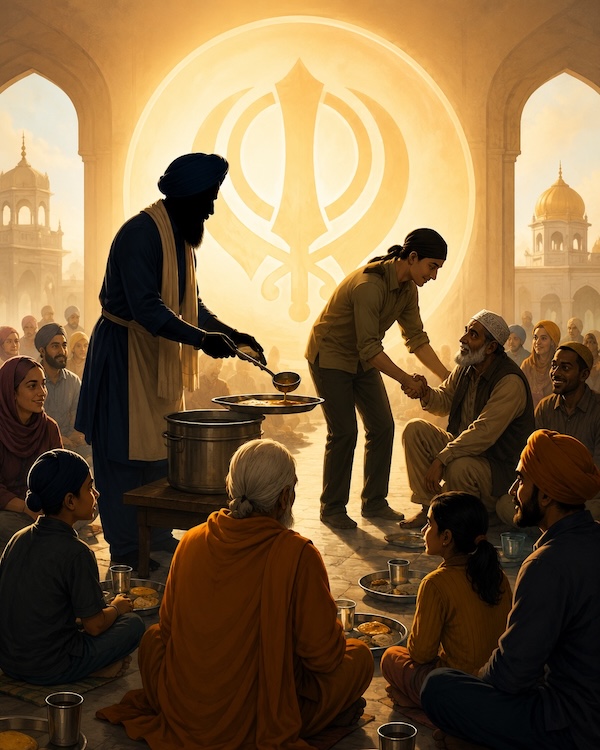
The institution of Langar, established by Guru Nanak Sahib and strengthened by the succeeding Gurus, perfectly illustrates servant leadership. Everyone sits together as equals, regardless of race, religion, gender, or social status. This teaches that leadership is earned through service, not position.
Humility: The Mark of a Great Leader
Humility is one of the greatest strengths in Sikhi. Guru Nanak Ji travelled extensively to spread the message of truth and equality, yet never sought wealth or power.
A humble leader listens, learns, admits mistakes, and values the contributions of others. Rather than seeking personal recognition, they focus on helping others succeed. Such leadership builds trust, unity, and lasting respect.
Courage to Stand for Justice
Sikh leadership also demands courage. Sikhs are called to defend truth, protect the vulnerable, and stand against injustice.
Guru Tegh Bahadur Ji sacrificed his life defending the religious freedom of others, demonstrating that leadership sometimes requires personal sacrifice. Guru Gobind Singh Ji strengthened this vision through the creation of the Khalsa, empowering ordinary individuals to become disciplined, fearless leaders guided by faith.
The Sikh ideal of the Sant-Sipahi (Saint-Soldier) reminds us that a leader must combine spiritual wisdom with moral courage.
Equality and Integrity
Guru Nanak rejected discrimination based on caste, gender, wealth, or background. Sikh leadership is built on the belief that every individual deserves dignity, respect, and equal opportunity.
Alongside equality, integrity is essential. Sikh teachings encourage Naam Japna (remembering God), Kirat Karni (earning an honest living), and Vand Chhakna (sharing with others). These principles guide leaders to act honestly, make ethical decisions, and remain accountable for their actions.
Leadership without integrity may achieve short-term success, but only truthful leadership earns lasting trust.
Developing Future Leaders
The Sikh Gurus did not create followers who depended on them—they developed leaders capable of serving society. Guru Gobind Singh Ji entrusted the Khalsa with responsibility and declared Guru Granth Sahib Ji as the eternal Guru, ensuring that Sikh leadership would always remain grounded in spiritual wisdom rather than individual personalities.
Great leaders are remembered not by how many people followed them, but by how many leaders they inspired.
Sikh Leadership Today
In today’s rapidly changing world, Sikh leadership is needed more than ever. Whether leading a business, school, charity, or youth organization, the same principles apply:
- Serve before you lead.
- Lead with humility and integrity.
- Stand courageously for justice.
- Treat every person with equality and respect.
- Empower others to grow and lead.
- Work for Sarbat da Bhala—the welfare of all.
These values create stronger organizations, united communities, and compassionate societies.
Conclusion
The Sikh Gurus left behind a model of leadership that transcends time. They demonstrated that true leadership is measured not by titles or authority, but by service, character, humility, and sacrifice.
As Sikh youth and future leaders, we have the responsibility to uphold these values in every aspect of our lives. By embracing Sewa, humility, courage, equality, and integrity, we can build stronger communities, inspire future generations, and contribute meaningfully to society.
Guru Gobind Singh Ji’s timeless message continues to guide us:
“Recognize the entire human race as one.”
May we strive to become leaders who serve with compassion, lead with humility, and inspire others through our actions.
CHECK OUT MORE FEEDBACKS FOR THIS REPORT AT FACEBOOK AND INSTAGRAM

Ravinder Singh is a technology professional. Alongside his corporate career in enterprise technology and AI solutions across Asia Pacific region, he is actively involved in Sikh community initiatives. He is passionate about empowering the next generation of leaders, fostering innovation, and creating meaningful impact through collaboration, integrity, and sewa.
RELATED STORY:
Sikh identity under siege: Children, safety and racism in the UK (Asia Samachar, 12 June 2026)
ASIA SAMACHAR is an online newspaper for Sikhs / Punjabis in Southeast Asia and beyond. You can leave your comments at our website, Facebook, Twitter, and Instagram. We will delete comments we deem offensive or potentially libelous. You can reach us via WhatsApp +6017-335-1399 or email: asia.samachar@gmail.com. For obituary announcements, click here