Navneet Kaur and team celebrate 4-1 victory against Wales in the FIH Hockey Women’s World Cup Qualifiers 2026 in Hyderabad on March 11, 2026 – Photo: Hockey India
By Asia Samachar | India |
India’s women’s hockey team registered an emphatic 4–1 win over Wales in their Pool B encounter at the FIH Hockey Women’s World Cup Qualifiers 2026 at the GMC Balayogi Hockey Ground in Hyderabad on Wednesday (March 11).
Forward Navneet Kaur starred with a hat-trick, striking in the 29th, 34th and 55th minutes, while Sakshi Rana opened the scoring in the seventh minute**. Wales managed a solitary response through Betsan Thomas in the 39th minute.
Although India had already booked their place in the semi-finals prior to the match, the victory confirmed them as Pool B leaders. The hosts will now face Italy on Friday, with a spot in the tournament final at stake.
Currently ranked ninth in the world, India sit six places above Japan in the FIH women’s rankings. Even in the event of defeats in both the semi-final and the third-place playoff, India are assured of finishing as the highest-ranked fourth-placed side in the competition.
The upcoming World Cup will mark India’s ninth appearance at the FIH Hockey Women’s World Cup. Their best result remains a fourth-place finish at the inaugural tournament in 1974, while the team finished ninth in the 2022 edition in Spain.
Join the conversation on this story on Asia Samachar’s Facebook and Instagram pages.
ASIA SAMACHAR is an online newspaper for Sikhs / Punjabis in Southeast Asia and beyond. You can leave your comments at our website, Facebook, Twitter, and Instagram. We will delete comments we deem offensive or potentially libelous. You can reach us via WhatsApp +6017-335-1399 or email: asia.samachar@gmail.com. For obituary announcements, click here
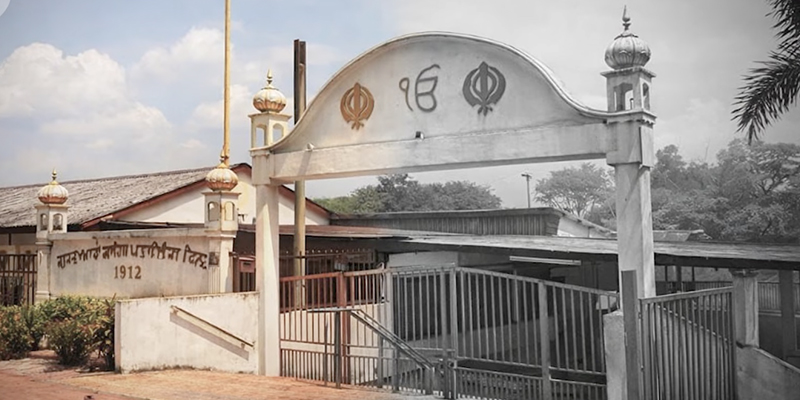
Gurdwara Sahib Petaling Tin in the Malaysian state of Selangor which voluntarily agreed to move to a new location
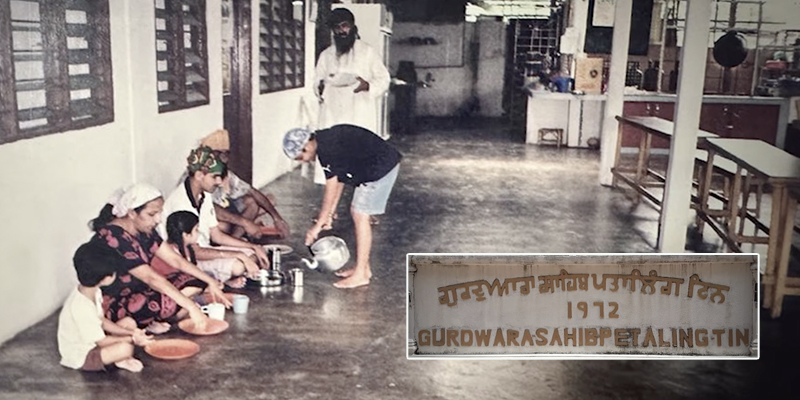
A wonderful video, narrated by The Star’s producer Charanjeet Kaur, captures the mood when a gurdwara in the Malaysian state of Selangor moved voluntarily. The Sikh community gathered at Gurdwara Sahib Petaling Tin in Taman Medan, Petaling Jaya, on March 1, 2026, for the final prayers and the relocation of the gurdwara’s six Guru Granth Sahib Ji (Sikh scriptures) to a temporary site.
The gurdwara’s closure followed government instructions to vacate the land, which had been gazetted to the Selangor Islamic Religious Department as a burial ground since 2008, it reported.
ASIA SAMACHAR is an online newspaper for Sikhs / Punjabis in Southeast Asia and beyond. You can leave your comments at our website, Facebook, Twitter, and Instagram. We will delete comments we deem offensive or potentially libelous. You can reach us via WhatsApp +6017-335-1399 or email: asia.samachar@gmail.com. For obituary announcements, click here
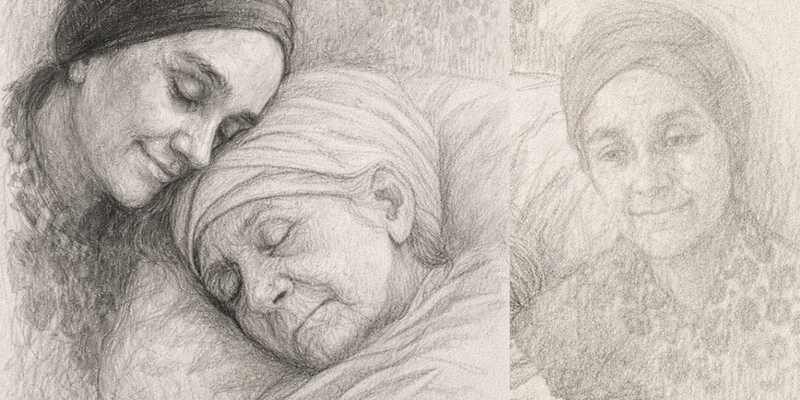
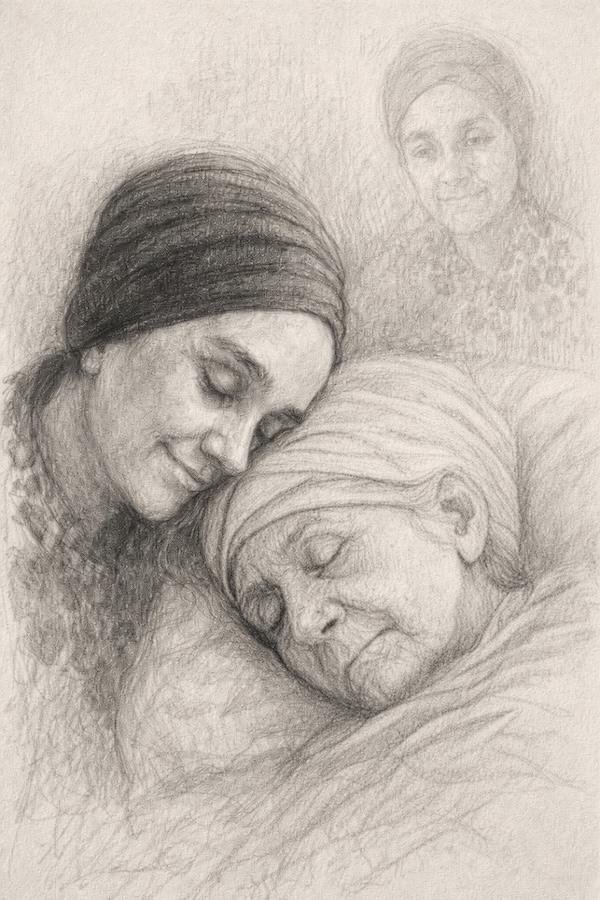
Unlike my dad, mum had been ill for some time with dementia, and I knew she was slowly drifting away, says Manjit Kaur — Sketch: AI-aided
By Manjit Kaur | Opinion |
Having spent the past year and half grieving over the passing of my mum, I have felt now is the right time for me to address the issue of attachment, loss and separation. Attachment is the thread that stitches itself into every aspect of our lives. We are attached to people, possessions, routines, memories, and even our identities. And yet, detachment or letting go, though it sounds harsh, can be the quiet doorway to clarity, freedom and peace.
I first felt the depth of attachment when I lost my father in 2012. His loss left a void that no words could fill. Each day, his absence pressed against me. I clung to memories, replayed conversations in my mind, and searched desperately for comfort in anything that reminded me of him. As his death was sudden, the shock and grief were unbearable, but over time it allowed me to see a different side of my relationship to him. It showed me that the heart learns detachment slowly, painfully, but inevitably and that what is important in life is to hold onto happy memories.
Twelve years later, in October 2024, I faced the loss of my mum. Unlike my dad, mum had been ill for some time with dementia, and I knew she was slowly drifting away. This grief was different, more intimate and slower. Losing my mum reminded me that attachment begins at birth, extends into our earliest family life, and shapes our sense of belonging and identity. Her absence was less of a shock, but in some senses, much more difficult to accept.
Having now lost both my parents, I found myself drifting and confused about who I was, especially with the loss of my identity as a daughter. But having had the opportunity to grieve and express my emotions, I managed to get onto the path of healing, though perhaps I will never completely heal. I now realise, detachment is not about letting go of love. It is about learning to carry love inside us without dependence and without possession. In this regard, both my parents will remain firmly attached with me forever in my memories.
For me, these profound experiences echo in everyday life, where we form and release attachments on a regular basis. Friendships are made, evolve and some, for many reasons, fade and break. Jobs, homes, and routines come and go. We accumulate objects, clothes, even money, that can silently weigh down our minds. It can be like walking around carrying a heavy ruck sack which just keeps getting heavier! Letting go, even of small things, can feel challenging. We hesitate over a favourite item of clothing, shoes or an old photograph.
And yet, letting go and decluttering of our homes, our closets, and our minds can be truly liberating. I have felt the lightness that follows clearing a room of objects long held onto, the subtle openness that comes when old routines are released, and the freedom that emerges when we stop clinging to the past. The act of letting go of things and even past hatreds, reminds us that space, both inside and around us, can be created for new possibilities.
Unlike my dad, mum had been ill for some time with dementia, and I knew she was slowly drifting away, says Manjit Kaur — Sketch: AI-aided
Detachment can be emotionally difficult. I have learned it’s about retraining your mind and making new connections, and because of this many people become trapped in the past. Yes, memories, people, and possessions are important, but as Gurbani teaches, these will not remain for ever and, just as we came into world with nothing, we will leave with nothing.
So, we need to learn to hold onto those things and thoughts that are of value and let go of those that simply drag us down. And in extreme cases, as psychologists tell us, this can lead to a mental illness what they call Hoarding Disorder! The small, everyday practices of attachment and detachment, saying goodbye to a friend who has moved on, leaving a home that is no longer suitable, or simply removing objects that no longer serve any use, are not only good for the mind, but they can prepare us for life’s larger lessons.
Each act of decluttering, each choice to let go, each moment of conscious detachment is practice. It trains the heart to love without possession, to be present without clinging, and to live with a quiet openness that is both humbling and freeing. Ultimately it is about realising that there are some things that are much more precious than objects, and that love, which cannot be bought, but must be nurtured and felt, is most important thing in life.
In letting go, we do not lose life; we deepen it. And in this balance of attaching and detaching, whether this is managing the separation of loved ones, to the small acts of everyday life, we find a subtle feeling lightness, an ability to remember the past, but live in the present and look forward to the future.
Join the conversation on this story on Asia Samachar’s Facebook and Instagram pages.
Manjit Kaur, a UK-based therapist and counsellor, is a presenter at the 1 Show Live at Panjab Broadcasting Channel, UK. She can be contacted via email at manjitkaur1show@gmail.com
ASIA SAMACHAR is an online newspaper for Sikhs / Punjabis in Southeast Asia and beyond. You can leave your comments at our website, Facebook, Twitter, and Instagram. We will delete comments we deem offensive or potentially libelous. You can reach us via WhatsApp +6017-335-1399 or email: asia.samachar@gmail.com. For obituary announcements, click here
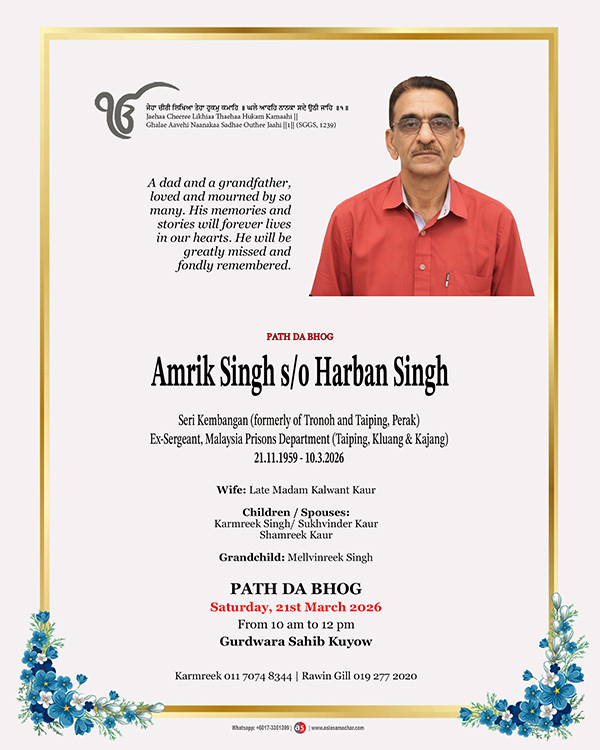
Seri Kembangan (formerly of Taiping, Perak) Ex-Sergeant, Malaysia Prisons Department (Taiping, Kluang & Kajang)
21.11.1959 – 10.3.2026
A dad and a grandfather, loved and mourned by so many. His memories and stories will forever lives in our hearts. He will be greatly missed and fondly remembered.
Wife: Late Madam Kalwant Kaur
Children / Spouses: Karmreek Singh/ Sukhvinder Kaur Shamreek Kaur
Grandchild: Mellvinreek Singh
PATH DA BHOG
Saturday, 21st March 2026 From 10 am to 12 pm Gurdwara Sahib Kuyow
| Entry: 11 March 2026; Updated: 16 March 2026 | Source: Family
ASIA SAMACHAR is an online newspaper for Sikhs / Punjabis in Southeast Asia and beyond. You can leave your comments at our website, Facebook, Twitter, and Instagram. We will delete comments we deem offensive or potentially libelous. You can reach us via WhatsApp +6017-335-1399 or email: asia.samachar@gmail.com. For obituary announcements, click here
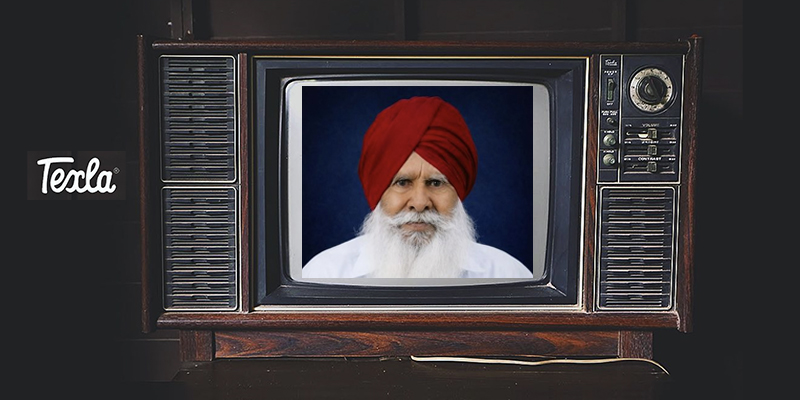
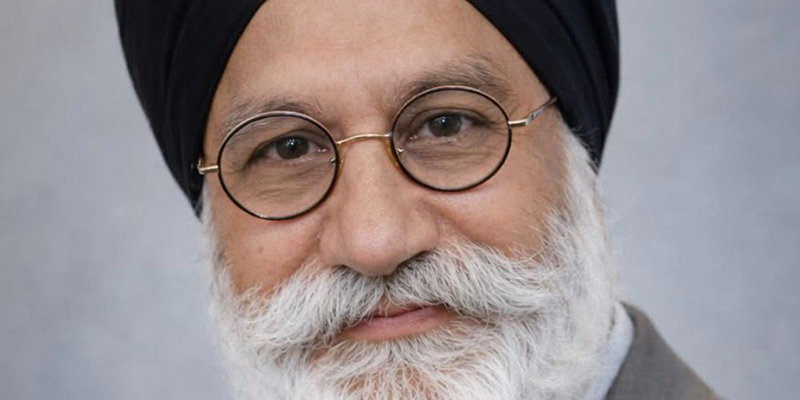
A black & white Texla TV. Insert: A recent photo of Texla TV founder Raja Singh Oberai
By Tarlochan Singh | India |
Sixty years ago, Texla TV was the talk of the town in Punjab. If you visited almost any household, you would find the television set proudly placed in the drawing room. Television had only begun appearing in India a few years earlier, and only a select few people could enjoy it by importing TV sets from abroad.
Texla TV set up factories in Delhi and Ludhiana, bringing a revolution in Punjab’s television market. Its founder, S. Raja Singh Oberai, came to India as a refugee from Rawalpindi, Pakistan. He began his career as a labourer in a vegetable shop in Delhi. Reflecting his humility, he kept a photograph of himself working there permanently displayed in his office. He became widely known as the ‘TV man of India’ for manufacturing low-cost radio and TV sets.
One of Texla TV’s biggest contributions, which earned appreciation across the Sikh world, was sponsoring a 15-minute kirtan programme on All India Radio. The popular broadcast began with the shabad “Koi Bole Ram-Ram, Koi Khudai”, and Sikh families across the country would listen to it with devotion.
Join the conversation on this story on Asia Samachar’s Facebook and Instagram pages.
Soon afterwards, responding to public demand, Texla TV began producing kirtan shabad cassettes, which quickly gained international demand. The company also started organising Kirtan Darbars in various cities. One memorable event was the legendary Kirtan Darbar held at Ashoka Hall in Rashtrapati Bhavan in 1983.
To provide proper education for children of American Sikh families, S. Raja Singh established Guru Ram Das Academy on Rajpura Road in Dehradun.
During the tragic violence in Delhi in 1984, Texla TV factories suffered heavy losses. Despite this setback, S. Raja Singh continued helping affected families in relief camps. He also established a colony in Ludhiana for displaced families from Delhi.
S. Raja Singh passed away in Ludhiana on Feb 28, 2026, at the age of 90.
(Tarlochan Singh, Ex-M.P, Former Chairman of National Commission Minorities)
ASIA SAMACHAR is an online newspaper for Sikhs / Punjabis in Southeast Asia and beyond. You can leave your comments at our website, Facebook, Twitter, and Instagram. We will delete comments we deem offensive or potentially libelous. You can reach us via WhatsApp +6017-335-1399 or email: asia.samachar@gmail.com. For obituary announcements, click here
My engagement with Asia Samachar began over 6 years ago in 2019 with what seemed, at the time, a simple and generous invitation. I received a welcoming email from Harbhajan Singh, the founding editor based in Kuala Lumpur. His message was warm and disarmingly straightforward: would I consider contributing a regular column addressing critical issues facing the global Sikh diaspora. I recall my first column was on how social media can be a tool for peace making. Since then, I have published over 200 articles on a wide range of contemporary issues directly or indirectly concerning Sikhs.
Until that moment, my writing had been largely confined to the familiar terrain of academic publishing, focusing on the sociology of education, social work, and social justice. While I had penned the occasional article on Sikhi, my intellectual home was a world governed by peer review, rigid disciplinary conventions, and the slow rhythms of scholarly debate. In academia, ideas often take months or even years to reach an audience; in contrast, my columns for Asia Samachar are often conceived, edited, and published within the same day.
Looking back, I recognize that Harbhajan’s invitation marked a pivotal turning point. It was the moment I was inducted, perhaps unexpectedly, into the role of a public columnist who was not afraid to offer a critique of Sikhs, not as an enemy of the Panth, but as a critical friend. In this regard, unlike academic writing where you are often presenting two sides of an argument, I was able to be more provocative, but always the aim to strengthen our Panth.
What excited me most was precisely what distinguished the column from academic writing: its immediacy and reach. It allowed me to respond to controversies and questions as they unfolded within the Sikh world, creating a space where reflection could meet lived reality in real-time. For a sociologist accustomed to the careful cadence of academic argument, this was both liberating and unsettling. A column cannot hide behind the protective armour of jargon, footnotes, or methodological caveats. It demands clarity, brevity, and a willingness to speak directly to the hearts of readers.
This experience has been both humbling and energizing. The column became a kind of laboratory for me to think aloud on a whole manner of issues, such as, reflecting on identity, institutional authority, spirituality, and the challenges of modernity. While I have largely avoided the eye of any “digital storm,” the responses I receive, whether they are supportive or sharply critical, confirm a vital truth: whether or not they always agree with what I have to say, people are reading, thinking, and engaging with the issues raised
My journey with Asia Samachar has never been motivated by fame or notoriety. It has been about having the privilege to participate in a living dialogue, and hopefully to inspire progressive dialogue. For a writer used to the relative isolation of scholarship, this connection has been profoundly meaningful.
If there is a common thread in my work, it is the conviction that Sikh thought must remain a living, questioning tradition. The Gurus did not design a passive community; they forged a community of seekers (Sikhs) committed to ethical responsibility and social transformation. Hence, I would like to think my columns are received not as a series of definitive dogmatic stances, but as invitations to think.
If these reflections occasionally make readers uncomfortable, perhaps they have served their purpose. Intellectual discomfort is often the precursor to genuine understanding and the development of new creative ideas. For a community born out of spiritual courage, the real danger lies not in the act of questioning, but in the silence that follows when we cease to ask.
I remain deeply grateful for that original email from Bhai Harbhajan Singh. His ongoing support and encouragement has given me the confidence to push boundaries and walk through a door I hadn’t imagined opening. In doing so, I discovered a different voice and a different audience, one that is not confined to the rather isolated space of academia, but to the wider world of ordinary Sikhs across the world who share both a love and concern for the future of Sikhi.
Now that I am semi-retired from my academic role, I am finding I have much more time on my hands, and that means more time to focus on my column. As long as Asia Samachar feels I have important things to say, I will continue to provoke but hopefully also educate readers.
Join the conversation on this story on Asia Samachar’s Facebook and Instagram pages.
Gurnam Singh is an academic activist dedicated to human rights, liberty, equality, social and environmental justice. He is a Professor of Sociology at University of Warwick, UK. He can be contacted at Gurnam.singh.1@warwick.ac.uk
* This is the opinion of the writer and does not necessarily represent the views of Asia Samachar.
ASIA SAMACHAR is an online newspaper for Sikhs / Punjabis in Southeast Asia and beyond. You can leave your comments at our website, Facebook, Twitter, and Instagram. We will delete comments we deem offensive or potentially libelous. You can reach us via WhatsApp +6017-335-1399 or email: asia.samachar@gmail.com. For obituary announcements, click here
On this International Women’s Day I imagine a world where women walk safely at night, where equality is practised in homes and workplaces, where daughters grow up without fear, and where men stand proudly as partners in dignity. – AI-aided graphic
By Jasrinder Kaur | Opinion |
Today I honour women everywhere. I honour the activists who march for justice, the scientists who push the boundaries of knowledge, the artists who create beauty from struggle, the entrepreneurs who build futures, the athletes who inspire with resilience, and the mothers, daughters, sisters and friends who lift each other up every day. I honour women in villages sustaining families, women in cities driving innovation, and women across the world who carry hope into tomorrow.
Clothing is self-expression. This, too, is to be respected by everyone. A woman is to be respected and honoured in every manner, for her voice, her choices, her creativity, her leadership and her freedom. Empowerment is not abstract. It is action. It is women leading climate movements, coding breakthroughs, healing communities and preserving culture. It is women raising families with strength, shaping workplaces with vision, and building digital spaces where equality is not debated but practised.
But empowerment is not the responsibility of women alone. Men must act differently. Real strength is respect. A man exists because of a woman, and his dignity is measured by how he honours that truth. True men are those who stand beside women as equals, who recognise their voices, and who live with integrity.
Positive action begins with listening when women speak. It means sharing power in boardrooms and classrooms. It means standing beside women in movements for justice. It means raising daughters with respect, treating wives with equality and sharing household labour. It means creating workplaces where women lead without barriers and communities where girls grow up free of fear.
I speak as a woman who will not carry the burden of men’s vulgarity upon my shoulders. I will not accept that my freedom must shrink because men cannot discipline their instincts. Empowerment is about women walking freely, men standing as allies, and society living responsibly.
On this International Women’s Day, I imagine a world where women walk safely at night, where equality is practised in homes and workplaces, where daughters grow up without fear, and where men stand proudly as partners in dignity.
Let us shape a world where honour is guarded not by cloth but by conscience, where respect is instinctive, and where celebration of women is the measure of our humanity.
Join the conversation on this story on Asia Samachar’s Facebook and Instagram pages.
ASIA SAMACHAR is an online newspaper for Sikhs / Punjabis in Southeast Asia and beyond. You can leave your comments at our website, Facebook, Twitter, and Instagram. We will delete comments we deem offensive or potentially libelous. You can reach us via WhatsApp +6017-335-1399 or email: asia.samachar@gmail.com. For obituary announcements, click here
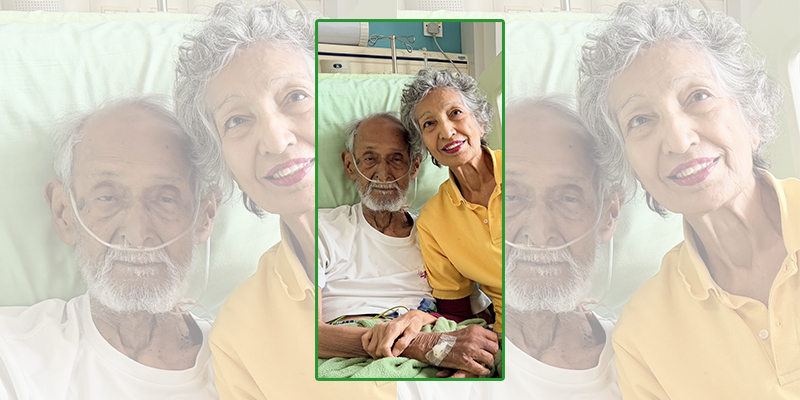
Mrs. J accompanying her husband at a local hospital – Photo: Pola Singh
By Dr Pola Singh | Malaysia |
I recently encountered a small but profound gesture in the obituary of the wife of the late Malaysian Sikh icon/businessman – Puan Sri Datin Harwant Kaur – that stopped me in my tracks. She had lived a full 100 years. Listed alongside the grieving family were three names: Lin, Lina and Lilly. They were the deceased’s caregivers. This public acknowledgment — treating these individuals not as “staff,” but as integral members of the family circle — is a refreshing and long-overdue shift in our societal values.
For too long, caregivers have remained a “forgotten category” of workers. They are the silent pillars who navigate the long, lonely hours of the night, manage complex medication schedules, and provide the physical strength required for mobility. Beyond these tasks, they often become the quiet targets of the frustration and temper that can surface when a loved one is in pain. They absorb the noise and the anger, offering only patience and steady hands in return.
I see this same quiet heroism in Room 317 of a dear friend at a hospital in Kuala Lumpur. Mrs. J, the wife of 93-year-old Mr. Jagjeet Singh, has lived by his bedside for nearly a month. She sleeps on a small bed beside him, remaining available 24 hours a day. Though the fatigue is etched on her face, she soldiers on with a resilience that is as humbling as it is heartbreaking. Her journey is a living testament to the immense mental and physical toll this role takes—a toll often paid in silence, without the protection of defined scopes of work or basic benefits like EPF contributions.
As Malaysia moves rapidly toward becoming an ageing society, our need for dedicated caregivers will only grow. If we wish to encourage more Malaysians to take up this noble calling, we must change how we treat them. These “small” efforts — giving them due credit in public tributes and treating them with the dignity of a family member — provide the vital impetus and motivation needed for others to consider this path.
When a family inserts a caregiver’s name into an obituary, they are acknowledging a sacred truth: that the dignity of the departed was preserved by these tireless individuals. It is time our healthcare system and our hearts catch up. We owe it to the Lins, the Linas, the Lillys, and the Mrs. Js of our nation to ensure they are seen, valued, and protected. They are not merely “hired help”; they are the heart of the home.
Dr Pola Singh, who retired as Maritime Institute of Malaysia director-general in 2011, is also the author of ‘Uphill — The Journey of a Sikh-Chinese Kampung Boy’
ASIA SAMACHAR is an online newspaper for Sikhs / Punjabis in Southeast Asia and beyond. You can leave your comments at our website, Facebook, Twitter, and Instagram. We will delete comments we deem offensive or potentially libelous. You can reach us via WhatsApp +6017-335-1399 or email: asia.samachar@gmail.com. For obituary announcements, click here
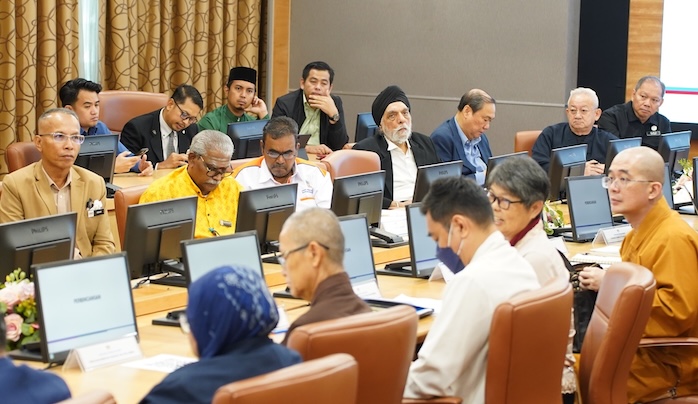
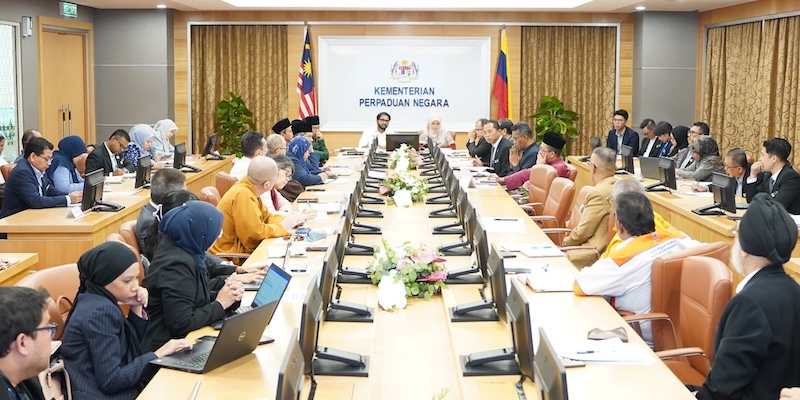
Representatives of houses of worship from various religions nationwide, including the Hindu, Christian, Buddhist, Taoist, Sikh and Bahá’í communities, at the Strategic Meeting on Harmony and Governance Related to Issues Involving Non-Muslim Houses of Worship in Putrajaya on March 6, 2026 – Photo: R. Yuneswaran Facebook
By Asia Samachar | Malaysia |
Two deputy ministers chaired a meeting to discuss the management of non-Muslim houses of worship in Malaysia amid rising tensions following the demolition of several such structures.
The meeting on Friday (March 6) brought together religious leaders and officials to strengthen governance and dialogue in managing issues involving non-Muslim houses of worship.
Entitled ‘Strategic Meeting on Harmony and Governance Related to Issues Involving Non-Muslim Houses of Worship’, it was co-chaired by Deputy Minister of National Unity R. Yuneswaran and Deputy Minister in the Prime Minister’s Department (Religious Affairs) Senator Marhamah Rosli.
“The meeting was convened to discuss, in a collective and constructive manner, governance aspects related to issues involving non-Muslim houses of worship. Discussions focused on management, coordination and the best approaches to addressing arising issues,” according to a joint statement released after the meeting.
The meeting comes amid growing public debate over the demolition or relocation of several so-called “illegal” non-Muslim places of worship across Malaysia. Many of these temples and shrines — some decades old — were built on government or privately owned land without formal approval, often due to historical settlement patterns or unclear land status.
Local authorities have moved to enforce planning and land laws, leading to demolitions or relocation orders that have sparked protests and concern among religious communities.
Critics argue that the issue reflects long-standing administrative gaps in recognising and regularising such places of worship, while authorities maintain that enforcement is necessary to uphold planning regulations and prevent unauthorised construction.
The discussions also touched on the need to strengthen understanding of procedures and guidelines relating to the management and construction of houses of worship, the statement added.
At the federal level, it said the Ministry of Housing and Local Government (KPKT) plays an important role in coordinating matters related to non-Muslim houses of worship, including through the Non-Muslim Houses of Worship Fund Coordination Unit (RIBI), which monitors and coordinates the allocation of related funds.
Accordingly, it said all parties are expected to comply with guidelines issued by KPKT regarding the approval and management of places of worship. This is based on existing legal provisions, including the Local Government Act 1976 (Act 171), the Street, Drainage and Building Act 1974 (Act 133), and the Town and Country Planning Act 1976 (Act 172), which empower local authorities to regulate building structures, hygiene aspects, and ensure that no houses of worship are constructed without approval within their respective administrative areas.
“The government will continue to provide a dialogue platform with representatives of religious communities to ensure that any issues can be addressed through consultation, mutual understanding and a spirit of unity,” it said.
Two deputy minister co-chairing the Strategic Meeting on Harmony and Governance Related to Issues Involving Non-Muslim Houses of Worship in Putrajaya on March 6, 2026 – Photo: R. Yuneswaran Facebook
At the same time, the statement added that the government emphasised that any parties who play up or exploit issues involving religion, race and the royal institutions (3R) in ways that undermine social harmony will not be tolerated, and appropriate action may be taken by the authorities in accordance with existing laws.
“Dialogue, negotiation and mediation will remain the primary approaches in managing issues involving multi-religious communities so that matters can be handled prudently without affecting social harmony and unity,” it said.
It said the meeting was also attended by chairpersons and representatives of houses of worship from various religions nationwide, including the Hindu, Christian, Buddhist, Taoist, Sikh and Bahá’í communities.
Representatives from several government agencies were also present, including the Home Ministry (KDN), the Ministry of Housing and Local Government (KPKT), the Royal Malaysia Police (PDRM), the Department of Islamic Development Malaysia (JAKIM), the Malaysian Communications and Multimedia Commission (MCMC), the Registrar of Societies (ROS), PLANMalaysia and other related agencies.
Join the conversation on this story on Asia Samachar’s Facebook and Instagram pages.
ASIA SAMACHAR is an online newspaper for Sikhs / Punjabis in Southeast Asia and beyond. You can leave your comments at our website, Facebook, Twitter, and Instagram. We will delete comments we deem offensive or potentially libelous. You can reach us via WhatsApp +6017-335-1399 or email: asia.samachar@gmail.com. For obituary announcements, click here
In Sikh thought, the question of freedom does not begin with panic about fate or arguments about science. It begins with a patient look at how people actually live. Most of us move through the day on habit. We react before we reflect. We repeat patterns we did not choose and defend identities we barely examined.
Sikh philosophy does not deny this. The Guru Granth Sahib speaks plainly about cause and consequence, about how actions leave traces and how life unfolds through patterns we inherit and repeat. We are shaped by what we do, and by what has been done before us. But Sikh thought places human dignity in a quiet but decisive capacity: the ability to pause, to see this conditioning at work, and to realign the mind toward something steadier than impulse.
Guru Nanak Sahib named the force that keeps us trapped in these loops haumai. Haumai is not just arrogance. It is the restless sense of “I, me, mine” that turns every moment into a reaction and every difference into a division. Sikh philosophy is unsentimental about this. Acting on impulse is not freedom. Reacting on cue is not agency. It is simply another form of control, dressed up as choice.
Freedom, in the Sikh sense, begins with active cognitive alignment. This is not passive belief or mechanical repetition. It is mental work. It is the deliberate practice of bringing the mind back, again and again, to principles that interrupt ego-driven reactions. The Guru Granth Sahib says that if you can conquer your mind, you conquer the world. Not by force, but by clarity. Not by domination, but by steadiness. This repeated realignment is the real discipline of Sikh life.
This is also where the question of sovereignty must be handled carefully. In modern political language, sovereignty is usually imagined as something external: control over land, institutions, or symbols. Sikh philosophy does not reject political agency, but it is skeptical of shortcuts. A mind still ruled by ego merely reproduces domination under a different banner. Gurbani repeatedly returns to this warning: power without inner clarity does not liberate; it only rearranges the terms of bondage (ਬੰਧਨਿ ਬੰਧਿ ਭਵਾਈਅਨੁ ਕਰਣਾ ਕਛੂ ਨ ਜਾਇ ॥੧੭॥Bandhan Bandh Bhvayian Karnna Kchoo Na Jaye) Bound in bondage, they are made to wander, and they cannot do anything about it. Guru Granth Sahib, 1414.
What emerges instead is something quieter and more demanding: ātm-giātā, self-knowing. This is not self-absorption, but self-transparency. It is the condition in which one sees clearly how fear, pride, and resentment operate, and refuses to let them decide. From this ground, agency becomes possible without becoming aggressive. Justice can be pursued without turning into vengeance. Authority can be exercised without needing to dominate. This is the ethical core of Miri-Piri: outward responsibility anchored in inward clarity.
Demanding power, borders, or recognition while remaining inwardly enslaved to ego is, in Sikh terms, a shallow ambition. Without inner sovereignty, political sovereignty is fragile, easily corrupted, and easily lost. This reflection does not dismiss Sikh political aspirations or historical pain; it simply asks that any outward claim to sovereignty be grounded first in the inner discipline and clarity that Gurbani places at the center of Sikh life (ਤਖਿਤ ਬਹੈ ਤਖਤੈ ਕੀ ਲਾਇਕ Takhat Bhaiy Takhtaiy Ki Layek) He alone sits on the throne, who is worthy of the throne. Guru Granth Sahib, 1039.
In Sikh thought, inner sovereignty is not a retreat from politics. It is the condition that makes just and enduring political agency possible. Through active cognitive alignment, through the steady dismantling of ego and the abandonment of duality, a person moves from being a puppet of circumstance to a conscious participant in life. Such a person does not merely react to the world. They act from a place of clarity, responsibility, and true sovereignty.
ASIA SAMACHAR is an online newspaper for Sikhs / Punjabis in Southeast Asia and beyond. You can leave your comments at our website, Facebook, Twitter, and Instagram. We will delete comments we deem offensive or potentially libelous. You can reach us via WhatsApp +6017-335-1399 or email: asia.samachar@gmail.com. For obituary announcements, click here