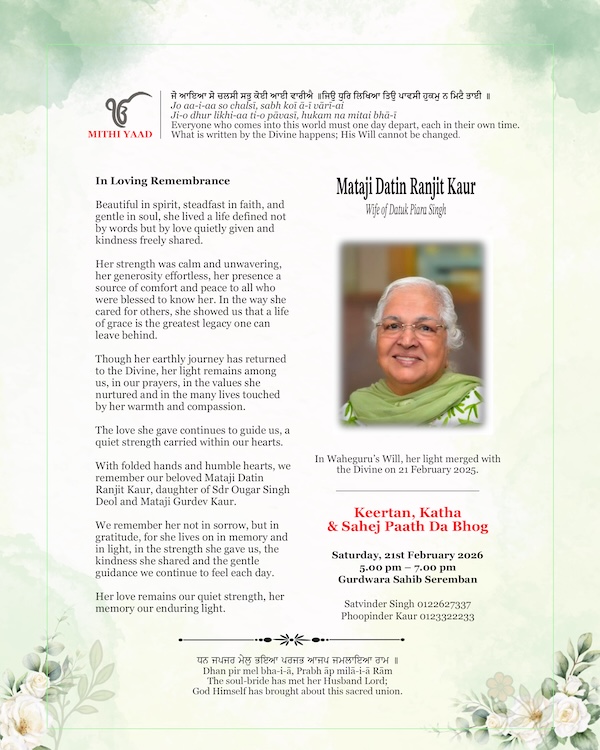
Beautiful in spirit, steadfast in faith, and gentle in soul, she lived a life defined not by words but by love quietly given and kindness freely shared.
Her strength was calm and unwavering, her generosity effortless, her presence a source of comfort and peace to all who were blessed to know her. In the way she cared for others, she showed us that a life of grace is the greatest legacy one can leave behind.
Though her earthly journey has returned to the Divine, her light remains among us, in our prayers, in the values she nurtured and in the many lives touched by her warmth and compassion.
The love she gave continues to guide us, a quiet strength carried within our hearts.
With folded hands and humble hearts, we remember our beloved Mataji Datin Ranjit Kaur, daughter of Sdr Ougar Singh Deol and Mataji Gurdev Kaur.
We remember her not in sorrow, but in gratitude, for she lives on in memory and in light, in the strength she gave us, the kindness she shared and the gentle guidance we continue to feel each day.
Her love remains our quiet strength, her memory our enduring light.
ASIA SAMACHAR is an online newspaper for Sikhs / Punjabis in Southeast Asia and beyond. You can leave your comments at our website, Facebook, Twitter, and Instagram. We will delete comments we deem offensive or potentially libelous. You can reach us via WhatsApp +6017-335-1399 or email: asia.samachar@gmail.com. For obituary announcements, click here
SWAN seminar to mark International Women’s Day 2026
By Asia Samachar | Malaysia |
The Sikh Women’s Awareness Network Malaysia (SWAN) will mark International Women’s Day 2026 with a half-day seminar focused on holistic well-being and empowerment.
The seminar, themed “Wellness, Strength & Balance: Empowering Women for a Healthier Life”, will be held on March 8 (Sunday) from 8.00am to 1.00pm at the THONEH Auditorium in Petaling Jaya. Asia Samachar is the media partner for the event.
Organisers said the programme aims to inspire women to prioritise their physical, mental and emotional health while navigating the demands of personal, professional and social responsibilities.
The event is designed as a reflective space for women to pause, learn and reconnect with themselves. Participants will be introduced to practical approaches to caring for their bodies, minds and emotional well-being, with an emphasis on sustainable habits and self-compassion.
MORE DETAILS AT ASIA SAMACHAR FACEBOOK AND INSTAGRAM
International Women’s Day, observed annually on March 8, celebrates the social, economic, cultural and political achievements of women worldwide while highlighting the importance of continued progress toward gender equality.
SWAN invites women from all backgrounds to attend and take part in what it describes as a meaningful opportunity to invest in their own health and strength.
MORE DETAILS
International Women’s Day Seminar
Date: 8th March (Sunday) Time: 8.00 am to 1.00 pm Venue: THONEH Auditorium, Petaling Jaya (next to Gurdwara Sahib Petaling Jaya) Theme: “Wellness, Strength & Balance: Empowering Women for a Healthier Life” ???? Register here: https://forms.gle/qvoyq1ijn9ECWqAMA
ASIA SAMACHAR is an online newspaper for Sikhs / Punjabis in Southeast Asia and beyond. You can leave your comments at our website, Facebook, Twitter, and Instagram. We will delete comments we deem offensive or potentially libelous. You can reach us via WhatsApp +6017-335-1399 or email: asia.samachar@gmail.com. For obituary announcements, click here
| Entry: 12 February 2026; Updated 17 February 2026 | Source: Family
ASIA SAMACHAR is an online newspaper for Sikhs / Punjabis in Southeast Asia and beyond. You can leave your comments at our website, Facebook, Twitter, and Instagram. We will delete comments we deem offensive or potentially libelous. You can reach us via WhatsApp +6017-335-1399 or email: asia.samachar@gmail.com. For obituary announcements, click here
| Entry: 12 February 2026; Updated: 13 February 2026 | Source: Family
ASIA SAMACHAR is an online newspaper for Sikhs / Punjabis in Southeast Asia and beyond. You can leave your comments at our website, Facebook, Twitter, and Instagram. We will delete comments we deem offensive or potentially libelous. You can reach us via WhatsApp +6017-335-1399 or email: asia.samachar@gmail.com. For obituary announcements, click here
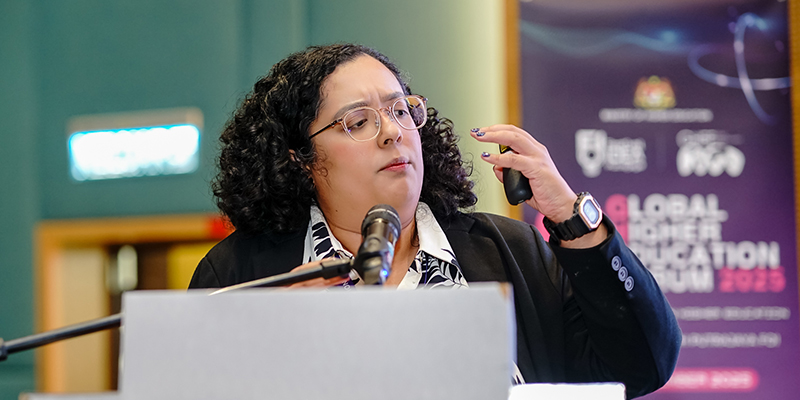
Parveen Kaur at the 9th Global Higher Education Forum 2025 in November 2025 in Putrajaya
By Asia Samachar | Malaysia |
The University of Malaya has appointed Parveen Kaur Harnam Singh as senior lecturer of practice at its Faculty of Law, making the 31-year-old legal academic and practitioner among the youngest to hold the position.
A Lecturer of Practice at Universiti Malaya is an industry expert appointed to bridge academic theory and professional application, delivering industry-relevant instruction, mentoring students and contributing to curriculum development to enhance graduate employability. Parveen’s appointment in February 2026 reflects her combined strengths in practice, research and teaching.
Parveen grew up in Petaling Jaya and the United Kingdom as the child of a single parent. Her late father served 21 years in the Royal Malaysian Air Force, while her mother is a retired head of cluster for language excellence at the National Institute of Public Administration (INTAN).
Parveen teaches Alternative Dispute Resolution, a core final-year subject, and Research Methodology. At the same time, she is completing her PhD in Law at UM, specialising in charities and non-profit law, an emerging niche at the faculty.
Her work has been published in the Malayan Law Journal and the Asian Journal of Accounting Perspectives.
A former Advocate and Solicitor of the High Court of Malaya, she practised in dispute resolution at Zaid Ibrahim & Co (ZICOlaw) and Zain & Co, a member of Dentons, handling regional and cross-border matters.
ASIA SAMACHAR is an online newspaper for Sikhs / Punjabis in Southeast Asia and beyond. You can leave your comments at our website, Facebook, Twitter, and Instagram. We will delete comments we deem offensive or potentially libelous. You can reach us via WhatsApp +6017-335-1399 or email: asia.samachar@gmail.com. For obituary announcements, click here
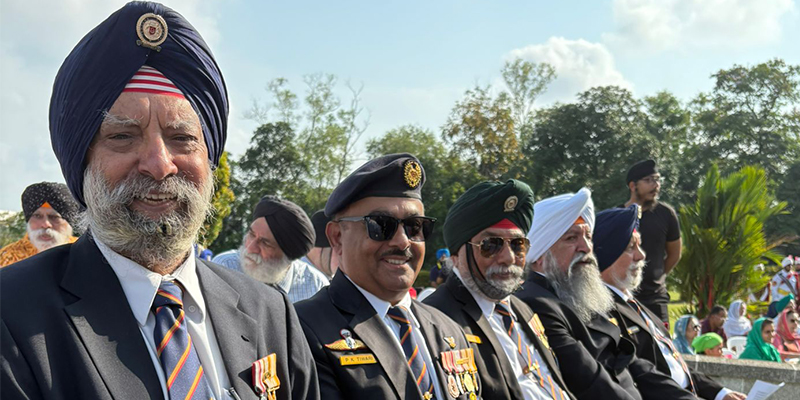
The warriors at the Remembrance Day Memorial 2026 on Feb 8. Left to right: LTC (Rtd) Charanjit Singh, Col (Rtd) Perdit Tiwari, Major (Rtd) Kuldip Singh, Capt(Ret) Amarjit Singh and LTC (Ret) Harpal Singh
By Murali Pillai | Singapore |
Today we stand among the fallen heroes of war. The inscription of the Kranji War Memorial reads: “They died for all free men.”
They died, fighting in vicious battle, they died, slowly and painfully, as prisoners of war; they “died for all free men”, so that those who stand in sunshine and quiet, as we do this morning, will have a chance to know peace, to have a family, to build a life, and to walk where they have never been.
They died and so we must remember, their courage, their heroism and their sacrifice. This memorial ceremony is part of Pardesi Khalsa Dharmak Diwan’s centenary commemorations. For 100 years, this gurdwara has been a spiritual home and moral anchor for the Sikh community.
Today, as we stand at Kranji War Memorial, we honour the Sikh and Punjabi soldiers who fought in the Second World War and who now rest here.
Their graves and the names on these walls teach us that the peace is hard won. We must also learn that war is not a story of the past, but a reality of the present. Today, the world is not at peace – a few countries are already at war, others are preparing for it and still others know they must.
No one who lives in Singapore thinks that Singaporeans are a war-like people. I hope your excellencies who are ambassadors of your own countries feel the same. Singaporeans, using T.S. Eliot’s words, are politic, cautious and meticulous. We do business, we broker peace, we do not make war.
Yet in a place like this, and at times like these, we remember. We know that the only way to live in peace is to prepare for war. Each year, Singapore continues to allocate one of the highest amounts in our national budget to defence. Each generation of Singaporean males lays down two years in the prime of our lives for National Service. In primary school, each child learns “we must ourselves defend Singapore” as part of National Education, along with their numbers and letters.
This has personal resonance for me – before becoming a lawyer and thereafter joining politics, I served in green as an NS platoon commander in 2nd Guards Battalion and then in blue as a regular senior police officer. I saw how men and women in uniform put themselves between danger and those they protect. I spoke about them, including a fallen police colleague of mine in Parliament on the occasion of the bicentennial commemoration of the Singapore Police Force. Long before my time, Sikh soldiers and policemen walked that same path of duty in service of this land.
Sikh soldiers played a pivotal role in defending Malaya and Singapore during WWII, serving in the Singapore Volunteer Corps, Straits Settlement Police Force, Sikh Pioneer Corps, and the British Indian Army regiments. They held positions in the most dangerous battles – from northern Malaya to the final stand on this island. About 3,000 Sikh names are commemorated at Kranji. Each tells a story. Each represents a life cut short: each honours the Sikh tradition of courage in defence of others.
Those who lie here died not for particular persons, or specific causes. They died for an abstract high ideal – that men like you and I deserve to live free, to make decisions for our lives, for the rights of peoples and nations to find out their own destinies. These values unite us today.
Today, we make that abstract real. The soldiers’ sacrifice reaches across from 1945 to give us an anchor for our defence and our security.
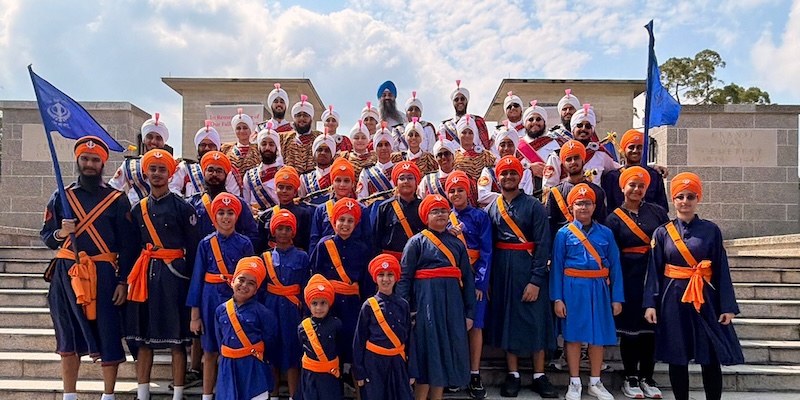
Young participants and the Sri Dasmesh Band at the Memorial Ceremony for Fallen World War II Heroes at the Remembrance Day Memorial Service at Kranji War Memorial on Feb 8, 2026.
In the Navy, one of Singapore’s early naval pioneers, Mr Jaswant Singh Gill, played an instrumental role in laying the foundations of what would become the Republic of Singapore Navy. In the Army, Major-General Ravinder Singh, Singapore’s Chief of Army from 2011 to 2014, was the first Sikh to hold this distinguished appointment. Colonel Mancharan Singh Gill, Singapore’s first Chief Artillery Officer, played a pivotal role in establishing and developing the Singapore Artillery. In the Home Team, former Deputy Commissioner of Police Jagjit Singh and Assistant Commissioner Jarmal Singh, have served with distinction, strengthening policing capabilities and deepening trust between the police and our diverse communities. I have had the honour of serving under both of these gentlemen. These individuals represent only a fraction of the Sikh men and women who have served with commitment and excellence, both within the uniformed services and across all sectors of society. The Sikh community stands tall in service to Singapore, strengthening our security, resilience and cohesion.
Today, we are especially honoured to have with us Sikh SAF veterans led by Colonel Gurcharan Singh – a respected officer whose contributions and mentorship in the SAF’s early years have shaped generations of SAF leaders and engineers. I recall, Sir, that you were Commander 2 PDF when I served in 2 Guards. Your presence reminds us that the legacy of service continues – a legacy built on three core Sikh values that guide the Sikh community’s contributions to Singapore:
a. First is Chardi Kala – the spirit of optimism and resilience even in the face of adversity. This is the spirit that has attended Singapore’s journey from our independence and as we navigate a more complex and contested world.
b. Second is the “saint-soldier” ideal – cultivating spiritual and moral grounding while being prepared to act courageously to defend others and uphold justice.
c. Third is seva – selfless service. The Sikh community in Singapore has long practised this: running community kitchens, volunteering in welfare initiatives, and stepping forward in times of crisis to serve anyone in need.
100 years ago, few would imagine Singapore to be the city it is today. Yet the soldiers whose names we see are etched in stones around us, were prepared to give their lives for a dream beyond their time, and a future they would never see.
We honour their sacrifice not just by the way we live today, but how we set the foundations for peace in the future. For those in uniform today, that means maintaining a strong and credible defence and security force, staying ready to protect our sovereignty and our way of life. For community and religious leaders, it means working tirelessly to strengthen cohesion and mutual respect across racial and religious lines. For every Singaporean, it means choosing to stand together – especially when it is difficult.
To the veterans, families of the fallen, and Sikh organisations that preserve these stories – Singapore extends our deepest appreciation. To PKDD and the Sikh community, your century of service has enriched Singapore and strengthened our social fabric.
As we bow our heads in remembrance and respect, let us also recognise this truth – that peace is not a victory won, but a war held back, by force of history and blood, with requirements that remain unrelenting, in treasure and men.
May the courage of these heroes guide us. May their sacrifice inspire us. And may their legacy remind us that Singapore’s strength comes, not just from treasure or men, but from the resolution and courage of all who call this place home. Thank you.
(Murali Pillai is Senior Minister of State in Singapore. This is the speech at the Memorial Ceremony for Fallen World War II Heroes at the Remembrance Day Memorial Service at Kranji War Memorial on Feb 8, 2026. The event was hosted by Pardesi Khalsa Dharmak Diwan (PKDD) as part of its centenary celebration which culminates in August 2026.)
ASIA SAMACHAR is an online newspaper for Sikhs / Punjabis in Southeast Asia and beyond. You can leave your comments at our website, Facebook, Twitter, and Instagram. We will delete comments we deem offensive or potentially libelous. You can reach us via WhatsApp +6017-335-1399 or email: asia.samachar@gmail.com. For obituary announcements, click here
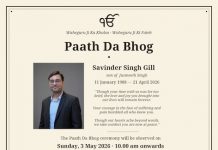
PATH DA BHOG & ANTIM ARDAAS Sunday, 22nd February 2026 Gurdwara Sahib Bercham, Ipoh 6:30AM: Asa Ki Vaar 9:30AM: Kirtan and Katha 11:30AM: Path Da Bhog & Antim Ardaas Guru Ka Langgar will be served.
For further information, kindly contact: Gurcharan: 016 502 1016 Zamir: 010 221 3472 Dalvin: 016 500 0721
| Entry: 11 February 2026; Updated: 14 February 2026 | Source: Family
ASIA SAMACHAR is an online newspaper for Sikhs / Punjabis in Southeast Asia and beyond. You can leave your comments at our website, Facebook, Twitter, and Instagram. We will delete comments we deem offensive or potentially libelous. You can reach us via WhatsApp +6017-335-1399 or email: asia.samachar@gmail.com. For obituary announcements, click here
Malaysia | Now playing on Malaysian television (TV2), Dil Garden Garden Ho Gaya. More details at Asia Samachar Facebook.
ASIA SAMACHAR is an online newspaper for Sikhs / Punjabis in Southeast Asia and beyond. You can leave your comments at our website, Facebook, Twitter, and Instagram. We will delete comments we deem offensive or potentially libelous. You can reach us via WhatsApp +6017-335-1399 or email: asia.samachar@gmail.com. For obituary announcements, click here
Some societies uplift their women, others bind them in chains of expectation and shame. Netflix’s Single Salma (2025), produced by T Series, is a film that dares to show how those chains are forged and how one woman fights to break them.
It is not simply a romantic comedy. It is a social mirror that reflects the ways in which family and community reduce women to their marital status, ignoring their brilliance, intelligence, and contribution. Salma, played with depth and vulnerability by Huma Qureshi, becomes the voice of every woman who has been told she is incomplete without a husband.
The central question posed by the movie is clear. Must a woman’s worth always be measured by marriage, or can she claim respect simply by being herself. This question drives the narrative and forces the audience to confront the cultural bias that places reputation above dignity.
The film introduces us to Babban, played by Prabhat Kumar Lahiri, who embodies the cruelty of shaming Salma. He represents the men who believe humiliation is their right. Sikandar, played by Shreyas Talpade, in contrast uplifts her. He respects her freedom, accepts her choices, and models openness. Meet, played by Sunny Singh, shows her that it is possible to live life on her own terms, reminding her that she has the strength to carry herself forward and not always sacrifice herself for others. Together, these characters frame Salma’s struggle between oppression and liberation.
The movie is a testimony of how oppression operates quietly through family pressure, the policing of reputation, and the silencing of women’s voices. Yet it is also a story of resistance. Salma’s fight refuses to be crushed as she rises to claim her dignity by choosing herself.
The answer to the central question is powerful. A woman’s worth is not bound to marriage. It is bound to her humanity. And in the end, disenabling shame becomes the sword that destroys the illusion of reputation and enables the choice to choose oneself.
ASIA SAMACHAR is an online newspaper for Sikhs / Punjabis in Southeast Asia and beyond. You can leave your comments at our website, Facebook, Twitter, and Instagram. We will delete comments we deem offensive or potentially libelous. You can reach us via WhatsApp +6017-335-1399 or email: asia.samachar@gmail.com. For obituary announcements, click here
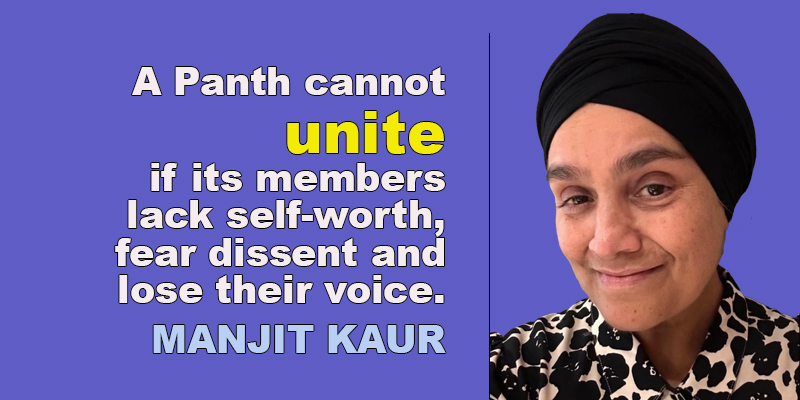
When we speak about the challenges facing the Panth, we often focus the external threats and blame other for our disunity. Rarely do we pause to ask a more searching question, what kind of individuals are we nurturing within our own homes. Yet Gurmat reminds us that collective strength can only emerge from inner stability. A Panth cannot be united if its members grow up unsure of their self-worth, fearful of disagreement, and disconnected from their own voice.
This recognition must begin early, from the day you are born, in the home. Self-confidence is not about ego. It is the quiet knowing that each and every human being is part of the Oneness and therefore worthy of respect, including self-respect. As Guru Arjan states, ਨਾ ਕੋ ਬੈਰੀ ਨਹੀ ਬਿਗਾਨਾ ਸਗਲ ਸੰਗਿ ਹਮ ਕਉ ਬਨਿ ਆਈ ॥੧॥ No one is my enemy, and no one is a stranger. I get along with everyone. (GGS p1299)
Modern psychology helps us understand what happens when this foundation is weak. Sigmund Freud spoke of the human personality as shaped by three forces, the id, the ego, and the superego. The id represents impulse and emotion, the superego represents rules, authority, and internalised expectations, while the ego is meant to balance the two with reality and reasoning.
SUPEREGO
In many Punjabi households, the superego dominates. Authority, obedience, fear of shame, and duty outweigh emotional expression and independent thinking. When the ego is not allowed to develop properly, individuals tend to swing between two extremes. Some become very passive, suppressing their needs to avoid conflict. Others become aggressive, reacting emotionally when pressure builds. Assertiveness, the healthy function of a balanced ego, which in Gurbani we term ‘sehj’, is rarely modelled or taught in Panjabi families. Being in sehj means being true to yourself and others. As Guru Nanak says, ਸਚਹੁ ਓਰੈ ਸਭੁ ਕੋ ਉਪਰਿ ਸਚੁ ਆਚਾਰੁ ॥ “Everything is lower than Truth; but higher still is truthful living.” (GGS p62). Truthful living requires the confidence to speak without fear and the humility to listen to others.
The kind of confidence required to be assertive does not come overnight. The foundations of such behaviours are laid early. A child enters the world knowing nothing except what surrounds them. From birth to the age of two or three, children do not understand meaning, they absorb behaviour. They copy tone, reactions, emotional responses. By four and five, they begin to recognise affection, boundaries, and whether their voice matters. Gurbani reminds us of the power of having the right learning environment in enabling the development of positive self-esteem.
ਸਤਸੰਗਤਿ ਮਿਲਿ ਬਿਬੇਕ ਬੁਧਿ ਹੋਈ ॥ ਪਾਰਸੁ ਪਰਸਿ ਲੋਹਾ ਕੰਚਨੁ ਸੋਈ ॥ “Joining the Sat Sangat, the discerning intellect is awakened. Touching the philosopher’s stone, iron becomes gold.” (Bhagat Kabir Ji, Ang 481). But tragically, through fear and low self-esteem, my experience has been that many in the community become very closed and hard minded.
The psychologist, Erik Erikson, described human development as a series of stages, each shaped by a central emotional task. Early childhood, he argued, is about trust versus mistrust, then autonomy versus shame, and later initiative versus guilt. When children are supported, listened to, and allowed age-appropriate independence, they develop confidence and self-worth. When they are controlled, silenced, or shamed, they develop doubt, guilt, and confusion about their own voice and self-hate.
This resonates deeply with my lived experience amongst Punjabi Sikhs. Children need unconditional love, not as a concept, but as a lived reality. They need to be held, hugged and heard. When questions are welcomed and answered in simple language, children learn that curiosity is safe. When questions are shut down, they learn that silence is survival and only express themselves in outbursts of frustration and aggression.
PARENTING
In many traditional Punjabi families, parenting follows a ‘parent child’ model well into adulthood. Obedience is valued over understanding the child’s needs and challenges they are facing. Control, threats and one-way communication replaces affection, listening and dialogue. Children are often driven towards paths chosen for them, careers, behaviours, even personalities, rather than be guided to discover their own strengths and ambitions in life.
This interrupts what Erikson described as the development of autonomy and initiative, which can result people struggle to trust their own judgement in adulthood. If I am honest, my experience of Panthic individuals is that although on the surface we see over the top displays of respect, but beneath the surface, there is little trust, which is why we are so disunited.
This affects both genders, though in different ways. For girls, the restriction is often sharper, voices silenced earlier, choices narrowed sooner. For boys, emotional expression is discouraged, replaced by overblown expectations and pressure. When voices are suppressed, regardless of gender, the result is similar, adults who struggle to express needs or assert themselves without conflict.
As children grow into teenagers and adults, conflict becomes unavoidable. Yet in our culture, conflict is often framed as win or lose, not win and win. Erikson described adulthood as a stage where healthy relationships depend on identity and mutual respect. Without a secure sense of self, disagreement feels threatening, not productive.
Assertiveness becomes essential here. Assertiveness is neither aggression nor passivity. It is the ability to express oneself clearly, calmly, and honestly, while respecting others.
Emotional boundaries are another area where we struggle. Panjabi Sikhs are deeply emotional people, yet rarely taught emotional awareness. Arguments quickly become heated, minds clouded, positions hardened. When emotions take over, listening stops. Passive individuals withdraw, aggressive individuals escalate, and assertive dialogue disappears.
Anger and frustration, when suppressed, do not disappear, they get more intense, like a pressure cooker resulting in harmful behaviours, to self and/or others. Freud observed that repressed emotion often re-emerges in distorted ways. Many in our community have learned to lock feelings away because expression is discouraged. Over time, this creates resentment, mistrust, and emotional distance, both in families and in Panthic institutions.
ASSERTIVENESS
Learning assertiveness can be transformative. It allows individuals to stand on their own feet, engage in healthy relationships, and contribute meaningfully to community life. When people feel secure in themselves, they are less threatened by disagreement and different viewpoints are respected, mistrust reduces.
This has direct implications for Panthic life. Fragmentation, suspicion of Jathedars, and internal divisions do not arise in a vacuum, they reflect unresolved emotional patterns carried from homes into institutions.
If we genuinely want unity in the Panth, we must stop blaming others and begin with emotional literacy in our families. Raising children who are loved, heard, and guided, not controlled, is not a threat to tradition, but the only way to truly serve the Panth.
CHECK MORE COMMENTS ON THIS STORY AT ASIA SAMACHAR FACEBOOK AND INSTAGRAM
Manjit Kaur, a UK-based therapist and counsellor, is a presenter at the 1 Show Live at Panjab Broadcasting Channel, UK. She can be contacted via email at manjitkaur1show@gmail.com
ASIA SAMACHAR is an online newspaper for Sikhs / Punjabis in Southeast Asia and beyond. You can leave your comments at our website, Facebook, Twitter, and Instagram. We will delete comments we deem offensive or potentially libelous. You can reach us via WhatsApp +6017-335-1399 or email: asia.samachar@gmail.com. For obituary announcements, click here