UA-56202873-1
Page 379

Bardish Chagger has been up and running since 13

0

By Asia Samachar | Canada |

Bardish Chagger is one of the dozen or so Sikh candidates running in Canada’s Sept 20 federal election.

She goes into the polls no more a rookie lawmaker she was in 2015. This time around, she has under her belt of being a two-term parliamentarian and federal minister.

She has been given a ticket by the Liberal Party led by Justin Trudeau who shot into prominence when his party won the elections in 2015. Prime Minister Trudeau called for the snap election in the midst of a Covid-19 pandemic just two years into a four-year mandate secured in 2019.

With some of the novelty wearing off, both Chagger and the Liberals are facing a tough battle.

“I have been involved in politics since I was 13 years old when I went with my father to install signs for Andrew Telegdi. As a young person, even before I could vote, I supported progressive policies such as same-sex marriage, advancing equality for women, and legalization of cannabis. Since that time, I have advanced policies such as a national manufacturing strategy, the removal of interest on Canada student loans and the women’s entrepreneurship strategy,” Chagger to The Record in a recent interview.

The 41-year-old was elected MP for the riding of Waterloo in 2015 and re-elected in 2019. She has served in Trudeau’s cabinet as minister of small business and tourism (2015-2018), government house leader (2016-2019), and minister of diversity and inclusion and youth (2019-2021).

In 2015 election, Chagger was one of the five Sikh women and five turbaned Sikhs among the 19 Indo-Canadians who emerged victorious. The Indo-Canadians representatives more than doubled their representation in the 338-member parliament.

Also in the running this time around is national defence minister Harjit Singh Sajjan, another easily recognisable Sikh politician in Canada. Dropping out of the show is Navdeep Singh Bains who was retained as a minister earlier on after the 2019 elections but had quit politics.

One obvious big name is Jagmeet Singh who has served as the leader of the New Democratic Party (NDP) since 2017. With no outright winners after the 2019 polls, Jagmeet and the NDP became the kingmakers.

Jagmeet consistently enjoys the highest net favourability ratings of any federal leader and has a record to run on after nearly four years as leader of the federal NDP, but his prospects of returning the NDP to the official Opposition status they achieved in 2011 — with most of that caucus based in Quebec — appear a long way off from the fourth-party spot they have now, according to a recent report in Toronto Star.

RELATED STORY:

Jagmeet, Harjit Sajjan and some Sikh candidates who won in Canadian elections (Asia Samachar, 22 Oct 2019)

Bardish makes history as Canada’s first woman House leader (Asia Samachar, 21 Aug 2016)

ASIA SAMACHAR is an online newspaper for Sikhs / Punjabis in Southeast Asia and beyond.Facebook | WhatsApp +6017-335-1399 | Email: editor@asiasamachar.com | Twitter | Instagram | Obituary announcements, click here |

CSGB new team elected unopposed

0

Left: Dilbagh Singh. Right: Baljit Singh welcoming Singapore PM Lee Hsien Loong the opening of the renovated Gurdwara Sahib Silat Road on 3 July 2021

By Asia Samachar | Singapore |

A new team has been elected unopposed to run the Central Sikh Gurdwara Board (CSGB), a statutory body that manages two gurdwaras and a Sikh centre.

Retired educationist Dilbag Singh is the new president, taking over from Baljit Singh who served two terms of two years each. The board’s election was held on Aug 7.

“The new Council comprises a few members who had previously served for several years and many new younger members.The older members bring to the Council the experience and new younger members will provide vigour and enthusiasm,” Dilbagh said in a note in the latest CSGB bulletin.

The CSGB manages and operates the daily running of two Singapore’s Gurdwaras – Central Sikh Temple (CST) at the junction of Towner Road/Serangoon Road and the Silat Road Sikh Temple (SRST) along Jalan Bukit Merah. The board, formalised through the enactment of the Central Sikh Gurdwara Board Act of the Singapore Parliament, is a gazetted statutory board recognised by the Government of Singapore.

Dilbagh Singh, 79, an educationist who retired as a school principal in 2004, is no stranger to CSGB having served in various capacities since 1985, including two terms as president in 2001 and 2004.

“Somehow, I was asked to do this round….call of duty,” he told Asia Samachar when contacted.

Outgoing president Baljit will continue to serve as a vice president and SRST chairperson. When contacted, he told Asia Samachar: “They gave me seva at Silat Road. I’m tasked to groom individuals to take over. It’s important. We want to groom and mentor them, so that they can pick up faster and run faster.”

In the CSGB bulletin, Dilbagh said the out-going team, working under several restrictions and lockdowns, had managed to set up religious services streaming for both gurdwaras, allowing the Sikhi Parchar and Gurmat Sangeet classes to continue on Zoom.

Moving forward, he noted that new religious services for the ladies, youth and elderly will be planned and introduced, while explanations of Gurbani in English will be phased in.

He also said the renovation and expansion of SRST headed by Balbir Singh Padri was completed on time and within budget.

CSGB LINE-UP FOR 2021-2023

CSGB President: Dilbagh Singh

CSGB Vice Presidents: Baljit Singh (SRST Chairperson), Gurdip Singh Usma, Karpal Singh

CSGB Secretary: Manmohan Singh Malla
CSGB Assistant Secretary: Rajeshpal Singh Sandhu (SC Secretary)

CSGB Treasurer: Jaspal Singh
CSGB Assistant Treasurer: Sukhbir Singh Rode

SRST Chairperson: Baljit Singh
CST Chairperson: Amritpal Singh Randhawa
SC Chairperson: Kuldeep Kaur

SRST Vice Chairperson: Talwinder Singh
CST Vice Chairperson: Jasmindar Singh Gholia
SC Vice Chairperson: Hardip Kaur Gill

SRST Secretary: Harjit Kaur
CST Secretary: Narinder Kaur
SC Secretary: Rajeshpal Singh Sandhu
SRST Assistant Secretary: Gurpreet Singh
CST Assistant Secretary: Amritpal Singh Sidhu
SC Assistant Secretary: Jagjit Singh Sandhu

SRST Treasurer: Gurpal Singh
CST Treasurer: Sukhbir Singh Nijer
SC Treasurer: Avtar Singh
SRT Assistant Treasurer: Harbhajan Singh Ghosal
CST Assistant Treasurer: Satvinder Singh

CST Committee Members: Bhupinder Singh Pabbian, Simranjit Singh (Youth Task Force)

RELATED STORY:

Singapore PM opens renovated Silat Road gurdwara (Asia Samachar, 3 July 2021)

ASIA SAMACHAR is an online newspaper for Sikhs / Punjabis in Southeast Asia and beyond.Facebook | WhatsApp +6017-335-1399 | Email: editor@asiasamachar.com | Twitter | Instagram | Obituary announcements, click here |

Power Sikh women in security industry

Power women in security: Dr. Manmeet Kaur (left) and Reshvin Kaur

By Asia Samachar | Malaysia  |

Two Sikh women were named in the inaugural Top Women in Security in Malaysia initiative established to recognize women who have advanced the Malaysian security industry. And one of them went on to become a regional champ!

Associate Professor Dr Manmeet Mahinderjit Singh and insurance company IT audit head Reshvin Kaur were selected late last year in the industry-wide recognition. Yesterday (31 Aug), she was awarded the Top 30 Women in Security for Asean Region 2021 award.

The listing, said to be a unique industry partnership arrangement, is part of a global campaign by the Women in Security & Resilience Alliance (WISECRA). It brings together Malaysian Women in Security (MYWiS) and Malaysia Chapters of premier, global security industry associations, ISACA Malaysia Chapter and ASIS International Malaysia Chapter.

Dr Manmeet is from University Sains Malaysia’s (USM) where she teaches information security and cybersecurity educator. Reshvin is IT audit head at Zurich Life Insurance Malaysia Bhd.

Dr Manmeet Kaur graduated from the University of Queensland, Brisbane, Australia with a PhD Degree specialising in data security. Her area of expertise is in Information and cyber security, Internet of things security, smart devices security and mobile security. She has extensively worked on research projects revolving mobile devices, smart cities applications and smart homes.

She also holds several grants involving APT-groups and privacy risk. She has designed a range of cybersecurity training courses and delivered trainings on emerging technology security, bid data security, mobile security and cybersecurity for managers, according to her profile.

On her part, Reshvin has close to 16 years of experience within internal and external audit focusing on Insurance, banking and manufacturing companies.

She started her audit career in IT advisory with KPMG Malaysia. She then joined ING Insurance Bhd and Danajamin Nasional Bhd before joining Zurich Insurance in 2013 as an IT audit manager.

Reshvin has been engaged mostly in IT related audit works, including IT controls such as IT security, business recovery processes, IT general controls and others. Knowledge and experiences from IT Audit were also applied for non-IT audits to support more in-depth review.

In her current position, she covers both general and takaful business as well as provide support to IT audits in Malaysia and globally. In 2020, Reshvin was also being admitted as one of the directors for ISACA Malaysia. She holds a CISA certification from ISACA.

The other women in Malaysia’s top 10 listing were Bond Holdings Sdn Bhd chief strategy officer Dr Carrine Teoh Chooi Shi, SEEK’s Asia businesses (JobStreet.com and JobsDB) cybersecurity head Shamini Suganantha Technohills Academy founder/CEO Manimegalai @ Manie Intellize Tech Services chief strategy officer Dr Kavitha Muthy, Standard Chartered Bank head information security risk officers Stephanie Liew, Standard Chartered Bank director for CRC COO TDR risk & control governance management Devika Rani Krishnan and Celcom Axiata Bhd information security GRC manager Raihan Ismail.

RELATED STORY:

Eye on risk (Asia Samachar, 27 July 2021)

Power counsel for wheels (Asia Samachar, 23 July 2021)

ASIA SAMACHAR is an online newspaper for Sikhs / Punjabis in Southeast Asia and beyond.Facebook | WhatsApp +6017-335-1399 | Email: editor@asiasamachar.com | Twitter | Instagram | Obituary announcements, click here |

Mata Kulwant Kaur (Kanto) (1935-2021), Bidor

MATA KULWANT KAUR (KANTO) BIDOR

13.08.1935 – 29.08.2021 (86 yrs old)

Village: Tanda, Punjab

“Thank you for the gift of love. Now you’re sharing it up above. You had many things to say, All in A caring Way.”

Waheguru Ji Ka Khalsa, Waheguru Ji Ki Fateh

With grief and sorrow, we regret to inform you the demise of our beloved Nani Ji Kulwant Kaur @ Kanto (Late) wife of our Nana Ji Santokh Singh (Sokhi). She passed away peacefully on 29-08-2021.

Children:

Late Prasan @ Parsini Kaur (Brunei)

Harjit Kaur – Bidor

Grandchildren:

Sharmeen Kaur,Jesvinder Kaur, Amandeep Kaur Semrenjit Kaur, Chamandeep Kaur, Amardeep Singh, Sharandeep Singh, Novedeep Singh

And 14 Great Grandchildren.

Path da Bhog: 4 Sept 2021 (Saturday), 10.00am – 12.00noon, at Gurdwara Sahib Bidor, Perak

Due to current restriction of Covid-19 pandemic, the Sejh Path da Bhog will be limited with strict SOP.

The family appreciates the kind understanding, support and prayers of all the family members, relatives, friends & Gurdwara Sahib Bidor Committee.

Contact:

Sharan – 0127271986

Novedeep – 0195891332

| Entry: 1 Sept 2021 | Source: Family

ASIA SAMACHAR is an online newspaper for Sikhs / Punjabis in Southeast Asia and beyond.Facebook | WhatsApp +6017-335-1399 | Email: editor@asiasamachar.com | Twitter | Instagram | Obituary announcements, click here |

Sri @ Manjit Kaur (1945-2021), Pontian

SRI @ MANJIT KAUR A/P NARAIN SINGH

05.11.1945 – 31.08.2021

Village: Himmat Pura

Wife of Jora Singh s/o late Kehar Singh

Children / Spouse

Surinder Singh / Rosnani
Gurmeet Singh / Kulvinder Kaur
Balwinder Kaur / Surinderdeep Singh

and five grandchildren.

Path da Bhog: 9.30am, 11 September 2021 (Saturday) at Gurdwara Sahib Pontian, Johor

Due to Covid-19 SOP and restrictions, the programme will be held among family members and close friends.

Contact:

Gurmeet Singh +6012-6729605

Surinderdeep Singh +6019-6912777

| Entry: 1 Sept 2021 | Source: Family

ASIA SAMACHAR is an online newspaper for Sikhs / Punjabis in Southeast Asia and beyond.Facebook | WhatsApp +6017-335-1399 | Email: editor@asiasamachar.com | Twitter | Instagram | Obituary announcements, click here |

Being old is no reason to be depressed

0

By Anandpreet Kaur | Malaysia  |

You may be advanced in age. At times, you may even feel sad or down. But that need not be your default state.

Feeling sad or down sometimes is a normal part of life, but if these feelings last a few weeks or months, you may have depression, cautions a Malaysian-based psychiatrist.

“Depression in older people is often under-detected and untreated. Unfortunately it gets missed by family members who sometimes are far too busy and involved in their own lives. Some attribute the emotional changes to growing old. But it should never be regarded as a normal consequence of ageing. And appropriate treatment is available,” Dr Bilbir Kaur Chingara Singhh tells Asia Samachar.

Dr Bilbir, who retired from Malaysia’s Health Ministry after serving more than 30 years, will speak on ‘Depression in the Elderly’ in a Facebook live session tomorrow (3 Aug 2021, 3pm-4pm Malaysia time) in mental health virtual forum series organised by Wadda Gurdwara Sahib Penang (WGSP).

The session will be broadcast live on the gurdwara’s Facebook page. Asia Samachar is a supporting partner of the forum.

Before retirement, Dr Bilbir held various positions, including as head of department of Psychiatry and Mental Health in Hospital Raja Permaisuri Bainun Ipoh, Hospital Pulau Pinang and Hospital Taiping. She is now the Head of Psychiatry in Faculty of Medicine at Quest International University Perak and consultant psychiatrist at an Ipoh-based private hospital.

Over the years, Dr Bilbir said she had treated quite a number of elderly Sikhs.

What are the causes for depression? She said the aetiology ranged from losing a spouse, loneliness, unhappiness, unhappy with living arrangements (noisy ill-disciplined grandkids / uncaring in laws) retirement and a sense of worthlessness, empty nest syndrome and of course genetic loading and a history of substance abuse.

“Some of them felt there was no need to enjoy life now that they are old! A change in mind set and attitudes along with medication and long term therapy including family sessions went a long way in treating these individuals,” she said.

Dr Bilbir has much more to say on this topic. Tune in tomorrow. If you have elderly folks in your midst who may need help, this is your opportunity to talk to an expert.

The virtual forum sessions will be moderated by WGSP committee secretary Sukhveer Kaur, Youngo human rights working group coordinator Alka Kaur and Prof Ishwar Parhar from the Jeffrey Cheah School of Medicine & Health Sciences.

RELATED STORY:

Ipoh-based psychiatrist on managing pandemic lockdowns (Asia Samachar, 23 Aug 2021)

Parents need a wake up call on mental health (Asia Samachar, 21 Aug 2021)

Penang gurdwara to run mental health virtual forum series (Asia Samachar, 13 Aug 2021)

ASIA SAMACHAR is an online newspaper for Sikhs / Punjabis in Southeast Asia and beyond.Facebook | WhatsApp +6017-335-1399 | Email: editor@asiasamachar.com | Twitter | Instagram | Obituary announcements, click here |

Afghanistan: Graveyard of empires bar one!

1

By Gurnam Singh | Opinion 

In a recent televised address justifying the US withdrawal resulting in the capitulation of the puppet regime and a Taliban takeover, President Biden described Afghanistan as a ‘graveyard of empires’. In doing so I can only imagine he was referring to the British, then Soviet, and then US incursions into what is universally known as a lawless land run by warlords with a medieval mindset.

This is all true, except for one important historic fact, namely not all empires have failed! One that succeeded to create a degree of stability and order over a sustained period was the Sikh Empire. Below I have referenced an excellent piece from Ahmad Abubakr who provides a clear and non-partial account of the nature and scale of the Sikh victories in Afghanistan. If you are unaware of this aspect of the history of the region, Why did the Afghans lose war against the Sikhs? (Quora, Ahmad Abubakr).

It may also help us to understand why it would be a grave error to see the Taliban as a benevolent force. The truth is that from the Soviet invasion of Afghanistan in 1979, through to the subsequent civil war culminating in their withdrawal and the first Taliban takeover in 1996, the effects on the Sikhs, who had previously been the largest minority and had lived there from the times of Guru Nanak in the 15th Century, were devastating. From an estimated population of 500,000, the number of Sikhs is now in the 1000’s with most living in hiding and/or confined to the Gurdwara precincts.

Abubakar argues that to “properly analyse the Afghan-Sikh Wars, we should divide them into three phases”.

First Phase – Prior to the Third Battle of Panipat (1751 – 1761) was in favor of the Afghans. This was during the invasions of Ahmad Shah Abdali. They defeated the Sikh forces on multiple occasions and many massacres were committed as well.

Second Phase – After the Third Battle of Panipat (1761 – 1799) was in favor of the Sikh. The Third Battle of Panipat, despite the Afghan victory, had caused great loss for the Afghan forces. The ones to gain the most from the battle were actually the Sikhs, not the Maratha or the Afghans.The Afghans began to suffer defeats at the hands of the Sikh armies and were forced to fall back.

Third Phase – Era of the Sikh Empire (1799 – 1837) was after Maharaja Ranjit Singh united the Sikh Misl to form the Sikh Empire. The third phase resulted in a decisive Sikh victory. All of Punjab was taken by the Sikh Empire, Kashmir was taken from the Afghans and KPK was also mostly taken by the Sikh Empire. Following the Battle of Nowshera in 1823, the Peshawar Valley and Khyber Pass also came under Sikh control. The Afghans would try to take back Peshawar and capture the Jamrud Ford in 1837 during the Battle of Jamrud but were unable to do so. In this battle, the Sikhs suffered great losses but were able to hold onto the Jamrud Fort. This was the last major conflict between the Sikh and the Afghans.

He goes onto set out some of the factors behind the Sikh’s defeat of the Afghans and identifies leadership being the most important. “Note that the greatest gains made by the Sikh were during the third phase of the war. This was during the time the Sikh Empire was being ruled by Maharaja Ranjit Singh. At this time, the Afghans had no real strong leader to unite them; the Sikhs, on the other hand, had Ranjit Singh, arguably of the greatest leaders of his time, if not world history.

You can see the same effect in the Afghans earlier on when Ahmad Shah Abdali was ruling the Durrani Empire. He managed to unite the Afghans under his banner. After his death in 1772, the Durrani Empire quickly declined. By the time of the Sikh Empire, the Durrani kings were weak and incompetent.

While the Durrani Empire was weak and led by weak rulers, the Sikh Empire had Ranjit Singh. He managed to unite the Sikh Misl into a Sikh Empire. It is hard to describe just how essential he was to the Sikh victories. Let’s also not forget the other leaders and generals of the Sikh during this time. Such as Hari Singh Nalwa for example. After the death of Ranjit Singh, the Sikh just like the Afghans would fall into internal conflicts.”

Another related factor was the respective armies. As the capitulation of the US-backed Afgan National Army demonstrated, it is not just about numbers and weaponry alone, but resolve, organisation, and a commitment to fight. Indeed, in his Presidential Address, Joe Biden identified the lack of a will to fight on the side of the Afghan Army to fight as being a key factor in his decision to withdraw.
Abubakr argues that though initially the Afghans probably had the upper hand over the Sikhs, their ability to quickly adapt and learn was critical. He suggests the key difference was that the Sikhs fought as one unified force, whereas the Afghans tended to be configured around tribal allegiances – not a new story, this is still the case today. He notes that the ‘Sikh armies at the time were noted by the British to be one of the most well-trained military forces in South Asia. They were usually trained by Europeans in the most modern ways of war. The Afghans were not. This is evident from when Dost Muhammad Khan tried to seek an alliance with the British against the Sikh Empire. The British did not agree, as they saw the Sikh as the more powerful of the two.”

Along with professional organization and effective leadership, having a fighting spirit is also critical. In his regard, Abubakr argues that the mindset of the ‘Sikh during the late Mughal period and what followed can be compared to the religious zeal found within the Muslim armies during the early expansion under the Rashidun Caliphate.’ He goes onto suggest that the Sikhs were ‘not just fighting for land, riches or power; they were fighting for a ‘noble cause worth dying for.’

Interestingly, the massacres that were committed by the Afghans in what is historically known and the Vadda Ghalūghārā – a dramatic and bloody massacre during the campaign of Afghanistan’s (Durrani Empire) provincial government based at Lahore to wipe out the Sikhs, leading to the deaths of 20/30,000 – he argus helped strengthen the resolve of the Sikhs.

Another factor that led to the Sikh’s victories was the alienation of the local Muslims, unity amongst the Sikh’s Missals, and growing prosperity and wealth under the Sikh Empire.

Though the Sikhs defeated the Afghans and stemmed their incursions through the establishment of forts and networks of cooperation with local power brokers, as Subaig Singh Kandola notes, they didn’t actually invade Afghanistan, though they did defeat them. He goes on to suggest that on the plains of the Panjab, ‘the undisciplined Afghan forces would have been no match for a modern, professional Sikh Army that has been trained by French Generals who has fought for Napoleon Bonaparte. But a Sikh invasion into rugged mountains of Afghanistan would have resulted in failure, just like the Russians, Americans and the British.’

As to how things might unfold under the new Taliban rule, one can only hope that they have changed, that with the greater scrutiny of social media and a realisation that they cannot achieve much without international support, they may just realised, if not the normal, the political imperative to respect basic human rights. But only time will tell, and as for the plight of the Sikhs, tragically, the era of great leaders like Hari Singh Nalua (pictured below) are long gone, and I think the only sensible strategy is to save as many lives and livelihoods as we can. That means those remaining should be given all the assistance possible, up to and including facilitating safe passage to countries where they may want to resettle.

Gurnam Singh is an academic activist dedicated to human rights, liberty, equality, social and environmental justice. He is an Associate Professor of Sociology at University of Warwick, UK. He can be contacted at Gurnam.singh.1@warwick.ac.uk

* This is the opinion of the writer and does not necessarily represent the views of Asia Samachar.

RELATED STORY:

Legacies of Independence: Religious fanaticism – the opium of the mobs (Asia Samachar, 12 Aug 2020)

ASIA SAMACHAR is an online newspaper for Sikhs / Punjabis in Southeast Asia and beyond.Facebook | WhatsApp +6017-335-1399 | Email: editor@asiasamachar.com | Twitter | Instagram | Obituary announcements, click here |

How Nirmlas derailed Sikhi – Part 2

0

This video examines damage done to authentic Sikhi by the Nirmala’s through the corruption of Sikh literature.

Sikh author and thinker Dr Karminder Singh Dhillon begins by looking at the so-called classical texts and puratan ithihas written by the Nirmalas. They are numerous and voluminous text. More damaging, argues the author, they have become deeply ingrained and embedded within the Sikh psyche over the past two centuries.

The examination begins with the Janamsakhi of Guru Nanak by Surat Singh, a Nirmala. This ‘highly distorted text’ has has been labelled as the Bhai Mani Singh Wali to give the impression that it was done with the expressed knowledge of the renowned Sikh.

“This janamsakhi was meant to fit the Guru squarely and completely in the sanatan and Vedic frame,” Karminder argued in the fifth video in the Hijacking of Sikhi series.

This video series takes after the name of the author’s bookThe Hijacking of Sikhi, released last year. The 420-page book containing 17 chapters that stitches together the author’s more recent writings, fortified further with argument as to what has gone wrong in transmitting Sikhi for so long now.

In this video series, the speaker intends to reveal why, how, when and who were the hijackers of Sikhi. The series will lay out the roles played by the hijacker group in corrupting, distorting and damaging Guru Nanak’s Sikhi. Click here to catch the first video.

In the fifth video, Karminder points out a number of texts, including rahitnamas, that need to be taken with caution.

Gurbilas Patshahi 6 (written by Nirmla Gurmukh Singh and Darbara Singh), is a ‘deeply blasphemous and slanderous book’ on the life of Guru Hargobind Singh. How is this book connected to the present-day practice of excommunicating Sikhs? This session discusses the topic. In 2002, in response to the resurfacing of the book, Giani Gurbaksh Singh Kala Afghana published a book in Punjabi titled ‘Gurbilas Pathshahi 6 Examined in the Court of the Sri Guru Granth Sahib‘. For his expose of the fraud, Gurbaksh was excommunicated.

Another questionable text is Bhagat Maal, also authored Surat Singh. This is the book that contains stories of Bhagat Dhanna getting ‘darshan’ of God by worshipping a stone and of Bhagat Namdev using magical powers to ‘spin a mandir to face him’.

LINKS TO VIDEOS AND LECTURE NOTES FOR ‘THE HIJACKING OF SIKHI’

Hijacking of Sikhi – Part 1 (The Plot): Video | Notes

Hijacking of Sikhi – Part 2 (Udasis): Video | Notes

Hijacking of Sikhi – Part 3 (Udasis): Video | Notes

Hijacking of Sikhi – Part 4 (Nirmlas): Video | Notes

RELATED STORY:

Hijacking Sikhi (Asia Samachar, 19 Dec 2020)

Sikhi Concepts: Complete links to videos and lecture notes (Asia Samachar, 3 July 2021)

The Hijacking of Sikhi: After releasing book, Dr Karminder starts 12-part video series (Asia Samachar, 18 July 2021)

ASIA SAMACHAR is an online newspaper for Sikhs / Punjabis in Southeast Asia and beyond.Facebook | WhatsApp +6017-335-1399 | Email: editor@asiasamachar.com | Twitter | Instagram | Obituary announcements, click here |
Ragbir @ Ragwer Singh Kalsi (1954 – 2021), Retired Police Sargent Bukit Tinggi Pahang

RAGBIR @ RAGWER SINGH KALSI S/O NAJOR SINGH

19.7.1954 – 19.8.2021

Village: Sohdiwale/Ludhiana

Wife: Amir Jit Kaur Nijhar d/o Bus Singh (Bentong)

Children:

  1. Sachdeve Singh
  2. Ashween Singh
  3. Hezerin Kaur

Path da Bhog: 5th September 2021 (Sunday) 2021, 9am to 12pm, at Gurdwara Sahib Bentong

Sukhamani Sahib path on the 4th September (Saturday), from 3pm to 5pm, at the residence (354, Lorong 19, Taman Bentong Makmur, 28700, Bentong, Pahang)

Contact:

Sachdeve Singh 011 1125 7295

Ashween Singh 014 6413 841

Our father, our hero. He was a strong man. He fought all his way out and is no longer with us. We are very sad that he has left us to join the Almighty. Papa, we will miss you forever.

| Entry: 29 Aug 2021 | Source: Family

ASIA SAMACHAR is an online newspaper for Sikhs / Punjabis in Southeast Asia and beyond.Facebook | WhatsApp +6017-335-1399 | Email: editor@asiasamachar.com | Twitter | Instagram | Obituary announcements, click here |

Yishun gurdwara celebrates silver jubilee

4

By Asia Samachar| Singapore  |

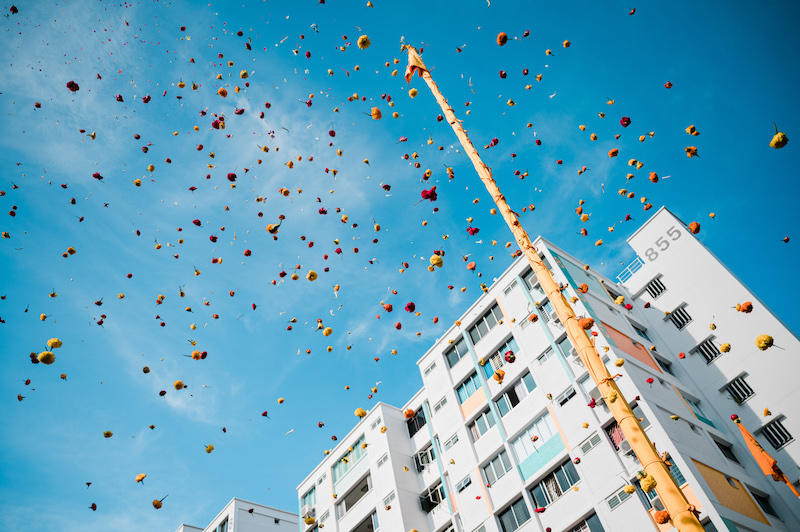
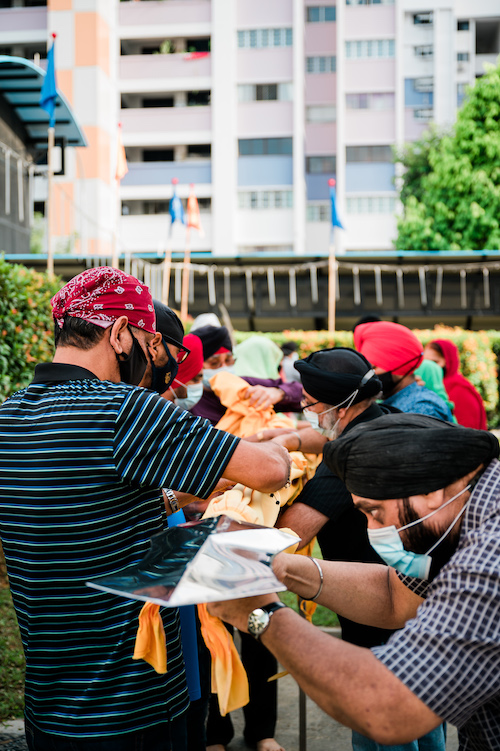
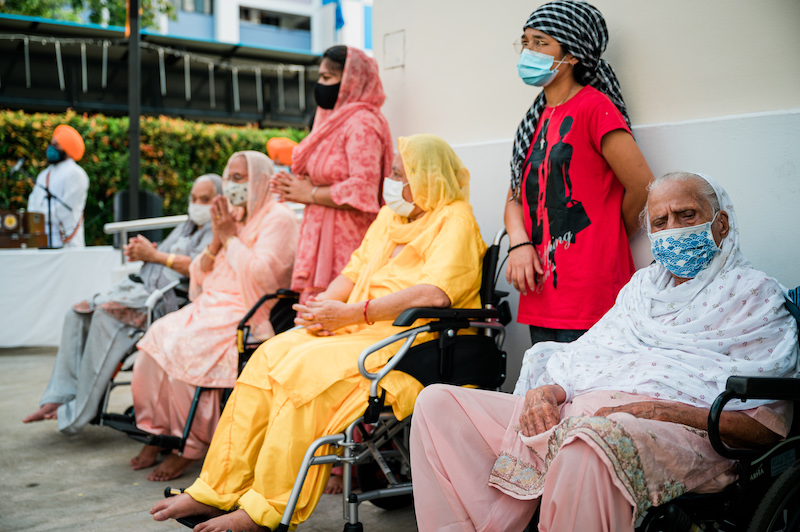
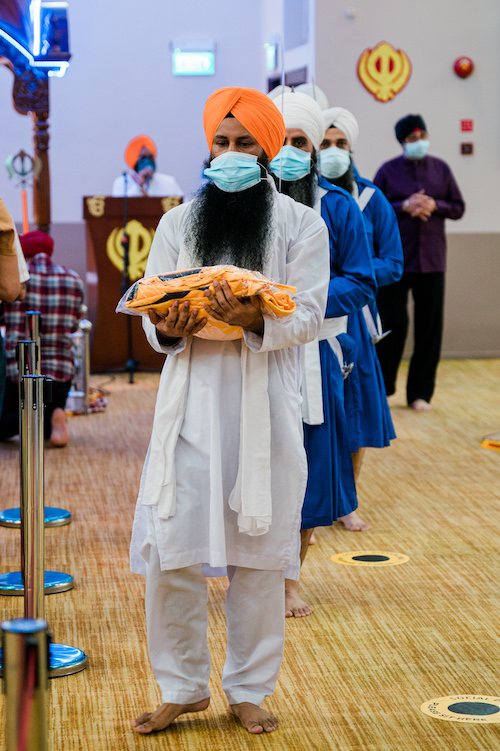
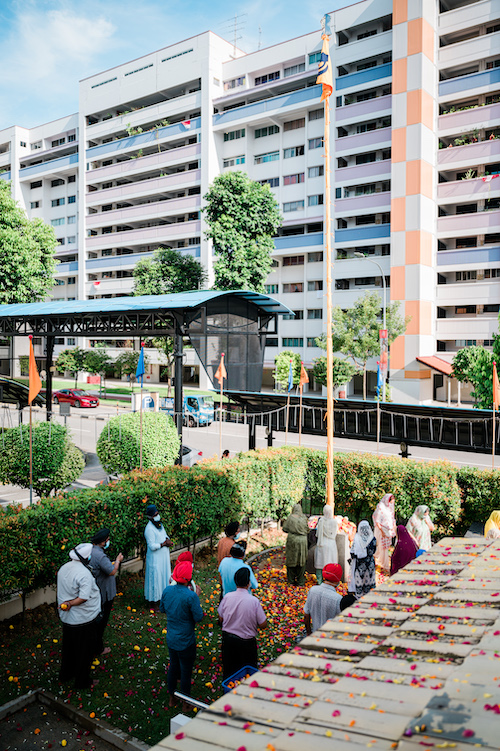
Gurdwara Sahib Yishun celebrated the 25th anniversary of its present gurdwara complex with the completion of an akhand path (continuous reading of the Guru Granth Sahib) today (29 Aug).

The event took an added shine with the recognition of many long-standing congregation members and volunteers. Also celebrated were Indian foreign workers who have taken an active part in the seva (selfless service) at the gurdwara.

“We had presentation of sirapao and plaques,” Yishun gurdwara committee president Lt Col (Rtd) Mejar Singh Gill told Asia Samachar. Sirapao usually refers to a turban presented as a momento at Sikh events.

What is being celebrated is the building of a new gurdwara complex in Yishun New Town in 1995.

While it may appear to be the youngest and newest compared to six other gurdwaras in Singapore, its history is as old as any of them. Its origins go back to the colonial interwar years, where three gurdwaras existed in Northern Singapore during the British days. They are Naval Police Sikh Temple, Sembawang Sikh Temple and Jalan Kayu Sikh Temple. Over time, they got merged into one.

RELATED STORY:

Singapore president at gurdwara centennial celebration (Asia Samachar, 24 June 2018)

ASIA SAMACHAR is an online newspaper for Sikhs / Punjabis in Southeast Asia and beyond.Facebook | WhatsApp +6017-335-1399 | Email: editor@asiasamachar.com | Twitter | Instagram | Obituary announcements, click here |