














UA-56202873-1
Page 396

Gurdwaras reaching out to pandemic victims – Part 3

By Asia Samachar | MALAYSIA |

The coronavirus pandemic has wrecked havoc across the world. In Malaysia, there has been a spate of lockdowns, of different intensity, to contain the spread of Covid-19. The first lockdown, called movement control order (MCO), was instituted in mid-March 2020.

Life has not been the same ever since. The pandemic has impacted businesses, big and small. Workers have lost income, families devastated by the stalling economy.

In the gloom and doom scenario, various outfits have come forward to assist the people at large. Many gurdwaras in Malaysia have also stepped forward to assist people in their vicinity to cope with hardship.

Asia Samachar contacted the Malaysian Gurdwaras Council (MGC), the umbrella body for gurdwaras in the country, to reach out to their member gurdwaras to find out what they have done to help their local congregation. It’s not an exhaustive exercise, but enough to get a rough picture as to what is happening out there.

As reported earlier, we found that a good good number of Malaysian gurdwaras have ventured out to assist needy families. They provided much needed food and cash assistance even to the Panjabi foreign workers, many of whom were stranded without jobs and unable to move around. They also provided food ration to other migrant workers.

This is Part 3 for the individual gurdwara reports that have reached us. Gurdwaras featured in this installment are Kuantan, Mentakab, Ampang and Wadda Gurdwara Penang.

Part 1: Port Klang, Serendah, Shah Alam, Kota Kinabalu, Setia City Darbar and Petaling Jaya.

Part 2: Klang, Raub, Bentong, Sungai Petani, Labuan and Khalsa Land (KKB).

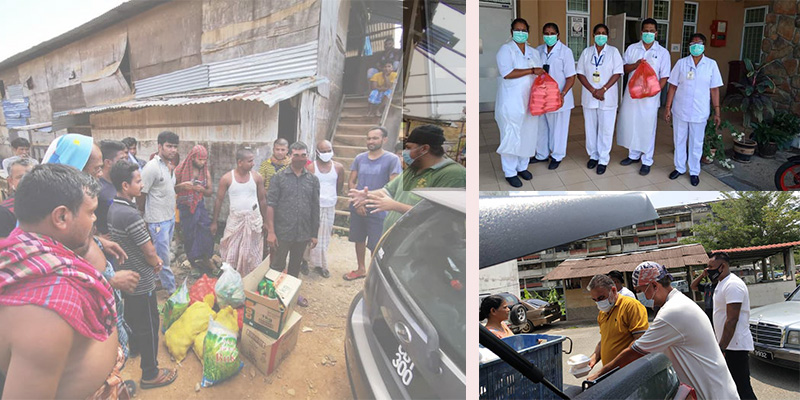
Kuantan gurdwara team delivering food supplies to one foreign workers’ kongsi during pandemic lockdown in 2020 – Photo: Supplied
KUANTAN 

We distributed aid to some 30 Indian foreign workers during the MCO last year. While on the distribution rounds, we found two kongsi (workers’ quarters) of Bangladesh and Indonesian workers who had run out of food. We provided them with food ration as well. We distributed dry groceries and vegetables every 2 to 3 weeks. Dry groceries and vegetables. For this year, we have sent out notice to whoever is in need but no one has approached us yet.
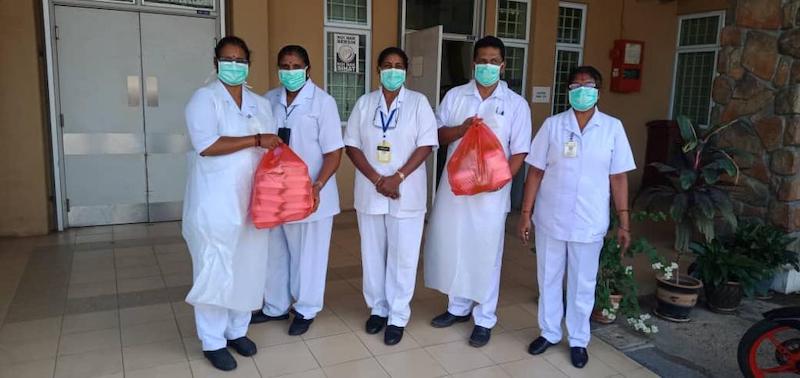
Mentakab gurdwara team also distributed meals to frontliners in the Temerloh district area
MENTAKAB

Mentakab Gurdwara Sahib team distributed 1,000 packs of vegetarian meals during MCO1 to residents of the Temerloh District. They included frontliners hard at work. Soon, we will once again start assisting our community affected by this pandemic. We will start soon with a RM500 one-off cash payment to needy households.

AMPANG

In 2020, the Gurdwara Sahib Ampang team distributed food packets worth RM6,000 to foreign workers (Desi brothers) in this area. We also distributed food ration to Niketan Darbar and Wadda Gurdwara Kampung Pandan for further distribution. The team also supplied vegetables and ration woth RM1,000 to Gurdwara Sahib Kampung Pandan Dalam which did the cooking and onward distribution. At the same time, we provided donations, between RM100 to RM200 each, to foreign workers to help them wtih their rentals and free medical treatment to those who needed it.

This year, we have supported two families with cash and food ration. With the assistance of the local parliamentarian, we have also distributed food package to 15 families in Ampang.
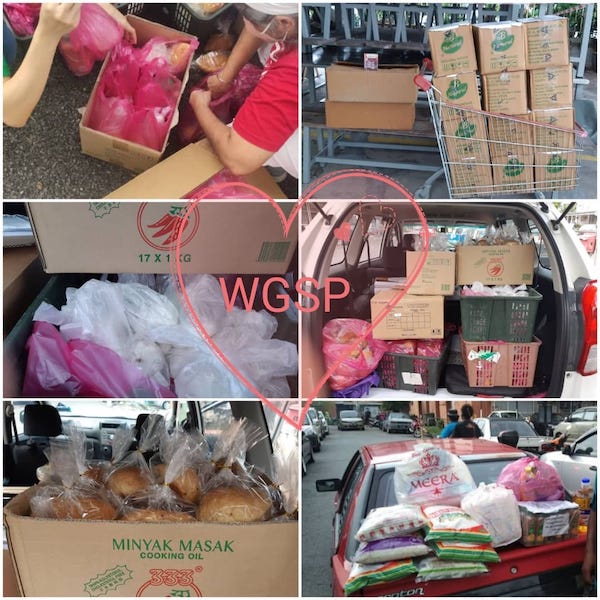
Buns and other items distributed by Wadda Gurdwara Sahib Penang during the Covid-19 pandemic lockdowns
WADDA GURDWARA PENANG

Persatuan Wadda Gurdwara Sahib (WGSP), Pulau Pinang, has been active in its outreach activities since MCO 1. The management committee would like to extend its heartfelt appreciation to everyone who have, and still are, contributing in so many ways towards the outreach sewa. Our contributors are from diverse backgrounds and races.

To date, WGSP has supported families with rations from Penang and the mainland (Sungai Petani, Kulim, Butterworth, Bukit Mertajam, Machang Bubok and nearby areas). The recipients are from all races, including migrant workers  from India, Bangladesh, Pakistan, Vietnam, Indonesia and Rohingya. We have also reached out to Jawantankuasa Pemulihan Dadah Timur Laut and Community Aids Society Penang, Orang Asli settlement in Perak.

During Vasakhi, Hari Raya, Deepavali and Chinese New Year cleebrations, we reached out to families and also the homeless and rickshaw peddlers with cookies.

Breakfast and lunch meals for the homeless in Kompleks Masyarakat Penyayang, Lighthouse, Pitt Street, children homes and anyone in need of meals. Bread buns, paus, cakes, mineral water bottles, biscuits, masala chai packets, tea and coffee and juices bottles were also supplied to Penang and mainland (Butterworth, Bukit Mertajam, Machang Bubok and nearby areas).

We also managed daily supply for the homeless. Daily food: Lunch and dinner for senior citizens, stranded tourist and for the unwell, regardless of race.

We have also been providing psychosocial support such as counselling and keeping in touch with members of the Sikh congregation and members of the other communities. The MCO has impacted many who have shown stress, depression, anxiety and suicidal tendencies. Our outreach team consists of doctors, nurses and community development counsellors. As for chronic cases, they have been referred to various mental health organisations and Women Centre for Change for those going through domestic violence.

We have also created a friendship zone where those who are staying on their own can call us on WhatsApp via multiple chatting video call.

As for the senior citizens keeping in touch often with them breaks the social isolation faced by them and a little laughter helps cheer them up.

Distributions of care packs as such; face masks, antiseptic soaps and hand sanitisers to the needy families and individuals who cannot afford it. Initially, we made our own hand sanitizers. The distribution became much wider with sponsorship that came along.

During Sangrands and Gurpurabs, senior citizens could not make it to gurdwara due to lockdown or other reasons. Karah Parshad and Langgar was sent to their homes.

More individual gurdwara reports will be shared in days to come. You can submit your local gurdwara’s report via Whatsapp (+6017-3351399) or email asia.samachar@gmail.com

RELATED STORY:

Are Malaysian gurdwaras doing enough in this pandemic? (Asia Samachar, 26 June 2021)

Gurdwaras reaching out to pandemic victims (Asia Samachar, 27 June 2021)


ASIA SAMACHAR is an online newspaper for Sikhs / Punjabis in Southeast Asia and beyond. Facebook | WhatsApp +6017-335-1399 | Email: editor@asiasamachar.com | Twitter | Instagram | Obituary announcements, click here |
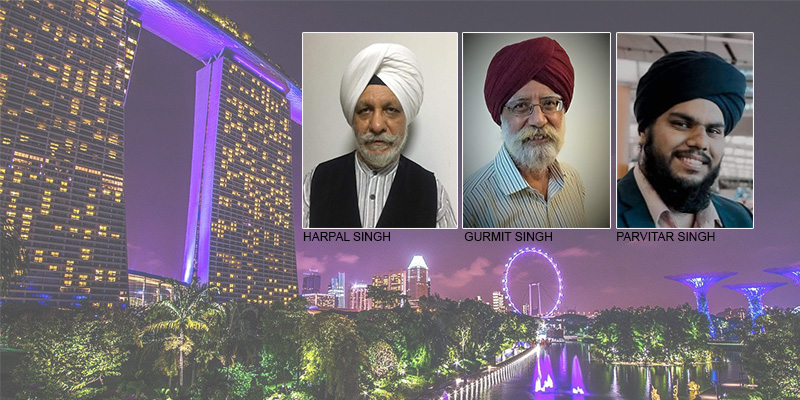
Sikh youth joins Singapore’s inter religious youth council

L-R: Harpal Singh, Gurmit Singh and Parvitar Singh
By Asia Samachar | SINGAPORE |

Parvitar Singh has been roped into the youth council of the Inter Religious Organization Singapore (IRO). The Sikh youth leader has been appointed vice chair of IRO Youth Singapore.

The 24-year old community activist is the founder of Fruits of Labour, a ground up movement which looks to empower migrant and blue collared workers.

IRO’s main council has two Sikh representatives for the 2020-2021 term. They are retired army officer Harpal Singh, a former IRO secretary who now serves as its treasurer. Also on board is Gurmit Singh Mehervan Singh, a retired teacher who has been serving the council since 1999.

The IRO was formed in 1949 by religious leaders from different faiths, with a timeless purpose to achieve harmony of faiths in Singapore. The outfit is represented by followers of major religions: Hinduism, Judaism, Zoroastrianism, Buddhism, Taoism, Jainism, Christianity, Islam, Sikhism and Baha’i.

RELATED STORY:

Surjit Singh to stay on Singapore’s official interfaith council (Asia Samachar, 16 Sept 202)


ASIA SAMACHAR is an online newspaper for Sikhs / Punjabis in Southeast Asia and beyond. Facebook | WhatsApp +6017-335-1399 | Email: editor@asiasamachar.com | Twitter | Instagram | Obituary announcements, click here |

History of Institutional Racism Against British Sikhs

0
By Gurmukh Singh | OPINION | 


“There was a time when the British insisted that Sikhs joining the colonial British Army must be Amritdhari (fully initiated), practising Sikhs wearing all their articles of faith. During the two World Wars, some 1.5 million Amritdhari Sikhs fought for the freedom of the United Kingdom, Europe and humankind. 83,000 Sikhs gave their lives, whilst 110,000 were wounded. Many gallant Sikhs were awarded Victoria Crosses (or equivalent awards) for their bravery. Sikhs have been living in some Western countries like the United Kingdom, Canada and America as a significant visible community for well over half a century. Before that, during the British colonial period, they were encouraged to migrate to countries in East Africa and South East Asia as soldiers, policemen and skilled workers. In recent years Sikhs have migrated to Australia and even to South American countries. Yet, direct and indirect challenges to visible Sikh identity have increased, especially since 9/11; so that their sense of belonging in the Western countries they live in as hardworking and law abiding citizens, has been “put in jeopardy“. (Gurmukh Singh OBE, Challenges to Sikh Identity in the West, Sikh Missionary Society UK[i])


Institutional racism” was first defined by Sir William Macpherson in the UK’s Lawrence report (1999) as: “The collective failure of an organization to provide an appropriate and professional service to people because of their colour, culture, or ethnic origin. It can be seen or detected in processes, attitudes and behaviour that amount to discrimination through prejudice, ignorance, thoughtlessness, and racist stereotyping which disadvantage minority ethnic people.”

Institutional racism in the government and agencies, legislative assemblies, the courts, the health and educational systems and other public and private sector bodies is directed against a people like the Sikhs because they are seen to be “different”. They are different not just because of their visible identity in case of Amritdhari (initiated) Sikhs and Sikhs who keep turbans and beards but also due to their association with a way of life based on creed, culture and customs.

The Jewish people are not visibly different from the white majority but there is institutional discrimination against them. This clear understanding for the basis of “them and us” discrimination because “they” are “different” is important, for “different” does not refer to difference in physical appearance only as some Sikhs who claim to represent Sikhs, believe. Those same Sikhs  have also misled the policy makers and those who collect statistics about communities like the Office for National Statistics in the UK to count and monitor their treatment. Miri-Piri (politico-spiritual) Sikhi is much more than a “religion” in the traditional sense. It is a whole-life temporal-spiritual paradigm which gave birth to a distinct people, a qaum or a nation.

Sikhs are victims of institutional discrimination because of their qaumi ethos; their Sikh way of life, values, behaviour and characteristics, of which, varying degrees of religious observance is one aspect.  Sikhs leading Panthic “morchas” are not always very “religious”. For example, the recent farmers protest against unjust and oppressive Indian farm laws is led by Sikhs fired mainly by liberating Sikh values. The Sikhs range from Amritdhari, Naam Abhiyasi (fully practising) GurSikhs to Sikhs who hardly observe Sikh Reht but have deep-rooted qaumi sentiments expressed along the line, “We are the proud Sikhs of Guru Nanak- Guru Gobind Singh”. For them the Gurus are their qaumi Miri-Piri heroes. These are Sikhs from all over India and not just Sikhs from what is left of Panjab. That is in response to those who misleadingly argue the “Panjabi qaum” case in the context of Sikh “ethnicity” as defined by the Lords in the Mandla case 1983.)

One important aspect of preserving the history and heritage of UK Sikhs  is to keep a record  of institutional racism against the community by keeping a digital library of old court cases, reports and images. This would be a historical record of the challenges faced by the community in settling down while trying to preserve own religio-cultural identity. Otherwise, “The Sikhs are a role model community and provide an exceptionally interesting example of successful integration whilst maintaining a very visible and distinctive religious identity.” (The Sikh Manifesto 2015-2020). In fact, it has been suggested that all Sikh diaspora countries should keep and maintain such a record for next generations.

There can be parallel projects like Sikh museums of early settlers where actual old photos, artefacts and documents are displayed for the benefit of next generations. To some extent such initiatives have been ongoing through Anglo-Sikh heritage and other projects undertaken by organisations and dedicated individuals.

Recent findings of the prolonged Daniel Morgan murder investigation into Scotland Yard remind UK Sikhs of their own experience in dealing with public servants and ministers. Civil servants work across departments and any form of institutional weaknesses and biases in the State system are unlikely to be isolated. The Sikh interest is in evidence which shows institutional bias against them because they are “different”.

As a lawyer noted, “The State and political powers prefer to deal with a uniform set of rules, values and ideas and tend to conspire against diverse cultures, religions and traditions.” (Sikh lawyer Sukhvinder Thandi[ii]).  So, is there evidence that State political powers – ministers and civil servants – actually “conspire against diversity” represented by the distinct Sikh community? There is need to collate such evidence through a process like an inquiry e.g. British Sikh Inquiry into institutional racism in the UK.

Due to long-standing Anglo-Sikh relations, Sikhs expected full legal safeguards for their visible Sikh identity and culture including religious practice. It was precisely the distinctive Sikh identity and what it stood for, which was valued and promoted by colonial Britain. Yet, when Sikhs arrived in the UK after the 1947 partition, they were compelled by economic circumstances to discard their proud Sikh identity. That suggests a failure on the part of UK policy makers to accommodate diversity. The community is unlikely to recover from that early identity loss passed on as negative heritage to next generations. Numerous court battles had to be fought by the more resilient and determined Sikhs to secure even basic rights.

The evidence produced before panels and courts is there because some who stood up to prejudice and racism are still around. All that evidence should be collated and preserved. It takes a prolonged, determined and expensive public inquiry like the Daniel Morgan Independent Panel investigation into police handling of the murder case to expose any wrong doing by public servants. It is important to collate documented evidence of institutional racism, corruption and cronyism over the changing race relation period in the UK over the last 60 years when Sikhs started settling in significant numbers.

For example, in recent years, over half a million British Sikhs have been denied their legal right to be counted and monitored as a distinct ethnic group under the current system. Despite taking the matter to the courts, they have not been allocated own ethnicity (qaumi) tick box in the Census. Leaving aside ignorance about Sikhi Miri-Piri tradition, objections based on trade relations with Indian have been used by some. Unless there is a public investigation into the consultation and decision-making processes in the Office for National Statistics (ONS), British Sikhs will remain totally confused about this issue which seriously affects their rights as a distinct community. That is a wrong perpetrated against a whole community. That is a conspiracy against diversity referred to by Sikh lawyer Sukhvinder Thandi quoted above.

To save and remember qaumi heritage and history is to save qaumi existence and identity. In itself it is a process of self-identification in a multi-cultural society. To respect and to have pride in own identity and way of life while respecting that of others in a spirit of unity in diversity. That is the true spirit of democratic multi-culturalism. That is “Anekta meh ekta” principle preached by Guru Gobind Singh.

Evidence of institutional racism requires case histories including documentation relating to cases taken to the courts and tribunals. The process would be in the nature of an inquiry by the community. Anyone arriving in the UK in late 1950’s and early 1960’s was compelled to cut his hair and discard his turban. I have seen first generation Sikhs looking at own images in mirrors after discarding their proud Sikh identity and crying aloud in anguish. What would their parents and families think of them back home?

Sikhs became more organised and took matters to the courts to secure their basic religious rights. It was an uphill struggle and some rights were won in the courts but most grudgingly conceded by the public and private sectors. The obstructive challenges came from the policy makers, the senior civil servants and ministers. As is the Sikh experience in the case of Sikh ethnic (qaumi) tick box in the Census, such challenges continue. Regrettably, there are those within the community who claim to be “leaders” or “representatives” and oblige the establishment by making compromises from which the community cannot recover for many generations.

As questions are being raised in the West about the damage done by colonial attitudes and institutional racism, the Sikhs too need to take timely steps to record their own experience.

[i] Challenges To Sikh Identity In The West.pdf (sikhmissionarysociety.org)

[ii] State Policy and Legislation Affecting Sikhs, SHRG, 2001.


Gurmukh Singh OBE, a retired UK senior civil servant, chairs the Advisory Board of The Sikh Missionary Society UK. Email: sewauk2005@yahoo.co.uk. Click here for more details on the author.

* This is the opinion of the writer, organisation or publication and does not necessarily represent the views of Asia Samachar.


RELATED STORY:

Sikhi: The Path for the New Age (Asia Samachar, 17 May 2020)

How coronavirus can change the world (Asia Samachar, 29 April 2020)


ASIA SAMACHAR is an online newspaper for Sikhs / Punjabis in Southeast Asia and beyond. Facebook | WhatsApp +6017-335-1399 | Email: editor@asiasamachar.com | Twitter | Instagram | Obituary announcements, click here |

Gurdwaras reaching out to pandemic victims – Part 2

By Asia Samachar | MALAYSIA |

The coronavirus pandemic has wrecked havoc across the world. In Malaysia, there has been a spate of lockdowns, of different intensity, to contain the spread of Covid-19. The first lockdown, called movement control order (MCO), was instituted in mid-March 2020.

Life has not been the same ever since. The pandemic has impacted businesses, big and small. Workers have lost income, families devastated by the stalling economy.

In the gloom and doom scenario, various outfits have come forward to assist the people at large. Many gurdwaras in Malaysia have also stepped forward to assist people in their vicinity to cope with hardship.

Asia Samachar contacted the Malaysian Gurdwaras Council (MGC), the umbrella body for gurdwaras in the country, to reach out to their member gurdwaras to find out what they have done to help their local congregation. It’s not an exhaustive exercise, but enough to get a rough picture as to what is happening out there.

As reported earlier, we found that a good good number of Malaysian gurdwaras have ventured out to assist needy families. They provided much needed food and cash assistance even to the Panjabi foreign workers, many of whom were stranded without jobs and unable to move around. They also provided food ration to other migrant workers.

This is Part 2 for the individual gurdwara reports that have reached us. Gurdwaras featured in this installment are Klang, Raub, Bentong, Sungai Petani, Labuan and Khalsa Land (KKB).

Part 1: Port Klang, Serendah, Shah Alam, Kota Kinabalu, Setia City Darbar and Petaling Jaya.

Volunteers at work at Gurdwara Sahib Klang to prepare food ration packs for families impacted by the Covid-19 pandemic
KLANG 

The Klang Sanggat and Friends has come together in full force to provide aid to the needy during this Covid-19 pandemic. Our drive started on 4 April 2020 to 8 June 2020. We gathered at Gurdwara Sahib Klang from where the provisions were distributed.

We had collected RM16,898 from the Klang sanggat and friends, of which close to RM16,000 was spent on the provision distributed to 211 families (643 pax).

Gurdwara Sahib Klang has also sent out cooked food to front liner doctors at Hospital Besar Tengku Ampuan Rahimah for one month (30 packets a day). We also sent cooked food to  the medical staff at Klinik Kesihatan Bukit Kuda for two weeks (15 packets a day).

Keeping in mind Shri Guru Nanak’s teaching of “Vandh ke Shekoh”, the Klang Sanggat and friends is prepared to undertake another round of provision aid distribution soon if donations are forth coming. The response has been positive. We thank those who have contributed by way of donation, provision, time and effort during the distribution of provision and cooking of food.

RAUB

Gurdwara Sahib Raub has been giving donations and cash aid to the needy from time to time.

In March and April 2020, the gurdwara provided a total R3,000 cash relief to Sikh families residing in this area who were impacted by the pandemic.

In April 2020, the gurdwara donated RM16,000 to SikhInside / Gurdwara Sahib Pulapol for supply of Guru ka Langgar to those effected by the pandemic lockdown in Kuala Lumpur.

In June 2021, the gurdwara allocated RM16,500 for cash aid of RM500 per Sikh family residing in Raub as well as the granthi and two foreign nationals. Three families had declined the aid.

BENTONG 

The Gurdwara Sahib management committee managed to get some funds from the Mentri Besar’s office to give a cash handout of RM200 per Sikh family in Bentong. During MCO 1.0, we provided dry ration to some 40 homes. Soon, we will be providing ration to needy Panjabi families and foreign workers in this area.

Sungai Petani gurdwara volunteers distributing groceries to families impacted by Covid-19 pandemic
SUNGAI PETANI

Gurdwara Sahib Sungai Petani distributed dry ration a number of times last year. We distributed them to 56 families of various race and religions in Bedong, Sungai Petani and Baling. Each pack contained groceries worth about RM170.

We raise donations separately as the gurdwara fund is very low at the moment (due to lack of programmes as a result of pandemic lockdowns). Well wishers have come forward to contribute. The gurdwara fund is used mainly for operating expenditure which is around RM3,000 per month.

Labuan gurdwara volunteers preparing dry food packs for Covid-19 pandemic victims in November 2020
LABUAN

In November 2020, the Labuan Sikh Society distributed rations and packed dry food to the needy. Due to the full lockdown this time in Labuan, we are not able to do any sewa but we hope to continue to assist the needy in this time of difficulties and uncertainties.

Khalsa Land at KKB contributed mattresses, bedsheets and pillows for the needy through Kuala Lumpur City Hall
KHALSA LAND, KUALA KUBU BHARU

During the MCO period, Khalsa Land worked closely with KKB assemblyman YB Lee Kee Hiong and compiled a list of Sikh families living in Kuala Kubu Bharu and Rasa. We distributed groceries contributed by the assemblyman’s office to needy families.

We also supplied dry ratio and occasionally cooked food to a number of foreign workers who were stranded due to the pandemic lockdowns. We also extended aid to two families in Batang Kali and one in KKB.

We also contributed 600 mattresses, 300 bedsheets and 140 pillows to the needy through the Dewan Bandaraya Kuala Lumpur (DBKL).

More individual gurdwara reports will be shared in days to come. You can submit your local gurdwara’s report via Whatsapp (+6017-3351399) or email asia.samachar@gmail.com

RELATED STORY:

Are Malaysian gurdwaras doing enough in this pandemic? (Asia Samachar, 26 June 2021)

Gurdwaras reaching out to pandemic victims (Asia Samachar, 27 June 2021)


ASIA SAMACHAR is an online newspaper for Sikhs / Punjabis in Southeast Asia and beyond. Facebook | WhatsApp +6017-335-1399 | Email: editor@asiasamachar.com | Twitter | Instagram | Obituary announcements, click here |

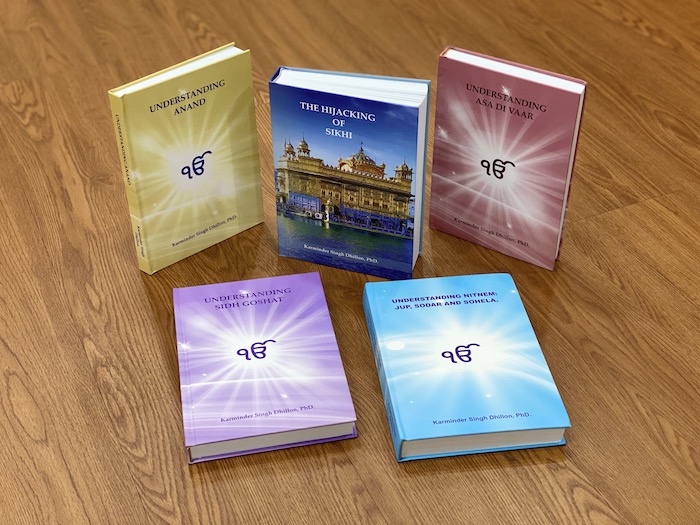
Final chance to land Karminder Singh’s five latest books

By Asia Samachar | MALAYSIA |

This is your final chance to get a copy of Dr Karminder Singh’s five latest books. There are only 50 sets left.

“Five thousand books were printed and sold in sets of five. We are left with no more than 50 sets, and there are currently no plans to reprint,” said the author.

The five books are (1) Understanding Nitnem – Jup, Sodar and Sohela; (2) Understanding Sidh Goshat; (3) Understanding Anand; (3) Understanding Asa Di Vaar; and (5) The Hijacking of Sikhi.

“Preference for these remaining sets will be given to Gurdwaras that wish tp purchase them for their libraries. There are no plans to re-print these 5 books because the focus now is on the next project, which is expected to come to fruition at the end of this year,” he added.

The biggest purchasers were Malaysians who considered the hard cover books at RM20 (RM 100 per set) a bargain. Local distributors in various parts of the country helped make it easy for Malaysians to get their books as well. Forty percent of the books were picked up by Malaysians.

The second biggest purchasers were the US (25%) followed by Canada and UK (20%).

“The response has been overwhelming. To be able to sell 5,000 books on Gurbani – in English – within a span of 6 months – despite lockdowns all over the world – is very encouraging indeed. It shows that educated and professional Sikhs are interested in wanting to know and understand Gurbani when presented using reason and logic,” said Karminder.

The books are available for internet orders here (https://sikhivicharforum.org/store/).

Malaysians can pick up their copies from local distributors who are listed at the same site.

RELATED STORY:

Hijacking Sikhi (Asia Samachar, 19 Dec 2020)

Karminder talks about what shaped his thinking, and his latest books on Sikhi (Asia Samachar, 20 Nov 2020)


ASIA SAMACHAR is an online newspaper for Sikhs / Punjabis in Southeast Asia and beyond. Facebook | WhatsApp +6017-335-1399 | Email: editor@asiasamachar.com | Twitter | Instagram | Obituary announcements, click here |

This is cool! School gate with Gurmukhi alphabets

0
School gate with Gurmukhi alphabet
By Asia Samachar | PANJAB |

A Panjab-based mason had prepared this gate for a school in Panjab. It seems many schools have already fitted them for their school gates. Its yet another unique way to promote learning of the Gurmukhi (ਗੁਰਮੁਖੀ) alphabet. This was found online. An idea for a gurdwara gate, perhaps.


ਕੰਮ ਕੀਤਿਆਂ ਹੀ ਹੁੰਦੇ ਨੇ….ਧੰਨਵਾਦ ਪੰਜਾਬੀਆਂ ਦਾ

ਇਹ ਫੱਟੀਨੁਮਾ ਦਰਵਾਜ਼ੇ ਫਗਵਾੜੇ ਦੇ ਨੇੜੇ ਸਕੂਲ ਵਿੱਚ ਮਾਨਸਾ ਤੋਂ ਇੱਕ ਮਿਸਤਰੀ ਵੀਰ ਤੋਂ ਤਿਆਰ ਕਰਵਾ ਕੇ ਭੇਜੇ ਜਾ ਰਹੇ ਹਨ

ਪੰਜਾਬੀ ਬੋਲੀ ਪ੍ਰਚਾਰ ਹਿੱਤ ਪੰਜਾਬ ਦੇ ਵੱਖ ਵੱਖ ਹਲਕਿਆਂ ਦੇ ਸਕੂਲਾਂ ਵਿੱਚ ਜਾਣ ਦਾ ਮੌਕਾ ਮਿਲਦਾ ਪੰਜਾਬੀ ਪ੍ਰਚਾਰ ਹਿੱਤ ਕਈ ਪੰਜਾਬੀ ਪ੍ਰੇਮੀ ਅਧਿਆਪਕ ਵੱਖ ਵੱਖ ਪ੍ਰਚਾਰ ਦੇ ਸਾਧਨ ਤੇ ਪ੍ਰਾਪਤੀ ਦੀ ਮੰਗ ਕਰਦੇ ਹਨ। ਇਸ ਤੋਂ ਪਹਿਲਾਂ ਇਹ ਦਰਵਾਜ਼ੇ ਕਈ ਸਕੂਲਾਂ ਵਿੱਚ ਲੱਗ ਚੁੱਕੇ ਹਨ ਤੇ ਕਈ ਪਿੰਡ ਵੀ ਮਾਂ ਬੋਲੀ ਦੇ ਪ੍ਰਚਾਰ ਲਈ ਲਗਾਤਾਰ ਕਾਰਜ ਕਰਨ ਲਈ ਹੁੰਗਾਰਾ ਦੇ ਰਹੇ ਨੇ

ਚਲਦਾ

ਤੇਜਿੰਦਰ ਸਿੰਘ ਮਾਨਸਾ

RELATED STORY:

How did students fare in SPM Punjabi language? Here are the results (Asia Samachar, 23 June 2021)


ASIA SAMACHAR is an online newspaper for Sikhs / Punjabis in Southeast Asia and beyond. Facebook | WhatsApp +6017-335-1399 | Email: editor@asiasamachar.com | Twitter | Instagram | Obituary announcements, click here |

Gurdwaras reaching out to pandemic victims

By Asia Samachar | MALAYSIA |

The coronavirus pandemic has wrecked havoc across the world. In Malaysia, there has been a spate of lockdowns, of different intensity, to contain the spread of Covid-19. The first lockdown, called movement control order (MCO), was instituted in mid-March 2020.

Life has not been the same ever since. The pandemic has impacted businesses, big and small. Workers have lost income, families devastated by the stalling economy.

In the gloom and doom scenario, various outfits have come forward to assist the people at large. Many gurdwaras in Malaysia have also stepped forward to assist people in their vicinity to cope with hardship.

Asia Samachar contacted the Malaysian Gurdwaras Council (MGC), the umbrella body for gurdwaras in the country, to reach out to their member gurdwaras to find out what they have done to help their local congregation. It’s not an exhaustive exercise, but enough to get a rough picture as to what is happening out there.

As reported yesterday, we found that a good good number of Malaysian gurdwaras have ventured out to assist needy families. They provided much needed food and cash assistance even to the Panjabi foreign workers, many of whom were stranded without jobs and unable to move around. They also provided food ration to other migrant workers.

Starting today, we will publish individual gurdwara reports that have reached us. Here are updates from Port Klang, Serendah, Shah Alam, Kota Kinabalu, Setia City Darbar and Petaling Jaya.

Port Klang gurdwara congregation join in ardas (prayer) as they prepare food ration packs for those impacted by Covid-19 pandemic
PORT KLANG

Gurdwara Sahib Port Klang (GSPK) had resolved to help all those affected caused by this lockdown and/or movement control order. Having Guruji’s advice in our mind that, it is always during tough times that the Sikhs should rise and help mankind, as the saying goes, “Garib Ka Muh, Guru Ki Golak”.

GSPK assisted by providing food rations for their daily consumption. Each ration bag worth of RM100 contained various groceries, including rice, flour, salt, sugar, oil and lentils. With Guru Ji’s blessings till date 200 families within Port Klang have received the provision, irrespective of race, religion, background, or nationality.

We thank the entire Sanggat for their kind and generous donation. GSPK parbandhak committee would like to also thank all the sewadars/naujawans who has assisted in this sewa. The sewa began with an ardaas.

SERENDAH

Gurdwara Nanaksar Sahib Serendah has been a source of lifeline for Desi boys (Indian migrant workers) around the area by providing rations as and when required.

SHAH ALAM

Gurdwara Sahib Guru Nanak Shah Alam (GSGNSA) worked closely with Gurdwara Sahib Subang (GSS) to help the needy in Shah Alam area. GSGNSA provided financial assistance towards the GSS efforts. GSGNSA also reached out to Indian migrant workers who needed assistance in terms of food ration and financial assistance.

GS Kota Kinabalu
KOTA KINABALU

Gurdwara Sahib Kota Kinabalu (GSKK) assisted the needy Sikh families and other organisations during Lockdown 1.0 and Lockdown 2.0 last year. In the on-going Lockdown 3.0, we are planning to assist needy Sikh families when the time permits. At present, we are unable to mobilise due to the total lockdown.

10 April 2020: With the assistance of the Sangat and Sabah Sikh Club (SSC), GSKK provided food rations to needy Sikh families in Kepayan, Tuaran and Kota Kinabalu. We also donated to Jabatan Bekalan Air Sabah, Police Volunteer Reserve (PVR) Sabah, Luyang Police Station, Sabah Society for the Blind and the Red Crescent Society of Sabah. About 100 packets of food rations were distributed

30 October 2020: Again with the assistance of the Sangat and SSC, food baskets were distributed to the Red Crescent Society, Persatuan Pendidikan Awal Kanak-Kanak Matakana and Queen Elizabeth Hospital Frontlines. We also distributed to needy Sikh families in Kota Kinabalu and Kepayan. The Red Crescent Society helped us to distribute to the needy Sikh families in Tuaran. A total of 100 food baskets were distributed. Some prominent Sikh personalities in Kota Kinabalu also assisted needy Sikh families in Kota Kinabalu and the surrounding areas.

Setia City Darbar volunteer talking to migrant workers to assess their situation during the Covid-19 pandemic lockdown
SETIA CITY DARBAR

Covid-19 pandemic support began since 18th March 2020. SCD sewadars provided dry/wet rations to 53 Desi brothers and sisters. Additionally, four homeless Indian migrant workers were provided shelter for 3 months. We also worked with United Sikhs to distribute rations to 58 families in Kapar.

In addition, we donated RM5,900 to United Sikhs for their worthy cause. This fund was raised through SCD sanggat. We provided financial support and Covid-19 tests for 4 Desi brothers and made arrangements for them to travel back to India.

PETALING JAYA

During the MCO period, due to urgent need, the Gurdwara Sahib Petaling Jaya (GSPJ) Welfare Sub Committee undertook to provide rations to both Malaysians and non-Malaysians to assist them with basic food necessities. The programme was advocated via social media postings.

Awareness of the programme led to enquiries from the Sikh Sanggat and well wishes who expressed their desire to contribute towards the programme. The GSPJ Ration Committee received many request for ration assistance via phone. A total of 1,161 received rations from GSPJ during the first six months from March.

Besides rations, the committee also provided financial aid to existing aid recipients and deserving cases, including medical assistance to non-Malaysians, who was admitted in the University Hospital of renal failure.

During the implementation of the program, the GSPJ Rations Committee coordinated its activities with other Sikh Organisations and Gudwaras to ensure that the needs of the community were met to avoid duplication.

GSPJ Welfare Sub Committee would like to take this opportunity to thank all donors, contributors, well wishes, Seawadars and the PJ Naujawans who helped deliver the rations to the respective residences despite the lock down and travel restrictions that were in force. (Report submitted by GSPJ secretary Jasmindar Singh)

More individual gurdwara reports will be shared in days to come. You can submit your local gurdwara’s report via Whatsapp (+6017-3351399) or email asia.samachar@gmail.com

RELATED STORY:

Are Malaysian gurdwaras doing enough in this pandemic? (Asia Samachar, 26 June 2021)


ASIA SAMACHAR is an online newspaper for Sikhs / Punjabis in Southeast Asia and beyond. Facebook | WhatsApp +6017-335-1399 | Email: editor@asiasamachar.com | Twitter | Instagram | Obituary announcements, click here |

‘Oxygen langgar’ warriors featured on cover of Reader’s Digest India

0
Featured in Reader’s Digest India, June 2021. With Gurpreet Singh Rummy (centre, in white) at the helm, Khalsa Help International stepped in to provide medical oxygen to COVID patients when hospitals were overwhelmed – Photo: Bandeep Singh
By Reader’s Digest | INDIA |

BREATHING LIFE INTO US

By the third week of April, watching the news had become an anxious, often horrifying experience. Hospitals were turning away severely ill COVID pa- tients. They had no beds, and, in Delhi specifically, many had no oxygen.

Pradhan of Shri Guru Singh Sabha Gurudwara in Indirapuram, Ghaziabad, Gurpreet Singh Rummy remembers exactly when the second wave crescendoed at his doorstep — it was 11:30 p.m. on 22 April. A 55-year-old woman had been brought to the gurudwara. Her SpO2 levels had dipped to 50 per cent.

“We, thankfully, had some cylinders, but not a lot of knowhow. We some- how brought up her levels up to 95 per cent in about an hour,” recalls Rummy. “We made a video of this and put it up on social media. In about an hour, 100 to 150 cars showed up. They also had nowhere else to go.”

After Rummy, 44, helped set up Khalsa Help International (KHI) last year, he ensured that the needy get ra- tions, LPG and free COVID tests. The organization even helped patients find hospital beds and treatment. Since April this year, however, the scale of KHI’s operations has increased tenfold.

In just three-odd weeks, Rummy and his volunteers had provided oxygen to approximately 12,000 people, but to do this, they had to source cylinders from Haryana, Punjab, Rajasthan and Uttarakhand. Rummy remembers weeping when KHI’s oxygen stocks once dwindled: “Everyone put up their hands, saying we’ll supply hospitals first, but what about those who didn’t get a bed, people who can’t afford one?”

In the end, it wasn’t just individuals who benefited from KHI’s unique oxygen langar—health-care facilities did, too. “At least six hospitals had us on call in case they ran out of cylinders. The government couldn’t help them, but they were able to save lives with the oxygen we supplied.” Even though six of KHI’s 90 volunteers have tested positive for COVID, Rummy tells us that none of his colleagues have yet been vaccinated. “The work we do is non-stop. People are sometimes down for two or three days after a vaccine. If we’re short even one person, many patients would suffer, patients for whom we’re the only hope,” he says.

– Extracted from ‘They Gave Us Hope’ published at Reader’s Digest India (June 2021)

‘Oxygen langgar’ providers featured on cover of June 2011 issue of Reader’s Digest India
RELATED STORY:

(Asia Samachar, 15 June 2021)


ASIA SAMACHAR is an online newspaper for Sikhs / Punjabis in Southeast Asia and beyond. Facebook | WhatsApp +6017-335-1399 | Email: editor@asiasamachar.com | Twitter | Instagram | Obituary announcements, click here |
Sikhi parchaar adventure in Malaysia and Singapore

1
Take a trip down memory lane with this image of ladoo-making in preparation for a wedding in 1963 at the langgar hall (present SGSS foyer area) – Source: DAASTAAN 1918-2018 – Sri Guru Singh Sabha Singapore’s Journey – Centennial Celebrations
By Paguman Singh | OPINION |

An adventure in the search of a better life, when driven by personal faith and belief that one is capable, leads to a willingness to face any challenge. Personal faith is strengthened by an inner religious belief that provides the strength to one’s will and the faith that spiritual powers are supportive of the endeavor to be undertaken. Forefathers of Malaysian Sikhs left Punjab for various reasons with the common spirit to succeed economically and improve their lives. They were ready for the challenge as the Sikh spirit, boiling in their blood, carried the DNA of the sacrifices of Sikh martyrs and the positive mind of Fateh or accomplishment.

Landing, after a journey that took weeks in Malaysia, then Malaya, also known in Punjab as “kaleh pani” or black water an indication of a distance that was immeasurable. Sikhs in Malaya and Singapore supported and assisted one another and established settlements. New arrivals were able to stay in communities, received free food and shelter during the period they were seeking employment. Advice, emotional support, knowledge of local culture and language was shared to support their settling in. An informal system existed where senior persons-maintained discipline and ensured good conduct and exemplary behavior. Information received verbally from elders, shows that the new arrivals did not drink alcohol, cut their hair or trim beards. In some cases, sitting at a coffee stall was also not acceptable.

The challenges faced by our forefathers are beyond our imagination as we are all in comfortable environment. Success was achieved due to a strong spirit they possessed which resulted not only in survival but the establishment of foundations for our progress. The challenge was multifaceted, arriving in a country where the climate was different, hot humid and wet, mixing with different ethnicity, witnessing cultural differences including food, a poor health system, and a completely new and foreign language. Their success is an example of the strong entrepreneurial Sikh spirit of “Chardi Kala”.

I humbly bow before all their sacrifices and acknowledge that their contributions have allowed us to walk tall as a community of courage, honesty, dedication and economically self-reliant. Deep within these simple folks lay the love of their language, culture and religion. The brotherhood of religion as being the sons of Guru Gobind Singh bonded them socially and economically.

The desire to connect to the rich history and folk literature led to creation of centers for gathering. The learned amongst them read the classics, poems “kavita” and others kivishri. Seated under the oil lamps after a hard day of toiling in the mines, on bullock carts and hard sentry duty, the only available entertainment for relaxation was stories of Sikh valor and the Sakhis of the Guru’s blessings on devoted Sikhs. Radios, television or even electricity in these communities did not exist but hearts were lighted with the Guru’s words and they strengthened their spirit to advance forward the following day.

Slowly but surely, these gathering centers were transformed into small Gurdwaras. Made of wood with roof made of attap weaved from the leaves of the nipah plant. The ground was not concrete in many cases, just flattened and laid with a layer of lallang, a weed with long thin leaves that was abundantly available. Sitting on these, the faithful sang together in a chorus. The session was led by anyone who knew some verses from Gurbani, weaved it with Punjabi poetry and accompanied by the beat of a dhol ki and chimta. Deeply absorbed in the singing the fervor it created could be heard from a distance. Many years later, the harmonium (waja) and tabla were added.

Families grew as many returned to marry in Punjab and brought back their wives. This saw the arrival of women in Malaya from Punjab. Others had married within the local communities and they and the families remained with the community and were well accepted. The sangat (congregation) steadily grew. Large gatherings formed in many of the states in Malaya. This increase led to the building of Gurdwaras and the need for a learned “granthi” or priest. The influx of many personalities with Punjabi education to Malaya then occurred to fill the position of granthis. Small gurdwaras still relied on some learned person within the community as well as anyone who could beat the dholki in rhythm to engage the sangat in worship on Sundays.

The family atmosphere in these sangats was warm, loving and caring. Children received cuddles from elderly ladies as they showered blessing like “putt to jee da rehai baba thanu changi naukre devah” (son may you have a long life and may the Creator give you a good job) while females had the blessings of “putt to sukhi vaseh” (daughter may you have a great family life). These goodwill messages showered with love and care added to the happiness of going to the gurdwara. During those times, children and youth had no other distractions and the Sunday Gurdwara function fulfilled their desires for a change from the home and school.  Elders would then lovingly direct young to partake in sewa (service) and give them a feeling of being part of the larger family. Sewa was encouraged depending on their age and strength. Everyone was involved, the least the child did was to take the empty metal cup used for drinking tea by the elder to the place for washing.

Encouragement, acknowledgment became the driving forces that made the young feel comfortable, secure and accepted. Attending Sunday Gurdwara also provided the youngsters an opportunity to meet, mind you the boys met the boys and the girls the girls. Society values were conservative and the boys and girls could only see and admire each other from a distance, hiding and camouflaging the exchange of admiration for fear of the parents. Others who were more daring devised ways to have a conversation even if it was the normal sat sri akal. Even if there was no reply a fleeting smile was acknowledgment and the sat sri akal a defence if anybody complained.

Wedding, Malaya (1947) – PHOTO / KHALSANET GALLERY

Religion was learnt from the stories and sakhis told during the sangat sitting and hearing the gyani or granthi. As Punjabi was the home language the youngsters sitting in the laps of mothers and the youth sitting with their fathers grasped the knowledge of Sikhi. The sakhis were rendered with such devotion and emotion, after the gargadh jathas style of kirtan had been sung, that they sank into the minds of the younger generation. The emotions generated from the sacrifices of the Gurus and their great life eased the acceptance of the great values of Sikhi into the young minds of the youth. Character of honesty, spirit of dedicated service, working hard to achieve economic success were also parted to the youths.

Participation was the corner stone to involving the youth. A day before the gurdwara building was to be cleaned, wall to wall, mind you. Fire wood mainly rubber or mangrove wood had to be cut as fuel to the fires cooking the langar. All the plates, cups and utensils had to be washed usually by the males. The females engaged in cleaning the dhall by removing small stones or other impurities, the atta had to be sieved to remove worms or other bugs and also the washing of any blankets used to store the cooked roti and the washing and cutting of vegetables. The granthi had to change all the rumalas and sheets of Guru Granth Sahib and prepare the instruments for the kirtan. The joy of working together as a family, both young and old, knows no bounds.

Any Sunday function was a function of the whole community not just one individual. Sewa was done by all in preparation of simple dall roti and a chutney made with mint. The youngsters would have their eyes tearing while cutting red onions and the elderly ladies would say the tears show your mother-in-law will love you; what an encouragement. Peeling potatoes that had been boiled was an act of balancing from hand to hand and a lesson never to touch your face or eyes after cutting chilies was well learnt. The energy and joy that developed from this hands-on approach to learning to be a good Sikh has stayed with many generations.

After the langar was served and all the utensils washed and put back into the store the whole area was usually give the final clean. Despite all the happenings the energy levels of the sewadars (volunteers) increased and the would be flashing with excitement. The taste of the langar itself cannot be matched with any home cooking as it had with it the blessings of the wonderful hearts that made it with care and love. Ladies fought the smoke from the wooden fires making the rotis and men sweated cooking dhall and grinding chutney but their faces were always lighted in the spirit of sewa for the Guru.

All the excitement had another feature when the salesman from Punjab arrives with his merchandise. Mothers rushed to buy kara (bangle) for the new born or a new one for the ever-growing children. Surma was the eye decorator as well as the sight strengthener and was only available when this vendor came. Kanga both wooden with a small kirpan in it as well as that made from elephant ivory were other items. Women waited to buy the naala for their selvaar as well as prand for the hair. This was the mobile Punjabi cultural bazaar providing material from the homeland. It also educated the youngsters of the value of their rich cultural heritage.

The yesteryears of Sikh parchaar was one in which learning began at a young age through participation. Elders cared and guided the youngsters through loving motivation and nudging to strengthen their belief in themselves. The faith that had given our forefathers the economic security and acceptance as honest and caring people in the social sphere has been the foundation of generations of success. Respect and support for each other, open communication, sharing and caring have been the foundation stones of the Sikh journey of success – let us commit to it for our future generations.


Paguman Singh, a retired senior official of a Malaysian-based social security organisation, has been involved in Sikhi parchaar for more than three decades. He now resides in New Zealand.

* This is the opinion of the writer, organisation or publication and does not necessarily represent the views of Asia Samachar.


RELATED STORY:

They are out to disrupt Sikh theological space (Asia Samachar, 2 Sept 2020)

Blessings: A Name Change (Asia Samachar, 1 July 2020)


ASIA SAMACHAR is an online newspaper for Sikhs / Punjabis in Southeast Asia and beyond. Facebook | WhatsApp +6017-335-1399 | Email: editor@asiasamachar.com | Twitter | Instagram | Obituary announcements, click here |

Are Malaysian gurdwaras doing enough in this pandemic?

Kuantan gurdwara team delivering food supplies to one foreign workers’ kongsi during pandemic lockdown in 2020 – Photo: Supplied
By Asia Samachar | MALAYSIA |

Are gurdwaras in Malaysia doing their part to help the needy in this hard pressed pandemic lockdown period?

The question came up when Asia Samachar ran a note from Malaysian Gurdwaras Council (MGC) urging gurdwaras to reach out to poor and needy Sikhs. That was about a month ago. Lo and behold, some of the comments on our Facebook made it sound like our gurdwaras were sitting back with no care whatsoever for the suffering all around.

“Some gurdwaras have millions in their fixed deposits,” commented one reader. “All these funds are only used to make the gurdwaras bigger, higher and wider. Once in a blue moon, yes, some help is offered somewhere.”

Another reader chipped in, saying: “Sadly some gurdwaras are running as profit or money making centres. Lots of our brothers who are migrants from India (Desi) are being treated differently.”

Yet another reader commented: “Why are the gurdwaras and committees not helping the needy? Help other races, but prioritise our people first. I am sure there are some families struggling out there and it’s our responsibility to assist them in any possible way.”

Is that really the case with the gurdwaras? Asia Samachar decided to check and see what is happening around the nation. We sent a note to MGC and spoke to gurdwara committee representatives.

This is what we found out. Things may have slowed down due to the Covid-19 pandemic lockdowns, but a good good number of Malaysian gurdwaras did not let their guards down. They went out to assist needy families. They provided much needed food and cash assistance even to the Panjabi foreign workers, many of whom were stranded without jobs and unable to move around. They also provided food ration to other migrant workers.

Even the smaller gurdwaras, like those in Raub, Bentong and Serendah, refused to recoil in their shell. Raub gurdwara, for example, provided cash handouts totaling some RM20,000 to Sikh families in Raub last year and this year. Some families had declined the offer.

“We are a small gurdwara with about 30 families here. The cash handout is from the gurdwara coffers,” a Raub gurdwara official told Asia Samachar.

SEE ALSO: Gurdwaras reaching out to pandemic victims

The team at Bentong, another gurdwara in the state of Pahang, managed to secure allocation from the Menteri Besar’s office to give cash handouts to Sikh families in the town during the initial lockdown last year.

“During MCO 1, we provided dry ration to some 40 homes. We also provided weekly dry ration to some foreign workers here,” said Bentong gurdwara committee president Jasvir Singh.

MCO refers to the movement control order. The first nationwide MCO was implemented on 18 March 2020 as a preventive measure by the Malaysian federal government in response to the Covid-19 pandemic in the country.

Some of the urban-based gurdwaras with a larger footprint of urban congregation members have also marshaled their resources to provide help.

The team at the Kuantan gurdwara, for example, had distributed aid to some 30 Indian foreign workers last year.

“While on distribution rounds, we found two kongsi (workers’ quarters) of Bangladesh and Indonesian workers who had run out of food,” a committee member said in a text message. Dry ration, groceries and vegetables were distributed every two to three weeks.

The Wadda Gurdwara Sahib Penang has kept its outreach programme alive since the first MCO. They have supported families with rations from Penang, Sungai Petani, Kulim, Butterworth, Bukit Mertajam, Machang Bubok and nearby areas. They served Malaysians of all races as well as migrant workers from Indian, Bangladesh, Pakistan, Vietnam, Indonesia and Rohingya. At the same time, they also worked with the Orang Asli (aborigines). The gurdwara has also been trying to cater to mental health needs of the local community.

In Subang, aside from providing dry rations, the local gurdwara has supplied laptops to more than a dozen needy families to ensure their children are not left our in their studies.

Neighbouring Petaling Jaya gurdwara provided more than 1,100 packets of ration to Malaysians and non-Malaysians to assist them with basic food necessities during the first six months after the maiden lockdown last year. The gurdwara’s welfare committee has also provided financial aid to existing aid recipients and deserving cases, including medical assistance to non-Malaysians which included a patient admitted in the University Hospital for renal failure.

In Sabah, Kota Kinabalu gurdwara and the Sabah Sikh Club (SSC) assisted needy Sikh families and frontliners during the first two lockdowns last year. Food rations were dispatched to Sikh families in Kepayan, Tuaran and Kota Kinabalu.

There are more stories to tell from around the nation. Asia Samachar will share them in the coming days.

But not all gurdwara committees are up to the mark. Some gurdawaras, including those with healthy bank balances, have been conspicuously missing in action.

“The local gurdwara in my area is not doing enough,” one official of a Klang Valley-based gurdwara told Asia Samachar. “They have enough cash reserves to help, and this is the time for them to do so. Once money gets into the gurdwara’s bank account, its tough getting it out.”

So, it looks like there are gurdwaras that need some push.

On the whole, MGC president Jagir Singh said more than 40 gurdwaras have helped needy Sikhs on a regular basis, while most other gurdwaras have provided help according to their ability.

“We must understand there are about 30 Gurdwaras in the country with less than 15 families in their area, some even three families or less such as Tumpat, Kuala Kurai and Ulu Yam Bharu. Thus, they are in no position to help,” he said.

(Asia Samachar has received reports from a number of Malaysian gurdwaras on their activities during the various Covid-19 pandemic lockdowns. Among them are Ampang, Bentong, Klang, Khalsa Land KKB, Kota Kinabalu, Labuan, Lembah Jaya Ampang, Mainduab Pudu, Mentakab, Petaling Jaya, Penang Wadda Gurdwara, Pulapol Kuala Lumpur, Raub, Serendah, Shah Alam, Sungai Petani, Setia City Darbar and Subang. We will be publishing them in the coming days)

RELATED STORY:

MGC: Gurdwaras should reach out to the poor and needy Sikhs (Asia Samachar, 13 June 2021)

Gurdwaras turn to savings to keep things going (Asia Samachar, 31 May 2020)

Dubai gurdwara flung open doors to all for Covid-19 vaccination (Asia Samachar, 13 Feb 2021)


ASIA SAMACHAR is an online newspaper for Sikhs / Punjabis in Southeast Asia and beyond. Facebook | WhatsApp +6017-335-1399 | Email: editor@asiasamachar.com | Twitter | Instagram | Obituary announcements, click here |