















UA-56202873-1
Page 397

Salvation

9
By Karminder Singh | Sikhi Concepts | Part 7 of 12 |

We have been examining the premise that Guru Nanak’s Portrait of Sikhi was Painted Over an existing canvas – and that the old canvas had existed for some 4,000 years prior to Guru Nanak.

What we mean by PAINTING OVER is that Guru Nanak RE-DEFINED all the spiritual concepts of that pre-existing canvas to suit the spirituality of Gurbani. So while all the concepts of the old canvas are MENTIONED in the Sri Guru Granth Sahib (SGGS), they have been given NEW Meanings.

And IF we intend to appreciate the Sikhi of Guru Nanak, we will need to understand the NEW meanings or REDEFINED meanings of the concepts – as contained within the SGGS.

In today’s video, we will look at the concept of Salvation or Mukti or Mokhas as it’s known in Punjabi.

Let’s begin with Salvation as advocated by the 4-thousand-year-old Canvas.

The primary claim is that Salvation was one of the four destinations for the soul in the afterlife. The other three were heaven, hell and reincarnation into the 8.4 million. The soul obtained salvation only if it went to heaven.

Salvation was thus a process that happened after death, in the after life. It was not for everyone. And there was a process that had to be followed in the present life and conditions that had to be met also in the present life – for salvation to be obtained in the afterlife.

For instance, women and human beings considered belonging to the lower castes – the shudras – are not entitled to salvation. They will have to go through the 8.4 million cycle to be reborn a male in a higher caste to qualify.

This essentially rules out salvation for more than half of the very people who believe and accept the 4K old canvas, but are automatically disqualified based on their gender and caste.

The narrative of salvation in the afterlife is presented as a religious FACT, and religious TRUTH even in the face of such automatic disqualifications of large chunks of believers.

And as with every other concept, this narative of salvation or mukti – as drawn from the 4K year old canvas – is the one that is presented by our clergy – our granthis and parcharaks in our gurdwaras as Sikhi beliefs. As Gurmat beliefs. As beliefs supported by Gurbani.

The outcome is that – the narrative that is held within the psyche of a vast majority of Sikhs is NOT the narrative of Gurbani, but that of the 4K year old canvas. And this vast majority of Sikhs mistakenly think and accept and believe the narrative of the 4K old canvas to be the narrative of Gurbani.

Nothing can be further than the truth.

So what is the narrative of Salvation or Mukti within Gurbani? We can develop the basic principles by examining some verses that discourse the concept.

The first thing that Gurbani does is to make clear that Salvation or Mukti in the afterlife is eliminated from Gurbani based spirituality. It does so by FIRST rejecting the notion of salvation in the afterlife and then REDEFINING it.

Let’s begin with this verse of Bhagat Namdev from page 1292 of the SGGS.

ਮੂਏ ਹੂਏ ਜਉ ਮੁਕਤਿ ਦੇਹੁਗੇ ਮੁਕਤਿ ਨ ਜਾਨੈ ਕੋਇਲਾ ॥ ਏ ਪੰਡੀਆ ਮੋ ਕਉ ਢੇਢ ਕਹਤ ਤੇਰੀ ਪੈਜ ਪਿਛੰਉਡੀ ਹੋਇਲਾ ॥ 2 ॥

Muey Huey Jao Mukat Dehogey Mukat Na Janey Koela. E Pandiya Mo Kao Dhedhd Kahet Tayri Paij Pichanodee Hoela.

The Salvation that comes in the afterlife ਮੂਏ ਹੂਏ ਜਉ ਮੁਕਤਿ ਦੇਹੁਗੇ Muey Huey Jao Mukat Dehogey is something that no one knows anything about ਮੁਕਤਿ ਨ ਜਾਨੈ ਕੋਇਲਾ Mukat Na Janey Koela. The assertion by Bhagat Namdev is clear – the claim of obtaining salvation in the afterlife is baseless – it is made by people who have no real knowledge of it.

Namdev says that the people who make claims of salvation themselves ਏ ਪੰਡੀਆ E Pandiya – meaning the clergy themselves- know nothing about it.

In the next verse Bhagat Namdev speaks of the ignorance of the clergy and their fake claims that their salvation in the afterlife is for themselves and those belonging to the high castes. This clergy ਏ ਪੰਡੀਆ E Pandiya claim that I am lowly ਏ ਪੰਡੀਆ ਮੋ ਕਉ ਢੇਢ ਕਹਤ E Pandiya Mo Kao Dhedhd Kahet. The word ਢੇਢ Dhedhd is used to denote someone’s low caste in society. And as such I am of a lowly existance for Salvation after death. But by making such fake and concocted claims – what they are doing is to denigrate, malign and disparage both the Creator and Your Creation. ਤੇਰੀ ਪੈਜ ਪਿਛੰਉਡੀ ਹੋਇਲਾ Tayri Paij Pichanodee Hoela.

In essence then, what Bhagat Namdev is saying is three things. One, that no one knows anything about this claim of salvation after death. Two, even the clergy who concocted this claim has no knowledge. And three that such a claim, including its conditions and processes, is an affront and outrage to the Creator and his creation.

Bhagat Beyni ji has a 5 paragraph shabd on page 93 of the SGGS in which he lays out the stages and processes within which priceless human life is squandered and wasted in worldly pursuits. Yet concocted religious rituals are indulged in –  in the expectation of obtaining salvation after death.

The concluding verse is:

ਥਾਕਾ ਤੇਜੁ ਉਡਿਆ ਮਨੁ ਪੰਖੀ ਘਰਿ ਆਂਗਿਨ ਨ ਸੁਖਾਈ ॥ ਬੇਣੀ ਕਹੈ ਸੁਨਹੁ ਰੇ ਭਗਤਹੁ ਮਰਨ ਮੁਕਤਿ ਕਿਨਿ ਪਾਈ ॥ 5 ॥

Thaaka Tej Udeya Mun Pankhee Ghar Angan Na Sukhayee. Beni Kahey Sunho Re Bhagto Maran Mukat Kin Payee.

Human life has been wasted ਥਾਕਾ ਤੇਜੁ Thaaka Tej the mind has not ceased wandering ਉਡਿਆ ਮਨੁ ਪੰਖੀ Udeya Mun Pankhee no inner contentment, no inner stillness has been achieved ਘਰਿ ਆਂਗਿਨ ਨ ਸੁਖਾਈ Ghar Angan Na Sukhayee. All in the pursuit of Salvation in the afterlife. Listen O Seekers of realization, ਸੁਨਹੁ ਰੇ ਭਗਤਹੁ Sunho Re Bhagto, no one has received salvation after death ਮਰਨ ਮੁਕਤਿ ਕਿਨਿ ਪਾਈ Maran Mukat Kin Payee.  No one. Not one person. ਮਰਨ ਤੌਂ ਬਾਅਦ ਮੁਕਤੀ ਕਿਸੇ ਨੇ ਨਹੀ ਪਾਈ Maran To(n) Baad Mukti Kisay Nay Nahi(n) Payee is the translation of ਮਰਨ ਮੁਕਤਿ ਕਿਨਿ ਪਾਈ Maran Mukat Kin Payee. Why? Because it does not exist. Because it’s a concoction of the same clergy who concocted the rituals that you are doing to get salvation in the afterlife.

What Bhagat Beyni and Bhagat Namdev has done is to Reject the notion of Salvation in the afterlife. ਮਰਨ ਮੁਕਤਿ ਕਿਨਿ ਪਾਈ Maran Mukat Kin Payee is a retort, a critique, a ridicule of the notion of salvation in the afterlife. It is spiritual defiance on the basis of their own inner realization.

Guru Arjun – page 534 of the SGGS – states clearly and unequivocally – I do not want the salvation of the 4K year old Canvas. He says

ਦੇਵਗੰਧਾਰੀ ੫ ॥ ਅੰਮ੍ਰਿਤਾ ਪ੍ਰਿਅ ਬਚਨ ਤੁਹਾਰੇ ॥ ਅਤਿ ਸੁੰਦਰ ਮਨਮੋਹਨ ਪਿਆਰੇ ਸਭਹੂ ਮਧਿ ਨਿਰਾਰੇ ॥ ੧ ॥ ਰਹਾਉ ॥ ਰਾਜੁ ਨ ਚਾਹਉ ਮੁਕਤਿ ਨ ਚਾਹਉ ਮਨਿ ਪ੍ਰੀਤਿ ਚਰਨ ਕਮਲਾਰੇ ॥

Amrita Priya Bachan Tuhare. Aat Sundar Munmohan Pyare Sabhu Mudh Nirary. Rahao. Raaj Na Chaho, Mukat Na Chaho Mun Preet Charan Kumlarey.

In the second verse Guru ji says – I do not want the Kingdom of afterlife that is the heaven ਰਾਜੁ ਨ ਚਾਹਉ Raaj Na Chaho, and I do not want the Salvation of afterlife that is offered in this heaven ਮੁਕਤਿ ਨ ਚਾਹਉ Mukat Na Chaho.  What I want is to be in devotion and love of my Creator Within in the here and now ਮਨਿ ਪ੍ਰੀਤਿ ਚਰਨ ਕਮਲਾਰੇ Mun Preet Charan Kumlarey.

Guru Ramdas ji similarly rejects the notion of salvation in the afterlife. The fourth Guru has this verse on page 1324 of the SGGS

ਸੁਰਗ ਮੁਕਤਿ ਬੈਕੁੰਠ ਸਭਿ ਬਾਂਛਹਿ ਨਿਤਿ ਆਸਾ ਆਸ ਕਰੀਜੈ ॥ ਹਰਿ ਦਰਸਨ ਕੇ ਜਨ ਮੁਕਤਿ ਨ ਮਾਂਗਹਿ ਮਿਲਿ ਦਰਸਨ ਤ੍ਰਿਪਤਿ ਮਨੁ ਧੀਜੈ ॥

Surg Mukt Baikunth Sabh Bancheh Nit Asa Aas Krejaiy. Har Darsan Kay Jun Mukt Na Manghey Mil Darsan Tript Mun Dheejaiy.

The meaning of the verse is everyone desires heaven and the Salvation that is promised within that heaven ਸੁਰਗ ਮੁਕਤਿ ਬੈਕੁੰਠ ਸਭਿ ਬਾਂਛਹਿ Surg Mukt Baikunth Sabh Bancheh. And they have such a desire on an everyday permanent basis ਨਿਤਿ ਆਸਾ ਆਸ ਕਰੀਜੈ Nit Asa Aas Krejaiy. Those desiring the realization of the Omnipresent Creator within ਹਰਿ ਦਰਸਨ ਕੇ ਜਨ Har Darsan Kay Jun do not desire that salvation ਮੁਕਤਿ ਨ ਮਾਂਗਹਿ Mukt Na Manghey.

The essence of it is fairly simple.  What is fake and concocted – salvation in heaven – is not to be desired. What is real – realization of the Creator Within – is to be desired.

Again, Gurbani rejects the notion of salvation after death AND the heaven where it is supposedly offered.

Guru Amardas ji declares the salvation in the afterlife as a fake claim. His verse on page 440 of the SGGS is as follows:

ਪੜਿ ਪੜਿ ਪੰਡਿਤ ਮੋਨੀ ਥਾਕੇ ਭੇਖੀ ਮੁਕਤਿ ਨ ਪਾਈ ॥ ਨਾਨਕ ਬਿਨੁ ਭਗਤੀ ਜਗੁ ਬਉਰਾਨਾ ਸਚੈ ਸਬਦਿ ਮਿਲਾਈ ॥

Parrh Parrh Pandit Moni Thakay Bheykhi Mukt Na Payi. Nanak Ben Bhagti Jag Baorana Scheiy Shabd Milayi.

The clergy may tire ਥਾਕੇ Thakay of reading and reciting their scriptures ਪੜਿ ਪੜਿ ਪੰਡਿਤ Parrh Parrh Pandit, and tire of their meditations and silent contemplations ਮੋਨੀ ਥਾਕੇ Moni Thakay. Yet none will attain the promised salvation which is fake ਭੇਖੀ ਮੁਕਤਿ ਨ ਪਾਈ Bheykhi Mukt Na Payi. The word ਭੇਖੀ Bheykhi means pretentious, fake, concocted.  And ਭੇਖੀ ਮੁਕਤਿ Bheykhi Mukt means the salvation that is fake.

Nanak, Sans the devotion of love for the Creator Within ਨਾਨਕ ਬਿਨੁ ਭਗਤੀ Nanak Ben Bhagti, our spiritual world is devoid of sanity ਜਗੁ ਬਉਰਾਨਾ Jag Baorana.

In essence then, there is no sanity in the expectation of something that is fake, that does not exist, that is a concocted belief. No amount of reading and reciting scriptures, no amount of tiresome meditations and silent contemplations can take us to something that does not exist in the first place.

The realization of the creator within in the Here and NOW – is what matters – and that is achieved through the messages within the shabd ਸਚੈ ਸਬਦਿ ਮਿਲਾਈ Scheiy Shabd Milayi.

In summary thus far, what we have seen is the position of Gurbani within the SGGS is that, Firstly,

A Sikh Does Not Need nor Want nor Desire Mukti or Salvation After Death.  As Guru Arjun says ਮੁਕਤਿ ਨ ਚਾਹਉ, Mukat Na Chaho or as Bhagat Beyni says ਮਰਨ ਮੁਕਤਿ ਕਿਨਿ ਪਾਈ Maran Mukat Kin Payee or as Bhagat Namdev says ਮੁਕਤਿ ਨ ਜਾਨੈ ਕੋਇਲਾ Mukat Na Janey Koela.

Secondly, Mukti or Salvation After Death Is of No Value to a Sikh of Gurbani. A Sikh knows there is NO SANITY in placing value on something that is fake.  As Guru Amardas ji says – ਜਗੁ ਬਉਰਾਨਾ Jug Baorana.

And thirdly, for a Sikh of the SGGS – Mukti or Salvation After Death is a  Concocted Claim. As Guru Amardas says ਭੇਖੀ ਮੁਕਤਿ ਨ ਪਾਈ Bheykhi Mukt Na Payi. Or as Bhagat Namdev says ਮੁਕਤਿ ਨ ਜਾਨੈ ਕੋਇਲਾ Mukat Na Janey Koela.

What all that we have said above adds up to is simple, basic and straightforward. And that is that Salvation in the afterlife or Maran Mukti is rejected in Gurbani. It is relegated to a non-existant entity in Sikhi.

Here, we have to address the claims made by a vast majority of Sikhs. If Salvation after life does not exist out there, then why does Gurbani mention salvation by using the word Mukti in a number of verses.

Gurbani mentions Mukti, but the term is REDEFINED. It is given a new meaning. The word is given a Gurbani meaning. The word MUKTI is REDEFINED in a manner that brings it in line with the Canvas of Sikhi, with the Canvas of Guru Nanak that is concerned – NOT with life after death – BUT with our life in the HERE and NOW, our present life.

So one way of saying it is that – Gurbani anchors MUKTI and Salvation – in the HERE and NOW. Just like it does ALL other concepts, beliefs and principles.

The Salvation of Gurbani is in the Here and Now. In the Guru Granth sahib it is called ਜੀਵਨ ਮੁਕਤ Jeevan Mukt.  The word JEEVAN meaning life, meaning while alive, meaning in this present life – is added as a prefix – before the word Mukti – to make clear the Redefining of Mukti into something else altogether.

It is Revolutionary Redefining.  It is almost as if the entire concept is turned on its head. The entire pre-1468 world said Salvation or Mukti was something SOME people COULD get in the afterlife IF they belonged to the right gender and the right caste and IF they did whatever we told them to do or NOT do.

Guru Nanak declared: The Salvation of Gurbani is something EVERYONE could have right here in the Here and Now. It was for every human being – irrespective of class, creed or gender.

This is the splendid nature of Gurbani, the marvelous splendor of Gurbani, the magnificence, glory, and spiritual majesty of the messages of Gurbani.  But only if we read it ourselves. And Understand it ourselves FOR ourselves.

We are never going to be getting anywhere close if we let our earn-a- living clergy – our granthis, ragis and parcharaks – people who are beholden to the 4K year old canvas deep within their souls – give us distorted and corrupted interpretations of Gurbani – and accept whatever they say in either good or blind faith.

What can be clearer than Guru Arjun saying ਮੁਕਤਿ ਨ ਚਾਹਉ Mukt Na Chaho I don’t want your salvation. What can be clearer than Guru Amardas saying ਭੇਖੀ ਮੁਕਤਿ ਨ ਪਾਈ Bhaykhi Mukt Na Payi – fake and concocted salvation is not achievable.

And What can be clearer than our Gurus adding the word   JEEVAN meaning life, meaning while alive, meaning in this present life – as a prefix-   before the word Mukti – to make it into JEEVAN MUKT.

While the words ਮਰਨ ਮੁਕਤ Maran Mukt are found only in one verse in the SGGS, a total of 11 verses use the words ਜੀਵਨ ਮੁਕਤ Jeevan Mukt.  This is a clear pointer of the emphasis on Salvation in the HERE and NOW within Gurbani.

Here is a verse that appears on page 294 of the SGGS that defines the concept of ਜੀਵਨ ਮੁਕਤ Jeevan Mukt.

ਓਹੁ ਧਨਵੰਤੁ ਕੁਲਵੰਤੁ ਪਤਿਵੰਤੁ ॥ ਜੀਵਨ ਮੁਕਤਿ ਜਿਸੁ ਰਿਦੈ ਭਗਵੰਤੁ ॥

Oh Dhanwant Kulwant Patwant. Jeevan Mukat Jis Ridhey Bhagwant.

He who realizes the Creator within ਜਿਸੁ ਰਿਦੈ ਭਗਵੰਤੁ Jis Ridhey Bhagwant has obtained salvation in the here and now ਜੀਵਨ ਮੁਕਤਿ.

To obtain Salvation in the Here and now is to be spiritually enriched ਓਹੁ ਧਨਵੰਤੁ Oh Dhanwant, spiritually elevated ਕੁਲਵੰਤੁ Kulwant and spiritually dignified ਪਤਿਵੰਤੁ Patwant.

All of these three spiritual situations are in the Here and Now.

Then we have this verse on page 449 of the SGGS.

ਜੀਵਨ ਮੁਕਤਿ ਸੋ ਆਖੀਐ ਮਰਿ ਜੀਵੈ ਮਰੀਆ ॥ ਜਨ ਨਾਨਕ ਸਤਿਗੁਰੁ ਮੇਲਿ ਹਰਿ ਜਗੁ ਦੁਤਰੁ ਤਰੀਆ ॥ 2 ॥

Jeewan Mukat So Akheay Mar Jeevay Mareyaey. Jun Nanak Satgur Mel  Har Jug Dutar Tareya.

Gur Ramdas is saying – One who had obtained spiritual life by the death of our vices ਮਰਿ ਜੀਵੈ ਮਰੀਆ Mar Jeevay Mareyaey has obtained Salvation or Mukti in the Here and Now ਜੀਵਨ ਮੁਕਤਿ ਸੋ ਆਖੀਐ Jeewan Mukat So Akheay.

This verse in essence is the definition of the concept of JEEVAN MUKT of Sikhi. Salvation in the HERE and NOW is obtained when we have freed ourselves from the shackles of our VICES.  When we have attained freedom from the bondage from our vices.  The dictionary meaning of MUKT is freedom from bondage. In the spiritual sense, the bondage is one of our vices.  The emancipation from our vices is to attained in the Here and Now. In this life.

Guru Teg Bahadur ji has this verse on page 831 of the SGGS.

ਮਾਨ ਮੋਹ ਦੋਨੋ ਕਉ ਪਰਹਰਿ ਗੋਬਿੰਦ ਕੇ ਗੁਨ ਗਾਵੈ ॥ ਕਹੁ ਨਾਨਕ ਇਹ ਬਿਧਿ ਕੋ ਪ੍ਰਾਨੀ ਜੀਵਨ ਮੁਕਤਿ ਕਹਾਵੈ ॥ 2॥

Maan Moh Dono Ko Parhur Gobind Key Gun Gavey. Kaho Nanak Eh Bidh Ko Pranee Jeewan Mukat Khavey.

The ninth Guru is saying – this is the way, this is the route, this is the method ਕਹੁ ਨਾਨਕ ਇਹ ਬਿਧਿ ਕੋ ਪ੍ਰਾਨੀ Kaho Nanak Eh Bidh Ko Pranee.  The word Bidh means method. The method towards obtaining Mukti in the Here and Now ਜੀਵਨ ਮੁਕਤਿ ਕਹਾਵੈ Jeewan Mukat Khavey.

The method is in the first verse – ਮਾਨ ਮੋਹ ਦੋਨੋ ਕਉ ਪਰਹਰਿ ਗੋਬਿੰਦ ਕੇ ਗੁਨ ਗਾਵੈ Maan Moh Dono Ko Parhur Gobind Key Gun Gavey. Detach from the two root human vices of Ego and attachment ਮਾਨ ਮੋਹ ਦੋਨੋ ਕਉ ਪਰਹਰਿ Maan Moh Dono Ko Parhur. And inculcate Divine virtues within ਗੋਬਿੰਦ ਕੇ ਗੁਨ ਗਾਵੈ Gobind Key Gun Gavey.

It is worth mentioning here that ਗੁਨ ਗਾਵੈ Gun Gavey is not the singing of virtues. Virtues are not meant to be sung, recited or talked about. Virtues are meant to be acquired.  The concept of ਗੁਨ ਗਾਵੈ Gun Gavey is thus REDEFINED in Gurbani to mean the inculcation, the acquisition, the becoming of Divinely Virtuous.

Guru Arjun has this verse on page 275 of the SGGS.

ਪ੍ਰਭ ਕੀ ਆਗਿਆ ਆਤਮ ਹਿਤਾਵੈ ॥ ਜੀਵਨ ਮੁਕਤਿ ਸੋਊ ਕਹਾਵੈ ॥ ਤੈਸਾ ਹਰਖੁ ਤੈਸਾ ਉਸੁ ਸੋਗੁ ॥ ਸਦਾ ਅਨੰਦੁ ਤਹ ਨਹੀ ਬਿਓਗੁ ॥

Prabh Kee Agiya Aatam Hitavey.  Jivan Mukat Souu Kahavey.  Taisa Harakh Taisa Us Sog. Sda Anand Teh Nahi Biog.

Guru Arjun ji defining the spiritual conditions, the pre-requisites of Salvation or Mukti in the Here and Now ਜੀਵਨ ਮੁਕਤਿ ਸੋਊ ਕਹਾਵੈ Jivan Mukat Souu Kahavey. Such a person is said to have attained Salvation in the here and now. The condition is in the first verse which reads ਪ੍ਰਭ ਕੀ ਆਗਿਆ ਆਤਮ ਹਿਤਾਵੈ Prabh Kee Agiya Aatam Hitavey.  The acceptance with love and devotion ਆਤਮ ਹਿਤਾਵੈ Aatam Hitavey – of the will, of the hukm and of the command of the Creator ਪ੍ਰਭ ਕੀ ਆਗਿਆ Prabh Kee is the pre-requisite.

What is the outcome of ਜੀਵਨ ਮੁਕਤਿ Jivan Mukt? The next verse provides an answer. One is no longer governed, no longer influenced, no longer predisposed no longer swayed by temporal joys and sorrows ਤੈਸਾ ਹਰਖੁ ਤੈਸਾ ਉਸੁ ਸੋਗੁ Taisa Harakh Taisa Us Sog. Meaning one is no longer shackled and no longer in the bondage of temporal joys and temporal sorrows. The outcome is permanent bliss and permanent realization ਸਦਾ ਅਨੰਦੁ ਤਹ ਨਹੀ ਬਿਓਗੁ Sda Anand Teh Nahi Biog.

Guru Arjun says in the concluding verse of this collection of verses:

ਜੋ ਵਰਤਾਏ ਸਾਈ ਜੁਗਤਿ ॥ ਨਾਨਕ ਓਹੁ ਪੁਰਖੁ ਕਹੀਐ ਜੀਵਨ ਮੁਕਤਿ ॥ ੭ ॥

Jo Vartaye Saee Jugat. Nanak Uh Purakh Kaheiyey Jivan Mukat.

One in whose life the will and command of the Creator of the Creator is all that matters ਜੋ ਵਰਤਾਏ ਸਾਈ ਜੁਗਤਿ Jo Vartaye Saee Jugat, that being, Nanak is described as, or is said to be ਜੀਵਨ ਮੁਕਤਿ Jivan Mukat – as one having attained Mukti in the Here and Now ਨਾਨਕ ਓਹੁ ਪੁਰਖੁ ਕਹੀਐ ਜੀਵਨ ਮੁਕਤਿ Nanak Uh Purakh Kaheiyey Jivan Mukat.

The Bhatts, in their bani in the SGGS have this verse on page 1386 of the SGGS:

ਜਿਹ ਕਾਟੀ ਸਿਲਕ ਦਯਾਲ ਪ੍ਰਭਿ ਸੇਇ ਜਨ ਲਗੇ ਭਗਤੇ ॥ ਹਰਿ ਗੁਰੁ ਨਾਨਕੁ ਜਿਨੑ ਪਰਸਿਓ,  ਤੇ ਇਤ ਉਤ ਸਦਾ ਮੁਕਤੇ ॥

Jeh Katti Silak Dyal Prabh Sey Jun Lagey Bhugtay. Har Gur Nanak Jin Parseyo Tay Et Ut Sda Muktay.

Meaning: Those who have realized the messages of the Guru ਗੁਰੁ ਨਾਨਕੁ ਜਿਨੑ ਪਰਸਿਓ Gur Nanak Jin Parseyo and have cut the noose of fear and inculcated the love of the Creator Within. They have thus obtained salvation (Muktay) in the Here and Now ਇਤ ਉਤ ਸਦਾ ਮੁਕਤੇ Et Ut Sda Muktay

So the message thus far is clear. The notion of salvation after death is rejected by Gurbani as contained within the SGGS.

The notion of salvation within the SGGS is ਜੀਵਨ ਮੁਕਤਿ Jivan Mukt. Such a state of spirituality is to be achieved in the HERE and the NOW. It is to be realized while we are alive.

Gurbani makes this crystal clear though this verse on page 552 of the SGGS.

ਮਃ 5 ॥ ਨਾਨਕ ਸਤਿਗੁਰਿ ਭੇਟਿਐ ਪੂਰੀ ਹੋਵੈ ਜੁਗਤਿ ॥ ਹਸੰਦਿਆ ਖੇਲੰਦਿਆ ਪੈਨੰਦਿਆ  ਖਾਵੰਦਿਆ ਵਿਚੇ ਹੋਵੈ ਮੁਕਤਿ ॥ 2 ॥

M: 5. Nanak Satgur Bhayteiy Puri Hoveiy Jugt. Hsandiyan Khaylandian Painandiyan Khavandian Vichey Hoveiy Mukt.

The Salvation of Sikhi is to be achieved while living this life within this world in the parameters of a normal human life. Guru Arjun uses specific language to define normal life – ਹਸੰਦਿਆ ਖੇਲੰਦਿਆ ਪੈਨੰਦਿਆ  ਖਾਵੰਦਿਆ Hsandiyan Khaylandian Painandiyan Khavandian. These are all the normal functions of life – living life joyously– ਹਸੰਦਿਆ ਖੇਲੰਦਿਆ Hsandiyan Khaylandian and living life by going through the motions and functions of life  ਪੈਨੰਦਿਆ  ਖਾਵੰਦਿਆ Painandiyan Khavandian. These are things we do in our life in the HERE and NOW.  And Guru ji says the realization of Salvation is to be while living our human life life to the fullest ਵਿਚੇ ਹੋਵੈ ਮੁਕਤਿ Vichey Hoveiy Mukt.

The word ਵਿਚੇ Vichey in ਵਿਚੇ ਹੋਵੈ ਮੁਕਤਿ Vichey Hoveiy Mukt is critical. ਵਿਚੇ Vichey means WITHIN.  The Salvation of Sikhi and of Gurbani is to be obtained WITHIN this life.

The phrase is not ਪਿਛੇ ਹੋਵੈ ਮੁਕਤ Pichay Hovey Mukt.  ਪਿਛੇ ਹੋਵੈ ਮੁਕਤ Pichay Hovey Mukt would mean AFTER life, or in the AFTER LIFE.  The phrase of Guru Arjun is ਵਿਚੇ ਹੋਵੈ ਮੁਕਤਿ Vichey Hoveiy Mukt. Salvation within our lifetime.

One other point needs mention. The conditions for Salvation or Mukti in the afterlife of the 4K year old canvas are such that it is NOT available for those of the lower castes is soundly rejected by Gurbani.

In a shabad on page 498 Guru Arjun declares in the clearest of terms that such is never the case with ਜੀਵਨ ਮੁਕਤਿ Jivan Mukt– the Salvation or Mukti of Gurbani. This is the verse.

ਸਾਧਸੰਗਿ ਨਾਨਕ ਬੁਧਿ ਪਾਈ ਹਰਿ ਕੀਰਤਨੁ ਆਧਾਰੋ ॥ ਨਾਮਦੇਉ ਤ੍ਰਿਲੋਚਨੁ ਕਬੀਰ ਦਾਸਰੋ ਮੁਕਤਿ ਭਇਓ ਚੰਮਿਆਰੋ ॥ 2 ॥

Sadhsang Nanak Budh Payi Har Kirtan Aadharo. Namdeyo Tirlochan Kabir Dasro Mukht Bhayeo Chamearo.

Through the process of association ਸਾਧਸੰਗਿ Sadhsang and Kirtan of the Omnipresent Creator, Bhagats Namdev, Tirlochan and Kabir obtained ਜੀਵਨ ਮੁਕਤਿ Jivan Mukt even if they were all considered as belonging to the low castes ਭਇਓ ਚੰਮਿਆਰੋ Bhayeo Chamearo by the clergy dictated society of the day. They all attained the Salvation of Gurbani ਮੁਕਤਿ ਭਇਓ ਚੰਮਿਆਰੋ Mukht Bhayeo Chamearo.

In conclusion a Sikh of the SGGS determines his own salvation and mukti by freeing himself or herself from the bondage of human vices, by living in the Divine Will and Command, by doing divine deeds, by living the divine life, and by becoming Divine virtues.

All of these things are done in the HERE and NOW, while living this one and only life – hence the term ਜੀਵਨ ਮੁਕਤਿ Jivan Mukt.

When You Stop Chasing Salvation After Death, You Start to Seek Salvation in the Here and Now.

When You Discard the clergy concocted notion of ਮਰਨ ਮੁਕਤਿ Maran Mukt You Acquire the Gurbani Notion of ਜੀਵਨ ਮੁਕਤਿ Jivan Mukt.

When You Stop Chasing the Spirituality of Life After Death, You Start Living the Spirituality of Here and Now

The next video will examine the concepts of Dargah or the Court of Judgement in the afterlife.  It will attempt to provide the new, redefined, and Gurbani meanings as outlined within the 1429 pages of the SGGS. I hope you will continue to join me in this discovery of Gurbani Concepts as contained within Guru Nanak’s canvas.


SIKHI CONCEPTS SERIES BY DR KARMINDER SINGH DHILLON:  COMPLETE LINKS TO VIDEOS & LECTURE NOTES

MASTER LINK: Complete links to videos and lecture notes

PART 1: GURU NANAK’S CANVAS: Video | Lecture Notes

PART 2: DEATH: Video | Lecture Notes

PART 3: AFTER LIFE: Video | Lecture Notes

PART 4: CHAURASI LAKH (8.4 MILLION): Video | Lecture Notes

PART 5: REINCARNATION: Video | Lecture Notes

PART 6: HEAVEN & HELL: Video | Lecture Notes

PART 7: SALVATION (MUKTI): Video | Lecture Notes

PART 8: COURT OF JUDGEMENT (DARGAH): Video | Lecture Notes

PART 9: DHRM RAJ: Video | Lecture Notes

PART 10: JUM DOOT & CHITR GUPT: Video | Lecture Notes

PART 11: ANCESTORS: Video | Lecture Notes

PART 12: APPLYING THE CANVAS: Video | Lecture Notes


Sikh thinker, writer and parcharak Karminder Singh Dhillon, PhD (Boston), is a retired Malaysian civil servant. He is the joint-editor of The Sikh Bulletin and author of The Hijacking of SikhiHe can be contacted at dhillon99@gmail.com. 

* This is the opinion of the writer, organisation or publication and does not necessarily represent the views of Asia Samachar.


RELATED STORY:

Hijacking Sikhi (Asia Samachar, 19 Dec 2020)

Karminder talks about what shaped his thinking, and his latest books on Sikhi (Asia Samachar, 20 Nov 2020)


ASIA SAMACHAR is an online newspaper for Sikhs / Punjabis in Southeast Asia and beyond. Facebook | WhatsApp +6017-335-1399 | Email: editor@asiasamachar.com | Twitter | Instagram | Obituary announcements, click here |

Australia gets first Sikh judge

Pardeep Tiwana
By Asia Samachar | AUSTRALIA |

The Victorian Government has appointed Pardeep Tiwana as one of the four new judges to the County Court of Victoria, making him the first Sikh judge in Australia.

Pardeep was previously a law clerk and solicitor at Paul Vale Criminal Lawyers and a criminal barrister at 4 Fountain Court Chambers/Citadel Chambers in the United Kingdom. He was admitted to the England and Wales Bar in 1994 and signed the Victorian Bar Roll in 2009. Mr Tiwana holds a Bachelor of Laws (Hons) from the University of Wolverhampton.

“Great to see diverse representation in Court,” said Mannie Kaur Verma, a young lawyer, in a comment on a social media platform.

Other Commonwealth countries have seen a number of Sikh judges on the bench.

In Britain in 2020, lawyer Ranjit Singh Uppal, who was already a deputy district judge and active in providing international legal training to foreign lawyers, was made a full-time district judge. The 47 year-old solicitor was to be known as District Judge Uppal.

In the same year, Malaysia’s Court of Appeal judge Harmindar Singh Dhaliwal was elevated to the Federal Court. The 61-year-old judge took the oath of office on 10 July.

In 2020, Singapore’s Judicial Commissioner Dedar Singh Gill was officially sworn in as a High Court judge.

In 2017, Palbinder Kaur Shergill made history when she became the first turbaned person to be appointed as a judge of the Supreme Court of British Columbia. Palbinder, who migrated with her family to Canada from Punjab, India, at the age of four, was a lawyer and mediator with her law firm Shergill & Company.

RELATED STORY:

Sikh judge elavated to Malaysia’s top court (Asia Samachar, 17 July 2020)


ASIA SAMACHAR is an online newspaper for Sikhs / Punjabis in Southeast Asia and beyond. Facebook | WhatsApp +6017-335-1399 | Email: editor@asiasamachar.com | Twitter | Instagram | Obituary announcements, click here |

‘My virtual internship experience has definitely made me a better communicator’

Kiranjeet Kaur Bajwa during internship at Blackmores in 2021
By Asia Samachar | MALAYSIA |

Kiranjeet Kaur Bajwa got acquainted with pharmaceutical chemistry during a visit to Kuala Lumpur-based health sciences university.

And that discovery has led her to an interesting journey so far. This included an internship stint at Blackmores, an Aussie-based natural health company.

“Prior to that, I had not heard of this course. I then researched to learn more about it and realised that this may be a course that I may be interested in,” she told Asia Samachar.

She added: “I always had a keen interest in creating and exploring new prescription drugs with hands on work in the lab. In the course of my research, I also discovered that it was not common in Malaysia and that there were not many people who signed up for it. While this did raise a momentary doubt, I was cautiously certain that this was something I wanted to explore further. I decided to take the plunge and proceeded to apply for this course.

We spoke to her about her internship experience.

Tell us about your internship experience at Blackmores?

I was super excited to begin my internship as it would have been my first experience in a proper working environment. Unfortunately, due to the pandemic, I had to work from home throughout my internship. Tackling “virtual internships” has become a new challenge in this “new normal”. I nonetheless wanted to make the most out of this experience. Starting my first week in Blackmores, it was a little overwhelming as everything was still new to me. But with time, things got better. I learnt to communicate more effectively which helped me in completing the tasks given. I enjoyed my journey with Blackmores, I did not feel left out as my supervisors were very kind and welcoming even though we were working remotely. During my internship, I worked with two departments, each for a period of 2 months. In the regulatory affairs department, I learnt various regulations on the pharmaceutical medicines/supplements. In the education and training department, I had the experience of communicating and dealing with potential clients or participants for various educational trainings with Blackmores.

SEE ALSO: Breaking Barriers: Nirvair shares experience at truck assembly line

Interning for a well-renowned company that serves known supplements to many different countries in fast-paced, dynamic environment allows for something new to learn and to work on every day. The internship was a great learning opportunity for me and has helped me gain first-hand exposure of working. My virtual internship experience has definitely made me a better communicator, even though I had my doubts on the communication bit before I started my internship as it would be different communicating online as compared to face-to-face. The experience also allowed me to harness my knowledge and skills learnt from my university.

What was the most valuable lesson you picked up during the internship?

Enhanced knowledge is one of the most valuable things you can get during an internship. This involves learning how to complete tasks that are related to your intended career path and refining or improving your existing skills/abilities.

The most valuable lesson I picked up during my internship is to not overthink things. It’s easy to get caught up on little things while working remotely and also experience little hiccups along the way for example; Did I complete the task given as intended? Did I sound confident enough during that meeting? Could I have performed better if I was working in the office? While it is good to evaluate yourself but it is also equally important to not get too caught up on little things that often enough makes you lose sight of the bigger picture. An internship is meant to be a learning experience for yourself, instead of worrying or being critical on these little hiccups along the way, try to make the most out of this learning opportunity and never be afraid of asking questions. That is what I learnt during my time in Blackmores.

What’s next?

Now that I have had the experience working in a pharmaceutical company; mainly having the opportunity to help in the educational department and also conduct quality checking for product formulations/specifications, I wish to put my hands-on skills to the test. I have yet to explore so many different fields and see what I like or what attracts me the most. I would like to start off with working in a lab-based environment or something relatively close to that to gain more knowledge in the manufacturing field especially in formulating different drugs/medicines. I would also like to venture into the cosmeceutical industry someday.

RELATED STORY:

Breaking Barriers: Nirvair shares experience at truck assembly line (Asia Samachar, 19 Oct 2020)

Harsimarbir Singh set to disrupt India’s surgical industry (Asia Samachar, 15 June 2021)


ASIA SAMACHAR is an online newspaper for Sikhs / Punjabis in Southeast Asia and beyond. Facebook | WhatsApp +6017-335-1399 | Email: editor@asiasamachar.com | Twitter | Instagram | Obituary announcements, click here |

NSW seeks feedback on wearing kirpan in schools

By Asia Samachar | AUSTRALIA |

New South Wales is seeking feedback on ‘proposed changes to the wearing of knives in schools for genuine religious purposes’, a move that can impact on Sikh students who wear kirpan to school. The one-week consultation period initiated by the NSW education department ends today (25 June).

“The Department has worked closely with community representatives and other government agencies to develop a solution for students that meets the needs of their faith while adhering to school safety policies,” according to a note at the NSW official state website.

The move was in response to an alleged stabbing incident at the Glenwood High School in Sydney’s west on May 6. In that incident, apparently followed a lunch time argument, a 14-year-old Sikh student, who is believed to have been bullied at school, was alleged to have used his kirpan in an incident that allegedly resulted in injury to another student.

SEE ALSO: What about Sikh students leaving kirpaan at home?

Subsequently, NSW has temporarily banned wearing of kirpan by students. State education minister Sarah Mitchell had told local media that the state will close a “loophole” in the current legislation that allows students to carry religious knives at NSW schools.

In a feedback made public, international humanitarian relief outfit United Sikhs welcomed efforts to lift the temporary kirpan ban in public schools in NSW, but raised objections to some of the proposed changes outlined in the consultation paper.

“We are mindful of the need to balance the right of Sikhs to practice their faith and the safety of all students and staff,” United Sikhs international legal director Mejindarpal Kaur said in the three-page note sent to NSW education department secretary Georgina Harrison.

In the consultation paper, NSW education department said it has a strict policy specifying no weapons being allowed at school, in line with its legal obligations under the Work Health and Safety Act 2011 to eliminate or minimise risks to health and safety (so far as is reasonably practicable). In accordance with the Summary Offences Act 1988 (NSW), there has to date been a legal exemption for knives carried for religious purposes, including a Kirpan as carried by baptised Sikh students, it added.

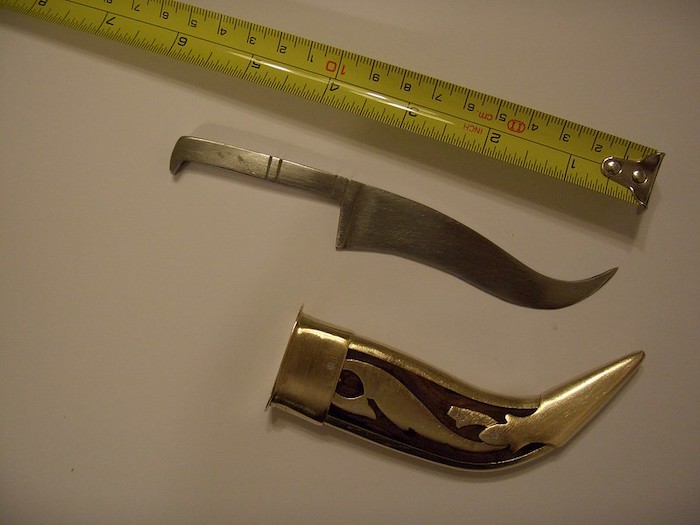
The consultation note said that a Kirpan is a short sword or knife with a curved blade, worn as one of the five distinguishing articles of Sikh faith, adding that baptised Sikhs must wear a Kirpan closely on their person at all times.

“Whilst a Kirpan is ceremonial in nature and not intended to be used as a weapon, it can have the potential to cause harm or injury as identified in a recent serious incident at a NSW high school,” it added.

It said the proposed approach involves the establishment of clear guidelines and parameters for a how a Kirpan can be worn in schools by students and school workforce. Below is the excerpt from the consultation paper.

These guidelines will stipulate the Kirpan: 

  • is of a small size, i.e. 8.5cm blade or less, and blade and handle combined to be 16.5cm or less;
  • has a blunt blade and is secured so that it cannot be used, i.e., secured by a chain (that is soldered closed at the links) that restricts the blade being removed, or sewn into sturdy fabric loop that is sewn to the Kirpan belt;  
  • must be concealed from view;
  • must be removed and safely stored, or secured against the body, when undertaking physical activity such as sport; and
    • Note that “secured against the body” means wrapped in sturdy fabric and secured within a sports band or leather belt that ensures it cannot slip out or cause injury to the wearer or another person.
  • the student must verify, in a reasonable way, that these guidelines are being complied with, when reasonably asked by the school. Any reasonable safety concerns will be discussed with the student and their parents or carers.

In its response, United Sikhs noted that a kirpan is not a ceremonial as it is worn at all times and not only for ceremonies. Therefore, it has requested to replace the word ‘ceremonial’ with ‘religious’.

“To refer to a Kirpan as a ‘knife’ is offensive. Please use ‘Kirpan’ as a proper noun (which we note and appreciate you have done so for the most part),” it added.

The note also said attaching a chain to a Kirpan would require the Kirpan to be physically modified, which it said would be inappropriate.

As part of the review process, the NSW education department said it will also consult with other relevant parties as deemed necessary throughout the course of the review.

RELATED STORY:

New South Wales bans kirpan in schools after alleged school stabbing incident (Asia Samachar, 18 May 2021)

What about Sikh students leaving kirpaan at home? (Asia Samachar, 24 June 2021)


ASIA SAMACHAR is an online newspaper for Sikhs / Punjabis in Southeast Asia and beyond. Facebook | WhatsApp +6017-335-1399 | Email: editor@asiasamachar.com | Twitter | Instagram | Obituary announcements, click here |
What about Sikh students leaving kirpaan at home?

0
Kirpan – Photo: Hari Singh / Flickr
By Hardev Singh Grewal | OPINION |


Some learned members of this forum* have felt that New South Wales, Australia ought to have struck a compromise before imposing a ban on baptized Sikh students as not to bring their kirpaans into schools. Nobody, however, has come forward as to how that compromise ought to look like.

By the way, here in California, US, some school districts had required, and the Sikh community complied, to that the kirpaan blade will stay secured in its sheath. This was to prohibit the kirpan-sporting person from ever using it as a weapon. This, in turn, has ended up depriving the kirpaan from fulfilling its designated function, i.e., to act as a weapon.

Kirpaan (also spelt as kirpan) is a weapon, has all along been intended to be a weapon, and when used it has worked as a weapon. Once converted it into a non-functional weapon, it simply turns into a ceremonial item, i.e., an ornament, for show (exteriority) only. It then has to be looked upon as a ‘Janeyu‘, though in a different form and shape.  We all know well what Guru Nanak thought of a Janeyu. Let us not wear things just to look good and feel good.

If a baptized Sikh is religiously mandated as not to part with the kirpan at any time, why he then so readily and without any hesitation, takes off his kirpaan before boarding an international flight. The ‘takhat jathedars’ themselves do it all the time. They unceremoniously store their kirpaans in their checked-in baggage, only to collect them after several hours at the arrival end. Everyday people leave their kirpaans in their vehicles to avoid refusal to entry into secured buildings.

SEE ALSO: NSW seeks feedback on wearing kirpan in schools

The only obvious solution for the baptized students seems to me that they should leave their kirpaans behind at home.

Let us not indoctrinate our children and load them with a weight for which they are too young and too immature to carry it forward. Let the children be children. I would go one step further that only adult Sikhs be bestowed with the honor and privilege to be baptized.

As we are already talking about Sikhism, forgive me if I now go little off the tangent.

We all have noticed that the current custodians of Sikhism have lately introduced several changes to the long-established religious protocols. An individual, unlike in the past, is no longer allowed to get a volume of our holy Granth. He is not supposed to take one such volume with him onto an aircraft to take it abroad. He can’t take it to his own home unless accompanied by five amritdhari Sikhs. If not baptized, one is not expected to sit behind the holy Granth to do ‘chaur’ at a religious function. One can’t celebrate a religious wedding at a place of his choice. The custodians have made it sacrilegious for anybody to pass out our holy material. They expect us to keep it firmly wrapped in several layers of expensive romalaas. They expect us to be able to read it, not necessarily comprehend it. For them hearing is as good as listening. They want us to keep the holy Granth cool or warm (depending upon the weather) by turning on the appropriate equipment.

They are introducing retrograde steps — no other way to look at them. They expect us to become Fundamental Sikhs — far removed from the Sikhi message.

Lastly, the Sikh religious leadership has been gradually adopting anything to everything, holy or unholy, to keep itself firmly in the saddle. We all know that it with the help of an overwhelming number of non-Sikh members of Indian parliament has gotten millions of non-traditional Sikhs — Sikhs none the less, barred from voting in the Shiromani Gurdwara Parbandhak Committee (SGPC) elections. To me, it is a gross violation of the Gurus’ message enshrined in Sri Guru Granth Sahib. For the last 300 plus years, the Sikhs have had one and only one guru — Guru Granth. Nowhere, it suggests that a Sikh is required to sport a certain outward appearance. It is to confuse religion with culture.

Sikhism is a beautiful, practical, scientific, and universal religion. Let us help take it to the farthest edges of the globe, and not dwindle it by imposing artificial un-Sikh barriers.


SOME SELECTED COMMENTS BY FORUM* MEMBERS: 

Forum Member 1: I read a factual and enlightening post on the Learning Zone after a long time. You have hit the nail on the head as follows: “Kirpaan is a weapon, has all along been intended to be a weapon, and when used it has worked as a weapon.  Once converted into a non-functional weapon, it simply turns into a ceremonial item, i.e., an ornament, for show (exteriority) only.  It then has to be looked upon as a ‘Janeyu’, though in a different form and shape. We all know well what Guru Nanak thought of a Janeyu.  Let us not wear things just to look good and feel good.” 

Grewal has very well justified that keeping the kirpan fixed in the sheath becomes a ritual forced by the Rahit Maryada but not based on any basic principle of SIKHI founded by Guru Nanak.

I have read a few posts from Grewal before, too, which were enlightening. This type of truth only a rare person like him can take courage to write.

Forum Member 2: Amrit is the highest degree of spiritual evolvement and should only be given to those whose life style is consistent with what is expected of Amritdhari Sikhs. It should not be given to anyone who asks for it. It should not be given to children. Women are not required to take it.

Kirpan at the time of Guru Gobind Singh was regular 3 feet long and not gatra kirpan. We changed it for convenience. Now in this age it is no longer an offensive or defense weapon.  It is purely symbolic. It can be reduced further.

Forum Member 3: Well said Sardar Hardev Singh Ji. We are drifting away (already have) from the real message of Guru Nanak Dev Ji and well trenched into rituals.

Forum Member 4: You have written a very well worded explanation and a solution about the situation. If I may add my two Bob’s worth. Amrit is taken by an individual when he resolves to carry out the promise of the requirements and conditions of the Amrit. No doubt that you are aware that we have many different Amrit’s. Anyway having taken on of the various Amrit’s it is the responsibility of that INDIVIDUAL to keep it. Kirpan is meant to be used for defence and protecting the defenceless persons and not for attacking. Thanks for your message and thoughts.

Forum Member 5: With reference of carrying a kirpan by baptized Sikhs, i.e., Khalsa, and its banning in NSW public schools. As per the history coming down to us Guru Gobind Singh invited volunteers for a test. Thus first five pyaras were baptized. They were asked to wear a prescribed dress code. I have no source of information when Guru Gobind Singh ordained all Sikhs, ie followers of Guru Granth Sahib, to compulsory get baptized and wear kirpan. All the first 5 pyaras were more than adults.

Kirpan may be article of faith for some but it is a weapon which can be used for defence and attack. If we defend it as only a part of faith and not a weapon for use, then we are speaking against the the very philosophy of kirpan ordained by Guru Gobind Singh.

If wearing of kirpan is only a religious symbol then it is typical Brahmanical ritual of no significance as per Gurbani. Kirpan is no more a weapon of warfare anywhere in the world. Now there are state laws and enforcement agencies to protect you. Every country has its own laws on carrying personal weapons.

* The article was first published at Gurmat Learning Zone (GLZ), an Internet-based Sikh discussion group following the temporary kirpan ban at schools in New South Wales, Australia. To subscribe to the group, email: learning-zone+subscribe@groups.io

Hardev Singh Grewal received a degree in electrical engineering in 1961 at Punjab Engineering College, Chandigarh and later a Master’s degree from the University of Manchester. He had worked in England and the US. In 1977, he served as the first general secretary of the newly gurdwara in Fremont, San Francisco Bay Area. He now lives in Dublin, California.

* This is the opinion of the writer, organisation or publication and does not necessarily represent the views of Asia Samachar.


ASIA SAMACHAR is an online newspaper for Sikhs / Punjabis in Southeast Asia and beyond. Facebook | WhatsApp +6017-335-1399 | Email: editor@asiasamachar.com | Twitter | Instagram | Obituary announcements, click here |

Harpuneet breaks into Pulp & Paper Canada’s annual Top 10 Under 40

Harpuneet Ghuman featured on the cover of Pulp & Paper Canada. Right: Profile photo at his LinkedIn page
By Asia Samachar | CANADA |

A young Sikh engineer is making good in the pulp and paper industry.

In eight years, Harpuneet (Perry) Ghuman has risen the ranks at Canada-based diversified wood products company West Fraser, earning four promotions.

As section lead for energy and carbon, the 33-year-old Ghuman manages the company’s energy and emissions strategy across all mills. He works directly with government, energy providers, consultants and experts to inform energy projects and policies at the company, reports Pulp & Paper Canada.

The industry magazine has named him in their Top 10 Under 40 listing for 2021. In a note in its Summer 2021 edition, it said that armed with a strong work ethic, initiative, curiosity, and a commitment to training and safety, the 2021 winners of its ​top 10 Under 40 program are setting the bar for young professionals across the industry in management, operations, maintenance, sales, support and research.

After earning his undergraduate degree in chemical engineering from Panjab University, Ghuman moved to Canada in 2011 to obtain his master’s degree in natural resources and environmental studies at the University of Northern British Columbia. He joined West Fraser’s Quesnel River pulp mill in 2013 as a lab technician before moving to a process engineer role in charge of compliance to ISO 9001, the magazine noted.

Before assuming his current role, Ghuman spent just over a year as industrial energy manager at the mill, during which time he earned his Professional Engineer credentials and directed multi-stakeholder projects including a process upgrade that saved 50 GWh/year, and a steam optimization project that could reduce CO2 emissions by 10,000 tonnes/year.

Sam Walker, energy management consultant at Stillwater Energy, says that one of the notable things about Ghuman is his humble attitude and appreciation of his peers.

“Perry is quick to remind people that the success of these projects is due to the teamwork of the technical, engineering and operations employees, and to the operators who identified and advocated for these opportunities from the start,” Walker was quoted in the magazine. “He’s an impressive emerging leader.”

RELATED STORY:

Sikh engineer shifting gears at China carmaker Geely (Asia Samachar, 11 Feb 2020)


ASIA SAMACHAR is an online newspaper for Sikhs / Punjabis in Southeast Asia and beyond. Facebook | WhatsApp +6017-335-1399 | Email: editor@asiasamachar.com | Twitter | Instagram | Obituary announcements, click here |

Sikh hate crime encounters show importance of data collection

Inderjit Singh Mukker, a Sikh American, assaulted in a hate crime in Chicago on Sept 8, 2015 – PHOTO THE SIKH COALITION
By Vignesh Ramachandran | PBS | United States |

Lakhwant Singh was working in his suburban Denver liquor store in April 2020 when a man walked in, assaulted him, damaged products, shouted profanity and yelled “go back to your country.”

Singh, who is Sikh and wears a turban, followed the man outside to take a photo of his license plate so he could report the incident. The man then rammed his car into Singh, injuring his arms, legs and head, and breaking his pelvis, which required surgery. According to law enforcement, the suspect, a white man, targeted Singh because he believed he was an “Arab.”

Almost three months after the attack and following pressure from the Sikh community and other civil rights advocates, the Jefferson County District Attorney’s office in Colorado brought several charges against the suspect, including those for a bias-motivated crime. The case remains pending while authorities determine the suspect’s mental competence.

Singh’s experience was another example of the gaps in the way hate crimes are recorded and reported — for several communities, but especially Sikhs, who are often misunderstood by the public and law enforcement because of their unique religious traditions, like covering their hair with turbans. They are among several groups for which hate crime data may be failing to reveal the scale of the problem. Several high-profile incidents against Sikhs have included discussion of hate crime as motivation. In April, a shooter killed eight people, including four Sikhs, in a mass shooting at a FedEx facility in Indianapolis; while the motive is still under investigation, Indianapolis police said the perpetrator visited white supremacist websites before the attack. Eight years earlier, another white supremacist killed six people at a Sikh temple in Oak Creek, Wisconsin. Just days after the Sept. 11 terrorist attacks, a gunman fatally shot a Sikh owner of an Arizona gas station. But many others fall through the cracks.

Crime data collection by the government and law enforcement is a fragmented, often voluntary and messy process, likely hiding the true scale of how bias-motivated crimes are affecting communities of color and faith, experts say. As hate crimes against East and Southeast Asians, in particular, have surged since the pandemic’s start, advocates have called on the government for more and better data collection. In 2019, the most recent year the FBI has released national statistics, local law enforcement agencies reported 7,314 hate crime incidents around the country. But more than half of hate crime victimizations generally go unreported to law enforcement, according to the Bureau of Justice Statistics. Groups outside government, like Stop AAPI Hate, have recorded much higher numbers — 6,600 reports of hate crimes against the Asian American community since March 2020, bringing a larger scale of violence and harassment to the attention of lawmakers, the media and the public.

The quality of data collected by the government could change under the COVID-19 Hate Crimes Act and Jabara-Heyer NO HATE Act that Congress passed on May 18 and President Joe Biden signed into law two days later. The new legislation acknowledges that “a complete understanding of the national problem posed by hate crimes is hindered by incomplete data from Federal, State, and local jurisdictions” through the FBI’s existing Uniform Crime Reporting (UCR) program. The legislation is intended to help modernize the federal hate crime reporting system and will provide grants to local law enforcement departments to help better train them to report hate crime data.

Kevin Grisham, who studies hate crimes at California State University, San Bernardino’s Center for the Study of Hate and Extremism, said there has been a consistent discrepancy between the FBI data and what Asian Americans actually experience. Grisham said sometimes incidents against Sikhs are misidentified by law enforcement who might record a crime as bias against another religion other than Sikhism. “That skews the data and really hurts policy decision makers,” Grisham said.

For years, the Sikh community, including the advocacy group the Sikh Coalition, pushed authorities to recognize anti-Sikh hate crimes, and the FBI agreed to start doing so in 2015. Since then, the department has tracked 142 anti-Sikh incidents as part of the annual UCR program, which aggregates numbers from law enforcement agencies across the country. There are an estimated 500,000 Sikhs living in America.

The FBI acknowledged in a statement to the PBS NewsHour that before it added an anti-Sikh category, these crimes were categorized under a more general “other” category within religious bias. “Disaggregating this data has allowed the FBI UCR Program to provide more specific religion bias data to the nation,” the FBI said. “The addition of the anti-Sikh category has led to more accurate statistics and understanding of the threat which lends itself to a more targeted and effective mitigative effort.”

Read the full article entitled ‘How the Sikh community’s experiences with hate crimes shows why data collection is so important’ (PBS, 21 June 2021), here.

Vignesh Ramachandran is a digital news editor for the PBS NewsHour. Ramachandran is also co-founder of Red, White and Brown Media, focused on building media representation and sharing South Asian American stories. Previously, he was at ProPublica, the Stanford Computational Journalism Lab, Mashable and NBC News Digital.
RELATED STORY:

‘Hardworking’ Sikh man recounts vicious hate-fueled New York hammer attack (Asia Samachar, 3 May 2021)


ASIA SAMACHAR is an online newspaper for Sikhs / Punjabis in Southeast Asia and beyond. Facebook | WhatsApp +6017-335-1399 | Email: editor@asiasamachar.com | Twitter | Instagram | Obituary announcements, click here |

Weber Shandwick veteran Nina Kaur promoted to executive vice president

Nina Kaur
By Asia Samachar | SINGAPORE |

Weber Shandwick has promoted Singapore-based industry veteran Nina Kaur to executive vice president for client experience.

Nina joined the global communications and marketing solutions firms in 2002. She was part of the recent senior promotions across Asia Pacific which is helmed by Tyler Kim.

RELATED STORY:

Dutch Lady names marketing dynamo Ramjeet Kaur Virik as MD for Malaysia (Asia Samachar, 16 June 2021)


ASIA SAMACHAR is an online newspaper for Sikhs / Punjabis in Southeast Asia and beyond. Facebook | WhatsApp +6017-335-1399 | Email: editor@asiasamachar.com | Twitter | Instagram | Obituary announcements, click here |

How did students fare in SPM Punjabi language? Here are the results

By Jaginder Singh Raipatti | MALAYSIA | 

In the recently announced 2020 SPM examination results, the Punjabi Language paper once again recorded an excellent performance.

A total of 40 students sat for the Punjabi Language paper in 2020, in which all but one passed recording a 97.5% pass rate. The number of students who obtained A+, A and A- was 26, which makes up 65% of the students.

The results of the Punjabi Language paper are better, both in terms of quality and quantity, compared to the results of other languages tested in the SPM examination.

In 2019, 56 students sat for the Punjabi Language paper. The pass rate was 100% with 75% of the students scoring A+, A or A-.

While the results for 2020 show a slight dip in comparison to 2019, we have to take into account the various difficulties and challenges posed by the Covid-19 pandemic. The 2020 batch of students had a rough and bumpy ride with schools closing and reopening depending on the movement control orders (MCOs) in effect, with exam dates being rescheduled, classes being held online and observing an endless list of SOPs, etc.

It was even more difficult for those who sat for the Punjabi Language paper. The Punjabi Education Centres (PECs) nationwide under the programme run by Khalsa Diwan Malaysia (KDM) were closed in compliance with the Government directives, and the weekly classroom lessons could not be conducted.

However, this did not stop the momentum nor kill the spirit within. The PEC Management Boards and the teachers, with the support from KDM and the parents, soldiered on by conducting online classes to prepare the students. A lot of effort, time and energy were put in, both by the teachers and students, to ensure the performance of students sitting for the Punjabi Language paper was not adversely affected. The results obtained for 2020 are testimony to the fact that the effort, time and energy put in were worth it.

KDM would like to congratulate the high achievers and all the students who sat for the Punjabi Language paper. It was pure joy teaching and learning Punjabi with you. Keep up the good work and keep promoting the Punjabi Language.

KDM would also like to thank the teachers and the PEC Management Boards, parents and the Sikh community for all the support, commitment and dedication for the noble role played in preserving and uplifting the use of Punjabi Language.

We hope that the community will continue supporting us in developing and promoting the use of Punjabi Language in Malaysia. We would also like to thank MITRA (Unit Transformasi Masyarakat India Malaysia) for the support extended, and hope that we can continue working together with them to further promote the use of the Punjabi Language.

To put it in a nutshell, a big THANK YOU to everyone involved in developing and promoting the Punjabi Language. All our effort has paid off. We aim to do better next time with your support.

Jaginder Singh Raipatti is the secretary of the Punjabi Education Board, the education wing of the Khalsa Diwan Malaysia (KDM)


RELATED STORY:

Subang drive thru for Panjabi language registration (Asia Samachar, 28 Jan 2021)


ASIA SAMACHAR is an online newspaper for Sikhs / Punjabis in Southeast Asia and beyond. Facebook | WhatsApp +6017-335-1399 | Email: editor@asiasamachar.com | Twitter | Instagram | Obituary announcements, click here |

Tokyo 2020: Hockey India names Rani Rampal, Manpreet Singh to lead India

Manpreet Singh (left) and Rani Rampal
By Prabhjot Singh | Sports | India |

Hockey India has at last made formal announcements about captains and vice-captains of Indian men and women teams named to represent the country in the ensuing Tokyo 2020 Olympic games.

Midfielder Manpreet Singh has been named captain of the Olympic-bound men’s team while Rani Rampal has been chosen for leadership role of the women’s team.

The vice captain’s role of the men’s team will be shared by experienced defenders Birendra Lakra and Harmanpreet Singh. In case of the women’s team, goalkeeper Savita and deep defender Deep Grace Ekka will share the responsibility of the vice-captain.

Intriguingly, the Hockey India did not name the captains and vice captains at the time of the announcement of the two teams. Though choice of both Manpreet and Rani Rampal was on the expected lines, naming of two deputies each of men and women teams has come as a surprirse. Never before any Indian team, bound for Olympics, had two Vice-Captains.

The only exception had been 1968 when the then Indian Hockey Federation (IHF) named deep defenders Prithipal Singh and Gurbux Singh Kohli as joint captains of the Mexico-bound Indian men’s team.

Under Manpreet’s captaincy, the Indian team over the past four years has achieved important milestones including winning the Asia Cup in 2017, winning the Asian Champions Trophy in 2018 as well winning the FIH Series Final in 2019. The team also made it to the quarterfinals of the FIH Men’s World Cup 2018 in Bhubaneswar.

It also performed exceedingly well in the FIH Hockey Pro League 2020 before the pandemic disrupted its schedule. This will be Manpreet’s third Olympic games and under his leadership, the team has also improved their world ranking to number 4.

Birendra is a veteran defender who was also part of the London Olympic Games but missed playing in Rio owing to a major knee surgery in 2016. But since his return to the squad following the brief break, Birendra has shown considerable improvement in his performance.

Meanwhile, Harmanpreet Singh, who has since his debut in seniors team in 2015 is now a top drag-flicker and defender. In the absence of skipper Manpreet in 2019, he led the team to a win at the FIH Olympic Test event in Tokyo.

Congratulating the three players, Chief Coach Graham Reid said, “All of them have been an integral part of the team’s leadership over these past couple of years and have shown a lot of maturity in guiding the youngsters during these challenging times.

Naming two vice captains we believe will also strengthen our leadership in what is going to be a demanding tournament. We are confident that together they will guide the team to success

Expressing his gratitude on being named captain of the Olympic-bound Indian men’s team, Manpreet said, “This Olympics will be truly special, and I am humbled to have this opportunity of representing India at the Olympics for the third time, this time as team Captain. It is a very proud moment for me to be given this charge. Over these past few years, we have developed a strong leadership group and have successfully overcome the challenges posed by the pandemic to keep our form and minds and fitness focussed towards doing well at the Olympics.”

Hockey India men’s team for Tokyo 2020

Birendra said that this Olympics is special for him and being named the Vice-Captain of the team has only made this all the more special. “This will be a very special Olympic Games as we have prepared really well and are poised to win a medal in Tokyo. Being named as a vice captain along with Harmanpreet Singh is a matter of pride for me and over these past years with India we have seen players show great mental toughness during our preparations despite these trying times. We just hope to make the hard work and sacrifices count by winning big,” stated Lakra.

Harmanpreet on the other hand thanked Hockey India and the Coaching staff for the opportunity. He said, “When I came into the team as an absolute newcomer in 2015, there were a lot of seniors who guided me and I hope to play the same role now. We have a good, well-prepared team and everyone is excited to make this opportunity count.”

Indian men will begin their campaign in Tokyo on July 24 when they take on New Zealand in their first Pool match.

For the women’s team, Rani was the obvious choice not just for her on-field exploits but also for her innate ability to guide the youngsters in the team.

Under her captaincy, the Indian team over the past four years has achieved significant results including winning the Asia Cup in 2017, winning silver at the Asian Games 2018, silver at Asian Champions Trophy 2018 as well winning the FIH Series Final in 2019. The team also made it to the quarterfinals of the FIH Women’s World Cup 2018 in London for the first time. She was the cynosure of India’s performance during the FIH Olympic Qualifiers in Bhubaneswar where her goal put the team ahead (6-5) against USA to secure the qualification.

Hockey India also announced dependable defender Deep Grace Ekka and experienced goalkeeper Savita as the two vice captains of the women’s team. Both the players have been in the Indian Core Group for nearly a decade and have been an integral part of the leadership group. They also played a key role in India’s feats that saw it attain the best ranking of World No.9 in 2018 following a strong performance at the FIH Women’s World Cup.

Congratulating all three players named for their leadership roles, Indian women’s Chief Coach Sjoerd Marijne said, “I congratulate Rani on being named the Captain of the Indian Women’s Hockey Team for the Olympic Games Tokyo 2020. I also congratulate Deep Grace Ekka and Savita on being named vice captains of the team. All these three players have been part of the leadership group for a long time and have proven their abilities with this added responsibility and have guided many youngsters in the Core Group. Having two Vice Captains will also strengthen the core leadership group for the future.

Their experience and role will be of importance as we aim to achieve good results in Tokyo. It has been a long journey for the team and we continue into a tough challenge at the Olympics. The team needs to be mentally strong and I am confident with these three players at the helm, they are headed in the right direction.”

Expressing her gratitude on being named Captain, Rani said, “It is a huge honour to lead the Indian Team at the Olympic games. In these years my role as a captain was made easy with teammates who have shared the responsibilities as senior players. I look forward to this added responsibility and thank Hockey India, coaching staff and selectors for this honour.”

Vice Captain Deep Grace Ekka too stated that this new responsibility will motivate her to ensure the team does well in Tokyo. “To lead India as vice captain at the Olympics is a huge honour and it will surely motivate me further to do well for the team. We have players from different regions of India in the team, but we have come closer as a unit over these past 15 months during the pandemic which has been challenging for all.” stated Grace who will be playing her second Olympic games.

Savita also expressed her gratefulness as she said, “I thank the team’s support staff and Hockey India for giving me this responsibility. We are all eagerly awaiting to do well at the Olympics in Tokyo, and it will be great to lead India to good wins.”

RELATED STORY:

India hockey captain wedding making headlines in Malaysia (Asia Samachar, 21 Dec 2020)


ASIA SAMACHAR is an online newspaper for Sikhs / Punjabis in Southeast Asia and beyond. Facebook | WhatsApp +6017-335-1399 | Email: editor@asiasamachar.com | Twitter | Instagram | Obituary announcements, click here |