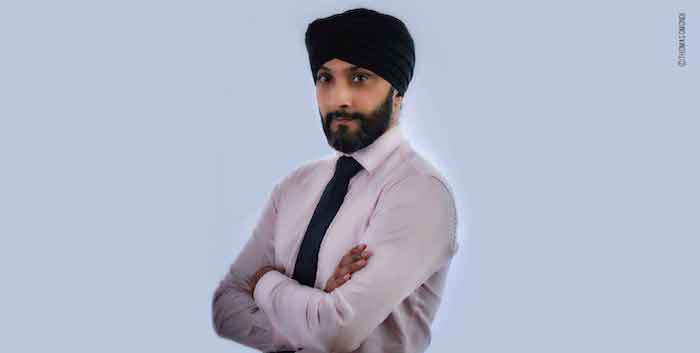
Master Pritam Singh at ground breaking of SNSM’s Khalsa Land
By Karminder Singh | Tribute | Malaysia |
If indeed the test of a truly great man lay in his simplicity and humility, Master Pritam Singh passed with flying colours. He once reminded me that humility was not about thinking less of oneself – it was about thinking of oneself less. He was a good man, simple and humble to the core just as much as he was awakened and enlightened in Sikhi and Gurmat. It is the nature of things that goodness, simplicity and humility are deeply susceptible to mis-interpretation and Master Pritam Singh did not enjoy immunity in this regard. Yet, those who knew him intimately could not have known him for being anything but his true self.
What appealed to me most about him was the way in which he blended humour with his down to earth nature and his big heart. Our friendship of 40 years could not have lasted without his classic sense of such a mix. The setting of one display of such a mix was the langgar hall of a local gurdwara. As I placed my empty plate on the long bench and sat next to him he told me “Karminder Singh, one look at you, it appears that there is a famine in the world.” My retort was one that only his big heart could embrace. I said “and one look at you Master Ji, it appears that you are the cause of that famine.” He roared out a laughter that brought the roof down. Everyone turned to look. There was silence for 2 seconds. Embarrassment was what I felt, but he had none of that. He turned to me and said: “You just added two months to my life.” I told him and “You just took away two from mine.”
Our professional interaction began with our work in the Sikh Naujawan Sabha Malaysia (SNSM). He was elected Jathedar and he appointed me the secretary. He did not get my consent for the appointment. I went up to him asking to remove me with the justification that I was not even an ordinary member of the Sabha. How could a non-member become the secretary? I asked him. He asked how I was able to function as the Editor of the The Sikh magazine for some years prior to my appointment as secretary. I told him Jathedar Jai Singh (late) appointed me and he never asked if I was a member of the Sabha. And Pritam Singh replied in his classic self: “I am not asking either.”
We sat down for tea in the langgar hall after the elections and he told me he had dreams for the Sabha, ideas that must be implemented and projects that must be carried out. He needed someone with an outside-in approach and my non-membership was therefore an asset. He said too much was lacking and too many things were broken. There had to be more than just organizing mini and major gurmat samelans (Sikh camps) and feeling good about them afterwards.
Sabha did not have an office then. We owned a house in Selayang, but it was used as the residence for the Sabha’s two full time parcharaks and their families. All of Sabha’s files were kept in Seremban, which was the home of the former secretary. Sabha’s inventory was stored in a room in Klang gurdwara. Sabha’s Punjabi typewriter was kept in someone’s house in Ampang. The vans were parked in a local gurdwara. The Sabha Shop operated from one of the vans. One wondered how an organization could function in such a dysfunctional disarray.
Master Pritam Singh wanted a proper office – fully equipped with a computer, printer, a photostat machine, a binder etc. He wanted that office to house a library. He wanted the Sabha to employ a full time administrative assistant. He wanted The Sikh to be printed in full colour and sent out regularly as four issues per year. He wanted a permanent Sabha shop where our youth could come and purchase material related to Sikhi. He achieved most of it within the first few months. Five hundred books on Sikhi arrived from India. A computer complete with a dot matrix printer was purchased. He managed to convince a local businessman to donate a brand new photostat machine. Recording equipment for recording ragis and parcharaks was obtained. A multi copier cassette machine worked non-stop to churn out hundreds of cassettes that were sold at cost price in the Sabha Shop. The Sikh magazine achieved its four issues per year and maintained its record for the entire duration of Master Pritam Singh’s term as Jathedar.
Master Pritam (left) and Giani Niranjan Singh from Patiala who was made SNSM patron in 1989. Photo: Asia Samachar
Impressive progress indeed for a simple, humble and behind-the scenes kind of a school teacher. He then started thinking of buying a property within Petaling Jaya or Bangsar, Kuala Lumpur, for use as Sabha office. It became a reality in the form of the Bangsar Sabha House during his second term.
Master Pritam Singh had a desire to re-set the direction and goals of the Sabha. He was not happy that the Sabha was an insular, inward looking, samelan preoccupied organization. He told me we were cheating the Sikh youth of Malaysia out of an opportunity that was owed to them by people of our generation. He felt the cheating lay in the fact that everyone believed the Sabha was indeed taking care of major Sikh youth issues – when in fact it was only helping with the tip of the iceberg issues. He wanted to make the Sabha an effective organization where the youth turned to as the first resort for not just their issues and challenges, but also to contribute towards fellow youth. He wanted the Sabha to venture into education, community cohesion, career development for youth, and even the provision of scholarships.
Getting the Sabha on track and in line with his vision proved to be deeply challenging. He told me privately that he feared that the structural and logistical successes that were achieved would prove futile if the direction of Sabha remained stuck in the old mode. The Exco came across as deeply divided into cliques and groups with competing loyalties. Some members operated like independent warlords – even collecting money under the name of the Sabha for their own pet projects. Weekly meetings saw lots of bickering, arguments and petty squabbling that sometimes descended into a total breakdown of the agenda.
This is where I realized that the goodness, simplicity and humility of a human being is deeply susceptible to mis-interpretation – purposively or otherwise. Master Pritam Singh’s simplicity was taken by some as the trait of a simpleton. His humility was seen by some as a weakness in leadership. And his goodness of heart abused at least by those for whom these mis-interpretations served their cliquish agendas.
Master Pritam Singh at a SNSM Punjabi Bhasa Mela event – Photo: Harnarinder Singh
Master Pritam Singh at ground breaking of SNSM’s Khalsa Land
Master Pritam Singh at one of the SNSM Hola Mahalla event – Photo: Harnarinder Singh
Master Pritam (left) and Giani Niranjan Singh from Patiala who was made SNSM patron in 1989. Photo: Asia Samachar
Master Pritam Singh at SNSM headquarters in 2016 – Photo: Asia Samachar
He was very much aware of it all. He told me once in his typical metaphoric style: “I attend these weekly meetings riding a motorcycle all the way from Batang Berjuntai, Selangor. People need to see the man, not the motorcycle.” He added that the Sabha employees – Bhai Sarjit Singh (late) and Hardev Kaur saw the man that was Pritam Singh but much of the Exco did not. Given that all his proposals pertaining to the direction and goals of the Sabha were presented by me – in writing and orally, it was inevitable that some of the politicking that was aimed at Master Pritam Singh spilled over to me.
By the end of his second term, we realized – or at least I realized – that the Jathedar’s desire to re-set the direction and goals of the Sabha was not going to be achieved. Most in the Sabha Exco were comfortable with the status quo. After one particularly ugly, chaotic and disturbing Exco meeting, he invited Sarjit Singh, Hardev Kaur and myself to a movie treat in the theatre. He laughed heartily at every piece of comedy, asking me why I wasn’t laughing. It was difficult to fathom the kind of big hearted, generous and jovial man he was. I told him after the movie that I would want to be excused from his third and final term in the Sabha. He told me his motorcycle would continue to ply the roads between Batang Berjuntai and Kuala Lumpur for another year.
Our latest and final interactions were during the meetings of the Dharm Parchar Committee of the Malaysian Gurdwaras Council (MGC). His understanding of Sikhi, Gurbani and Gurmat was astounding, and he contributed a great deal towards the workings of the committee.
I will forever remember him fondly as a man with saintly qualities and a humanitarian disposition. May his loved ones be blessed with strength and courage to bear their pain. Goodbye Master ji, you will be dearly missed.
AKHAND PATH:Commencing 4pm, 22 April 2021 (Thursday) to 24 April 2021 (Saturday) at Gurdwara Sahib Tatt Khalsa Diwan, Kuala Lumpur. PATH DA BHOG:3.30pm-4pm, 24 April 2021 (Saturday) followed by Kirtan Darbar form 4pm-6pm. For the link for live stream of the Paath da Bhog and Kirtan Darbar, click here.
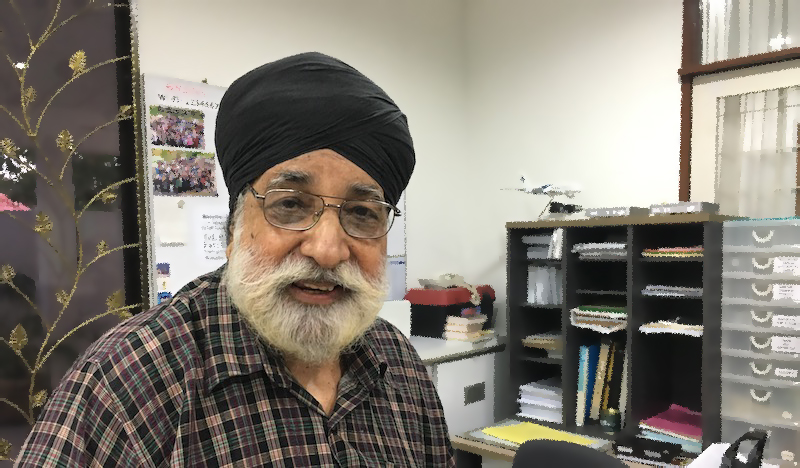
Sikh thinker, writer and parcharak Karminder Singh Dhillon, PhD (Boston), is a retired Malaysian civil servant. He is the joint-editor of The Sikh Bulletin and author of The Hijacking of Sikhi. He can be contacted at dhillon99@gmail.com.
* This is the opinion of the writer, organisation or publication and does not necessarily represent the views of Asia Samachar.
ASIA SAMACHAR is an online newspaper for Sikhs / Punjabis in Southeast Asia and beyond.Facebook | WhatsApp +6017-335-1399 | Email: editor@asiasamachar.com | Twitter | Instagram | Obituary announcements, click here |
In November 1664 Guru Tegh Bahadur travelled to Amritsar to pay obeisance at Hari Mandir Sahib but ‘when he tried to enter the temple, its doors were closed upon him by the custodian of the temple [Harji]’ highlighting the continuation of familial hiatus. [22]
The Guru reached Kiratpur in May 1665, and in June 1665 the Guru bought some land from Raja of Bilaspur near Makhowal village and founded a new town named after his mother as Chak-Nanki. Later this town was renamed as Anandpur. Baba Gurditta son of Baba Buddha, had laid its foundation.
After a brief stay, in August 1665, Guru Tegh Bahadur, accompanied by his family and some Sikhs, set out for a missionary tour of sangats towards the East. The response was overwhelming, causing concern to Mughals. Upon reaching Dhamdhan in Banger area in December 1665, a Mughal enforcement officer Alam Khan arrested the Guru and some of his associates and produced them before Emperor Aurangzeb, who ordered to hand them over to Kanwar Ram Singh, son of Raja Jai Singh. Released after about two months, he resumed his mission and reached Patna via Agra, Allahabad, Benaras and Sasaram in May 1666. They halted at Patna as arrangements for the stay of the Guru’s family were made. Guru Tegh Bahadur proceeded to Dacca in October 1666. Mata Gujri was the expecting and a son was born on 22 Dec. 1666.
At Dacca the Guru established a Hazuri Sangat with the help of Bhai Almast. Gurdwara Sangat Tola now marks the place where Guru Sahib used to deliver his sermons. It was here that the Guru heard of birth of his son. From Dacca, Guru proceeded to Chittagong via Jatia Hills, Sylhet and Agartala and returned to Dacca in 1668.
Raja Ram Singh, deputed by Aurangzeb, was then in Dacca for his expedition to Assam. He met the Guru and requested him to accompany on the expedition. Guru agreed and the Guru’s presence is credited to have made possible the historic avoidance of a bloody conformation between the ruler of Kamrup and Raja Ram Singh.
An alternate account is that Aurangzeb deputed Raja Ram Singh, under house-arrest for negligence since escape of Shivaji, to the tough task to recapture Gauhati seized by Raja of Kamrup. Ram Singh knowing that Guru Tegh Bahadur had gone to Patna, halted there and learnt from Masand Bhai Dyal Das, that the Guru was at Dacca and planned to go to Dhubri and Assam to revive the Sikh centers established by Guru Nanak. Ram Singh set off to Dacca, met the Guru who acceded to his request to accompany him. A negotiated settlement took place and Guru Tegh Bahadur was asked to mark the new boundry line between the two forces. Mughals and Assamese agreed to co-exist without interfering in each other’s territory. [23]
The Guru returned to Patna to learn that under orders of Aurangzeb, things had turned ugly for Hindus and some Gurudwaras too had been demolished. He decided to return to Anandpur immediately. As had happened on his way out, the Guru along with some prominent Sikhs, was arrested also on the return journey at Agra in June 1670 – released by an imperial court at Delhi after a short detention.
Guru Tegh Bahadur was the first Guru to visit Sikh sangats in Eastern India set up 150 years earlier at the instance of Guru Nanak. These sangats saw increase in the days of succeeding Gurus who placed them under Masands to collect offerings and minister to the spiritual needs of devotees. In the time of the sixth Guru, Sikh sangats were firmly established at several places including Agra, Bina, Burhanpur, Mongher, Prayag, Ujjain, Gujrat, Lucknow, Patna, Daaca and Raj Mahal. [24]
The Guru returned to Anandpur around 1671. He had spent about 5 ½ years, and as it turned out, 50 % of his total ministry in the missionary to the East. Besides this, he had earlier, prior to becoming Guru, spent some time in that area. The Guru also blessed Mihan Shahi Bakshish. Guru Gobind Singh later blessed Jitmaliyas and Bakhatmalia groups. The Udasis thus became active participants in the effort launched by the later Gurus to spread the message of Guru Nanak and to the propagation of Sikh faith. [25]
Around 1672, the Guru set out on missionary to Malwa region of Punjab that lasted about 1 ½ years. The mission assisted in planting trees, digging community wells and cattle heads being distributed to encourage dairy farming. Several Muslim followers of Sakhi Sarvar adopted Sikhi. These developments did not sit well with fundamentalist Muslims and the ruling elite.
Concurrently Brahmins at major pilgrimage centers and Kashmir had been told to turn Muslims or face death. At this juncture, a group of Kashmiri Pandits led by Kirpa Ram came and met Guru Tegh Bahadur at Anandpur in May 1675 to seek his protection. The Guru, ‘after long discussions with prominent Sikhs and Kashmiri Pandits’ made up his mind to sacrifice himself for the cause of “Righteousness” and for the freedom of “Dharma.”
The script played out fully. The Guru’s offer was conveyed to Aurangzeb who was said to be pleased to accept it. The Guru with his three companions – Sati Das, Mati Das and Dayal Das – set out from Anandpur. All of them were arrested and brought to Delhi. In time, the authorities offered three alternatives to the Guru viz : (1) show miracles, or (2) embrace Islam, or (3) face death. The Guru accepted the last and did not budge from his resolve even after his three companions were tortured to death. He was publicly put to death by severing the head from his body in Delhi’s Chandni Chowk on November 11, 1675 [26]. Gurdwara Sis Ganj marks the place where the execution took place.
The divine miracle followed in the form of a storm when a devotee Lakhi Shah Lubana, retrieved the Guru’s dead body and cremated it by burning down his house and young Jaita, who separately took the severed head of Guru Tegh Bahadur to Anandpur, was honored by the young Guru Gobind Rai as “Rangretta Guru Ka Beta” and the head was cremated with full honor and proper ceremonies the next day. [27]
TESTIMONY OF GURU GOBIND SINGH & SOME OTHER VIEWS
The event of martyrdom of Guru Tegh Bahadur has been briefly but succinctly recorded by Guru Gobind Singh. His testimony is recorded in Dasam Granth Canto 5, Verses 13-16 in the following words [28]:
“God manifested a great event in the Iron age to protect their [ਤਾ ਕਾ] forehead mark [tilak] and sacred thread [janeou]. For the sake of believers[ਸਾਧਨ], he [Tegh Bahadur] laid down his head without even uttering a sound. 13.
He sacrificed himself for the sake of Dharma by giving his head but did not waiver at all from his creed. The saints of the Lord have abhorrence for performance of miracles and other malpractices. 14.
Breaking the potsherd of his body head of the king of Delhi [Aurangzeb], he left for the abode of the Lord. None could perform such a feat as that of Tegh Bahadur.15
The whole world bemoaned the departure of Tegh Bahadur. While the world lamented, his arrival was hailed by the gods in the heavens.16.
The above verses were written within years of the martyrdom of Guru Tegh Bahadur and clearly say that the Guru gave his head to protect their [ਤਾ ਕਾ] forehead mark [tilak] and sacred thread [janeou]. Fenech [29], in his book, says that “– as we examine this passage closely, we find no reason to maintain that the Guru died according to the contemporary Tat khalsa understanding. The Tat Khalsa arrived at this interpretation through a simple syllogism. According to this view, the Guru sacrificed his life for the Hindu community because the items mentioned in the passage above and in all the earlier literature, the sacred thread, janeou, and frontal mark, tilak, were not recognized as religious emblems by the Sikhs but by the Hindus. This notion is emphasized in English translation of the passage by including the pronoun ‘their’ before the terms to imply that these symbols had no part in the Guru’s community. To assume that the sacred thread and the frontal mark were not a part of the Sikh religious culture in which the author of the Bachiter Natak was raised is an understanding clearly rooted in later Tat Khalsa thinking.”
Fenech is in error to say that the pronoun ‘their’ is addition by English translators – if he had tried to translate the verse himself he would have found that the English translation is pretty faithful representation of the original verses written by Guru Gobind Singh and that the Guru meant what he wrote. By using the words ਤਾ ਕਾ, the Guru explicitly implied that the martyrdom was for ‘them’. Fenech is not pushing his view and says that ‘the attempt above is simply to dispel the Tat Khalsa notion that the community for which the Guru died was a different one from his own’ [pp.153-54]. It perhaps is so but he gives an impression that, in a roundabout manner, he is trying to diminish the ideals of Guru Tegh Bahadur as testified in Dasam Granth. That would be misreading of text.
Most readers would likely be familiar with the controversy about the depiction of Guru Tegh Bahadur negatively by NCERT [30] in books for the Class XI School students. This has since been corrected and one does not hear of it any more but future attempts to contest the reasons for shahidi of Guru Tegh Bahadur by detractors cannot be ruled out.
In fact the above apprehension played out in 2019 when Lord Indarjit Singh, decided to snap his decades long association with the BBC because an overzealous producer made an attempt to censor a script referring to Guru Tegh Bahadur’s martyrdom due to fear of Islamophobia! [31]
Let us also look at how history gets made if Sikhs engage with the society at large – an example came from Brandon, Manitoba, Canada where the Sikh community of the City met with the Mayor Rich Chrest about the 400th anniversary of the birth of Guru Tegh Bahadur and shared with him the story of martyrdom of the Guru with the objective to enable Hindus to practice their faith without fear of being put to death.
The Mayor issued a proclamation saying ‘Guru Tegh Bahadur sacrificed his life for the Human Rights and dignity of humankind —- The City of Brandon honors Sikh history and culture, Guru Tegh Bahadur’s place in South Asian history, and the City’s valued relationship with the Sikh Community’ and proclaimed April 1, 2021 to be “Guru Tegh Bahadur Day” in the City of Brandon.
HUKAMNAMAS HELP CONNECT SOME DOTS
Hukamnamas were started by Guru Hargobind on his ascension as Guru to facilitate the implementation of changes in the Panth as per the direction of Guru Arjun before his martyrdom. The mode of written communication must have helped the Gurus in staying connected with the vast spread of increasing number of Sikh sangats in distant places, pass instructions and help resolve any issues.
Guru Tegh Bahadur seems to have continued to use this mode during his ministry. His hukamnamas provide additional insights on some of the lesser known details that did not get to be recorded by other sources. We wanted to explore that area and have found some recently published studies helpful. In the following paragraphs we share the gist of relevant findings from two such sources.
Guru Tegh Bahadur’s hukamnamas cover almost the entire period of his ministry. We gather from a 2002 study [32] that even though his hukamnamas do not bear dates, the contents suggest that the Guru started to send these out at the start of his ministry. The scribe of Guru Tegh Bahadur seems to have written a hukamnama sent out earlier at the instruction of Guru Har Krishan. This indicates continuity of office support in spite of the delay in transition and disruptions.
An emerging finding is that while the hukamnama at the time of Guru Harkrishan was addressed to Bhai Ani Rai, Bhai Jasu, Bhai Ranga, Bhai Hazuri and Bhai Nehchal – then all Masands and prominent Sikhs. But these names do not figure ‘in the hukamnamas of Guru Tegh Bahadur.’ Out of his early hukamnamas, six are written on instructions of the Guru to Bhai Batha, as the Masand of Pattan Sangat. Bhai Batha, who was transmitting collections to the previous Guru, ‘was elevated as Masand of Pattan sangat’. The study infers that it is indicative of the Guru’s assertive response to a crisis of deep dissent that took long time to subside. [33]
The Guru reorganized management of Sangats in the eastern region by a well-defined structural hierarchy working under his authority; thus creating a network of relations between the different Sangats, so far working in isolated independence. Eastern region had two Subas – Suba of Benaras and Suba of Patna. Both the Subas were placed under Bhai Dyal Das, the chief Masand of the eastern region. The Sangats of Patna city and Monghyr were under Patna Suba. Bhai Dayal Das was Masand of Patna Sangat and in charge of Patna Suba too. Sangats of Benaras city and Mirzapur were under Benaras Suba with Bhai Javehari Mai in charge of Benaras Suba.
In one hukamnama, the Sangat of Benaras was instructed to entrust their offerings to Bhai Javehari. It was Bhai Javehari’s duty to send offerings to Bhai Dayal Das who then transferred these to the Guru. Thus a networked system of checks and controls was brought into being which could facilitate coordination.
The system set in place expected a Sikh to contribute a part of his earning – known as kar or karbar – to the Sangat. Sikhs also paid money for getting some ceremonies like engagement performed; made donations on fulfillment of desire or wish – mannat – and offered gifts and presents for the Guru – bhet. There are hukamnamas in which the Guru had asked Bhai Dyal Das to send such receipts.
An unconnected paper by Hardip Syan [34] investigating a different historical perspective on Sikh experience of that period offers evidence of other factors that may explain some of the developments that Sagar reflects upon in his study.
Khatris from Punjab had affinity with Guru Nanak and successor Gurus, all of whom were Khatris. They noted the growth of commerce along the Gangetic and north-west trade routes and started moving to those parts during 1500-1700. They maintained ties with the Guru.
Migration of Khatri Sikhs resulted in the formation of significant Sikh sangats in Delhi, Mirzapur, Lucknow, Allahabad, Benaras and Patna by the early seventeenth century. It is also said that the sangats were predominantly managed by Khatris.
In Guru Hargobind’s letter in early 17th century, he reminded Sikhs of the east [purb di sangat] that sewa is directly beneficial for rozgar in this life because Guru’s blessing is for now – not afterlife. Later in seventeenth century when Guru Tegh Bahadur sent letters to Sikhs in Patna and Benaras to help fund langar to support so many Sikhs who travelled with him on all his missionaries and construction at the new township at Makhowal, he continued to stress the relationship between sewa and rozgar, and introduced the catchy phrase ‘sewa ki bela!’. [35]
Syan says ‘Melding of religion and materialism was a unique feature of Sikhism in this period. In order to obtain divine protection a Sikh had to abide by the Guru’s teachings’ including simran, kirtan and sewa. The Sikh who did this would gain rozgar in this life and peace hereafter. He also says that possibly the Khatris donated gold at the call of the Guru in late 17th and early 18th centuries.
Khatri merchant network developed almost parallel to Sikh sangats and the Gurus used it to support their fund needs and get direct transmission of fund offerings by the use of hundies by individuals and sangats especially after the Masands were discontinued.
Syan says that it appears from Hukumnamas of early 18th century, that the ability of the Guru to raise a sizable war chest to fund Khalsa army is likely to have been a factor that influenced establishing Khalsa insurgency against Mughals in Punjab.
With the above factors added, the study by Sagar seems right to infer that the ‘Sangats of eastern region not only served the Panth under Guru Tegh Bahadur but also became backbone of the Panth which is evident from the hukamnamas of Guru Gobind Singh.’
Sangats in East held on in support of the Guru, but started to peel off and wither away after the Guru’s passing possibly due to the lack of the Guru person that had been the focal point of their contact and support from the early days.
[23] Ranbir Singh, ibid, pp. 81-83. Accounts by other sources are on similar lines and describe the high respect that Guru Nanak’s message enjoyed with all segments of people, reinforcement and renewal of existing Sangats and establishing of new Sangats in some places. It was a very successful mission.
[24] See Gopal Singh, ibid, text and note* p. 248.
[25] See Sikh Encyclopedia entry Udasi, Mahan Kosh, pp. 9-10 and SGPC Website
[26] Fenech has identified some similarities in martyrdom of Gurus Arjun and Tegh Bahadur. See Louis Fenech, Martyrdom in the Sikh Tradition, Oxford, New Delhi, 2002pp. 84-5. There are more similarities, not taken up in this search.
[27] Unless otherwise indicated, the lead parts of the narrative in this section draws upon the account given at the web site of the SGPC.
[33] The difficulties Guru Tegh Bahadur faced were that while some Masands were not loyal to the Guru, many Sikhs were confused by the propaganda. Early hukamnamas suggest that reorganization was done with the help of loyal Sikhs. In the case of Bhai Batha, the Guru asked Sikhs to obey his injunctions and termed him as his son to buttress his authority.
In a hukamnama Sikhs are also blessed to be his sons. Unlike earlier hukamnamas written to Sangats in Punjab, hukamnamas written to Patna and Benaras Sangats are not only addressed to a Masand and a few prominent Sikhs but are addressed to a large number of local Sikhs. Two hukamnamas addressed to Patna Sangat contain names of more than sixty Sikhs. Hukamnamas, written in Guru’s own hand, emphasize Guru’s blessings on ‘means of livelihood’ – a change from the earlier hukamnamas to Sangats in Punjab.
The Guru asked for twenty Bihar turbans possibly for the purpose of honoring Masands and prominent Sikhs. Hukamnamas to the sangats of eastern region show that the Guru sought advice of the Sangat on a number of occasions.
Sagar thinks that the Guru’s use, in his hukamnamas, of verses from his Bani, written in relatively simple language and with familiar examples, would have helped in more effective communication with people in those parts of the country. The situation obviously needed the Guru to use all his persuasive and decision making skills.
[35] The actual word used is ‘vela’[masculine] – popular in braj as ‘bela’[feminine]. Both have been used in SGGS but none by M IX. In East the message would have been received as ‘bela’- sewa kee – is ‘feminine.’ Bela has connotation of auspicious day, auspicious chance, blessed moment, blessed time one would be sacrifice to – ਓਹ ਬੇਲਾ ਕਉ ਹਉ ਬਲਿ ਜਾਉ —ਭਲੇ ਦਿਨਸ ਭਲੇ ਸੰਜੋਗ –ਸਫਲ ਮੂਰਤੁ ਸਫਲ ਓਹ ਘਰੀ – Gauri M V, p. 191. The word is popular in Braj and has been used by Guru Arjun in a shabad that could inspire altruistic spirit of giving – savor the text ਕਰਉ ਬੇਨੰਤੀ ਸੁਣਹੁ ਮੇਰੇ ਮੀਤਾ ਸੰਤ ਟਹਲ ਕੀ ਬੇਲਾ – Gauri Poorbi M V, p. 13.
(To be continued)
[Nirmal Singh has written six books on Sikhs and Sikhi and several of his articles have been published in journals like Sikh Review, Journal of Sikh Studies and Comparative Religion and Abstracts of Sikh Sudies (IOSS) as well as in the US mainstream news media. Resident in Orlando, he spends considerable time in Delhi. The article will also appear in The Sikh Review‘s Special 4th Centenary of Birth of Guru Tegh Bahadur issue due 1 May 2021]
ASIA SAMACHAR is an online newspaper for Sikhs / Punjabis in Southeast Asia and beyond.Facebook | WhatsApp +6017-335-1399 | Email: editor@asiasamachar.com | Twitter | Instagram | Obituary announcements, click here |
PATH DA BHOG: 1 May 2021 (Saturday), 9.00am-11.30am, at Wadda Gurdwara Sahib Kampung Pandan, Kuala Lumpur | Malaysia
INDERJIT KAUR D/O AMRIK SINGH
9.5.1990 – 22.4.2021
Our beloved Sonu, there’s no words to say how much we missing you already. You will remain in our heart forever. Still can’t believe that you are gone. It was so painful to let you go but we know your soul is at better place now. We love you so much. Rest in peace beautiful angel.
Path da Bhog: 1 May 2021 (Saturday), 9.00am-11.30am, at Wadda Gurdwara Sahib Kampung Pandan, Kuala Lumpur
Contact:
016-2768026 (Karenjit)
016-2753296 (Bhavandeep)
| Entry: 23 April 2021 | Source: Family |
ASIA SAMACHAR is an online newspaper for Sikhs / Punjabis in Southeast Asia and beyond.Facebook | WhatsApp +6017-335-1399 | Email: editor@asiasamachar.com | Twitter | Instagram | Obituary announcements, click here |
Jaswinder Kaur holds back tears at the Sikh Satsang of Indianapolis on Saturday, April 17, 2021, off of Southeastern Avenue. Members of the Sikh community came together to mourn the loss of the eight people killed in a shooting Thursday evening at the FedEx Ground Plainfield Operations Center. Four of the victims belonged to the local Sikh community. “Life is all the same. Kids are all the same. Each child needs a mom. Every child needs a mom, right?” said Kaur. “Every man needs a wife. Every wife needs a husband. Everyone wants a full family. A full, happy family.” – Photo: Grace Hollars/IndyStar
By Natalia E. Conreras | Indianapolis Star |
There’s a popular saying in the Indianapolis Sikh community: “If at least one member of a new Sikh family that moves to Indianapolis hasn’t worked at FedEx, then they haven’t really moved to Indianapolis yet.”
Generations of Sikh Hoosiers have worked at the FedEx Ground Plainfield Operations Center.
“FedEx was a gathering place for them, almost like a community center,” Gaganpal Sing Dhaliwal, who is a seasonal worker for FedEx told IndyStar. “It was much more than just a job for them.”
They carpooled to work. They worked side-by-side with their friends and family. For Sikh immigrants new to Indiana, the type of assembly-line jobs at FedEx didn’t require top-notch English language proficiency.
Sikh Hoosiers were also often promoted as managers and supervisors at the facility, too.
The lively and joyful atmosphere Sikhs Hoosiers created at FedEx was unheard of at other warehouses, Dhaliwal said.
“Our white colleagues and Black colleagues would even ask us, ‘Where do you guys get all this energy from?'” he said.
Komal Chohan covers her face as she cries at the Sikh Satsang of Indianapolis on Saturday, April 17, 2021, on Southeastern Avenue. Members of the Sikh community came together to mourn the loss of the eight people killed in a shooting Thursday evening at the FedEx Ground Plainfield Operations Center. Four of the victims belonged to the local Sikh community. Chohan lost a family member in the shooting. – Photo: Grace Hollars/IndyStar
That joy was shattered last week when a gunman shot 13 people, including five with non-life threatening injuries, at their beloved workplace on the southwest side of Indianapolis.
The victims who died were identified as Amarjeet Kaur Johal, 66; Karli Smith, 19; Matthew R Alexander, 32; Samaria Blackwell, 19; Jasvinder Kaur, 50; Jaswinder Singh, 68; Amarjit Sekhon, 48 and John Weisert, 74.
There are an estimated 5,000 Sikhs in Central Indiana and 10,000 in the state.
It’s unclear exactly how many Sikh Hoosiers work at the FedEx operations center. In a prepared statement emailed to IndyStar on Monday, FedEx said the company does not collect information about employees’ religious affiliations and other demographic data was not immediately available.
“FedEx Ground is extremely proud of our inclusive and diverse workforce at the station in Indianapolis,” a FedEx spokesperson said in the statement. “We stand in solidarity with all of our team members during this difficult time, including those of the Sikh community.”
On the night of the shooting, many Sikh Hoosiers were finishing a work shift, having dinner during their break, or coming in to pick up their paycheck.
Tragic event of the shooting of innocent people including 4 Sikhs at Indianapolis
The Malaysian Gurdwaras Council (MGC) and the Khalsa Diwan Malaysia (KDM) abhors the senseless killing of 8 people including 4 Sikhs and the wounding of 5 others by a former employee of Fed-Ex who went on a shooting spree in the warehouse and then shot himself. The MGC and the KDM sends its deepest condolences to the families of all those killed and injured in the horrific attack. The 4 Sikhs killed were Amarjit Kaur 48, Jasvinder Kaur 50, Amanjeet Kaur 66 and Jaswinder Singh 68 years.
We note that the President of the United States Joe Biden has condemned this shooting of innocent people and has ordered the flags to fly at half mass. The American Government should come down hard on such human-haters, but also on organizations and institutes that preach hatred and violence. There must also be a stricter control on the access and purchase of guns.
Once again, we express our deepest sympathy and condolences to the families of the innocent victims of the senseless shooting. May Waheguru give the bereaved families strength to bear the loss of their loved ones.
(The joint statement, dated 21 April 2021, has been confirmed by the sender).
ASIA SAMACHAR is an online newspaper for Sikhs / Punjabis in Southeast Asia and beyond.Facebook | WhatsApp +6017-335-1399 | Email: editor@asiasamachar.com | Twitter | Instagram | Obituary announcements, click here |
Historic frescos brutally smashed in reconstruction of Akal Takht – Photo: Source unknown
By Gurnam Singh | OPINION |
Who is really responsible for destroying our Sikh heritage?
We all know that in June 1984 the imperial forces of the Indian State led by [Indian Prime Minister] Indira Gandhi occupied the Sikh homeland of Punjab and laid siege of the Darbar Sahib in Amritsar. What followed was four days of death and destruction resulting in serious damage to the complex. The Akaal Takht was damaged beyond repair.
Subsequently, in order to hide their crime, the Indian State hired a group of Nihangs to rebuild the Takht. However, in January 1986, some Panthic groups during a Sarbat Khalsa gathering at Darbar Sahib, led by Damdami Taksaal, passed a resolution to dismantle the ‘sarkari’ ‘reconstructed Akaal Takht’ structure and replace it with a structure to be built by the Khalsa Panth.
Whilst I totally support the principle behind this move, I recently came across some disturbing images (see above) of the totally insensitive way in which the new building was erected, where some of the historic frescos that remained were brutally smashed. And so, in one sense, in seeking rebuild the Akaal Takht and undo the damage done by the Indian State, these Panthic groups ended up erasing what was left of its history.
Just a quick reminder. Originally referred to as Akaal Bungha, the Akaal Takht was founded by the sixth Sikh Guru, Guru Hargobind. As well as serving as a focal point for the emerging Sikh Panth, in defiance of the Mogul imperialists, it was as a symbol of political sovereignty. Along with Baba Buddha and Bhai Gurdas, the sixth Sikh Guru originally constructed a 9-foot-high concrete slab known as a ‘Thara’ on June 1606. But tragically, as far as I know there is no trace of the original structure, but certainly the original frescos are no more.
I sometimes wonder, given the amount of ‘self-destruction we have done to our history and heritage, whether it is fair to blame everything on the imperialists, whether they were the Moguls, Afghans, British and now Indians. You make your own mind up!
[Gurnam Singh is an academic activist dedicated to human rights, liberty, equality, social and environmental justice. He is an Associate Professor of Sociology at University of Warwick, UK. He can be contacted at Gurnam.singh.1@warwick.ac.uk]
* This is the opinion of the writer and does not necessarily represent the views of Asia Samachar.
ASIA SAMACHAR is an online newspaper for Sikhs / Punjabis in Southeast Asia and beyond.Facebook | WhatsApp +6017-335-1399 | Email: editor@asiasamachar.com | Twitter | Instagram | Obituary announcements, click here |
A lot more is happening at the protest site besides the struggle against the Farm Laws. People have converted their trolleys on roadsides into temporary homes. They can be seen doing all the household chores in that space. This new city has its own rhythm of everyday life.
Our team of photographers is capturing all this on cameras and making it available on the social media platforms without any claim to copyright. We are supporting this movement from the inside rather than from the outside. If some people are fighting with a flag in their hands, we are fighting here with cameras in our hands.
The sole motive of the residents of this new city is to make the stubborn and shameless Brahmanical government accept our demands. The struggle for a common cause has brought all sections of the society together and minimized conflicts between the landed peasantry and landless Labourers. These united protests help people understand that our fight is towards those who want to divide us and take advantage.
The farm Labourers do not have the means like the farmers to join the protest for a long period of time and in great numbers. But many farm Labourers have travelled to the protest site in the vehicles of other small farmers. They are living and sleeping in the same space. They are making use of each other’s blankets and quilts.
Ravidas ji’s Begampura has emerged here, a space where no differences exist. No one is poor, no one is rich. No one is small and no one is big. No one is upper caste, and no is lower caste. No one asks who is providing, who is cooking, and who is eating. These differences are absent in this protest.
(Source: Trolley Times, 21 April 2021. The newsletter is brought out by like minded people – writers, artists, and activists – in support of the Kisan Morcha)
ASIA SAMACHAR is an online newspaper for Sikhs / Punjabis in Southeast Asia and beyond.Facebook | WhatsApp +6017-335-1399 | Email: editor@asiasamachar.com | Twitter | Instagram | Obituary announcements, click here |
AKHAND PATH:Commencing 4pm, 22 April 2021 (Thursday) to 24 April 2021 (Saturday) at Gurdwara Sahib Tatt Khalsa Diwan, Kuala Lumpur. PATH DA BHOG:3.30pm-4pm, 24 April 2021 (Saturday) followed by Kirtan Darbar form 4pm-6pm | Malaysia
ASIA SAMACHAR is an online newspaper for Sikhs / Punjabis in Southeast Asia and beyond.Facebook | WhatsApp +6017-335-1399 | Email: editor@asiasamachar.com | Twitter | Instagram | Obituary announcements, click here |
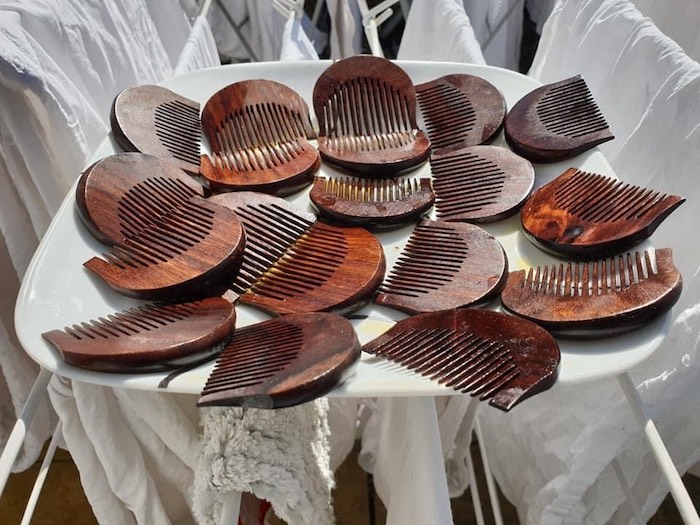
Let your kangas [wooden comb] soak in mustard oil for about a week. Once they become totally saturated with the oil, then put them in the sun to bake for a good few days. They will never split again or splinter. This hardens them. – Amarjeet Singh in Facebook posting
ASIA SAMACHAR is an online newspaper for Sikhs / Punjabis in Southeast Asia and beyond.Facebook | WhatsApp +6017-335-1399 | Email: editor@asiasamachar.com | Twitter | Instagram | Obituary announcements, click here |
Being authentic, sharing freely who you are, whom you love and who you can be at work can be extremely challenging for colleagues who are LGBTIQ+. Fear of rejection, isolation, harassment, discrimination, the list goes on.
Gurchaten (Nanoo), who started his UN career with the International Labour Organization (ILO) in 2006 as an intern, recalls the struggle with sharing his identity. Gurchaten identifies himself as queer and uses he/him/his and they/them/this as pronouns. He was told that coming out and claiming he is queer may jeopardize his chances of getting a contract. Feeling isolated and misunderstood, Gurchaten had internalized homophobia and indulged in performative masculinity to fit in – priding himself when he would pass off as a straight man.
The struggle from within
Normalizing one’s internalized homophobia can have severe impacts on relationships. What makes things complex is that, culturally, the concept of masculinity is celebrated in Punjabi-Sikh men and any aberration to that is stigmatized and considered outside the norm. Even the idea of seeking help is a no-no. However, the turning point in Gurchaten’s life came when he got professional counselling and could unlearn hate and homophobia and seek change. He mustered up the courage to finally see a psychologist.
Things began to be clear from then onwards
Coming out in in a large organization such as the UN is not easy. Is it safe to come out? How do we express our multilayered identities when culturally we prescribe to hetronormative narratives? We must talk about “coming in or letting in.” By letting in, we are inviting a person into our space and sharing our sexual orientation, gender identity, and/or sex characteristic. In this way, it is not about seeking validation or approval, it is about acceptance.
The trophy
16 years later Gurchaten is now the President of UN-GLOBE and has been recognised as an
Outstanding LGBT Role Model for three consecutive years. For Gurchaten leading UN-GLOBE has been a cathartic experience. He not only learnt more about LGBTIQ+ rights but he has also shaped his own unique journey.
It was in 1997 that UN-GLOBE came about. This was in response to the need for better information and knowledge exchange about issues within the UN on LGBTIQ+ people. Their goal is simple – championing inclusion, equity and non-discrimination of LGBTIQ+ people. UN-GLOBE is at the forefront, advocating for inclusive and equitable employment
conditions; diverse, safe and enabling working environments and cultures. “Nothing about us, without us” is their credo.
UN-GLOBE’s efforts have not just changed policies, but has brought about a culture change. UN-GLOBE works to dispel such prejudices. Like any other organization, the UN too has its challenges. UN-GLOBE’s work is to create an accepting and safe environment. But, there is still a long way to go. UN-GLOBE engages with senior management, international and national staff the directors and the clerical and service staff. It works with personnel on all levels. This is a winning strategy to make the UN truly a more empathetic, diverse and dynamic multilateral institution.
The original Read the full story, ‘From the shadows to championing diversity and inclusion across the UN’ (UNtoday, 8 April 2021), first appeared here.
ASIA SAMACHAR is an online newspaper for Sikhs / Punjabis in Southeast Asia and beyond.Facebook | WhatsApp +6017-335-1399 | Email: editor@asiasamachar.com | Twitter | Instagram | Obituary announcements, click here |
























 Sikh thinker, writer and parcharak Karminder Singh Dhillon, PhD (Boston), is a retired Malaysian civil servant. He is the joint-editor of The Sikh Bulletin and author of The Hijacking of Sikhi. He can be contacted at dhillon99@gmail.com.