


















By Jeevan Singh Tamil | Opinion |
The New Education Policy 2020 (NEP 2020) cannot simply be viewed as an ordinary educational change and passed over. This educational policy represents an attempt to reintroduce, in a modern form, the ancient Sanskrit and Vedic philosophies that promoted the social hierarchy and divisions already deeply rooted in this land.
Unfortunately, sufficient discussion regarding this has not yet taken place among students.
The education systems of fascist regimes and NEP 2020
In Nazi Germany, Hitler’s policy of “Aryan racial purity” and, in Mussolini’s Italy, the fascist policy of “Roman pride” imposed their national identities through education.
Similarly, the NEP 2020 education system attempts to design an educational framework centred on the concepts of “Indian ethics” and “national pride”.
Because Hitler’s and Mussolini’s educational policies depended solely on political power, when their regimes came to an end, those educational systems also became obsolete.
However, the new National Education Policy introduced in India is not merely a political policy; it is tied to a religious and spiritual “sacredness”.
Consequently, any concept linked to sacredness tends to merge with blind faith over time. Systems built upon belief become very difficult to oppose. Due to the political fear that, regardless of which government comes to power, this “sacredness” should not be compromised, many governments may hesitate to oppose such policies and instead prioritise vote-bank politics.
There is also growing concern that, if such policies become deeply embedded in people’s minds generation after generation, independent thinking and a critical mindset will be severely affected.
A clash between two historical traditions
In contemporary India, the ideological struggle manifests itself as a conflict between two contradictory historical traditions:
Humanist tradition: Emphasises equality, rationality and human dignity. This tradition was pioneered by figures such as the Buddha and Guru Nanak Ji.
Brahmanical tradition: Emphasises a Vedic-based hierarchical social structure. Furthermore, it is a tradition that contradicts humanism and equality. The new education policy indirectly strengthens this second tradition.
Freedom to question: The Swedish education system and NEP 2020 – An analysis
The experience of discussing Sweden’s education system with an Indian woman living in Sweden during a flight from Delhi deeply inspired me to reflect.
In the Swedish education system:
* There can be multiple answers to questions.
* Students are encouraged to ask, “How did this answer come about?”
* Every student is given the opportunity to express views based on their own unique thinking.
However, because “sacredness” is emphasised in the new education policy, there is a fear that indirect obstacles will be created to students’ critical thinking and inquisitive nature.
Many students currently protesting in Delhi still do not fully understand the magnitude of this danger. Therefore, an in-depth discussion about the overall education system is essential.
National-level Brahmanical political parties are also hesitant to fully reveal the fundamental objectives of this new education policy.
Cutting the branches or uprooting the root?
The students protesting right now are addressing only the external manifestations of the problem without approaching its root.
Just as cutting the branches of a tree only makes its roots stronger, fighting individual problems without changing the fundamental social structure is insufficient. This is my deep conviction.
Varnashrama caste-based education
The new education policy indirectly encourages Varnashrama-based caste education.
As a result, there is a fear that SC, ST and OBC students might not progress towards higher education and intellectual growth but instead be pushed back into traditional caste-based occupations.
The three-language policy
Sanskrit is not a mother tongue spoken in any state in India, nor is it commonly used in conversation. Given this, the three-language approach of the new education policy gives greater importance to Sanskrit than to education centred on the mother tongue, thereby indirectly posing a challenge to the cultural identities of languages such as Tamil, Marathi, Bengali and Punjabi.
The purpose of student protests
If the long-term consequences of the new education policy are not clearly explained to the students protesting in Delhi, there is a risk that the current protests will serve the interests of the ruling political forces and fail to benefit the general public.
NEET exam: Who is this Delhi protest for?
When the slogan “Jai Bhim” on one side and “Bharat Mata Ki Jai” on the other resonate within the same protest, it becomes necessary to question its political objective.
Just as the Anna Hazare movement, which was formed 10 years ago under the slogan “Let’s eradicate corruption”, was later used by various political forces to favour Brahmanism, we must be careful that today’s student movements are not similarly diverted.
The true face of the NEET exam
Many students from upper-caste and economically well-off families prepare at NEET coaching centres in cities such as Delhi, spending several lakhs of rupees. Some do not even give importance to the school curriculum or care about school attendance and can be seen attending NEET coaching centres exclusively.
On the other hand, SC, ST and OBC students in rural areas do not have access to the same level of training and economic resources. Therefore, equal opportunities can be created only by abolishing the NEET exam.
Even for students who secure top marks in school, entering medical education without specialised NEET training is difficult. Socially and educationally disadvantaged students are particularly affected.
The responsibility and duty to convey this perspective to students lie firmly with us, especially Kanshiramists, Periyarists and Sikh educators and activists who believe solely in equality.
Simply criticising Education Minister Dharmendra Pradhan or securing his resignation will not bring about any fundamental change.
Comprehensive changes are needed at the very foundation of the new National Education Policy. Instead, focusing only on individual issues such as government “accountability” might become a diversionary approach.
This is the time for students to think deeply about these questions: Who is this protest for? What is it for? Who are its true beneficiaries?
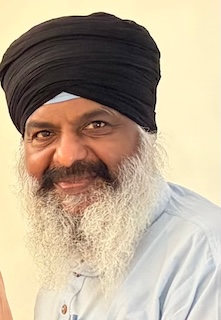
(Jeevan Singh Tamil, formerly Jeevan Kumar Malla, is the national president of the Bahujan Dravida Party and an advocate at the Supreme Court of India. Born into a Dalit family in Tamil Nadu, he experienced the segregation and discrimination inflicted upon marginalised sections of society. The human rights activist gradually embraced the Sikh way of life after he began reading the Guru Granth Sahib.)
* This is the opinion of the writer and does not necessarily represent the views of Asia Samachar.
RELATED STORY:
We are all cockroaches now: Gen Z resistance and Sikh solidarity (Asia Samachar, 26 July 2026)
ASIA SAMACHAR is an online newspaper for Sikhs / Punjabis in Southeast Asia and beyond. You can leave your comments at our website, Facebook, Twitter, and Instagram. We will delete comments we deem offensive or potentially libelous. You can reach us via WhatsApp +6017-335-1399 or email: asia.samachar@gmail.com. For obituary announcements, click here