A post comes up on social media – be it Whatsapp or Instagram or whatever. Immediately, someone launches an attack. At that very instant, the person runs down the other, rubbishes his or her arguments.
We have all seen it happening. In some groups, you can actually anticipate who will first launch the counter attack, and what he is going to say. People can be that predictable. Some of us get so upset that we quit discussion groups or networks.
What about you? How do you respond online? What kind of an animal are you when you’re behind the online wheels – perhaps miles away physically from the other person, seemingly safe behind the ‘protection’ of the screen? Are your actions always correct?
An author and researcher on the topic suggests that one key question to ask: Do you yearn to defend your own belief or do you yearn to see the world as clearly as you possibly can? An honest answer will help us to better understand ourselves as to how we deal with others.
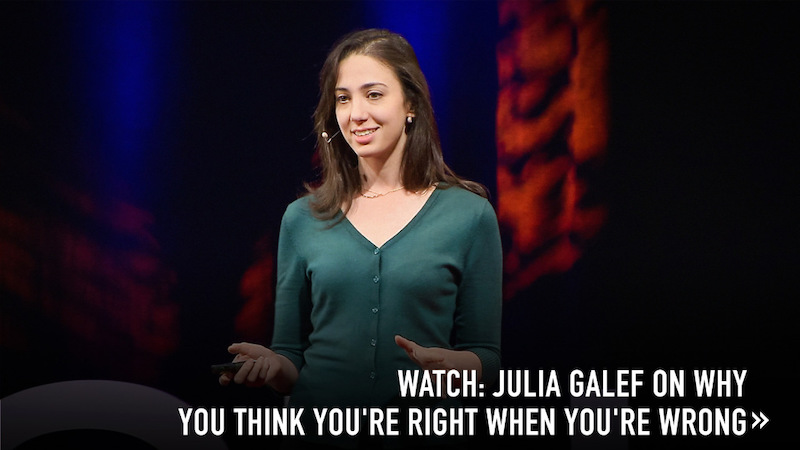
I came across a TedTalk by Julia Galef where she discusses two very different mindsets, or motivated reasoning, that impact the way in which we use information and take a decision. Motivated reasoning is simply trying to make some ideas win and others lose; the drive to attack or defend ideas. It is a phenomenon where our unconscious motivations, and desires and fears shape, the way we interpret information. Some ideas come across as allies, other as enemies and we want to shoot them down. She terms motivated reasoning as ‘soldier mindset’.
Galef is president and co-founder of the California-based non-profit Center for Applied Rationality and author of ‘The Scout Mindset: See Things Clearly and Make Smarter Decisions’. She makes a persuasive argument in the video talk done in 2016. See here.
Galef picks an example from sports. I know, many of us are ardent fans of Liverpool or Manchester United or one of the British soccer clubs. When a referee makes a bad call against your team, you’re motivated to examine how he got it wrong. But if he judges that the other team committed a foul, then you’re less likely to examine the incident closely.
“Our judgment is strongly influenced, unconsciously, by which side we want to win. This is ubiquitous. It shapes how we think about our health, our relationships, how we decide how to vote, what we consider to be fair and ethical. What’s most scary about motivated reasoning or soldier mindset is that how unconscious it is. We think we’re being objective, fair minded, yet still wind up ruining a life of an innocent man,” she said.
Well, well, well. How many times have I made a decision, and convince myself that I was objective and rational. I’m sure the same goes for you. So, the question to ponder: Are we able to rise above our ingrained prejudices and unconscious biases to examine an issue for what it’s worth? It takes effort, and a strong desire to unravel truth, as unnerving as it may be.
In her presentation, Galef asks if we have the mindset of the scout: curious and open. Are you happy to allow your mind to entertain the itch to discover something beyond our existing prejudices?
Many of us sorely lack it. This is evident if we reflect on the way we conduct ourselves in discussions – in person or on the social platforms.
It comes down to how well we are grounded, she argues. It’s not how right or wrong we are on any particular topic. “Scouts are grounded. Their self-worth as a person to how right or wrong they are to any particular topic,” she underlines a point. How many times have we argued simply because we felt that our dignity or self-worth was being trampled upon.
At the end of the day, she argues that it is not about how smart you are, but how you feel.
“…if we really want to improve our judgment as individuals and as societies, what we need most is not more instruction in logic, rhetoric, probability or economics, even though those things are all valuable. What we most need to use those principles well is scout mindset,” she says.
“We need to change the way we feel. We need to learn how to feel proud instead of ashamed when we notice we might have been wrong about something. We need to learn how to feel intrigued instead of defensive when we encounter some information that contradicts our beliefs.”
Now, this is sorely lacking in many of us. Seldom do we bother to gather information from multiple sources and size them up. Usually, we live within our bubble, and feed from it. Rarely do we even recognise our inherent biases and tribal thinking. Hence, we are not prepared to accept ideas alien to our existing thinking pattern.
So, it is high time we start thinking about how we think.
Hb Singh is a Kuala Lumpur-based journalist with some experience in dealing with Sikh organisations, both from within and outside.
* This is the opinion of the writer, organisation or publication and does not necessarily represent the views of Asia Samachar.
ASIA SAMACHAR is an online newspaper for Sikhs / Punjabis in Southeast Asia and beyond.Facebook | WhatsApp +6017-335-1399 | Email: editor@asiasamachar.com | Twitter | Instagram | Obituary announcements, click here |
Calls by Sikh women seeking help from abusive relationships have more than doubled over lockdown, a charity said.
The Sikh Women’s Action Network (SWAN), based in the West Midlands, said domestic abuse was often “brushed under the carpet” by the wider community.
Campaigners said more needed to be done to help Sikh survivors of domestic abuse.
Calls during lockdown were up by 244%, with almost 60 families helped over the past year, SWAN said.
The organisation was formed in 2014 by a group of Sikh women who felt many issues including domestic violence, child sexual exploitation and alcohol abuse were being ignored in the community.
It cites forced marriage as a particular problem, with women often becoming totally isolated and losing their friends and family when they move to live with their husband.
In the first three quarters of 2019, the charity had helped 24 families around the UK, but, during the same period in 2020, it had helped 58 families.
Among those seeking help has been Simran (not her real name), who came to the UK from India when she was 24 after an arranged married to someone 10 years older.
The mother-of-two had no immediate family in this country. She suffered five years of abuse at the hands of her husband who beat and raped her after drinking excessively.
“I didn’t know about support services but thought that the only place I could get help was the police.
“Every time I told them, they’d let him go and he’d come back home, and his beatings and anger would get worse.”
Unable able to speak English, controlled and isolated, Simran said she had no way to escape.
Co-founder and executive director Narinder Kaur Kooner said: “Cases have risen so sharply because during the lockdown, many of the perpetrators have used victims as their human stress ball to take their anger out on them.”
See the full report, ‘Calls to Sikh domestic abuse group more than double in pandemic’ (BBC, 13 March 2021), here.
ASIA SAMACHAR is an online newspaper for Sikhs / Punjabis in Southeast Asia and beyond.Facebook | WhatsApp +6017-335-1399 | Email: editor@asiasamachar.com | Twitter | Instagram | Obituary announcements, click here |
By Karminder Singh | Sikhi Concepts | Part 10 of 12 |
The first thing Gurbani does is to REMOVE the myths of Jum and Chitargupt in the afterlife.
The Second thing Gurbani does is to ELIMINATE the fear that has been instilled by the purveyors or transmitters of this myth.
Both are then REDEFINED to fit the canvas of Guru Nanak – a canvas that focuses on the Here and Now.
The claim is that Jum are the soldiers of death that accompany Dharm Raj when he comes to take the soul of the departed. Chitargupt is supposed to be the accountant-cum-prosecutor in the court of judgment in the afterlife. He is said to sit on the shoulders of every human being and his task is to keep an eye on all that we do so that he could report that in the afterlife.
Har Jio Ki Hai Sabh Sirkara, Eh Jun Kya Krey Vichara. Ham Banda Hukm Kmaveiy, Hukmey Kadhada Saha Hay
It is the Omnipresent Creator that is in total and complete authority on matters of Creation. What can these pitiful Jum do? Human beings are subject to the Hukm of the Creator and we live in accordance with His Hukm; death and things concerning death are in accordance with His Hukm
What canthese pitiful Jum do? is a rhetorical question which is “what can these Jum Doot do? And the answer is plain. Nothing. These Jum Doot – meaning the Jum Doot of the existing beliefs, the Jum of the after life – have zero role in my life.
Within such a spiritual narrative that is Gurbani – there is no place for the concocted narratives of Jum Doot as soldiers of death and Chitr Gupt as account keepers of the dead.
VERSE 2: Guru Nanak (SGGS, 1029)
ਜਮਕੇਫਾਹੇਤੋੜੇਗੁਰਮੁਖਿਤਤੁਬੀਚਾਰਾਹੇ॥
Jum Kay Fahey Satgur Torray, Gurmukh Tatt Bichara Hay
The meaning of the verse is: The Creator-Connecting Guru Liberates Me From Entanglement with The Notion of Jum in the afterlife, This is the Authentic Discourse.
Why get entangled in something that is concocted? Something that doesn’t exist?
My Creator –connecting Guru has eliminated my anxiety and this has brought calm into my spiritual world; By enlightening me that Life is under the absolute command of the Creator Himself and that the notion of Jum as soldiers of death can be eliminated from my life.
The Creator –connecting Guru has brought about realization of the Creator whin. I thus have spiritual blissthe automatic elimination of the notion of Jum Doot .
The literal meaning of ਮੁਏਬਿਖੁਖਾਇ is that Jum Doot committed suicide by poison. Its an idiomatic expression to say that this narrative of Jum Doot as soldiers of death dissipates by itself when enlightenment of the Creator connecting shabd comes. That the notion of Jum Doot as soldiers of death in the afterlife ceases to exist, disappears and vanishes when enlightenment of the Shabd comes.
So what we see thus far from the verses as above are the following three things.
One, the notion of Jum Doot as contained within the 4000 year old Canvas is critiqued in the light of Gurbani enlightenment. As Guru Amardas ji says ਏਹੁਜਮੁਕਿਆਕਰੇਵਿਚਾਰਾ meaning what canthese pitiful Jum do now that I am enlightened? Or As Guru Nanak says ਜਮਕੇਫਾਹੇਤੋੜੇ the enlightenment of Gurbani liberates me from the entanglement with the notion of Jum in my afterlife. Or as Guru Arjun Ji says ਜਮਦੂਤਮੁਏਬਿਖੁਖਾਇ. Meaning: The notion of Jum doot as soldiers of death in the afterlife ceases to exist, disappears and vanishes when enlightenment of the Shabd is shone on this concocted notion.
Two, Gurbani critiques Jum Doot in the afterlife in a way so as to dispel that narrative from our spirituality. To enlighten us that the narrative is so ridiculous that it needs to be removed completely from our psyche.
Three, it is critiqued in a manner so as to eliminate the fear that is associated with accepting and believing this concocted and ludicrous narrative of Jum Doot. Sikhi is not a spirituality based on fear. It is based on enlightenment.
Four, JUM DOOT is nothing more than the expression of physical death that comes within the Hukm of the Creator. The nothing of Jum Doot has No separate identity of its own whatsoever.
So JUM in Gurbani is ALIGNED as an expression of physical death.
Guru Amardas jis makes this absolutely clear in his verse on page 588 of the SGGS.
VERSE 5: Guru Amardas (SGGS, 588)
ਸਲੋਕਮਃ 3 ॥ਕਲਿਮਹਿਜਮੁਜੰਦਾਰੁਹੈਹੁਕਮੇਕਾਰਕਮਾਇ॥
Kal Meh Jum Jundaar Hai, Hukmey Kaar Kmaye.
Within the span of our life time Jum is Certain Death which comes in the Hukm of the Creator.
So Jum is simply physical death within the confines of His Hukm, within the parameters of the law of life.
ਗੁਰਿਰਾਖੇਸੇਉਬਰੇਮਨਮੁਖਾਦੇਇਸਜਾਇ॥
Gur Rakhey Say Ubhrey Mankukha Dey Sjaye
Manmukhs consider death a punishment, a suffering, a thing of fear but the messages of the Guru elevate us above that.
ਜਮਕਾਲੈਵਸਿਜਗੁਬਾਂਧਿਆਤਿਸਦਾਫਰੂਨਕੋਇ॥
Jum Kaleiy Vas Jug Bandhiya Tis da Fry Na Koye
Meaning: Death is for all living things, no one is above it.
When something is for all, when something is certain, when no one can escape it – then fear is futile.
So, in the basic sense then, what Gurbani has effectively done is to demolish the notion of Jum Doot as contained within the 4000 old Canvas.
Gurbani then goes on to REDEFINE the notion of Jum.
We know that Gurbani has REDEFINED death as Spiritual Death. A large portion of Gurbani is aimed at helping us avoid spiritual death, the death of our conscience.
Since Spiritual Death is what Gurbani is concerned with, then the JUM of Gurbani are Human Vices as the bearers of this death. As the causes of this death.
This verse of Guru Arjun ji on page 626 of the SGGS makes clear the redefining.
VERSE 6: Guru Arjun (SGGS, 626)
ਰਾਮਨਾਮਿਮਨੁਲਾਗਾ॥ਜਮੁਲਜਾਇਕਰਿਭਾਗਾ॥ 1 ॥
Ram Nam Man Laga. Jum Ljaye Kar Bhaga.
My Mind has acquired Divine Virtues, My Vices Have Left Me.
Har Har Nam Jini Arahiya, Tin Kay Dukh Paap Nivarey. Satgur Gyan Kharrug Hath Dina, Jum Kankar Mar Bidarey.
Through the acquisition of Divine Virtues, I eliminated the Pain of Vices. The Guru handed me a sword of Enlightenment with which I eliminated the Jum.
So JUM are redefined as our Vices. And that is because Vices are the agents of our spiritual death.
VERSE 8: Bhagat Ravdas (SGGS, 659)
ਰਵਿਦਾਸੁਜਪੈਰਾਮਨਾਮਾ॥ਮੋਹਿਜਮਸਿਉਨਾਹੀਕਾਮਾ॥ 3 ॥
Ravdas Jpeiy Ram Nama. Mohe Jum Sion Nahi Kama.
I have realized divine virtues. Vices don’t work within me anymore.
The word JUM carries the REDEFINED meaning as VICES.
This is because Spiritual life is on account of DIVINE VIRTUES and Spiritual death is on account of our vices.
VERSE 9: Guru Arjan (SGGS, 623)
ਵਡਭਾਗੀਸਤਿਗੁਰੁਪਾਇਆ॥ਜਿਨਿਜਮਕਾਪੰਥੁਮਿਟਾਇਆ
Vadbhagi Satgur Paya. Jin Jum Ka Panth Mitaya.
Meaning: I have been blessed with realization of the creator connecting GuruMy spiritual path has been cleared of my vices. The word PANTH means path.
Ram Nam Nar Nis Basur, Meh Nimakh Ey Ur Dhareiy. Jum Ko Traas Miteiy, Nanak Teh, Apno Janum Svareiy.
I have inculcated Divine Virtues and my spirituality has been blessed. The affliction of my vices JUM has been eliminated and my life has become adorned.
VERSE 11: Guru Arjun (SGGS, 79)
In summation, pyareo, here is a shabd of that sums up the Gurbani understanding of the subject matter under discussion.
Chitar Gupt Ka Kagad Fareya. Jum Duta Kchu Na Chli. Nanak Sikh Dey Mun Pritam. Har Ladey Kheyp Svli.
Meaning: O beloved mind of mine, adopt the spirituality pertaining to the Omnipresent Adopt a spirituality that provides permanent realization of the Creator
Har Dar Sevey, Alakh Abhevey, Nihchul Aasann Paya. Teh Janum, Na Marunn, Na Avann Janna, Sansa Dukh Mitaya.
Adopt a spirituality that brings realization of the Creator withinin the permanent sense. In such a spirituality the fears or anxieties of death, re-birth and the cycle of reincarnation are eliminated completely.
Chitar Gupt Ka Kagad Fareya, Jum Duta Kchu Na Chli. Nanak Sikh Dey Mun Pritam Har Ladey Kheyp Svli.
I Adopted a spirituality in which I shredded to pieces, the belief in the accounting of Chitarguptand in which the Jum Doot will have no effect on me. That spirituality is the messages of Nanak that inculcate love of the Creator Within. This is the spirituality of benefit
Just this one single shabd of Guru Arjun is sufficient to tell us that Jum Doot, Chitr Gupt – as pre 1469 beliefs – have no place in Sikhi, Gurmat and Gurbani.
It’s a pity that our clergy – granthis, parcharaks, kirtanias, ragis – keep narrating these stories in our gurdwaras on a regular basis. They sing/recite Gurbani, but provide narratives form rejected 4000 years old texts.
Some of our clergy appear engaged in a display of fake knowledge in wanting to fix the round pegs of Gurbani into the square holes of beliefs of pre-1469 beliefs.
They consider themselves schooled and well-read in narrating stories of the 4,000 texts each time a Gurbani verse mentions Dargah, Drhm Raj, Jum Doot, Chitr Gupt, 8.4 mil, heaven hell etc – without stopping to think if Gurbani is actually mentioning them to critique them, rubbish them, align them or re-define them.
While some of these clergy are doing so simply because they are schooled in deras, taksals or sampardas ALL of which are rooted in Bhramanical beliefs – others are unaware. And yet others have an agenda to fit sikhi into the parameters of Brahmanism.
In conclusion then, whenever and wherever any pre-1469 concept appears within Gurbani it appears in two contexts.
The first is in the context of the pre-1469 beliefs. As Jum in the afterlife. As Chitrgupt in the afterlife. When used in this context – the purpose of the Bhagat or Guru is to destruct the myth, critique it as unacceptable, point out its un-believability and its non-acceptance, and to declare that I am above such a myth.
The second usage is in the REDEFINED context. JUM DOOT in the Gurbani context are the VICES that bring about spiritual death.
Chitargupt is that form or dimension CHITAR of ours that is invisible GUPT – as opposed to the form that is visible and known to the whole world namely CHITR PARGAT. The message of Gurbani are for our inner form to be one and same as out visible outer one. The messages of gurbani are for our Chitar gupt to the be one and same as our chitar pargat.
Our task – as Sikhs of Gurbani within the SGGS – is to be able to know which of the two contexts are being applied by the composer of the shabd whenever any pre-1469 concept is mentioned in Gurbani.
The argument that Gurbani accepts these pre-1469 concepts SIMPLY because they are mentioned does not hold water. To hold such a position is to display our ignorance.
In essence then what Gurbani has done is to Liberate us from the entire pre 1469 Canvas. To free us from the debilitating and crippling entanglement, fear and anxiety of the clergy concocted concepts of the 4,000 year old canvas.
SIKHI CONCEPTS SERIES BY DR KARMINDER SINGH DHILLON: COMPLETE LINKS TO VIDEOS & LECTURE NOTES
Sikh thinker, writer and parcharak Karminder Singh Dhillon, PhD (Boston), is a retired Malaysian civil servant. He is the joint-editor of The Sikh Bulletin and author of The Hijacking of Sikhi. He can be contacted at dhillon99@gmail.com.
ASIA SAMACHAR is an online newspaper for Sikhs / Punjabis in Southeast Asia and beyond.Facebook | WhatsApp +6017-335-1399 | Email: editor@asiasamachar.com | Twitter | Instagram | Obituary announcements, click here |
SURGVASI SARDAR HARBHAJAN SINGH RAI BADHSAH (EX-TNB, KLANG)
SON OF
SURGVASI RUDH SINGH RAI BADHSAH & SURGVASI MATA BHAN KAUR
12.11.1954 – 05.03.2021
Pind: Nandpur, Amritsar
Return to Waheguru on 5 March 2021
A Devoted Husband, Loving Father & Uncle who held his family’s hand for a short while but holds their hearts forever. A Great Friend to all his Friends, A soul that brought joy to many. He was always full of life and joy. Humour extremely generous gave in abundance & ever so helpful. His legacy will live on forever.
DEARLY MISSED AND FOREVER REMEMBERED BY HIS BELOVED
Wife: Sardani Karam Kaur Randhawa, Batu Pahat (ex staff TUDM Subang)
Sons: Sohanjit Singh Rai & Dr Sanjeev Singh Rai
Missed by siblings, brothers-in-law, sisters-in-law, nephews, nieces, relatives and friends
By Family & Relatives
SEHAJ PATH DA BHOG: 13 March 2021 (Saturday), from 9.45am to 12.00 noon, at Gurdwara Sahib Klang. Guru Ka Langgar will be served
Due to CMCO enforced, the Sehaj Path Da Phog will be kept as a small affair. We truly understand if you’re unable to attend. The family wishes to thank everyone for their condolences, prayers and support.
“Death is not extinguishing the light. It is putting out the lamp because the dawn has come.” Rabindranath Tagore. Writer & Artist
Contacts:
Sohanjit Singh (012-3131 586)
Dr Sanjeev Singh (010-2211 445)
| Entry: 12 March 2021 | Source: Family
ASIA SAMACHAR is an online newspaper for Sikhs / Punjabis in Southeast Asia and beyond.Facebook | WhatsApp +6017-335-1399 | Email: editor@asiasamachar.com | Twitter | Instagram | Obituary announcements, click here |
Well talking about the New Year this time of the year, when already 2.5 months of the New Year have passed. As per the historical information in records, the New Year celebrations have been in vogue for at least four millennia, first starting in Babylon. For the Babylonians, the first new moon following the vernal equinox—the day in late March with an equal amount of sunlight and darknes —heralded the start of a new year. They marked the occasion with a massive religious festival called Akitu (derived from the Sumerian word for barley, which was harvested in the spring). As per the Gregorian calendar the New Year is on January 01 and its celebrations start by the New Year eve i.e. December 31. However, according to the Chinese Lunar calendar the New Year is around end of January to middle of the February. The Chinese New Year is also known as Spring Festival and is traditionally a time for family reunions and honoring the ancestors.
According to the Bikrami and Nanakshahi calendar the New Year is middle of March the beginning of month of Chet which in Hindi called Chaitra. The wheat crop is almost ready and the farmers are filled with joy in anticipation of upcoming bumper harvest in a month’s time. Guru Arjan Dev Ji has a composition called Barah Maha where Guru Ji has penned the change in moods and emotions and the yearnings of human heart in terms of changing mood of nature over the twelve months period of the year. Guru Ji’s composition on the first month of Chet starts with:
ਚੇਤਿ ਗੋਵਿੰਦੁ ਅਰਾਧੀਐ ਹੋਵੈ ਅਨµਦੁ ਘਣਾ ॥
Chet govindh araadheeaai hovai anandh ghanaa. (SGGS, Pg. No. 133)
Translation: By meditating on God in the month of Chet, a deep and extreme blissful state is experienced.
The month of Chet is beginning of spring season and the vegetation has just sprung open after being dormant during winter months. In the process of the unfolding the fresh, new green foliage, together with the burst of colors in flowers have totally permeated the environment in hope, joy and excitement. Just, as the onset of spring has invigorated nature to blossom forth; it has also filled the human hearts with excitement, expectations and hopes. It is a month of splendor where nature, plants, birds and even insects as bumble bee, each contribute in generating excitement and enthusiasm. Interestingly, all these cultures usher in New Year, at the start of spring and which is also time for spring harvest. With the welcoming of this first day of the year, if desire for union with Almighty can be unleashed then the upcoming time will become blissful.
Besides, the composition referred above; there is another composition in Guru Granth Sahib on the 12 months in Raag Tukhari by Guru Nanak Dev Ji. There, Guru Ji has described why the month Chet is appealing as it brims with excitement in these words:
Chet basant bhalaa bhavar suhaavaRe. Ban phoole manjh baar mai pir ghar baahuRai. Pir ghar nahee aavai dhan kiau sukh paavai bireh birodh tan chheejai. Kokil amb suhaavee bolai kiau dhukh ank saheejai. Bhavar bhavantaa phoolee ddaalee kiau jeevaa mar maae. Nanak chet sahaj sukh paavai jae har var ghar dhan paae. 5. (SGGS, Pg. No. 1107)
Translation: Using the metaphor of a separated bride from her groom, Guru Ji is describing the pangs of separation. Guru Ji says in the month of Chet-beautiful spring time, even the bumble bees hum with joy from flower to flower, and the meadows are blossoming with wild flowers. (How I wish) if only my Beloved would return to my home! Without my Husband Lord’s presence at home, how can the soul- bride find peace (or feel elation)? (In fact) my body is becoming frail from the agony of separation. The melodious Asian Koel sings, perched on the mango tree (which pierces my heart); how can I endure the agony in the depths of my being? (Even) the bumble bee is buzzing around from one flower to another; (but I am dying from pangs of separation) how can I survive, O my mother! O Nanak, in Chet, bliss is easily experienced by the soul-bride with the company of her Groom in her own heart. 5.
Here, Guru Ji is sharing the desolation and forlorn moods because of separation from God. The nature is bursting in splendor, with flowers in full bloom, air permeated in fragrance. Even the birds, creatures including bumble bee celebrate the vibrant atmosphere. The all-round excitement dampens the spirits of ‘young woman’ who shrivels at the pangs of separation from her beloved, who is away. The natural splendor sharpens her sense of separation, and heightens her longing for union.
Guru Ji is saying all this excitement is only appealing and attractive if my beloved comes home. Everyone is excited and in a celebratory mood, yet soul-bride shrivels away in pangs of separation. Guru Ji is not trying to turn our exuberance into damp squib by this down right portrayal of pangs of separation. Guru Ji is trying to inspire us to have union with Supreme-Soul so that we can be eternally happy. Once, we have that happy feeling, then the ‘Chet’ will really be enjoyable and all the celebration will become worthwhile. From that spring time onwards the pleasant atmosphere starts undergoing transformation with escalation of severity first with summer heat and afterwards follows the frigid cold season. The month of “Phagan” is the culmination of severe weather and blossoming within with God.
ਨਾਨਕ ਮੇਲਿ ਲਈ ਗੁਰਿ ਅਪਣੈ ਘਰਿ ਵਰੁ ਪਾਇਆ ਨਾਰੀ ॥੧੬॥
Nanak mel liee gur apanai ghar var paiaa naaree. 16. (SGGS, Pg. No. 1109)
Translation: O Nanak, the Guru has united me (the bride) with the Groom, she (the soul-bride) has found her Groom, within the home of her own heart. ||16||
Month is just a division of time. Besides months there are other divisions and measures of time, including dates of the month, days of the week, sub-divisions of day, hours, minutes, seconds etc. A year is also time division; but a progression in other direction, to comprise twelve months. Interestingly, there are banis in Guru Granth Sahib about those other sub-divisions of time under their own headings. But in the conclusion of this shabad, Guru Nanak Dev Ji talks about the circumstances when bride-soul can feel happy, when she is united with beloved God. Guru Ji says:
Bae dus maeh rutee thitee vaar bhale. GhaRee moorat pal saache aae sahaj milae. Prabh milae piaare kaaraj saare karataa sabh bidh jaanai . Jin seegaaree tiseh piaaree mel bhiaa rang maanai . Ghar sej suhaavee jaa pir raavee gurmukh masatak bhaago. Nanak ahinis raavai preetam har var thir sohaago. 17. 1. (SGGS, Pg. No. 1109)
Translation: The two (plus) ten (total twelve) months, the (six) seasons, the weeks, the days, the hours, the moments and the instants are all sublime, when God comes and meets her imperceptibly. (As a result) when God, her Beloved, meets her, (then) all her affairs are resolved. Because, the Creator Lord; knows all ways and means (to get things done). He has adorned her with virtues and has embellished and exalted her; on meeting Him, she savors His Love blissfully. The bed of her heart (which was pricking like a spike board) has become truly comforting, as she is united with her Husband Lord. It is by Guru’s grace that her destiny has been awakened. O Nanak, (such a blessed bride) day and night enjoys the company of her beloved Spouse and experiences eternal union. 17. 1.
The true seeker is yearning for this blissful experience, when every day, every moment becomes a celebration. The union would have been the fruitification of the soul’s purpose of existence, as a separated ‘young woman’ yearning for the Groom. Guru Arjan Dev Ji shares with us how to pray for it so that we can experience the joy of New Year every moment:
Maah divas moorat bhale jis kau nadhar kare. Nanak mangai dharas dhaan kirapa karau harae. 14. 1. (SGGS, Pg. No. 136)
Translation: The most essential thing is getting the Grace of God, then (all) the months, the days, and the moments are auspicious. Nanak begs for the gift of Your Vision (of Grace). O Lord! Please, shower Your Mercy (and bless me with this gift)! ||14||1||
The final stanza, epilogue encapsulates the benefits that come from union with the Lord. That union is only possible with divine grace. No wonder the closing couplet first makes that declaration and begs for the shower of mercy of grace to experience that blessed vision. Guru Ji does not just want us to usher in a new month or a New Year alone, but to experience a new life; the life free of worries, totally blissful. Let us ask God to 'Grant us Grace', so that we experience, the glance of His face – ‘Kirpa karau harae’.
Guru Ji wants us to be in ecstasy, no matter what the outside season and associated month is like. Guru Ji is saying the external conditions should not cast any shadow, influence on the internal bliss. If we can learn to get His grace then New Year celebration will be morphed into a new, eternal life celebration. The life will become full of ecstasy when the soul is united with universal soul – God. When that feeling envelopes us within, then only THANKFULNESS will be coming out of the being.
References:
1. Singh, Prof. Sahib. Sri Guru Granth Sahib Darpan, Volume 1 and 8. Raj Publishers.
2. Singh, Dr. Taran. Barahmah Darpan. New Book Co.
3. Singh, Bhai Vir. Santhiya Sri Guru granth Sahib, Volume 2. Bhai Vir Singh Shaitya Sadan.
4. Jawa, Daljit Singh. It is Same Light, Volume 1 and 8. Xlibris LLC.
5. www.Sikhitothemax.com
Bhupinder ‘Bo’ Singh, Houston. Born in Bhamo, Myanmar, he now lives in Houston, US, where he runs a manufacturing company formed with his son. A mechanical engineer by training, he has authored a number of books, including Connecting with the Master – A collection of essays on topics related to Sikhism (2006) and In Bully’s Eyes – An Illustrated Children’s book on Bullying(2019).
ASIA SAMACHAR is an online newspaper for Sikhs / Punjabis in Southeast Asia and beyond.Facebook | WhatsApp +6017-335-1399 | Email: editor@asiasamachar.com | Twitter | Instagram | Obituary announcements, click here |
I had the good fortune to undertake the first study on mental health involving the Sikh community in Malaysia. It was the first full-blown study that I am aware of done on the experiences of Sikhs in Malaysia seeking support for mental health. That, coupled with having to draw from research done in other jurisdictions, made it all the more imperative for me that this study be done well so that it could be a useful point of reference for future explorations here on our community.
There have been studies done on Sikhs in Malaysia before but in different contexts. There was one published a couple of years ago in the International Journal of Academic Research in Business and Social Sciences on Sikhism’s Identity and Challenges in Malaysia. Then there was an initiative by a Malaysian-based youth organisation Sikh Naujawan Sabha Malaysia (SNSM) called “It’s Ok To Not Be OK” in Samelan 2019 encouraging our youth to give their opinions on mental health.
It is heartening though that researchers in countries with larger Sikh populations are doing some ground-breaking work which has potential to usher in better services and by extension better outcomes for Sikh clients opting for mental health services. For instance, Sikhs in the US were prompted to address these issues and the US Sikh Healthcare Chaplaincy Group issued a guidance note on working with Sikh patients dealing with mental health issues. The guidance note was premised heavily upon the findings of a Sikh Canadian author and researcher. His Sikh Spiritual Model of Counselling was instructive in that the Sikh perspective on mental health is that it ought to be dealt with as any other issue or illness that occurs in the lifetime of an individual. Some strategies proposed included using a culturally based model of counselling, respecting Sikh practices and understanding our close-knit family structures.
The Canadian author had presented a Sikh religious and spiritual view of mental health. With the continuing migration of a large numbers of Sikhs to the West, mental health experts were exhorted to be more aware of their clients’ worldviews and culture-religion friendly models of counselling. In that research, the author proposed a Sikh Spiritual Model of Counselling. He was moved to develop and propose the model after his observations that clients would come for one or two sessions and then they would terminate therapy. His investigation into underlying causes led him to the conclusion that Sikh clients found Western models of counselling incompatible with their belief system. The author noted that the number of clients seeking counselling had grown manifold with increased number of sessions since he began to use the Sikh Spiritual Model of Counselling.
In fact, some Sikh practitioners have even proposed that integrating Sikhism based models into therapeutic settings may be the way forward. The Sikh Life-Stress model as a culture-specific intervention delineating a Sikh perspective was outlined as a framework to be incorporated into Western counselling contexts and conventional counselling approaches.
The relationship between mental health, culture, spirituality and religion is complex and not one that can be easily resolved without focused attempts at making personal journeys of minority clients seeking assistance worthwhile for them. In studies focusing on identity and religion, like one in the UK in 2015, Sikhism was shown to be “as much a religious identifier as it was an identity one.” Sikh clients may well wish to involve religion in their psychological equations and therapeutic relationships.
THE MALAYSIAN STUDY
It’s only possible for us researchers and practitioners here in Malaysia to make new discoveries and propose evidence-based interventions to benefit the Malaysian Sikh population if more and more Sikhs walk in through our doors to help those of us working in the field to gather feedback and data.
The study was undertaken qualitatively to explore the lived experiences of Malaysian Sikh individuals in seeking psychological assistance. I created brief demographic data guidelines to obtain respondents who were sourced by purposeful sampling, including through gurdwaras, social media and by word of mouth.
The criteria to select participants was carefully deliberated and established prior to the recruitment and selection processes. This included:
Identify as belonging to the Sikh faith and
A Malaysian citizen because of the nature of the study;
At least 18 years old – a minimum age requirement was necessary to ensure suitable responses of experiences; and,
Either presently in therapy or was in therapy before – to ensure that the experiences were available for exploration and because interview questions were structured based on experiences in seeking psychological assistance.
Six eligible participants were selected. Of these, one was recruited for the pilot study. The data collected was useful and the pilot was included in the main research.
As with any research, this study, too, has limitations. One such would be gender. All participants were female. I was curious whether this was due to limited recruitment opportunities or because very few Sikh gentlemen would consider seeking psychological assistance and perhaps even fewer who would come out to say that they had met with professionals. It would be interesting to explore how Sikh males would respond to having their experiences examined.
Then, there was the fact that all the women I met with were urban dwellers. That means the Sikh sub-urban and/or rural mind-set presents researchers with further opportunities to gather data. And of course living in multi-religious, multi-cultural, multi-lingual Malaysia presents the fascinating possibility of conducting focus groups and observing the inter-cultural communication that happens during group interactions.
I hope more Malaysian researchers, Sikhs and non-Sikhs, pick up the gauntlet and advance our understanding of mental health in Malaysia.
Heeran Kaur is a Malaysia-based counsellor and therapist. The lawyer-turned-mental health advocate had presented a paper on her research on Sikhs at the International Seminar of Counselling and Well-Being (ISCWB 2020), organised by Universiti Malaya, in November 2020.
ASIA SAMACHAR is an online newspaper for Sikhs / Punjabis in Southeast Asia and beyond.Facebook | WhatsApp +6017-335-1399 | Email: editor@asiasamachar.com | Twitter | Instagram | Obituary announcements, click here |
A family physician in Burnaby became the victim of online racial slurs this week after appearing on a local newscast.
On Twitter, Dr. Birinder Narang shared a collection of comments that were posted, following an interview he did with the CBC’s Anita Bathe and Mike Killeen that was shared on the broadcaster’s YouTube channel.
“My initial response was, ‘here we go again,’” Narang told Daily Hive.
He explained he initially took the screenshots of the comments to show some friends and family members to seek their counsel.
“I did not want to react before processing,” he furthered. “It is easy to have emotional responses, but that isn’t enough. I realized that it is easy to get comfortable and complacent observing the current realities, also that isn’t enough.”
Narang said many people don’t realize the level of hate that can be seen in comments like these, and he saw the incident as “an opportunity to bring light to the situation.”
His decision to share the screenshots online was “made to reflect this and present it as an educational opportunity.”
Read the full story, ‘”We have a long way to go”: Metro Vancouver doctor responds to online racial slurs’ (Daily Hive, 4 March 2021), here.
ASIA SAMACHAR is an online newspaper for Sikhs / Punjabis in Southeast Asia and beyond.Facebook | WhatsApp +6017-335-1399 | Email: editor@asiasamachar.com | Twitter | Instagram | Obituary announcements, click here |
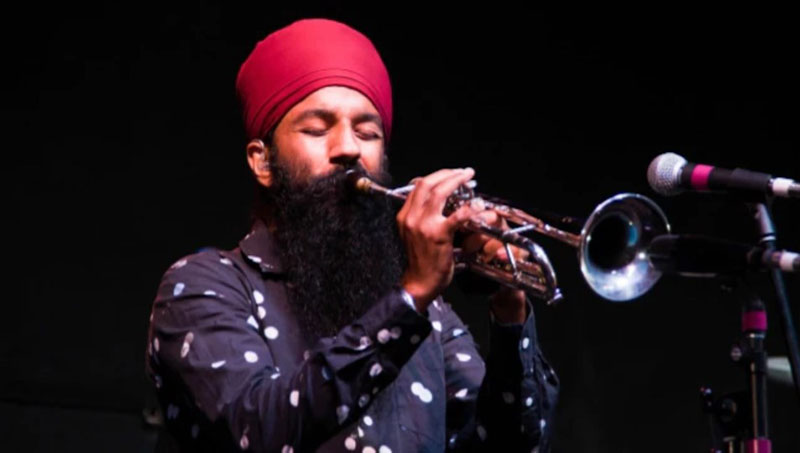
Brooklyn-based musician Sonny Singh has been vocal against social injustice since he was a teenager. So, it comes as no surprise then that when he dropped his solo album at 40, he found it impossible to do so without addressing “the social movements of our times.” He’s talking about the women in Shaheen Bagh, who protested through the winter of 2019 and the start of 2020 against the Citizen Amendment Act (CAA); and the farmer unions, who have been camping at Delhi’s borders in Singhu and Ghazipur, to protest three farm laws almost exactly a year later.
Clued into the fragile political climate in India, Singh claims that his work would be “irrelevant” if it overlooked these “historic” uprisings — something he feels even more strongly about, after acquainting himself with the core philosophy of Sikhism. His album is titled Chardi Kala, which roughly translates to ‘eternal optimism’.
“These farmers, who have been camping at the Delhi borders for the last few months, their steadfastness… their resolute response to the government, is nothing short of inspirational. That’s what Chardi Kala is… it’s not that we’re always happy. That’s not how the world works, but it’s the attitude that your spirit is always rising. And if your spirit is rising, then others will rise with you,” Singh tells me during a video call.
This introspection is embodied in Singh’s latest release, also the titular track of the album, which released last week. Around the 2:00 mark, a seemingly happy song takes a swerve towards something grim, as Singh’s voice hits a few minor notes while a marching snare drum rhythm plays. “Since the rest of the song is joyful and extroverted to an extent, I wanted this ‘bridge’ to reflect on the struggles and traumas that we’ve undergone as a community. Also, my musical brain has a hard time staying on a major key too long,” Singh says. It works, the deceptively simple song gets some much-required heft in those few seconds, almost serving as a reminder to ‘never forget’. ‘Chardi Kala’ is the third single to be released from the album.
Born in Charlotte, North Carolina to parents who moved there from Pune, Singh has spent a large part of his life reflecting on his Sikh identity. Growing up as one of the only two turban-wearing children in a predominantly white town, he experienced racism early on. “I remember being bullied pretty much every day in school, having my turban pulled off on the playground, being asked where I’m from in an almost threatening way,” he recalls. There was more than one instance when Singh wanted to give it all up, but didn’t. “Obviously I couldn’t just cut my hair and get rid of the wrist kadha to fit in, because that doesn’t change the colour of my skin. It was during my teenage years that I started relating to my identity as a Sikh man a little more deeply, part of it was through having Sikh friends.” It was after his move to Arizona, where he discovered a flourishing Sikh community, that the questions about his roots stopped being asked. “Eventually, getting the opportunity to read the incredible works of Sikh scholars like Jagjit Singh and discovering my voice for activism is when I realised that my ancestors were revolutionaries in their own right,” Singh says.
He started a Ska band in college, and moved to New York shortly after, where he was part of acts like Outernational and Red Baraat. It was only in 2018 that Singh began experimenting with the kirtans (devotional songs) he had sung as a ‘good Sikh boy’ in gurudwaras. “It had been a couple of years into the Trump administration, Bolsanaro had just gotten elected in Brazil, and Modi’s popularity in India had only increased. It was during this time that I figured I wanted to go back to Gurbani and kirtan, which would comfort me. I found myself sitting down with my harmonium, and just remembering some of the shabads (hymn/sacred song) that I used to play as a child, and I started making these very simple recordings of myself. At first, just singing with the harmonium, adding a layer of trumpet, some more voices, another layer of trumpet, some dhol — and then I started sharing them on Instagram. The feedback was really overwhelming. My intention wasn’t exactly to start a new project, but then a friend of mine, a trombone player (who I really respect), gave me a call. He said, ‘Sonny, I think you need to get into the studio.'”
See the full story, ‘In Sonny Singh’s solo album Chardi Kala, a juxtaposition of eternal optimism and speaking truth to power’(Firstpost, 6 March 2021), here.
ASIA SAMACHAR is an online newspaper for Sikhs / Punjabis in Southeast Asia and beyond.Facebook | WhatsApp +6017-335-1399 | Email: editor@asiasamachar.com | Twitter | Instagram | Obituary announcements, click here |
Your loving heart, generosity, sincerity and laughter will not be with us anymore, but not in vain.
They will be forever cherished and continue to live in our memories forever.
SARDAR CHARANJEET SINGH CHAHAL
26.02.1973 – 22.02.2021
Son of Ranjit Singh Chahal (Kampar) and Late Jagjeet Kaur Sidhu
Dearly missed by:
Ranjit Chahal (Kampar)
John, Jagdish and Euan Strachan
Sanjeet Chahal and Yasminder Randhawa
Relatives and friends
Path da Bhog: 14 March 2021 (Sunday), from 10 am to 12 noon, at Gurdwara Sahib Tatt Khalsa Diwan Selangor, Kuala Lumpur
Enquiries: Ranjit (012-3300775)
As we are still under Covid-19 movement restrictions, please adhere to the relevant SOPs.
Our family would like to express our gratitude for all the kind thoughts, prayers, messages & support during our time of grief. A special thanks to all staff at Trio Med Healthcare Sdn Bhd.
| Entry: 8 March 2021 | Source: Family
ASIA SAMACHAR is an online newspaper for Sikhs / Punjabis in Southeast Asia and beyond.Facebook | WhatsApp +6017-335-1399 | Email: editor@asiasamachar.com | Twitter | Instagram | Obituary announcements, click here |
It is a sparkling clean, functional space where everything has its place and the smell of buttery, fresh-off-the-hot-plate chapattis fills the air. It is also the room where, since 2017, she has made hundreds of meals a week – creamy lentils, Indian-style rice pudding with cardamom, nuts and sugar, crispy pastry with cumin seeds – for the homeless.
The food is served by Hope for Southall Street Homeless, a community initiative that runs a night shelter and drop-in centre in the area of west London that Nisharat has called home since she first arrived in the UK as a 54-year-old mother-of-five in 1976.
By then, her life’s journey had already taken several unexpected turns.
With a huge smile, Nisharat’s 67-year-old daughter, Kulwant, prepares to share her mother’s story, but not before she has asked her for a masala chai – “the proper Indian cha (tea), mum.”
“My mother was born in Punjab and when she was six-months-old she lost her mother,” she explains, the two now sitting in Nisharat’s impeccably neat, white-walled living room with its large industrial sewing machine in the corner. “My granddad remarried soon after – another arranged marriage – and when he and his wife had their first child … the step mum decided she didn’t want her.”
Nisharat was two years old when she was left on a pile of rubbish outside her family’s house in Moga, Punjab. A few hours later, she was found there by her paternal aunt – hungry and sunburnt. Her aunt took her to her paternal grandmother’s house, where Nisharat was kept as a child labourer, responsible for cooking, cleaning and any other chores that were assigned to her.
With cuts on her fingers from chopping onions, garlic and chillies, she would watch other girls her age go to school or to the park and wonder why she couldn’t. But by the age of eight, she could cook a three-course Indian meal and was an expert at making perfectly shaped chapattis.
The two women talk simultaneously – Nisharat often saying in Punjabi exactly what Kulwant, a headteacher and mother-of-three, is describing in English. At 5ft 10 (1.8 metres), Kulwant towers over her mother in her white salwar kameez, her thin, grey hair tied neatly into a bun. They are both mother and daughter and best friends.
When Nisharat was 14, a family friend arranged her marriage – to a 16-year-old boy from an Indian family living in East Africa. She did not question it, she says, and recalls little about it other than her father telling her: “Do what your husband says and don’t answer him back. Don’t ever do anything that will leave a mark on his beard [meaning to always show him respect].” Nisharat dabs at her eyes with a tissue as she remembers this.
A few years later, she moved to East Africa with her husband, who was working as an electrician. There, she was expected to care for her husband’s family, particularly his father who had been left incapacitated by polio. Life was difficult. She lived there for 40 years, giving birth to and raising five children, and always did as she was told.
Then, when her oldest child was 26 and her youngest 10, she was told they would be moving to the UK. Her husband had a British passport on account of his father having served in the British army but would lose it if he did not return to the country. Nisharat did not want to leave Africa, but she accepted this decision just as she had all of the other decisions he had made for her.
They arrived in Southall, an area that today has the largest Sikh community in London, as well as a large Muslim and Hindu population, and moved into the home she still lives in today.
Nisharat found it hard to adjust – to the language, the culture, the loneliness of a place where people did not just turn up at your home to visit, and to cooking on a gas stove instead of on coals.
“My mother has had a lot of struggles,” Kulwant explains, growing more animated. “Life was quite tough for her as a woman who went from a village in India to Africa, not being familiar with [the] culture and didn’t speak the language. She had the responsibility not just of me and my four siblings, but of my dad’s siblings too. You know the typical Indian scenario, where the mother does have all the responsibility,” she adds, rolling her eyes.
It did not get easier for her in London. Kulwant’s voice grows louder as she describes how her father would drink to excess and when her mother would serve his food, refuse to eat until the chapattis were cooked to his exacting standards.
“My mother never said anything, she would continue making them. She would never eat with him, but after and would sit on the floor.” Nisharat interrupts her daughter to add more details, describing how she would not dare speak when her husband was drunk.
“I questioned this, but my siblings didn’t and I don’t know why they didn’t,” Kulwant continues.
“I remember one day my father was really drunk and he threw something at my mother. I jumped on him to stop him, he was a big, tall man. He then beat me, because Indian women were not allowed to say anything in those days. He didn’t speak to me for two years and I was daddy’s little girl, so this was really hard for me …”
See the full story, ‘The 97-year-old Sikh grandmother feeding London’s homeless’ (Al Jazeera, 8 March 2021), here.
ASIA SAMACHAR is an online newspaper for Sikhs / Punjabis in Southeast Asia and beyond.Facebook | WhatsApp +6017-335-1399 | Email: editor@asiasamachar.com | Twitter | Instagram | Obituary announcements, click here |























 Hb Singh is a Kuala Lumpur-based journalist with some experience in dealing with Sikh organisations, both from within and outside.