
















UA-56202873-1
Page 430

The Burden of Privilege on the Malaysian Economy

0
By Sukhdave Singh | Opinion | LinkedIn |

There are three systems of privileges that are operating in Malaysia: race, religion and titles. All of them are intended to confer privileges to certain groups and come with exclusive economic benefits for those who are favored by these systems.

There is no problem with earned or deserved privilege because such privilege is based on a significant contribution to society and the economy. Such privilege is justifiable given the contribution to the greater good. Also, extreme inequality never benefits a society and cannot be justified. Therefore, extending certain privileges that would enable the economically disadvantaged groups in a society to progress and make a better living are also justifiable. What is not justifiable is when the system of privileges is abused, as is clearly the case in Malaysia, and unearned and undeserved privileges are bestowed. There are social and economic costs to any privilege system and the abuse of these systems only increases those costs.

THE PRIVILEGES OF RACE AND RELIGION

Let me deal with race and religion first, which by design, have fractured Malaysian society and created a system of privileges that is hard to justify. Let me illustrate with a couple of examples:

When a Malay tycoon can buy a string of houses in Malaysia at discounted prices while middle income non-Malays have to pay full prices to buy their family homes (effectively subsidizing the tycoon), such discriminatory and unwarranted privilege is justified by a system of privileges related to race.

When a Muslim man can walk into a supermarket and demand that it removes the section containing the “non-halal” products consumed by non-Muslims, there is a religious privilege system that is empowering such inconsiderate and uncouth behavior and its associated belief that the customs and practices of one part of society supersede those of the others.

Race and religion have been used to enshrine a privilege system that has created different classes of citizens in the country. Political shenanigans like the large-scale giving of blue ICs to foreigners in Sabah have elevated those foreigners, because of their religion, to enjoy privileges that are denied to other long-standing citizens of the country. When race and religion are the determinants of privilege, merit has a much smaller role in society and in the allocation of economic opportunities.

As it is, the privileges of race and religion have elevated mediocre minds to where they can tell the rest of society what it can and cannot do. The privileges of race and religion have lifted unqualified and incompetent individuals into positions of leadership. The privileges of race and religion have provided opportunities for individuals to enrich themselves through dishonest means, to betray public trust, to loot public funds – all with impunity. The privileges of race and religion have legitimized rent-seeking as an economic activity. The privileges of race and religion have allowed exclusive access to economic resources through institutionalized discrimination. It is primarily to safeguard these privileges that Malaysia has been unwilling to sign up to some very basic international conventions on human rights, including the International Conven­tion on Elimination of All Forms of Racial Discrimination (ICERD), International Convention on Civil and Political Rights (ICCPR), and Inter­national Convention on Eco­nomic, Social and Cultural Rights (ICESCR).

The New Economic Policy was misguided. Instead of focusing on economic need, it decided to focus on race. Had it focused on economic need, it would have achieved superior outcomes in reducing all forms of economic inequality, it would have led to far less distortionary policies, and it would not have entailed the massive waste of taxpayers’ funds. Most important of all, it would have cemented a Malaysian identity where all citizens in need are treated equally. By making the NEP race-based, it has allowed unscrupulous individuals to hijack the benefits to enrich themselves while enacting self-preserving policies that are definitely not in the interest of the Malaysian economy, and may not even be in the interest of those that the NEP was supposed to help.

I am very pessimistic that the Malaysian economy will ever be unshackled from the fetters of the NEP. It has proved to be too profitable for those who have hijacked its benefits and a large deluded sector of our society continues to be fed the narrative of “us against them,” that has been the foundation of such policies. This means that the economic distortions created by these policies will continue to undermine the Malaysian economy at a time when the global competitiveness of the Malaysian economy is being challenged as it never has been before. It is a burden of privilege that the Malaysian economy can ill-afford.

THE PRIVILEGES OF TITLES

I have nothing against titles and I do believe that a well-managed system of awards can help better society and the economy by recognizing and highlighting individuals with outstanding character that have done great service to the society and country. It provides a beacon for the rest of society by highlighting the behaviors and values we want to encourage. Regrettably, this is not the case with Malaysia’s system of titles. There are certainly deserving individuals who have served the country and continue to do so even today and I personally know a few of them. However, they are just a few drops in a bucket full of title holders for whom no one can tell why they carry the titles they do.

It is the consequences of profligate and undeserved privileges of titles that worry me, certainly due to the effect on the economy, but also in terms of the type of society we have become. Let me mention a few personal experiences:

I recall when I was a deputy governor at the Central Bank, people who did not know me will often call me “Datuk”, implying a safe assumption that anyone in my position must have that title. When I went to meetings in Putrajaya, some staff there will invariably refer to me as “Datuk.” At first, I tried to correct them but after a while I gave up and so I was often a “Datuk” without the title ever having been conferred upon me.

On other occasions, someone will call me “Datuk”, and when I told them that I was not, the consistent response was to try to console me with words like: “Don’t worry. Your time will come. I am sure that your contributions to the nation will be recognized.” They seemed to be embarrassed for me. Nobody ever asked me if I wanted a title in the first place. It was just assumed that I did, and the fact that I did not have one, was a matter of embarrassment.

I also recall experiences at dinners and functions where someone will introduce themselves in this way: “Good evening, I am X,” and then leaning closer as if sharing a secret, “That is, Datuk/Dato/etc. X.” I presume that these individuals were trying to impress me with their modesty by not announcing their titles out loud, but yet not too modestly in still wanting me to know that they had a title.

So, in Malaysia, the definition of success is the type and number of titles attached to your name rather than the real effort you have put into achieving professional and economic success. Even an unsuccessful business person with a title can be seen as successful. Successful businessmen/women and professionals are unsatisfied unless that success is complemented with a title. The likes of Elon Musk and Steve Jobs will be nothing in Malaysia unless they have a “Tan Sri” attached to their name. It has perpetuated and exacerbated the high level of hypocrisy that we see in our society. For example, individuals who have no problem accepting a title, or have put great effort and expense into obtaining one, then make a great public show of not using that title in a false display of modesty. Individuals who claim to be religious and to be “man of god” show no hesitation in embellishing their names with “earthly” titles. It has led to sycophantic behavior among the population with frequent chanting of “Datuk, Dato Seri, Tan Sri, etc.” at any function or event. More insidiously, it has created a culture of subservience and unquestioning obedience to people with titles, even when witnessing their misdeeds and criminal acts.

From a broader societal and economic perspective, it is worth asking if these titles incentivize individuals to great achievements and whether they are a recognition of such achievements. My sense is that they are neither. Let me illustrate with a few examples.

Why should civil servants with guaranteed incomes and lifetime employment, and guaranteed pensions upon retirement, need to be rewarded with titles? What outstanding service beyond the call of duty is being recognized? Why are politicians showered with titles when they are clearly failing in their responsibilities to the rakyat that elected them? Why should businessmen who have done nothing but enrich themselves be given titles? What societal achievement of theirs is being recognized? Why do academics have titles? Have they published academic work that has brought global renown? Have they produced outstanding students that are the pride of the nation? What is exactly the merit that is being recognized? Does anyone know? So, when there are so many individuals walking around with titles and no one can say why they got them, how can such a system be the basis of recognizing and inspiring great achievement?

No one can deny the proliferation of titles in our country, and if they were indeed all based on merit, we are truly blessed to have so many meritorious people among us. We should be one of the top performing economies in the world and our society should be the envy of the world. But we are not the top performing economy and our society is not the envy of the world.

What the proliferation of titles has done is to create a caste-like system of social and economic hierarchy. If you do not believe that, just attend any official function and listen to the speaker rattle of a long hierarchy of titles of attendees, and only at the bottom of the ladder will come “tuan-tuan dan puan-puan” or “ladies and gentlemen.” It is a system that has a clearly defined hierarchy and differentiation based on your title and where you got it from. You may joke about the large number of people in Malaysia with titles, but jokes aside, what it also means is that we have a large vested interest group with a strong interest in defending and perpetuating the system. As with any caste system, the underlying rational is always economic. It is not the only reason (ego and status are also part of it), but it is the key reason. People primarily want titles because of the economic benefits that are presumed to flow from them. This has had the sad outcome of making us a superficial society. Instead of seeking fame through real accomplishments, many are fixated with getting a title, and hoping to achieve fame and fortune through that.

It is a common perception in Malaysia that there are two sets of rules in the country: there is a harsher set that applies to ordinary citizens and a more lenient set that applies to people with titles. If this was not apparent before, numerous incidents during the current pandemic should have made this fact very clear. Titles have also created a sense of entitlement and over-inflated egos. The social media is rife with examples of people with titles behaving in an uncouth and brutish manner in their dealings with ordinary people. It is the same sense of entitlement that makes some think that they can take what is not rightfully theirs. Reflect on the major corporate, political and financial scandals in our country. More likely than not, a person with a title, or often a group of people with titles, were at the heart of these scandals and breaches of public trust. Is it any wonder then that even with so many people with titles among us we are still climbing the rankings of global corruption charts?

The caste-system of titles has, in my view, worked against creating a dynamic competitive economy and has added to the inequality of economic benefits and opportunities that exist in our society.

THE BURDEN OF PRIVILEGE ON THE ECONOMY IS HEAVY

It is unsustainable when a large class of people demand privileged access to the resources of an economy. The largest burden always falls on those who are excluded from these privileges. Great societies have fallen into decay when the excesses of the privileged class behaving in an opportunistic manner created an unbearable burden on the economy and intolerable misery on ordinary citizens. Only last week I was reading about the decline of some Mayan cities. In these civilizations, the size of the ruling class and elites swelled in size with each generation to the extent that the elite become increasingly parasitic as they hogged an ever-increasing share of resources. While the kings and nobles were busy enriching themselves, competing with each other, the peasants and lower classes had to work harder and harder to provide for the ever-increasing demands of the elite while they themselves suffered from hunger and deprivation. The consequent depopulation of the cities was further motivated by the environmental degradation (deforestation, erosion and soil exhaustion) that resulted from the increasing demands of the privileged class.

To Malaysians, this story should have some ring of familiarity. Today, we are similarly seeing our large class of “nobles” fighting among themselves for a share of the slower-growing wealth of the country. The ordinary citizens are bystanders watching this spectacle even as their lives become harder. Talk about GDP growth is meaningless if the fruits of that growth are captured by the privileged class while the rest of the population see their standards of living stagnate, experiencing very little of the benefits of that growth. Like the Mayans, we are also seeing environmental degradation all around us to feed the rapacious appetite of our “nobles.” We are seeing an ongoing “depopulation” in the form of a brain drain of those unwilling to waste their talents in a system where the odds are stacked against them and when there are better opportunities outside the country. We cheer when Malaysians who have made other countries their homes are recognized for their achievements, but feel no shame and do not weep for similar talent at home that is being wasted away because our privilege systems deny them opportunities. Over the long term, a sustained “depopulation” by talent fleeing the country will have only one outcome – the rise of mediocrity leading to a mediocre society and mediocre economic outcomes.

Unearned privilege based on race, religion and titles has transformed our society in a negative manner. It has corroded our value systems (with widening divergence between what we profess and what we practice). It has legitimized rent-seeking. It has given the loudest voice to mediocrity. It has calcified economic inequality. It has weakened us economically; indeed, it has exacted a heavy toll on the Malaysian economy. This is nowhere more evident than when those in power start comparing Malaysia not to countries that are better than us but to those that are worse than us. We are no longer providing a vision of progress but rather trying to explain away our under-achievement. It is an open admission that the Malaysian economy has a problem and that it is not advancing competitively.

The question now is whether Malaysia can overcome its addiction to privilege and reset the economy on the right path? I doubt it, but I would be happy to be proven wrong


Sukhdave Singh, is a former deputy governor of Central Bank of Malaysia and a former independent director of Malaysian sovereign wealth fund Khazanah Nasional Bhd. The article was published by Sukhdave on his LinkedIn page (link) and is reproduced here with his permission.

* This is the opinion of the writer, organisation or publication and does not necessarily represent the views of Asia Samachar.


RELATED STORY:

Central banker Dr Sukhdave makes a comeback (Asia Samachar, 30th July, 2018)


ASIA SAMACHAR is an online newspaper for Sikhs / Punjabis in Southeast Asia and beyond. Facebook | WhatsApp +6017-335-1399 | Email: editor@asiasamachar.com | Twitter | Instagram | Obituary announcements, click here |

A thousand flames a day after #TractorsParade

0
Staying together: Farmers at Gadri Gulab Nagar at Tikri border, Delhi, on 26 Jan 2021, the day after the massive Tractors Parade the day before. – Photo: BKU Ekta Ugrahan

#FarmersProtest | Scene at Gadri Gulab Nagar at Tikri border, Delhi, the day after the massive Tractors Parade on Tues (Jan 26).

“Thousands of Peoples. We are United ? We will fight,we will win. We won’t leave until laws are repealed. Period,” reads an entry at Bharatiya Kisan Union Ekta Ugrahan Facebook page.


RELATED STORY:

Outpouring love for farmers’ massive tractor parade on Republic Day (Asia Samachar, 27 Jan 2021)


ASIA SAMACHAR is an online newspaper for Sikhs / Punjabis in Southeast Asia and beyond. Facebook | WhatsApp +6017-335-1399 | Email: editor@asiasamachar.com | Twitter | Instagram | Obituary announcements, click here |

Delhi sprint queen Taranjit Kaur shines at junior athletics championships

0
Taranjit Kaur (No. 131) bagged gold for 100m and 200m at Junior Federation Cup – Photo: AFI
By Asia Samachar Team | INDIA |

Taranjit Kaur emerged as the best athlete award in the girls’ category at the recent 18th Federation Cup junior athletics championships in Bhopal. The 19-year old sprint queen from Delhi won gold in both the 100m and 200m dash.

While she’s now considered one of the brightest prospects in the country, only two years ago Taranjit seriously considered hanging up her boots following a serious injury that threatened to end her running career. And at her lowest point, it was a pep talk from one of India’s greatest heroes — two-time Olympic medallist Sushil Kumar — that motivated her to carry on, reports ESPN.

Taranjit remembers the exact date — August 13, 2018 — when she became the victim of a hit-and-run accident. She’d just completed a training session and was heading home on her scooter when she was sideswiped by a car. Among the injuries she suffered was a badly shattered collarbone. The bone was set incorrectly at first, which resulted in another lengthy period of rehabilitation. Half a year passed before she could return to the track.

The sprint double and especially the gold medal in the 100m, in a time of 11.70s, has catapulted her into possible contention for a place in the Indian 100m relay team. That’s Taranjit’s goal as well, the report added.

“I have an aim to be in the same team as Hima Das and Dutee Chand. They are the golden girls of Indian running. I want to run with them and hopefully break their records one day,” she says.


RELATED STORY:

Comeback story of Indian field hockey legend Sandeep Singh (Asia Samachar, 12 Nov 2020)


ASIA SAMACHAR is an online newspaper for Sikhs / Punjabis in Southeast Asia and beyond. Facebook | WhatsApp +6017-335-1399 | Email: editor@asiasamachar.com | Twitter | Instagram | Obituary announcements, click here |

Welsh music legend Peter Singh The Rocking Sikh remembered

0
Peter was invited by Bob Geldof to perform at one of his parties (Image: South Wales Evening Post)

By Nathan Bevan | WalesOnline |

He was the turban-wearing Elvis impersonator who came from behind his family’s clothing stall in Swansea market to play the Royal Albert Hall and support punk legends The Clash. And now tributes are flooding in after the announcement that Peter Singh – AKA The Rocking Sikh – has died, aged 74.

Hundreds of fans of Peter’s infectious, sequined jump-suited performances have taken to social media to pay their respects after the singer’s relative Amarjite Singh Chobdar broke the news late last night.

“Peter was larger than life and he’ll be badly missed by everyone who knew him,” said the postal worker and trade union rep who lives in Cardiff.

“He was much loved and a proper gentleman – he brought people joy and was a born performer.”

“He was definitely a Swansea legend, always stole the show,” posted one well-wisher in response, while another added, “The guy was class – a true entertainer.”

Meanwhile, Newport rocker Jon Langford of The Mekons said, “Very sad. I’ve had a picture of him on my studio wall for 25 years – cut it out of the New York Times.”

Born Narinder Singh, on the Pakistani side of the Punjab in 1946, his family had originally come to settle in Birmingham. And, after seeing the film Jailhouse Rock there as a child, he became instantly hooked on rock ‘n’ roll. Listening to the songs of Elvis helped him to master English, and his history of performing began after the family had moved to South Wales. It was in a pub there one night that he gave the crowd a rendition of The King’s Blue Suede Shoes and, amazed at the response, never looked back.

He was helped early on by music promoter Paul Durden (who went on to co-write the film Twin Town) who arranged for him to support The Bureau, a band made up of ex-Dexy’s Midnight Runners members – while Llanelli-born Pembrokeshire Murders actor Keith Allen assisted in setting up one of Singh’s formative London shows.

“My phone didn’t stop ringing after that,” said Durden in a 2019 interview.

“I was getting calls from colleges, from television, they all wanted a piece of Peter.

“A record company in Birmingham wanted to get involved.

“Then we did two nights with The Clash in Bristol. I knew Joe Strummer and their manager Bernie Rhodes. They wanted something different as their support act and asked me if I knew anyone.

“They loved him.”

Read the full story, ‘Tributes paid after Welsh music legend Peter Singh The Rocking Sikh dies’ (WalesOnline, 24 Jan 2021), here.


ASIA SAMACHAR is an online newspaper for Sikhs / Punjabis in Southeast Asia and beyond. Facebook | WhatsApp +6017-335-1399 | Email: editor@asiasamachar.com | Twitter | Instagram | Obituary announcements, click here |
Subang drive thru for Panjabi language registration

0
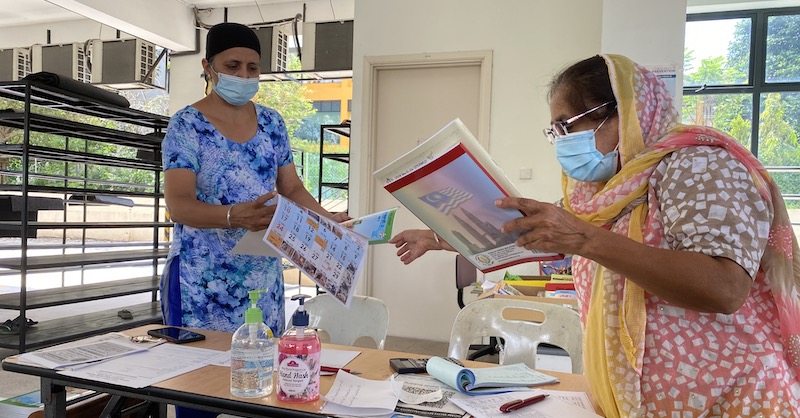
Drive thru: Nasib Kaur (left) and PEC Subang administrator Suvaran Kaur manning the drive thru counter – Photo: Asia Samachar
By Asia Samachar Team | MALAYSIA |

Parents sending their children to learn the Panjabi language at Gurdwara Sahib Subang were able to make registration payment and pick up books via a drive thru today (Jan 28).

The Punjabi Education Centres (PEC) Subang organised the drive thru to allow parents to handle the process without having to get out of the car in view of the prevailing Covid-19 pandemic.

The Subang centre has been conducting online classes since last year. The 2021 calendar began a fortnigh ago.

Last year, there were more than 40 active PECs nationwide, including Sabah and Sarawak, with a student population of more than 2,000 taught by almost 250 teachers. The PECS are managed by the Punjabi Education Trust Malaysia (PETM), the education wing of Khalsa Diwan Malaysia (KDM).

The Ipoh-based KDM has taken up the teaching of Panjabi language as its primary responsibility.


RELATED STORY:

Malaysia’s Panjabi language classes set to begin tomorrow (Asia Samachar, 15 Jan 2021)


ASIA SAMACHAR is an online newspaper for Sikhs / Punjabis in Southeast Asia and beyond. Facebook | WhatsApp +6017-335-1399 | Email: editor@asiasamachar.com | Twitter | Instagram | Obituary announcements, click here |
Singapore nabs secondary student planning terror attack on two mosques

0
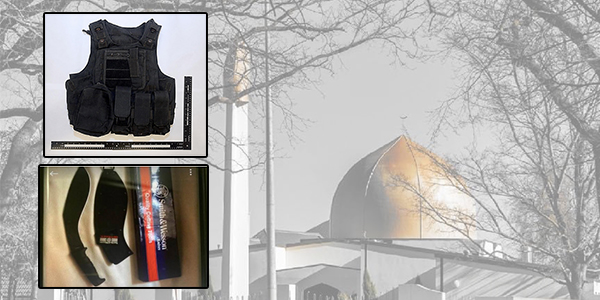
A tactical vest (left, above) purchased online by the youth to be used in the planned attacks. Left, below: Carousell listing of machete that youth intended to purchase for the attacks. Both photos releaed by ISD. Background photo of Al Noor church in Christchurch, NZ
By Asia Samachar Team | SINGAPORE |

A Singapore self-radicalised secondary student has been nabbed for planning to attack two mosques on 15 March, exactly two years after a far-right extremist live-streamed the massacre of more than 50 Muslims at two mosques in Christchurch.

The 16-year-old male was detained in December 2020 under the Internal Security Act (ISA) after the authorities busted his plans to replicate the New Zealand attack.

“A secondary school student at the time, he was found to have made detailed plans and preparations to conduct terrorist attacks using a machete against Muslims at two mosques in Singapore,” according to a statement released by Singapore’s Internal Security Department (ISD) yesterday (27 Jan).

Described as a ‘Protestant Christian of Indian ethnicity’, the home ministry department said he was the first detainee to be inspired by far-right extremist ideology and was the youngest individual to-date dealt with under the ISA for terrorism-related activities.

“He was self-radicalised, motivated by a strong antipathy towards Islam and a fascination with violence. He watched the livestreamed video of the terrorist attack on the two mosques in Christchurch, New Zealand, on 15 March 2019, and read the manifesto of the Christchurch attacker, Brenton Tarrant (Tarrant).

“He had also watched Islamic State in Iraq and Syria (ISIS) propaganda videos, and came to the erroneous conclusion that ISIS represented Islam, and that Islam called on its followers to kill non-believers,” it said.

His chosen targets were Assyafaah Mosque and Yusof Ishak Mosque because they were near his home.

The youth had planned to use a rifle similar to that used by Tarrant but gave up the idea when he realised that it would be difficult to get his hands on one given Singapore’s strict gun-control laws. he then settled for an a machete as his attack weapon.

ISD said its investigation to-date indicates that the youth had acted alone and that there was no indication that he had tried to influence anyone with his extreme outlook or involve others in his attack plans. It added that his immediate family and others in his social circles were not aware of his attack plans and the depth of his hatred for Islam.

“This case demonstrates yet again that extreme ideas can find resonance among and radicalise Singaporeans, regardless of race or religion. It is a threat to all of us and our way of life,” it said.

In a separate statement, Singapore’s Sikh Advisory Board (SAB) expressed concern that such ideology had made its way to Singapore.

“The case is a grim reminder of how our social and communal bonds are always work in progress and that we should continue to strengthen them whichever way possible.

“To that end, we are pleased that the bonds and camaraderie shared among the different faith groups and their leaders here has been inspiring and strong. We will need to ensure that these sentiments and approach percolate to our respective communities,” it said in a statement emailed to Asia Samachar.


RELATED STORY:

Hound terrorism perpetrators before it occurs, KL police chief tells London conference (Asia Samachar, 22 June 2017)


ASIA SAMACHAR is an online newspaper for Sikhs / Punjabis in Southeast Asia and beyond. Facebook | WhatsApp +6017-335-1399 | Email: editor@asiasamachar.com | Twitter | Instagram | Obituary announcements, click here |
Kedah to drop Thaipusam holiday, ignores pleas from interfaith bodies

1
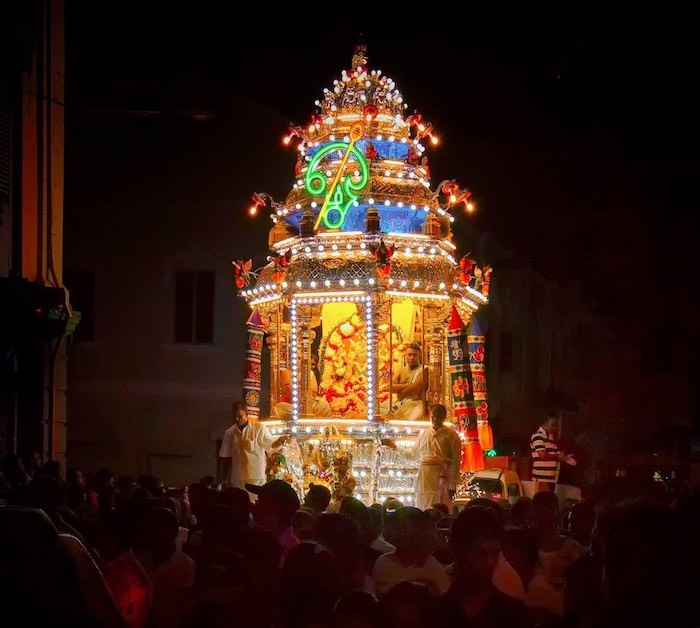
This is the chariot containing Lord Muruga’s image, which is decorated with diamonds, rubies and other jewels, as it makes its way from the Sri Mahariaman Temple in Kuala Lumpur’s Chinatown, to the Batu Caves temple.
Thaipusam celebrates the day Goddess Parvati bestowed upon her son the “vel” or lance to vanquish the evil demon, Soorapadam. This lance denotes spiritual insight, an ability to differentiate right from wrong, righteousness and steadfastness. However, for many Hindus, Thaipusam has come to mean the birthday of Lord Subramaniam, also known as lord Muruga, the younger son of Lord Shiva. Thaipusam falls on the 10th month of the Hindu calendar. It coincides with the full moon at the end of January and beginning of February. ‘Thai’ is the Hindu month which falls between January 15 to February 15 and ‘Pusam’ refers to a star which is at its brightest during the period of this festival. – Photo/text by Yusuf Hashim
By Asia Samachar Team | MALAYSIA |

Kedah is sticking to its decision to drop Thaipusam from the public holiday calendar for this year, with Covid-19 as the excuse.

Kedah Menteri Besar Muhammad Sanusi Md Nor has ignored pleas from various religious and other organisations to allow the state holiday for the Hindu celebration to stay on its calendar.

In a press statement dated 6 Feb signed by Kedah state secretary, it was announced that Thaipusam would not be declared as a public holiday (cuti peristiwa) as it fell on a Saturday. Kedah observes the weekend holidays on Friday and Saturday.

Thaipusam is a public holiday tomorrow (28 Jan) in Johor, Kuala Lumpur, Negeri Sembilan, Penang, Perak, Putrajaya and Selangor.

In a statement last week, Malaysian Consultative Council of Buddhism, Christianity, Hinduism, Sikhism and Taoism (MCCBCHST) ‘strongly’ urged the state to reinstate the Thaipusam holiday in the state by respecting the freedom of religion as protected by the Federal Constitution.

“MCCBCHST stresses that there is no place for religious repression which is against the fundamental rights of non-Muslims guaranteed to all persons by Articles 5-13 of the Federal Constitution. Thaipusam is a religious event celebrated by Hindus throughout the world and in Malaysia annually.

“As the majority of Indians in Malaysia are Hindus, Thaipusam celebration, therefore, has been proclaimed as a public holiday in the states with a high concentration of Hindus. This was also practiced in the state of Kedah since 2014 when Thaipusam was proclaimed as cuti peristiwa,” it said.

The statement noted that the reasons given by the Kedah state chief for not renewing the holiday was ‘unacceptable and show a failure to embrace religious sensitivity in a multi-racial and multi-religious Malaysia’.

In separate statements, Young Buddhist Association of Malaysia (YBAM) and Gerakan Belia Sikh Malaysia (GBSM) had also called on the state to reinstate the Thaipusam holiday.

YBAM called on Kedah state government to treat every citizen fairly regardless of religion or race.

“Politicians should not misuse special holiday as a political tool on their beck and call, without taking the significance of the holiday to specific religious group seriously. None of the ethnic group in our country is second-class citizen, therefore existing holidays for religious festivals should not be regarded as a gift of extravagance,” it said in the statement.


RELATED STORY:

For my fellow Malaysians of Hindu faith (Asia Samachar, 25 Jan 2021)


ASIA SAMACHAR is an online newspaper for Sikhs / Punjabis in Southeast Asia and beyond. Facebook | WhatsApp +6017-335-1399 | Email: editor@asiasamachar.com | Twitter | Instagram | Obituary announcements, click here |

Outpouring love for farmers’ massive tractor parade on Republic Day

1
Tractor parade in Delhi on India’s Republic Day – Photo: Videograb from Kisan Ekta Morcha Facebook
By Asia Samachar Team | INDIA |

Prime Minister Narendra Modi spotted a Gujrati turban as he took part in India’s 72nd Republic Day in Delhi yesterday (26 Jan 2021). But his mind was probably calculating the potential fallout from massive farmers’ tractor parades elsewhere in Delhi and other parts of the country.

The farmers’ protest has certainly shifted focus away from the national celebration. It must have loomed large on the minds of the Indian premier and his leadership team.

Despite massive odds and unending hurdles thrown at them, the farmers displayed steely determination to protest peacefully to demand the removal of three controversial farm laws hurriedly passed by the government five months ago.

After weeks of camping out at the borders of Delhi, the farmers’ union marched out in their hundreds of thousands on designated routes, coinciding with India’s Republic Day. It was a show of force and a direct challenge to the Bharatiya Janata Party (BJP) led federal government, an administration that had previously readily elbowed parties that came in their way.

The BJP ministers had attempted to kill the farmers resolute opposition to the farm laws by dragging negotiations. So far, the government and farmer unions leaders met over 11 rounds of negotiations with nothing to show. Each time, union leaders came out exasperated, knowing full well that they were being egged on by the government.

Modi has reason to fear the farmers’ determined push. They have shown immense maturity and astuteness in dealing with the government.

More importantly, the massive tractor parade yesterday saw spontaneous outpouring of love and support from the people in the street. The farmers and their supporters took to the streets on tractors, trolleys, cars, motorbikes and on foot. There was a carnival like mood. You should view videos, live streamed or recorded, uploaded by pro-farmers social media platforms. You will get the sense of the mood on the ground.

The spontaneous support and love showered by the ordinary folks who came out in support should send chills down the spine of BJP leaders. And the fact that the farmers are not about to throw in the towels.

By and large, the tractor parades were a huge success. Barring a few incidents – probably due to miscommunications or suspected state manufactured chaos – the kisan morcha went on peacefully.

MANUFACTURED CHAOS

Some of the government’s actions were questionable. In the beginning, they gave the protesting farmers a hard time in getting permission to hold their intended rally.

Once approved, other hurdles appeared. On the day of the event, farmers leader Balbir Singh Rajewal said that police had blocked access along the routes that was earlier agreed upon, forcing tractors to divert.

On one route, he said the protestors had to clear the path to stick to the tractor parade plan. On another, they were ‘being diverted towards the ring road.’

“I had received a call from Dr Darshall Lall [another farmer leader]. He told me that the police had blocked their path. They were not allowing our people to proceed as planned, but diverting them towards the Ring Road,” he said in a speech the day after the event. “On the agreed routes, we were supposed to pass through many large villages. People were looking forward enthusiastically to greet us, some with langgar and methaiyaa (sweets).”

When the trapped farmers tried to make a u-turn, he said the police again blocked them.

“The police told us that we could proceed towards Delhi, that you can go towards Lal Qila even. There was no barricade along that path. The same had happened at the Tikri border. There, they [the farmers] pushed ahead, insisting on proceeding along the agreed route.”

One devastating blow was the unplugging internet access to people in the protest areas. Imagine how this would throw the whole movement into chaos since they would not be able to communicate effectively. This is state manufactured chaos.

That is precisely the intended outcome from the authorities when they decided to suspend internet services till midnight on the day of the protest. Home Ministry deputy secretary Shailendra Vikram Singh is supposed to have exercised his powers under the Indian Telegraph Act, 1885 and Rule 2(1) of the Temporary Suspension of Telecom Services (Public Emergency or Public Safety) Rules, 2017.

He released an order stating that “in the interest of maintaining public safety and averting public emergency it is necessary and expedient to order the temporary suspension of internet services in the areas of Singhu, Ghazipur, Tikri, Mukarba Chowk, Nangloi and their adjoining areas in NCT of Delhi.”

And there were a good many other such attempts. More such attempts will come out in the open in the coming days.

MEDIA MANIPULATION

A good number of the Indian media had clearly dropped all pretensions to report the farmers’ protest accurately and objectively. The farmers plight was mostly reported in the negative.

Some television channels only showed the few moments when police and the farmers, or parties representing themselves as farmers, clashed. And you had news anchors walking into areas engulfed with tear gas, giving dramatic blow by blow accounts. However, their narrative omitted to tell viewers that those ‘clashes’ hardly represented the overall tractor parades which proceeded peacefully.

The print media was no different. Take the government’s move to disrupt the internet service. This is how Business Times, a major business publication, reported the story: “Parts of the national capital are facing issues with accessing internet since the past few hours. Following a ruckus created by protesting farmers, the Ministry of Home Affairs (MHA) quickly resorted to switching down the internet services in areas like Singhu, Ghazipur, Tikri, Mukarba Chowk, Nangloi and their adjoining areas within the NCT (national capital territory) of Delhi.”

What are you told in these few lines? First, the farmers are the ones creating the ruckus. Second, the authorities had ‘quickly resorted to switching down’, making it sound like they were firemen facing a blazing fire. On the contrary, it can be argued that the government has acted in haste, and that its actions caused more harm and disrupted a peaceful protest.

FARMERS RESOLUTE PUSH

The farmers have been holding fort on the roadsides demonstrations of Delhi since November. They seem to holding steady despite attempts to puncture their resolve.

The coming days and weeks will be decisive. They may turn out to be Modi’s biggest challenge. Perhaps it’s time he come down from the mighty Delhi throne and give the farmers what they have been asking for – a slice of life and dignity that they truly deserve.

Modi should consider getting rid of the three farm laws. When walking to the Singhu border to make peace with the farmers, he can don the turban of the Panjab farmers, the prime movers of the protest.


RELATED STORY:

Farmer unions to ignore Supreme Court committee, seen as government ‘ploy’ (Asia Samachar, 12 Jan 2021)


ASIA SAMACHAR is an online newspaper for Sikhs / Punjabis in Southeast Asia and beyond. Facebook | WhatsApp +6017-335-1399 | Email: editor@asiasamachar.com | Twitter | Instagram | Obituary announcements, click here |

Sarban Singh Ghali: Train controller with unwavering passion for Sikhi

2

ਗੁਰਮੁਖਿ ਜਨਮੁ ਸਵਾਰਿ ਦਰਗਹ ਚਲਿਆ।

Gurmukh Janam Savar Dargeh Chaleya 

(Bhai Gurdas, Vaar 19, Pauri 14)

By Paramjeet Singh | MALAYSIA |

With a heavy heart we wish to inform you that our beloved dad Sardar Sarban Singh Ghali had passed away on 22 Jan 2021 and was cremated on the same day. Due to MCO 2.0 it was done in accordance with the set SOP by close family members.

Father had served in the civil service for a total of 35 years in various positions. Starting off as a Station Master with Malayan Railways as it was known then in 1957 and retiring as Train Controller with Keretapi Tanah Melayu (KTM) headquarters in Kuala Lumpur in 1992.

As government postings back then required him to move to many towns across the country dad always played a key role in community service and Gurdwaras especially in the small towns where he was posted. When in Parit Buntar from 1964 to 1973 – his longest stint – he assisted in the local Gurdwara Sunday Diwans as there was no Granthi for most of the years. This was when he met Sant Baba Sohan Singh Ji Malacca and obtained his blessings.

From Parit Buntar we moved to Gemas Negeri Sembilan. As there was no Gurdwara in this small quint town, our humble dwelling became a makeshift Darbar serving local Sikh community of mostly railway families. We remember we celebrated major Gurpurbs especially Vasaikhi and Guru Nanak Dev Ji’s birthday every year. Families would chip in and dad also consented to doing ardas and allowed metha tek as we had daily Parkash of Sri Guru Granth Sahib (SGGS) ji at our home. Dad kept two Birs one of which was joint Gurmukhi akarh which is rare these days.

Dad got transferred to Kota Bharu in 1979 and again as there was no granthi then, dad volunteered to assist the caretaker in the Sunday Diwans doing kirtan and path (and I would do the tabla). He would also consent to request for Sahej path which he would do during his free time. Some weekends we would drive down to Kuala Krai distance of 74km to conduct programmes at the local gurdwara and other times head to Kuala Terengganu 134km away for private events at Sikh homes as there was no Gurdwara Sahib there. The portable palkhi and SGGS Ji taken from our home.

Dad moved back to the west coast in 1982 and was stationed in Kuala Kangsar (our beloved Giani Balbir Singh Ji was the granthi then) and later to Butterworth as Train Controller again involving actively in Gurdwara Sahib Prai. Coming to Kuala Lumpur in 1985 dad became active in Akandh Path Sewa in local Gurdwaras mainly Gurdwara Sahib Petaling Jaya (GSPJ).

Dad won the Best Pathi Malaysia title in the eighties after competing and winning in the Sudh Path competition three years in a row held at and organised by Gurdwara Sahib Sentul.

Later after retirement he began to actively involve in Gurdwara work highlights being the 300th commemoration of the Khalsa in 1999 where he single handedly organised and took full responsibility for the 101 Akandh Paths at GSPJ. Later, he assisted the committee as Chairman of Religious Subcommittee for many years.

Being a common sight at the Malacca Barsi, dad fondly took part in the Semagam Akandh Path annually and did the Patha de Bhog alongside the likes of late Giani Rann Singh and Giani Harcharan Singh.

We only found out recently that dad was also active with Sant Attar Singh Ji Brahm Vidya Niketan Malaysia (Niketan) and was their trustee. Dad was very knowledgeable in Sikhi especially Sudh Path and anything to do with Rehat and SGGS Ji. He wasn’t interested in positions or fame.

He was instrumental in the development of the New Gurdwara Sahib Puchong and served as Vice President for five years before stepping down to do freelance Sewa.

His contribution towards Sikhi, alongside mum’s support, will always be our greatest source of inspiration. We will miss him dearly but will continue to cherish all the good memories we have of him.

Rest in peace our dearest dad. You were the most amazing person and the light of our lives. We will miss you more than words can describe.

(Capt Paramjeet Singh Air Asia is the eldest son)


DEEPLY MISSED BY

Wife: Rajinder Kaur

Children / Spouse:

Capt Paramjeet Singh (Air Asia) / Inderjeet Kaur (Advocate & Solicitor)

Manjit Kaur

Harminder Jeet Singh (Singapore)

Surinderjeet Kaur (Kuala Lumpur) / Ajitpal Singh (Ex Maybank)

Charanjeet Singh (Deceased)

Grandchildren: Dr Jaspreet Kaur, Jesroshan Singh, Gurperghas Singh Gill, Gurissher Singh Gill, Harkiranjeet Kaur Gill, Arvindpal Singh Gill


ASIA SAMACHAR is an online newspaper for Sikhs / Punjabis in Southeast Asia and beyond. Facebook | WhatsApp +6017-335-1399 | Email: editor@asiasamachar.com | Twitter | Instagram | Obituary announcements, click here |
Urban farming

0
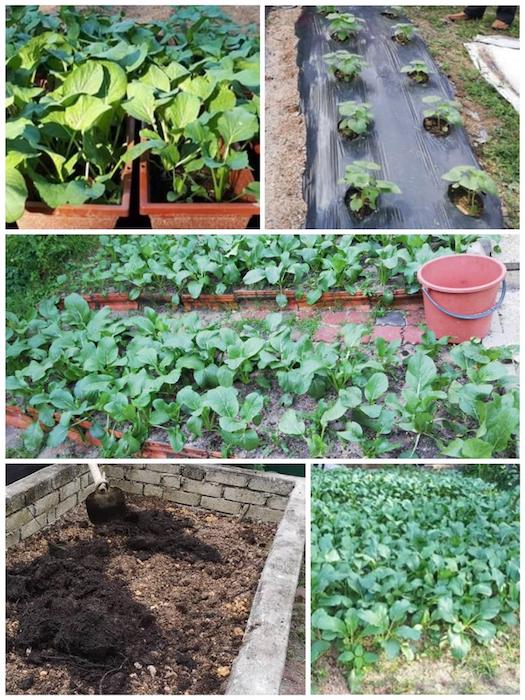
Left to right, top to down: 1. Vegetables grown in planter boxes (SPK Urban Garden); 2. Covered; 3. Vegetables grown on directly on beds in the soil (SPK Urban Garden); 4. Compost being spread on vegetable beds (Sunway SPK Urban Garden); 5. Vegetables grown in planter boxes (SPK Urban Garden) – Photo: Jespal Singh Sidhu

By Jespal Singh Sidhu | ENVIRONMENT |

I have written several articles on food waste and food wastage. I have also mentioned that all this food waste can be up-cycled into compost and/or bio-char or animal feed. Here we shall assume that it is composted. The next question will be what to do with this compost? The answer – Start an urban farm and this compost is put to good use here.

This article and the next few will surely awaken the farmer in us. We will cover the basic knowledge of urban agriculture without the use of any chemical fertilizers, pesticides and herbicides with the objective to produce chemical free vegetables and maybe some fast growing fruits.

During the initial Movement Control order (MCO) that was declared in March 2020, lots of people started gardening first with decorative plants and flowers and eventually growing their own vegetables.

My mother in law was one of them that switched from flowers and decorative plants to growing her own vegetables. This was after being gently coaxed by my wife and I. We explained the benefits of chemical free vegetables and we showed her via electronic media the amount of chemicals that are being used in commercial farms and the long terms effects of these chemicals on the human body. This is the concept of farm to table literally and we know exactly what we are eating. It is also creating an edible landscape in front of a link terrace house.

Some may say there is a space constrain, as we live in a condominium but I have seen how some friends of mine grow vegetables in planter boxes in their condominium balconies. It is a matter of wanting to do it and the way can be figured out.

What do we do in order to start growing our own vegetables be it in planter boxes, pots, and polybags or in the ground? The most important areas are:

1. The soil and the ecosystem of the soil
2. Fertilizers and plant nutrients
3. Diseases and insects
4. Farm waste management

The four points above are also applicable when planting decorative plants and/or flowers or any plants for that matter. In this article we shall look at soil and plant nutrients.

THE SOIL AND THE ECOSYSTEM OF THE SOIL

How do I pick the right soil? Red or black soil? Do I use soil or potting mix? Why are some potting mixes so expensive and some are really cheap? What is coco peat? What is peat moss? What is bio char? When to use them? Do I need to add sand? Where can I purchase good soil or can I just collect from somewhere? These are only a small selection of the questions that I am asked whenever I talk about gardening or when I conduct my training sessions. Now let’s breakdown soil:

Definition: Soil or sometimes referred to as earth, or usually dirt in America, is the upper layer of earth in which plants grow. Typically a black or dark brown material generally consisting of a mixture of organic remains, clay, rock particles, liquids and gasses.

That is the definition. Now in our terms what we are looking for is nutrient rich, health alive soil so that whatever we plant will thrive and grow well.

Selection of soil is very important as it is the foundation of our farm/garden/vegetable patch. Once the foundation is set right, the rest usually will fall in place.

How do we select the right type of soil? I put this down to experience and little research. There are three main components of soil – organic matter, rock particles and clay, and if we want to grow plants or vegetables in it what we need is the right blend of these.

  • Organic matter is the nutrient rich part of the soil that will sustain the plants. This in nature occurs when the dried leaves, twigs, branches, animal matter and other organic materials breakdown and form humus. This is the living component of the soil rich in microbes and nitrogen. The natural form is called humus and the equivalent if produced is called compost. Humus and compost have very good water holding abilities.
  • Clay is to hold the soil together. What is the composition of clay? If I go into details it will be a scientific paper so I shall stick to KISS.
  • The small rock particles or shall I refer to this as sand (also known as sand or in Malay “pasir”) is the component that allows aeration of the soil. This allows fluids such as rain water to flow through.

For planting we need the right blend of the above three components. I shall look at minimum investment method. Soil is everywhere, but to make it easier let’s say we purchase some. The typical black soil which is about RM2 per bag and the red soil which is also at that price. What do we do then?

For a pot depending on the size of the pot we can mix the two types of soil and also fine sand which can be purchased from hardware stores (usually used to mix cement). The ratio of black soil:red soil:sand is approximately: 2:1:0.25 or 2:1:0.5. for the top layer of about three inches of the pot or planter box or planting beds, it will be good if we can use black soil:compost:sand at a ratio 2:1:0.25. How does coco peat, and all the potting mixes with burnt paddy husks and other components come into the picture? Frankly coco-peat is coconut fiber that has been crushed and it can be used as an aeration component and eventually it will breakdown and become organic matter but it is not a must. Bio char means charcoal produced in an organic manner so here the burnt paddy husks is considered bio char. Potting mixes basically consists of soil premixed with additional organic matter (compost or manure of a certain kind), burnt paddy husks (as a carbon component), coco-peat (aeration component) and sometimes maybe in some mixtures frass (excretion of insects, larvae and/or worms).

Do we really need these? My answer is to keep it simple and straightforward. Once we have mixed the soil mixture and the top soil mixture as per the ratios then we need to partly cover the two or three holes in the pots or planter boxes with small stones or broken tiles so as to allow small gaps for water to flow through but not for the soil to drain out. We then fill up the whatever containers that we are using to plant and these could range from recycled pet bottles cut into 2/3 with little holes made at the bottom, styrofoam fruit containers with some holes made at the bottom to pots to planter boxes. The bottom part of the containers is to be filled with the first soil mix and the top three to four inches with the second mixture that has compost. If we are going to grow on the ground this mix can be made into a raised bed on the ground and some bricks, tiles or pieces of wood can be used to create a simple barrier so that the soil will not erode away. Now, we are ready to plant.

What do we plant? How do we germinate the seeds? What is the distance between one seed to another? These are the next set of questions. Seeds are easily purchased and there are many brands out there to choose from. What are the types of vegetables that can grow easily at home in pots, planter boxes or on the ground? Based on experience the simple ones are okra, green leafy vegetables, egg plants, corn, herbs such as mint, lemon grass, basil, pandan leaves, chilly plants, creepers which can be grown on the fence – bitter gourd, long beans, luffa, snake gourd and many more.

FERTILIZERS AND PLANT NUTRIENTS

Once we have planted, the next step is to ensure that the plant or vegetables have enough nutrients to grow well and produce enough vegetables or in the case of green leafy vegetables, healthy leaves. There are literally hundreds if not thousands of types of fertilizers out there ranging from sprays, to pellets to powders.

What is fertilizer? When did it come about? Natural soil enhancers were being used since the Egyptian and Roman times. Prior to World War II (WWII) soil fertility was enhanced using manure and compost from various sources. Research shows chemically manufactured fertilizer industry really became main stream after World War II as there was surplus nitrogen being produced as this was the primary material of explosives. The terms NPK were coined and this stands for Nitrogen, Phosphorus and Potassium respectively. A plant requires all of three components to be healthy where:

  1. Nitrogen(N) is mainly for leaf growth
  2. Phosphorus (P) is mainly for the development of roots, flowers, seeds and fruit
  3. Potassium (K) is mainly for strong stem growth, movement of water in plants, promotion of flowering and fruiting.

There are also trace elements and the main ones are calcium (Ca), magnesium (Mg), and sulfur (S) for the healthy growth of a plant.

Chemical fertilizers packs will all proudly list their NPK ratio 12:12:12, 8:6:6 or whatever. What does this mean? Well it is the amount of these elements in those bags of fertilizers.

I produce organic compost and because of the chemical bags having such labels I also have to send my compost to certified labs to do the necessary NPK and trace elements tests.

Why are some commercial farms moving away from chemical fertilizers? The answer is simple. Chemical fertilizers usually provide quick fast release of the nutrients that plants need but over a long term plants grown using these chemical or synthetic fertilizers do not develop natural and good plants systems such as proper roots systems, proper shoots systems. These plants also are not given enough time to grow and mature properly. What are the effects of these accumulated chemicals in these vegetables on the humans that consume them? Leachate from the factories that produce chemical fertilizers and from when they are used in farms on a large scale can cause a devastating effect on our water bodies. There are a lot of research papers and write-ups on this topic and this can be looked on google. Continuous usage of chemical fertilizers degrades the health and quality of soil and eventually the soil becomes arid and farmers need to add more fertilizers to get crops and the cycles never ends.

Compost is a soil conditioner and when we apply compost to our plants be it potted plants or vegetables, or those that are grown on the ground we are improving the overall ecosystem of the soil by adding microbes and microorganisms to the soil. Over time the water retention property of the soil will improve and the soil will be alive with earthworms (yes even in the pots) and this is healthy living soil.

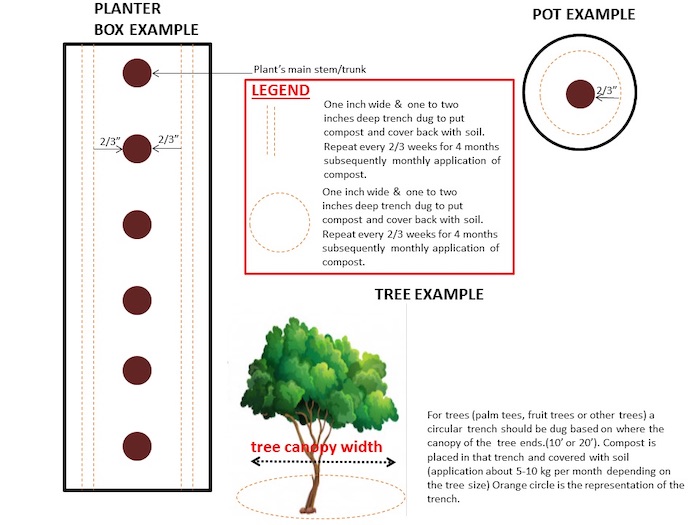
Pic 5. Compost application method – Source: Jespal Singh Sidhu

Next we shall be looking at managing diseases and insects and managing the waste that comes after we harvest form our little edible gardens. There are lots of YouTube videos out there to refer to so embark on this journey of planting your own vegetables and enjoy your fresh chemical leafy vegetables in twenty eight to thirty days. Maybe, I shall do several zoom sessions on Urban Farming based on the four topics so it will be easier to understand and there will be opportunity to interact if there is enough demand.

#urbanfarming #organicfarming #soilmanagement #compost #composting #organicvegetables


Jespal Singh Sidhu, a real estate negotiator and an avid gardener, produces compost on a commercial scale which he supplies to farms, fruit orchards and home gardening enthusiasts. He is passionate about sustainability, waste management, separation at source organic waste management and environmental related topics. He is available to guide Gurdawaras to reduce carbon footprint. He can be contacted at compost.sprout@gmail.com


RELATED STORY:

The Misfits – Responsible consumption and production (Asia Samachar, 5 Jan 2021)


ASIA SAMACHAR is an online newspaper for Sikhs / Punjabis in Southeast Asia and beyond. Facebook | WhatsApp +6017-335-1399 | Email: editor@asiasamachar.com | Twitter | Instagram | Obituary announcements, click here |