SASKAAR / CREMATION:3 February 2021, 2.00pm at Sungai Buloh Crematorium Jalan Kusta Sungai Buloh, 47000 Batu, Selangor. Due to the current situation, saskar will be held in the presence of close family members only. Please kindly observe MCO SOP | Malaysia
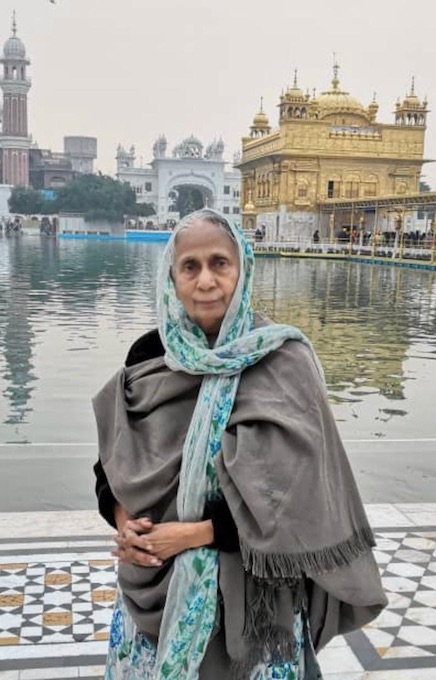
JASBIR KAUR CHANDI
DAUGHTER OF LATE DARSHAN SINGH & LATE KARTAR KAUR
GRAND DAUGHTER OF LATE GOPAL SINGH (KUALA KUBU BHARU)
(12.11.1959 – 01.02.2021)
Village: Badli, Punjab
Residence: Selayang
Husband: Jagee Singh Jhand s/o Late Surjan Singh Jhand
Saskar / Cremation: 3 February 2021, 2.00pm at Sungai Buloh Crematorium Jalan Kusta Sungai Buloh, 47000 Batu, Selangor. Due to the current situation, saskar will be held in the presence of close family members only. Please kindly observe MCO SOP.
Contact:
Rattan Singh 016-4389709
| Entry: 2 Feb 2021 | Source: Family
ASIA SAMACHAR is an online newspaper for Sikhs / Punjabis in Southeast Asia and beyond.Facebook | WhatsApp +6017-335-1399 | Email: editor@asiasamachar.com | Twitter | Instagram | Obituary announcements, click here |
Mass movement in Mahapanchayat in protest against lathi charge on the ongoing dharna against black laws in Baraut tehsil, Baghpat! Photo tweeted by Jayant Chaudhary on 31 Jan 2021
By Lord Singh of Wimbledon and Kanwaljit Kaur
We are writing to express our admiration and full support for hundreds of thousands of Indian farmers and their supporters from all walks of life. Despite the winter cold, and police oppression, they have been demonstrating for the months against unjust laws that threaten their livelihoods. Their courageous stand against injustice gives hope for an end to the systematic erosion of democracy in India.
INDIA’S ABUSE OF HUMAN RIGHTS
The farmers’ cause is just and is fully supported by leading figures in the judiciary, high-ranking civil servants, university and college lecturers, trade unionists, Indians abroad and government spokesmen in the UK and Canada. As a UK spokesman put it, ‘the right to peaceful demonstration is a basic human right’. The response of the Modi government to this basic human right has been widespread use of tear gas, water cannons, and police brutality against peaceful protesters. There is now a call for India to be expelled from the Commonwealth for its flagrant abuse of human rights.
Many will be unaware that Narendra Modi is a supporter of the Rashtriya Swayamsevak Sangh (RSS), a fascist group modelled on the Hitler Youth Movement. In 2002, he was Chief Minister at the time of the infamous Gujarat ‘riots’, which led to the slaughter of thousands of Muslims. For some years he was barred from entry to the USA and UK. Today, RSS thugs or ‘goons’ are collaborating with rogue Bharatiya Janata Party (BJP) supporters and are being given a free hand to beat and maim peaceful protesters including women and the elderly. The farmers’ peaceful protest has captured the world’s admiration in the way it looks to the wellbeing not only of the protesters, but also in the way food and medical assistance is offered to the attacking police.
On India’s Republic Day (26 January), India’s compliant police following orders, removed barricades and opened the large steel gates to the Red Fort to allow known BJP activists to enter as supposed farmer activists to enable the government to smear the protesters as anti-national. Brave reporters in India’s tightly controlled media, who drew attention to this absurdity or questioned government action have been harassed and arrested. Many have had their social media accounts blocked and some have disappeared without trace.
THE FARMING LAWS
India’s farmers have long been exploited by greedy middlemen. The Modi government saw this an opportunity to ‘reorganise’ farming. These laws blatantly allow billionaire businessmen who are also party supporters to control the supply and distribution of agricultural produce throughout the country in a way that would leave farmers virtual serfs on their own land.
The laws were rushed through Parliament with no time given for proper scrutiny or debate.
They laws are clearly unconstitutional. The Constitution states that agriculture is a devolved responsibility of individual States, not the central government.
The laws have been condemned as unconstitutional by senior members of the judiciary.
The laws abolish the minimum support price given to farmers.
The laws allow for no right of appeal.
Two close billionaire friends of Modi, with a pre-knowledge of the government’s intentions, brought huge sites in Punjab to build giant silos for the long-term storage of grain allowing for price rigging and manipulation.
Today, in Modi’s India, 1% of India’s population owns nearly half the country’s wealth.
Tricolor Road Show Rally in Delhi_Photo grab from video at Kisan Ekta Morcha Facebook page 28 Jan 2021
EROSION OF DEMOCRACY IN MODI’S INDIA
We are deeply concerned by the government’s dismissive attitude to the requirements of its secular constitution and the human rights of its people. The Citizens Amendment Act, in its appeal to majority bigotry, deprived more than a million Muslims of their citizenship with Home Minister Amit Shah referring to Muslim refugees as ‘termites’. This was followed by the repeal of Article 370 placing Kashmir under military rule.
The highly respected human rights organisation Amnesty International has been expelled from India to prevent it reporting on the growing abuse of human rights. Amnesty commented:
‘It is a dismal day when a country of India’s stature, a rising global power and a member of the UN Human Rights Council, with a constitution which commits to human rights and whose national human rights movements have influenced the world, so brazenly seeks to silence those who pursue accountability and justice’.
URGENT ACTION REQUIRED
India’s farmers’ brave stand against injustice is fast becoming a people’s movement for the restoration of democracy and human rights in India. We pledge them our full support. Those of us living abroad have a particular responsibility to support a movement that has at least 67 lives lost already through cold weather and lack of medical supplies.
While calling on governments around the world to condemn India’s repressive behaviour, we urge Mr Modi to commence urgent talks with farmer’s leaders to meet their genuine concerns.
Lord Singh of Wimbledon is the member of House of Lords, UK Parliament and Director, Network of Sikh Organisations (UK) while Lady Singh Kanwaljit Kaur is president of Global Sikh Council. The joint statement released by Global Sikh Council (GSC) and Network of Sikh Organisations UK, dated 31 Jan 2021, emailed to Asia Samachar
ASIA SAMACHAR is an online newspaper for Sikhs / Punjabis in Southeast Asia and beyond.Facebook | WhatsApp +6017-335-1399 | Email: editor@asiasamachar.com | Twitter | Instagram | Obituary announcements, click here |
With sincere gratitude, we humbly express our heartfelt thanks for the sympathy, love and support rendered during this time of loss.
Mom, the seed of love and compassion that you have planted, will always be our guiding path and flourish in our lives.
Not a day goes by that we don’t miss you. You will always be cherished and loved.
| Entry: 2 Feb 2021; Updated: 18 Feb 2021 | Source: Family
ASIA SAMACHAR is an online newspaper for Sikhs / Punjabis in Southeast Asia and beyond.Facebook | WhatsApp +6017-335-1399 | Email: editor@asiasamachar.com | Twitter | Instagram | Obituary announcements, click here |
To our dearest mother and grandmother. Your presence alone brought us warmth and happiness. We will always cherish the wonderful memories that we had with you throughout our lives. They say there is only one happiness in this life, ‘to love and be loved’. You were loved by all, and your love for all was fulfilling. Ranjit Kaur was & will always be a beautiful and caring person.
The saskaar (cremation) will be limited to immediate family members as required by the on-going Covid-19 SOP.
Prayer details will be updated later.
Contact:
012-2925488 (Pradeep)
016-3287452 (Gurcharan)
| Entry: 2 Feb 2021 | Source: Family
ASIA SAMACHAR is an online newspaper for Sikhs / Punjabis in Southeast Asia and beyond.Facebook | WhatsApp +6017-335-1399 | Email: editor@asiasamachar.com | Twitter | Instagram | Obituary announcements, click here |
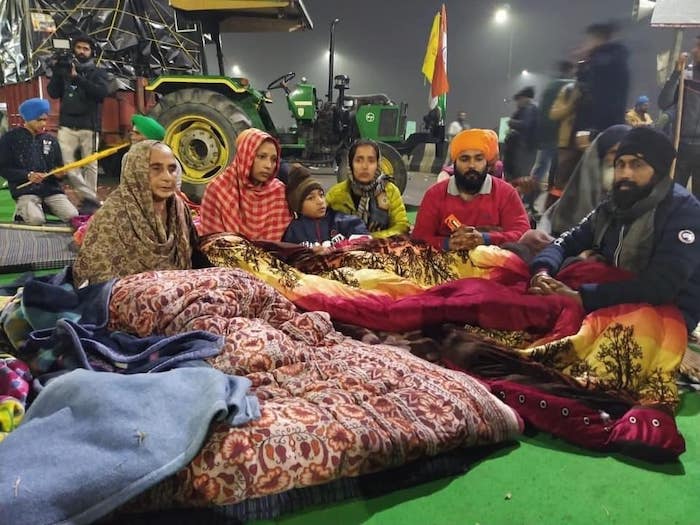
To be surrounded by thousands of armed forces, with every chance of being beaten and broken, there were families like these who refused to leave Ghazipur, ready to take a bullet in their chests. [Farmer leader Rakesh] Tikait was not the only hero of last night. All those who stayed back, they are heroes too. Who cuts off drinking water supply to a protest site with elders and children ! Water bottles sent in private cars were not allowed too. Is this how you break a protest ? For a country driven on faith, no one believes in karma. – Text/Photo by Gurpreet Wasi, shared on 29 Jan 2021
By Gurnam Singh | OPINION |
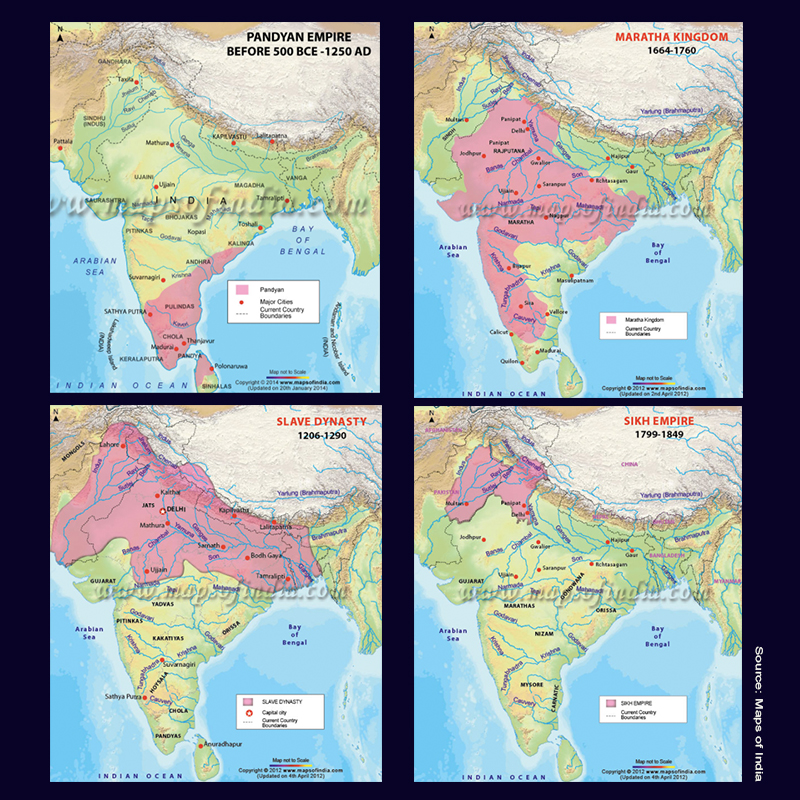
One of the indisputable facts about India is that it is not and never has been one country, one nation, or one people. India or more accurately Bharat is huge diverse subcontinent that has (as the maps show), been subject to various empires and dynasties. The map of India is as fluid as the great rivers coming off the mighty Himalayan mountain range.
In 1947, following the disastrous collapse of the despicable British Imperial rule, India shattered into a number of pieces, resulting in the bifurcation of Panjab, Kashmir, and Bengal, the creation of Muslim dominated Pakistan and Hindu dominated India, not forgetting much suffering. Today, because of the policies (niti) of the British imperialists we are left with a truncated Hinduva Indian state that is behaving as most/all imperialists do/have done in the past, that is to impose its own hegemony on the population in order to consolidate wealth and power with a few elites. Few rulers seem to learn from the mistakes of previous incumbents.
One of the features of the Hindutva imperial state is its embrace of neoliberal economic policies. The political philosopher David Harvey has pointed out that neoliberalism is a particularly virulent form of capitalism. Following the collapse of socialism in the 1970’s, it emerged as a project to restore class dominance to sectors that saw their fortunes threatened by the ascent of social-democratic endeavors in the aftermath of the Second World War. One effect of the restoration of the power of corporate elites has through ‘clever’ manipulation of the instruments of capitalist economics been the channeling of huge amounts of wealth from subordinate classes to dominant ones, both within and between countries.
Coming back to India and the farmer’s movement, it is this very same process of the centralising and upward movement of wealth and power that is the core issue. The farmers, most of whom own just a few acres of land, are asking for protections and a minimum income; the Government, on the other hand, is insisting on the application of market forces and corporations to facilitate economic growth and ultimately developed for the people.
It is difficult to see a way out other than a defeat for the farmers or, as the leader of the Hindu chauvinist Shiv Sena in Maharashtra, somewhat ironically, has speculated, the centralising tendencies of the BJP will lead to the disintegration of the nation. Rajya Sabha member Sanjay Raut cautioned that it would not take long for the country to break into separate states, the way it happened in the former Soviet Union. Though, unsurprisingly, the pro-BJP Godhi media negatively portrayed Raut’s observation. In reality, his observations that, without strong opposition, the imposition of majoritarianism across the vast country would undermine its integrity, should serve as a wake-up call for Indian nationalists.
And today, as the farmer’s movement moves into a crucial phase, we have begun to see the BJP upping the ante. By threats and actual violence against the farmers through hired thugs across various sites of occupation surrounding Delhi, their hope is the morale might collapse. In doing so they are traveling a well-trodden path that imperialists rulers have over the centuries.
The strategy being deployed is known as the Chanakya philosophy or Niti of ‘Saam’, ‘Daam’, ‘Dand’ and ‘Bhed‘, which can be traced back to the ruling dynasty of the Mauryas in the 4th Century BC. It is based on a four step strategy to respond to any challenge from below to the power of the rulers.
Source: Maps of India
Stage one is referred to as ‘Saam’. Here the rulers seek to befriend and even praise the leadership of the rebellion. The aim is, as it were to separate the head from the body, thereby demoralizing the masses and instigating internal conflict.
If this subtle ‘friendly’ approach does not work and the leadership refuses to comply, then the next step is what is known Daam. Now the rulers appeal to the other desire that leaders have for power by offering them a mixture of final UAL benefits and even a role amongst the ruling elite. The aim is to instigate betrayal amongst the opposition.
If this fails then we see a sudden change of attack and ‘Dand’, where punishment and violence become the chosen weapon. And where even violence does not frighten the activists, then the final strategy of Bhed is deployed. This essentially is a combination of violence, blackmail, and threats to loved ones.
After months of playing tricks, the Government chose 26 Jan to set a trap for the movement as a pretext to moving into a phase of violent repression. Things are very tense after the 26th Jan Republic Day incidents, and one spark could trigger widespread violence, which may spread across the country as, contrary to government propaganda, the movement is not confined to farmers from Panjab and Haryana. The movement, though focussed on the outskirts of Delhi, is now morphing into a national movement against the RSS/Hindutva hegemonic imperial project and there is a real prospect that other major cities will also see protests in the next few days and weeks.
To avoid any of the disastrous outcomes now is the time for some creative out-of-the-box thinking and in this regard, I think there are three possible options.
Option 1 – a suspension of the implementation of the Ordinances pending either a national referendum or a general election.
Option 2 – Introduce an amendment that provides a cast-iron guarantee that the states have the power to decide if and how the ordinances are to be implemented.
Option 3 – Establish an international panel of experts including UN bodies to do a root and branch review of the current state of the Indian farming sector to devise medium and long-term options for change, which clearly is needed.
The ongoing protests have opened up a new space for popular politics rooted in respect of people, dignity, and plurality. The government has certainly been caught off guard and that is why it is investing heavily in its IT cell in order to portray the movement as a threat to the nation. However, the agitation has extended way beyond its immediate remit and has gained a potential of great proportion as a popular social and political movement that can threaten the power of the state. And one of the master strokes of the movement has been successful in controlling and sustaining the three key narratives: of ‘sewa, annadaata‘ (In service to humanity); ‘jai jawan, jai kirshan’ (victory to the farmer is a victory to the soldier) and ‘kirsan mazdoor ekta (unity of farmers and workers)!’
Sometimes paradoxically political rulers are at their most vulnerable when they ate at their most powerful. That is because they can become vulnerable to ego and complacency. I do hope that if, as he keeps claiming, PM Modi is genuinely interested in the welfare of ordinary Indians, then perhaps he needs to put their interests before the corporate billionaires who are busy, like previous imperialists, appropriating the assets of the nation and in the process making the poorest suffer the most.
[Gurnam Singh is an academic activist dedicated to human rights, liberty, equality, social and environmental justice. He is an Associate Professor of Sociology at University of Warwick, UK. He can be contacted at Gurnam.singh.1@warwick.ac.uk]
* This is the opinion of the writer and does not necessarily represent the views of Asia Samachar.
ASIA SAMACHAR is an online newspaper for Sikhs / Punjabis in Southeast Asia and beyond.Facebook | WhatsApp +6017-335-1399 | Email: editor@asiasamachar.com | Twitter | Instagram | Obituary announcements, click here |
IN MEMORIAM:By the grace of Waheguru, the Saskaar on 31 January, 2021 at Loke Yew Crematorium, Kuala Lumpur went smoothly in the presence of immediate family members| Malaysia
Great Grandchildren:Tanvir Singh; Isharvir Singh; Kamalvir Singh & Rasslyn Kaur
By the grace of Waheguru, the Saskar on 31 January, 2021 at Loke Yew Crematorium, Kuala Lumpur went smoothly in the presence of immediate family members.
The family would like to express its gratitude for all the kind thoughts, prayers, messages and support during this difficult period.
Contact: Gurmeet Kaur 019 225 3737
| Entry: 31 Jan 2021 | Source: Family
ASIA SAMACHAR is an online newspaper for Sikhs / Punjabis in Southeast Asia and beyond.Facebook | WhatsApp +6017-335-1399 | Email: editor@asiasamachar.com | Twitter | Instagram | Obituary announcements, click here |
Harnek Singh locked the doors to his ute and mentally said goodbye to his family as a group of armed figures who rammed him in his Auckland driveway approached under darkness.
All the 53-year-old man remembers of the December 23 incident – which happened at 10.20pm – is honking the horn to his Toyota Hilux as his windows were broken.
He was later found by a Radio Virsa colleague hunched in the driver’s seat on Glenross Drive, surrounded by smashed glass in a “shower of blood”.
Speaking last week in his Wattle Downs living room wearing only shorts, Singh had two large casts covering from the tips of his fingers up to his elbows.
Dozens of fresh jagged scars and staple holes extend up his right arm, across his shoulders, and neck up to the top of his head.
“The doctors said I’m OK now so they can send me home. But when we talked to police they were like ‘be careful’. I said define that? What should we do?,” Singh told the Herald. “Recovery wise it’s OK, I’m very happy. But psychologically, whenever you remember [the attack] …
“My family and relatives are very scared. My wife she’s got courage. Living with me the last 20 years, she understands me, she knows what my commitments are. But I can see internally. Last night, nearly 1.5 hours she was telling me the story, revising the story [of his attack].”
On January 21, six men were charged with attempted murder over the attack.
Singh’s calm reserve and amazing good humour belie the three weeks in hospital he spent, half of that in intensive care involving numerous surgeries.
His torso and head were put back together with hundreds of stitches – at least 150 in his head alone. His right ear was almost cut off.
Read the full story, ‘Radio host to Auckland Sikh community, Harnek Singh, speaks for first time after near-fatal driveway attack’ (New Zealand Herald, 31 Jan 2021), here.
Harnek Singh, aged 53 years, of South Auckland was attacked and stabbed multiple times in his driveway in Wattle Downs 23 December 2021. Photo supplied / NZ Herald
ASIA SAMACHAR is an online newspaper for Sikhs / Punjabis in Southeast Asia and beyond.Facebook | WhatsApp +6017-335-1399 | Email: editor@asiasamachar.com | Twitter | Instagram | Obituary announcements, click here |
The two Sikh girls who had left a welfare home in Ipoh, Perak, last week are now with their mother in Johor.
The sisters from a mixed parentage, with Kaur surnames and aged 17 and 14, left Ipoh with their mother on Tuesday (26 Jan).
“The girls have returned with their mother. We bought them the train tickets, and also provided them some necessities,” a Perak-based Sikh NGO official told Asia Samachar.
The issue began attracting public attention when a Malaysian media portal reported on Jan 22 that said some girls had been ‘rescued’ from the Ipoh-based welfare home after their plight came to the attention of a non-government organisation (NGO).
Four days later, the same media portal, Free Malaysia Today, reported that the earlier story of a “nightmare home”, where children were allegedly bullied and mistreated, had turned out to be something of a false alarm, with the two girls who made the complaints back in the shelter home.
When the news first appeared, some Sikh NGO members came into the picture to assist where necessary.
“Some community representatives are looking into the longer term help that the girls may need,” he added.
ASIA SAMACHAR is an online newspaper for Sikhs / Punjabis in Southeast Asia and beyond.Facebook | WhatsApp +6017-335-1399 | Email: editor@asiasamachar.com | Twitter | Instagram | Obituary announcements, click here |
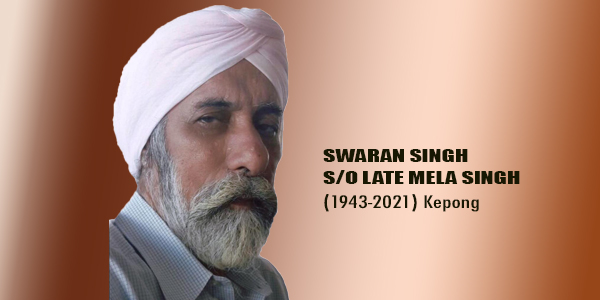
PATH DA BHOG:14 February 2021 (Sunday), 10am to 12noon, at our residence, 40 Jalan 36, Taman Desa Jaya, Kepong, 52100 Kuala Lumpur. This will a family affair due to pandemic SOP but you can join via Zoom | Malaysia
SWARAN SINGH S/O LATE MELA SINGH & LATE UTTAM KAUR, GRANDSON OF LATE BAKSHISH SINGH
The Family also request everyone to observe MCO SOP.
| Entry: 30 Jan 2021 | Source: Family
ASIA SAMACHAR is an online newspaper for Sikhs / Punjabis in Southeast Asia and beyond.Facebook | WhatsApp +6017-335-1399 | Email: editor@asiasamachar.com | Twitter | Instagram | Obituary announcements, click here |
Dr Swaiman Singh – Photo grab from his video entry. Background: A scene from Tractor Parade
By Asia Samachar Team | INDIA |
Lies and misinformation made their rounds on the ground to rattle the massive farmers’ Tractor Rally in Delhi on Tuesday (26 Jan), coinciding with India’s Republic Day.
They were believed to have been engineered with the intention of derailing an otherwise peaceful protest.
This was experienced firsthand by a medical doctor who has been volunteering at the Delhi protest sites for the last two months.
And he himself came under police lathi charge while attending to injured policemen and farmers on that fateful day. A lathi is a long, heavy iron-bound bamboo stick used as a weapon, especially by police.
US-based cardiologist Dr Swaiman Singh detailed the mayhem – including rowdy behaviours by a few people who looked like policemen that led to tear gas being fired – in social media updates two days after the incident.
“What happened is clear. There were people set up to aggravate both the police and protestors,” he said in a social media entry uploaded yesterday (Jan 28) while he was near a mandir at Pind California, near Delhi’s Tikri border. See his Instagram entry here.
“Throughout the day, so much fake news was being spread, the internet connection was broken, everyone was confused. The farmers are not from Delhi. They were confused, which is the barricade and which is the road. They were literally set-up to fail.”
Dr Swaiman, who heads the 5 Rivers Heart Association, alleged that there seemed to be attempts to provoke protestors to break barricades during the tractor parade, putting them in collision course with the police.
Farmers in their hundreds of thousands have been camping at roadsides at a number of Delhi entry points to press their demand to repeal three farm laws hurriedly passed by the Bharatiya Janata Party (BJP) led federal government.
Despite their numbers, the protestors, led by a clutch of farm (kisan) unions, have maintained peace and discipline on grounds like Singhu, Ghazipur, Tikri and Mukarba Chowk in Delhi. They had also maintained a calm composure in their discussions with the government. Their approach had won many hearts in India and globally.
In their engagements, the farmer leaders had always underlined the importance of keeping the protest peaceful. They were focused on forcing the Narendra Modi led Bharatiya Janata Party (BJP) federal government to repeal the laws which they claim will further ruin the farmers’ position, already under stress as seen with numerous suicides in their ranks.
By and large, the tractor parades went on peacefully in most places despite barricades springing on some of routes that had been agreed between the farmers’ representatives and the police.
Then there was an incident where a group of protestors had marched towards Lal Qila or Red Fort, a historic fort in the city of Delhi. The move, condemned by the farmers’ leadership, hogged media headlines and was abuzz on the social media.
EYE WITNESS ACCOUNT
Recalling what happened on Tuesday, Dr Swaiman said his team medical, consisting 32 ambulances and some 220 volunteers, had stationed themselves near Delhi’s Nangloi metro station.
“As soon as we arrived there, some people came to us and told us that the Nihangs had injured two policemen. I thought to myself how could this happen. I sent two doctors to check it out, and they found nothing.
“Minutes later, a few more people came, telling us: ‘Go to the other side [of the barricade]. Police have injured your people.’”
Fearing something untoward had taken place, Dr Swaiman dispatched some ambulances, while he went ahead on foot. The police had allowed them to cross the barricade.
“When we arrived the other side, we found nothing. We asked the police if anyone’s injured, they just laughed at us,” he said.
It was then he suspected that something sinister might be afoot to provoke farmers so that they will break the barricades to ‘help’ their supposedly injured farmers on the other side.
Suddenly, he said the police began manhandling protestors, and tear gas were shot ‘directly into the faces’ of the protestors. One of them hit a tractor driver in his face causing him to lose control of his machine. It ran into a barricades and the incident was believed to have injured some policemen.
In the ensuing melee, he said many policemen and farmers were injured.
“We started treating people – police and farmers – on the spot. We had to do stitches….” he said.
Some 90 minutes later, he said two policemen came towards them and began hitting them with lathis.
“They hit us brutally. At that moment, we were treating a policeman, with one volunteer holding an IV tube for an injured person.
“They fractured arms of three doctors, hit a guy in the skull, nearly opened up his skull. The police officers on our side then had chased those policemen away, and apologised to us,” he said.
Started in 2012, the 5 Rivers Heart Association holds medical camps in underserved areas of Punjab, India. They provide free medical care including health screening and medications for patients.
At this moment, it is providing round the clock care to protesting farmers, which include patients of varying ages, with a multitude of comorbidities, according to an update at its website.
ASIA SAMACHAR is an online newspaper for Sikhs / Punjabis in Southeast Asia and beyond.Facebook | WhatsApp +6017-335-1399 | Email: editor@asiasamachar.com | Twitter | Instagram | Obituary announcements, click here |






















 JASBIR KAUR CHANDI