UA-56202873-1
Page 444

The Custodian of SEEDS

0
By Sukhveer Kaur | MALAYSIA |

You are mother,
Daughter,
Wife

You are the backbone of family structure
You are the conserver of biodiversity
The custodian of SEED

You nurture the earth
With abundance of your love
You sow the SEED with compassion
And suddenly your hopes are dashed when globalisation hits

You lose your traditional knowledge passed on from generations to
generations from mother to daughters.

You lose the power of your custody,
It is stolen from you.
You are suddenly deskilled of your knowledge

All you see is diversification,
Important element, source of water is taken away by building canals
and privatising water resources, you have to look for another
alternative to get water, to feed your family, animals and plants.

You lose the custody of SEEDs which was once your very own pride but
now it is stolen from you and patented by big companies who claim it
is their right.
Women your life has always been a struggle and always is one,
But you never lose your hope and keep on “Fighting for your rights.

(The author has revisits her poem, first written in 2016, as Sikhs celebrate Parkash Purab of Guru Nanak. Guru Sahib who himself sowed the seeds of love and worked the farm and today the farmers are very hard hit by difficulties.

The original poem came about when she was undertaking a project on how MNCs and TNC were affecting farmers by genetically modified (GM) seeds ruining their crops. And how they become bonded slaves to pay for the GM seeds and pesticides. Many farmers  committed suicide as they could not pay off the loans.)


RELATED STORY:

Waking up with farmers on protest vigil (Asia Samachar, 30 Nov 2020)


ASIA SAMACHAR is an online newspaper for Sikhs / Punjabis in Southeast Asia and beyond. Facebook | WhatsApp +6017-335-1399 | Email: editor@asiasamachar.com | Twitter | Instagram | Obituary announcements, click here |

Sikh police officer victim of racism and bullying, claims Aussie daughter

0
By Preetinder Grewal | AUSTRALIA |

The daughter of a Sikh NSW police officer claims that her father is suffering from Post-Traumatic Stress Disorder (PTSD) and major depression due to alleged bullying and harassment at work. These claims are also currently being investigated by an independent authority.

38-year-old Jasbir Singh who moved to Australia in 2005 from India, had joined NSW Police in 2009.

Mr Singh, who is now a Senior Constable, started his first assignment in Sydney and was later transferred to a regional area in New South Wales, where he is currently posted since 2013.

SBS Punjabi understands that while working at police stations between 2013 and 2019, Mr Singh made numerous complaints of what he described as being subjected to bullying and racist behaviour by fellow police officers.

In 2016, when Mr Singh became a ‘baptized’ Sikh he was given permission to seek exemption for keeping an uncut beard at work.

Mr Singh’s daughter Ebony alleges that during this time her father claimed that he was often called ‘rat, hippy, brown sugar, terrorist, Muhammed’ by various colleagues just because of his appearance and cultural background.

Read the full story, ‘Sikh police officer’s daughter makes heartfelt plea to Premier Berejiklian to investigate racism and bullying allegations’ (SBS Punjabi, 1 Dec 2020), here.


RELATED STORY:

British Sikh shares hate crime when he was 15, then again in university (Asia Samachar, 28 Nov 2020)


ASIA SAMACHAR is an online newspaper for Sikhs / Punjabis in Southeast Asia and beyond. Facebook | WhatsApp +6017-335-1399 | Email: editor@asiasamachar.com | Twitter | Instagram | Obituary announcements, click here |

Why are Music and Melody spiritual tools?

0
By Jagdesh Singh | OPINION |

At my age, hazy memories of my first handful of years on this earth are as rare as an honest politician. A couple of nights ago, a song from ‘The Sound of Music’ was playing in the car radio. A gush of emotions enveloped over me unexpectedly. A big portion of it was of happiness that can only stem from childlike feelings.

“When the dog bites
When the bee stings
When I’m feeling sad
I simply remember my favorite things
And then I don’t feel so bad”

And then the vision appeared in my imagination’s periphery.

My mother, slimmer and much younger, was singing to me and my sister of that song, her voice doing justice its melodious chorus, the grass we sat on seemed greener from the freshness of a light rain drizzle. I was barely 5, if my memory hopefully serves me well, we were at the fringe of the home garden before our family had moved on when I was 6. Mom’s smile as she effortlessly sang the lyrics, the coolness of the air thinly played with our skin.

And then life caught up before I could saviour the memory. But the emotions I had lingered on to the night, however. Before it rubbed off from the boisterous noise of my own family at dinner time, these emotions reminded me of how my wife used to sing songs of pop culture to her daughters at their age that was the same as mine in that memory. Not as classical as ‘The Sound of Music’, but equally melodious and soothing.

The songs our Mothers sang to us, and the ones we sing to our children, are vessels where our basic values are inherited from. I really believe this. I do really believe this because of the holding power memories of these songs have on me even 4 decades later. When we can remember that feeling from the memories, we will also remember our loved ones of yesteryears, what they meant to us, and ultimately their influence they’ve had on us. These memories are inscriptions of the values we’ve since imbibed in our psyche from all those years before. Whether we still hold on to these values or we have matured on to different values, these values of our early years make the foundation to what we have today.

This power of music, an ensemble of melodic signatures, is also why singing and the listening of songs have been the cornerstone of many a spiritual teachings. Sikhism isn’t unique in this sense, but we’ve always been more pronounced in employing song and melody, our keertans in almost all our religious customs has been a necessity, not implored upon but rather looked forward to by us all.

Guru Nanak, when inspired by the invincible Grace of God, would summon his compatriot and keen follower, Bhai Mardana, to pick up the Rebab as His Words flow to whomever the message was meant for. And we’re told, His rendering of His Message would spiritually pierce deeply into one’s soul, the vibrations from the melody of the Rebab transforming into the vessel for the intended message.

I now understand why.

If a simple song can perform miraculous time-travel for me back to 40 years ago, it is no wonder why the great sages, the saints and the Gurus hold firmly to employing music, melody and sounds to perform spiritual awakenings, which I construe to be miracles in their own sense as well.

The power of song and music can transport you to other worlds your imagination can conjure. Whether it’s some deeply hidden memory within the confines of your mind, or some purely new planes of existence, our souls can’t get enough of it.

Go ahead. Crank up some media player, search for a familiar tune from your childhood, close your eyes and fully immerse yourself in being there again, even for a couple of seconds.

Jagdesh Singh, a Kuala Lumpur-based executive with a US multinational company, is a father of three girls who are as opinionated as their mother

* This is the opinion of the writer, organisation or publication and does not necessarily represent the views of Asia Samachar.


RELATED STORY:

The plight of the Rohingya (Asia Samachar, 29 April 2020)

When a Sikh boy gets bullied by white girls (Asia Samachar, 14 June 2020)

ASIA SAMACHAR is an online newspaper for Sikhs / Punjabis in Southeast Asia and beyond. Facebook | WhatsApp +6017-335-1399 | Email: editor@asiasamachar.com | Twitter | Instagram | Obituary announcements, click here |

Waking up with farmers on protest vigil

0
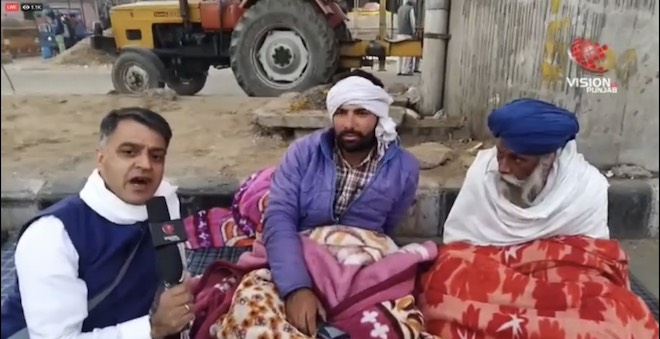
Farmers waking up at Delhi’s Tikki border – Photograb from Vision Punjab TV
By Asia Samachar Team | INDIA |

What’s on the minds of the farmers converging at a number of entry points to Delhi to protest the three farm laws passed by the nation’s legislature earlier? What is the mood a few days into the movement?

Catch this programme at Punjab Vision TV which literally takes you on a morning walk amongst the protestors at the Tikkir border, some of them just getting up to another chilly morning.

They have come are from Panjab, Haryana, Rajasthan and a number of other states.

“We are in chardi kalaa,” said one protestor as he’s preparing tea in cauldron, under a highway, with lorries and trucks all around.


RELATED STORY:

Panjab farmers dig their heels in farm law protest  (Asia Samachar, 20 Nov 2020)


ASIA SAMACHAR is an online newspaper for Sikhs / Punjabis in Southeast Asia and beyond. Facebook | WhatsApp +6017-335-1399 | Email: editor@asiasamachar.com | Twitter | Instagram | Obituary announcements, click here |

Gurpurab message from Sikh Advisory Board, Singapore

1
STATEMENT FROM SIKH ADVISORY BOARD, SINGAPORE


Waheguru Ji Ka Khalsa, Waheguru Ji Ki Fateh!

The Sikh Advisory Board (SAB) would like to wish all Sikhs a Happy Gurpurab on the occasion of the 551st birth anniversary of Sri Guru Nanak Dev Ji, the first Sikh Guru, today.

2020 has been a challenging year for many of us, on various fronts: Some economic, some health-related and some disruptive to other aspects of our lives due to the pandemic and its related mitigating measures. Similarly, we have not been able to sit in Sadh Sangat (holy congregation), listen to live Kirtan (religious verses being sung), have langgar in the langgar hall (partake in the free kitchen) and mark, in large ways, Gurpurabs and other religious festivals this year.

As a community we have shown great resilience, sacrifice and cooperation to adhere to the safe distancing and socially responsible behaviour expected of us. The SAB commends the community for its positive attitude in putting societal considerations above self-interests. This is line with Sri Guru Nanak Dev Ji’s teaching:

“Nanak Naam Chardikala, Tere Bhane Sarbat Da Bhalla”

[Nanak asks for ‘Naam’ (name of God) with which comes well-being, happiness and positive spirit and with your blessings, Lord may we have the betterment of all mankind]

As we mark Sri Guru Nanak Dev Ji’s birth anniversary today, let us also remember that among Guruji’s treasure of teachings was the importance of tolerance and respect, equality, inclusiveness and social justice. As the world gets mired by the ill-effects of the pandemic, these virtues are likely to be tested within society, deepening the fault lines of race, religion and class among others. The unfortunate incident earlier this month, of a young Sikh boy being physically abused by two of his schoolmates in Telford, UK, is one such example.

While the SAB rejects such actions, we are also mindful that this is yet another reminder of how we must be proactive to educate others of our faith and practices, build bridges where they may not exist and mend those that have been broken. Within Singapore, the SAB shall continue to work with partners, schools, agencies and other community groups to improve the understanding of Sikhs and Sikhism among the wider society.

We take such an approach with the aim that it also allows us to inculcate in our lives the values embodied by Sri Guru Nanak Dev Ji’s life and teachings.

Stay in Chardi Kala and May Guruji shine His Divine Light on all of us this Gurpurab.

Waheguru Ji Ka Khalsa, Waheguru Ji Ki Fateh!


[The above statement was emailed to Asia Samachar]


RELATED STORY:

Guru Nanak’s 10 teachings we can practice daily (Asia Samachar, 29 Nov 2020)


ASIA SAMACHAR is an online newspaper for Sikhs / Punjabis in Southeast Asia and beyond. Facebook | WhatsApp +6017-335-1399 | Email: editor@asiasamachar.com | Twitter | Instagram | Obituary announcements, click here |

My birthday wish

0
By Manjit Kaur (UK) | OPINION |

Today is my 58th birthday, I was born on 29th Nov 1962. Because of the lockdown, sadly I will not be able to spend the day with my children and grand children like I usually do. However, they will popping around but we can only meet on the door step and I will not be able to hug them!

One of the few good things about the COVID-19 lockdown is that I have had a lot of time to reflect on life and the world. This has been a very worrisome year for me with Brexit, Trump, COVID-19 and the Punjab farmers crisis. There is enough here to keep us all depressed, but I really feel it is important, now more than ever, to remain positive about the future.

Back to my birthday, I have been thinking a lot about what ageing means to me. When people approach older age they often begin to get worried about their appearance. Some people dread getting older and might even be embarrassed to say how old they are.

I don’t know if this was always the case, but it seems like because we live in such a visual culture, where we are bombarded by photoshopped images on social media, we are constantly thinking about our appearance. There is a lot of pressure on us all to remain young, fit and healthy. It seems like society is suffering from an obsession with youth!

But I think this is the wrong way to think about ageing. When I think about getting older, I don’t think about losing something, but rather, as each month and year goes by, along with greying, I feel I am growing and gaining. I see my life like a tree which begins as an acorn but then grows into a sapling and then into a large tree providing protection, shelter, energy, fruit, housing and may other things.

Like the tree, as I age I feel I am able to grow and spread, to be more connected and to be able to see further like the branches and deeper like the roots. And for me this also reflects a more profound sense of beauty, which is not just about the colour or texture of your skin, but how you feel inside.

Some people become isolated as they enter older age, but I feel the opposite; I feel like I want to reach out and connect with more people. So I see so as I reflect on my life today, I look forward to the future, not with dread, but optimism. I look forward to continue to mature and develop, and yes one day, like all living things, I will leave this world.

In reality our lives are but a tiny moment in the history of the world; we are just like a wave in the ocean or a blast of wind, or a grain of sand, we come and we go in an instant. So it’s not how long you live that really matters, but what you achieve in the precious moments that you have on the Earth.

I have come to realise our aim is not to become rich and famous, but to leave a positive mark, however insignificant that might seem. So it could be as simple as to become a good listener, to produce great art or music, to write amazing stories, to give care and love, or just to make somebody smile.

So on this birthday I ask not for gifts or accolades, I simply ask for a commitment from my friends to make somebody smile, somebody loved, somebody feel wanted. And if enough of us can do this, together we can make the world a happier and more peaceful place.

Manjit Kaur, a UK-based therapist and counsellor, is a presenter of the 1 Show on Akaal Channel. She can be contacted via email at manjitkaur1show@gmail.com

RELATED STORY:

Dealing with loss, separation during Covid-19 crisis (Asia Samachar, 13 May 2020)


ASIA SAMACHAR is an online newspaper for Sikhs / Punjabis in Southeast Asia and beyond. Facebook | WhatsApp +6017-335-1399 | Email: editor@asiasamachar.com | Twitter | Instagram | Obituary announcements, click here |

Panjab farmers dig their heels in farm law protest 

0
Panjab farmers and their supporters at the Shumbu border – Photo: Harpreet Singh / Asia Samachar
By Asia Samachar Team | INDIA |

Panjab farmers entered into the fourth day of protests, with more joining the thousands who had already descended upon the borders of New Delhi.

Emerging with their trailers, trucks, lorries and sheer determination, they are protesting three recently passed federal laws relating to trading and pricing of agricultural products, deemed detrimental to the farmers from Panjab and the other states.

After attempts to stop their advance failed – the authorities had thrown bolders on the road and instituted other measures to stop the advance of the farmers to New Delhi – now it seems negotiations are also not making any headway.

Union Home Minister Amit Shah had on Saturday appealed to the farmers to shift to the Sant Nirankari ground in Burari that was offered to them for peaceful protests and said the Centre was ready to hold discussions with them as soon as they move to the designated place.

However, the farmers have rejected the offer, deciding to stay put at the Delhi borders, with a huge number also flooding the Singhu and Tikri borders.

“We have decided that we will stay put at the Delhi borders. We will not go to Burari,” Bharatiya Kisan Union (Dakaunda) president Buta Singh Burjgill told The Tribune in a telephone conversation.

What is the issue?

In June 2020, the Government had introduced to Parliament three ordinances in the name of agricultural marketing reforms. They were Farmers (Empowerment and Protection) Agreement on Price Assurance and Farm Services Ordinance, 2020; Farmers’ Produce Trade and Commerce (Promotion and Facilitation) Ordinance, 2020; and, Ess­en­tial Commodities (Amendment) Ordi­nance, 2020. The bills were passed into law despite vehement opposition.

The farming policy of the present government led by the Bharatiya Janata Party (BJP) as articulated through the new laws constitutes a watershed moment in reflecting this government’s agenda in favour of deepening the entry of agrobusiness capitalism and that of increased centralised control of agriculture in India, argued economist Prof Pritam Singh who is now a visiting scholar at University of Oxford. See here.

Haryana farmers clearing the road for on-coming Panjab farmers headed for the protests at New Delhi – Photo: Gurpreet Kotli

Pritam argued that the opposition to these bills has emerged from three quarters: first, from the farmers’ organisations, fearful about the survival of farming communities as a result of agrobusiness corporations’ takeover of the farming sector; second, from state governments, fearful about increasing central intrusion into states’ federal rights over agriculture; and third, from regional parties, fearful about these bills further empowering the several aggressive centralist attacks of this government on regional identities and aspirations.

On his part, Prime Minister Narendra Modi does not seem to be in any mood to give in to the protestors. In his monthly address today (Nov 29), he said that the ‘reforms had opened doors to new possibilities’.

“These reforms have not only removed many restrictions for farmers, but have given them new rights, and new opportunities,” he said.

Preparing langgar for Panjab farmers and their supporters at the Shumbu border – Photo: Harpreet Singh / Asia Samachar


RELATED STORY:

Letter: Violent Crackdown on Punjab Protests in India (Asia Samachar, 29 Nov 2020)

BJP’s farming policies: Deepening India’s agrobusiness capitalism and centralisation (Asia Samachar, 18 Oct 2020)

ASIA SAMACHAR is an online newspaper for Sikhs / Punjabis in Southeast Asia and beyond. Facebook | WhatsApp +6017-335-1399 | Email: editor@asiasamachar.com | Twitter | Instagram | Obituary announcements, click here |

Guru Nanak’s 10 teachings we can practice daily

2
Guru Nanak portrait by Bhagat Singh Bedi (Source: SikhArt)
By Dr. B.S. Bains OPINION |

On the Birth Celebration of A Great Godly Man, Guru Nanak Dev Ji, sent to the World as a messenger of Almighty. He was encapsulated with Divine Miraculous Might, Vigour, Wisdom, Potential Initiation and Convincing Power. The world celebrates his birthday this November.

He established the fact 551 years ago, that there is No Hindu and Non Muslman.. There is only One Power beyond us, the Ultimate Truth.. God! His Religion is Humanity and Human brotherhood.

His clear message was “if one is a Hindu then be a virtuous Hindu and if one is a Muslim then better a tolerant and virtuous Muslim.” And that “No religion teaches to slander the others, non teaches us to feel the grandeur of being in a particular religion.” Conversion or to convert was never his agenda. If that was so he would have done so to his two close companions, one Hindu Bala and one Muslim Mardana, who travelled the world over with Guru Ji.

ਨਾ ਹਮ ਚੰਗੇ ਆਖੀਅਹ ਬੁਰਾ ਨ ਦਿਸੈ ਕੋਇ ॥ …1015 Raag Mary

(I never want to say that I am the best nor shall I see fault in others)

He did not combine the Two faiths to form one. He only professed, if one longs to find The Creator, then there is only one way… He Himself is everywhere and realizes Him only within us.

Only by way of virtuousness one can realise His existence through the guidance of True Masters – Satguru.

His greatest teachings that we can be put to practise in our daily life are:

  1. Make righteous Earning; Share with the unfortunate and be Meditative in all dealings at all times.
  2. Look for the Creator within ourselves.
  3. Never Slander another religion and people with different belief systems.
  4. Be humble, kind and humane.
  5. Respect Women and give them equal rights in the homes of worship.
  6. Contentment is a way of life.
  7. Be a master over Lust, Anger, Greed, Pride and Attachment. Don’t allow them to rule us.
  8. This life is a gift as The Supreme Form of His Creation (Human). Make best use of it and prepare to leave this body so that the soul is freed from taking another form of life.
  9. Take joy in realising the wonders of His Creation – (Vismaad) The universe and their form, vegetation and its hues and freshness, skies and its splendour, water and its diversity.
  10. Be a master over and Control the FIVE sensors of our body (5 Indri), sight, touch, hearing, taste and smell.

These simple teachings can be carried out by every human. His teachings are thus universal and His vision was a gift to share that he was sent with to spread within us humans.

Dr Balwant Singh Bains is a Malaysia-based kirtan enthusiast and a practicing physiotherapist with a chain of physiotherapy clinics.


RELATED STORY:

Merry Gurpurab: Don’t extinguish the magic (Asia Samachar, 28 Nov 2020)


ASIA SAMACHAR is an online newspaper for Sikhs / Punjabis in Southeast Asia and beyond. Facebook | WhatsApp +6017-335-1399 | Email: editor@asiasamachar.com | Twitter | Instagram | Obituary announcements, click here |

Letter: Violent Crackdown on Punjab Protests in India

By LETTER | CANADA |
Letter from British Columbia Gurdwaras Council (BCGC) and Ontario Gurdwaras Council (OGC), dated 27 Nov 2020, to Canada foreign minister François-Philippe Champagne.


RE: Violent Crackdown on Punjab Protests in India

We are writing to you with the concerns of the Sikh community residing in Canada regarding the rising authoritarianism in India. Specifically, we are concerned about the repression of dissent witnessed during a farmer protest march from Punjab to Delhi over the past 48 hours. We write to ask you to fulfil your role by raising our concerns with your counterparts in India and condemning violent crackdowns against the protests.

This past September, the central government — taking cover behind the pandemic and various public health restrictions — forced three bills through Parliament which drastically impact the livelihood and futures of farmers across the subcontinent. Not only did the ruling government undermine its own institutions by circumventing debate in the Rajya Sabha, but it further undermined its own supposedly federal structure by unilaterally usurping authority delegated to individual states in the Indian union. This is a further example of the ruling establishment centralizing political power in Delhi under a government that is committed to functioning like an authoritarian regime.

Farmers associations across the subcontinent are concerned that unfettered liberalization of the agricultural sector will further exacerbate already stress-ridden communities by exponentially increasing debt leading to farmer suicides and driving down income with the eventual corporate takeovers of farmlands. In order to understand the concerns of Sikhs in Canada however, it is important to recognize the full context of these bills with regards to Punjab.

A vast majority of the population and economy in Punjab depends on the agricultural sector due to policies imposed by the central government. While this strategy turned Punjab into the ‘breadbasket of India’, it has come at the cost of vast economic and ecological devastation to Punjab itself. In combination with violating riparian principles to forcibly transfer river water to other jurisdictions without compensation, and unconstitutionally taking over the rights to the hydroelectricity generated by Punjab rivers, the imposed policies have resulted in rapidly drying up water resources in the region, skyrocketing cancer rates, higher levels of farmer suicides, and alarming levels of air pollution. As articulated by the protests on the ground, this is not just a matter of economic policy but a fundamental question of democracy: the right of Punjab to autonomously determine its own agricultural policy and tend to its own economic, social, and environmental needs.

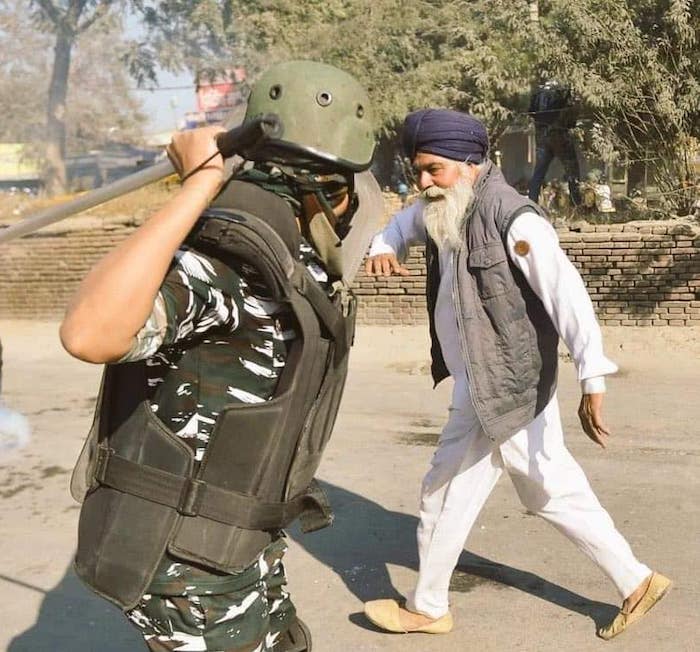
Despite Punjab’s elected legislature passing statutes that would lessen the harsh impacts of the bills, the Delhi-appointed Governor has refused to sign the bills in order for them to become law–again, choking out one crucial avenue of remedy. In response to the call of farmers to converge in Delhi for a rally on November 26, hundreds of thousands began marching from Punjab in the past 48 hours. In response, security forces have sealed off highways, fired water cannons, and brutally beat countless protestors exercising their right to protest. This is once again another example of Delhi repressing Punjab’s right to protest and determine its own future.

There is a discernible trend towards authoritarianism, populism, and fascism around the world today and Canada has claimed a role in condemning violations and working to promote the right to protest in China, Saudi Arabia, and elsewhere. Canada must genuinely fulfill this responsibility and express its concerns with India as well. The rise of violent fascist rhetoric, the unilateral abrogation of Article 370 in relation to Kashmir and the recent citizenship amendment laws are clear illustrations of India’s authoritarian trajectory. As a member of the international community, Canada must ensure that its international partners are not trampling human rights, whether that be through genocidal violence or repressing basic civil rights like voting and protesting.

As you know, Sikhs in Punjab have been struggling to establish a just, peaceful political settlement in South Asia since the British Transfer of Power to the Indian state in 1947. When bids for autonomy through political agitation and civil disobedience were met with repressive state violence and genocide, it became clear that self-determination was only possible through the establishment of an independent, sovereign state, Khalistan. In 2020, the Indian state is still unwilling to respect or facilitate internal selfdetermination to any degree–again illustrating that sovereignty and independence are the only effective solution.

While we acknowledge that internal policy matters of a foreign country are subject to principles of noninterference with regards to the bills themselves, it is pivotal that Canada condemns India’s violent actions and supports the right to dissent in India as it does around the world. Sikhs all over the globe are watching closely as the Indian state is amping up its rhetoric while demonizing Sikh protestors. Historically, this pattern has preceded the legitimization of mass arrests, widespread violence, and human rights abuses.

We are asking that Canada fulfill its moral responsibility by exerting diplomatic influence with its international partners to support the right to self-determination–from individual rights to dissent, to the right of peoples to freely determine their political status.


Regards,

Moninder Singh, Spokesperson, BCGC

Amarjit Singh Mann, BCGC Spokesperson, OGC

Cc:


The Right Hon. Justin Trudeau, Prime Minister, P.C., M.P.
Justin.Trudeau@parl.gc.ca

The Hon. Erin O’Toole, Leader of the Opposition,
Erin.OToole@parl.gc.ca

New Democratic Party of Canada Leader, Jagmeet Singh
Jagmeet.Singh@parl.gc.ca

GBloc Quebecois Leader, Yves-Francois Blanchet
Yves-Francois.Blanchet@parl.gc.ca


RELATED STORY:

BJP’s farming policies: Deepening India’s agrobusiness capitalism and centralisation (Asia Samachar, 18 Oct 2020)


ASIA SAMACHAR is an online newspaper for Sikhs / Punjabis in Southeast Asia and beyond. Facebook | WhatsApp +6017-335-1399 | Email: editor@asiasamachar.com | Twitter | Instagram | Obituary announcements, click here |

Jaggies Singh (1959-2020), Rawang

SASKAAR / CREMATION:  Cortege leaves No. 87, Jalan GU 2/7, Taman Garing Utama, Rawang, Selangor 11 am, 29 November 2020 (Sunday) for cremation at Jalan Loke Yew crematorium at 12pm | Malaysia

ਜੇਹਾ ਚੀਰੀ ਲਿਖਿਆ ਤੇਹਾ ਹੁਕਮੁ ਕਮਾਹਿ ॥ ਘਲੇ ਆਵਹਿ ਨਾਨਕਾ ਸਦੇ ਉਠੀ ਜਾਹਿ ॥੧॥

SARDAR JAGGIES SINGH S/O LATE SARDAR DEBARA SINGH

Departed peacefully on 28th November 2020

Wife: Late Madam Ratan Kaur

Leaving behind children, grandchildren, family & friends.

Cortege leaves No. 87, Jalan GU 2/7, Taman Garing Utama, Rawang, Selangor 11 am, 29 November 2020 (Sunday) for cremation at Jalan Loke Yew crematorium at 12pm

Details of Path Da Bhog to be announced later.

Contact:

Kaljit (+60 17-646 7327)

Balvinder (+60 14-719 0955)


| Entry: 28 Nov 2020 | Source: Family

ASIA SAMACHAR is an online newspaper for Sikhs / Punjabis in Southeast Asia and beyond. Facebook | WhatsApp +6017-335-1399 | Email: editor@asiasamachar.com | Twitter | Instagram | Obituary announcements, click here |