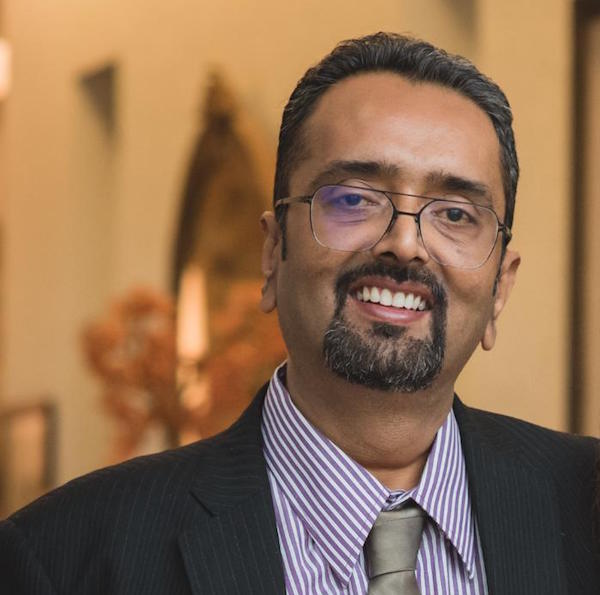
Punjabi Deli’s Kulwinder Singh featured at Roads and Kingdoms – Photo: Screengrab from website / Photographer: Cengiz Yarder
By Adwait Patil | ROADS AND KINGDOMS |
For the five years that Kulwinder Singh spent behind the wheel of a cab, grocery stores and delis across New York turned him away from their restrooms, even when he was a paying customer. Cab drivers he knew would go the entire day without a bathroom break, and there were rarely designated parking spots for longer periods away from the road or in case of emergency. When he took over a small storefront shop called Punjabi Grocery & Deli on East 1st Street in 1994, his first thought was to offer cab drivers a 24-hour restroom, free of charge—a place to decompress during or after a long day behind the wheel. Twenty-five years later, Punjabi Deli is a neighborhood institution.
Punjabi Grocery and Deli is a typical South Asian canteen, serving a simple menu of rice, chaat (a variety of snack food common across the Subcontinent, consisting of fried doughs and chutneys), and a collection of staple vegetable dishes like saag (spinach), chana masala (spiced chickpeas), yellow dal, and curried potatoes with bell peppers. The dark green awning that reaches out over the sidewalk bears only the word Punjabi, the demonym for people from the region of Punjab, split between northwestern India and eastern Pakistan, where Singh was born.
Punjabi Grocery & Deli – Photo: Grocery Facebook page
Despite its fame and the occasional name-drop on food-TV programs, Punjabi Deli & Grocery remains, first and foremost, a space dedicated to the diaspora communities who, for years, have kept New York moving. As an immigrant and a former cab driver, Singh still feels connected to the thousands of South Asian cabbies working New York’s streets, and who come to his Deli.
Read the full story, ‘Punjabi Deli: New York’s Favorite Rest Stop’ (23 Jan 2019, Roads And Kingdoms), here.
Punjabi Grocery & Deli – Photo: Grocery Facebook page
ASIA SAMACHAR is an online newspaper for Sikhs / Punjabis in Southeast Asia and beyond.Facebook | WhatsApp +6017-335-1399 | Email: editor@asiasamachar.com | Twitter | Instagram | Obituary announcements, click here |
AKHAND PATH: Commencing 9am, 31 Jan 2019 (Thursday) at residence No 11, Lorong Oh Cheng Keat, 30350, Ipoh, Perak. PATH DA BHOG: 2 Feb (Saturday), 10am-12noon, at Gurdwara Sahib Bercham, Ipoh|Malaysia
Akhand Path: Akhand Path commences at 9am, 31 January 2019 (Thursday) at residence No 11, Lorong Oh Cheng Keat, 30350, Ipoh, Perak.
Path da Bhog: 2 February (Saturday), 10am-12noon, at Gurdwara Sahib Bercham, Ipoh
Contact:
Mohanjeet 012-5020495
Dr Simmrat 012-5051951
Dr Gurnam 012-4288494
| Entry: 25 Jan 2019 | Source: Family |
ASIA SAMACHAR is an online newspaper for Sikhs / Punjabis in Southeast Asia and beyond.Facebook | WhatsApp +6017-335-1399 | Email: editor@asiasamachar.com | Twitter | Instagram | Obituary announcements, click here |
PATH DA BHOG: 3 February 2019 (Sunday), 9.30am-12pm, at Gurdwara Sahib Selayang Baru |Malaysia
Chand Kaur (1931-2019), Selayang
CHAND KAUR D/O GURBAK SINGH
Village: Rarr, Tesil Mansa
Born: 23 August 1931
Departed: 25 January 2019
Husband: Bachan Singh
Children / Spouses:
1) Mithoo Singh / Pearljeet Kaur
2) Balbier Kaur / Darshan Singh
3) Harbans Kaur / Satwant Singh
4) Sukhdarshan Singh / Paramjit Kaur
Also leaving behind a host of granchildren, relatives and friends
Path da Bhog: 3 February 2019 (Sunday), 9.30am-12pm, at Gurdwara Sahib Selayang Baru
Contact:
Harbans Kaur (daughter) – 0163397856
Arjanpreet Singh (grandson) – 0162780728
Mahajoth Singh (grandson) – 0165009433
| Entry: 25 Jan 2019; Updated 27 Jan 2019 | Source: Family |
ASIA SAMACHAR is an online newspaper for Sikhs / Punjabis in Southeast Asia and beyond.Facebook | WhatsApp +6017-335-1399 | Email: editor@asiasamachar.com | Twitter | Instagram | Obituary announcements, click here |
Traditional fire wood crematorium in Jalan Loke Yew, Kuala Lumpur. A cremation in progress in early 2016 – PHOTO / ASIA SAMACHAR
By Gurmukh Singh OBE | PANJAB TIMES |
Akaal Chalaana (death) in a family is a traumatic experience. In addition, there are the funeral arrangements and the last rites – Antam Sanskaar in case of Sikh families – which have to be taken care of. Much confusion about religious rituals is added to the tragic loss in the family. However, the family is helped by relatives, friends and dedicated community sevadars of the Sangat (congregation). They provide comfort and guidance and, at such times, we learn the value of local Sangat as part of our extended family.
We also look for Gurmat guidance in the Sikh Reht Maryda (The Sikh Code) regarding related ceremonies. This is provided at Article XIX – Funeral Ceremonies (Antam Sanskar). The whole process has been simplified in Sikhi. Yet, I do wonder if, contrary to that guidance, sometimes we complicate matters due to ignorance and anti-Gurmat ritualism.
Sikhi guidance advises the family to seek consolation in dignified recitation of Waheguru only and not raise hue and cry or indulge in breast beating and such show of grief. The deceased should not be put on the floor, nor a lamp lit nor should any other such bipran ritual be performed. The body should be cremated.
However, if that is not possible the body can be immersed in flowing water or disposed of in any other manner. The Sikh Reht Maryada makes it clear that, depending on the circumstances, there should no qualms about the method of disposing the body, except that it should be treated with respect, bathed and clothed and the Five Kakaars should be left intact.
What follows is fairly straight forward. Following Ardas (supplication) for taking the body for cremation the assumption is that it is taken straight to the crematorium and cremated after Kirtan Sohila and final (agan bhet) Ardas. Other than Sehaj Paatth which can be completed in about ten days or later and final Bhog, no funeral ceremony remains. The preference is that the reading of the Guru Granth Sahib should be carried out by the members of the household of the deceased and relatives in cooperation.
The whole of Article XIX – Funeral Ceremonies (Antam Sanskar) in the Sikh Reht Maryada should be read. It is clear that, except for seeking consolation in recitation of Gurbani and Waheguru Naam Simran, Kirtan Sohila, and Ardaas to mark each stage, much discretion is left to the family about disposal of the body and the ashes according to the circumstances. When the pyre is burnt out, the whole bulk of the ashes, including the burnt bones, should be gathered up and immersed in flowing water or buried at that very place and the ground levelled. Raising a monument to the memory of the deceased at the place where his dead body is cremated is taboo; the picking of the burnt bones from the ashes of the pyre for immersing in the Ganga, at Patalpuri (Kiratpur), at Kartarpur Sahib or at any other such place are contrary to the approved code.
We should follow the simple, Gurmat based procedure during Atam Sanskaar in the spirit of the Reht Maryada guidance and give up practices carried over from Brahmanic ritualism.
Gurmukh Singh OBE, a retired UK senior civil servant, chairs the Advisory Board of The Sikh Missionary Society UK. Email: sewauk2005@yahoo.co.uk. The article first appeared at The Panjab Times, UK
* This is the opinion of the writer, organisation or publication and does not necessarily represent the views of Asia Samachar.
ASIA SAMACHAR is an online newspaper for Sikhs / Punjabis in Southeast Asia and beyond.Facebook | WhatsApp +6017-335-1399 | Email: editor@asiasamachar.com | Twitter | Instagram | Obituary announcements, click here |
Global business applications provider Sage Group has appointed Sushil Singh as their Chief Growth Officer for Asia.
In an announcement, Sage Asia said Sushil will be responsible for developing sales strategy and driving sales results across Asia, covering all customer segments including SSB, Start-Up and Enterprise.
“My role is to drive growth and adoption of the extensive Sage solution portfolio across Asia” he told Asia Samachar when asked what would his role entail.
Sage supplies a broad range of solutions including accounting, human resources, payroll, business intelligence, CRM and ERP to business ranging in size from start-ups to multi-national corporations. Its listed arm, Sage Group Plc, is UK’s largest software company.
With over 20 years of cross-industry experience, Sushil was most recently Chief Growth Officer at BizGo, where he successfully completed Series D funding.
Previously, Sushil held the roles of General Manager of Acumatica, Strategic Alliances Director at NetSuite and spent a decade in multiple senior roles at Microsoft, the Sage Asia statement added.
To succeed in the new role, Sushil said that you would need to understand customers’ needs across segments, verticals and countries stretching from India to China.
“In essence, you need to be a strategic thinker that can deliver a comprehensive plan that can be executed at a tactical level,” he said.
Sushil has a Bachelor of Commerce in Accounting and Information Systems from Curtin University as well as a CPA Australia qualification.
ASIA SAMACHAR is an online newspaper for Sikhs / Punjabis in Southeast Asia and beyond.Facebook | WhatsApp +6017-335-1399 | Email: editor@asiasamachar.com | Twitter | Instagram | Obituary announcements, click here |
Asia Samachar: MEDIA PORTAL FOR SIKHS / PUNJABIS. You are welcome to submit community updates, opinions and views on issues that matter to the Sikhs/Punjabis. Send them via Facebook messenger or email to: asia.samachar@gmail.com or editor@asiasamachar.com
[When communicating with us, include your name, handphone number, your Facebook handle and email address. You may include a pseudonym if you don’t want to use your real name, but we will require your real name for our record purposes. Asia Samachar prides itself on being accurate, balanced and clear in our reporting. If and when you detect that we do not live up to that expectation, do let us know. We strive to serve readers to the best of our ability]
PS: DO INTRODUCE ASIA SAMACHAR TO YOUR FAMILY AND FRIENDS. LIKE US ON FACEBOOK, AND CHECK OUT OUR WEBSITE (www.asiasamachar.com)
ASIA SAMACHAR is an online newspaper for Sikhs / Punjabis in Southeast Asia and beyond.Facebook | WhatsApp +6017-335-1399 | Email: editor@asiasamachar.com | Twitter | Instagram | Obituary announcements, click here |
PATH DA BHOG: 02 February 2019 (Saturday), from 09.00 am to 12.00 noon, at Gurdwara Sahib Alor Setar|Malaysia
02 February 2019 (Saturday), from 09.00 am to 12.00 noon, at Gurdwara Sahib Alor Setar
TARA SINGH S/O MASA SINGH
Village: Sarliali
Born: 9 Oct 1935
Departed: 19 Jan 2019
Wife: Late Savarani Kaur d/o Late Sohan Singh
Children/spouses:
Late Amrik Singh
Late Pritam Kaur / Avtar Singh (son in law)
Harjit Kaur / Joginder Singh(son in law)
Jasbir Singh / Gursharanjit Kaur (daughter in law)
Manjit Singh / Susil Kaur (daughter in law)
Mohan Singh / Late Jagjit Kaur (daughter in law)
Path da Bhog: 02 February 2019 (Saturday), from 09.00 am to 12.00 noon, at Gurdwara Sahib Alor Setar
Contact:
Jasbir 017-3714879
Mohan 011-16878858
Manjit 016-5981016
| Entry: 22 Jan 2019 | Source: Family |
ASIA SAMACHAR is an online newspaper for Sikhs / Punjabis in Southeast Asia and beyond.Facebook | WhatsApp +6017-335-1399 | Email: editor@asiasamachar.com | Twitter | Instagram | Obituary announcements, click here |
Amarjeet Singh Chawla aka Sporty Singh featured in 2019 Tata Mumbai Marathon promo video – Photo: Video gra
On Sunday, Amarjeet Singh Chawla successfully completed his 101st half marathon at the Tata Mumbai Marathon. And the 63-year old runner, popularly known as Sporty Sikh, is not about to stop soon.
“My next target is to hit 151 half-marathons, and run abroad, if I can find the sponsorship,” he told the Success and Ability, India’s cross dis-ability magazine which featured him on the cover of its latest issue. “101 is a shubh number.”
Amarjeet is no stranger to the sporting world. And he has an interesting story to tell.
To make ends meet, Chawla runs a lottery shop and has now ventured into insurance service business.
Here is an abbridged version of the article ran by Success and Ability:
It all began rather unassumingly. Amarjeet Singh Chawla was at a family function, in Asansol, when he received a text message from the National Association for the Blind (NAB), an invitation to be part of the seven-kilometre run at the Standard Chartered Mumbai Marathon (SCMM) 2004, of which NAB was to be a beneficiary. Due to macular degeneration, Chawla’s sight began deteriorating from the age of 13, leading to complete loss of sight by the time he was 40. For Chawla, who was 48 years old then, life was meandering on. His bread and butter came from the small lottery shop that he ran at Malad in Mumbai, while his wife ran a small insurance service business.
“My wife and I visited NAB to enquire about the event and then and there I decided to go for it, just to prove to the world that blind people aren’t incapable”, shares Chawla.
This was the starting point. An adrenaline rush then set in. Following the SCMM 2004 run, Chawla decided that he had to do something bigger. He enrolled himself for the half-marathon, i.e., a 21.0975 km run, at the SCMM 2004. He practiced vigorously for this and roped in an escort to run with him. On 16, January 2005, at the age of 49, he ran his first half marathon, completing it in about two hours. Chawla reminisces, “Completing my first half-marathon with such good timing meant a big deal to me. I decided to run more marathons”.
There’s been no looking back since then. His life started getting punctuated by half marathons, the punctuations falling closer and closer together with time. When he completed his 25th half- marathon, at Pune, he thought of setting a target for himself. He became fixated on completing 101 half marathons. “101 is a shubh number”, he says. Curiously, his 101st half marathon, slated for 20 January 2019, will be at the 2019 Tata Mumbai Marathon (formerly the SCMM), where it all began. His 100th half-marathon was Mumbai’s Powai Run on 6 January 2019.
In the last couple of years, he has been averaging about 20 marathons a year!
Besides, Chawla has also completed several treks in the Himalayas and Sahyadri ranges that have taken him to the Sar Pass, Saurkundi Pass, Kedarnath Trek, Valley of Flowers, Jaisalmer Dessert Trek and Dalhousie to name a few. He has also completed the famous 300 km Mumbai-Shirdi rally walk. In 2009, he became the first blind person to scale the Dolma Pass (Mount Kailash) at 19,830 feet in Tibet. “I could’ve tried for the Everest base camp trek, but I didn’t have sufficient funds, nor a proper escort”, he rues. Then there are his exploits in swimming – Chawla won the 50 m freestyle gold at the ‘All India Swimming Competition for the Disabled’ in Mumbai in 2004.
Lack of availability of escorts prevents Chawla from preparing/training for marathons by running long distances. Runners with visual impairment run marathons with escorts, the escort and marathoner holding the edges of a 10-inch rope and running in tandem, with the escort guiding the marathoner as to when to turn, when to change direction, step up/down, etc. “The only training that I do is on-the-spot jogging, holding the railing of the staircase at my house and Pranayam. On the marathon days, I don’t take up any specific preparation. I just wake up, get ready, have bread-and-butter with tea, and pray to God to give me the courage and the power to complete the marathon”.
ASIA SAMACHAR is an online newspaper for Sikhs / Punjabis in Southeast Asia and beyond.Facebook | WhatsApp +6017-335-1399 | Email: editor@asiasamachar.com | Twitter | Instagram | Obituary announcements, click here |
Assistant Commissioner of Police (ACP) G/8223 Harjinder Kaur D/O Gurdial Singh retires on 21 January 2019 from the Royal Malaysia Police (RMP). This highest ranking Malaysian police Sikh lady has served the police force with full dedication and patriotism for 41 years, 1 month and 10 days.
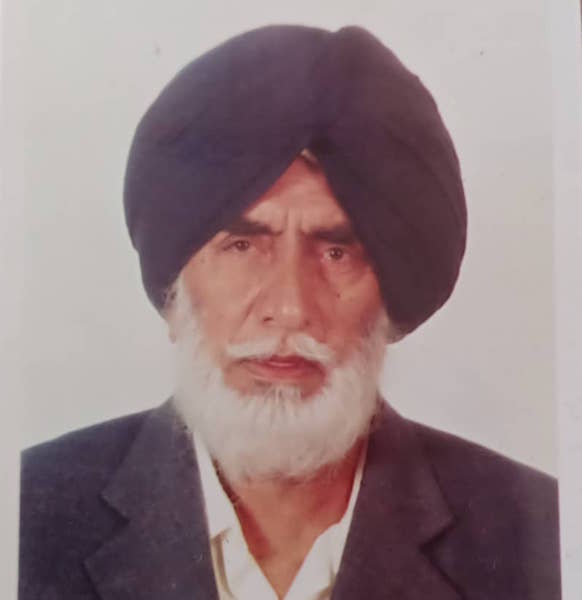
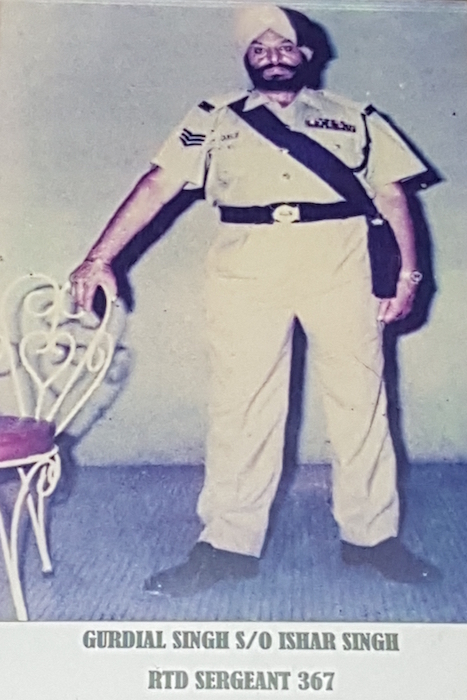
ACP Harjinder followed her father’s footsteps, Late Sardar Sergeant 367 Gurdial Singh S/O Ishar Singh, who originated from Punjab, India and served in the Malaysian police force for 34 years. On this note, even her father-in-law, late Sardar Charan Singh S/O Arjan Singh, was a Malaysian police Sergeant 6510.
Hailing from a family of police background, this Iron Lady in Blue has achieved various milestones in her career.
She started her police career with the rank of Inspector on 11 December 1977. She has served in various ranks and capacities, in the local district, contingent and headquarters levels.
Among the police departments she served included the Special Branch, Management Department, Commercial Crime Investigation Department (CCID), Anti-Money Laundering (AMLA) under the IGP’s Secretariat, and her last post as the CCID Chief in the Selangor contingent.
Based on her achievements and good performance, ACP Harjinder was honored with many medals and awards at the federal and state levels (PSPP, KMN, PPP, AMN, AIS, PPA, PJPN).
While serving in the hotspot Klang district in Selangor, she was awarded “Wanita Cemerlang Selangor Award”, a distinguished award by the Sultan of Selangor in 2002.
Late Sardar Sergeant 367 Gurdial Singh
During her career, she escorted many VVIPs including then British Prime Minister Margaret Thatcher and Princess Hitachi of Japan providing protective security.
ACP Harjinder comes from a highly qualified academic family where five of her siblings are PhD holders and five Masters Degree holders, including herself as she possess a Masters in Law (LLM) from University Malaya and Bachelor of Law (LLB – Hons.) from the International Islamic University Malaysia (IIUM).
She is married to an engineer, Sardar Paramjit Singh S/O Charan Singh, and blessed with three children: the eldest daughter a medical doctor and two budding doctors pursuing medical degrees.
Being a crime buster in the white collar crime, she has spoken in many local, regional and international platforms including the Malaysian Banking Summits and ASEANAPOL. Equipped with legal background and years of hardwork and determination with transformational leadership, she has paved the way for modern policing.
As she retires today, with a smile she reminiscences the long journey in RMP and reiterated: “I am proud to have served my country and have fond memories of this journey. I hope more Sikhs, especially ladies will take up the challenge to join the Royal Malaysian Police to serve the community at large in Malaysia.”
ASIA SAMACHAR is an online newspaper for Sikhs / Punjabis in Southeast Asia and beyond.Facebook | WhatsApp +6017-335-1399 | Email: editor@asiasamachar.com | Twitter | Instagram | Obituary announcements, click here |
Sohan Singh Bhakna: Founder of revolutionary Ghadr Party – Photo: Source unknown
By Amandeep Singh Madra | PEOPLE | US |
It’s easy to be mistaken by this picture of a gentle, stooped, grandfatherly 95 year-old. He was in fact one of the most feared and dangerous men in British India. So feared was he by the British that, shackled in irons, he was held for 16 years in near solitary confinement 1000kms off the shore of India for fear of the revolution he tried to spark.
This is Sohan Singh Bhakna, founder of the revolutionary Ghadr Party. When India joined WW1, every young Punjabi man was vigorously encouraged to join the Indian Army; British officials, Indian nobility, Indian district bureaucrats, even the Indian National Congress and Mahatma Gandhi joined forces to promote recruitment. Opposing that consensus was a vociferous, violent energetic group, operating from North America called the Ghadrs, or revolutionaries.
Sohan Singh Bhakna became active in the early nationalist movement before he joined the small pioneering stream of men who moved out of Punjab to the Pacific Northwest in the early 1900s where he worked in lumber mills. America wasn’t colonising India but there was no lack of racism and discrimination toward the ‘Hindoo’ labourers and Bhakna rapidly joined the early Indian labour movement.
He founded the Ghadr party with other North American Indians who agitated for the overthrow British colonial authority in India by means of an armed revolution. The Ghadrs viewed the Congress-led Independence movement as soft and unambitious so adopted a harder stance with their principal strategy to entice Indian soldiers into armed revolt against the British taking particular advantage of the vulnerability of the First World War.
Their revolutionary plans included smuggling arms to the passengers of the Komagatu Maru on their return to India, making overtures to the German Embassy in the US, pumping out revolutionary messages to Indian soldiers via their prolific pamphleteering. Their most seditious and dangerous plot was to coordinate violent armed revolutionary activity with Indian soldiers in SE Asia. Alarmed, the British promptly arrested Sohan Singh as he tried to enter India in 1914 and tried for conspiracy.
Found guilty, he was sentenced to death. A sentence later commuted to life imprisonment in The Andaman Islands, 1000kms off the shore of India. There Sohan Singh settled into a period of revolt and activism with repeated hunger strikes to improve the conditions for his fellow prisoners. Both in the Andamans and back in India where he was imprisoned until 1930 he carried out hunger strikes for Sikh prisoner’s religious rights, the rights of lower caste Indian prisoners and in support of Bhagat Singh.
By the outbreak of the Second world war, Sohan Singh had been released 10 years and was an active and fearsome political voice for the Communist Party. War brought new rules, and the Indian Government arrested and interred the now 70-year-old Sohan Singh for 3 more years in an Indian jail lest he revive his violent tendencies during a time of wartime vulnerability.
He lived another 20 years after Indian Independence and the Partition, a constant and prolific voice in early Indian politics. He died in 1968, ending a phenomenal life of 98 years, in his home district of Amritsar.
Amandeep Singh Madra, an independent historian and co-author of a number of books on Sikhs, is also the co-foundee of United Kingdom Punjab Heritage Association (UKPHA) which organised the much-acclaimed Empire of the Sikhs exhibition
ASIA SAMACHAR is an online newspaper for Sikhs / Punjabis in Southeast Asia and beyond.Facebook | WhatsApp +6017-335-1399 | Email: editor@asiasamachar.com | Twitter | Instagram | Obituary announcements, click here |