UA-56202873-1
Page 612

Power duo

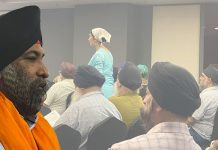
Amar Singh (left) and Gobind Singh Deo – Photo: Gobind Singh Deo Facebook page

A good photo opportunity not to be missed.

Malaysia’s top Sikh cop Amar Singh Ishar Singh today shared the stage with Gobind Singh Deo, the first Sikh to become a Federal government minister.

Commissioner Amar, the Federal Commercial Crime Investigation Department (CCID) director, is a third generation cop in his family.

Gobind, the Minister of Communications and Multimedia, is a well-respected politician.

They shared the stage today in a discussion on combating cyber crime.


RELATED STORY:

Historic moment. Gobind becomes first Sikh minister in Asia outside India (Asia Samachar, 21 May 2018)

Top Sikh cop Amar Singh now director at Bukit Aman (Asia Samachar, 10 Oct 2017)


ASIA SAMACHAR is an online newspaper for Sikhs / Punjabis in Southeast Asia and beyond. Facebook | WhatsApp +6017-335-1399 | Email: editor@asiasamachar.com | Twitter | Instagram | Obituary announcements, click here |

Day 22: The offering that God expects from us

1

By Surinder Kaur Sohan Singh | SIKHI STUDY | OPINION

Maa-ee Gobind pooja kahaa lai charaavo?

Avar na fool anoop na paavo. (SGGS 525)

ਮਾਈ ਗੋਬਿੰਦ ਪੂਜਾ ਕਹਾ ਲੈ ਚਰਾਵਉ ॥

ਅਵਰੁ ਨ ਫੂਲੁ ਅਨੂਪੁ ਨ ਪਾਵਉ ॥੧॥ ਰਹਾਉ ॥

Bhagat Ravidas ji is asking himself the above question.

Pooja means worship. Fool means flowers. Anoop means unique/ incomparable.

Meaning: O mother, what is the best offering that I can put in front of God to worship Him?

The whole of Nature is already doing His worship with so many different and beautiful flowers. I can’t find any flower that is more unique and incomparable to the ones that are already being offered to Him by Nature.

In the next few lines of the shabad Bhagatji says there are many other things that He has thought of offering to God in his prayer but they are all either too insignificant or are not pure anymore. They have been contaminated by others.

Example:

  • The milk has been contaminated by the calf.
  • The flowers have been contaminated by the  bees.
  • The fish has contaminated the water.
  • The sandlewood is always surrounded by poisonous snakes.
  • Things like fragrance, lamps, food  etc seem to insignificant to be offered to God.

This can also be our question. We are also all trying in our own way to put the best offerings in front of God.

  • the best flowers.
  • the best Rumalas.
  • the best buildings.
  • the best chandoas.
  • the best food, etc.

People spend thousands of dollars to bring flowers for God. Many of these flowers are put on the SGGS just for a few seconds and then replaced by other flowers. The same thing is also happening to the rumalas. Many of them remain in the cupboards or end up in the drains.

Bhagatji is actually raising  a very important issue for us to ponder on in His SHABAD.

How are these offerings helping in our spiritual progress? Do all these offerings give us extra merit points?

Guruji answers our questions as to what is the best offerings for God in the line on Pg 489:

Pooja keechai NAAM dhhiaaeeai bin NAAVAI pooj na hoey.

ਪੂਜਾ ਕੀਚੈ ਨਾਮੁ ਧਿਆਈਐ ਬਿਨੁ ਨਾਵੈ ਪੂਜ ਨ ਹੋਇ ॥੧॥ ਰਹਾਉ ॥

Meaning: If you are desiring to do the best pooja then contemplate on the NAAM ( the divinely virtues of GOD). Without doing that, all other efforts are futile . Without NAAM there is no real worship or adoration.

Bhagatji explains further in how to go about doing the best pooja on Pg 525:

Tan Man arpo pooj charaavo.

Gurparsad Niranjan paavo.

ਤਨੁ ਮਨੁ ਅਰਪਉ ਪੂਜ ਚਰਾਵਉ ॥

ਗੁਰ ਪਰਸਾਦਿ ਨਿਰੰਜਨੁ ਪਾਵਉ ॥੪॥

Tan means body. Man is mind. Gurparsad means with the blessings of the Guru.

Does the Guru choose certain people to give His blessings? No, He doesn’t do that. Guruji’s blessings is like the sun. It falls on everyone but if someone chooses to hide in the room then he will be deprived of the sun’s rays.

In the same way the message of the Guru is for everyone but if a person chooses not to read and follow the teachings then he will deprive himself of the Gurus blessings.

Meaning of the line: The best offering to God is our body and our minds.

But how can we offer our minds and our body to God?

We offer our minds when we give up our wrong thought processes and accept the Guru’s teachings. We offer our bodies when we give up our selfishness and start performing actions that also benefit others.

This is the real offering that God expects from us. The other things that we keep offering is just to satisfy our own wrong thinking. It is not what the Guru suggests and brings little spiritual benefits to the person.

Surinder Kaur Sohan Singh is a Malaysia-based Gurbani enthusiast. This is an edited version of her regular articles shared within a circle of fellow Sikhi seekers. The articles appear on Mondays and Thursdays.

* This is the opinion of the writer, organisation or publication and does not necessarily represent the views of Asia Samachar.


RELATED STORY:

Day 21:  Fareeda jaa lab taa nayhu kiaa? (Asia Samachar, 5 Oct 2018)

Day 20: No one can light dheeva for another (Asia Samachar, 1 Oct 2018)

Day 19: Dheeva balai andaera jaae (Asia Samachar, 27 Sept 2018)


ASIA SAMACHAR is an online newspaper for Sikhs / Punjabis in Southeast Asia and beyond. Facebook | WhatsApp +6017-335-1399 | Email: editor@asiasamachar.com | Twitter | Instagram | Obituary announcements, click here |

Jit Kaur: Kiwi Punjabi woman of the year

Jit Kaur

Jit Kaur was one of the winners at the Kiwi Punjabi Awards 2018 organised by the New Zealand Punjabi Multimedia Trust. Asia Samachar approached her to get her story. Here it is.

My name is Jit Kaur. My family use to call me Jitto.

I was born on 7 January 1952 at Lohian Jalandhar and come to Malaysia when I was one year old. I came from a big joint family where we live with my uncles, aunties, cousins and grandfather in a small town called Kalumpang in Selangor, Malaysia.

I migrated to New Zealand in 1989. I did my studies at Auckland Collage of Education and while working full time with people with disabilities.

In 2002 we formed the New Zealand Sikh Women’s Association (Inc.) as there was a need in the community as some of girls committed suicide and a baby drown as they had no support after getting married to New Zealand spouse and arrived in New Zealand. They faced so many problems in their daily life because of language barriers. They do not understand their rights in this new country.

So we used to meet fortnightly at Otahuhu temple having prayers and dinner. As we were growing bigger and getting client from community, we moved over to a small office. My role is to apply funding, networking, attending meeting and also making sure our operating systems are in place, on top of working full time with people with disabilities.

It has been my long term goal and passion to do something for my community to carry on. I have an inbuilt desire to help people. I look forward to new challenges. At this juncture, I’m feeling proud of my accomplishments.

On  15 September 2018 I was privileged to be awarded the Kiwi Punjabi Woman of the Year 2018. This award recognises the work I do within our community.


RELATED STORY:

I’m here because of my hard work, says NZ lawmaker Parmjeet Parmar (Asia Samachar, 20 Sept 2018)


ASIA SAMACHAR is an online newspaper for Sikhs / Punjabis in Southeast Asia and beyond. Facebook | WhatsApp +6017-335-1399 | Email: editor@asiasamachar.com | Twitter | Instagram | Obituary announcements, click here |

Canadian Sikh broadcaster wins American Emmy Award

Prabjot (PJ) Kaur Randhawa

Canadian-born investigative reporter Prabjot Kaur Randhawa is the first Sikh broadcast journalist to take home an American Emmy Award.

The KSDK NBC in St. Louis, Missouri, journalist won in the Health & Science category of the Mid-America regional Emmy for her investigative on prescription medications errors.

Her investigation revealed that large chain pharmacies are putting profit over safety, by requiring pharmacists fill more prescriptions per hour. The end result, PJ uncovered, is that a surprising number of customers go home with the wrong medication- which can be fatal.

As part of her report, PJ, as she’s known in the fraternity, questioned the state Pharmacy board and discovered they are taking no action to monitor these corporate pressures, or ensure the safety of the public, according to a statement.

“I feel an obligation to uncover instances where corporations put profit over public safety. As a Sikh and as a journalist, I believe it is my duty to uncover practices that can hurt or take advantage of the public,” she said in the statement.

“My strong belief system, rooted in my Sikh upbringing, reinforces my personal mission to uncover wrongdoing and shed light into the darkness we find in every aspect of society. I want people who read or watch my stories to come away with information that can benefit their families, and enrich the quality of their lives.”

A native of Winnipeg, Manitoba, PJ is a graduate of DePaul University’s prestigious Journalism program, where she earned her Master’s degree in 2011. She has since worked in almost every corner of the country.

PJ began her career as a Morning News Anchor at the ABC TV affiliate in Rapid City, South Dakota. In 2013, she became an Investigative Reporter for the NBC TV in Columbia, South Carolina.

During that time, she received the 2013 World Sikh Award for her political reporting. She also received the 2014 School Bell Award for her Education reporting. Her investigations were routinely seen in five cities across three states.

Since 2015, PJ has been an Investigative Reporter at KSDK NBC in St. Louis, Missouri. She is a four time Emmy Nominee, and was also nominated for a Missouri Broadcasters Award in 2018.

PJ’s parents – Sukhdev Singh Randhawa and Kuljinder Kaur Randhawa – moved to Canada almost 50 years ago as young adults.

Her father worked as a machinist at the Canadian national railway while her mother worked as a health care aid.

The Mid-America Emmy is  one of 19 regional chapters of the National Academy of Television Arts and Sciences, badged as the standard-bearers for excellence in the television broadcasting industry and the gatekeepers of the prestigious regional EMMY Awards.

Prabjot Kaur Randhawa – Photo: Prabjot Facebook


RELATED STORIES:

Parminder Singh to steer Mediacorp digital push (Asia Samachar, 20 March 2017)

ASIA SAMACHAR is an online newspaper for Sikhs / Punjabis in Southeast Asia and beyond. Facebook | WhatsApp +6017-335-1399 | Email: editor@asiasamachar.com | Twitter | Instagram | Obituary announcements, click here |

Sardar Kartar Singh: Winner of Malaysia’s Highest Galantry Award

Kartar Singh: Photo courtesy of Pride of Lions: Eminent Sikhs in Malaysia
By Dr Manjit Singh Sidhu | PRIDE OF LIONS: EMINENT SIKHS IN MALAYSIA |

Sardar Kartar Singh’s roots go back to Pre-Partition India. His father Sardar Gean Singh was born in Lahore, capital of the former Sikh Kingdom of Maharaja Ranjit Singh. The family migrated to Delhi sometime in the mid-1920s. This was a most fortunate move. They were able to sell their property and take the money to Delhi, the capital of British India. Their relatives who stayed back in Lahore lost Virtually everything at Partition of British India in August, 1947. The Partition delivered a cruel blow to the Sikhs in particular. As many as one-fourth of the total Sikh population of India (6 million in 1947) were residing in West Pakistan in 1947. All of the Sikhs had to flee to Hindu dominated India. Tens of thousands were killed in the riots that took place especially in the province of P 1mjab. During this exodus women were raped or kidnapped. Atrocities took place on both sides of the border.

HOW TO BUY A COPY? CLICK HERE.

From Delhi, Gean Singh together with a few ethers decided to migrate to South-East Asia. First they took a train to the port-city of Calcutta (now renamed Kolkata). There they stayed at Vadi Sangat Gurdwara. After purchasing ship tickets they set sail for Penang; upon disembarkation they stayed at Wadda Gurdwara located along Bricklin Road. From here he travelled south by train and settled in Kampar (a large tin mining town, lying to the south of Ipoh) in the first instance. Later he moved to Ipoh, the present capital of Perak and settled in an area near the Wadda Gurdwara, close to the Ipoh Railway Station.

Some members of the party settled in Bangkok, Thailand. Since he had some education in Lahore, he was able to get a job with the Malayan Railways. In Ipoh, he stayed in a locality called Buntong. This settlement had a large Sikh population; many of them were Sainis by caste; in the pre-war days Sikhs living here were cattle rearers; some of them were peddlers, selling cloth, going around surrounding areas and estates on bicycles; later they switched to Honda motorcycles. (This was revealed to me by a friend, Mr. Mer Chand, a former resident of Buntong, Ipoh).

Upon retirement, he joined a well-known motor company, Borneo Motors. According to his grandson (Dato’ Sri Rakhbir Singh), Gean Singh played an active role in overseeing the development of some Sikh Gurdwaras in Perak State.

BUNTONG BORN

Kartar Singh was born in Buntong, Perak, on 3rd November, 1930. At the age of seven he enrolled in Anderson School. The Japanese Occupation interrupted his studies. Following the return of the British after the Japanese surrender, he resumed his studies. He was a bright student and did well and went on to join the famous Victoria Institution in Kuala Lumpur.

Upon completing his Senior Cambridge, he joined the Malayan Civil Service. He was posted to the prison’s department and joined service in Alor Setar Prison. Upon promotion, he was sent to Taiping, the former capital of Perak State. Soon after completing his training, he was posted at Pudu Prison, in Kuala Lumpur, as a Senior Officer. After a few years he was transferred to Penang Prison as Deputy Superintendent.

PRISON INCIDENT

The year 1970 was important in his life. A disgruntled prison officer of South Indian origin gave a pistol to a prisoner. The prisoner armed with a gun made a bold move to escape. Kartar Singh happened to be at the main gate on that fateful day. As the prisoner tried to escape Kartar blocked him. The prisoner pointed his gun at Kartar Singh and fired his gun at point blank range.

Luckily for Kartar, the chamber was empty. Disregarding personal safety, Kartar overpowered the prisoner, thus toiling a daring escape. Later an inquiry was held and the truth came out as to how the prisoner got hold of the gun; he revealed that the gun was given to him by a prison officer. The officer who had given him the gun was charged and dismissed from service. This was revealed to me by a retired prison officer Mr. Parkash Jotiram, of Seremban.

For his brave act, Kartar Singh was awarded the SPGP, in 1971. It is the highest award for gallantry and bravery, and was presented by the King of Malaysia, His Royal Highness Tuanku Abdul Halim (The Sultan of Kedah), during his first term as Yang di-Pertuan Agong (1970 to 1975).

SEE ALSO: Pride of Lions 

This makes Kartar Singh, the only Malaysian Prison Officer who received the Sri Pahlawan Gagah Perkasa (SPGP) up to this date and the only Sikh in Malaysia to be given this award. The medal is now being kept by his eldest son, Dato’ Sri Rakhbir Singh, a practicing lawyer in Sabah. Living recipients of SPGP are paid an allowance of RM 400/ per month. He was the fifth recipient of this award. It can be given to any eligible person, both civilian and armed forces. According to Wikipedia it was first awarded in 1963 and last awarded in 2001. In all there have been 28 recipients of this distinguished award.

Now to trace his personal life. Sardar Gean Singh married Madam Jagjit Kaur d/o Sohan Singh (from Thailand) in 1956, in Penang, now deceased. Sardar Kartar Singh SPGP passed away in Penang on 3rd April, 1978.

The couple have four children namely, Harcharan Kaur (she now resides in Sydney, Australia), Surjeet Kaur formally a flight stewardess with Malaysian Airlines and later a Cabin Crew Officer in Kota Kinabalu), now deceased. Dato’ Sri K. Rakhbir Singh, a practicing lawyer in Sabah, followed by Sukhdev Singh, formerly a CaptaIn with Malaysian Airlines and later Flying Instructor with Air Asia, now deceased.

Pride of Lions: Eminent Sikhs in Malaysia authored by Dr Manjit Singh Sidhu.


RELATED STORY:

Pride of Lions (Asia Samachar, 28 Oct 2017)

Once Sikhs landed in Malaya, how many never revisited Punjab? (Asia Samachar, 24 Oct 2017)

Malaysian retired lecturer releases book on Sikhs in Pakistan (Asia Samachar, 24 Feb 2017)

ASIA SAMACHAR is an online newspaper for Sikhs / Punjabis in Southeast Asia and beyond. Facebook | WhatsApp +6017-335-1399 | Email: editor@asiasamachar.com | Twitter | Instagram | Obituary announcements, click here |

Rag Head

Sundeep Morrison in Rag Head at The Complex Hollywood. (Photo courtesy of Toky Photography)
Reviewed by Deborah Klugman | STAGE ROW |

The Complex Theatre | Through October 14

In August 2012, white supremacist named Wade Michael Page entered a Gurdwara, or Sikh temple, in Oak Creek, Wisconsin and shot and killed six people —another of the all too frequent hate crimes that continually debase our nation. Here in Los Angeles, Sikh writer/performer Sundeep Morrison became alarmed; her parents lived in Wisconsin and might well have been at that Gurdwara on that particular day. Calling home, she learned that her family was safe. But the incident had an impact, and inspired her to write a story about Sikhs living in the U.S. — who they are and what they believe, and the dangers they face as (mostly) people of color often mistaken for Muslims or Arabs by their ignorant or uninformed neighbors.

Rag Head is an adaptation of that story; it’s a solo show consisting of a series of monologues performed by Morrison and directed by Amitra Dhaliwal. Four of the seven characters are members of the same family. Patriarch Baljeet Singh, a gentle turbaned man in his 50’s, works in the convenience mart in a gas station; in a dialogue with an Anglo customer, he imparts a little about himself and his culture: his roots in India, the significance of his turban (to let people know that he is always available to help them), and his beliefs, which include respect for everyone, regardless of their faith, and an imperative to share one’s wealth.

The second monologue is a heated discourse from Dale, a white garage mechanic, talking to a pal about his daughter’s romantic relationship with a young Sikh doctor. Dale claims not to be a bigot, but he thinks people should stick with their own kind and he’s angry and bewildered that his daughter has called him a racist.

Some of the other characters include Baljeet’s wife, Simi, who worries that her doctor son Dev won’t get the promotion he deserves because of his beard and turban; Dev himself; and an administrator in the hospital where he works who learns that, per Simi’s prediction, Dev’s appearance has been the focus of complaints and he’s about to be bypassed once again for the position he’s applied for.

Rag Head was created as an effort to educate audiences and help provide an antidote to the hateful intolerance so pervasive in this country today. If you’re an enlightened Angelino who celebrates the diversity of our community and is sensitive to angry counter currents that boost intolerance in its stead, you won’t be much surprised by the content of Morrison’s show and its disturbing conclusion. That said, despite the time lapse between scenes necessitated by costume changes, the humor-etched monologues are effectively and affectingly executed, with Liza Elaine Stegall’s sound design and choice of music creating an apt aural backdrop for this writer/performer’s pressing message.

The Complex Hollywood, 6476 Santa Monica Blvd., Hollywood; Thurs.-Sat., 8 p.m., Sun., 3 p.m.; through Oct. 14. Tickets here. Running time: 40 minutes, with an additional audience Q and A/Sikh awareness workshop following the performance. (Ticket proceeds benefit the Sikh Coalition).

The article is courtesy of Stage Row. See here.


RELATED STORIES:

1984: I could smell gasoline (Asia Samachar, 1 June 2016)


ASIA SAMACHAR is an online newspaper for Sikhs / Punjabis in Southeast Asia and beyond. Facebook | WhatsApp +6017-335-1399 | Email: editor@asiasamachar.com | Twitter | Instagram | Obituary announcements, click here |

Ranjit Singh (1933-2018), Klang

PATH DA BHOG: 14 October 2018 (Sunday), 5pm-7pm, at Gurdwara Sahib Klang | Malaysia

Ranjit Singh (1933-2018), Klang

RANJIT SINGH A/L JAGAR SINGH

Village: Khota Guru Ka, Bhatinda

Born: 5 Jan 1933

Departed: 6 Oct 2018

Wife: Amar Kaur

Children / Spouses:

Balwant Singh / Gurmit Kaur

Kulbawant Singh / Gurbachan Kaur

Late Mahinder Singh

Satwant Singh (Bobby) / Sharanjit Kaur

Talwinder Kaur/ Baldev Singh

Kalwant Kaur / Jagjit Singh

Manjander Kaur

Kuldip Kaur / Sukhbir Singh (Daikin)

Saskaar / Cremation: 4pm, 6 Oct 2018 (Saturday), at Hindu Crematorium Simpang Lima Klang

Cortege Timing: Cortage leaves residence 59, Jalan Dato Yusof Shahbudin 4, Taman Sentosa, 41200 Klang at 3.30pm

Path da bhog: 14 October 2018 (Sunday), 5pm-7pm, at Gurdwara Sahib Klang, Selangor

Contact:

Balwant Singh 016 9129025

Kulbawant Singh 012 236 1461

Satwant Singh (Bobby) 012 6556560


| Entry: 6 Oct 2018 | Source: Family |

ASIA SAMACHAR is an online newspaper for Sikhs / Punjabis in Southeast Asia and beyond. Facebook | WhatsApp +6017-335-1399 | Email: editor@asiasamachar.com | Twitter | Instagram | Obituary announcements, click here |

Naam Clinic looking for medicine

1
Paramjit Kaur

Naam Clinic, a free clinic on Sundays in the heart of the Kuala Lumpur town, is short of medicine.

“We welcome medicine contribution from clinics or pharmaceutical companies. Donations are also welcome,” Paramjit Kaur, the secretary and administrator of the clinic, told Asia Samachar.

“Most of our cases deal with cough and fever, skin rashes and allergy. We get many foreign nationals as patients,” she said.

The clinic, which started operating in 2015, is under the purview of Naam Association Malaysia, now led by Gurdev Singh as president and Tejhvir Singh as vice president. Its advisor is Pritam Singh.

The clinic, which operates from 10am-2pm, has five volunteer doctors: Dr Jaswant Singh, Dr Subash, Dr Kulwant Singh, Dr Sanjeev Rampal and Dr Surinder Kaur. It operates at Wisma Tatt Khalsa at Jalan Raja Alang, a multipurpose complex of the Gurdwara Sahib Tatt Khalsa Diwan.

Paramjit can be contacted at 016-3903130.


RELATED STORIES:

Sikhs start free clinic in KL (Asia Samachar, 8 March 2015)

ASIA SAMACHAR is an online newspaper for Sikhs / Punjabis in Southeast Asia and beyond. Facebook | WhatsApp +6017-335-1399 | Email: editor@asiasamachar.com | Twitter | Instagram | Obituary announcements, click here |


Global police cooperation, social activism & human rights

0


By Gurmukh Singh OBE | OPINION |

A Tribune India headline reads: Intel shared by India led to raids on Sikh activists in UK.

(Ruchika M Khanna, 25 September). These raids based on shared intelligence, do raise some questions and concerns about international police cooperation. More so as we look at the record of the diverse regimes around the world regarding rule of law, independence of the judiciary, treatment of minorities, universal human rights, freedom of press and social activism.

The background to the Tribune report is the home searches conducted by the West Midlands Counter Terrorism Unit on the premises of some Sikh activists in the UK. Going by the Indian press and a statement made by the Midlands Police, this action was taken apparently as a result of the sharing of information between the governments of India and the UK.

In this context, one is also reminded of International Criminal Police Organization, known as Interpol which facilitates international police cooperation. It has an annual budget of around & Euro 113 million (Euro dollars) and had a membership of police forces in 192 countries in 2017. That means almost every country in the world including India and the UK are Interpol members and share information about criminals. Normally, it should be most re-assuring for law-abiding citizens that vigilant police forces around the world are working together to keep global law and order by sharing information and fighting international crime.

However, fighting terrorism can also become the means of suppressing the much-needed lawful community activism in areas of community cohesion and charity work, otherwise encouraged by governments through grants, awards and honours. Leaving aside the constitutional and legal aspects, the question is if UK social activists of Indian or Punjab origin would feel safe if they knew that the UK police and the Indian and Punjab police are sharing information about them? A most worrying aspect is how such information is obtained and for what purpose: to combat crime or to suppress lawful socio-political activism?

When we look around the world today, we find that many states themselves resort to terror tactics to fight terrorism! Two wrongs do not make a right. Amnesty International reports tell us of police brutality in many countries. A league table of countries which openly abuse human rights is published. It is well known that in some countries, signed confessions from those in police custody are obtained by using torture and threats.

Presumably, names of almost everyone known to them are obtained. It is possible that even names of politically troublesome but otherwise lawful activists at home and abroad are included in such allegedly signed confessions. The judicial processes can be manipulated by political interests. Charity and social workers become apprehensive when travelling abroad because, sometimes, the greatest need for charity work is amongst the most neglected sections of society in countries known for state terrorism.

Trade considerations can play a part in bi-lateral police cooperation between countries and a blind eye can be turned when it comes to human rights record of trading partners. Serious questions are raised about the justification for Midlands Police raids on some Sikh homes.

Gurmukh Singh OBE, a retired UK senior civil servant, chairs the Advisory Board of The Sikh Missionary Society UK. Email: sewauk2005@yahoo.co.uk. The article first appeared at The Panjab Times, UK

* This is the opinion of the writer, organisation or publication and does not necessarily represent the views of Asia Samachar.


ASIA SAMACHAR is an online newspaper for Sikhs / Punjabis in Southeast Asia and beyond. Facebook | WhatsApp +6017-335-1399 | Email: editor@asiasamachar.com | Twitter | Instagram | Obituary announcements, click here |

Day 21:  Fareeda jaa lab taa nayhu kiaa?

0

 By Surinder Kaur Sohan Singh | SIKHI STUDY | OPINION

Day 21:

Fareeda jaa lab taa nayhu kiaa?
Lab taa koora nayhu (SGGS 1378)

ਫਰੀਦਾ ਜਾ ਲਬੁ ਤਾ ਨੇਹੁ ਕਿਆ ਲਬੁ ਤ ਕੂੜਾ ਨੇਹੁ ॥

Lab is Greed. Nayhu means Love. Koora means of no value.

Bhagat Fareedji poses a question for us in the first line. In the second line He gives the answer to the question.

Bhagatji says when we have greed for worldly objects then what kind of love can there be in our hearts for God?

Even if there is love, it will be a very selfish kind of love.

Does this line apply to me also? Is my love for God also selfish and do I profess this love just to fulfil my own desires?

Normally whenever we are asked to do something we always ask this question: “What is the benefit in it for me?”

Very few people in the world perform selfless actions. We always think of personal benefits before we do anything.

What if we stop thinking about the benefits for a moment and start by asking the following question. What are my losses if I carry on this self-centred behaviour? What are the losses to me personally, my family, my society, the world.

A selfish action is a vice. If I carry on thinking of benefits ONLY to me, I am propagating a vice in me.

If instead, I ask this question: By practicing this vice, what are the losses I am incurring to myself and to everyone around me?

If this AWARENESS comes to me and I understand that with every selfish act of mine, I am incurring huge losses for myself, then I might try to prevent these losses in the future.

What are these losses to me personally, and also to the people around me?

The line below makes me aware of these losses:

So sukh mo ko Sant bathaavahu
Thrisna boojhai man  thripthaavai. (SGGS 179)

ਸੋ ਸੁਖੁ ਮੋ ਕਉ ਸੰਤ ਬਤਾਵਹੁ ॥
ਤ੍ਰਿਸਨਾ ਬੂਝੈ ਮਨੁ ਤ੍ਰਿਪਤਾਵਹੁ ॥੧॥ ਰਹਾਉ ॥

Because of my selfish attitude I have a very restless and unsatisfied mind. It keeps on asking for more and more. Before I can fulfil one desire, it is ready with the next desire. This disease that my mind is suffering from is called THRISNA.

The symptoms of this disease is anxiety, depression and restlessness. Because of my this state of mind I am of no use to myself and also to others around me. I create unhappiness wherever I go.

I am looking for someone who can help me to put out the fire of THRISNA in my mind and make it contented (thripthaavai).

The answer to my question is with the Guru/Sant.

Guruji says that my mind needs to become contented if I am desiring SUKH (Happiness). When I am in a good state of mind, only then will I be able to help others to reach to that state of Happiness.

Guruji gives me the answer on how to go about doing it in the following line:

Ja kai HAR DHAN soee soheila.

ਜਾ ਕੈ ਹਰਿ ਧਨੁ ਸੋਈ ਸੁਹੇਲਾ ॥

Dhan means wealth. Soheila means happy There are 2 kinds of wealth that can be collected. Worldly wealth (money, properties, jewellery, etc). Spiritual wealth (Contentment, Compassion, Love, Humanity, Humility, Giving, Caring).

Guruji has explained to me the difference between these 2 kinds of wealth. Worldly wealth is temporary and brings with it worry that it will be stolen, it will not last and I will have to leave it behind when I depart from this world. Spiritual wealth on the other hand cannot be stolen from me, it is permanent (I can take it along with me when I leave this world) and it brings with it peace and happiness.

This spiritual wealth has to be collected by using the wisdom of the Guru. As my spiritual wealth grows, the vices that were bothering me earlier (THRISNA) has started to lose its power and now it doesn’t pose any problems for me anymore. It has become my friend and it leaves me alone.

The spiritual wealth has helped my mind to become peaceful and happy.

Surinder Kaur Sohan Singh is a Malaysia-based Gurbani enthusiast. This is an edited version of her regular articles shared within a circle of fellow Sikhi seekers. The articles appear on Mondays and Thursdays.

* This is the opinion of the writer, organisation or publication and does not necessarily represent the views of Asia Samachar.

RELATED STORY:

Day 20: No one can light dheeva for another  (Asia Samachar, 1 Oct 2018)

Day 19: Dheeva balai andaera jaae (Asia Samachar, 27 Sept 2018)

Day 18: In search of eternal bliss (Asia Samachar, 24 Sept 2018)

ASIA SAMACHAR is an online newspaper for Sikhs / Punjabis in Southeast Asia and beyond. Facebook | WhatsApp +6017-335-1399 | Email: editor@asiasamachar.com | Twitter | Instagram | Obituary announcements, click here |