| Press Statement | New York | 22 May 2017 | Asia Samachar |
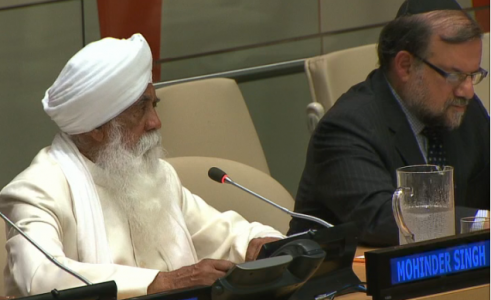
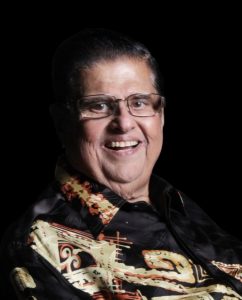
SIKH VIEWPOINT: Guru Nanak Nishkam Sewak Jatha UK Chairman Bhai Mohinder Singh Ahluwalia making a presentation at United Nations headquarters in New York on 14 July 2017. He took part in the meeting of the plan of action for religious leaders and actors to prevent incitement to violence that could lead to atrocity crimes. The event was organised by the Office on Genocide Prevention and Responsibility to Protect, the International Dialogue Centre (KAICIID), the Network for Religious and Traditional Peacemakers, and the World Council of Churches. – PHOTO / Grab from UN TV Web
UNITED NATIONS SECRETARY-GENERAL AND RELIGIOUS LEADERS UNITE TO LAUNCH PLAN OF ACTION TO PREVENT AND COUNTER INCITEMENT TO VIOLENCE.
[NEW YORK, 14 JULY, 2017]: The first ever plan of action designed to prevent incitement to violence that could lead to atrocity violence was launched today at a meeting held today in the ECOSOC chambers at United Nations Headquarters in New York.
The plan of action was developed by the United Nations Office on Genocide Prevention and the Responsibility to Protect, with the support of KAICIID, the World Council of Churches and the Network for Religious and Traditional Peacemakers.
The event was inaugurated by Secretary-General of the United Nations, António Guterres; Under Secretary-General and Special Adviser on the Prevention of Genocide, Adama Dieng; and Secretary-General of KAICIID, Faisal Bin Muaammar. Amongst a number of religious leaders of individual communities from around the world, Bhai Sahib, Bhai Mohinder Singh Ahluwalia, Chairman and Religious Leader of Guru Nanak Nishkam Sewak Jatha UK, provided a Sikh perspective on the panel discussing the role of religious leaders in preventing incitement to violence.
Bhai Sahib Ji commented, “This Plan of Action and the process by which it has been developed is highly commended. The misuse of religion to provoke violence is a symptom of diseased minds. To eliminate this disease at the source, we must lovingly liberate our minds through empowering ourselves with the values of compassion, truthfulness, selfless contentment, humility and love. Only peace within oneself can lead to peace around us.”
Implementation of the Plan of Action will contribute to the prevention of atrocity crimes, especially in areas affected by religious and sectarian tensions and violence and enhance the respect, protection and promotion of human rights, including the rights to freedom of opinion and expression, freedom of religion or belief and peaceful assembly.
At the launch meeting, religious leaders, the United Nations, Member States, and civil society began discussing strategies for the implementation of the Plan of Action and the coordination between religious leaders and implementing agencies. Important next steps include the dissemination of the Action Plan among Member States, relevant UN agencies and other stakeholders.
[Statement prepared by Guru Nanak Nishkam Sewak Jatha UK, sent via email. It was confirmed by an official of the jatha]
DISTINGUISHED: (L-R) Politician and lawyer Karpal Singh, judge Harmindar Singh and IMR’s Dr Bhagwan Singh
By Ajit Singh Jessy | OPINION | MALAYSIA
The Sikhs first arrived in then Malay states in two batches in the 1870’s. The first were the Sikhs who revolted against British rule in India and were arrested and banished. The second batch, which came in large numbers and were brought by the British to serve in the police, known as Malay States Guides. Their numbers increased in tandem with the expansion of British rule over all the states of Malaya. Along with the uniformed Sikh personnel others came on their own and settled all over Malaya, particular in the West Coast States. Likewise Sikhs arrived and settled in Sabah and Sarawak around the same time.
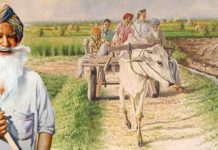
Many became watchmen/security guards. Within one generation the Sikhs moved up the employment chain and ventured into the transport business around the tin mines, as well as various professions. The initial migrant Sikhs placed great emphasis on education and this foresight paid great dividends as the younger generation moved away from being policemen, watchmen, cattle rearers and bullock cart drivers.
Compared to the relatively small segment of the population numbering less than 100,000 out of a 30 million population, Sikhs have been punching way beyond their weight in almost every profession.
POLICE FORCE: Sikhs rose rapidly within the police ranks and served in every category, as heads of CID and other departments right up to the rank of Chief Police Officer (CPO). The current CPO of Kuala Lumpur is Datuk Amar Singh Ishar Singh. SAC1 U. Santokh Singh served as Chief Police Officer Selangor. He had the distinction of being the first Malaysian to receive training at the Federal Bureau of Investigation (FBI) and Scotland Yard. SACI Dershan Singh, Deputy Director of Criminal Investigation Department (CID) Malaysia. SACII (R) Dato’ Nashatar Singh served as Deputy Commandant of Police Training Centre (PULAPOL) and retired as Deputy Director of Internal Security and Public Order, Bukit Aman.
LEGAL: The Sikh community has produced outstanding Advocates & Solicitors and some of these personalities have brought great pride to the nation and the community. Tan Sri Swaran Singh Gill (SS Gill) began his career as a Court Interpreter in 1935 and retired as the Chief Justice. His remarkable rise from an interpreter to the Chief Justice is reflective of the career advancement of many other Sikhs. Another well know legal eagle was the late Y.B Karpal Singh, who was also a leading politician. Dato’ Jagjeet Singh served as Senior Federal Counsel, Attorney General’s Chambers and retired as Session’s Court Judge. Datuk Harmindar Singh Dhaliwal currently sits as Court of Appeal Judge Dato Amarjeet Singh A/L Serjit Singh is Head of Civil Division of the Attorney Generals Chambers of Malaysia and D. Sunita Kaur Jessy is Judge of Session’s Court, Ipoh.
EDUCATION: Sikhs have made tremendous contributions in the field of education from Primary to University. Some of the well-known names were the Mr Karam Singh, Headmaster Clifford School Kuala Kangar, Mr Joginder Singh Jessy, Headmaster Sultan Abdul Hamid College, Alor Setar who was a well know author of History books on Malaya/Malaysia which were used as school text books in primary, secondary and Form Six classes. Mr Ajmer Singh and Master Gurdial Singh were conferred Tokoh Guru for their contributions as educationist.
ACADEMICANS: In this field too there have been many prominent Sikhs who have contributed immensely and held prominent positions. Prof. Dr Saran Kaur Gill, Deputy V.C. University Kebangsaan Malaysia (UKM), Prof Dr. Harchan Singh, Deputy V.C AIMST University, Dato’ Dr Parmjit Singh CEO of Asia Pacific Institute of Information Technology (APIIT) being amongst many others.
MEDICAL: The medical field along with the legal profession, have produced many outstanding Sikhs. Leading Sikh’s have served both in the government and private sector and many have been pioneers. Notable amongst these are Dato’ Dr Keshmahinder Singh, who played a key role in the setting up of the Tun Hussein Onn Eye Hospital, Petaling Jaya. Dr R Bhagwan Singh, Director of the Institute of Medical Research (IMR), who bequeathed his bungalow worth about RM500,000.00 in 1980 to the institute of Medical Research, Dato’ Dr. Bhuprinder Singh, the leading pathologist. Dato’ Dr Harnam Singh consultant Otorhinolaryngologist, Head and Neck Surgeon, Consultant Anti-Aging Physician. Dr Pall Singh, Tun Hussain Onn Eye Hosipital and Dato’ Dr Jagjeet Singh Sambhi (Obstetrician and Gynecologist).
ARMED FORCES: Many Sikhs have served with distinction in ensuring peace and tranquility in the nation. There were three Brigadier Generals, Rajbans Singh Gill, followed by Brigadier General Baljit Singh and Brigadier General Dato’ Ranjit Singh. Many others held the ranks of Colonels, Lieutenant Colonels and majors.
POLITICS: Despite their rather small number, Sikhs have also been active in politics at the national and state levels. The Second President of the Malaysian Indian Congress (MIC) was Baba Budh Singh. Dato Mahima Singh, Karam Singh, Karpal Singh, Gobind Singh Deo and Ramkarpal Singh Deo were elected to Parliament. Other’s were appointed as Senators, namely Dato’ Rina Bhar, Dato Chet Singh, Tan Sri Kernail Singh Nijar, Dato’ Paranjit Singh and Dato Daljit Singh Dalliwal. In Penang we have the first Sikh Executive Council Member (Exco) Jagdeep Singh Deo.
SPORTS: Sikhs have also been active in almost all sports with such leading names as Datuk Santokh Singh (Football), Dato Nashtar Singh (Javelin) Swaran Singh (shot put). Amarjit Singh Jessy, (Class 1, International Hockey umpire), Jagjit Singh (Rugby Skipper), Karamjeet Singh (Motor Ralling), Lall Singh (Cricket), Dilbagh Singh Kler from Sabah (5000 meters) and Dato Dr Cheema who is Patron of Malaysia Singapore Sikh Sports Council (MSSSC), which organizes annual sports festival for Sikhs. The most recent was hosted by the Royal Malaysia Police Sports Association (RMPSSA) at Kelab Aman in Kuala Lumpur in June 2017.
Some of the other Sikhs who have made great strides in their career and contributed to nation building are Tan Sri Dato’ Seri Ranjit Ajit Singh who is the Executive Chairman Securities Commission, Dr. Sukhdave Singh current Deputy Governor Bank Negara, Dato’ Gurcharan Singh, 1st General Manager of EON who was responsible for sales and marketing Proton cars, Dato’ Seri Chet Singh who as head of Penang Development (PDC) saw to the establishment of the nation’s first Free Trade Zone (FTZ) which led to Penang being transformed into an International Manufacturing hub. Tan Sri Ajit Singh who served as Ambassador and Secretary General Association of Southeast Asian Nations (ASEAN). Dato Seri Paduka Lakhbir Singh Chahl who served as the Secretary, Penang City Council and Secretary General Regional Network of Local Authorities for Asia Pacific (CITYNET).
Finally, I wish to acknowledge the assistance and advise rendered by Dr Harjit Singh of USM in the preparation of this brief write up on the Contribution Of Sikhs In MALAYSIA.
Dato Ajit Singh Jessy is a Penang-based lawyer practicing in Industrial Relations and is supportive of Sikh causes. He made a presentation on this topic a a recent Penang Heritage monthly talks.
[ASIA SAMACHAR is an online newspaper for Sikhs / Punjabis in Asia. How to reach us: Facebook message or WhatsApp +6017-335-1399. Our email: editor@asiasamachar.com. For obituary announcements, click here]
| Letter | Kuala Lumpur, Malaysia | 20 July 2017 | Asia Samachar |
ASEES 2017: Networking at the Asean Sikh summit in Kuala Lumpur – Photo / Asia Samachar
Dear Editor,
Many of us laud the Sikh business community for having successfully organised the Asean Sikh business seminar recently in Kuala Lumpur [1st Asean Sikh Economic & Entrepreneurship Summit or ASEES 2017].
However many of us were unable to attend, for various reasons. Perhaps we could learn, in brief, what transpired in that seminar. Those who did attend, could perhaps enlighten others who couldn’t make it.
There must have been some wonderful messages coming out of this conference to enhance the well being of the Sikh entrepreneur in particular,and the Sikh community as a whole.
I suggest that Asia Samachar take the lead here to disseminate vital information elicited in this conference. It is already doing a good job of informing, anyway. Shabas.
On that same note, we hope there will be a cultural conference as well someday, to bring Sikhs from different countries together in a cultural showcase event.
Let us proudly display our great heritage and unique religious values. I recommend that we be inclusive here,and let all Punjabis be invited to take part.
Thank you.
Davin (Dr).
Seremban, Malaysia
[ASIA SAMACHAR is an online newspaper for Sikhs in Southeast Asia and surrounding countries. We have a Facebook page, do give it a LIKE. Follow us on Twitter. Visit our website: www.asiasamachar.com]
Jagraj Singh: Founder of Everthings 13 – Basics of Sikhi
Basics of Sikhi founder Jagraj Singh passed away some months after diagnosed with stage four inoperable cancer towards the end of last year.
Jagraj, the UK-based young Sikh preacher who produced countless videos on Sikhi, was widely followed by Sikhs on the social media.
He founded Everythings 13, a UK registered educational charity whose main projects are Basics of Sikhi, Sikh Press Association and Mighty Khalsa/ Kiddie Sangat.
“It is with great sadness we announce the passing of Jagraj Singh, founder of Everythings 13.
Jagraj Singh was diagnosed with stage four inoperable cancer in December 2016.
“We request all to respect the privacy of Jagraj Singh’s family and the Everythings 13 team during this period,” Everythings 13 Facebook page posted a noted yesterday (20 July 2017).
Tributes have started pouring in for the Jagraj’s efforts towards spreading the Sikh message.
“Passing away of Jagraj Singh of Basics of Sikhi is a great loss for the Sikh community in UK and for the Panth. He had a great passion for the Sikh faith and took action to demonstrate his love for the community,” said Dr. Rajwant Singh, co-founder and senior advisor of the US-based National Sikh Campaign (NSC) in a Facebook entry.
“I had the privilege of visiting him at this home couple of years ago and was impressed by his family’s commitment to Sikh cause. His wife has been an amazing partner in this endeavor and has been a key player in carrying out the vision of spreading the message of Guru Nanak.”
Basics of Sikhi has three full time parcharaks currently teaching Sikhi in schools, colleges, universities, gurdwaras and workplaces across the UK and abroad. Its Youtube channel is already packed with more 800 videos of sikh analogies, short/long talks, Sikhi in English, courses and Q&As, accordng to information at its Facebook.
“Our educational programs aim to demystify, inspire and uplift, using the wisdom and actions of the Sikh Gurus. We hope the wisdom of the Sikh Gurus will inspire Sikhs and those of other faiths to live better lives,” it says.
[ASIA SAMACHAR is an online newspaper for Sikhs in Southeast Asia and surrounding countries. We have a Facebook page, do give it a LIKE. Follow us on Twitter. Visit our website: www.asiasamachar.com]
The Black Prince lead actor Satinder Sartaaj may have been the first turbaned Sikh to grace the red carpet of the Cannes Film Festival.
“Honored to be the first turbaned Sikh to walk the #RedCarpet,” he shared in a Facebook posting on 21 May 2017.
“The Black Prince” movie opens tomorrow in Los Angeles and other places.
In a promotional synopsis, the movie has been described as a tragic, yet fascinating true story about the last King of the mighty Kingdom of Punjab, Maharaja Duleep Singh.
The King, Maharaja Duleep Singh, was placed on the throne at the age of five only to be robbed of his throne by a bloody treason at the hands of trusted courtiers.
He was then torn from his mother and taken to England by the British at age fifteen. While in England, he was introduced to Queen Victoria, who took an immediate liking to him, calling him “The Black Prince”. He was indoctrinated into Christianity and baptized, changing his life forever, the synopsis added.
Meeting his mother again after thirteen years, the Maharaja awakens to the realities of his former life in Punjab. He then begins the arduous journey to regain all that was lost and re-embrace the faith of his birth, Sikhism.
Torn between his two worlds, The Black Prince begins a lifelong struggle to regain his Kingdom. It takes him on an extraordinary journey across the world.
In an article in the LA Times, Shashank Bengali writes that the Duleep became the ruler of the Sikh kingdom, had the throne stolen from him, was separated from his mother, had his face spattered with the blood of a slain uncle and was carted off to become an aristocrat in Queen Victoria’s Britain — all before his 16th birthday.
The life of Maharajah Duleep Singh never lacked for drama. Now a feature film brings to life this little-known chapter of Indian colonial history.
The movie tells the story of Singh, the last king and a tragic hero of the once-prosperous Sikh kingdom that spread across the fertile northern plains of India’s Punjab until British soldiers annexed the territory following two wars in the mid-19th century.
Singh — like the famed Koh-i-noor diamond that the British also seized from the kingdom — became a spoil of war. He was molded into a proper English gentleman, made to renounce his Sikh faith and baptized a Christian, and taught to shoot a hunting rifle — although he always wore a turban.
He became an exotic favorite in the court of Victoria, who nicknamed him “the black prince.” But as he attempted to recapture his identity, he reconverted to Sikhism and struggled to return to India before dying in poverty in Paris in 1893 at age 55.
“The Black Prince” also features Shabana Azmi, a well-known Indian actress, in the role of the exiled king’s mother, who was reunited with him in Britain after 13 years. In the film, her brief, fiery encounters with Victoria (played by Amanda Root) emphasise the plunder that marked British colonial rule, he writes.
A scene from The Black Prince – Photo / Supplied
[ASIA SAMACHAR is an online newspaper for Sikhs in Southeast Asia and surrounding countries. We have a Facebook page, do give it a LIKE! Visit our website: www.asiasamachar.com]
Jethanand Utumal Valiram, the family patriarch of the Malaysian-based Valiram enterprise, passed away on Tues (July 18). He was 78.
“He died peacefully on Tuesday, July 18 at 6.30pm in New York City, surrounded by loved ones,” the group announced in a press statement.
Jethanand started at the company at the age of 16 with the sudden death of his father.
Valiram was established in 1953 in Kuala Lumpur, originally specialising in the textile trade. Today, it is is present in the Southeast Asia in the space of luxury goods retail. Among others, it operates in Malaysia, Singapore, Indonesia, Thailand and Australia.
“The company’s modest beginnings were in the textile trade in the 1980s, it was Mr Jethanand’s leadership that led the group’s business transformation towards yarn manufacturing and fabric and garment re-export.
“In 1996, together with his sons, he steerd the company towards the next phase of Valiram’s evolution – lifestyle retail – opening th world’s first-ever textile boutique at an airport,” the company said in the same statement.
The group represents over 200 brands across various categories from fashion to cosmetics and dining concepts. Among the brands in its portfolio are Kate Spade New York, Michael Kors, Bath & Body Works and Victoria’s Secret.
Jathanand was also a community leader within the Sindhi community, including as vice president of the Sindhi Association of Malaysia. He is also a notable philanthropist, the statement added.
Jethanand is survived by his wife Champa Kirpalani Valiranm, sons Sharan, Ashwin and Mukesh, daughters-in-law Lavina, Monica abnd Roshan, and granchildren Neerav, Divesh, Harein, Jiya and Aarav.
[ASIA SAMACHAR is an online newspaper for Sikhs in Southeast Asia and surrounding countries. We have a Facebook page, do give it a LIKE. Follow us on Twitter. Visit our website: www.asiasamachar.com]
| Opinion | Malaysia | 19 July 2017 | Asia Samachar |
She was very pretty. Fair, shapely in her tight jeans, flashing a smile that would get any freshmen’s attention that morning. And she was a senior to me by a year. When she approached to talk to me, there wasn’t a single sign of inhibition. She touched my arm, eyes twinkling and that smile warmer as the seconds go by.
“Would it be ok if I came to your room sometime…”
I could already envision our embrace. I was sweating by now because no girl has ever been this direct in my entire juvenile life.
“…to talk about God and religion?”
That vision of warm embrace suddenly disappeared and I spend a few seconds trying to digest her last few words. Her smile was so beautiful still.
I stammered and agreed to talk about God and religion, as the brochures she handed me started to make it clear what her intentions were. Before we parted, I asked her if she would spend some time listening to my version and understanding about Guru, God and religion. She surprised me further by saying that’s not really acceptable and perhaps that meeting in my room wasn’t really a good idea.
That was that. And it was 22 years back.
I never saw this as an attempt to convert me into a believer of whatever religion she was from. I saw it as more of an exchange of knowledge, and to be brutally honest with you, I was already intrigued with the many denominations of religion around me. I wasn’t really on a quest to find my spiritual path. That was the least of my priorities in university and in life at that time. Hooking up with girls, experiencing independent life away from my parents and generally being a young materialistic adult occupied my priority list. Nevertheless, curiosity killed the cat. And I was curious of what knowledge she was planning to share with me.
To many, including my parents, this curiosity posed a risk. The risk of losing one of your close ones to religious conversions. It didn’t really matter to me then, not now, but it mattered to my parents and extended family members. Luckily for my parents, they did a good job instilling pride in me with my roots, with the history of my forefathers and with what religion I was born into. This sense of pride and belonging deterred any persuasive attempts to satisfy my curiosity. Nevertheless, there was an abundance of reading materials to answer my questions about what made religions tick and work in general.
To many, for religion and its individual dogmas, it’s all about the numbers game. The more believers, the stronger the religion. Converting non-believers into believers through any means necessary was, and is, a means to justify validity of the converting religion. That’s why some of the more fervently passionate religious believers will go to the extent of preaching and converting at the doorsteps of worship belonging to others.
If we, as a community, want to avoid losing some of our close ones to their fate of being converted, we’ve got to look at ourselves in the mirror. Getting all worked up at some viral video of our people being approached outside of Harmandir Sahib to be seduced into conversion is akin to crying over spilled milk.
One thing for sure, arguing amongst ourselves, displaying childish immature arguments and behavior in public to affirm our dogmatic beliefs against our very own brothers and sisters, will not be attractive to the curious ones like I was in university. These curious ones will weigh in the humanistic values more, the love and the brotherhood more here on earth in this lifetime than what happens after we perish and extinguish our lives. These curious ones won’t give a damn about what are the right dogmas to follow but how to help the poor and the downtrodden. These curious ones will want practicality in fighting for justice and not some dreamy visionary theory on how to enjoy heavens in the sky.
Instead of fighting, I suggest we look at how best to practice living a practical life of a householder, effectively contributing to the living society and focusing on the betterment of our personal selfs. This, I strongly believe, will be the best method to teach our loved ones that they need not search further and can satisfy their curiosity closer at home.
But back to the numbers game, my conversion would’ve torn the fabric of the small family unit I belonged to. A consequence I had to bear if fate had it so. But fate was kind, and I was surrounded by like minded souls who showed me that life is all there for us to progress as spiritual beings, not religious humans.
Jagdesh Singh, a Kuala Lumpur-based executive with a US multinational company, is a father of three girls who are as opinionated as their mother
* This is the opinion of the writer and does not necessarily represent the views of Asia Samachar.
ASIA SAMACHAR is an online newspaper for Sikhs in Southeast Asia and surrounding countries. We have a Facebook page, do give it a LIKE! Follow us on Twitter. Visit our website: www.asiasamachar.com
Global Sikh Council congratulates the Italian Sikh community for outrightly rejecting the suggestion of a specially designed kirpan. Dr Dalbir Singh President of Gurdwara Singh Sabha Flero explained that, ‘the Sikh who went to the Jathedar of Akal Takhat with the proposal of a modified kirpan did not consult any member of any Sikh organisation in Italy.’ There are over 15 Gurdwaras in Italy and this Sikh did not feel the need to discuss this ‘modified kirpan’ with any of his coreligionists in Italy and went straight to the Jathedar of Akal Takhat for his approval.
Sad issue is that the Jathedar of Akal Takhat Sahib instead of totally rejecting it, has agreed to discuss the issue with other Jathedars and Professor Kirpal Singh Badungar President Shiromani Gurdwara Parbandhak Committee. The very suggestion of this modified version of the kirpan is preposterous and has dangerous repercussion for the whole Sikh community spread worldwide. All the Sikh Gurdwaras in Italy have written emails to the Jathedar telling him that they reject the modified kirpan and will not accept it under any circumstances. ‘We will defy any ruling in favour of the modified kirpan by the Jathedar’ stated Dr Dalbir Singh. Jathedars have no authority to rule on this.
We applaud the action of the Italian Sikh Community for standing up against this distortion of a Sikh article of faith- the kirpan. This modified version of the kirpan is of a flimsy material that can easily be bent and has a rounded tip. The outrageous suggestion is that each kirpan is to be made in Italy and to have a serial number.
This will be issued to Sikhs by the Italian Government with a licence. We the Sikhs all over the world are thankful to the Italian Sikhs who had the foresight to reject any type of Government interference and any type of modification with our Sikh articles of faith.
We the Global Sikh Council are happy to be of any assistance needed by the Italian Sikhs.
Note: Sikhs in the UK have a legal right to wear their five articles of faith of which kirpan is one. Kirpans of 5 inches in length are accepted in all over UK, including the courts, armed forces, by airport staff, and can even be worn (under the clothes) by Sikh Prison Chaplains while meeting prisoners.
Sincerely Your
Kanwaljit Kaur
Lady Singh, Dr Kanwaljit Kaur OBE
President Global Sikh Council
[ASIA SAMACHAR is an online newspaper for Sikhs in Southeast Asia and surrounding countries. We have a Facebook page, do give it a LIKE! Visit our website: www.asiasamachar.com]
Met Police Commissioner Cressida Dicks’ weekend statement that police had prevented as many as five near imminent terrorist attacks over the last few months-, reminds us that we still have much to do to understand and combat the roots of such terrorism.
The seeming paradox behind increasing terrorist outrages and much of the violence in the world today, is how can religious teachings designed to help us be better human beings, be manipulated to lead to the deliberate killing of innocents?
Sikh teachings remind us that what generally passes for religion, is, in reality, a complex mix of superstition, rituals, culture, group history and uplifting ethical teachings. No religion, including my own is immune from followers going against its ethical teachings. Ethical teachings are easy to state, but difficult to live by, and in practice, greater emphasis is often placed on culture and rituals, and sometimes, a perversely unifying belief, that God favours our faith over that of others.
Guru Nanak, looking at conflict between religions in the India of his day, reminded us: ’the one God of us all is not the least bit interested in our different religious labels but in what we do for others.
It’s a perversion to believe that God condones killing and murder in His name, and to horrendous crimes and savagery not only between faiths but within the same faith.
Today, despite many years of earnest effort for inter faith understanding, there is virtually no dialogue between faiths to explore and understand their different religions. Religious leaders come together, deplore the violence in the world, share tea and samosas, and then, often go back to their congregations to preach exclusivity.
There is an urgent need to look at the environment in which the cancer of terrorism thrives. We need legitimate discussion of questionable attitudes and practices, beginning with those that discriminate against women, gay people and others. Prime Minister Teresa May was right when she recently spoke of the need for difficult conversations about religion. A bold, but courteous, questioning of seemingly divisive practices will help make religion, what it was always intended to be, an active player in working for
Dr Indarjit Singh, who carries the title The Lord Singh of Wimbledon CBE, is a Crossbench Life peer sitting in the House of Lords since 12 October 2011. He is an active member of the Sikh community, including campaigning vigorously since 1984 for those responsible for this genocide against Sikhs to be brought to justice. This opinion was featured in Thought for the Day over BBC Radio 4 on 18 July 2017
This is the personal opinion of the writer or publication and does not necessarily represent the views of the Asia Samachar.
[ASIA SAMACHAR is an online newspaper for Sikhs in Southeast Asia and surrounding countries. We have a Facebook page, do give it a LIKE! Visit our website: www.asiasamachar.com]
Path Da Bhog: 23 July 2017, 2pm-4pm, at Gurdwara Sahib Johor Bahru | Malaysia
Ranjit Kaur (1955-2017), Johor
Ranjit Kaur d/o Late Dalip Singh
Village: Sangna, Amritsar
Born: 5 September 1955
Departed: 12 July 2017
Father: Late Dalip Singh a/l Kishen Singh
Mother: Sorjit Kaur a/p Naraya Singh
Siblings / Spouses:
1. Pritam Kaur / Sukhvinder Singh
2. Manjit kaur / Attar Singh
3. Harkam singh / Buljeet Kaur
4. Jaswant Kaur / Darshan Singh
5. Ajmer Singh / Mayuri
Path Da Bhog: 23 July 2017, 2pm-4pm, at Gurdwara Sahib Johor Bahru
Asia Samachar | Entry: 18 July 2017 | Source: Family
[ASIA SAMACHAR is an online newspaper for Sikhs in Southeast Asia and surrounding countries. We have a Facebook page, do give it a LIKE. Follow us on Twitter. Visit our website: www.asiasamachar.com]























 Dato Ajit Singh Jessy is a Penang-based lawyer practicing in Industrial Relations and is supportive of Sikh causes. He made a presentation on this topic a a recent Penang Heritage monthly talks.

 The Black Prince lead actor Satinder Sartaaj may have been the first turbaned Sikh to grace the red carpet of the Cannes Film Festival.

 GLOBAL SIKH COUNCIL