| Kuala Lumpur, Malaysia | 18 July 2017 | Asia Samachar |
RUBINI ARASALINGAM: Coach at Happy Hockey – Photo / Asia Samachar
Boys and girls hit and stop the hockey ball with confidence. Some are good enough they look like the can dribble in the air. Well, almost.
It’s 5pm and the mood is joyful, spirited and alive at Kelab Aman, a Malaysian Sikh sports club with magnificent fields, right smack in the hustle and bustle of Kuala Lumpur.
Look up and you see the evening sun gleaming off the Petronas twin towers, at one time the tallest buildings in the world.
Welcome to Happy Hockey SSU Kelab Aman, a children development programme for kids as young as five.
“I enjoy it. It’s fun,” said 11-year old Raveena Kaur, who has been with the hockey programme for three years.
Raveena and some 70 other children spend about two hours training and playing hockey on Sundays. Another group of Sikh kids are playing futsal and netball.
But it’s no walk in the park to manage the kids. Ask parents and they will tell you how tough it is generally to get them interested in games.
“Keeping them excited is a challenge,” Rubini Arasalingam, one of the coaches, tells Asia Samachar. “We pick up skills along the way from coaching clinics and from the Youtube.”
How did she get involved? Her husband, former Malaysian national hockey player S Kuhan, had common friends at Kelab Aman. They enrolled their son, now 12 years old, in the programme some years back.
“Since I’m here, I got myself involved myself,” she said.
Happy Hockey, which began towards the end of 2013, have participants from the ages five to 16.
About a dozen coaches, headed by former Malaysian national player Kerpal Singh, manage the training sessions.
Interested to join the fun? Call Kerpal 012-2878122 or Sukhjit Singh 017-2133937.
ATTENTIVE: Head coach Kerpal Singh (middle) with Happy Hockey participants at one of their Sunday evening sessions at Kelab Aman – Photo / Asia Samachar
[ASIA SAMACHAR is an online newspaper for Sikhs in Southeast Asia and surrounding countries. We have a Facebook page, here, do give it a LIKE. Follow us on Twitter. Visit our website: www.asiasamachar.com]
I remember my early days in New York when the nearest gurduara was about 3,000 miles away in California or in a corner of Northwest Canada’s British Columbia. Regardless of how far or how few, gurduaras were singularly designed to recapture and recreate the sights, sounds and smells of home, and the home was Punjab; this includes the allure of our chaotic management structure.
Some would argue, mostly from hope than fact, that now more than a century after Sikhs came to the Americas, change in our institutional structure and expectations is in the air. But it’s barely a whiff, there is little lasting aroma of fresh breeze. Our frequent political storms in gurduaras are like a Tsunami – delivering more havoc than progress, on a regular basis.
Religious lines drawn in the sand promise dangerous divisions in the larger non-Sikh communities as well. I would celebrate the many faith traditions of mankind except that, for some, the emphasis leans less towards tolerance and inclusiveness and more on “identity politics.” Religions – large and small – seem to be less understanding towards others and more pushing to become the dominant voice in a no holds barred wrestling competition. In this game of thrones religions are busy creating programs to garner special recognition at the expense of others. Somehow, somewhere they are pushing for a special place in God’s Creation.
Just days ago we turned the corner on July 4th. To me the enduring lesson of the day is The First Amendment, obviously retaining its magical spell for a shade over 240 years. I grant that its pristine message has been marred with increasingly visible damage but the structure holds.
One needs to revisit the language of the Founding Charter of this nation.“Congress shall make no law respecting an establishment of religion, or prohibiting the free exercise thereof, or abridging the freedom of speech, or of the press ….”
Thus spake We The People. This defines a free people. This is not a voice against religion. It bestows freedom and equality on all faiths.
There is a defining history, nothing arises in a vacuum. The first known democracy dates from fifth century BC when Greek city states elected their own officials and lived under their own laws.
Has it been a smooth trek since. Hardly? In the United States, women did not win the right to vote until almost 150 years later in 1920. During the Second World War, Jews were not easily admitted to most medical schools or, for that matter, let into the country. The Asian Exclusion Act made sure that the door to Asians (including Indians) stayed pretty much bolted until 1946. The current generation of Americans knows well the historic struggle of the Blacks for basic rights. I won’t even touch the time-worn injustice to Native Americans.
Remember that Jefferson – a theist, if ever there was one — said, “I see no harm if my neighbor thinks there are twenty Gods or that there is none.” Yet, he also translated the Bible and distributed copies to Senators and Congressmen. North America quickly became a laboratory for human progressive society, and remains so today. Keep in mind that “In God we trust” and “One nation under God” did not enter our lexicon until the 20th century. The lesson I draw from Jefferson and the first amendment is that of separation of church and state in the public domain, not of lessening or diminishing either one for the other. This enables both church and state to create a more tolerant and inclusive society, especially for minorities.
PARALLELS TO SIKHI
I want to draw some parallels to my faith – Sikhi that arose about 550 years ago and became an astounding laboratory of human progressive potential.
Resulting from centuries of yearly invasions by a variety of wannabe conquerors, looters, adventurers, traders, and their ilk, much of India had been hammered into a pliable land and people who laid down their arms and sold out or collaborated with the enemy du jour. But this did transform the Subcontinent’s northwest territory (largely greater Punjab) into an unmatched laboratory of genetic hybridization.
The Founder-Gurus of Sikhism spoke of One Creator that has no race or national origin; no form, gender, color or caste; no beginning and no end; yet is experienced through his creation. That is the crux of the opening alpha numeric of the Guru Granth – IkOankaar.
In a world known for inequality this was the great equalizer. This Creator is such that our senses cannot perceive and our intellect cannot fathom but with which our inner self can commune.
Sikhi thus speaks eloquently of We the People. A people who wrote a new chapter of human responsibility, of dreams and doubts, and of unsurpassed achievement.
Keep in mind that I am not equating the founding of Sikhism and American society. I am merely unearthing some parallels that connect the dots of the human journey.
Is our progress linear? Absolutely not. In our political trajectory there have been many a Trump, with many more to come. Our religious domain too is enriched with memories of those who absolutely sacrificed the self for a transcendental cause, and also littered by some who sold out for the proverbial two pieces of silver.
The Moral: When a cause is just, it is a call to action. And that is the battle worth fighting.
“Gagan damaama baajio pario nishanae ghao; khet jo mandio soorma ab joojhan ko dao” – Guru Granth, p. 1105
I.J. Singh is a New York based writer and speaker on Sikhism in the Diaspora, and a Professor of Anatomy. Email: ijsingh99@gmail.com.
[ASIA SAMACHAR is an online newspaper for Sikhs in Southeast Asia and surrounding countries. We have a Facebook page, do give it a LIKE. Follow us on Twitter. Visit our website: www.asiasamachar.com]
| Petaling Jaya, Malaysia | 17 July 2017 | Asia Samachar |
AWARENESS: Dr Meheshinder Singh at the ‘Wear It Blue’ forum in Petaling Jaya recently – PHOTO / CORUM Facebook
Early detection and removal of polyps, or abnormal tissue, can prevent removal of entire organs affected by cancer, reminded a specialist in colon and rectal surgery.
Malaysian Society of Colorectal Surgeons president Dr Meheshinder Singh said it was unfortunate that most cases of colorectal cancer were seen by doctors at the later stages of the disease.
“Colorectal cancer is a major public health concern,” said the consultant general and colorectal surgeon at Pantai Hospital Kuala Lumpur (PHKL), reports Free Malaysia Today.
“Colorectal cancer is highly preventable and curable if detected in its early stages. It is troubling that so much energy and expense are devoted to the cure and treatment of colorectal cancer….So little time and money are spent on screening for polyps and early cancer,” he told the “Wear It Blue Forum” event hosted by PHKL in Petaling Jaya.
Meheshinder is also the founder and past president of the Colorectal Cancer Survivorship Society Malaysia (Corum).
According to the second annual report of the National Cancer Registry, colorectal cancer accounted for 14.2% of male cancer cases and 10.1% of female cancer cases in Malaysia. It is also the third commonest cause of cancer-related mortality in Malaysia, the report added.
The health ministry’s research has pointed to colorectal cancer being the most common cancer among Malaysian men, and the second most common cancer among Malaysian women after breast cancer.
ASIA SAMACHAR is an online newspaper for Sikhs / Punjabis in Southeast Asia and beyond.Facebook | WhatsApp +6017-335-1399 | Email: editor@asiasamachar.com | Twitter | Instagram | Obituary announcements, click here |
| Petaling Jaya, Malaysia | 17 July 2017 | Asia Samachar |
COALITION AT WORK: (L-R) CMSO treasurer Tarlochan Singh Dhaliwal, SS Cheema, Dr Kerpal Singh and Autar Singh – PHOTO / SUPPLIED
Malaysian Sikh Education Aid Fund (MSEAF) has taken over the presidency of the eight-member Coalition of Malaysian Sikh Organisations (CMSO).
MSEAF president Dr Surinder Singh Cheema was elected as CMSO chairman for the next one year term of 2017/2018, replacing Dr Kerpal Singh Pannu from the Malaysian Sikh Union (MSU).
Malaysian Sikh Women’s Awareness Network Society (SWAN) president Satwant Kaur was elected deputy chairman while Diljit Singh Malhi from Khalsa Diwan Malaysia (KDM) as treasurer.
Autar Singh was unanimously elected to serve as secretary-general for the next two years, as provided under the coalition’s constitution. He has held the position since CMSO was set up in 2012.
The coalition presidency is rotated among its members on an annual basis, while the secretary general position is elected for a two-year term.
It is understood that Autar had earlier offered to vacate the position when some council members had raised some issues with his handling of the coalition matters.
However, closer towards the meeting, leaders of the coalition component members eventually threw their support for Autar to continue in the position.
“It’s no easy task to run a coalition of this nature. Most of the leaders barely have time to run their respective organisation, let alone spare time for yet another outfit” one active social worker familiar with the workings of the CMSO told Asia Samachar. “Also, the coalition has not been able truly harness the synergy of the member organisations.”
The meeting resolved to focus on the following six areas: Economic development; health and wellness; family relationships; spiritual outreach; education and careers; and youth leadership.
CMSO consists of Malaysian Sikh Union (MSU), Malaysian Sikh Education Aid Fund (MSEAF), Guru Kalgidhar Diwan Malaysia (GKDM), Guru Nanak Guru Gobind Singh Foundation (GNGGSF), Malaysian Sikh Women’s Awareness Network Society (SWAN), Sant Sohan Singh Ji Melaka Memorial Society Malaysia (SSSJMMSM), Khalsa Diwan Malaysia and Sikh Welfare Society Malaysia (SWSM).
The coalition was founded on 2 April 2011 and registered with the Malaysian authorities on 2 May 2012.
Malaysian Gurdwaras Council (MGC) and Sikh Naujawan Sabha Malaysia (SNSM), two larger Sikh organisations in Malaysia, are not members of the coalition.
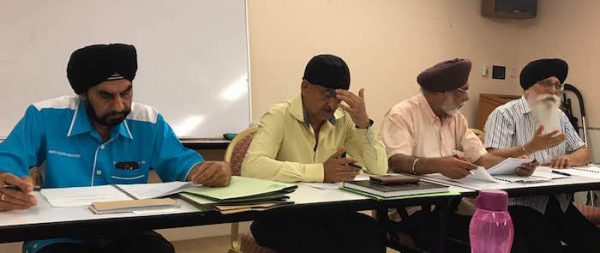
IN ATTENDANCE: CMSO annual general meeting for 2017 in progress
CMSO CHAIRS SINCE FORMATION
Protem Chairman Harbans Singh Gill 2012-2013
Harbans Singh Gill 2013-2014
Awtar Singh Terry 2014-2015
Bhag Singh 2015-2016
Dr Kerpal Singh 2016-2017
SS Cheema 2017-2018
[ASIA SAMACHAR is an online newspaper for Sikhs in Southeast Asia and surrounding countries. We have a Facebook page, do give it a LIKE! Visit our website: www.asiasamachar.com]
Galvin Sandu (left) in discussion with a staff supervising Salim, a Down Syndrome person coached by Galvin – Photo grab from The Red Dot programme
Galvin Sandhu’s work is special in many ways. The Singaporean job coach bridges the needs of people with special needs and potential employers. She has to go the extra mile to ensure that the new job’s social and physical environment suits their client.
She chose this job because she feels she is more of a ‘people person’. Earlier, she was working in a research development laboratory. It was very much in line with her tertiary education in biomedical science. But there was a void within.
After some thinking, she took up a job as a placement executive at Movement for the Intellectually Disabled of Singapore (MINDS), one of oldest and largest non-governmental organisations catering to the needs of persons with intellectual disability (PWIDs) in Singapore.
“I always wanted to do a job with a purpose that allowed me to help someone and this was a perfect job that allowed me to do so,” she told Asia Samachar when asked what made her switch careers.
Her words are perfectly aligned with the Sikh concept of seva or selfless service.
In May, Galvin was featured in Singapore television programme shadowing a client with Down Syndrome. She had successfully moulded Salim, 29, into a confident, independent worker.
“When they are able to hold a job, most of them find a purpose and immediately you can see a chance in their character. It’s very rewarding,” she said in an interview for the programme. See: The Red Dot (25 May 2017).
MINDS was founded in May 1962 by a group of philanthropists who saw the need to provide equal opportunities for children with intellectual disabilities to receive education and later, to be integrated as contributing and responsible citizens in Singapore, according to information on its website
It now runs four Special Education Schools; three Employment Development Centres (EDCs); six Training and Development Centres (TDCs); two Homes (one for adults, one for children); one Hostel (for adults), and a Caregivers Support Centre and home-based care services to cater to the educational, vocational, social and welfare needs of people with intellectual disability.
MINDS welcome volunteers who are deemed to play a critical role in empowering their clients and promoting inclusion of persons with intellectual disability into society today.
ASIA SAMACHAR SPOKE TO GALVIN. EXCERPTS FROM THE INTERVIEW:
What are the challenges you face to adjust to this new role?
Every client we work with is different just like every human being. Hence adjusting to find an effective way to communicate with them and getting them to be comfortable enough with us is a challenge. We also work with caregivers and employers which has its own set of challenges at times.
Tell us a bit about yourself?
I am the oldest of 3 siblings. Have a background and degree with honors in biomedical science.
How did your family and friends react when you switched to this job?
At the start my father wasn’t to pleased as he felt that I should work in a related field to my studies. However as I told him and my family more about what I do, they were all very supportive of my decision to make the career switch and I can safely say they are proud of what I do.
GALVIN SANDHU: She has a degree with honors in biomedical science, but chose to pursue a different career path – Photo / Supplied
[ASIA SAMACHAR is an online newspaper for Sikhs in Southeast Asia and surrounding countries. We have a Facebook page, here, do give it a LIKE. Follow us on Twitter. Visit our website: www.asiasamachar.com]
Two persons were booked by Indian police in Surat for cheating a man of Rs5.75 lakh (about RM38,000/S$12,000) by offering him a job either in Indonesia or Thailand.
Pankaj Gadiya was looking for a job abroad when Nirav R Kapadia and Sumeet Narendra Singh met him at his office at Delhi Gate here sometime back, reports TNN.
The duo promised him a job in Indonesia and made him pay Rs10,000 towards registration fee. They then took another Rs50,000 from him and called him to Indonesia where he was asked to give them Rs2 lakh.
When Gadiya exhausted all his money, he was sent back to India from Indonesia. Gadiya waited for their call as they had promised a job in Thailand after a month. The call never came and Gadiya lodged a complaint of cheating against the duo, the report added.
The accused are yet to return to India from abroad, police said.
[ASIA SAMACHAR is an online newspaper for Sikhs in Southeast Asia and surrounding countries. We have a Facebook page, here, do give it a LIKE. Follow us on Twitter. Visit our website: www.asiasamachar.com]
Path Da Bhog: 16 July 2017 (Sunday), 10-12pm, at Gurdwara Sahib Selayang Baru | Malaysia
Sarjit Kaur (1954-2017), Selayang
Sarjit Kaur d/o Late Kesar Singh (Selayang)
Village: Chohla Sahib, Punjab India
Born: 18 May 1954
Departed: 4 July 2017
Husband: Harjith Singh s/o Late Surjan Singh
Children:
1. Mandeep Singh Sidhu
2. Jagdeep Singh Sidhu
3. Jaswinder Singh Sidhu
Path Da Bhog: 16 July 2017 (Sunday), 10-12pm, at Gurdwara Sahib Selayang Baru, Selangor
Contact: Mandeep Singh 016-6387853
Asia Samachar | Entry: 15 July 2017 | Source: Family
[ASIA SAMACHAR is an online newspaper for Sikhs in Southeast Asia and surrounding countries. We have a Facebook page, do give it a LIKE. Follow us on Twitter. Visit our website: www.asiasamachar.com]
Ipoh seminar: Darshan, Dr Daleleer Kaur and Dr Sarjit Singh
Woman and law, youth and gurdwara as well as the seemingly growing sectarian divide amongst Sikhs in Malaysia.
These issues will be discussed at a half-day seminar entitled ‘Managing Issues and Challenges of the Malaysia Sikh Community’ in Ipoh, Perak, on 23 July 2017 (Sunday) .
It is organised by Pertubuhan Pembangunan Insan Sikh Perak (PPIS) in collaboration with the Malaysian Gurudwaras Council (MGC), Universiti Putra Malaysia (UPM) and Universiti Teknologi Mara (UiTM). Asia Samachar is the seminar media partner.
Dr Daleleer Kaur Randawar from Universiti Teknologi Mara (UiTM) law faculty will speak on ‘Empowering Sikh Woman: Rights Under the Law’ while Dr Sarjit Singh Gill from University Putra Malaysia (UPM) will speak on ‘Empowering Sikh Youth: The Role of Gurdwaras’.
In another session, Darshan Singh, an MGC executive council member representing Perak, will speak on ‘Bridging the Sectarian Divide’.
In its promotion material, the conference organiser noted that the Malaysian Sikh community, like all others, is undergoing rapid change.
“Being a sub-ethnic minority under the larger Tamil dominated Indian group, we operate under constant external pressure to sustain our socio-religious way of life. To face these looming challenges, it is important that we transform from within while holding strongly onto our core values.
“It is time that the Gurdwara Parbandaks embrace reforms to face the ever changing needs of our community, but the question is, are we able and ready to do so?” it said.
Admission is free. Breakfast and lunch will be provided.
Seminar: Managing Issues and Challenges of the Malaysia Sikh Community
Date: 23 July 2017 (Sunday)
Time: 8:30am to 1:00pm
Place: Dewan Serbaguna, Bangunan SUK Negeri Perak, Jalan Panglima Bukit Gantang Wahab, 30000 Ipoh, Perak.
Note from organiser: If you have ideas, please attend this seminar and share them with us.
CONTACT: Dr Jasvinder Singh 012-5035004, Darshan Singh 019-3586588
[ASIA SAMACHAR is an online newspaper for Sikhs in Southeast Asia and surrounding countries. We have a Facebook page, do give it a LIKE. Follow us on Twitter. Visit our website: www.asiasamachar.com]
“Cari pasal hair loss”. We’re talking about traction hair loss or Traction Alopecia. Alopecia means hair loss. I call it “Cari pasal” because you are the cause of the hair loss. First, stand before a mirror. Look at your hair margin and your frontal hair line.
How long have you had that same parting? Are there any wide gaps in your current parting? How long have you had your hair tied up in a high pony tail, a bun or tight braids?
If you have kids, take a look at the way you tie or braid their hair. It troubles me to see traction hair loss in young children when the solution is really simple. The same hair margin, the high pony tail, the hair bun, usage of tight or heavy clips and pins, hair tied into tight braids causes constant traction and pull which precipitates hair loss.
You will notice your hair line receding across your side, temple area or the hair margin getting wider. The wider the gap indicates that you have hair loss due to the constant traction and stress endured by your scalp.
Traction Alopecia is reversible. But if you do not take any action early, the constant continuous traction, pull and strain will inflame the hair follicles leading to permanent hair loss. Once there is noticeable difference on that part of the scalp, the hair loss may be permanent.
Traction Alopecia does not happen overnight. It takes years to happen, hence catch it early and practice the following simple steps.
Simple Steps You Can Take:
1. Always alternate the hair margin/parting. If you had the parting for a long time, give it a rest for at least 6 months. Change the parting to the opposite side. Thereafter always alternate either monthly or every 3 months. The resting phase for the parting would depend on how much hair you have lost. This will help restore hair growth.
2. Stop using heavy clips, pins, claws and wearing your hair in the same style.
3. If you have thick heavy hair, it is best to have multiple partings to help evenly distribute the weight of the hair on the scalp.
4. Never tie your hair or braid it when it’s wet.
5. When sleeping at night, if you need to tie your hair, make sure it’s loosely tied or braided.
6. Avoid frequent chemical hair coloring or chemical bleaching as this causes hair strands to be brittle and to break easily. Opt for organic hair coloring or organic hair care treatments.
7. Avoid using weaves or hair extensions as this only creates further Traction Alopecia.
Whenever you can, just let your hair loose. This is the best thing you can do for your hair. Go natural. Let it loose as long as you can. This will help hair to restore itself and heal.
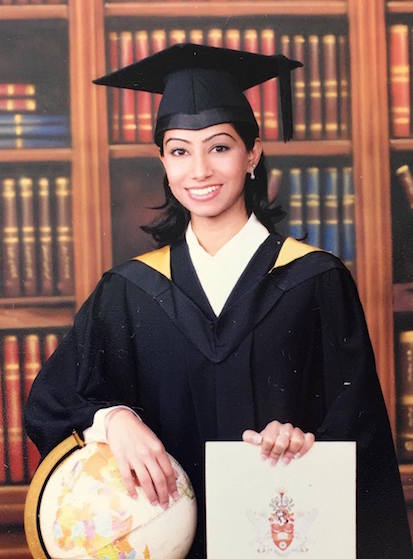
Gurjit Kaur Sekhon is founder of Simran Beyond Beauty, an organic hair, beauty & waxing spa
[ASIA SAMACHAR is an online newspaper for Sikhs in Southeast Asia and surrounding countries. We have a Facebook page, do give it a LIKE. Follow us on Twitter. Visit our website: www.asiasamachar.com]
Assistant Commissioner of Police (Retired) Jarmal Singh
“Anything and everything can be managed. If others can do it, so can you!”1 ‘Difficult’ is a word that is non-existent in the vocabulary of Assistant Commissioner of Police (Retired) Jarmal Singh. Whether it was defending against a stronger opponent on the rugby pitch, dealing with convicts, managing two jobs in a day or communicating the needs of the community to officialdom, Jarmal has not even once held the view that these were unachievable. This is the mantra adopted by Jarmal throughout his life.
Born in India in 1948, Jarmal landed in Singapore as an eight-year old in 1956. His early life was shrouded by challenges. Jarmal’s traits of working hard and never giving up were inherited from his father who played a major role in shaping his character. Growing in a zinc structure called home and situated just behind the warehouse his father guarded as a watchman, Jarmal witnessed his father holding two jobs to make ends meet. On his part, Jarmal tried his best to help. He paddled daily on a bicycle to school instead of taking the bus so as to save a few cents. While other watched movies in the cinema, he would stare intently at the entrance of the cinema with vague imaginations of the interiors of a cinema. He took up a part-time day job to earn a few dollars while studying the night away for crucial examinations. And he settled for handmade spiked running shoes instead of those that were commercially produced due to the latter’s hefty price of S$20. The many hardships that Jarmal witnessed his father and family having to deal with constantly reminded him to work hard.
Jarmal’s perseverance and determination saw him surpassing all expectations and entering the University of Singapore. He graduated with a Bachelor in Science degree in 1971. He then applied for employment in the Singapore Police Force (SPF). Little did he know then that he would spend the next 40 years of his life with the police force! During his time with the SPF, with the police. He was an exemplary officer who rose through the senior police officer ranks through hard work, self-belief and commitment.
While at the Police Academy, Jarmal received the prestigious Public Service Commission scholarship to do his Master of Business Administration degree at the National University of Singapore. In spite of having to manage work and studies at the same time, Jarmal completed his degree and graduated in 1984.
When Jarmal was the Director of Special Projects (NPC Redesign), he was tasked with building the Neighbourhood Police Centres throughout Singapore so as to strengthen crime prevention efforts across the island. As the Commander of the Volunteer Special Constabulary, Jarmal spent his evenings administering and managing a team of volunteers from all walks of life who selflessly worked after office hours and weekends to assist the police officers in discharging their duties. During the day, Jarmal performed his duties as the Commander of the CISCO Auxiliary Police Force
Jarmal’s hard work, contributions and dedication did not go unnoticed. He received numerous awards during his career with the SPF. These included the Pingat Pentadbiran Awam (Public Administration Medal) (Bronze) (Bar),2 Pingat Bakti Setia (Long Service Award),3 Minister’s Award for Home Team Achievement and Singapore Police Long Service and Good Conduct Medal. Jarmal also received the Commissioner of Police’s commendation for his impressive investigation work on the Robinson’s Department Store fire that occurred in 1972.4
Assistant Commissioner of Police (Retired) Jarmal Singh
“Jarmal was elected by the players as national captain in 1978. His election was amazing as he was from a non-traditional rugby playing secondary school and he started to play rugby as a senior police ofcer and late into his adulthood. Under his captaincy, Singapore won the Malaysian Rugby Union Cup after 44 years and we were awarded three of the four top awards during the Singapore National Olympic Council annual ceremony in 1978. Jarmal was a highly respected utility player – small in size but strong in discipline, teamwork and role modeling. He was known as the ‘fying Sikh’ for his sprinting and tackling prowess. He was the only Singaporean to score a try against the mighty Western Samoa during the quarterfnals of the Main Cup at the Hong Kong Sevens in 1979. We are proud of Jarmal’s contributions to our national cause.”
Mr Natahar Bava Former National Coach Singapore Rugby Union
Jarmal’s contributions were not limited to Singapore. In 1993, he was handpicked to represent Singapore on a Commonwealth Observer Mission to South Africa during the tension-stricken period just prior to the end of apartheid. He was part of a team that he held numerous important positions. These included Director at the Police Academy, Officer-in-Charge at Jurong Police Division, Head of the Commercial Crime Division at the Criminal Investigation Department, Director at the Police Academy (for a second time) and concurrent Director of Training at Police Headquarters, Commander of the Airport Police Division, Deputy Director of Operations at the Police Headquarters, Director of Special Projects (NPC [Neighbourhood Police Centre] Redesign), Deputy Director of Operations and concurrent Commander of the Volunteer Special Constabulary (VSC), Commander of the CISCO Auxiliary Police Force and concurrent Commander of VSC, Director of the Police Custodial Department, and Director of Sustaining Cost Optimisation and Policing Efficiency, among others. Jarmal has had a distinguished career comprised representatives from Australia, Botswana, Britain, Canada, New Zealand, Nigeria and Zimbabwe. Jarmal was awarded the Overseas Service Medal in recognition of his international service.
KEEN SPORTSMAN
Jarmal’s national and international contributions extended beyond his employment with the SPF. He had a keen interest in sports and was actively involved in athletics, football and hockey since his school days. It is perhaps interesting to note Jarmal only picked up rugby in 1971, the year he graduated from the university and on joining the SPF. However, this sporting activity was to give him fame and glory far beyond his imagination.
Jarmal played rugby for the next 10 years. He was a fast learner and was able to muster the sport so well that, in 1973, he was selected for Singapore’s national rugby team where he played in various tournaments with Malaysian states. Jarmal’s impressive rugby skills were clearly evident and, soon after, he was elected the captain of the national team. Under his captaincy, Singapore experienced its best years in rugby history. In the Asian Rugby Championship, Singapore beat Thailand to emerge third in the intense tournament. One of the key contributors to the team’s success was Jarmal who received loud cheers from the crowd when he outran several Thai players for a try, bringing Singapore 7-3 up at halftime.5 Likewise, the strong fighting spirit in Jarmal and his fellow players led the Singapore rugby team clinching the silver medal at the Southeast Asian Peninsular Games in 1977.
However, the best was yet to come for Jarmal in the rugby arena. In the Malaysian Rugby Union Cup against Malaysia, Australian Air Force Royal and the New Zealand and Infantry Regiment in 1978, Singapore emerged champions, winning the title for the first time after 44 years of competition. As a result of the triumph, Jarmal’s rugby team bagged three out of four top trophies on hand at Singapore sports award ceremony that year – the Team of the Year, the Coach of the Year and the Player of the Year under the Singapore National Olympic Council (SNOC) umbrella.7 Humbly, Jarmal attributed the victory of his team to the ability and competency of the players instead of his captaincy brilliance. In 2014, Jarmal added another accolade to his glittering sporting career when he was recognised by the government as a National Sports Pioneer.
COMMUNITY SERVICE
Beyond his career and sporting passion, Jarmal has also contributed to the community and society. An example of this service is his 26-year commitment on the School Advisory Committee of Gan Eng Seng Secondary School. Jarmal has also been active in the Sikh community. About 20 years ago, he became part of the first resource panel to consider issues relating to the Sikh community. He currently serves as the Chairman of the Sikh Advisory Board, which acts as an intermediary between government bodies and the Sikh community.
Today, the retired Jarmal smiles to himself as he speaks fondly about his two grandchildren. He remains indebted to his wife for his success. She took good care of his three sons while he was away on his career pursuits and sporting tournaments as well as encouraged him to pursue his dreams. Despite retirement, Jarmal still has the passion to serve. Recently, he authored a paper titled Crime Prevention: The Singapore Approach8 to share his valuable insights and knowledge from his long years of experience in the police force. He also provides consultancy services with the Ministry of Home Affairs.
He lived through tough times but those challenges made him what he is today. Jarmal’s philosophy of humility, hard work, commitment, honesty and determination has stood him well over the last 40 years or so. These attributes have also enabled him to leave an indelible mark at the national and international levels through a glittering police and sporting career.
Endnotes
1 Interview with Mr Jarmal Singh, February 28, 2015.
2 The Pingat Pentadbiran Awam was instituted in 1963. There are three grades of the medal, namely, gold, silver and bronze. The medal may be awarded to any of the following persons for outstanding efficiency, competence and industry – any person who is or has been a public officer; any person who is or has been an officer employed by any statutory authority (other than a Town Council); any person who is or has been in the service of any organisation, association or body rendering services in the field of education; or any person who is or has been employed in any company which is wholly-owned by the government and which is carrying on business mainly as an agent or instrumentality of the government. See http://www.pmo.gov.sg/ nationaldayawards.
3 The Pingat Bakti Setia was instituted in 1962. The medal may be awarded to any person who has completed 25 years continuous service in the service of the government, any statutory authority, any organisation, association or body rendering services in the field of education, or any company which is wholly owned by the government and which is carrying on business mainly as an agent or instrumentality of the government, and whi is of irreproachable character. Ibid.
4 Robinson’s Department Store fire at Raffles Place (n.d.). Singapore Infopedia. Retrieved from http://eresources.nlb.gov.sg/infopedia/ articles/SIP_797_2004-12-30.html.
5 They unwrap their guts to beat the Thais, The STAR, November 25, 1978.
6 Stars of the year, New Nation, December 25, 1977.
7 Atmosphere filled with nostalgia, The Straits Times, May 12, 1979.
8 Jarmal S, Crime Prevention: The Singapore Approach. National Criminal Justice Reference Service Abstracts Database, 2000. Retrieved from https://www.ncjrs.gov/App/Publications/abstract.aspx?ID=191486.
ASIA SAMACHAR is an online newspaper for Sikhs / Punjabis in Southeast Asia and beyond.Facebook | WhatsApp +6017-335-1399 | Email: editor@asiasamachar.com | Twitter | Instagram | Obituary announcements, click here |
























 Gurjit Kaur Sekhon is founder of