| Johor Bahru, Malaysia | 10 July 2017 | Asia Samachar |
By Anandpreet Kaur
An unidentified man, believed to be an Indian national, was found dead in the Johor Bahru gurdwara after being allowed to spend the night there.
He was sent to the gurdwara by a taxi driver, who guessed he was a Sikh, when he was found hanging around the city bus station the night before.
The man, who did not carry any identification documents, is believed to have died in his sleep.
The gurdwara management is trying to reach his next of kin or anyone who may recognise him. In conversations at the gurdwara last night, he mentioned Haryana and Jalandhar.
Last night, a taxi driver noticed the man who with a walking stick was moving about at the Johor Bahru bus station.
“The taxi driver brought him to the gurdwara and even gave him RM10 pocket money. He had Guru Ka Langgar last night as we had an evening programme, and we gave him a place to stay for the night. The next day, he had wanted to the Pudu Station (in Kuala Lumpur),” Gurdwara Sahib Johor Bahru committee president Manjeet Singh told Asia Samachar.
“At about 2pm, one of the volunteers went to wake him up, but he was lying motionless.”
The gurdwara committee has lodged a police report and the body has been taken to the local general hospital.
Those with information about the deceased can call Manjeet at +6013-779-1313.
FOUND DEAD: Unidentified man found dead after spending night at Johor Bahru gurdwara – PHOTO / SUPPLIED
[ASIA SAMACHAR is an online newspaper for Sikhs in Southeast Asia and surrounding countries. We have a Facebook page, here, do give it a LIKE. Follow us on Twitter. Visit our website: www.asiasamachar.com]
“It is a funny little story, really! I was bored of class and it just so happened that the athletics heats were going on that day. I skipped class and decided to take part in the heats.” And this marked the beginning of an illustrious sporting career that seemed to be made up of a number of these funny little stories.
Mr Sarvindar Singh Chopra grew up in a village in Kim Keat Avenue in Singapore during what he describes as some of the “best parts of [his] life”. The second of three boys, he was the son of a businessman and a volunteer social worker mother. Although Sarvindar’s father was an avid sportsman, none of his children inherited his interest in cricket or hockey. Amongst the three boys, only Sarvindar expressed an interest and seemed to possess a prowess in sports. The funny little story he describes above resulted in Sarvindar, who had never thrown a javelin or hurled a discus in his life finishing third in the javelin heats and qualifying for the discus finals to be held on Sports Day. With some guidance from his father, Sarvindar went on to win discus medals at the district level first and then nationally. He was not only a national schools champion for three consecutive years but also clinched a gold medal at an invitational event in Ipoh.
The real highlights of Sarvindar’s career were however yet to come. To get to that, there is another funny little story that must be told. Although he equalled the national record for discus in 1971, Sarvindar’s achievements in this event began to plateau after that. Around then, a friend he knew from the printing press gave him a lead. This friend turned out to be Mr Michael Koay, Secretary of the Singapore Amateur Weightlifting Federation and this lead was an introduction to none other than Mr Tan Howe Liang, Singapore’s weightlifting silver medalist at the Rome Olympics in 1960. He then began to train with weights under Howe Liang at the Evergreen Body-Building Centre.
At this point, weightlifting training, as Sarvindar put to The Straits Times in 1981, was purely “for a selfish motive” (2) – he wanted to build up strength and flexibility for discus and shot put, which at that time were the events in athletics that he was actively pursuing. Sarvindar explains: “The classic weightlifting events of snatch and jerk, for instance, build up co-ordination and involve very similar motions and lifts that you would do when training for discus.”3
Additionally, the elements of speed and power were the other commonalities shared by both sports. Through his hard work at training, Sarvindar was soon doing respectably enough at weightlifting for Michael to decide to enter him for competitions in that event. Before long, he was good enough to be selected to represent Singapore.
Sarvindar Singh Chopra
“Sarvindar was a great sportsman who received many accolade during his sporting career which spa from 1973 to 1983.
“As a close family friend, I remember Sarvindar as a young lad determine to make Singapore proud of hi contributions. Once he set eye on something, he would go all out to achieve that goal, regardless o obstacles in his way. Determination was his mantra and that carried hi to greater heights in his life.
Mr S A Nathanj, Former Managing Editor/Columnist Indian Movie News Magazine
At the Southeast Asian (SEA) Games in Kuala Lumpur in 1977, Sarvindar was granted leave to compete in two distinct events – his pet event of discus and the new one, weightlifting. By a twist of fate, another funny little thing happened. In his first outing as a weightlifter, Sarvindar clinched two silver medals and a bronze medal while finishing fifth and without a medal in the discus event. When asked which of the two sports is his favourite, Sarvindar grins teasingly and answers: “It is obviously the one in which I excelled.”4 This line of thought led Sarvindar to discard his discus and focus his efforts on competitive weightlifting.
Juggling a full-time day job with his family business and training as a professional sportsman at the same time were certainly not easy but there was no turning back now. Sarvindar was enthralled. He recalls: “In those days, sportsmen were never paid for their sport. We did it out of love and passion for our sport – and to win.”5 Although love and passion alone do not equate to winning, it surely helped Sarvindar be committed to and be disciplined about the grueling training sessions he had to endure in order to be competition ready. These sessions were held almost daily, and generally in the evenings as a result of having a day job.
Still, Sarvindar recalls that he would try to fit some light callisthenic exercises into his day schedule. Actual lifting practice was reserved for the evenings. Although each of these sessions was demanding, Sarvindar estimates that, on average, he lifted over 10,000 or 12,000 kilogrammes daily or 250,000 kilogrammes of weights per month,6 it came to a point where “the day I did not train, it felt like something was missing in my life.”7 On account of the success he had seen in the local and regional weightlifting competitions, Sarvindar was invited by the then-President of the Indonesian Federation to train in Tawangmangu in Central Java. He fondly recalls this three-week training camp in the cool weather up in the hills, which was conducted by a former weightlifting world champion from Poland. Again Sarvindar explains that athletes like him in those days were likely to spend more of their own money on training than from sponsorships or award monies of any kind. Although some supplementary money was granted to the weightlifters for the trip to Indonesia, they had to raise their own money for overseas trips.
The first culmination of Sarvindar’s intensified training efforts with weightlifting was at the SEA Games in Jakarta in 1979. Although he performed well, walking away with silver medals, Sarvindar still recalls these Games as something of an unexpected setback in his plan. He explains that weightlifting is one sport where you know who your competition is and you know what you are up against. At the 1979 Games, Sarvindar knew that his competitor from the Philippines was more powerful than him. As such, Sarvindar sought to raise his personal body weight at the last minute in order to compete in a different category from him – to move from the Heavyweight category (over 105 kilogrammes) to the Super Heavyweight category (over 110 kilogrammes). Alas, despite gorging himself on food, Sarvindar was unable to do so and wound up coming in second to the Filipino. This close brush with glory spurred him on to work even harder as he “knew then that a gold medal was within [his] reach.”8 It is at this point where Sarvindar made one of the biggest sacrifices for the sake of his sport.
Given the fixed number of hours in a day, Sarvindar’s job, and the number of hours he had to put into practice, something had to give. This unfortunately was the amount of time he could spend with his wife and son. An articles in The Straits Times article in 1981, chronicling Sarvindar’s preparation efforts, tells a story of how there were fierce quarrels over the time he was spending with the weightlifting team. A decision was made and he sent his wife and only son to her family in India for two months. This was, of course, by no means, an easy decision to make and once they were gone, Sarvindar found himself wondering if he had made a big mistake. Ultimately, he sought solace in the knowledge that what he was doing was for his country, and, after all “it was only for two months.” As the 1981 article proclaimed in its headline, this is without a doubt a fine exemplification of the notion “Nation Before Self”.
All of Sarvindar’s efforts and sacrifices came to fruition in Manila in 1981 when he became Singapore’s “two-gold hero”9 at the SEA Games. Sarvindar’s gold medals were the first that any Singaporean competitor had won during the SEA Games. It was also during these games where he made it into the Singapore record books (10) for lifting a combined 252.5 kilogrammes in the Super Heavyweight event. He managed to repeat his feat on home soil again in 1983 when the SEA Games were held here. Sarvindar won his third gold medal in two SEA Games competitions. These wins were undoubtedly the zenith of his career. Tears came to his eyes as he described how he felt, standing at the top of the podium, hearing the notes of ‘Majulah Singapura’ resonate around him. Finally, all the “blood, sweat and tears and more blood” had paid off.
All this came to a swift end in 1983 itself when Sarvindar was hit by a bus while riding his motorcycle and broke his arm. He was just 31 and his weightlifting career came to a screeching halt. Raising his arm to show the long white scar that is still visible on the underside of his arm, this sanguine man declares that the accident was a blessing in disguise. It allowed him to leave his beloved sport on a high. However, he continued to be involved with the local sporting scene. He was a referee at the Asian Games in New Delhi in 1982 and at the Second South Asian Federation Games in Dhaka in 1985. He also sits on the boards of a number of athletic associations.
Sarvindar’s parting message to aspiring sportsmen and women is simple – dare to dream and chase your dreams. Sarvindar should know best for he dreamt big and he chased his dream to become a national sporting icon.
Endnotes
1 Interview with Mr Sarvindar Singh Chopra, March 11, 2015.
2 High and Mighty, The Straits Times, December 1981.
3 Interview with Mr Sarvindar Singh Chopra, op cit.
4 Ibid. 5 Ibid.
6 H Rai, Nation before Self, The Straits Times, December 1981.
7 Supra note 2. 8 Ibid.
9 D Singh, P Siow and H Rai, Lifter Sarvindar is our two-gold hero, The Straits Times, December 10, 1981.
10 P Goh, Weight-lifting: Leg-up for S’pore weightlifters, TODAY, August, 10, 2011
[This article is courtesy of SINGAPORE AT 50: 50 SIKHS AND THEIR CONTRIBUTIONS, a book published in 2015 by the Young Sikh Association, Singapore (YSA) in conjunction with Singapore’s 50th birthday]
[ASIA SAMACHAR is an online newspaper for Sikhs in Southeast Asia and surrounding countries. We have a Facebook page, do give it a LIKE. Follow us on Twitter. Visit our website: www.asiasamachar.com]
| Selayang, Malaysia | 9 July 2017 | Asia Samachar |
Gurmit Singh: Selayang
A team from Gurdwara Sahib Selayang Baru is looking for family members of Gurmit Singh (picture) to assist him to get sort out his personal documentation, including his lost identity card.
Gurmit has been sleeping at a gondola at the PPR Taman Wahyu in Selayang, Selangor, and has been seen begging at Tesco Selayang, according to a message shared today via the social media. Asia Samachar has confirmed the message with one of the persons listed below.
“He says he has a brother named Jaswant Singh in Wira Damai and another brother Harcharan Singh in Jinjang,” reads the message. “Mr. Gurmit Singh is not in good health, so any help to trace his family is much appreciated.”
The Selayang team has requested those who know Gurmit or his family members to call Davinder Singh (012 308 5204), Hardave Singh (019 228 7998) or Satwant Singh (012 388 1699).
Asia Samachar will update here as and when we get updates from the Selayang team.
[ASIA SAMACHAR is an online newspaper for Sikhs in Southeast Asia and surrounding countries. We have a Facebook page, do give it a LIKE. Follow us on Twitter. Visit our website: www.asiasamachar.com]
| Kuala Lumpur, Malaysia | 9 July 2017 | Asia Samachar |
“Sikhs are a very dynamic and an entrepreneurial group of people,” says renowned Indian economist Dr Montek Singh Ahluwalia, an influential figure in the administration of the then Indian Prime Minister Dr Manmohan Singh.
Asia Samachar caught up with him today at the sidelines of the 1st Asean Sikh Economic & Entrepreneurship Summit (ASEES) 2017 in Kuala Lumpur.
Dr Montek had served as the Deputy Chairman of the Planning Commission of the Republic of India, a position which carries the rank of a Cabinet Minister, from 2004-2014. He had earlier served as the first Director of the Independent Evaluation Office at the International Monetary Fund (IMF).
ASIA SAMACHAR is an online newspaper for Sikhs / Punjabis in Southeast Asia and beyond.Facebook | WhatsApp +6017-335-1399 | Email: editor@asiasamachar.com | Twitter | Instagram | Obituary announcements, click here |
| Kuala Lumpur, Malaysia | 8 July 2017 | Asia Samachar |
ASEES 2017: Economic panel underway. – PHOTO / ASIA SAMACHAR
Budget airline AirAsia co-founder Tony Fernandes kept a group of predominantly Sikh audience from Southeast Asia in stitches with his remarks on barfi, Kelab Aman and how Sikh leaders fear their mothers.
“My experience with Sikhs is barfi in Rawang, Selangor Club and Kelab Aman….not always a great experience after 10 o’clock at night,” he told the 200-odd participants of the Asean Sikh Economic and Entrepreneurship Summit (ASEES) in Kuala Lumpur.
Fernandes, who donned a red turban, was one of the invited guest speaker at the two-day summit, held at the Securities Commission Malaysia headquarters, started today (8 July 2017).
In an animated and session moderated by Digital News Asia co-founder/CEO Karamjeet Singh, Fernandes shared about Ajaypal Singh Banga, the current president and chief executive officer of MasterCard, whom he described as a ‘dear friend and a great guy’.
“You know why he’s so great? I think the greatest aspect in any human being is humility, and being humble. I hate these guys who think they are more important than they actually are, walk around with 17 bodyguards.
“He is super successful, but he is down to earth. I think he is a great Sikh. He still wears his turban with pride.
“And he takes me to some godforsaken restaurant in New York, and says: ‘This is the best Punjabi food in New York’. Like I’m really interested because I come form Malaysia, anyway, I get the best Punjabi food everyday!” The crowd again breaks into loud laughter.
“I find Sikhs never loose their roots, they are very proud of where they came from, and they all stick together, and they are great leaders,” he told the audience which broke into laughter.
Fernandes then invited anyone donning a red turban to come to stage to claim a price. Autar Singh, a long-time Sikh activist in Malaysia, went on stage to win tickets for two to Jakarta and Hawaii.
The event included address by two prominent guest speakers from India: Punjab finance minister Manpreet Singh and former deputy chairman of planning commission Dr Montek Singh Ahluwalia.
ASEES: Panelist Sportify’s Sunita Kaur with moderator Asees Kaur Bajaj
ASEES 2017: AirAsia’s Tony Fernandes visiting the booth by Biji-Biji
http://youtu.be/4XoNRDXGSNc
[ASIA SAMACHAR is an online newspaper for Sikhs in Southeast Asia and surrounding countries. We have a Facebook page, do give it a LIKE. Follow us on Twitter. Visit our website: www.asiasamachar.com]
Message from Family: Please treat as our personal invitation
Asia Samachar | Entry: 5 July 2017; Updated: 8 Juluy 2017 | Source: Family
[ASIA SAMACHAR is an online newspaper for Sikhs in Southeast Asia and surrounding countries. We have a Facebook page, do give it a LIKE. Follow us on Twitter. Visit our website: www.asiasamachar.com]
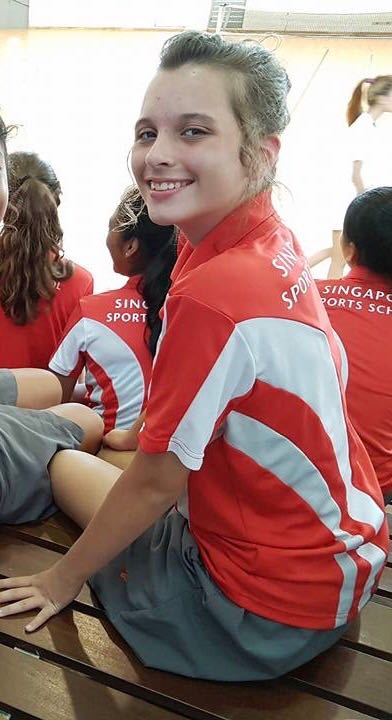
At 13, Kalisa bounces with ambitious netball dreams
By Suresh Nair
ALMOST seven days a week, Kalisa Kaur can be found bouncing a ball or shooting hoops ever since she got hooked to netball at eight years, joining the CCA (Co-curricular Activities) programme at St Hilda’s Primary School.
If there’s a word “netball-holic” it perfectly fits this 13-year-old, who has set exalting long-term targets to play for Singapore.
Her inevitable itch is to be like her role model, Charmaine Soh, the national vice-captain also from St Hilda’s School. This is firing her heart and mind. She adds: “I want to play at the highest level every time and I know I’m capable of, if I work very hard at improving myself.”
Charmaine has 69 caps at 26 years, played at the World Cup, Asian Championships and SEA (South-east Asia) Games. Kalisa says: “She’s very good academically and professionally in her career and at netball and I want to be like her.”
Netball Singapore (NS), which runs the women’s ball sport, says hundreds of schoolgirls are queueing up to play, inspired by Singapore’s recent success at the Asian Youth champion when they beat Malaysia 47-43 at the Jeonju World Cup Stadium in South Korea, to reclaim a title the country last won in 1994.
For the record, Singapore is ranked No 19 by INF (International Netball Federation) out of 36 competing countries and rated No 1 in Asean.
‘NETBALL PRODIGY’
Kalisa knows she has what it takes to reach top-ranks. Her coach at St Hilda’s School hails her as a “netball prodigy”. She is tall, talented, thorough and top-drawer material. She’s simply mad about netball. Her mum even says she’s an “eat-sleep-breathe netball’ type of sporting fanatic.
Yes, just 156 months out of the cradle, this little blonde Sikh girl has one compelling dream: To bounce the ball for Singapore.
For the moment, she’s in the right place as she has been selected to be a junior academic-professional at the Singapore Sports School, the only specialised full-time sports institution in Woodlands that nurtures future sports personalities in more than 10 sports.
“She works extremely hard on and off the court,” says her mum, Kawal Kaur. “She’s so fanatical that she eats, sleeps and breathes netball in order to realise her ultimate goal of representing Singapore one day.”
Her teacher-coach Zanizam Zaini says: “She found it challenging at first and didn’t enjoy the competitive element. She wanted to give it up. It was all too much for a nine-year-old. But I quickly saw the raw potential and didn’t let her give up. She shows remarkable skill and tactical abilities well beyond her years. She’s a real fighter on the court, never wanting to lose.”
Kalisa was part of the St Hilda’s Primary School team that won the gold medal at the National Championship last year.
KALISA KAUR: Bounces with ambitious netball dreams
SPORTS-CRAZY FAMILY
Moving the boarding-school-way at the elite Singapore Sports School was initially a little upsetting, says Kawal. She recalls: “Kalisa missed home and family as she had to board in. But the desire to be at her best in netball and to play for Singapore one day overcame this.”
The secret to Kalisa’s flying success comes from her sports-crazy family.
Her grandfather, retired Deputy Superintendent of Police (DSP) Amarjeet Singh, was an all-round sportsman representing the Singapore Police in hockey and football. He also excelled in badminton as the singles and doubles badminton champion of Police Training School in 1960. Playing hockey for Singapore Sikhs, he was also the Chairman, Sports for the Singapore Khalsa Association from 1989 to 1996 and the Executive Secretary for S-League Home United Football Club.
Mum also was a prolific netballer at St Hilda’s Secondary School and fired away at athletics, too, in the 200m, 400m,4 x 100m relay and long jump. Her elder brother Matthew Rashpal was a gold and silver medalist in the National Taekwando Championship and has a second-dan black belt in the sport. Another brother Mark Ravinpal, represented St Patrick’s School in cricket ad now plays for the Singapore Cricket Club (SCC). He is also an assistant cricket coach for the juniors on the SCC Padang.
Kalisa’s twin brother, Adrian Amarjeet, is an avid hockey player, a centre-forward at St Hilda’s Primary School, like his grandfather.
“I’m blessed to have a very sporting family. My mum is exceptionally supportive, as a former netballer. I would like to thank my coach, Mr Zanizam, without him to I would have never have excelled in netball,” says Kalisa. “Mrs Jeline Tan (Primary 6 form teacher) was extremely supportive, offering make-up classes when I was out at competitions.
“The immense support I get at my first year at Singapore Sports School has been overwhelming, too, and it sets me up for positive career, to combine academics and sports.”
For the moment, the 1.65m and 43kg Kalisa is relishing time at SSS. She says: “I hope to gain confidence, broaden my netball IQ, learn as many things as I can, and be the best player I can be. It will give me the skills and knowledge that will further my career.”
Highlighting her longer-term self-improving role, she adds: “Not only defensively in the games, but goals win (matches), so you’ve to ensure that you take down the ball to the goal shooter so that your team can score. So you’ve to be on the ball, you’ve to be ready for anything.”
PHYSICAL ASSETS
Kalisa, who hopes to be either a lawyer or in the sports-media industry after she graduates, also wants to add to her physical assets. She explains: “A little speed, I want a little more speed, a little more drive, that special push.”
Going on form and longer-term potential, Kalisa, who plays as a shooter and is also training in goalkeeping and defence, is likely to be one of the most valued assets in Singapore netball franchise in the years to come. It is also the duty of the administrators at Netball Singapore (NS) to stand up for such future prospects and help them to develop in their game.
Her coach at Singapore Sports School (SSS), Geraldine Ng, a former Singapore Under 21 stalwart, says Kalisa is making “very good progress” with her contemporaries. She says: “She’s still young and trains very hard. She has the potential to rise to higher age-group levels if she continues with her diligence and discipline in training.”
The SSS works closely with Netball Singapore to groom the younger netballers, who then compete with other schools in the national zone competitions. She adds: “We’ve a core group of players, about 20 at every age-group level, who’re being groomed for higher-level competitions in the years ahead.”
As I revel in Kalisa’s extraordinary potential at 13 years, I’m reminded of the words of former world tennis queen Billie Jean King, who once said: “Champions keep playing till they get it right.”
Little Kalisa, in my opinion, will keep playing till she gets in right and one day fulfill her dream of playing for her country.
Suresh Nair is a journalist who has written on local and regional sports for over 35 years. He finds Kalisa Kaur an extraordinary 13-year-old netballer with the real fire-in-the-belly to excel.
[ASIA SAMACHAR is an online newspaper for Sikhs in Southeast Asia and surrounding countries. We have a Facebook page, here, do give it a LIKE. Follow us on Twitter. Visit our website: www.asiasamachar.com]
Harprem Doowa receiving the Australian Entrepreneur of the Year Award at the Australia Alumni Awards 2017 – photo / supplied
By Anandpreet Kaur
Serial young entrepreneur Harprem Doowa, a CEO of two companies, has bagged a Aussie-Thailand award.
The 30-year old won the Australian Entrepreneur of the Year Award at the Australia Alumni Awards 2017 held in Bangkok last month. The award is a major event for the Australia-Thai business community.
Harprem is the probably the youngest entrepreneur to win the award as those below 35 usually fall in the youth category.
“The only reason I’ve succeeded in building two businesses is because I focus on people,” he wrote in his personal website. “Whether it be the staff and keeping them happy or the customers and keeping them happy, people are the key to success.”
Harprem is the Thai country manager for Frank which is part of Edirect Insure Group which operates online insurance platforms in Asia with offices in Hong Kong, Thailand and Taiwan. The Thai unit, which Harprem co-founded in January 2016, offers motor insurance.
In 2013, he co-founded Orami, the first online shopping destination for women in Southeast Asia. He was its country manager until 2016.
At the award event, the keynote speakers were Asst. Prof. Dr. Linchong Chorrojprasert, the Dean at Graduate School of English, Assumption University of Thailand, who is also a University of Wollongong Alumni, and Australian Ambassador to Thailand Paul Robilliard.
RECOGNISED: Harpreem (third from left) with his family,L-R, father Amrit Doowa, mother Amarjit Kaur Doowa, sisters Prabneet Doowa and Rashmeen Doowa and Harprem’s wife Sneha Sethi Doowa – PHOTO / SUPPLIED
ASIA SAMACHAR is an online newspaper for Sikhs / Punjabis in Southeast Asia and beyond.Facebook | WhatsApp +6017-335-1399 | Email: editor@asiasamachar.com | Twitter | Instagram | Obituary announcements, click here |
(The statement was reproduced from WSO Canada website)
Ottawa (July 4, 2017): The World Sikh Organization of Canada has called on the Sikh community and Sikh authorities to reject the proposed Italian “modification” of the kirpan.
According to reports, an Italian delegation seeking approval of a modified kirpan met with Jathedar Gurbachan Singh on June 26, 2017, seeking the Akal Takhat’s blessings for the modified design. The modified kirpan would be produced in Italy, and issued to Sikhs with an individualized serial number and “license”. The proposed kirpan would be flexible and does not appear to have a tip or edge. Only these modified kirpans could be worn by Sikhs in Italy.
The WSO’s President, Mukhbir Singh has written to Jathedar Gurbachan Singh and SGPC President, Prof. Kirpal Singh Badungar, encouraging them to strongly reject any attempt to re-design the kirpan or have the kirpan produced and issued by Italian authorities.
The text of his letter is as follows (Punjabi version follows English):
Singh Sahib G. Gurbachan Singh
Jathedar, Sri Akal Takhat Sahib
Sri Amritsar, Punjab
Dear Jathedar Sahib,
We are writing to express our concern with respect to the recent presentation by an Italian delegation led by S. Sukhdev Singh Kang of a “specially designed” kirpan for approval by Sri Akal Takhat Sahib.
The kirpan being presented for approval is reportedly made of a flexible material and appears to have a rounded tip and no edge. Each kirpan is to be prepared in Italy, marked with a serial number, issued to Sikhs by the government, and will be accompanied by a “license”.
This type of interference in the Sikhs’ right to wear the kirpan is unprecedented and unacceptable. No government has the right to “issue” a kirpan to Gursikhs and furthermore, any government alteration or interference with the shape or attributes of a kirpan is intolerable. Acceptance of this model will have severe and negative repercussions for Sikhs across the world.
In Canada, as you may be aware, Sikhs have worked towards the accommodation of the kirpan in public spaces such as hospitals, schools, courtrooms and hospitals. While agreements have included limits on size or required that the kirpan be worn underneath the clothes, no attempt to alter or regulate the shape or attributes of the kirpan has ever been accepted by Sikhs. Though the process has taken years, the kirpan is now widely accepted and accommodated in Canada.
The Italian government’s attempt to design and issue kirpans to Sikhs on the pretext that the kirpan is too much like a “weapon” is a legally flawed argument. Workers who have a “good reason” to have tools like knives or blades are permitted to carry them by the authorities, however, the Italian court has ruled that Sikhs have not established a good reason to wear the kirpan. This is a fundamentally flawed and incorrect conclusion that must be legally challenged. Accepting this decision and allowing the Italian government to interfere in the Sikhs’ right to wear the kirpan is the wrong approach and cannot be permitted. The WSO is prepared to assist Italian Sikhs in challenging the restrictions on the kirpan.
We are writing to inform you that Canadian Sikhs reject the Italian proposal to design and distribute the kirpan. Accepting such interference would have long term negative repercussions for Sikhs across the world. We expect the Singh Sahibans and Jathedar of Sri Akal Takhat Sahib to strongly and clearly reject this proposal.
With best wishes and regards,
Mukhbir Singh
President
World Sikh Organization of Canada
Kalala Organic Estate Winery owner Karnail Sidhu began his wine-making career after immigrating to Canada in 1993, when he found his first job working in a vineyard. – PHOTO THE GLOBE AND MAIL / COURTESY OF SARAN GANAN
Kalala Organic Estate Winery’s 2012 Dostana cabernet sauvignon is a robust wine, with a strong tannic backbone. It’s not cheap at $45, but it has more humble origins than its tasting notes or price suggest.
The British Columbia winery is owned by Karnail Singh Sidhu, who arrived from India in the mid-1990s and, a short while later, was having lunch at an Okanagan vineyard where he had picked up work doing general labour.
The story of how he went from farmhand to winery owner reads as if it came from a brochure selling Canada to prospective immigrants. It also has a curious twist: Sidhu doesn’t drink alcohol. The award-winning winemaker smells and tastes everything he makes – but almost always spits it out.
Sidhu immigrated to join two brothers, and he worked alongside them at that first farmhand job. Knowing little about viticulture at the time, one brother suggested this wine thing was something to consider. “After all,” says Sidhu, relating his brother’s musings, “these people are selling bottles of juice for 12 or 15 dollars: that’s not a bad business to get into.”
What could have been a throwaway joke planted a seed in Sidhu’s mind. Although he had trained as an electrical engineer in the northern Indian state of Punjab, he found upon immigrating to Canada in 1993 that his qualifications weren’t accepted here. Casting about for options, he found his first job working in a vineyard.
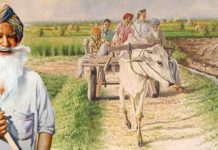
“Being from Punjab, another field we thought we could very good in was farming,” says Sidhu, whose father was a farmer. Agriculture is such a fundamental part of Punjabi culture and folklore that he was taught farming basics in high school.
Sidhu heard about work in the Okanagan Valley, and moved his family first to Penticton and then Kelowna, finally finding steady work at Summerhill winery. There, his work ethic so impressed his superiors that they sent him for viticulture training at a local college, before promoting him to vineyard manager, a job he held for 10 years.
Formal training aside, Sidhu was also able to learn the nuances of wine making there, forming a close friendship with then Summerhill winemaker Alan Marks, who has since gone on to help many wineries, including Kalala.
“I knew that Karnail had a passion for agriculture and grape growing,” says Marks, who has a PhD in oenology (the study of wines) and food science.
“I knew he would do a great job.” The connection between the two men lasted: Dostana, the winery’s premium label, means friendship in Hindi and was named so for their rapport.
Sidhu’s next step was to buy vineyards, where he first grew grapes that he sold to other wineries.
But, by 2006, he had established the fledgling Kalala Organic Estate Winery, which began selling wine under its own label in 2008.
Today, the wines are widely available, predominantly in private stores in British Columbia, with a small amount sold online and going overseas to China and India. The winery has also expanded from shipping 700 cases in its first year to 20,000 in 2016, and sells both table and premium whites and reds, as well as icewines.
Sidhu’s abstinence pertains to an allergy to alcohol, not Sikhism’s proscription on booze. And though Kalala might seem unique in the wine world, he is far from being the lone Indo-Canadian in the B.C. wine industry.
There are the Dhaliwal brothers at Kismet Winery, Gary and Surjit Deol at Deol Wines, and others, many of whom share a similar path from an agricultural background in India to wine in British Columbia.
FOR FULL STORY, GO HERE. (The smell of success; The Globe and Mail, 4 July 2017)
[ASIA SAMACHAR is an online newspaper for Sikhs in Southeast Asia and surrounding countries. We have a Facebook page, do give it a LIKE. Follow us on Twitter. Visit our website: www.asiasamachar.com]















 By Anandpreet Kaur


 [ASIA SAMACHAR is an online newspaper for Sikhs in Southeast Asia and surrounding countries. We have a Facebook page, do give it a LIKE. Follow us on Twitter. Visit our website: www.asiasamachar.com]





 (The statement was reproduced from WSO Canada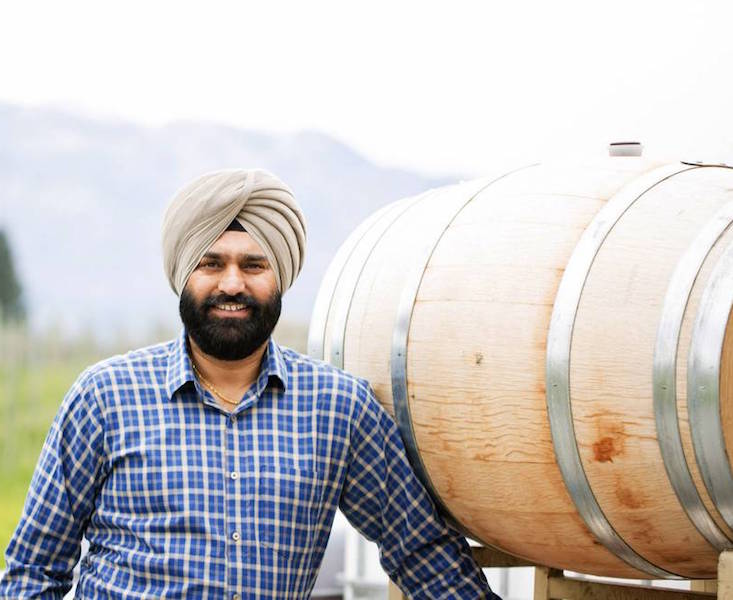
 “Being from Punjab, another field we thought we could very good in was farming,” says Sidhu, whose father was a farmer. Agriculture is such a fundamental part of Punjabi culture and folklore that he was taught farming basics in high school.