
















UA-56202873-1
Page 811

Kuantan gurdwara gets a lift

| Kuantan, Malaysia | 10 July 2016 | Asia Samachar |

In the 1960s, Sohan Singh used to run the 10,000 meter race in the inter-state electricity board sports. The retired wireman was a man on the go, ever willing to walk the extra mile.

Not anymore. The 76-old former staff of Lembaga Letrik Negara (LLN), now known as Tenaga Nasional Bhd (TNB), is now wheelchair bound after his lower leg was removed in a surgery.

Moving about became an issue. Living in Kuantan, the state capital of Pahang – a Malaysian state facing the South China Sea – he found it difficult to reach the Darbar Sahib in the local gurdwara, as it was located on the second floor.

SEE ALSO: Two medical doctors, a team of professionals lead Kuantan gurdwara

SEE ALSO: The Gurdwara as a Gallery

Help is finally here. Gurdwara Sahib Kuantan (GSK) has fixed a lift to enable the young and elderly to go up to the Darbar Sahib with ease.

The Kuantan gurdwara joins a number of gurdwaras nationwide with lifts. The others include Wadda Gurdwara Sahib Ipoh, Gurdwara Sahib Puchong and Gurdwara Sahib Seremban.

Newly opened Gurdwara Sahib Guru Nanak Shah Alam (GSGNSA) in Selangor and Gurdwara Sahib Bayan Baru in Penang came with pre-planned lifts.

“The lift cost us RM93,000,” GSK gurdwara management committee president Dr Dharshan Singh tells Asia Samachar when contacted after the opening ceremony today (10 July 2016).

Asked what is the next major task before the GMC, Dr Dharshan said it is to decide on the fate of a 3/4 acre land in the town centre, either to be disposed to the highest bidder or developed into a commercial property or build a community hall for the Sikh community.

“This will be decided by the committee members soon,” he said.

The land was donated to the gurdwara some four decades ago by the late Hari Singh.

RELATED STORIES:

Two medical doctors, a team of professionals lead Kuantan gurdwara (Asia Samachar, 20 March 2016)

Seremban gurdwara ‘lift’ the Sanggat up (Asia Samachar, 13 March 2016)

Roles and functions of a gurdwara (Asia Samachar, 11 Dec 2015)


ASIA SAMACHAR is an online newspaper for Sikhs / Punjabis in Southeast Asia and beyond. Facebook | WhatsApp +6017-335-1399 | Email: editor@asiasamachar.com | Twitter | Instagram | Obituary announcements, click here |

Vivian has grand plans for Singapore firm Strontium Technology

2
| Singapore | 10 July 2016 | Asia Samachar |
Strontium Technologies CEO Vivian Singh - PHOTO / COMPANY WEBSITE
Strontium Technologies CEO Vivian Singh – PHOTO / COMPANY WEBSITE

Strontium Technology Pte Ltd, a Singapore-based company co-founded by Vivian Singh, has already put into motion plans to reinvent the company to face-up the changing market place.

The company has grand plans: to build an ethical organisation which will outlive us and be a Fortune 500 corporaiton.

“PC sales started to slow down in 2009, which is when we moved from dynamic random access memory (DRAM) products to flash products like microSD cards and USB drives,” Strontium President/CEO Vivian told Singapore daily newspaper Straits Times.

The firm, a global leader in PC and flash memory manufacturing, also had to change the way it sold products.

SEE ALSO: Manmeet to take Melvados beyond Singapore

SEE ALSO: Veerinderjeet, Ranjit list Malaysian-based company in Singapore

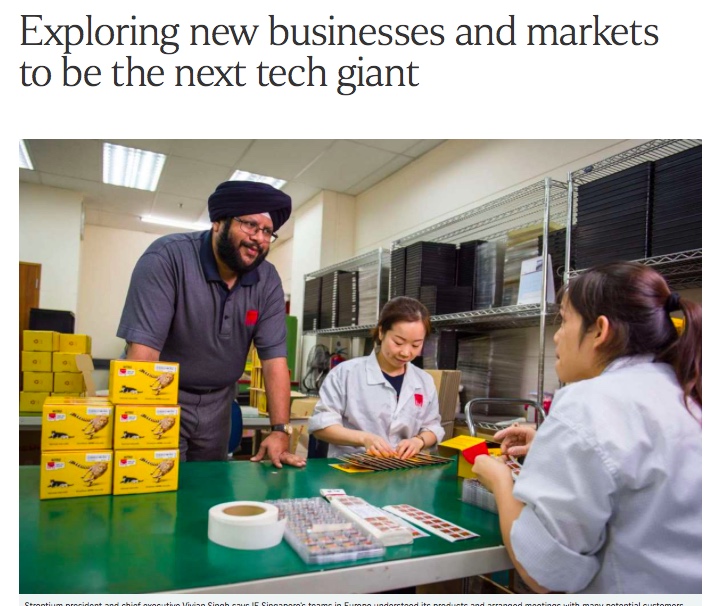
“We were selling DRAM products to PC manufacturers, system integrators, and DIY channels to other businesses, but flash products needed a focus on retail and e-commerce, which is selling to consumers,” he said in the same article entitled ‘Exploring new businesses and markets to be the next tech giant’ (Straits Times, 6 July 2016).

Vivian and Strontium featured in Straits Times (6 July 2016) in an article entitled 'Exploring new businesses and markets to be the next tech giant' - PHOTO / ASIA SAMACHAR
Vivian and Strontium featured in Straits Times (6 July 2016) in an article entitled ‘Exploring new businesses and markets to be the next tech giant’ – PHOTO / ASIA SAMACHAR

As of today, Strontium sells more than 12 million flash storage products a month, according to information on its website.

In 2008, DRAM products contributed 5% of Strontium’s revenue, while flash products contributed 95 per cent, the report said. Now the ratio has reversed.

This year, he said the firm is expecting a turnover of $375 million, up 20% more than last year. By 2020, the aim is to hit beyond $500 million.

The firm was founded by Vivian and Anshuman Gupta. Vivian was instrumental in bringing about technological and managerial excellence in the company’s operations. Anshuman was responsible for growth, strategic planning and product management, according to the company’s website.

VIvian pursued his MBA in International Business at Delhi School of Economics, University of Delhi. Before Strontium, he worked for two years as Marketing Manager in Karma Distribution, Singapore and three years as National Sales Manager in Avnet Max, India.


[ASIA SAMACHAR is an online newspaper for Sikhs in Southeast Asia and surrounding countries. We have a Facebook page, do give it a LIKE! Follow us on Twitter. Visit our website: www.asiasamachar.com]

RELATED STORY:

Manmeet to take Melvados beyond Singapore (Asia Samachar, 30 Dec 2015)


 ASIA SAMACHAR is an online newspaper for Sikhs / Punjabis in Southeast Asia and beyond. Facebook | WhatsApp +6017-335-1399 | Email: editor@asiasamachar.com | Twitter | Instagram | Obituary announcements, click here |
Adform appoints Sukesh as VP Southeast Asia

| Singapore | 9 July 2016 | Asia Samachar |
Sukesh Singh made Southeast Asia VP at Adform

Digital advertising solution provider Adform has appointed Sukesh Singh to its executive team as vice president of Southeast Asia, operating from Adform’s Singapore office.

Sukesh, who had founded a firm providing digital brands across APAC, has 17 years of experience in advertising sales and business development in the Asia Pacific region.

He will leverage his considerable expertise to spearhead Adform’s efforts to provide its proven advertising technology to agencies, trading desks, advertisers and publishers throughout Southeast Asia, the Adform said in a media statement.

Prior to joining Adform, Sukesh founded Conduit Consulting Pte Ltd, a strategic consulting firm that offers strategy, marketing, sales and business development to digital brands across APAC.

Its clients included MediaMath, My Chat and Zirca Digital Solutions among others. Prior to Conduit, he served as vice president APAC for Phunware and as regional sales director for BBC Worldwide, the statement said.

“Adform’s timing is perfect given the pent-up demand for truly independent ad tech vendors and for unparalleled consulting service,” said Sukesh in the  statement. “I’m thrilled to be working with the Adform team to build a compelling and customizable offer for customers in the region.”

Adform, which was founded in Denmark in 2002, provides digital advertising solutions. It platform includes campaign planning, ad serving, optimization, analytics, reports and much more.

Adform’s says its technologies and services are used by more than 21,000 advertisers, 1,600 agencies, and 800 of the world’s leading publishers.

“Mr. Singh’s appointment is a direct result of Adform’s commitment to expanding its global footprint by offering its independent and open buy-side and sell-side platform to agencies, advertisers and publishers in every market,” said Jay Stevens, chief revenue officer at Adform, in the same statement.

“Our clients want sales, technical and creative services delivered by people who understand their market and speak their language. His deep sales, consulting and business development experience will be a valuable asset to our clients in the Southeast Asia region.”


[ASIA SAMACHAR is an online newspaper for Sikhs in Southeast Asia and surrounding countries. We have a Facebook page, do give it a LIKE! Follow us on Twitter. Visit our website: www.asiasamachar.com]

RELATED STORY:

Balbeer Singh Mangat: Singapore pioneer in private higher education (Asia Samachar, 26 June 2016)

Former Singapore sports journalist Santokh Singh dies while watching football (Asia Samachar, 4 June 2016)

Mohinder takes over leadership at Singapore Khalsa Association (Asia Samachar, 29 May 2016)

Jasbir featured in book on Singapore skilled talents (Asia Samachar, 30 Dec 2015)

Veerinderjeet, Ranjit list Malaysian-based company in Singapore (Asia Samachar, 27 Nov 2015)

Ishvinder jointly creates Singapore Sikh heritage trail app (Asia Samachar, 27 Nov 2015)

The Gurdwara as a Gallery

0

| Vishal J SinghGurdwara Design | 8 July 2016 | Asia Samachar |

01GGVIEWAXOBIn my previous article, I had a proposed a design for a Gurdwara that could be structurally supplemented with an art gallery annex, that could be used to highlight and showcase some of our most precious relics and artworks to the us and the general public as well. When artworks are brought from overseas, say Punjab to Malaysia, the display areas are generally mundane and uninspiring makeshift spaces.

Hence, I had proposed designing a Gurdwara with an art gallery  that can house our most precious artworks for a beneficial viewing to ourselves and the public in a more appropriate and contemporary setting. These exhibitions showcasing the best of our artistic treasures can be temporary or permanent, and can be used by artists and the public alike as a platform for education and propagation of classical and contemporary Sikh art.

SEE ALSO: Are our Gurdwaras Dysfunctional? The Assessment.

SEE ALSO: ‘Gurdwara of learning’ coming to Shah Alam

This article will focus on what the interiors of two major spaces within this Gurdwara: the Darbar Sahib and the Art Gallery Annex. As a Gurdwara emphasising on artistic pursuits as a key cultural element in our society, the interior design and appearance focuses on artistic brilliance as its main visual element.

02-DS-GG01BThe main space, as always in any Gurdwara, is the Darbar Sahib (See Photo V02, above). Here, it is surrounded by a complex but rich composition of metal “leaves” that are a mix of golden and silver patterns. This metal screen provides a visually dramatic enclosure of the Darbar Sahib, which allows pockets of sunlight through filter its semi-transparent walls, thus bathing the interiors of the Darbar Sahib with a powerful play of light and shadow.

03-DS-GG02BThe Palki, where the Guru Granth Sahib is placed, rests on an octagon shaped marble base, surrounded by water and spherical golden lanterns that seem to float on the water itself. Symbolically this represents an abstract artistic concept, where the water represents the universe, the lanterns represent the stars and the location of the Palki and the Guru Granth Sahib represents the centre of creation itself, and by approaching the Palki would be poetically akin to approaching God Himself who is in the centre of all things.

03a-06-DS-GG03bThe Palki housing the Guru Granth Sahib is adorned in gold columns, bases and domes itself, which conveys a sense of utter preciousness, that can be approached by a timber based “bridge”, again as an artistic gesture that shows upon approaching the Guru Granth Sahib, then truly you will experience the brilliance of real spiritual wealth while foregoing all before you as menial and insignificant.

04-AG0VIEW01BNow, we turn to the art gallery annex. It is located near the Darbar Sahib where our most precious artworks, such as paintings, objects, and artifacts can be displayed in a contemporary manner. The interiors of art galleries then to be simple to allow the artworks displayed within to really be visually appreciated and thus galleries are usually clutter – free spaces.

05-AG0VIEW02BBy designing a simple layout, the artworks displayed within will take the full attention of the viewer. By keeping the arrangement of the artwork as efficient as possible, a clear circulatory route can be suggestively expressed which allows people to systematically move within the space from one point to another to best appreciate whatever artwork catches their eye.

As mentioned in the previous article, this Gurdwara encompasses and expresses the power of art on its premises. It recognises the power of art as an endeavour that can elevate the human spirit to heights that dazzle and inspire. Beyond that, the gallery and studio also recognises the power that art has in bringing people together as community, by proposing specific structures or design elements that highlight that message (that art is important to us a community). This design proposed here hopes to raise awareness that the pursuit of visual excellence is not an exercise in vanity, but a genuine attempt to leave a lasting legacy of artistic wonder to us Sikhs, and indeed to contribute a significant gesture to the collective artworks of all of humanity as well.


The next article will focus on the possibility of a designing a Gurdwara for the study of music and the performance arts such as drama, plays, workshops, etc. It will be supplemented with photos of an urban based site and perspectives as usual.

Vishal1aVishal J.Singh, an aspiring architect, holds a Bachelor of Architecture from Infrastructure University Kuala Lumpur


[ASIA SAMACHAR is an online newspaper for Sikhs in Southeast Asia and surrounding countries. We have a Facebook page, do give it a LIKE. Follow us on Twitter. Visit our website: www.asiasamachar.com]

FROM THE SAME AUTHOR:

Gurdwara to express power of art (Asia Samachar, 18 June 2016)

Building a gurdwara in a slice of paradise (Asia Samachar, 12 May 2016)

Aspiring architect Vishal J Singh steps up (Asia Samachar, 27 April 2016)

Gurdwara design: A Sikh lantern in Far East (Asia Samachar, 6 Feb 2016)

Gurdwara docked by the riverbank (Asia Samachar, 23 Jan 2016)

Designing a gurdwara for Sikh youth, where pray meets play (Asia Samachar, 25 Dec 2015)

Gurdwara design that listens to earth (Asia Samachar, 1 Oct 2015)

Creating deeper social connections (Asia Samachar, 13 July 2015)

A sanctuary by the sea (Asia Samachar, 7 June 2015)

Rethinking gurdwara design (Asia Samachar, 21 Apr 2015)


Aussie MP Katter wants to cut immigration, but welcomes Sikhs, Jews and Middle Eastern Christians

| Australia | 8 Julyxa 2016 | Asia Samachar |
Aussie MP Bob Katter. Indert: Katter with a SIkh from his constituency.

If Bob Katter gets his way, Australia should restrict migration to just three groups, with Sikhs included in his list.

Katter is the independent Australian Member of Parliament who has agreed to support Caretaker Prime Minister Malcolm Turnbull to form a minority Federal government in the aftermath of the 2016 general elections.

Ideally, Katter said migration be confined to Sikhs, Jews and Middle Eastern Christians.

“I had a Sikh in his turban and a Jewish assistant rabbi, with his beard, on either side of me. These are persecuted minorities, there’s no doubt – 84,000 Sikhs were killed in one year in India,” he said at a press conference on Thursday, after winning the Federal seat, reports Sydney Morning Herald.

SEE ALSO: Australia’s first Sikh councillor John Arkan to run in July federal elections

Turnball’s Coalition party need the support of independents candidates to form a government after both the Coalition and the Labour failed to win outright majority of seats in the general elections.

This is not the first time Katter, who leads the Katter Australian Party, has singled out the Sikhs. He made a number of references to Sikhs in his statements over the years. See here, here.

Katter, fresh from a marathon 2½-hour meeting with Prime Minister Malcolm Turnbull in Brisbane on Thursday, said he wanted to see immigration reduced to “virtually nil”, except for people in some persecuted minority groups, the report said.

It quoted Katter as saying: “The government has been bringing 620,000 people into Australia each year, into an economy that’s only got 200,000 jobs and over 200,000 school leavers…I mean, is this madness? The whole country’s economy must collapse.

“Clearly, half a million people are forced on to the dole each year as a result of the government bringing 620,000 people into the country.

“As far as I’m concerned, it’s in line with the job creation, which would be down to 100,000 and if you go to persecuted minority groups and I’ll be very specific – the Christians in the Middle East, the Jews in the Middle East and other parts of the world, and the Sikhs in India – they will fill your 100,000, no trouble.

“The issue is you are bringing in mass numbers that the country can’t possibly absorb.”


[ASIA SAMACHAR is an online newspaper for Sikhs in Southeast Asia and surrounding countries. We have a Facebook page, do give it a LIKE. Follow us on Twitter. Visit our website: www.asiasamachar.com]

RELATED STORIES:

Australia’s first Sikh councillor John Arkan to run in July federal elections (Asia Samachar, 19 June 2016)

Former Singapore MP Inderjit ‘silently’ served nation, Sikh community (Asia Samachar, 30 April 2016)

“I have more Sikhs in my cabinet than Modi does” – Canada PM (Asia Samachar, 12 March 2016)

Malaysian Sikh girl tops Aussie pre-university exams (Asia Samachar, 17 Jan 2016)

4 Sikhs take up Cabinet berth in Canada (Asia Samachar, 5 Nov 2015)

Thakral into Aussie retirement housing  (Asia Samachar, 21 Aug 2015)

Daljit Sanghera: Mother, farmer and Australia’s ‘Woman of the Year” (Asia Samachar, 27 May 2016)

No Sikhs in new UK parliament – BBC  (Asia Samachar, 14 May 2016)

First Indian aged care to be built in Australia – SBS Punjabi (Asia Samachar, 9 March 2016)

Melbourne Sikhs debut in Australia Day parade (Asia Samachar, 26 Jan 2015)

NZ looking at Malaysian Punjabi teaching model

| Auckland, New Zealand  | 6 July 2016 | Asia Samachar |
CMSO Secretary General Autar Singh sharing the Malaysian experience in teaching the Punjabi at a conference in Auckland, New Zealand

The teaching methodology of Punjabi language in New Zealand can be improved to gain government recognition, with the adoption of the Malaysian model as one possibility.

This was the key deliberation at a one-day Punjabi language conference in Auckland on 3 July 2016.

The conference evaluated the present teaching methods and heard the presentation of a speaker from Malaysia on its experience in teaching the language through weekend schools.

The conference also looked at the possibility of getting the recognition of the New Zealand Qualifications Authority (NZQA). Among others, NZQA administers the national school-leaver qualifications called the National Certificates of Educational Achievement (NCEAs).

SEE ALSO: 3,000 students begin Punjabi classes at 47 centres in Malaysia

SEE ALSO: Punjabi now third language in the Canadian parliament

“This conference has been long overdue,” said Verpal Singh, the Secretary of World Council of Sikh Affairs and also Chairman of Centre Management Committee of Diversity Centre in Aotearoa.

“There is a need to systematise teaching of Punjabi language and Gurmat and establish standards against which success or failure of teaching material and teaching practice may be measured.”

One of the key speakers was Autar Singh, the Secretary General of the Coalition of Malaysian Sikh Organisations (CMSO) and also chairman of the Punjabi Education Centres (PECs).

NZ-conference“I believe Malaysia has a comprehensive and rigourous programme to teach Punjabi. I shared our experience with the conference participants,” Autar Singh, a retired  associate professor of a Malaysian university, tells Asia Samachar.

In Malaysia, some 3,000 students attend 47 PECs nationwide, mostly over the weekends, run by a unit of the Khalsa Diwan Malaysia (KDM).

The one-day conference, entitled ‘Punjabi Language Teaching in New Zealand: The Way Forward’, was mooted by Paguman Singh, a senior social protection consultant with the International Labour Organisation (ILO).

“The next step is gathering like-minded individuals to approach gurdwara committees to get them to accept a system similar to the one in Malaysia,” said Paguman who was also the former secretary of the Malaysian Gurdwaras Council (MGC).

The conference attracted some 80 people, including principals, teachers and management of the gurdwara run schools.

Also present was Kanwaljit Singh Bakshi, who holds the distinction of being the country’s first Indian Sikh Member of Parliament (MP).

In his speech, he applauded the Malaysian experience in the KDM-managed teaching and learning of Punjabi language.

He expressed his wish to see a similar programme developed in New Zealand and pledged his total support towards the realisation of the vision.

One of the participants was Jasmail Singh, a former lecturer at Singapore’s Ngee Ann Polytechnic, who has been living in Auckland for over 16 years.

“I am glad that I and my wife attended the conference. It was a joy to see that our Malaysian Sikhs have developed such a vigorous Punjabi language teaching and learning programme,” he said.

“The present generation, and generations to come, need a teaching methodology that will inspire them to learn and immerse in Gurmukhi/Punjabi, not just to acquire the language skills but also to read and understand Gurbani. I believe the Malaysian experience would be an excellent start.”

Some 80 participants took part in a one-day Punjabi language teaching conference in Auckland, New Zealand, on 3 July 2016

[ASIA SAMACHAR is an online newspaper for Sikhs in Southeast Asia and surrounding countries. We have a Facebook page, do give it a LIKE. Follow us on Twitter. Visit our website: www.asiasamachar.com]

RELATED STORIES:

Bilingual babies get head start in language skills, Singapore study finds (Asia Samachar, 17 May 2016)

Punjabi in Pakistan (Asia Samachar, 15 March 2016)

In Vancouver, Punjabi language becomes a job-getter (Asia Samachar, 29 Jan 2016)

3,000 students begin Punjabi classes at 47 centres in Malaysia (Asia Samachar, 10 Jan 2016)

Punjabi now third language in the Canadian parliament (Asia Samachar, 3 Nov  2015)

4 Malaysian Sikh NGOs receive RM950,000 Federal funding (Asia Samachar, 5 Aug 2015)

Punjabis learn their language their own way – BERNAMA  (Asia Samachar, 23 April 2015)

A New Challenge For Punjabi – SIKHCHIC  (Asia Samachar, 2 Apr 2015)

Giving voice to Punjabi language (Asia Samachar, 2 Apr 2015)

42 teams in 24th annual Punjabi language carnival (Asia Samachar, 2 Mar 2015)

60 teachers work on Punjabi lesson plans (Asia Samachar, 2 Feb 2015)

Sugarbread plunges into Punjabi-Sikh community in Singapore

| Singapore | 6 July 2016 | Asia Samachar |
sugarbread-fb2
Balli Kaur Jaswal (video grab from interview at Epigram Books) and her novel Sugarbread – PHOTO / ASIA SAMACHAR

By Anandpreet Kaur

Sugarbread talks about a 10-year old girl from the Punjabi-Sikh community in Singapore searching for clues of her past through her mother’s cooking.

The novel touches on delicate issues of race and religion, and brings light to the colourful Punjabi-Sikh community.

Sugarbread, authored by Balli Kaur Jaswal while she was still studying in university in United States a decade ago, was one of the finalists for the 2015 Epigram Books Fiction Prize.

“I was in America and facing all those questions about where I belong and also the complex sort of dilemma of where should I go next. You know, should I stay in America, should I go back home… Then where is home exactly?” Balli says in an interview shared at Singapore-based independent publisher Epigram Books website.

SEE ALSO: Balli Jaswal shortlisted for inaugural Epigram Books Fiction Prize

The Singapore-born Balli, who now teaches at an international school in Istanbul, is also the author of Inheritance, said to be the first English-language novel about Singapore’s Punjabi-Sikh diaspora.

The novel got the 33-year old named “Best Young Australian Novelist” in 2014 by Australia’s Sydney Morning Herald for Inheritance.

In Sugarbread, the 10-year old Pin must not become like her mother but nobody is telling her why.

She seeks clues in Ma’s cooking when she’s not fighting other battles—being a bursary girl at an elite school and facing racial taunts from the bus uncle, according to the synopsis of the book.

Then her meddlesome grandmother moves in, installing a portrait of a watchful Sikh guru and a new set of house rules. Old secrets begin to surface but can Pin handle learning the truth?

In the same interview shared at the Epigram Books website, Balli says there are a lot of strong, conservative women in the novel.

“In a conservative culture, in a conservative community it’s the women who’s honour has to be protected, it’s the women who could potentially shame the family,” she said.

Basically, Pin’s mothers struggle was that of embracing the Western culture and feeling guilty about it. Finding a middle ground of integration of the two.

“A big part of the novel is also food, I love food,” she said, breaking out in laughter.

Book Trailer at Epigram Books:


[ASIA SAMACHAR is an online newspaper for Sikhs in Southeast Asia and surrounding countries. We have a Facebook page, do give it a LIKE. Follow us on Twitter. Visit our website: www.asiasamachar.com]

RELATED STORIES:

Balli Jaswal shortlisted for inaugural Epigram Books Fiction Prize (Asia Samachar, 29 Oct 2015)

Former MIC leader Nijhar releases ‘The Bullock Cart Boy’ (Asia Samachar, 5 July 2016)

Kultar’s Mime: Powerful new book tells 1984 Sikh genocide story (Asia Samachar, 15 May 2016)

Young lecturer co-authors book on accounting principles (Asia Samachar, 14 May 2016)

Singapore journalist releases ‘India Rising: Fresh Hope, New Fears’ (Asia Samachar, 2 May 2016)

 Jasbir featured in book on Singapore skilled talents (Asia Samachar, 30 Dec 2015)

The Fourth Direction wins award at Singapore International Film Festival (Asia Samachar, 7 Dec 2015)

Jashpreet launches book on nurturing babies with loving touch (Asia Samachar, 25 Sept 2015)

Harbans’ second edition of engineering, construction contracts book (Asia Samachar, 1 May 2015)


Three Punjab fleeced RM31,000 for work permits in Malaysia

Punjab, India | 6 July 2016 | Asia Samachar |

strap-news1Punjab police is reportedly looking for suspects, believed to be still in Malaysia, alleged to have fleeced three youth of some Rs 5.10 lakh (RM30,500) for work opportunities in Malaysia.

The youth were promised a salary of Rs 35,000 (RM2,100) per month, but ended up with a job paying half the salary, plus them having to bear all other expenditures.

The police are reportedly looking for Gurpreet Singh and his brother Sarabjit Singh of Gore Nangal village, according to a report, entitled by Tribune News Service (3 July 2016).


Police has registered a case under Sections 420 and 120 B, IPC, against the suspects following a six-month long probe conducted by a senior police official, the report added.

The report added:

Father of one of the victims and complainant in the case Lakhwinder Singh, a resident of Makowal village, lodged a complaint with the Amritsar rural police in January this year.

He told the police that his son Harpreet Singh informed him that his friend Gurpreet was in Malaysia and he claimed that his company required three youths and he had working visa with him.

He said a deal was struck with him for sending Harpreet and his two friends Manpreet and Jaskarandeep Singh for Rs 1.70 lakh (RM10,200) each. Gurpreet promised them that the company would give them Rs 35,000 (RM2,100) salary per month. However, when they reached there, the company offered them Rs 17,000 (RM1,00) per month while all other expenditures were borne by them.

Lakhwinder said when they asked Gurpreet about the same, he told them to cheat other youths in order to realise their money. However, Harpreet and his two friends returned empty handed.

Harjit Singh, investigating officer, said the probe was underway and efforts were being made to nab the suspects who were still in Malaysia.


[ASIA SAMACHAR is an online newspaper for Sikhs in Southeast Asia and surrounding countries. We have a Facebook page, do give it a LIKE. Follow us on Twitter. Visit our website: www.asiasamachar.com]

RELATED STORY:

Conversion deadline for PIO extended to 31 Dec 2016 (Asia Samachar, 23 June 2016)

Singapore court fines ex-Harry’s COO $40k over hiring scheme (Asia Samachar, 22 June 2016)

Abusive employers risk losing Indian visa, PIO card (Asia Samachar, 23 Oct 2014)


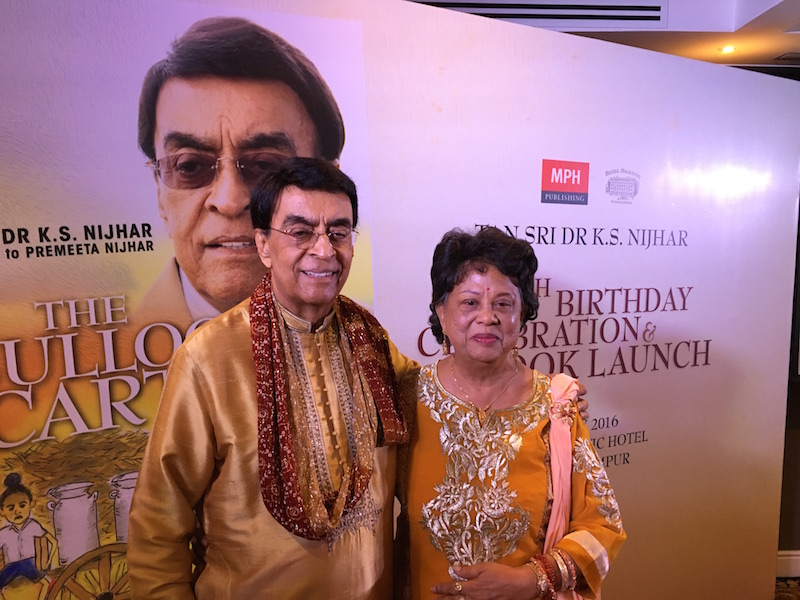
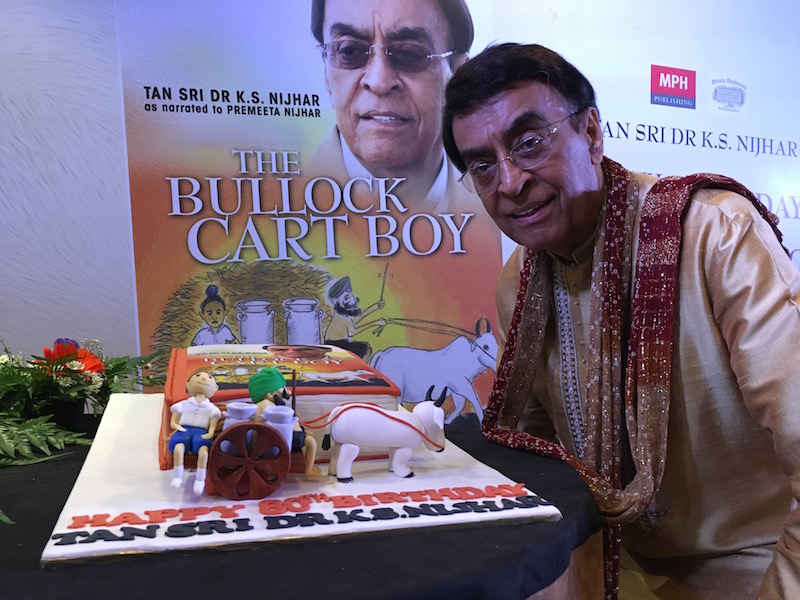
Former MIC leader Nijhar releases ‘The Bullock Cart Boy’

 | Kuala Lumpur, Malaysia | 2 July 2016 | Asia Samachar |

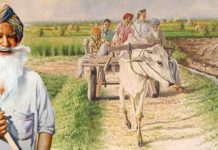
The bullock cart played a prominent role in the early life of Dr Karnail Singh Nijhar, a Punjabi Sikh who held a senior leadership position in the  Malaysian Indian Congress (MIC).

Known simply as K.S. Nijhar, he was literally born on a bullock cart in 1936 between Kroh and Kelian Intan in Perak.

Nijhar rose to the position of vice president in the Indian-based political party MIC and founded a security company which has grown into one of the largest in Malaysia.

He also served as the Member of Parliament (MP) for Subang, one of the largest urban constituency by voter count, for two terms between 1999 and 2008.

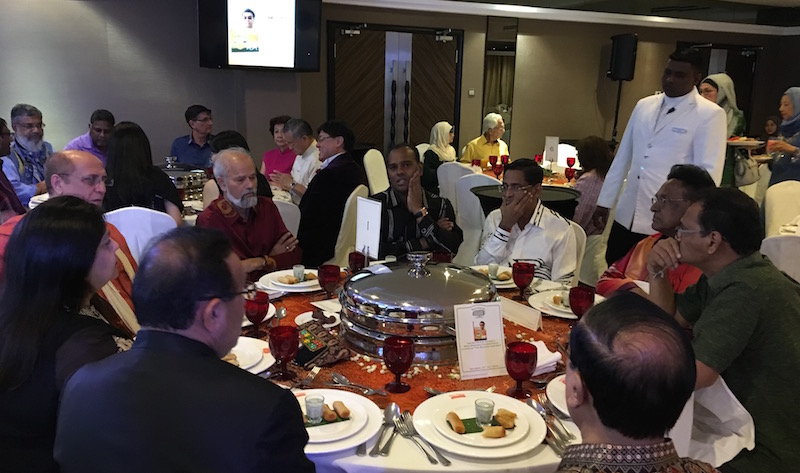
“As a Punjabi Sikh who spoke no Tamil, my political career seemed hopeless. It took three years just to be an ordinary member,” he told an audience in Kuala Lumpur at a recent launch of his autobiography The Bullock Cart Boy, which coincided with his 80th birthday.

SEE ALSO: Former Singapore MP Inderjit ‘silently’ served nation, Sikh community

He owes his political fortunes to S Samy Vellu, a former MIC president and a long serving Federal minister, whom he describes as a ’close friend and political mentor’.

Samy was present at the book launch along with present MIC president and Health Minister Dr S Subramaniam.

In 1980, Samy Vellu appointed Nijhar as the chairman of then two newly created bureaus relating to the pressing issues for the Indian community: the Economics Bureau and Education Bureau.

“I was the first Punjabi Sikh, since Tun Sambanthan’s time in 1955, to hold any national level portfolios in MIC,” he writes in the book.

MIC was founded as Malaya Indian Congress in August 1946. Its second president was Budh Singh, who served between 1947 to 1950, making him the highest ranking Punjabi Sikh in the party largely dominated by Tamils.

Jaspal Singh and Daljit Singh, two prominent Punjabi Sikh leaders in MIC today, were also present at the book launch.

Jaspal, a former party treasurer-general and a two-term senator, won a vice president slot in the party’s 2015 election.

SEE ALSO: Senator Jaspal, Daljit win in MIC party election

Daljit, who served a one-year senatorship and is now a director at the Malaysian Tourism Promotion Board, secured a seat in the party’s Central Working Committee (CWC) in the same year.

Describing his rise in the party, Nijhar writes that in 1985, he was appointed as a senator in the Dewan Negara, the upper house of the Malaysian parliament.

“This was the first time MIC nominated a Punjabi Sikh for the Senate, and I was the only second Punjabi Sikh in Malaysia’s history to sit in the Senate, after Senator Paramjit Singh, the president of PPP (People’s Progressive Party). The only other notable Sikh in the political landscape was in the opposition, namely the late Karpal Singh,” he writes.

In June 1997, Nijhar says he ‘created another history’ when he became the first Punjabi Sikh to be nominated by the MIC to receive the Panglima Setia Mahkota Malaysia (PSM) award, the second highest state award after the Tun. The award carries the title ‘Tan Sri’.

“My award created history for the Sikh community in Malaysia, for being the only Sikh ever to have been recommended by the MIC for PSM, to this day. I should add that from the time of Malaya’s independence to the present, no more than six Malaysian Sikhs have received the PSM,” he writes.

The book, narrated to his daughter Premeeta Nijhar, is punctuated with  photographs and sketches depicting key events.

It records ‘the experiences of micro-minorities in Malaysia – in this instance, a second-generation Malaysian of Punjabi Sikh descent’, he writes in the book’s preface.


[ASIA SAMACHAR is an online newspaper for Sikhs in Southeast Asia and surrounding countries. We have a Facebook page, do give it a LIKE. Follow us on Twitter. Visit our website: www.asiasamachar.com]

RELATED STORIES:

Kultar’s Mime: Powerful new book tells 1984 Sikh genocide story (Asia Samachar, 15 May 2016)

Young lecturer co-authors book on accounting principles (Asia Samachar, 14 May 2016)

Singapore journalist releases ‘India Rising: Fresh Hope, New Fears’ (Asia Samachar, 2 May 2016)

Former Singapore MP Inderjit ‘silently’ served nation, Sikh community (Asia Samachar, 30 April 2016)

 Jasbir featured in book on Singapore skilled talents (Asia Samachar, 30 Dec 2015)

Pursue your passion, Singapore minister tells Sikh students (Asia Samachar, 9 Nov 2015)

Senator Jaspal, Daljit win in MIC party election (Asia Samachar, 6 Nov 2015)

Malaysian Sikhs worry most about economy, divorce and conversion, reveals new ground breaking research (Asia Samachar, 24 Sept 2015)

Jashpreet launches book on nurturing babies with loving touch (Asia Samachar, 25 Sept 2015)

Harbans’ second edition of engineering, construction contracts book (Asia Samachar, 1 May 2015)

Muar gurdwara retains Baldev as president, Sukhdev as VP

| Muar, Malaysia | 5 July 2016 | Asia Samachar |

Muar-gurdwara-1505bRetired police officer Baldev Singh Randhawa has been reelected to lead Gurdwara Sahib Muar.

The other key office bearers elected at the Annual General Meeting (AGM) on 18 June 2016 are Vice President Sukhdev Kaur, Secretary Manjinder Singh, Asst Sec Dr Ragber Singh and Treasurer Amarjit Kaur.

Th committee members are Keshnaranjan Kaur and Narendar Singh. Appointed auditors are Kalwant Kaur and Abtar Singh.

SEE ALSO: New leadership for Muar gurdwara

DSP (Rtd) Baldev was first elected as the gurdwara management committee (GMC) president in May 2015.

Baldev, 65, is the immediate past president of the Sant Sohan Singh Ji Melaka Memorial Society, where he is currently serving as the vice president. He has also served as vice president of Gurdwara Sahib Malacca and Rotary Club of Muar.

Muar, a city in the state of Johor, has about 25 Sikh families.


[ASIA SAMACHAR is an online newspaper for Sikhs in Southeast Asia and surrounding countries. We have a Facebook page, do give it a LIKE! Visit our website: www.asiasamachar.com]

STORIES ON GURDWARAS:

New leadership for Muar gurdwara (Asia Samachar, 21 May 2015)

Johor Bahru gurdwara requests return of land (Asia Samachar, 20 Apr 2015)

Major changes in Malacca gurdwara leadership (Asia Samachar, 9 Mar 2015)