UA-56202873-1
Page 373

Being old is no reason to be depressed

0

By Anandpreet Kaur | Malaysia  |

You may be advanced in age. At times, you may even feel sad or down. But that need not be your default state.

Feeling sad or down sometimes is a normal part of life, but if these feelings last a few weeks or months, you may have depression, cautions a Malaysian-based psychiatrist.

“Depression in older people is often under-detected and untreated. Unfortunately it gets missed by family members who sometimes are far too busy and involved in their own lives. Some attribute the emotional changes to growing old. But it should never be regarded as a normal consequence of ageing. And appropriate treatment is available,” Dr Bilbir Kaur Chingara Singhh tells Asia Samachar.

Dr Bilbir, who retired from Malaysia’s Health Ministry after serving more than 30 years, will speak on ‘Depression in the Elderly’ in a Facebook live session tomorrow (3 Aug 2021, 3pm-4pm Malaysia time) in mental health virtual forum series organised by Wadda Gurdwara Sahib Penang (WGSP).

The session will be broadcast live on the gurdwara’s Facebook page. Asia Samachar is a supporting partner of the forum.

Before retirement, Dr Bilbir held various positions, including as head of department of Psychiatry and Mental Health in Hospital Raja Permaisuri Bainun Ipoh, Hospital Pulau Pinang and Hospital Taiping. She is now the Head of Psychiatry in Faculty of Medicine at Quest International University Perak and consultant psychiatrist at an Ipoh-based private hospital.

Over the years, Dr Bilbir said she had treated quite a number of elderly Sikhs.

What are the causes for depression? She said the aetiology ranged from losing a spouse, loneliness, unhappiness, unhappy with living arrangements (noisy ill-disciplined grandkids / uncaring in laws) retirement and a sense of worthlessness, empty nest syndrome and of course genetic loading and a history of substance abuse.

“Some of them felt there was no need to enjoy life now that they are old! A change in mind set and attitudes along with medication and long term therapy including family sessions went a long way in treating these individuals,” she said.

Dr Bilbir has much more to say on this topic. Tune in tomorrow. If you have elderly folks in your midst who may need help, this is your opportunity to talk to an expert.

The virtual forum sessions will be moderated by WGSP committee secretary Sukhveer Kaur, Youngo human rights working group coordinator Alka Kaur and Prof Ishwar Parhar from the Jeffrey Cheah School of Medicine & Health Sciences.

RELATED STORY:

Ipoh-based psychiatrist on managing pandemic lockdowns (Asia Samachar, 23 Aug 2021)

Parents need a wake up call on mental health (Asia Samachar, 21 Aug 2021)

Penang gurdwara to run mental health virtual forum series (Asia Samachar, 13 Aug 2021)

ASIA SAMACHAR is an online newspaper for Sikhs / Punjabis in Southeast Asia and beyond.Facebook | WhatsApp +6017-335-1399 | Email: editor@asiasamachar.com | Twitter | Instagram | Obituary announcements, click here |

Afghanistan: Graveyard of empires bar one!

1

By Gurnam Singh | Opinion 

In a recent televised address justifying the US withdrawal resulting in the capitulation of the puppet regime and a Taliban takeover, President Biden described Afghanistan as a ‘graveyard of empires’. In doing so I can only imagine he was referring to the British, then Soviet, and then US incursions into what is universally known as a lawless land run by warlords with a medieval mindset.

This is all true, except for one important historic fact, namely not all empires have failed! One that succeeded to create a degree of stability and order over a sustained period was the Sikh Empire. Below I have referenced an excellent piece from Ahmad Abubakr who provides a clear and non-partial account of the nature and scale of the Sikh victories in Afghanistan. If you are unaware of this aspect of the history of the region, Why did the Afghans lose war against the Sikhs? (Quora, Ahmad Abubakr).

It may also help us to understand why it would be a grave error to see the Taliban as a benevolent force. The truth is that from the Soviet invasion of Afghanistan in 1979, through to the subsequent civil war culminating in their withdrawal and the first Taliban takeover in 1996, the effects on the Sikhs, who had previously been the largest minority and had lived there from the times of Guru Nanak in the 15th Century, were devastating. From an estimated population of 500,000, the number of Sikhs is now in the 1000’s with most living in hiding and/or confined to the Gurdwara precincts.

Abubakar argues that to “properly analyse the Afghan-Sikh Wars, we should divide them into three phases”.

First Phase – Prior to the Third Battle of Panipat (1751 – 1761) was in favor of the Afghans. This was during the invasions of Ahmad Shah Abdali. They defeated the Sikh forces on multiple occasions and many massacres were committed as well.

Second Phase – After the Third Battle of Panipat (1761 – 1799) was in favor of the Sikh. The Third Battle of Panipat, despite the Afghan victory, had caused great loss for the Afghan forces. The ones to gain the most from the battle were actually the Sikhs, not the Maratha or the Afghans.The Afghans began to suffer defeats at the hands of the Sikh armies and were forced to fall back.

Third Phase – Era of the Sikh Empire (1799 – 1837) was after Maharaja Ranjit Singh united the Sikh Misl to form the Sikh Empire. The third phase resulted in a decisive Sikh victory. All of Punjab was taken by the Sikh Empire, Kashmir was taken from the Afghans and KPK was also mostly taken by the Sikh Empire. Following the Battle of Nowshera in 1823, the Peshawar Valley and Khyber Pass also came under Sikh control. The Afghans would try to take back Peshawar and capture the Jamrud Ford in 1837 during the Battle of Jamrud but were unable to do so. In this battle, the Sikhs suffered great losses but were able to hold onto the Jamrud Fort. This was the last major conflict between the Sikh and the Afghans.

He goes onto set out some of the factors behind the Sikh’s defeat of the Afghans and identifies leadership being the most important. “Note that the greatest gains made by the Sikh were during the third phase of the war. This was during the time the Sikh Empire was being ruled by Maharaja Ranjit Singh. At this time, the Afghans had no real strong leader to unite them; the Sikhs, on the other hand, had Ranjit Singh, arguably of the greatest leaders of his time, if not world history.

You can see the same effect in the Afghans earlier on when Ahmad Shah Abdali was ruling the Durrani Empire. He managed to unite the Afghans under his banner. After his death in 1772, the Durrani Empire quickly declined. By the time of the Sikh Empire, the Durrani kings were weak and incompetent.

While the Durrani Empire was weak and led by weak rulers, the Sikh Empire had Ranjit Singh. He managed to unite the Sikh Misl into a Sikh Empire. It is hard to describe just how essential he was to the Sikh victories. Let’s also not forget the other leaders and generals of the Sikh during this time. Such as Hari Singh Nalwa for example. After the death of Ranjit Singh, the Sikh just like the Afghans would fall into internal conflicts.”

Another related factor was the respective armies. As the capitulation of the US-backed Afgan National Army demonstrated, it is not just about numbers and weaponry alone, but resolve, organisation, and a commitment to fight. Indeed, in his Presidential Address, Joe Biden identified the lack of a will to fight on the side of the Afghan Army to fight as being a key factor in his decision to withdraw.
Abubakr argues that though initially the Afghans probably had the upper hand over the Sikhs, their ability to quickly adapt and learn was critical. He suggests the key difference was that the Sikhs fought as one unified force, whereas the Afghans tended to be configured around tribal allegiances – not a new story, this is still the case today. He notes that the ‘Sikh armies at the time were noted by the British to be one of the most well-trained military forces in South Asia. They were usually trained by Europeans in the most modern ways of war. The Afghans were not. This is evident from when Dost Muhammad Khan tried to seek an alliance with the British against the Sikh Empire. The British did not agree, as they saw the Sikh as the more powerful of the two.”

Along with professional organization and effective leadership, having a fighting spirit is also critical. In his regard, Abubakr argues that the mindset of the ‘Sikh during the late Mughal period and what followed can be compared to the religious zeal found within the Muslim armies during the early expansion under the Rashidun Caliphate.’ He goes onto suggest that the Sikhs were ‘not just fighting for land, riches or power; they were fighting for a ‘noble cause worth dying for.’

Interestingly, the massacres that were committed by the Afghans in what is historically known and the Vadda Ghalūghārā – a dramatic and bloody massacre during the campaign of Afghanistan’s (Durrani Empire) provincial government based at Lahore to wipe out the Sikhs, leading to the deaths of 20/30,000 – he argus helped strengthen the resolve of the Sikhs.

Another factor that led to the Sikh’s victories was the alienation of the local Muslims, unity amongst the Sikh’s Missals, and growing prosperity and wealth under the Sikh Empire.

Though the Sikhs defeated the Afghans and stemmed their incursions through the establishment of forts and networks of cooperation with local power brokers, as Subaig Singh Kandola notes, they didn’t actually invade Afghanistan, though they did defeat them. He goes on to suggest that on the plains of the Panjab, ‘the undisciplined Afghan forces would have been no match for a modern, professional Sikh Army that has been trained by French Generals who has fought for Napoleon Bonaparte. But a Sikh invasion into rugged mountains of Afghanistan would have resulted in failure, just like the Russians, Americans and the British.’

As to how things might unfold under the new Taliban rule, one can only hope that they have changed, that with the greater scrutiny of social media and a realisation that they cannot achieve much without international support, they may just realised, if not the normal, the political imperative to respect basic human rights. But only time will tell, and as for the plight of the Sikhs, tragically, the era of great leaders like Hari Singh Nalua (pictured below) are long gone, and I think the only sensible strategy is to save as many lives and livelihoods as we can. That means those remaining should be given all the assistance possible, up to and including facilitating safe passage to countries where they may want to resettle.

Gurnam Singh is an academic activist dedicated to human rights, liberty, equality, social and environmental justice. He is an Associate Professor of Sociology at University of Warwick, UK. He can be contacted at Gurnam.singh.1@warwick.ac.uk

* This is the opinion of the writer and does not necessarily represent the views of Asia Samachar.

RELATED STORY:

Legacies of Independence: Religious fanaticism – the opium of the mobs (Asia Samachar, 12 Aug 2020)

ASIA SAMACHAR is an online newspaper for Sikhs / Punjabis in Southeast Asia and beyond.Facebook | WhatsApp +6017-335-1399 | Email: editor@asiasamachar.com | Twitter | Instagram | Obituary announcements, click here |

How Nirmlas derailed Sikhi – Part 2

0

This video examines damage done to authentic Sikhi by the Nirmala’s through the corruption of Sikh literature.

Sikh author and thinker Dr Karminder Singh Dhillon begins by looking at the so-called classical texts and puratan ithihas written by the Nirmalas. They are numerous and voluminous text. More damaging, argues the author, they have become deeply ingrained and embedded within the Sikh psyche over the past two centuries.

The examination begins with the Janamsakhi of Guru Nanak by Surat Singh, a Nirmala. This ‘highly distorted text’ has has been labelled as the Bhai Mani Singh Wali to give the impression that it was done with the expressed knowledge of the renowned Sikh.

“This janamsakhi was meant to fit the Guru squarely and completely in the sanatan and Vedic frame,” Karminder argued in the fifth video in the Hijacking of Sikhi series.

This video series takes after the name of the author’s bookThe Hijacking of Sikhi, released last year. The 420-page book containing 17 chapters that stitches together the author’s more recent writings, fortified further with argument as to what has gone wrong in transmitting Sikhi for so long now.

In this video series, the speaker intends to reveal why, how, when and who were the hijackers of Sikhi. The series will lay out the roles played by the hijacker group in corrupting, distorting and damaging Guru Nanak’s Sikhi. Click here to catch the first video.

In the fifth video, Karminder points out a number of texts, including rahitnamas, that need to be taken with caution.

Gurbilas Patshahi 6 (written by Nirmla Gurmukh Singh and Darbara Singh), is a ‘deeply blasphemous and slanderous book’ on the life of Guru Hargobind Singh. How is this book connected to the present-day practice of excommunicating Sikhs? This session discusses the topic. In 2002, in response to the resurfacing of the book, Giani Gurbaksh Singh Kala Afghana published a book in Punjabi titled ‘Gurbilas Pathshahi 6 Examined in the Court of the Sri Guru Granth Sahib‘. For his expose of the fraud, Gurbaksh was excommunicated.

Another questionable text is Bhagat Maal, also authored Surat Singh. This is the book that contains stories of Bhagat Dhanna getting ‘darshan’ of God by worshipping a stone and of Bhagat Namdev using magical powers to ‘spin a mandir to face him’.

LINKS TO VIDEOS AND LECTURE NOTES FOR ‘THE HIJACKING OF SIKHI’

Hijacking of Sikhi – Part 1 (The Plot): Video | Notes

Hijacking of Sikhi – Part 2 (Udasis): Video | Notes

Hijacking of Sikhi – Part 3 (Udasis): Video | Notes

Hijacking of Sikhi – Part 4 (Nirmlas): Video | Notes

RELATED STORY:

Hijacking Sikhi (Asia Samachar, 19 Dec 2020)

Sikhi Concepts: Complete links to videos and lecture notes (Asia Samachar, 3 July 2021)

The Hijacking of Sikhi: After releasing book, Dr Karminder starts 12-part video series (Asia Samachar, 18 July 2021)

ASIA SAMACHAR is an online newspaper for Sikhs / Punjabis in Southeast Asia and beyond.Facebook | WhatsApp +6017-335-1399 | Email: editor@asiasamachar.com | Twitter | Instagram | Obituary announcements, click here |

Ragbir @ Ragwer Singh Kalsi (1954 – 2021), Retired Police Sargent Bukit Tinggi Pahang

RAGBIR @ RAGWER SINGH KALSI S/O NAJOR SINGH

19.7.1954 – 19.8.2021

Village: Sohdiwale/Ludhiana

Wife: Amir Jit Kaur Nijhar d/o Bus Singh (Bentong)

Children:

  1. Sachdeve Singh
  2. Ashween Singh
  3. Hezerin Kaur

Path da Bhog: 5th September 2021 (Sunday) 2021, 9am to 12pm, at Gurdwara Sahib Bentong

Sukhamani Sahib path on the 4th September (Saturday), from 3pm to 5pm, at the residence (354, Lorong 19, Taman Bentong Makmur, 28700, Bentong, Pahang)

Contact:

Sachdeve Singh 011 1125 7295

Ashween Singh 014 6413 841

Our father, our hero. He was a strong man. He fought all his way out and is no longer with us. We are very sad that he has left us to join the Almighty. Papa, we will miss you forever.

| Entry: 29 Aug 2021 | Source: Family

ASIA SAMACHAR is an online newspaper for Sikhs / Punjabis in Southeast Asia and beyond.Facebook | WhatsApp +6017-335-1399 | Email: editor@asiasamachar.com | Twitter | Instagram | Obituary announcements, click here |

Yishun gurdwara celebrates silver jubilee

4

By Asia Samachar| Singapore  |

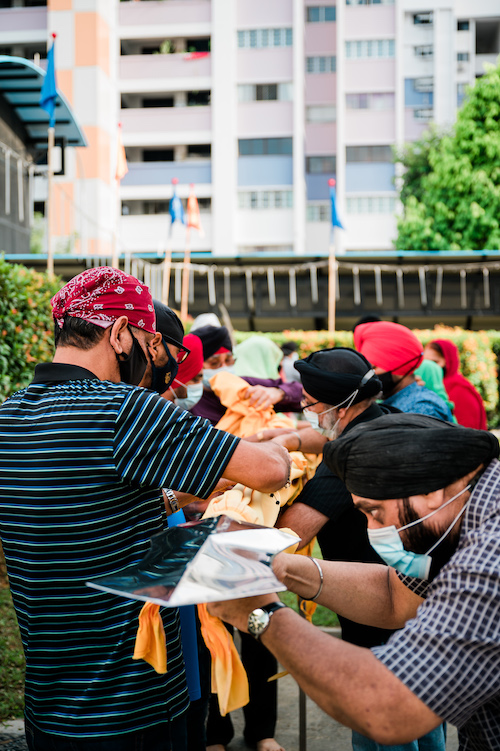
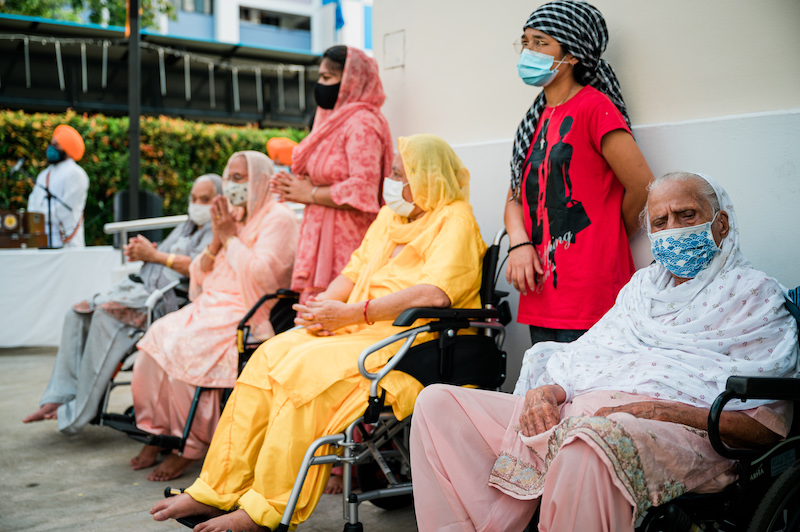
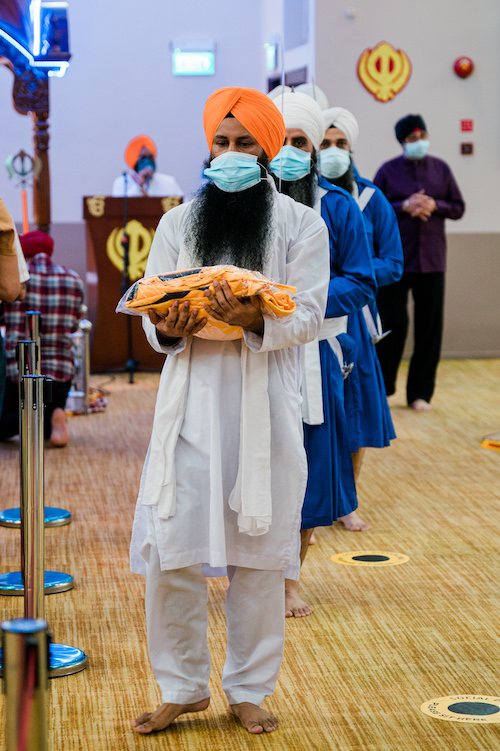
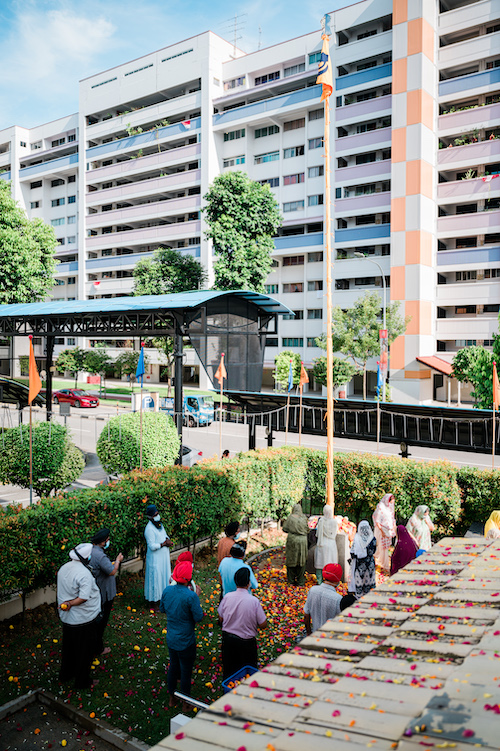
Gurdwara Sahib Yishun celebrated the 25th anniversary of its present gurdwara complex with the completion of an akhand path (continuous reading of the Guru Granth Sahib) today (29 Aug).

The event took an added shine with the recognition of many long-standing congregation members and volunteers. Also celebrated were Indian foreign workers who have taken an active part in the seva (selfless service) at the gurdwara.

“We had presentation of sirapao and plaques,” Yishun gurdwara committee president Lt Col (Rtd) Mejar Singh Gill told Asia Samachar. Sirapao usually refers to a turban presented as a momento at Sikh events.

What is being celebrated is the building of a new gurdwara complex in Yishun New Town in 1995.

While it may appear to be the youngest and newest compared to six other gurdwaras in Singapore, its history is as old as any of them. Its origins go back to the colonial interwar years, where three gurdwaras existed in Northern Singapore during the British days. They are Naval Police Sikh Temple, Sembawang Sikh Temple and Jalan Kayu Sikh Temple. Over time, they got merged into one.

RELATED STORY:

Singapore president at gurdwara centennial celebration (Asia Samachar, 24 June 2018)

ASIA SAMACHAR is an online newspaper for Sikhs / Punjabis in Southeast Asia and beyond.Facebook | WhatsApp +6017-335-1399 | Email: editor@asiasamachar.com | Twitter | Instagram | Obituary announcements, click here |

Young Thai Sikhs provide booster to Covid-19 vaccination

0

By Asia Samachar| Thailand |

It may be a drop in the bucket but the effort is much appreciated by the wider community.

A group of Sikhs have sponsored the purchase of Covid-19 vaccines to be administered to Thai Indians, Indian passport holders and a few other groups that may have faced difficulties in getting access to the state-run vaccination programme.

The Sinopharm vaccines were administered to registered recipient yesterday (Aug 27) at the Gurdwara Sri Guru Singh Sabha Bangkok complex.

Close to 250 people took advantage of the programme handled by the Young Thai Sikh Association (YTSA) and the Bangkok gurdwara.

“This programme is helpful to those who could not register for the national vaccination programme,” a YTSA official told Asia Samachar.

“This programme is especially welcome by helpers from Nepal and Myanmar who provide vital services to many Sikh families here,” said another Bangkok-based Sikh.

Nationwide, a total of 30.42 million doses have now been given, with 10.8% of the population fully vaccinated and 34% having received at least one shot, the Bangkok Post newspaper reported today (28 Aug). Vaccination on Friday has set a record, with 915,738 people nationwide receiving a first or second dose.

Since April 1, when the third wave began, 1,128,692 people have contracted Covid-19 and 936,893 have recovered. Since the pandemic started early last year, there have been 1,157,555 Covid-19 cases, 964,538 of whom recovered. The death toll is 10,785 from the third wave and 10,879 since the beginning of the pandemic, the report added.

The Southeast Asian country is now rushing to vaccinate its population amid a surge in coronavirus infections.

RELATED STORY:

Sikhs getting Covid-19 vaccine jab (Asia Samachar, 19 May 2021)

ASIA SAMACHAR is an online newspaper for Sikhs / Punjabis in Southeast Asia and beyond.Facebook | WhatsApp +6017-335-1399 | Email: editor@asiasamachar.com | Twitter | Instagram | Obituary announcements, click here |

Harvard-trained accountant makes history for Singapore Sikhs

Sarjit Singh and wife Kiranjeet Kaur with their twins Ashlyn and Jaslyn

By Asia Samachar | Singapore |

Harvard-trained Sarjit Singh s/o Sarmukh Singh made history for the Sikh community in Singapore when he was conferred The Public Service Star (Bar), also referred to as the ‘Bintang Bakti Masyarakat (Lintang)’ in conjunction with the republic’s national day celebration.

The award, presented by Singapore President Halimah Yacob on August 9, is the highest national honour presented to a Sikh in Singapore to date.

The Bar is awarded to those who make significant contributions after being awarded The Public Service Star. Instituted in 1963, the Public Service Star is awarded to someone who has rendered valuable public service to the people of Singapore, or who has distinguished himself or herself in the field of arts and letters, sports, the sciences, business, the professions and the labour movement.

This is Sarjit’s fourth award conferred by the President of the Republic of Singapore. The chartered accountant-turned-entrepreneur was previously conferred the Public Service Star in 2011; the Public Service Medal in 2007; and the SkillsFuture Fellowship in 2019, an award that honours individuals as masters of skills and mentors of future talent.

Sarjit is a rising star in Singapore’s financial sector, holding leadership positions in a Singapore-based regional company as well as a public accounting firm. On the community front, he plays a key role in Singapore Indian Development Association (SINDA). 

But life did not start out so easy for the accountant-turned-entrepreneur. His family experienced a major setback when he was 10 years-old when his father, the sole family breadwinner, passed away. “My dad was my superhero. From him, I learnt the impact just one person can have on so many lives. His passion to serve the community and help others, stayed with me and inspired me to do the same,” he told Asia Samachar.

But he counts his lucky stars in having around him role models, including his siblings and their spouses, who guided him in his growing up years. He graduated from the National University of Singapore and went on to win an overseas post-graduate scholarship with PricewaterhouseCoopers.

“I feel that I was able to do this because of Singapore’s meritocracy-based education system and I have a strong desire to give back to the education system and to the youth of our community,” he said.

The defining life experiences may also have led him to mentor and support everyone around him to achieve success in the way defined by them. Sarjit won the prestigious Nanyang Alumni Achievement Award in 2012 and was recognised by the Nanyang Technological University as a “financial industry talent and outstanding community leader”.

“I believe that having a good role model helps to inculcate the values of good citizenship in the youth as it did in me and I would like to share this passion with others to ensure that our youth are actively engaged and connected to the community,” he said.

Sarjit proved that this is no idle talk. Putting his money where his mouth is, Sarjit and his wife Kiranjeet Kaur created an endowment fund at Nanyang Technological University in 2010 to inspire outstanding students in Nanyang Business School. This is the couple’s way to leave a legacy to benefit future generations.

Sarjit is a senior director at Singapore-headquartered In.Corp Global Pte Ltd which provides professional corporate solutions for businesses with a wide presence in Asia. He also concurrently serves as the chairman of public accounting firm Kreston Ardent CAtrust PAC, the winner of the Best Practice Award at the Singapore Accountancy Awards in 2016.

He has built an extensive career in assurance and advisory, including 16 years with PricewaterhouseCoopers. Prior to In.Corp, Sarjit was the CFO of AIA Singapore and Aviva Asia, where he was responsible for formulating and implementing the financial, investment and commercial strategies for AIA Singapore and Aviva’s diverse businesses in Singapore, Hong Kong and the Asia Pacific region respectively.

In May 2021, he was appointed as Vice President of SINDA, making him the first Sikh to be appointed to a key position at the Singapore Indian self-help group. The organisation is led by Indranee Rajah, Minister in the Prime Minister’s Office, Second Minister for Finance and Second Minister for National Development.

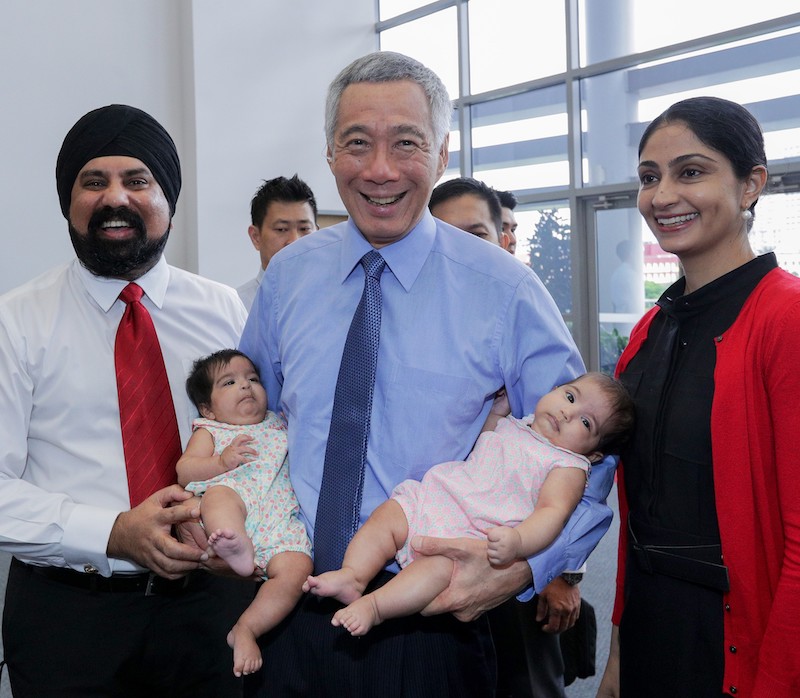
Singapore Prime Minister Lee Hsien Loong with Sarjit and his family in 2017. Lee shared the photo on his Facebook page with this caption: When I met District Councillor Sarjit Singh in March, he told me about his twin daughters. Today I met and carried Ashlyn and Jaslyn! Sarjit has been with Central Singapore CDC for 16 years, and he hopes that one day his daughters will become their youngest volunteers. (MCI Photo by Kenji Soon)

Sarjit also presently serves as a District Councillor and Chairman of the Finance Committee at the Central Singapore Community Development Council (CDC). 

He also holds several industry appointments, including Chairman of Singapore Accountancy Commission’s Chartered Accountancy Learning and Assessment Committee, and member of the Institute of Singapore Chartered Accountants Investigation and Disciplinary Panel. 

A huge believer in giving back, Sarjit was the President of the Nanyang Business School Alumni Association, Nanyang Technological University from 2006 to 2018.
 
Sarjit was appointed by the Singapore government in 2016 as a member of the Legal and Accounting Services Working Group to the Committee on the Future Economy, which aims to develop a vibrant and competitive legal and accounting services sector for Singapore in Asia. 

Sarjit is a Fellow Chartered Accountant of both the Institute of Singapore Chartered Accountants (ISCA) and Chartered Accountants Australia and New Zealand (CA ANZ). He is also a Chartered Valuer and Appraiser and a Financial Forensic Professional credential holder. Sarjit completed the Advanced Management Program at Harvard Business School and is an alumni of Harvard University.

RELATED STORY:

Two Sikhs in centre ring of New York Stock Exchange (Asia Samachar, 29 July 2021)

You can do more, says Singapore accountant Sarjit Singh (Asia Samachar, 18 Feb 2020)

ASIA SAMACHAR is an online newspaper for Sikhs / Punjabis in Southeast Asia and beyond.Facebook | WhatsApp +6017-335-1399 | Email: editor@asiasamachar.com | Twitter | Instagram | Obituary announcements, click here |

Fancy listening to Gurbani all day long? Try Sabha Radio

0

By Asia Samachar | Malaysia |

A new online radio devoted to Gurbani is now transmitting from Kuala Lumpur. Radio Sabha, launched last week (18 Aug), carries kirtan (singing of Sikh hymns) and Sikh prayers. It aims to broadcast 24 hours a day with Gurbani kirtan from various ragis from all over the world.

The online radio is a project undertaken by Sikh Naujawan Sabha Malaysia (SNSM), a Sikh youth based organisation based in Kuala Lumpur.

“Later on, we will also invite speakers to share salient messages on Sikhi,” project manager Ravinder Singh told Asia Samachar.

You can tune into the radio here.

RELATED STORY:

Former Naujawan Sabha chief Master Pritam Singh will be missed (Asia Samachar, 12 April 2021)

ASIA SAMACHAR is an online newspaper for Sikhs / Punjabis in Southeast Asia and beyond.Facebook | WhatsApp +6017-335-1399 | Email: editor@asiasamachar.com | Twitter | Instagram | Obituary announcements, click here |

Taking the pulse of Singapore Sikhs

0

By Asia Samachar| Singapore  |

Singapore has a small Sikh community. So, we should know all their issues, right? Well, not quite. The reality on the ground may be starkly different, with some issues raging within the community hidden from the surface.

Help is on the way. Two Sikh students have decided to take it upon themselves to find a resolution. They are floating a survey to take the pulse of the community and identify issues that may have evaded the naked eye.

Asia Samachar caught up with the movers of the Singapore Sikh Data Project (SSDP) to understand better what it is all about. When asked how it all came about, Dylan Raj Singh and Jasprit Singh Aujla said the spark was ignited when they attended a Sikh community event in 2019.

“We were deeply struck by anecdotal evidence of the worsening state of mental and emotional well-being in the community, and wanted to make a positive impact,” they said in an email response to Asia Samachar. “For a small community like ours, there is an even greater need for us to prepare for the future.”

So true, indeed. In a note on the project website, the survey proponents noted that in an increasingly complex and uncertain world, future trends are not easily predicted.

“As a small community, we also face issues that are hard to understand when studying national trends. Some trends we are experiencing may remain unnoticed until we engage and consult individuals on a large scale,” they argued.

It was observed that local Sikh institutions were founded to empower Singapore’s Sikhs and design programmes that would serve the community’s unique needs and interests – religious, cultural, social, economic and educational.

By providing these institutions with comprehensive data, the survey promoters hope to create more targeted and relevant community programmes to serve current and emerging needs. This also allows help and support to be given to those who need it most, in the areas that count.

“Through anecdotal evidence and observation, we know where our community is doing well. While we should celebrate our successes, we also need to identify and take action in areas where we can improve.

“Input obtained from this project can help shed light on the challenges our community presently faces, and help us understand why these challenges may have come about. This can allow us as a community to move forward and stay relevant,” the entry added.

Dylan has just graduated from University College London where he studied Theoretical Physics and plans to pursue a Masters in Physics at ETH Zürich. Jasprit is moving on to his final year of the Economics degree at the University of Cambridge.

What is the story behind the Singapore Sikh Data Project?

We attended the Young Leader’s Programme in 2019, organised by the Young Sikh Association (Singapore) or YSA. It was during the programme that we gained a greater insight into some obstacles that we as a community might face in the future, and a greater sensing of a need for the community to change and evolve. Particularly, we were deeply struck by anecdotal evidence of the worsening state of mental and emotional well-being in the community, and wanted to make a positive impact. One of the other things we learnt during the programme was that there was a lack of a consistent feedback channel via which Sikhs could provide their input to community leaders and organisations, and a lack of data on the Singapore Sikh population.

For a small community like ours, there is an even greater need for us to prepare for the future. Be it through putting resources towards particular programmes for the Sangat, or trying to lessen the impact of future issues through pre-emptive action, an input channel would be very useful for the community’s future. Eventually, we decided that there should be some infrastructure to serve this purpose and fill in the gap – this is how the idea of the survey first came about.

The survey encompasses a very broad range of topics that we as the Singapore Sikh community experience. This ranges all the way from the difficulties Sikh children face in schools, to the day-to-day challenges many of our elderly face. It’s completely anonymous, to encourage respondents to provide genuine responses. It is also available in English and Punjabi, so as to make the survey more accessible, especially for those who might be more comfortable with Punjabi. This survey is meant for anyone who considers themselves part of the Singapore Sikh community, be they a Singapore Citizen, PR, Work Pass Holder or otherwise, as long as they have a legal right to be in Singapore and consider themself a Sikh. The survey itself takes 25 – 30 minutes to complete.

The plan is for this survey exercise to be repeated every five years to ensure the data stays relevant and to help the community analyse underlying trends that may be occuring.

Who should take this survey?

Regardless of nationality, if you identify as a Sikh and consider Singapore your home, we would like to hear from you! If you currently live abroad but plan to return in the future, please take the survey too! Respondents from ages 7 and above are welcome.

Why is this survey important?

Collecting data on issues like mental health and the performance of Sikh students in school will allow Sikh organisations to better plan how to allocate resources to tackle these problems. There are also more subtle issues such as gender bias and declining Gurdwara attendance that require deeper understanding. Therefore, the survey probes respondents for their views on these things and more. In the process, we hope that the survey will prompt reflection and perhaps even spark conversations among respondents about the kind of Singapore Sikh community they would like to see.

What are the objectives of the Singapore Sikh Data Project?

Gain a broad understanding of the issues that the Singapore Sikh community currently faces and is likely to face in the coming years. Share the key findings from the survey with local Gurdwaras and Sikh institutions with the aim of tackling the biggest and most urgent issues identified. Compile insights from the survey into a report that will be shared with the community

Who is funding this survey?

The survey website states that the raw data will only be accessible to the project team and will not be publicly available. Aside from the two of you, who are the other project team members? What are their roles?

The Singapore Sikh Data Project is completely independent and organised by the two of us. While we operate independently, we have the support of organisations including the Sikh Advisory Board (SAB) and the Central Sikh Gurdwara Board (CSGB), to name a couple.

We also have an experienced panel of advisors, to help provide guidance on the more sensitive issues in the community and to advise us on issues we may encounter. This panel of advisors consists of Baljit Singh (the most recent CSGB president), Malminderjit Singh (SAB chairman) and Dr Ramnik Ahuja (Indian-born public health professional with more than two decades of experience working in different capacities and roles in health programming and healthcare delivery).

Any last words?

We hope that more Sikhs in Singapore will take the time to do the survey and help the Singapore Sikh community progress. Simply head on down to www.sgsikhdataproject.com and click “Take the Survey”. Please remember to share the survey with your Sikh friends and family in Singapore! Follow us on our Instagram or our Facebook for updates!

Instagram: https://www.instagram.com/sgsikhdataproject/

Facebook: https://www.facebook.com/sgsikhdataproject/

RELATED STORY:

Majority Sikhs ‘uncomfortable’ relatives marrying Muslim, says British report (Asia Samachar, 15 Nov 2020)

What do Sikhs today think and feel about sexuality? Check out this report (Asia Samachar, 1 Oct 2020)

ASIA SAMACHAR is an online newspaper for Sikhs / Punjabis in Southeast Asia and beyond.Facebook | WhatsApp +6017-335-1399 | Email: editor@asiasamachar.com | Twitter | Instagram | Obituary announcements, click here |

From Uttar Pradesh to Bangkok: Corporate adventures of a Sikh boy

By Asia Samachar | Thailand |

Born and bred in a small town in Uttar Pradesh, Gagan Singh is now cutting his teeth in corporate and venture capital worlds in Southeast Asia. He is helping to build a Bangkok-based company managing a platform to handle deliveries. At the same time, he is nurturing a lifestyle channel while keeping a lookout for an opportunity to build a fintech company. And he seems to be having fun as he operates from Bangkok.

At the moment, his main role is as the chief financial officer (CFO) at logistics platform provider Deliveree Private Ltd and managing venture capital funds at Inspire Ventures.

Deliveree, which operates as a logistics platform, enables businesses to move their goods, merchandise, and cargo by its mobile and web application that provides companies with access to drivers of commercial vehicles on a pay-as-you-go basis. Deliveree serves customers in Thailand, Indonesia, and Philippines. It was founded in 2015 by Inspire Ventures and Ardent Capital.

Gagan was born in Saharanpur, a small town in western Uttar Pradesh, India. He comes from a nuclear middle class family of four consisting his parents and a younger sister. He is qualified Chartered Accountant.

“I did my entire education from my hometown before moving to the corporate world,” he tells Asia Samachar in an email interview. Read on to get a glimpse of his adventure.

Tell us about your parents?

My parents are pretty well educated. My father, Harjeet Singh, was an advocate by profession and he was the primary bread earner for our family while I was growing up. We lost him back in 2016 due to cardiac arrest. My mother, Amarjeet Kaur, is MA in Political Science and she used to heavily assist my Dad with his legal and admin work. Growing up, education was placed as an utmost important part of our upbringing.

What were your dreams when growing up?

Just like any other kid, I had many dreams growing up. Even though being rich and famous were the cardinal rules I set for myself at a very young age, the trajectory to achieve them kept changing.

I vividly remember that when I was 5 years old, I dreamt of becoming a pilot and a decorated officer at the Indian Air force. Few years later, I got really fascinated with sports and wanted to become a cricketer. During early teenage days, I was captivated by cinema and wanted to direct movies. However, by the time I passed 12th standard, I got extremely focussed on studies, and had just one ambition – to become a Chartered Accountant. Regardless, my passion for cinema has persisted and I still aspire to be a filmmaker someday.

Tell us about your immediate family now?

My immediate family consists of my wife, Rijuta Misra, who is a practicing legal professional and my 4 year old son, Abeer Ajmani Singh. I met Rijuta as a colleague in Udaipur where I was posted during my first job. Blame the Venice of the East or our later adulthood, we fell for each other and eventually got married in 2013.

You are currently the CFO at Deliveree. How did you join this company?

I relocated to Bangkok, Thailand as an expatriate in 2012, when I was hired by an MNC in the Corporate Finance role. After working for a couple of years, I started looking for exciting opportunities elsewhere. During 2014, there was a huge buzz around startups and tech companies in South-East Asia which got me interested as well. Despite coming from an altogether different background, I started joining the social events for networking with tech people and that’s where I met a couple of individuals who were planning to start a venture capital firm called Inspire Ventures where apart from making direct investments in tech startups, they were also planning to incubate and build a B2B tech logistics marketplace (aka “Deliveree”).

As luck may have it, I was at the right place at the right time and I couldn’t resist an opportunity of joining a firm where I could contribute above and beyond my core financial function. I thereafter joined Inspire Ventures + Deliveree as its first executive in early 2015. Presently, I also sit on the board of both Deliveree and Inspire Ventures.

What does the company do?

Deliveree is Southeast Asia’s leading B2B trucking, road cargo, and goods delivery provider operating in Indonesia, Philippines, and Thailand. Our asset light business is powered by evolving third-generation technology, a massive marketplace of vendors, a robust roster of blue-chip and SME customers. Today the company has over 400 employees with 7 different offices, and we are one of the biggest tech logistics operators in each of our operating countries.

The company has operations in Thailand, Indonesia, and the Philippines. Why these three countries?

Deliveree’s mission is to optimise the logistics industry in South-East Asia (SEA) with increased service levels and affordable pricing. To put things in perspective, logistics costs in OECD countries account for 8-9% of the GDP, while in SEA it is approximately 3x of that ~ 25%. This is primarily because the logistics industry in this part of the world is extremely fragmented and disorganized. On top of that, the poor infrastructure doesn’t support either which leads to a lot of inefficiencies in the overall ecosystem.

Deliveree’s aggregating platform and marketplace model solves this problem through technology by utilising the idle capacity of the vehicles. Our spot booking services and pay per use model serves as a perfect variable cost solution for our customers as they are no longer required to commit to a fixed pricing model, which has plagued this industry for decades. Lastly, we provide bespoke solutions for the businesses through process mapping and driver training, which ensures enhanced and reliable service levels.

Are there plans to expand to other countries? If yes, where and what is the primary criteria?

Yes, we plan to launch in Vietnam in 2022. Its for the reasons outlined above.

Tell us more about your involvement in Inspire Ventures (Venture Builder ASEAN).

At Inspire Ventures, I am involved in managing the fund on behalf of the Limited Partners. My role involves end-to-end management of the investment cycle including, but not limited to, identifying the investment opportunities, doing detailed due diligence, seeking the approval of the Investment Committee, working on the regulatory paperwork, ongoing monitoring of the portfolio investments performance, etc.

Where did you make your money to help you break into the venture capital business?

The money is not mine but it came directly from the Limited Partners (LPs). I only manage the fund on their behalf.

How has your journey been so far?

The last 7 years of my life have been extremely rewarding, both professionally as well as financially. Building a company is a herculean task and I’m extremely proud of what we’ve accomplished over these past few years. Today, Deliveree is a well-known brand in all the markets where we operate and attract a lot of investors’ interest. Next for me at Deliveree is to close a Series C investment round which will be done by the end of December 2021, after which I will be transitioning to the next step in my career.

Yes, I do plan to build yet another company which will be a Fintech platform that aims to provide liquidity solutions for private company employees. This new company is called Wows Global and will operate out of Singapore. Building startups is my passion and I feel fortunate to get an opportunity to work on the projects that I truly believe in.

Apart from work, I am an avid traveler, a wine connoisseur, a sports enthusiast and love making Youtube videos. Earlier this year, I also started a lifestyle channel called Wows Lifestyle

RELATED STORY:

Two Sikhs in centre ring of New York Stock Exchange (Asia Samachar, 29 July 2021)

ASIA SAMACHAR is an online newspaper for Sikhs / Punjabis in Southeast Asia and beyond.Facebook | WhatsApp +6017-335-1399 | Email: editor@asiasamachar.com | Twitter | Instagram | Obituary announcements, click here |