Balwinder Kaur in ACS Ipoh swimming team – Photo: Voyager, 1967
By Asia Samachar Team | MALAYSIA |
In mid-1960s, a Sikh girl was one of the members of the swimming team of a school in Ipoh, the state capital of Perak. Now, that is one brave young girl venturing into a sport many would have dreaded back then.
Balwinder Kaur was part of the Anglo Chinese School (ACS) Ipoh school team. She was captured in a photo that appeared in the 1967 edition of Voyager, the school’s annual book. Balwinder was also listed as a class representative and a member of the History Society.
ACS Ipoh, the oldest school in the Malaysian state of Perak, was one of the first schools in Malaysia that constructed a swimming pool.
(If you have additional details of the swimmer, do send us a message).
ASIA SAMACHAR is an online newspaper for Sikhs / Punjabis in Southeast Asia and beyond.Facebook | WhatsApp +6017-335-1399 | Email: editor@asiasamachar.com | Twitter | Instagram | Obituary announcements, click here |
Yesterday my mother walked up to me with an envelope. In it, was my aunt’s death certificate from 30 years ago. I do not think my parents remembered they even had it, so obviously, it was the first time that I was seeing it. It was a simple, old piece of paper, quite surprisingly unwrinkled, the print clear, but my eyes were drawn to the most important words.
Age: 34 years old.
My aunt, my mother tells me, wanted to name me Asha. A simple, 4 letter word that means hope. This name did not get selected, but my mother says, my aunt still used to call me Asha, and growing up, Ashvinder was shortened to Ashvin – which soon became Ash. Although I have heard this story growing up, it is only recently that I use this name, occasionally but very consciously. What a great way to think about this young woman – who is beautiful in photos, who everyone says had a heart of gold, but whom I never got to know and speak to, who died when I was just a baby. I think about her and this name a lot now when it seems most needed. Hope.
When I saw the brief for this issue on Fear, “Whether it’s social situations, fucking things up, letting people down, losing loved ones, living with regret or flying cockroaches…” I told the editor in chief, “Guess what, that’s all me except (this may shock you, the flying cockroaches).”
And if that isn’t the lesson that I – and perhaps some of you have learnt, too, along the way, growing older, growing up – that seemingly scary things like cockroaches or snakes may sometimes be less, or even not scary at all compared to something like letting people down, heartbreak, losing someone, or worse, losing oneself – then I don’t know what is.
Speaking of fear, this whole year has probably been the epitome of fear and worry and sadness. We are in our second lockdown and at the time of writing this, I come across Buzzfeed posts about items to help with being in quarantine, lists to help with anxiety and stress, social media posts about affordable counselling and lastly, the promo for the latest episode of The Good Doctor coming up – about the virus. It comforts me no end that others feel the same way too, and that for once it seems acceptable to be scared.
And being in this bubble, I think about
How comfortable it is to think about how much we (can) talk about ensuring that we are ok, emotionally and
How lucky I am, to be sheltering in place, with loved ones
and, how afraid I have been since March.
So, if I was being honest, things that bother me most at this moment, what I am afraid of the most, are my parents or grandparents catching the virus (and more horribly if I infect them with it), the fact that this new normal will last a long time – without meeting – and worse, touching each other, and of course, the Uncertainty of it all.
This second lockdown has certainly put things in perspective for me, leading to the writing of this article. I now realise, that after a few months of being in this uncertain situation, I am very good at answering my phone or phoning people back. I used to dread phone calls, I still do – a simple text is so much simpler in most cases – but now, I call back immediately. Even more surprising, I make phone calls. I do not understand fully how this has happened, except perhaps the uncomfortable act of the unknown, which used to lie in the simple act of answering the phone, has now been reduced to a simple action. Click the green icon. Answer. Say hello.
Navigating ADULTHOOD, I have probably failed to prepare for some things. One of these is how to deal with fear. Fear that is not from flying cockroaches, or in my case, from geckos in my rental. Those are easy, very literal fears, just grab a newspaper or broom or a container and send them on their merry way.
No, I mean the real fear, which is like the corona virus lipid bilayer envelope around which the smaller fears, like the little protein spikes are nicely arranged. That fear. Now is the time for you to think about all your biggest fears.
And because poems so eloquently and precisely tell you what one cannot; here is an excerpt from Mary Oliver’s poem “When Death Comes” helping me out:
When it’s over, I want to say all my life I was a bride married to amazement. I was the bridegroom, taking the world into my arms. When it’s over, I don’t want to wonder if I have made of my life something particular, and real. I don’t want to find myself sighing and frightened, or full of argument. I don’t want to end up simply having visited this world.
My biggest fear is not that of dying, but that of not living. Not just living, but also leaving behind a legacy. This fear properly emerged once I officially started my adult life (yes, sometime after my first few paychecks), but when a few years ago, Sridevi, an actor who has done hundreds of films in multiple languages, died, it really made me wonder about my own legacy. Her death was the one that made me stop and think. If I die tomorrow, what do I leave?
I would love to leave having made hundreds of films. I would love to leave having written many, many books. I would love to leave having fought an important fight or won a great battle.
But now, I realise, I simply want to leave behind a legacy of love. Because this year, through the tears and the anxiety and the fears and uncertainties, and the poems and the songs and the films and the prayers to help us through, it is dawning upon me that maybe the cure for fear is not courage. It is love.
Being courageous must stem from somewhere. And having spent many years being afraid, the courage could not come from within for me. How could it, when the inside was filled with insecurities? Perhaps the first step of accepting that I was afraid to even accept love, and afraid to love freely, helped to break through that first wall. This was only helped greatly by the people on the other side of the wall, the fact that there was love coming through, by people expressing themselves to me. Friends, family and loved ones, showing me that they cared, they were listening, and that I was allowed to share both my happiness and sadness, anger and pain with them. Now, we have peeled the first layer. And by allowing love to flow both ways, what do you know? That hopeful person slowly peeks through. And the love? It has filled the space that used to be filled with fear, transformed into hope. Asha starts emerging. She now dares again to make suggestions, feel hopeful, express herself more. And best of all, she laughs. Yes, even while chasing that flying cockroach. After all, what’s one cockroach in the grand scheme of things!
The fear? It is still there. But now, when I feel afraid, I remember that there are people who love me and whom I love very much. And I always, always remember that someone named me hope. This shield of love becomes the essence for the bravery and courage I need, and increasingly, the courage starts coming from within. If the world ended tomorrow, I would regret not saying I love you, or how much someone meant to me. And that being named hope means I have a duty to give others hope too. Hope, and joy and all that I can and have to give.
And to others like me, who may be feeling afraid, or stuck; listen to what Maggie Smith has to say:
Live with your fear, not inside it. Do not mistake permissionto feel afraid in times of fluxas permission to cower.
Stand up. Uncover your eyes.
Uncover your eyes. Now you see, cockroaches are easy. It is not the cockroaches that scare me.
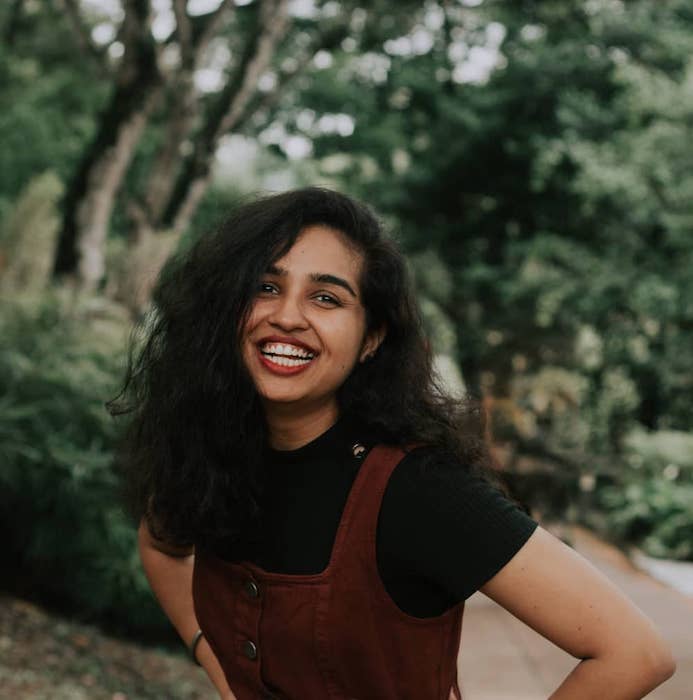
Ashvinder Kaur is a chemist by day and an active Sikh volunteer. The article first appeared at Brazen Magazine
* This is the opinion of the writer, organisation or publication and does not necessarily represent the views of Asia Samachar.
ASIA SAMACHAR is an online newspaper for Sikhs / Punjabis in Southeast Asia and beyond.Facebook | WhatsApp +6017-335-1399 | Email: editor@asiasamachar.com | Twitter | Instagram | Obituary announcements, click here |
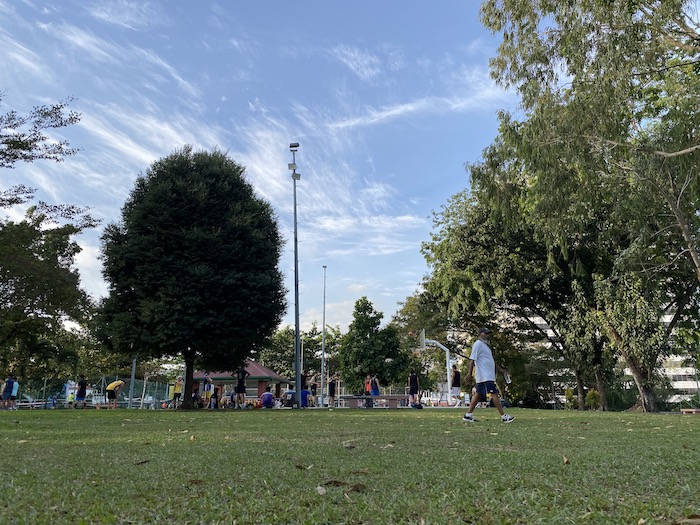
An evening at a Malaysian park – Photo: Asia Samachar
By Gurnam Singh | OPINION |
One of the terrible failings of our current economic model based on commodity capitalism is the way it calculates the value of something. Simply speaking a good that is interchangeable with other goods can be classified as a commodity. In the capitalist world, there is very little on the planet that cannot be subject to the process of commoditisation, with agriculture and agricultural produce constituting a major component.
Over the past 200 years, with the exponential growth in the human population, and industrialisation, mostly related to energy and food production, we have seen terrible degradation of our natural environment almost to the point of destruction.
One of the problems with the present system is the way we think about ‘value’, an issue that was the central theme of this year’s BBC Reith Lectures given by the former Head of the Bank of England, Mark Carney. Carney argues that one of the central failures of the market economy is the elevation of ‘financial value’ over ‘human value’ and this has contributed to the climate crisis.
Since listening to his lectures, I have been doing a lot of thinking about how we might better value humanity and nature, i.e. value not exploiting the planet. This drew me to a picture that I have had in my office for many years of a giant sequoia tree. These are trees that can live for 3,000 years and can grow as tall as a 31-story building. The only reason some have survived is that, given the abundance of other smaller trees, they were literally too expensive to cut down for the commercial loggers; Thank god for that!
However, these trees are being logged and logging companies are able to extract considerable financial returns on investment, with each tree making between £600,000-£800,000. Of course, such ways of calculating value tend to be determined by a mixture of both short-term thinking, but also what the market is prepared to pay.
Now, what if we began to think in terms of the long term, and human values, how might our sense of value change? Would it ever then be ‘economically’ justifiable to cut down these wonders of nature? How do we calculate the value of not cutting down, not building a dam, not turning a forest into farmland, not building another road, not killing off wildlife, and so on? In short, how do we calculate the value of preserving rather the natural environment rather than subjecting it to ‘production’ and commoditisation?
One option might be to overthrow the capitalist system in a moment of revolutionary praxis (unity of thought and action) and replace it with socialism. Given the terrible destruction that this system has wreaked on the planet, I find this to be a rather attractive, if not altogether a realistic proposition. However, my idealism becomes tempered when I also contemplate the terrible destruction that past communist states have also wreaked on the planet and human life. Moreover, with the changes in the nature and organisation of work and labour, the kinds of collective class consciousness and class solidarity that existed in the 19th and 20th centuries simply do not exist.
What I think we need is a paradigm shift, which means, just because we have the technological power to manipulate the physical environment and reshape our planet, we should do so! It means we need to work much harder as reimagining how we calculate the value of something.
Karl Marx argued that within the capitalist system there are two ways in which value is calculated, namely ‘use-value’ (what practical use it has, such as a bottle of clean water, and ‘exchange value’, or how much you can get for the bootle of waste. The ‘use-value’ remains constant, but it is the exchange or market value that can change according to such things as supply and demand.
Some people, such as John Holloway, argue that the only solution is to break this link between ‘use and ‘exchange’ value, which means abolishing capital or money! Once this link is broken, then we can begin to see the true value of things, as opposed to the market manipulation of prices. I would like to argue that a more pragmatic solution might be to introduce a third way of establishing value, and that is a longer-term measure based on its impact on nature and ultimately humanity, rather than be blinded by shareholder value or the interests of the nation. Now that we seem to have a global consensus on the terrible effects of the destruction of our natural ecosystem, I think there is a way of achieving this.
So, how do we develop this new measure of value? Given the failures of economists, ‘experts’ and politicians, I think we need to find ways of building on the ancient wisdom that indigenous people possess, on the lived experience of peasant farmers and villagers and those who live closest to nature, who have a different conception of time. We also need to involve ethicists, artists, academics, climate scientists, documentary makers, young people etc. And the role of politicians should be to listen and then formulate policies based on this longer-term ecological thinking.
I think it is only by bringing a wide spectrum of citizens that we can develop a new conception of value, and if we succeed, I am sure we can regenerate the ecosystems and preserve and protect the planet for future generations. And perhaps a starting point is to develop schemes where people get financial rewards for protecting the environment rather than what happens at the moment.
In this regard, I came across a story in The Guardian which reports on a very successful scheme in Kerela, South India, where villages are encouraged to plant a tree, and after three years residents can mortgage each sapling for an interest-free loan that can be renewed annually for 10 years, with a condition that the loan will need to be repaid only if the tree is chopped down. There are other schemes that incentivize villages to save local wildlife.
In the past, farmers had been compelled to fell trees to supplement their income, but facilitated small grants from the state government, comes as a big incentive to keep them rooted to the ground. And this protection of the forest is actually having immense benefits for a community that was suffering from prolonged dry spells and erratic rainfall leading to shrinking paddy farms and a threat to cash crops such as pepper and coffee.
And so as we contemplate a post-COVID 19 world, where our addiction to consumption may just have been broken, now is the opportunity for us to look for value in protecting and preserving our natural world and if we do so, maybe we can not only save the giant sequoia tree’s but repopulate the planet with them. But to do this we need to be thinking not in terms of our relatively short life spans but of the life spans of these trees, which is 3,000 years. And this means decentering ourselves and to start thinking like sequoia trees.
[Gurnam Singh is an academic activist dedicated to human rights, liberty, equality, social and environmental justice. He is an Associate Professor of Sociology at University of Warwick, UK. He can be contacted at Gurnam.singh.1@warwick.ac.uk]
* This is the opinion of the writer and does not necessarily represent the views of Asia Samachar.
ASIA SAMACHAR is an online newspaper for Sikhs / Punjabis in Southeast Asia and beyond.Facebook | WhatsApp +6017-335-1399 | Email: editor@asiasamachar.com | Twitter | Instagram | Obituary announcements, click here |
Farmers at Singhu border, Delhi – Photo: BSB Photography
By Jagdesh Singh | OPINION |
I’m very late to this, I admit. And I’m at an uneasy situation of it being at the back of my mind as my comfortable life goes on with its trivial daily drama.
I’m not the one camping at some side of a dirty, muddy highway from Punjab to Delhi. I’m not the one leaving my family back home as I stand with my comrades in arms, when a deadly pandemic that spreads just by us standing in arms with each other would probably kill me.
I won’t be able to articulate to you in detail why hundreds of thousands of Punjabi farmers are in this predicament that I’ve just described above. But what’s clear is that these farmers are standing up to something forced upon them.
By now, there would have been tens of articles that Google would spit out for you that explains to the layman what is forcing these stubborn and proud farmers to stand with each other in solidarity. I would suggest you do a little homework to further appreciate this.
A protesting farmer bears chilly night at Singhu border, Delhi – Photo: BSB Photography
Of course, in the age of internet news going through an identity crisis post the #fakenews revolution, you’ll probably find arguments from both sides of the divide. The farmers versus the Indian government.
The Indian government, like all governments in the world today, claims to have the best of intentions with their laws and policies. In this situation, they claim that three new farm laws are to usher in large businesses corporations as the middlemen to the farmers and consumers across India. It’s for the good for everyone, she says.
But the farmers predict a more harsh and less profitable reality for them and their families. So bleak is the prediction, they’ve taken to the roads and highways to protest. After all, it is their rice bowl, their bread and butter, their lives that would be drastically affected.
This protest is now arguably the biggest in a democracy that world history has seen. Although predominantly from our ancestral land of Punjab, farmers of the same ilk have joined from all over India, and from some parts of the world. Surely, with such a historical revolutionary size, there’s got to be some truth to what the farmers are fighting, for and against. Local politics and local politicians couldn’t have drummed up such a snowball effect as this. It seems impossible to me, and to claim that while ignoring the farmers themselves suffering through this torturous pandemic and winter over many weeks tells me you’re being a tad entitled with your views.
Why should this bother me? I’m not a farmer nor am I an Indian citizen. First and foremost, the Indian subcontinent is my home, more spiritual and emotional than physical. I still have family from my ancestors and their descendents in India. These family members, albeit from branches very far from mine in the family tree, are farmers and their lives will be affected. Most importantly, just like my ancestors who had a tendency to stand up and fight oppression, I’m duty-bound to demonstrate some traits of this nature. You could say it’s in our DNA, personified by how we look outwardly, to always stand up to tyranny and oppression, including oppressive laws that affects other humans and societies.
If you’re reading this, and have been asking yourself if you should be bothered about this protest, let alone show your solidarity with the farmers, I implore you to understand more. And the first step towards helping out with the protest is to recognizing its importance and spreading awareness to others. Support can come in many forms. But support only comes when there’s awareness on why. Get on social media, post your support. #WeStandWithFarmers
Jagdesh Singh, a Kuala Lumpur-based executive with a US multinational company, is a father of three girls who are as opinionated as their mother
* This is the opinion of the writer, organisation or publication and does not necessarily represent the views of Asia Samachar.
ASIA SAMACHAR is an online newspaper for Sikhs / Punjabis in Southeast Asia and beyond.Facebook | WhatsApp +6017-335-1399 | Email: editor@asiasamachar.com | Twitter | Instagram | Obituary announcements, click here |
Harcharan Singh (1959-2020). Photo taken during the Sant Baba Sohan Singh Ji Salaana Yaadgar Semagam 2017
By Asia Samachar Team | MALAYSIA |
Long serving Gurdwara Sahib Malacca (GSM) granthi Harcharan Singh Mota Singh passed away yesterday (27 Dec). He was 61.
Prior to moving to Malacca, he had served as a staff with Sikh Naujawan Sabha Malaysia (SNSM), acting as manager and granthi Sabha House then located in Bangsar, Kuala Lumpur.
He had earlier served as an assistant granthi under the watch of Giani Ran Singh who served from 1987 to 2015.
Harcharan leaves behind wife Harjan Kaur and three children.
The cremation (saskaar) will be at Jelutong crematorium at 3.30pm today.
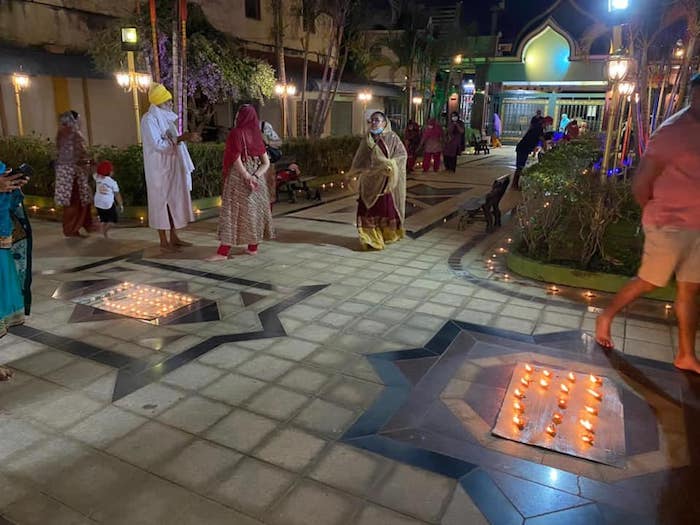
Lighting candles for Guru Nanak gurpurab at Malacca gurdwara – Photo: Supplied
ASIA SAMACHAR is an online newspaper for Sikhs / Punjabis in Southeast Asia and beyond.Facebook | WhatsApp +6017-335-1399 | Email: editor@asiasamachar.com | Twitter | Instagram | Obituary announcements, click here |
IN ACTON: One of the activities at SNSM’s e-Samelan 2020 – Photo: MySamelan Facebook page
By Jagdesh Singh | OPINION |
It started three days earlier for me. Just like the past 20 years of attending, participating and finally volunteering as different types of roles in service for the Sikh Naujawan Sabha Malaysia’s (SNSM) Annual Gurmat Parchar Samelan, I start getting jittery with excitement. My excitement has always centered towards the expectation of meeting like minded Sikhs from all over the country, particularly the ones that have morphed to becoming lifelong friends over the past two decades.
For the family, these seven days of living in the camp, breathing the fresh air within the foothills, eating and sleeping without the comforts of air conditioning and hot showers, seemed like the perfect vacation. Only because we love the love we get from the people in these Gurmat camps over the past two decades.
There’s also an element of the legendary tahu sambal of Malkit Singh, but I digress and it qualifies for another article of its own.
When Sabha announces that we would carry on with the Gurmat Samelan for 2020 despite the Covid-19 lockdown restrictions, all run virtually through the wonderful technology of the internet, I was sceptical. Would it even scratch the surface on how the camp would feel like? I use the words ‘feel like’ purposely because a big portion of being at the samelans, let alone living in it for 7 days, was the unique blended feelings of just being there in the company of our youth, and at the same time in the company of people who cared so much for our youth. It’s a feeling you experience by only being physically there. Or so I thought.
My wife and I were asked to help out with teaching the Mighties throughout the four mornings from the 24th of December 2020. The Mighties are kids aged 7 to 12, registered as Samelan participants. I had this horrific vision of kids thrashing their parents’ laptops or tablets while participating in the Zoom meetings, frustrated with how boring our teaching was going to be. After all, not many of us were even familiar with Zoom, let alone trained to be actual teachers equipped with online teaching skills. But to my utter surprise, the groundwork to handle seven simultaneous Zoom classes, with top of the notch materials using Powerpoint slides and brilliant interactive videos, was already in good shape. It would be remiss of me to even guess how many late nights that were pulled by some of these tireless young creative volunteers. It was honestly brilliant!
As we started our first class on that faithful Thursday morning, it quickly dawned on me that I’ve underestimated the kids. They were attentive. They did their homework from the fun books that were delivered to them electronically and physically. They enjoyed the videos. They were vocal when unmute and on the chat. I was blown away. There was a sense of accomplishment amongst us teaching sewadars after the classes ended. We breathed a sigh of relief when none of the worst case scenarios that we were paranoid about came through.
Meanwhile, throughout the five days, live games designed for fraternizing amongst the older kids were getting the response above expectations. Japji Sahib and Rehraas Sahib were done smoothly, loud and clear. The inspirational sessions (a blend of kirtan and motivational discourse) were enjoyed while inspiring families in their living rooms where their TVs or laptops were.
And, my personal favorite, which was a huge highlight, was the Model Sikh Youth Sabha. Again, via Zoom, we had teenagers and tweens articulating ideas and points in a parliament-like setting, with rebuttals and questions thrown in for good measure. The maturity displayed here would put many of us, including yours truly, to shame. If we were here for the youth, to educate them, it looked like we were doing something right.
The platform for all this to happen was the team from SikhInside. After being successful in filling in the huge gaping vacuum of providing some semblance of the Gurdwara and Keertan to hundreds of families online while we hunkered down in our homes during lockdowns, making the e-Samelan a reality with their technology know how and skills was the cherry on the cake. Bar one power failure glitch, it was amazing that, not only did they provide the means for participants to learn and enjoy the activities online, they’ve somehow created an atmosphere at home that generated the feeling I talked about earlier!
Kudos have to be given to SikhInside for their creativity and tireless work in making this work. And Sabha, too, for forging ahead with the E-Samelan in 2020, a year we’ll remember for a long time to come. The challenge now is to make sure we use this new way of the Samelan as a springboard for future Samelans, online or in person. Perhaps a hybrid approach? Something to ponder on.
But the same feeling of being in the Samelan this year was there for me, new norms and all. I laughed with my friends, new and old, online. I discussed and learned about Sikhism and the practicalities of it from my friends and from the children I was supposed to be teaching to, online. I even dressed up accordingly, online. My daughters enjoyed meeting their old buddies and making new friends, online.
The only thing missing was the Langgar food, and Malkit’s tahu sambal. But the feeling was there!
IN ACTON: One of the zoom sessions of SNSM’s e-Samelan 2020
Jagdesh Singh, a Kuala Lumpur-based executive with a US multinational company, is a father of three girls who are as opinionated as their mother
* This is the opinion of the writer, organisation or publication and does not necessarily represent the views of Asia Samachar.
ASIA SAMACHAR is an online newspaper for Sikhs / Punjabis in Southeast Asia and beyond.Facebook | WhatsApp +6017-335-1399 | Email: editor@asiasamachar.com | Twitter | Instagram | Obituary announcements, click here |
Diljit Dosanjh is the first turbaned Sikh to have a wax statue at Madame Tussauds. – Photo: Courtesy Madame Tussauds
By Sandeep Goyal | INDIA |
Authentic. The one word that describes Diljit Dosanjh better than any other. Why? Because Dosanjh is the first Sikh actor to wear a turban on screen in Bollywood … and carry it off with pride, and dignity.
Even in Punjabi films, heroes have over the years shunned the turban to broadbase their appeal, especially with the non-resident Indian Diaspora.
Dosanjh broke that mould in the incredibly successful Punjabi blockbuster Jatt & Juliet in 2012, playing the hero as an authentic turbaned Sikh; he stayed with the pugree in Udta Punjab and continued to wear it as the ‘other’ Batra in Good Newwz, almost outshining the more snooty and urbane ‘real’ Batras, Akshay Kumar and Kareena Kapoor Khan.
His performance in Soorma was just what it was supposed to be: Euphoric highs of meteoric success alternated against heart-rending pain. A dramatic performance. With the turban well in place.
Dosanjh has been as much in the news recently for his championing of the farmers’ agitation in Delhi (including a Rs 1 crore donation ‘quietly’ made for the farmers to buy warm clothes), as also for besting the irascible Kangana Ranaut in a Twitter spat, with the likes of Mika Singh, Angad Bedi and Harbhajan Singh egging him on.
Gurdas Maan, in fact, chose to partner him to sing his epic Ki Banu Duniya Da at Coke Studio some years ago; no mean tribute to Dosanjh, the singer, and rising star. He is hot today.
Read full story, ‘Diljit Dosanjh: Sardar with Swag’ (Rediff, 25 Dec 2020), here.
ASIA SAMACHAR is an online newspaper for Sikhs / Punjabis in Southeast Asia and beyond.Facebook | WhatsApp +6017-335-1399 | Email: editor@asiasamachar.com | Twitter | Instagram | Obituary announcements, click here |
A controversial Auckland radio host is fighting for his life in hospital after being stabbed multiple times in his driveway in an attack his friends claim was religiously motivated, reports a New Zealand newspaper.
Harnek Singh, 53, remains in a critical condition in Middlemore Hospital after being attacked in the driveway of his Glenross Drive, Wattle Downs home around 10.20pm on Dec 23.
It is the second public attack Singh has suffered this year after he was assaulted in Love Punjab Restaurant on his birthday in July, reports NZ Herald.
The report reported that Singh’s colleagues at Radio Virsa, where he is a talkback host to the Sikh community, say he was returning home this week from that day’s broadcast when he was set upon – possibly by a group of attackers.
Balwinder Singh, 42, says Harnek Singh is “like a brother” to him and is part of the team at Radio Virsa, which discusses religious and cultural issues in the Auckland Sikh community.
“From the wounds he had, you could tell he was attacked by sharp weapons,” Balwinder was quoted by the report. “He’s okay, his condition is stable and he’s at Middlemore. We believe so [he was stabbed]. The motivation behind the attack obviously has to do with what he says on the radio, what opinion on different issues and topics which have been discussed on the radio.
“Mainly on this radio programme a lot of religious issues have been discussed. So let’s just say a lot of traditional myths that people believe in, and we on the radio try to explain to people to look at it in a practical way other than the mythical point of view that most people have.
“Obviously that would upset someone who is religiously fanatic, and someone who looks at the religion in a mythical point of view as a lot of religions do.”
Read the full report, ‘Radio host stabbed multiple times in South Auckland driveway in attack’ (NZ Herald, 26 Dec 2020), here.
ASIA SAMACHAR is an online newspaper for Sikhs / Punjabis in Southeast Asia and beyond.Facebook | WhatsApp +6017-335-1399 | Email: editor@asiasamachar.com | Twitter | Instagram | Obituary announcements, click here |
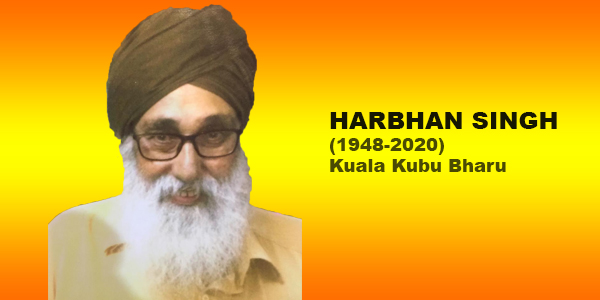
HARBHAN SINGH SON OF LATE DARSHAN SINGH & LATE KARTAR KAUR, GRANDSON OF LATE GOPAL SINGH (KUALA KUBU BHARU)
(10.4.1948 – 24.12.2020)
Government Service Retiree from Kementerian Pertanian Negeri Selangor. 28 years of service. He also served as Vice President of Gurdwara Sahib Kuala Kubu Baru
Village: Badli, Punjab
Wife: Amarjeet Kaur Daughter of Late Bhai Granthi Bachan Singh (Ulu Yam Baru)
Akand Path: 1.1.2021 (starting at 9am) to 3.1.2021 at Gurdwara Sahib Kuala Kubu Baru. Path da Bhog around 11.45am on 3.1.2021
Contact:
Stevender Singh at 014-666-2416 or 011-10102416
Amit Singh at 014-635-8219
| Entry: 26 Dec 2020 | Source: Family
ASIA SAMACHAR is an online newspaper for Sikhs / Punjabis in Southeast Asia and beyond.Facebook | WhatsApp +6017-335-1399 | Email: editor@asiasamachar.com | Twitter | Instagram | Obituary announcements, click here |
Merry Christmas to all my Facebook friends on this very special occasion of the birth of Jesus Christ. You don’t have to be a Christian or be a religious person to celebrate the coming of a great revolutionary, who spoke truth to power and was in return martyred.
In his book, ‘When Bad Christians Happen to Good People’, David Burchett argues Jesus was a total revolutionary. “He granted status to women where none existed in the culture. His views were strange and upsetting to those in power… In that period of history, women were viewed as property. Divorce was a no-fault procedure for the husband only… And infanticide of baby girls was common in the Roman and pagan cultures.”
Jesus believed in unconditional love and compassion and he totally rejected many of the established norms of his time. He confronted the hegemony of the priestly class and religiosity based on rules. He championed instead the idea that we are all sinners and everyone is redeemable. Most significantly, he refused the temptation to side with the rich and powerful, and instead embraced the poor people, leapers, prostitutes, disabled and others who had been out cast.
Great divine souls, prophets and revolutionaries, like Christ, Mohammed and Nanak ji, periodically come to this world and leave their divine imprint for ever. In their short lives, like the Sun, without discrimination, they shine brightly into all those who are blessed to have received their message. Great beings like Jesus Christ do not belong to any one group. What makes them special is their ability to transcend all kinds of social and cultural divisions and taboos. Their focus on humanity means their appeal is universal.
They display immense courage in rejection of the prevailing orthodoxies, myths, ideologies and political structures. And because threatens those in power, they often do so at the expense of sacrificing their own lives. Ironically, often after they have left this world – though in another sense they never leave – the very people who may have opposed them, end up memorialising and mythologising them!
Tragically, by replacing old identities and divisions, they end up creating new religious identities; and they reinforce these by building monuments and spinning miracles stories. The irony and tragedy is that often the religion that seeks to institutionalise the teachings of the prophets become are far reminded from their teachings!
2020 has been a very challenging year. Along with the ongoing injustices in the world, we have had to contend with the terrible pain and suffering brought about by COVID-19 pandemic. Though we are not out of the woods, there is is hope that we may just be in the path to recovery.
But this year has also shone light on the amazing acts of humanity and generosity the world over, and I have no doubt, the spirit of Jesus Christ and the all prophets and revolutionaries, is shining brightly through those divine souls.
Happy and peaceful Christmas to all.
[Gurnam Singh is an academic activist dedicated to human rights, liberty, equality, social and environmental justice. He is an Associate Professor of Sociology at University of Warwick, UK. He can be contacted at Gurnam.singh.1@warwick.ac.uk]
* This is the opinion of the writer and does not necessarily represent the views of Asia Samachar.
ASIA SAMACHAR is an online newspaper for Sikhs / Punjabis in Southeast Asia and beyond.Facebook | WhatsApp +6017-335-1399 | Email: editor@asiasamachar.com | Twitter | Instagram | Obituary announcements, click here |