















UA-56202873-1
Page 438

Gurmat (Sikhism) and the global economy

0
By Ranvir Singh | OPINION |

“That one alone knows the Way who earns with the sweat of the brow and then shares with others.”

This dictum of Guru Nanak, (born 1469, the first of the ten Sikh Gurus), lays out the basic economic thought of the Sikhs. It is a society in which labor rather than monkish asceticism is the true expression of spirituality, and in which the sharing of abundance rather than accumulation of scarcity is the basic economic motivation.

The Gurus condemned monks because they felt that they were other-worldly. By contrast, the Gurus promoted the view that God was present in the world.

“Air/Breath is the Guru, Water the Father,Earth the Great Mother. Day and night are two nurses in whose lap the children of earth play. Their good and bad deeds are all done in the Divine Presence. According to their deeds, some move nearer while others wander further away from it. Those who follow the Inner Tutor, their intuition, are liberated, says Nanak, by turning towards these Shining Ones, others also enjoy the fruit of freedom from the chains of self-centredness, the wheel of reincarnation.” (Guru Granth Sahib Ji, p.8)

This vision of liberation is based profoundly on how we treat our activity in the world and treat others. It is also tied to the vision of spirituality, of universal grace arising from God’s presence in the universe. “Guru” in Sikh thought refers to the Grace-filled Presence and Love of God within all hearts and all things, which lives within us, as “reflection in a mirror, fragrance within a flower, fire inside wood”. God’s love for us saves each and all. This abundant love, without any meanness, means that God gives to us of His own Presence and Deeds (Nam), as the Word (Sabd), the Inner Tutor (intuition). As this Word is the inscription of being, our minds tend to goodness, truth, reality — our true nature is to seek the truth. “Sikh” means seeker of truth, disciple of the Inner Tutor. The presence of God in each being not only means that God’s love for people is not restricted by race, religion, or gender, but also signals that the creation itself is created through the overflowing of the completeness of God’s Love — Its Names (descriptions of Its activities). Thus, “the earth, the vessel full of resources has been filled by God but once. It depends on the choices of people how much they take from it.” (Guru Granth Sahib Ji, p.1190)

For this reason, one of the first acts of the Sikhs as a political entity was to effectively re-distribute the land in Punjab in the late eighteenth century, as landowners were stripped of their title. Title to land was given to those who actively worked the land. Thus, although there was private property, it was balanced by a desire that those who work get the fruits of their labour.

This presence of God in the everyday world means that this world is regarded as the Kingdom of God.

“The world is Yours. You are the Lord of the universe.” (Guru Granth Sahib Ji, p.417)

As the brain is part of the body, so that our thoughts change our forms, in the same way
the Word is part of the mind, so that the mind at all times is the Throne Room of God, as the body is His Temple.

“The body is the mansion, temple and home of the Lord within which He has enshrined Infinite Light.” (Guru Granth Sahib Ji, p.1256)

In this way, there is a continuum of unity between Creator and creation, the Unity of Being or Oneness of God as Sikhs understand it. Self-centredness places an artificial dam across this flow of life.

Our Inner Tutor guides us from within and without, through serendipity (happy chances in life), in being ourselves, beloved in our unique personal oddities and choices. These choices should not extend to taking the rights of another’s labour as this is tantamount to stealing the Divine Energy in that labour.

“Should cloth be thought of as impure if stained by blood, how can we consider as pure the mind of someone who sucks the blood of humankind?” (Guru Granth Sahib Ji, p.140)

Guru Nanak visited a friend of his, but a rich man insisted that he dine with him and the other holy people that he had invited to a reception. Guru Nanak attended the event, but refused to eat any food. When pressed, he declared that the food being served was dripping with the blood of the poor, exploited people that had made his host so rich. Some accounts elaborate the story further — he broke the bread of his friend, from which came milk, and then the bread of his host, from which came blood. This scene is a popular inspiration for Sikh paintings.

A good life lies in recognition of the link between the deep perfection based on God’s Presence in life, and everyday imperfection based on God taking a chance on us, in giving us meaningful choices, free will. “Creating the beings, Itself provides them sustenance.” (Guru Granth Sahib Ji, 1042) Thus, we are supported in the chance that is life. We strive to flow in love knowing that dams are everywhere, but also that the water itself (Sabd) has a current, is a current (of the Names of God). For this reason, labor is regarded as a sacred activity. For this reason with regard to work the Guru observed that, “None is high or low.” (Guru Granth Sahib Ji, 7) This idea of the dignity of labour makes it a taboo for a Sikh to be unemployed.

In his poems, reflections of the Universal Mind, the Word, Guru Nanak expresses the human longing for wholeness. Guru Nanak spent much of his life teaching through his poems. With his companion, Bhai Mardana, Guru Nanak travelled as far as Tibet, Sri Lanka, Baghdad and Mecca to discuss religion with Buddhists, Muslims and Hindus. Guru Nanak died in peace at age 70. Nine Human Gurus succeeded him. The tenth Nanak, Guru Gobind Singh, proclaimed that the congregation or Guru Khalsa Panth together with the Guru Granth Sahib, the collection of writings of the Sikhs containing the hymns of the Gurus as well as those of Hindu and Muslim saints, and those of no particular religion, would be the eternal Guru for the Sikhs after him.

The message is simple. Keep your focus on the One, Formless, Ever-Present God, living within yourself and Nature. The answers are all within; there is no theology here, as love knows no questions. The image of the saint-soldier (Khalsa) is an archetype in the Mind as the Word (Sabd) is the spring of the Mind. This abundance of Active Divine Love has two implications — first, our own labour is an extension of the Names, the Divine Activities; second, distribution is based on abundance arising from God’s Presence in the world, rather than poverty and scarcity based on Its absence.

Few things symbolise these teachings more easily than Guru-ka-langar. Inside each gurdwara (Sikh house of learning/worship) there is a langar hall. In this place all are welcome to come and eat, whether they decide to later pray or not. The food is vegetarian so that none are excluded from any dishes. There is no charge for the food and drink, and it is all prepared by volunteers. It is also served by volunteers. In the highest seat of Sikh authority, the Darbar Sahib complex, popularly known as the Golden Temple, approximately 100,000 meals are served each day entirely free of charge. Langar is mentioned in the Sikh Reht Maryada or Code of Conduct for Knights of the Order of the Khalsa. Article 21 (a) observes that, “The philosophy behind the Guru’s kitchen-cum-eating-house is twofold: to provide training to the Sikhs in voluntary service and to help banish all distinctions of high and low, touchable and untouchable from the Sikhs’ minds.”

As the world becomes ever more globally interconnected and ever more overflowing with abundance, the deprivation of outcastes in this global human tribe will feel more troubling. The tricks by which global over-production is managed into deprivation as forces of greed and hate on one hand and Love and inclusion on the other, fight within each of us, and all of us.

Ranvir Singh is a UK-based human rights activist and member of Akaal Purkh Ki Fauj.


RELATED STORY:

Gurmat (Sikhism) and The Opening Statement, a Few Words to Change your Life (Asia Samachar, 20 Dec 2020)

ASIA SAMACHAR is an online newspaper for Sikhs / Punjabis in Southeast Asia and beyond. Facebook | WhatsApp +6017-335-1399 | Email: editor@asiasamachar.com | Twitter | Instagram | Obituary announcements, click here |

Single use disposable plastics at gurdwaras

0
Plastics: They are killing sea’s life – Sketch by Luz DeGas
By Jespal Singh Sidhu | ENVIRONMENT |

SUDP. Ahhh, what is that? Worry not, it is not a swear word. It stands for single use disposable plastics – i.e. plastics spoons, plastic plates, plastics bowls, plastic food packing used for bread, meat etc.

What has it got to do with our gurdwaras? I would say plenty based on my observation over the years and till today.

At every major function in any gurdwara in Malaysia, a whole lot of extra food is ordered over and above the already extravagant langar (communal serving of food) prepared at the kitchens of the gurdwaras. These extras could be anything from fried mamak mee, local kuihs, eggless cakes, fried samosas, cha kuih, ice-kacang, cendol, rojak, golgappe, chats, ice-cream, soya bean curd and drink, vegetarian burgers. The list goes on and on……….. Is this really necessary? Is it not the concept of langar being simple, hearty, nourishing meals? Well on special functions exquisite dishes are prepared so is this not adequate? This is a topic that can be debated till the cows come home but it is not the focus of this article though it can be food for thought.

All these extra dishes are usually prepared on the spot and the vendors as per their normal
takeaway style serve them on plastic and sometimes (based on observation as of late last year) even styrofoam despite being ban from use. Do our Sikh sanggat say anything about these practices? Do the committees of our gurdwaras inform these vendors that we have our own cutlery and crockery (although most gurdwaras use stainless steel plates) which can be used. I have observed and commented in many gurdwaras but non take heed of this.

SEE ALSO: Gurdwara food waste goes upcycle! Kuala Lumpur shows the way

These plastic plates, bowls, spoons forks cups are all under the SUDP category. Can they be recycled? Yes, if these are washed to remove residue oil and food remains. Is this being done? No! Will recycling companies do it? No, because these are extremely light in terms of weight so it is not worth the effort, time, energy and resources to clean them. Where will these SUDP items end up? Sad to say they will end up at landfills and remain there to be broken down into micro and nano plastics over the years that will end up in our water ways, our seas, oceans and in marine life too.

Let’s put on our thinking caps and turbans and imagine over a three day Vaisakhi akhand  path period where there could be some special extra food items ordered for breakfast, lunch and dinner:

  1. if for every meal about 500 plastic plates are used to place roti canai and/or
    tosai and /or mee goreng / rojak or other items
  2. if 500 plastic bowls are used for chendol / ice-kacang for a single meal
  3. if 500 plastic cups are used for the soya bean drinks and/or milo or other drinks
    over a period of a day.

at one gurdwara.

Plastic spoons and forks are given out, too. The above figures are rather conservative but they are enough to give us a perspective as to the amount of plastic our gurdwaras dispose of to the landfills over one three day function.

For calculation purposes we shall assume that these SUDP plates, bowls, cutlery and cups are used on the first day for one meal and maybe some individually plastic wrapped or packed cakes and kuihs for tea time which we will not even take into account. On the second day we shall also assume that these SUDP items are used for two meals and on the final day for one meal hence giving us a grand total of four meals over a period of three days.

This allows us to do some simple calculations:

1. For each meal about five hundred plates/bowls (here we combine the plates and bowls)
and plastics spoons are consumed hence this is a conservative figure. Now as mentioned
above for a total of four meals over the three day period the total amount of SUDP
disposed to the landfills would be:-

a. 2,000 plates/bowls
b. 2,000 spoons/forks
c. 1,500 plastic cups

on average per gurdwara per three day function.

2. Figure of from worldgurdawaras.com state that there are 119 gurdwaras in Malaysia (Peninsular and East Malaysia). For us to comprehend the extent of plastic that ends up at the landfill we shall take a conservative figure of 50% which can be rounded off to sixty gurdwaras that will have functions for Vaisakhi.

3. Granted that some might have more (sanggat) people and some less but for ease of calculation we shall use the above figures. Based on the above listed averages multiplied by sixty gurdwaras results in alarming, jaw dropping figures:

a. 120,000 plastic plates/bowls
b. 120,000 plastic spoons/forks
c. 90,000 plastics cups

are used and disposed to the landfills by us the Sikhs over a period of two weeks (some gurdwaras have their Vaisakhi functions on slightly different dates) in Malaysia. Imagine if all these SUDP items are piled up together? How big of a pile will this be?

Shall we put these figures in terms of weight? We can make the assumption that a plastic plate/bowl is about twenty five grams, the plastic spoon/fork is about five grams and the plastic cup is also 5 grams. This in total amounts to 4,050 kilograms or 4.05 metric tons. Shocking figures indeed!!! This is only for one three day function and the calculations are made using extremely conservative figures.

We also have the gurpurabs and other functions through the year. There is also the other 59 gurdwaras which we have not taken into account which might contribute a lesser amount but it is still SUDP and it will still end up at the landfills.

What can we do about it? We are coming to the end of 2020 which has indeed been a challenging year. We are heading into 2021. Gurdwaras will have some functions in order to welcome the New Year. Can we ensure that for this function no SUDP are used or disposed? Some might say that because of the pandemic it is considered hygienic to use and throw but washing the stainless steel plates and cups with detergents and water does destroy the virus. Can we see strong commitment in our gurdwaras to completely stop the use of SUDP? Tzi Chi, a Taiwanese foundation which has it largest following out of Taiwan in Malaysia can do it. I am sure our Malaysian gurdwaras can also strive not to use any SUDP within their premise.

This article is written by the author to urge our Sikh sanggat to reduce and eventually stop their use of SUDP and to inspire their respective gurdwaras to do the same. It is also aimed to directly inspire gurdwaras committees to be more environmentally conscious and to kick start a movement to reduce and eventually stop the usage of SUDP at all Malaysians gurdwaras.

#SDG12 #SDG14 #reducecarbonfootprint #SDG2030 #reduceplasticwaste

Jespal Singh Sidhu, a real estate negotiator and an avid gardener, produces compost on a commercial scale for farms, fruit orchards and home gardening enthusiasts. He is also a certified HRDF trainer and conducts trainings and seminars on sustainability, waste management, separation at source organic waste management and environmental related topics. He is available to guide Gurdwaras to reduce carbon footprint in line with the SDG agenda. He can be contacted at compost.sprout@gmail.com


RELATED STORY:

Want not waste not – Responsible consumption and production (Asia Samachar, 11 Dec 2020)

Gurdwara food waste goes upcycle! Kuala Lumpur shows the way (Asia Samachar, 24 Nov 2020)


ASIA SAMACHAR is an online newspaper for Sikhs / Punjabis in Southeast Asia and beyond. Facebook | WhatsApp +6017-335-1399 | Email: editor@asiasamachar.com | Twitter | Instagram | Obituary announcements, click here |

Satbal Singh (1959-2020), Air Panas, Setapak

AKHAND PATH at Gurdwara Sahib Tatt Khalsa, Kuala Lumpur from 5pm, 25 Dec 2020 (Friday) to 5pm, 27 Dec 2020 (Sunday) | Malaysia

SATBAL SINGH S/O LATE CAPT. LALL SINGH & LATE MADAM SARJIT KAUR

16.8.1959 – 24.12.2020

Leaving behind

Mother – Mohinder Kaur

Brother – Pardeep Singh

Sisters – Jaspal, Satwant & Sharan

Children: Gizender, Roshinder & Shahinder

Friends & Relatives.

Akhand Path at Gurdwara Sahib Tatt Khalsa, Kuala Lumpur from 5pm, 25 Dec 2020 (Friday) to 5pm, 27 Dec 2020 (Sunday)

Contact: Pardeep Singh +6012 – 278 0245


| Entry: 24 Dec 2020 | Source: Family

ASIA SAMACHAR is an online newspaper for Sikhs / Punjabis in Southeast Asia and beyond. Facebook | WhatsApp +6017-335-1399 | Email: editor@asiasamachar.com | Twitter | Instagram | Obituary announcements, click here |

Towards a more loving, sharing and caring world in 2021

0
Gurnam Singh and Manjit Kaur who anchor a talk show at Akaal Channel
By Gurnam Singh and Manjit Kaur | OPINION |

Just a quick note to all our friends and viewers; we will be taking a break from Akaal Channel for the next two weeks, but we will return on 8th Jan 2021 with a brand new series of the 1 Show Live.

We have been presenting the 1 Show Live on Akaal Channel for the past seven years, but none has been more eventful that 2020. The last eight months, in particular, with COVID-19 and the Panjab/Indian kirsan (farmers) movement, has really pushed many to the edge, and sadly we have all lost friends and loved ones.

The actions of the Panjabi farmers in particular, as well as a great source of pride and hope, generates sadness and concern for those brave souls who are taking on the might of the Indian state in the coldest month of the year. Many have succumbed to the dangers and stresses of fighting such a difficult battle armed only with courage, humility, love, dignity and honour, but the spirit of those encamped on the borders of Delhi is truly inspiring.

Their bravery, in the face of the brutal Hinduva Corporate machine, is the stuff of legends. Any lurking doubts that perhaps the stories of bravery of our ancestors may have just been made up, have been dispelled during the momentous events of the past 4 weeks.

Seeing the convoy of Kirsans in their improvised tractors, trolleys and tarpaulins, facing up to the tear gas and water cannon, cutting through the barriers placed by the Government like a hot knife through butter, was indeed history in the making.

Like Bhai Ghanaiya, not only did they fight off the assaults by the security forces but, in an act of profound humility, served langar to the the very same people who were seeking to stop them! Along their way to Delhi, despite the misreporting and propaganda of the BJP godi media, these farmers have won the hearts and minds of millions of people in India and abroad.

Not only have they inspired other farmers across India to stand up against BJP government, they have managed to unify a badly divided Panth. Indeed, regional, religious and caste divides have melted away in such a manner that we have seen a call for the reunification of Panjab, which 50 years ago was divided into two states, Haryana and a smaller Panjab. We have no doubt Guru Nanak is the inspiration behind the unprecedented and historic events unfolding on the edge of Delhi.

As for our beloved Akaal Channel, over that past year it has gone from strength to strength and is beyond doubt the premier channel for the Sikh Panth in the world. During the kirsani morcha, our teams have been there on the front line from day one, both reporting and serving the people with relief and medicine.

We are so proud of our Akaal Channel family and the selfless sewa their and dedication in bringing both information, learning and comfort to so many people in these very difficult times.

Though we are now approaching a new year with new hopes, the truth is, the threat of COVID-19 is still very real, though with the vaccine we can hope that good times will return soon.

As for the farmers protest, there is no doubt, if measured by the love they have generated, they have already secured a historic victory. All that is need now is for the Government to do their bit and withdraw the three ordinances and work with the farmers to find a good solution. One can only hope and pray that sense will prevail.
Se we look to 2021 with much much hope that the pain and suffering experienced this year will act as a catalyst for the need to build a more loving, sharing and caring world.

May wahehuru bless you all.

“Wahehuru ji ka Khalsa
Wahehuru ji ki Fateh!”

[A new year message from our columnists Gurnam Singh and Manjit Kaur. Gurnam is an academic activist dedicated to human rights, liberty, equality, social and environmental justice. 

* This is the opinion of the writer and does not necessarily represent the views of Asia Samachar.


RELATED STORY:

Environmentalism and Racism: connecting the local to the global (Asia Samachar, 29 June 2020)

Time to flip some prevailing ideas (Asia Samachar, 24 April 2020)


ASIA SAMACHAR is an online newspaper for Sikhs / Punjabis in Southeast Asia and beyond. Facebook | WhatsApp +6017-335-1399 | Email: editor@asiasamachar.com | Twitter | Instagram | Obituary announcements, click here |

How to reduce racial bullying

1
A Sikh youth combing his uncut hair and ties a turban – Photo: Jatinder Bhaker
By Jatinder Bhaker | OPINION |

A video has gone viral on social media of two school bullies attacking a young Sikh boy from Charlton School, in Telford. I am sure you have already seen the video by now, but for those that haven’t, the two bullies’ gang up on the individual and are seen kicking and punching him. A particular moment of the video that really aggravated me was when his kesh (hair) unravels and the two bullies point and laugh at him. Not to mention the numerous people and cars that pass by, not willing to help, or intervene in the assault. For me, this moment brought back some traumatic experiences from when I was also getting bullied at school for being a Sikh and for having long hair. As I am sure it did many other Singh’s out there who have had similar experiences too. This article is about how we can reduce racial bullying by improving how much Sikhism and other religions are taught in schools.

I am a second-generation British Sikh, with four older brothers and sisters, who have all kept their hair. Our dedication to our Kesh is one of the most important aspects of our religion, in my opinion. We are dedicated to maintaining our Kesh with exceptional amounts of love and care. We honour God’s gift and keep it covered by wearing our crowns with pride. For anyone to remove our Dastaar (turban) and expose our hair, it is extremely insulting and disrespectful. We immediately take offence and will react accordingly. Our history proudly demonstrates how courageous and strong we are, constantly fighting oppression and helping those in need.

This form of racial bullying has taken place ever since our grandparents moved to the UK, over 60 years ago. Our elders cut their Kesh to abide by social norms and gain employment, living in a predominantly white society. Their sacrifice has educated and gotten us to where we are today. However, unfortunately still no progress has been made regarding racial discrimination towards us Sikhs.

Video grab from attack on Sikh student attack by secondary school pupils in Telford, Britain, on 13 Nov 2020

The initial experiences I encountered were throughout Nursery and Junior school. Other kids and their parents all thought I was a girl because of my long hair and the girls wanted to touch and plait it. I understand that this is not a form of racial bullying, but it still was a misconception of me and my religion, which made me feel uncomfortable. Their actions and comments made me feel very outcasted and isolated from everyone else. This was very intimidating when initially joining a school, constantly seeing the same people every day.

During my time at secondary school in 2008 – 2013, being one of two Sikh students in my year, we were an ethnic minority and were treated differently to the other students. In year 8, I encountered my first instance of being bullied, which was by a year 10 student. They were laughing at my patkha (Turban) and calling me horrible and insulting names such as “P***” and “tennis ball head”. This upset me deeply and I reported the experience straight away to one of my teachers. The bully was spoken to and apologised to me. I was surprised that no major form of punishment was issued to the student, nor was he educated about my religion or realised how wrong his actions were.

My family did their best to support me throughout this time. They were proud of the way I handled things in the moment, agreed with my point of view and did their best to reassure me of how beautiful my Kesh was. In hindsight I realise that my parents could have done more to raise this issue with the head teacher and implicate some real change into the school. 10 years have passed by and I am sure there are still Sikh students attending the secondary school I went to. I just hope they are not encountering similar experiences as I did. To all the parents out there who are supporting your kids throughout such a difficult time in their life, I urge you to join the school’s PTA (Parent-Teacher Association) and raise these issues during a meeting, or with members of staff such as the head teacher. If there is not a PTA, then you can start one up using the link below and help implement change to the ethnic minority within the school.

CREATE A PTA

Other reactions to this form of bullying have seen Singh’s act in self-defence, where they have been the ones who have gotten suspended from school. Society needs to learn the importance of our kesh. We should not be the ones who get excluded from school because we defend ourselves, the bullies should. There have also been others who have cut their Kesh as a result of being bullied, or fear of being bullied. We do not need to fit in with society anymore; society needs to accept us for who we are. Young Sikhs should not be fearful of having long hair, and instead should be proud of it.

Telford hate crime case against Sikh student – Sketch by @mesmeraki

I strongly believe that schools have failed to educate their students of the six main religions effectively. I can only recall learning about Christianity and Islam approximately 80% of the five years that I studied at secondary school, during Religious Studies (R.E) classes. I do remember learning about Hinduism, Sikhism and Judaism, but not Buddhism. And even then, it was not for a long period of time. And when we studied Sikhism, suddenly, I was the teacher, standing at the front of the class, teaching my classmates about my religion.

I am sure many of you reading this can also relate. R.E teachers need to educate themselves thoroughly before teaching the class about the different religions. As opposed to getting their ethnic minority students involved like it is “show and tell”. Teachers can also utilise the Basics of Sikhi YouTube videos in class, as they convey the information in a clear and easy way for students to understand. If students were to learn about the six main religions equally, they would be more considerate to the ethnic minorities and there would be a drastic decrease in racial bullying, not just in the Sikh youth. I also believe that parents can do more to educate their kids of our religion and Sikh parents can do more to teach their kids of our code of conduct. Even something as little as telling them stories of our Guru’s at bedtime or watching Basics of Sikhi videos on YouTube.

Society is continuing to evolve and one day will be acceptive of everyone, regardless of their religion. In order to get there, schools need to improve the way they educate their students, and as the Sikh Sangat (Community), we can do more to educate others of our religion. For example, we can do more to promote Sikhi on social media and go into schools to talk during assemblies. There are many Gurdwaras located across the UK, which can work closely with schools to spread awareness. School trips can even take place at the Gurdwara where students can learn about our religion first-hand.

I also find it shocking that mainstream media fail to acknowledge and report topics that are relevant to ethnic minorities. They have such a huge platform and can do a lot by covering and sharing those types of stories. For instance, the farmers of Punjab have only just been mentioned on BBC News. And that was after the kisaan (farmers) rally took place at the Indian High Commission in London. Together we have a voice, and we can integrate change, wherever it is needed. The rally is a wonderful example of this, and we need to keep up this momentum.

I am currently raising awareness of the importance of our Kesh as a result of seeing the video that went viral. Our Kesh is our pride and joy, the jewels under our crown. I have taken and uploaded pictures to social media of my exposed Kesh to educate others of its importance. I tagged other Singh’s and humbly asked them to share similar pictures, providing they feel comfortable with sharing their Kesh. I do not wish to offend anyone, but solely wanted to inspire the Sikh youth and the Telford boy.

The world needs to know that we have long hair, and we are incredibly proud of it. We stand together with our young brother that was bullied and do not want him to feel embarrassed or alone. There is nothing to laugh at, especially if we wear it with pride.

If you would like to support the movement or share your pictures on social media, use the hashtag #MyKeshMyPride or you can contact me on Instagram

#bullying #charlton #kes #kesh #long hair #patka #racial #racism #sikh #sikh boy #telford

The original article, ‘Thoughts on the Telford Bullying Incident and How to Reduce Racial Bullying’ (SikhPlace, 15 Dec 2020) was published here.


RELATED STORY:

British Sikh shares hate crime when he was 15, then again in university (Asia Samachar, 28 Nov 2020)

Police launch hate crime probe into British school attack (Asia Samachar, 26 Nov 2020)


ASIA SAMACHAR is an online newspaper for Sikhs / Punjabis in Southeast Asia and beyond. Facebook | WhatsApp +6017-335-1399 | Email: editor@asiasamachar.com | Twitter | Instagram | Obituary announcements, click here |

KL private school SpringGate Academy celebrates delivery frontliners

0
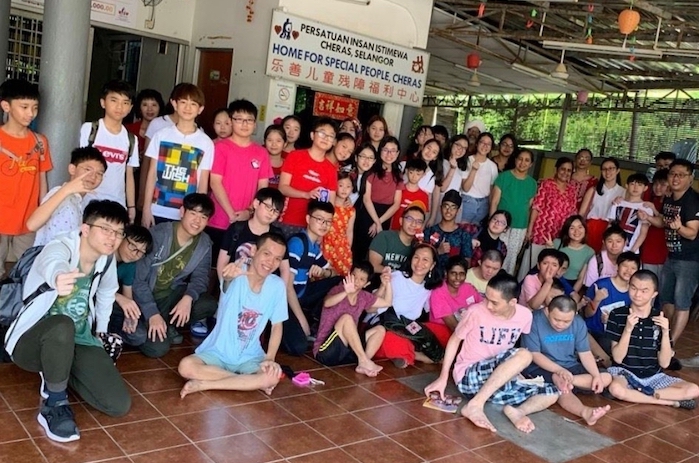
KL private school SpringGate Academy visiting a special people home – Photo: Supplied
By Asia Samachar Team | MALAYSIA |

Frontliners in the delivery service, who delivered food and utilities to clients, come rain or shine, during the Covid-19 pandemic, were recently recognised by a Kuala Lumpur private school.

The staff and students at Cheras-based SpringGate Academy came together to serve packed meals to the delivery frontliners in front of the school.

The event was inspired by Sikh ethos. You may ask how?

Sikhs make up close to half of the the school workforce which began in 2017. School principal Foo Chee Fong was impressed with the three cardinal Sikh principals of remembrance, honest labour and sharing.

“When we were deciding on an activity, I suggested that we should be inspired by the birthday of Guru Nanak and share our time and effort with the frontline delivery personnel who have toiled hard to ensure that their clients demands are met during the pandemic,” he said.

For one week, the school catered 50 packed meals as well as cakes and cookies a day, with most of them prepared by teachers and ably assisted by the students.

They had also taken meals to the local hospital, police station, fire brigade and  or home for special people.

“We do different activities at the end of every term so as to bring out the best in every individual as everyone have their own strengths and so different activities will bring different results in individuals,” he said.


RELATED STORY:

Singapore: Punjabi Language learning goes despite Covid-19 school closure (Asia Samachar, 11 April 2020)


ASIA SAMACHAR is an online newspaper for Sikhs / Punjabis in Southeast Asia and beyond. Facebook | WhatsApp +6017-335-1399 | Email: editor@asiasamachar.com | Twitter | Instagram | Obituary announcements, click here |

Harnek Singh (1949-2020), Rasa

PATH DA BHOG:  25 Dec 2020 (Friday) @ 11.30am at GURDWARA SAHIB RASA, Hulu Selangor | Malaysia

ਜੇਹਾ ਚੀਰੀ ਲਿਖਿਆ ਤੇਹਾ ਹੁਕਮੁ ਕਮਾਿਹ

ਘਲੇ ਆਵਿਹ ਨਾਨਕਾ ਸਦੇ ਉਠੀ ਜਾਿਹ॥


SARDAR HARNEK SINGH S/O BHAI PURAN SINGH AND MATA TEJ KAUR

Village: Singhpura

Age: 71

Passed away peacefull on 13 December 2020.

Path da Bhog: 25 Dec 2020 (Friday) @ 11.30am at GURDWARA SAHIB RASA, Hulu Selangor

Contact: 0123545827

Please treat this as a personal invitation from the Late Bhai Puran Singh family to join for the Antim Ardaas for late Harnek Singh to bless his soul.

Please strictly adhere to the CMCO SOP. Do wear the mask and maintain social distancing.

| Entry: 22 Dec 2020 | Source: Family

ASIA SAMACHAR is an online newspaper for Sikhs / Punjabis in Southeast Asia and beyond. Facebook | WhatsApp +6017-335-1399 | Email: editor@asiasamachar.com | Twitter | Instagram | Obituary announcements, click here |

India hockey captain wedding making headlines in Malaysia

5
Manpreet-Illi Najwa wedding on front pages of Malay dailies in Malaysia – Photo: Asia Samachar
By Asia Samachar Team | MALAYSIA |

The wedding of Indian hockey captain with his Malaysian fiancee is snowballing in Malaysia.

After being splashed on the front pages of a number of local Malay dailies today (Dec 21), the issue has invited statements from at least a state ruler, a federal minister and a state mufti after questions flared up on supposed interfaith nature of the marriage in Panjab last week.

On Wednesday (16 Dec 2020), Indian halfback player Manpreet Singh married Illi Najwa Saddique in a Sikh wedding ceremony at a Jalandhar gurdwara, ending an eight year courtship. Video clips and photographs of the ceremony – with both couples decked in Panjabi costumes – were widely shared on the social media.

Manpreet may be a celebrity in India, but the keen interest on the wedding in Malaysia is probably due to the interfaith nature of the marriage as well as that Illi Najwa is the niece of Halimah Mohamed Sadique, a prominent Umno politician who is the the unity minister in the current federal government coalition.

The news was on the on the front pages today of Sinar Harian, Harian Metro and Utusan Malaysia.

Yesterday, a deputy minister said that Illi Najwa, 27, will be questioned about the marriage when she returns home.

SEE ALSO: India hockey captain Manpreet Singh to marry Malaysian sweetheart

Today, a federal government minister released a three-page statement in which he urged the public to await for an explanation from the state religious authority. In Malaysia, religion is a state matter.

Religious affairs minister Zulkifli Mohamad Al-Badri said the Islamic Family Law (State of Johor) Enactment 2003 does not allow the marriage between a Muslim and a non-Muslim, with the latter required to first convert to Islam before marriage.

Weighing in on the issue, Johor ruler Sultan Ibrahim Iskandar had also released a three-page statement advising all parties not to draw any conclusions or act prematurely in dealing with this issue.

“The woman is undergoing trial by media even though she has not yet declared that she wants to leave Islam. If we are in a hurry in our actions to punish her, then we will build a huge barrier for her to return to our country and widen the gap between her family in Malaysia and her life in India,” he said.

The state monarch also said Islam was a religion based on advise and not one that punishes or penalises its followers. (Islam adalah agama nasihat dan bukan semata-mata menghukum umatnya).


RELATED STORY:

Long-time sweethearts tie the knot (Asia Samachar, 18 Dec 2020)


ASIA SAMACHAR is an online newspaper for Sikhs / Punjabis in Southeast Asia and beyond. Facebook | WhatsApp +6017-335-1399 | Email: editor@asiasamachar.com | Twitter | Instagram | Obituary announcements, click here |
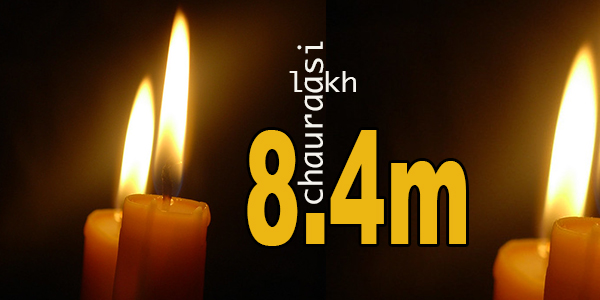
Chauraasi lakh or 8.4m. What do they mean Gurbani-wise?

0
By Asia Samachar Team | OPINION |

Heard them before, right? In sermons and casual talk, you may have picked up words like chauraasi lakh or 8.4 million life forms. How do they square up in Gurbani? And what do they even mean?

One thing is sure: they appear in the Sikh scripture.

In this talk series, Sikh thinker and writer Karminder Singh Dhillon makes an attempt to decode the much-used phrase.

To begin with, he tells us that it may not carry the meaning commonly attached to it. While it appears in the Sikh scripture, he says Guru Nanak had given it a different meaning. Just as with numerous other jargons commonly found in earlier religious traditions, Guru Nanak had redefined it in a revolutionary.

But he argues that Sikhs are still clinging to the ‘discarded’ meaning, not s thing on to new life and meaning infused by the founder of the Sikh faith.

“What is most chilling is that this narrative of this 8.4 million, drawn from the 4,000 year old canvas, is the exact one presented by our clergy, our granthis, our raagis, our parcharaks, our kirtiniaas – in our gurdwaras – as Sikhi beliefs.

“Our granthis, raagis and kirtaniaas sing shabads from the Sri Guru Granth Sahib Ji during the death ceremonies of our loved ones, but present narratives derived from the Upanishads to our sanggat. In short, it’s kirtan of Gurbani but discourse of the 4,000 year old discarded canvas,” says Karminder, author of five recently release books in Sikhi, including The Hijacking of Sikhi.

“Search the social media and you will find countless individuals dressed as Sikhs and claiming to be Sikhs, quoting Gurbani verses even, but pushing the narratives of the Upanishad in their misguided proclamation thst Guru Nanak accepted the beliefs of the 4,000 year-old canvas and wanted us to accept that as Sikhi belief.”

So, what does Gurbani say? In the second half of the 30-minute video, he quotes a number of Gurbani quotations to present the Sikh view.

Some key takeaways:

1. Gurbani debunks there are 8.4m love forms. Scientists have gone way beyond this, and are still counting.

2. Gurbani underlines life here and now, not in the some afterlife (after death).

3. Psoo (animal/animalistic) usually mentioned in Gurbani is not the supposed 8.4 million life forms in the after life. “Psoo in Gurbani refers to the mental states, states of the mind, lived by us in our lives,” he says.

This is a good presentation to clarify your thoughts on the terminology that you’re bound to hear again and again when discussing faiths.


SIKHI CONCEPTS VIDEO SERIES BY KARMINDER SINGH DHILLON

Part 1: Guru Nanak’s Canvas

Part 2: Death

Part 3: After Life

Part 4: 8.4 million (Chaurasi Lakh)

Part 5: Reincarnation

Part 6: Heaven and Hell

Part 7: Salvation in Afterlife (Mukti)

Part 8: Court of Judgement (Dargah)

Part 9: Dhrm Raj


RELATED STORY:

Hijacking Sikhi (Asia Samachar, 19 Dec 2020)

Revisiting death (Asia Samachar, 5 Dec 2020)


ASIA SAMACHAR is an online newspaper for Sikhs / Punjabis in Southeast Asia and beyond. Facebook | WhatsApp +6017-335-1399 | Email: editor@asiasamachar.com | Twitter | Instagram | Obituary announcements, click here |

Jaswant Singh Gill: Singapore’s first navy commander dies

1
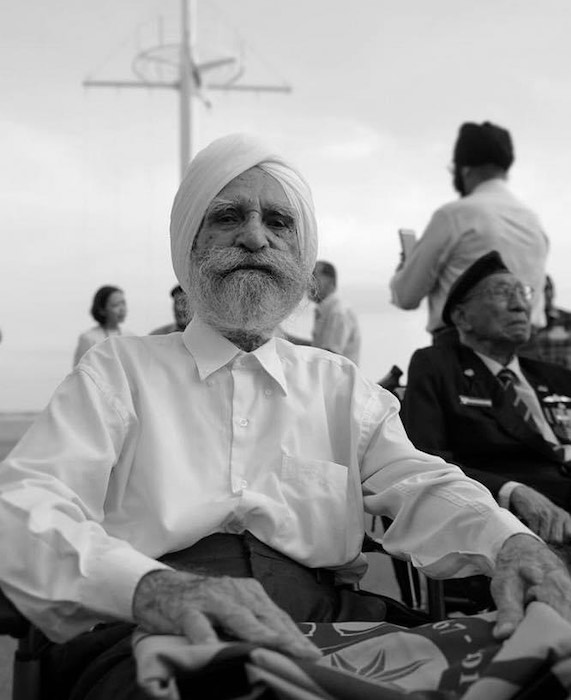
Commander (Ret) S. Jaswant Singh Gill (1923-2020) – Photo: Republic of Singapore Navy facebook
By Asia Samachar Team | SINGAPORE |

Commander (Ret) S. Jaswant Singh Gill, a pioneering Singapore Sikh who was also the nation’s first navy commander, passed away yesterday (Dec 19).

In an entry at the Republic of Singapore Navy facebook page, it noted that he spoke at the 1967 ceremony when it first hoisted our white naval ensign for the first time.

In that address, he said “Now that the new white ensign of our own young country will fly here and in our ships, I hope that you will all remember that its reputation is in your hands. And that you would resolve to do your best to ensure that it will always be regarded with honour and respect wherever it flies.”

Jaswant was a pioneer member of Singapore Khalsa Association (SKA) which he joined in 1941 and served as its president from 1966 to 1981. He had also helped to raise funds for its events and the building fund.

During his presidency, he played an instrumental role in the purchase of the building at Balestier Road, where SKA currently stands. Along with several other members, they created the SKA Trust Fund, which has served the association well over the years.


RELATED STORY:

An officer and a gentleman (Asia Samachar, 18 Sept 2017)


ASIA SAMACHAR is an online newspaper for Sikhs / Punjabis in Southeast Asia and beyond. Facebook | WhatsApp +6017-335-1399 | Email: editor@asiasamachar.com | Twitter | Instagram | Obituary announcements, click here |