UA-56202873-1
Page 802

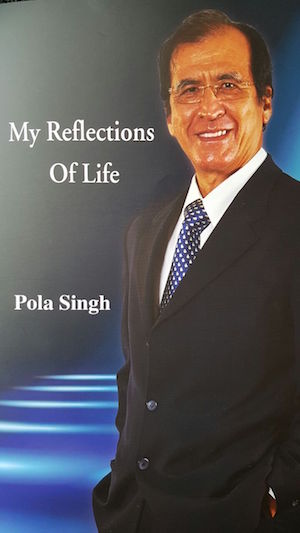
My Reflections of Life: New book by former Malaysian DG Pola Singh

Malaysia | 15 Aug 2016 | Asia Samachar |
Former Malaysian civil servant Dr Pola Singh authors Reflections of Life

Last Saturday (13 Aug 2016),Dr Pola Singh launched his book entitled Reflections of Life in an old fashioned way – with family, glorious food and amazing energy in the comfort of his home. The VIP who declared the launch of his book open, was no other than his proud, four year old grandson!

In this book, he reflects and writes on issues that affect the man on the street – matters of the heart, mind and body centered on life, each with an underlying message.

Dr Pola Singh, a retired civil servant has not slowed down in life. He is a familiar face and sewadar at Gurdwara Sahib Malacca, a green lung champion for Bukit Kiara and continues his Hash House Harriers run to keep him on the go. He brings with him an illustrious background having served as the Director General of Maritime Institute of Malaysia, the ASEAN Secretariat in Jakarta and the Economic Planning Unit in the Prime Minister’s Department.

The following are excerpts from Asia Samachar’s interview with Dr Pola Singh:


Tell us about your book.

It is a compilation of my articles written over the years in the newspapers. It comes in a coffee book form where you will find short stories accompanied by lots of colorful pictures. I start off with my roots, family and values which has defined the person I have become over the years.

The chapters there after characterize our typical Malaysian life, which we are familiar and can easily relate to. Remember Lat’s cartoon? Well, the same Malaysian content, but with a different twist. I attempt to capture them in a candid yet insightful and witty manner for my audience’s ease of reading.

The title of my article actually provides a flavor to its story and moral values. Some of the headings include:

  • Savour each day as you will never know if it could be your last
  • Making time for health and family
  • Giving generously and blessings will follow
  • A Sikh wedding steeped in splendour
  • The praise factor in the Asian community where we should praise during their living years
  • The ‘Kay pohchee’ syndrome especially during accidents
  • Don’t take peace for granted
  • Redha teaches us about autism


What motivated you to author this book?

Authoring a book has been an item on my dream list and bucket list for a long time now.I have been writing articles my whole life, with my first piece dating back to the 1970’s. Along this writing path, I told myself that authoring a book would be a natural progression and hence I set this goal.


Dr Pola Singh launches his book Reflections of Life with family members all around

Where do you derive your inspiration to write?

In the beautiful course of life itself and through my various capacities. Life is after all a University. From a kampung (village) boy in Malacca to a university student in Kuala Lumpur and then a civil servant upon graduation. From a sports enthusiast, to a green advocate, to a social community worker and a senior citizen. From a devoted son, to a father, to a doting grandfather.

I am blessed to wear many hats and hence I write from those dimensions and perspectives through a passage of time.


Describe your writing experience

It has been a humbling and fulfilling writing journey.

For the man on the street, I humbly endeavor to inspire and encourage faith and hope when the road ahead seems tough, having been at crossroads many times before. I delve on the Malaysian idiosyncrasies and how we can feasibly make a better change in our lives.

With justice and level playing field in mind, I respectfully strive to be a voice to bring issues often discussed at the dining table to the fore front. Where possible, I attempt to use my writing to address and provide resolutions to challenges facing the nation, for example on racial unity and environmental issues, drawing from my exposure in policy making. Writing has become a purposeful journey. To make a difference, where possible.


Describe your readers’ response to your articles.

I am grateful and thankful to my readers for connecting to my stories, all these years.

I have been pleasantly stopped at parks, roadside, shopping malls and weddings by strangers who tell me, they have read my pieces in the papers and support my views. It feels good knowing that we Malaysians speak the same language,share the same value system and echo the same concerns.The beauty of it all is – the commonality that we share. We all have our family, friends and nation’s best interest at heart.


What is your advice to aspiring writers?

Read widely and keep writing even if your piece doesn’t get printed. One fine day, it will. With practice, words that seem trapped in your mind, will gradually flow like a river rushing to the sea. Take photography as a hobby if you can, to enhance your articles. A picture, after all, paints a thousand words.

Know your target audience and resonate with their concerns. Write in a simple and user friendly way, so you can connect to your readers. Before you know it, you will have an informal Fan Club following your column or writing, said Dr Pola Singh with a smile.


How can we get a copy of your book?

Do drop me a note at pragmatic2121@gmail.com.


[ASIA SAMACHAR is an online newspaper for Sikhs in Southeast Asia and surrounding countries. We have a Facebook page, do give it a LIKE. Follow us on Twitter. Visit our website: www.asiasamachar.com]

RELATED STORIES:

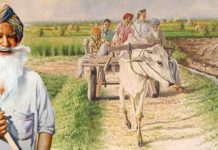
Former MIC leader Nijhar releases ‘The Bullock Cart Boy’ (Asia Samachar, 5 July 2016)

Young lecturer co-authors book on accounting principles (Asia Samachar, 14 May 2016)

Singapore journalist releases ‘India Rising: Fresh Hope, New Fears’ (Asia Samachar, 2 May 2016)

 Jasbir featured in book on Singapore skilled talents (Asia Samachar, 30 Dec 2015)

Balli Jaswal shortlisted for inaugural Epigram Books Fiction Prize (Asia Samachar, 29 Oct 2015)

Jashpreet launches book on nurturing babies with loving touch (Asia Samachar, 25 Sept 2015)

Amardeep journeys deep into Pakistan in search of Sikh legacy  (Asia Samachar, 21 Sept 2015)

Harbans’ second edition of engineering, construction contracts book (Asia Samachar, 1 May 2015)

High jumper Nauraj just misses out – NST

Malaysia | 15 Aug 2016 | Asia Samachar |
High jumper Nauraj Singh Randhawa becomes second Sikh to win a gold medal at SEA Games in Singapore.

Malaysian high jumper Nauraj Singh Randhawa’s aim to qualify for the Rio Olympics men’s event went unrealised at the Olympic Stadium in Rio De Janeiro on Sunday.

It was a narrow miss as had Nauraj cleared 2.26m in his first attempt, he would have qualified automatically for the final. The initial qualifying height had been set at 2.31m but it was lowered as the field struggled to meet the lower marks, reports New Straits Times.

Nauraj cleared 2.26m in his second attempt but only those who cleared in their first advanced automatically when the mark was lowered. Nauraj then had to clear 2.29m – which is his personal best – but failed in all three attempts.

SEE ALSO: Nauraj gets to take dad to Rio Olympics 

SEE ALSO: Nauraj smashes Malaysia high jump record to qualify for Olympics 

“I really wanted to make the final but just missed out. Had I cleared 2.26m in the first attempt, I would have advanced.

“Still, I am very happy with how I performed as 2.26 is the highest I have jumped other than my personal best,” the Malaysian newspaper quoted Nauraj. The top 15 advanced with four of them advancing on the 2.26m height.


[ASIA SAMACHAR is an online newspaper for Sikhs in Southeast Asia and surrounding countries. We have a Facebook page, do give it a LIKE. Follow us on Twitter. Visit our website: www.asiasamachar.com]

RELATED STORIES:

Nauraj gets to take dad to Rio Olympics (Asia Samachar, 3 July 2016)

Parents behind track and field star Nauraj’s meteoric rise (Asia Samachar, 13 May 2016)

Nauraj smashes Malaysia high jump record to qualify for Olympics (Asia Samachar, 29 April 2016)

High-jumper Nauraj sets personal best at Canberra meet (Asia Samachar, 21 Feb 2016)

Avtar Singh – A credit to the Sikh Community and the Athletics Fratertiny of Singapore (Asia Samachar, 18 April 2016)

Sardar to lead India hockey team for Sultan Azlan Shah Cup (Asia Samachar, 23 March 2016)

Sanjay wins second gold at SEA Games (Asia Samachar, 14 June 2015)

Nauraj retains high jump gold at SEA Games (Asia Samachar, 11 June 2015)

Bilveer Singh: Fast-paced, informative and entertaining NUS political scientist

0
| Singapore | 14 Aug 2016 | Asia Samachar |
Associate Professor Bilveer Singh

“I think if you have done something well and it is worthwhile remembering, that is naturally great. In my case, I am basically a teacher. So I think it may not be history that will remember or judge me, I think my students will.” These were the first words of Associate Professor Bilveer Singh when he was interviewed for this piece.

An immediate interpretation one can draw from the above view is the importance Bilveer places on the type of knowledge, values and character that he wants to imbibe in his students. Bilveer is extremely dedicated and focused on nurturing and developing generations of people trained in statecraft and politics. His impact has been huge and his influence has been immense. Many of Singapore’s statesmen and political thinkers have been moulded either through his tutelage or by reading his publications.

The Department of Political Science at National University of Singapore (NUS) takes pride in Bilveer’s career which spans three decades. He has also won 10 teaching excellence awards in NUS.

“I think this year would be my 31st year in the academia and the 35th time that I am teaching this module on Singapore politics because I sometimes teach the same module twice a year. So just imagine the thousands of students who have gone through my hands and I actually have influenced them to think about Singapore’s politics passionately.”

Bilveer was on his way to a potential career in the military where he was an instructor for the Officer Cadet School. However, he decided to continue his studies in the hope that a university education would then improve his chances of attaining a higher rank with the military. After his studies, he was headhunted by the Singapore foreign service and the intelligence agencies due to his multilingual proficiencies, especially Malay, and they already had jobs lined up for him.

PUBLICATIONS: Some of the books authored by Assc Prof Bilveer Singh

A chance encounter with a professor while collecting his certificate changed his life forever. As the top student in the Honours class in 1981, he was offered a scholarship to do a Master and Doctor of Philosophy (PhD) programme, as well as eventual employment as a senior tutor. This, in essence, sealed his life as an academic in political science. The same professor also had a specific topic for him to specialise in – the Soviet Union. Bilveer eventually completed his Master and PhD on the Soviet Union.

He quipped: “That is how I got my job. I became Singapore’s first Soviet specialist.”

However, the eventual collapse of the Soviet Union changed everything. Bilveer then focused specifically on Indonesia, which he also studied while working on Soviet-Asian relations. He has been an Indonesian specialist since 1990.

Bilveer’s belief in the value of education and the impact of a teacher on his or her students, mirror his life where his teachers from secondary school onwards constantly pushed him to excel despite his slow beginning. He has adopted this practice by constantly pushing his students to explore and confront their comfort levels.

“My job is to produce good students, sharp minds. That is all. I produce good students, thinking students, good citizens, loyal citizens, people who, in time of crisis, will not run away but stand up to be counted and make the difference.”

One of Bilveer’s boldest moves in his academic career was to make the decision to teach ‘Government and Politics of Singapore’. At that point in time, it was a sensitive topic for discussion. However, he felt that it was an important module for young Singaporeans to understand Singapore’s politics in a more intimate and informed manner. He managed to pull it off, largely due to his own deep understanding of the topic and his knowledge of governance.

Bilveer now also teaches such topics as foreign policy and citizenship education. He has also been involved in changes in NUS on modules on nation building and governance, not just relating to Singapore but the wider Southeast Asian region as well. His rationale for doing so is that society has become highly complex and Singaporeans need to know the world better so that they can really make a difference.

Despite not choosing a career in intelligence, Bilveer was appointed Head of the Centre of Excellence for National Security at the S Rajaratnam School of International Studies at Nanyang Technological University in 2010. He reported directly to the Prime Minister’s Office on security issues such as terrorism and radicalisation. One key reason for his appointment was his deep knowledge and understanding of the region, particularly Indonesia. This knowledge, arising from decades of work and research, and resulting in numerous publications and papers, provided the opportunity to Bilveer to serve his country. It is an opportunity which he aptly stated as a “great honour for a scholar.” He continues to remain an Adjunct Senior Fellow at the Centre.

Bilveer’s work and contributions, particularly relating to Indonesia and Singapore, are highly regarded locally and internationally. Equally impressive is the fact that he is highly proficient in Bahasa Melayu and Bahasa Indonesia. Apart from being called upon to share his views at various local and international forums and by the media, this proficiency has allowed him to contribute literature in these languages as well. He regularly teaches in Bahasa in different Indonesian universities, including the National Defence University, where he is currently an Eminent Professor. He has 10 books in Bahasa Indonesia – all dealing with security issues. This quality has naturally made him a much sought-after personality since he deals with the important issues of politics, regional security issues, Islamist terrorism, role of great powers in Southeast Asia and the domestic and foreign policies of Singapore.

Describing his most important publication, Politics and Governance in Singapore, Bilveer stated: “…this is the handbook on Singapore politics. It is on politics and governance in Singapore; it is an introduction that anybody can read.”  The book has become a key textbook in Singapore schools.

Bilveer is not just contended with writing for the purpose of education. That is important but he has also made it his mission “…to put books by Asians on the global academic shelves. At the moment, books in the academic world are dominated by the West.”

He tries to restore a balance in this respect in the world academic order. He exposes his students to diverse readings of different writers from different cultural backgrounds.

“I think it is important to bring out books from our region and by Asian authors and make them available to our students. I write about stuff that should be part and parcel of the students’ normal intake. That is why I work and write like there is no tomorrow.”

“I have known Bilveer for about 30 years. He was my lecturer at NUS when I was an undergraduate in Political Science. He was one of the key lecturers who enthralled me with his fast-paced, informative and entertaining lectures. Frankly, he had a big influence on my own decision to subsequently become an academic in national security studies.
Bilveer has certainly inspired succeeding generations of students with his infectious passion for research that influences national debates on security issues affecting Singapore. He remains an inspiration to me!”

– Associate Professor Kumar Ramakrishna Head of Policy Studies S Rajaratnam School of International Studies Nanyang Technological University

Academic knowledge aside, Bilveer strongly believes in the virtues of honesty and integrity. These apply to his work, students and in direct dealings with the government. Quite naturally, this has resulted in him courting controversy with his views as he firmly believes that ‘shading’ history is wrong for if you do, “…somebody will ‘unshade’ and bring out the truth tomorrow. Historians will.” His belief also stems from the fact that he directly influences and impacts the lives of future leaders who will hold key positions. It is vital for him to maintain a high level of integrity and openness. Students are highly impressionable and susceptible to various influences and the people who have that influence need to influence in a proper and positive manner. At the same time, they need to practice what they preach.

When asked once more on how he would like to be remembered by his students, if nothing else, Bilveer remarked: “That I told the truth, that I drove them onto a highway of passion, daring them to ask difficult questions and never shunning away from adversity. In short, I want them to become highly responsible yet caring individuals.”

And the truth be told – Bilveer has indeed left an indelible imprint on his students and the academic world in the last three decades. And he will certainly continue to do so in the many decades to come.

Bilveer Singh with his wife Gurdial Kaur, ecstatic when reunited with Spikey (dog) after nine years

[This article is courtesy of SINGAPORE AT 50: 50 SIKHS AND THEIR CONTRIBUTIONS, a book published by the Young Sikh Association, Singapore (YSA) in conjunction with Singapore’s 50th birthday]

RELATED STORY:

Bhopinder Singh a capable and resourceful Singapore officer (Asia Samachar, 11 August 2016)


ASIA SAMACHAR is an online newspaper for Sikhs / Punjabis in Southeast Asia and beyond. Facebook | WhatsApp +6017-335-1399 | Email: editor@asiasamachar.com | Twitter | Instagram | Obituary announcements, click here |

Dr Jasbir Singh elected unanimously as SNSM Jathedar

0

| Kuala Lumpur, Malaysia | 14 Aug 2016 | Asia Samachar |

SNSM Jathedar Pavandeep Singh (left) handing over the Sri Sahib, taken as the instrument of the Sabha Jathedar, to Dr Jasbir Singh - PHOTO / ASIA SAMACHAR
SNSM Jathedar Pavandeep Singh (left) handing over the Sri Sahib, taken as the instrument of the Sabha Jathedar, to Dr Jasbir Singh – PHOTO / ASIA SAMACHAR

Long-time volunteer Dr Jasbir Singh was unanimously elected as the 22nd Jathedar of the Sikh Naujawan Sabha Malaysia (SNSM) at its annual general meeting (AGM) in Kuala Lumpur today.

The expected challenge did not materialise.

Jasbir, 52, has taken up various roles in SNSM and was the out-going secretary. He was tasked by the out-going team to lead the organisation.

The five-hour meeting went on in a cordial mood, with members raising various issues and concerns. Topping the list were the management of funds.

“We have broken from the Sikh Sanggat,” former SNSM Jathdar Master Pritam Singh told the house. “We have to keep things under control. We should be spending money on our naujawans. Why are we not employing granthis who can teach our Naujawans how to do paath.”

Another former Jathedar, as the leader of the organisation is called, also cautioned the movement to ensure that it remains open to all Sikhs.

“This Sabha is meant for all Sikhs, irrespective of whichever denomination. We cannot allow the Sabha to be used by one side to bash another. If you are allow this, you will have to pay the price,” said Master Daljit Singh.

Associate Prof Autar Singh, another former SNSM Jathedar, requested the in-coming committee to make available audited accounts on a quarterly basis.

Khushwant Singh, a former executive committee member, said as a registered body and using the Sanggat’s funds, it need to be transparent in its finance.

In his closing speech, Pavandeep said: “It has not been an easy journey.”


[ASIA SAMACHAR is an online newspaper for Sikhs in Southeast Asia and surrounding countries. We have a Facebook page, do give it a LIKE. Follow us on Twitter. Visit our website: www.asiasamachar.com]

RELATED STORIES:

SNSM has to return to Sikhi parchaar, says Dr Jasbir Singh (Asia Samachar, 13 Aug 2016)

Naujawan Sabha: A brotherhood for Sikhi parchaar (Asia Samachar, 12 Aug 2016)

Naujawan Sabha at the crossroads – Take Two (Asia Samachar, 9 Aug 2016)

SNSM to elect new Jathedar at AGM on Sunday (Asia Samachar, 8 Aug 2016)

SNSM gets big waiver for Khalsa Land, 18 Selangor gurdwaras get funding (Asia Samachar, 16 July 2016)

Camp Report: Seremban Naujawans ‘awesome’ time at Khalsa Land (Asia Samachar, 12 July 2016)

Malaysian Sikh NGOs urged to tap Federal Govt funding, deadline 11 April (Asia Samachar, 19 March  2016)

Naujawan Sabha is broke (Asia Samachar, 14 March  2016)

We have long yearned for permanent Samelan premises (Asia Samachar, 22 Dec 2015)

Khalsa Land set to host Malaysia’s largest Gurmat camp (Asia Samachar, 19 Dec 2015)

SNSM AGM: Win back trust, scrutinise Khalsa Land samelan plan (Asia Samachar, 18 Oct 2015)

4 Malaysian Sikh NGOs receive RM950,000 Federal funding (Asia Samachar, 5 Aug 2015)


SNSM has to return to Sikhi parchaar, says Dr Jasbir Singh

| Kuala Lumpur, Malaysia | 13 Aug 2016 | Asia Samachar |

JASBIR SINGH: A long serving volunteer at Sikh Naujawan Sabha Malaysia

Here’s an imaginary conversation between key officials of Sikh Naujawan Sabha Malaysia (SNSM), an outfit known over the years for running Gurmat camps for Sikh youth and managing Sikhi parchaar.

“Seen Jasbir?”

“Which Jasbir”

“Father.”

Those familiar with the Sabha, as the organisation is commonly called, will know who ‘Father’ is. No, they are not looking for someone’s dad or even a leader of some church. They are most probably looking for Dr Jasbir Singh, a likeable and good-natured volunteer at the organisation.

Jasbir, 52, has taken up various roles in SNSM and is currently its secretary. He has been asked by the out-going team to lead the organisation as it prepares for its annual general meeting (AGM) tomorrow (14 Aug 2016) in Kuala Lumpur.

At the AGM, the out-going exco is putting forward Jasbir as the nominee for the Jathedarship. The SNSM leader is called a Jathedar, which literally means a leader of a group.

“When I came back from Australia [after completing his PhD in Knowledge Management at end-2007], it was not same Sabha. I saw disunity. Many of the older sevadars were shying away from Sabha,” he told Asia Samachar in an interview.

“We need to go back to basics. We have diverted from our actual objectives. We don’t do the Sikhi parchaar that we used to do. For example, the Vaisakhi tours by our local jathas. We have just started with our structured mini-samelan and weekend camps.”

SEE ALSO: Naujawan Sabha: A brotherhood for Sikhi parchaar

SEE ALSO: SNSM to elect new Jathedar at AGM on Sunday

If tasked with the responsibility as the SNSM Jathedar, Jasbir intends to emphasise on Sikhi parchaar and the development of the Sikh youth.

He had outlined five areas: 1. Sikhi Parchaar, 2. Youth development 3. Education, 4. Welfare, and 5. House keeping (internal Sabha affairs).

“We need to make Sikhi parchaar as our main objective. The minute you divert from the Guru is when we see disaster,” he said.

Jasbir also emphasised on the importance of developing the youth to become more dynamic.

“We want them to be ready for the job market. We don’t want to give them fish, but to teach them how to fish. We need to develop structured programmes for them,” he said.


Extract from the interview:

Tell us about your early days with the Sabha?

It started in 1988. I was staying with Suret Singh, who was then the Sabha secretary under Jathedar Jai Singh. I used to follow him for some Sabha meetings. I was helping with the setting up of the library at their office at the Sentul gurdwara.

What was your impression of Sabha then?

I saw Sabha as a simple, sincere organisation. I used to see Jai Singh, Master Pritam Singh, Master Daljit Singh [all former Sabha jathedars]. They were sincere and religious people. Sabha was small, but doing high-impact activities. Kirtan jathas were all done by our naujawans.

At that point of time, people knew Naujawan Sabha as the organisation. Whenever they went on kirtan tours, people looked forward to seeing them. They had many mini-samelans. Every other day, they had satsangs at various gurdwaras [in the Klang Valley].

How did you get involved directly?

I was then invited to join the Exco. I was made Assistant Secretary. Then I went to pursue my degree full time at USM in Penang. I used to attend Satsangs, helped Sukhindarpal Singh and the team.

I later served as Secretary under Harbinder Singh, Meet Jathedar with Bulvant Singh and Harvinder Singh. In 2004, I left for Australia to pursue my studies.

Did you get involve in any Sikhi activities in Australia?

I helped to set up Sikh Naujawan Sabha Melbourne. Among the key people were Master Darshan Singh, Dharminder Kaur and her husband Amardeep Singh, Manpal Singh and Sarjit Singh. They wanted to organise Samelans and other activities.

What is the state of the Sabha today?

When I came back from Australia, it was not the same Sabha. I saw disunity. Many of the older sevadars were shying away from Sabha. I see Sabha as more of a religious body. Unfortunately, we did not practice what we preach.

Why do you call Sabha a religious body?

Our main objective is to do Sikhi parchaar. Unfortunately, we were not doing enough of that. We have diverted from our actual objectives. We don’t do the Sikhi parchaar that we used to do. Seva pavnaa (love for selfless service) is lacking. We were looking too much at pleasing people.

What needs to be done?

We need to bring back all our sevadars. The process to get the involvement of the earlier sevadars has started. It will take time.

What Sabha needs to do?

We need to go back to basics. For example, the Vaisakhi tours by our local jathas. We have just started with our structured mini-samelan and weekend camps.

At the annual samelan last year, we had adopted a different way to prepare the learning modules. We used instructional design techniques. Whatever you want to do, you start with the learning objectives. Once you can define that, you then work backwards to see how to achieve them. The activities will be designed in such a way to achieve those objectives. We may use different methodologies like debates, discussions, case studies.

Moving forward, what should be Sabha’s focus?

We are looking at these five areas: 1. Sikhi Parchaar, 2. Youth development 3. Education, 4. Welfare, and 5. House keeping (internal Sabha affairs).

We need to make Sikhi parchaar as our main objective. The minute you divert from the Guru is when we see disaster. We must remain on the path of the Guru’s teachings. We must always put the Guru before us.

What do you mean by Sikhi parchaar? 

We are talking about Sikhi parchaar for all. In parchaar, we also want to relook at the Akaal Purakh ki Fauj. The Fauj was supposed to be a structured way of teaching Sikhi. When we had this movement, the outcome could be seen at Samelans. When you talk to camp participants [who had gone throught the Fauj programmes], you could see they could grasp things better. When we had the Fauj programmes back in the early days, the participants would come eagerly to samelans.

The next thing we need to do is develop our youth to become more dynamic. We want them to be ready for the job market. We don’t want to give them fish, but to teach them how to fish. We need to develop structured programmes for them.

Any change in approach to the way Sabha should do things?

We should not do things on our own. We should collaborate with other organisations, We should maximise our resources. The aim is to get all the youth together.

In January 2016, we collaborated with EKTA, a group of professional  Sikh women who believe in life long learning. We will work with them to help SPM students on things like soft skills, how to prepare resumes, selection of courses.

On education, we should emulate what the Sri Murugan Centre (SMC) is doing. We should target primary students, with the help of university students. We want to get our academicians’ help to see how we can best do this.

On the welfare front, we should emulate what the UK-based Sikh Helpline is doing. We should not do it on our own. We should join hands with the Sikh Welfare Society Malaysia (SWSM), Malaysian Sikh Education Aid Fund (MSEAF), other relevants organisations a well as individuals. We would like to get psychologist and relevant people to join in as well.

Lastly, Sabha needs to keep our house in order. Administratively, we need to have in place a proper filing system and governance in terms of managing our finance.

How do you propose to fund all these projects?

The Sabha should launch a full scale daswand scheme. In our pilot project, we already have 60 people who are contributing a minimum of RM30 a month. Some are giving more. The scheme is known as One for Guru. It means we set aside RM1 a day for the Guru. We are looking at a sustainable income. We cannot depend on government handouts. Whenever we have project, we go to the Sanggat. With this, we will have a flow of sustainable income.

What about the Khalsa Land in KKB?

This will be good for the long term development of Khalsa Land in Kuala Kubu Bharu (KKB). We must look at developing the land. That’s going to be our permanent samelan ground. We have to plan it in such a way that it is used year-round with activities. It should be self-sustaining.


[ASIA SAMACHAR is an online newspaper for Sikhs in Southeast Asia and surrounding countries. We have a Facebook page, do give it a LIKE. Follow us on Twitter. Visit our website: www.asiasamachar.com]

RELATED STORIES:

Naujawan Sabha: A brotherhood for Sikhi parchaar (Asia Samachar, 12 Aug 2016)

Naujawan Sabha at the crossroads – Take Two (Asia Samachar, 9 Aug 2016)

SNSM to elect new Jathedar at AGM on Sunday (Asia Samachar, 8 Aug 2016)

SNSM gets big waiver for Khalsa Land, 18 Selangor gurdwaras get funding (Asia Samachar, 16 July 2016)

Camp Report: Seremban Naujawans ‘awesome’ time at Khalsa Land (Asia Samachar, 12 July 2016)

Malaysian Sikh NGOs urged to tap Federal Govt funding, deadline 11 April (Asia Samachar, 19 March  2016)

Naujawan Sabha is broke (Asia Samachar, 14 March  2016)

We have long yearned for permanent Samelan premises (Asia Samachar, 22 Dec 2015)

Khalsa Land set to host Malaysia’s largest Gurmat camp (Asia Samachar, 19 Dec 2015)

SNSM AGM: Win back trust, scrutinise Khalsa Land samelan plan (Asia Samachar, 18 Oct 2015)

4 Malaysian Sikh NGOs receive RM950,000 Federal funding (Asia Samachar, 5 Aug 2015)

Kampar 100: Love is in the air

Sharanpal Kaur | Kampar, Malaysia | 13 Aug 2016 Asia Samachar |

Gurdwara Sahib Kampar celebrated its 100th year anniversary earlier this month. Avid photographer Sharanpal Kaur captured the event. Gurdwara Sahib Kampar was gazetted on 12 February 1916.

A special kirtan semagam featuring Bhai Gurpreet Singh Shimla was held between Aug 3-7, while an akhand path was organised between Aug 5-7.

Sharanpal shares her experience:

The event intended to bring ‘home’ people who had migrated to other towns. The high tea on 6 Aug was the highlight. It carried the theme “Revisiting Roots, Rekindling Memories”.

After a cake cutting ceremony, the guests mingled happily, up-dating information and meeting long lost friends.

It was truly a gathering of old friends and acquaintances. It was a true home coming for many. The air was filled with joy and delight of meeting long lost friends and distant relatives. The Sangat appreciated the effort made by organisers as it gave them a chance to be back at their ‘roots’ and indulge in old memories.

I could see the old and young mixing, chatting, hugging, laughing, sharing tears of joy upon meeting each other. Some could not recognise each other as they have not met for ages.

Gurdwara Sahib Kampar former president Master Santokh Singh was tasked to trace the 100 year history of the gurdwara and the coming of Sikhs to Kampar.

It was truly a joy to see the expressions on so many strangers I met, and some relatives of friends. I feel other gurdwaras should do the same, too. Well done, organisers
For more photos, go to Sharanpal’s Facebook page. Her handle is Shanno Iqbal Randhawa or 100 Years (1916-2016) Gurdwara Sahib Kampar

RELATED STORIES:

 Gurdwara Sahib Kampar turns 100 (Asia Samachar, 23 June 2016)

Are our Gurdwaras Dysfunctional? The Root Causes (Asia Samachar, 26 Jan 2016)

ASIA SAMACHAR is an online newspaper for Sikhs / Punjabis in Southeast Asia and beyond.Facebook | WhatsApp +6017-335-1399 | Email: editor@asiasamachar.com | Twitter | Instagram | Obituary announcements, click here |

Equality & Inequality

0
| Opinion | 13 Aug 2016 | Asia Samachar |


By I.J. Singh & Ravinder Singh Taneja

Life, liberty and the pursuit of happiness are immutable God-given rights to each and every one of us. After all, aren’t we the chosen species of God’s handiwork? The American vision treats Equality as a self evident attribute.

And yet, the dominant and recurring theme throughout history has been the struggle between equality and inequality – real or perceived. Look around the world today and you will see that the sense of inequality, of feeling less than the other occupies center stage: in America, Donald Trump is cleverly exploiting this sense of inequality that a growing segment of White Americans feel after centuries of being dominant, while economists worry about the growing wealth gap between the haves and the have-nots.

In India, the treatment of low caste untouchables (Dalits) is an inflammatory but undeniable reality that some Hindus pretend never existed. Then there is the question of what to do with so-called Middle Eastern migrants (refugees) that are inundating Europe. Mostly have-nots, they have everyone all riled up.

Keep in mind that the politico-social reformers and revolutionaries who talk of this persistent inequality do so from a perspective where some are more equal than others. There is always the super-endowed one percent in every culture.

There are two distinct aspects to inequality: that of talent and ability on one hand, and of opportunity on the other. While ability, one could argue, is inherent and God given, opportunity should be and is a societal onus and responsibility. While the former is housed in our individual DNA, the latter is a human construct that gives meaning to our whole struggle in societal existence.

Yes, we can create opportunity that appears unbiased and guarantees the same legal rights for all, but the results depend on how the moment is seized, understood and applied. Not everyone will use the same opportunity equally, not only because the DNA is different but also because the finer points of how one seizes opportunity may be culturally or economically driven.

Legally we may promise equality of opportunity but opportunity often emerges from human interaction and networking. One can’t always methodically and predictably prepare for opportunity; it comes in a myriad ways and also like a stroke of luck from nowhere – religious believers might term it nadar or grace. There is thus no way to forcefully mandate equality — legislatively or otherwise.

Both Experimental Biologists and Behavioral Scientists tell us that it is the intricately complex and life-long interaction of nature (DNA) and nurture (environment) that shapes us, our successes and failures. This makes us what we are.

Some societies override such concerns by promising that each of us receives according to our needs and gives according to our abilities. But this axiom cannot be satisfactorily legislated. And who will decide what to take and how much to give becomes an explosive question.

Many utopian societies that human history documents have failed; nevertheless, they all noted the inequality in human potential, such that we can never totally correct nor compensate for these inadequacies.

Hence the truism that human societies have always been split into rulers and serfs, leaders and followers, kings and slaves. Inevitably then there is always a gulf or stratification in human societies; this becomes history’s enduring lesson.

Indeed, hierarchies appear to be Nature’s organizing principle. They are visible not only in human societies but in the animal world as well. Hierarchies abound in the structure of the Universe itself – from societal systems and information sciences, to cellular and sub-cellular biology, and to the structure of the gene itself. Life appears to be inherently hierarchical.

Why, one might ask, is such an arrangement so pervasive? Human survival and evolution apparently depend upon it. Increasingly complex structures appear to organize in hierarchies.

This never ending tug of war, back and forth in the vertically stratified units of society, particularly in economic terms, have for centuries given birth to periodic human potential movements. Their goal is to provide equal opportunities and rights to the have-nots and narrow the gap between vertically stratified strata in the face of ever present gaps in talent.

Many Utopian movements are religious at their core, some are not. Of the latter, Socialism, and Communism, along with smaller groups with experimental lifestyles might count. If you don’t think of deism as an essential prerequisite of religions, many of these such as Communism deserve to be counted as religions. (It all depends on our definition of “religion.”) Deist religions start with a just, forgiving Creator who treats the believers with a kindly generous eye; redemption from our transgressions is promised, if not in this world, than in another reality after death. The non-believers or those of other faiths are usually not included in such largesse.

M.I.T. economist Daron Acemoglu and Harvard political scientist James Robinson, in their book Why Nations Fail (2012) offer an interesting argument in favor of inclusiveness, claiming that throughout history nations that were not economically and politically inclusive failed. Exploring throughout history, the authors concluded that countries that become internally too unequal go into decline.

When wealth becomes unequal, so the argument goes, the wealthy consolidate their power, democracy is undermined, and the nation —including its economy— starts to disintegrate. The rich undermine their own good fortune by being too greedy!

Watch the political oratory of wannabe leaders in this political season and the trouble brewing for the top one percent of financial tigers of contemporary American society. Does that sound like Bernie Sanders on his pulpit?

The moral: Human societies operate largely as vertically constructed, somewhat of a pyramidal structure with authority concentrated at the top. But liberal, inclusive societies recognize these limitations and focus on enlarging the opportunities for achievement.

In this mix of rulers and serfs who is wise or strong enough, while also being caring enough to be anointed the ruler? What does life teach us? How history informs us? How does religious philosophy, specifically Sikhi, instruct us? Finally, what are the lessons for the day? That’s really the question today.

Keep in mind that the underlying issue is equality of opportunity, not achievement. Transforming a possible opportunity into an action item is a whole new and different ball game. Seize the day (carpe diem) may be the only feasible advice.

Utopian visions – the notion of a perfect political and social system – have been with us since the beginning of Time. Man’s expulsion from the Garden of Eden may have set in motion this downward spiral. Since then, Plato’s Republic, Cicero, Dante and St Augustine, not to mention Thomas Moore have all envisioned a Utopia, a sort of pilgrimage back to Paradise—until utopia became dystopia.

Sikhism, too, remains a powerful idea of a human potential movement.

The Sikh position on Equality is unambiguously stated in its creedal statement, the so-called Mool Mantar: Oneness underlies all the diversity in the Universe. Sikh tradition tells us that Guru Nanak’s enlightenment was accompanied by the assertion, “Na ko Hindu, Na Mussalman” meaning that there is no Hindu or Muslim, thus signifying the equality of all.

It is on this foundational principle of Oneness that Guru Nanak offered a new vision, a new Way of political governance. The bards, Satta and Balvand describe Guru Nanak’s vision as the citadel of Truth and a reversal of the flow of the Ganges (a river sacred to Hindus), no doubt an allusion to the fact that the Guru’s new paradigm dismantled and turned upside down the existing stratified socio-political structure of India.

And this was over 500 years ago.

After his long and extensive travels, Guru Nanak founded Kartarpur in 1521, a commune in present day Pakistan, not far from the Indian border. This experimental township was the practical application of the Guru’s vision of a Utopia and it is here that the foundation of Sikh society was established.

Bhai Gurdas offers us a glimpse of Kartarpur. Here the Guru put his philosophy into practice by combining kirat and keerat – literally meaning honest labor and singing of praises of the One. What that meant was to be productive as we cultivate our God-given talent.

A powerful practice that served as a great equalizer was the Pangat or communal kitchen. By requiring everyone to partake from a common communal kitchen, the Guru took straight aim at the heart of a stratified caste system where the kitchen (with its segregation by caste) was the centerpiece.

The institution of Pangat (also called Langar) is one practice that distinguishes Sikhs today.

Guru Nanak’s strong reaction to the political and economic corruption of his times is an instructive insight into his vision of an equitable society. He did not shrink from calling out the rulers of the day, likening them to wolves and butchers, “Rajje Seeh Mukkadam Kuttey” (Guru Granth p. 1228) – reminding to us to find our voice and give it expression.

How did Sikhi’s message resonate with people? A clear example is when Guru Gobind Singh initiated the order of the Khalsa. After initiating the first five Sikhs he knelt before them and asked them to initiate him. The inherent idea here was of equality and self-governance; the differences between the Guru and the have-nots vanished. This was the institutionalization of Guru Nanak’s message.

We submit that this message of Sikhi is as alive today as it was five centuries ago. Sikhi offers it today as it did then.

Think a moment: Most opportunities arise from differences of opinion. But diversity also fuels growth. We need to cultivate the art of conversation and dialogue and how to disagree without becoming disagreeable. Guru Nanak emphasized openness of dialogue and communication as sure ways to break down walls of inequality and hate. He set the example himself in the discourse with the Yogis. Jab lag duniya rahiye/Nanak kich suniye kich kahiye,” the Guru Granth (p.660) reminds us.

We need to remember that competition is not bad; greed and avarice are evils that need to be discarded from our arsenal.

Equality and fraternity of opportunity, not necessarily of results is the goal.

Notwithstanding Bernie Sander’s now finished political crusade we likely cannot banish inequality absolutely. When we speak of life liberty and pursuit of happiness, we need to note that the operative word here is “pursuit” not attainment. Remember that different children of the same parents differ in talent, temperament and results

Some believe that have-nots are at the bottom of the unwanted pile because of how they sinned in their past lives but that’s a road best not taken. It makes one so smug and satisfied that we tend to hop off the road of enterprise and to walk instead the path of indifference and complacence.


IJsingh-newI.J. Singh is a New York based writer and speaker on Sikhism in the Diaspora, and a Professor of Anatomy. Email: ijsingh99@gmail.com. Ravinder Singh can be reached aravindersinghtaneja@gmail.com


[ASIA SAMACHAR is an online newspaper for Sikhs in Southeast Asia and surrounding countries. We have a Facebook page, do give it a LIKE. Follow us on Twitter. Visit our website: www.asiasamachar.com]

FROM THE SAME AUTHOR:

Principles & Practices: Big Tent Revisited (Asia Samachar, 29 July 2016)

IDEAS: Revolution, Evolution or Slow Death (Asia Samachar, 16 July 2016)

The four wives of a king: A parable revisited (Asia Samachar, 29 June 2016)

1984: Institutionalizing evil (Asia Samachar, 6 June 2016)

AWAT: The Terrible Two’s Again? (Asia Samachar, 28 May 2016)

BLOOD: The Elixir of Life (Asia Samachar, 22 May 2016)

Some bridge building (Asia Samachar, 6 May 2016)

Khoj Gurbani at two (Asia Samachar, 29 April 2016)

False lure of the past: Lap dogs, watch dogs & attack dogs? (Asia Samachar, 5 April 2016)

When our quirks define us: A parable revisited (Asia Samachar, 10 March 2016)

Questioning faith (Asia Samachar, 26 Feb 2016)

The Fragmented self (Asia Samachar, 28 Jan 2016)

You want to respect Guru, make shabad accessible (Asia Samachar, 14 Jan 2016)

Beyond Chamkaur: Wars, battles and memories (Asia Samachar, 23 Dec 2015)

Vand Chhakna: The Sikh way of sharing & caring (Asia Samachar, 4 Dec 2015)

To remember & to celebrate (Asia Samachar, 10 Nov 2015)

The purpose of life (Asia Samachar, 14 Oct 2015)

On sects and denominations in Sikhi (Asia Samachar, 27 Sept 2015)

Mixed marriages in gurduaras (Asia Samachar, 31 Aug 2015)

The fallen amongst us (Asia Samachar, 22 Aug 2015)

Is Sikhism Turning Into The Superbowl? (Asia Samachar, 4 Aug 2015)

Human savagery & nobility (Asia Samachar, 30 July 2015)

When ignorance is bliss… (Asia Samachar, 24 July 2015)

WORSHIP…Love of God: Greed or Mortal Dread (Asia Samachar, 8 July 2015)

Deras & Babas: Why So Many? (Asia Samachar, 24 Oct 2014)

Naujawan Sabha: A brotherhood for Sikhi parchaar

0

| Kuala Lumpur, Malaysia | 12 Aug 2016 | Asia Samachar |

Amarjit-SNSM-Jathedar-2
AMARJIT SINGH: “Naujawan Sabha is not a mere society, it’s a brotherhood for Sikhi parchaar”

“Naujawan Sabha is not a mere society, it’s a brotherhood for Sikhi parchaar,” quips Amarjit Singh, the immediate past Jathedar of Sikh Naujawan Sabha Malaysia (SNSM) and a long-time volunteer.

After a brief pause, he continues: “What kept us awake at night? Sheer enthusiasm, sheer seva bhavnaa [love abundance for selfless service]. Every night, we planned on running programmes.”

He pauses again. There is a tinge of despondency in the air, discomfort in the voice.

“Times have changed. There is [now] some urge for recognition. Back then, we were still young and just coming out. Back then, we were nobodies.

“As you get recognition, you start feeling that you are a somebody. Seva is such a dangerous thing. As you do seva, you get pats on the back. This is hard to handle, hard to control. That is the devil manifesting itself, it feeds on you. It takes root. We know it, yet it’s there.”

There is a heavy look on the face of the 64-year old, but still active, volunteer of the Kuala Lumpur-based organisation. He retired from corporate life some years ago as one of the top officials at Koperasi Angkatan Tentera Malaysia Bhd.

He joined SNSM in the late 1970s, served in various capacities over the years, and assumed the responsibility of the Jathedar, or president, for two years between 2010-2012.

Amarjit was reflecting on a question posed by Asia Samachar on the state of the SNSM today as the organisation prepares for its 50th annual general meeting (AGM) on Sunday (14 Aug 2016).

“Just like gurdwaras, it is not a society, but you need a legal form to open banking facilities and other stuff. Sabha is a brotherhood of Sikhi parchaar,” he says it again. Parchaar means preaching. “To some, a society is a society. The legal framework overrides the essence. So they talk about voting. That is our downfall.”

VOTING

He knows a thing or two about voting at the organisation. The SNSM constitution states that the house elects a leader called the Jathedar, who then nominates an executive committee (exco). At present, a jathedar is allowed to serve two consecutive terms of two-year each. It used to be three consecutive one-year terms.

In the past, leaders of the organisation went to great lengths to avoid voting at the general house. They would strike out compromises to ensure that they do not have to vote one candidate over the other.

That tradition was put to a test in 2010. Malkith Singh, another long serving volunteer of the organisation and a well-known personality, had just finished his four-year term. He had put forward Pavandeep Singh. A compromise saw Amarjit elected as the Jathedar and Pavandeep as a deputy.

Two years later, the ‘no contest’ tradition came to a breaking point. Backed by Malkith, Pavandeep mounted a challenge against Amarjit. At the AGM, Amarjit backed out from forcing the house to go to a vote, despite some saying that he had enough support on the floor.

“I don’t want to be the person to break this tradition,” he told a fellow sevadar then. When asked, he confirmed the story.

At the AGM on Sunday, the out-going exco is putting forward Dr Jasbir Singh, a central banker and another long-serving volunteer, as the nominee for the Jathedarship.

“If the members deem me fit, I will undertake the responsibility,” he told Asia Samachar when contacted.

MAKING OF JATHEDARS

Looking back, Amarjit said SNSM has seen a dimensional shift in the make-up of its leadership, especially the Jathedar’s role.

In the past, he said the Sabha was made up of deans and lecturers, with the rest as support staff.

“It used to about programme planning, programme structure, with the logistics as a support to make it happen. This dimensional shift has taken place,” he said.

What’s the impact? “We have excellent cooks, excellent logistics people; but with very little material content. That is limited to a few who put their heads together to produce things.”

He added that the Jathedar has to be a father figure who can express to, and relate with, the flock.

“The young has plenty of youthful exuberance, energy, but they are a bit short on seniority to tackle issues, short on maturity, the siaanpa aspect.

Hosh (wisdom) and josh (action). Excessive amount of josh is all action, no wisdom. You need a combination. To get this combo, you need older jathedars. Not old, but older. When you are too old, you don’t have the fire anymore,” he said, breaking into a laughter as he pointed at himself.

Amarjit spoke out against any idea of bringing back jathedars who have served their full term.

“If you repeat an old jathedar, you are recyling jathedars. If you do so, you are bankrupt of ideas, talent…How to move forward? You will have more of the same. You won’t see innovation. You must bring in new people. Each new person coming in will have his own contacts. It keeps the family growing.”

The SNSM Jathedar listing on a plaque found at its national headquarters in Kuala Lumpur - PHOTO / ASIA SAMACHAR
The SNSM Jathedar listing on a plaque found at its national headquarters in Kuala Lumpur – PHOTO / ASIA SAMACHAR

LOSING VOLUNTEERS

Touching on the Sabha ‘flock’, Amarjit shares another concern. Too many senior volunteers have drifted away from the organisation.

“During Master Daljit’s time, there was an explosion. Everyone came in. Now, we’ve had an implosion,” he said.

Daljit Singh, a retired headmaster, served as SNSM Jathedar between 1982 and 1985 and is credited for spreading the Naujawan Satsang movement in the country.

“The main difference in the last 30-40 years was Master Daljit Singh. He was a draw. He brought so many people into the Sabha. He produced so much material. Until today, when you talk about him, you feel good. It’s his natural love. It was during his time that we bought the first Sabha House and the first Sabha van.”

CHIP-BASED SEVA

Moving forward, Amarjit cautioned younger volunteers to stay focused on performing selfless service and not to treat it like a trade.

“Chip-based seva comes with obligations. You think he’s doing seva, but the person is actually collecting chips to be used for bargaining in the future,” he said.

ENRICHING EXPERIENCE

Despite the ups and downs, Amarjit will not trade the experience with Naujawan Sabha with anything. The more than four decades spent serving the SNSM had also given him tremendous joy and satisfaction.

“The Sabha job had been very enriching. It has been an informal training ground, a university of hard knocks. It had contributed to work place advancement, career advancement. I encourage all my children to get involved.”


RELATED STORIES:

Naujawan Sabha at the crossroads – Take Two (Asia Samachar, 9 Aug 2016)

Naujawan Sabha is broke (Asia Samachar, 14 March  2016)

SNSM AGM: Win back trust, scrutinise Khalsa Land samelan plan (Asia Samachar, 18 Oct 2015)

[ASIA SAMACHAR is an online newspaper for Sikhs / Punjabis in Asia. How to reach us: Facebook message or WhatsApp +6017-335-1399. Our email: editor@asiasamachar.com. For obituary announcements, click here]

Two Sikh academics awarded MCMC research grants

0
| Putrajaya, Malaysia | 12 Aug 2016 | Asia Samachar |
MCMC-Sarjit-Kiranjit-award-1608afb
WELL DONE: (L-R) MCMC Academy director Ahmad Nasruddin Atiqullah Fakrullah, Dr Kiranjit Kaur, MCMC Adviser Mr Toh Swee Hoe and Dr Sarjit Singh – PHOTO / ASIA SAMACHAR

Two Sikh academicians from Malaysian universities have secured research grants from the Malaysian Communications and Multimedia Commission (MCMC).

Prof Dr Kiranjit Kaur from Universiti Teknologi MARA (UiTM) and Associate Prof Dr Sarjit Singh Gill from Universiti Putra Malaysia (UPM) will lead their respective research teams for the Networked Media Research Collaboration Programme (NMRCP).

“There were more than 100 entries. The selection process was pretty robust,” a person involved in the programme told Asia Samachar.

Prof  Kiranjit is Malaysia first  Professor in Public Relations in Malaysia. Dr Sarjit was one of the academics roped into an independent external committee to investigate the fiasco surrounding the faulty reference materials used in the teaching of “Tamadun Islam dan Tamadun Asia” (Titas) subject at Universiti Teknologi Malaysia (UTM) recently.

The award ceremony was held at MCMC office in Cyberjaya, Selangor, yesterday (11 Aug 2016).

NMRCP was established to enhance and promote knowledge and research in communication and social science research in the use of networked media and its impact on the population.

The programme is a collaborative initiative whereby the award of research grants to institutions of higher learning to conduct research in focus areas is undertaken with a view to generating the required knowledge resources to support policy and regulatory decision-making, according to information available at the MCMC website.

Prof Kiranjit will be researching on digital inclusion of marginalised communities and an audit of the Pusat Internet 1Malaysia.

Dr Sarjit, a social anthropologist, will look at developing an ICT model adoption and its impacts on cultural identity amongst the native people in Sabah.


PHOTO: (L-R) MCMC Academy director Ahmad Nasruddin Atiqullah Fakrullah, Dr Kiranjit Kaur, MCMC Adviser Mr Toh Swee Hoe and Dr Sarjit Singh 


[ASIA SAMACHAR is an online newspaper for Sikhs in Southeast Asia and surrounding countries. We have a Facebook page, do give it a LIKE! Visit our website: www.asiasamachar.com]

RELATED STORIES:

Sardar Budh Singh: Second Malayan Indian Congress president (Asia Samachar, 31 July 2016)

Balbeer Singh Mangat: Singapore pioneer in private higher education (Asia Samachar, 27 June 2016)

MGC statement on use of controversial “teaching slides” by UTM lecturer (Asia Samachar, 23 June 2016)

Fear not, embark on that new journey – Dr Harveen Kaur (Asia Samachar, 18 May 2016)

Dr Baljit Singh appointed dean at Canada’s University of Calgary (Asia Samachar, 22 April 2016)

UITM appoints Kiranjit as full professor  (Asia Samachar, 17 March 2015)

PM appoints Jagir, Dr Sarjit to Malaysia’s interfaith commit (Asia Samachar, 4 Feb 2016)

Dr Harinder Rai in thick of bauxite action (Asia Samachar, 8 Jan 2016)

Jasbir featured in book on Singapore skilled talents (Asia Samachar, 30 Dec 2015)

B2B: Two experts discuss managing communication crisis (Asia Samachar, 9 Oct 2015)

Puchong gurdwara gets RM30,000 funding through MIC

| Putrajaya, Malaysia | 12 Aug 2016 | Asia Samachar |
Gurdwara Sahib Puchong management committee president Awtar Singh (right) receiving the RM30,000 cheque from Malaysia’s Health Minister Dr S Subramaniam at an event on 11 Aug 2016 - PHOTO /SUPPLIED
Gurdwara Sahib Puchong management committee president Awtar Singh (right) receiving the RM30,000 cheque from Malaysia’s Health Minister Dr S Subramaniam at an event on 11 Aug 2016 – PHOTO /SUPPLIED

Gurdwara Sahib Puchong has received a RM30,000 funding earlier pledged by a Government minister to defray part of the cost to build an extended car park at the Sikh place of worship.

Malaysia’s Health Minister Dr S Subramaniam presented the cheque to the gurdwara management committee president Awtar Singh at a ceremony in Putrajaya on 11 Aug 2016.

it is understood that Puchong was the only gurdwara present at the ceremony. Most of the other recipients were Tamil and Hindu-based organisations.

SEE ALSO: Puchong gurdwara tars extended car park

“We have already completed the car park project. It cost us about RM85,000, which we are in instalments,” Awtar told Asia Samachar.

Dr Subramaniam, who is also the Malaysian Indian Congress (MIC) president, made the pledge at a Vaisakhi function at the gurdwara in April. Awtar is a local MIC leader in Puchong.


[ASIA SAMACHAR is an online newspaper for Sikhs in Southeast Asia and surrounding countries. We have a Facebook page, do give it a LIKE! Visit our website: www.asiasamachar.com]

RELATED STORIES:

Sardar Budh Singh: Second Malayan Indian Congress president (Asia Samachar, 31 July 2016)

SNSM gets big waiver for Khalsa Land, 18 Selangor gurdwaras get funding  (Asia Samachar, 16 July 2016)

Puchong gurdwara tars extended car park (Asia Samachar, 15 April 2016)

Malaysia DPM at Sentul Vaisakhi on 14 April, Health Minister at Puchong today (Asia Samachar, 13 April 2016)

Maybank allows Sikh staff unrecorded leave for Vaisakhi. Kudos! (Asia Samachar, 6 April 2016)

Vaisakhi: Puchong invites health minister, Penang gets chief minister (Asia Samachar, 26 March 2016)

Puchong public crematorium planned 4-day closure for Deepavali

Senator Jaspal, Daljit win in MIC party election (Asia Samachar, 6 Nov 2015)