














UA-56202873-1
Page 803

Asia Samachar: A platform to benefit society, where everyone has a voice

5
| Editorial | 11 Aug 2016 | Asia Samachar |

editorial-asc-200The cornerstone of a vibrant as well as a democratic society is freedom of expression. This principle is fundamental to Asia Samachar.

Some quarters believe freedom of expression should be unfettered. Others, including nation states and civil societies, believe this principle must be tempered with to ensure that information is shared in a responsible way.

Asia Samachar upholds the freedom of expression but we practise this cautiously so as to provide its readers maximum benefit.

As editors, the primary duties are to disseminate news and views on various happenings and issues in the Sikh community.

The agenda of Asia Samachar — agenda carrying the meaning ‘objective’ — is to be a platform for the Sikh community in this region, and beyond.

The burden of duty of editors, be it print, broadcast or online, is not light. As editors, it is our task to ensure that this news portal carries news and opinions that will enrich readers.

But this is done with several rules in place. When writing news, we remind ourselves and our writers to observe the basic ABCs of journalism. A for accuracy. B for Balance. C for clarity.

With these rules in place, Asia Samachar has operated to fill a vacuum felt by many Sikhs in countries like Malaysia, Singapore, Indonesia and other Asean nations. Since its inception, Asia Samachar team has strived to become a medium of expression, information and news.

It is with the support of the Sikhs that Asia Samachar has emerged as a player in filling up the role of communicator and disseminator.

At the same time, Asia Samachar has been playing an added role: to push for greater communication among the various segments in the Sikh community. It has offered itself as a medium for Sikhs to discuss issues within the community in a cogent, cohesive and respectful way.

The reality is this: it is often a treacherous path for editors who want to allow their medium to become an open medium for the community they serve. As editors of Asia Samachar, this is not an exception.

Issues, because of their fluid nature, can get blown out of proportion or treated as nothing more than a storm in a tea cup. And most of the time how an issue is to be treated can be influenced by the mood of the readers. How they react or respond plays an important role.

It is not the work of editors to turn an issue into what it is not. The duty as an editor calls us to allow a healthy discussion to take place on our platform.

And in so doing, we are obliged to make sure that the principle of ‘hear the other side’ is maintained at all times.

Nevertheless, going beyond that, we also play the role as moderators when members of the community begin to provide their feedback.

We have to make sure that arguments do not degenerate into a farce. We strive to avoid readers from hurling insults, promote labelling and utter defamatory statements.

Like editors of any publication, we have the right to exercise discretion to ensure that discussions on any issue, even the most sensitive, is done in most civil manner.

Having said that, as editors, we have to face the risk of being admonished, sanctioned, criticised, labelled and even boycotted for doing our job.

Dasam Granth Issue

In the recent spate concerning Dasam Granth, there have been calls for the Asia Samachar to be boycotted.

Various allegations had been thrown at the editor and his team. It makes us reflect on these questions: What are our principles? What do we, as custodians of the Asia Samachar,  stand for?

The question uppermost on any editor’s mind under such a circumstance would be: “Shall I stop the discussion because it is inviting the wrath of a segment of the community?”

“Is the call for boycott an over-reaction? Did I give the various parties the space to respond? Did I exercise a level of impartiality in this issue?”

There are many unpleasant things happening in our lives and around us. How do we choose to deal with these unpleasant circumstances?

The generally accepted advice is to step back a little and diagnose the circumstances and then to choose an appropriate response to the unpleasantness.

In the issue of Dasam Granth discussion, we believe the best move forward is to allow for mature discussion. The calls for boycott does not put an end to the issue.

Let us state our stand. We are clear. There is no backing off. This is a platform that we have created for the bigger benefit of the society. We owe it to our personal conviction and principles that the door is not closed.

We will not be cowered by such calls for if we succumb now, we would be forced to do it again in future.

But here’s the deal: this platform is open to all. And we give an assurance that we will give the opportunity to all sides to present their views provided that the basic rules are adhered to.

Now you state them.


[ASIA SAMACHAR is an online newspaper for Sikhs in Southeast Asia and surrounding countries. We have a Facebook page, do give it a LIKE. Follow us on Twitter. Visit our website: www.asiasamachar.com]

RELATED STORY:

The God of Dasam Granth – Part One (Asia Samachar, 9 Aug 2016)

Dasam Granth Debate: The double edged sword (Asia Samachar, 4 Aug 2016)

SGGS-DG Discourse: Another stumbling block towards Ekta of the Sikh panth? (Asia Samachar, 4 Aug 2016)

Sikh council tells Malaysian gurdwaras not to permit Dasam Granth preaching (Asia Samachar, 3 Aug 2016)

MGC: Dasam Granth video clips not a ‘directive’ (Asia Samachar, 3 Aug 2016)

Dasam Granth video directive ignites debate in Malaysia (Asia Samachar, 1 Aug 2016)

Dasam Granth: Twisting Bones Till They Snap (Asia Samachar, 30 June 2016)

‘One Granth One Panth’ call from Global Sikh Council – Asia Samachar (Asia Samachar, 11 April 2016)

Are our Gurdwaras Dysfunctional? The Assessment. (Asia Samachar, 9 Jan 2016)

One gurpurab, two dates. Why the confusion? (Asia Samachar, 5 Jan 2016)

Lessons for the Task Force (Asia Samachar, 14 Dec 2015)

JAGIR: MGC managing granthi entry, standardising maryada at gurdwaras  (Asia Samachar, 19 Nov 2015)

Sarbat Khalsa at Chabba historic, but may have been hijacked (Asia Samachar, 11 Nov 2015)

MGC passionately protects religious rights of Sikhs, others in Malaysia (Asia Samachar, 19 Nov 2015)

Lawyer challenges Akal Takht order on new gurdwaras (Asia Samachar, 27 Sept 2015)

The fallen amongst us (Asia Samachar, 22 Aug 2015)


Bhopinder Singh: A capable, resourceful Singapore officer

| Singapore | 11 August 2016 | Asia Samachar |
Bhopinder Singh with his team from Immigration & Checkpoint Authority (ICA)
Bhopinder Singh with his team from Immigration & Checkpoint Authority (ICA) – PHOTO / BOOK

As Singaporeans go about their daily lives, they find comfort that their homes are kept safe by members of the Home Team. Part of this protection includes the tireless work done by the unsung heroes of the Immigration & Checkpoints Authority (ICA) who keep our borders safe.

ICA’s vision is to ‘Inspire Confidence in All’. Its mission is to ensure that the movement of people, goods and conveyances though its checkpoints is legitimate and lawful and to administer and uphold its laws on immigration, citizenship and national registration fairly and effectively.

The ICA has boasted of many bright, capable and outstanding officers in the course of its history. One such officer is Mr Bhopinder Singh, who is ICA’s current Director of Operations.

Bhopinder was born in Singapore in 1954. Following his graduation from the then-University of Singapore with a Bachelor of Arts in Economics and Sociology, he began his career in the Ministry of Home Affairs in 1982. He started off with the Singapore Police Force (SPF) where he served for 18 years until he was appointed Assistant Director of Operations (Operations Management) at the police headquarters in 2000. During his tenure there, he was responsible for coordinating the island-wide police operations against illegal immigrants and criminal syndicates. It was not an easy task as he had to ensure proper and adequate measures were in place so that necessary action could be taken, depending on the situation.

In 2003, Singapore Immigration & Registration and the checkpoints operations of Customs & Excise Department merged to form the ICA. After serving as Assistant Director of Operations in the SPF, Bhopinder moved to the newly established ICA where he was appointed Deputy Director (Operations). With his sharp analytical skills, coupled with his deep sense of responsibility, Bhopinder rose to the rank of Senior Assistant Commissioner as well as Director (Operations) of the ICA. His position as Director of Operations increased his responsibilities significantly as he had to supervise the daily operations of the various departments to ensure that they were efficient while meeting their key performance indicators. He stated: “There was tremendous pressure on the job. We had to consistently deliver.”

However, with his affable personality as well as his resourcefulness and dedication, Bhopinder and his team of dedicated ICA officers took it in their stride to confront and successfully overcome all challenges.

Bhopinder is a leader who firmly believes that to get the best from his officers, he has to set an example by walking the talk and being at the frontlines. It is not uncommon for one to see Bhopinder interacting with his team of officers and keeping an eye out for areas where improvements can be made. He encourages officers to always stay ahead and pre-empt issues through the use of the latest technology and methods available to the ICA as well as trusting their instincts when it comes to making decisions.

THE SARS CHALLENGE

Bhopinder’s leadership style, to be among his officers instead of simply directing them, ensured that his officers overcame one of Singapore’s most challenging moments in the ICA history.

In February 2003, Singapore was faced with the outbreak of the Severe Acute Respiratory Syndrome (SARS). A total of 238 people were infected by the disease which claimed the lives of 33 individuals in Singapore. Many of these casualties were healthcare providers and other frontline staff who had come into direct contact with those infected by the disease.

As a regional hub and a responsible member of the international community, Singapore had to put in place effective measures to isolate and curb any uncontrolled spread of SARS. This meant that the ICA had a key role in putting into place measures to manage the entry of infected persons in Singapore and to prevent the spread of the virus. Bhopinder was a member of the Whole-of-Government Integrated Risk Management put into place to fight SARS. His task was to lead the planning and preparation of all needed measures to be carried out at all checkpoints.

The challenges faced by Bhopinder and his team were extreme and varied. Singapore’s globalised status meant it was a very popular holiday and business destination. It was critical that Singapore had to remain open to welcome visitors and businessmen to her shores while ensuring that the outbreak was controlled.

The task was a tall order, but with the able guidance of Bhopinder, the ICA teams were able to implement the most efficient methods to ensure that the SARS outbreak was monitored. This also prevented more cases from entering Singapore and ensured that there were no infected patients leaving the country, thereby controlling the spread of the virus to other countries.

Bhopinder’s planning and execution highlighted his capabilities and resourcefulness in not only formulating ICA’s crisis management plans, but also in enhancing its level of emergency response and preparedness. His stellar leadership was also a much-needed morale boost for a team which was fearful that it could become infected as well since it was at the frontlines. Looking back at the incident, Bhopinder thoughtfully shared, “The technical and operational know-how in managing the crisis was important. However, the personal experiences and shared sentiments have remained deeply etched over the years since SARS.”

“I have known Bhopinder for more than 30 years. We were university classmates and have been close friends since then. Bhopinder’s soft-spoken and unassuming manner has enabled him to negotiate challenges both in his career and personal life. He has excelled in his job and his current position as Director of Operations at ICA is a recognition of his dedication and professionalism in the service.
In his personal life, he is a loving husband, a caring parent and a filial son to his elderly parents. He has made the right decisions in life because he has a strong moral compass and, more importantly, is supported by a wonderful and loving wife.”
Mr R Raj Kumar Director, Public Affairs Asia-Europe Foundation

With 33 years of experience, Bhopinder’s span of leadership and area of responsibilities now covers the development of plans, policies, strategies and procedures to deal with all operational matters in the ICA. He oversees the Operations Division, which guides ICA’s frontline units on matters pertaining to checkpoint operations, investigation and repatriation of immigration offenders. In spite of his busy schedule, Bhopinder also makes service a priority. As such, he has been part of the Sikh Advisory Board since 2011 and actively contributes to its role as an advisor to the Singapore government on matters concerning Sikhism, as well as on the customs and general welfare of the Sikh community.

As he completes his service to the nation, it is Bhopinder’s fervent hope that the younger generations  Singaporeans will augment and improve on the foundation already set in place by members of his generation of ICA officers in the areas of border security. Through avid societal involvement and a general sense of community pride, the younger generation of ICA officers will be able to spearhead newer initiatives aimed at further strengthening Singapore’s security landscape that is continuously evolving.

The ICA will continue to face new challenges in the context of Singapore’s position as a global and cosmopolitan island state. It has been successful in meeting these challenges in the last 50 years, thanks to the officers at the checkpoints. Singaporeans have been able to take comfort and will continue to do so, knowing that our borders are being protected by brave men and women, led by inspiring and capable leaders like Bhopinder.


[This article is courtesy of SINGAPORE AT 50: 50 SIKHS AND THEIR CONTRIBUTIONS, a book published by the Young Sikh Association, Singapore (YSA) in conjunction with Singapore’s 50th birthday]

RELATED STORY:

Berinderjeet Kaur Singapore mathematics doyenne (Asia Samachar, 27 July 2016)

Amarjit Kaur – A rare Punjabi-Sikh working women of her generation in Singapore (Asia Samachar, 3 Mar 2016)


ASIA SAMACHAR is an online newspaper for Sikhs / Punjabis in Southeast Asia and beyond. Facebook | WhatsApp +6017-335-1399 | Email: editor@asiasamachar.com | Twitter | Instagram | Obituary announcements, click here |

37 Sikhs on Singapore National Day Awards list

2
| Singapore | 10 Aug 2016 | Asia Samachar |

Award-Singapore-2016-fbMore than three dozen Sikhs received various medals for the Singapore National Day Awards 2016.

There are 22 men and 15 women Sikhs who made the cut this time around.

Among the women on the list are District Judge Jasvender Kaur and Civil Aviation Authority of Singapore Senior Assistant Director Corporate Communications Satwinder Kaur.

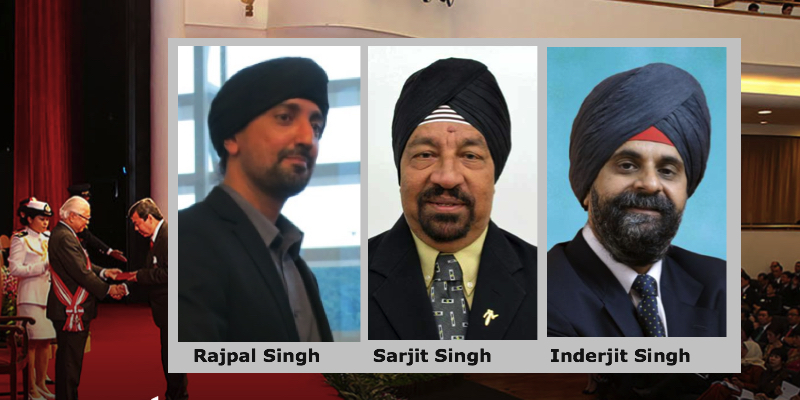
Also on the list are Bukit Merah CCMC Vice-Chairman Sarjit Singh and former parliamentarian Inderjit Singh, who is a member of the Nanyang Technological University Board of Trustees.

Also listed is Rajpal Singh, who was appointed as Consul-General Singapore to the Consulate-General in Johor Bahru in December 2015.

They are part of the 3,959 individuals in 19 award categories who received honours which recognises various form of merit and service to Singapore.

THE PUBLIC SERVICE STAR [BINTANG BAKTI MASYARAKAT]

Mr Sarjit Singh s/o Fujah Singh, PBM, Vice-Chairman, Bukit Merah CCMC

THE PUBLIC ADMINISTRATION MEDAL (SILVER) [PINGAT PENTADBIRAN AWAM (PERAK)]

Ms Jasvender Kaur d/o Saudagar Singh, District Judge, Criminal Justice Division State Courts

THE PUBLIC ADMINISTRATION MEDAL (BRONZE) [PINGAT PENTADBIRAN AWAM (GANGSA)]

Mr Rajpal Singh s/o Santokh Singh, Consul-General Singapore Consulate-General in Johor Bahru Ministry of Foreign Affairs

THE COMMENDATION MEDAL [PINGAT KEPUJIAN]

Mr Savinder Singh Dhillon, Head of Department Si Ling Sec Sch, Ministry of Education

Mr Surjeet Singh, Administration Manager Bukit Batok Sec Sch, Ministry of Education

Ms Satwinder Kaur d/o K Singh, Senior Assistant Director Corporate Communications, Civil Aviation Authority of Singapore, Ministry of Transport   

THE PUBLIC SERVICE MEDAL [PINGAT BAKTI MASYARAKAT]

Mr Sukhmindar Singh, Member, Potong Pasir CCC

Mr Inderjit Singh Dhaliwal, Member, Nanyang Technological University Board of Trustees, Ministry of Education

THE EFFICIENCY MEDAL [PINGAT BERKEBOLEHAN]

Mdm Balvinder Kour, Management Support Officer Professional & Adult Continuing Education Academy, Singapore Polytechnic

Ms Jasbir Kaur d/o Harban Singh, Defence Executive Officer SAF Personnel Hub (West), Ministry of Defence

Ms Surinder Kaur Basra, Retail Executive NHG Pharmacy National Healthcare Group

THE LONG SERVICE MEDAL (PINGAT BAKTI SETIA)

Ms Nirmaljit Kaur d/o Shiv Singh, Defence Executive Officer Ministry of Defence

Mdm Karamjit Kaur, Senior Teacher Bendemeer Sec Sch, Ministry of Education

Mr Gulzar Gurdev Singh Sandhu, Teacher Gan Eng Seng Sch, Ministry of Education

Ms Surjeet Kaur d/o Shamsher Singh, Teacher St Joseph’s Institution, Ministry of Education

Miss Balbir Kaur d/o Katar Singh, Management Assistant Officer NUS Libraries, National University of Singapore

Ms Lkhvinder Kaur, Health Advisor National Skin Centre National Healthcare Group

Ms Amarjit Kaur d/o Pritam Singh, Senior Customer Service Associate, National University Hospital, National University Health System

Ms Dalbiro d/o Jassa Singh, Senior Staff Nurse, KK Women’s and Children’s Hospital Singapore Health Services

Ms Balbir Kour d/o Surat Singh, Senior Associate Executive, Singapore General Hospital, Singapore Health Services

Mr Awtar Singh Brar s/o Amrik Singh, Chief Warder (2), Cluster A, Singapore Prison Service, Ministry of Home Affairs

Mr Dave Singh Calais, Superintendent (1) Cluster B, Singapore Prison Service Ministry of Home Affairs

Mr Jetendra s/o Dharam Pal Singh, Inspector of Police (1) Airport Police Division Singapore Police Force Ministry of Home Affairs

Mr Avtar Singh Dhillon, Assistant Superintendent of Police (1) Clementi Division, Singapore Police Force, Ministry of Home Affairs

Mr Sushminder Singh s/o Endar Singh, Rehabilitation Officer (1) Cluster A, Singapore Prison Service, Ministry of Home Affairs

Mr Terence Singh s/o J Devinder Singh, Sergeant, Cluster C, Singapore Prison Service, Ministry of Home Affairs

Mr Surender Singh s/o Jagdish Singh, Staff Sergeant, Cluster B, Singapore Prison Service, Ministry of Home Affairs

Miss Ranjit Kaur d/o Jagtar Singh, Staff Sergeant, Coastal Command, ICC (Sea) Immigration & Checkpoints Authority, Ministry of Home Affairs

Mr Jogindar Singh s/o Naranyat Singh, Staff Sergeant, Cluster C, Singapore Prison Service Ministry of Home Affairs

Mdm Pajang Kaur, Staff Sergeant, Ports Command, ICC (Sea) Immigration & Checkpoints Authority, Ministry of Home Affairs

Mr Gurmukh Singh s/o Rajan Singh, Staff Sergeant, Cluster A, Singapore Prison Service, Ministry of Home Affairs

Mr Amarjeet Singh s/o Sarjit Singh, Assistant Superintendent of Police (1) Tanglin Division, Singapore Police Force, Ministry of Home Affairs

Mr Daljit Singh s/o B Gurbachan Singh, Chief Warder (1), Community Corrections Command Singapore Prison Service, Ministry of Home Affairs

THE LONG SERVICE MEDAL (MILITARY) [PINGAT BAKTI SETIA (TENTERA)]

MWO Sanjee Singh s/o Saraina, PB, Singapore Armed Forces, Ministry of Defence

1WO Jagdeep Singh s/o Gurdial Singh, Singapore Armed Forces, Ministry of Defence

ME3 Harjit Singh s/o Santa Singh, PB, Singapore Armed Forces, Ministry of Defence

ME2 Karamjit Singh s/o Mehinder Singh, Singapore Armed Forces, Ministry of Defence


RELATED STORY:

Malaysian ambassador calls young Sikhs to join foreign service (Asia Samachar, 10 Aug 2016)

Singapore Sikh lawyer prosecuting major graft case in Brunei  (Asia Samachar, 10 Aug 2016)

Remembering Karpal Singh – The People’s Lawyer (Asia Samachar, 3 July 2016)

Choor Singh – Diligent and distinguished  (Asia Samachar, 3 June 2016)

Malaysian Timber Certification Council appoints Himmat as chairman (Asia Samachar, 17 May 2016)

President Obama to appoint Sikh to presidential advisory council (Asia Samachar, 14 May 2016)

Dr Sukhdave reappointed as Bank Negara Malaysia deputy governor (Asia Samachar, 24 March 2016)

Singapore lawyer Davinder joins Paris-based commission (Asia Samachar, 12 Feb 2016)

4 Sikhs take up Cabinet berth in Canada (Asia Samachar,  5 Nov 2015)

Davinder named Singapore’s best dispute lawyer (Asia Samachar, 26 Sept 2015)

Surjit joins Singapore’s Presidential Council for Minority Rights (Asia Samachar, 2 Apr 2015)


ASIA SAMACHAR is an online newspaper for Sikhs / Punjabis in Southeast Asia and beyond. Facebook | WhatsApp +6017-335-1399 | Email: editor@asiasamachar.com | Twitter | Instagram | Obituary announcements, click here |


Malaysian ambassador calls young Sikhs to join foreign service

| Kuala Lumpur, Malaysia | 10 Aug 2016 | Asia Samachar |

Mahinder Singh, a Malaysian ambassador who heads to Switzerland after a five-year stint in Venezuela, would like to see more Sikhs joining the foreign services.

“I would like to advise our younger generation, especially our younger Sikhs, to join the foreign ministry to promote the country…It would be beneficial to the community to have some presence in this ministry,” he told Asia Samachar in an interview.

Mahinder, who joined the Malaysian public service in 1981, was the nation’s ambassador to Venezuela from 2011 prior to his appointment as Ambassador of Malaysia to Switzerland.

Mahinder and six other new Heads of Mission of Malaysia received their Letters of Credence from the Yang di-Pertuan Agong at the Istana Negara on 18 July 2016. Also present were Foreign Minister Anifah Aman and the ministry’s Secretary General Othman Hashim.

Mahinder was previously the Ambassador of Malaysia to Nepal from 2005 to 2007, Counsellor at the Embassy of Malaysia in Manila, the Philippines from 2003 to 2005 and Counsellor at the Embassy of Malaysia in Bonn, Germany from 1996 to 2001.

He had also served as Second Secretary at the Embassy of Malaysia in Moscow, Russia from 1990 to 1993.

Talking about his experience on the diplomat circuit, he says: “Some of my closest friends were from the Indian and Pakistani embassies, especially the Punjabi-speaking ones. We could converse in our mutual mother tongues.”

Malaysian diplomat Mahinder Singh receiving the Key Performance Indicators and Letters of Appointment by from Malaysian Foreign Minister Anifah Aman at Wisma Putra on 18 July 2016 - PHOTO / WISMA PUTRA
Malaysian diplomat Mahinder Singh receiving the Key Performance Indicators and Letters of Appointment by from Malaysian Foreign Minister Anifah Aman at Wisma Putra on 18 July 2016 – PHOTO / WISMA PUTRA

RELATED STORY:

Remembering Karpal Singh – The People’s Lawyer (Asia Samachar, 3 July 2016)


ASIA SAMACHAR is an online newspaper for Sikhs / Punjabis in Southeast Asia and beyond. Facebook | WhatsApp +6017-335-1399 | Email: editor@asiasamachar.com | Twitter | Instagram | Obituary announcements, click here |

Singapore Sikh lawyer prosecuting major graft case in Brunei

0
| Singapore | 10 Aug 2016 | Asia Samachar |
Davinder Singh: CEO of Singapore law firm Drew & Napier

Singapore top lawyer Davinder Singh is leading a Brunei team that is prosecuting a high-profile graft case in the kingdom.

The case involves Brunei Shell Petroluem (BSP), which is said to have suffered more than $5 million Brunei dollars (S$5 million) in losses due to corruption. Last week, the first of eight persons who allegedly received the bribes was convicted and jailed, reports The Straits Times.

In February 2016, the lawyer and former Singapore lawmaker, recognised as the republic’s best dispute lawyer at a regional award last year, was named a vice-chairman of the Paris-based ICC Commission on Corporate Responsibility and Anti-corruption.

Davinder is the chief executive officer of Drew & Napier.

In the Brunei case, Aidah Tengah, 44, a former BSP staff member, pleaded guilty to the charges against her and was sentenced on Thursday last week to five years’ jail and fined $200,000. The Brunei High Court also ordered her to pay $120,000 in costs to the prosecution.

SEE ALSO: Singapore lawyer Davinder joins Paris-based commission

SEE ALSO: Davinder named Singapore’s best dispute lawyer 

Aidah was charged with 20 counts of corruptly receiving bribes totalling $200,200 from David Chong, the manager of Musfada Enterprise, a key BSP contractor, the report added. [Davinder Singh prosecuting major graft case in Brunei, The Straits Times on August 10, 2016].

Musfada supplied items such as oil spill kits, box pallets and safety equipment. Chong, a Malaysian, was the mastermind who orchestrated the bribes paid between 2007 and 2009. He was sentenced to six years’ jail in 2013 for his role.

Senior counsel Davinder will play the role in prosecuting the ongoing case, assisted by Drew & Napier lawyer Gary Low and supported by Brunei legal counsel, underscores the premium placed by the Brunei government on the case, given BSP’s status as a public body.

The judge who sentenced Chong highlighted how BSP is the backbone of Brunei’s economy, accounting for more than half its gross domestic product and 90 per cent of its total export earnings.

The bribes paid to Aidah were for creating purchase orders to commit BSP to purchase various products supplied by Musfada. The total amount paid for the Musfada products amounted to about $6.4 million, but most of them were not delivered. This resulted in losses of about $5.5 million to BSP.


[ASIA SAMACHAR is an online newspaper for Sikhs in Southeast Asia and surrounding countries. We have a Facebook page, do give it a LIKE! Follow us on Twitter. Visit our website: www.asiasamachar.com]

RELATED STORY:

Remembering Karpal Singh – The People’s Lawyer (Asia Samachar, 3 July 2016)

Singapore lawyer Davinder joins Paris-based commission (Asia Samachar, 12 Feb 2016)

Davinder named Singapore’s best dispute lawyer (Asia Samachar, 26 Sept 2015)

Working for LKY a ‘wild dream come true’ – DAVINDER (Asia Samachar, 24 Mar 2015)

Robotic girl Inderjit wins NCWO Young Women Award (Asia Samachar, 25 Aug 2015)

Prof Abtar wins teaching Unesco award – THE SUN (Asia Samachar, 15 June 2015)

Sandeep picks up Islamic finance award for Franklin Templeton (Asia Samachar, 14 Nov 2014)

Naujawan Sabha at the crossroads – Take Two

Opinion | Malaysia | 9 Aug 2016 | Asia Samachar | 
The letter to members announcing SNSM's 50th AGM to be held on 14 Aug 2016. On the agenda is, at Point 50.8, 'Election of Jathedar for 2016/2018' - PHOTO / ASIA SAMACHAR
The letter to members announcing SNSM’s 50th AGM to be held on 14 Aug 2016. On the agenda is, at Point 50.8, ‘Election of Jathedar for 2016/2018’ – PHOTO / ASIA SAMACHAR

By Jagdesh Singh

Come this Sunday, there will be a new Jathedar for the Sikh Naujawan Sabha Malaysia (SNSM), who will be tasked with the heavy responsibilities of steering the ship afloat very heavy currents.

Make no mistake, this new leader will definitely inherit the ongoing support it has garnered and enjoyed over the past five decades.

With its rich history comes heavy expectations from each generation of the community that it is responsible to serve for. Each of these generations will ask of the Sabha the very same every single year – to uplift the youth of Sikh families all over Malaysia and its neighbors and imbibe the teachings of our Gurus into their daily lives.

Our youth today face many different challenges, yet the salient teachings of our Gurus are no more relevant than the times of our generation and the generations before us. These teachings and practices have always been the panacea to these challenges, then and now.

SEE ALSO: SNSM to elect new Jathedar at AGM on Sunday

SEE ALSO: Naujawan Sabha is broke

SEE ALSO: Naujawan Sabha at a crossroads

In fact, many would argue, our youth probably need them now more than ever. But let’s be honest, that has always been the case for the generations before us.

For the Naujawan Sabha to maintain and sustain its mandate as set by our farsighted founders and pioneers, its outreach has to be appealing to the youth, attracting the youth is as vital as spreading the teachings of our Gurus to them.

To be appealing, the Sabha requires contemporary leaders who have their fingers on the pulse of the youth, leaders who are sensitive to the dynamics that attract and distract the youth, leaders who are sensitive to the fears and concerns of the youth, leaders who can speak the language of the youth. Without this, all the programs and all the infrastructure that we pour our energy, our heart and soul into, would be meaningless with a dwindling population of the Naujawan.

Although the teachings of our Gurus are as relevant as ever, the medium to spread these teachings, the approach that would appeal to the youth has to be in line with what the leaders are sensing from their sensitivities to the youth.

What worked even just as recently as five years back may seem out of fashion or backdated today, let alone what worked for the Sabha when it was formed in the 70s.

The trappings of peer pressure, alcohol and drug abuse, separated parents, abusive parents, sexual predators, addictions, getting lost in the virtual world and losing all sense of reality, and many more challenges faced by our youth are more acute today than ever before.

Sabha leaders will need to address these challenges to as many of our youth as possible, saving even a boy or a girl from any of them will already be any justification for Sabha’s existence. One of the proven ways to address these is education.

For our youth to navigate through their living nightmares and challenges, they need confidence that their decisions are the best ones by they make themselves. They need to learn about their surroundings and their environment, they need to know their own introspection, and they need to know about their own spirituality and what that means as they stand on both their feet. Education, be it from the formal systems in schools or from the informal communities surrounding them, is the key for them to attain the knowledge required for these challenges. Sabha needs to be at the forefront of providing platforms for our youth to access education, worldly and spiritually.

For Sabha to build and sustain these platforms of education, funds are needed. Money talks. Sabha has always been able to sustain its own income for it to run programs, providing education to the youth at many corners of the country. Their annual Samelans (Gurmat camps) are the only visible educational platforms that has grabbed attention over the years, but many other foundational programs and infrastructure has been laid over the past decades, each one requiring funds that Sabha could cough up whenever they needed to.

But the means to generate income as an NGO has always been a challenge for its leadership. Now, more than ever before, Sabha would need to make more money than before with the economic environment getting harsher by the day, and debts having doubled over the years. Perhaps extravagant programs over the years that didn’t really bear tangible results have finally caught up but it’s undeniable that funds need to be generated urgently.

Sabha would need to incorporate more strict and disciplined controls to ensure that the funds which have dried over the years be more prudently managed. Accountability and responsibility need to be clearly outlined with the new leadership team. Stewardship of funds must be second nature, reporting and documentation must happen in tandem. All ambitious projects that cost funds that do not exist or add on to the debts must be canceled or put on hold until the accounts are in the black.

Tis true that the new Jathedar and his leadership team will have inherited the support that will always be there, but they must always remember that the support is earned, just like respect. They must work hard to rebuilding the credibility of Sikh Naujawan Sabha Malaysia.

This Sunday (14 Aug 2016), the Sanggat must be present and must ensure that their new Jathedar is ready to shoulder such huge expectations and responsibilities, the ultimate seva for our youth. The youth need to be represented.

Jagdesh-mugshot-1502Jagdesh Singh, a Kuala Lumpur-based executive with a US multinational company, is a father of three girls who are as opinionated as their mother


[ASIA SAMACHAR is an online newspaper for Sikhs in Southeast Asia and surrounding countries. We have a Facebook page, do give it a LIKE. Follow us on Twitter. Visit our website: www.asiasamachar.com]

FROM THE SAME AUTHOR:

Dasam Granth Debate: The double edged sword (Asia Samachar, 4 Aug 2016)

Naujawan Sabha at a crossroads (Asia Samachar, 26 March 2016)

Too young to be an amritdhari? (Asia Samachar, 7 Jan 2016)

Samelan organising committee took a bold (Asia Samachar, 25 Dec 2015)

Looking for next Santokh for Malaysian football (Asia Samachar, 25 Oct 2015)

Granthis aren’t built like they used to anymore – JAGDESH (Asia Samachar, 6 April 2015)

Would it be so bad if I married a Muslim? – JAGDESH (Asia Samachar, 5 Mar 2015)


RELATED STORIES:

SNSM to elect new Jathedar at AGM on Sunday (Asia Samachar, 8 Aug 2016)

SNSM gets big waiver for Khalsa Land, 18 Selangor gurdwaras get funding (Asia Samachar, 16 July 2016)

Camp Report: Seremban Naujawans ‘awesome’ time at Khalsa Land (Asia Samachar, 12 July 2016)

Malaysian Sikh NGOs urged to tap Federal Govt funding, deadline 11 April (Asia Samachar, 19 March  2016)

Naujawan Sabha is broke (Asia Samachar, 14 March  2016)

We have long yearned for permanent Samelan premises (Asia Samachar, 22 Dec 2015)

Khalsa Land set to host Malaysia’s largest Gurmat camp (Asia Samachar, 19 Dec 2015)

SNSM AGM: Win back trust, scrutinise Khalsa Land samelan plan (Asia Samachar, 18 Oct 2015)

4 Malaysian Sikh NGOs receive RM950,000 Federal funding (Asia Samachar, 5 Aug 2015)

Ladies in colourful salwaar kameez, gharara throng Kelab Aman

| Kuala Lumpur, Malaysia | 9 Aug 2016 Asia Samachar |

KelabAman-Teeyan-1608a2Some 100 women came in their most colourful salwaar kameez and gharara. They danced giddha to the live boliyan.

Welcome to the Punjabi cultural event Teeyan organised by the Selangor Sikh Union (SSU) Kelab Aman at its headquarters in Kuala Lumpur on Sunday (7 Aug 2016).

This marks the first cultural programme by the new committee after the club’s annual general meeting in June.

The event that comes under the social cultural and development portfolio helmed by the Kelab Aman assistant secretary Reena Raj and assisted by a sub-committee.

“After we were elected, we had to put several matters on track. That took sometime before we start working on events and activities for members. This is our first step, there will be many more events and activities in the future,” Reena tells Asia Samachar.

The new committee is by led by Gagandeep Singh as the president.

Gagan said, the team took some time after the elections to get the committee with the operations of the club, each of them to familiarise themselves to their portfolios.

“Our sports activities are ongoing, now I want more activities for women and children. We are a Sikh club and we want to also promote our culture,” he said.

He also said there will be more new events under his leadership. “It has been sometime since we had a cultural event here,” he said.

At the event, Dalwin Kaur and Harpal Kaur won the best dressed gifts.


[ASIA SAMACHAR is an online newspaper for Sikhs / Punjabis in Asia. How to reach us: Facebook message or WhatsApp +6017-335-1399. Our email: editor@asiasamachar.com. For obituary announcements, click here]

The God of Dasam Granth – Part One

7
| Opinion | 9 Aug 2016 | Asia Samachar |


By Karminder Singh PhD (Boston)

Who is the God of Dasam Granth (DG)? This is the primary question that will be examined in this article.

A cursory study of the Dasam Granth brings forth obeisance of its authors to two primary entities – Mahakaal and Durga.

SEE ALSO: The God of Dasam Granth – Part One 

SEE ALSO: The God of Dasam Granth – Part Two

SEE ALSO: The God of Dasam Granth – Part Three

Both have a plethora of names. Mahan Kosh author Kahn Singh Nabha on pages 201 and 674 describes Durga as the consort of Shivji (the devta of death) and provides more than a dozen names for her including Kalka, Shera Walee, Maha Mayee, Chandika, Seetla, Parvati, Chandee, Shiva and Jug Maata.

Mahakaal is another name for Lord Shivji. Readers can gain further insights on the philosophy here (http://www.speakingtree.in/allslides/why-is-lord-shiva-called-mahakaal).


Linking Mahakaal and Durga

The Shiv Puran depicts two primary forms of Shivji. This concept of duality is defined as  Ardh Narishvar Saroop. The right side of Shivji is male and the left is female. Mahakaal represents the Male component and Kalika the female. A cursory look at the three pictorial depictions of Shivji below – taken from three different sources capture this connection. In the first Shivji rides a bull while Durga rides a tiger. In the second, one destroys by fire, the other by weapons. In the third, the power of one is signified by the trishul and the other by multitude of limbs.

Linking Mahakaal and Durga

The Vaam Margee Sect of Shivji

This sect accepts that its primary Deity is the left side of Shivji namely Kalika, Chandee, Durga. And that the origin of creation is the right side namely Mahakaal.

The names Raam, Syam and Nul appear hundreds of times in a variety of places in the Dasam Granth. They are thus believed to be the writer poets of a vast majority of Dasam Granth. Their obeisance to Mahakal and Durga suggests that they are staunch (albeit deviant) members of the Vaam Margee sect.

The biggest Vaam Margee Mandir is called Shri Mahakaleshwar Temple and is located in the holy city of Ujjain, Madh Pardes India. Mahakaleshwar is a combined term from Mahakaal and Eshwar. Meaning Mahakaal is their God.

The following pictures – taken from within the Shri Mahakaleshwar Temple (centre) make the point that the artefact of worship of Shivji – namely the lingam is adorned with a picture of Mahakaal. This means that the lingam is the base artefact but Mahakaal drawn onto the lingam is the primary object of worship.

Mahakaal2b
The following pictures – taken from within the Shri Mahakaleshwar Temple (centre) make the point that the artefact of worship of Shivji – namely the lingam is adorned with a picture of Mahakaal.

Mahakaal in Dasam Granth

The primacy of Mahakaal – above all other Hindu Gods is captured on page 309 as follows:

ਚੌਪਈ॥ ਮੈ ਨ ਗਨੇਸਹਿ ਪ੍ਰਿਥਮ ਮਨਾਊਂ॥

Chaupayee. Mein Na Ganeshey Pritham Manaun.

I do not accept Lord Ganesh as my primary God.


ਕਿਸਨ ਬਿਸਨ ਕਬਹੂੰ ਨਹ ਧਿਆਊਂ॥

Kishen Bishen Kabhu Neh Dhiayu

I will not ever worship Krishen and Vishnu


ਕਾਨ ਸੁਨੇ ਪਹਿਚਾਨ ਨ ਤਿਨ ਸੋ॥

Kaan Suney Pehchaan Na Tin So

I hear of them with my ears, but I recognize them not.


ਲਿਵ ਲਾਗੀ ਮੋਰੀ ਪਗ ਇਨ ਸੋ॥ 434॥

Liv Lagee More Pug En So.

My contemplation is on the feet of the following.


ਮਹਾਕਾਲ ਰਖਵਾਰ ਹਮਾਰੋ॥

Mahakaal Rakhvaar Hamaro

MAHAKAAL is my protector.


ਮਹਾਲੋਹ ਮੈ ਕਿੰਕਰ ਥਾਰੋ॥

Mahaloh Mein Kinker Tharo

Its on Mahaloh (another name of Mahakaal) that I place my obeisance


ਅਪਨਾ ਜਾਨ ਕਰੋ ਰਖਵਾਰ॥

Apna Jaan Karo Rakhvaar

Accept me as you own and protect me


ਬਾਹ ਗਹੇ ਕੀ ਲਾਜ ਬਿਚਾਰ॥ 435॥

Bah Gahe Kee Laaj Bichar.

Hold my arm and protect my honor.


Mahakaal Defined and Described in the Dasam Granth

The charactreristics of Mahakaal are found in pages 41 and again in 810 of the DG:

ਮੁੰਡ ਕੀ ਮਾਲ ਦਿਸਾਨ ਅੰਬਰ ਬਾਮ ਕਰਯੋ ਗਲ ਮੈ ਅਸਿ ਭਾਰੋ॥

Mund Kee Maal Disaan Amber Baam Kareyo Mein As Bharo


ਲੋਚਨ ਲਾਲ ਕਰਾਲ ਦਿਪੈ ਦੋਊ ਭਾਲ ਬਿਰਾਜਤ ਹੈ ਅਨਿਯਾਰੋ॥

Lochan Laal Karal Dipey Dou Bhal Birajat Hai Aneyaro


ਛੁਟੇ ਹੈਂ ਬਾਲ ਮਹਾ ਬਿਕਰਾਲ ਬਿਸਾਲ ਲਸੈ ਰਦ ਪੰਤਿ ਉਜਯਾਰੋ॥

Chutey Hai Baal Maha Bikral Bisal Lasey Rud Pant Ujeyaro


ਛਾਡਤ ਜਵਾਲ ਲਏ ਕਰ ਬਯਾਲ ਸੁ ‘ਕਾਲ’ਸਦਾ ਪ੍ਰਤਿਪਾਲ ਤਿਹਾਰੋ॥

Chadat Jawal Laye Kar Byaal So Kaal Sda Pritpaal Tiharo


In totality the depictions contain the following descriptions: Necklace of Skulls, Nude, Sword in hand, Eyes like burning charcoal on his forehead, Frightening braids, Dangerous teeth, Breathes Fire.

A variety of other names are used for Mahakaal in Dasam Granth. Examples are Sarab Kaal, Kaal, Astujh, KharagKet, Asket etc. Readers may want to note that NONE of these names appear for the usage of God in the Sri Guru Granth Sahib ji. Their individual meanings (weilder of the sword, the strong armed, the muscled one etc) go against the primary concept of the God of the SGGS to be of a non human nature.

Given the descriptions found of Mahakaal in the Dasam Granth – where his primary function is to fight the demons, protect Durga, and bring forth death and destruction the following images within the Vaam Margee sect fit the description.

mahakaal3b
Given the descriptions found of Mahakaal in the Dasam Granth – where his primary function is to fight the demons, protect Durga, and bring forth death and destruction the following images within the Vaam Margee sect fit the description.

Mahakaal and Durga as the primary Gods of Dasam Granth.

The following verse on page 73 of DG establishes

ਸਰਬਕਾਲ ਹੈ ਪਿਤਾ ਅਪਾਰਾ॥ ਦੇਬਿ ਕਾਲਕਾ ਮਾਤ ਹਮਾਰਾ॥

Sarabkaal Hai Pita Hamara. Dev Kaalka Maat Hamara

Sarabkaal (Mahakaal) is my father. Devi Kalika (Durga) is my mother. 


In Chandee (aka Durga / Kalika) Kee Vaar the writers of DG make clear that the Sub God of DG is indeed Durga.

gRMQ sqsXw ko kirau, jw sm Avr nw koie[ ijh nimq kv ny kiha so dyh cMfkw soie [Para 233. 

Granth Satsya Ko Karo, Ja Sum Avar Na Koe. Jeh Namet Kav Ney Kaheo, So Deh Chandika Soe.

This seven-chapter granth is now complete, none other is equal to it.  The object of this poet’s narration is the wondourous Chandee (Duga / Kalika/ Shiva).


In Bachittar Natak, the writer makes clear that the primary object of his spirituality is none other thatn Mahakaal and Kalika (Durga). DG Page 54-55.

ਤਹ ਹਮ ਅਧਿਕ ਤਪਸਿਆ ਸਾਧੀ॥

Teh Hum Adhak Tapasiya Sadhee

There I undertook dificult penance 


ਮਹਾਕਾਲ ਕਾਲਕਾ ਅਰਾਧੀ॥ 2॥

Mahakaal Kalika Aradhee

I meditated / prayed to Mahakaal and Kalika (Durga).


ਇਹ ਬਿਧਿ ਕਰਤ ਤਪਸਿਆ ਭਯੌ॥

Eh Bidh Karat Tapaseya Bhayo

Doing so I performed penance.


ਦਵੈ ਤੇ ਏਕ ਰੂਪ ਹਵੈ ਗਯੋ॥ ….॥ 3॥

Dvey Tay Ek Roop Havai Gayo.

I became one form with them. 


In Durga Kee Vaar (later name changed to Chandee Kee Vaar and changed again to  Bhagautee Kee Vaar) the writer makes clear that the object of

Durga Paath Banayea Sabhey Paureea.  Fer Na Junee Aiya Jin Eh Gaiya.

All the paurees of this vaar (55 in total) are composed in praise of Durga. One who sings this composition will not come into the cycle of births and deaths (will attain salvation).

It is clear that the key to salvation in DG lies at the hands of Durga.

The cloisng para of the entire DG pays obeisance to its God for making the completion of DG permissable as follows:

ਕ੍ਰਿਪਾ ਕਰੀ ਹਮ ਪਰ ‘ਜਗਮਾਤਾ॥ ਗ੍ਰੰਥ ਕਰਾ ਪੂਰਨ ਸੁਭਰਾਤਾ॥ …॥ 402॥ ਸ੍ਰੀ ਅਸਿਧੁਜ ਜਬ ਭਏ ਦਇਆਲਾ॥ ਪੂਰਨ ਕਰਾ ਗ੍ਰੰਥ ਤਤਕਾਲਾ॥ . .॥ 403॥

Kirpa Karee Hum Pur Jug Maata. Granth Kra Puran Subhrata. Sri Astujh Jub Bhae Dyala. Puran Kra Granth Tatkala.

The Jug Maata (Durga/ Kalika) blessed me and this granth is now complete. When Sri Astujh (Mahakaal) became benevolent, this granth was completed. 


The Sources of Compositions in the DG

Given the fact that Mahakaal and Durga are found to be the two primary entities of sprititual obeisance and focus at every turn of the DG, there should be no confusion that the God of DG is the God of the Vaam Maragee Sect of Shivji followers. Mahakaal and Durga are the two intergral and inseparable parts of Lord Shivji.

The dual combination of Mahakaal and Durga in the DG is easy to understand because large portions of DG are lifted from Markanday Puran and Shivji Puran. These two and others are the primary sources of the compositions of DG.  The following is the standard verse at the end of virtually every compostion in the DG:

Et Sri Markandey Puraney Sri Chandee Chhritar Ukat Bilas Dev Suresh Sahit Jaikar Shabad Kra Astmo Dhiaye Sampurnang Masta Subh Masat.

Thus completed as the life of revered Chandee narrated through wondorous narratives as  translated from the eighth chapter of the revered literature of devta beings from Markandey Puran’s wondorous of wonders.

Markandey was a devotee of Mahakaal, Durga and Shivji. He is highly revered amongst the Vaam Maragee sect devotees. The Markandy Puran is one of the 18 texts of Snatan and is authored by him.

Mahakaal is clearly described within DG (page 41 and 840 as mentioned above). His Vaam Maragee devotees define MAHA as great.  His other name Sarabkaal. Sarab translates as ALL.  So Sarabkaal is one who is in ALL  time or ALL death. But MAHA and SARAB are both still within the framework of time and death – hence physical.

MORE ON THE GOD OF DASAM GRANTH IN PART TWO.


The God of SGGS

The God of Sri Guru Granth Sahib is AKAAL. Since kaal means time and death; the use of the prefix ‘A’ before Kaal by Guru Nanak suggests that the Sikh God is BEYOND time and death. That is why other traits such as AJOONI (beyond life forms) and SAIBHANG (self created) come into play.

AKAAL is NOT within the framework of time and death. It is BEYOND. It is NOT physical.

There is therefore a world of a difference between AKAAL and Mahakaal.

The  words Maha and Kaal appear as two separate words just once in the entire 1430 page SGGS. They do NOT refer to God, but to ultimate death.

rwmklI mhlw 5 ] jip goibMdu gopwl lwlu ] rwm nwm ismir qU jIvih iPir n KweI mhw kwlu ] 1 ] rhwau ] GGS 885

Ramkli Mehla 5:  Jup Gobind Gopal Lal. Ram Nam Simar Tu Jeveh Fir Na Khayee Maha Kaal. Rahao.

Realize God the Loving Protector. By remembering the Omnipresent’s virtues, you will obtain spiritual life; and be liberated from (the fear of ) ultimate death. 

Karminder-mugshot2Karminder Singh Dhillon, PhD (Boston) writes on Gurbani and Gurmat issues in The Sikh Bulletin, USA. He also conducts Gurbani Katha in local Gurdwaras. He is based in Kuala Lumpur, Malaysia.

  • This is the personal opinion of the writer or publication and does not necessarily represent the views of the Asia Samachar.


[ASIA SAMACHAR is an online newspaper for Sikhs in Southeast Asia and surrounding countries. We have a Facebook page, do give it a LIKE. Follow us on Twitter. Visit our website: www.asiasamachar.com]

RELATED STORY:

Dasam Granth Debate: The double edged sword (Asia Samachar, 4 Aug 2016)

SGGS-DG Discourse: Another stumbling block towards Ekta of the Sikh panth? (Asia Samachar, 4 Aug 2016)

Sikh council tells Malaysian gurdwaras not to permit Dasam Granth preaching (Asia Samachar, 3 Aug 2016)

MGC: Dasam Granth video clips not a ‘directive’ (Asia Samachar, 3 Aug 2016)

Dasam Granth video directive ignites debate in Malaysia (Asia Samachar, 1 Aug 2016)

Dasam Granth: Twisting Bones Till They Snap (Asia Samachar, 30 June 2016)

‘One Granth One Panth’ call from Global Sikh Council – Asia Samachar (Asia Samachar, 11 April 2016)

Are our Gurdwaras Dysfunctional? The Assessment. (Asia Samachar, 9 Jan 2016)

One gurpurab, two dates. Why the confusion? (Asia Samachar, 5 Jan 2016)

Lessons for the Task Force (Asia Samachar, 14 Dec 2015)

JAGIR: MGC managing granthi entry, standardising maryada at gurdwaras  (Asia Samachar, 19 Nov 2015)

Sarbat Khalsa at Chabba historic, but may have been hijacked (Asia Samachar, 11 Nov 2015)

MGC passionately protects religious rights of Sikhs, others in Malaysia (Asia Samachar, 19 Nov 2015)

Lawyer challenges Akal Takht order on new gurdwaras (Asia Samachar, 27 Sept 2015)

The fallen amongst us (Asia Samachar, 22 Aug 2015)
The tragedy of Banda Bahadur

0
| Sikh History | 9 Aug 2016 Asia Samachar |
Sava Lakh Khalsa Banda Singh Bahadur by Kanwar Singh Dhillon

By K.V. Singh

300 years ago, almost to this day; 9th June 1716 to be exact, he was killed. Captured in December 1715, he was being tortured endlessly for over five months now. Over the days he had seen thousands of his men being beheaded before his own eyes, their heads mounted on spears and paraded in a procession. He had earlier been put in a cage and paraded like an animal on the streets of Delhi by the Mughal Emperor – Farukh Siyar. And now, his son, barely 5 years old, was in chains in his lap even as the Mughal Emperor was seated on a chair opposite him advising the executioner towards the next torture, to kill his son with his own hands…

But this is not just the story about how, this story is also about why, why he got into this situation where he was captured; how a man who fought valiant battles as a ferocious warrior, unbeatable and glorious, was captured alive and paraded like an animal.

This man, Banda Bahadur had had a glorious life. Once an ascetic called Madho Das (and earlier known as Lachhman Dev before ascetism), he had been given the sword and five arrows by the tenth Sikh Guru, and was given a mission to unite the Sikhs and liberate the Punjab from the atrocities of the Mughals.

He had raised an army of over 50,000 people comprising Sikhs, Hindus and even Muslims. His army defeated the mughal army across North India and gradually liberated a large part of Punjab and the area between the Ganga and Jamuna in the area that is now known as Uttar Pradesh. He decimated the Nawab of Sirhind, the nawab who had bricked alive the children of Guru Gobind Singh in a wall at Sirhind and avenged the children’s murder.

SEE ALSO: Singapore lecture series on Banda Singh Bahadur starts on Jan 10 

For around seven years he ruled, minted coins in the name of Guru Gobind Singh and Guru Nanak and undertook several reforms for the upliftment of the poor. He abolished the lordship system of Zamindari and distributed land to the farmers. It is said he was a good ruler. In due course, he fortified himself in the hills, left his ascetic life, married and had children.

The Mughal emperor Bahadur Shah was in panic, the Sikhs were at the doorsteps of Delhi, just biding their time. It was for the first time in North India that a power had shattered the invincibility of the Mughals.

It was going well for Banda , and he was turning into a chief of prominence.There are many narratives here in history, and it is here that history becomes fudgy. He was initially a Yogi ascetic who had taken up arms to avenge the murder of Guru Gobind Singh’s sons. His army was made up of Nihangs, the traditional Sikh armies of Taruna Dal and Buddha Dal, the Tat Khalsa and the Khalsa who believed in the Gurus but were not fully following the Sikh code (which they now call the Bandai Khalsa).

As has been the story across India, it so happened that a portion of his own Sikhs started murmuring discontent against his regal lifestyle. The orthodox strain of Sikhs, the Tatt Khalsa started a campaign accusing him of degressing from the path of the Gurus.

Guru Gobind Singh’s widow – Mata Sundari Ji living in Delhi at that time – perhaps at the instigation of Banda’s detractors, perhaps as a result of intrigue by the Mughal emperor, is said to have been convinced that Banda was plundering the Punjab countryside. She wrote to Banda Bahadur; an order, a ‘Hukamnama’ asking him cease from pillaging the country side and settle down with their jagirs; the hukumnama being appended to a letter from the Mughal emperor. It is not known whether the hukamnama was authentic or not; however it was the beginning of the first tragic schism inside Sikhism.

Banda was contemptuous of the king’s offer and replied to Mata:“You want us to be subservient to those Turks who have destroyed your entire family. You are not aware of their cheating tactics. They will not give us property, they will merely deceive us. They want to weaken us through this sort of diplomacy.” Banda thus refused to toe the line of Guru Gobind Singh’s widow. The Tatt Khalsa, who looked upon Mata Sundari as their leader in the absence of Guru Gobind Singh took it as a personal effront to the Mata.

Mata Sundari is said to have thereafter issued another Hukamnama to the Sikhs, wherein she ordered Sikhs of the Panth to dissociate themselves from the man who had disobeyed the order of their Guru’s Spouse and had replied in rather insolent terms to her (Banda Bahadur by Sohan Singh) . No copy of this Hukamnama has existed and no one knows if it was genuine or a forgery on the orders of Farukh Siyar. The fact is that Mata Sundari’s supposed Hukumnama set in motion the wheels of the defeat of Banda . The Khalsa started deserting Banda Bahadur’s forces.

The Mughal army sensing the opportunity, attacked him led by the Lahore Governor. Banda fortified himself in a fort near Gurdas Pur, in a fort called Kacchi Garhi encircled by lacs of mughal warriors. The mughal seige of Banda continued for days, and months. Day by day conditions worsened in the Garhi. No food was left, grass, leaves of plants and trees were boiled and eaten. Even balk of trees was eaten. History was being created, a tragic history, but there was no one to write. They were completely cut off from the outside world. In the midst of the eight month long seige of the fort, the mighty Akalis, lead by Akali Nihang Baba Binod Singh and his son, Akali Nihang Baba Kahn Singh deserted him; supposedly in protest of him having forsaken the Sikh ideals.

It is said that as he saw his own Sikhs deserting him, Banda lost the will to fight. He had a couple of thousand men left with him, surrounded by lakhs. But this time there was no Muktasar, no charge by the sparrows on the eagles; Banda’s handful of Sikhs waited for the mughals to charge them; and as the mughals finally entered the fort, thousands were massacred, around 750 were captured alive, along with Banda Bahadur and his family. It is said Banda Singh made one last stand and killed about 50 to 60 soldiers of the Mughal army with his own hands before he could be captured, but others say that his deceived heart was just not into the fight, he refused to pick the sword and was captured alive; something that no Sikh warrior earlier had contemplated.

The Sikhs were brought to Delhi in a procession with the 780 Sikh prisoners, 2,000 Sikh heads hung on spears, and 700 cartloads of heads of slaughtered Sikhs used to terrorise the population. The Mughal caravan carrying Banda from Lahore to Delhi had captured and killed Sikhs along the route and hence the procession of Sikh prisoners was a sizeable one . The captured sikhs were paraded to Delhi in a procession; and were asked to convert to Islam or perish. Banda was made to watch as hundreds were killed, their heads hung over spears and rolled like footballs on the streets of Delhi.

The execution of Sikhs Sikh heads on spears as the Mughals march to Delhi with Banda
None of the Bandai Khalsas gave up their religion, none of them bent down, and all of them kept on reciting the Sikh Jaikara even as they faced death.

The Tatt Khalsa, who after Mata Sundari’s hukumnama had forsaken Banda Bahadur watched from the shadows, feeling despondent and guilty. They are said to have lamented their mistake, and some are even said to have given themselves up for sacrifice to accompany their ex-comrades. But by then it was all over, the glory of Banda was over, his rule had been decimated, and he was a prisoner of the emperor.

Finally, after five months of imprisonment, the day of his killing had come. But before he was killed he was forced to draw a dagger into his own son, his six year old son sitting in his lap. The Nobel Prize winning Rabindra Nath Tagore has poetically expressed the moments in his poem Bandi Bir:

In mere teen was the boy,
With hands tied thrown as a toy
Into the lap of Banda and without a word
He drew him close to his heart.
For a while he put his hand on his head,
Just once kissed his turban red.
He then draws his dagger,
Whispers in the child’s ear –
“Wahe Guru- fear not my son”
A virile in the boy’s face did burn –
In his juvenile voice the court did ring
“Wahe Guru” as he did sing.
With his left hand Banda held the boy,
With right struck the dagger in his ploy,
“Wahe Guru”, was all he did implore
As he took to the floor.

The pounding heart of his son was taken out by the executioner and pushed into his mouth. And as Banda resisted, his eyes were gouged out.

I first read Banda Bahadur’s story as a child, in historical comics of the Amar Chitra Katha. We used to read stories of Mughal atrocities, and often thought, well this has got to be an
exaggeration, of course. I saw paintings depicting the tortures of Banda Bahadur in a Sikh Museum at Amritsar. No one could be so cruel, could it be! But apparently they could be so cruel, I believe it now after seeing a video of the ISIS butchers mercilessly severing the head of their captives, laughing and dancing around him, I am tempted to share and compare the Banda torture paintings and ISIS butchery pics here, but they can’t be unseen and I wouldn’t want to haunt my friends with such pictures or paintings.

But back to the last moments of Banda Bahadur, as his eyes were gouged out, his flesh was stripped off his body, his limbs cut-off one by one and finally he was killed.

Herein lies the story of the tragedy. He was most probably the first victim of the Divide amongst Sikhs. He was defeated not because the Mughals were better than him on that day, he was defeated because the Sikhs fought amongst themselves and deserted him. He proved his Sikh credentials and ideals with his death, when he refused to bow down to the mughal emperor, refused to accept Islam and died with dignity and his pride intact.

Today we say that Banda was overwhelmed with false pride and became arrogant and so he lost the grace of the Gurus. His mistreatment of the Khalsa, and alterations of the Guru-ordained Khalsa traditions, resulted in the Khalsa warriors loosing respect for him. It is said that Banda lost because he had declared himself a Guru, advocated teetotalism (a throwback to his earlier life as a Vairagi), altered the Khalsa salutation, stopped wearing blue, etc; though there is no conclusive evidence to give support to this argument.(www.sikhiwiki.org/index.php/Bandai_Khalsa)

Whatever be the case for his downfall, Banda proved his detractors wrong with his conduct during his torture, he proved to be a better Sikh than others that had deserted him in the midst of the seige. Mata Sundari though after the death of Banda Bahadur brokered a peace agreement between Bandai Khalsa and Tatt Khalsa. The Bandai Khalsa however later withered away, and the prominent stream that survived was the Tatt Khalsa.

Today the Sikh orthodoxy, drawing their strength from Tatt Khalsa philosophy, bows to his memory, celebrates his glorious conduct during his execution but, and there is a big ‘but’; they refuse to accept that their own foolishness and mutual mistrust killed Banda; they still spend bytes of electronic space justifying the actions of the deserters; they still refuse to accept that it was their narrow vision that killed Banda; they still refuse to accept that Sikhs themselves were responsible for ending the reign of Banda.

They still refuse to adopt the wider Sikh brotherhood that does not fully ascribe to their narrow vision of Sikhism; they still kick out Sikhs from Sikhism if they don’t adopt the rigid dress codes. They are still narrowing their definition of Sikhism; they are still killing Sikhism.

As the Amar Chitra Katha of my childhood days said on its cover, “His martyrdom led to the foundations of the Sikh Kingdom”, yet they forget the lessons of his life and death. Perhaps a dispassionate and rational analysis of the days of Banda could draw a lesson for repairing the intra-sikh faultlines of today.

This is however how I would like to remember him, as a super-hero of my childhood.

The original posting can be seen here. Link to image here.


[ASIA SAMACHAR is an online newspaper for Sikhs in Southeast Asia and surrounding countries. We have a Facebook page, do give it a LIKE. Follow us on Twitter. Visit our website: www.asiasamachar.com]

RELATED ARTICLES:

Singapore lecture series on Banda Singh Bahadur starts on Jan 10 (Asia Samachar, 4 Jan 2016)

Questioning faith (Asia Samachar, 26 Feb 2016)


SNSM to elect new Jathedar at AGM on Sunday

5
| Kuala Lumpur, Malaysia | 8 Aug 2016 | Asia Samachar | 
The letter to members announcing SNSM's 50th AGM to be held on 14 Aug 2016. On the agenda is, at Point 50.8, 'Election of Jathedar for 2016/2018' - PHOTO / ASIA SAMACHAR
The letter to members announcing SNSM’s 50th AGM to be held on 14 Aug 2016. On the agenda is, at Point 50.8, ‘Election of Jathedar for 2016/2018’ – PHOTO / ASIA SAMACHAR

Sikh Naujawan Sabha Malaysia (SNSM), a flag bearer of Sikh parchaar in the country for more than three decades since the 1970s, will elect a new leader this Sunday (14 Aug 2016).

The organiser of youth camps and various other Sikh-youth activities will be electing its 22nd leader, called Jathedar, at its Annual General Meeting to be held at its headquartes at Jalan Kuantan, Kuala Lumpur.

Pavandeep Singh, the youngest ever to assume the Jathedar post since the organisation was formed in the 1960s, has served for four years since 2012. The SNSM constitution allows a person to serve a consecutive of two terms of two-year each.

AGM notice has been dispatched to its members. On the agenda, at Point 50.8, is ‘Election of Jathedar for 2016/2018’.

SEE ALSO: SNSM gets big waiver for Khalsa Land, 18 Selangor gurdwaras get funding

SEE ALSO: Naujawan Sabha is broke

Once elected, the Jathedar appoints members to the executive committee (exco).

Last year’s AGM, a non-election year, saw heated discussions on a number of issues. Among them were the perceived lost of trust from the wider Sikh sanggat and concerns about it planning to hold its signature camp, the Annual Gurmat Parchaar Samelan, at its camp site in Kuala Kubu Bharu (KKB), Selangor.

Another issue that may crop up is the position of its finance.

In an article entitled Naujawan Sabha Is Broke in March 2016, Asia Samachar reported on the financial woes faced by the organisation, in part forcing it to abandon organising another one of its other signature event, the annual Vaisakhi kirtan and katha kick-off, at its usual venue at Cheras, Kuala Lumpur. Instead, they moved the programme to Gurdwara Sahib Klang.

At the heart of the matter is the financial position of SNSM, popularly known as Naujawan Sabha in Malaysia. Some members are already labelling it a financial crisis, it then reported.

“We were struggling to pay up the outstanding bills for the annual samelan. The Cheras programme will add to the Sabha’s current financial woes,” the report quoted one SNSM official.

The SNSM Jathedar listing on a plaque found at its national headquarters in Kuala Lumpur - PHOTO / ASIA SAMACHAR
The SNSM Jathedar listing on a plaque found at its national headquarters in Kuala Lumpur – PHOTO / ASIA SAMACHAR

[ASIA SAMACHAR is an online newspaper for Sikhs in Southeast Asia and surrounding countries. We have a Facebook page, do give it a LIKE. Follow us on Twitter. Visit our website: www.asiasamachar.com]

RELATED STORIES:

SNSM gets big waiver for Khalsa Land, 18 Selangor gurdwaras get funding (Asia Samachar, 16 July 2016)

Camp Report: Seremban Naujawans ‘awesome’ time at Khalsa Land (Asia Samachar, 12 July 2016)

Malaysian Sikh NGOs urged to tap Federal Govt funding, deadline 11 April (Asia Samachar, 19 March  2016)

Naujawan Sabha is broke (Asia Samachar, 14 March  2016)

We have long yearned for permanent Samelan premises (Asia Samachar, 22 Dec 2015)

Khalsa Land set to host Malaysia’s largest Gurmat camp (Asia Samachar, 19 Dec 2015)

SNSM AGM: Win back trust, scrutinise Khalsa Land samelan plan (Asia Samachar, 18 Oct 2015)

4 Malaysian Sikh NGOs receive RM950,000 Federal funding (Asia Samachar, 5 Aug 2015)