

















UA-56202873-1
Page 433

Seeking heaven, fearing hell. What says Gurbani?

4
By Asia Samachar Team | OPINION |

Are you yearning to hit the highway to heaven? Are you afraid of hell? Well, maybe it is time you take a break from both those thoughts. And it is high time you reexamine your underlying beliefs.

Gurbani has, it seems, tossed out the notions of heaven and hell. Sikh thinker Karminder Singh Dhillon says that Gurbani has clearly and unequivocally rejected both.

“The critique is that there is no such thing as heaven and hell. And that the Creator made no such places. And therefore that heaven and hell is nothing more than the concoction of the clergy,” he argues in his latest installment of Sikhi Concepts video series. Click here.

In Part 6 of the series, Karminder argues that most Sikhs are actually holding on an age old belief of heaven and hell that had actually been discarded by the Sikh Gurus themselves. What’s his proof? He examines relevant Gurbani verses from the Sri Guru Granth Sahib (SGGS), the Sikh scripture, to develop the basic principles of his arguments.

“The narrative held within a vast majority of Sikhs is not the narrative of Gurbani, but that of the 4,000 year-old canvas. And this vast majority of Sikhs mistakenly think, and accept, and belief, that heaven and hell is indeed the narrative of Gurbani,” he says.

In one of the Gurbani verses, he said it provides a critique that there was no such thing as heaven and hell, and that the Creator made no such places. Therefore, it argued that that heaven and hell was nothing more than the concoction of the clergy.

“If a Sikh of Gurbani thinks for himself or herself, this one couplet alone is sufficient to debunk the whole concocted theory of heaven and hell. That is the power of Gurbani when read by ourselves, understood on our own and contemplated within ourselves. One couplet is enough to debunk an entire theory.

“Our problem is that we let our earn a living clergy – our granthis, ragis and parcharaks – people who are beholden to the 4K year old canvas deep within their souls – give us distorted and corrupted interpretations of Gurbani – and accept it in either good or blind faith,” he argues.

Shared below are Gurbani verses, captured with their meaning as provided by the author, for ease of reference.


GURBANI VERSES MENTIONED IN THE VIDEO

VERSE 1

ਕਵਨੁ ਨਰਕੁ ਕਿਆ ਸੁਰਗੁ ਬਿਚਾਰਾ ਸੰਤਨ ਦੋਊ ਰਾਦੇ ॥ ਹਮ ਕਾਹੂ ਕੀ ਕਾਣਿ ਨ ਕਢਤੇ ਅਪਨੇ ਗੁਰ ਪਰਸਾਦੇ ॥ 5 ॥

Meaning: What’s the Concern With the Discourse on Heaven and Hell – Both of Which Are Rubbished by the Seekers of Realization. By the Blessings of Enlightenment from my Guru, I have No Concern with Either. (SGGS, 969)

VERSE 2

ਜਬ ਏਕਹਿ ਹਰਿ ਅਗਮ ਅਪਾਰ ॥ ਤਬ ਨਰਕ ਸੁਰਗ ਕਹੁ ਕਉਨ ਅਉਤਾਰ ॥

Meaning: When there was none other than the Omnipresent Creator pray tell me who was lining up to go into heaven and hell then? (SGGS, 291)

VERSE 3

ਪਾਪੁ ਪੁੰਨੁ ਤਹ ਭਈ ਕਹਾਵਤ ॥ ਕੋਊ ਨਰਕ ਕੋਊ ਸੁਰਗ ਬੰਛਾਵਤ ॥ SGGS 295

VERSE 4

ਕਥਾ ਕਹਾਣੀ ਬੇਦੀਂ ਆਣੀ ਪਾਪੁ ਪੁੰਨੁ ਬੀਚਾਰੁ ॥ ਦੇ ਦੇ ਲੈਣਾ ਲੈ ਲੈ ਦੇਣਾ ਨਰਕਿ ਸੁਰਗਿ ਅਵਤਾਰ ॥

Meaning: The Narrative given to the world by the Vedas is that there are pious deeds and sinful ones To give more than one receives and, and to receive more than one gives is the basis for becoming a resident of Heaven and Hell. (SGGS, 1243)

VERSE 5


ਬੇਦੁ ਪੁਕਾਰੇ ਪੁੰਨੁ ਪਾਪੁ ਸੁਰਗ ਨਰਕ ਕਾ ਬੀਉ ॥ ਜੋ ਬੀਜੈ ਸੋ ਉਗਵੈ ਖਾਂਦਾ ਜਾਣੈ ਜੀਉ ॥

Meaning: The Vedas pronounce that acts of piousness and sin are the determinants or the seeds of heaven and hell in the afterlife. What is planted in this life will bear fruit in heaven or hell. (SGGS, 1243)

VERSE 6

ਸਭੁ ਕੋਈ ਚਲਨ ਕਹਤ ਹੈ ਊਹਾਂ ॥ ਨਾ ਜਾਨਉ ਬੈਕੁੰਠੁ ਹੈ ਕਹਾਂ ॥ 1 ॥ ਰਹਾਉ ॥ ਆਪ ਆਪ ਕਾ ਮਰਮੁ ਨ ਜਾਨਾਂ ॥ ਬਾਤਨ ਹੀ ਬੈਕੁੰਠੁ ਬਖਾਨਾਂ ॥

Meaning: They all make claims about knowing the method to get to heaven. And they don’t know where heaven is. They have no clue where or what heaven is. They know nothing of themselves even, but they have concocted a narrative and told the world about it. (SGGS, 1161)

VERSE 7

ਗਉੜੀ ਪੂਰਬੀ ॥ ਸੁਰਗ ਬਾਸੁ ਨ ਬਾਛੀਐ ਡਰੀਐ ਨ ਨਰਕਿ ਨਿਵਾਸੁ ॥ ਹੋਨਾ ਹੈ ਸੋ ਹੋਈ ਹੈ ਮਨਹਿ ਨ ਕੀਜੈ ਆਸ ॥ ੧ ॥ ਰਮਈਆ ਗੁਨ ਗਾਈਐ ॥ ਜਾ ਤੇ ਪਾਈਐ ਪਰਮ ਨਿਧਾਨੁ ॥ ੧ ॥

Meaning: I have no desire whatsoever to go reside in heaven. And I have no fear whatsoever of being sent to reside in hell. . I will not abide by your narrative of come what may. (SGGS, 337)

VERSE 8

ਜਬ ਲਗੁ ਮਨਿ ਬੈਕੁੰਠ ਕੀ ਆਸ ॥ ਤਬ ਲਗੁ ਹੋਇ ਨਹੀ ਚਰਨ ਨਿਵਾਸੁ ॥ ੩ ॥

Gurbani tells us that so long as the desire to get to heaven remains. Realization of the Creator within cannot happen. (SGGS, 325)

VERSE 9

ਕਹੁ ਕਬੀਰ ਇਹ ਕਹੀਐ ਕਾਹਿ. ਸਾਧਸੰਗਤਿ ਬੈਕੁੰਠੈ ਆਹਿ.

Meaning: Being in the company of the Guru is to have created one’s own heaven

VERSE 10

ਸਿਰੀਰਾਗੁ ਮਹਲਾ ੧ ਘਰੁ ੩ ॥ ਅਮਲੁ ਕਰਿ ਧਰਤੀ, ਬੀਜੁ ਸਬਦੋ ਕਰਿ, ਸਚ ਕੀ ਆਬ ਨਿਤ ਦੇਹਿ ਪਾਣੀ॥ ਹੋਇ ਕਿਰਸਾਣੁ, ਈਮਾਨੁ ਜੰਮਾਇ ਲੈ, ਭਿਸਤੁ ਦੋਜਕੁ ਮੂੜੇ ਏਵ ਜਾਣੀ ॥ ੧ ॥

Meaning: Perform good deeds, inculcate the messages of the shabd, and let your deeds flourish in the glory of the Creator. And do this daily. Practice such a life and anchor your spirituality in such and u will realize the folly of the claim of Heaven and Hell in the afterlife. (SGGS, 24)

VERSE 11

ਨਰ ਤੇ ਸੁਰ ਹੋਇ ਜਾਤ ਨਿਮਖ ਮੈ ਸਤਿਗੁਰ ਬੁਧਿ ਸਿਖਲਾਈ ॥ ਨਰ ਤੇ ਉਪਜਿ ਸੁਰਗ ਕਉ ਜੀਤਿਓ ਸੋ ਅਵਖਧ ਮੈ ਪਾਈ ॥ ੧ ॥

Meaning: My becoming Human to Divine – I acquired through the enlightenment given by my Creator connecting Guru. In doing so I have acquired heaven for myself and I have found the panacea for the hell of human vices. (SGGS, 873)


SIKHI CONCEPTS VIDEO SERIES BY KARMINDER SINGH DHILLON

Part 1: Guru Nanak’s Canvas

Part 2: Death

Part 3: After Life

Part 4: 8.4 million (Chaurasi Lakh)

Part 5: Reincarnation

Part 6: Heaven and Hell

Part 7: Salvation in Afterlife (Mukti)

Part 8: Court of Judgement (Dargah)

Part 9: Dhrm Raj


RELATED STORY:

Chauraasi lakh or 8.4m. What do they mean Gurbani-wise? (Asia Samachar, 21 Dec 2020)

Revisiting death (Asia Samachar, 5 Dec 2020)

Hijacking Sikhi (Asia Samachar, 19 Dec 2020)

Karminder talks about what shaped his thinking, and his latest books on Sikhi (Asia Samachar, 20 Nov 2020)


ASIA SAMACHAR is an online newspaper for Sikhs / Punjabis in Southeast Asia and beyond. Facebook | WhatsApp +6017-335-1399 | Email: editor@asiasamachar.com | Twitter | Instagram | Obituary announcements, click here |

From the Mouth of Babes

0
Photo: Ernesto Eslava / Pixabay
By I.J. Singh OPINION |
TEACHING & LEARNING

Human existence and human progress depend on generational progress.  So, how do we teach new generations? We first need to repeat and emphasize the core of human knowledge to the new generation such that they can easily master the core information and quickly push the borders in a systematic manner.  The best, most convenient and accurate model would allow us to transfer within us the existent information base methodically and systematically and be able to draw upon it as needed.

Forget not that the information base is increasing at a phenomenal rate with no end in sight. The human capacity to absorb the possible information is surely limited. But the human imagination apparently expands its capacity not by more gray matter but by technological marvelous ways to expand magically its capacity without expanding more gray matter

Clearly, one strategy seems obvious. The goal would be better and faster achievable if every generation could lean on better and faster teaching technology. That surely would be great but wouldn’t it be better yet if every year the teachers did not have to reinvent new teaching language and technology?  Otherwise, this would be more expensive and slow the process.

In order to create a progressive model of teaching and learning wouldn’t it be sensible if we can teach progressively but teach in the language of the student? Wouldn’t this be the best and most efficient way as long as the vocabulary and complexities of the language can handle the load and its transfer.

WHAT IS A NEW LANGUAGE?  HOW IS A NEW LANGUAGE BORN?

I love languages but, for sure, I am no linguist.  My repertoire of languages being grossly somewhat limited.

A few of us get into origin and structure of specific languages that address issues important to mankind like whether some languages are sacred or perhaps not, and if some languages are demonstrably older than others.

For instance, Gurbani, the language of Sikh spiritual message, whether sung or recited as prose in the Sikh religious literature, pertains to poetical rendering – words that hint at a different language or sub-version or modification of established languages of a people.  Often, the original languages are Sanskrit, Arabic, Farsi, Persian and Punjabi. Sometimes hybrid mixtures of these and other languages ply their magic.  It would be like parsing a document in a wonderful mix of Latin or Greek, modified with a little German, Italian with overlapping tastes of some French, a little English etc. Anglicized or Lingua Franca, for instance.

WHAT IS A NEW LANGUAGE?

The basic question: What is the beginning of a language?  Is it when we learn to creatively argue, abuse or hurl words as missiles?  When is a language born? Mind you, the world has many.

Look at a new born infant when all he or she can do is to mutter sounds, not that they necessarily make any sense.  The primal scream of a new born is a sound that announcesHere I am.” It is not a word or an impressive statement in any language but it is a supremely important and unique announcement.  How much grammar do you need to know of any language then? To experience it I would suggest that you just sit in a conference between a mother and her new born.  The event is loaded with importance and meaning.  There is exchange of sentiments, ideas and meaning, in spite of the very primitive use of any language. Thinking thus, how should we then classify some languages as new at birth, other as old as the hills?

I am sure many readers will immediately dismiss my assertion counting newborns as being founders of new religions.  But stay with me awhile and don’t be in a rush to name some old man or another. Every new language has promises to keep and miles to go before we sleep.

NEVER UNDERESTIMATE WHAT COMES OUT THE MOUTHS OF BABES, AS I SAID.

What am I hinting at is that every newborn is the parent (inventor) of a new and language that is at the same time almost unique as well? But to transfer it to become useful we need to evolve it further.

So, when we hit on an old language that seems to have a broken down, largely confusing structure today, it may be representing an incomplete or somewhat primitive skeleton of a structure, and at one point the leftovers of a comprehensive structure of a language that does not quite exist anymore.

In my view the beginning of language is speech – not necessarily in any human language with its vocabulary and grammar intact.  A simple word such as Hello is an example.

And yet, scientists incessantly argue about the precise date when a particular language was invented, born or appeared. Many of these primitive languages appear, become the dominant medium for human exchange and human expression, became mixed with other languages and become superbly rich and complex means of human trading exchange and remain a magically complex system of human communication, while humans argue and fight over which is richer than the others. Remember also that when we teach the rudiments or complexities of a language to the next generation, we teach existing vocabulary in common usage along with some limited additions to accommodate necessary current modifications. The language in common usage is what we lean on and it is best labeled as norma loquendi, literally, the language of the common people.

On the other hand, to me it is obvious that to argue that in a particular year a specific particular language was invented by a particular genius is a bit of overarching hyperbole. Yes, one thing continues. No matter when a particular language assembled a particular working system some changes continue to occur. Look, for instance how have languages like English, French, even Urdu and Punjabi have continued their growth, while old respectable languages like Sanskrit and Latin have diminished significantly. A language that is frozen in its structure is a language on its way to death.

And that’s my limited and growing but biased wisdom about what is human speech. 


I.J. Singh is a New York based writer and speaker on Sikhism in the Diaspora, and a Professor of Anatomy. Email: ijsingh99@gmail.com.  

* This is the opinion of the writer, organisation or publication and does not necessarily represent the views of Asia Samachar.


RELATED STORIES:

Benign neglect (Asia Samachar, 24 July 2019)

1984: What a Different World Teaches Us (Asia Samachar, 12 June 2019)


ASIA SAMACHAR is an online newspaper for Sikhs / Punjabis in Southeast Asia and beyond. Facebook | WhatsApp +6017-335-1399 | Email: editor@asiasamachar.com | Twitter | Instagram | Obituary announcements, click here |

Malaysia’s Panjabi language classes set to begin tomorrow

0
Panjabi language classes in action in Malaysia – Graphic: Asia Samachar (Photos PETM)
By Jaginder Singh Raipatti | MALAYSIA |

Punjabi Education Centres (PECs) nationwide are all getting ready to start Punjabi Language classes on Saturday (16 Jan 2021). This will be the 21st year of a well-planned and well-organised approach to Punjabi education in Malaysia, since its revival in the year 2000.

Khalsa Diwan Malaysia (KDM), which operates from its headquarters in Ipoh, is the national Sikh organisation which has been given the responsibility to implement this programme. It works closely with other Sikh Societies, Gurdwara Management Committees and the Sikh community to ensure Punjabi education is made available in all major cities and towns in Malaysia. KDM also deals directly with government agencies such as Malaysian Indian Transformation Unit (MITRA) on matters related to Punjabi education, and to source for funds to carry out the Punjabi Language programme.

In 2020, KDM conducted Punjabi Language classes in more than 40 active PECs nationwide, including Sabah and Sarawak, with a student population of more than 2000 who were taught by almost 250 teachers.

The Covid-19 pandemic, and the ensuing MCOs and the SOPs, caught everyone by surprise,  created a lot of panic and caused many difficulties to PECs in the year 2020, and it will continue to do so this year. Attendance for the Punjabi classes was poor, and teachers had to resort to online teaching to engage with their students. This by no means was an easy task, as not all students had access to the internet, or the know-how of the various tools available on the electronic media.

For 2021, Khalsa Diwan Malaysia has planned a total of 40 weekly classes, the dates of which are shown on their official calendar. A policy circular on the running of the schools was also sent to all PECs in December 2020, so that the PECs can start planning their classes for 2021.Most PECs have already held their preliminary meetings, and are all geared for action.

Panjabi language teachers at a meeting in Ipoh – Photo: Supplied

KDM has advised all PECs to abide by all the SOPs outlined by the Government and the Health Ministry when conducting the classes. The safety of all the students, teachers and administrators is of paramount importance. If there are safety issues, the physical classroom should be replaced with a virtual classroom. The year 2020 taught several invaluable lessons. KDM and the PECs are now wiser and better prepared to seek alternative approaches to teaching if the Covid-19 pandemic worsens and the PECs are ordered to close.

Khalsa Diwan Malaysia wishes to thank all the relevant parties for their continuous support and dedication in running the Punjabi Language programme, and engaging actively to preserve our Ma Boli, Punjabi.

Jaginder Singh Raipatti is the secretary of Punjabi Education Trust Malaysia (PETM), the Punjabi language education wing of Ipoh-based Khalsa Diwan Malaysia (KDM).


RELATED STORY:

Panjabi classes back in swing for Singapore students (Asia Samachar, 10 Jan 2021)

Injecting technology in teaching of Punjabi language (Asia Samachar, 20 Aug 2019)


ASIA SAMACHAR is an online newspaper for Sikhs / Punjabis in Southeast Asia and beyond. Facebook | WhatsApp +6017-335-1399 | Email: editor@asiasamachar.com | Twitter | Instagram | Obituary announcements, click here |

Johor sultan renames academy after Sikh doctor with deep passion for cricket

1
Johor sultan and Dr Harjit Singh (right). Background: Johor Cricket Academy & Oval
By Asia Samachar Team | MALAYSIA |

The Johor state ruler has renamed the state cricket academy after a Sikh medical doctor who had been a livewire to the game in the state as well as in Malaysia.

Dr Harjit Singh, who passed away on 20 Oct 2020 after a heart attack, had been synonym with cricket, having given his all to develop the game in the state over many years.

In a statement on his Facebook page, Sultan Ibrahim Ibni Almarhum Sultan Iskandar announced the renaming of the Johor Cricket Academy & Oval in Mutiara Rini, Iskandar Puteri to “Dato’ Dr. Harjit Singh Johor Cricket Academy & Oval”.

The move recognised and appreciated Dr Harjit’s ‘vast contributions to the growth of cricket in Johor and Malaysia’.

“We are truly grateful for His Majesty’s agreement to rename our academy in honour of Dr. Harjit,” said Johor Cricket Council acting president Avinderjit Singh in the same statement. “His contributions to the growth of this sport we love here are immense and we will always miss him.”

Dr Harjit has been the president of the Johor Cricket Council since 1987 and has held key positions in the Malaysian Cricket Association.

When he became the president of the Johor Cricket Council (JCC) in 1986, he focussed on grassroots’ development and introduced cricket in primary schools, a move that greatly helped the game.

Dr Harjit, deputy president of the Malaysian Cricket Association from 1990 to 2003 and chairman of development, then went national with the programme.

In 2017, the charismatic and imposing cricket player and administrator was inducted into the Olympic Council of Malaysia Hall of Fame.

Dr Harjit was also also always willing to extend a helping hand to the Sikh community. Among others, he was the President of Johor Sikhs Sports Club.

Dr Harjit was also featured in the book entitled Pride of Lions: Eminent Sikhs in Malaysia which captures the life and times some five dozen Sikhs in Malaysia. It was published in 2017.

Sultan Ibrahim with Dr Harjit at a Vaisakhi event in 2018 – Photo: Sultan Ibrahim Sultan Iskandar Facebook page
RELATED STORY:

Dr Harjit Singh: Malaysian cricket loses an illustrious champion (Asia Samachar, 20 Oct 2020)


ASIA SAMACHAR is an online newspaper for Sikhs / Punjabis in Southeast Asia and beyond. Facebook | WhatsApp +6017-335-1399 | Email: editor@asiasamachar.com | Twitter | Instagram | Obituary announcements, click here |

Kerala farmers leave for Delhi to join protest

0
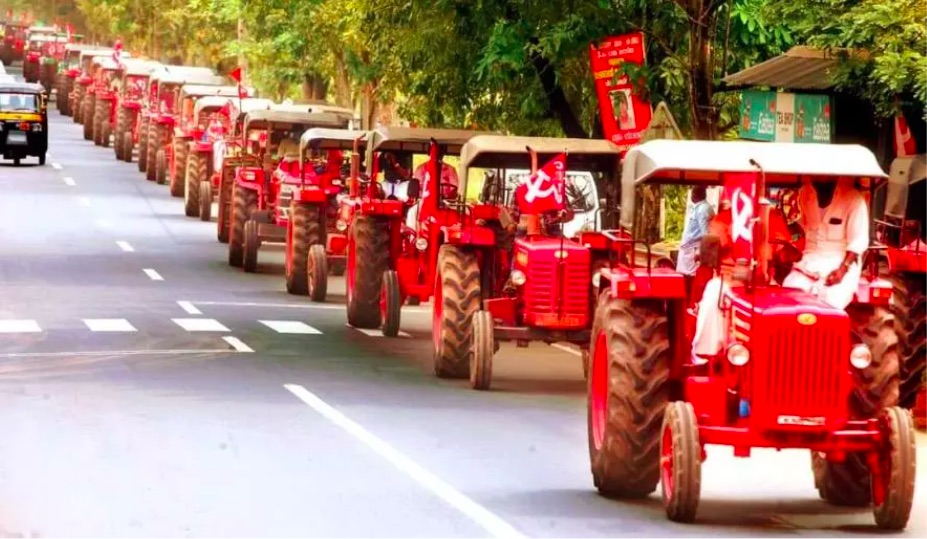
Tractor Rally at Alappuzha in solidarity with farmers protest – Photo Newsclick
By Asia Samachar Team | INDIA |

Some 500 growers from Kerala left for Delhi to take part in the protest against the three controversial farm laws. Another equal number will leave on Jan 21.

The farmers, under the banner of Kerala Karshaka Sangham, Kerala chapter of the All India Kisan Sabha (AIKS), is one of the farmers’ organisations in the forefront of protests. They began their march to Delhi from Kannur, reports Newsclik.


RELATED STORY:

Farmer unions to ignore Supreme Court committee, seen as government ‘ploy’ (Asia Samachar, 12 Jan 2021)


ASIA SAMACHAR is an online newspaper for Sikhs / Punjabis in Southeast Asia and beyond. Facebook | WhatsApp +6017-335-1399 | Email: editor@asiasamachar.com | Twitter | Instagram | Obituary announcements, click here |

Surindar Singh Ahluwalia: Loved and not forgotten…

Sardar Surindar Singh Ahluwalia – Photo: Suplied
By Manpreet Kaur Ahluwalia | MALAYSIA |

Joan Didion once said, “Grief when it comes, is nothing like we expect it to be”. But however uncertain its guise may be, its arrival is one of the central certainties of existence — no human life is unplundered by loss, in one form or another, at one time or another.
More than a week ago, the community lost a great man, Sardar Surindar Singh Ahluwalia. To most of us, he was not just a family member or a friend, he was, above all, a doer. The one that never shies away from lending a helping hand and offer his selfless service to the community far and near.

Born into the family of Sardar Pritam Singh Ahluwalia and Swaran Kaur, he spent 40 years serving for TNB (formerly known as LLN) since 1975, receiving 20 years recognition as an exemplary employee, a gold coin, and later on 25 years in service, a gold bracelet. He was recognized for his dedication towards his jobs, but Surindarji was not just a man who was brisk about his food and his work.

Sardarji got married some 39 years ago to Sardarni Gurdeep Kaur Sidhu, and was then blessed with three amazing kids; Sardar Rawinder Singh, Sardarni Sarbjeet Kaur, and Sardar Jagdev Singh. Ever since, his selfless service took center stage, serving for his family and for the community till his very last days. He was honored Pingat Jasa Kebaktian (P.J.K) by Yang di-Pertuan Besar Negeri Sembilan for his contribution to the Negeri Sembilan Sikh community.

As a simple and humble man, Surindarji found pleasure in cleaning and keeping things neat and tidy, be it at home or in Gurdwaras. His simplicity and affection left an impact wherever he was. As his children, we only knew him for some part of his life, but hearing from our near and dear ones, Surindar ji was more than just a son, husband, and father, he was a doer, a giver, and above all a man filled with love.

His wide smile and warm nature cant go unnoticed when one were to meet him. He puts his arms around us and we are home. Surindarji, throughout his well-lived life, has cultivated honorable relationships. Maybe that is why death is our friend; precisely because it brings us into absolute and passionate presence with all that is here, that is natural and that is love.

I would like to end this tribute with a saying: “The art of living is based on rhythm — on give and take, ebb and flow, light and dark, life and death”. That said, I believe that Sardar Surindarji well accepted all aspects of life, and lived and a good one. Surindarji will always be missed by wife, Gurdeep Kaur, children Rawinder Singh and Bellwinder Kaur (spouse), Sarbjeet Kaur and Dr Charan Pal Singh (spouse) and Jagdeev Singh and Sukhwinder Kaur (spouse) alongside grandchildren Mahaveer Singh Ahluwalia, Hazraveer Singh Ahluwalia and Harfatehveer Singh

Path Da Bhog will be held at Gurdwara Sahib Seremban on 16 January 2020 (Saturday) from 4pm to 6pm.

(The writer is the niece of Sardar Surindar Singh Ahluwalia)


ASIA SAMACHAR is an online newspaper for Sikhs / Punjabis in Southeast Asia and beyond. Facebook | WhatsApp +6017-335-1399 | Email: editor@asiasamachar.com | Twitter | Instagram | Obituary announcements, click here |

Aussie designers create modified face masks for people with beards, turbans and headscarves

Manmeet Kaur stands inside her store, surrounded by colourful fabric and jewellery – Photo: ABC News / Kristian Silva
By Kristian Silva | ABC NEWS | AUSTRALIA |

Most years, Manmeet Kaur is kept busy by the huge number of weddings in Melbourne’s south Asian community.

Her Dandenong store in Melbourne’s south-east is filled with colourful fabrics and jewellery, but her most popular item in 2020 wasn’t saris or dresses — it was reusable masks.

When Melbourne went into lockdown, Ms Kaur noticed her husband Harpreet struggling with regular ear loop masks because of his turban and long beard. She realised it wasn’t an isolated problem — there was a gaping hole in the mask market for the Sikh community.

“The turban usually sits around your ears, and then you can’t put the mask, which has got ear loops, on,” she said.

Ms Kaur’s simple redesign includes longer elastic straps that can fit around a turban or hijab.

It is also handy for people with hearing aids or those who want to mask up and wear headphones.

She also creates masks with a larger pouch to cater for those with long beards.

Since March, Ms Kaur estimates that she has made about 10,000 masks, about half of which are with modified designs.

She said thousands of the masks had been donated to local council workers, police and people who came into her shop.

There has also been demand from Sydney, Canberra and customers overseas.

“I was working eight to 10 hours a day, and then I was working every day of the week because I was just donating [them] and people were looking forward to it,” she said.

Read the full story, ‘Designers create modified face masks for people with beards, turbans and headscarves’ (ABC News, 12 Jan 2021), here.


RELATED STORY:

Physically challenged Sikh boy designs facemask holder for turbans, tudung (Asia Samachar, 12 June 2020)


ASIA SAMACHAR is an online newspaper for Sikhs / Punjabis in Southeast Asia and beyond. Facebook | WhatsApp +6017-335-1399 | Email: editor@asiasamachar.com | Twitter | Instagram | Obituary announcements, click here |

Gurmel Kaur (1932-2021), Sitiawan

SASKAAR / CREMATION:  1pm, 15 January 2021 (Friday), at Sitiawan. SAHEJ PATH DA BHOG: 23 January 2021 (Saturday), 9am – 11.30am, at Gurdwara Sahib Sitiawan | Malaysia
GURMEL KAUR A/P INDER SINGH

18.3.1932 – 14.1.2021

Village: Chandiana, Punjab

Husband: Late Sardar Nashattar Singh (Sitiawan) (Deceased)

Children / Spouses:

Jacktar Singh

Bibi Kaur / Parson Singh (Deceased)

Herjinder Kaur

Grandchildren:  Paramjit Singh, Baljit Kaur / Rames, Karamjit Kaur

Great Grandchildren: Roven Ram, Ronika Ram, Rohan Ram

Cremation / Saskaar: 1pm, 15 January 2021 (Friday), at Sitiawan

Sehaj Path Da Bhog: 23 January 2021 (Saturday), 9am – 11.30am, at Gurdwara Sahib Sitiawan

Contact:

Paramjit Singh – 0163310365

Karamjit Kaur – 0175859083

Our MA will be missed. Now with Waheguru in a much better place.

The family understands the difficulty in moving about under the current Covid-19 pandemic environment. Hence, we understand if you’re unable to come personally to pay your condolences. We thank you for the messages and support. The family also requests everyone to observe Covid-19 SOP requirements where they apply.


| Entry: 14 Jan 2021 | Source: Family

ASIA SAMACHAR is an online newspaper for Sikhs / Punjabis in Southeast Asia and beyond. Facebook | WhatsApp +6017-335-1399 | Email: editor@asiasamachar.com | Twitter | Instagram | Obituary announcements, click here |
Farmer unions to ignore Supreme Court committee, seen as government ‘ploy’

0
Farmer union leaders at press conference on 12 Jan 2020 rejecting Supreme Court set-up committee – Photo: Kisan Ekta Morcha Facebook video grab
By Asia Samachar Team | INDIA |

The farmer unions spearheading the massive protest to repeal the three farms laws ramped through the Parliament in mid-September 2020 have today (Jan 12) decided to ignore the committee set-up by India’s top court.

Instead, they are determined to continue their protest at the highway entry points at Delhi and plan for a major protest on Jan 26 as India celebrate’s its Republic Day.

“Let this be crystal clear: we did not go to any court. The government dragged us to the Supreme Court. We are not party to the petition. It has nothing to do with us. This is the government’s ploy,” farmer leader Balbeer Singh Rajewal told a press conference after the unions met to deliberate on the court’s decision earlier in the day. Also present were other key farmer leaders.

TO VIEW THE PRESS CONFERENCE ON FACEBOOK, CLICK HERE 

A three-judge SC bench, headed by India’s chief justice Sharad A Bobde, had today put on hold the implementation of three controversial laws and announced the formation of a panel to facilitate talks with the protesting farmers staging.

The chief justice had earlier been reported to have said: “We are looking to solve the problem. If you want to agitate indefinitely, you can. Every person who is genuinely interested in solving the problem is expected to go before the Committee. The Committee will not punish you or pass any orders. It will submit a report to us. We are going to take the opinion of the organisations. We are forming the Committee so that we have a clearer picture.”


RELATED STORY:

India’s top court suspends India’s controversial farm laws, appoints committee to get ‘clearer picture’ (Asia Samachar, 12 Jan 2021)


ASIA SAMACHAR is an online newspaper for Sikhs / Punjabis in Southeast Asia and beyond. Facebook | WhatsApp +6017-335-1399 | Email: editor@asiasamachar.com | Twitter | Instagram | Obituary announcements, click here |

India’s top court suspends India’s controversial farm laws, appoints committee to get ‘clearer picture’

0
By Asia Samachar Team | INDIA |

India’s top court has muscled in for what is being seen as an attempt to break the impasse between the farmers’ unions and government in the on-going massive protests against three controversial farm laws ramped through the Parliament four months ago.

In a move today, the Supreme Court (SC) has put on hold the implementation of three laws, deemed by some quarters as a setback for Prime Minister Narendra Modi’s administration.

Others, however, are suspicious with the judiciary, suspecting that it could be to break the momentum gained by the protesting farmers who are present on major highway entry points to Delhi for nearly two months now.

A three-judge bench headed by India’s chief justice Sharad A Bobde also announced the formation of a panel to facilitate talks with the protesting farmers staging. They will resume hearing on the issue on Monday.

“We are looking to solve the problem. If you want to agitate indefinitely, you can. Every person who is genuinely interested in solving the problem is expected to go before the Committee. The Committee will not punish you or pass any orders. It will submit a report to us. We are going to take the opinion of the organisations. We are forming the Committee so that we have a clearer picture,” the CJI said, as quoted by media reports.

The order, an attempt to find a way out of the stalemate between the government and protesters, comes a day after the Chief Justice Bobde said the court was “extremely disappointed at the way the government has handled all this”, reports Bloomberg. Several rounds of talks with leaders representing farmers have failed even as over 60 farmers are reported to have lost their lives braving cold weather.

The court refused to give more time to the government to find a solution and said the panel will hold discussion with both the parties. It will submit a report to the court, the bench said without specifying a deadline.

The government maintains that the farmers are being misled and the new laws that lift curbs on who can purchase agricultural produce will remove middlemen and increase farmers income. Modi had in his first term promised to double farmers’ incomes by 2022, the report added.

Sanyukt Kisan Morcha, an umbrella body of around 40 protesting farmer unions, has welcome the SC move but reiterated that they would stay the course of the protest until the legislations are repealed.

“It was an eye wash and farmers unions were right in distancing themselves from it. About 4 members, the less we say better it is. All are government lackeys,” said Amaan Singh Bali, an activist who has been providing running updates via Twitter on the protests.

The four persons named to the SC-appointed committee are Bharatiya Kisan Union national president Bhupinder Singh Mann, Pramod Kumar Joshi (Director South Asia international Food Policy), agricultural economist Ashok Gulati and Shetkari Sanghatana leader Anil Ghanwat.

The three laws under discussion are the Farmers (Empowerment and Protection) Agreement on Price Assurance and Farm Services Act, 2020; Farmers’ Produce Trade and Commerce (Promotion and Facilitation) Act, 2020; and, Ess­en­tial Commodities (Amendment) Act, 2020.


RELATED STORY:

BJP’s farming policies: Deepening India’s agrobusiness capitalism and centralisation (Asia Samachar, 18 Oct 2020)


ASIA SAMACHAR is an online newspaper for Sikhs / Punjabis in Southeast Asia and beyond. Facebook | WhatsApp +6017-335-1399 | Email: editor@asiasamachar.com | Twitter | Instagram | Obituary announcements, click here |