
















UA-56202873-1
Page 441

Farm Laws: Public Perception Is in Favour of Farmers, Centre Cannot Be in Denial

0
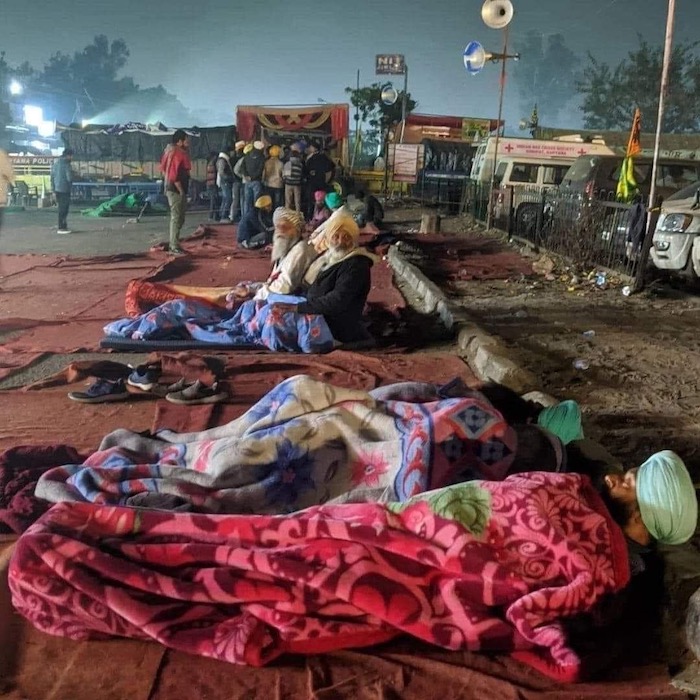
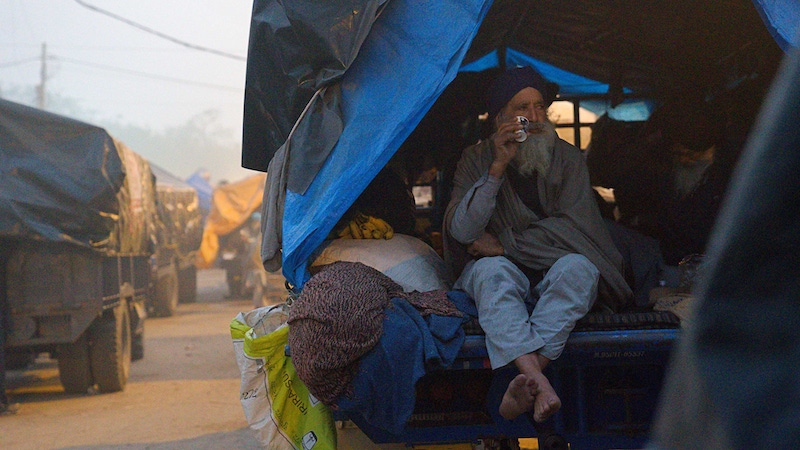
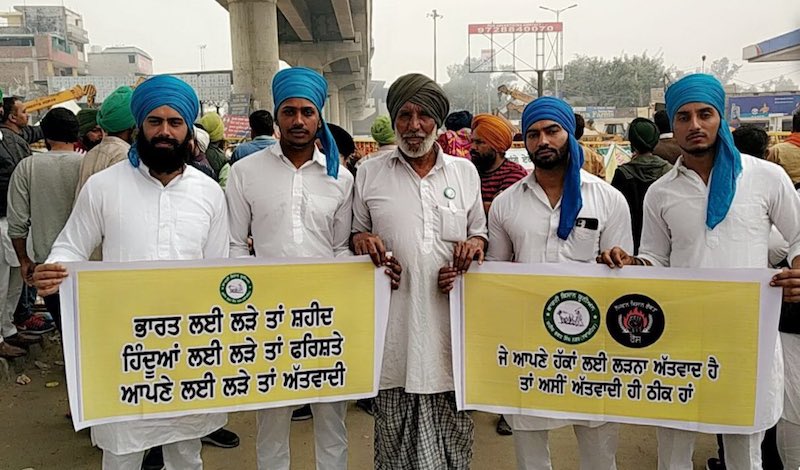
Farmers at the Singhu Border, Delhi – Photo: Taranveer Singh
By Pritam Singh | OPINION |

As the latest round of talks between home minister Amit Shah and farmer representatives once again ends in a deadlock, hope still exists that progress can be made towards an agreement.

However, unless the government changes its current position – being willing only to make marginal amendments to the existing farm marketing laws on minimum support price and compulsory public procurement – the fundamental difference between the government’s position and that of the farmers’ representatives will continue.

As a way of moving towards resolving this deadlock, it is important to recognise that there has been progress in many areas since June 5, 2020, when the three farm laws were brought in as ordinances. It has been a huge learning process for the government, the farmers’ organisations and wider Indian society.

Outside India, many actors are now much better informed about the political economy of these reforms than they were in June, including academics studying the Indian economy, especially its agriculture sector. The Indian diaspora, the governments of many countries that have wide-ranging economic and other ties with India (especially countries with substantial numbers of citizens of Indian descent), environmentalists and parliamentarians from these countries, and, most significantly, the UNO are now better informed.

The Central government’s recognition that these farming laws contain errors that need to be corrected is a notable development. In matters of this importance, such an acknowledgement must be viewed positively – not as an end in itself, but as a movement in a positive direction. The farmers’ organisations have also gone through a massive learning experience during these months through discussions with the government, and through engagement with media and with public intellectuals knowledgeable on agrarian issues.

One example of the educational opportunities afforded by this debate deserves special attention. The Kisan Majdoor Sangharsh Committee, one of the Punjab organisations that campaigns on issues affecting both farmers and farm workers in Amritsar district and surrounding areas, translated the three farm laws into Punjabi and distributed one lakh copies among farmers and workers.

In my opinion, this is one of the most admirable large-scale educational interventions in an issue of public interest. Other farmers’ organisations have similarly produced booklets containing critical evaluations of these farming laws (including some by this writer) and have done mass distribution of such critical reviews. Such self-educative experiences have encouraged the farmers’ organisations to move from their initial position, where they asked only for the provision of a minimum support price (MSP) and public procurement through APMC mandis to an understanding that such piecemeal changes cannot be effective without changing the whole structure of the three farm laws.

I cannot remember any other law in post-independent India that has received as much attention in terms of mass reading and discussion as these three laws have achieved, and hence as much attention from civil society.

It would be fair to say that a widely-shared consensus has emerged in India and among the Indian diaspora that the government is defending the interests of agri-business corporations through these laws. It would be good if the Central government were to recognise this widely-shared social consensus, even if this recognition remains confined within the inner circles of the government.

The government’s effort to portray these laws as empowering the farmers has failed, not because of any fault of the public relations campaigns of the government, but because of the content of the laws. There are limits to how far public relations efforts can go in altering people’s perceptions. The spread of mass literacy in India and the development of multiple forms of mass media have certainly enabled a large majority of the Indian population to differentiate between truth on the one hand and falsehood presented as truth on the other. This deserves to be celebrated as a strengthening of democracy in Indian institutions and practices.

Effective and truthful communications between the government and the farmers’ representatives are central to the comprehension of the merits of the farmers’ plea that all three farm laws – along with the recent enactments on electricity and environment – should be repealed.

Punjab farmers protest agriculture bill

The farmers’ argument that the mere provision of MSP and APMC public procurement is not acceptable any more is based on a slowly emerging iterative and mature understanding that these two issues cannot be detached from other key features of the farm laws.

Let us look at the contradiction between inserting the MSP provision in The Farmers (Empowerment and Protection) Agreement on Price Assurance and Farm Services Act, 2020 and retaining the existing provision of ‘remunerative price’ to be agreed by a farmer in a contract with ‘agri-business firms, processors, wholesalers, exporters and large retailers’.

Also read: ‘Don’t Neglect Jawan-Kisan Link’: Armed Forces Veterans Urge Govt to Repeal Farm Laws

If an agri-business firm, processor, wholesaler, exporter, or large retailer were to agree a ‘remunerative price’ with a farmer, the agreement would not allow a farmer to sell his/her crop under MSP provision in the APMC marketing yard. An agri-business entity would be legally entitled to take a non-compliant farmer to litigation.

According to the agriculture census of 2015-16, the overwhelming majority of farmers in India, 86%, are marginal (with holdings below one hectare) and small (with holdings between one and two hectares). The remaining 14 % are described as ‘semi medium’ (2-4 hectares), ‘medium’ (4-10 hectares), and ‘large holdings’ (over 10 hectares). Though the situation appears slightly better than the all-India average in Punjab, where 33.1% of land holdings are small and marginal and 33.6% are semi-medium, and in Haryana, where 68.5% of holdings are small and medium, overall, the farmers are marginal and have low bargaining power.

Leaving aside the marginal and small landholders, even the so-called medium and large landholders would not be in any position to challenge the legal resources of ‘large retailers’ and agro-business entities. Therefore, keeping the provision for the so-called remunerative price negates the purpose of having the MSP in the APMC mandi yard.

A similar contradiction emerges regarding the ‘dispute resolution’ provision in ‘The Farming Produce Trade and Commerce (Promotion and Facilitation) Act, 2020’. The threat of a penalty of anywhere between Rs 25,000 and Rs 10 lakh if a contract is contravened, and a further penalty of anywhere between Rs 5,000 and Rs 10,000 per day if the contravention continues, make the provision of the MSP in APMC mandi redundant.

The farmers’ representatives have by now understood the interwoven nature of these three laws and the fact that the MSP and public procurement alone cannot untangle them. The government is still floundering on these matters. Intellectually and ethically, the farmers’ organisations have achieved the victory, and the public clearly views the government as persisting without recourse to logic or ethics.

Governments consist of individuals who take decisions, and such individuals can take wrong decisions that deserve to be repealed. There are examples in contemporary history where the governments have rolled back laws they had previously passed. One of the most well-known rollbacks is the decision taken by Margaret Thatcher’s government in the UK in 1990 to repeal the poll tax. This was a tax to be imposed on anyone in the electoral roll. It faced large-scale public protest including mass riots and came to be branded as a tax on existence on the grounds that someone could be homeless but still liable to pay the tax since their name was on the electoral roll.

In the interests of Indian democracy, the Central government should either issue an ordinance repealing the five laws (the three farm laws and the two relating to electricity use and environmental pollution) and call parliament later to approve the ordinance, or alternatively call parliament back straight away to repeal the laws. The government can retain the option to introduce laws later after a due consultation process with all stakeholders, proper discussion in both Houses of the Parliament and in the parliament’s Select Committee.

The alternative scenario – in which the government resorts to repression – is so fraught with immediate and long-term dangers that it should not even be attempted. The farmers’ movement has reached a stage where it no longer deals with the sectional interests of farmers alone but has deeply affected all sections of Indian society. It has truly become a Lok Andolan.

Once the deadlock is resolved by repealing the contentious laws, there is the important task of carrying out agricultural reforms to deal with rural poverty, farmer debt, suicides, and making small-scale farming viable and sustainable both economically and ecologically.

The old developmental paradigm that the demise of agriculture is necessary for economic progress is fundamentally flawed in the present era of global climate change, where sustainable agriculture is central to a new sustainable development paradigm. We must then move into a new realm of creative thinking, collective democratic policy-making, and long-term planning. This is the only way to deal with the challenges that Indian agriculture, economy, ecology and society currently face.

The article first appeared in The Wire. Click here to view the original.

Pritam Singh is a visiting scholar at Wolfson College, University of Oxford 

* This is the opinion of the writer/s and does not necessarily represent the views of Asia Samachar.


RELATED STORY:

BJP’s farming policies: Deepening India’s agrobusiness capitalism and centralisation (Asia Samachar, 18 Oct 2020)


ASIA SAMACHAR is an online newspaper for Sikhs / Punjabis in Southeast Asia and beyond. Facebook | WhatsApp +6017-335-1399 | Email: editor@asiasamachar.com | Twitter | Instagram | Obituary announcements, click here |
Malaysian gurdwaras express solidarity for Indian farmers

0
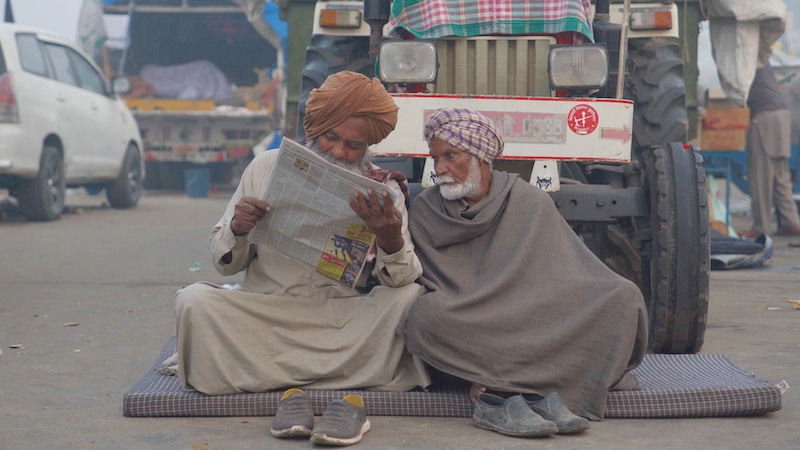
Farmers at the Singhu Border, Delhi – Photo: Taranveer Singh
By Asia Samachar Team | MALAYSIA |

Malaysian gurdwaras have expressed their support for the Indian farmers’ peaceful protest against three laws deemed detrimental to their interests.

At its annual general meeting in Kuala Lumpur today (Dec 12), Malaysian Gurdwaras Council (MGC) unanimously passed a statement expressing strong support and solidarity with Indian farmers leading a peaceful protest to repeal the three legislations passed in September 2020.

“The Malaysian Gurdwaras and the Sikh Sanggat stand strongly with the Kesaan on this issue,” MGC president Jagir Singh said in the statement. A copy was emailed to Asia Samachar.

THE LETTER IN FULL


MGC: We support Farmers Protest to Repeal the 3 Bills

The Malaysian Gurdwaras Council at its AGM held on 12/12/2020 and attended by representatives of Gurdwaras throughout Malaysia unanimously passed statement expressing strong support and solidarity with the Kesaan (Farmers) of India who are leading a peaceful protest to repeal the 3 Bills passed in September, 2020. The Malaysian Gurdwaras and the Sikh Sanggat stand strongly with the Kesaan on this issue.

  1. We call upon the Honourable Prime Minister of India Shri Narendra Modi to do justice in the case of the Farmers by repealing the 3 Bills. The Farmers should not be pushed into bondage of the Corporations. The Farmers are the backbone of the country. More than 85% of the Farmers are not able to make their ends meet. Do not push them further into debts and subjugation by the Corporations. A just and right decision under the circumstances is to repeal the 3 Bills immediately so that the Farmers can return to their farms and homes.
  2. (i) The 3 Bills are oppressive. They protect the Big Corporations at the expense of the Farmers. The Bills provide that if there is any dispute between the Farmer and the Corporation (Trader), the dispute cannot be taken to Court. The contract forces the Farmer to go to a Mediation Board which invariably will be controlled by the Corporation.

(ii) The Bills further provide that “No one who is part of the State or Central Government can be sued”. This clause shields all arbitrary and wrongful decisions of the State and Central Government.

(iii) The Minimum Support Price (MSP) protection guaranteed by Government at present, has been abolished. Instead, the Farmers will be at the mercy of the Corporations who will use their massive stockpiles to dictate the price.

(iv) The Bills also provide for 3rd party testing the quality of the food grain. This 3rd party can be easily manipulated by the Corporation. The Farmers have no recourse to the Courts or to hold the 3rd party accountable.

  1. According to the 2011 official census:
  • Average size of the Farmers holding has been considerably reduced from 2.28 hectares (1970-1971) to 1.15 hectares (2010 -2011) and to 1.08 hectares (2015 – 2016).
  • Top 10% of the households are now cultivating almost 50% of India’s total Agricultural lands.
  • Government sources show that average income of a farming household stood at a mere Rs8,931 per month in 2016/2017. This roughly translates to one lakh rupees per year.
  • Overall, about 85% of Farmers fall in category of small farms with less than 2 hectares. [SOURCE: The WIRE, Vijay Jawandhya and Ajay Dandkar, Oct 01, 2020)
  1. The above shows that about 85% of the Farmers are very poor earning about Rs1Lakh per year. For the last 4 decades, these Farmers are not even able to recover even their basic cost of cultivation. This has resulted in regular borrowing by these Farmers from Aarthias, etc.

Signed

JAGIR SINGH

President, MGC

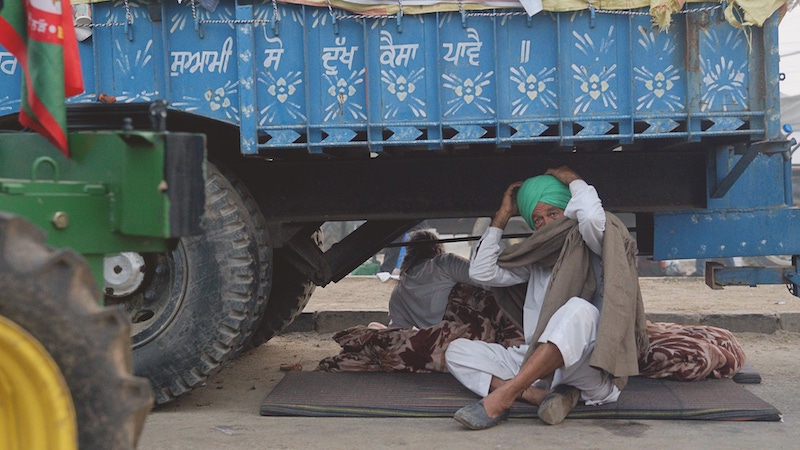
Farmers at the Singhu Border, Delhi – Photo: Taranveer Singh
RELATED STORY:

#FarmersProtest: All borders leading to Delhi are closed (Asia Samachar, 12 Dec 2020)


ASIA SAMACHAR is an online newspaper for Sikhs / Punjabis in Southeast Asia and beyond. Facebook | WhatsApp +6017-335-1399 | Email: editor@asiasamachar.com | Twitter | Instagram | Obituary announcements, click here |
Regional orthopaedic hospital in the making appoints Dr Pavandeep as COO

0
Dr Pavandeep Singh Dhillon
By Asia Samachar Team | MALAYSIA |

Taiping-born Dr Pavandeep Singh Dhillon has been appointed as the chief operating officer at HSC Healthcare Group, a Kuala Lumpur based hospital that is in the midst of transforming into a regional orthopaedic hospital.

He was previously the clinical and operations manager at KPJ Damansara Specialist Hospital since June 2018.

Prior to that, Dr Pavandeep was the senior medical supervisor at Top Glove Global Doctors and chief medical officer at Columbia Asia Referral Hospital.

“I started off as a medical doctor. Later I realised my calling was in management of healthcare. I got into management seriously in the last seven years,” he told Asia Samachar.

Pavandeep returned to Malaysia in 1999 after completing the Bachelor of Medicine, Bachelor of Surgery (MBBS) at Jawaharlal Nehru Medical College, Belgaum. He later pursued the Master of Business Administration at Cardiff Metropolitan University in 2015.

Hence, his joining HSC is a natural progression of his passion in healthcare management.

Located within walking distance of the iconic Petronas Twin Towers, HSC was acquired by TE Asia Healthcare Partners in December 2019.

HSC has been operating since 2003 as a medical centre and one-stop advanced health screening hub. Apart from offering comprehensive health screening, it also offers cardiac and endoscopy services, and will soon provide general surgery services.

In a statement earlier, TE Asia said it will be partnering with top orthopaedic surgeons to transform HSC into a specialty orthopaedic centre that will offer cutting-edge technology.

His parents are now retired in Ipoh, Perak, where he grew up. His father is retired teacher Kuldip Singh and mother Gernal Kaur. Dr Pavandeep is married to Dr Sangeeta Kaur who runs the Klang-based Klinik Alam Medic.


RELATED STORY:

Queensland hospital’s new hire simply loves Thai food (Asia Samachar, 1 Sept 2020)


ASIA SAMACHAR is an online newspaper for Sikhs / Punjabis in Southeast Asia and beyond. Facebook | WhatsApp +6017-335-1399 | Email: editor@asiasamachar.com | Twitter | Instagram | Obituary announcements, click here |

#FarmersProtest: All borders leading to Delhi are closed

0
Farmers at Bahadurgarh – Photo: AmaanBali
By @amaanbali  | INDIA |

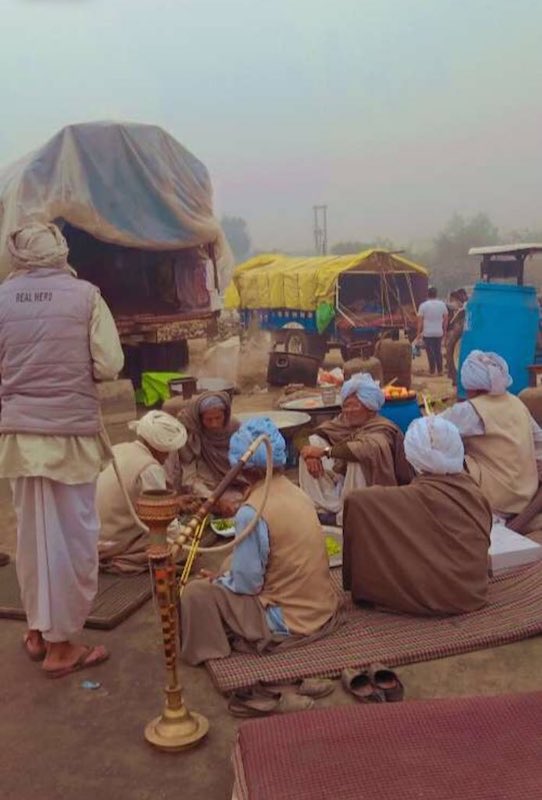
#FarmersProtests enters day 16. It’s foggy day again at Singhu Border. The resolve of our men is greater than cold & rain. Fortunately the drizzle early this morning at 3 didn’t impact anything. Here are key Updates-

1. All borders leading to Delhi are closed.

2. Since farm unions have announced to make toll plaza’s free as well, additional troops are deployed on all toll plazas in Haryana & Gurgaon.

3. With farmers likely to attempt blockade of Delhi-Jaipur highway, forces have seen deployed there as well.

4. Sonipat Administration has said that it will treat everyone free of cost and people should come forward to get tested if they feel any symptoms.

Rumour mills are going strong. Please please do confirm everything before you share it. #FarmersProtests

5. Punjab BJP leaders Surjit Jayani, Harjit Grewal & Ashwini Sharma will meet top Centre today. Meeting likely to be attended by Shah & Tomar to discuss and find a resolution to the farmers agitation. #FarmersProtests

Updated at @amaanbali twitter at 1pm (Malaysia/Singapore), 10.30am (India), 5am London on Thursday, 12 Dec 2020

Farmers’ protest at Singhu border on misty morning of 12 Dec – Photo: @amaanbali


RELATED STORY:

Panjab scientist declines award to support protesting farmers (Asia Samachar, 8 Dec 2020)


ASIA SAMACHAR is an online newspaper for Sikhs / Punjabis in Southeast Asia and beyond. Facebook | WhatsApp +6017-335-1399 | Email: editor@asiasamachar.com | Twitter | Instagram | Obituary announcements, click here |
Want not waste not – Responsible consumption and production

0
A roadside burger stall in Kuala Lumpur -Photo: Asia Samachar
By Jespal Singh Sidhu | ENVIRONMENT |

Having just been a moderator recently for a Sustainable Development Goals (SDG) atlas review at University Malaya, I realised that a lot of what we do daily is related to the 17 goals that have been set forth by the United Nations in 2015. We, the population of the world, have until 2030 to realise these goals. Sustainable Development Goal 12 – Responsible Consumption and Production was the topic of that day.

Why responsible consumption and production and not the other way around? Are we not all creatures of need? Ideas, wants and needs fuel production. The industrial revolution in the 18th century was fueled by ideas, wants and needs. Some economists say that, this lead to increased standards of living and sustainable GDP growth per capita in some of the capitalist economies. From that period onwards, the world never looked back. More wants and needs, in other words, more consumerism which lead to more and more production. Well, we have our answer.

At what expense was that rapid growth in consumerism? Were the consumers of the 18th century and inventors from that period concerned about resources? Were producers of that era concerned about resources? Consumption leads to production and when we, the humankind, were rapidly developing from the 18th century onwards, natural resources and man-made resources were being exploited to sustain the demand of the consumers.

Memories of growing up in Ipoh and Teluk Intan – “Finish everything on your plate”; “Don’t waste food”; my dad and I making my study table using old planks; taking a rattan basket and years later, a red plastic basket to the market; and buying our soup and curry noodles in a yellow enamel cup with green edges; later to be replaced with plastics with pink raffia string punched through it to act as a handle; our chicken rice in a three-tier metal tiffin carrier; putting food waste into a pot and covering it up with soil layer by layer for one to two months and then using this to plant bougainvillea, okra, papaya and chilies.

I did not remember my parents using fancy terms such as 5R – Refuse, Rethink, Reduce Reuse Recycle, zero waste, biodegradable, composting, upcycling, upscaling materials, waste to wealth, or reduce plastic usage, but what they practised and taught my sister and I can surely can fit into these categories.

We, in Malaysia, surely love our food. Let us look at this from a responsible consumption and production viewpoint. How many times have we attended buffet lunches, high teas, and dinners, be it for weddings, festive celebrations or company events and have left uneaten food on our plates or have taken extra plates of food and left these uneaten on the tables? Have we all not opened the fridge to find the leafy vegetables wilting and completely soft? Have we not bought packets of biscuits, cookies, teas, coffee and kept them in the larder till they were completely forgotten and only noticed three to four months after the use-by date?

As Asians, we are culturally taught that wasting and throwing food away is not encouraged. My visits to certain Asian countries enforce this belief strongly, yet, I see it so often here in Malaysia.

Addressing the problems of food waste generation in Malaysia. International Journal of Advanced and Applied Sciences. Reference: 1. Jereme, I. A., Siwar, C., Begum, R. A. & Basri, A. T. (2016).

The above statistics show that the largest contributor towards food waste in Malaysia are households despite us probably having the notion that it is the hotels and restaurants.

Research by SWCorp in the year 2017 indicates that an average household with 5 members spends an average of RM900 per month on food only and on average one fourth of this is wasted which amounts to RM225 worth of food being thrown away into the garbage bin every month. An alarming figure indeed!

We are all familiar, especially those of us with children, of the trips to the drive-thru of some of the fast food outlets and purchasing items such as burgers, fried chicken, and French fries. Scenarios like these happen more often than not – once we reach home one child who is not at home comes back and declares that he/she has already eaten and the burger that we bought for him/her is kept in the fridge with the understanding that it can be eaten the next day. A day goes by, two days go by, three days go by and a child decides to eat the burger that is in the fridge. That child then discovers that the burger is really soggy and mushy and there is a strange smell probably due to the vegetables getting rotten. Is it suitable for consumption? Can some components of it be eaten and some discarded? At this point, a decision is made to throw away the burger into the garbage bin.

A burger in the making – Photo: Ivan Chan

What is wasted when we throw away that burger? Obviously it is the meat patty, the bun, the vegetables and sauce/mayonnaise/ketchup that goes into making the burger.

A lot has been written on the amount of food waste and food loss. Here, I want to explore further. Have we thought beyond this? Well, when I was asked this, I wondered and asked, “What do you mean?” The answer was, yes, the meat is thrown, the bun is thrown, the vegetables are thrown but what goes into getting these items from the farm to the dining table? Upon throwing away the burger aren’t those items wasted too?

Let’s look at the components of a basic burger:

1. 150 grams of beef
2. 20 grams of tomato
3. 10 grams of lettuce
4. 15 grams of cheese
5. 10 grams of onions
6. 40 grams of bun
7. Some sauce/mayonnaise/ketchup
8. Heat to cook the meat patty and toast the bun
9. Energy to produce and transport items 1 to 7, energy (cooling) to store the vegetables and meat

Below are some figures based on studies done in the US on the amount of natural resources consumed for the production of the components that go into a burger:

1. Land required to produce one kg of beef: 323 square feet; Water required to produce one kg of beef: 15,400 liters

2. Land required to produce one kg of cheese: 323 square feet (based on one milk producing cow); Water required to produce one kg of cheese: 5,000 liters

3. Land required to produce one kg of onions: 20 square feet; Water requited to produce one kg of onions: 170 liters

4. Land required to produce one kg of tomatoes: 20 square feet; Water required to produce one kg of tomatoes: 214 liters

5. Land required to produce one kg of lettuce: 20 square feet; Water required to produce one kg of lettuce: 125 liters

6. Land required to produce one kg of bread: 36 square feet (based on 4 cups of flour per 250 grams
loaf); Water required to produce one kg of bread: 1608 liters

Now, based on the above, we can calculate what goes in to getting a burger from the farm to the dining table. It is a real eye-opener and rather jaw-dropping to calculate the amount of resources (natural and otherwise) that go into producing a single burger:

The approximate amount of land that is required to produce a burger: 55.59 square feet based on some amount of rounding off). Imagine the amount of burgers that would be required to fill up this area? Imagine a burger being about 4-by-4 inches, which is 16 square inches. This would equal 500 burgers to fill up that space of 55.59 square feet.

Based on the calculations, approximately 2455.48 liters of water is consumed to produce a burger. That equals to 4911 bottles of 500ml of mineral water which is 205 crates of 24 such bottles.

What other resources are consumed to get the burger from the farm to the dining table?

1. Farm hands’ energy
2. Diesel/electricity – farm machinery
3. Diesel to transport – cow and vegetables
4. Resources at the slaughter house/burger manufacturing plant (electricity/water/ workers)
5. Transportation – diesel and cooling for meat and vegetables
6. Energy to store (cooling)
7. Energy to cook the burger and to bake the bun

Now, when we throw away the three to four day old soggy burger, give a thought to the amount of resources that we are also wasting along with the burger and what we can do to reduce the actual food waste/loss and the unseen waste.

This article is written to provoke the thought that wasting food is beyond that food item itself but also encompasses the resources (natural or otherwise) to produce that food item from the farm and to bring it to the dining table. Is there food waste at the farm level? Is there food waste during transportation? Is there something, we, as consumers can do to reduce and relook at food waste and loss? Can we reduce the amount of food waste and food loss that ends up at the landfills?

Jespal Singh Sidhu, a real estate negotiator and an avid gardener, produces compost on a commercial scale which he supplies to farms, fruit orchards and home gardening enthusiasts. He is passionate about sustainability, waste management, separation at source organic waste management and environmental related topics. He is available to guide Gurdawaras to reduce carbon footprint. He can be contacted at compost.sprout@gmail.com


RELATED STORY:

Gurdwara food waste goes upcycle! Kuala Lumpur shows the way (Asia Samachar, 24 Nov 2020)


ASIA SAMACHAR is an online newspaper for Sikhs / Punjabis in Southeast Asia and beyond. Facebook | WhatsApp +6017-335-1399 | Email: editor@asiasamachar.com | Twitter | Instagram | Obituary announcements, click here |
Dalip Singh Gill (1923-2020), Village Kokri Kalan

PATH DA BHOG: 20 December 2020 (Sunday), 5pm-7 pm, at Wadda Gurdwara Jalan Kampung Pandan, Kuala Lumpur | Malaysia

DALIP SINGH GILL

(2.9.1923 – 10.12.2020)

Village: Kokri Kalan

Wife: Nashatar Kaur

Children / Spouses:

Pavittar Kaur
Hardial Singh/Amarjeet Kaur
Raghbir Singh/Harbans Kaur
Charanjit Kaur/Pritam Singh
Tejwant Singh (deceased)

Grandchildren:

Praveen Gill
Hans Gill
Jas Gill
Anjeeta Kaur
Roeshan Kaur
Inderpal Singh
Tina Gill
Ishvar Gill
Menraj Gill
Pervina Gill
Maandip Gill

And 7 Great Grandchildren.

Path da Bhog: 20 December 2020 (Sunday), 5pm-7 pm, at Wadda Gurdwara Jalan Kampung Pandan, Kuala Lumpur

Contact:

Pavittar – 0122888752

Charanjit – 0162336019


| Entry: 10 Dec 2020 | Source: Family

ASIA SAMACHAR is an online newspaper for Sikhs / Punjabis in Southeast Asia and beyond. Facebook | WhatsApp +6017-335-1399 | Email: editor@asiasamachar.com | Twitter | Instagram | Obituary announcements, click here |

India farmers’ protest update – 10 Dec

0
By @amaanbali | INDIA |

Updated at @amaanbali twitter at 8pm (Malaysia/Singapore), 6.30pm (India) on Thursday, 10 Dec 2020

1. The railway lines will be stopped from 10th onwards. We had given ultimatum of 10th for repeal of laws.

2. All toll plazas will be made toll free on 12

3. All DC offices across nation will be ghearoad on 14

4. Our people coming from Uttarakhand and Punjab are harassed.

5. [Farmers leader Balbir Singh Rajewal] took a hit at Minister for Commerce and Industry Piyush Goyal [also Minister of Commerce and Industry and Minister of Consumer Affairs, Food and Public Distribution] and Agriculture Minister Narendra Singh Tomar said that laws are made unconstitutionally as agriculture is state subject.

6. Rejewal said that they have admitted that the laws are made using trade and commerce provisions and agriculture interests are not taken care of.

7. He called the government PC a face saving act.

8. He said that government continues to count its schemes and policies but fails to address issue at hand.

9. Rajewal said that government lies about land acquisition because the passed bill clearly states that “recovery be made on arrears of land revenue”

10. Buta singh requested Press to ask government about them rigidity on not taking the laws back.

11. Home Minister Amit Shah [who is also ruling party BJP president] has said that we don’t intend to crackdown on protestors – Darshan Pal [President of Krantikari Kisan Union].

12. Rajewal – We are willing to talk once a concrete proposal based on our demands is sent to us.

13. Buta Singh [Bharatiya Kisan Union (Dakaunda) president Buta Singh Burjgill] – We aren’t fond of sitting on roads. It is up to Government to resolve the issue.


RELATED STORY:

Breakfast at Singhu border (Asia Samachar, 7 Dec 2020)


ASIA SAMACHAR is an online newspaper for Sikhs / Punjabis in Southeast Asia and beyond. Facebook | WhatsApp +6017-335-1399 | Email: editor@asiasamachar.com | Twitter | Instagram | Obituary announcements, click here |

Serving is a Sikh’s Legacy

0
Two volunteers cooking tomyam fried rice – Photo: Esther Ping Dominic / Penang Monthly
By Esther Ping Dominic | MALAYSIA |

THE WADDA GURDWARA Sahib Penang runs a free community kitchen, and all are welcome to dine there regardless of religion, race, gender, age or social class. But with the closing of the temple’s gates following the MCO on March 18, its communal kitchen too had to cease operations. Regulars and the needy were instead directed to the Caring Society Complex.

But extra pairs of hands were needed for the already stretched local NGOs, and so husband and wife Daljit Singh and Sukhveer Kaur, who serve as the president and secretary of the Gurdwara’s committee, organised a community outreach programme. Volunteers were recruited, and dry rations were purchased and distributed to families of diverse nationalities, including migrant workers, across the state. “We worked with Panjam Food Rescue and one other individual who secured a permit to travel to those affected in Butterworth,” says Sukhveer.

Since August, the Gurdwara has supported 950 families. Daily meals were also prepared for senior citizens, stranded tourists, as well as the unwell and homeless. To avoid an overlap in meal supplies and resultant food wastage, the Gurdwara made sure to coordinate closely with other organisations. Muslims observing Ramadan also received 340 packets of dates, while care packs of face masks, hand sanitisers and antiseptic soaps were given to needy families, individuals and senior citizens who could not afford them.

Through members of the congregation and social media channels like Facebook and WhatsApp, news of the initiative soon spread, enabling the Gurdwara to reach a wider target group. But information received had to be vetted. This Sukhveer did by checking with her contacts to determine if the case was indeed genuine.

Upon confirmation, the team would reach out to the families. Rather than implementing a quota system, all rations given were customised to fit the needs of the families. “Having a quota system only limits our capacity to help up to a certain point. When our stomachs are filled but those of others are not, do we forget about them?” she asks.

The Gurdwara also offered psychosocial support to help those mentally affected by the Covid-19 pandemic and the MCO. The outreach programme’s management committee consists of a doctor and a nurse; for her part, Sukhveer holds a Master’s in Youth Work and Community Development, and is experienced in providing counselling. The cases that come in were divided between the team, and counselling sessions were conducted over the phone. Collectively, they managed to reach 189 individuals battling stress, anxiety, depression and suicidal feelings.

Chronic cases of clinical depression were referred to MERCY, while the Women Centre for Change (WCC) was alerted to victims of domestic violence. Sukhveer shares, “It’s a blessing that we have WCC, MERCY and Befrienders. The people who received help got back to us and told us that they were very grateful.”

Wadda Gurdwara also created a “friendship zone” through WhatsApp for those suffering extreme bouts of loneliness, where they were encouraged to keep one another company through video calls. This group is made intentionally small to create a safe space for members to open up about their insecurities and without fear of judgement.

A phone call would also be made at least once a week to senior citizens living on their own. Admitting that putting down the phone can sometimes be difficult since the seniors often have plenty to say, Sukhveer remarks, “At the end of the day, everybody wants to know that they are cared for.”

Read the full story here.


RELATED STORY:

SEWA Healthcare to assist chronic and terminal illnesses patients (Asia Samachar, 6 Dec 2020)


ASIA SAMACHAR is an online newspaper for Sikhs / Punjabis in Southeast Asia and beyond. Facebook | WhatsApp +6017-335-1399 | Email: editor@asiasamachar.com | Twitter | Instagram | Obituary announcements, click here |

Aussie cameleers comes to live in The Furnace

A scene from Aussie movie The Furnace
By Asia Samachar Team | AUSTRALIA |

Sikhs have a minor role in The Furnace which hits the Australian cinemas starting tomorrow (Dec 10).

Set in the 1890s gold rush of Western Australia, the movie is depicted as an unlikely hero’s tale, navigating greed and the search for identity in a new land.

The feature film illuminates the forgotten history of Australia’s cameleers, who were predominantly Muslim, Sikh and Hindu men from India, Afghanistan and Persia, who traversed the nation’s vast desert interior, forming unique bonds with local Aboriginal people.

Written and directed by Roderick MacKay, it depicts an Afghan cameleer and a bushman racing to melt down gold bars at a secret furnace while being pursued by a police sergeant. The characters speak English, Pashto and the local Yamatji Badimia language.

The movie was shot at Yamatji land around Mount Magnet and Kalbarri, a Western Australia Midwest that comes across as a natural film set.

There is a racially diverse set of supporting characters including Chinese immigrants, Islamic, Sikh and Hindu cameleers, and the Indigenous Australian community, according to one review.


RELATED STORY:

The Deadline: Thai sisters on emotional roller-coaster ride (Asia Samachar, 21 Nov 2020)

ASIA SAMACHAR is an online newspaper for Sikhs / Punjabis in Southeast Asia and beyond. Facebook | WhatsApp +6017-335-1399 | Email: editor@asiasamachar.com | Twitter | Instagram | Obituary announcements, click here |

Panjab scientist declines award to support protesting farmers

1
Dr Varinderpal Singh declines coveted agriculture award
By Asia Samachar Team | INDIA |

An Indian minister and hundreds of scientists would surely have been stunned when a Panjab scientist declined a coveted award.

Dr Varinderpal Singh was a joint winner for the Fertiliser Association of India (FAI) Golden Jubilee Award for Excellence and Gold Medal, which carried a cash prize of Rs.200,000 and a gold medal.

When called upon to the stage to receive the award yesterday (Dec 7), the principal soil scientist at the Ludhiana-based Punjab Agricultural University (PAU) calmly walked onto the stage, spotting a bright colour jacket and turban. Awaiting on stage was Minister of Chemicals and Fertilizers DV Sadananda Gowda.

As he reached the stage, he stopped short of picking up the award. Instead, he began addressing the minister and the 800-odd participants at the event.

“At this time of crisis for the nation, when our farmers are on the roads, my conscious does not allow me to receive this award,” he said. “The work I did is only for the farmers and for the nation, so I feel I would be guilty if at this moment I receive this award.”

He was reflecting on the millions of Indian farmers who have converged on the outskirts of Delhi in protest of three farm laws hurriedly passed by the federal legislature in September 2019. The laws, touted to be reforms to liberate farmers, are deemed detrimental to the plight of the farmers.

Dr Varinderpal was gracious enough to express gratitude to the minister and the FAI director for the award which he won jointly with Dr K S Subramaniam, professor of soil science and analytical chemistry at Tamil Nadu Agricultural University in Coimbatore.

The award is for best work done in the field of plant nutrition. It aims to create incentive for high quality research amongst scientists in India in the field of plant nutrition.

This is his Dr Varinder’s entry at Youtube, accompanying a video of the moment when he went up to the stage for the award.

ਭਾਰਤ ਸਰਕਾਰ ਦੇ ਰਸਾਇਣਾਂ ਅਤੇ ਖਾਦਾਂ ਮੰਤਰੀ ਤੋਂ ਖੇਤੀ ਖੋਜ ਸਨਮਾਨ ਅਤੇ ਸੋਨੇ ਦਾ ਤਮਗਾ ਲੈਣ ਤੋਂ ਨਾਂਹ

ਭਾਰਤੀ ਖਾਦ ਸੰਸਥਾ (Fertilizer Association of India) ਨੇ ਭੂਮੀ ਵਿਗਿਆਨ ਵਿੱਚ ਉੱਤਮ ਖੋਜ ਲਈ 1 ਲੱਖ ਰੁਪਏ ਦੇ ਇਨਾਮ ਅਤੇ ਸੋਨੇ ਦੇ ਤਮਗੇ ਨਾਲ ਨਿਵਾਜਣ ਲਈ ਮੈਂਨੂੰ ਦਿੱਲੀ ਵਿਖੇ ਸੱਦਾ ਦਿੱਤਾ ਸੀ। ਇਹ ਇਨਾਮ ਮੇਰੀ ਟੀਮ ਵੱਲੋਂ ਘੱਟ ਤੋਂ ਘੱਟ ਯੂਰੀਆ ਖਾਦ ਦੀ ਵਰਤੋਂ ਨਾਲ ਪੂਰੇ ਝਾੜ ਪ੍ਰਾਪਤ ਕਰਨ ਲਈ ਤਿਆਰ ਕੀਤੀ ਗਈ ‘ਪੱਤਾ ਰੰਗ ਚਾਰਟ ਵਿਧੀ’ ਦੇ ਸਨਮਾਨ ਵਜੋਂ ਦਿੱਤਾ ਜਾਣਾ ਸੀ। ਜ਼ਿਕਰਯੋਗ ਹੈ ਕਿ ਇਸ ਵਿਧੀ ਦੀ ਵਰਤੋਂ ਨਾਲ ਪੰਜਾਬ ਵਿੱਚ 750 ਕਰੋੜ ਰੁਪਏ ਦੀ ਯੂਰੀਆ ਅਤੇ ਅਰਬਾਂ ਰੁਪਏ ਦੇ ਕੀਟ ਨਾਸ਼ਕਾਂ ਦੀ ਸਾਲਾਨਾ ਬੱਚਤ ਕੀਤੀ ਜਾ ਸਕਦੀ ਹੈ। ਕੁੱਲ ਭਾਰਤ ਵਿੱਚ ਇਹ ਬੱਚਤ ਖ਼ਰਬਾਂ ਵਿੱਚ ਹੋ ਜਾਣੀ ਹੈ। ਇਸ ਤੋਂ ਬਿਨਾਂ ਰਸਾਇਣਾਂ ਅਤੇ ਜ਼ਹਿਰਾਂ ਦੀ ਬੱਚਤ ਨਾਲ ਵਾਤਾਵਰਣ ਪ੍ਰਦੂਸ਼ਣ ਦੀ ਰੋਕਥਾਮ ਅਤੇ ਅਨਾਜ ਦੀ ਗੁਣਵੱਤਾ ਦੇ ਵਾਧੇ ਦੇ ਲਾਭ ਅਣਮੁੱਲ ਹਨ।

ਭਾਰਤ ਸਰਕਾਰ ਵੱਲੋਂ ਭਾਰਤੀ ਕਿਸਾਨਾਂ ਦੀਆਂ ਜਾਇਜ ਮੰਗਾਂ ਨੂੰ ਮੰਨਣ ਦੀ ਬਜਾਏ ਉਨ੍ਹਾਂ ਉੱਪਰ ਕੀਤੇ ਗਏ ਤਸ਼ੱਦਦ ਦੇ ਰੋਸ ਵਿੱਚ ਮੰਚ ਉੱਪਰ ਸ਼ਾਂਤਮਈ ਪ੍ਰਦਰਸ਼ਨ ਕਰਦਿਆਂ ਮੈਂ ਕੱਲ ਮਿਤੀ (7 ਦਸੰਬਰ ਦੀ ਸ਼ਾਮ) ਰਸਾਇਣਾਂ ਅਤੇ ਖਾਦਾਂ ਮੰਤਰੀ, ਭਾਰਤ ਸਰਕਾਰ ਤੋਂ ਇਹ ਸਨਮਾਨ ਪ੍ਰਾਪਤ ਕਰਨ ਲਈ ਨਾਂਹ ਕਰ ਦਿੱਤੀ (ਦੇਖੋ ਨੱਥੀ ਵੀਡੀਓ)।

ਅੰਤਰਾਸ਼ਟਰੀ ਪੱਧਰ ਦੇ ਇਸ ਸਮਾਗਮ ਵਿੱਚ ਵੱਖ-ਵੱਖ ਦੇਸ਼ਾਂ ਤੋ ਭਾਗ ਲੈ ਰਹੇ 825 ਵਿਗਿਆਨੀਆਂ ਦੇ ਸਾਹਮਣੇ ਆਪਣਾ ਰੋਸ ਪ੍ਰਗਟ ਕਰਦਿਆਂ ਮੈਂ ਪ੍ਰਧਾਨ ਮੰਤਰੀ, ਭਾਰਤ ਦੇ ਨਾਮ ਲਿਖਿਆ ਖ਼ਤ ਸ੍ਰੀ ਐਮ. ਐਲ. ਮੰਨਦਾਵੀਆ, ਰਸਾਇਣਾਂ ਅਤੇ ਖਾਦਾਂ ਮੰਤਰੀ ਅਤੇ ਸ੍ਰੀ ਸਤੀਸ਼ ਚੰਦਰ, ਡਾਇਰੈਕਟਰ ਜਨਰਲ, ਭਾਰਤੀ ਖਾਦ ਸੰਸਥਾ ਨੂੰ ਦਸਤੀ ਭੇਟ ਕੀਤਾ। ਨਿਮਰਤਾ ਅਤੇ ਦ੍ਰਿੜ੍ਹਤਾ ਨਾਲ ਪ੍ਰਧਾਨ ਮੰਤਰੀ ਨੂੰ ਲਿਖੇ ਨੱਥੀ ਖ਼ਤ ਵਿੱਚ ਮੈਂ ਸਪੱਸ਼ਟ ਕੀਤਾ ਹੈ ਕਿ ਇਨ੍ਹਾਂ ਕਾਲੇ ਕਾਨੂੰਨਾਂ ਦੀ ਵਾਪਸੀ ਤੋਂ ਬਿਨਾਂ ਦੇਸ਼ ਵਾਸੀ ਕਿਸੇ ਵੀ ਪ੍ਰਸਤਾਵ ਨੂੰ ਪ੍ਰਵਾਨ ਨਹੀਂ ਕਰਨਗੇ।

ਵਾਹਿਗੁਰੂ ਜੀ ਸਾਡੀ ਸਰਕਾਰ ਨੂੰ ਸੁਮੱਤ ਬਖਸ਼ਣ ਤਾਂ ਜੋ ਸਾਡਾ ਦੇਸ਼ ਵਿਕਾਸ ਦੇ ਰਾਹ ਪੈ ਸਕੇ।

ਨਾਨਕ ਨਾਮ ਚੜ੍ਹਦੀ ਕਲਾ ਤੇਰੇ ਭਾਣੇ ਸਰਬੱਤ ਦਾ ਭਲਾ

ਡਾ. ਵਰਿੰਦਰਪਾਲ ਸਿੰਘ


RELATED STORY:

Breakfast at Singhu border (Asia Samachar, 7 Dec 2020)


ASIA SAMACHAR is an online newspaper for Sikhs / Punjabis in Southeast Asia and beyond. Facebook | WhatsApp +6017-335-1399 | Email: editor@asiasamachar.com | Twitter | Instagram | Obituary announcements, click here |