






















By Harmeet Shah Singh | Opinion |
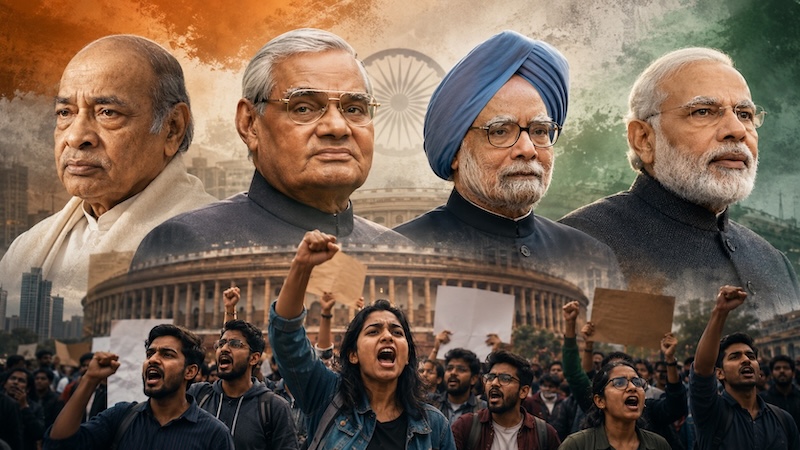
LONDON, August 3 — In December 1992, a mob tore down Babri in Ayodhya, the loudest moment the Hindutva movement had produced since India’s independence. The demolition arrived within months of the country opening its economy under Prime Minister Narasimha Rao and his Finance Minister Manmohan Singh.
A nation freshly scarred by communal violence might have turned that anger into ballots. Instead, a large section of the population stayed polarised in private conversation and dinner table opinion, its political energy absorbed by multinational jobs, foreign degrees, new trading opportunities and the first taste of consumer choice.
Busy climbing a ladder, India, back then, rarely stopped to settle old scores.
Aspiration as Armour
Aspiration acted as armour against political polarisation.
When people believe tomorrow will be measurably better than today, ideology turns into an occasional hobby instead of a daily compulsion.
The BJP ran into this limitation directly. It reached power under Atal Bihari Vajpayee only through a coalition, the National Democratic Alliance (NDA), whose regional allies imposed real restraint on sectarian ambition. Coalition politics, inefficient as it was, functioned as a natural brake.
Disasters That Almost Broke the Dream
The Vajpayee years carried genuine trauma. The Kargil war in 1999, the hijack of Indian Airlines flight IC-814 the same year and the attack on Parliament in 2001 all threatened a national momentum India had only just begun to feel.
Against that backdrop, the Vajpayee government’s own “India Shining campaign” of 2004 collapsed because tens of millions outside the metros had seen none of the shine it advertised.
The NDA lost to a coalition led by the opposition, and the aspiration economy moved to new management.
The Manmohan Years, Growth and Its Betrayal
Prime Minister Manmohan Singh’s first term, from 2004 to 2009, delivered exactly what the aspirational class wanted, technology hubs in Bengaluru and Hyderabad, a boom in high-end jobs, new highways and airports, and a growing sense that India had finally arrived.
His second term told a different story. Anti corruption protests led by Anna Hazare in 2011 and 2012 made the government look exhausted and compromised, and the aspiration engine that had kept polarisation dormant began to sputter for the first time in two decades.
Achche Din and the Sectarian Turn
Narendra Modi arrived as the new Prime Minister in 2014 promising “Achche Din”, good days, wrapped almost entirely in the language of development and jobs. Once in office, the emphasis shifted.
Policy carried a sharper communal edge, and by then the ground beneath it had changed in a way few noticed at the time.
When the Ladder Is Full, People Start Fights
Here is the second pattern, and it explains far more than most commentary admits.
By the 2010s, India’s middle class, the generation Gen Z now mocks as “uncles”, had largely arrived at the destination it spent two decades chasing. Children were settled overseas, foreign holidays had become routine, cars and comfortable housing were secured.
A family that has stopped worrying about its next meal finally has the leisure to argue about communal grudges. Fulfilled aspiration, instead of continuing to guard against polarisation, freed up the emotional bandwidth for it.
The seeds planted in 1992 finally found soil rich enough to grow.
Gen Z Inherits a Smaller Room
For the generation coming up behind that comfortable middle class, the ladder itself grew shorter.
A national television news producer hired before 2010, for instance, could expect a salary near ₹40,000 to ₹50,000 a month. By the 2020s, the same role paid closer to ₹20,000.
Millions of young graduates now compete for delivery app gigs that offer neither security nor status.
Gen Z inherited a shrunk job market from a generation of uncles who spent their own comfort on identity politics instead of guarding the next generation’s opportunity.
Their July protest carried the frustration of watching real jobs replaced by algorithmic gig work, voiced in a language sharper and more irreverent than anything the uncles ever used.
Aspiration Returns, and Finds a Different Battlefield
The most striking part of the Gen Z protest is the ambition riding inside the anger.
The uncles built an earlier boom and then spent much of their inheritance on television debates and WhatsApp forwards.
Gen Z clearly wants that inheritance restored, and on sharper, more assertive terms, refusing to settle for a smaller version of the future the way the generation before it eventually did.
This return of aspiration faces a momentous challenge ahead, one that successfully survives contact with an election.
That is precisely where the present moment gets complicated.
Delimitation, a potential redrawing of parliamentary constituencies, and the Special Intensive Revision (SIR) of electoral rolls has triggered sharp opposition accusations of disenfranchisement of anti-BJP voices, a charge the government denies.
India’s Election Commission maintains the SIR only removes duplicate and outdated names.
The truth of either claim aside, a generation with rediscovered aspiration is walking straight into an electoral system facing its own redesign at the same time, and that collision looks like the real test ahead.
Gen Z’s street and Instagram energy proved it could end a minister’s career in weeks.
Holding its shape long enough to reach a ballot box (read an Electronic Voting Machine) that may itself look different by the next general election will decide how much of that energy actually converts into political change.
CHECK OUT MORE FEEDBACKS FOR THIS REPORT AT FACEBOOK AND INSTAGRAM
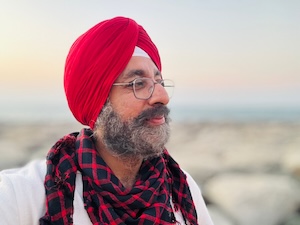
Harmeet Shah Singh is a career journalist currently serving as Communications and Advocacy Director at UNITED SIKHS (UK), a charity registered in England and Wales. The article was first shared here.
* This is the opinion of the writer and does not necessarily represent the views of Asia Samachar.
RELATED STORY:
The Age of White Nationalism Has Arrived — The Sikh Diaspora Is Unprepared (Asia Samachar, 8 June 2026)
ASIA SAMACHAR is an online newspaper for Sikhs / Punjabis in Southeast Asia and beyond. You can leave your comments at our website, Facebook, Twitter, and Instagram. We will delete comments we deem offensive or potentially libelous. You can reach us via WhatsApp +6017-335-1399 or email: asia.samachar@gmail.com. For obituary announcements, click here