























By Amarjeet Singh @ AJ | Opinion |
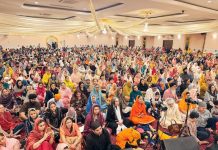
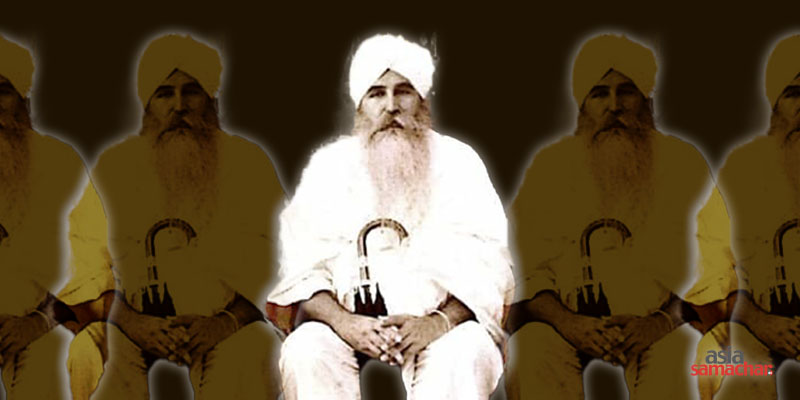
Every year, thousands gather in the Malaysian historic city of Malacca to commemorate the Yaadgar Semagam of Sant Sohan Singh Ji. Many attend out of genuine love, deep respect, and spiritual connection towards Sant Ji and his legacy of seva, discipline, humility and Gurbani-centred living.
There is no doubt that for many, these gatherings remain deeply meaningful spiritual occasions. Families reconnect, sangat gathers, Gurbani is heard continuously, seva takes place, and younger generations remain connected to Sikh spaces and traditions.
At the same time, perhaps it is healthy for the Sikh community to occasionally pause and reflect on how such commemorations are evolving over time.
Traditionally, the term “barsi”, as the programme is casually referred to, originates from the broader South Asian practice of marking the death anniversary of an individual, often linked in Brahmanical traditions to rituals, shradh ceremonies, and prayers believed to benefit the departed soul. In many Hindu traditions, such ceremonies may involve offerings, rites performed by priests, and observances connected to ancestral remembrance.
FOR MORE STORIES ON BABA SOHAN SINGH OF MALACCA, CLICK HERE
Within Gurmat, however, Sikhi does not support the idea that yearly rituals or ceremonial observances can alter the spiritual state of a departed soul. Gurbani consistently emphasises Naam, truthful living, humility and remembrance of Waheguru during one’s lifetime rather than ritual practices after death.
This is why some Sikh writers and platforms today prefer terms such as Yaadgar Semagam or Mithi Yaad instead of “barsi,” as these terms better reflect remembrance, reflection, Gurbani, seva, and learning from the life of an individual without implying ritualistic practices associated with the afterlife.
SEE ALSO: Malacca: Memories of Baba Sohan Singh rings loud
SEE ALSO: Sant Baba Sohan Singh: A Beacon of Compassion
Yet regardless of terminology, another question quietly emerges today. Are such gatherings remaining spiritually reflective, or are they gradually transforming into large-scale public melas centred around crowds, social culture, stalls, food, celebrity appearances, and event attraction?
This is where two sides of the conversation begin.
On one side, many will rightly argue that these gatherings strengthen sangat and community spirit. People travel from different places to reconnect with old friends and family members, participate in seva, listen to Gurbani, and spend time within a spiritual environment. In today’s fast-moving and fragmented world, many would argue that even bringing people back into the Gurdwara environment carries value in itself.
And honestly, that argument should not be dismissed lightly.
However, the other side of the conversation is becoming increasingly difficult to ignore. At what point does remembrance become spectacle? At what point does spirituality begin competing with showmanship, crowd culture, and commercialism?
ANNUAL CALENDAR
Today, many attendees no longer come only for simran or Gurbani. Some come to socialise, some to meet friends, some because the event has become part of the yearly community calendar, and others because the scale itself attracts attention and curiosity. Slowly, the semagam risks becoming known more for its atmosphere, crowds, stalls, and visibility than for spiritual introspection itself.
This shift also raises difficult questions about priorities and resource allocation.
Large sums are often spent bringing in overseas kirtan jathas, covering flights, accommodation, hospitality, and various arrangements, while the Pathis (lit: readers of the Guru Granth Sahib) conducting the Akhand Path — arguably the spiritual foundation of the entire programme — may receive comparatively little appreciation or care.
SEE ALSO: Malacca: Not barsi, but yaadgar semagam
These are individuals who carry the responsibility of Gurbani da Paath continuously for almost 47 hours with discipline, concentration, and commitment. Yet many are treated almost like operational necessities rather than central spiritual contributors.
Without the Akhand Path itself, what exactly are we commemorating?
The concern becomes even more sensitive when spirituality slowly begins intersecting with performance culture. Kirtan, which should fundamentally create spiritual connection and humility, can sometimes begin resembling a professional industry centred around personalities, prestige and presentation.
PART 1: Yaadgar Semagam or Mela?
PART 2: The bigger picture behind the Melaka Yaadgiri Semagam
PART 3: Beyond Melaka: Understanding the bigger reality around Sikh gatherings
This is not directed at all jathas or ragis, many of whom continue to serve sincerely with humility and dedication. However, when discussions increasingly revolve around appearance fees, premium hospitality, luxury accommodation and status expectations, the Sikh community is naturally forced to reflect on where the line between seva and performance begins to blur.
There is also growing discomfort around the wider atmosphere surrounding some of these gatherings. Rows of stalls, sweets, drinks, merchandise, photography culture, and constant movement can sometimes make the environment feel closer to a public festival than a reflective spiritual gathering.
MODERN REALITY
Perhaps this is also part of a larger modern reality. Across the world, many Sikh events today are becoming larger, louder, and more commercially organised. Bigger stages, branding, livestreams, merchandise, sponsorships, personalities, and social media visibility are increasingly becoming part of religious spaces. The question is not whether growth itself is wrong, but whether spirituality is still leading the growth, or whether image and scale are slowly beginning to lead spirituality instead.
Even within Darbar Sahib itself, questions around maryada and sanctity are surfacing more openly. A Gurdwara should never become viewed merely as an air-conditioned resting hall, social gathering point, photography backdrop, or tourist stop. Respect for Guru Maharaj’s presence must remain central regardless of crowd size or event scale.
At the same time, Guru Ka Langgar — which should reflect humility, equality, and kindness — can sometimes lose its spirit when seva is accompanied by harsh words, impatience, or arrogance. Nimrata cannot exist only in speeches while behaviour reflects the opposite.
APPARENT CONTRADICTIONS
The younger generation notices these contradictions very clearly.
They observe whether spirituality is genuinely being practised or whether religion is slowly becoming another form of organised event culture. They observe whether humility exists beyond speeches, whether seva still carries sincerity, and whether remembrance is truly about Gurbani and reflection or increasingly about visibility and scale.
None of these reflections are written to insult organisers, sewadars, or sangat members. In fact, many individuals work tirelessly and sincerely behind the scenes to make such gatherings successful and meaningful for the community.
Rather, the concern is whether spirituality itself may slowly become secondary to spectacle, branding, popularity, and crowd culture without the community even fully realising it.
Perhaps the deeper question is not whether these gatherings should continue — because remembrance, sangat, and collective reflection absolutely matter — but rather how they should evolve moving forward.
Can such semagams place greater emphasis on Gurbani understanding, youth education, mental health support, seva initiatives, food banks, rehabilitation programmes, old folks care, student assistance, and meaningful reflection instead of expanding mainly in physical scale and spectacle?
Can simplicity coexist with spirituality more effectively?
Can the Panth preserve remembrance without unintentionally drifting into ritualism, performance culture, or commercialisation?
Because a mela attracts crowds.
But true remembrance should inspire transformation within the individual.
And perhaps that is the spirit worth preserving most.
Join the conversation on this story on Asia Samachar’s Facebook and Instagram pages.
(Click for part two, The bigger picture behind the Melaka Yaadgiri Semagam)
Amarjeet Singh @ AJ is a Malaysia-based business consultant with over 25 years experience
RELATED STORY:
The most respected Sikh in Southeast Asia (Asia Samachar, 20 May 2020)
ASIA SAMACHAR is an online newspaper for Sikhs / Punjabis in Southeast Asia and beyond. You can leave your comments at our website, Facebook, Twitter, and Instagram. We will delete comments we deem offensive or potentially libelous. You can reach us via WhatsApp +6017-335-1399 or email: asia.samachar@gmail.com. For obituary announcements, click here





Oye chup kar ja Monneya