



















By Gurnam Singh | Opinion |
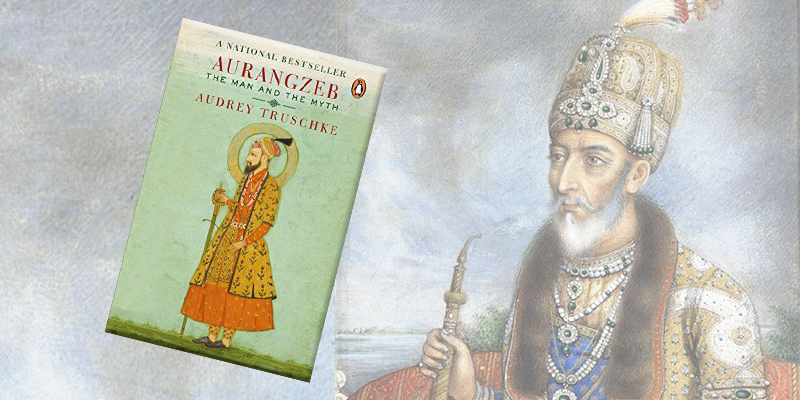
Audrey Truschke’s Aurangzeb: The Man and the Myth (2018, Penguin) enters the historiographical field with a clear and ambitious mandate: to dismantle the centuries-old, polarized caricature of the Mughal emperor Aurangzeb. By challenging the prevalent depiction of the emperor as a singular, fanatical villain, Truschke aims to reposition him as a rational, complex political actor. However, while the project is necessary, a close engagement with the text reveals significant methodological shortcomings that undermine the author’s attempt at an objective historical synthesis.
The most immediate issue facing the reader is the book’s structurally repetitive nature. Adopting a “thesis-first” approach, Truschke often returns to the same defensive posture regarding Aurangzeb’s character. For the seasoned historian, this can feel less like a nuanced monograph and more like a pedagogical exercise aimed at a novice audience. The circularity of the arguments, such as constantly pausing to recontextualize the emperor against colonial-era distortions, tends to obscure the narrative flow and can leave the reader feeling that the book is more of a polemic than a critical biography.
Perhaps more concerning is the philosophical friction within Truschke’s analysis of Aurangzeb’s religious identity. The author frequently attempts to delineate between Aurangzeb’s “pious personal life” and his “ruthless political reality.” In doing so, Truschke employs a modern secular lens that separates governance from faith; a dichotomy that likely did not exist for a 17th-century sovereign. By arguing that the emperor’s harsh policies were purely political, Truschke inadvertently creates a contradiction: she sanitizes his actions to avoid the “fanatic” label, failing to recognize that for a ruler of the period, the Sharia provided the very framework for both his legitimacy and his “ruthless” political calculations. One cannot truly separate the monarch’s piety from his statecraft without distorting the historical reality of the Mughal imperial project.
Furthermore, Truschke’s framework suffers from a significant comparative inconsistency. She attributes much of the negative historiography surrounding Aurangzeb to modern colonial and nationalist myth-making. Yet, she fails to satisfactorily explain why this same modern, post-colonial “demonization” did not extend to other Mughal rulers, most notably Akbar. If the “myth” is purely a byproduct of modern politics, why is Akbar’s reputation for pluralism largely shielded from these same forces? By failing to reconcile this discrepancy, Truschke’s argument falls into a false equivalence. She misses the opportunity to analyze why Aurangzeb’s specific departures from the syncretic traditions established by his predecessors were viewed, even in his own time, as a distinct shift in the nature of the Mughal state.
Finally, and most critically, the book’s methodology exhibits an over-reliance on the “state archive.” Truschke consistently prioritizes contemporary Persian-language imperial chronicles over other historical records. A perfect example of this bias can be seen in her dismissive examination of the execution of Guru Tegh Bahadur, the ninth Guru of the Sikhs. By almost ignoring this historically significant event and dismissing the extensive oral, community, and non-imperial accounts of this event—rendering them “hagiographic” or unsubstantiated because they do not appear in the state’s own self-serving records—Truschke engages in an act of selective amnesia.
All imperial regimes are fundamentally designed to portray their own rule as legitimate and their challengers as seditious; to take the state’s silence on an event as evidence of its non-occurrence is a foundational error. By consistently defaulting to the imperial lens, Truschke fails to engage with the reality of the marginalized and the victims of the Mughal state.
In conclusion, while Aurangzeb: The Man and the Myth serves as a provocative intervention in the study of Mughal history, it ultimately stumbles under the weight of its own methodology. By attempting to “rescue” Aurangzeb from the caricature of the villain, Truschke inadvertently constructs an apologetic narrative that favors the imperial archive over the lived historical memory of the era. The result is a work that, while intended to be a corrective to bias, reproduces a new, alternative form of bias that fails to capture the full, fractured, and often violent reality of the seventeenth-century Mughal Empire.
Join the conversation on this story on Asia Samachar’s Facebook and Instagram pages.

Gurnam Singh is an academic activist dedicated to human rights, liberty, equality, social and environmental justice. He is a Professor of Sociology at University of Warwick, UK. He can be contacted at Gurnam.singh.1@warwick.ac.uk
* This is the opinion of the writer and does not necessarily represent the views of Asia Samachar.
RELATED STORY:
The Demise of the Akali Dal and the Badal Dynasty: What Next for the Panth? (Asia Samachar, 5 Aug 2024)
ASIA SAMACHAR is an online newspaper for Sikhs / Punjabis in Southeast Asia and beyond. You can leave your comments at our website, Facebook, Twitter, and Instagram. We will delete comments we deem offensive or potentially libelous. You can reach us via WhatsApp +6017-335-1399 or email: asia.samachar@gmail.com. For obituary announcements, click here