













By Dr. B. S. Bains | Opinion |
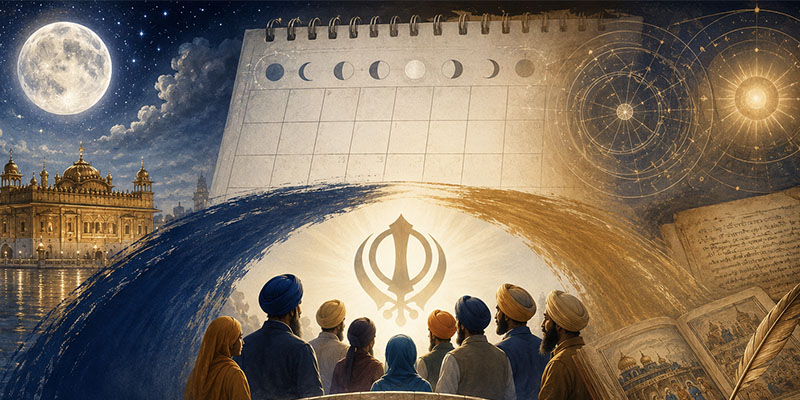
The discussion surrounding the birth anniversary of Guru Nanak has today become more than merely a question of dates. It has evolved into a deeper issue involving identity, continuity, scholarship, tradition, and collective wisdom within the Sikh Panth.
For centuries, Sikhs across the world have emotionally and spiritually connected with the celebration of Guru Nanak Sahib’s Gurpurab on the full moon day of Katak (Kartik Purnima). Through generations, this observance became embedded into Sikh memory through Nagar Kirtans, kirtan darbars, family traditions, prayers, and community gatherings. Such continuity itself carries immense spiritual and cultural weight.
THIS ARTICLE IS IN RESPONSE TO THIS LETTER TO THE EDITOR: Dual Vaisakhi observance reflects growing Panthic awareness
At the same time, some historians and scholars point toward older historical records and Janamsakhi traditions suggesting that Guru Nanak Sahib may actually have been born during Vaisakh (April). Their efforts are often driven by historical interpretation and academic inquiry rather than disrespect for tradition.
However, confusion begins to arise among ordinary Sikhs when practical questions emerge. Many ask: How can dates suddenly jump across entire months? If a birthday has been commemorated for generations in one part of the year, how can it abruptly shift from, for example, January to April in the following understanding? To the common person, such movement appears unsettling and difficult to comprehend. Naturally, people begin questioning how these dates became displaced in the first place.
SEE ALSO: Explainer: Guru Nanak’s birthday
For many Sikhs, the concern is not merely about historical calculation. It is about continuity, emotional connection, and collective acceptance preserved over centuries. Abrupt changes can create uncertainty and give the impression that deeply rooted commemorations may be altered too easily. This further confuses younger generations and at times turns sacred discussions into spectacles that invite unnecessary ridicule from others observing Sikh internal debates.
Scholars explain that these differences may have emerged because of varying interpretations of lunar calendars, solar calculations, Bikrami dating systems, historical manuscripts, and later calendar reforms. Their intention, in many cases, is to seek historical accuracy rather than division.
Yet the greater danger is not research itself. Research is necessary for every civilization. The real danger begins when discussions become ego-driven battles, when social media reduces sacred matters into entertainment, and when Sikhs begin mocking fellow Sikhs more than outsiders ever could.
Shiromani Gurdwara Parbandhak Committee (SGPC), together with the supreme authority of Akal Takht, may therefore have an important role in bringing clarity and stability to the Panth on this sensitive matter. A clear ascertained summary must be made very clear for the Sikh community, that could help reduce this recently raised confusion and unnecessary public disputes. I feel, in the interest of Panthic unity and continuity of long-standing tradition, the Kartik Gurpurab observance that has been followed for centuries should continue to be adhered to with authority and dictatory terms.
But perhaps the deeper reflection is this: Guru Nanak Sahib’s greatness was never confined to a calendar date alone. His eternal message was about the oneness of humanity, remembrance of the Divine, honest living, humility, compassion, and sharing with others.
If debates over dates begin overshadowing the Guru’s teachings themselves, then the essence risks being lost.
The common Sikh ultimately seeks stability, dignity, unity, and reverence — not endless confusion over calendars and competing claims. A civilization is weakened when internal disagreements become public spectacles, but it is strengthened when scholarship and tradition are discussed with humility, patience, and collective maturity.
Perhaps the wiser path forward is simple:
Research with sincerity.
Preserve tradition with respect.
Discuss with humility.
And protect Panthic unity above personal victories.
We have diluted the celebration of Diwali, now Celebration of Guru Nanak’s Birthday the very right beginning of our faith. I don’t know what’s next.
Looks like with the change of moon’s position the birth dates of all our Gurus are going to be put on the platter of confusion and uncertainty. Shame to our society and our faith. We have also put to the general public on Raag Maala. Friend, these arguments are not going to take us far in our personal endeavour of what our Gurus have inspired us with. Let’s not spread despair and confusion the Panth.

The writer, Dr. Balwant Singh Bains, is a Kuala Lumpur-based physiotherapist. He writes on culture, interfaith harmony, and the evolution of tradition in the modern Malaysian context.
RELATED STORY:
Rethinking Sikh governance: SGPC failings and call for global reform (Asia Samachar, 14 July 2025)
ASIA SAMACHAR is an online newspaper for Sikhs / Punjabis in Southeast Asia and beyond. You can leave your comments at our website, Facebook, Twitter, and Instagram. We will delete comments we deem offensive or potentially libelous. You can reach us via WhatsApp +6017-335-1399 or email: asia.samachar@gmail.com. For obituary announcements, click here