
















UA-56202873-1
Page 798

From Malaysia to the United States

By Harvin Kaur | Opinion | 31 Aug 2016 | Asia Samachar |

They say you never know what life is until you move out from your comfort zone. “The hardest thing to do is leaving your comfort zone. But you have to let go of the life you’re familiar with and take the risk to live the life you dream about” (Arigo).

This time last year, I was getting ready to leave home to embrace a new world far away from a place I call  home, Malaysia.

To be honest, it is not like I am new to changes or living in a new country. I have always been blessed in experiencing new adventures in life. From leaving for college and studying in Australia for a couple years to living in a rural area far away from home for more than five years (thanks to my teaching days); pretty much have given me the experience I need to know what to expect when being far away from home.

I won’t deny though that there is nothing more calming and safe in the comfort of your own home surrounded by familiar faces you call family. However, there is nothing more adventurous and intriguing than being thrown into somewhere new and different to what you have been grown to be accustomed to.

FROM SAME AUTHOR: Dear Haters

When people think about migration, the most prominent aspect that comes to mind is the stories filled with challenges and feeling of ‘homesick’. Your entire world changes when you move to another country. Things you thought are normal and acceptable to you may no longer apply. Not everybody thinks like you do, or does things the way you have always done it. Even rules and social practices you thought were painfully obvious may turn out to be the total opposite. From miles instead of kilometers, pounds instead of kilograms, to Fahrenheit instead of Celsius, month before the date (yes, you have to write the month before the date, I am still getting a hang of it), to struggling to pay the cashier because every single dollar looks the same and you miss the bliss of having some colors in your wallet and the list can go on and on.

When you first arrive in a foreign country, everything is like a dream. The first few months would be a ‘honeymoon’ where you act like a tourist and whisk here and there, taken to admire the cultural diversity, eat great food and talk to people who most times are nice to you because they want to make a good first impression. Even though you are lost in this new joy, your senses are high in alert and you notice every single thing that is different from your country and to what you are used to.

It is not until you stay for a couple of months that you get a feel for what it is really like. The transition from a regular ‘tourist’ to now becoming a ‘permanent resident’ is like increasing the temperature of your heater (yes, can’t live without one during the winters; oh how I miss the good old tropical weather) until you feel the sweat.

It’s not always bad and eventually you start to accept that there are things that are different, that are way better and then there are things that are different and not so good, but that’s okay because not everything is like what you expect.

After the exploring, learning, having fun, ups and downs and my fair share of culture shocks; I think I can now say that the United States is slowly turning into my second home (Malaysia is still home and where the family is, always).

I still remember when I first arrived here and was taken aback (at a store) being conversed to in Spanish. Apparently, it is accepted here in California to speak Spanish so much so that it is officially a second language for all formal and informal occasions. It was also amusing to watch and hear people I encounter expressing their shock and disbelief in my English proficiency.

I am amazed how less some people know about Asia, in general, and especially Malaysia. I am even astounded by a few who don’t even know where Malaysia is until I point out Bali and Thailand. Talk about ignorance and lack of world knowledge. But I never get offended mind you. I take this as a golden opportunity to educate those who need to know a few things or so (I guess that’s why they say a teacher will always be a teacher…I swear I heard that somewhere).

I feel both United States and Malaysia share a great deal of similarities and a good number of differences. We always think that the grass is greener on the other side. Although there may be some truth to it but in actual sense this is written to mean that what may seems better than you have is not entirely true. Malaysia today is at its best as compared to the years it has taken to develop.

When I traveled to countries like Indonesia and Singapore, I realize there is so much potential in Malaysia that if given in the right hands of governance, the country will achieve its peak beyond words.

But we can’t have it all even though that is what we often hope for. I can’t name anything that I have here in the United States that you won’t find in Malaysia; be it Starbucks, Subway, Coffee Bean, Sephora, Bubba Gump, H&M, Forever 21 and countless of American products and restaurants that you can find in Malaysia easily. On the contrary, if only I can find one good mamak restaurant or even a good ‘teh tarik’, I won’t mind to fork out the money and the effort for that search.

Each country has its uniqueness and don’t be fooled each country has its flaws and corruption. You think Malaysia is worse of? United States is struggling to find a suitable candidate to run for presidency, fight against mass shooting and reduce racism within the police force. Amidst all this, what matters most is how much are the people willing to do in order to make a change and a difference for the betterment of their nation?!

I will end by quoting from one of the best Presidents of the United States, in my opinion, John F. Kennedy: “Ask not what your country can do for you; ask what you can do for your country”.

With that I wish you ‘SELAMAT HARI MERDEKA’. Stay united, Malaysians!

Malaysian-born Harvin Kaur, who now lives in the US, likes to observe and write on issues concerning the Sikh community in general.

RELATED STORIES:

Dear Haters (Asia Samachar, 20 Aug 2016)

ASIA SAMACHAR is an online newspaper for Sikhs / Punjabis in Southeast Asia and beyond. Facebook | WhatsApp +6017-335-1399 | Email: editor@asiasamachar.com | Twitter | Instagram | Obituary announcements, click here |
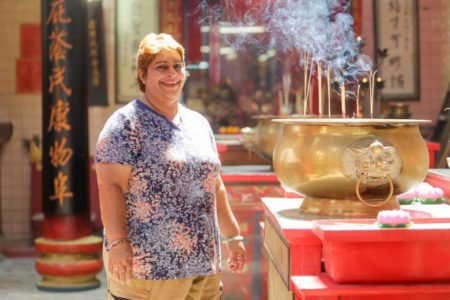
The Punjabi in Yap Ah Loy’s temple in Kuala Lumpur

Malay Mail Online | Malaysia | 31 Aug 2016 Asia Samachar |
Meet Ranjit Kaur, the Punjabi who speaks fluent Cantonese and works in the Sin Sze Si Ya temple in Kuala Lumpur. — Pix by Choo Choy May / The Malay Mail

By Ida Lim

KUALA LUMPUR, Aug 31 — Like the 152-year-old Sin Sze Si Ya temple she takes care of, Ranjit Kaur is a bit of a “hidden gem.”

The temple is set back from the busy Jalan Tun H.S. Lee and most people driving past hardly give it a second look. Its other more prominent entrance is tucked away in the quiet alley of Jalan Lebuh Pudu, right next to tourist magnets Central Market and Kasturi Walk, but not many people know it is there.

Ranjit, who was born in 1962 but is 56 years old according to the Chinese way of reckoning, speaks fluent Cantonese and even peppers her conversations in English with words from the Chinese dialect.

She herself does not feel that her presence in the Taoist temple as a caretaker assistant is anything out of the ordinary, saying: “I don’t feel anything, I’m ok, normal, nothing lah because you are so used to it.”

“Yes, a lot of them are very surprised, a Mangali girl here,” she told Malay Mail Online, using an old local Cantonese colloquialism for Punjabis.

“But many of them who know my father, my mother, they know, they know us lah,” she said of her family’s generations-long links to the temple.

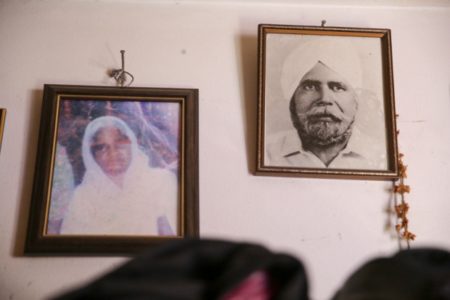
To understand how a Punjabi woman ended up in a temple with distinct ties to Kuala Lumpur’s Kapitan Cina Yap Ah Loy, you have to go back to her late parents who were second-generation settlers in Malaysia – Sajan Singh and Gurdeep Kaur.A group photo taken in 1948, that shows Ranjit’s late father Sajan Singh, hangs on a wall within the Sin Sze Si Ya temple’s main hall.

According to what she was told, her father Sajan used to be a watchman for a local Chinese family who then recommended him to this temple — a job he was to take on for decades.

The sixth child to be born to the family of six girls and four boys, Ranjit and her siblings stayed at and grew up on the temple’s grounds, where the Chinese temple caretakers also stayed.

Ranjit was born when the parents of the current temple custodian Wong Ai – now aged 79 – were still managing the Sin Sze Si Ya temple. The task of caring for the temple has been with Wong’s family for about 60 years.

“Of course I used to be what the Chinese say – very pat poh (busybody), come and listen to stories, come inside here, talk to them, chit chat.” Wong’s father even used to share his lunch with them so they “were brought up in a very nice [luxurious] way.”

And of course that was how Ranjit picked up Cantonese and develop a strong sense of belonging.

“I cannot miss this place, even I can go on holiday I still will think of this place, even one day off also I don’t feel like taking off because I find this is like my own house,” she said.One of the two gates – along Jalan Lebuh Pudu – of the Sin Sze Si Ya temple that became a refuge for Ranjit’s family during the May 13, 1969 riots.

May 13, 1969

Growing up in the heart of Kuala Lumpur, Ranjit remembers May 13, 1969. At the age of seven, she was used to taking the bus from Pudu to Chan Sow Lin.

On that day, Ranjit remembers taking the packed dinner prepared by her mother at around 5pm to 6pm to her father who was holding down two jobs – temple watchman in the daytime and night watchman at European firm Hargill’s in the Sungai Besi area.

“May 13, I was in Pudu already, I take the bus, Chan Sow Lin bus, I go to Chan Sow Lin there and go and give my father makan (food), then I got caught there.

“I was stuck because the lady told me ‘why are you going back Pudu, you cannot, people fighting there, you cannot go back’, so I stayed back with my father,” she said.

Coming back to the temple in the daytime a week later in a police van, Ranjit said a police officer of her same race stopped them from getting shot by those who did not know where they were returning from.

As for her mother and other siblings, Ranjit said they were safe behind the locked gates of the temple and well taken care of by the Chinese caretakers of the temple who shared their food as neighbours.Ranjit’s duties at the temple include clearing away old joss sticks placed by temple patrons

Coming back

After completing her secondary school studies, Ranjit worked as a nurse in Kuala Lumpur and her mother’s hometown of Seremban, marrying in 1990 and giving birth to her daughter seven years later, before returning to the temple in 2006 to work under Wong’s family and assist in caretaking activities.

Ranjit’s duties range from helping the temple caretakers prepare the temple typically at 6.30am before the doors are opened to the public at 7am, or even earlier if there is an important event, to clearing old joss sticks and making sure all is in order and cleaned up.

Ranjit is an able guide for those unfamiliar with the numerous deities in the temple dedicated to different aspects of life, such as the Wen Chang deity for those wanting their children to do well in their studies, and deities for good careers and a prosperous business to striking it big in a lottery.

She shares little tidbits of information like how prostitutes had in the old days sought out the Hua Fen Fu Ren (Deity of Beauty) but wives now approach this deity if their husbands flirt around with other women.

Others will bring cosmetics to pray for beauty, while young girls may also come here to pray for the clearing of marks on their skin after using unsuitable facial products, she said.

She also shares anecdotes about how women struggling to conceive for years become pregnant after doing a symbolic ritual before the fertility goddess Guan Yin to “change stomachs”, which involves the recital of prayers and the flipping over of pigs’ stomachs.The main hall of the Sin Sze Si Ya temple that has three halls – where some of the many deities are placed.

She is on hand to to guide temple visitors on how to pray and carry out certain rituals, including when one needs a change of fortune or wants to be protected against bad luck in the coming year.

Ranjit herself also believes in the Chinese deities and joins in rituals such as the one this year to ensure good fortune when she hit her Chinese age of 56.

“I serve my god, and I serve this Chinese god also because I’m brought up here, if I don’t serve this one, I tell people to pray, what for?” she said. The actual entrance to the Sin Sze Si Ya temple that Kapitan Yap Ah Loy founded in 1864 and dedicated to the Sin Sze Ya and Si Sze Ya patron deities.

The photos of Ranjit and Daljit's late parents Gurdeep Kaur and Sajan Singh, who both passed away in their 60s in 1987 and 2009 respectively. - PHOTO / THE MALAY MAIL ONLINE
The photos of Ranjit and Daljit’s late parents Gurdeep Kaur and Sajan Singh, who both passed away in their 60s in 1987 and 2009 respectively. – PHOTO / THE MALAY MAIL ONLINE

Family

Life for Ranjit here at the Sin Sze Si Ya temple is one of simple happiness where everyone — including several Punjabi men from India — works together as a family, where she calls Wong “Ma” and refers to Wong’s husband as “Bapu” or “Father” like how their children do.

“I’m very happy working here… together as a family we work, we don’t have any problem, any misunderstanding.

“Happy memory? We all get together, that’s it, we work together as a family, we come here, we talk, pass our time… they are very nice people, compared with other places you have so many problems, (here) no problem,” the affable and easy going Ranjit said.

Enjoying her work at the temple, she plans to continue working here until she has to retire and cannot go on working.

Her younger brother Daljit Singh, 51, has continued on in the footsteps of her father, who only stopped working as a temple watchman when he passed away in his 60s on July 29, 1987.

“Immediately after my father passed away, he took over. Before he passed away, my father had already gone to see the (temple committee) chairman, he said that if anything happens to me, I’m sick now, you all please take [my son], so they took him until now,” she said of the ninth child in the family.The photos of Ranjit and Daljit’s late parents Gurdeep Kaur and Sajan Singh, who both passed away in their 60s in 1987 and 2009 respectively.

Ranjit and Daljit will likely be the last of their family to work at the temple, with their other siblings not interested and her only daughter now studying in a college. Wong’s children are also working in the temple.

This story is of a Punjabi family working in a Chinese temple… nothing manufactured, just uniquely Malaysian.

The story, entitled ‘The Punjabi in Yap Ah Loy’s temple in KL’, was published at The Malay Mail Onine on 31 Aug 2016, on the day Malaysia celebrates its Independence Day. See here.
.

ASIA SAMACHAR is an online newspaper for Sikhs in Southeast Asia and surrounding countries. We have a Facebook page, do give it a LIKE! Follow us on Twitter. Visit our website: www.asiasamachar.com

RELATED STORY:

GS Gill: Malaysia’s Maharaja of Sports Business (Asia Samachar, 27 Aug 2016)

Gurinder Singh Shahi: Thinker, eco-warrior who touched so many lives (Asia Samachar, 16 August 2016)

Capturing family history (Asia Samachar, 24 July 2015)

First visit to Panja Sahib – DAWN  (Asia Samachar, 9 July 2015)

Kidney talk for Sikh elders in Singapore

| Singapore | 31 Aug 2016 | Asia Samachar |
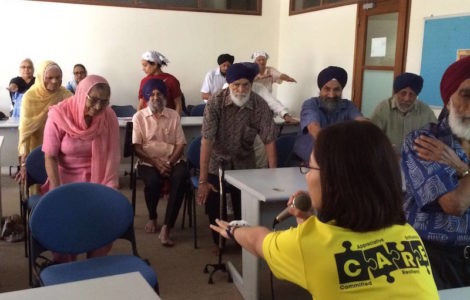
Kidney talk for elders at Sikh Centre, Singapore - PHOTO / SIKH CENTRE
Kidney talk for elders at Sikh Centre, Singapore – PHOTO / SIKH CENTRE

National Kidney Foundation (NKF) officials held a health talk was held for the Elders Program (Sunherey Pal) at Sikh Centre, Singapore, on 24 Aug 2016.


ASIA SAMACHAR is an online newspaper for Sikhs in Southeast Asia and surrounding countries. We have a Facebook page, do give it a LIKE! Follow us on Twitter. Visit our website: www.asiasamachar.com

RELATED STORY:

GS Gill: Malaysia’s Maharaja of Sports Business (Asia Samachar, 27 Aug 2016)

Start and you shall finish  (Asia Samachar, 7 Aug 2016)

Singapore to get new Indian envoy, Vijay Thakur moves to Ireland (Asia Samachar, 4 Aug 2016)

Empowering women through SWAN (Asia Samachar, 20 July 2016)

Get fit with irresistible bhangra moves (Asia Samachar, 14 July 2016)

You are the age of your heart (Asia Samachar, 11 June 2016)

37 Sikhs on Singapore national day award list officer (Asia Samachar, 10 August 2016)

KDM assist to settle bill, repatriate Indian expat injured in Ipoh (Asia Samachar, 25 May 2016)

Health talks for Penang Vaisakhi celebration (11-14 Apr) (Asia Samachar, 5 Apr 2015)

 15 mothers at SWAN’s healthy mom camp (Asia Samachar, 26 Jan 2015)


Jagir Kaur survived bloody Punjab partition in her 20s

| Malaysia | 30 Aug 2016 | Asia Samachar |
Jagir Kaur (1925-2016), Ampang

Jagir Kaur, an ordinary elderly Sikh lady who passed away at the ripe age of 91 years old earlier this week, had survived two major battles: cancer and the bloody partition of Punjab in 1947.

She passed away on 27 Aug 2016 leaving behind a huge family network: 6 children, 17 grandchildren, 29 great grandchildren and 2 great-great-grandchildren.

“She was always a very positive and very strong person. She liked to help others. A very hard working woman,” her eldest grandchild Raajdev Singh Sidhu tells Asia Samachar.

In her early 20s then, like millions of others, Jagir and her husband Mokand Singh Sidhu (Barewala), found themselves right smack in an impending bloody partition of Punjab. Sikhs had mostly migrated towards East Punjab in today’s India after the partition in 1947 that saw the creation of Pakistan.

Jagir and her husband were then living in Multan in today’s Punjab of Pakistan.

“They had to leave Pakistan with her brother carrying her eldest son who was two months old on a bullcart, for three days to get to a railway station to catch a train to Punjab,” her son Gurdev Singh Sidhu tells Asia Samachar, an online newspaper for Sikhs in Southeast Asia.

SEE ALSO: GS Gill: Malaysia’s Maharaja of Sports Business

SEE ALSO: Amardeep journeys deep into Pakistan in search of Sikh legacy

Mokand stayed behind thinking he could get some money for his substantial crops. “In the end, he left empty handed,” he adds.

The young couple then settled on the Indian side of Punjab, like millions of other fellow-Sikhs, forced to start anew.

In 1952, Mokand migrated to Malaya, with Jagir joining him in 1955 along with her three kids.

In Malaya, Mokhand found a job in the transport services. “He was a lorry driver all his life until retiring at 60. He always said he helped built Genting Highlands,” says Gurdev.

The family had lived in Ampang before moving to Setapak in 1969. Later, when he retired, they moved in with their son and family in Ampang again.

Back to Punjab

The couple visited India again for the first time 20 years later in 1975. This was the last time Jagir meets her mother.

“She [Jagir ] was the happiest person in the world on the day they left. They arrived at her mother’s village late in the evening. Both mother and daughter are meeting after 20 years. They sat the whole night talking, then before sunrise both went to sleep. That was the last she saw her mother. She never got up,” says Gurdev, who retired as a security personnel with the Malaysian multinational company YTL.

Strong Willed

When asked about her character, Jagir’s family member said she was always smiling and laughing, ever prepared to shower everyone with blessings and giving motherly advise to all.

“She never gave up easily. She had a broken pelvis and yet it didn’t stop her from moving about. Two days after her operation, she was up and moving about,” says Raajdev.

Jagir, who had survived breast cancer in 2000, also placed importance on educating the family, who today include pilots, engineers and nurses.

Note: Sehaj Path Da Bhog will be from 10am to 12pm on 4 Sept 2016 (Sun) at Gurdwara Sahib Lembah Jaya, Ampang, Selangor. Contact persons: Gurdev 012.2922999, Raajdev 012.2067964


ASIA SAMACHAR is an online newspaper for Sikhs in Southeast Asia and surrounding countries. We have a Facebook page, do give it a LIKE! Follow us on Twitter. Visit our website: www.asiasamachar.com

RELATED STORY:

GS Gill: Malaysia’s Maharaja of Sports Business (Asia Samachar, 27 Aug 2016)

Gurinder Singh Shahi: Thinker, eco-warrior who touched so many lives (Asia Samachar, 16 August 2016)

Tanjung Malim long-serving granthi Jagjit Singh passes away  (Asia Samachar, 18 June 2016)

IN MEMORY: Jinjang granthi Kartar Kaur matchmaker for 200 marriages (Asia Samachar, 10 Feb 2016)

Banta Singh: Silent Crusader of the Sikh Faith (Asia Samachar, 3 Feb 2015)

Amardeep journeys deep into Pakistan in search of Sikh legacy (Asia Samachar, 21 Sept 2015)

Capturing family history (Asia Samachar, 24 July 2015)

First visit to Panja Sahib – DAWN  (Asia Samachar, 9 July 2015)


Robbers bashed up as Sikh shopkeeper fights back in NZ

 | New Zealand | 29 Aug 2016 Asia Samachar |
A footage showing a Sikh father-son shopkeepers taking on two armed robbers - PHOTO / ASIA SAMACHAR
A footage showing a Sikh father-son shopkeepers taking on two armed robbers – PHOTO / ASIA SAMACHAR

Two armed robbers were forced to run for their lives after a Sikh shopkeeper and his son fought back and bashed them up in Napier, a New Zealand city with a seaport.

The shopkeeper, identified only as M Singh, and his son were in their family-run store when two masked robbers armed with a crowbar and a hammer stormed their business at 5:40 Friday morning (26 Aug 2016).

One of the offenders attacked the father-son duo with a crowbar, while the other climbed on to the cash counter before landing in the middle of the father and the son, reports SBS, the Australian radio station. See here for report and video.

The Mr. Singh and his son were equally quick in fighting back the uninvited guests using hockey sticks, forcing them to run for their lives, it added.

It was the first such incident during the last ten years since the Singhs have owned this business.

“Police had told us a few days ago that a gang could target our business, so we were prepared,” a family member told SBS Punjabi who identified herself as Mrs. Kaur.

[ASIA SAMACHAR is an online newspaper for Sikhs in Southeast Asia and surrounding countries. We have a Facebook page, do give it a LIKE! Visit our website: www.asiasamachar.com]

RELATED STORIES:

Respecting the dead

Opinion | Malaysia | 30 Aug 2016 Asia Samachar |

COMMENTBy Gursharan Singh

“We have not really been kind to our Pavan Guru, Pani Pita, Mata Dharat Mahat.'”

I am in total agreement with the views expressed in the above comments by Sardar Dhan Singh.

I have been objecting for over 15 years to the cremation method using firewood and other rituals — pouring of ghee, sending of flowers/wreaths, covering the body with kambals/chaddars — to name a few. I have been even been scolded by some elderly and those who want the traditional methods of cremation to be followed as a tradition.

The traditional method followers seem to forget that cremation by gas/electricity is the common method in many countries. Even their own family members and friends who have migrated to countries like Singapore have to use the gas/electricity cremation method as it is mandatory in many countries, where open burning is banned by law.

In the case of the Loke Yew Road Crematorium in Kuala Lumpur, there is a place for Sikhs/Hindus and adjacent to it for South Indians. Jointly the land area is not only large but also strategically located. It has great commercial value.

SEE ALSO: Funerals and their Enviromental Impact

If the Management Committees of these two areas can be co-operate, then the lands can be used to construct a crematorium with about eight to ten burners with each party managing for four to five burners each. The rest of the land can be used for a hall for prayers, parking-utilities and modern facilities with the whole area being landscaped.

The land facing the main road can be developed with commercial building which can provide revenue for proper upkeep of the crematorium and its facilities.

The above suggestion may be just wishful thinking. It is doubtful if both land owners will be interested to co-operate for the common good as even the Sanggat community members may not be able to come to a unanimous decision.

This is the first time I am putting this in writing for information of the Sanggat with the hope that the leaders may have a change of mindset.

Malaysian Gurdwara Council (MGC) and the Sikh Naujawan Sabha Malaysia (SNSM) leaders should consider it. People must change with the times. This proposal may also apply to some of our Gurdwaras which are rarely used.

As regards the ‘waste’ of ghee, Srd Dhan has commented. As regards the practice of putting kambals/chaddars which used to be abandoned, the SNSM had started collecting them to donate them to victims of natural disasters.

However, the thousands of RM are still ‘wasted’ on wreaths/flowers as they are abandoned and not of any use except. It has been observed that they are collected after people have left the place. I understand that the collected wreaths/flowers are then sold to wreath/flower sellers who then re-sell them to unsuspecting buyers who are unable to verify whether these are new or re-cycled.

Later the family of the deceased also ‘offer’ bedding and utensils to Gurdwaras where the Bhog is finalised. This again is an out of date practice as the Gurdwaras do not need them. It would be better if the families were to ‘offer’ equivalent in cash in lieu of the bedding/utensils as the cash can assist the Gurdwaras to finance their activities.

Disposing the Ash

On the disposal of ashes, I have periodically objected to going any where as it is my view that it is quite proper to throw the ashes in any running water.

Our Sikh leaders should take the lead and provide guidelines to effect the change.

But I have little faith in the ‘old guard’ who may not even consider it for fear of offending some hardliners as I have experienced during my conversations on this and other aspects related to death-funerals-paths-customs-etc.

SEE ALSO: One pail at a time – HARKIREN

Has anyone noticed how the workers in crematoriums treat the ashes? As far as they are concerned it is just ashes and not given any respect though the family members who go to collect the ‘phuls’ [flowers] wash the remains in milk and treat with respect until the time they are put in water at sea side or rivers.

Some even take them to India or other places perceived as holy or as wished by the deceased.

Right Respect

Respect to the dear departed should be shown when they are alive and not when they have gone to swarag [or any other place] as is normally mentioned in the final Ardaas.

Sanggat and its leaders should change their mindset in keeping up with the times.

Guru Nanak Ji traveled the world by walking but to-day our raagis-kathakars-religious leaders use the planes and air-conditioned vehicles for travel. Further some claim to be more religious when they sit on the floor for langgar and forget that Guru Ji emphasised equality and thus if the Sanggat in most Gurdwaras sit on benches/chairs during langgar then why should their be any objection from any one.

When I raised this matter with some ‘sant’, his ‘chelaas’ took offense and scolded me.

Gursharan Singh, C.M.I.I.A., a retired audit officer from the Malaysian civil service, is also a trainer


[ASIA SAMACHAR is an online newspaper for Sikhs in Southeast Asia and surrounding countries. We have a Facebook page, do give it a LIKE! Visit our website: www.asiasamachar.com]

RELATED STORIES:

Funerals and their Enviromental Impact (Asia Samachar, 29 Aug 2016)

Cherishing memories: Free service to announce saskaar, path da bhog (Asia Samachar, 4 Aug 2016)

One pail at a time – HARKIREN (Asia Samachar, 21 Feb 2015)

Volunteers needed for Sikh Welfare monthly visit to Kajang Prison (Asia Samachar, 6 Aug 2016)

Ranjit lost his job, but used his life savings to serve free food in… (Asia Samachar, 23 June 2016)

Sikh cloth trader spreads mats for Muslims to pray on sizzling roads in Kashmir (Asia Samachar, 22 June  2016)

American Sikhs, Latinos serve free hot meals in Washington DC (Asia Samachar, 10 June  2016)

Taiping Prison Sikh inmates get Guru Ka Langgar for Vaisakhi (Asia Samachar, 15 April 2016)

Young Singaporeans commended for voluntary work in Punjab (Asia Samachar, 4 April 2016)

Engineer cooks for 1,400 Penang prison inmates, Kirpa Foodbank Malaysia launched (Asia Samachar, 27 Aug 2015)

Funerals and their Enviromental Impact

Opinion | Malaysia/Singapore | 29 Aug 2016 Asia Samachar |
Traditional fire wood crematorium in Jalan Loke Yew, Kuala Lumpur. A cremation in progress in early 2016 - PHOTO / ASIA SAMACHAR
Traditional fire wood crematorium in Jalan Loke Yew, Kuala Lumpur. A cremation in progress in early 2016 – PHOTO / ASIA SAMACHAR

By Dhan Singh

Every one of us would have attended a few funerals in our live time till now. Some of our relatives and loved one while other would be friends and of people we knew off.

In Sikhi, as per the Sikh Rehat Maryada (SRM), Article XIX – Funeral Ceremonies, it is stated:

“C. However young and deceased may be, the body should be cremated. However, where arrangements for cremation cannot be made, there should be no qualm about the body being immersed in flowing water or disposed of in any other manner.”

“F. When the pyre is burnt out, the whole bulk of the ashes, including the burnt bones should be gathered up and immersed in flowing water or buried at that very place and the ground levelled. Raising a monument to the memory of the deceased at the place where his dead body is cremated is taboo.”

Having attended funerals in both Singapore and Malaysia, I have seen both the old school funeral rituals and modern facilitated funerals. But only recently it had occurred to me that, in the current day and age, we have not really been kind to our, “Pavan Guru, Pani Pita, Mata Dharat Mahat”.

SEE ALSO: One pail at a time – HARKIREN

SEE ALSO: Cherishing memories: Free service to announce saskaar, path da bhog 

I had attended a funeral in Jalan Loke Yew Crematorium (before the renovation), in Kuala Lumpur, of a relative. Understanding that, some old timers wanted to be cremated, as per tradition, on firewood. Thus relative wanted to make sure that the fire was good and strong enough, that they, kept on pouring ghee and adding firewood. I just went along with the rest and did Simran as I was choking on the fumes. As the fire grew, the smoke engulfed the area and we move to the shed for Kirtan Sohela prayer.

That was when I first realised that every day there is at least 2-5 funerals like this happening in Malaysia alone, imagine the amount of food that could have been cooked with the ghee, the number of trees we could have saved, from just this 2-5 funerals. And the amount of CO2 that was released. And its impact on the environment. It would have been better if we had used the crematoriums which use gas. A lesser evil than burning wood and ghee.

Anyway, after two days we had gone back to collect the ashes. And two big gunny sacks were brought along. Using hands and shovel, we scoop up everything and filled the two sacks. Upon reaching Port Klang and heading out towards Pulau Ketam, we did ardaas and poured the ashes into the sea and dumped the sacks into the sea as well. Again, it didn’t bother me much.

In Singapore, cremations are done by electric. The coffin is placed in an enclosed chamber by a mechanical coffin carrier. This act of the coffin going into the cremation chamber alone is a very much symbolic reminder for all of us where, as Guru Ji had mentioned, when we die, we go alone while everyone is left behind.

The heat is so intense that everything is over within minutes. The next morning when we go for the ash collection, the cement slab still has some heat. Here we collect the ash with our hands and use a mini brush and dustpan to scoop up the final remains and put everything into a red cloth bag and a red plastic pail.

The short drive from Mandai to Changi ferry point, with the pail filled with the remains, on the laps of the loved one, precariously trying to avoid the toppling of it during the journey. Once in Changi, we get onto a boat and head out into the waters between Changi and Pulau Tekong. After the Ardaas, the bag is emptied into the water, a small stone is placed in the bag (so that it does not float away) and it too is dropped into the water along with the plastic pail. Again, pretty much normal for me.

All was fine until the day I saw that famous viral video of some marine specialist who had found something sticking out of a turtle’s nose, which turned out to be a plastic straw. Imagine us, walking around for God knows how long, with a straw in our nose.

And recently I saw another viral video of another turtle entangled in some net and was struggling in the water till someone got it out of the water, and cut the net free of the animal and set it free into the water.

Now let’s take a minute to think how our actions, where we use open fires and dump the gunny sack, pail and cloth, impact the very same “Pavan Guru, Pani Pita, Mata Dharat Mahat” and the health of all the animal and humans in the world.

Can we use some of the technology around us today to protect our environment, without disrupting our maryada for the antim sanskaar (final rites)?

Mandai Crematorium in Singapore - PHOTO / Blog.cpgcorp.com
Mandai Crematorium in Singapore – PHOTO / Blog.cpgcorp.com

On the air pollution part, I would rate the Mandai Crematorium in Singapore as the best example I’ve seen in which the pollution is controlled. Something which I would urge my Malaysian family to adopt as soon as possible, wherever feasible.

As for the containment and disposal of the ashes, I would like to use an old technology, which we are fast losing. The old earthen pot, Matka. It’s just made of mud, chemical free and bio-friendly.

It’s just that, we will need to put in a little bit of an effort to save the environment, in whatever way possible, even during funerals.


[ASIA SAMACHAR is an online newspaper for Sikhs in Southeast Asia and surrounding countries. We have a Facebook page, do give it a LIKE! Visit our website: www.asiasamachar.com]

RELATED STORIES:

Cherishing memories: Free service to announce saskaar, path da bhog (Asia Samachar, 4 Aug 2016)

One pail at a time – HARKIREN (Asia Samachar, 21 Feb 2015)

Volunteers needed for Sikh Welfare monthly visit to Kajang Prison (Asia Samachar, 6 Aug 2016)

Ranjit lost his job, but used his life savings to serve free food in… (Asia Samachar, 23 June 2016)

Sikh cloth trader spreads mats for Muslims to pray on sizzling roads in Kashmir (Asia Samachar, 22 June  2016)

American Sikhs, Latinos serve free hot meals in Washington DC (Asia Samachar, 10 June  2016)

Taiping Prison Sikh inmates get Guru Ka Langgar for Vaisakhi (Asia Samachar, 15 April 2016)

Young Singaporeans commended for voluntary work in Punjab (Asia Samachar, 4 April 2016)

Engineer cooks for 1,400 Penang prison inmates, Kirpa Foodbank Malaysia launched (Asia Samachar, 27 Aug 2015)

GS Gill: Farewell sir, sports will miss you

| Kuala Lumpur, Malaysia | 28 Aug 2016 Asia Samachar |
Gill at Wisma Harwant during an interview with Malay Mail in 2008. — Picture by Malay Mail

By Haresh Deol

PETALING JAYA, Aug 28 — Tan Sri GS Gill is what this country is all about.

Born Indera Pura Gurdial Singh Gill, the self-made man, who beat all odds to pioneer the nation’s sporting industry has left a legacy Malaysians will remember for a long time.

And testament of his prowess is his 11-storey Wisma Harwant, named after his wife, which stands tall in Jalan Tuanku Abdul Rahman till today.

Gill died yesterday aged 92, but many who dealt with him over the decades spoke warmly of the man they say revolutionised sports in the country.

Former Kuala Lumpur mayor Tan Sri Elyas Omar was one of them.

“We were very close, especially during my days as mayor and Kuala Lumpur FA president (in the 1980s). We met regularly and I respected him for his good nature,” said Elyas.

“He was concerned about sports and ever willing to help in every way possible. To him, it was the spirit of giving and helping others. That made him different from the rest.”

Elyas added: “He took Malaysian sports to new heights. His contributions were immense… beyond measure. He assisted sports associations in many ways.”

Olympic Council of Malaysia assistant secretary general Datuk Sieh Kok Chi said he was fortunate to had known a man who he grew up admiring.

“If you don’t know who GS Gill is, you don’t know sports. I used to buy sports equipment when I was in school and later as an official, I worked closely with him,” said Sieh.

“Perhaps there were others in the sports business at that time but Gill took it to the next level. When he became the licensor for Adidas (in 1952), GS Gill became a household name.”

Sieh said despite the fame, Gill remained humble.

“He was popular. He was also a fine gentleman and a professional in his dealings. It was a great honour knowing him.”

Gill was also a popular figure in the Rotary circle.

A past president of Rotary Kuala Lumpur (1974-1975) he was described as “a gem of a man” by his fellow Rotarian Datuk S. Kulasegaran.

“He initiated many projects for the community during his time as former president. He has this unfailing love for Rotary. Despite his advancing age, he attended our meetings,” said Kulasegaran.

Gill was the most senior Rotarian in the club.

“He was always immaculately attired in a suit, occasionally in batik. When he attended club meetings, he became one of the boys. All the members will miss him dearly.”

Born on February 4, 1924, Gill wanted to study medicine but could not obtain a scholarship. That’s when he decided to venture into business.

He sought monetary assistance from his father Mihan Singh Gill and was instead told to raise his own funds. Through his meagre means, he set up GS Gill Sdn Bhd in 1946.

Gill wrote to various sporting firms in England, and Armstrong was the first to respond by offering 25 bicycles for distribution. And that got the ball rolling as he started selling shuttlecocks, footballs and other sports goods.

His break came in 1952 when he was the licensor of Adidas in Malaysia, Singapore, Indonesia and Thailand, and became the biggest distributor of the brand.

He then built his house brand, McGill. Some of his golf equipment were exported to Italy, Germany, Finland and Australia.

His daughter Ranjit Kaur said her father was a “beautiful man” and “had worked hard to build his business”.

Gill is survived by Ranjit, his other daughter Premjeet Kaur, three grandchildren and one great grandson.

Those wanting to pay their final respects can do so at his home at No. 6, Jalan Gallagher, Taman Duta, Kuala Lumpur.

He will be cremated today at the Cheras crematorium in Jalan Kuari at 3pm. The path da bhog will be held at Tatt Khalsa Gurdwara next Sunday.

The original story, entitled ‘Farewell sir, sports will miss you’, appeared in The Malay Mail on 28 Aug 2016. See here.


[ASIA SAMACHAR is an online newspaper for Sikhs in Southeast Asia and surrounding countries. We have a Facebook page, do give it a LIKE! Follow us on Twitter. Visit our website: www.asiasamachar.com]

RELATED STORY:

GS Gill: Malaysia’s Maharaja of Sports Business (Asia Samachar, 27 Aug 2016)

Malaysian Sikh transporter takes delivery of 30 Merc prime movers (Asia Samachar, 3 Aug 2016)

Billionaire Vincent Tan almost made DNA’s Karamjit go ‘Belle, Belle’ (Asia Samachar, 29 July 2016)

Allanjit Singh joins Havas Worldwide Singapore (Asia Samachar, 29 July 2016)

Vivian has grand plans for Singapore firm Strontium Technology (Asia Samachar, 10 July 2016)

Adform appoints Sukesh as VP Southeast Asia (Asia Samachar, 9 July 2016)

Balbeer Singh Mangat: Singapore pioneer in private higher education (Asia Samachar, 26 June 2016)

Adobe taps former army officer Kulmeet to lead South Asia (Asia Samachar, 20 June 2016)

Malaysian firms to build terminal in Andhra Pradesh (Asia Samachar, 30 Dec 2015)

Manmeet to take Melvados beyond Singapore (Asia Samachar, 30 Dec 2015)

Veerinderjeet, Ranjit list Malaysian-based company in Singapore (Asia Samachar, 27 Nov 2015)

Sikhs big in road transport in early Malayan history (Asia Samachar, 3 Sept 2015)

Inderjit increases stake in Page Advisor, appointed chairman (Asia Samachar, 14 Oct 2015)

French-Indian Tatiana wins Miss Malaysia World, two Punjabi girls come next

0
| Kuala Lumpur, Malaysia | 28 Aug 2016 Asia Samachar |
MissWorldMalaysia-2016-finals-1608a2
Miss World Malaysia 2016 winner Tatiana Kumar (second from left) with first runners-up Dr Ranmeet Jassal (fourt from left) and second runners-up Shweta Sekhon (first from left) – PHOTO / PAGEANT FACEBOOK

Two of the three Punjabi ladies made it to the top five in the Miss Malaysia World 2016 finals which ended in Kuala Lumpur yesterday.

Dr. Ranmeet Jassal, 24, emerged as the first runner-up while Shweta Sekhon, 19, came up as the second runner-up. French-Indian beauty Tatiana Kumar, 18, was crowned as Miss Malaysia World 2016.

The third Punjabi contestant, Amreet Sra, 20, did not make it to the top five.

Dr Ranmeet graduated from Rajiv Gandhi University of Health Sciences in India. After a year of houseman training in India, she is now in Malaysia to start her medical practice as a house surgeon with the government, according to information available at the pageant Facebook page.

Her sister Kiran Jassal was crowned Miss Universe Malaysia 2016 while her mother lawyer Ranjit Kaur had won Mrs. Malaysia World 2015.

Shweta, 19, who describes herself as a perfect emcee and host for school events and debating societies, wishes to make her single mother proud by bringing back the title.

[ASIA SAMACHAR is an online newspaper for Sikhs in Southeast Asia and surrounding countries. We have a Facebook page, do give it a LIKE! Visit our website: www.asiasamachar.com]

RELATED STORIES:

Three Punjabi contestants vie Miss World Malaysia 2016 title (Asia Samachar, 23 April 2016)

Miss Universe Malaysia Kiran Jassal grabs limelight (Asia Samachar, 5 April 2016)

Dentistry student Kiran crowned Miss Universe Malaysia (Asia Samachar, 31 Jan 2016)

Sarawak lass Harnesh a princess with purpose (Asia Samachar, 4 Jan 2016)

Lawyer Ranjit wins pageant, Soni and Rita pick up titles (Asia Samachar, 27 Oct 2015)

Jagdeesh wins SME100 awards (Asia Samachar, 24 Oct 2015)

Robotic girl wins NCWO Young Women Award (Asia Samachar, 25 Aug 2015)

Tanisha goes to Miss Supranational in Poland (Asia Samachar, 2 Aug 2015)

Amreet wins Penang beauty pageant  (Asia Samachar, 2 Aug 2015)

Prof Abtar wins teaching UNESCO award  (Asia Samachar, 15 June 2015)


Malaysian Dr Avinesh makes into Asia 21’s Class 2016

| Kuala Lumpur, Malaysia | 27 Aug 2016 | Asia Samachar |
Dr Avinesh Singh Bhar: Joins Class of 2016 of Asia 21

Dr Avinesh Singh Bhar has been selected to join the Class of 2016 of Asia 21, a network of young leaders from across the Asia-Pacific.

The 2016 class – 32 rising professionals form 24 countries – was selected through a highly competitive process based on outstanding achievement, commitment to public service, and a proven ability to make the world a better place.

Dr Avinesh, an Assistant Professor of Internal Medicine at the US-based Mercer University, aims to help transform the paradigm in healthcare through patient-centered care.

Malaysia’s Minister of Youth and Sports Khairy Jamaluddin and YTL Singapore Executive Director Ruth Yeoh are some of the alumni members of the network.

Now in its 11th year, Asia 21 is named such to reflect the need to cultivate a new generation of leaders for the 21st century.

“One of the biggest threats to emerging economies is the health of its people,” said Dr Avinesh.

“Unfortunately the medicalization of care has served to burden instead of alleviate the problem. This results in the disempowerment of the population. I hope to add my blend of experience, passion and knowledge to drive population health as an important indicator of economic viability and to grow the footprint of the Asia 21 Young Leaders Initiative.”

Among the newly-minted Asia 21 Young Leaders are Ankit Agarwal (India), a social entrepreneur attempting to curb toxic runoff into the river Ganges by collecting floral waste from the temples; Kongngy Hav (Cambodia), founder of a social venture tackling chronic shelter shortages through the production of affordable and eco-friendly bricks; Sylvia Kim (Canada), a lawyer advocating for the human rights of North Koreans; and Gede Robi Supriyanto (Indonesia), a rock musician, activist, and farmer who teaches organic farming throughout Southeast Asia.

Members of the 2016 class and select Asia 21 alumni will gather at the Asia 21 Summit this December in Seoul, which hosted the inaugural Asia 21 convening in 2006.

“The young leaders will share best practices in leadership and develop group public service projects,” it said in a statement available at its website.

At the summit, the class will also collectively select a partner organization whose work benefits underprivileged social and economic groups and communities in the Asia-Pacific region.

RELATED STORY:

Two Sikh academics awarded MCMC research grants (Asia Samachar, 12 Aug 2016)


[ASIA SAMACHAR is an online newspaper for Sikhs / Punjabis in Asia. How to reach us: Facebook message or WhatsApp +6017-335-1399. Our email: editor@asiasamachar.com. For obituary announcements, click here]