




















By Sarjit Kaur | Movie Review |
Malaysian film Abang Adik featured in Cantonese, Mandarin, Malay and sign language; makes waves globally, signifying international audience’s resonance to its profound storyline and universal message.
It gained attention and awards at various International Film Festivals in 2023 which include New York Asian Film Festival, Udine Far East Film Festival in Italy, Fribourg International Film Festival in Switzerland, Okinawa Pan Pacific International Film Festival in Japan and China’s Golden Rooster International Film Festival.
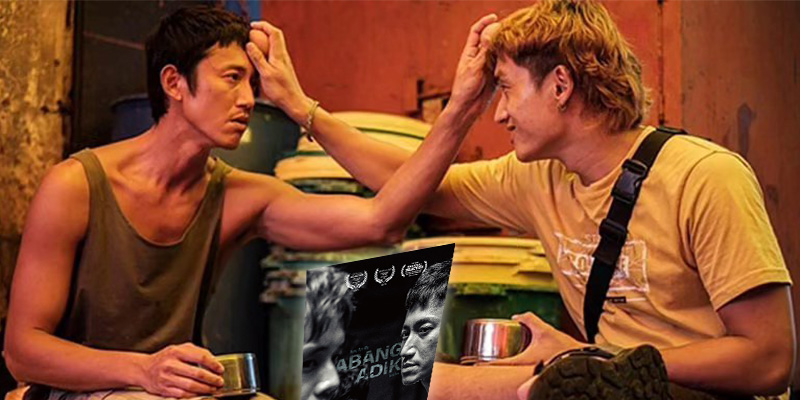
The movie has been a box office success in both Malaysia and Taiwan. Wu Kang Jen, a Taiwanese actor, portrayed a deaf and mute orphan who protects, loves and cares for his rebellious and reactionary young brother. He won the Best Leading Actor at Taiwan’s Golden Horse Awards in Nov 2023.
A Tale of Two Brothers
Jin Ong, the 48-year-old Taiping-born film producer and director, is no stranger to the film industry, having produced several films since 2014.
This is a story of two undocumented orphans who found each other, during their most trying times. A tale about brotherly bond, so vast and encompassing.
Even though they are together and share deep love, but individually they are searching for meaning to fill the void and loneliness inside. The absence of their parents, both physically and emotionally were their major setback in life. They only had each other.
Set in the heart of Kuala Lumpur, we are taken to their basic dwelling and vocation in the hustle and bustle of Pudu wet market and its old-town surroundings. The choice of title in Malay, sparks a heartwarming feel, as a Malaysian and gives a good branding to a – Made in Malaysia product.
From Escapism to Realism
Abang Adik is a brilliant composition of issues faced by certain segments of our society, portrayed in a raw form. It does not white wash the truth of their trials and tribulations. A timely piece, moving away from the occasional-stereotype escapism theme to addressing hard reality. This movie has transcended to become a platform of awareness and discussion on the challenges, which are universally felt. It is not just their story, but ours too.
In Jin Ong’s words – “Movies are a powerful medium to deliver messages to a wider audience”.
The takeaway from the movie is impactful. It reflects the powerful and healing role of cinematography to capture and project the distressing hardships that communities face, often not talked about and swept under the carpet, for the audience to reflect and act upon. So, we can share and know that we are not alone. So, we learn to accept and come to terms with our situation. So, we can bring light onto our struggles.
Powerful Narrative
The narrative probes on a couple of issues:
- The challenges encountered by stateless individuals in securing a Malaysian identity card
- The constant fear and uncertainty they live in, with a strong instinct to survive
- The often-unrecognised role of social workers in fighting their cause and bridging the road to freedom, for the society
- All communities have demographics of affluent and successful groups and those afflicted by social issues and trials, in this case focusing on those from poverty-stricken and crime-ridden environments. But often, we choose not to see the latter and pick on the glorified group’s well being
- Abang’s deafness and absence of family ties, captures the essence of human resilience against universal obstacles
- The silence surrounding the main character’s life, which is a metaphor for those marginalized by the administrative system in place and discriminated by society. The ones without a voice.
The Impermanence of Life
Life is not perfect. How dangerous their lives are. Two persons denied of certain basic human rights are constantly running from the authorities and face the stigma and judgement that society casts on them.
The climax in the movie shows how things can go horribly wrong in an instant, and how life changes, in ways we don’t anticipate. The brutal accident crumbles the dynamics and balance of their relationship.
A Moving Musical Score
Jin Ong worked in the music industry before producing films, hence explaining for his appreciation and reflective use of music. The score supported and blended in, with the story and characters. The symmetry of violin and piano, together with the script for the two characters, touched us to the core.
The two have deep connection, though not blood related and go through the worst situations as brothers. During the party for their transgender friend’s birthday, Abang and Adik were dancing and we could see the chemistry, trust and bond between then … the unspoken connection.
When addressed by a monk in the cell during his final days, Abang asks how can one possibly have hope when the odds are against him? He asks why was he even born to this world? A stateless person who is deaf and mute, living outside the society and in constant fear and uncertainty …what is there for him? This scene was played so well that we felt the emotional intensity of his predicament.
From Punitive to Rehabilitative Measures
Abang requested for boiled eggs as his last meal – to rekindle the childhood tradition and bond with Adik … for the last time. The silence between them was deafening. It spoke volumes and moved tears.
Who are we to judge and impose punitive charges? It is very sad to hear, especially of young people with potential to repent and reset, to not be given a second chance in life.
The time has come for law enforcers to evaluate and consider rehabilitative and restorative measures instead of drastic, punitive ones to valid cases. The effect trickles down. It does not only cripple the physical life of the one charged, but his whole family suffers with him, as we witness Adik’s vulnerability and brokenness after the separation with Abang. Consider enforcing community service hours to help re-ignite and re-member the loving, kindness and compassion attributes, that was always there, in each of us.
The Light and Gift
Everyone is seeking an identity, whether it is Abang with his full state recognition wish; the transgender in claiming his right to live as he wishes; and Adik in wanting to be different or the so-called outlier in his family.
When interviewed, the director said that the focus of the movie was on Human Love – the force that kept the two alive. What a powerful a message! He projected that at the end of the tunnel, there is hope. Abang’s sacrifice paved the way for Adik’s awareness and provided him a new lease of life.
Adik found hope in the darkest time. And that was Abang’s best and final gift …that Adik will be ok, in his absence. And the fact that Adik had found closure with his dad, means that he will not be alone. Although life will never be the same again without Abang; Adik will move on, with purpose and meaning.
RELATED STORY:
(Asia Samachar, x 2023)
ASIA SAMACHAR is an online newspaper for Sikhs / Punjabis in Southeast Asia and beyond. You can leave your comments at our website, Facebook, Twitter, and Instagram. We will delete comments we deem offensive or potentially libelous. You can reach us via WhatsApp +6017-335-1399 or email: asia.samachar@gmail.com. For obituary announcements, click here