






















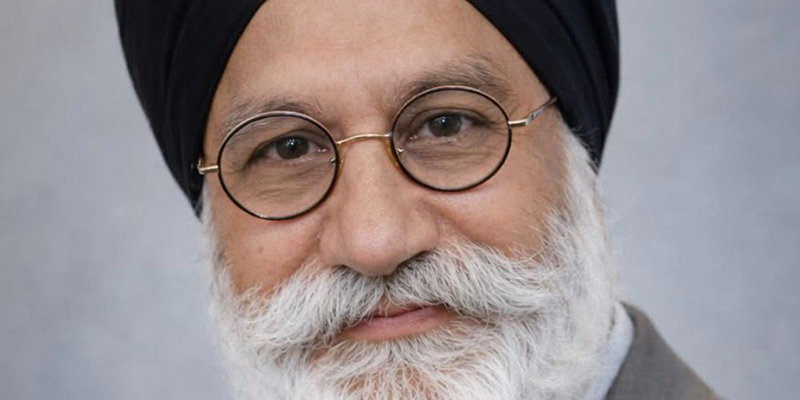
By Gurnam Singh | Opinion |
My engagement with Asia Samachar began over 6 years ago in 2019 with what seemed, at the time, a simple and generous invitation. I received a welcoming email from Harbhajan Singh, the founding editor based in Kuala Lumpur. His message was warm and disarmingly straightforward: would I consider contributing a regular column addressing critical issues facing the global Sikh diaspora. I recall my first column was on how social media can be a tool for peace making. Since then, I have published over 200 articles on a wide range of contemporary issues directly or indirectly concerning Sikhs.
Until that moment, my writing had been largely confined to the familiar terrain of academic publishing, focusing on the sociology of education, social work, and social justice. While I had penned the occasional article on Sikhi, my intellectual home was a world governed by peer review, rigid disciplinary conventions, and the slow rhythms of scholarly debate. In academia, ideas often take months or even years to reach an audience; in contrast, my columns for Asia Samachar are often conceived, edited, and published within the same day.
Looking back, I recognize that Harbhajan’s invitation marked a pivotal turning point. It was the moment I was inducted, perhaps unexpectedly, into the role of a public columnist who was not afraid to offer a critique of Sikhs, not as an enemy of the Panth, but as a critical friend. In this regard, unlike academic writing where you are often presenting two sides of an argument, I was able to be more provocative, but always the aim to strengthen our Panth.
What excited me most was precisely what distinguished the column from academic writing: its immediacy and reach. It allowed me to respond to controversies and questions as they unfolded within the Sikh world, creating a space where reflection could meet lived reality in real-time. For a sociologist accustomed to the careful cadence of academic argument, this was both liberating and unsettling. A column cannot hide behind the protective armour of jargon, footnotes, or methodological caveats. It demands clarity, brevity, and a willingness to speak directly to the hearts of readers.
This experience has been both humbling and energizing. The column became a kind of laboratory for me to think aloud on a whole manner of issues, such as, reflecting on identity, institutional authority, spirituality, and the challenges of modernity. While I have largely avoided the eye of any “digital storm,” the responses I receive, whether they are supportive or sharply critical, confirm a vital truth: whether or not they always agree with what I have to say, people are reading, thinking, and engaging with the issues raised
My journey with Asia Samachar has never been motivated by fame or notoriety. It has been about having the privilege to participate in a living dialogue, and hopefully to inspire progressive dialogue. For a writer used to the relative isolation of scholarship, this connection has been profoundly meaningful.
If there is a common thread in my work, it is the conviction that Sikh thought must remain a living, questioning tradition. The Gurus did not design a passive community; they forged a community of seekers (Sikhs) committed to ethical responsibility and social transformation. Hence, I would like to think my columns are received not as a series of definitive dogmatic stances, but as invitations to think.
If these reflections occasionally make readers uncomfortable, perhaps they have served their purpose. Intellectual discomfort is often the precursor to genuine understanding and the development of new creative ideas. For a community born out of spiritual courage, the real danger lies not in the act of questioning, but in the silence that follows when we cease to ask.
I remain deeply grateful for that original email from Bhai Harbhajan Singh. His ongoing support and encouragement has given me the confidence to push boundaries and walk through a door I hadn’t imagined opening. In doing so, I discovered a different voice and a different audience, one that is not confined to the rather isolated space of academia, but to the wider world of ordinary Sikhs across the world who share both a love and concern for the future of Sikhi.
Now that I am semi-retired from my academic role, I am finding I have much more time on my hands, and that means more time to focus on my column. As long as Asia Samachar feels I have important things to say, I will continue to provoke but hopefully also educate readers.
Join the conversation on this story on Asia Samachar’s Facebook and Instagram pages.

Gurnam Singh is an academic activist dedicated to human rights, liberty, equality, social and environmental justice. He is a Professor of Sociology at University of Warwick, UK. He can be contacted at Gurnam.singh.1@warwick.ac.uk
* This is the opinion of the writer and does not necessarily represent the views of Asia Samachar.
RELATED STORY:
The Demise of the Akali Dal and the Badal Dynasty: What Next for the Panth? (Asia Samachar, 5 Aug 2024)
ASIA SAMACHAR is an online newspaper for Sikhs / Punjabis in Southeast Asia and beyond. You can leave your comments at our website, Facebook, Twitter, and Instagram. We will delete comments we deem offensive or potentially libelous. You can reach us via WhatsApp +6017-335-1399 or email: asia.samachar@gmail.com. For obituary announcements, click here